Small Bedroom Looks That Actually Make a Difference
A small bedroom does not have to feel like a storage closet you happen to sleep in. With the right mix of colors, furniture choices, lighting, and a few smart tricks, even the most compact room can feel open, airy, and genuinely comfortable. The good news is that you do not need to knock down any walls or spend a fortune on a renovation to get results that actually work.
Most people make a few common mistakes in small bedrooms: choosing furniture that is too bulky, keeping the walls too dark, ignoring vertical space, or cramming in too many pieces “just in case.” The result is a room that feels chaotic and tight no matter how much you tidy it. What you really need is a more intentional approach, one where every single piece in the room earns its place.
This guide covers 18 practical, designer-approved tips for making your small bedroom look and feel much bigger than its square footage. Each idea goes beyond a surface-level suggestion and gives you real, specific direction on what to buy, how to arrange it, what colors to choose, and how to light the space properly. Whether you are working with a rented apartment, a guest room, or your own compact primary bedroom, there is something here that will make a noticeable difference. Start with one or two tips that feel most relevant to your space, and build from there. Small changes add up fast when they are the right ones.
1. Paint Everything the Same Light Color
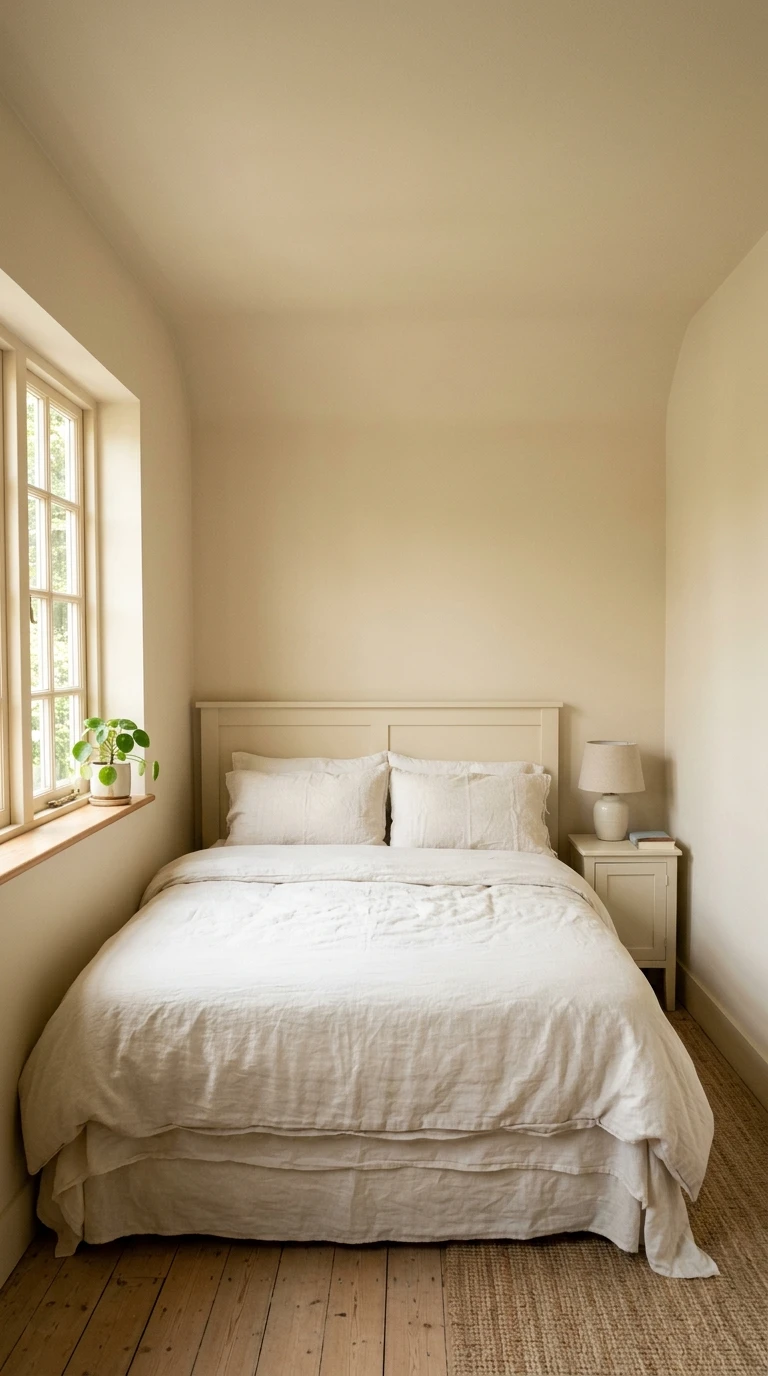
One of the fastest and most effective things you can do in a small bedroom is paint the walls, ceiling, and trim all the same shade of soft, light color. This technique, sometimes called color drenching, removes the visual breaks that make a room feel choppy and small. When every surface flows into the next, the eye reads the space as larger and more continuous than it really is. You are essentially erasing the boundaries of the room without touching a single wall structurally.
The best shades for this approach include soft white, warm ivory, pale greige, and muted sage. These tones reflect natural light beautifully and create a calm, airy atmosphere that feels intentional rather than bare. Avoid cool, stark whites if your room does not get a lot of natural light, as they can feel flat and hospital-like. Warmer off-whites and creamy tones tend to feel much more inviting while still doing the job of opening up the space.
When choosing paint, it helps to pick up a few sample pots and test them on different walls before committing. The same color can look completely different depending on which direction your room faces and what time of day the light hits it. Give the samples at least 24 hours before making a final call. Finishing the ceiling in the same shade, rather than a bright white, is what really ties the whole look together and gives the room that seamless, generous feel.
Designer Advice: If you want to add some personality without closing the space in, bring in color through bedding, pillows, or a single piece of artwork. Keep your walls and large surfaces light, and let the smaller accessories carry the color.
2. Use Mirrors Strategically, Not Just Decoratively
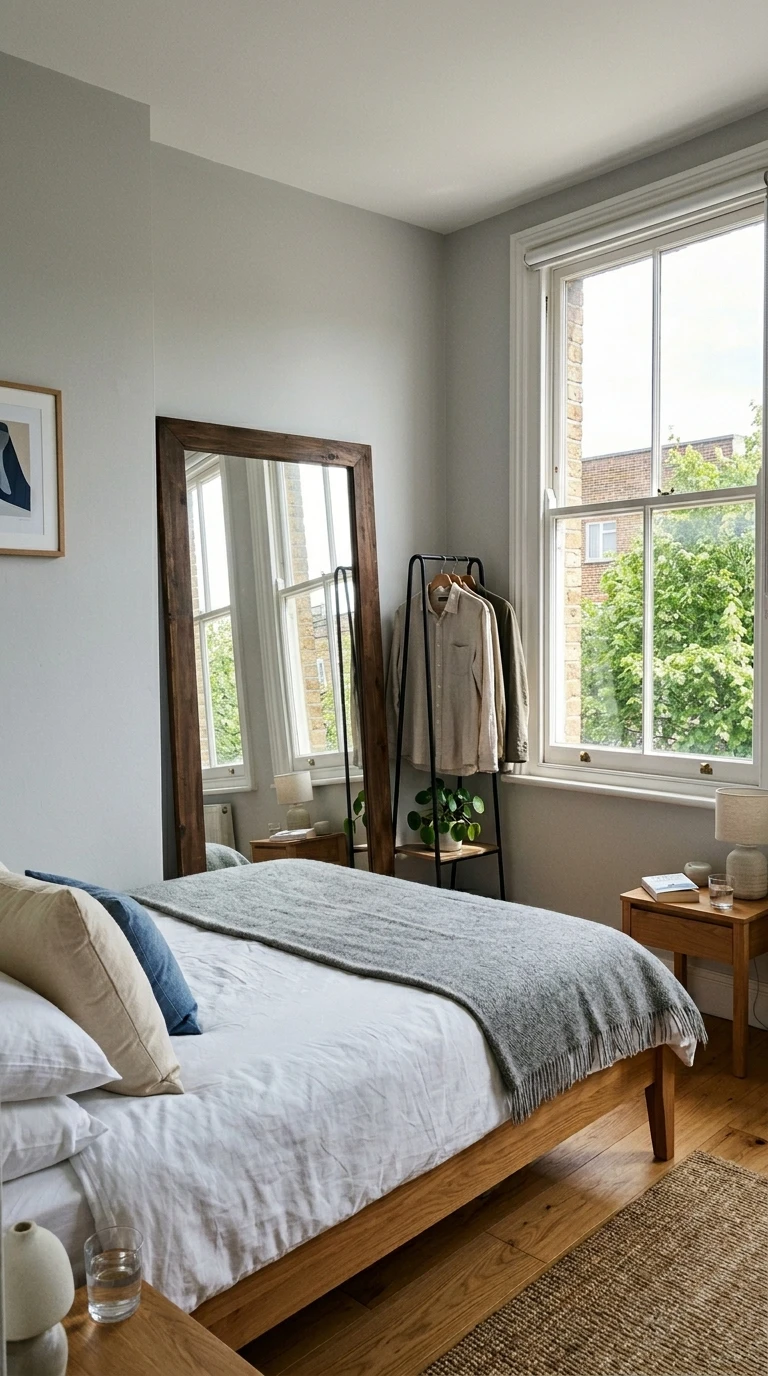
Mirrors are one of the oldest tricks in the interior design book, but they only work when you use them in the right spots. A large mirror placed directly across from a window will bounce natural light deep into the room, making it feel like there is twice as much space and twice as much light as there actually is. The key word here is large. A small mirror does not create the same visual depth that a big one does, and a collection of small mismatched mirrors just adds clutter.
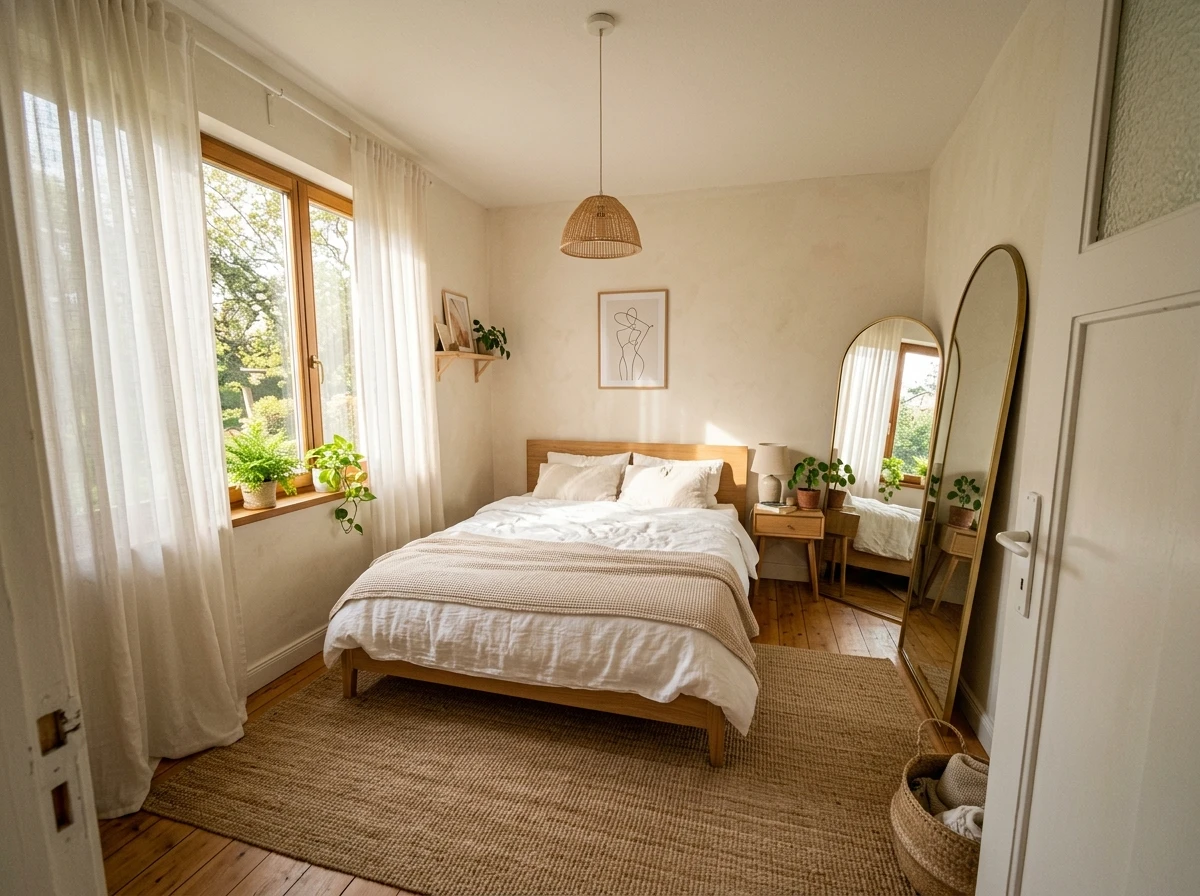
A full-length leaning mirror is one of the most budget-friendly options for small bedrooms. It adds depth and also reflects a wide portion of the room, which helps the eye feel like it is looking into a continuation of the space rather than a wall. You can position it against a wall opposite or adjacent to the window for the best light-bouncing effect. If you prefer a wall-mounted option, go for one that is at least 24 by 36 inches, and hang it at a height where it reflects the room rather than just the ceiling.
Mirrored wardrobe or closet doors are another smart solution. They serve a practical purpose while doubling the perceived width of the room at the same time. If your closet doors are plain and dated, replacing them with mirrored sliding doors is one of the best investments you can make in a small bedroom. Budget-friendly options are widely available at most home improvement stores and do not require professional installation.
Designer Advice: Make sure your mirror reflects something attractive, like a window, a plant, or a tidy corner of the room. A mirror that reflects a messy pile of clothes or a cluttered desk defeats the purpose entirely.
3. Choose a Low-Profile Bed Frame
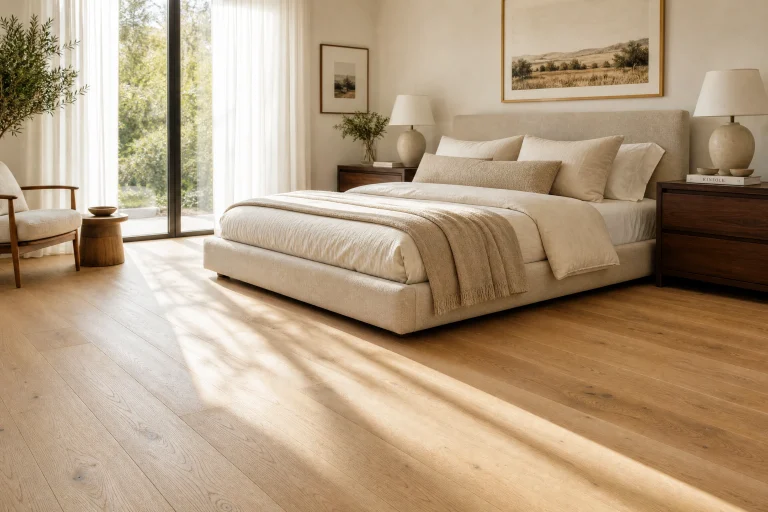
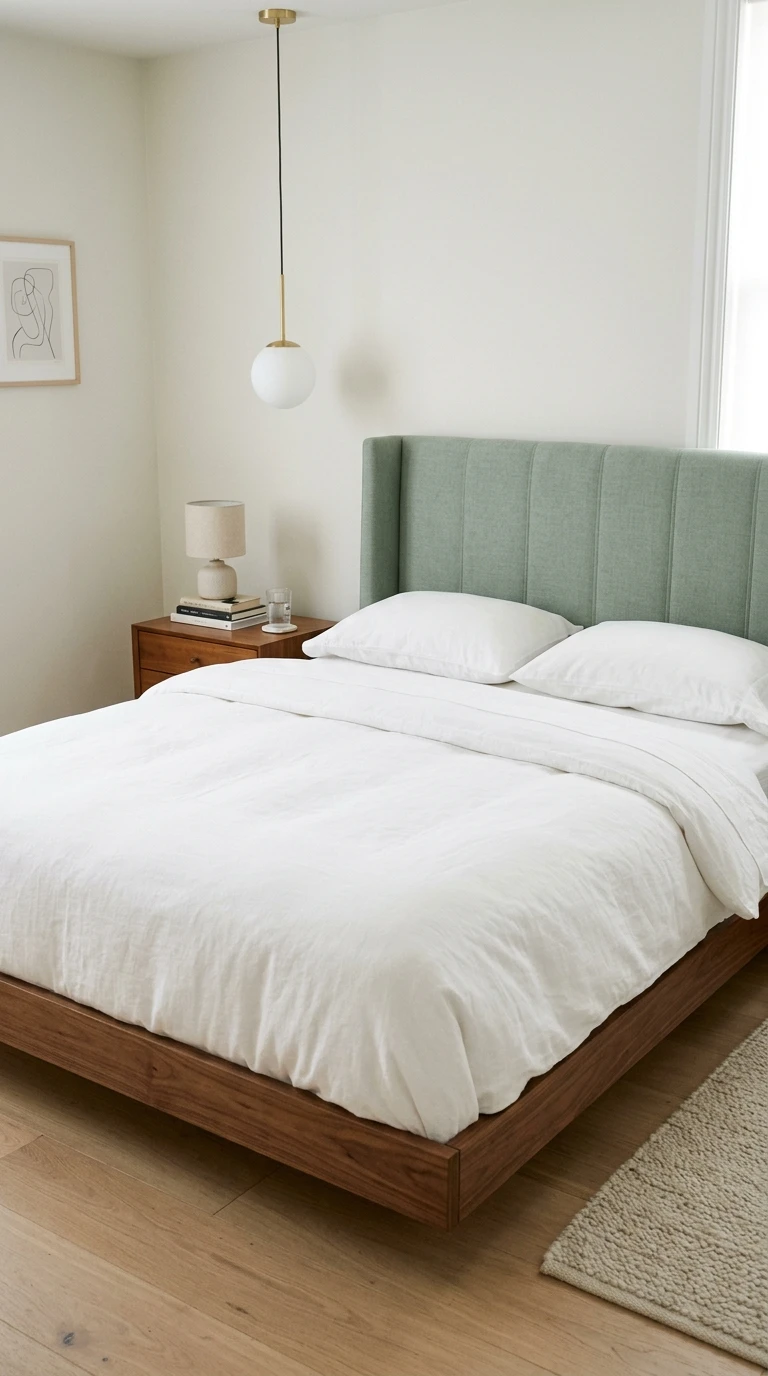
The bed is always the largest piece of furniture in a bedroom, which means it has the most impact on how the room feels. A tall, chunky bed frame with a thick headboard and box spring lifts the mattress high off the ground and eats into the visual space of the room. A low-profile or platform bed frame, on the other hand, keeps the mattress close to the floor and leaves more wall visible above the bed, which makes the ceiling feel higher and the room feel larger overall.
Platform beds come in a wide range of styles, from simple natural wood frames to upholstered options in linen, velvet, or leather. The best ones for small bedrooms have a slim silhouette, clean lines, and minimal ornamentation. Avoid frames with built-in storage drawers at the sides unless you genuinely need the storage, as the bulkier profile can sometimes offset the low height benefit. If storage is a priority, look for frames with drawers that sit flush and do not stick out beyond the mattress edge.
For the headboard, a tall but narrow design in a light color or simple upholstered fabric is a good choice. It draws the eye upward without dominating the wall. Alternatively, you can skip the headboard entirely and create the same upward pull with a floating shelf mounted above the bed, a piece of wall art hung vertically, or even a simple strip of painted trim in a contrasting shade.
Designer Advice: Keep your bedding simple and fitted. A low-profile bed with a neatly made, uncluttered bed looks significantly roomier than the same bed buried under a mountain of throw pillows and blankets.
4. Hang Curtains High and Wide
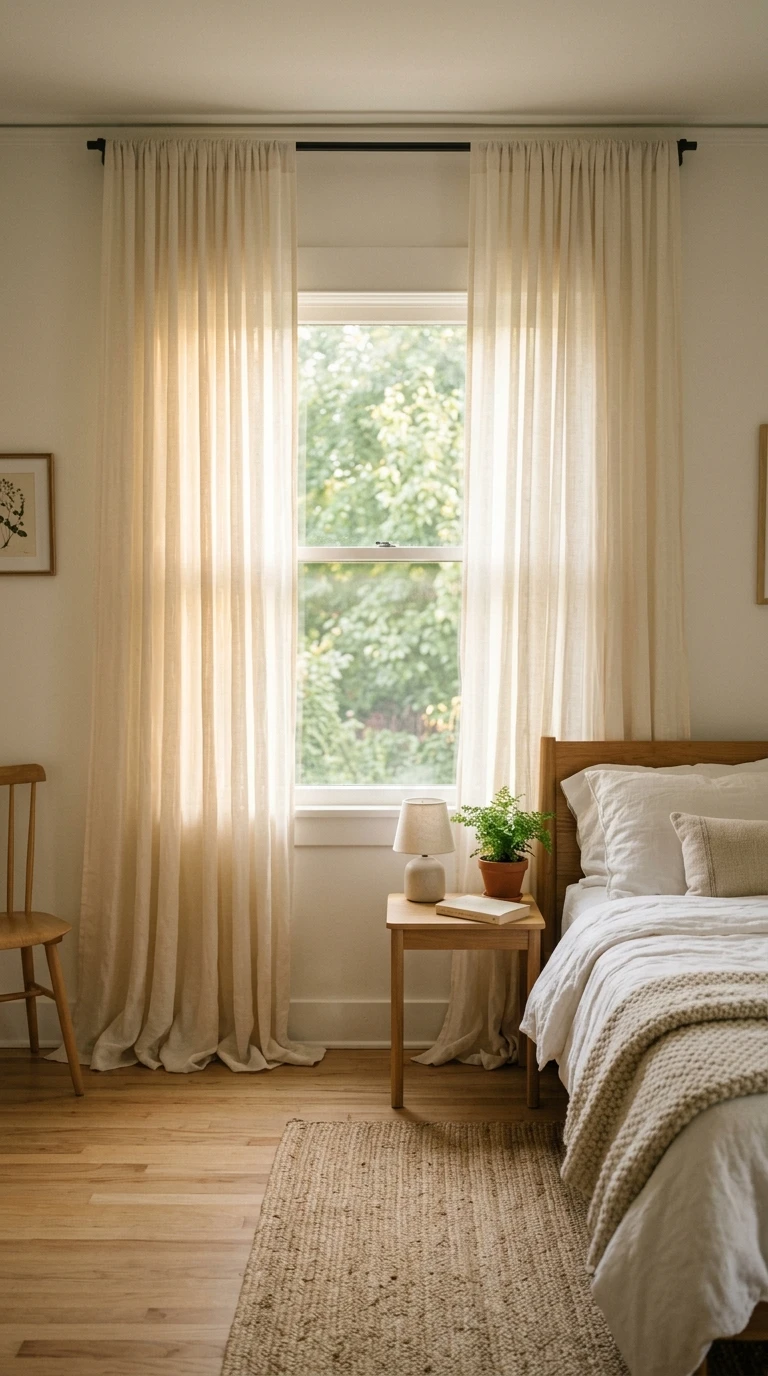
The position of your curtain rod makes a surprisingly big difference in how tall and wide your room feels. Most people hang the rod just a few inches above the window frame, which is the standard approach but not the ideal one for small spaces. Instead, mount the rod as close to the ceiling as possible, and extend the rod well beyond the width of the window on each side. When the curtains are drawn, they frame the window from ceiling to floor, creating the illusion that the window is much larger than it actually is.
This trick works because the eye naturally follows vertical lines upward. When curtains run all the way from ceiling to floor, the room looks taller. When they extend wide beyond the window frame, the wall space feels more generous. It is a simple change that costs almost nothing extra if you are already replacing your curtains, and the visual difference is immediately noticeable.
For fabric, stick to lightweight and semi-sheer options in neutral or light tones. Linen, cotton voile, and sheer polyester blends all work well and allow natural light to filter through even when the curtains are closed. Heavy velvet or blackout drapes can make a small room feel closed in and heavy, so reserve those for rooms where light control is more important than the visual space. If you need blackout functionality, layer a slim roller shade behind lighter curtains so you get the best of both.
Designer Advice: Stick to a single solid color for your curtains and avoid busy patterns or heavy borders. The simpler the curtain, the more it disappears into the room and lets the space breathe.
5. Choose Furniture with Visible Legs
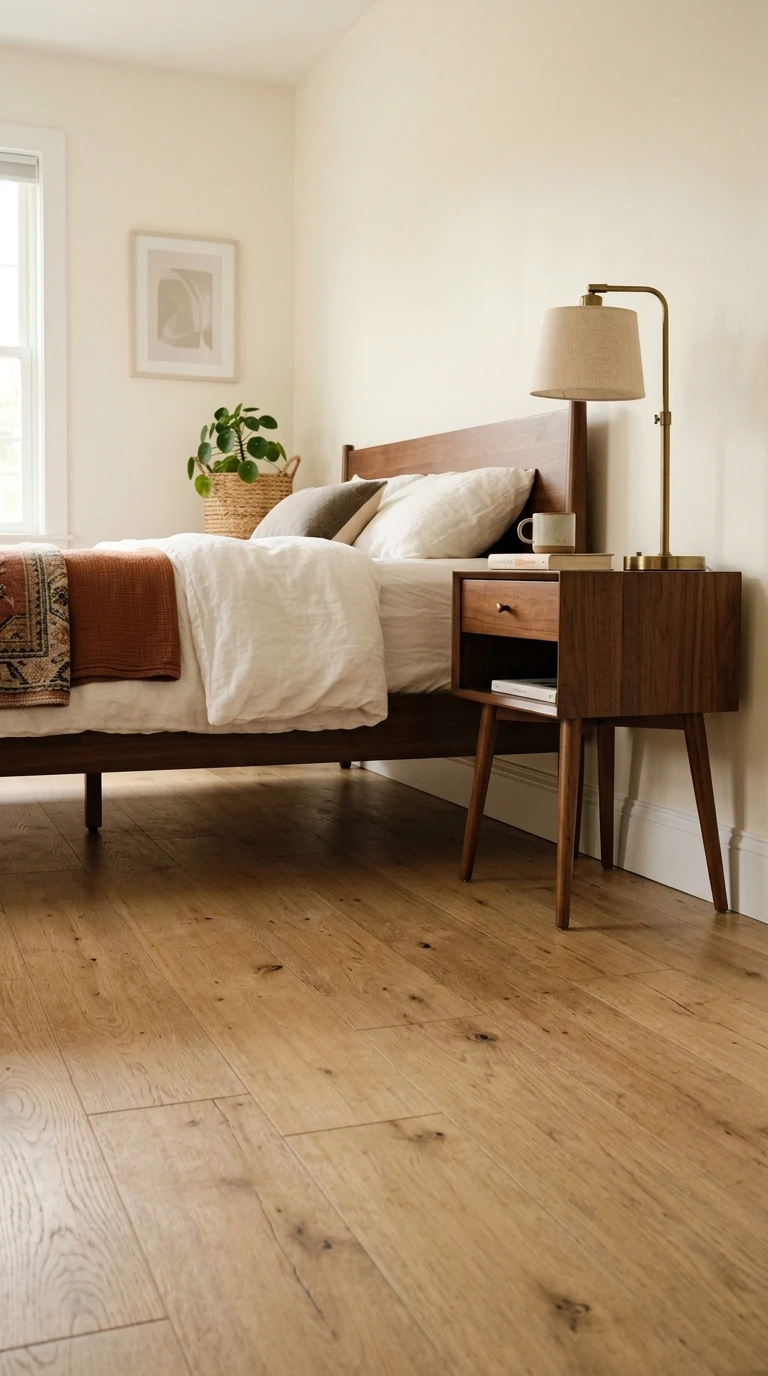
Furniture that sits directly on the floor, with no visible space underneath, creates a heavy, grounded feeling that shrinks a small room. When you can see the floor underneath a sofa, chair, nightstand, or dresser, the eye reads the room as having more open floor space, even if the actual square footage has not changed. It is a simple optical trick, and it works consistently across all styles of decor.
When shopping for small bedroom furniture, look for pieces with tapered legs, angled legs, or hairpin legs in wood or metal. These styles are widely available in both mid-century modern and contemporary looks. A bedside table with four slim legs gives you the nightstand functionality you need without creating a visual block in the corner of the room. A small upholstered bench at the foot of the bed looks much lighter on legs than a solid cube-style ottoman would.
Dressers and wardrobes are trickier because most freestanding options sit flush to the floor. One workaround is to raise your dresser on small furniture risers or replace the feet with taller bun feet, which are easy to install and give just enough lift to make the piece feel lighter. Alternatively, consider built-in or wall-mounted cabinetry, which lifts storage entirely off the floor and gives the room a clean, custom look.
Designer Advice: Even a few inches of visible floor space under a piece of furniture makes a real visual difference. Do not underestimate how much lighter a room feels when the floor is uninterrupted and easy to see.
6. Use Vertical Space for Storage
In a small bedroom, the floor is precious real estate. Every square foot of floor space that is taken up by a piece of furniture is one less square foot of open, breathable room. The solution is to think vertically. Instead of spreading furniture out across the floor, build upward along the walls. This keeps the floor clear and makes the room feel significantly more open while still providing all the storage you need.
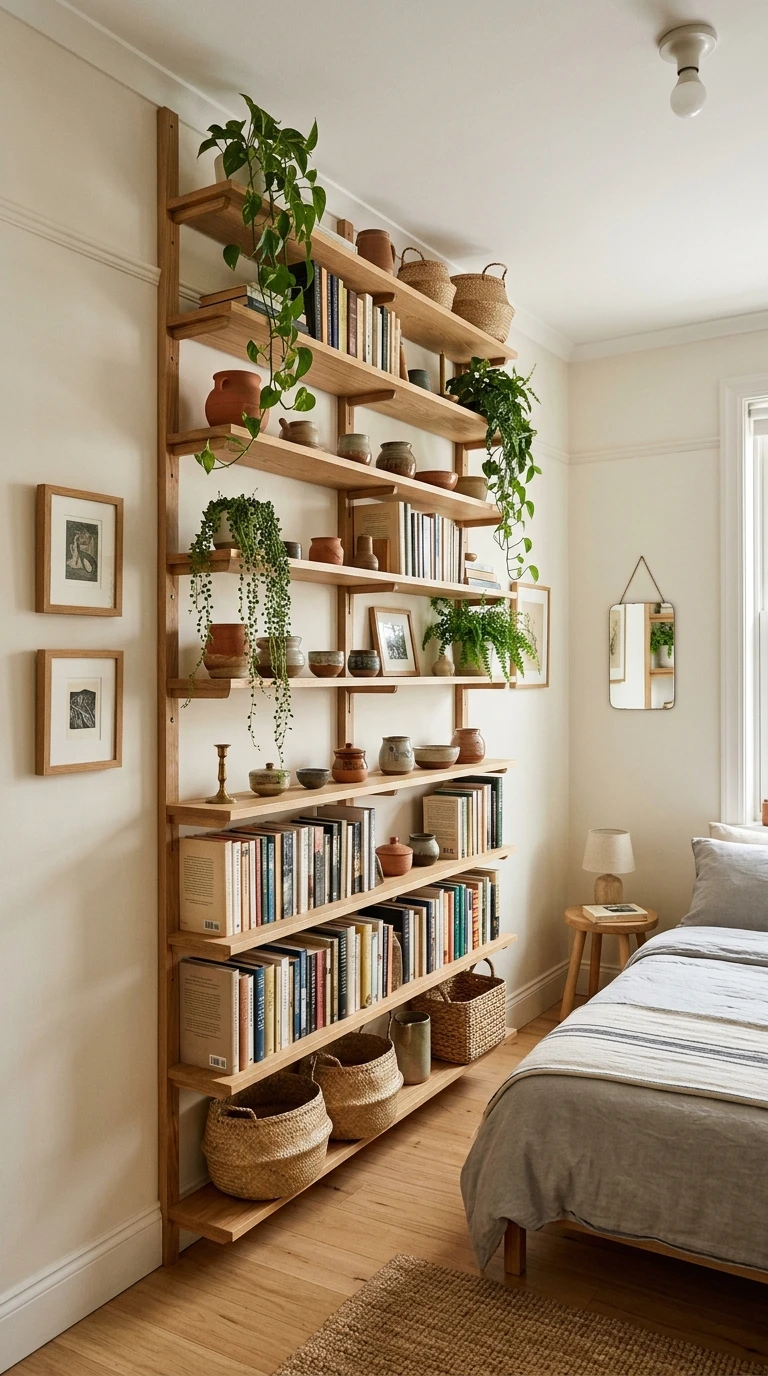
Tall, slim bookcases or shelving units that run from floor to ceiling are one of the best investments for small bedrooms. They provide an enormous amount of storage without taking up much floor space, and their vertical lines draw the eye upward, which makes the ceiling feel higher. Style the shelves with a mix of books, small plants, baskets, and a few meaningful objects. Avoid stuffing every shelf to capacity, as tightly packed shelves look cluttered and actually make the room feel smaller.
Floating shelves are another excellent option. Mounted directly to the wall, they provide surface area for bedside items, books, or plants without the visual bulk of a full bedside table. A row of three or four narrow floating shelves above the bed creates a stylish headboard alternative while also serving a storage purpose. Wall-mounted hooks near the door can hold bags, belts, or robes, keeping those items off the floor and out of the main line of sight.
Designer Advice: Leave the top shelf or the highest visible area of your shelves styled but not crammed. A few intentional objects at eye level or above feel like decor, while a shelf packed to the edges feels like overflow storage.
7. Declutter and Commit to Negative Space
No paint color, no mirror, and no furniture arrangement can make a cluttered small bedroom look bigger. Clutter is the single biggest visual enemy of a compact room, and it is the one problem that costs nothing to solve. When surfaces are covered, floors are busy, and every corner is filled, the brain reads the room as chaotic and tight. Negative space, meaning the empty areas between objects, is what allows a room to breathe and feel generous.
Start by doing an honest edit of everything in the room. If it does not belong in a bedroom, find it another home. Books, laundry, work equipment, exercise gear, and random household items that have accumulated over time all need to go. Once you have removed the genuinely unnecessary things, look at what remains and be selective about what lives on surfaces. A bedside table should have a lamp, maybe a book, and one or two small personal items. That is it. Everything else goes in a drawer or a basket.
Storage baskets are your best friend in this process. They give items a designated home without requiring built-in furniture. A pair of woven baskets under the bed, a linen basket in the corner, or a few drawer organizers inside your dresser can absorb a surprising amount of visual clutter. The goal is not a bare, minimalist look, it is a calm, intentional one where everything has a place and the eye can move around the room without getting stuck.
Designer Advice: After you declutter, wait a few days before adding anything back. You will be surprised how much you do not miss what you removed, and how much bigger the room feels with less in it.
8. Add a Rug That Extends Beyond the Bed
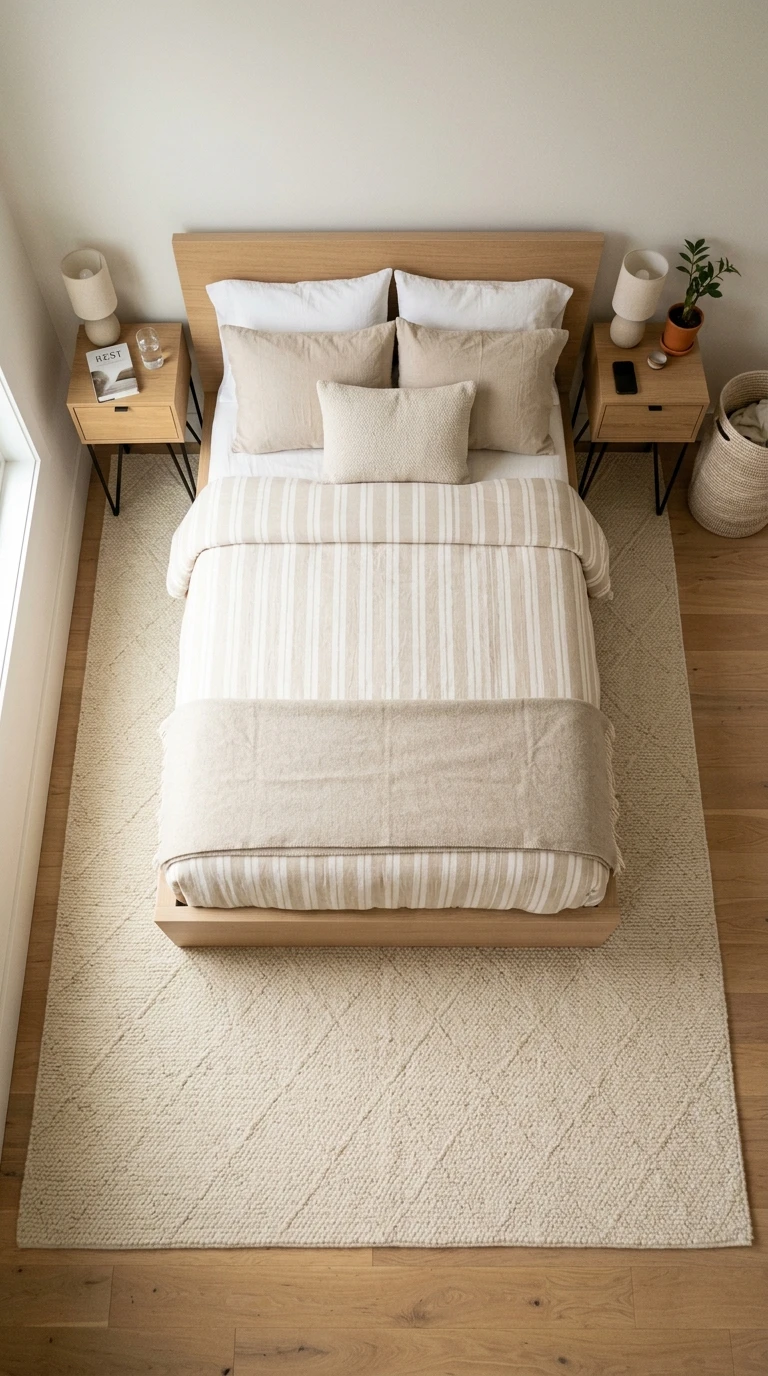
A rug in a small bedroom can either make the room feel larger or smaller, depending entirely on how you use it. The most common mistake is choosing a rug that is too small and placing it in the center of the room like a mat. This creates an awkward island effect and actually draws attention to the limited size of the space. What works far better is choosing a larger rug and sliding it partially under the bed so that a generous portion extends out on either side and at the foot.
When the rug extends under the furniture rather than stopping in front of it, the floor looks continuous and the room feels unified. The rug anchors the bed and ties the whole room together visually. A good rule of thumb is to have at least 18 to 24 inches of rug showing on the sides and foot of the bed. This usually means going one size larger than you think you need, which for a queen bed in a small room typically means a 8 by 10 foot rug rather than a 5 by 8.
For color and pattern, lighter rugs with subtle textures or simple geometric patterns tend to work best in small bedrooms. A pale jute, a soft wool in oatmeal or ivory, or a low-pile rug in a muted stripe all look grounded without being visually heavy. Avoid dark, dense patterns that break up the floor visually. The goal is for the rug to flow naturally with the rest of the room rather than compete for attention.
Designer Advice: If budget is a concern, a flatweave rug in a neutral tone is one of the most affordable ways to get the size you need. Flatweave options tend to cost less than plush pile rugs and also work well in smaller spaces because they do not add visual bulk.
9. Layer Your Lighting Instead of Relying on One Overhead Fixture
A single overhead light in a small bedroom is one of the most overlooked contributors to a cramped, flat feeling. Overhead lighting casts uniform illumination across the room and creates flat, uninspiring shadows that make walls look closer than they are. Layered lighting, meaning a combination of ambient, task, and accent sources, creates dimension in the room and makes it feel more dynamic and spacious.
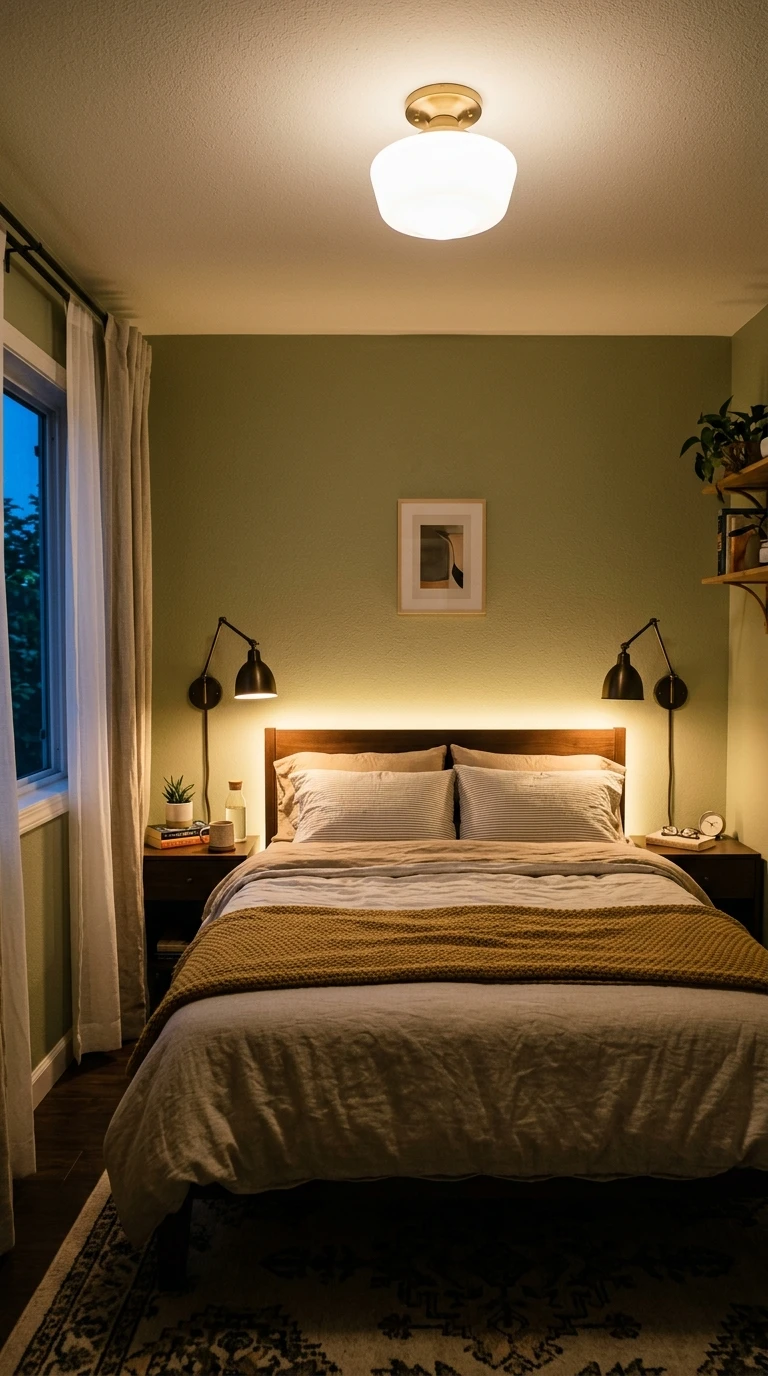
Start by replacing your ceiling fixture with something that bounces light upward, like a drum shade pendant or a simple flush mount with a diffuser. This softens the overhead light and eliminates harsh downward shadows. Then add wall-mounted sconces on either side of the bed to replace bedside table lamps. Sconces mounted at roughly 24 to 28 inches above the mattress give you practical reading light while also freeing up the surface area of your nightstands, which instantly makes the room feel tidier.
A small LED strip light tucked behind the headboard or under the bed frame adds a warm ambient glow that makes the room feel relaxed and larger in the evening. You can also add a slender arc floor lamp in a corner if you have the space, as it draws the eye upward and adds warmth to an area that might otherwise feel dead. The combination of all these sources working together creates a room that feels rich and considered rather than small and plain.
Designer Advice: Use warm white bulbs (around 2700K to 3000K) throughout the room. Cool white or daylight bulbs can make a small room feel stark and clinical, while warm tones add depth and coziness without closing the space in.
10. Try a Tone-on-Tone Color Palette
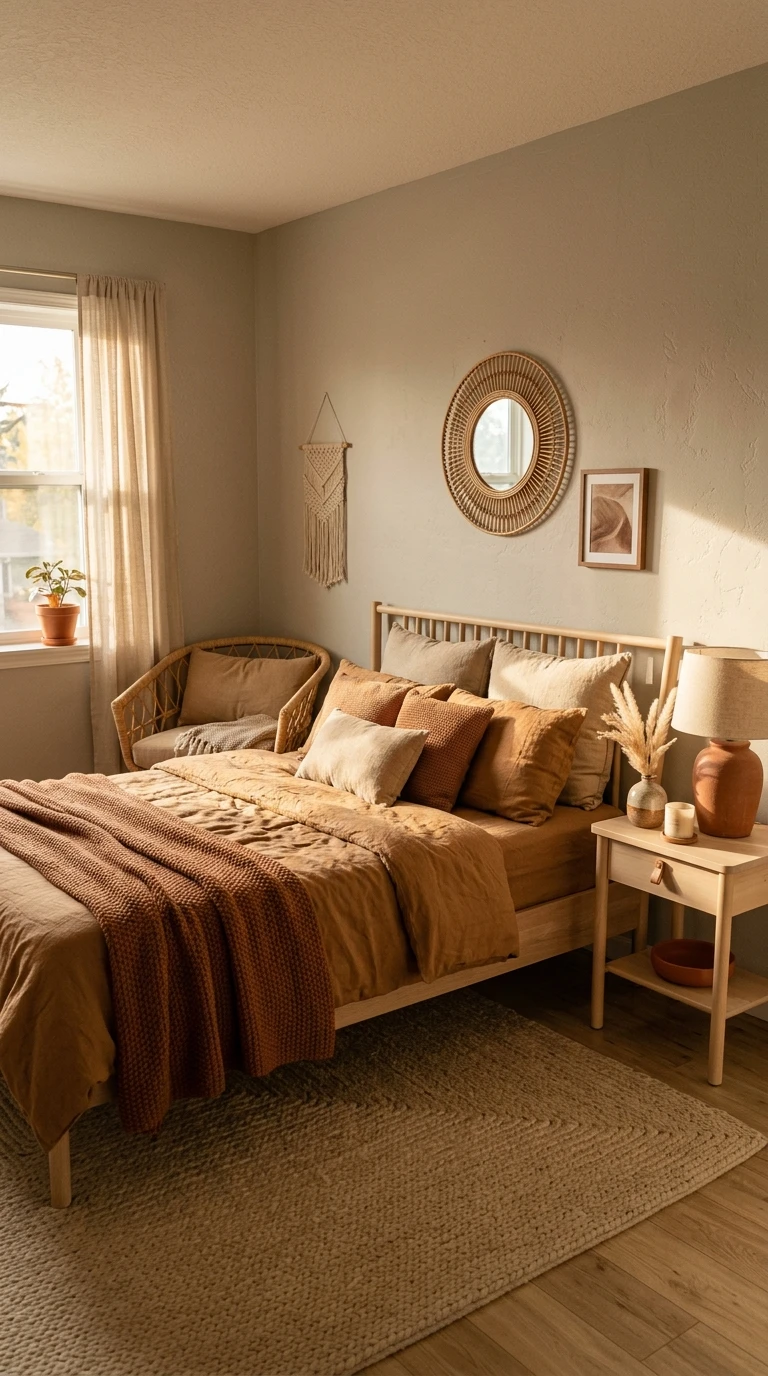
A tone-on-tone approach means layering different shades and textures of the same color family throughout the room, from the walls to the bedding to the curtains and rugs. Instead of mixing multiple contrasting colors, you create a cohesive, flowing look where the eye moves smoothly around the room without stopping at jarring color changes. This is one of the best tricks for making a small space feel larger, because when everything reads as part of the same palette, the room feels more continuous.
For a bedroom, a tone-on-tone palette might look like warm greige walls paired with ivory linen bedding, a caramel-toned throw blanket, a sand-colored rug, and natural wood furniture. Or it could be soft sage walls with moss green curtains, celadon bedding, and dried botanicals in a clay pot. The specific colors matter less than the consistency of the palette. Choose one color family and work through different shades and textures within it.
Texture is what keeps a tone-on-tone room from feeling flat. Mix linen, cotton, bouclé, rattan, and smooth wood within the same color family and the room gains depth without introducing visual noise from color contrast. A chunky knit throw on a smooth linen duvet, a woven rattan pendant light against plaster walls, a jute rug on painted floorboards, all of these add interest and warmth without breaking the palette.
Designer Advice: The tone-on-tone approach works especially well in small bedrooms because it removes the visual competition between different colors. When the eye has less to process, the room automatically feels calmer and more spacious.
11. Mount Your Nightstands on the Wall
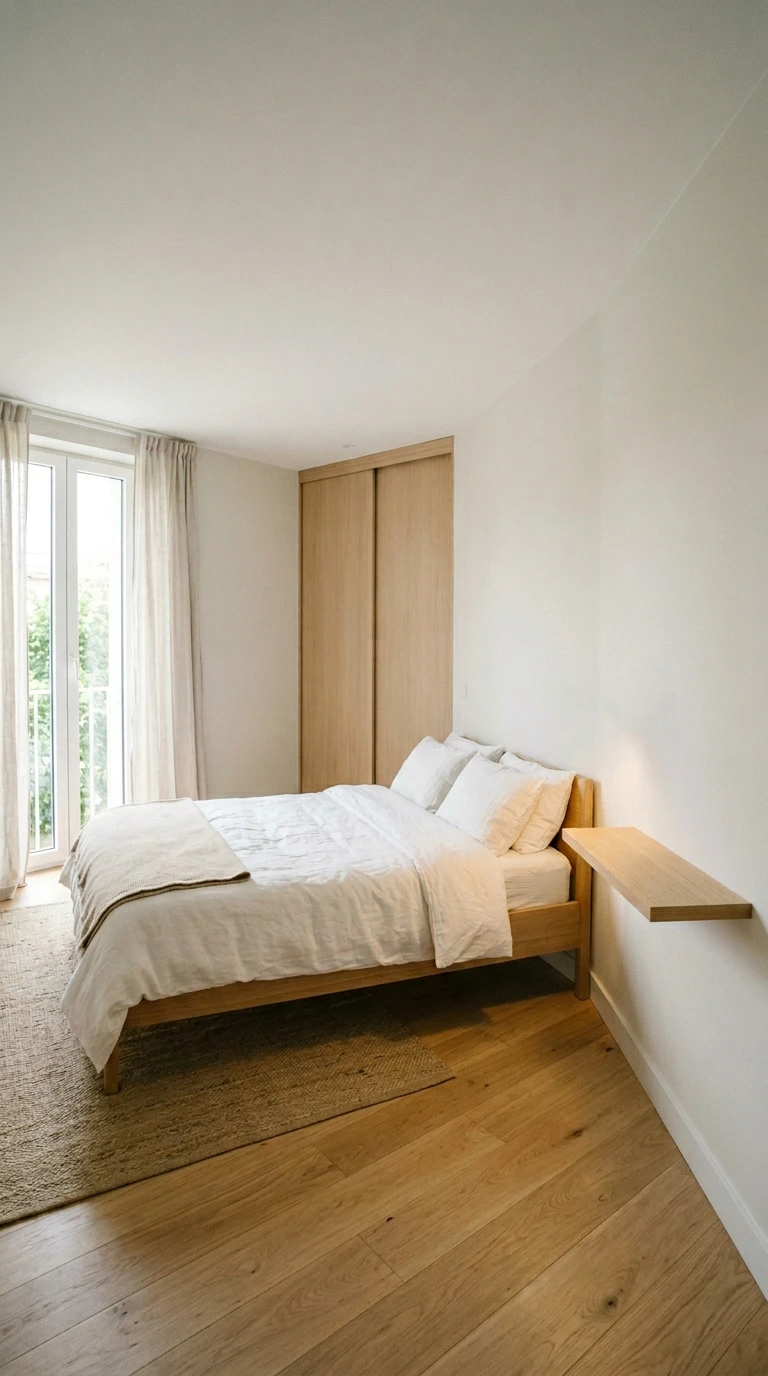
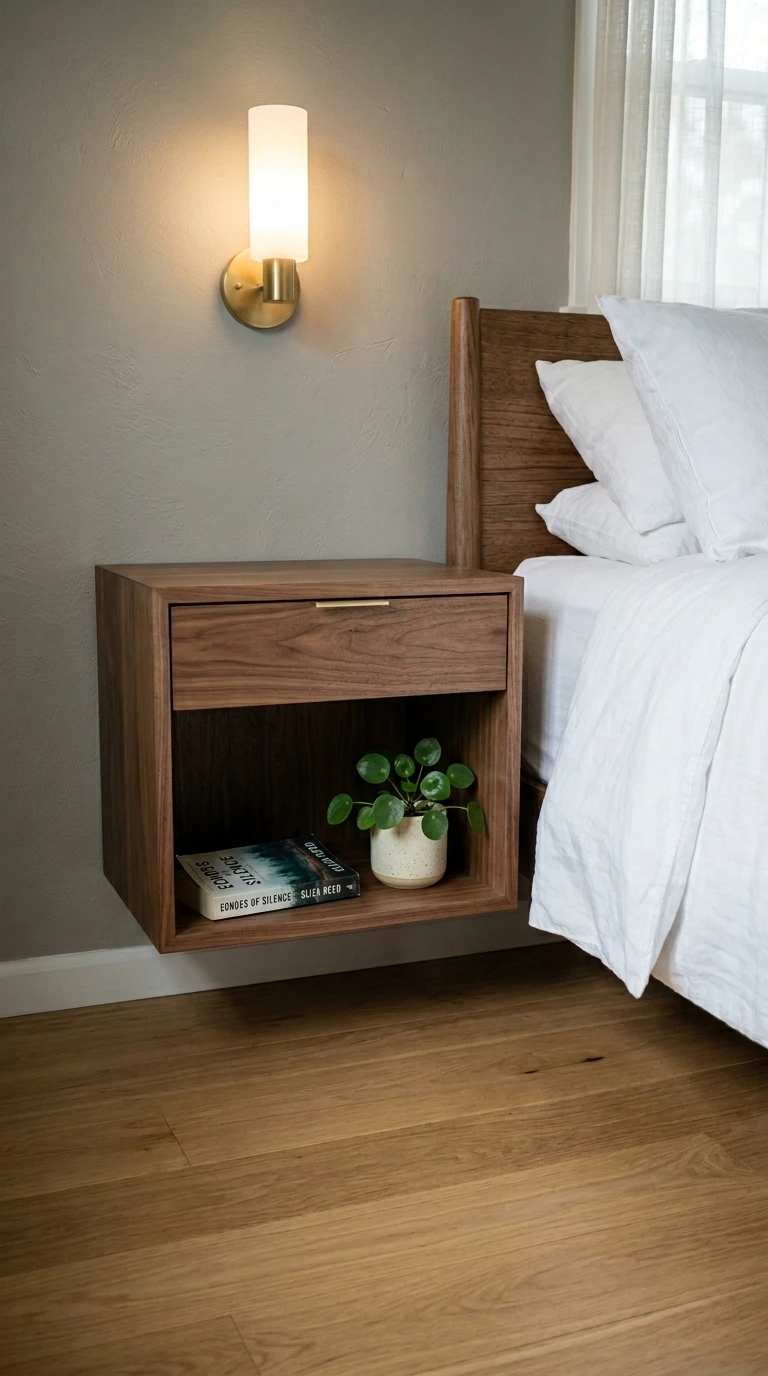
Traditional freestanding nightstands take up floor space and add visual bulk to the sides of the bed, which can feel very crowded in a small bedroom. Wall-mounted floating nightstands solve this problem neatly. They provide the same surface area for a lamp, a glass of water, your phone, and a book, but because they are attached to the wall with no legs touching the floor, they give the impression that the floor extends continuously under and past the bed.
Floating nightstands come in a wide variety of styles, from minimal solid wood shelves with a single drawer to more elaborate cantilevered designs with storage compartments. The most space-efficient options are slim and simple, roughly 16 to 20 inches wide and 8 to 10 inches deep, enough surface area to be practical without projecting far into the room. Mount them at a height that is comfortable for reaching from bed, usually about 24 to 26 inches from the floor depending on your mattress height.
If you are renting and cannot put holes in the wall, look for over-the-mattress side table alternatives that clip or hang over the edge of the mattress and provide a similar surface without mounting hardware. They are not quite as elegant as true floating shelves, but they do the same job without requiring any permanent changes to the wall.
Designer Advice: Pair your floating nightstands with wall-mounted sconces directly above them. This creates a clean, symmetrical look that is very popular in boutique hotel-style bedrooms, and it frees up the nightstand surface completely for practical items.
12. Introduce Transparent or Lucite Furniture
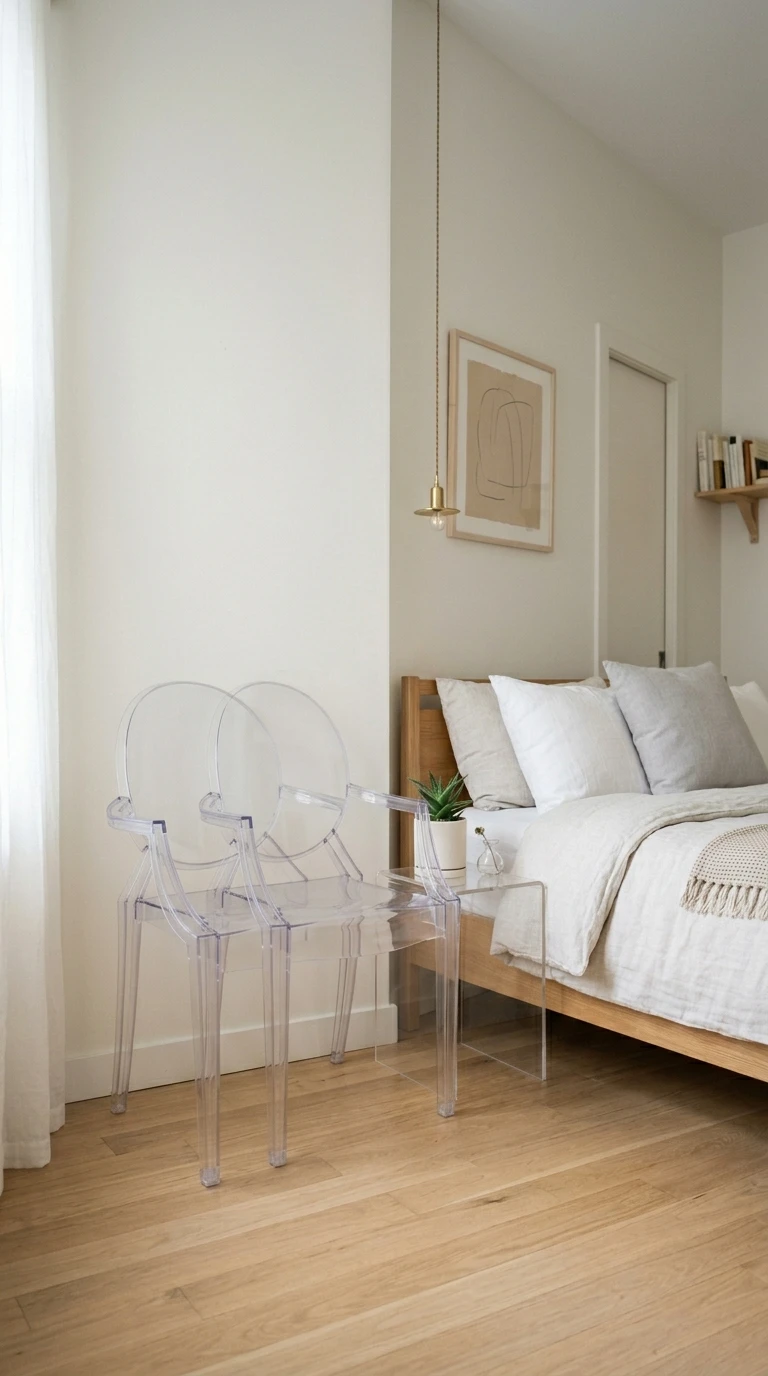
One of the most underused tricks in small bedroom design is the use of transparent furniture. Acrylic or lucite chairs, side tables, and benches are physically present and functional, but because the eye can see through them, they barely register as taking up space at all. The result is that you get the piece of furniture you need without paying the visual penalty of adding more bulk to the room.
An acrylic desk chair at the end of the bed or in the corner of the room is a good example. A solid wood or upholstered chair in that same spot would feel like it is taking up space and making the room smaller. The acrylic version sits there invisibly, doing the job without demanding visual attention. The same principle applies to a lucite side table used as a nightstand, or a small acrylic bench at the foot of the bed.
Transparent furniture works in almost any decor style. In a minimal, modern bedroom it looks sleek and intentional. In a more eclectic or vintage-inspired room, it adds an interesting contrast to heavier, more ornate pieces. It also pairs well with both warm and cool color palettes since it has no real color of its own. Budget-friendly acrylic pieces are widely available online and at furniture retailers, and they require almost no maintenance beyond an occasional wipe with a microfibre cloth.
Designer Advice: Do not overdo it. One or two transparent pieces is a clever accent. An entire room furnished in acrylic starts to feel cold and clinical. Use it selectively for the pieces that are hardest to fit without adding visual weight.
13. Use a Monochrome or Minimal Bedding Look
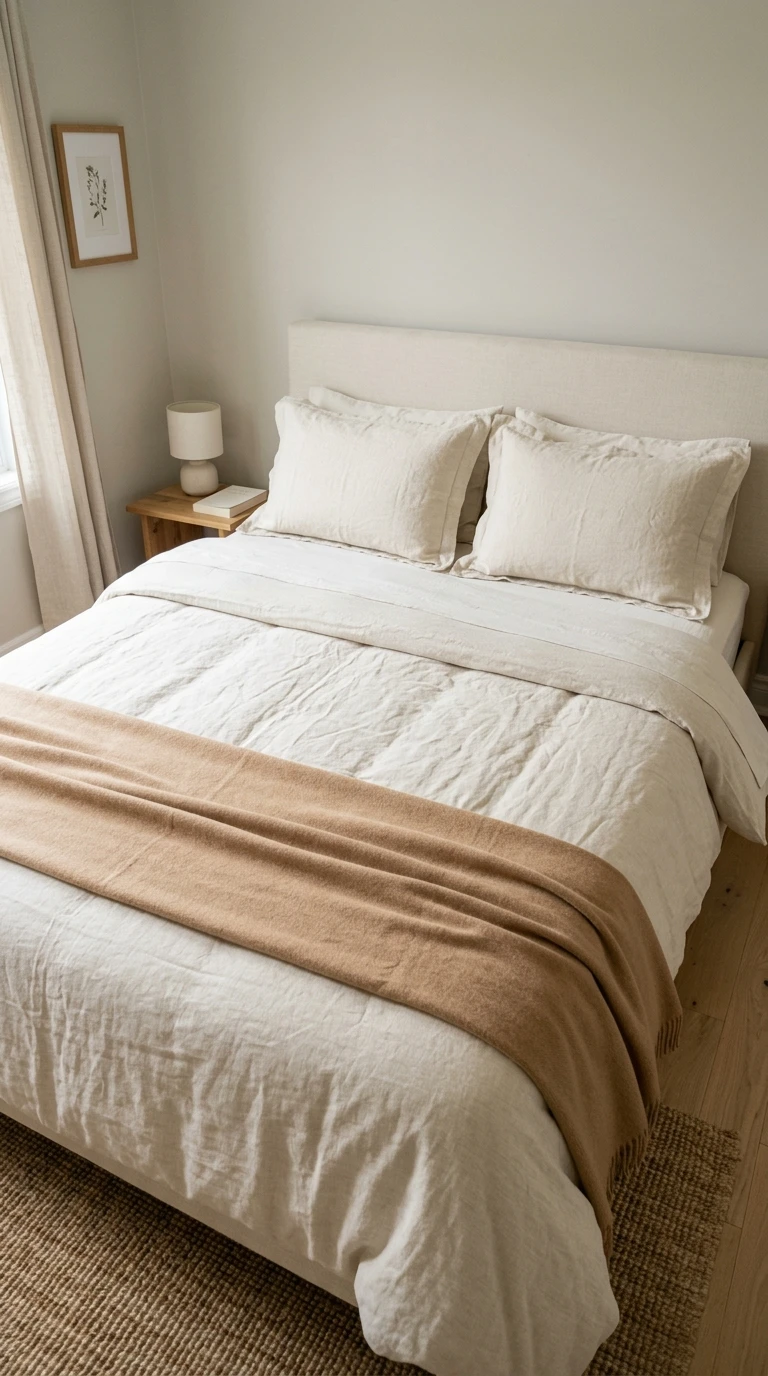
Bedding takes up a significant visual percentage of a small bedroom because the bed itself is the largest piece in the room. When that bedding is covered in large patterns, multiple contrasting colors, or a mountain of decorative pillows, it draws a lot of attention and makes the bed feel like it is consuming the room. A simpler, more restrained bedding approach has the opposite effect: it allows the bed to blend more naturally into the room, which makes the whole space feel calmer and more open.
A monochrome bedding look means sticking to one color family across your duvet, pillowcases, and any shams. White, off-white, soft grey, and warm linen tones are the most popular choices because they photograph beautifully and always look clean and put-together. If your walls are light, a slightly warmer or slightly deeper version of the same tone in the bedding adds just enough contrast to look intentional without creating a heavy visual break.
For pillow arrangement, keep it simple. Two sleeping pillows in shams and one or two accent pillows is plenty for a small bedroom. Every additional decorative pillow adds visual weight and has to be moved every night, which most people eventually stop doing, leading to a messy pile on the floor. A simple linen throw folded at the foot of the bed adds texture and color without the clutter of extra pillows.
Designer Advice: Invest in one high-quality duvet cover in a good fabric like washed linen or percale cotton. It will look better, last longer, and hang more naturally than cheaper options, which makes the whole bed look more put-together with minimal effort.
14. Maximize Natural Light with Smart Window Treatments
Natural light is one of the most powerful tools for making a small room feel open and airy. A room that is well-lit with daylight always feels larger than the same room in dim, artificial light. The goal in a small bedroom is to let in as much natural light as possible during the day while still having good privacy and light control at night. The type of window treatment you choose plays a huge role in achieving this balance.
Heavy drapes, thick valances, and layered window treatments that bunch up around the frame all block light and make windows look smaller. The better approach for a small bedroom is to use slim, minimal window coverings that stay out of the way when the window is open. Roller shades in a translucent or light-filtering fabric are an excellent choice. They roll up completely out of sight during the day, leaving the window fully open, and pull down smoothly at night for privacy.
Roman shades in a light linen or cotton also work well, as do simple curtain panels in sheer fabric. If you need blackout functionality, the cleanest solution is a double track system where a sheer panel sits in front and a blackout roller sits behind, both operated independently. This gives you full light during the day and full darkness at night without requiring heavy, room-closing drapes.
Designer Advice: Clean your windows at least once a season. It sounds obvious, but dirty or smudged glass significantly reduces the amount of light that comes into a room. A freshly cleaned window can make a noticeable difference in how bright and open the room feels.
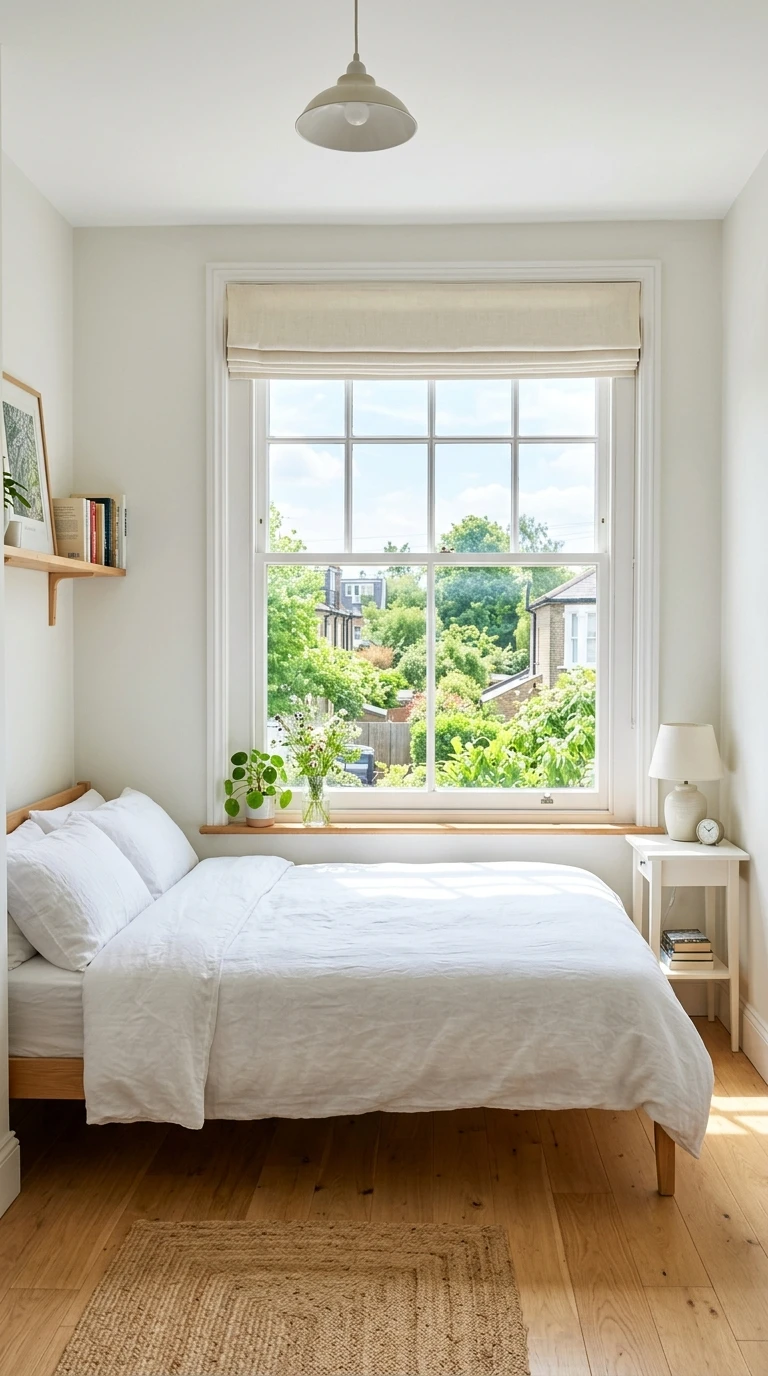
15. Create the Illusion of Height with Vertical Lines
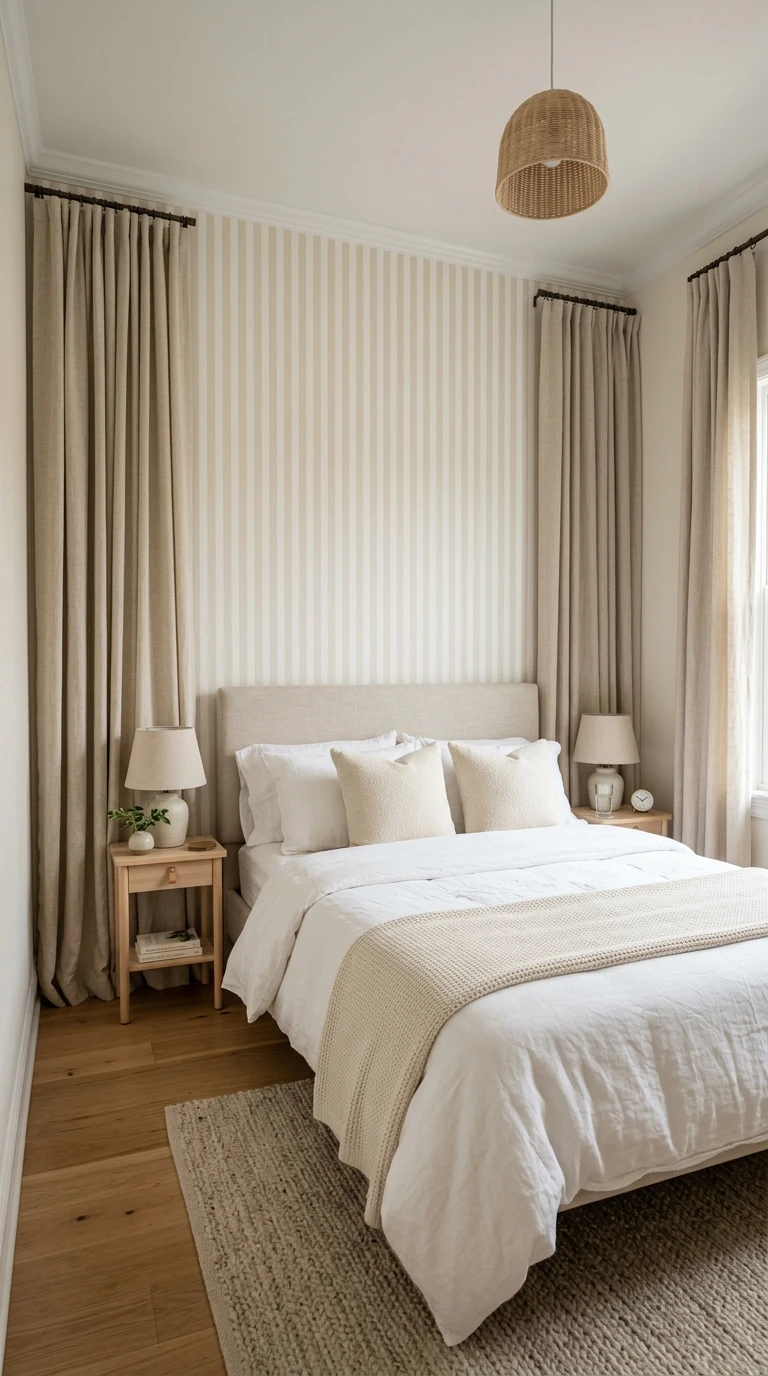
The taller a room looks, the bigger it feels. Even if you cannot physically raise your ceiling, you can create the impression of greater height through the strategic use of vertical lines throughout the room. Vertical lines draw the eye upward and signal to the brain that the room has more volume than it actually does. This is one of the most effective optical tricks in interior design and one that is surprisingly easy to implement without any structural changes.
Vertically striped wallpaper is one of the most impactful ways to do this. Even very thin, subtle stripes on a single accent wall behind the bed can dramatically change the perceived ceiling height. If wallpaper feels too permanent or expensive, a stripe of paint in the same color as the wall but in a slightly different finish, like eggshell over matte, creates a tone-on-tone stripe that is visible in certain lights without being obvious.
Beyond wallpaper, vertical lines can come from floor-to-ceiling curtains, tall and narrow shelving units, a slim vertical headboard, or even art hung in a vertical format rather than horizontal. Vertical shiplap paneling on one wall is another popular option that adds both texture and height, and it works in a variety of styles from farmhouse to contemporary. The key is to keep the verticals consistent and let them do the work of pulling the eye upward naturally.
Designer Advice: Avoid mixing too many horizontal and vertical elements in a small room. Horizontal lines, like a wide low dresser or a horizontal gallery wall, will work against the height illusion. Lean into the verticals and use horizontal elements sparingly.
16. Invest in Multifunctional Furniture
In a small bedroom, every piece of furniture needs to work harder than it would in a larger room. Single-purpose furniture takes up space and does only one job. Multifunctional furniture takes up the same or similar space and does two or three jobs, which means you need fewer pieces overall, and fewer pieces means more floor space, less visual clutter, and a room that feels more spacious.
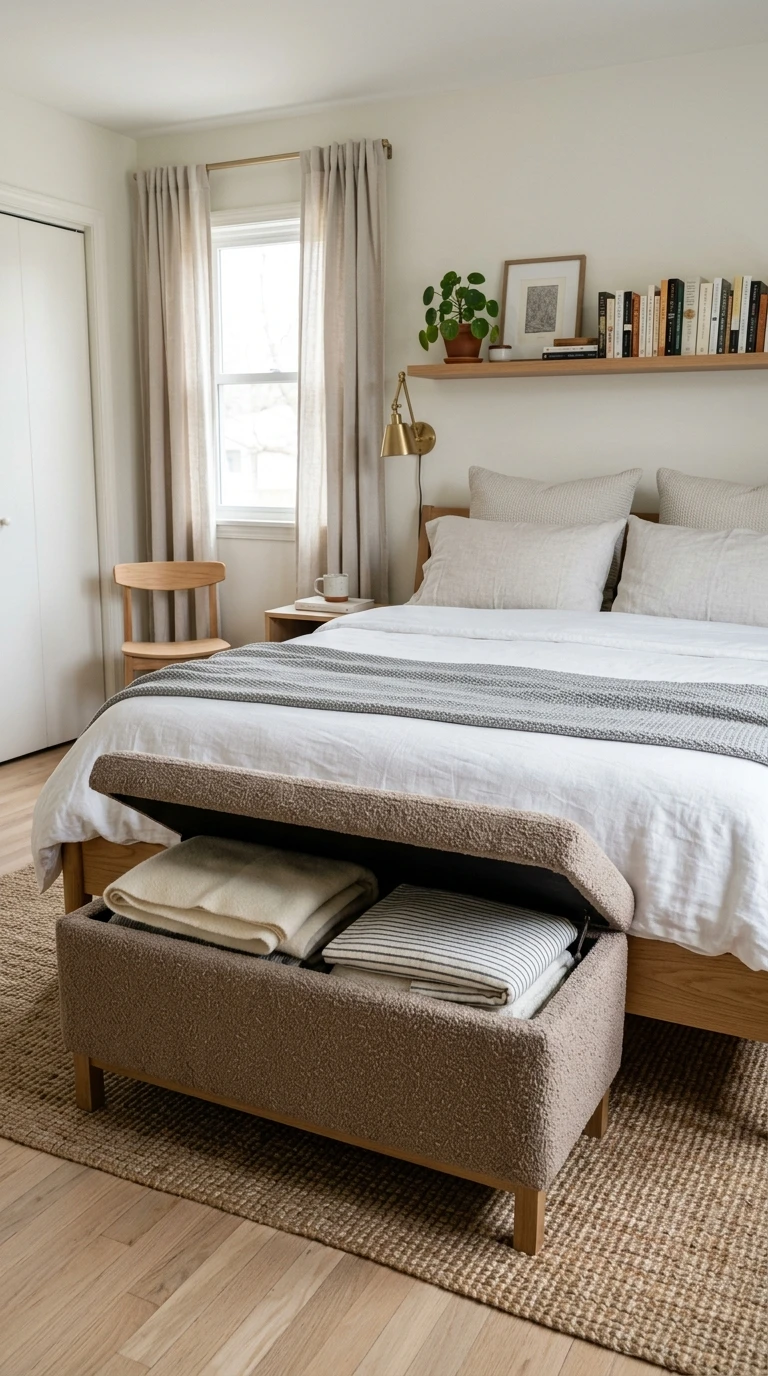
An ottoman bench at the foot of the bed is a classic example. It provides seating, a place to lay out clothes, and a soft landing for bags, but if it has internal storage it also replaces a chest of drawers or a basket. A murphy bed paired with a wall-mounted desk is the ultimate multifunctional solution for a room that needs to function as both a bedroom and an office. During the day the bed folds up and the desk comes forward, and the room transforms completely.
A vanity that doubles as a work desk is another smart combination. Add a good task lamp, a few drawer organizers, and a small mirror and the piece works as both a makeup station and a workspace. Look also for storage beds with under-bed drawers, nightstands with built-in charging stations, and headboards with hidden shelving. These pieces are not always the cheapest option upfront, but the space they save and the pieces they replace make them excellent value in a compact bedroom.
Designer Advice: Before buying any new piece of furniture for a small bedroom, ask yourself whether it can do at least two things. If the answer is no, look for an alternative that can. This single rule will change how you shop for furniture entirely.
17. Keep the Floor as Clear as Possible
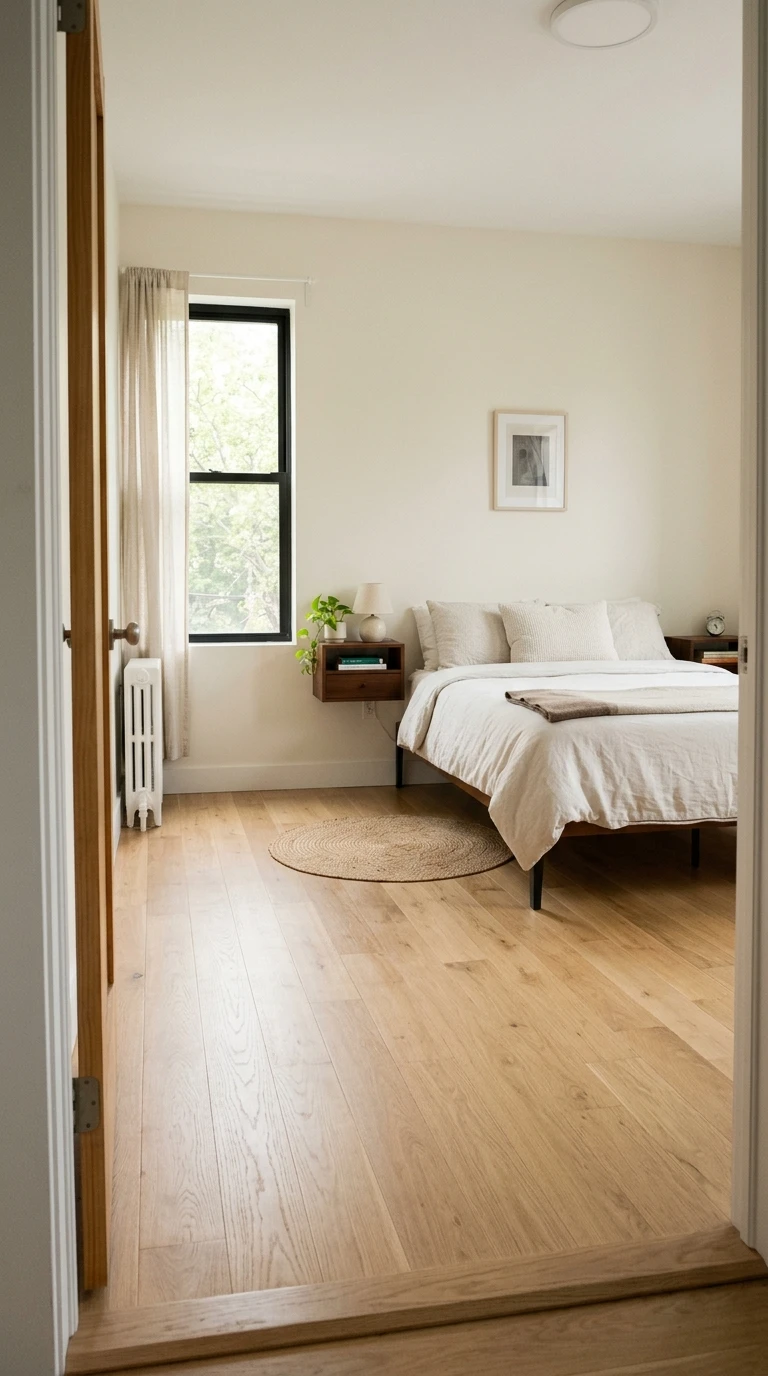
The amount of visible floor space in a room is directly connected to how open and spacious it feels. A floor that is covered with furniture legs, scattered items, exercise equipment, bags, and shoes sends a visual signal that the room is cramped and disorganized. A floor with generous clear areas feels airy and uncrowded, even if the room itself has not changed in size. Protecting your floor space is one of the most important principles in small bedroom design.
This means being ruthless about what is allowed to live on the floor. Exercise equipment should not be in the bedroom at all if you can help it. Bags and backpacks need a hook or a dedicated spot in the closet. Laundry needs a slim hamper that fits neatly in a corner, not a pile on the floor. Shoes should be stored in the wardrobe, under the bed in a flat organizer, or on a wall-mounted rack inside the closet door.
The area under the bed is prime, often-wasted storage space in many bedrooms. Flat storage bins that slide easily in and out work well for seasonal clothing, extra bedding, or shoes. If your current bed frame does not allow for under-bed storage, bed risers can lift it just enough to gain that extra few inches of clearance. The goal is to use every available inch for storage so that the visible floor stays clear and open.
Designer Advice: Do a quick scan of your bedroom floor every morning before you leave the room. Items that are left on the floor tend to multiply. A 60-second tidy-up each day keeps the floor clear and the room looking bigger without requiring a major declutter session.
18. Place a Statement Mirror at the Entry Point
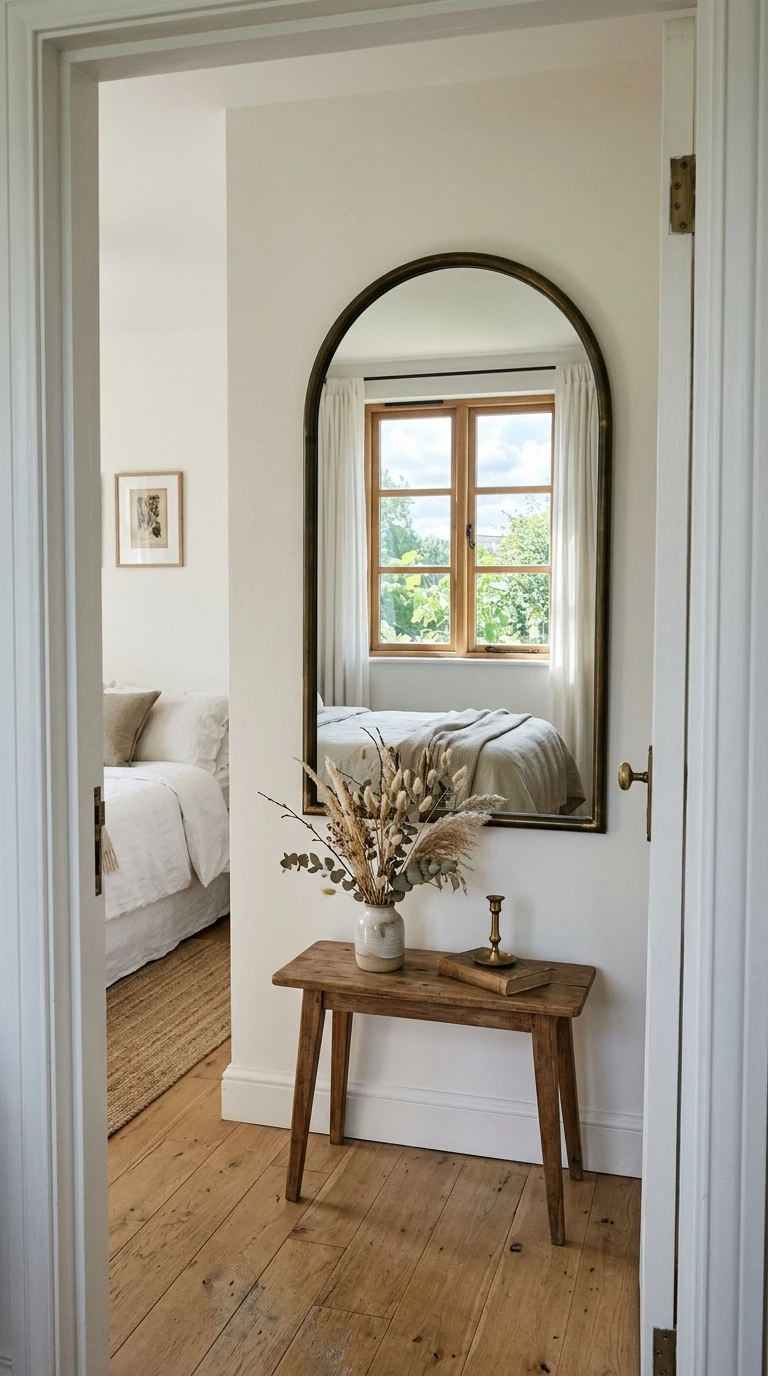
The moment someone steps through the door of a small bedroom, their eye lands somewhere. If that first impression is a cluttered corner, a pile of clothes, or a dark wall, the room immediately registers as small and uninviting. If instead the first thing the eye lands on is a large, well-placed mirror, the room reads as larger right from the doorway because the mirror reflects depth back toward the viewer before they have even fully entered the space.
Placing a large mirror on the wall directly across from or adjacent to the bedroom door is a classic designer move that works particularly well in compact rooms. The reflection pulls the view through the room and creates a sense of depth that is felt immediately. A full-length mirror leaned against the wall, a wide rectangular mirror hung at eye level, or a vintage-style carved frame mirror all work equally well depending on your aesthetic. The size is what matters most.
This tip combines the benefits of the mirror trick discussed earlier in this guide with the added advantage of controlling the very first impression of the room. A thoughtfully placed mirror at or near the entry point does not just add light and depth, it sets the tone for the entire space and makes the room feel well-considered and spacious from the very first glance.
Designer Advice: Style the area around the entry-facing mirror just a little. A small plant, a single framed print, or a simple stool nearby creates a vignette that looks intentional and welcoming. The mirror then reflects that styled moment back into the room, which only adds to the effect.
Final Thoughts
Making a small bedroom look bigger is really about working smarter with what you already have. You do not need a complete overhaul or a major budget to see real results. Painting your walls a unified light tone, rethinking your furniture choices, letting in more natural light, and clearing the floor consistently are changes that cost relatively little but make an enormous difference in how the room feels day to day.
The key is to be intentional. In a small space, every decision shows. A thoughtfully chosen rug, a well-placed mirror, or a simple declutter can shift the entire feel of the room more than any expensive renovation would. Start with the tips that feel most relevant to your current space and work through the rest gradually. There is no need to do everything at once. Even implementing two or three of these ideas will give you a noticeably more open, comfortable bedroom to come home to each night.
Frequently Asked Questions
What is the single most effective thing I can do to make my small bedroom look bigger?
Painting the walls, ceiling, and trim the same light color is consistently the most impactful single change you can make. It removes visual boundaries and makes the room feel more continuous and open without changing anything structurally.
What colors make a small bedroom look bigger?
Soft whites, warm ivory, pale greige, muted sage, and light blush tones all work well. The key is choosing a tone that reflects light well and feels warm rather than cold. Avoid stark cool whites if your room does not get a lot of natural daylight.
Should I use a dark accent wall in a small bedroom?
Generally, no. Dark accent walls create a visual stop that can make the room feel divided and smaller. If you want to add depth or personality, a tone-on-tone approach using slightly different shades of the same light color gives you visual interest without closing the room in.
What size rug should I use in a small bedroom?
Go larger than you think you need. For a queen bed in a small room, an 8 by 10 foot rug that slides partially under the bed on three sides usually works best. The rug should extend at least 18 to 24 inches on the sides and foot of the bed.
Is it better to have less furniture or more storage in a small bedroom?
The best approach is to have less furniture that does more. Multifunctional pieces, like a storage bed, an ottoman with interior storage, or a vanity that doubles as a desk, give you the storage you need without adding more pieces to the room.
Can lighting really make a small bedroom look bigger?
Yes, significantly. A single overhead light creates flat, uniform shadows that make a room feel smaller and less dynamic. Layered lighting with wall sconces, soft ambient strips, and a good ceiling fixture creates dimension and warmth that make the room feel larger and more considered.