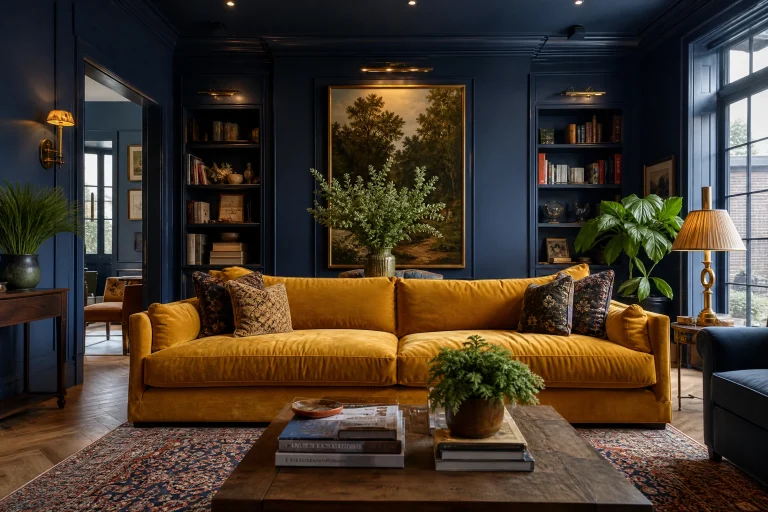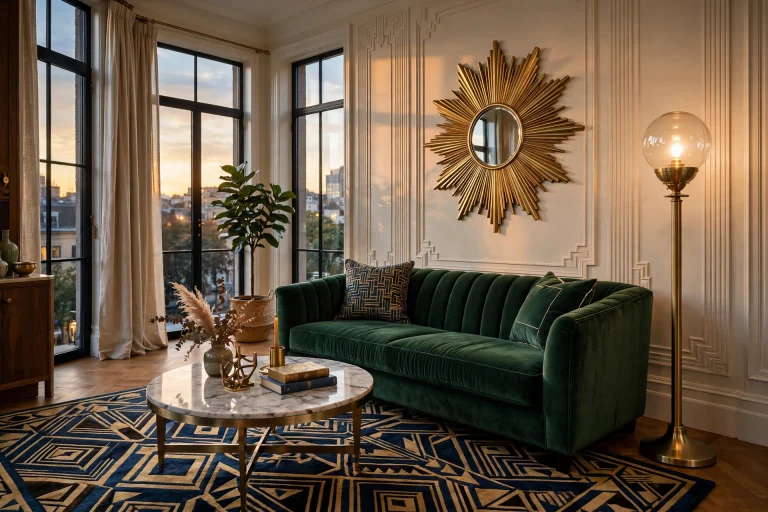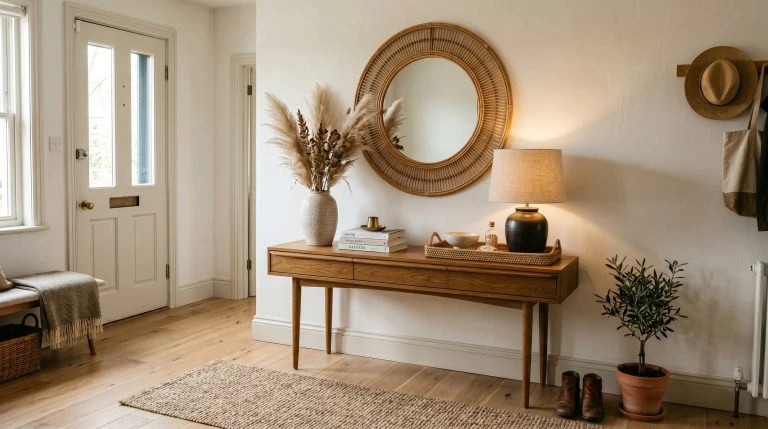
Apartment Living Room Decor Ideas That Survive Your Lease
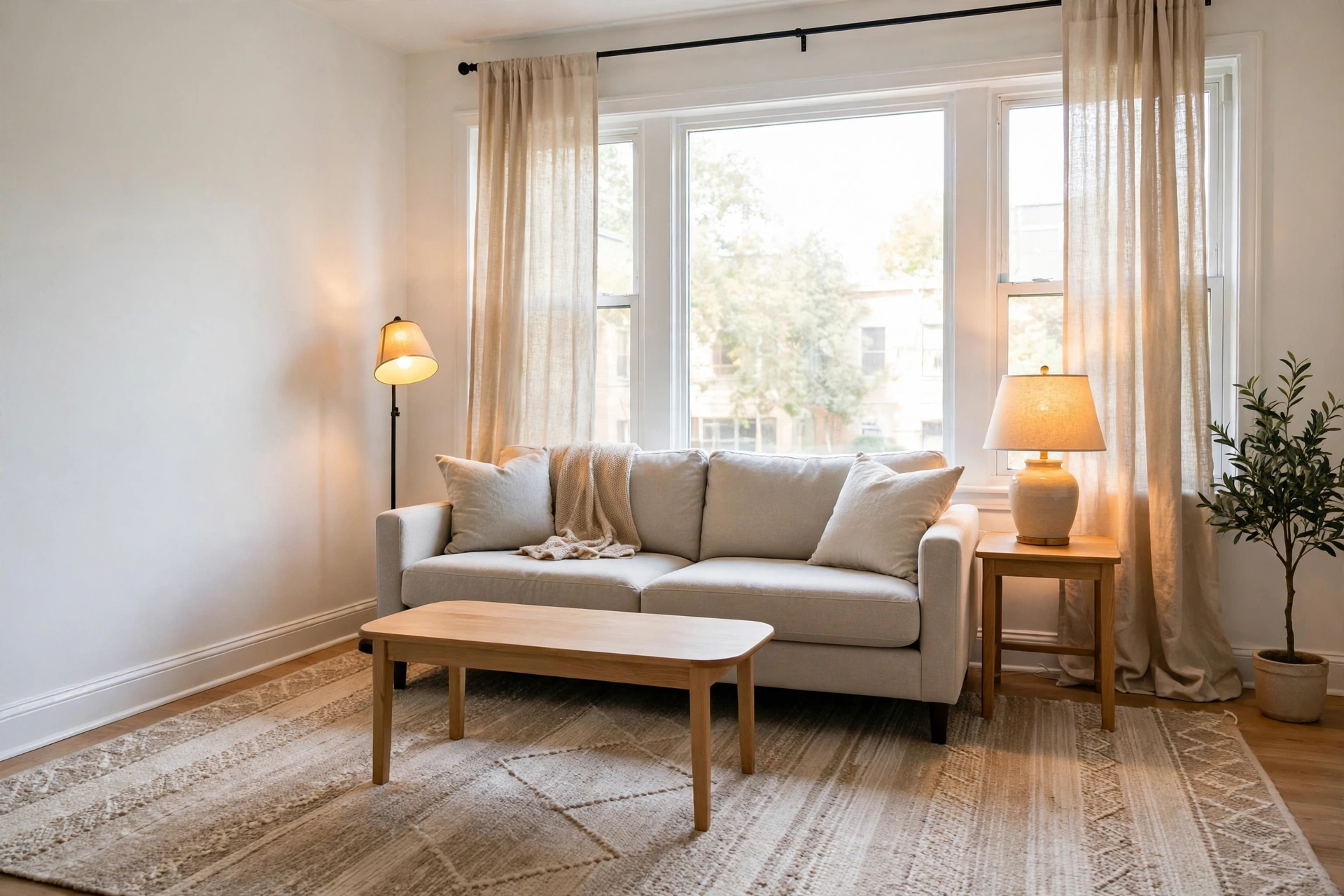
Every apartment living room starts the same: white walls you cannot paint, a ceiling light you did not choose, and a lease that says no holes. Most decorating advice ignores all three. This one does not. Here are five rental truths first, then 24 ideas built to survive them, your deposit, and your next move.
What Nobody Tells You About Decorating a Rental Living Room
Truth 1: You cannot paint, so color has to travel on things you can move. The walls stay landlord-white. That means your rug, your sofa, and your curtains carry every bit of color in the room. One bold anchor color in a neutral context looks more intentional than a little of everything.
Truth 2: Your walls have a weight limit. Command large strips hold up to 16 pounds with four pairs, and frames max out around 24 by 36 inches. They fail on flat or matte paint and textured walls, so test a hidden corner first. Know the numbers and you can hang real art with confidence.
Truth 3: The landlord’s lighting is the enemy. One harsh overhead on a switch by the door is not a lighting plan. Renters need plug-in, battery, and swappable layers: sconces, pendants, and shade swaps that leave no trace.
Truth 4: Small rooms punish small furniture. Ten tiny pieces create ten visual stops and a fussy room. Fewer, larger pieces calm a space down. But buy slim depth, not just smaller width: a 30 cm-deep console buys you walkway space a 45 cm one never will.
Truth 5: You will move. Beautiful-but-immovable furniture is a liability. Buy modular, flat-packing, disassembling pieces. Buy for your third apartment, not your first.
24 Apartment Living Room Decor Ideas
No-Paint Color Moves
Hang Curtains at Ceiling Height With Zero Drilling
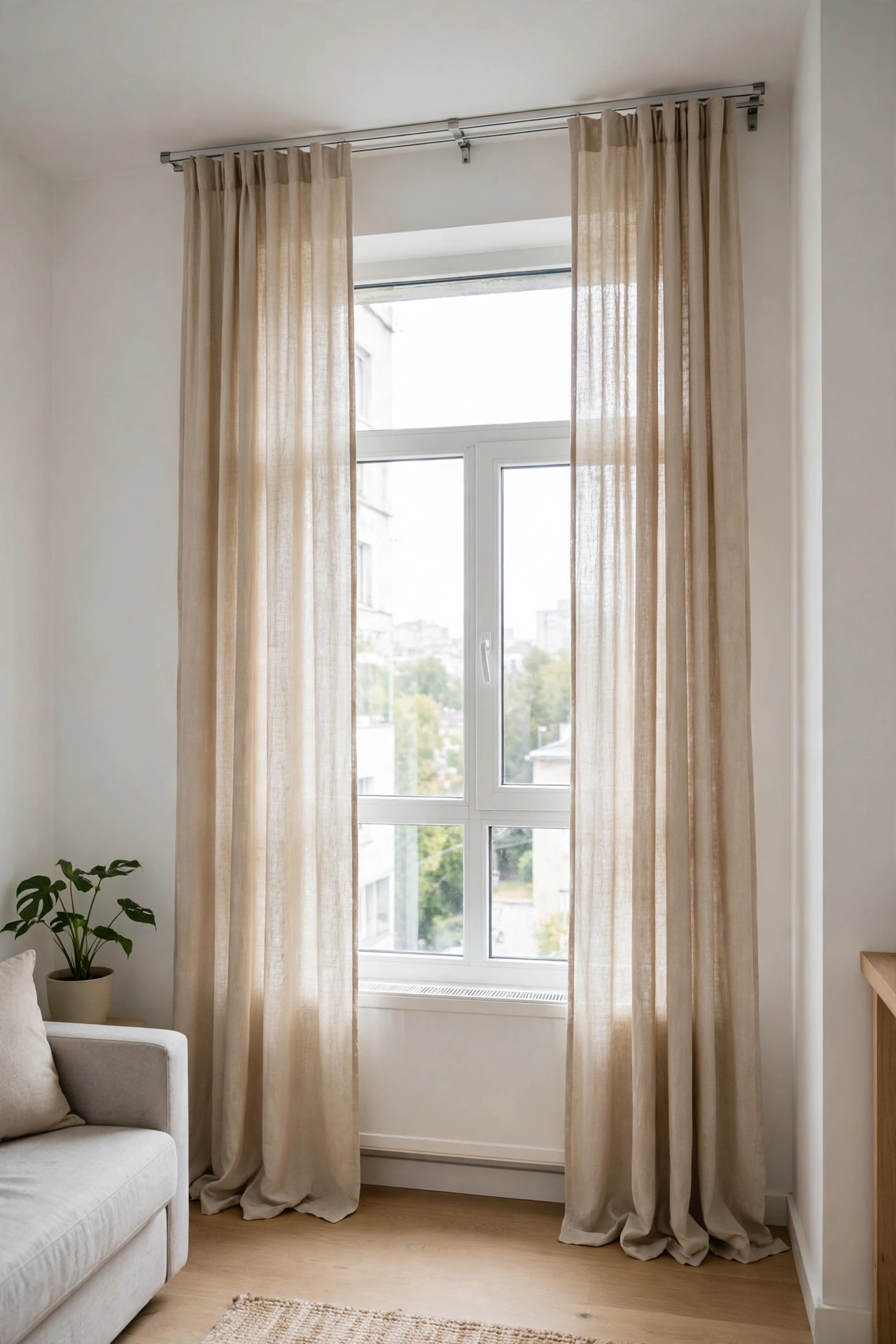
Everyone says hang curtains high and wide. Renters hear “drill brackets into the wall.” You do not have to. A heavy-duty tension rod works inside a window recess. Adhesive stick-on rod holders grip the wall near the ceiling and hold light panels. Or space Command hooks across the wall and rest a lightweight rod on them. Keep the panels light so the hardware holds, mount as close to the ceiling as you can, and let the panels graze the floor. The height trick works exactly the same without a single hole.
Steal this idea: extend the rod 4 to 6 inches past the window frame on each side so the panels stack off the glass and the window looks bigger.
Run a Color Carrier System on White Walls
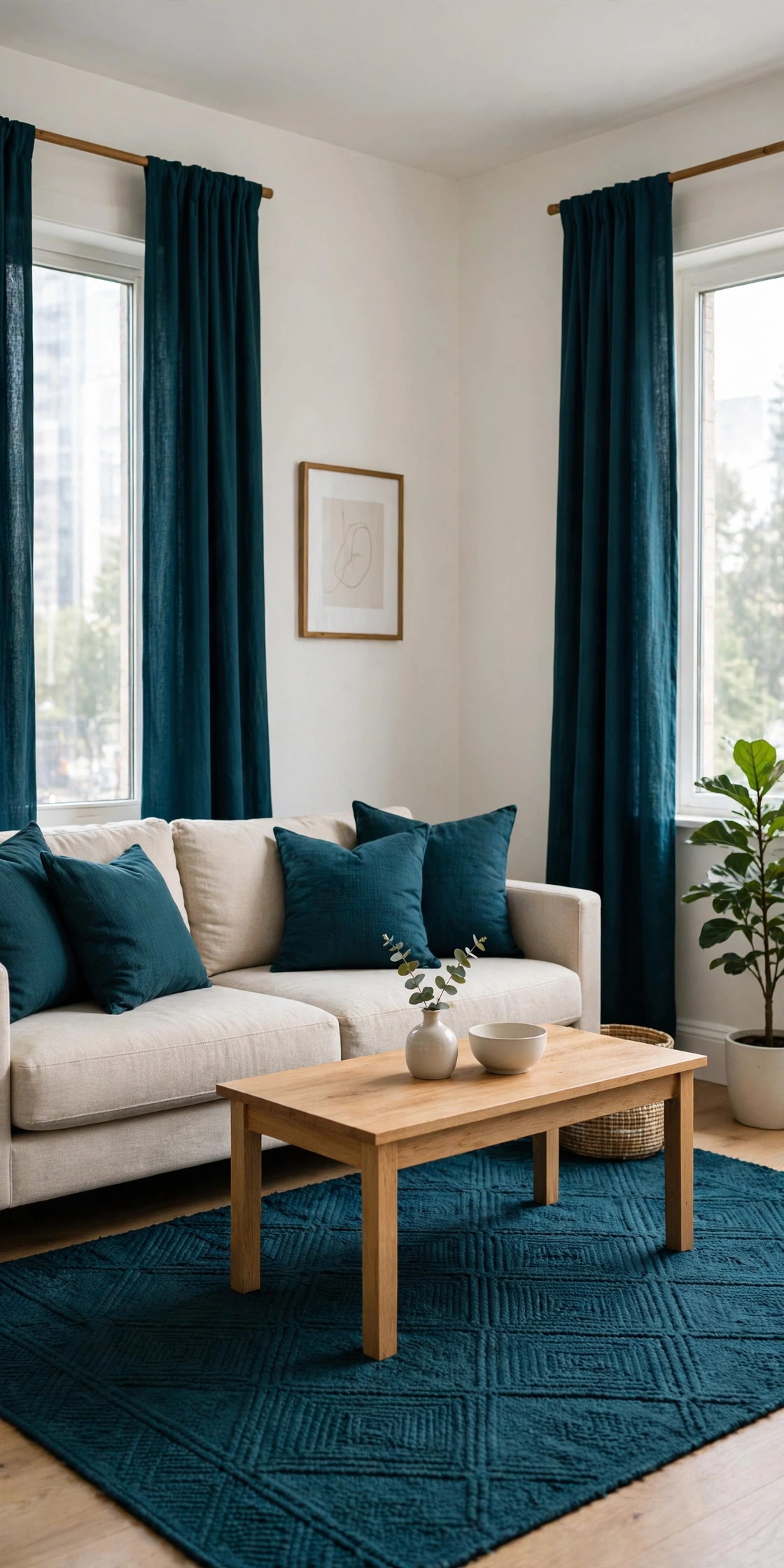
Since paint is off the table, assign every color a carrier. The rug is the primary carrier and sets the palette. The sofa or main textile is secondary. Curtains are tertiary. Pick one bold anchor color, deep teal, terracotta, olive, dusty rose, and let it repeat across the three carriers in a neutral room. This reads far more intentional than scattering five colors around and hoping they agree.
Do this next: choose the rug first. Everything else follows it, and rugs are the hardest piece to match after the fact.
Lean One Oversized Mirror Against the Wall
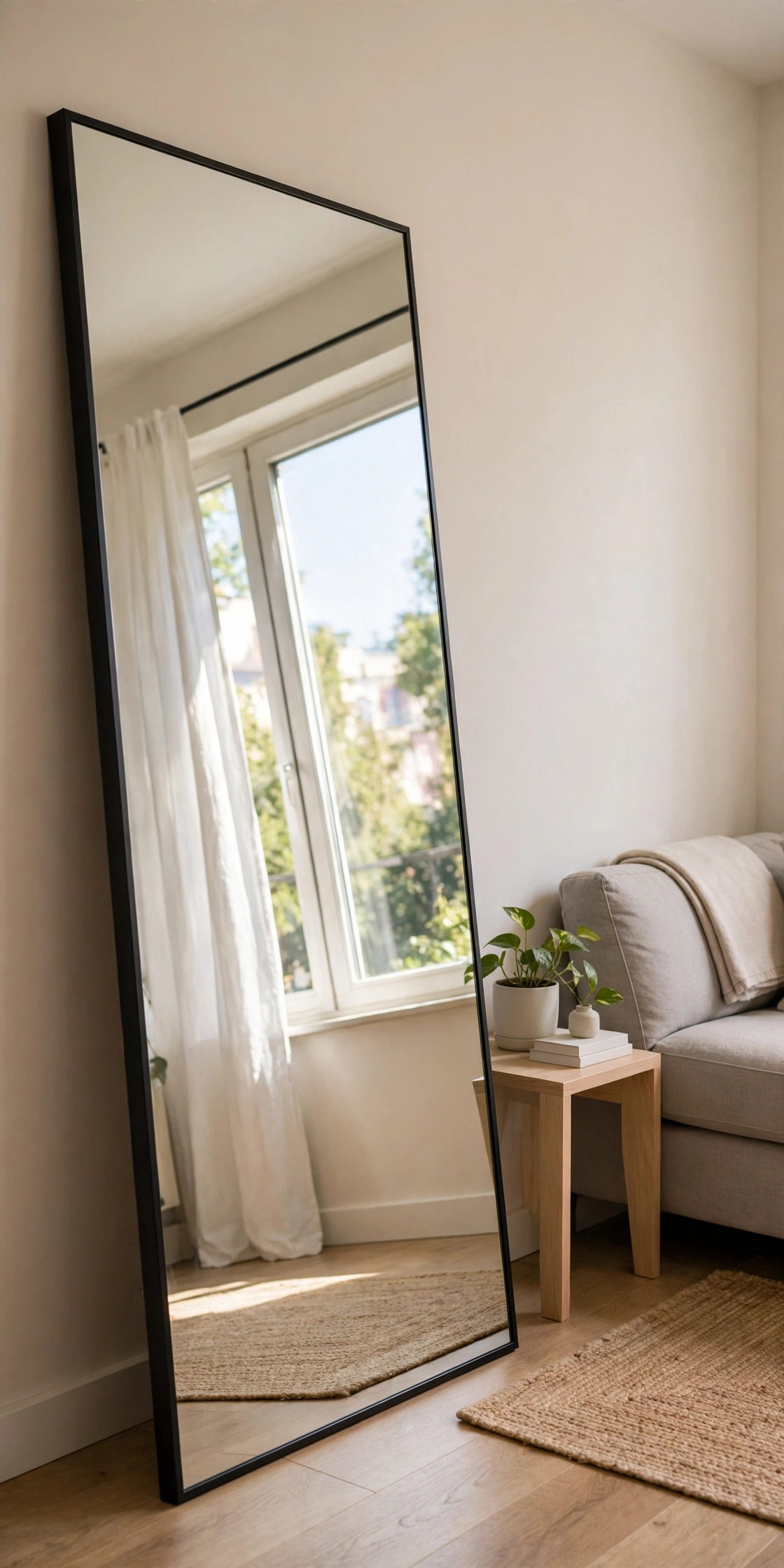
A full-length mirror leaning against the wall bounces light and doubles the room with zero holes and zero hardware. Angle it to catch a window, never opposite the TV, or you get competing glare. In a narrow room, a tall leaning mirror at the far end pulls the eye through the space and makes the whole room feel longer.
Take note: anchor the top with a small adhesive bumper or museum putty if you have kids, pets, or wobbly floors. Leaning does not mean unsecured.
Layer a Small Patterned Rug Over a Big Neutral One
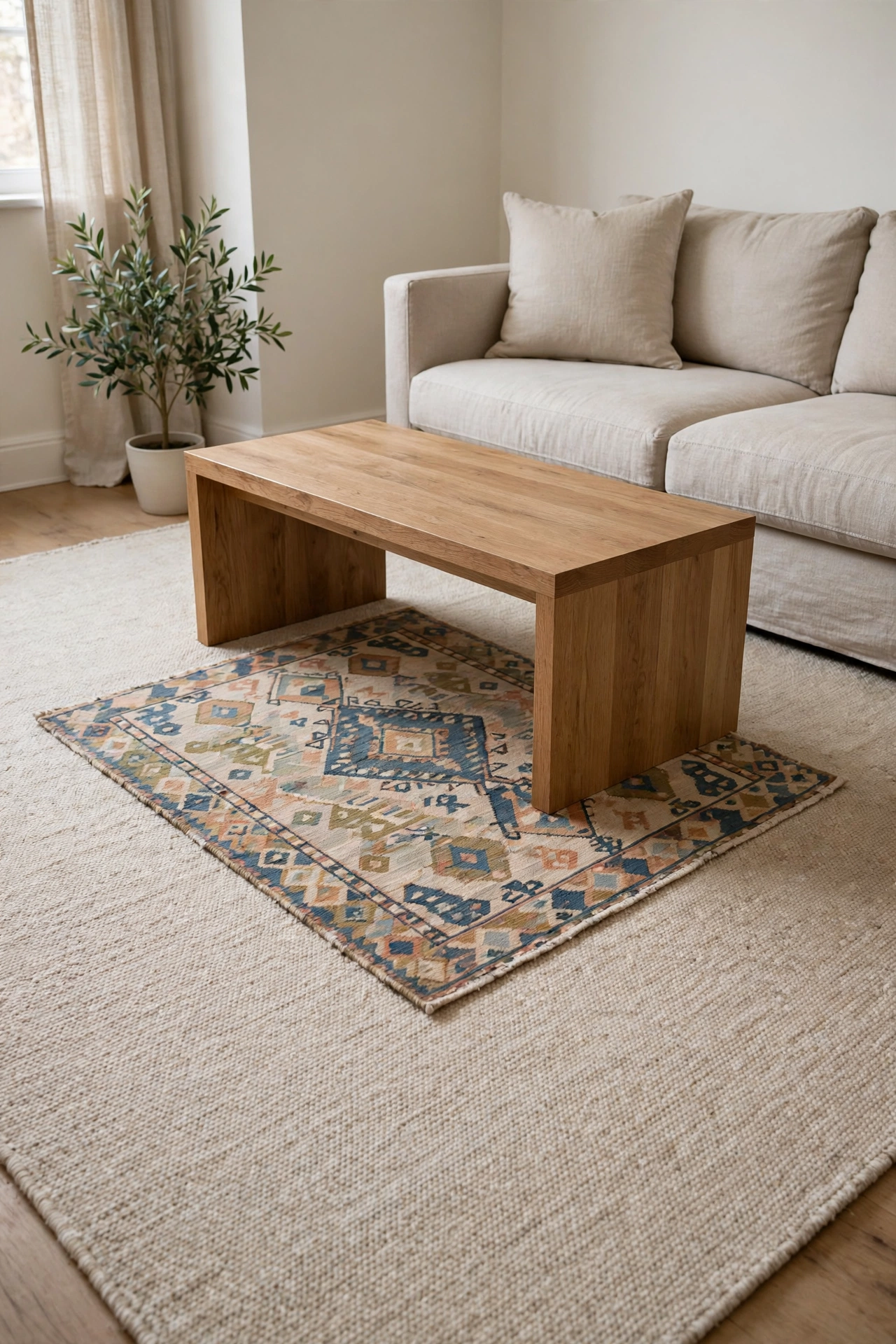
One large neutral rug calms the room. A smaller patterned rug layered on top defines a zone, under the coffee table in a lounge end, or under a reading chair at the other end of a long room. This is the cheapest way to create two rooms out of one without moving a single wall. Keep the bottom rug low-pile so the top one sits flat.
The fix: if your current rug feels too small, do not replace it. Buy the big neutral underneath it and layer up.
Swap the Landlord’s Pendant Shades and Store the Originals
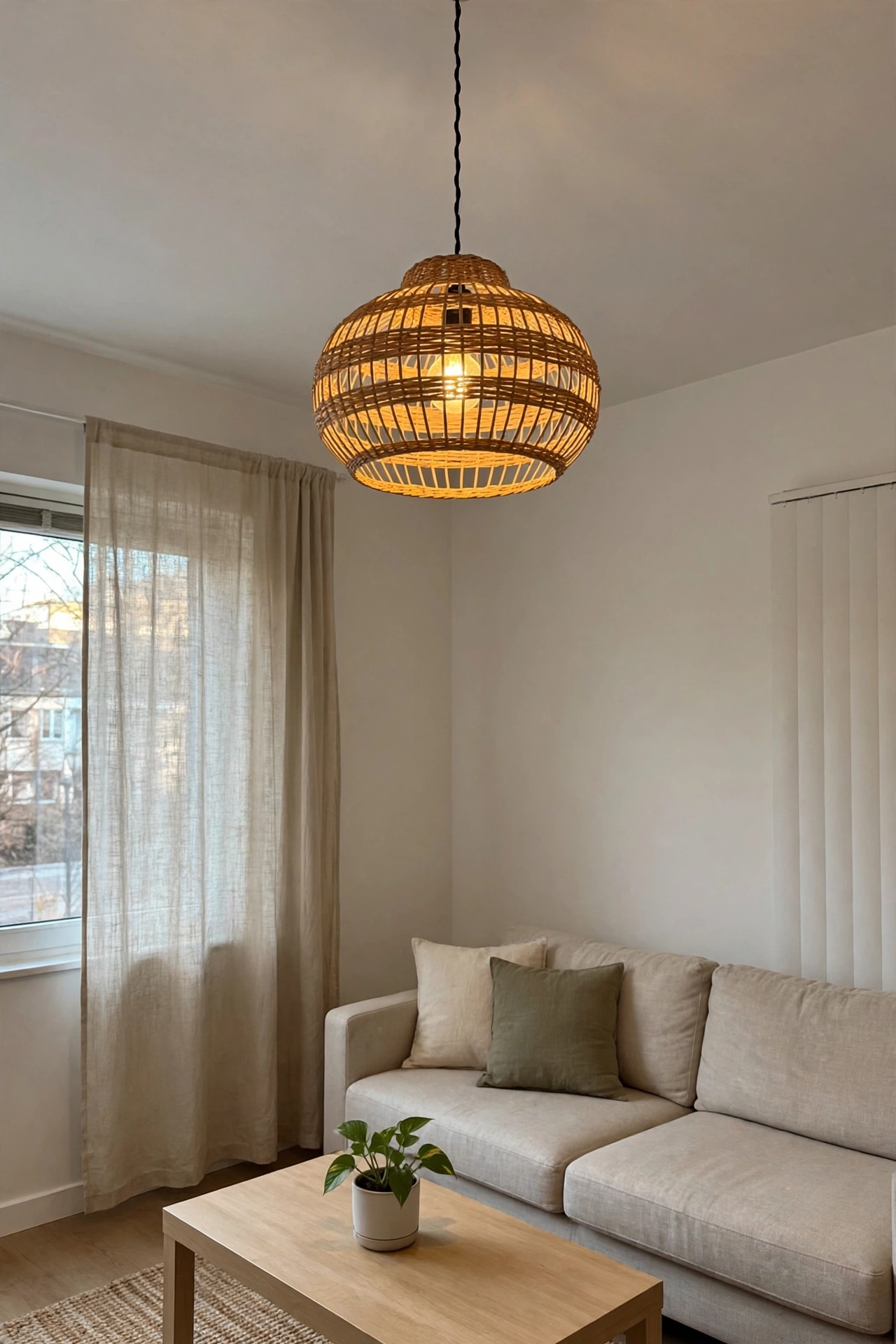
The fastest personality transplant in a rental takes ten minutes. Unscrew the landlord’s pendant shade, store it in a labeled box with its screws, and hang a shade you actually like. Woven rattan, pleated linen, or a simple drum all change the light quality and the look. At move-out, the original goes back on and nobody knows.
File this away: photograph the original fixture before you touch it, so reassembly takes two minutes instead of twenty.
The no-drill hanging cheat sheet
Command large strips: 4 pairs hold up to 16 lbs; max frame 24 x 36 in.
Removal: pull the frame off, then stretch each strip slowly 12+ inches toward the floor. Never yank outward.
Fails on: flat/matte paint, textured walls, fresh paint under 30 days. Test a hidden corner first.
Tension rods: for inside window recesses only; measure the recess, not the window.
Adhesive rod holders: light panels only; let adhesive cure 24 hours before loading.
Museum putty: for leaning mirrors, frames on shelves, anything that wobbles.
Hanging Art Without Losing Your Deposit
Hang Real Art With Command Strips, Properly
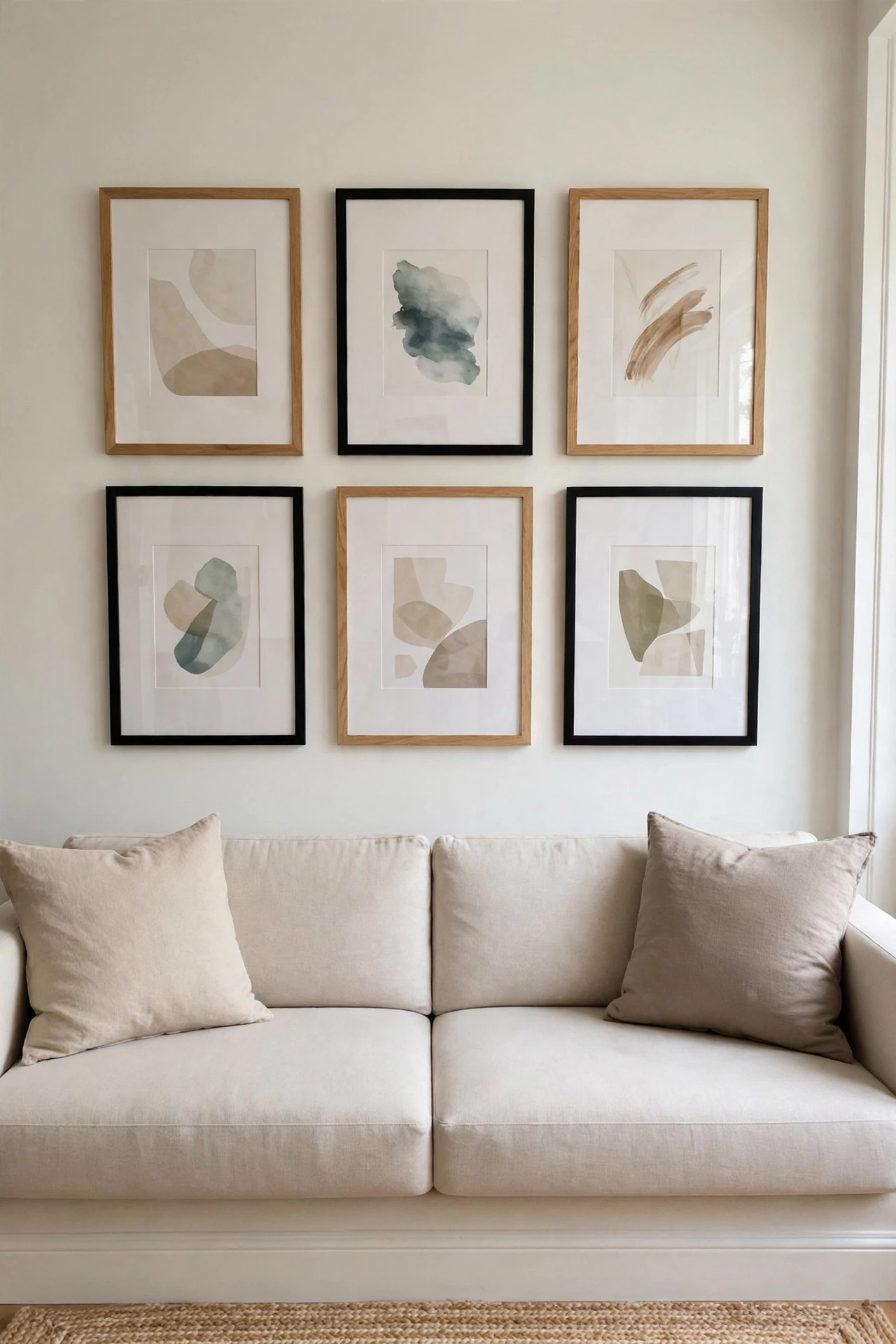
“Use Command strips” is a platitude. Here is the plan: large strips, four pairs per frame, up to 16 pounds, frames no bigger than 24 by 36 inches. Press each pair firmly for 30 seconds, wait an hour before hanging. At move-out, pull the frame off and stretch each strip slowly, 12 or more inches toward the floor. The number one failure is matte or textured paint, so test behind the sofa first.
Pro move: for a gallery wall, lay the arrangement on the floor first and photograph it. Hanging is then just copying the photo.
Build a Gallery Wall Along One Side of a Narrow Room
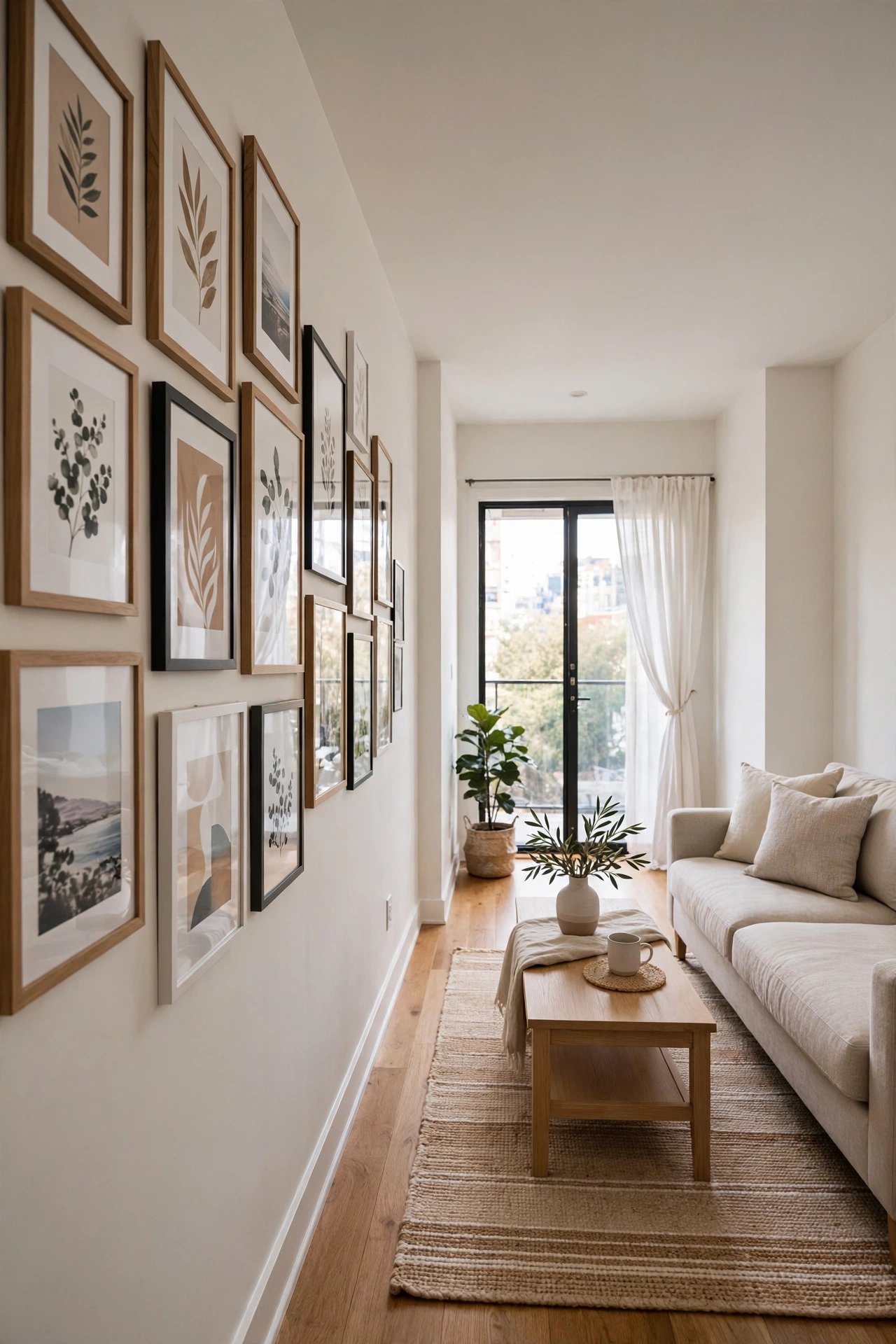
In a long narrow living room, a gallery wall along one long side pulls the eye up and across instead of down the “runway,” which kills the bowling-alley effect. Keep frames within the Command strip weight limits, mix two or three frame finishes max, and leave consistent 2 to 3 inch gaps. One oversized piece anchors the arrangement; the smaller frames orbit it.
Make it yours: thrifted frames spray-painted one color look custom and cost almost nothing.
Add Battery-Powered Picture Lights Over the Gallery
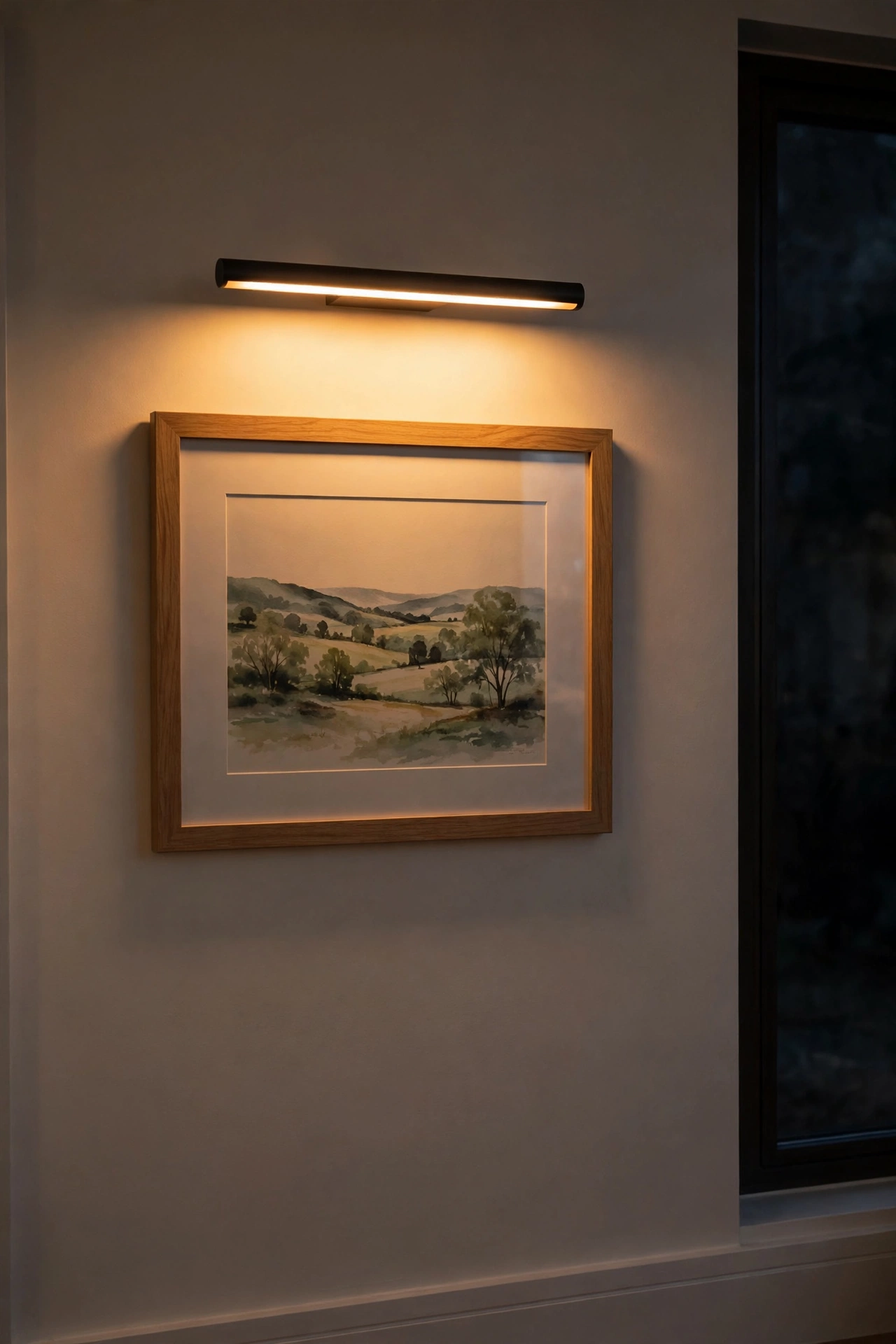
Art lighting with no outlets and no wires. Slim rechargeable picture lights mount above frames with adhesive or tiny screws into the frame itself, not the wall. Warm light on art at night is the difference between a room that looks decorated and one that looks finished. Most run weeks on a charge at a few hours a night.
Keep in mind: match the light temperature to your room bulbs, 2700K, so the art does not glow a different color than everything else.
Try Peel-and-Stick Wallpaper on One Accent Panel
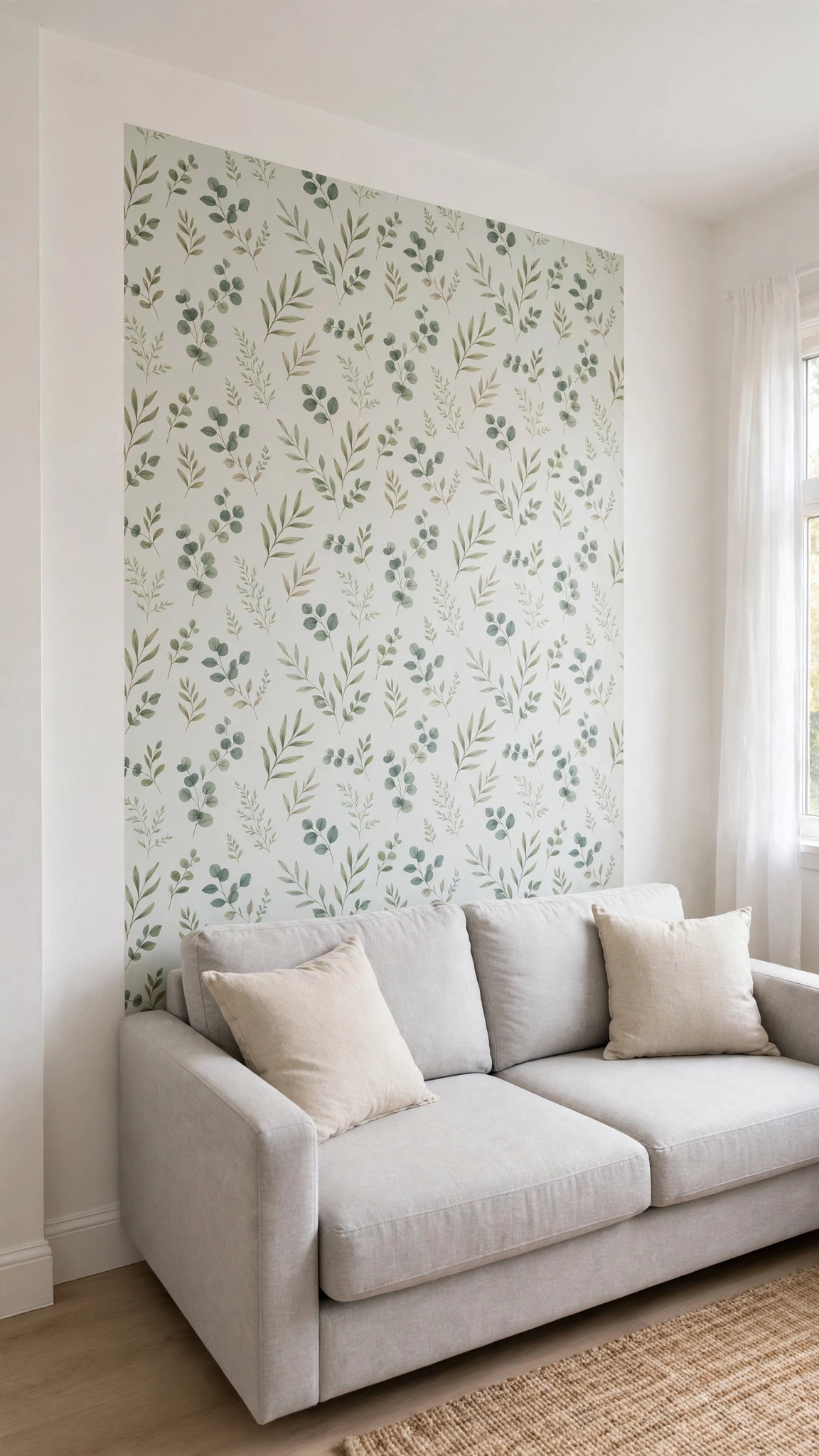
Not a whole wall. One panel, behind the sofa or the media console, gives you the pattern and color of wallpaper with a fraction of the cost and removal risk. Sample first: Chasing Paper, Tempaper, Spoonflower, Wallshoppe, and Rifle Paper Co. all sell samples under $10. Install with the room at 65 to 85 degrees, smooth from the center outward in small sections, and remove slowly at a 45-degree angle when the lease ends.
Budget tip: samples are large enough to live with for a week. Tape them up and watch them in morning and evening light before committing.
Hang a Fabric Wall Hanging to Kill the Echo
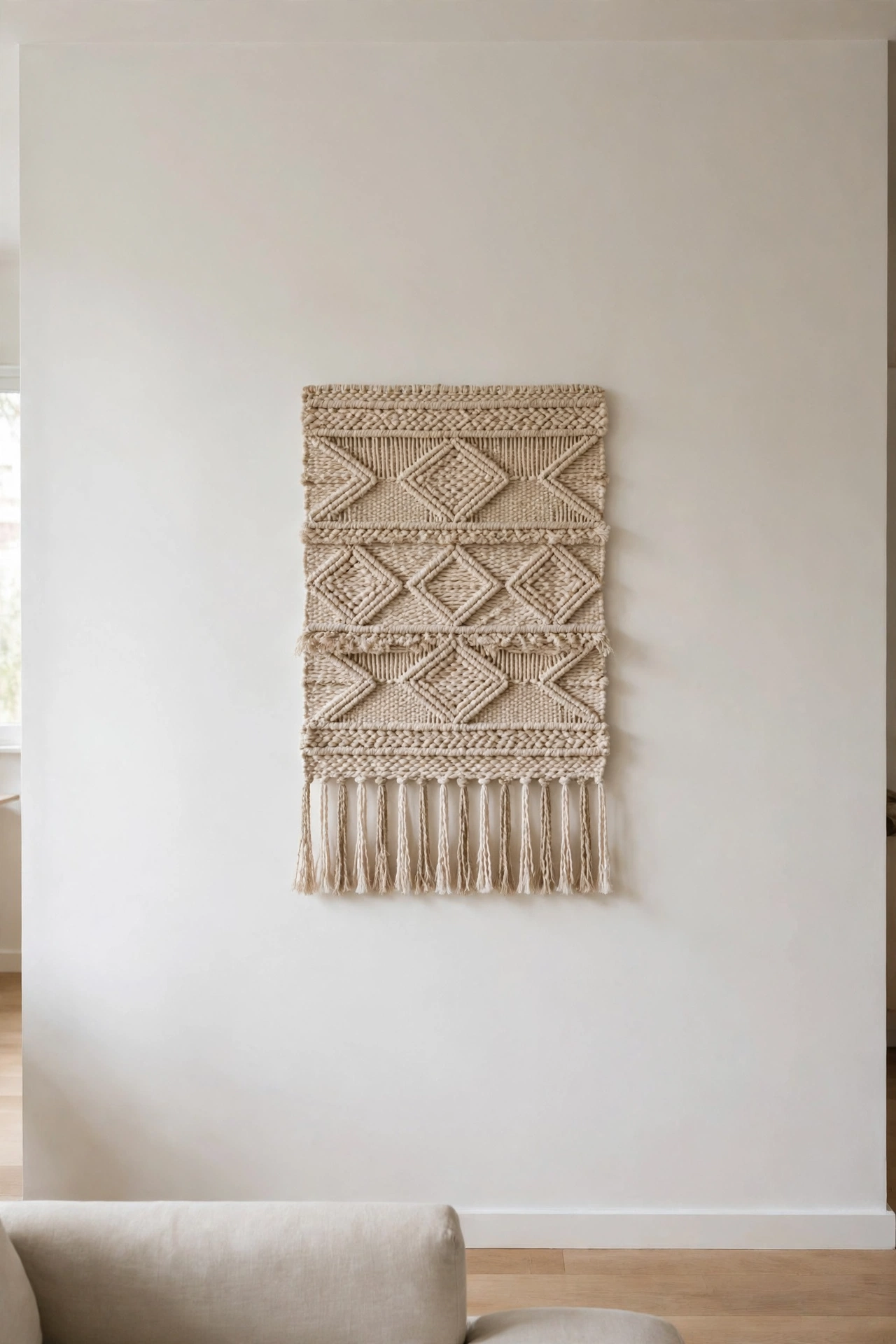
Bare rentals echo. A woven wall hanging or tapestry on the largest bare wall softens sound and adds texture no paint ever could. Hang it from a slim dowel on two Command hooks, or use a curtain wire with adhesive mounts. It also hides a multitude of sins: scuffed paint, a crooked outlet, the ghost of a previous tenant’s shelf.
Do not skip this: in a room with hard floors and no curtains, soft wall coverage changes the acoustics more than any speaker upgrade.
Lighting Layers That Leave No Trace
Flank the Sofa With Plug-In Sconces
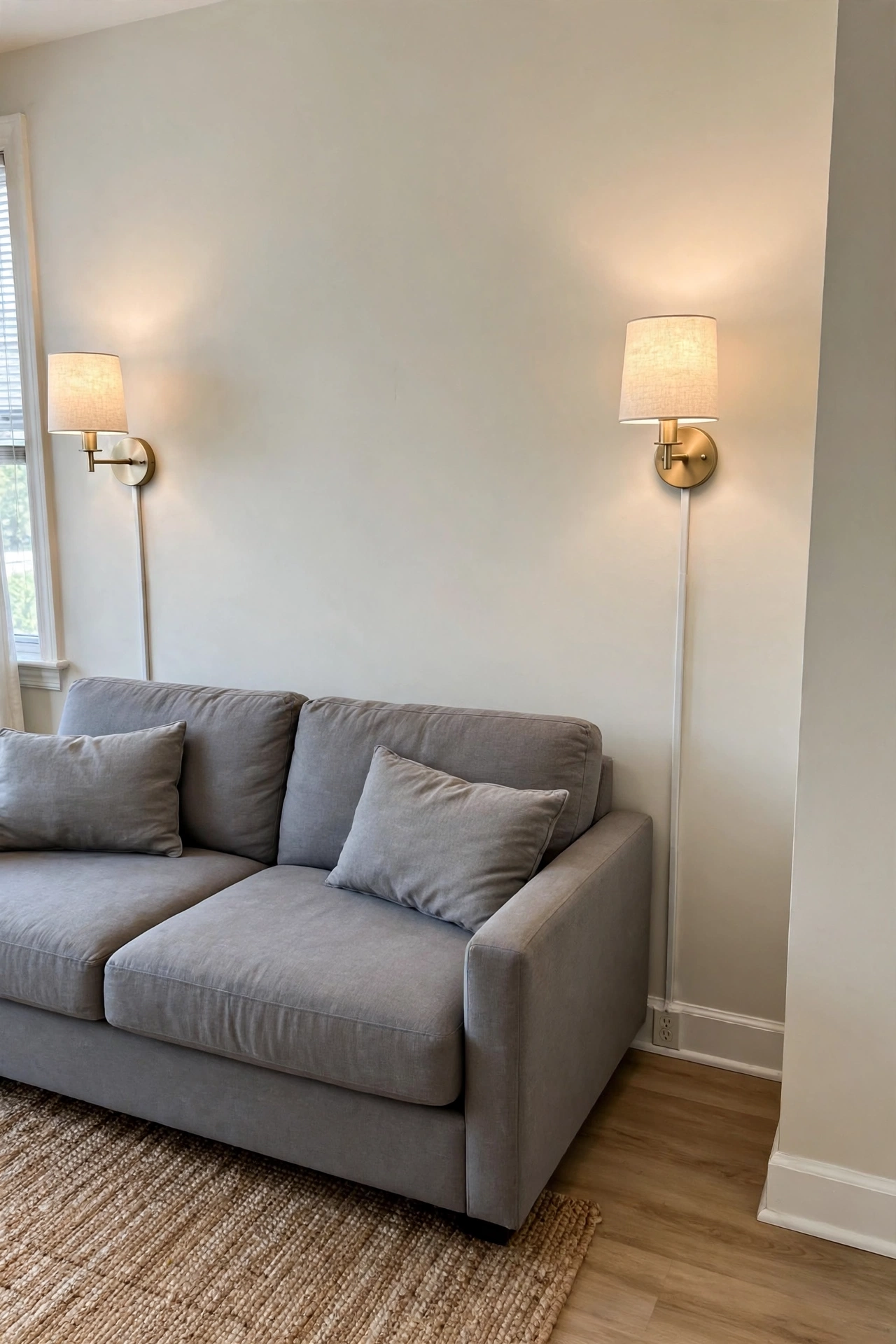
The hardwired look with zero wiring. Plug-in sconces mount with two small screws into a wall anchor, or adhesive mounts for light ones, and the cord drops to the baseboard inside a paintable cord cover. Flanking the sofa or the TV console with a pair gives you real reading light and symmetry that one floor lamp never delivers. Dimmable versions let you tune the evening mood.
Start here: cord covers that run along the baseboard disappear visually. The eye reads the sconce, not the wire.
Swag a Plug-In Pendant Over the Coffee Table
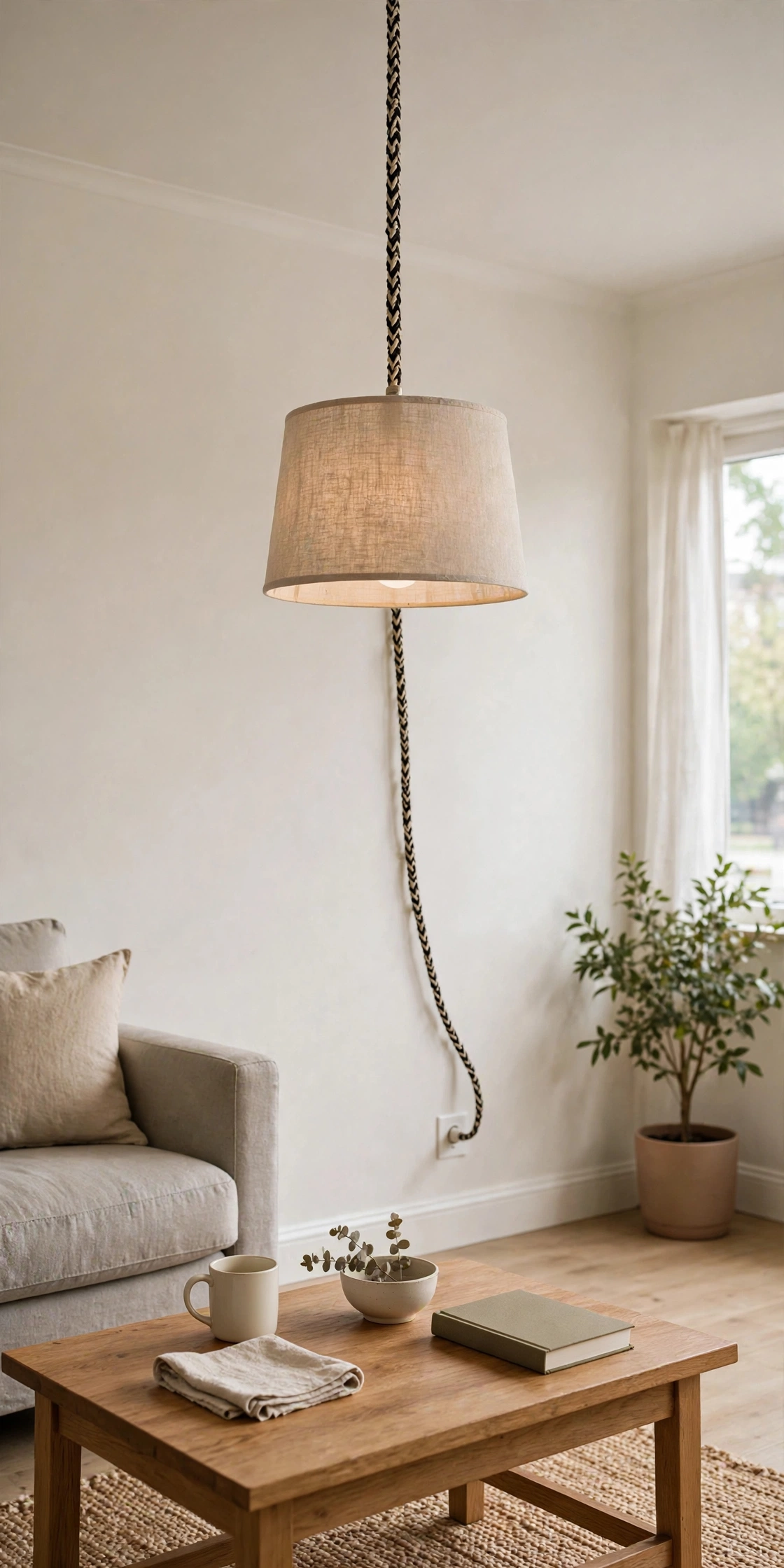
A plug-in pendant kit, 14.7 ft braided cord is standard, hangs from a small ceiling hook and drapes diagonally to the nearest wall outlet. Over the coffee table or a reading corner, it creates a pool of warm light exactly where you sit. Choose a shade with an open bottom so light actually lands on the table, and keep the cord run tidy with a cord cover.
Worth knowing: hang the shade so its bottom sits around seated eye level, low enough to feel intimate, high enough to see under.
Swap Every Bulb to 2700K and Stop Mixing Temperatures
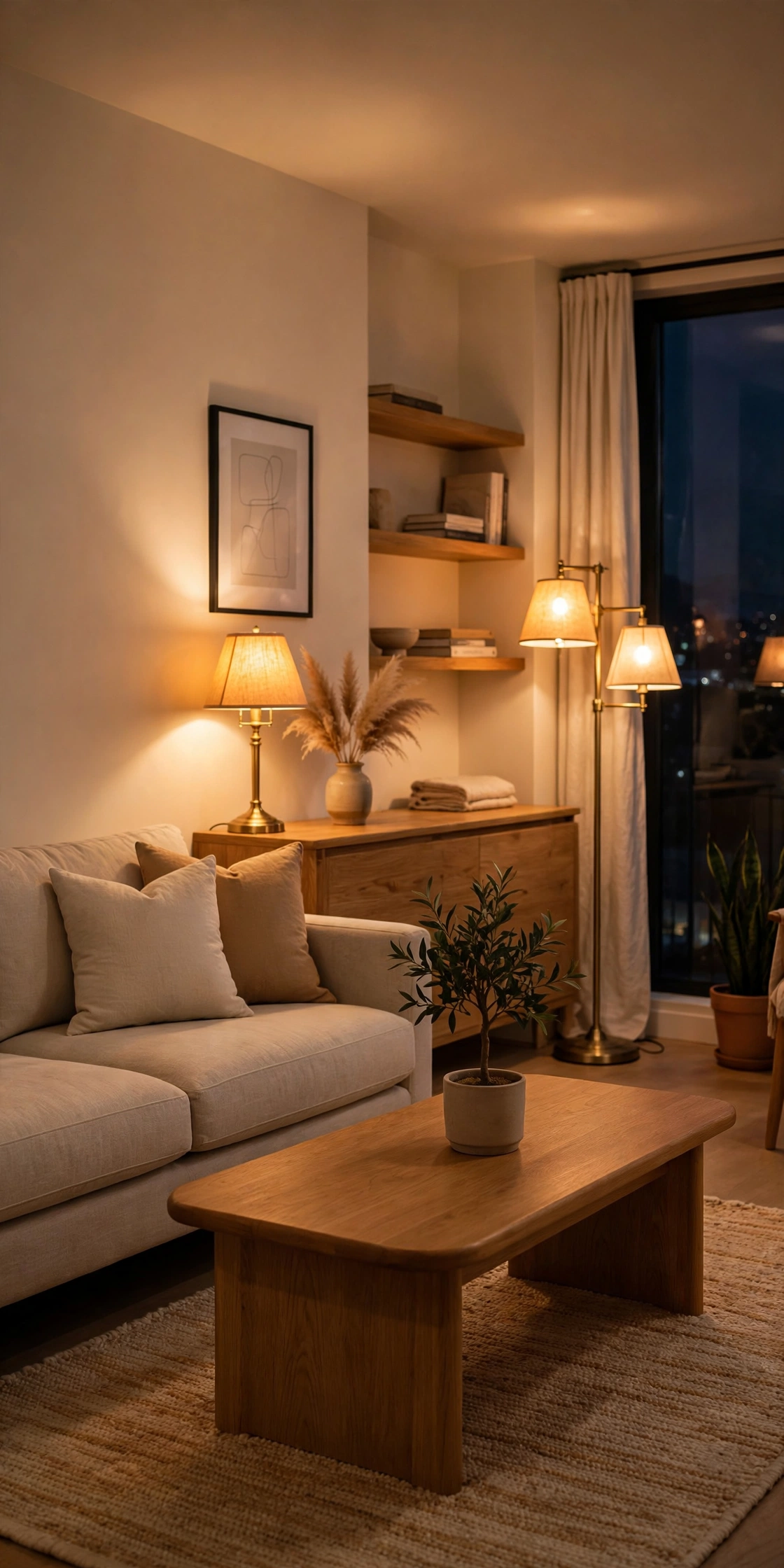
The cheapest upgrade on this list. Landlord bulbs are often cool white, which makes every color in the room look slightly wrong. Replace every bulb in the living zone with 2700K warm LED, high CRI if you can find it, and keep one temperature in every fixture. Mixed temperatures make white walls look patchy and textiles look mismatched.
Copy this: buy one multipack of the same bulb so replacements never drift to a different temperature.
Give Every Zone Its Own Switchable Light
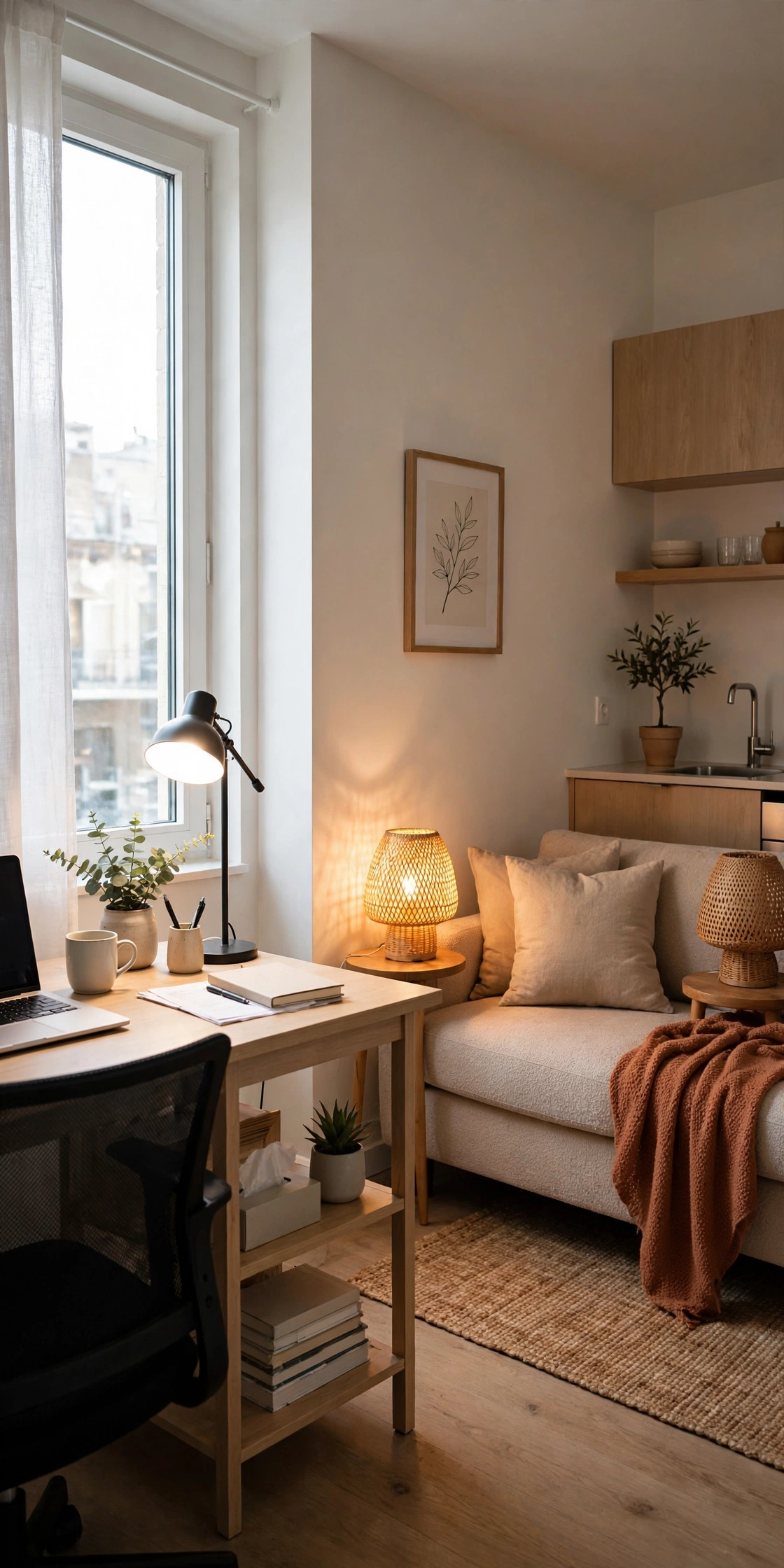
In a studio or open-plan apartment, the bed is visible from the sofa and the room never fully becomes a living room. The fix is lighting zones: the desk light, the reading lamp, the TV sconces each on their own switch or smart plug. At 10 pm the work zone light goes off and the work zone stops existing. The room transforms without moving a single piece of furniture.
The real trick: smart plugs with a bedtime routine automate the whole thing. One tap, work disappears.
Keep a Floor Lamp Behind the Reading Chair, Not Beside the Sofa
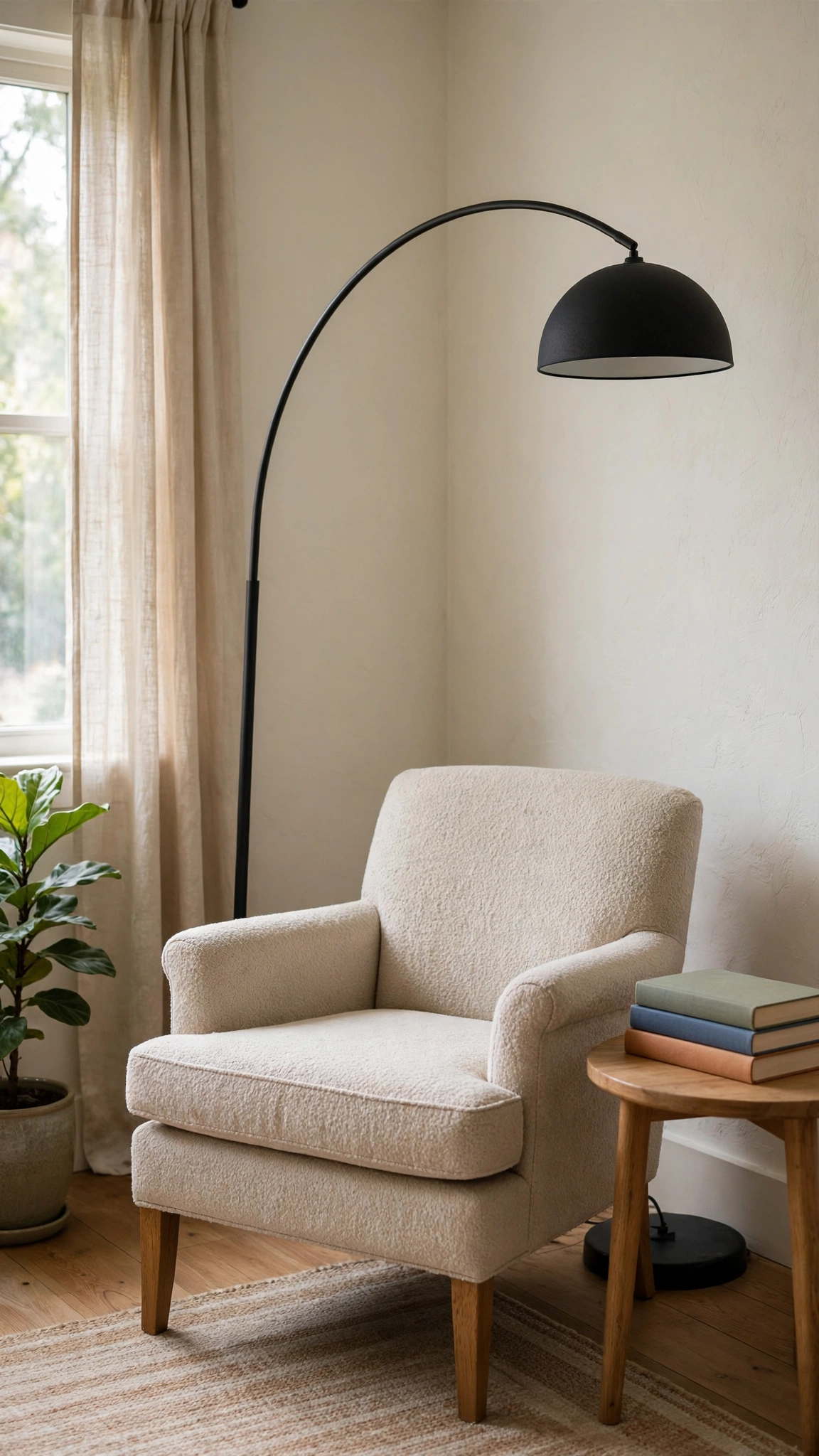
Everyone puts the floor lamp next to the sofa where it fights the TV for attention. Put it behind the reading chair instead, arcing over the shoulder. You get a genuine reading spot, the sofa wall stays clean for art, and the lamp’s glow becomes a backdrop that makes the whole corner look styled. An arc or pharmacy-style lamp works best for shoulder-height light.
Remember this: the lamp should be tall enough that the shade sits above eye level when you are seated, or you will stare into the bulb.
The rug-sizing rule card
Front legs of the sofa AND every chair sit ON the rug. No exceptions.
Torn between two sizes? Size up. A too-small rug chops the room into pieces.
Leave 10 to 18 inches of bare floor between the rug edge and the wall.
One large rug calms a room. Several small rugs chop it up.
Layering: big neutral underneath (low-pile), smaller patterned on top.
Scale and Depth Tricks
Buy Fewer, Bigger Pieces
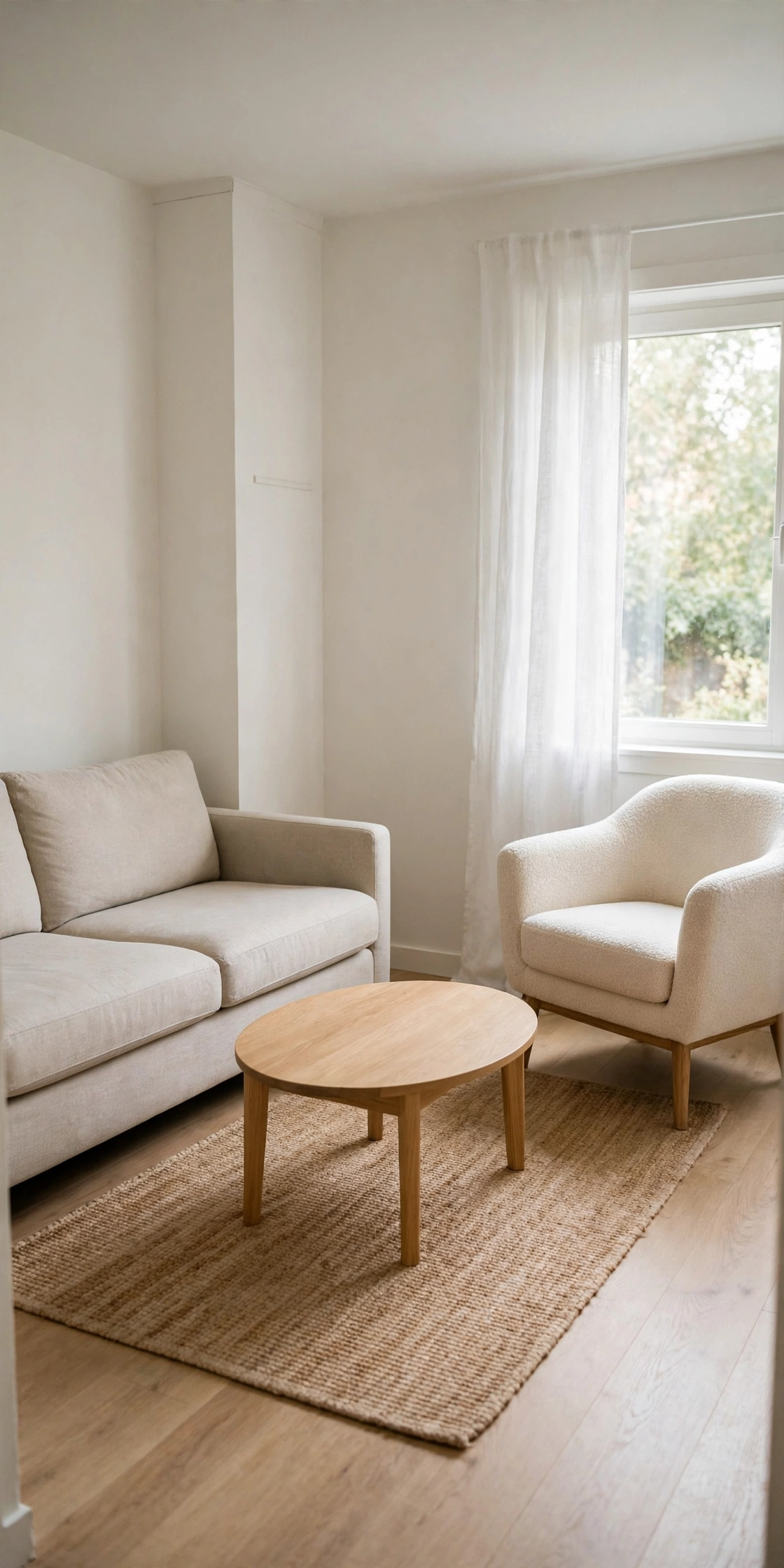
The most counter-intuitive rule in small-space decorating: ten small objects make a room feel smaller, not bigger. Each one is a visual stop. Three larger pieces give the eye three calm landing spots. One generous sofa calms a small living room more than a loveseat plus two chairs. A single large coffee table beats a cluster of tiny ones. Edit ruthlessly and let each piece breathe.
Take note: “bigger” means visually calmer, not physically massive. Scale to the room, then choose the largest version that fits.
Go Slim-Depth Instead of Small
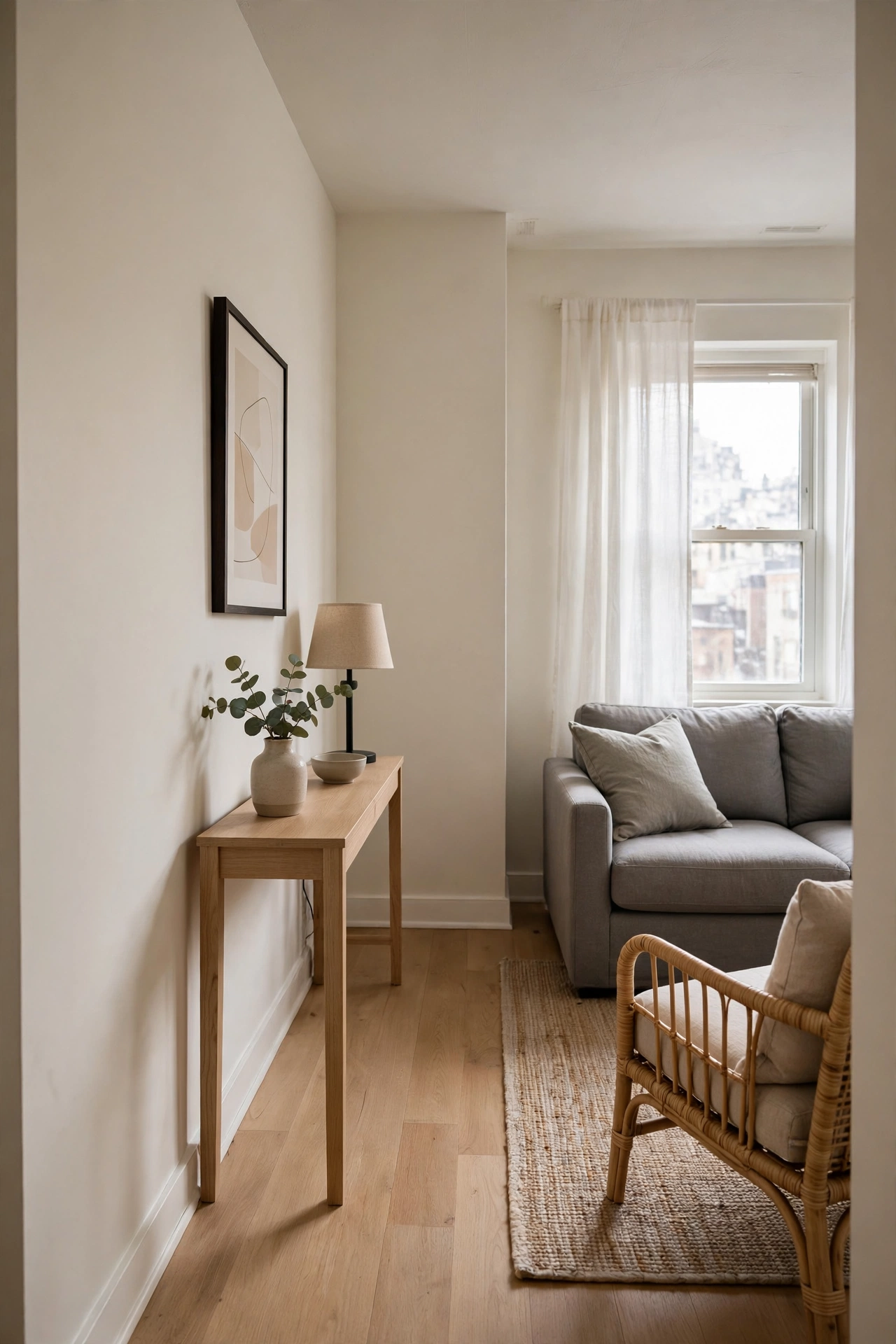
Do not shrink the width; shrink the depth. A 30 cm-deep console against the wall buys you real walkway space that a 45 cm one never will. Narrow-profile seating, apartment-scale sofas at 72 to 76 inches wide instead of the standard 84 to 90, and slim media benches keep circulation open. Circulation is what makes a room feel livable, not square footage.
Measure this: walk your main path with a tape measure. If it is under 75 cm, something needs to go slimmer.
Float the Sofa Off the Wall
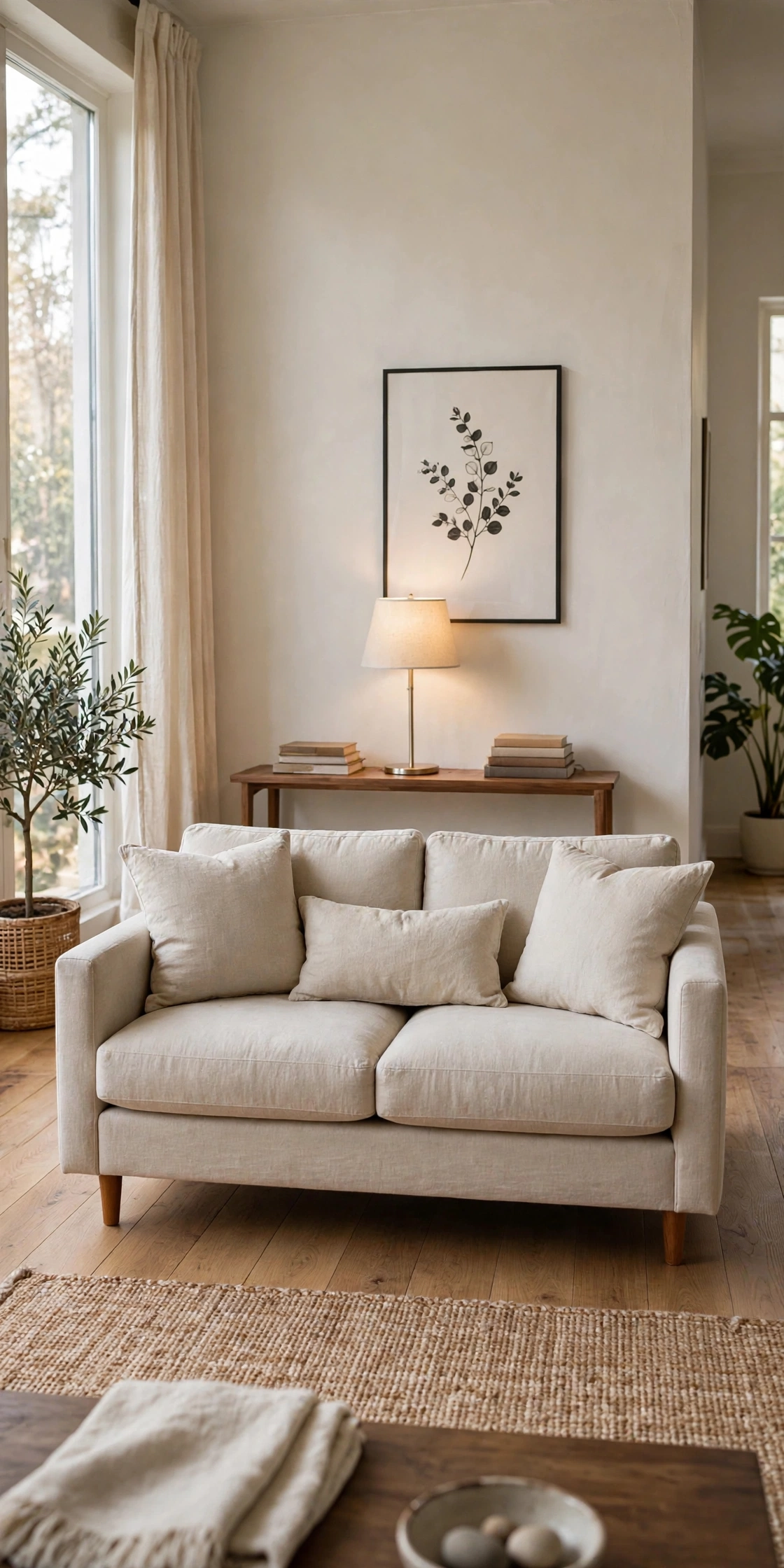
Pushing everything against the walls is the default, and in a narrow room it creates the bowling-alley effect. Pull the sofa even 30 cm off the wall and the room breathes. Behind it you gain a slim console for books and a lamp, which adds a whole extra layer to the room. The walkway behind becomes circulation instead of dead space.
The shortcut: if the room is truly tiny, float just one piece. The sofa alone changes the whole geometry.
Zone a Railroad Living Room Into Two Ends
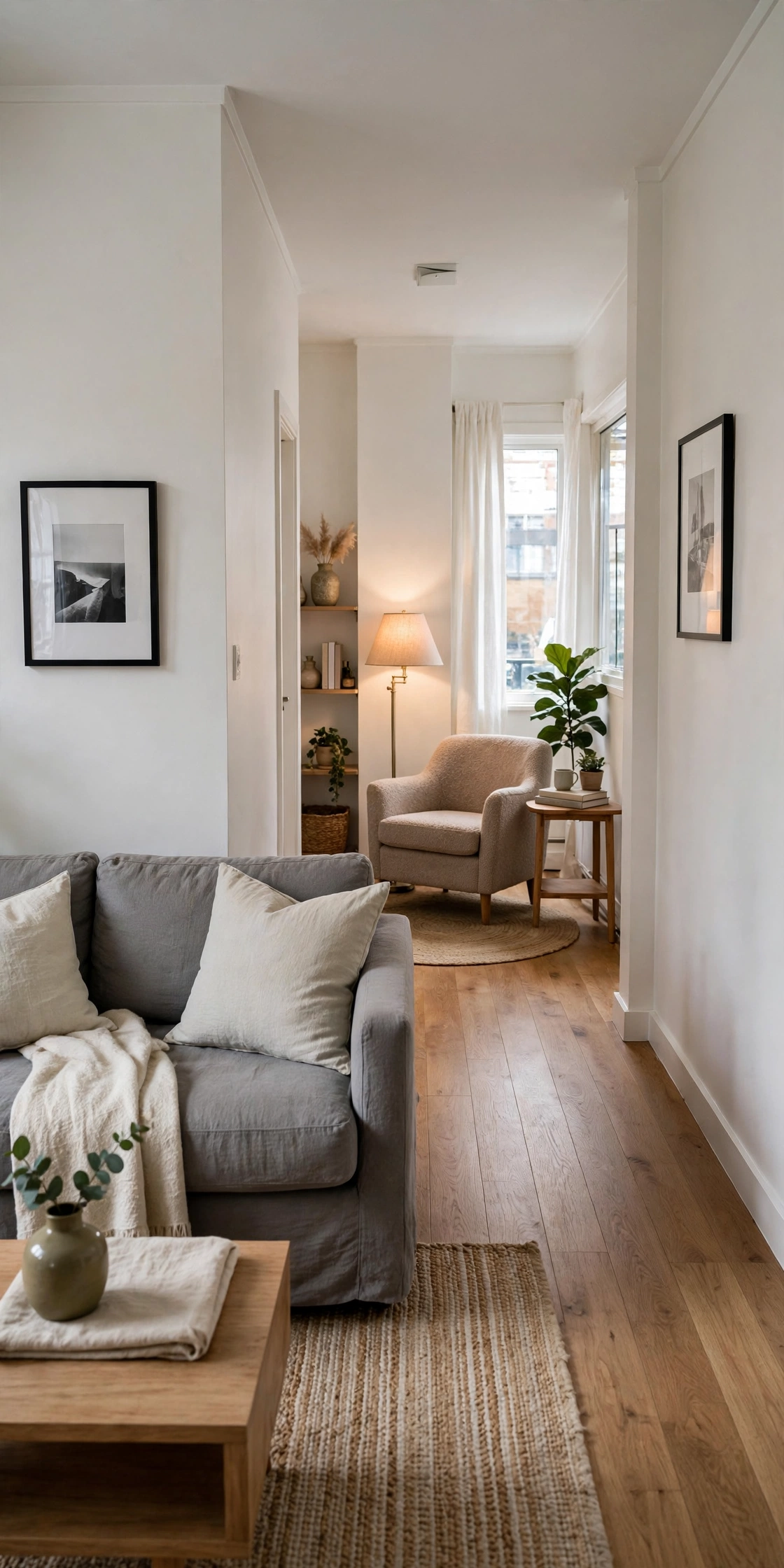
Long narrow rooms need zoning, not more furniture along the walls. Lounge end: sofa, coffee table, rug, TV. Far end: reading chair, floor lamp, small side table, second rug or a layered one. Two rugs and two light pools tell the brain there are two rooms. Keep pathways 75 to 90 cm and let the middle stay open.
Go for it: a low, long media bench along one wall gives you horizontal lines that widen the eye instead of emphasizing the length.
Choose Swivel Chairs Over Fixed Accent Chairs
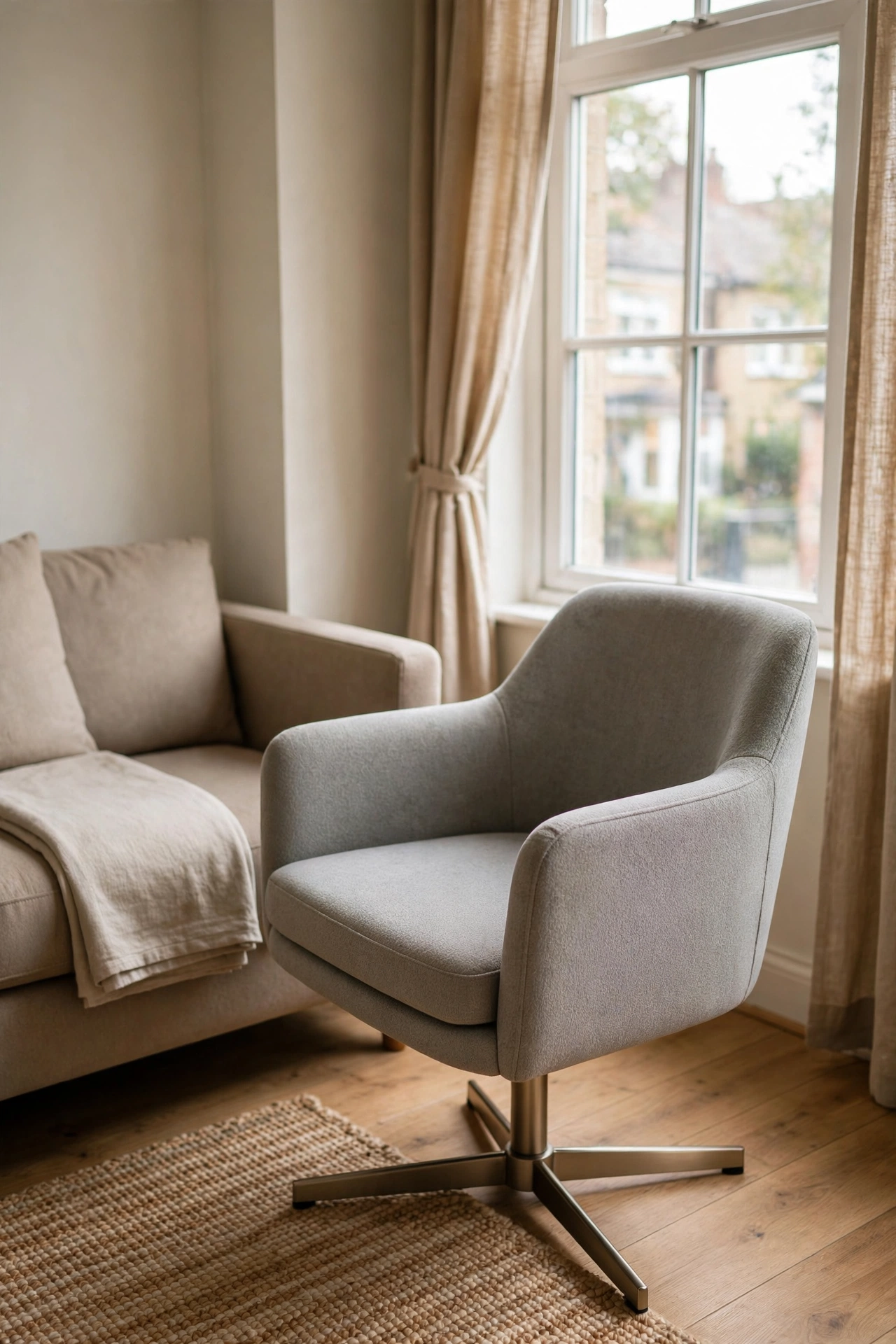
In a multipurpose apartment living room, a chair that only faces one direction is a part-time employee. Swivel chairs turn toward the conversation, the TV, or the window as the evening changes. They also tuck neatly away when you need floor space. Look for apartment-scale swivels with a small footprint, not oversized lounge versions.
File this away: one swivel chair plus one fixed chair gives you flexibility and structure at the same time.
Furniture That Moves With You
Buy Furniture That Survives the Next Move
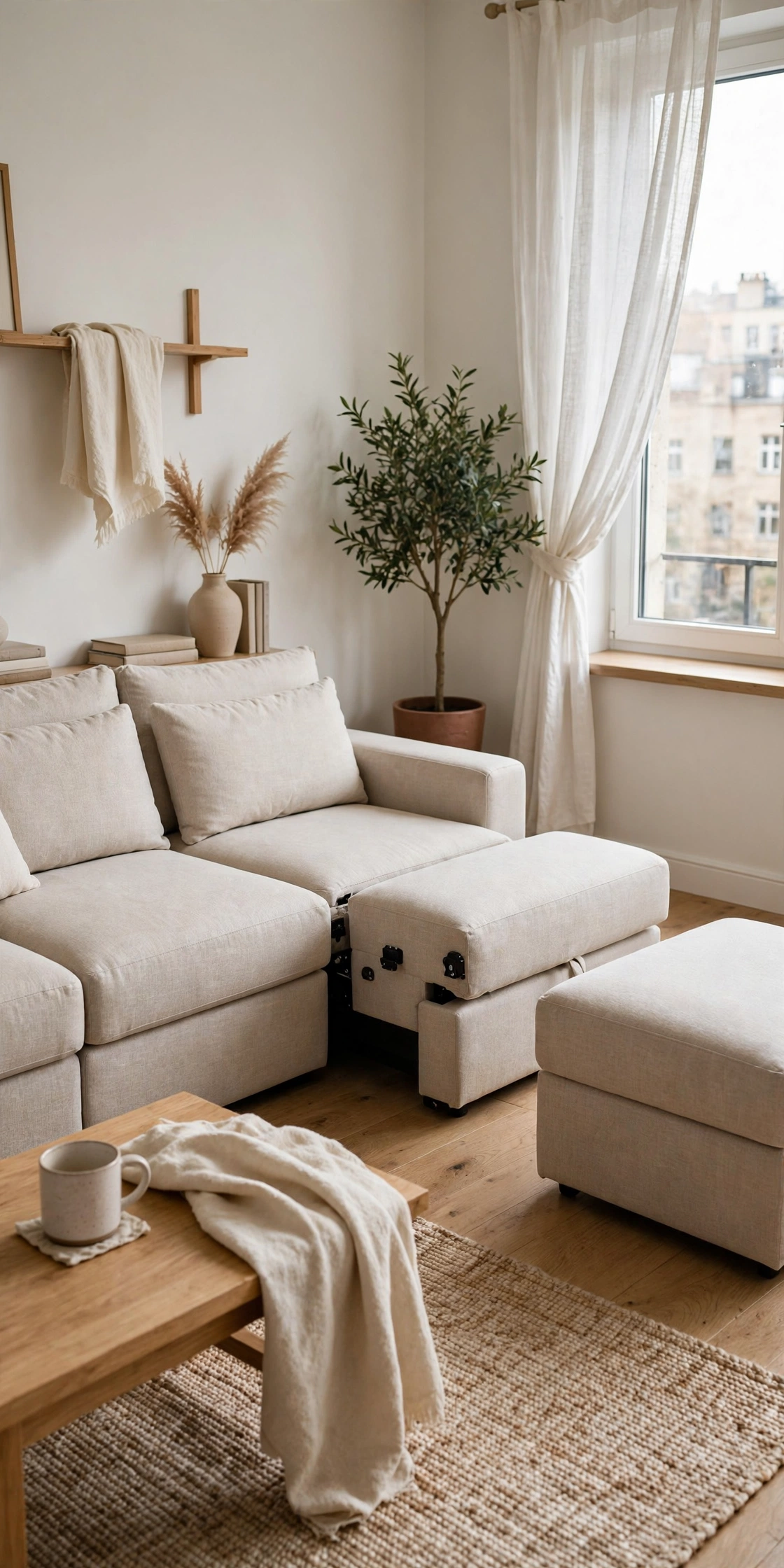
Modular sectionals with detachable parts, cube shelving that flat-packs, tables with removable legs. Every piece should pass the stairwell test: can two people carry it down one flight without removing a door? Beautiful-but-immovable furniture becomes a donation or a dumpster on moving day. Buy for the third apartment, not the first.
Ask this: before buying, check whether it disassembles with basic tools. If the answer is no, keep shopping.
Put the TV on a Floor-Standing Stand
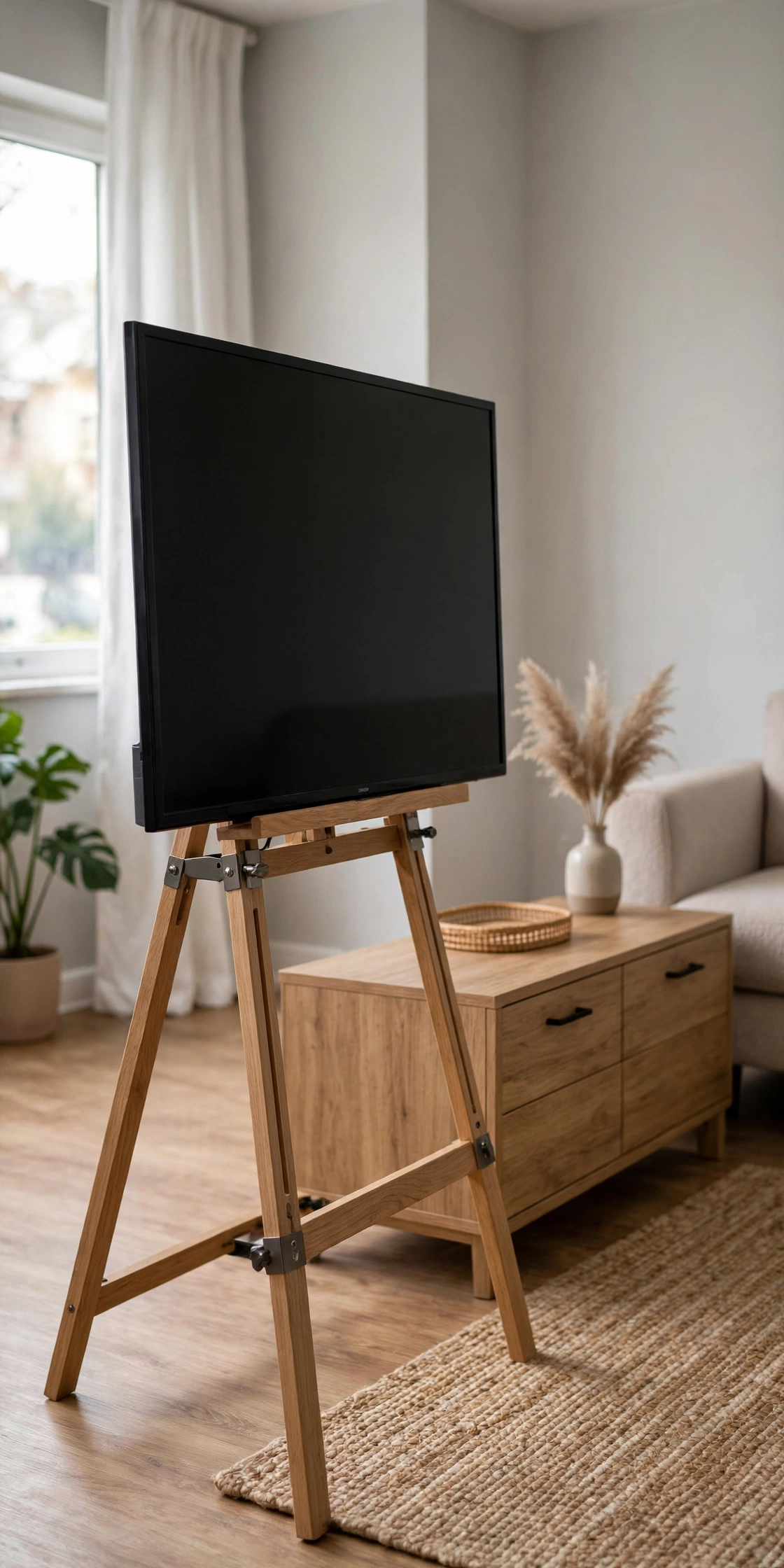
No wall mount, no holes, no landlord conversation. Modern floor-standing and easel-style TV stands look intentional, hold soundbars and consoles on their shelves, and move with you to the next place. They also solve the “TV too high over the fireplace” problem most rentals have, since you set the height yourself.
Worth knowing: measure your TV’s VESA pattern before ordering. Most stands cover the common sizes, but check.
Build an Entry Drop Zone So Clutter Never Reaches the Sofa
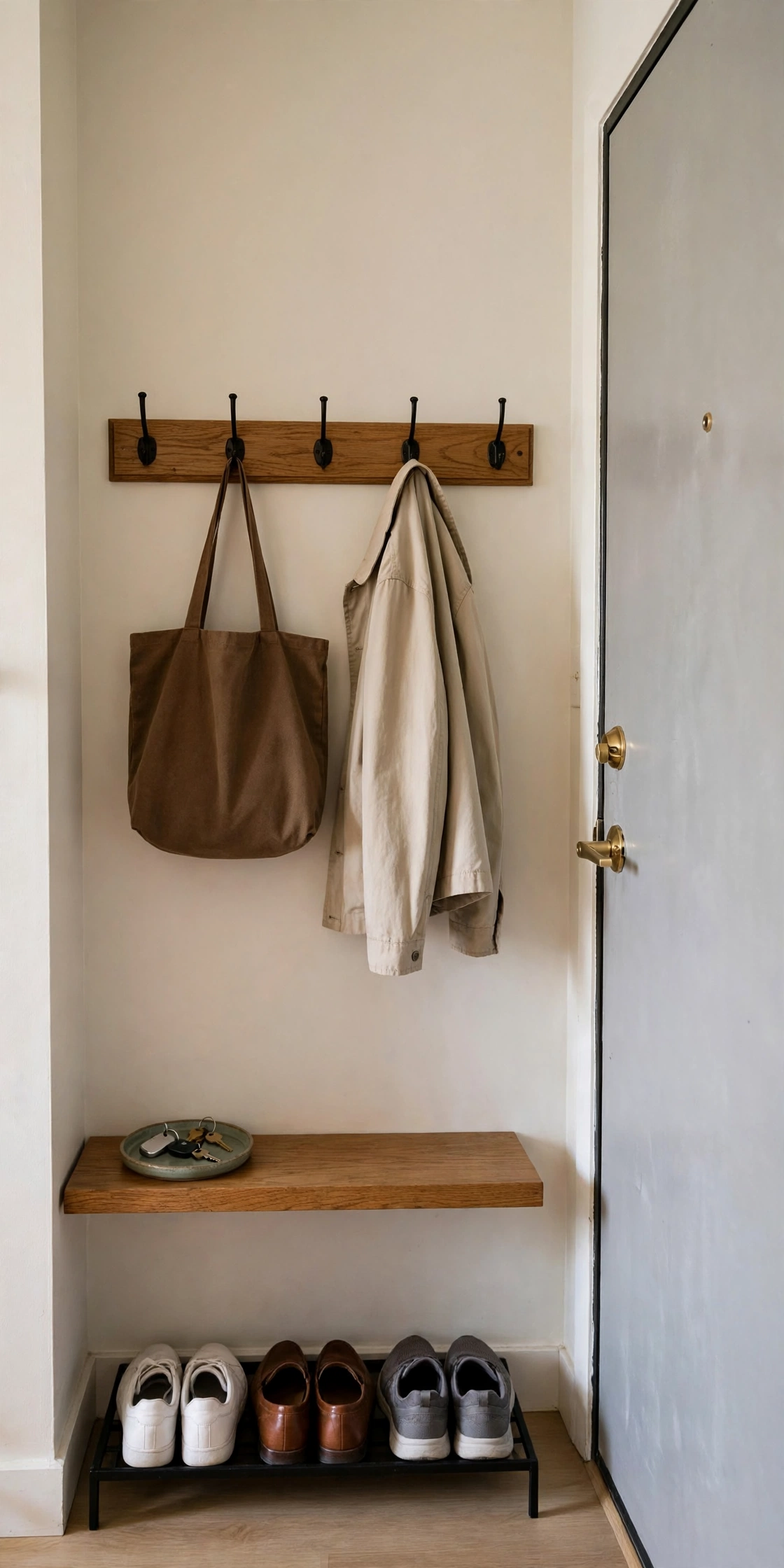
Bags, keys, and coats colonize the living room when they have nowhere else to go. A hook rail by the door, a small tray for keys, and a slim shoe tray underneath create a landing pad that catches it all. Over-door hooks and back-of-door organizers add storage without a single screw. Five minutes of setup saves five minutes of tidying every single day.
Do this next: the tray is the key. Hooks without a tray still end with keys on the coffee table.
Felt-Pad Everything and Rug Every Floor
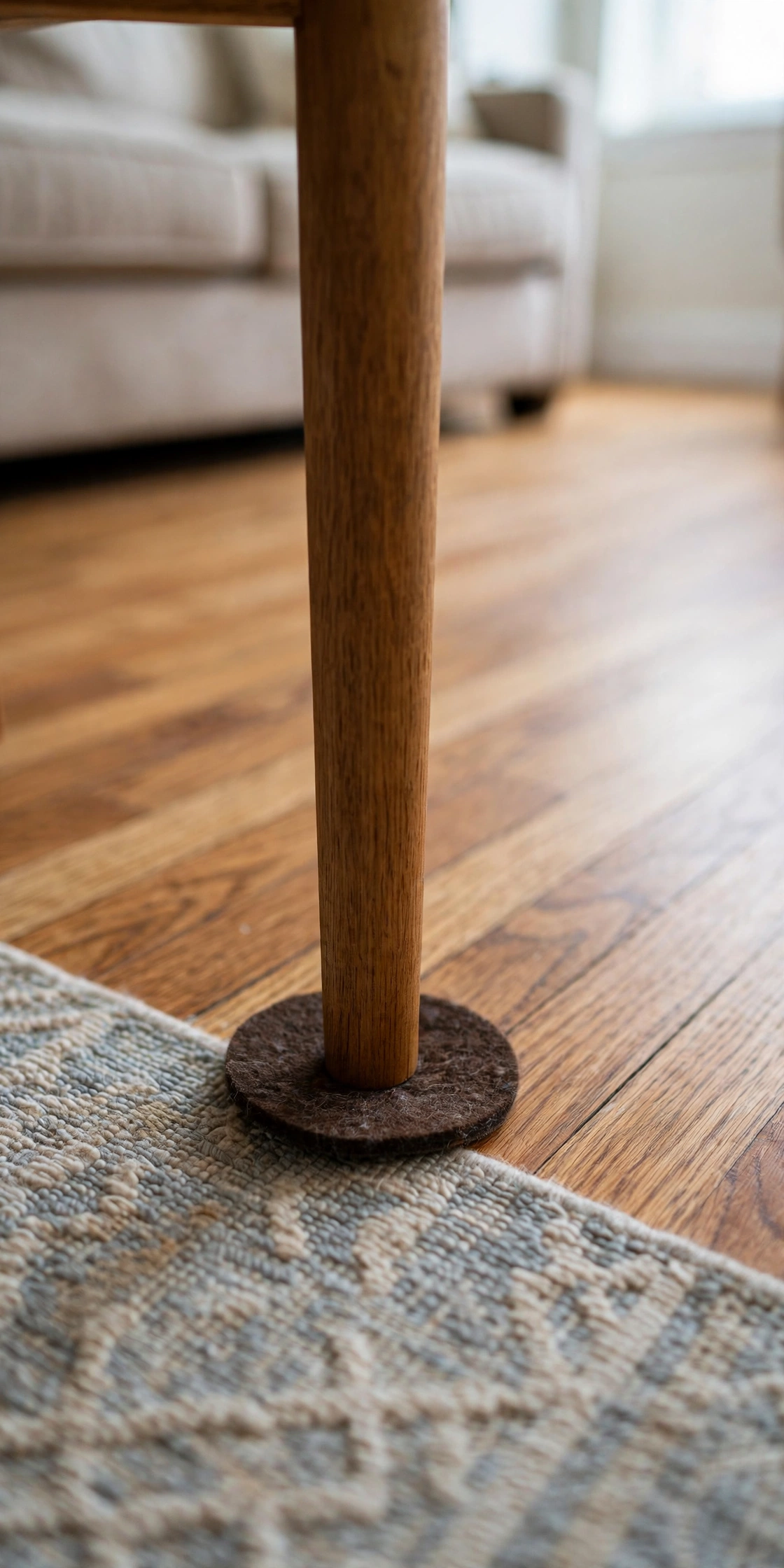
The unglamorous deposit insurance nobody photographs. Felt pads under every furniture leg, rugs over every floor type, chair socks on anything that moves daily. Hardwood scratches and tile chips are the number one deposit deduction, and they happen slowly over two years, not in one dramatic moment. Ten dollars of felt pads protects a thousand-dollar deposit.
Steal this idea: replace felt pads once a year. They compress, collect grit, and stop protecting.
Peel-and-stick wallpaper, the honest quick guide
Sample first: Chasing Paper (~$45/roll, samples $6), Tempaper (samples $7), Spoonflower (swatches $8), Wallshoppe (~$6.59/sq ft, Wirecutter pick), Rifle Paper Co. (rolls $60-250, samples $3).
Install: room at 65-85 F, wall cleaned and patched, smooth center-outward in small sections. One accent panel for renters, not full walls. Avoid textured walls.
Remove: peel slowly at a 45-degree angle. Gentle heat from a hair dryer helps stubborn spots.
The Short Version
Apartment living rooms fail when people decorate like they own the place. You do not own the walls, the lights, or the floors, so decorate the things you do own: the rug, the textiles, the lighting layers, and the furniture that moves with you. Get the rug size right, light every zone separately, buy slim and modular, and protect the deposit like it is already spent. Do that and the rental stops looking temporary.