Minimalist Home Decor Looks That Are Actually Worth Trying
Minimalism has a reputation for being cold, stark, and a little intimidating, like you need to throw out everything you own just to qualify. But the version people are actually living with right now is a lot warmer, a lot more personal, and frankly, a lot more interesting than a white box with one plant. It’s about choosing things on purpose, keeping what genuinely earns its place, and letting your home feel clear and easy to be in without stripping away all the personality. That balance is what this article is all about.
Whether you’re starting from scratch or trying to bring a little more calm to a space that’s gotten cluttered, these 23 ideas cover every corner of the home. You’ll find specific colors, furniture picks, lighting ideas, textures, and tips you can actually use without needing a designer on speed dial or a massive budget. Each idea stands completely on its own, so feel free to skip around and steal what works for you.
Less Stuff, More Character
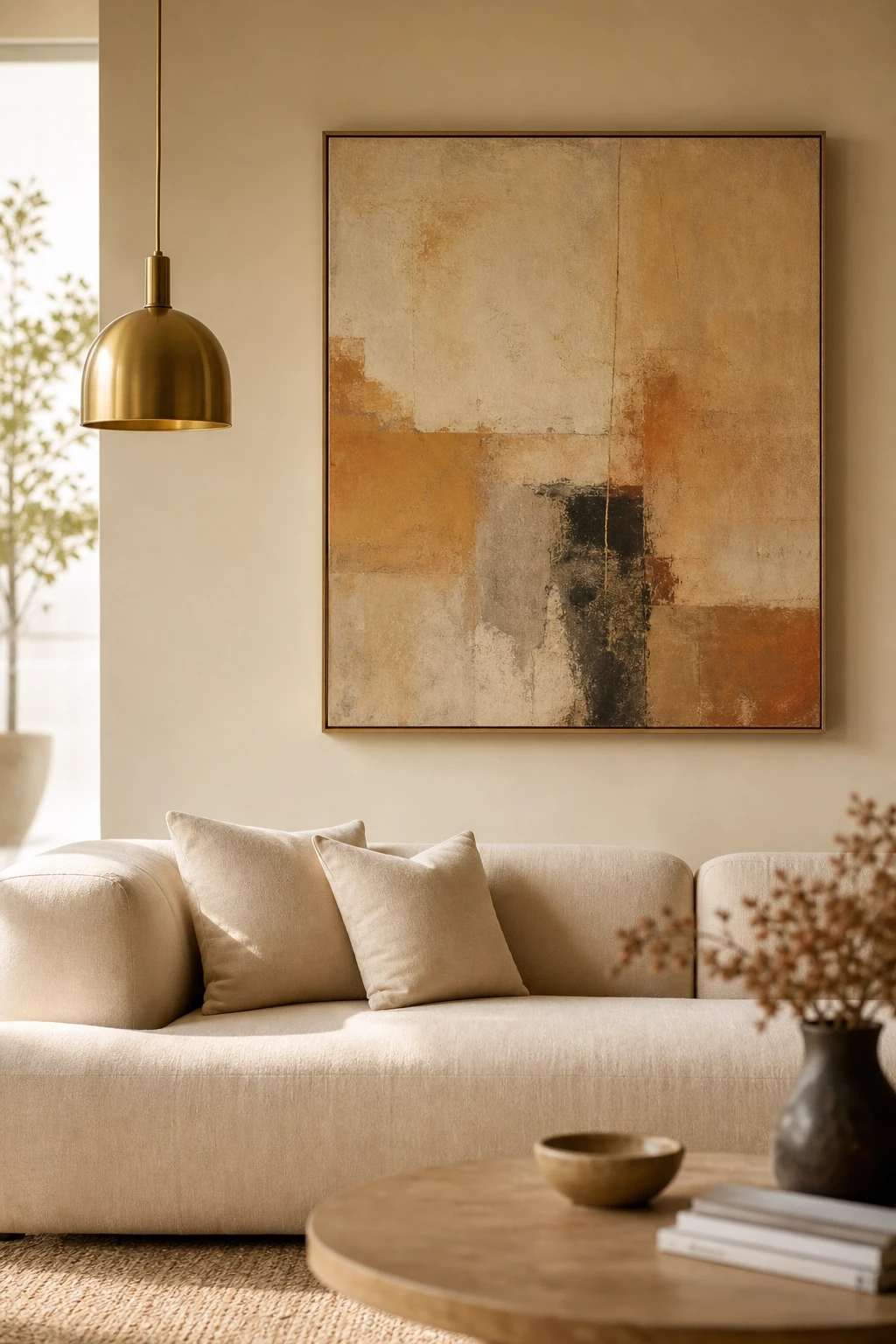
Warm White Walls With One Statement Art Piece
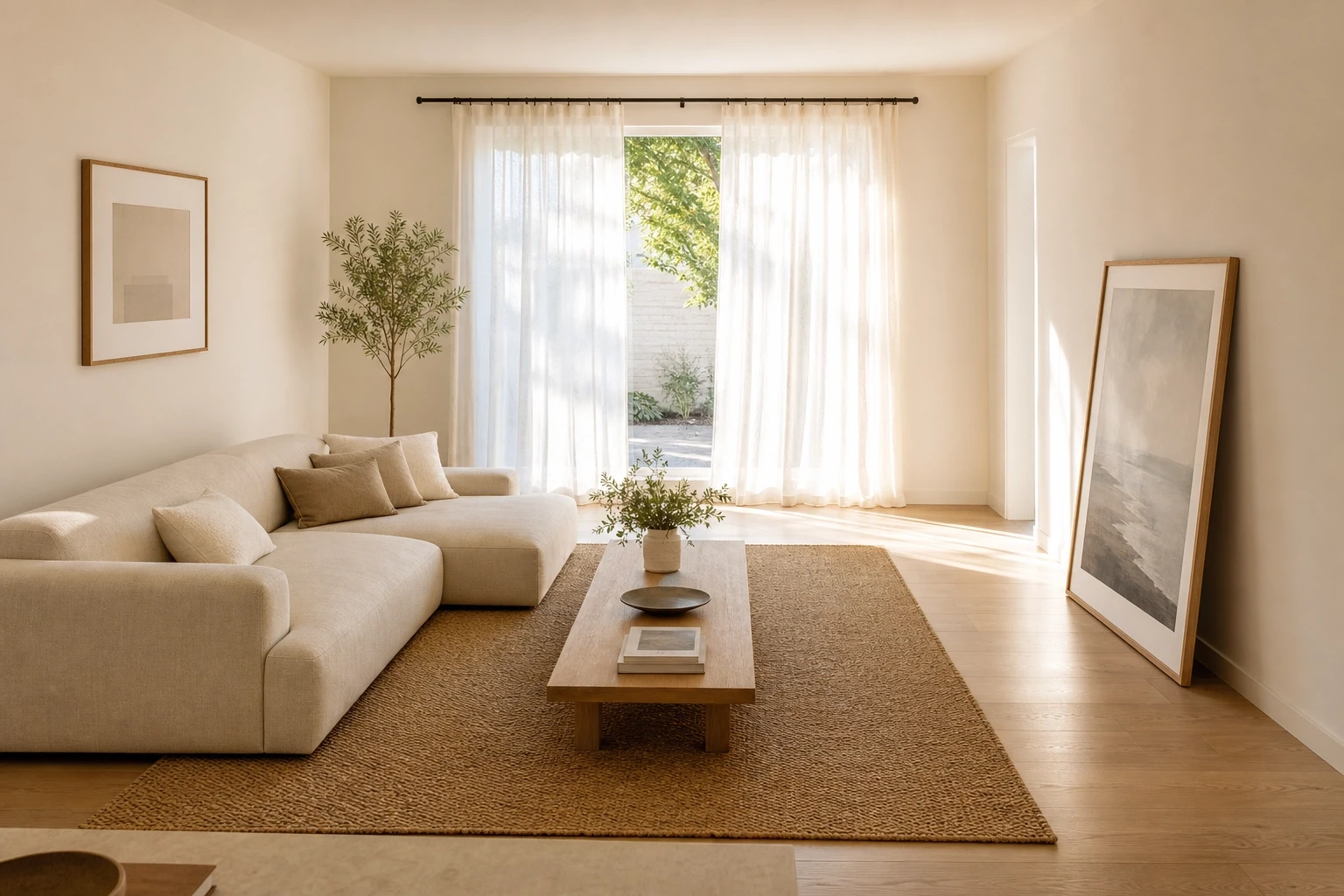
Forget pure white and go for a warm white or off-white like linen, cream, or soft chalk. These shades feel relaxed and livable rather than clinical, and they give any art piece room to breathe. Choose a single large-format print or an original painting as your wall’s focal point, something with texture or muted color that draws the eye without shouting. The furniture should stay low-profile, think a simple linen sofa, a slim oak coffee table, and nothing else competing on the walls. Pendant lighting in brass or matte black pulls the look together. Keep every surface clear except for one small bowl or tray holding a single object you love.
Designer Tip: One piece of art done right beats a gallery wall done carelessly. Hang it at eye level, centered above your sofa, and leave breathing room on all sides.
Floating Shelves With Intentional Objects Only
Floating shelves are a minimalist’s best friend when used properly, but they can become a dumping ground fast. The rule is simple: every object on a shelf must be there because you chose it, not because it needed somewhere to go. Stick to three to five items per shelf and mix heights, a small ceramic vase, a short stack of books with spines facing out, a trailing pothos in a simple pot. Go with shelves in natural oak or black walnut tones against a pale wall. Keep the spacing generous between shelves so nothing feels crowded. The negative space is actually doing half the decorating work.
Designer Tip: Step back and squint at your shelves. If something blurs into the background and you can’t identify it, take it down. Every piece should have a clear shape.
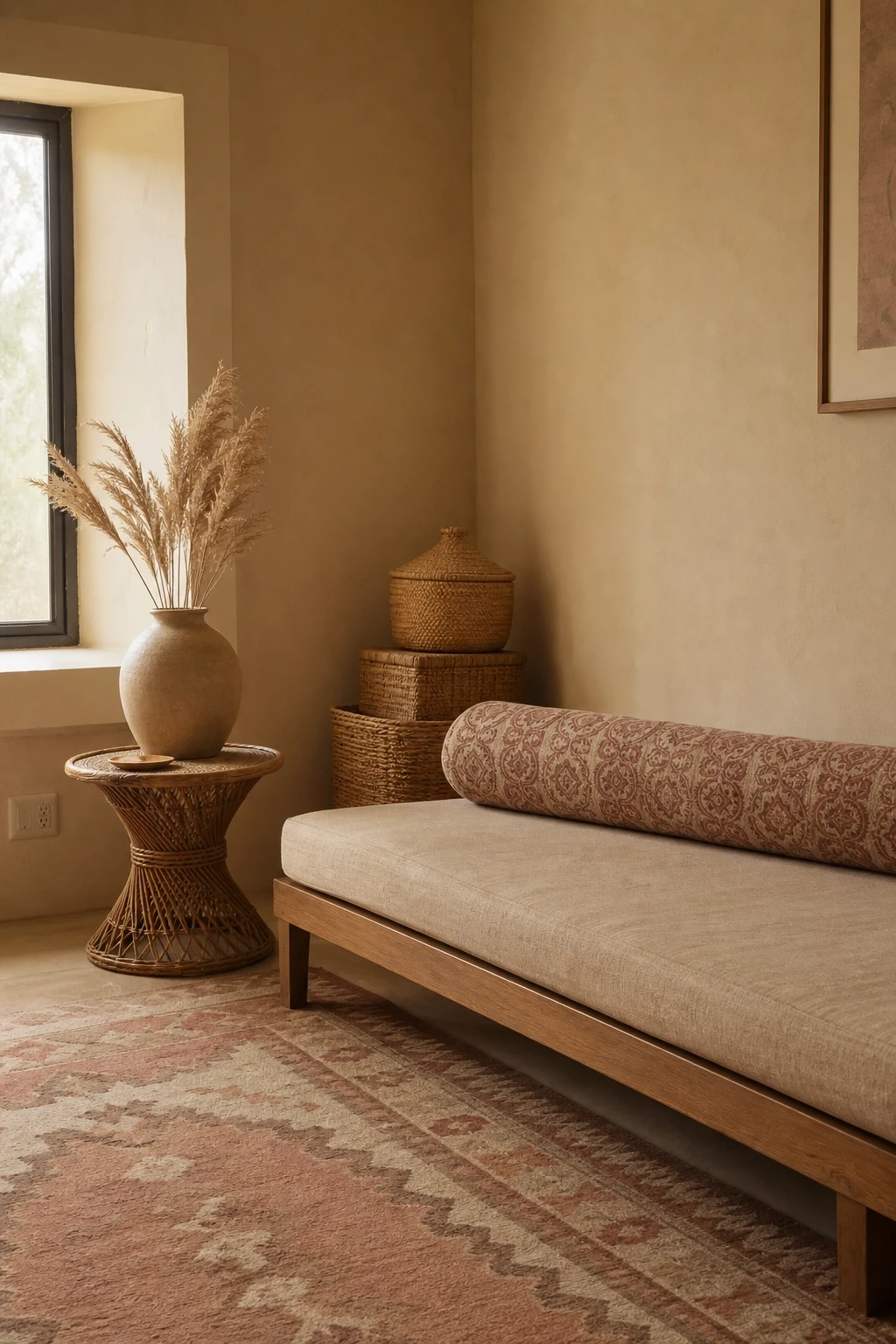
A Decluttered Entryway That Actually Functions
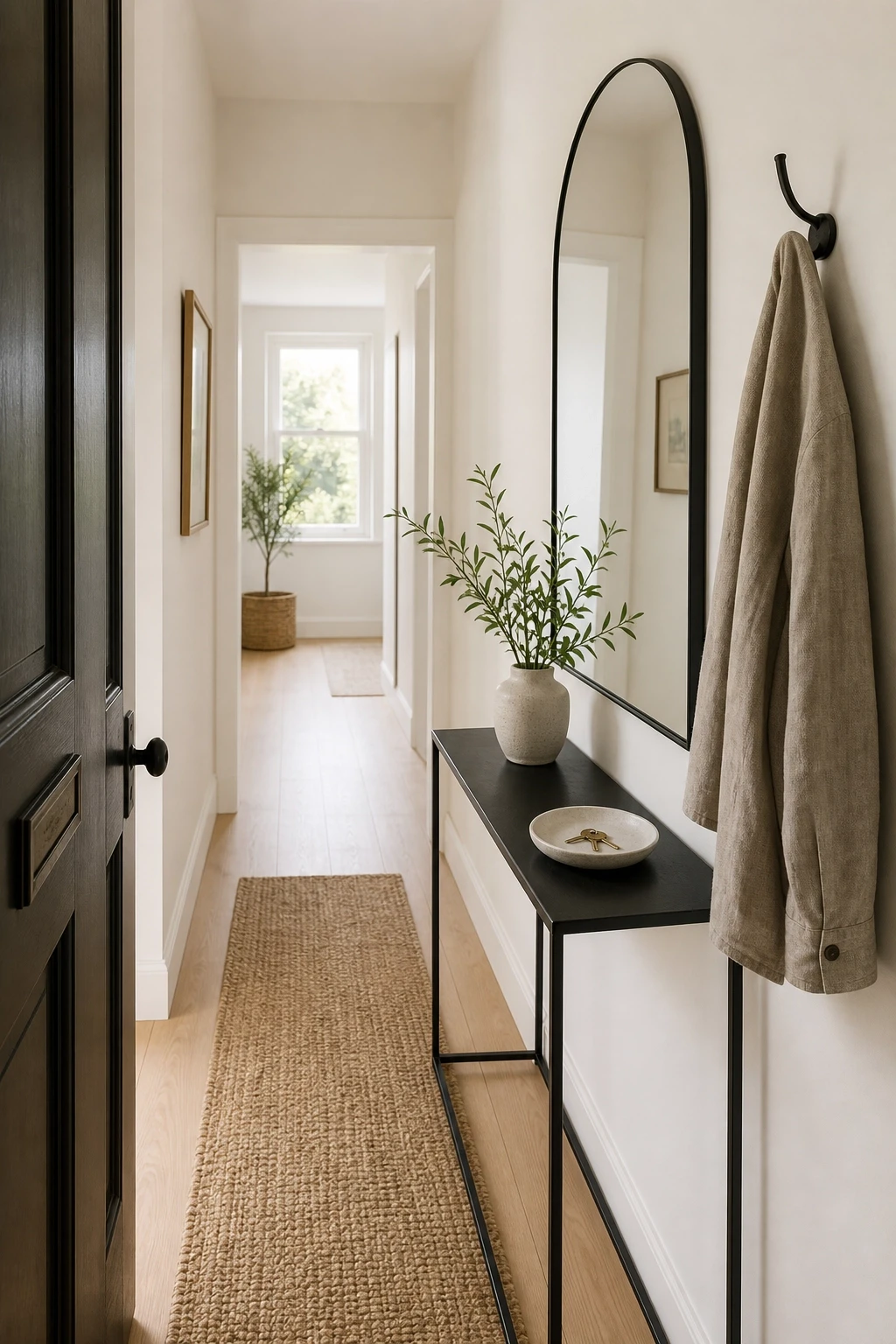
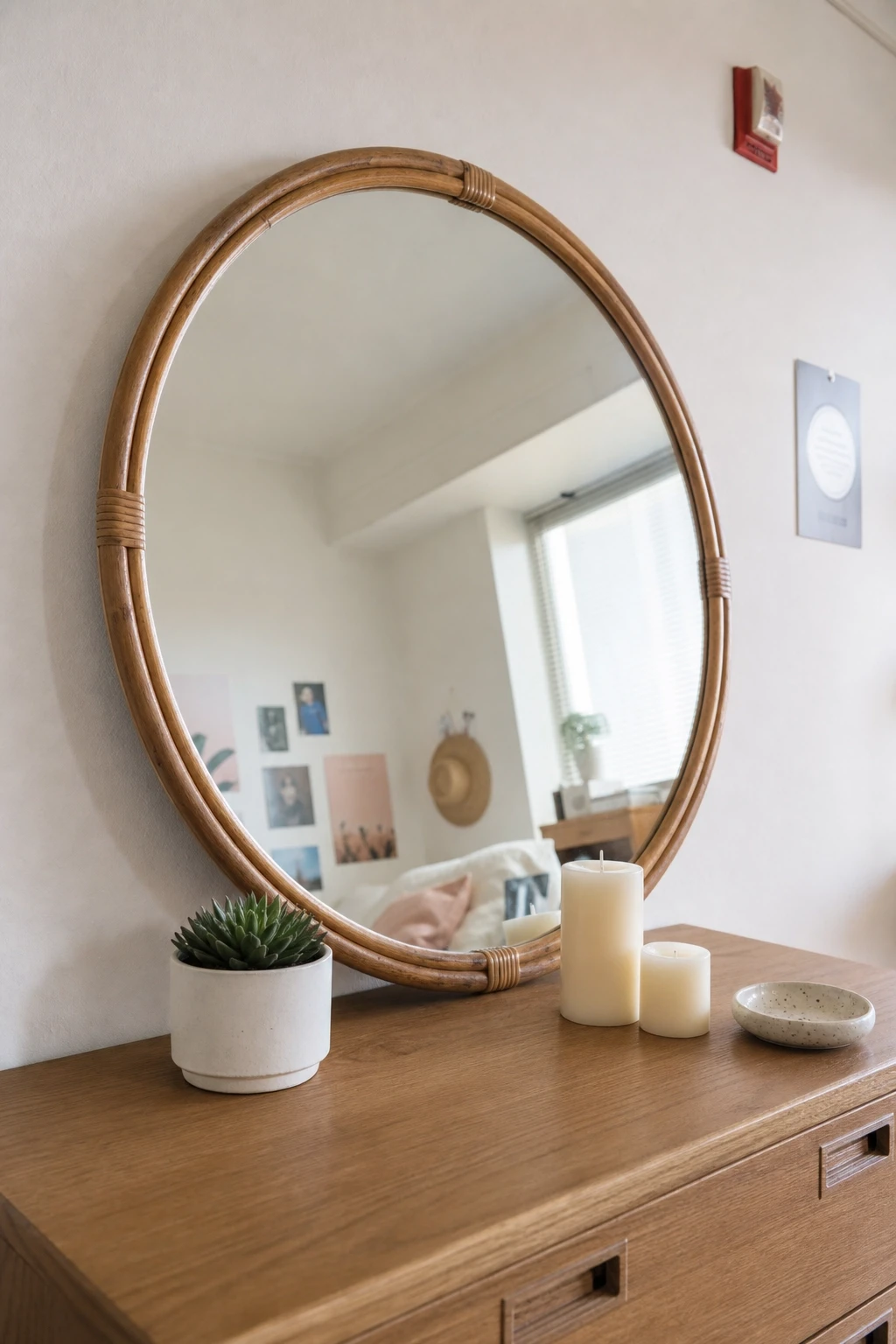
The entryway sets the tone for your whole home, and a minimalist one doesn’t mean an empty one. A slim console table in natural wood or black metal gives you a landing spot without bulk. Add a single mirror above it, round or arch-shaped for a softer look, and a small ceramic dish for keys. A wall-mounted coat hook with just enough hooks for the people in your home keeps jackets off the floor without the chaos of a coat rack overflowing with bags and scarves. A natural fiber runner in jute or sisal grounds the space with texture. Keep the floor completely clear and you’ll feel the difference every time you walk in.
Designer Tip: Do a weekly reset of your entryway. It takes two minutes and keeps the whole home feeling more together.
Color Done Right
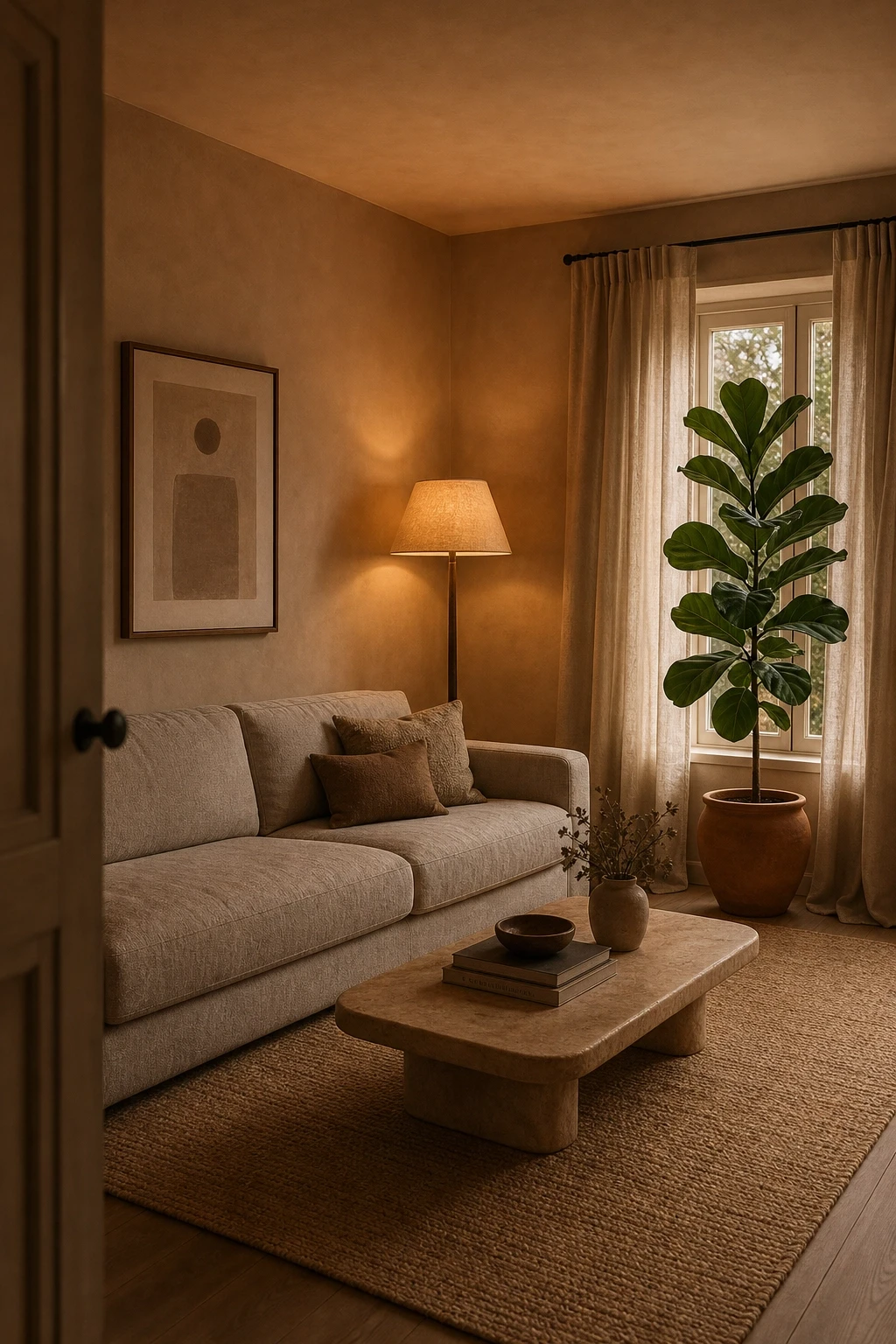
A Warm Neutral Palette Built Around Clay and Stone
The cold, icy neutral palette of early minimalism is giving way to something warmer and more grounded. Clay, stone, warm greige, and soft terracotta work together to create a palette that feels earthy without being heavy. Try clay-colored walls paired with a stone-toned sofa, natural linen curtains, and a jute rug. Add furniture in light ash or bleached oak wood tones to keep things airy. Lighting is key here: go for warm-toned bulbs, around 2700K, to keep the whole palette feeling cohesive and golden in the evening. A single terracotta ceramic pot with a fiddle leaf fig adds just enough color without breaking the neutral harmony.
Designer Tip: Pull your wall color and your rug color from the same earthy family but vary the tone by two shades. Too matchy feels flat; too different feels messy.
Monochromatic Bedroom in Soft Sage
A monochromatic bedroom doesn’t mean painting everything the same color. It means choosing one hue and working across its range from light to deep. Soft sage is a wonderful choice because it reads almost neutral in lower light but brings a gentle color presence during the day. Paint the walls in a pale sage, dress the bed in deeper olive linen, and layer in a sage-toned woven throw. The furniture should be simple and low, a platform bed in natural wood, two matching nightstands, and nothing else. A ceramic table lamp in cream or stone white adds warmth. Skip the wall art in this room and let the color do the talking.
Designer Tip: Add a single dark-toned element, like a charcoal linen pillow or a matte black lamp base, to keep the all-sage scheme from feeling washed out.
Charcoal Accents in a Light Room
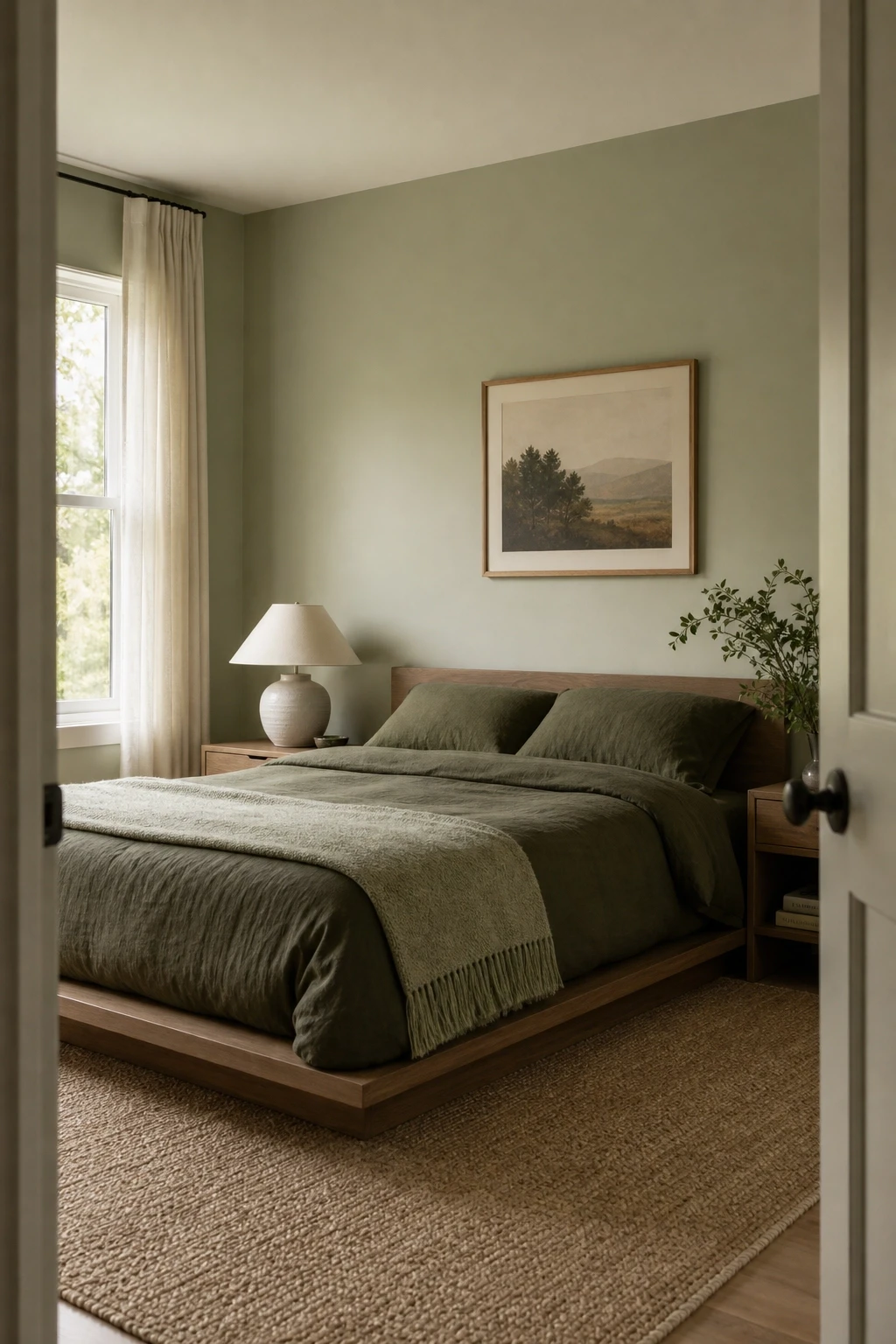
A room built around light walls and natural wood doesn’t need to stay soft all the way through. A few charcoal or near-black accents add definition and keep the space from feeling undefined. Think a matte black coffee table leg, a set of charcoal linen cushions, a dark-framed mirror, or a pair of black wall sconces. The key is keeping the accents intentional and limited to three or four items in the room. The rest stays light: pale walls, natural textures, warm wood tones. This creates a sense of visual contrast without disrupting the calm the room is built on.
Designer Tip: Use the same dark tone across multiple pieces rather than mixing black, charcoal, and dark navy. Consistency makes the accents look deliberate rather than scattered.
A Warm White and Natural Wood Kitchen
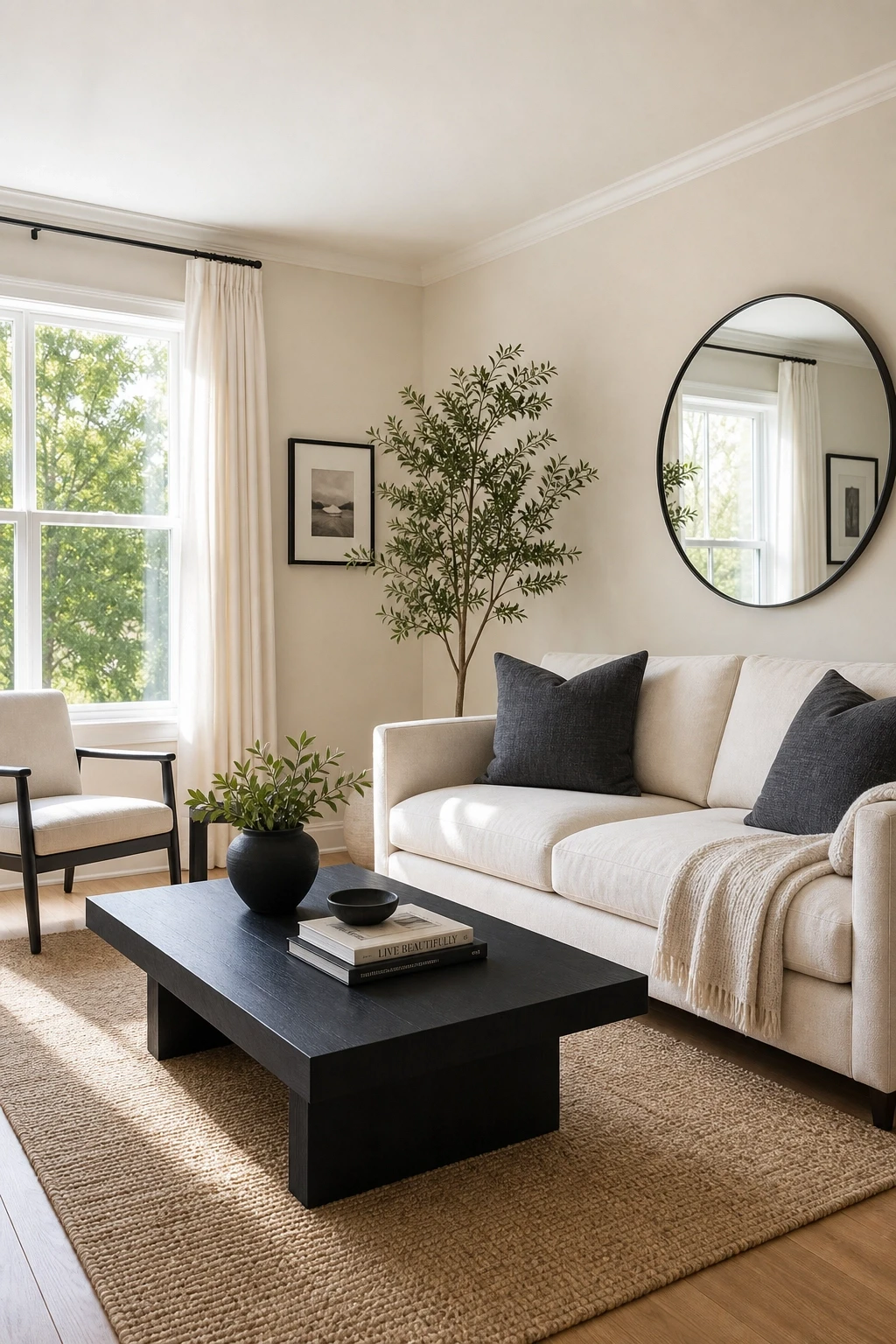
The minimalist kitchen works best when every item has a home and nothing sits out by default. Flat-front white or off-white cabinetry with simple bar handles in brushed nickel keeps the lines clean. A natural wood countertop or butcher block island adds warmth and texture without adding clutter. Keep the countertops completely clear except for one wooden cutting board propped against the backsplash and a small herb pot by the window. Open shelving in one section works well if you’re strict about what goes on it: matching ceramics, glass jars for dry goods, and one or two pieces you genuinely find beautiful. Pendant lighting over the island in aged brass pulls the warm tones together.
Designer Tip: Decant your most-used pantry items into matching glass or ceramic containers. It takes ten minutes and makes the whole kitchen feel more considered.
Furniture That Earns Its Place
A Sofa That Does All the Heavy Lifting
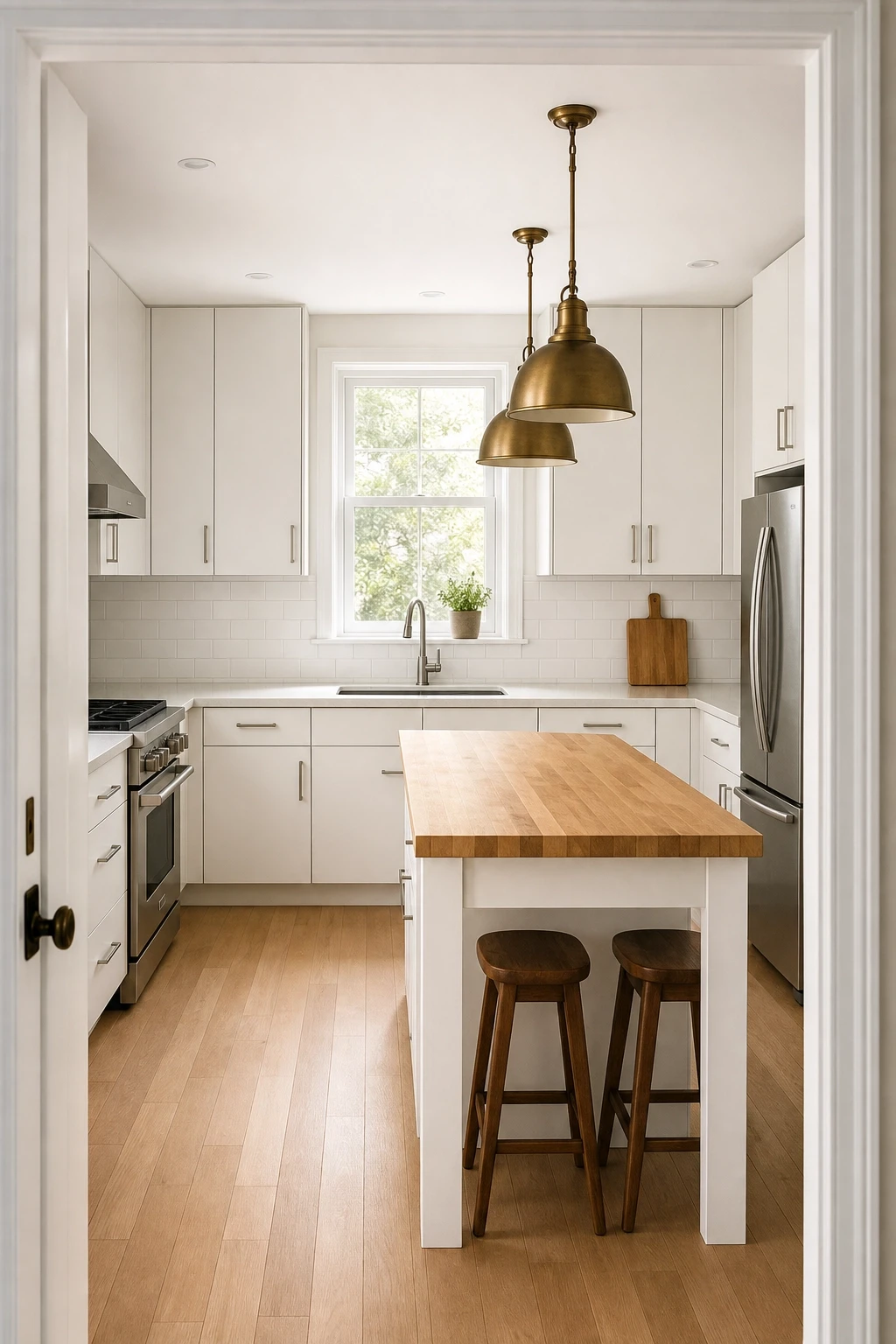
In a minimalist living room, the sofa is the main event, and it needs to be good enough to stand on its own without much supporting cast. A long, low-profile sofa in natural linen, boucle, or warm cream fabric is the classic choice because it reads as light even in a smaller room. Avoid busy cushion arrangements: two or three cushions in a single tone, or one contrasting tone at most, is enough. The legs matter more than people think. Tapered solid wood legs in walnut or oak give the sofa a grounded but not heavy look. Leave plenty of space around the sofa rather than pushing it against every wall.
Designer Tip: A sofa that’s slightly too small for the room almost always looks better in a minimalist space than one that’s slightly too big.
Multi-Use Furniture for Smaller Spaces
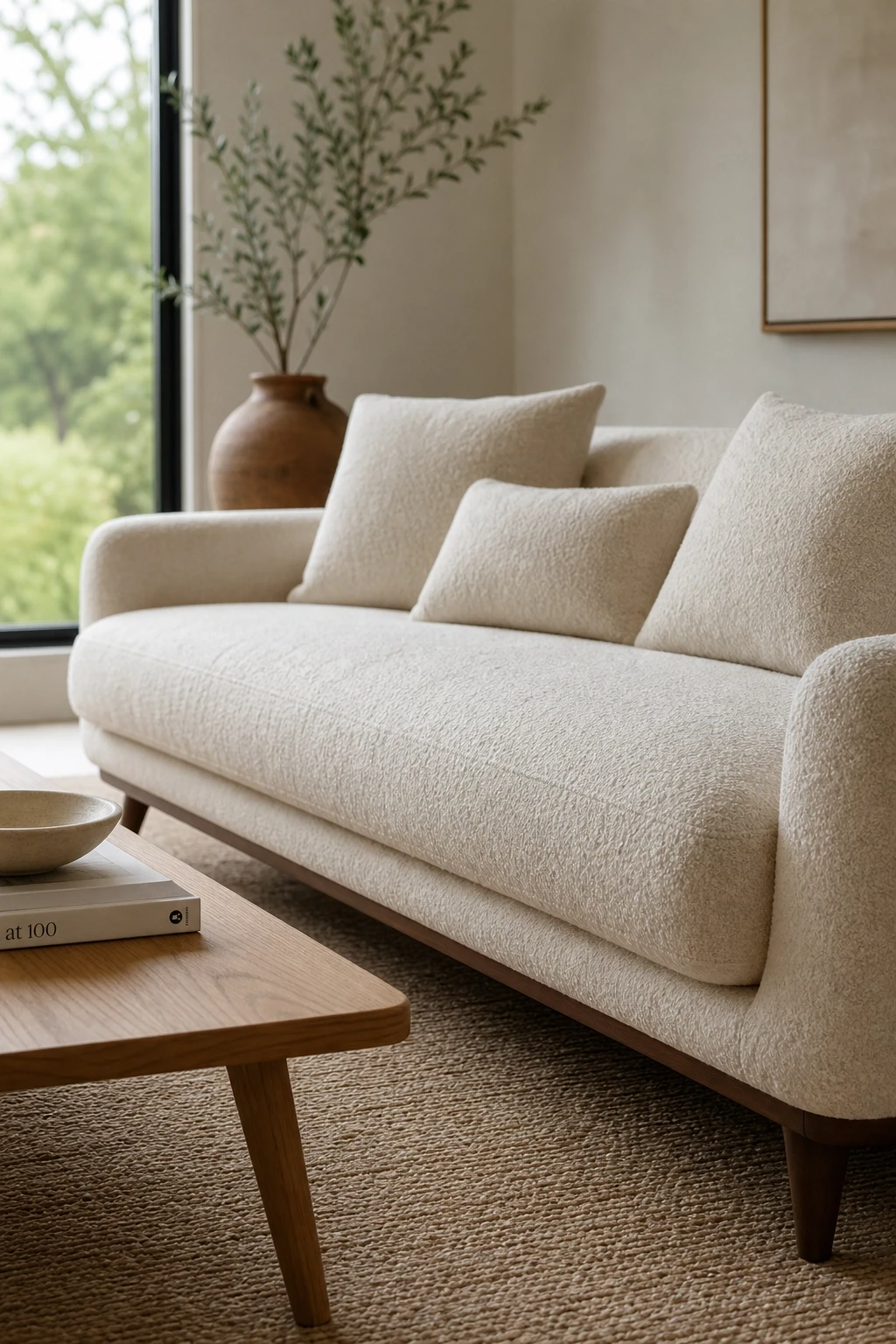
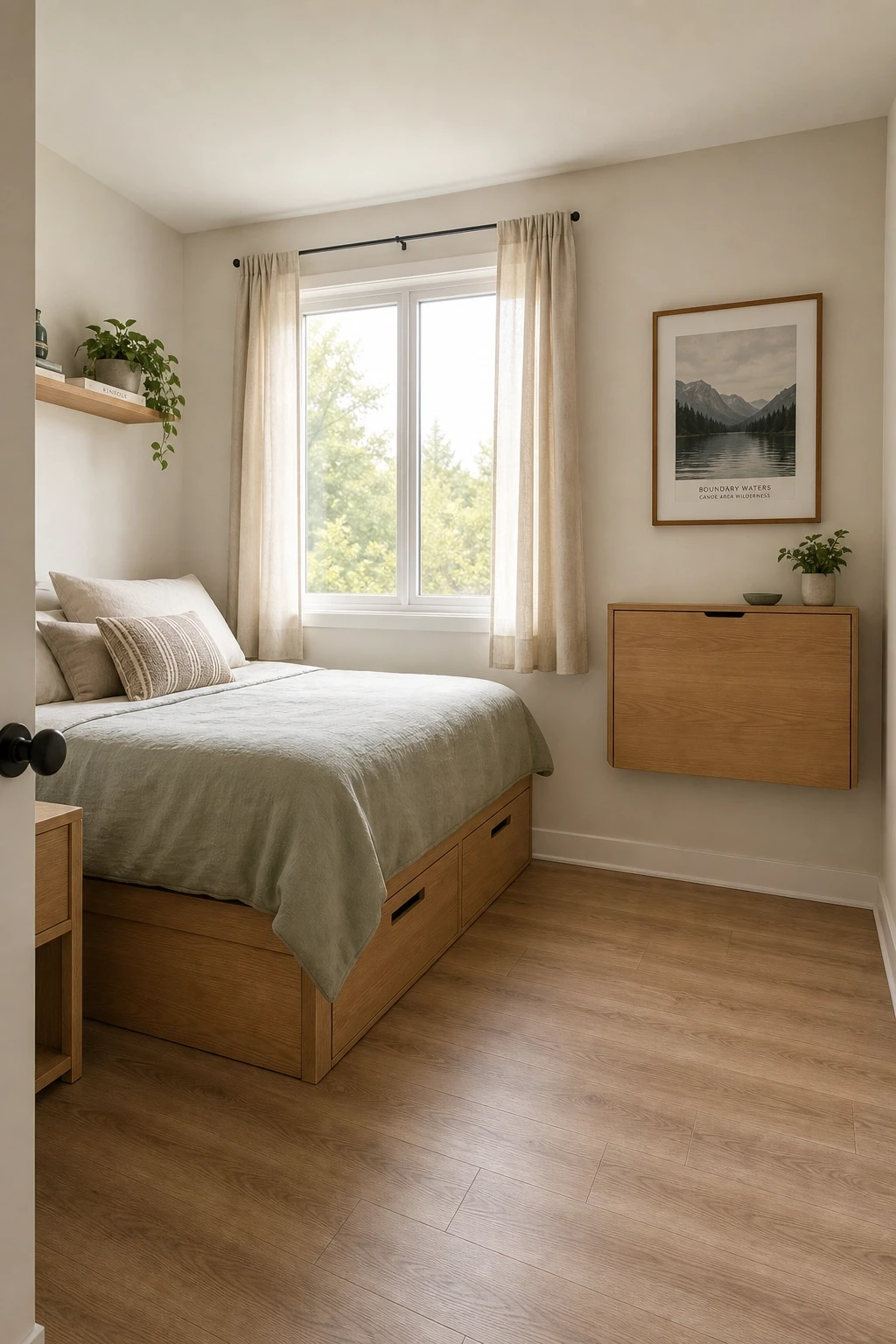
Minimalism and small-space living go hand in hand, and the secret is furniture that works harder than one job. A storage ottoman that doubles as a coffee table, a bed with built-in drawers underneath, a dining bench that tucks away when not in use, these are practical choices that reduce the number of pieces you need without reducing comfort. Go for pieces in clean, simple shapes with no decorative fussiness. Natural materials like oak, rattan, and linen hold up well and age nicely. A wall-mounted fold-down desk is a great choice for a bedroom that occasionally becomes a workspace without dedicating floor space to a full desk.
Designer Tip: Before buying new furniture, count how many jobs each current piece does. Anything doing just one thing is a candidate for replacement with something smarter.
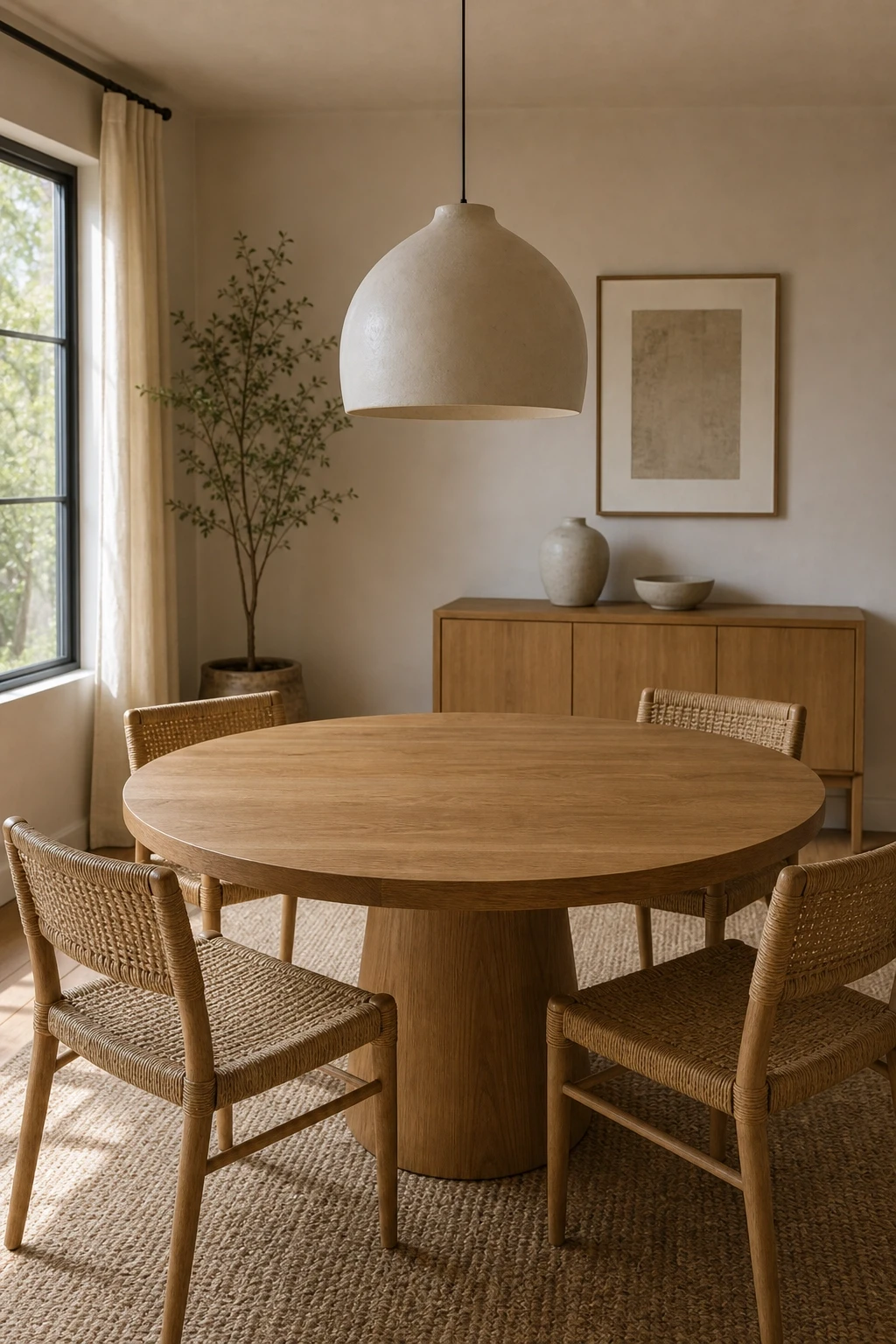
A Dining Space Built Around One Good Table
The minimalist dining room asks you to stop fussing and commit to one excellent table. A solid oak or walnut dining table with a simple rectangular or round form is a piece you’ll keep for decades and never regret. Pair it with chairs that feel different in material, say a wooden table with woven rattan chairs or upholstered dining chairs in a warm neutral. A single pendant light centered over the table, something sculptural in ceramic or aged brass, ties the whole zone together. Keep the sideboard or buffet if you need one, but apply the same rule as the shelves: only things that genuinely belong there.
Designer Tip: Round dining tables feel significantly more generous and social in smaller rooms than rectangular ones. If you’re unsure, go round.
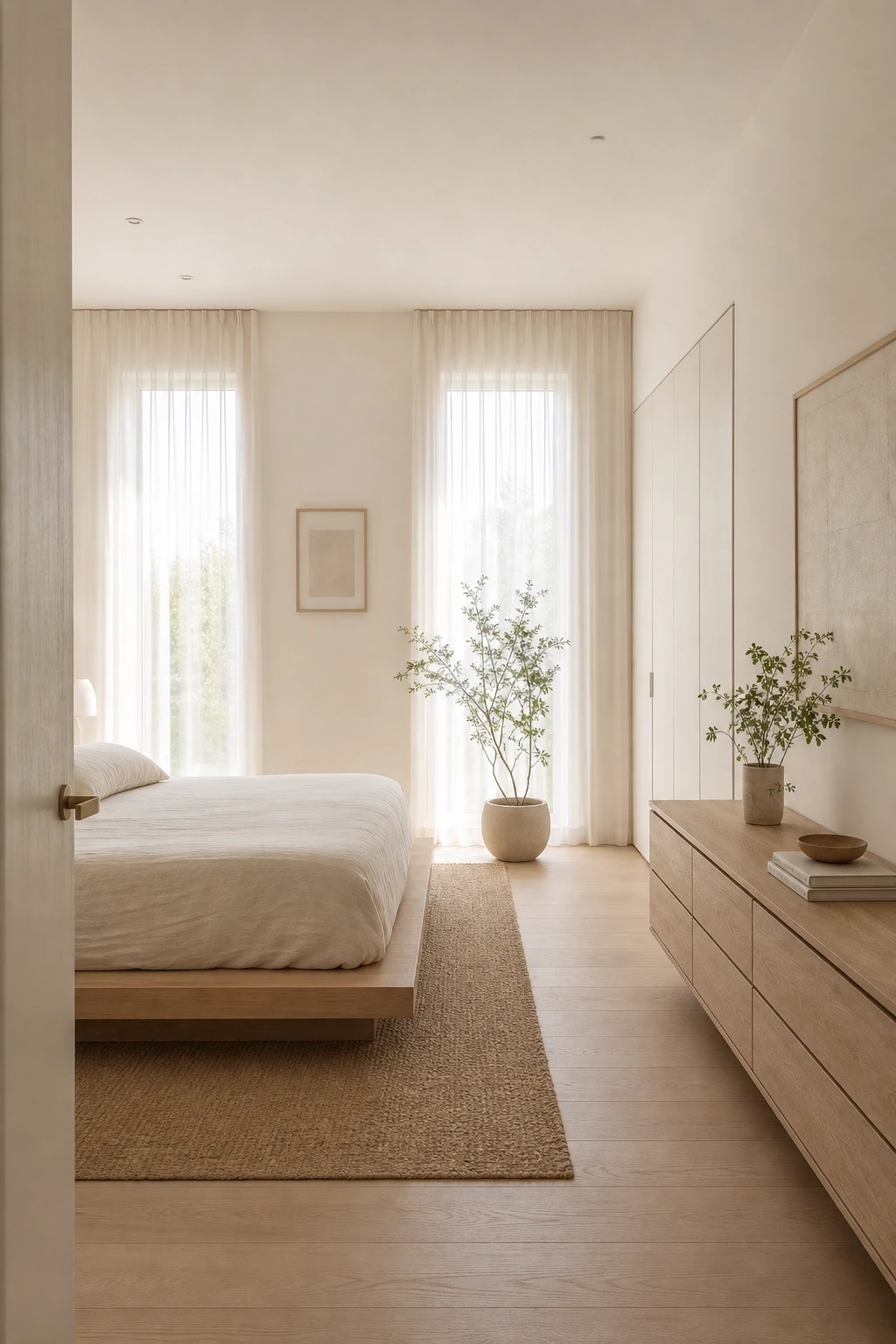
Low-Profile Bedroom Furniture for an Airy Feel
High bedroom furniture, especially tall wardrobes and chest of drawers that reach toward the ceiling, makes rooms feel smaller and more enclosed. Going low keeps the upper half of the room open and airy. A platform bed or a bed with a low headboard in linen or leather is the obvious starting point. Match it with low nightstands, and if you need storage, look for low dressers rather than tall ones. Built-in wardrobes with floor-to-ceiling flat-front doors are the best solution because they disappear into the room rather than announcing themselves as furniture. Keep bedside tables clear: one lamp, one small item, and that’s it.
Designer Tip: Strip your nightstand down to just a lamp and whatever you’re currently reading. You’ll sleep better and the room will look ten times calmer.
Light, Texture, and the Details That Matter
Natural Light as the Main Design Feature
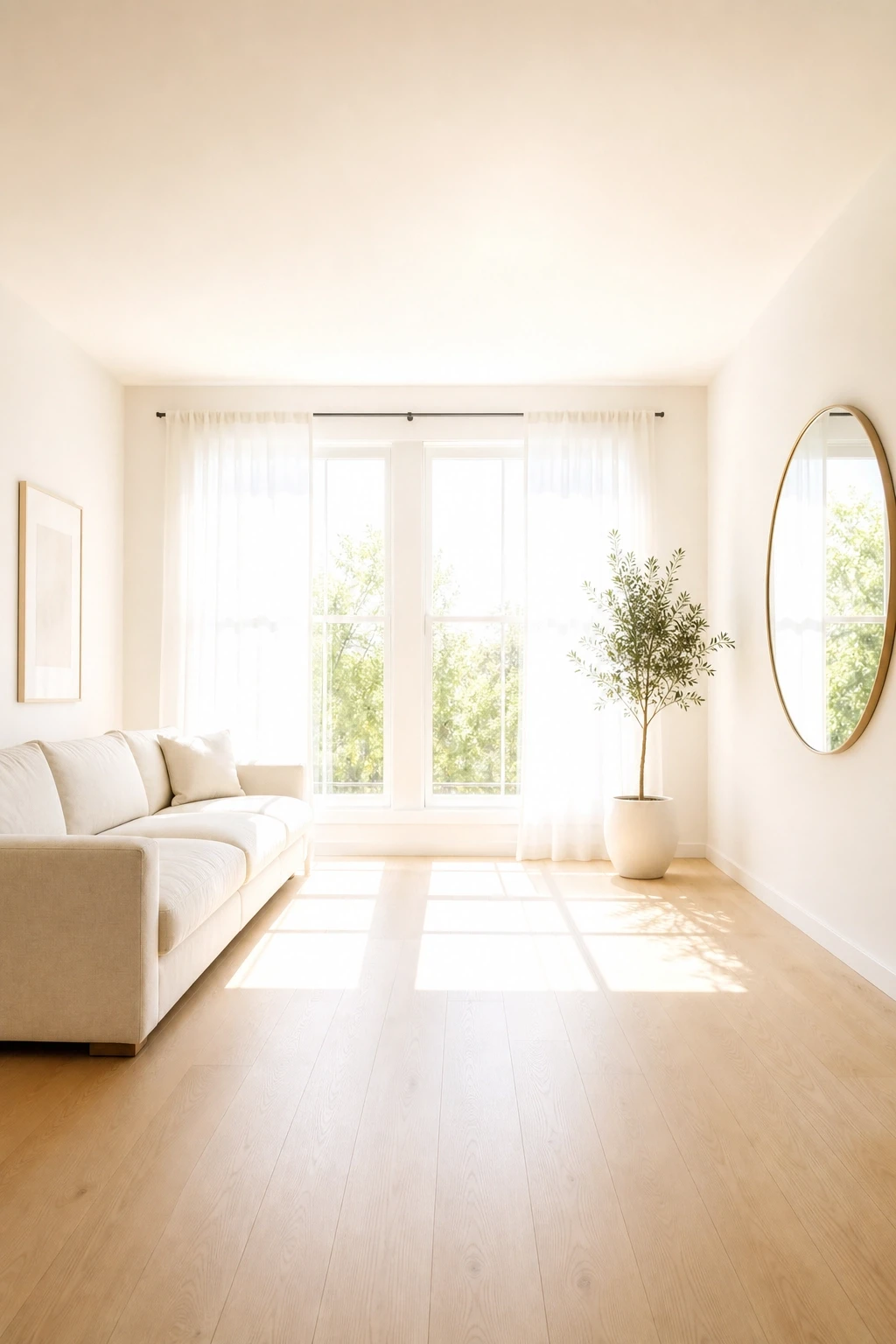
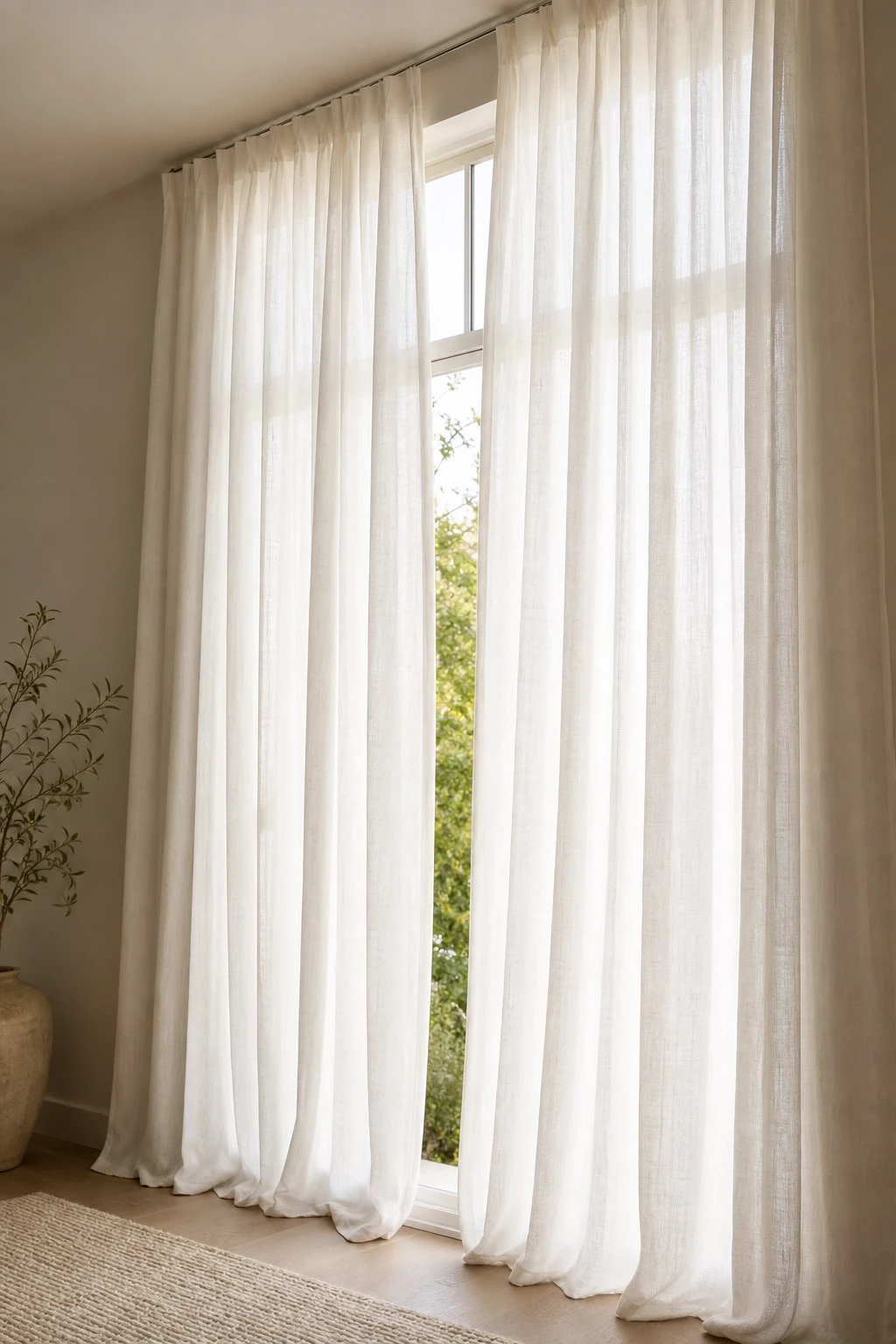
No amount of decor compensates for a room that doesn’t get enough light, and in a minimalist space, natural light is doing a huge portion of the visual work. Keep window treatments simple and sheer, linen sheers or sheer cotton panels in white or cream, so light passes through even when the curtains are drawn. Avoid heavy drapes that swallow the window. If privacy is a concern, add a simple roller shade in the same shade as the wall rather than curtains. Mirrors placed opposite or adjacent to windows help bounce light into corners that don’t get direct sun. A room that’s full of natural light needs very little else.
Designer Tip: Wash your windows inside and out at least twice a year. It sounds basic but the difference in how much light enters the room is genuinely noticeable.
Layered Lighting With Three Sources
The biggest lighting mistake in any room is relying on a single overhead light. In a minimalist space, layered lighting with three different sources creates depth, warmth, and the ability to change the mood of the room depending on the time of day. Use ambient lighting for general brightness, a subtle overhead fixture or recessed lighting. Add task lighting like a reading lamp or under-cabinet kitchen lights where you actually need focused light. Then add a couple of accent sources, a table lamp with a warm-toned shade, or a floor lamp tucked in a corner. All three sources on a dimmer system gives you full control without adding a single extra object.
Designer Tip: Swap your bulbs for warm white LEDs at 2700K across the whole home. The consistency alone makes your spaces feel more cohesive and intentional.
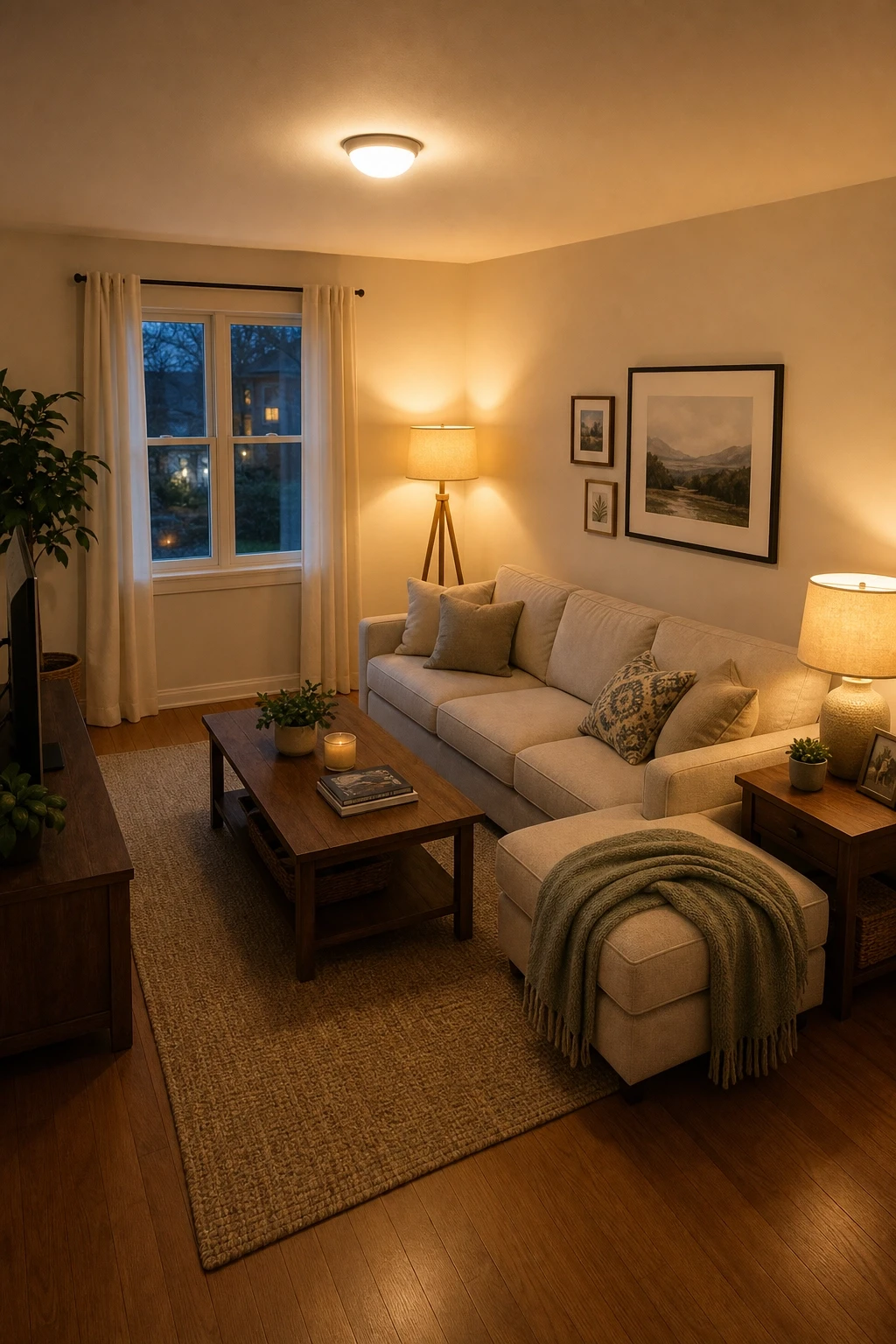
Texture Through Natural Materials
When a room has a limited color palette and fewer objects, texture becomes the main source of visual interest. Natural materials are the most effective way to build texture into a minimalist home because they look layered and organic without adding visual noise. A jute rug underfoot, a chunky knit throw on the sofa arm, linen cushion covers, a rough ceramic bowl on the coffee table, woven rattan storage baskets, these are all quiet additions that give a room depth and warmth. The goal is to vary the surface textures across the room so the eye has something to travel between, even in a pared-back space.
Designer Tip: Hold your textured items next to each other before buying. Natural materials in similar tones but different textures work beautifully. Similar tones in similar textures just look like you couldn’t decide.
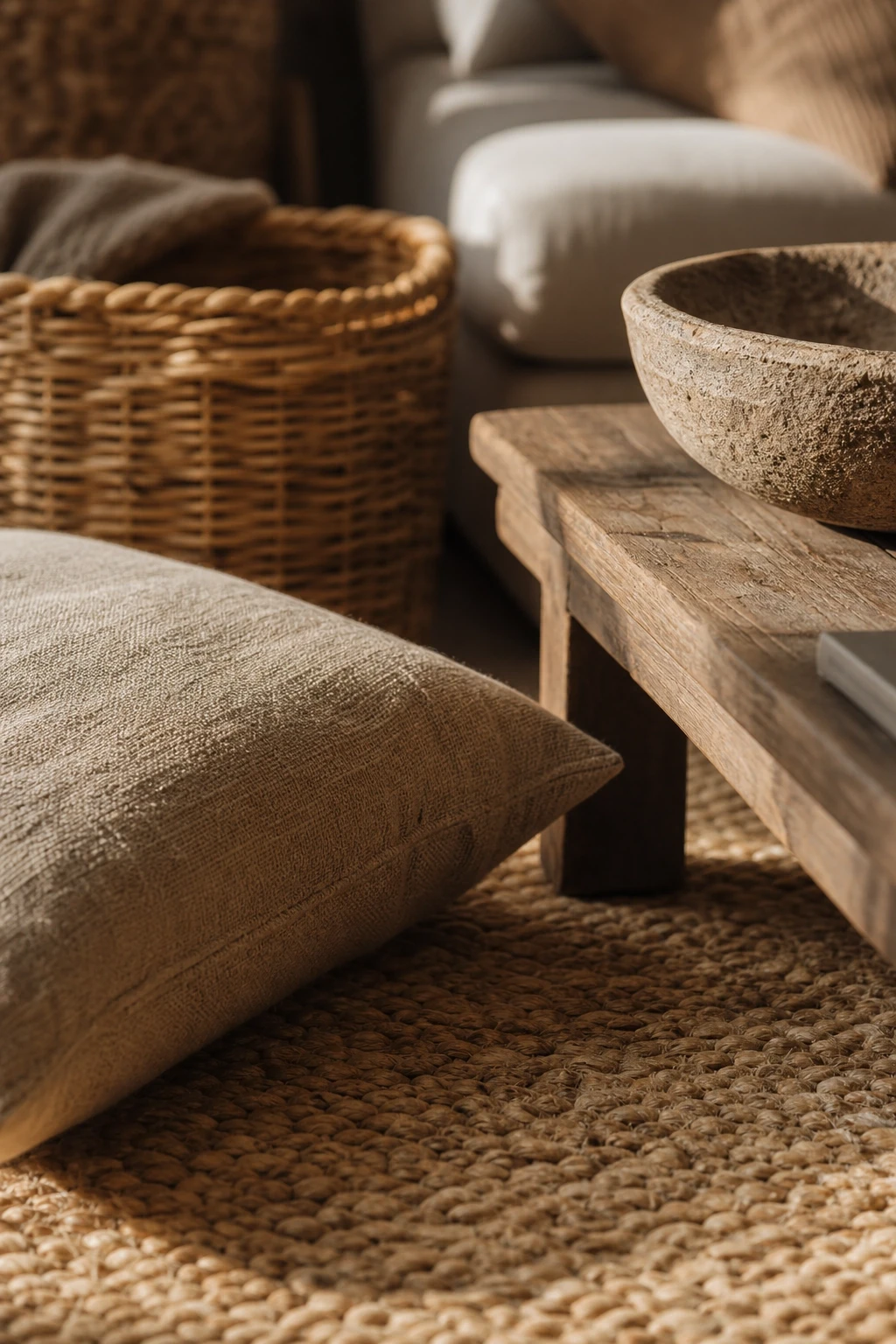
Plants as the Only Decoration You Need
A single well-chosen plant can do what a shelf full of decorative objects cannot: it adds life, movement, and a soft organic shape that no purchased object can replicate. In a minimalist home, one or two plants placed thoughtfully beat a collection scattered everywhere. A large fiddle leaf fig or olive tree in a simple white or terracotta planter becomes a genuine focal point in a living room. A trailing pothos on a high shelf adds movement. A small succulent or cactus grouping on a windowsill works for a bedroom or bathroom. The plant’s pot matters as much as the plant itself. Simple shapes in ceramic, clay, or concrete keep it consistent with the overall look.
Designer Tip: Choose plants based on the actual light your room gets, not the ones you like the look of. A healthy plant in the right spot looks exponentially better than a struggling one in the wrong spot.
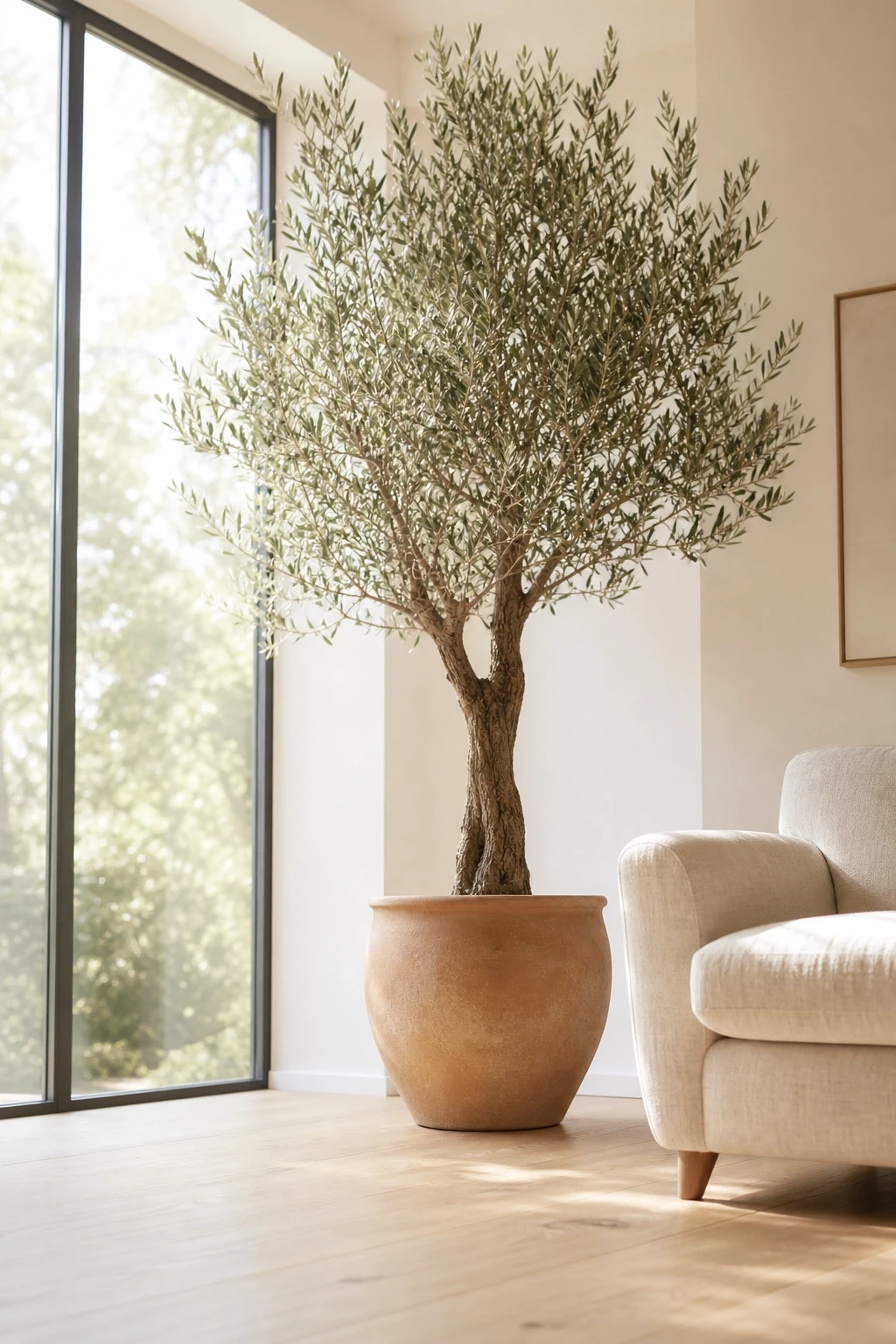
A Rug That Grounds the Room Without Overpowering It
The rug is one of the most important decisions in any living room or bedroom, and in a minimalist space it needs to ground the furniture arrangement without pulling attention away from everything else. Go for a rug in a solid tone, a subtle tone-on-tone weave, or a very simple geometric pattern in two neutral shades. The size should be generous enough that the front legs of all the major furniture sit on it, not perched at the edge. Natural fibers like jute, sisal, wool, or cotton feel right in a minimalist home and age well. Avoid anything with a high sheen or a busy print.
Designer Tip: Go one size bigger than you think you need. An undersized rug is the single most common reason a living room arrangement looks disconnected and awkward.
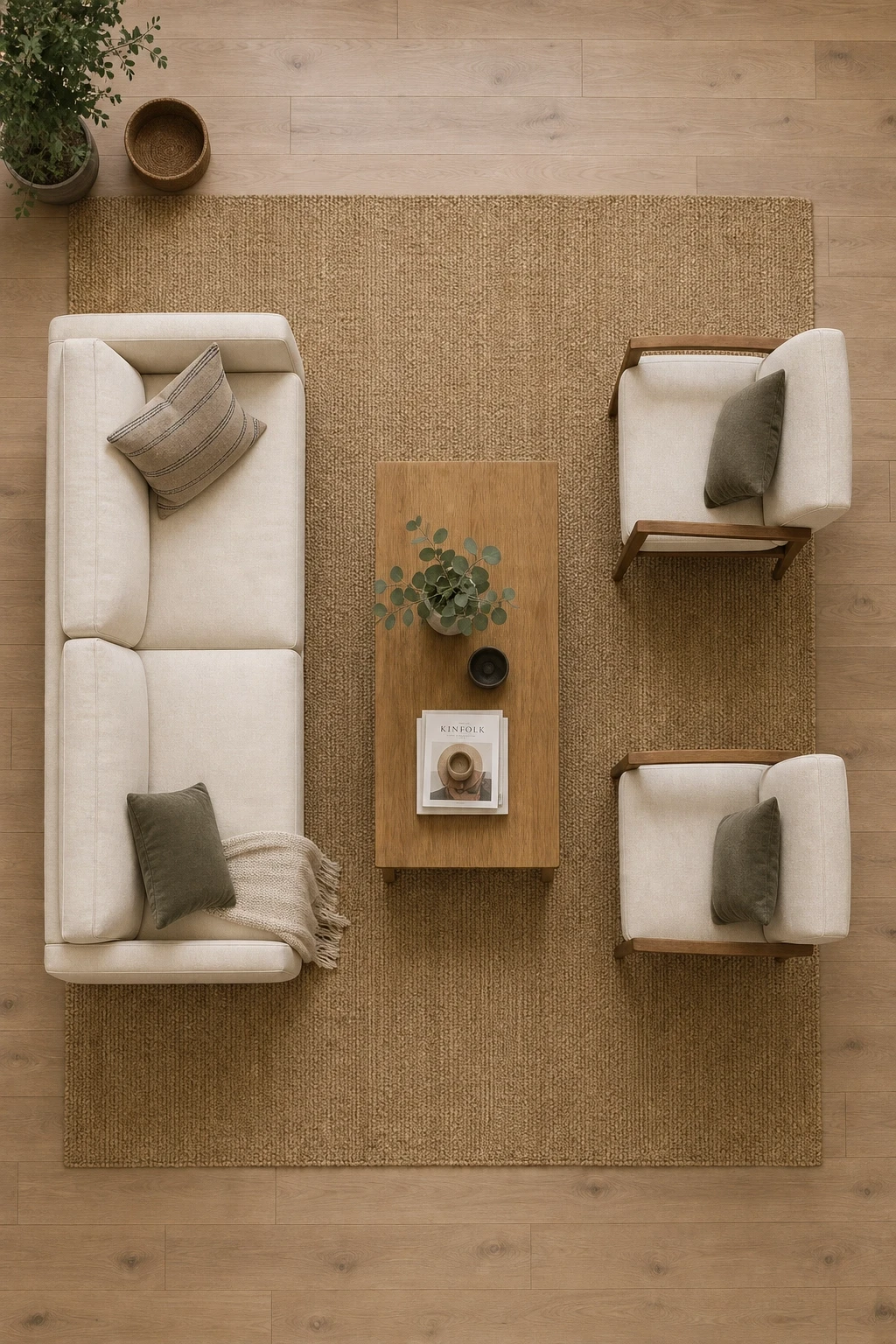
Simple Window Treatments That Disappear
Window treatments are one of those elements people overcomplicate, and in a minimalist home they should almost disappear. The goal is to frame the window, control light and privacy, and then get out of the way. Linen or cotton curtain panels in white, cream, or a soft warm grey hung close to the ceiling on a simple rod create an elongated, airy look without drama. If you prefer blinds, a simple Roman shade in a natural linen is clean and easy to operate. Avoid valances, elaborate tiebacks, or layered combinations of sheers plus blackouts plus drapes. One good layer does the job.
Designer Tip: Hang your curtain rod as close to the ceiling as possible and let the panels drop all the way to the floor. It makes every window look taller.
Room-Specific Moves That Make a Real Difference
A Bathroom That Feels Like a Proper Reset
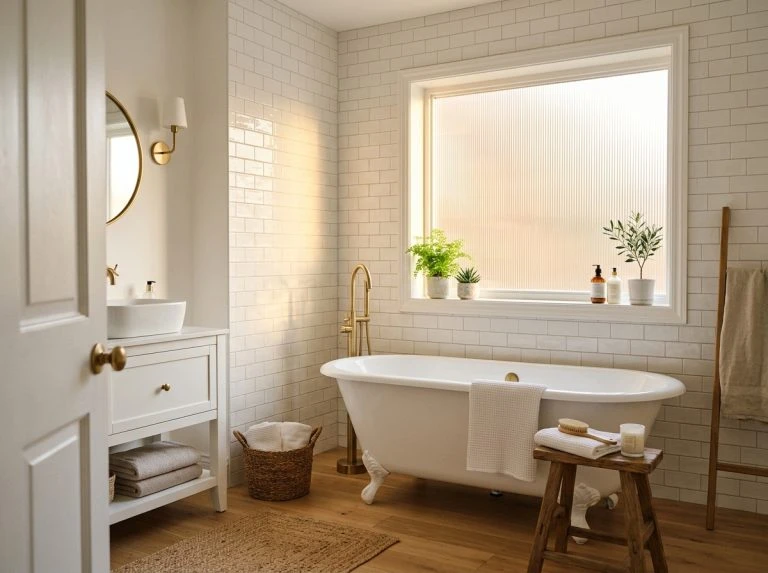
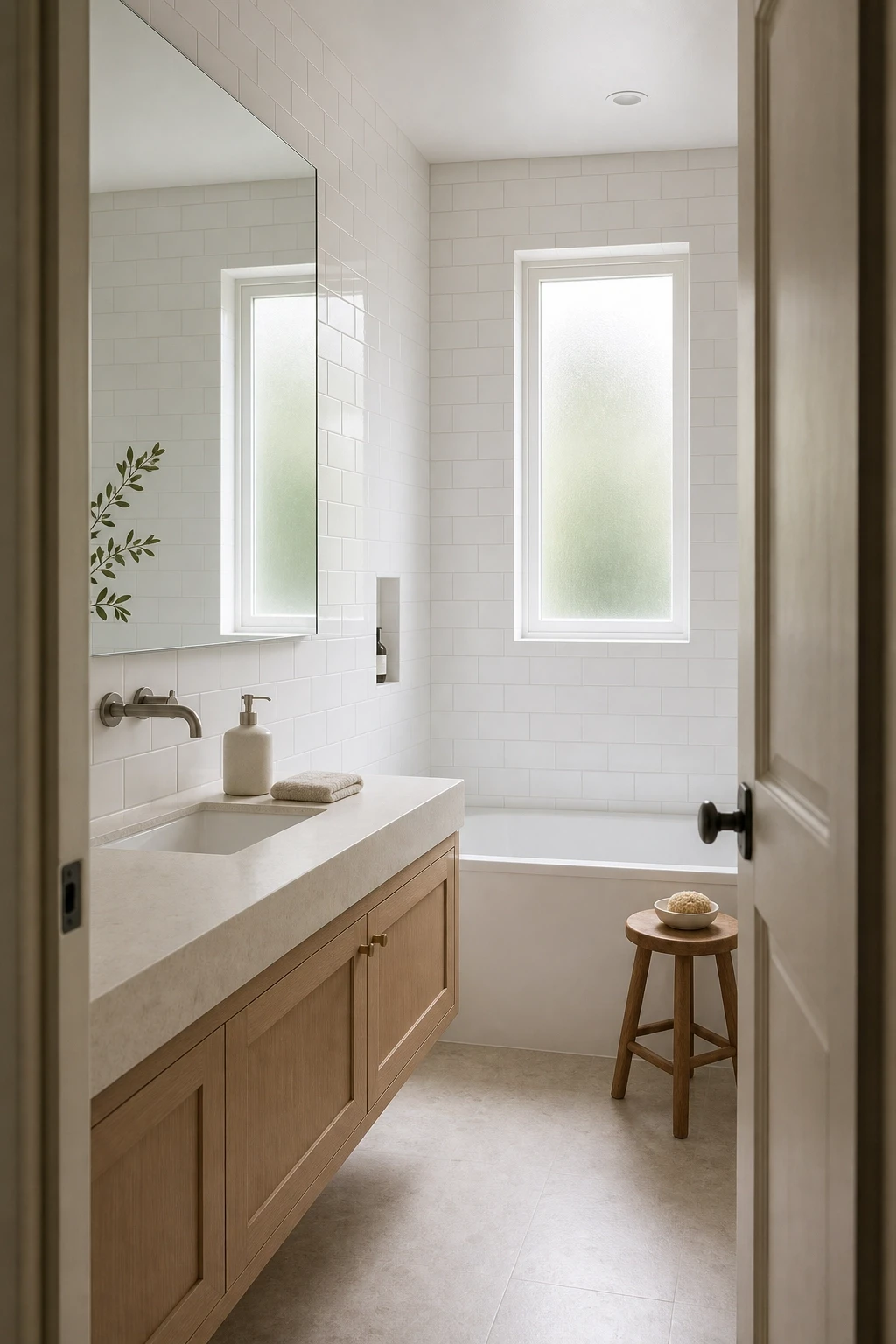
The minimalist bathroom works by hiding as much as possible and displaying as little as possible. Built-in or recessed storage removes the need for countertop organizers. Keep the counter to a single soap dispenser in a ceramic or stone finish, a hand towel folded cleanly on the towel rail, and nothing else. Replace mismatched plastic bottles with a simple matching set or decanted products in simple pump bottles. A large frameless or simple black-framed mirror does more for the room than a decorative one. If you have floor space, a single stool or small wooden bath mat adds warmth. Folded white towels stacked simply feel far more considered than a towel ladder overloaded with colorful options.
Designer Tip: Do a full bathroom edit once a season. Throw out expired products, consolidate duplicates, and reset the counter. Thirty minutes makes a noticeable difference.
A Home Office That Stays Calm Under Pressure
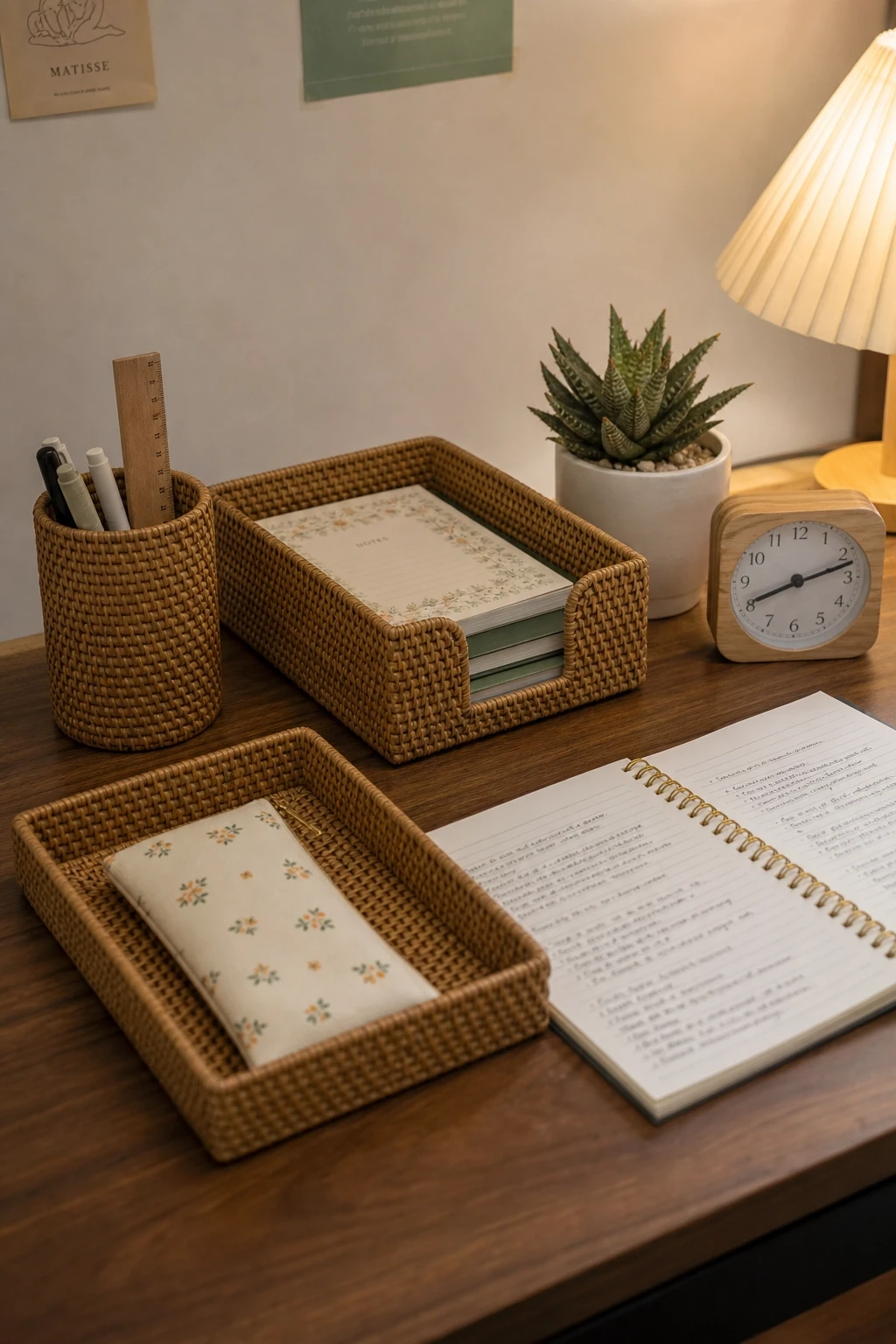
The home office is the hardest room to keep minimalist because work generates stuff, paperwork, cables, chargers, notebooks, and supplies that don’t have a natural home. The answer is a desk with built-in storage or a dedicated cabinet that closes completely at the end of the day. A simple solid-surface desk in wood or white laminate, a comfortable neutral task chair, a monitor at eye level, and one desk lamp is genuinely all you need on the surface. Cable management is non-negotiable: get everything off the floor and tuck cords out of sight. A small plant or a single framed print on the wall behind the desk adds personality without chaos.
Designer Tip: At the end of every workday, clear your desk completely. Working in a clean space the next morning is one of the simplest ways to feel more in control.
A Bedroom That Prioritizes Rest Above Everything Else
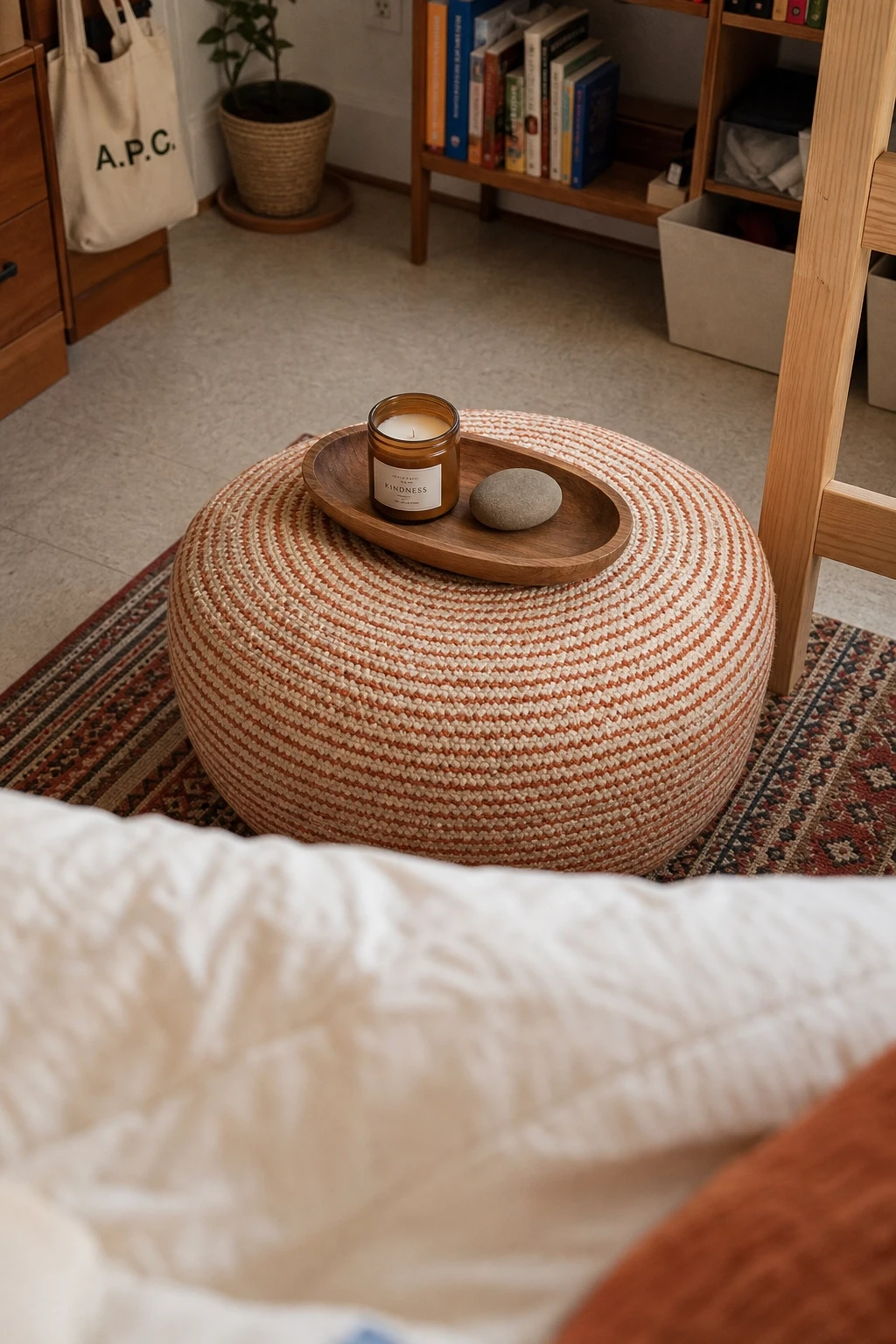
The bedroom’s only job is to help you sleep, and a minimalist bedroom takes that seriously. Strip the room down to the bed, two nightstands, and storage. Everything that isn’t directly related to sleeping or getting dressed should live somewhere else. A high-quality duvet cover in white, warm grey, or soft linen makes the bed look intentional with no effort. Use blackout blinds or curtains if your room gets morning sun, hidden behind sheer panels so the room still looks good during the day. Remove the TV if you can. Keep technology out of the room as much as possible, or at least out of sight. What remains should feel calm, clean, and completely yours.
Designer Tip: Make your bed every single morning. It takes two minutes and changes how the entire room feels for the rest of the day.
An Outdoor Space That Follows the Same Rules
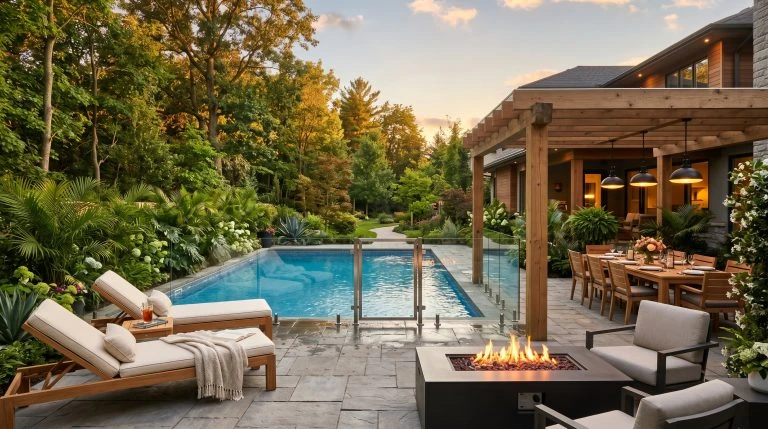
Minimalist principles work just as well on a balcony or patio as they do inside. Start with a neutral base: light grey or natural concrete tiles, or simple decking in a warm timber tone. Choose one or two pieces of outdoor furniture that are actually comfortable and well-made, a small bistro table and two chairs, or a low outdoor sofa with weather-resistant cushions in a neutral tone. Add one or two large planters with simple plants, olive trees, ornamental grasses, or succulents, and skip the string of miscellaneous pots in every size and color. A single outdoor lantern or a wall-mounted light keeps the space usable and warm in the evenings.
Designer Tip: Store outdoor cushions inside when not in use. Faded, weather-beaten cushions make even a beautiful outdoor setup look neglected.
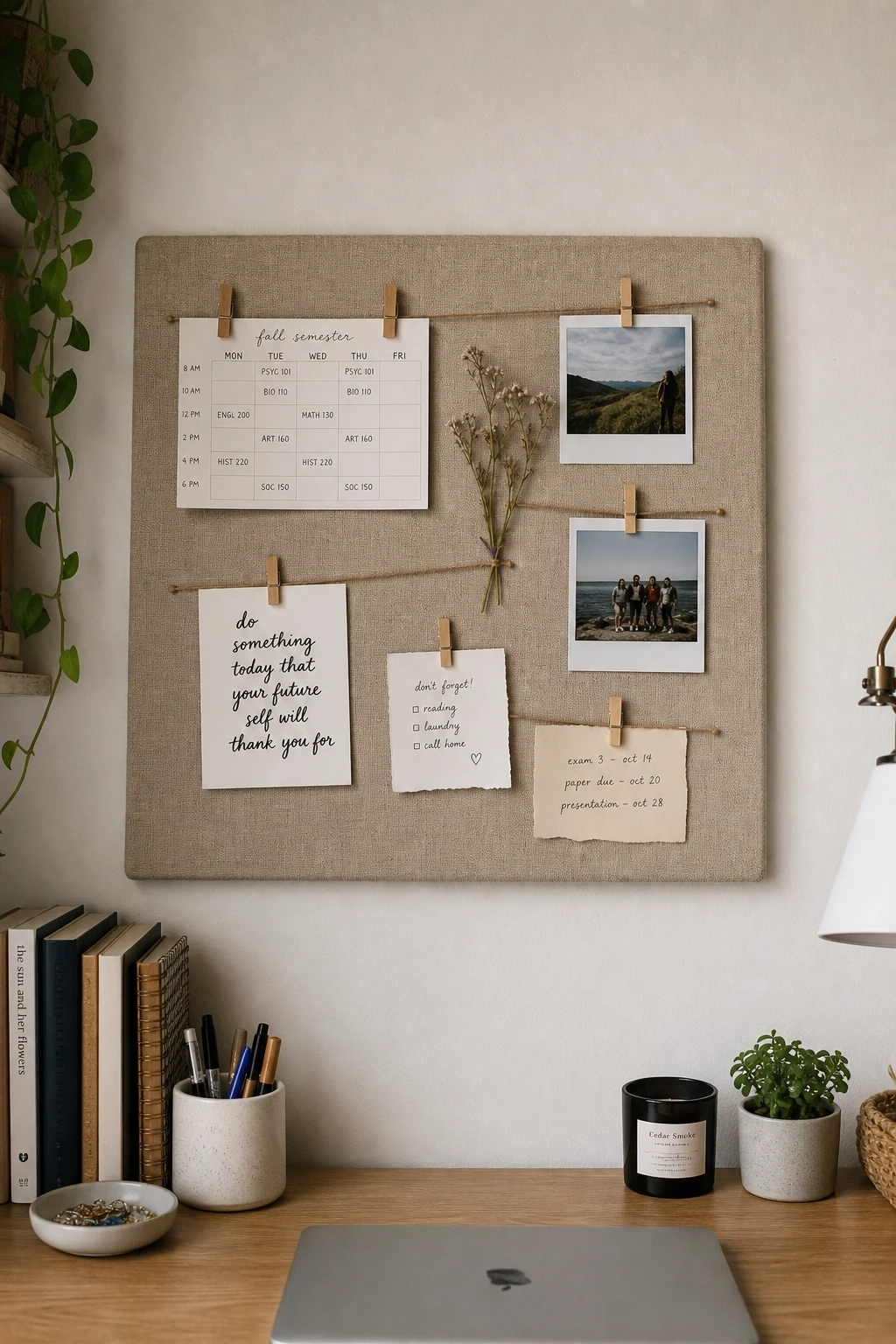
Built-In Storage as the Ultimate Minimalist Move
The cleanest minimalist homes almost always have one thing in common: built-in storage that removes visible clutter without removing the things people actually need. Built-in bookshelves flanking a fireplace, a built-in wardrobe with flat-front doors painted the same color as the wall, or a built-in window seat with storage underneath, these are investments that pay back in visual calm every single day. They’re also more cost-effective long-term than buying freestanding furniture that you’ll eventually replace. If a full renovation isn’t on the table, IKEA’s built-in wardrobe systems painted to match your walls come very close to the same result for a fraction of the cost.
Designer Tip: When planning built-in storage, always build more than you think you need. Shelves that are 80% full look intentional. Shelves that are completely stuffed look like a problem.
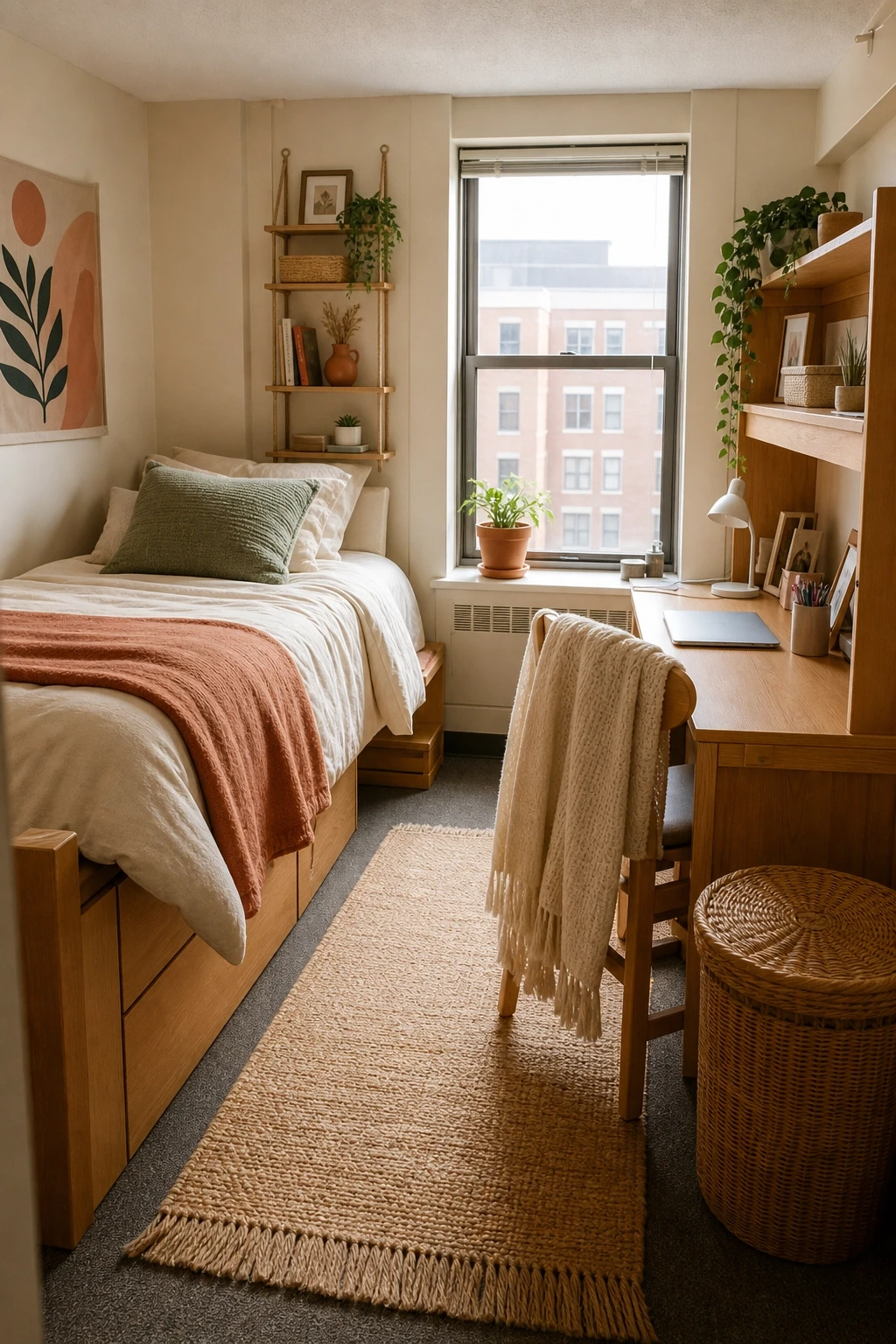
A Living Room Arrangement Built Around Conversation
Most living rooms are arranged around the TV, which means the seating faces one direction and nobody talks to each other. In a minimalist home, the arrangement should work for conversation first and screen time second. Pull the sofa and chairs away from the walls and arrange them facing each other or at angles around a central coffee table. The TV, if it’s in the room, should be mounted at a comfortable viewing height and the entire setup should allow people to talk without craning their necks. A simple round coffee table in the center keeps traffic flowing and avoids sharp corners in a smaller room.
Designer Tip: Remove one piece of furniture from your living room and live with it for a month. You might be surprised how often you don’t miss it.
Wrapping It Up
Minimalist home decor at its best isn’t about deprivation or living in an empty shell. It’s about being deliberate, choosing things that actually serve you, and letting the space around those things breathe. When you stop filling every surface and every wall, something interesting happens: the things that remain start to look a lot more beautiful, and the space itself starts to feel genuinely good to be in.
None of these ideas require a full renovation or a big budget. Many of them cost nothing at all and simply ask you to remove something rather than add it. Start with one room, or even one corner of one room, and apply a handful of these ideas. Step back and see how it feels. If it feels calmer, clearer, and more like the home you actually want to come back to at the end of the day, you’ll know you’re on the right track. Take it one decision at a time, and the rest tends to follow.
Frequently Asked Questions
What is the difference between minimalism and just having a sparse, empty room?
A sparse room is empty by default. A minimalist room is intentional by design. The difference is in the choices. Every piece of furniture, every object, every color in a well-done minimalist space was chosen on purpose. An empty room that happens to have nothing in it doesn’t have the warmth or the considered quality that good minimalism achieves.
Can minimalist decor work in a home with kids or pets?
Absolutely, with some practical adjustments. Durable, washable fabrics like performance linen or microfiber are your best friends. Built-in storage hides toys and pet supplies without letting them take over the room. The principles still apply: keep surfaces clear, choose pieces that earn their place, and do regular resets. It requires more maintenance than a childless or pet-free home, but it’s entirely doable.
What colors work best in a minimalist home?
Warm neutrals tend to work better than cool ones in a lived-in minimalist home. Think cream, warm white, clay, soft greige, stone, and sandy tones rather than stark white or cold grey. These palettes feel grounded and welcoming rather than clinical. You can introduce one or two deeper tones, like charcoal, deep olive, or navy, as accents to keep things from feeling flat.
How do I add personality to a minimalist home without cluttering it?
Focus on quality over quantity. One piece of original art says more about who you are than twenty prints from a home goods store. A few genuinely meaningful objects placed thoughtfully on a shelf tell a story without filling the room. Texture through materials, a beautiful rug, interesting ceramics, aged wood, also adds a lot of personal character without adding visual noise.
Is minimalism expensive to achieve?
Not necessarily. Some of the most effective minimalist moves cost nothing: decluttering, rearranging furniture, clearing countertops, and editing your shelves. When you do buy, investing in one or two well-made pieces is often cheaper in the long run than constantly replacing cheaper items. Thrift stores and vintage markets are excellent places to find simple, solid furniture at low prices.
Where do I start if my home is very cluttered right now?
Start with the room you spend the most time in, and begin by removing rather than adding. Go through every item in the room and ask honestly whether it’s there because you chose it or just because it ended up there. Box up anything you’re unsure about and store it somewhere out of sight for 30 days. If you don’t miss it, you have your answer.