Earthy Bathroom Looks That Feel Good Every Single Day

There is something quietly satisfying about walking into a bathroom that feels grounded. Not designed to impress, not packed with trendy fixtures, just a space that breathes naturally and makes you feel a little more human before the day even starts. That is the real appeal of a minimalist earthy bathroom, and honestly, it is a lot easier to pull off than most people think.
The earthy minimalist style is not about spending a fortune on a full renovation. It is about being intentional. It means choosing materials that feel honest, colors that do not fight each other, and decor that earns its place on the shelf. Wood, stone, clay, linen, and plants are the main players here, and when they are combined with clean lines and a restrained hand, the result is a bathroom that feels like it has always been there.
What makes this style work so well in bathrooms specifically is that it leans into calm. The muted colors reduce visual noise. The natural textures add warmth without clutter. And the minimalist foundation keeps everything easy to maintain, which matters a lot in a room that gets used every single day. Whether you are starting from scratch or just looking to refresh what you already have, these ideas will give you plenty of places to start. There are 21 ideas ahead, grouped by theme, each one with a specific angle and a practical designer tip to help you actually make it work.
Earthy Color Palettes That Set the Whole Tone
1. Warm Putty Walls with Crisp White Fixtures
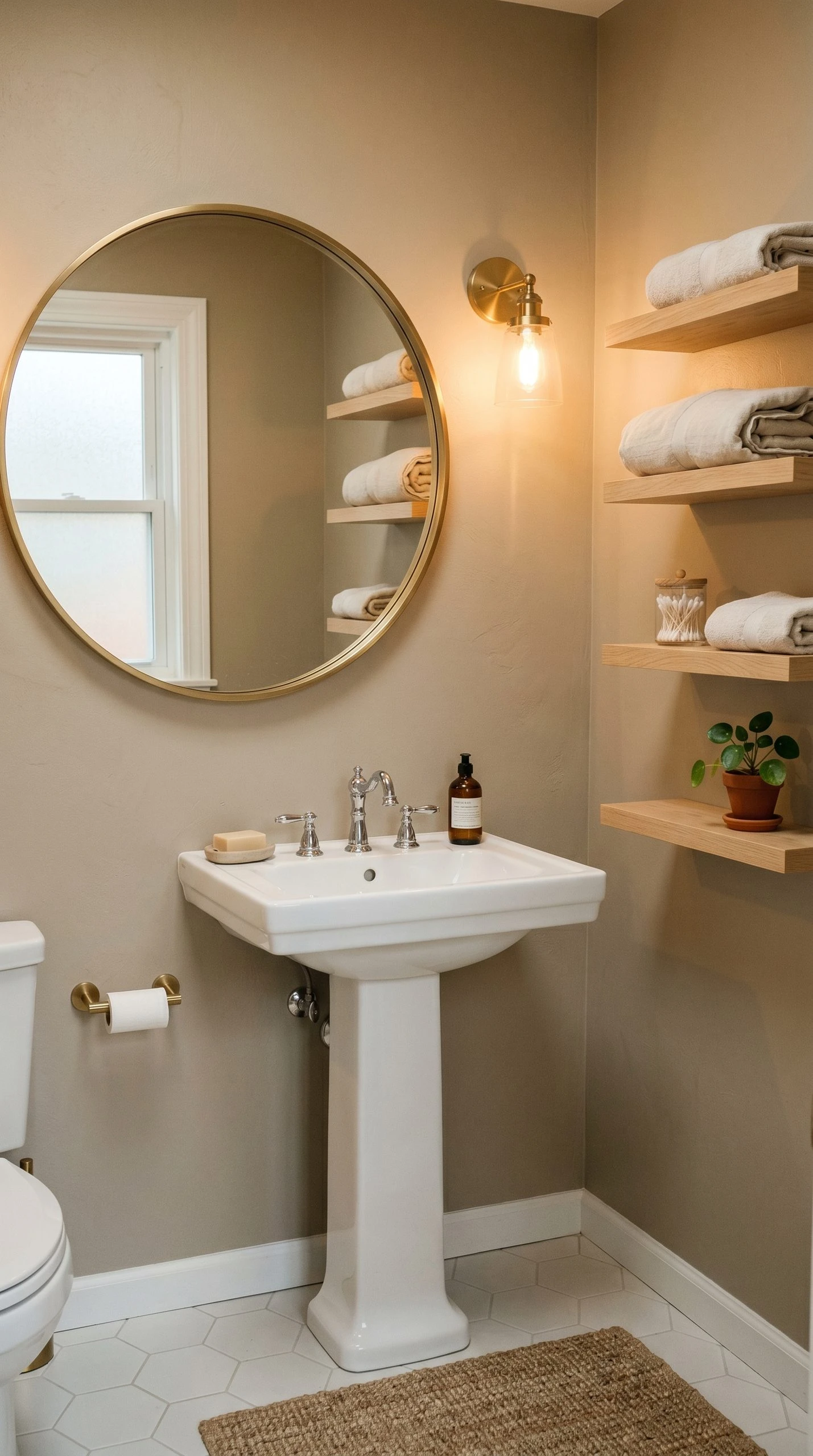
Putty is one of those wall colors that does something subtle and wonderful. It sits right between beige and gray, landing in a warm neutral zone that feels soft without looking washed out. When you pair putty walls with bright white fixtures, the contrast is clean but never cold. The white sink and tub pop against the wall in a way that feels deliberate and polished, while the putty keeps the overall mood grounded and easy.
For flooring, pale oak or light travertine tiles work beautifully here. Keep the vanity in a natural wood finish to bring some warmth in from a different direction, and add a simple round mirror in a matte black or brushed brass frame to anchor the space visually. Towels in off-white or stone linen complete the look without pulling attention away from the walls. The whole palette reads calm, but it has depth because the tones are layered rather than flat.
Designer Advice: Test your putty paint in the actual bathroom lighting before committing. Natural light and bathroom artificial lighting read differently, and putty can shift toward gray or pink depending on your bulb temperature.
2. Sandy Beige with Rust Accents
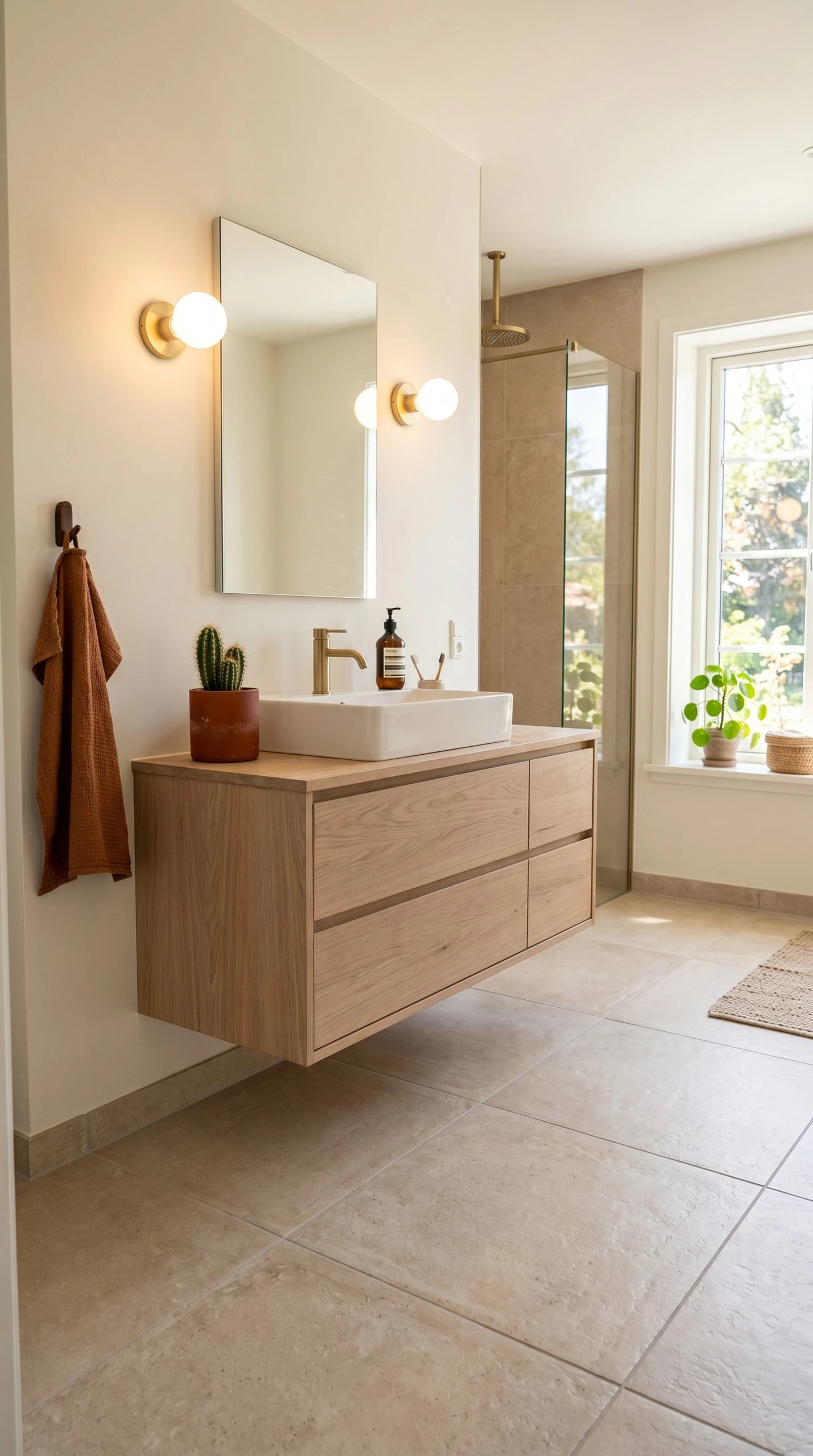
Sandy beige is the most forgiving background color you can choose for a bathroom. It works with almost every material and holds up beautifully over time because it does not read as a trend. What gives this combination real energy is the rust accent layered on top. Rust towels, a rust-toned soap dispenser, a ceramic pot in burnt orange, even a rust-colored bath mat. These accents feel warm and earthy without being aggressive, and they give the space a personality without overcrowding it.
Keep the tile simple in this setup. Large format sandy beige tiles or concrete-look porcelain in a light tone keep the floor grounded without adding visual competition. A floating vanity in bleached oak or whitewashed wood keeps the wall space open and the room feeling light. For lighting, warm white bulbs in a simple sconce on either side of the mirror create a balanced glow that flatters both the room and the person standing in front of it.
Designer Advice: Rust accents are most effective when they show up in at least three places in the room. One item reads as an accident. Three reads as a deliberate color story.
3. Deep Mocha on One Wall
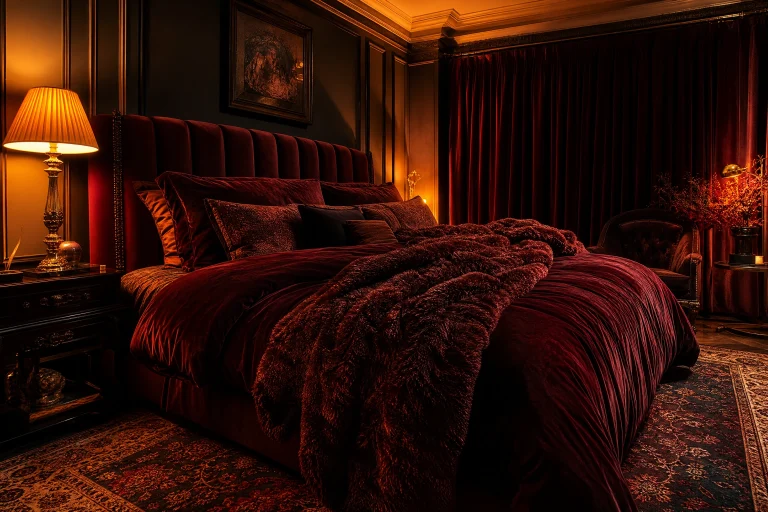
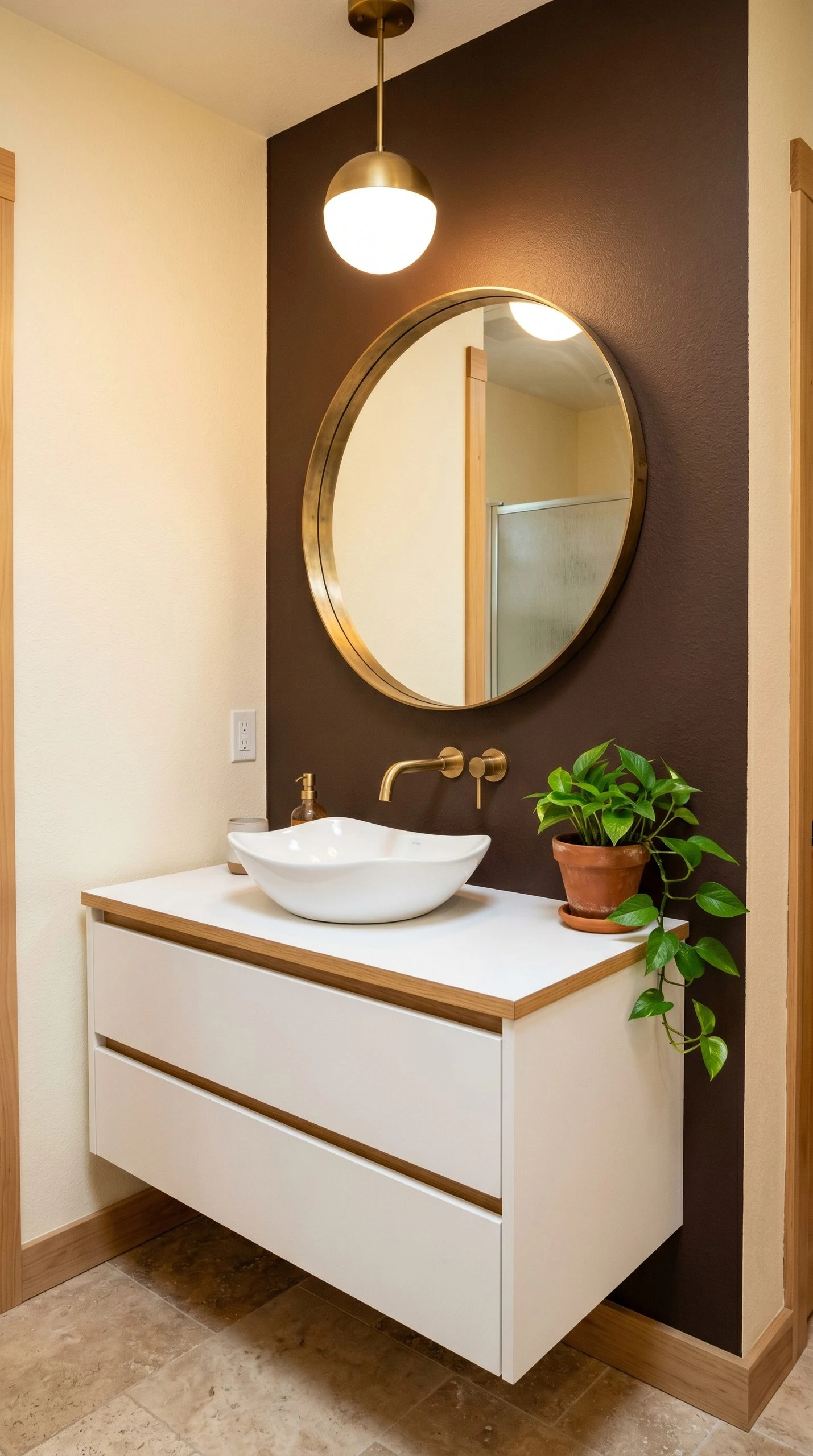
If you want a bathroom that feels a little bolder without losing its earthy minimalist character, a deep mocha accent wall is worth considering. This is not about painting all four walls a dark color. One wall behind the vanity or behind the tub is enough to create a dramatic backdrop that makes everything in front of it look intentional. Deep mocha sits in warm brown territory with enough depth to feel rich, but it stays grounded rather than looking gothic or cold.
Against this wall, choose a white or cream vanity to create contrast, and use a large round mirror in a natural wood or unlacquered brass frame. The other walls should stay in a light cream or warm white so the room does not feel closed in. Brass or matte gold hardware on the taps and cabinet pulls ties directly into the warm undertones of the mocha, and a small plant on the vanity shelf adds a fresh counterpoint to all that warmth.
Designer Advice: Paint the accent wall in a matte finish rather than satin. Matte absorbs light in a way that makes deep colors look more sophisticated and less like a commercial space.
4. Sage Green with Warm Stone
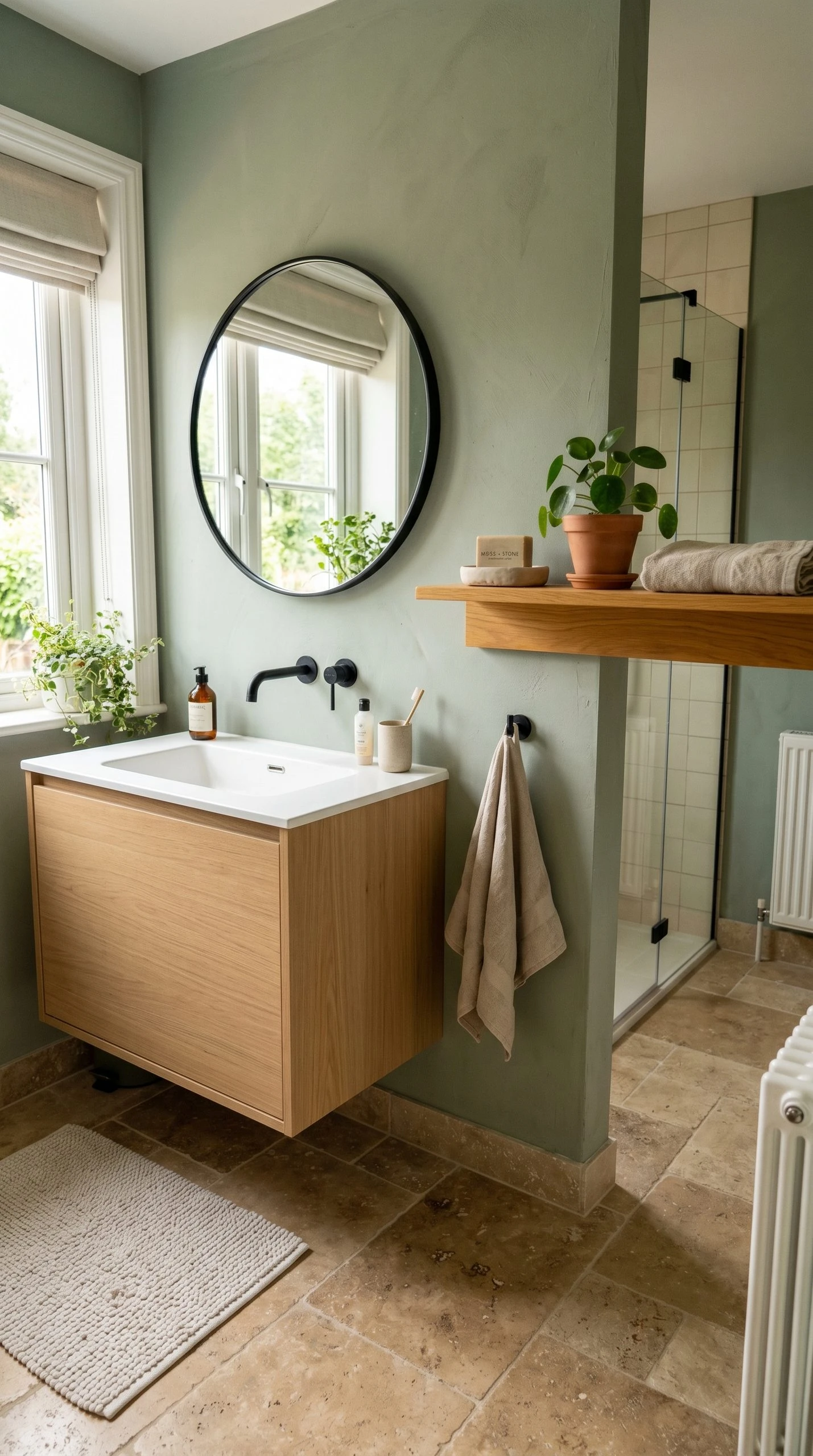
Sage green has moved well past trend status into something that feels genuinely classic for earthy spaces. It reads natural because it is natural, evoking the color of dried herbs and quiet hillsides. In a bathroom, sage green on the walls or in large format tiles creates an immediate sense of calm. The key to making it work in a minimalist earthy space is pairing it with warm stone tones rather than cooler whites. Think travertine countertops, limestone floor tiles, or stone-look porcelain in warm beige and sand shades.
Wooden shelving in a medium honey tone brings another layer of organic warmth into the room, and ceramic accessories in raw or unglazed finishes, such as a handmade soap dish or a rough-textured vase, add texture without noise. Keep the fixtures in matte black or brushed nickel rather than bright chrome, which would read too sharp against the softness of the green and stone combination. A linen hand towel hung loosely from a wooden hook finishes the look perfectly.
Designer Advice: Sage green looks best in natural daylight. If your bathroom is small or has limited windows, add a warm-toned mirror light to keep the color from shifting too gray in artificial light.
Natural Materials Done the Minimalist Way
5. A Teak Floating Vanity
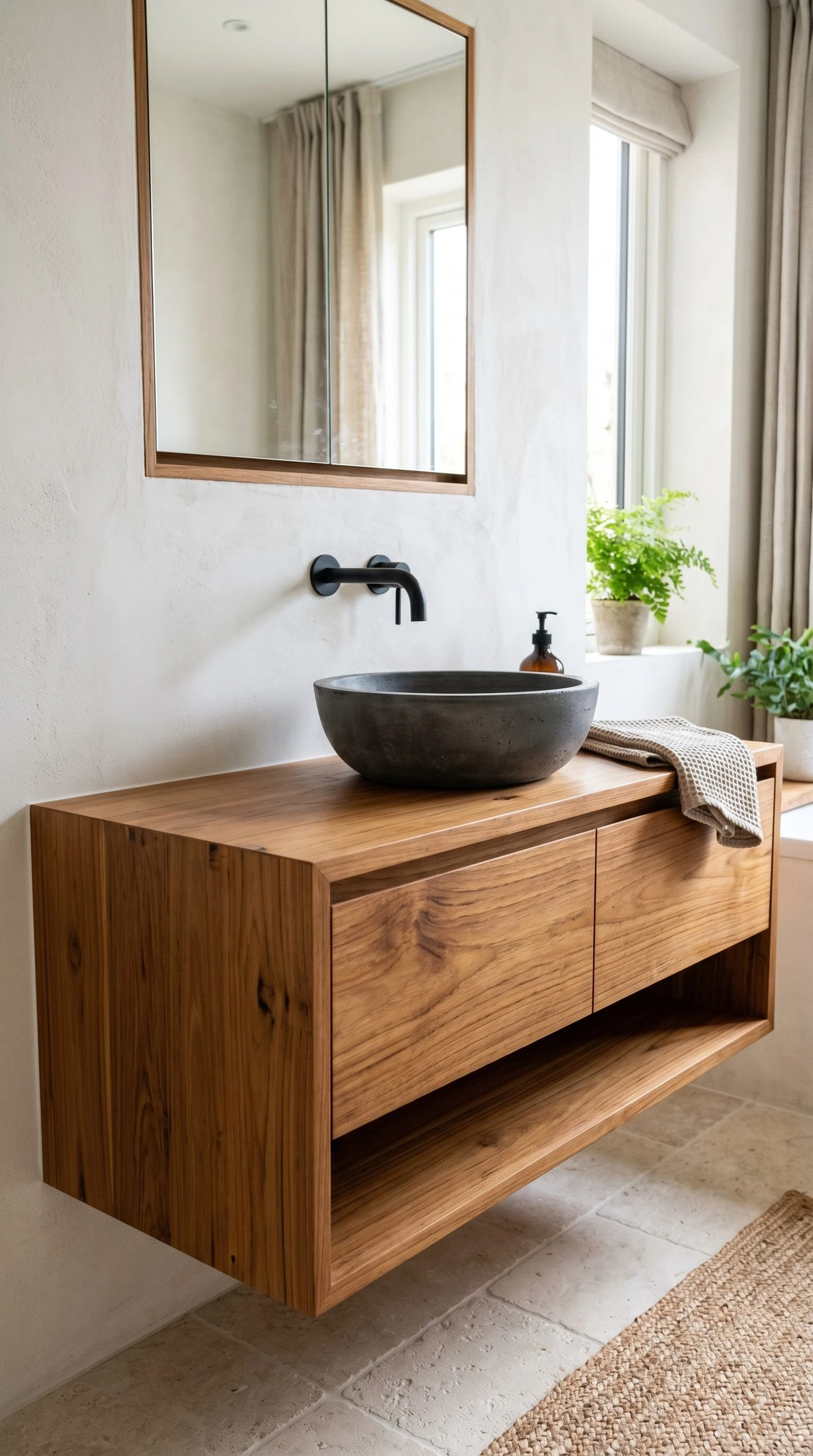
Teak is a bathroom-friendly wood that has been used in wet environments for centuries. Its natural oils make it resistant to moisture and warping, which means it is genuinely practical rather than just pretty. A teak floating vanity with clean lines and no ornate detailing fits perfectly into a minimalist earthy bathroom because it brings warmth and texture without adding visual weight. The floating design keeps the floor visible underneath, which makes any bathroom feel larger than it actually is.
Pair the teak vanity with a simple undermount sink in white ceramic or a vessel sink in matte concrete. Keep the countertop as minimal as possible, ideally with just a single soap dispenser and maybe a small plant. The teak already does a lot of visual work on its own, so the rest of the vanity surface should stay clean. A recessed medicine cabinet above keeps storage hidden and the wall uncluttered, which is exactly what minimalist design needs to succeed.
Designer Advice: Oil your teak vanity once or twice a year with teak oil to keep the natural color rich and prevent the wood from drying out or greying prematurely in the humid bathroom environment.
6. Concrete Walls with Warm Timber Accents
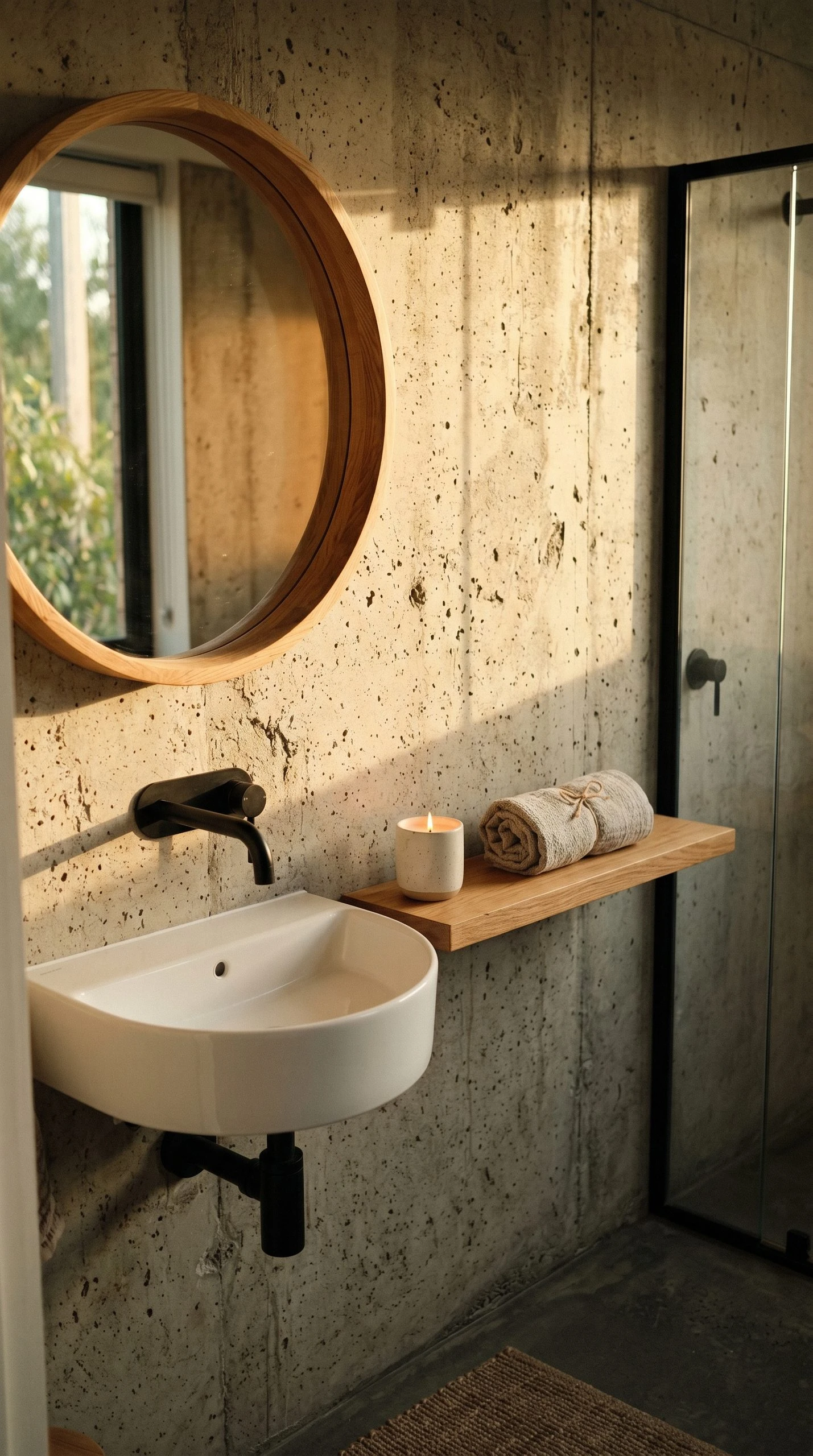
Raw concrete walls have a texture and honesty to them that feels genuinely earthy. They are not trying to be anything other than what they are, and in a minimalist bathroom, that directness is refreshing. The challenge with concrete is that it can tip into cold or industrial territory if you are not careful. The solution is warm timber accents, which add enough organic softness to keep the space from feeling like a car park. A timber shelf above the toilet, a wooden bath mat, or a simple wood-framed mirror all pull the room toward warmth without undermining the raw quality of the concrete.
This combination works especially well in bathrooms with a single large window because natural light playing across concrete creates a beautiful shifting texture throughout the day. Keep fixtures simple and functional in matte black. Use a pendant light with a woven shade or a simple exposed filament bulb to add warmth overhead. A few simple objects on the timber shelf, maybe a candle, a ceramic plant pot, and a folded linen towel, are all you need to finish the look.
Designer Advice: If real concrete walls are not in the budget, large format concrete-look porcelain tiles achieve a nearly identical effect and are much easier to clean and maintain.
7. Travertine Tile Throughout
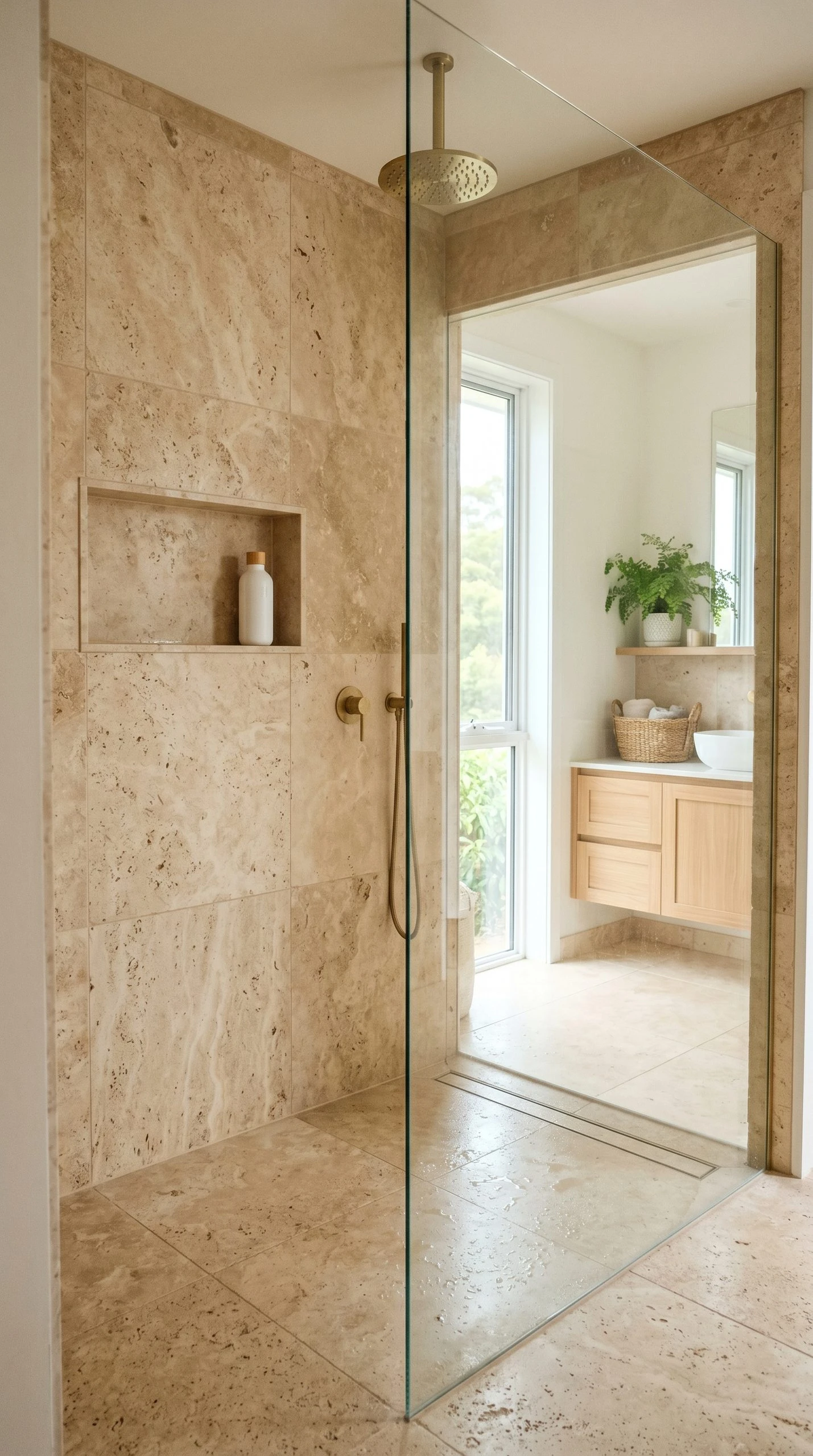
Travertine has a long history in interiors, and it keeps coming back because it ages beautifully. The natural pitting and variation in each tile means no two spaces look the same, and the warm beige, ivory, and caramel tones sit squarely in earthy territory. Using travertine on both the floor and at least one wall of the shower creates a cohesive, luxurious feel that still reads as restrained when paired with simple fixtures and minimal decor.
For a minimalist bathroom, go with a classic cut rather than tumbled edges, which reads cleaner and more intentional. Use a matching grout in a warm beige tone so the grout lines blend rather than compete. Keep the vanity in white or a light natural wood to prevent the space from feeling too heavy. A simple brass tap and a frameless mirror complete the picture. Because travertine is so textural and visually rich, the rest of the room can be stripped back almost completely.
Designer Advice: Seal travertine tiles regularly as they are porous and will stain if left untreated. A penetrating sealer applied every one to two years keeps them protected without changing their natural appearance.
8. Woven Baskets and Rattan Accessories
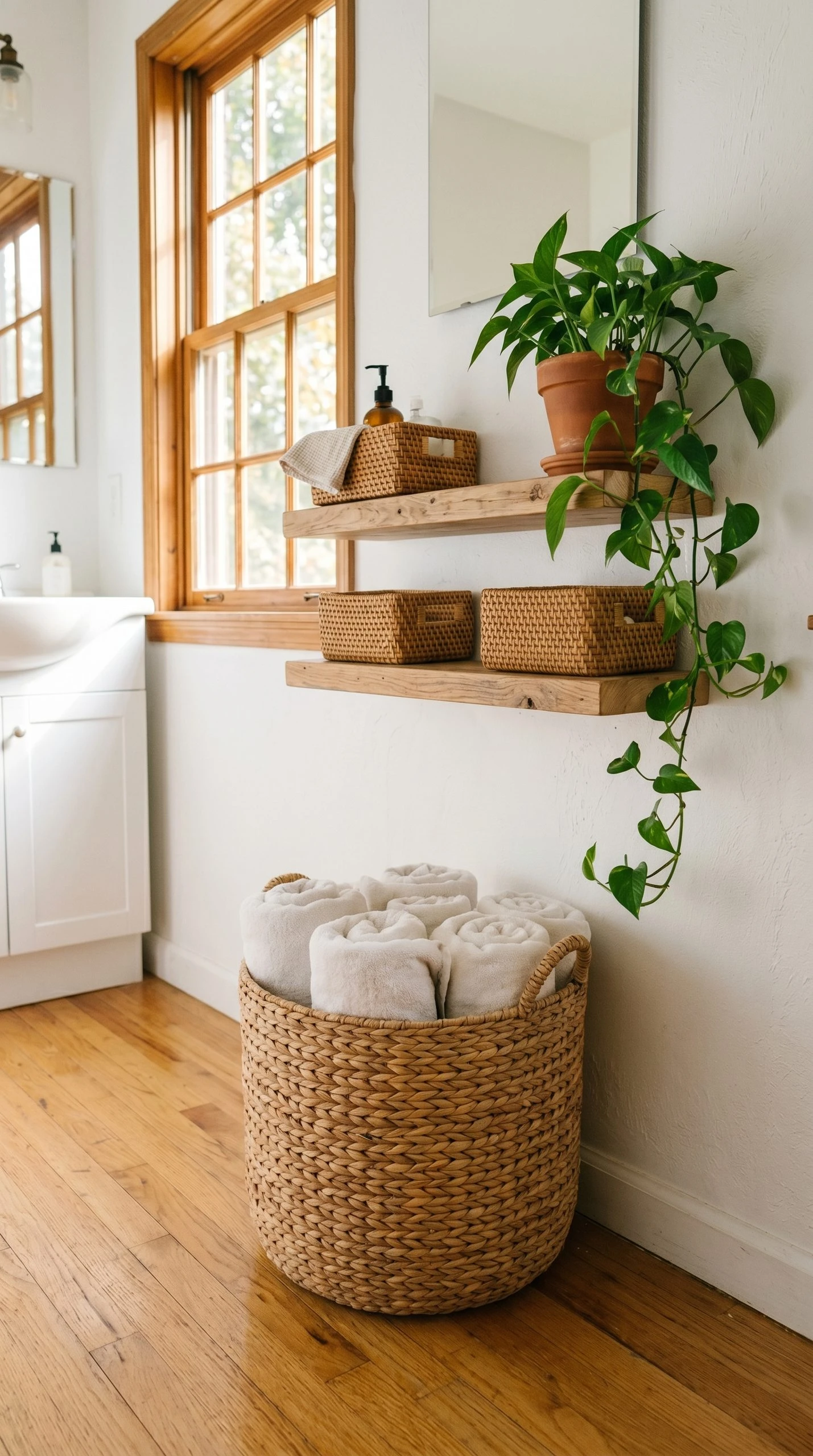
In a minimalist earthy bathroom, storage and decor often serve the same purpose. Woven baskets are one of the most practical examples of this. A large woven basket on the floor holds rolled towels or spare toilet paper, and it looks considered rather than makeshift. Smaller rattan or seagrass baskets on open shelving hold cotton balls, small bottles, or hand creams. Because the materials are natural, they add texture and warmth without needing any styling effort.
The key is choosing baskets in a consistent tone, whether that is natural straw, bleached white, or dark brown woven rattan. Mixing finishes too wildly makes the bathroom feel like a craft market rather than a curated space. Keep the shapes simple and round or cylindrical shapes tend to work better in a minimalist context than angular or decorative ones. A rattan toilet roll holder or a woven hand towel ring are small touches that add to the cohesive natural material story without costing much.
Designer Advice: Use a basket with a removable liner for anything that will get damp, like a laundry basket or a bin. This keeps the woven material from absorbing moisture and developing mildew.
9. River Stone Shower Floor
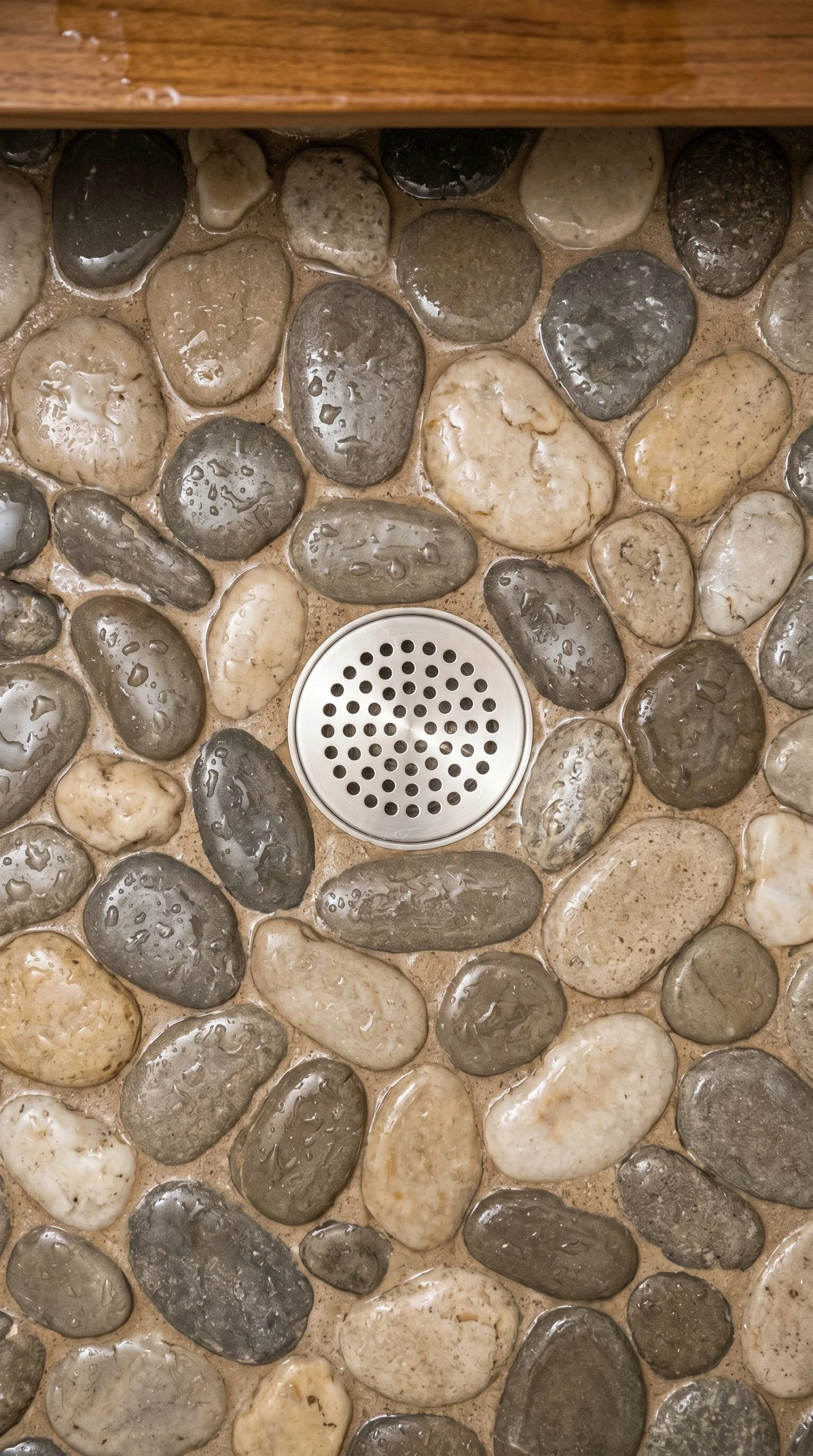
A river stone floor in the shower might be the single most tactile choice you can make in a bathroom. The smooth rounded stones feel genuinely luxurious underfoot, like stepping onto a pebbled riverbed. In a minimalist earthy space, the visual texture they bring is unmatched because they add a natural pattern without you having to think about it. The stones are self-grounding, meaning they automatically make the rest of the room look calm by comparison.
River stones work best in a shower that keeps its walls simple. White subway tile, plain concrete, or large format stone tiles on the walls let the floor be the main character. Use a coordinating grout in a sandy or gray tone rather than bright white, which would create too much contrast between the grout and the stones. Keep the showerhead and fixtures in matte black or brushed nickel for a clean, modern counterpoint to the organic floor material. Add a single teak shower bench for function and warmth.
Designer Advice: River stone floors need grout sealing just like tile, but they also benefit from a matte stone sealer applied to the individual stones to prevent soap scum from embedding in the surface over time.
Lighting That Works With Earthy Tones
10. Warm Edison Bulbs in Simple Sconces
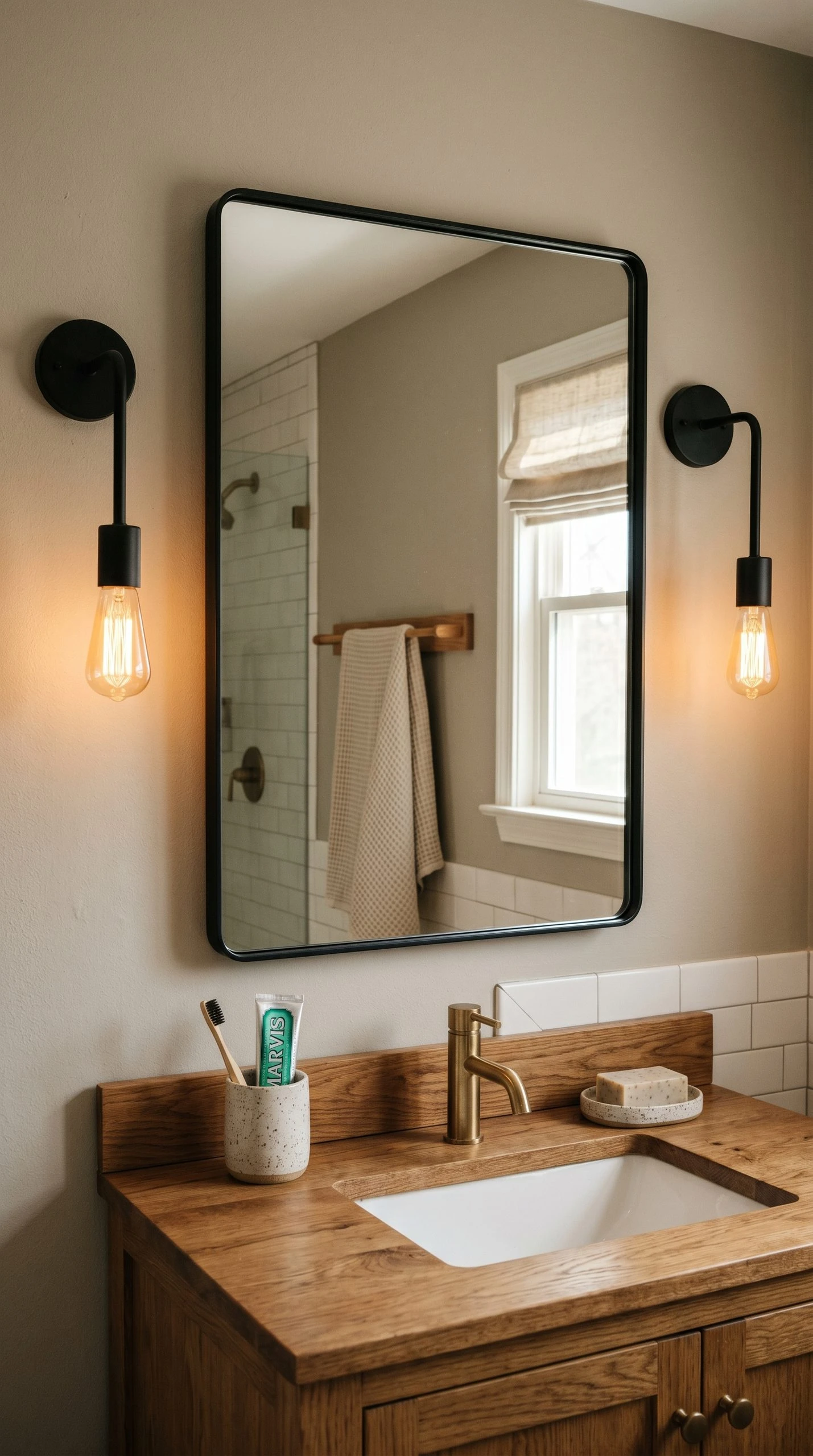
Bathroom lighting is one of the most overlooked design decisions, and it is one of the most important. The wrong light temperature can make an earthy palette look muddy, gray, or flat. Edison bulbs in a warm white temperature, around 2700K, cast the kind of golden light that makes earthy tones glow rather than dull. Mounted in a pair of simple wall sconces on either side of the mirror, they provide balanced light that eliminates the unflattering shadow typical of overhead lighting alone.
Choose sconces in a matte black, unlacquered brass, or natural wood finish to continue the earthy material story. Avoid anything overly decorative or ornate, which would undermine the minimalist feel. The sconces should feel like they belong to the room rather than being placed there as an afterthought. For the main ceiling light, a simple flush mount with a warm white bulb or a rattan pendant provides ambient light that fills the room softly.
Designer Advice: Layer your bathroom lighting with at least two sources: one for ambient light from above and one for task lighting at the mirror. This makes the room more functional and more atmospheric at the same time.
11. Recessed Lighting with a Dimmer Switch
Recessed lighting keeps the ceiling completely clean, which is exactly what a minimalist bathroom needs overhead. There are no fixtures, no pendants, no visual clutter above you. What a dimmer switch adds to this setup is transformative. At full brightness in the morning, the room is functional and well-lit for getting ready. Dialed down in the evening, the same room becomes a calm, low-lit space that feels genuinely relaxing.
For earthy tones to look their best under recessed lighting, choose bulbs in a warm white temperature and position the lights carefully to avoid harsh direct light on the walls, which can flatten texture. Angled recessed lights can be pointed toward a stone or concrete wall to wash it with light and bring out the natural variation in the surface. This technique, called wall washing, is used widely in high-end hospitality design and it works just as well at home.
Designer Advice: Choose LED dimmer-compatible bulbs before installing dimmer switches. Not all LED bulbs dim smoothly, and flickering at low settings is one of the most frustrating lighting problems to fix after the fact.
12. A Pendant Over a Freestanding Tub
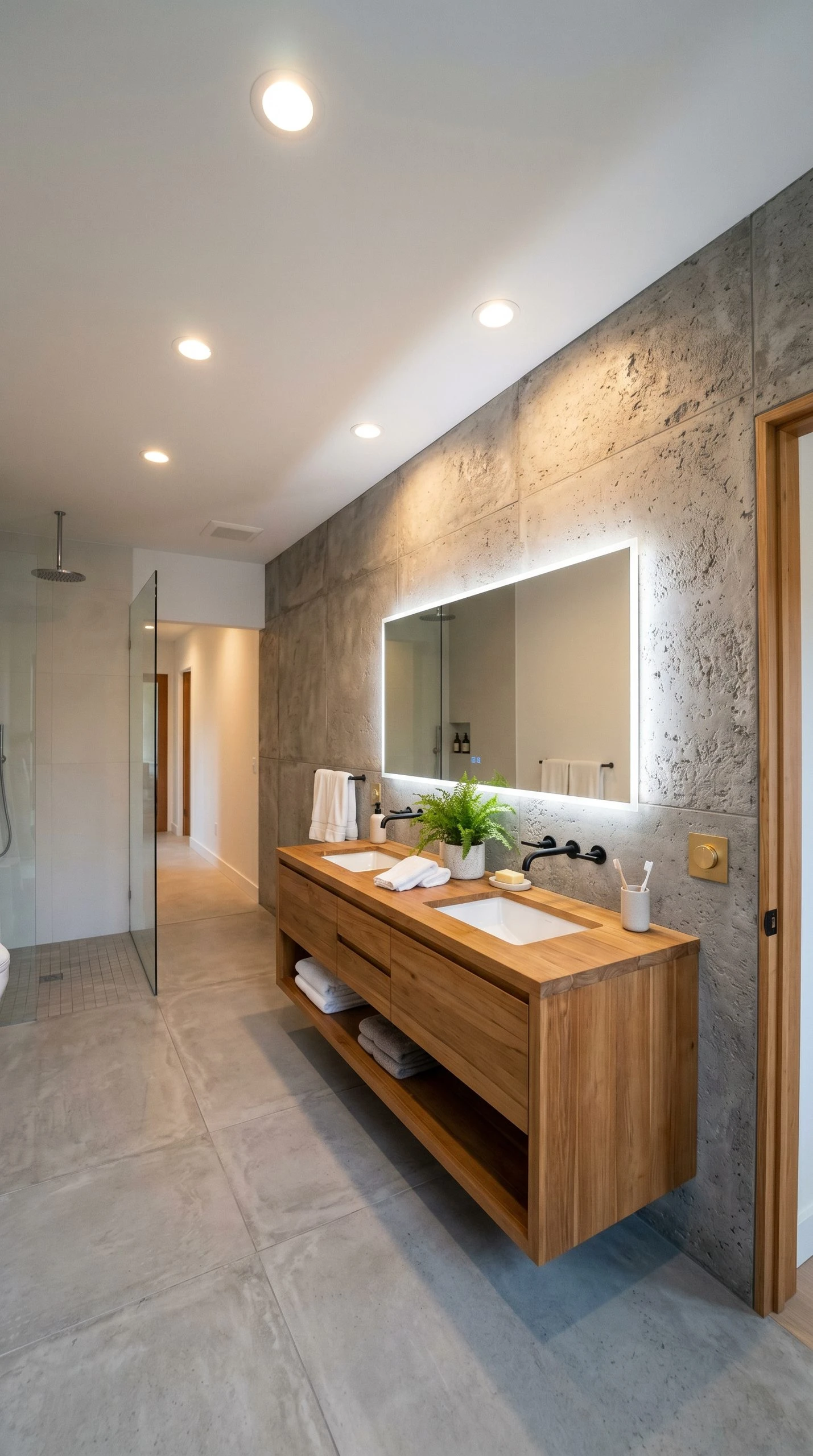
If your bathroom is large enough to include a freestanding tub, hanging a single pendant light above it is a choice that pays off enormously in terms of atmosphere. The pendant light creates a focal point that draws the eye toward the tub, which is usually the most beautiful piece in the room. In an earthy minimalist space, the best pendant choices are simple ones. A hand-thrown ceramic shade in a warm clay tone, a woven rattan globe, or a simple blown glass bulb in amber are all wonderful options.
Keep the pendant on a separate switch from the main bathroom lighting so you can use just the pendant light when you are bathing, creating a pool of warm light directly over the tub while the rest of the room softens into shadow. This is genuinely one of the easiest ways to make a bathroom feel far more luxurious than it actually is, and it does not require any renovation beyond adding a ceiling electrical point.
Designer Advice: Hang the pendant so the bottom of the shade sits roughly 72 to 80 inches from the floor. Too low feels cramped and becomes a hazard. Too high loses the intimacy that makes a pendant over a tub so effective.
13. Candlelight as Intentional Decor
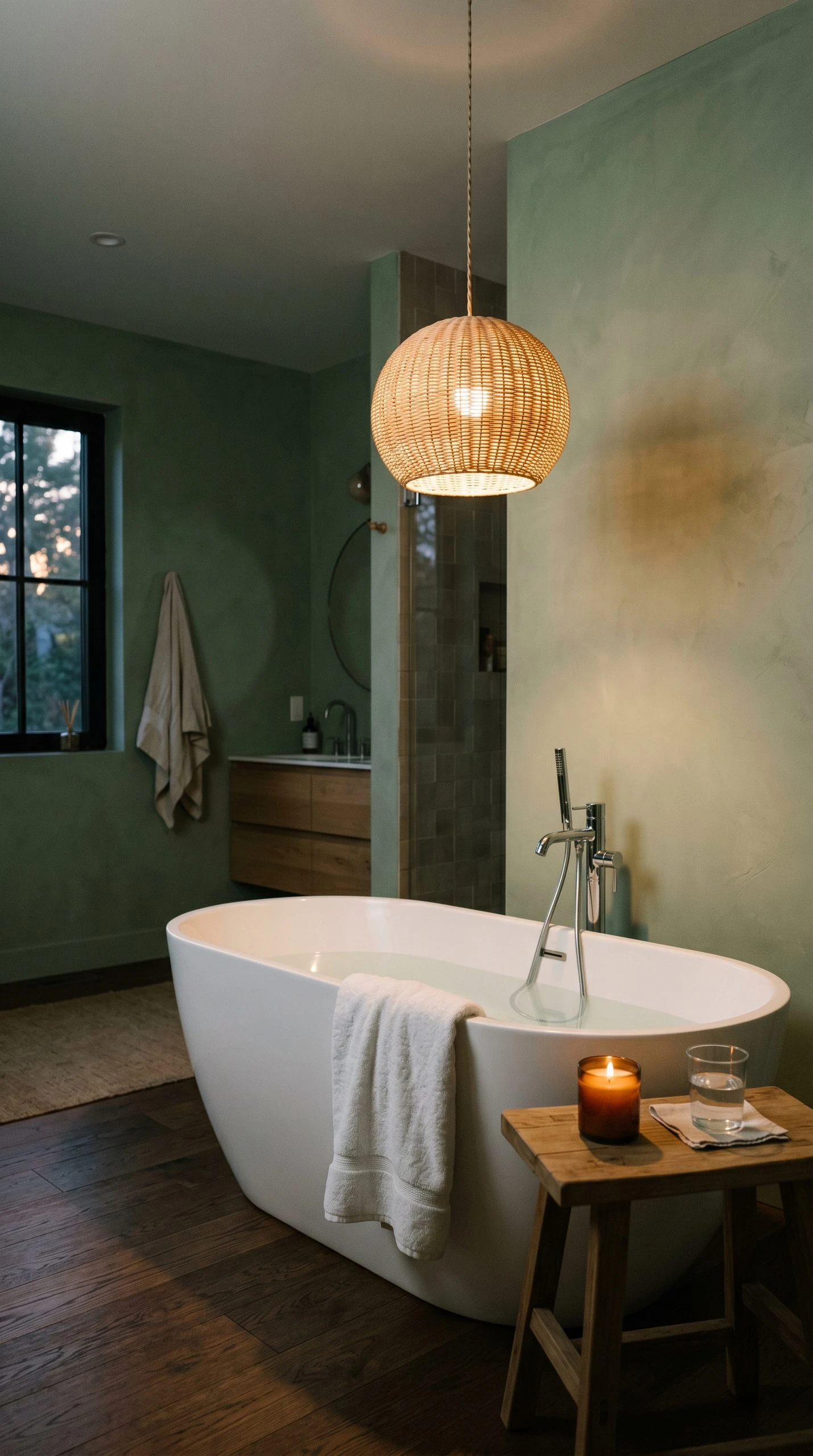
Candles in a bathroom are not a new idea, but most people underuse them. In a minimalist earthy space, a small collection of candles placed thoughtfully around the room adds both atmosphere and decor at the same time. The warm flickering light softens the hard lines of tile and fixtures in a way that no electric light can replicate. Unscented pillar candles in cream, sandy beige, or deep mocha tones placed on a teak shelf or a stone ledge look exactly right in an earthy bathroom.
Choose candles in varying heights rather than all the same size, which creates a natural, organic grouping. For safety, use a ceramic or stone tray underneath to catch any drips and to group the candles together visually. A few simple taper candles in a minimalist ceramic holder beside the bathtub, or a cluster of tea lights in a stone bowl on the windowsill, are enough to completely change the mood of the bathroom when you want it to.
Designer Advice: Keep candles away from hanging linens and always extinguish them before leaving the room. Natural wax candles, such as beeswax or coconut wax, are the cleanest burning option and tend to drip less than paraffin.
Decor That Earns Its Place
14. A Single Large Plant
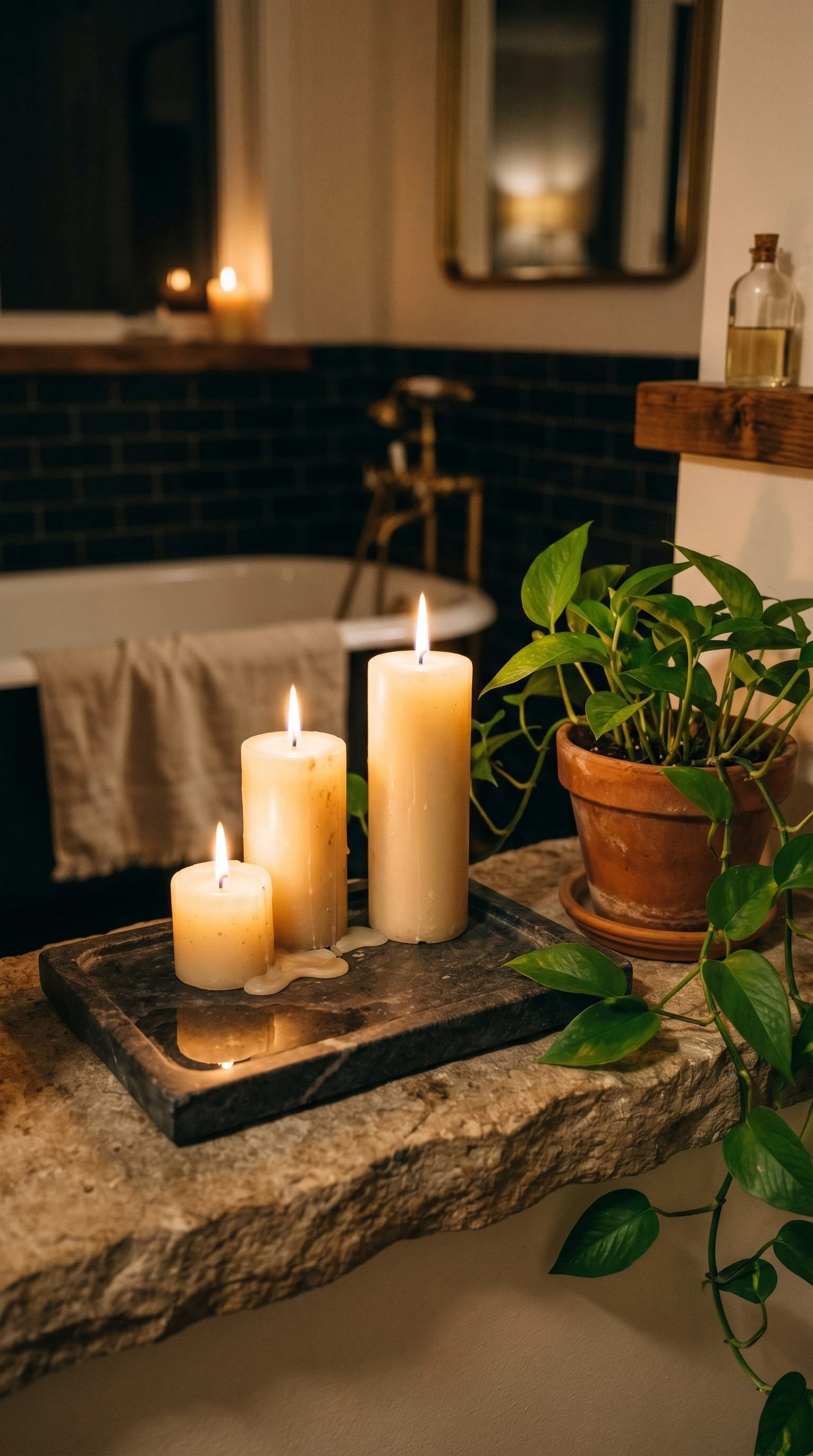
One large plant does more for a bathroom than five small ones scattered around. A single specimen in the right location, say a tall snake plant beside the shower, a trailing pothos on a high shelf, or a wide-leafed bird of paradise in a corner, becomes the greenery focal point of the room. It reads as intentional and considered, which is exactly the minimalist spirit. Small plants dotted everywhere tend to look like you could not decide where to stop.
In a bathroom with limited natural light, snake plants, ZZ plants, and pothos are all genuinely low-maintenance options that handle low light and high humidity well. For a sunnier bathroom, a ficus lyrata or a split-leaf philodendron makes a real statement. Choose the pot with care. A raw clay or unglazed ceramic pot in a warm beige or terra cotta tone fits the earthy palette beautifully, while a simple white or stone-colored pot is always a safe, clean choice.
Designer Advice: Rotate your bathroom plant a quarter turn every week or two if it gets directional light from a window. This keeps the growth even and the plant looking full rather than leaning toward the light.
15. Open Shelving with Edited Styling
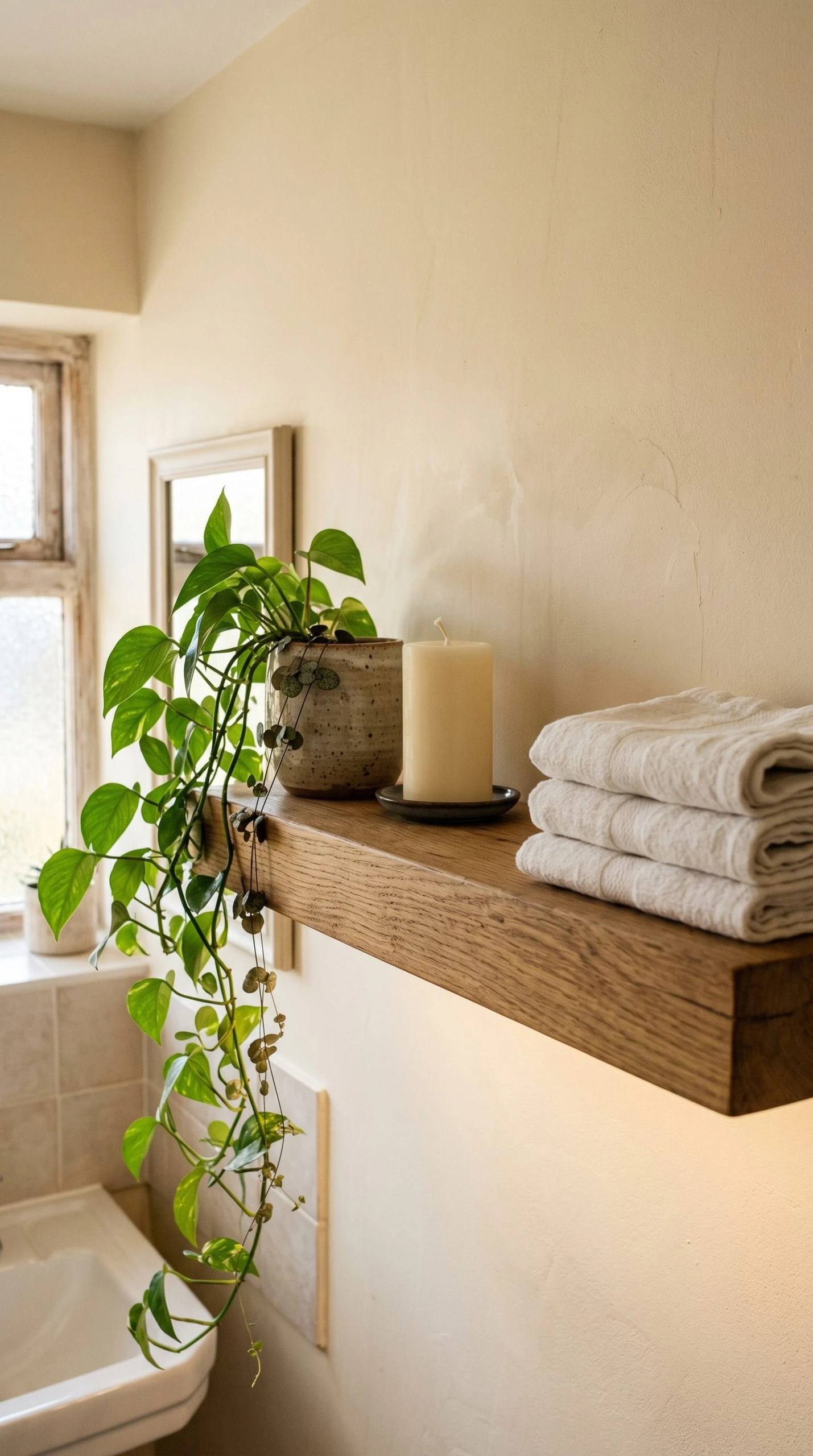
Open shelving in a minimalist bathroom works beautifully when you apply the same discipline to what goes on the shelves as you do to the rest of the room. The most common mistake is filling every inch of the shelf, which makes the shelving look like a storage problem rather than a design feature. The rule is simple: every item on the shelf should either be beautiful, functional, or both. Stacked white linen towels, a small ceramic pot with a plant, a glass jar of cotton rounds, and a single candle are enough.
The material of the shelf matters as much as what is on it. A floating shelf in natural oak, raw teak, or black iron pipe brackets with a reclaimed wood plank all have very different feels, and each one can anchor the earthy story in its own way. Keep the shelving simple, one or two shelves at most, and leave plenty of empty space. Negative space is not wasted space. In minimalist design, it is what gives the objects on the shelf room to breathe and be noticed.
Designer Advice: Style your shelf with an odd number of items and vary the heights within the grouping. Three items of different heights always look more intentional than four items of the same height lined up in a row.
16. Handmade Ceramic Accessories
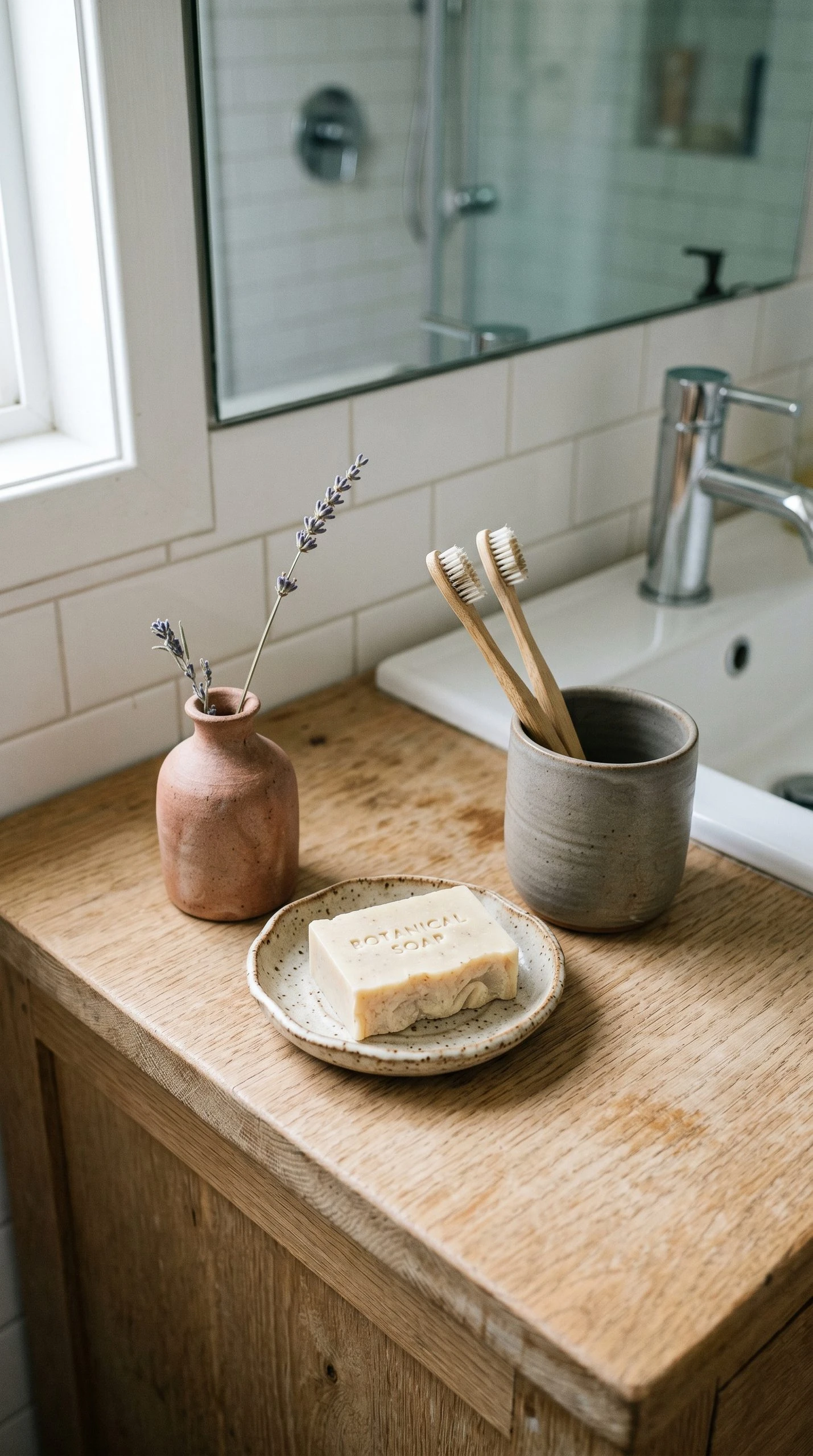
Mass-produced bathroom accessories have a sameness to them that works against the character of an earthy space. Handmade ceramics feel different. The slight imperfections in shape, the variation in glaze, the weight of a piece that was actually made by hand, all of these qualities add something to the room that a plastic soap dispenser simply cannot. A handmade soap dish in a warm oatmeal glaze, a ceramic cup for toothbrushes with a slightly rough exterior, or a small stoneware vase on the vanity each add a layer of texture and humanity to the bathroom.
Look for ceramics in tones that fit the earthy palette, cream, clay, warm gray, sandy beige, and dusty terracotta. You do not need a matching set, and in fact a collection of pieces that share a color family but are not identical to each other looks far more natural and considered. Etsy and local ceramic markets are the best places to find genuinely handmade pieces at reasonable prices. This is one of the highest-impact, lowest-cost upgrades you can make in a bathroom.
Designer Advice: Avoid over-matching your ceramic accessories. Three pieces in the same exact glaze from the same maker starts to feel like a bathroom gift set. Mix makers and finishes while staying within the same warm earthy tone family.
17. A Linen Shower Curtain
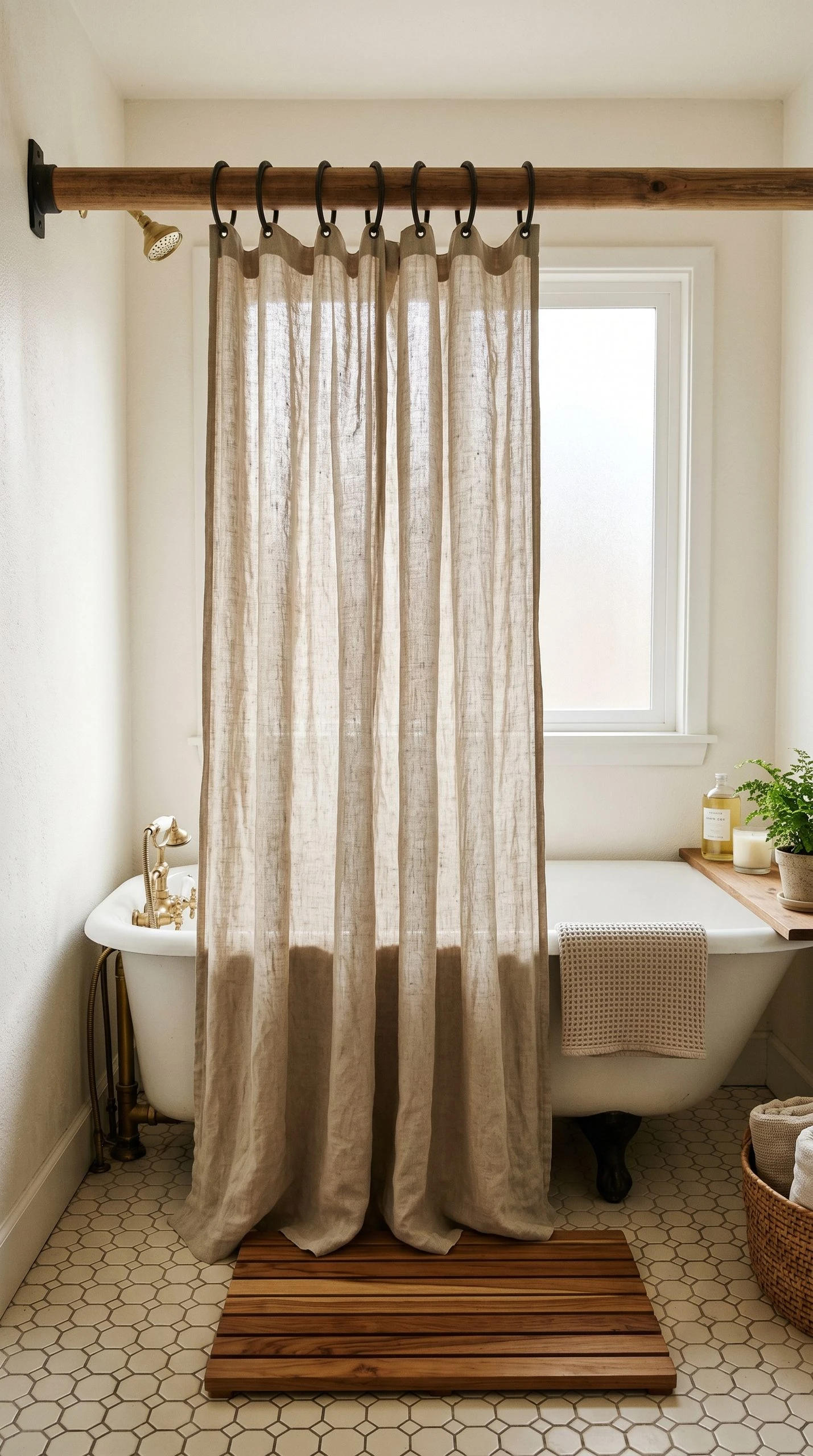
If your bathroom has a bathtub with a shower, the shower curtain is one of the largest textile surfaces in the entire room, which means it has an outsized impact on how the space feels. A linen shower curtain in natural, undyed, or stone-washed white immediately raises the visual quality of the bathroom without any renovation required. Linen has a beautiful drape and a slightly textured surface that catches the light differently throughout the day. It is also a material that improves with washing, getting softer and more characterful over time.
Hang the curtain from a simple tension rod or a wooden rod in a warm finish. Avoid rings with plastic or chrome finishes, which undermine the natural material story. Wooden rings or simple forged iron rings keep the hardware in the earthy vocabulary. The curtain should be long enough to touch the floor or just clear it, which creates a more luxurious, considered look than a curtain that ends awkwardly above the tub.
Designer Advice: Wash your linen curtain before hanging it for the first time. Linen shrinks slightly on the first wash, and washing it dry prevents the curtain from ending up shorter than expected after the first laundering.
18. A Wooden Bath Tray
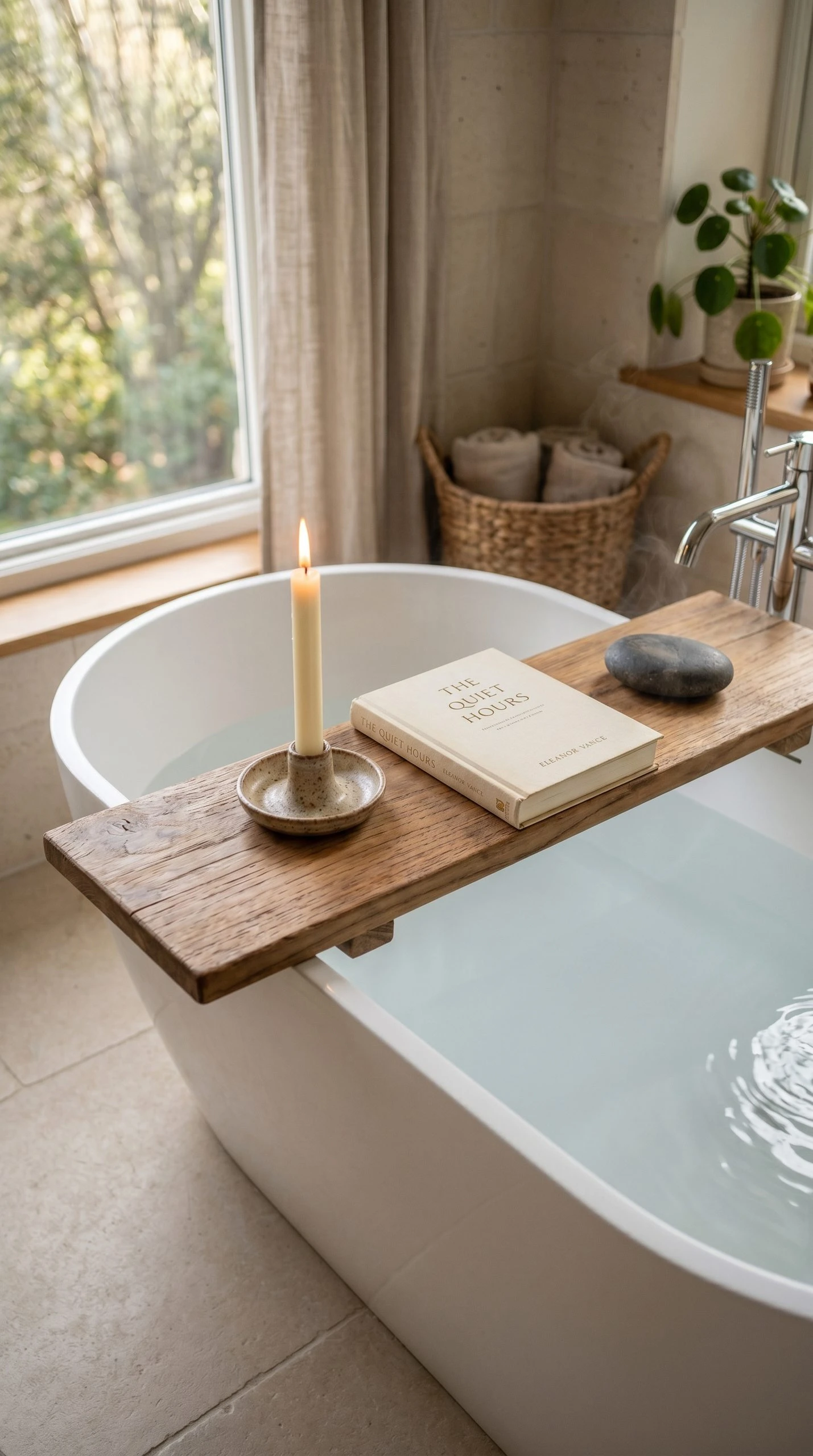
A wooden bath tray across a freestanding or built-in bathtub is both completely functional and genuinely beautiful. It holds a book, a candle, a small plant, or a glass of water, and it does so in a way that looks like it was always meant to be there. In an earthy minimalist bathroom, a teak or bamboo bath tray with clean lines and no unnecessary embellishment fits perfectly. It adds warmth and naturalness to the tub area without any permanence, making it one of the easiest decor upgrades possible.
Keep the tray sparsely styled. Two or three items at most. A taper candle in a simple ceramic holder, a small book or magazine, and a round stone or a piece of driftwood are all that is needed to create a moment that feels both personal and beautiful. Resist the urge to pile on the products, as the tray is at its most effective when it looks calm and uncluttered. This is one of those pieces that photographs beautifully because it looks like a real moment rather than a staged one.
Designer Advice: Oil your wooden bath tray regularly with food-safe mineral oil or teak oil to prevent it from drying out and cracking in the humidity of the bathroom environment.
The Small Details That Pull Everything Together
19. Matte Black Hardware on Natural Materials
Hardware is one of the easiest details to overlook, but it is one of the most influential. The finish on your taps, towel bars, hooks, and cabinet pulls either reinforces the design story you are telling or contradicts it. In a minimalist earthy bathroom, matte black hardware is one of the most versatile choices because it provides a quiet, graphic contrast against warm naturals without competing with them. It reads modern enough to feel intentional but is not so shiny that it pulls attention.
Consistency across hardware finishes is important. Mix too many metallic tones and the room starts to look unresolved. Choose one finish and stick with it throughout the room, from the tap to the towel ring to the shower fitting. Matte black pairs especially well with teak wood, travertine, and sage green. For a slightly warmer feel, brushed brass is an equally strong choice that leans more into the golden, honey tones of the earthy palette.
Designer Advice: When replacing hardware, replace all of it at the same time even if only some pieces look tired. Mismatched finishes are one of the most noticeable signs of a room that has been decorated in stages rather than all at once.
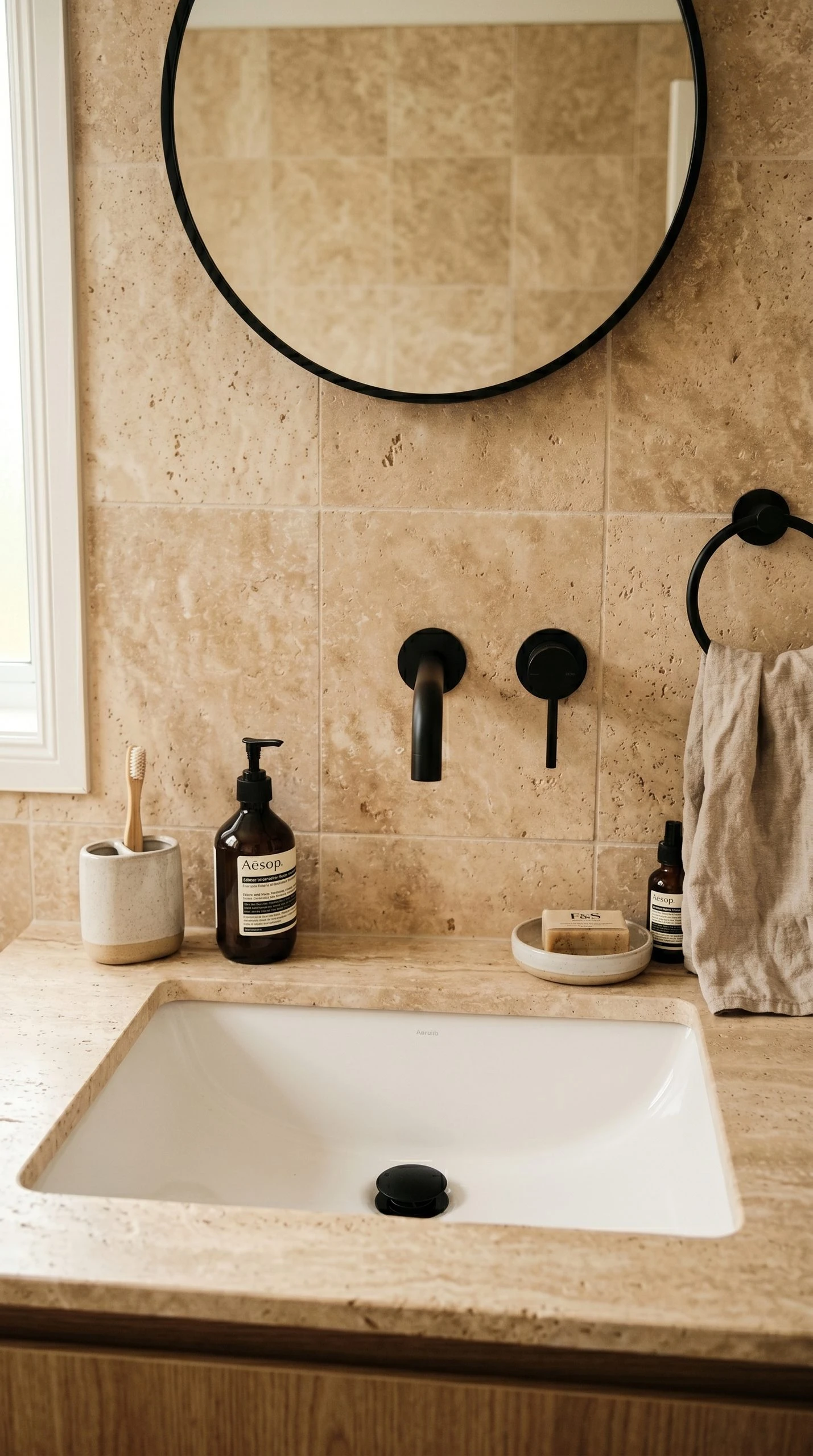
20. A Stone or Concrete Soap Dish
A soap dish sounds like a very small thing to discuss in an article about bathroom design, but it sits right at eye level on the vanity and it is one of the first things a person reaches for in the bathroom. A stone or concrete soap dish in a warm gray or sandy beige tone adds a subtle weight and groundedness to the vanity surface that a plastic or chrome dish simply cannot. It feels like something that was chosen rather than defaulted to, and that sense of intention extends to how the whole room is perceived.
Concrete soap dishes can be found very affordably and even made at home with basic craft concrete mix if you want a genuinely handmade piece. Stone dishes in marble, travertine, or onyx are slightly more expensive but age beautifully. For a truly minimal look, a single slab of stone with a slight depression in the center functions perfectly as a soap rest and has an almost sculptural quality that elevates the vanity from functional to genuinely considered.
Designer Advice: Keep only one or two items on the vanity surface at all times. The soap dish, perhaps a small plant or candle, and nothing else. Everything else should live in a drawer or on a shelf. This single habit makes more difference to the look of a bathroom than almost any decor purchase.
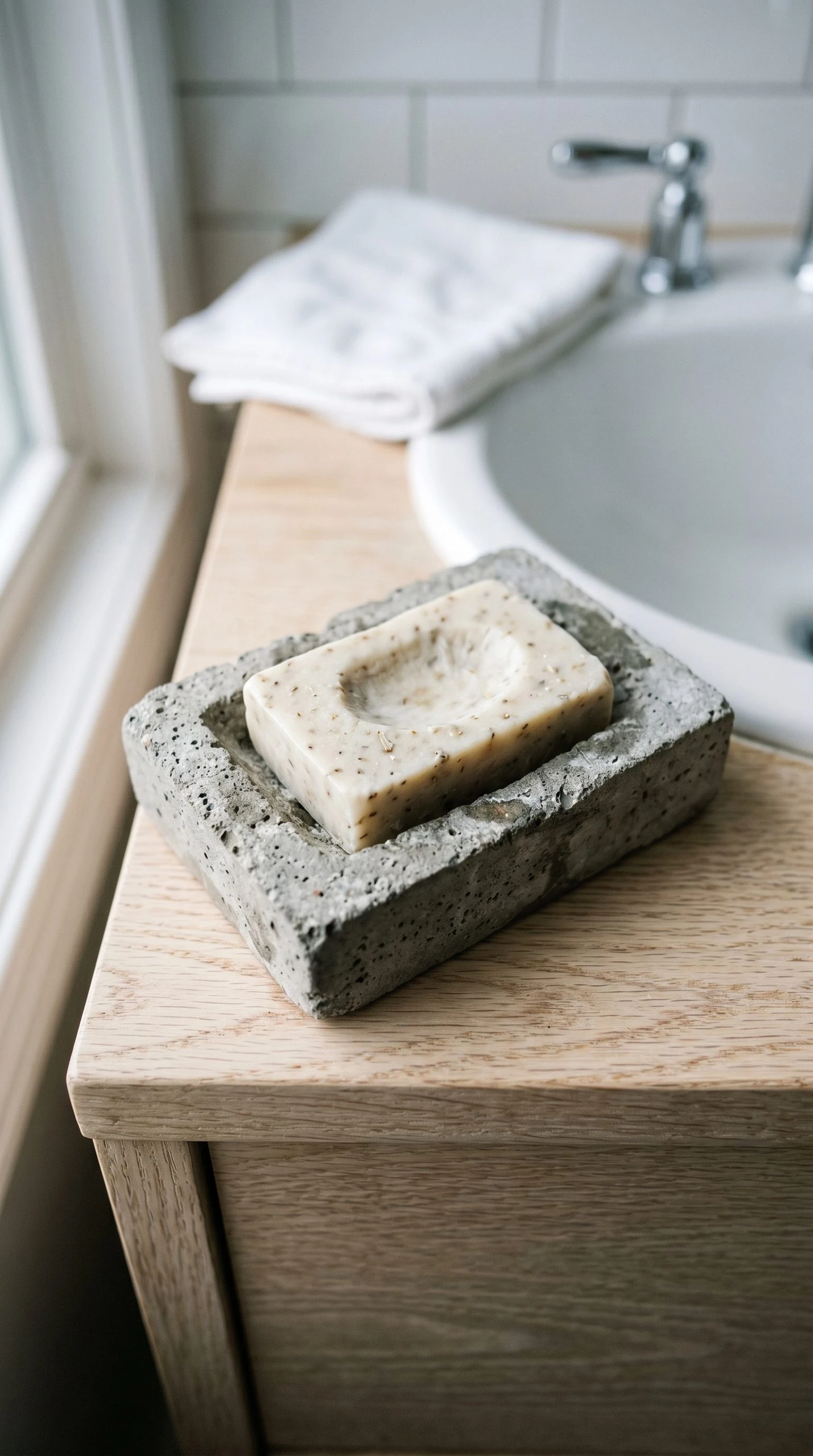
21. A Simple Cotton or Jute Bath Mat
The bath mat is the most frequently touched piece of decor in the entire bathroom, which makes it worth choosing carefully. In an earthy minimalist bathroom, a thick cotton bath mat in off-white, oatmeal, or a warm stone tone grounds the floor without introducing visual competition. Alternatively, a flat-woven jute mat has a natural roughness and texture that fits directly into the earthy material palette, and its neutral sandy color works with almost any floor tile or wood.
Avoid bath mats with patterns or bright colors in a minimalist earthy space. The floor already has texture from the tile or stone, and a patterned mat adds noise to an area of the room that should feel calm and clean. Stick to solid colors in the earthy range and choose a mat with enough pile or weave to feel genuinely comfortable underfoot after a shower or bath. Wash the mat frequently, as a clean, fresh mat is part of what makes an earthy bathroom feel genuinely inviting rather than just well-decorated.
Designer Advice: Keep a second bath mat in reserve so you always have a clean, dry one ready to go. A damp bath mat left on the floor too long is one of the fastest ways to get mold and mildew in an otherwise beautifully designed bathroom.
Bringing It All Together
A minimalist earthy bathroom is not built in a single weekend purchase. It comes together gradually, one considered decision at a time. You start with the palette, bring in the natural materials, refine the lighting, and then layer in the decor carefully, always asking whether each addition genuinely belongs or is just filling space. That slow, intentional process is actually part of what makes these bathrooms feel so personal and so calm.
The good news is that almost none of these 21 ideas require a full renovation. Many of them are accessible right now, a new soap dish, a linen shower curtain, a single large plant, a woven basket, a wooden bath tray. Start with the changes that make the most impact for the least investment and build from there. You will find that each small improvement makes the next one more obvious, and before long the room starts to feel like a genuinely considered space rather than a default bathroom.
The goal is a bathroom that feels good every day, not just when guests are over. Earthy, minimal, and honest in its materials, this is a style that holds up over time precisely because it is not chasing anything. It just is what it is, and that is what makes it so livable.
Frequently Asked Questions
What is a minimalist earthy bathroom?
A minimalist earthy bathroom is a space that uses natural materials, muted earth tones, and a restrained approach to decor to create a calm, grounded feel. The design avoids unnecessary clutter or ornate detail, instead letting the texture and color of natural elements like wood, stone, and linen do the visual work. The result is a bathroom that feels both simple and deeply considered.
What colors work best for an earthy minimalist bathroom?
The most effective earthy colors for a minimalist bathroom include warm putty, sandy beige, sage green, deep mocha, terracotta, and warm white. These tones share an organic quality that grounds the space without making it feel dark or heavy. They also layer well together, meaning you can use several earthy tones in the same room without creating visual conflict as long as they share a similar warm undertone.
Can I create an earthy bathroom on a tight budget?
Yes, absolutely. Some of the highest-impact changes you can make in a bathroom are also among the least expensive. Swapping out chrome hardware for matte black, replacing a plastic shower curtain with a linen one, adding a single large plant in a clay pot, and replacing plastic bathroom accessories with handmade ceramics are all changes that cost relatively little but significantly shift the feel of the room. Start with the surfaces and textiles you interact with most and work outward from there.
What plants are best for a minimalist earthy bathroom?
The best plants for a bathroom are ones that handle humidity well and can tolerate lower light if your bathroom does not have a large window. Snake plants, pothos, ZZ plants, and peace lilies are all excellent choices. For a statement plant in a bathroom with good natural light, a fiddle leaf fig, a bird of paradise, or a split-leaf philodendron works beautifully. Keep it to one large plant rather than many small ones for a cleaner, more minimalist result.
How do I keep a minimalist bathroom looking clean and uncluttered?
The most important habit in a minimalist bathroom is returning everything to its place after use. This means having sufficient storage, such as drawers, a medicine cabinet, or closed shelving, so that the visible surfaces stay clear. Limit the vanity top to two or three items at most. Use closed baskets or jars to contain smaller items on open shelves. And do a quick daily wipe-down of surfaces so that the bathroom always looks as intentional as it was designed to be.
Is earthy minimalist bathroom design a passing trend?
Not really. The appeal of natural materials, muted colors, and calm, uncluttered spaces is rooted in something more enduring than a design cycle. People have always been drawn to spaces that feel grounded and connected to nature, particularly in rooms designed for rest and daily ritual. The specific details will shift over time, but the core principles of this style, honesty in materials, restraint in decor, and warmth in color, are durable in a way that trend-driven styles are not.