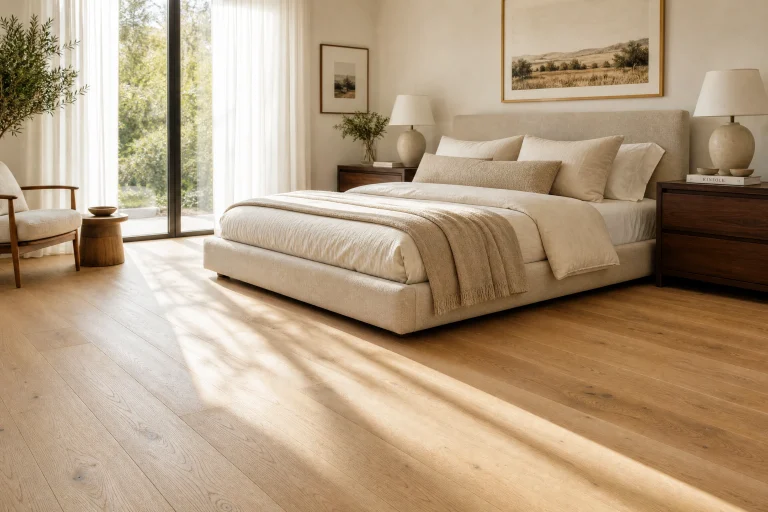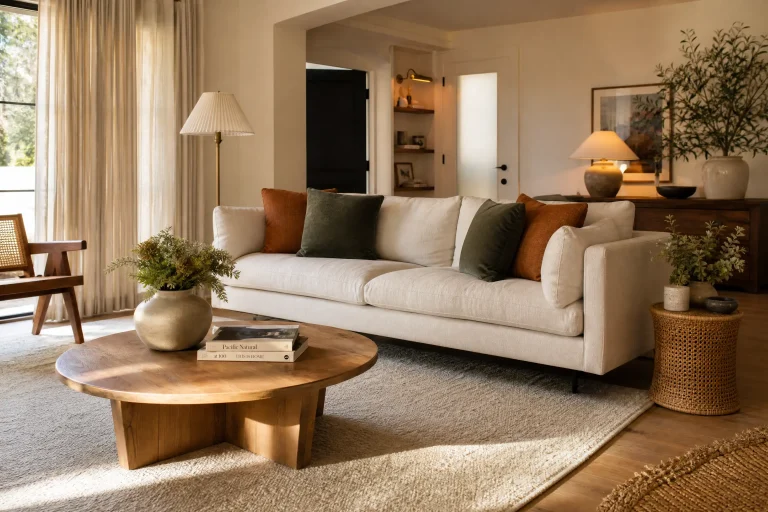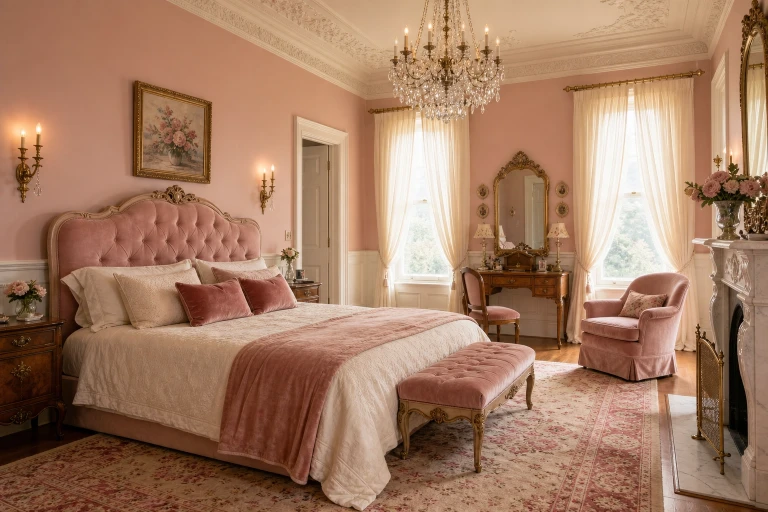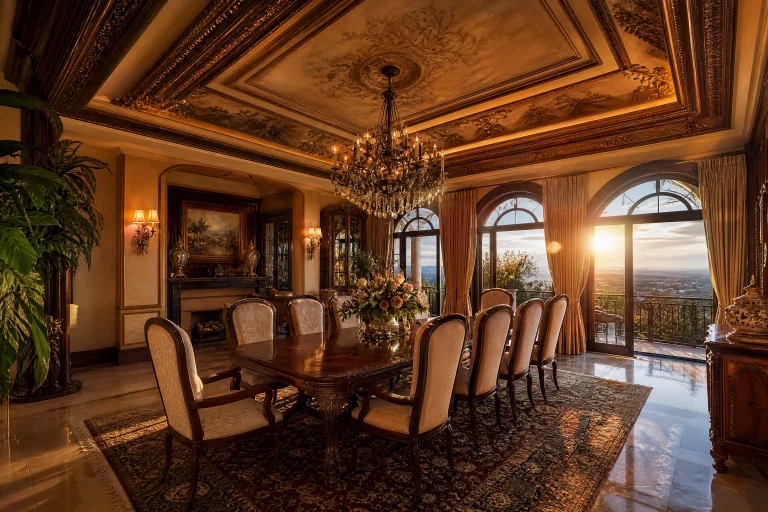
The Rustic Dining Room Looks Worth Building Right Now

Most people who want a rustic dining room end up with something that just looks brown and tired instead of warm and intentional, and the difference almost always comes down to layering. A great rustic dining room is built in stages: structure first, then furniture, then light, then texture, then detail. Get the order right and the room takes care of itself.
1. Expose the Ceiling Beams or Add Faux Ones

Exposed ceiling beams are the single most powerful structural move in a rustic dining room, adding vertical interest, architectural weight, and a sense of age that no other element replicates. If your home does not have real beams, faux wood box beams in stained pine or reclaimed-look polyurethane are widely available, install with basic carpentry skills, and are nearly indistinguishable from the real thing at ceiling height.
Pro Move: Stain faux beams two shades darker than your dining table wood so they read as a distinct architectural layer rather than matching furniture.
2. Install Shiplap or Board-and-Batten on an Accent Wall

A shiplap or board-and-batten accent wall behind a buffet or hutch grounds a rustic dining room with authentic wall texture that paint alone cannot deliver, and it works in both casual farmhouse spaces and more refined rustic-modern ones depending on the finish you choose. In practice, a white or warm cream painted shiplap reads as clean and fresh, while natural stained shiplap goes darker and moodier.
Quick Tip: Horizontal shiplap makes a room feel wider; vertical board-and-batten makes it feel taller. Choose based on the shape of the room, not just the look.
| Wall Treatment | Best Room Size | Ideal Finish | Mood |
| Horizontal Shiplap | Narrow or small rooms | White or cream painted | Fresh farmhouse |
| Vertical Board-and-Batten | Low-ceiling rooms | White with dark batten | Refined country |
| Natural Stained Shiplap | Medium to large rooms | Warm walnut or cedar stain | Mountain rustic |
| Stone Veneer Panel | Any size, one wall only | Natural or whitewashed | Lodge or cottage |
3. Lay Wide-Plank Wood or Brick-Effect Flooring

Wide-plank hardwood or engineered wood floors with visible grain and slight variation are the correct floor for a rustic dining room, because the imperfection is the point. In practice, a floor in the 5-to-7-inch plank width in a medium-toned oak or hickory with a matte finish resists showing every scratch and scuff in a high-traffic dining area far better than a glossy narrow-plank floor.
Heads Up: If real hardwood is outside budget, luxury vinyl plank in a wide rustic oak profile is genuinely convincing and fully waterproof, which matters under a dining table.
4. Add a Stone or Brick Feature Wall

A real or faux stone wall, particularly around a fireplace or along the wall opposite the windows, introduces the single most tactile and visually heavy material in the rustic vocabulary and transforms a dining room from decorated to architectural. Thin stone veneer panels require no structural support and can be installed directly over drywall, making this a realistic weekend project for an intermediate DIYer.
Designer Advice: Whitewashing stone or brick softens the color dramatically and helps it sit with lighter dining room furniture without making the room feel like a cave.
5. Choose a Reclaimed Wood Trestle Table

A solid reclaimed wood trestle table is the centerpiece of a rustic dining room and the one piece worth spending real money on because everything else in the room is sized and styled around it. The trestle base, two A-frame or X-frame supports with a stretcher between them, is historically correct for rustic interiors and far more visually interesting than four-leg pedestal bases in this context.
Reality Check: True reclaimed wood tables will have natural variation, small knots, and slight surface irregularity. That is the point, not a defect. Seal with a food-safe matte oil rather than polyurethane so repairs are easy.
6. Mix Wood and Metal Chairs Around the Table

Matching chair sets in a rustic dining room tend to look more like a furniture catalogue than a real room, and mixing a wood bench on one side with metal industrial chairs or upholstered linen chairs on the other immediately makes the space feel more collected and lived-in. This combination is also practical, because benches seat more guests, take up less visual space, and push neatly under the table.
Pro Move: Keep the bench the same wood tone as the table and use chairs in a contrasting material so the combination reads as intentional contrast, not mismatched pieces.
| Chair Style | Best Paired Table | Budget Level | Overall Mood |
| Wood cross-back chairs | Reclaimed trestle table | Affordable to mid-range | Classic farmhouse |
| Metal hairpin-leg stools | Thick slab wood table | Affordable | Modern rustic industrial |
| Linen upholstered chairs | Dark walnut trestle table | Mid to investment | Refined rustic |
| Rattan or woven chairs | Light oak plank table | Affordable to mid-range | Organic coastal rustic |
| Leather saddle chairs | Chunky pine table | Investment | Western or lodge rustic |
7. Use a Hutch or Sideboard in Distressed Paint

A painted wood hutch or sideboard in a distressed finish, whether chalk-painted antique white, sage green, or slate blue, adds vertical storage and display space that a rustic dining room genuinely needs and doubles as a backdrop for seasonal decor. The distressed technique, where a top paint layer is lightly sanded back at edges and corners to reveal the layer beneath, is something you can do yourself on any solid wood piece with chalk paint and fine-grit sandpaper.
Quick Tip: Style the hutch shelves with a mix of practical items, stacked plates, glasses, a few cookbooks, and a small plant, rather than purely decorative objects so it reads as a real working room.
8. Bring In a Wooden Bench With a Cushion

A dining bench with a simple tied-on cushion in a natural linen or cotton ticking stripe is one of the most versatile and budget-friendly moves in a rustic dining room, fitting neatly against a wall or window and allowing you to seat two to three more people than chairs in the same footprint. In practice, a bench with a cushion in a washable fabric cover is also far more practical for families than upholstered chairs.
Heads Up: Avoid benches with no back support at a regular-height dining table; they are uncomfortable for long meals. A wall bench where guests can lean or a bench used only along one side works best.
9. Hang a Wrought Iron or Wagon Wheel Chandelier

Lighting is where a rustic dining room goes from warm to genuinely atmospheric, and a wrought iron or wagon-wheel chandelier centered directly above the dining table at approximately 30 to 36 inches above the tabletop is the correct fixture for this aesthetic. The scale matters enormously here: the chandelier should be roughly half to two thirds the width of the table, which is usually larger than people expect.
Pro Move: Wire the chandelier on a dimmer switch and use warm amber Edison-style bulbs rather than white LED bulbs; the color temperature difference alone changes the mood of the entire room.
10. Layer With Candles and Candlestick Holders

No rustic dining room feels complete without candlelight, and a set of mismatched brass, iron, or wooden candlestick holders in varying heights grouped at the center of the table creates warm flickering light that a chandelier alone cannot replicate. In practice, taper candles in beeswax or unscented cream wax burn cleanly and drip less than cheap paraffin candles, which matters when you have a good reclaimed wood table underneath.
Designer Advice: Use an odd number of candlesticks grouped closely together rather than evenly spaced pairs; the asymmetry reads as more natural and collected, less like a set.
11. Install Sconces on the Dining Room Wall

Wall sconces on either side of a hutch, mirror, or art piece add a second layer of ambient light that a single overhead chandelier cannot cover and dramatically change how a rustic dining room feels in the evening. Candle-style sconces in wrought iron, aged brass, or dark bronze fit naturally in a rustic palette and are available without electrical wiring as battery-operated versions for renters or rooms without existing wall wiring.
Reality Check: Battery-operated sconces look convincing for the first year or two but become annoying to maintain; if you are staying long-term, hardwiring them is worth the one-time electrician cost.
| Lighting Layer | Fixture Type | Correct Height | Rustic Style |
| Overhead ambient | Wagon wheel or iron chandelier | 30-36 inches above table | Farmhouse, lodge, mountain |
| Table accent | Taper candles in iron holders | Centered on table | All rustic styles |
| Wall accent | Candle-style iron sconces | Eye level, flanking feature | Farmhouse, cottage, refined rustic |
| Corner fill | Floor lamp with linen shade | Corner near buffet or hutch | Modern rustic, organic |
12. Lay a Natural Fiber Area Rug Under the Table

A jute, sisal, or seagrass area rug under the dining table is one of the most effective budget-friendly moves in a rustic dining room, grounding the furniture grouping, adding texture underfoot, and defining the dining zone in an open-plan space. The size rule matters: all four chair legs must remain on the rug even when chairs are pulled out, which means most dining rooms need a rug that is at least 8 by 10 feet or 9 by 12 feet.
Heads Up: Natural fiber rugs like jute and sisal are not stain-resistant and are difficult to clean under a dining table. A flatweave cotton rug or an indoor-outdoor rug in a natural fiber look is far more practical and nearly as attractive.
13. Hang Linen or Cotton Curtains in an Earthy Tone

Curtains in an undyed linen, warm oatmeal, terracotta, or sage green bring softness to a rustic dining room that wood and stone alone cannot, and they frame the windows in a way that makes the whole room feel more finished and thought-through. Hang them high and wide, at ceiling height and 6 to 8 inches past the window frame on each side, so the room reads as taller and the windows look more generous than they actually are.
Quick Tip: Look for genuine linen curtains rather than polyester linen-look alternatives; real linen has a natural texture and slight irregularity that reads as genuinely rustic, while polyester reads as flat even from across the room.
14. Style the Table With a Linen or Burlap Table Runner

A table runner in natural linen, rough burlap, or a woven cotton stripe is the easiest way to bring rustic texture directly onto the dining table surface and provides a backdrop for centerpiece styling that protects the table at the same time. In practice, a runner about one third the width of the table and long enough to drape 6 to 8 inches over each end gives the proportions that look deliberate rather than accidental.
Pro Move: Layer a thin woven runner over a full-length tablecloth in a complementary tone for a more textured and dinner-party-ready table than either piece alone.
15. Add Woven Placemats in Natural Seagrass or Rattan

Woven seagrass or rattan placemats are a small and affordable detail that adds authentic rustic texture right where guests are looking when they sit down, reinforcing the natural material theme at the most intimate scale. They also protect the table surface from heat and scratches better than cloth placemats and are easy to shake off and wipe clean after a meal.
Designer Advice: Mix two placemat shapes, round and rectangular, in the same natural material for a table that looks layered and collected rather than matched.
16. Hang a Large Vintage or Antique Mirror

A large mirror in a weathered wood, carved antique, or wrought iron frame hung on the wall opposite or adjacent to the dining table bounces light around the room and creates the illusion of more space, which matters in a rustic dining room where heavy materials can make the space feel enclosed. The key is going bigger than feels comfortable: a mirror that is at least 36 inches wide will anchor the wall, while a smaller one will just look like it got lost.
Reality Check: A mirror directly opposite a window doubles the natural light in the room during the day, which is a significant functional benefit in dining rooms that feel dark.
17. Create a Gallery Wall With Botanical or Farmhouse Prints

A grouping of framed botanical prints, vintage farmhouse illustrations, or landscape watercolors in mismatched wooden or thin black frames creates a collected gallery wall that suits a rustic dining room beautifully without feeling precious or overdone. The mismatched frame approach is intentional here: uniform frames belong in contemporary spaces, while the mix of widths and finishes is what gives a rustic gallery wall its character.
Quick Tip: Before putting anything on the wall, lay the arrangement on the floor and photograph it from above so you can adjust spacing and composition without making extra holes.
| Art Style | Frame Finish | Arrangement | Best Wall Size |
| Botanical prints | Thin black or natural wood | Grid of 6-9 uniform sizes | Medium to large wall |
| Vintage farmhouse illustrations | Mismatched weathered wood | Loose salon hang | Large open wall |
| Landscape watercolors | Gilded or aged gold | Centered pair or trio | Narrow wall or above buffet |
| Black and white photography | Uniform dark wood | Tight grid | Any size wall |
18. Mount Open Shelving With Reclaimed Wood Brackets

Reclaimed wood shelves on handmade iron or black steel brackets give a rustic dining room the open display storage that a hutch provides in a fraction of the visual weight, keeping walls feeling lighter while still holding dinnerware, glassware, and seasonal decor. In practice, two shelves stacked at different heights on one wall work better than a single long shelf, because the layering adds visual rhythm.
Heads Up: Do not overfill open shelves in a dining room; they should look curated, not like overflow storage. Fill roughly two thirds of the shelf space and leave one third open.
19. Incorporate a Live-Edge Wood Piece

A live-edge wood console, serving board, or side table introduces an organic quality that no other material comes close to matching and signals genuine craftsmanship rather than mass production. Even a single live-edge serving board used as a cheese or charcuterie board on the dining table counts as a real-materials moment that guests notice immediately.
Pro Move: Black walnut live-edge is the gold standard for indoor rustic pieces; its dark chocolate color with natural grain variation works with virtually every rustic palette from warm cream to deep forest green.
20. Style With Seasonal Greenery and Dried Botanicals

Fresh eucalyptus, dried pampas grass, cotton stems, dried lavender, or seasonal branches in a stoneware vase or wooden vessel are among the most versatile and effective styling tools in a rustic dining room because they bring organic life and natural color without requiring the room to be redesigned around them. Dried botanicals in particular last months, require no maintenance, and sit beautifully in the earthy tones of a rustic palette.
Designer Advice: Keep centerpiece height below 12 inches or above 18 inches so it never blocks sightlines across the table during a meal; the in-between zone is where most centerpieces become obstacles.
21. Display Stoneware or Pottery on Open Shelves

Handmade stoneware bowls, pitchers, and plates in matte glazes, cream, slate, warm terracotta, or dark charcoal, are the correct dishware for a rustic dining room and look genuinely beautiful displayed on open shelving as functional objects rather than purely decorative ones. The imperfection of handmade pottery, the slight variation in glaze, the thumb marks at the rim, is exactly what makes it feel at home in a rustic space.
Quick Tip: Mix sizes and heights when stacking stoneware on shelves; a row of identical bowls reads as a retail display, while a mix of bowls, pitchers, and single plates reads as a real kitchen.
22. Add a Potted Herb Garden or Indoor Plant Corner

A small cluster of potted herbs on a windowsill or a single large leafy plant in a terracotta or woven basket pot brings living green into the rustic dining room and reinforces the connection to natural, growing things that the whole aesthetic is built around. In practice, a fiddle leaf fig, a trailing pothos, or even a simple rosemary plant in a terracotta pot requires little care and looks genuinely at home in a rustic space.
Reality Check: Artificial plants are very convincing now and there is no shame in using them in a dining room that does not get enough natural light; a convincing fake is better than a dying real plant.
23. Use an Antler, Driftwood, or Twig Accent Piece

A single organic sculptural accent, a small set of shed deer antlers on the sideboard, a driftwood centerpiece, or a twig-frame mirror, anchors the rustic aesthetic with a found-in-nature object that nothing manufactured can replicate and communicates the style values of honesty, texture, and organic form without saying a word. The key is using one or two such pieces as punctuation rather than filling the room with them.
Pro Move: Source shed antlers from hunting supply stores or online marketplaces rather than buying decorative resin replicas; the real thing has a weight and warmth that is immediately apparent.
24. Set the Table With Mismatched Dinnerware

Deliberately mismatched dinnerware, mixing two or three complementary stoneware patterns or combining vintage and new plates in a shared color family, is one of the defining table-styling moves of a rustic dining room and gives every meal a collected, heirloom quality that a matching set from a big-box store cannot replicate. Start with a base plate that has a simple matte glaze and layer in patterned salad plates or bowls on top.
Designer Advice: Keep one element consistent across all pieces, color, glaze finish, or general size, so the mismatch reads as curated rather than random.
25. Fill a Wooden Bowl or Crate as a Centerpiece

A large wooden dough bowl, bread crate, or shallow tray filled with seasonal objects, citrus fruits, pine cones, smooth river stones, small gourds, or a combination, is the most flexible and renewable centerpiece in a rustic dining room because it can be refreshed with the seasons without replacing anything structural. The bowl itself does most of the work; it does not need to be full or elaborate to look intentional.
Quick Tip: A shallow wooden tray as a centerpiece base corrals smaller objects without the visual bulk of a deep bowl and makes it easier to pass dishes across the table during a meal.
26. Hang Floating Candles or a Low Centerpiece for Dinner Parties

For actual dinner parties rather than everyday styling, a cluster of floating candles in a wide low bowl of water, with a few flower heads or herb sprigs floating alongside, creates a centerpiece that is visually striking, completely conversation-height-friendly, and costs almost nothing to put together. This approach is borrowed from high-end restaurant styling and works especially well in a rustic dining room where the organic materials around it set the stage perfectly.
Reality Check: Floating candles burn for only a few hours and drip wax into the water as they go; have a replacement ready and remove the bowl before the candles burn all the way down.
27. Finish With a Layered Tablescape for Every Day

A well-layered everyday tablescape, a linen runner, a wooden tray centerpiece, two taper candles in iron holders, and a small potted herb, takes about ten minutes to put together and makes a rustic dining room feel permanently ready for company rather than something you only style for special occasions. Leaving the runner and a low centerpiece on the table permanently and adding candles only when you sit down to eat is the difference between a dining room that feels designed and one that feels like it is waiting for something.
Pro Move: Keep a small wooden tray beneath the sideboard stocked with extra candles, matches, and linen napkins so you can set the table properly in under five minutes when guests arrive unexpectedly.