Pink Victorian Bedroom Looks That Are Seriously Worth Copying
Introduction
There is something about a pink Victorian bedroom that feels completely unlike anything else in interior design. It sits right at the crossroads of old-world elegance and soft feminine warmth, and when it is done well, it looks like a room that was pulled straight out of a dream. The best part is that you do not need a sprawling historic mansion to pull it off. Whether you are working with a standard bedroom in a modern home or an actual period property, the ideas in this article can work for you.
The Victorian era was defined by rich layering, bold pattern choices, and an unapologetic love of decoration. Pink fits right into that world because it carries both softness and personality at the same time. Blush, rose, dusty pink, and deep fuchsia all have their place in this style, and the way you combine them with furniture, lighting, and textiles is what makes each room feel unique.
This article walks through some of the most interesting, specific, and genuinely useful pink Victorian bedroom ideas out there right now. Each idea opens with a scenario that might feel familiar, moves into a full design breakdown, and closes with a practical tip you can act on right away. Whether you are starting from scratch or just wanting to refresh what you already have, there is something here for every kind of bedroom and every kind of budget.
1. The Blush and Brass Four-Poster Bedroom
You walk into your bedroom and feel like something is missing. The furniture is fine, the room is clean, but it has no soul. That is the exact problem a four-poster bed wrapped in blush tones and paired with warm brass accents can solve. A four-poster bed is one of the most recognizable symbols of Victorian design, and when you dress it in soft blush pink linens with a light canopy of gauzy ivory fabric, the whole room shifts into something that feels genuinely special.
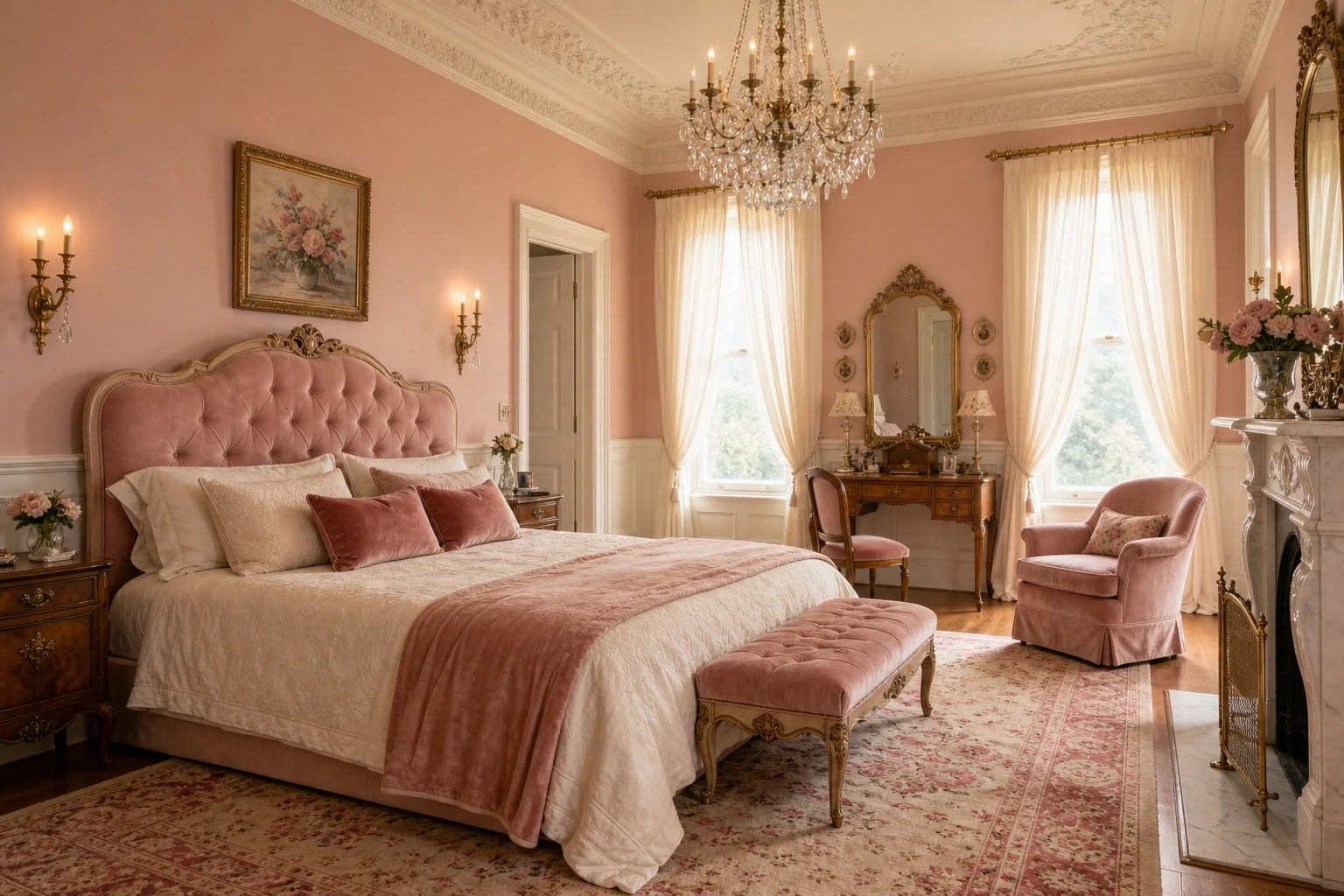
For the color palette, start with blush pink walls, something in the range of a dusty rose rather than a bright bubblegum shade. Pair that with ivory trim and introduce warm brass through hardware, picture frames, and a chandelier or pendant light. The brass picks up the warmth in the pink without making the room feel heavy or overly feminine.
Keep the furniture relatively simple so the bed remains the focal point. A low-profile upholstered bench at the foot of the bed in a soft cream or pale pink velvet works beautifully. Add matching bedside tables in a dark walnut or painted white finish depending on how light or dramatic you want the room to feel. Layer the bed with multiple pillows in complementary shades of blush, ivory, and dusty mauve to get that full, plush Victorian look.
Lighting matters enormously here. A brass chandelier with candle-style bulbs overhead creates the right kind of warm, ambient glow. Add a small brass table lamp on each nightstand for softer reading light. Avoid cold or harsh lighting entirely because it will work against everything the palette is trying to do.
Designer Tip: Look for four-poster beds with carved or turned wooden posts rather than plain straight ones. The detail in the posts does a lot of visual work and reinforces the Victorian character of the room without needing to add more decor elsewhere.
2. Floral Wallpaper From Floor to Ceiling
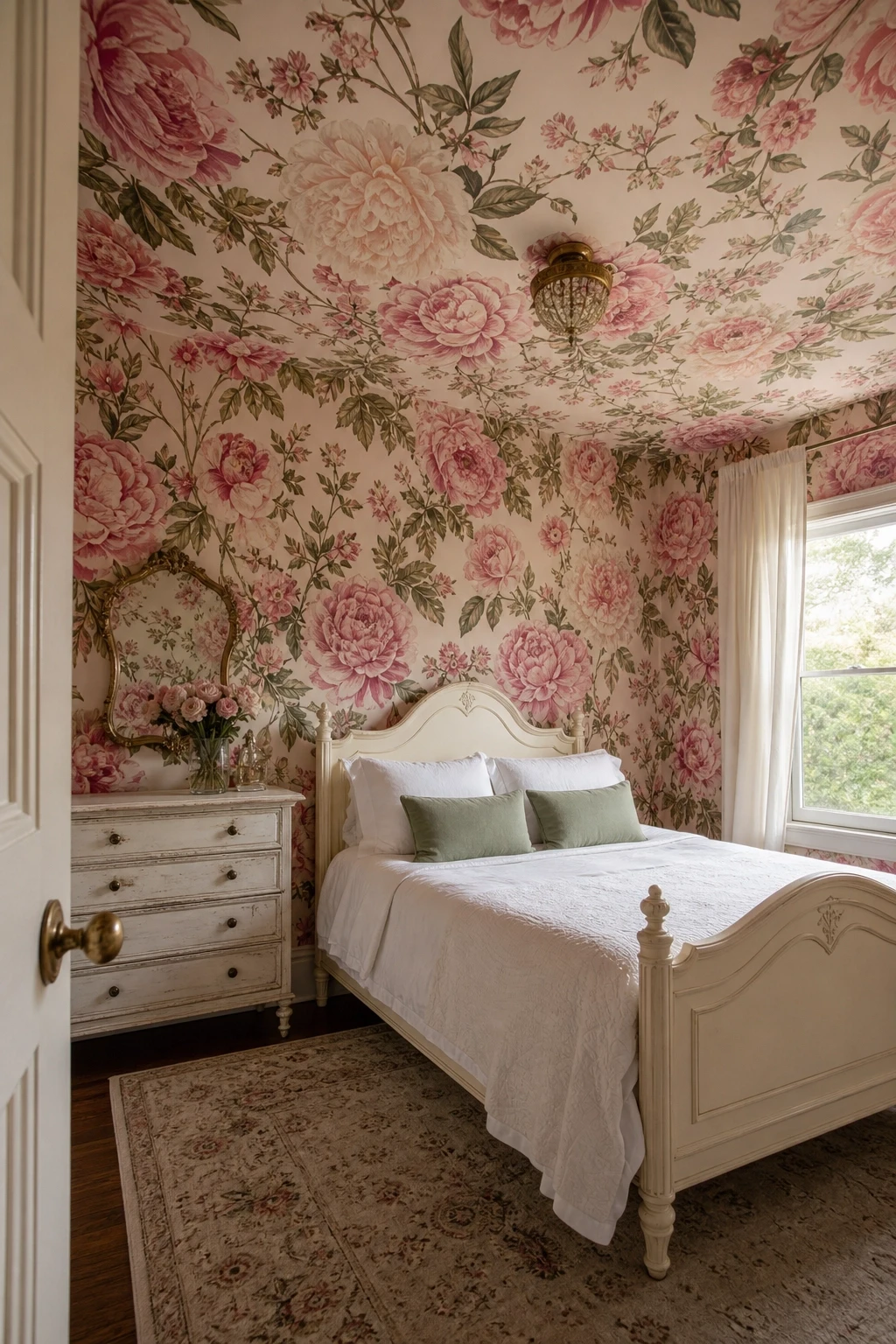
Picture this: you are scrolling through design photos late at night and you stop on one where the walls, the ceiling, and even the inside of the wardrobe doors are covered in the same lush floral wallpaper. It is bold, it is old-fashioned in the best possible way, and you immediately want it. That is what full-immersion wallpaper does, and it is one of the most powerful things you can do in a pink Victorian bedroom.
Choose a wallpaper with a large-scale floral or botanical print in shades of pink, cream, and green. Victorian wallpaper designs often feature roses, peonies, or climbing vines, and all of those feel completely at home in this context. Running the wallpaper up onto the ceiling is the move that takes this from a standard feature wall to a full room experience.
Because the wallpaper will carry the room visually, keep your furniture and bedding relatively calm. A white or ivory upholstered bed frame works well. White or off-white linens let the wallpaper breathe. Add a few solid-colored throw pillows in a dusty pink or sage green pulled from the wallpaper pattern to tie it all together without competing with it.
For furniture, lean into painted pieces, either antique white or a soft sage, rather than heavy dark wood. A painted dresser, a cane-backed vanity chair, and a small upholstered ottoman in a complementary solid color all work well here. Keep the flooring light if you can, pale hardwood or a cream wool rug will prevent the space from feeling closed in.
Lighting in a heavily wallpapered room should be layered carefully. Wall sconces in an aged brass or antique gold finish complement the floral print without fighting it. Add a simple pendant light in the center rather than an elaborate chandelier, which might feel like too much visually.
Designer Tip: If going wall-to-ceiling feels like too big a commitment, start with just the ceiling and one feature wall. This approach still gives you that immersive feeling but requires less wallpaper and is easier to live with over time.
3. The Moody Rose and Dark Wood Look
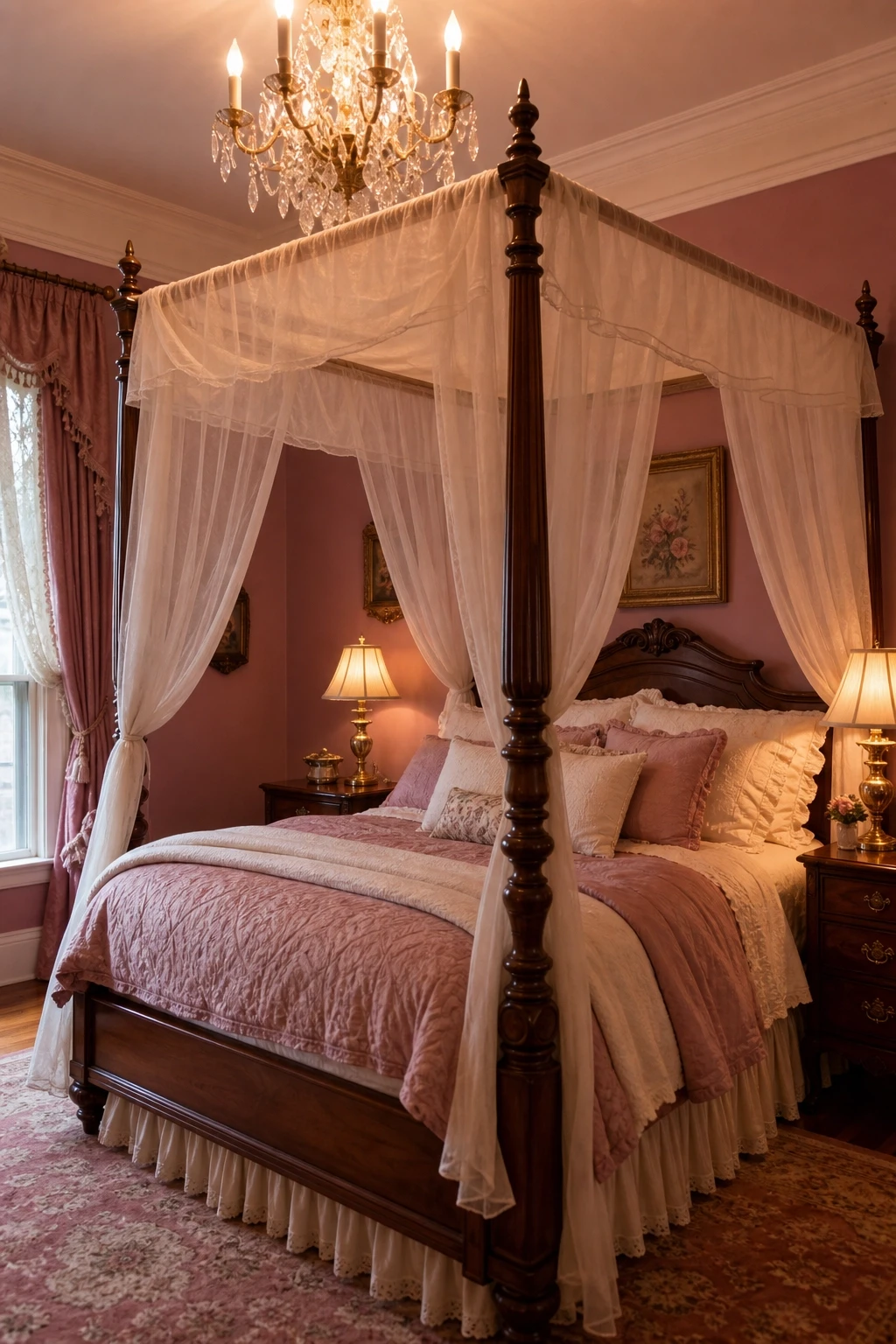
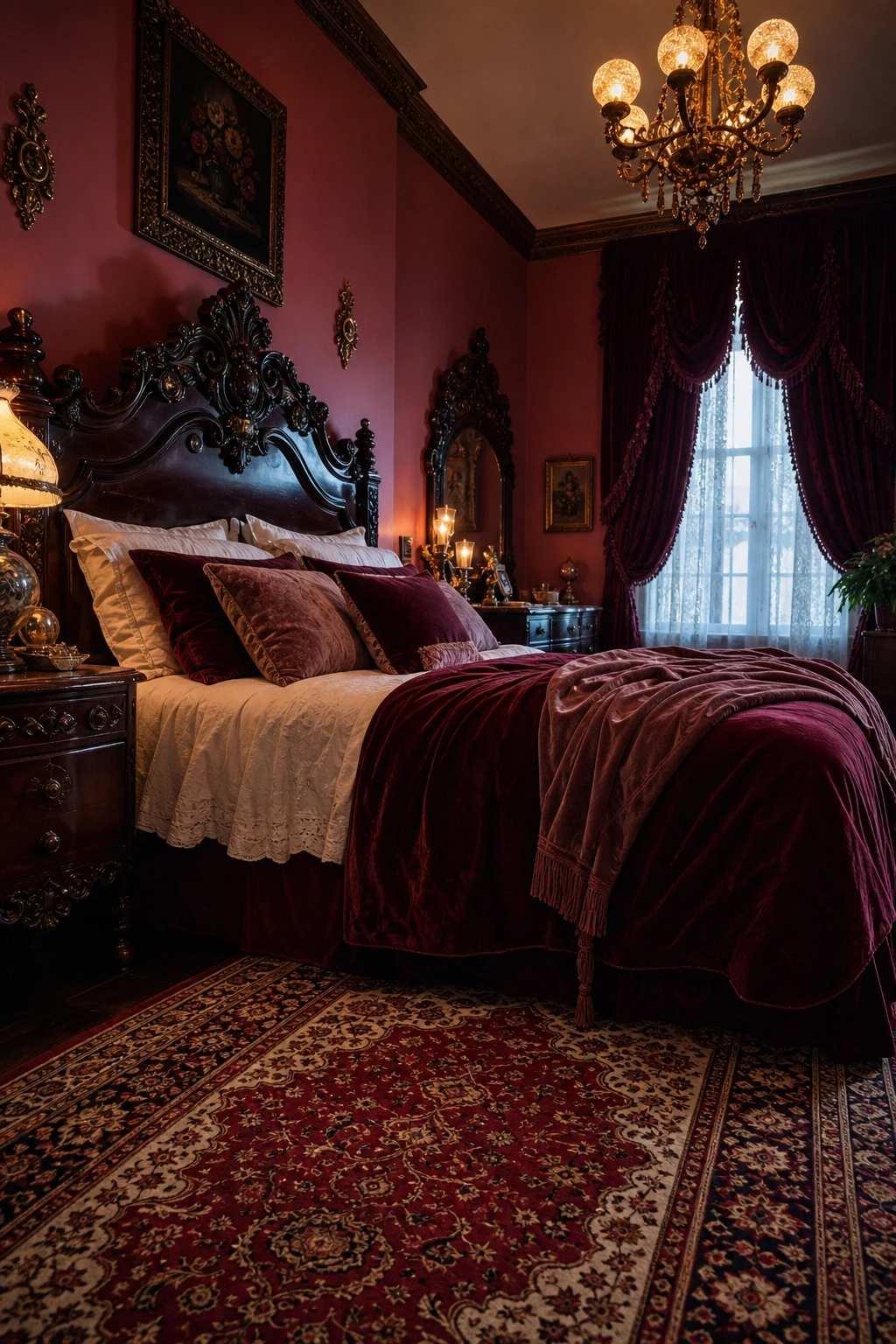
Not every pink Victorian bedroom needs to feel light and airy. Some people want something with a little more depth, a little more drama. If you have ever looked at a deeply moody, jewel-toned room and felt immediately drawn to it, this idea is for you. A rose-toned bedroom paired with dark, carved wood furniture and deep burgundy accents creates a version of pink Victorian that feels rich and layered rather than delicate.
Start with a wall color in a deep dusty rose or antique rose shade. This is not blush, it is closer to a muted brick pink, something with enough pigment that it reads as a real color commitment. Pair it with dark walnut or mahogany furniture, a carved headboard, a heavy wardrobe with decorative molding, and a matching dresser with ornate brass drawer pulls.
The bedding should be layered and luxurious. Start with crisp white sheets as a base, then add a duvet in a deep rose or burgundy velvet. Layer throw pillows in various shades including burgundy, mauve, and dusty pink. Add a woven or embroidered throw blanket across the foot of the bed. Victorian layering was never about matching perfectly, it was about collecting pieces that felt harmonious together.
A statement chandelier in aged black or dark bronze with amber bulbs adds the right kind of moody, warm light. Keep window treatments heavy, a velvet curtain in burgundy or forest green will ground the room and prevent the pink walls from looking too sweet. An antique or vintage-style area rug in a Persian or floral pattern completes the floor and ties all the colors together.
Designer Tip: Add one unexpected accent in a deep jewel tone like forest green or navy through a throw pillow or a small accent chair. This prevents the room from feeling monochromatic and adds a layer of visual sophistication.
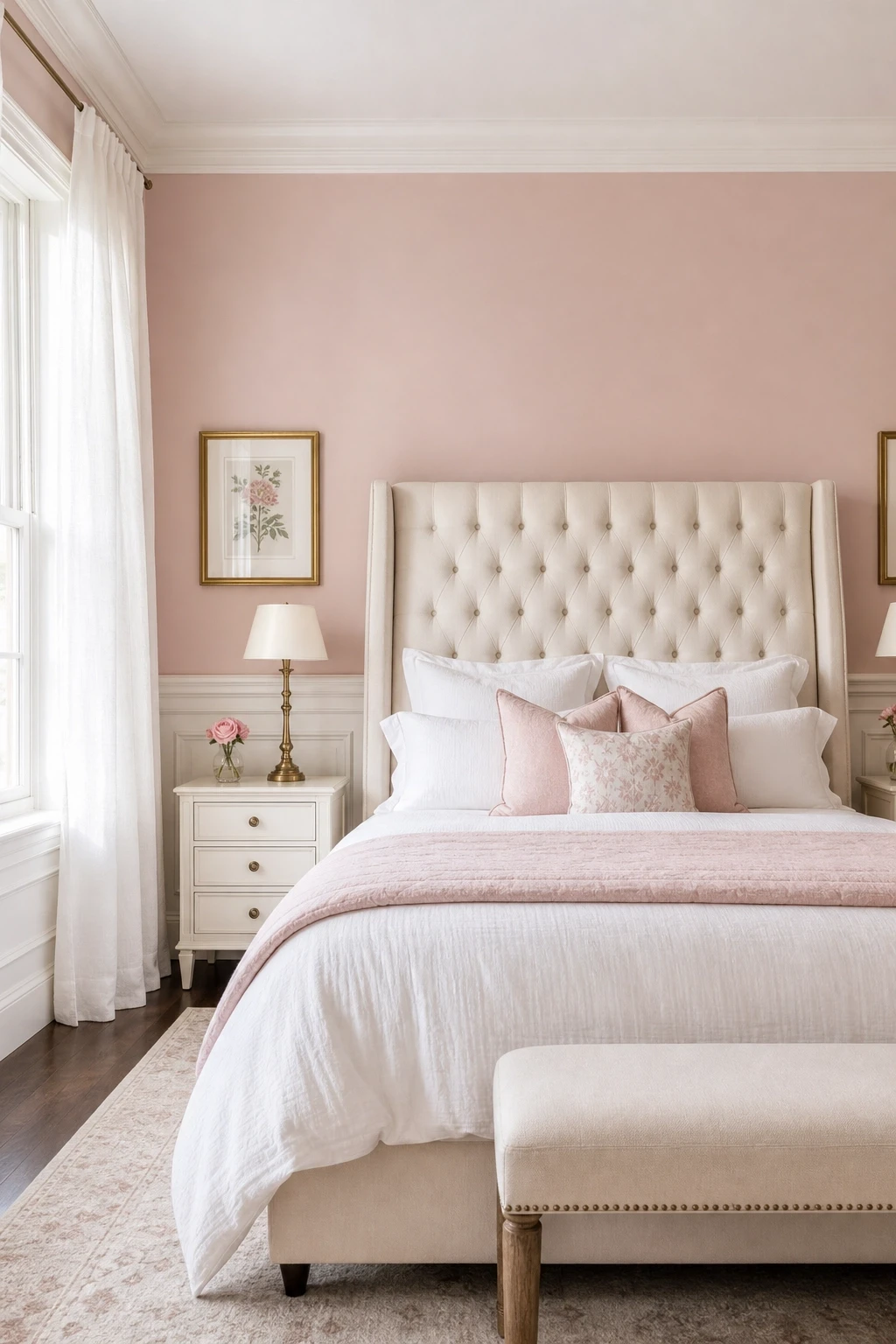
4. Soft Pink With Antique White Trim and Wainscoting
Some of the most beautiful Victorian bedrooms are not the most elaborate ones. Sometimes it is the restraint, the careful balance of soft color and clean architectural detail, that makes a room feel polished rather than overdone. If you have always been drawn to rooms that look classically beautiful rather than fussy, this idea will appeal to you.
Paint your walls a soft, dusty pink, something that leans more toward blush than rose. Then add wainscoting in antique white, covering roughly the bottom third of the wall. The wainscoting brings in that Victorian architectural character without requiring you to go all-in on heavy wallpaper or ornate furniture. It also creates a visual separation that makes the room feel taller and more structured.
Choose an upholstered bed with a tall tufted headboard in a pale pink or ivory linen fabric. Tufting is one of those details that reads immediately as Victorian without trying too hard. Add simple matching nightstands in an antique white painted finish with small turned legs. A marble-topped dresser in the same painted finish keeps the palette cohesive and introduces a touch of luxury.
For lighting, wall sconces in a brushed nickel or antique brass finish flanking the bed work beautifully with this palette. Add a simple drum-style pendant in the center with a white or pink fabric shade. The goal with lighting here is warm and even, not dramatic. This room is about quiet elegance rather than theatrical effect.
Finish the look with a simple white or cream area rug with a subtle border pattern, sheer white linen curtains that let natural light through, and a small vase of fresh or dried roses on the nightstand. These small touches reinforce the Victorian theme without making the room feel like a costume.
Designer Tip: Wainscoting kits from home improvement stores are surprisingly affordable and can be installed in a weekend. Paint both the wainscoting and the ceiling the same antique white for a cohesive, finished look that feels intentional and well-designed.
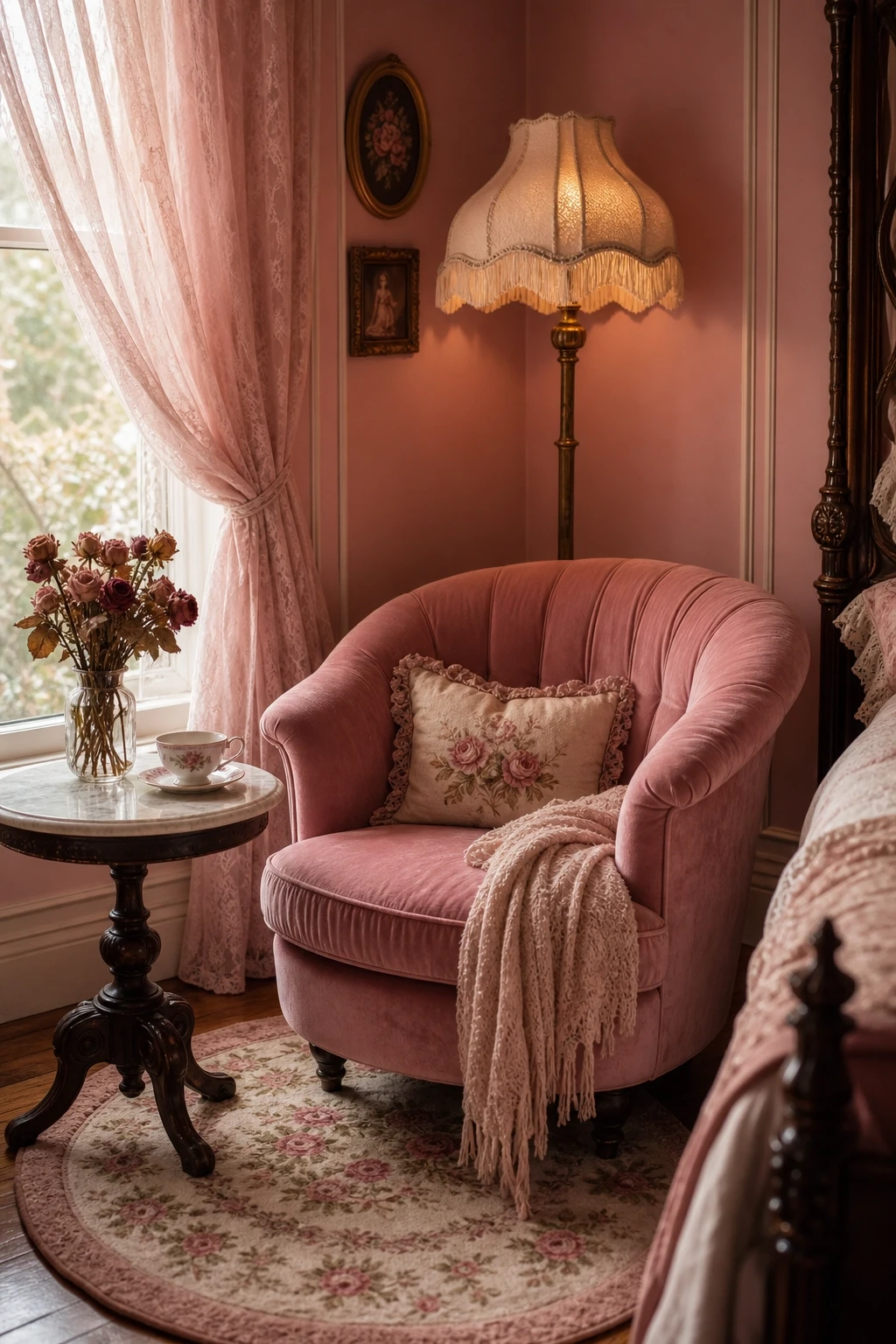
5. The Coquette Reading Nook Within the Bedroom
You have always wanted a little corner that is just yours, a small spot within the bedroom that feels separate from the rest of the room, somewhere to read or sit with a cup of tea in the morning. If this sounds like you, carving out a dedicated reading nook in a pink Victorian style is one of the most satisfying things you can do with a corner of your bedroom.
Start with a comfortable, curved armchair in a dusty pink velvet or floral upholstered fabric. Victorian chairs had round, generous silhouettes, and that shape matters. Avoid anything angular or modern. Pair it with a small round side table in dark wood or brass with a marble or rattan top. The combination of curves, warmth, and texture is what makes this corner feel pulled together.
Frame the nook with intention. If the corner has a window, add a flowing curtain rod across it with sheer pink or ivory curtains that can be drawn around the chair to create a cocoon-like feeling. If there is no window, hang a decorative fabric canopy overhead or float a small bookshelf beside the chair to define the space. A small Persian or floral rug placed just under the chair separates the nook from the rest of the bedroom floor.
Lighting here should be warm and close. A vintage-style floor lamp with an ornate base and a fabric shade in cream or pale pink, positioned just behind and to the side of the chair, gives the right kind of reading light without being harsh. Add a small candle lantern or set of battery-operated LED candles on the side table for evening atmosphere.
Accessorize the nook with a few well-chosen items: a small stack of hardcover books, a floral throw blanket, and one or two framed vintage botanical prints on the nearby wall. Keep the accessories minimal so the chair remains the star.
Designer Tip: If your bedroom does not have a spare corner, use your wardrobe or a tall bookcase to create one artificially. Positioning a chair against the side of a wardrobe and adding a floor lamp immediately creates the sense of a defined, separate zone.
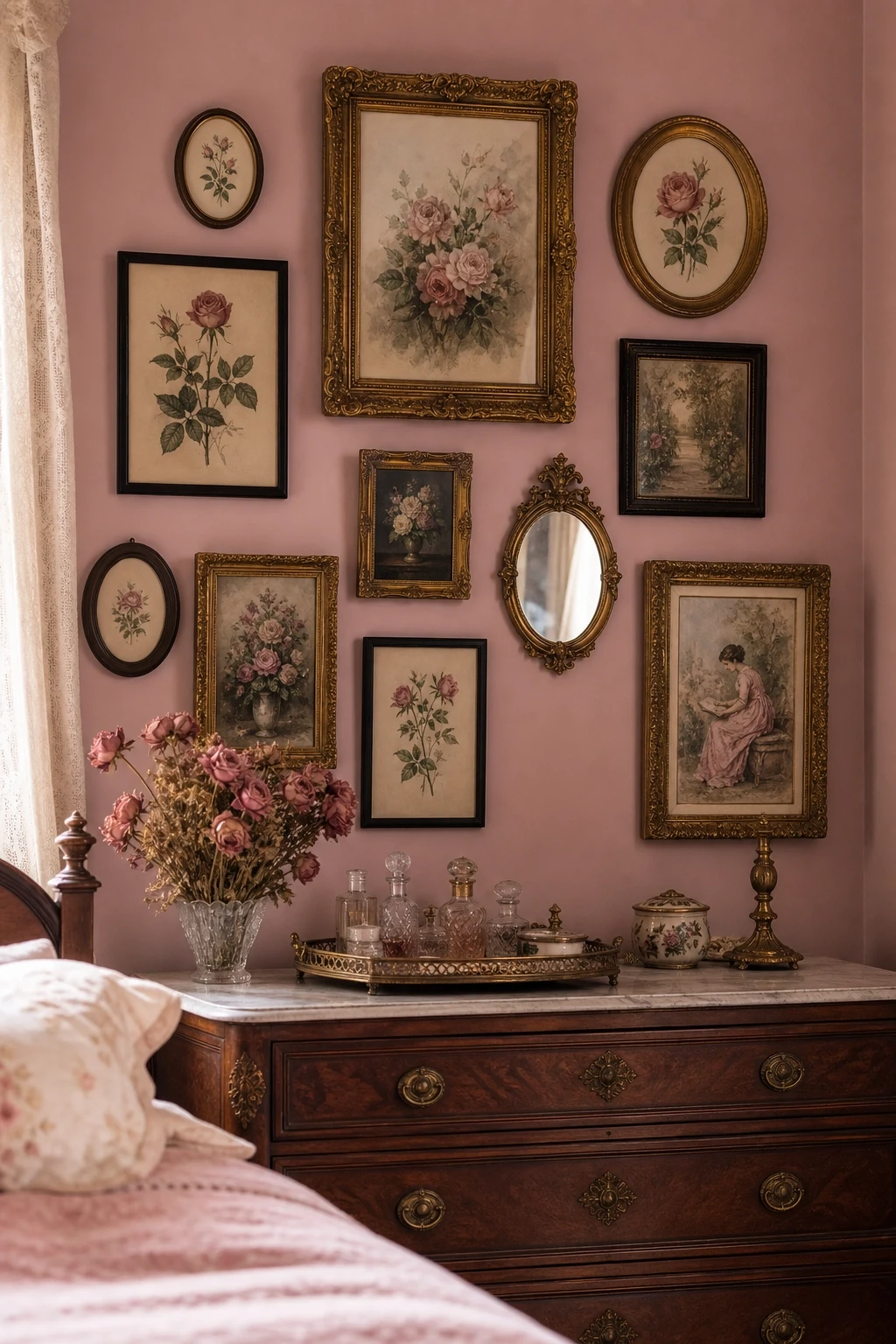
6. A Gallery Wall of Botanical and Feminine Art
Many people have a blank wall in their bedroom that they have been meaning to do something with for months. It just sits there, a little too empty, while you keep telling yourself you will figure it out eventually. A carefully curated gallery wall in a Victorian botanical and feminine art style is the answer to that wall, and it does more work for the overall room than any piece of furniture could.
The key to a Victorian-style gallery wall is variety combined with cohesion. Mix different frame sizes and shapes, including oval frames, ornate gilded rectangles, and simple thin black frames. Fill them with a mix of content: vintage botanical prints showing roses, peonies, or wildflowers; soft watercolor portraits or illustrations of women from the Victorian era; small mirrors with decorative frames; and dried or pressed flowers displayed behind glass.
Stick to a color story across all the prints. Soft pinks, greens, creams, and dusty mauves should appear in most of the artwork so the wall reads as collected and intentional rather than random. You do not need to spend a fortune on original art. Printable vintage botanical illustrations are widely available online and look beautiful printed on watercolor paper and placed in vintage-style frames.
Arrange the gallery wall before you commit to hanging anything. Lay all the frames out on the floor first and play with the arrangement until it feels balanced. A loose, slightly asymmetrical arrangement tends to look more organic and interesting than a perfectly uniform grid.
Consider placing the gallery wall above a dresser or a small console table so you can add a few three-dimensional objects at the base, a small vase of dried roses, a vintage perfume bottle, or a candle holder. The combination of wall art and surface objects creates a vignette that feels genuinely Victorian in spirit.
Designer Tip: Oval frames are one of the most underrated tools for creating a Victorian feel instantly. They are widely available secondhand and can be spray-painted in an aged gold or antique white finish to unify mismatched finds from thrift stores.
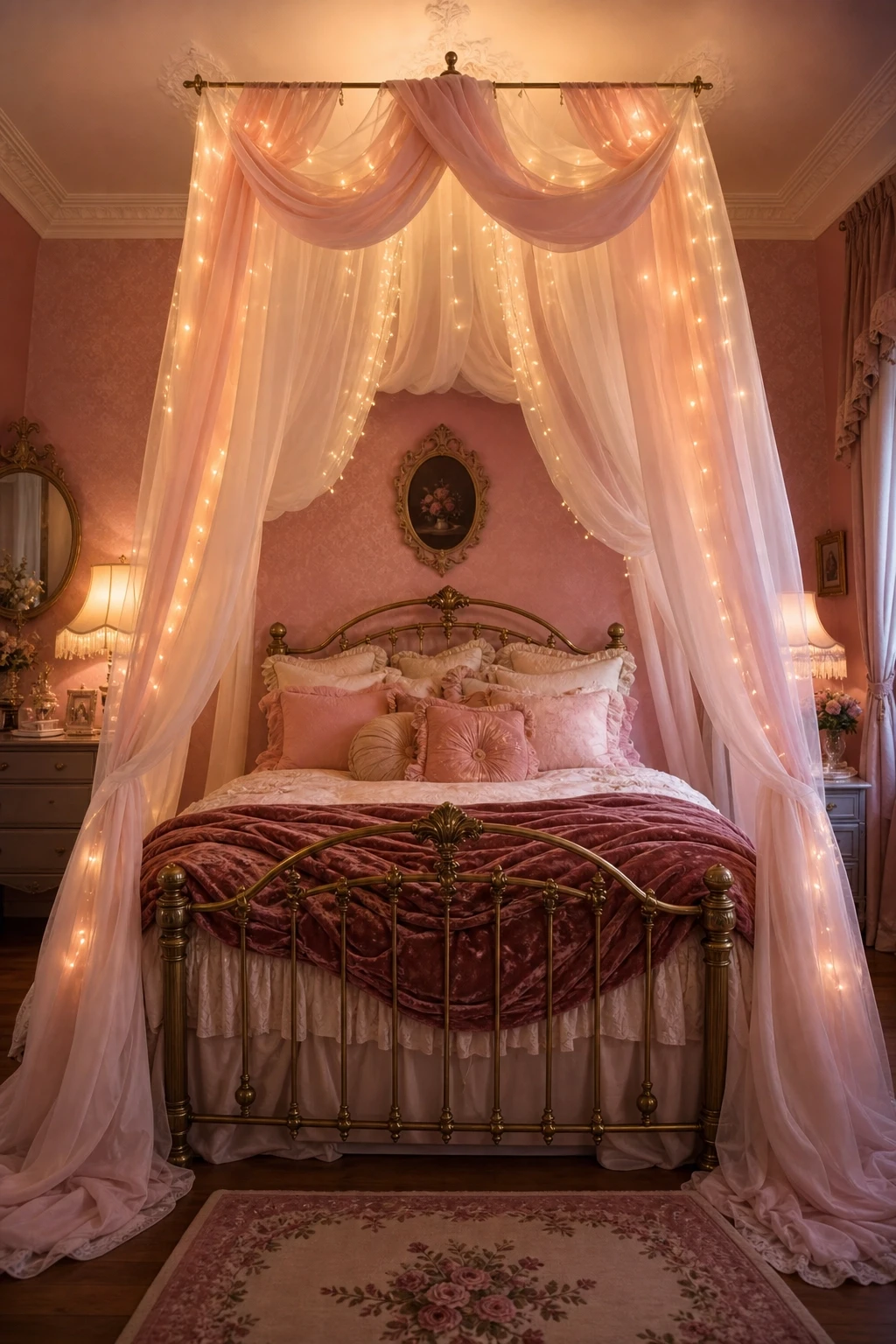
7. The Canopy Bed With Draped Fabric Overhead
You see a canopy bed online and think it looks incredible, but then you assume it would be too grand or too expensive for a regular bedroom. The truth is that you can create a draped canopy look with a simple ceiling hook, a curtain rod, and a few meters of fabric, and the result can be just as dramatic as a full four-poster setup.
For a pink Victorian bedroom, choose a fabric in sheer ivory or soft blush pink organza or voile. The sheerness matters because it keeps the canopy looking light rather than heavy. Drape the fabric from a ceiling-mounted rod or a crown canopy bracket positioned above the bed and let it fall in loose, generous folds on either side. The pool of fabric at the floor adds a theatrical, romantic quality that is thoroughly Victorian.
The bed itself does not need to be a four-poster to work with this treatment. A simple upholstered platform bed or even a classic metal frame in antique brass or matte black can anchor the canopy just as effectively. Dress the bed with layered bedding in ivory and blush, and add a velvet throw in a deeper rose or mauve across the foot for contrast.
Keep the surrounding furniture quieter so the canopy remains the centrepiece. Two simple nightstands with small crystal or glass lamps, a low upholstered bench, and a single decorative mirror on the opposite wall is enough. Too much additional furniture competes with what should be a single, impressive focal point.
Natural light plays beautifully with sheer canopy fabric during the day, but at night you want the room to feel warm and contained. Add a dimmer switch to your overhead light so you can control the atmosphere, and consider fairy lights woven into the canopy itself for a soft, intimate glow.
Designer Tip: Buy fabric from a discount or remnant fabric store rather than a home decor retailer. You often need several meters for a generous canopy, and buying it as fabric rather than ready-made curtains saves a significant amount of money.
8. Layered Textiles and Pattern Mixing the Victorian Way
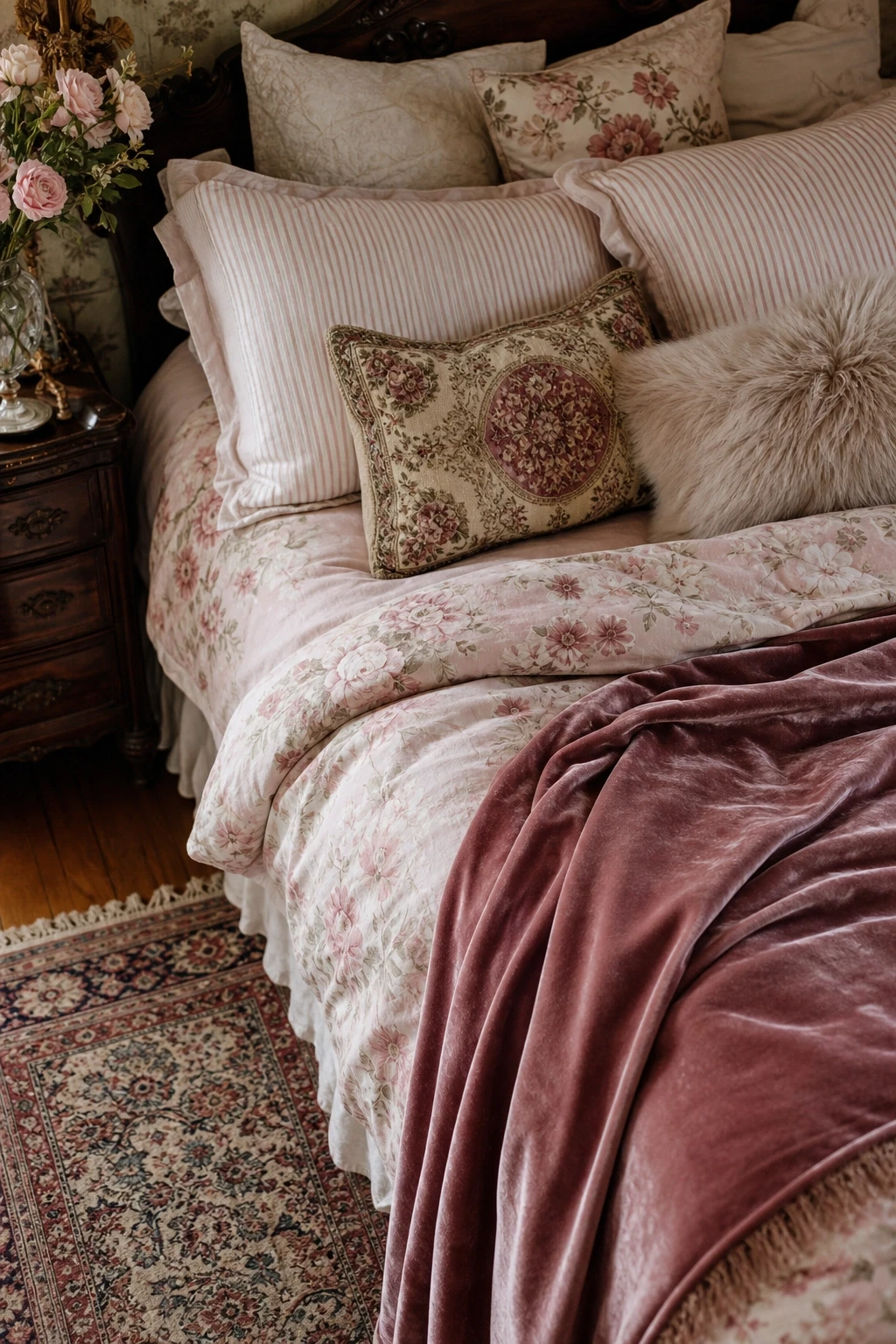
One of the things people get wrong about Victorian style is thinking it means matching everything. The actual Victorian approach was almost the opposite: layering different patterns, textures, and materials in a way that felt abundant and personal. If you have always been afraid to mix patterns, this idea gives you both the permission and the framework to do it well.
Start with your bed as the layering anchor. Begin with crisp white cotton sheets. Add a pink floral duvet cover or quilt. Then layer on a velvet throw in a solid dusty rose. Pile on pillows in at least three different fabrics: a linen pillowcase in a soft stripe, a velvet cushion in a deeper pink, and an embroidered or tapestry pillow in a botanical print. The variety of textures, velvet, cotton, linen, and embroidery, is what makes the bed look genuinely Victorian rather than just busy.
Carry the layering philosophy beyond the bed. Add a Persian or orientalist-style area rug in pink, red, and cream tones over hardwood floors. Layer a smaller sheepskin or faux fur throw rug at the foot of the bed on top of the larger rug. Use a mix of curtain fabrics at the window, perhaps a sheer panel under a heavier linen or velvet drape.
On the walls, mix a patterned wallpaper on one accent wall with paint on the remaining three. The wallpaper and paint should share at least one color so the transition feels deliberate. Add decorative molding around door frames and windows to reinforce the Victorian architectural vocabulary.
The key to making pattern mixing work in this context is keeping the overall color palette consistent. As long as all your patterns share a family of pinks, creams, and warm neutrals, they can vary considerably in scale and style without clashing.
Designer Tip: Use the 60-30-10 rule loosely: 60 percent of your patterns in the dominant color (blush or rose), 30 percent in a secondary neutral (ivory or cream), and 10 percent in an accent (burgundy, sage green, or gold). This framework prevents the layering from feeling overwhelming.
9. A Painted Vintage Dresser as the Room’s Statement Piece
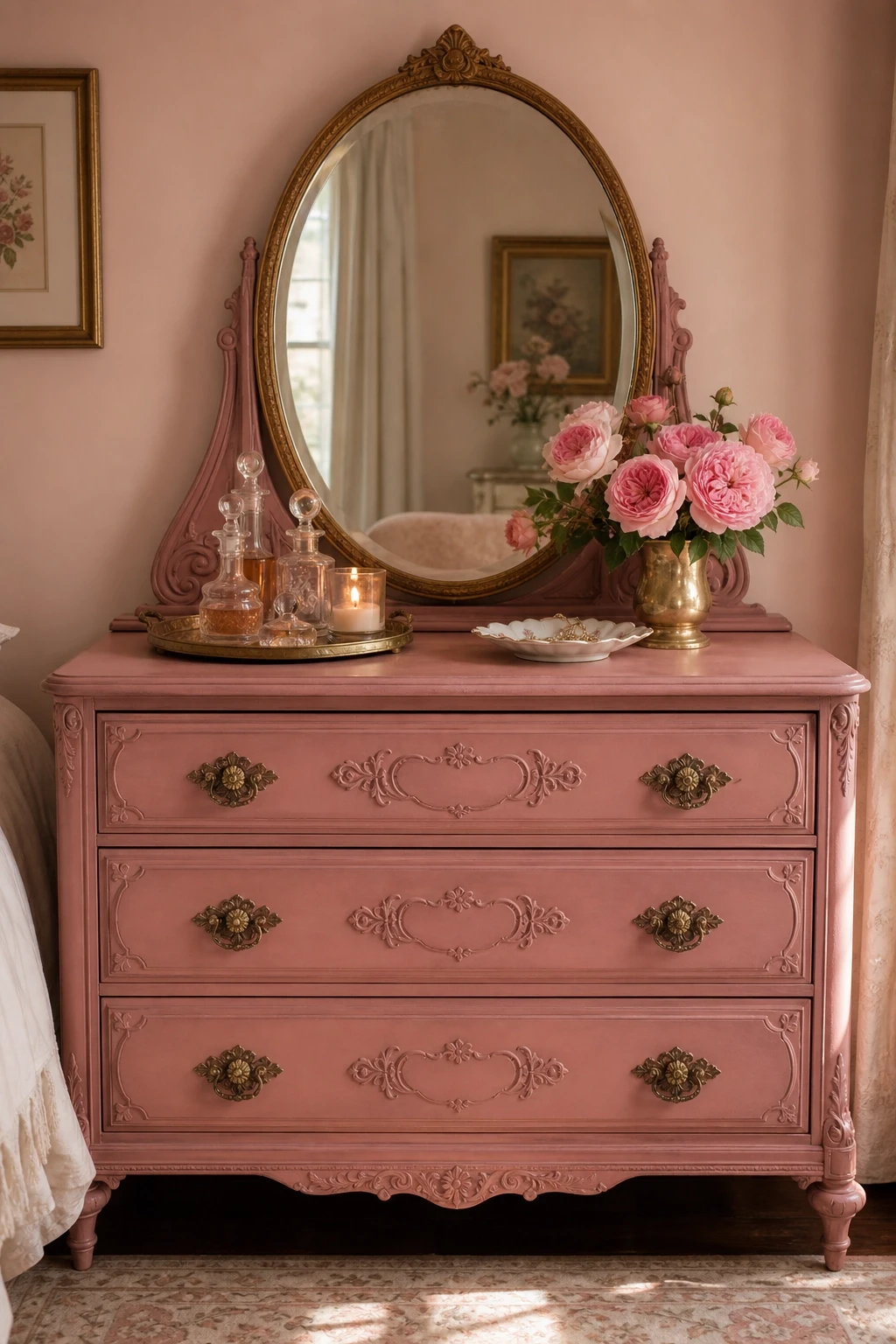
Walk into almost any vintage or thrift shop and you will find a beat-up old dresser that no one wants. It might have ugly hardware, a damaged veneer, or an outdated finish. What it also has, if you look at its shape, is often beautiful Victorian bones: carved drawer fronts, turned legs, an ornate mirror attached to the top. That dresser is exactly what a pink Victorian bedroom needs.
The transformation starts with a coat of paint. Choose a soft pink, a dusty rose, or even an antique sage green if you want a contrast piece that still works within a pink Victorian palette. Sand the dresser lightly, prime it, and apply two coats of chalk or mineral paint for a finish that looks appropriately aged without being sloppy. Distress the edges slightly with fine sandpaper for an authentically worn look.
Replace the original hardware with something that elevates the piece. Antique brass drawer pulls, small ceramic knobs with hand-painted florals, or crystal and gold cabinet handles all work beautifully. The hardware is a small investment that makes a significant visual difference and reinforces the Victorian character of the dresser.
Style the top of the dresser as a personal vignette. Add a small round tray in a metallic finish to corral perfume bottles, jewelry dishes, and a small candle. Place a vase of dried or fresh roses to one side. Lean a small decorative mirror or a framed botanical print against the attached mirror if there is one. A small brass or ceramic lamp with a pink or ivory shade adds functional light and completes the styling.
Designer Tip: Chalk paint requires no primer and very little prep work, making it one of the most beginner-friendly painting options for furniture. Seal it with a clear wax after painting to protect the finish and give it a soft, satin sheen rather than a flat matte look.
10. Crystal Chandelier and Candlelight Inspired Lighting
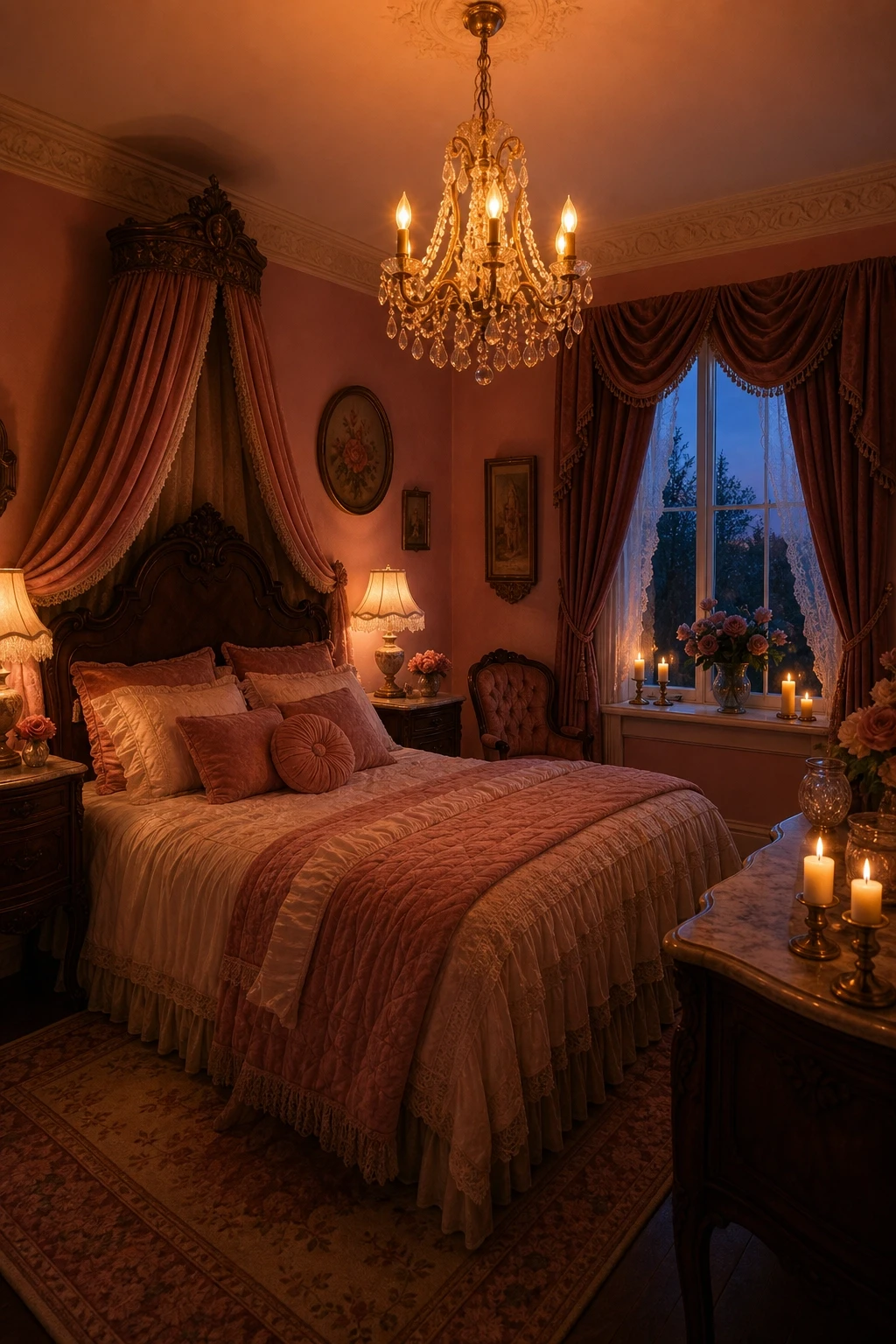
You have probably noticed that the bedrooms that feel the most romantic and beautiful in photographs almost always have extraordinary lighting. Not necessarily expensive lighting, but lighting that is warm, layered, and thoughtfully placed. In a pink Victorian bedroom, lighting is not an afterthought. It is as important as the furniture itself.
The centrepiece lighting choice for this style is a crystal or droplet chandelier in a warm gold or antique brass finish. You do not need to spend thousands of dollars. There are beautiful chandelier options available at a wide range of price points, and a small to medium-sized one above the bed or in the center of the room makes an immediate and significant impact. Choose bulbs with a warm color temperature, around 2700 Kelvin, and install them on a dimmer so you can control the mood.
Layer the lighting below the chandelier with bedside lamps that have fabric shades in ivory, blush, or cream. The soft glow through a fabric shade is warmer and more flattering than bare bulbs or glass shades. Look for lamp bases in antique brass, rose gold, or milky white ceramic for options that complement the Victorian palette.
Add a third layer of lighting through wall sconces or a floor lamp. Wall sconces on either side of the bed or flanking a mirror create a sense of symmetry and elegance that is deeply rooted in Victorian interior design. A tall floor lamp with a fringed or pleated fabric shade in a reading corner brings warmth to a part of the room that overhead lighting often neglects.
Battery-operated LED candles on the dresser, windowsill, or nightstand add an extra layer of atmosphere without any fire risk. Place them in small glass hurricane vases or on antique-style brass candlestick holders for an authentic Victorian feeling.
Designer Tip: Swap standard light switches for dimmer switches throughout the bedroom. This single change gives you more control over the atmosphere than almost any decor purchase and costs relatively little to install, especially if you are comfortable doing basic electrical work yourself.
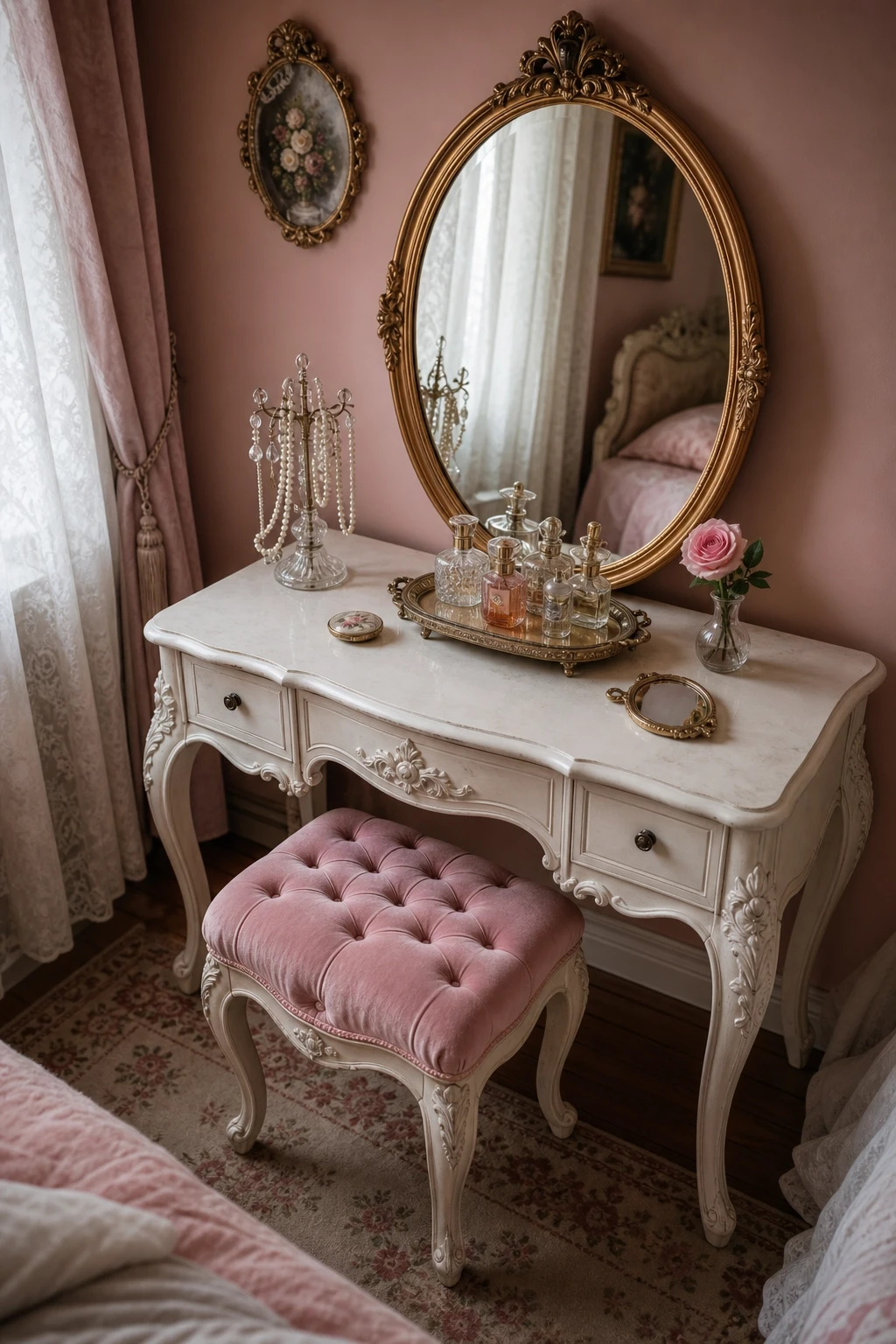
11. The Vanity Table Setup That Feels Like a Scene From Another Era
There is something genuinely nostalgic about the idea of a proper vanity table. Not just a mirror propped on a dresser, but an actual dedicated space for getting ready in the morning, complete with a cushioned stool, a thoughtful arrangement of beauty products, and a mirror framed in something beautiful. If you have ever wanted one but talked yourself out of it, a pink Victorian bedroom is the perfect reason to finally commit.
Choose a vanity table with delicate legs, ideally in a curved or cabriole style that reads as genuinely Victorian rather than just vintage-adjacent. Painted finishes in white, pale pink, or antique gold work well. A scalloped or curved apron detail on the front of the table adds extra period character. Pair it with a small upholstered stool in a matching or complementary fabric, something tufted in a pink velvet or a floral tapestry.
The mirror is where you can go all out. Look for an ornate oval or rectangular mirror with a gilded or carved frame. Lean it against the wall rather than attaching it to the vanity for a more relaxed, collected look. If your vanity came with an integrated mirror, consider replacing the standard one with something more elaborate.
Style the tabletop with intention. Use a small decorative tray to group your most-used items together, perfume bottles, a small jewelry dish, a compact, and a hand cream. Add a small bud vase with a single fresh rose or a sprig of dried lavender. A delicate pearl or crystal jewelry stand on one corner adds visual height and serves a practical purpose at the same time.
Position the vanity near a window if possible. Natural light is the most flattering for getting ready, and a view of the outdoors from a beautifully styled vanity table is one of those small daily pleasures that genuinely improves the quality of ordinary mornings.
Designer Tip: Secondhand and vintage vanity tables are one of the best furniture finds you can make for a Victorian-style bedroom. Look on marketplace apps and in estate sales where these pieces often appear for a fraction of their original price and in genuinely beautiful condition.
12. Mixing Pink With Deep Green for a Garden Room Effect
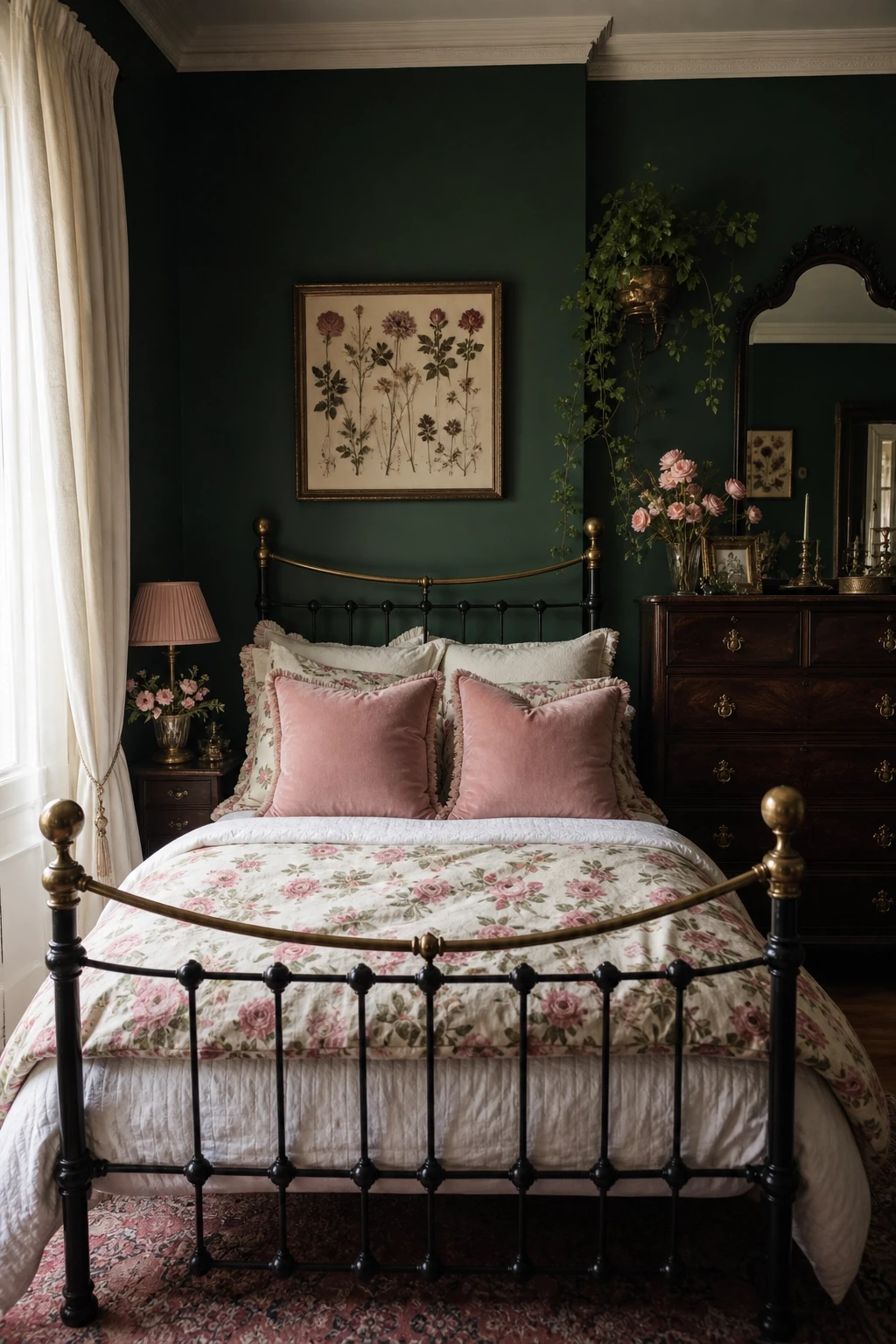
Many people assume that a pink Victorian bedroom means pink everywhere, but some of the most stunning interpretations of this style use deep green as the dominant color and bring pink in as the accent. If you have been drawn to the idea of a Victorian bedroom but worried that too much pink would feel overwhelming or hard to live with long-term, this idea shows you another way in.
Paint the walls in a deep, botanical green, something like a hunter green, bottle green, or dark sage. This creates a lush, garden-like backdrop that is deeply Victorian in character. Bring pink in through bedding, cushions, floral prints, and small accents rather than the walls. The contrast between the dark green and the soft pink creates an immediate and beautiful tension that feels both dramatic and romantic.
Choose bedding in white with pink floral embroidery or a pink and white floral duvet cover. Pile on cushions in blush, rose, and ivory. The bed against the dark green wall becomes a focal point that reads as very deliberately designed. Add curtains in a soft pink or ivory linen to lighten the windows and prevent the room from feeling too cave-like.
Furniture in this palette looks best in dark stained wood or painted black. A black iron bed frame with brass details, a dark wood wardrobe with decorative carving, or a painted black bedside table with antique brass hardware all work beautifully against the green walls. Introduce brass through lighting, picture frames, and accessories to warm up the color scheme.
Layer in botanical elements that reinforce the garden room theme. A trailing pothos or philodendron in a brass planter, a framed collection of pressed flowers, and a botanical print wallpaper on the ceiling only are all ideas that deepen the nature-inspired quality of the room.
Designer Tip: If painting all four walls deep green feels too bold, try just one wall behind the bed as an accent and paint the remaining walls in an ivory or off-white. This gives you the contrast and drama without the full commitment of going dark on every surface.
Conclusion
A pink Victorian bedroom is one of those design commitments that pays back generously. It is a style that rewards attention to detail, a love of texture and layering, and a willingness to let a room have a genuine personality. Every idea in this article has been chosen because it can be adapted to different budgets, different room sizes, and different levels of design confidence.
The ideas that have the biggest impact tend to be the structural ones: a statement bed, a full-coverage wallpaper, an extraordinary chandelier, or a considered gallery wall. These are the choices that change how a room feels at its core. From there, the styling, the textiles, the accessories, and the lighting layers all build on that foundation in ways that feel personal and specific to you.
Whatever your starting point, the most important thing is to choose elements that genuinely appeal to you rather than trying to replicate a room exactly as it appeared in a photograph. Victorian design was always about personal expression and the accumulation of things that had meaning and beauty. Bring that spirit into your bedroom and the result will feel more authentic, more livable, and more genuinely yours.
Frequently Asked Questions
What shades of pink work best in a Victorian bedroom?
Dusty rose, antique rose, blush, and deep mauve all work well in a Victorian context. Avoid bright, saturated pinks like bubblegum or hot pink, which tend to feel more modern than Victorian. The best shades have a slightly muted or chalky quality that reads as aged and elegant rather than fresh and bold.
Can I create a pink Victorian bedroom on a budget?
Absolutely. Some of the most effective Victorian bedroom elements are also the most affordable. Secondhand furniture painted in chalk paint, printable botanical art in thrifted frames, and fabric draped from a ceiling hook for a canopy effect can all create a strong Victorian atmosphere without significant expense. Focus your budget on one or two key pieces and supplement with affordable finds.
How do I keep a pink Victorian bedroom from looking dated or over-decorated?
The key is restraint in quantity even when you go bold in individual choices. Choose three or four core Victorian elements, a statement bed, a chandelier, wallpaper on one wall, a gallery of art, and let those carry the room. Leave some breathing room in the space rather than filling every surface and corner. This approach gives you the Victorian character without the feeling of clutter.
What flooring works best with a pink Victorian bedroom?
Light to medium-toned hardwood floors are the most versatile choice and work with almost every variation of the pink Victorian palette. A large-scale Persian or floral area rug over hardwood adds the pattern and warmth that the style calls for. Wall-to-wall carpet in a cream or neutral tone is also a period-appropriate option if that is what you already have.
How do I incorporate Victorian style in a small bedroom?
In a small bedroom, focus on vertical elements that draw the eye upward: tall headboards, floor-to-ceiling curtains, and wallpaper that extends onto the ceiling. Choose furniture with delicate legs rather than heavy bases, since lighter profiles make rooms feel larger. A single statement chandelier and one well-styled gallery wall can deliver a lot of Victorian character without consuming much floor space.
What colors can I pair with pink in a Victorian bedroom besides white and ivory?
Deep green is one of the most beautiful pairings for pink in a Victorian context and feels genuinely period-appropriate given the botanical influence of the era. Burgundy and deep mauve both work as richer, moodier accent colors. Soft gold and antique brass are not colors per se but function as a warm metallic accent that ties pink palettes together across furniture, lighting, and hardware.