Spring Decorating Ideas That Actually Make Your Home Feel Different
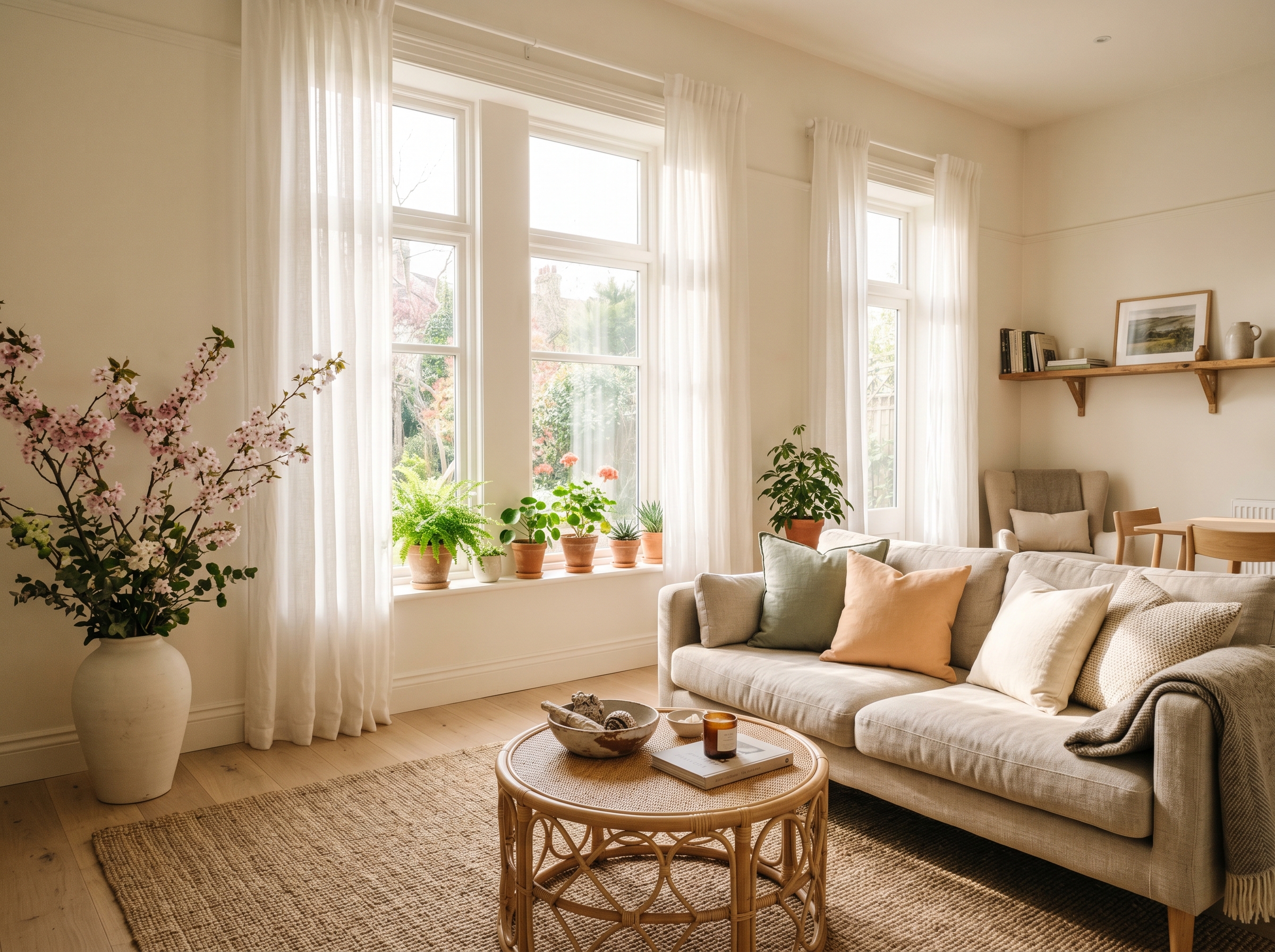
There is something about the first real week of spring that makes you walk through your own home with fresh eyes. Maybe the afternoon light hits the living room at a new angle and suddenly the throw blanket from November looks out of place. Maybe you crack a window and realize the whole room smells like winter. Whatever the trigger, the urge to refresh your space in spring is one of the most natural feelings there is, and it does not have to cost a lot or take a full weekend to act on.
What makes spring decorating so satisfying is that it is less about buying new things and more about a shift in mood. You are swapping weight for lightness, dark for bright, closed for open. A linen throw instead of a chunky knit. A vase of fresh tulips where a pillar candle used to sit. A window left open on a warm afternoon instead of blackout curtains pulled shut. These small decisions add up to a home that genuinely feels like a different season.
The 23 ideas in this article cover every room in the house and every budget. They are organized by theme so you can jump straight to what interests you most, whether that is color, nature, texture, lighting, or a full room refresh. Some of these ideas will take ten minutes. Others might take a weekend. All of them will make a real difference in how your home feels when spring is fully underway. Read through, pick a few that speak to your style, and start there. Spring does not need a grand plan. It just needs a beginning.
Colour and Palette Refreshes
1. Build a Room Around Soft Sage Green
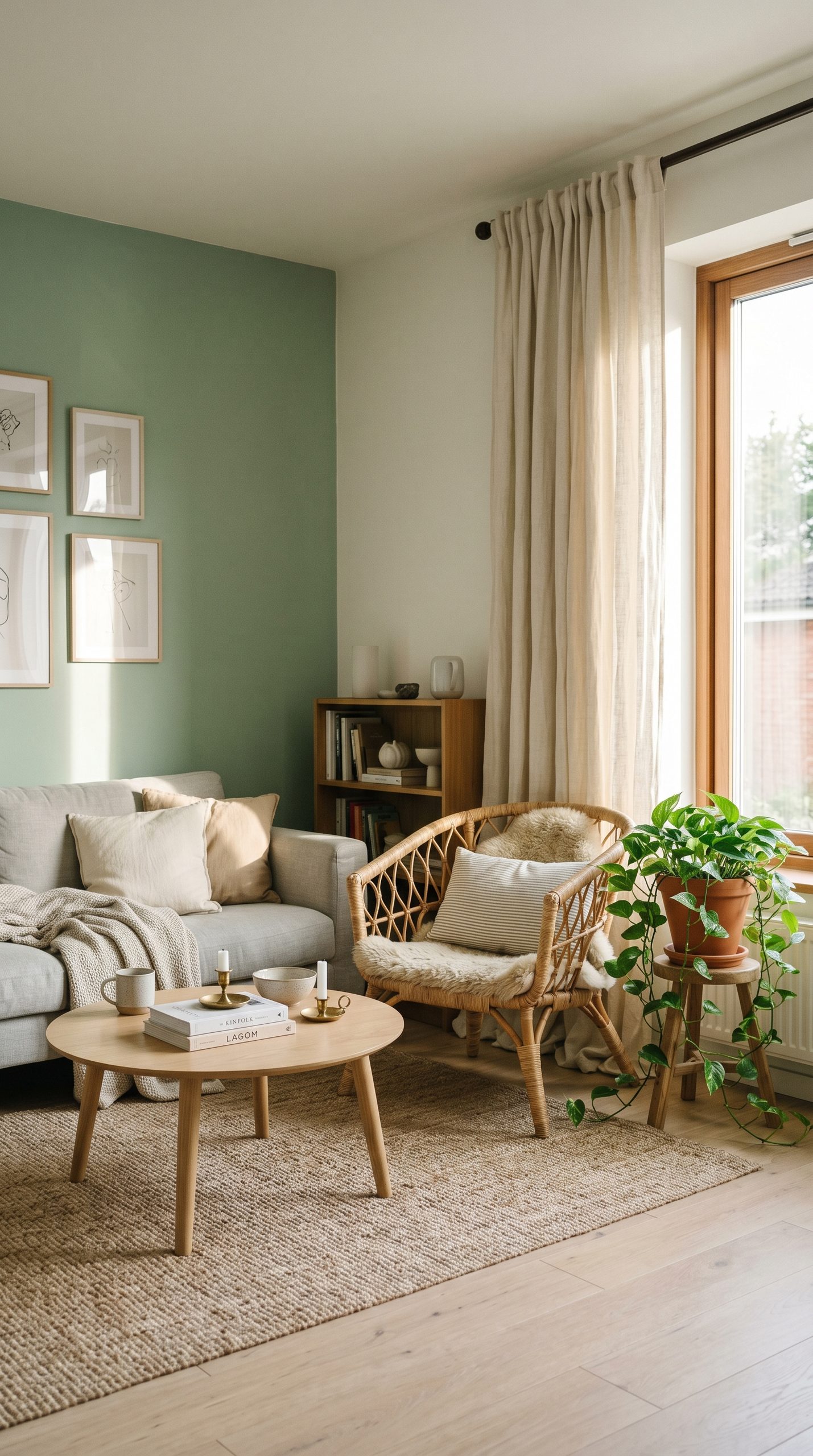
Sage green has been quietly building momentum for a couple of years now, and spring 2026 is really its moment. It works because it sits right between a warm neutral and a proper colour, meaning it feels grounded rather than loud. In a living room, try painting one wall in a muted sage and pairing it with warm cream linen curtains that pool slightly on the floor. The combination reads as effortlessly put together without looking like you tried too hard.
For furniture, lean into natural wood tones, pale oak coffee tables, and rattan side chairs. These materials pull the outside world in, which is exactly what spring decorating is all about. Add a jute rug in an off-white or warm oatmeal tone to anchor the space. Accessories in terracotta, dusty blush, or mustard yellow will give the palette just enough warmth to stop it from feeling cold. A couple of potted plants in simple clay pots complete the picture without overcomplicating it.
Designer’s Note: If you are not ready to commit paint to the walls, introduce sage through a chunky knit cushion cover, a linen table runner, or a set of mugs on open kitchen shelving. The colour works in small doses too.
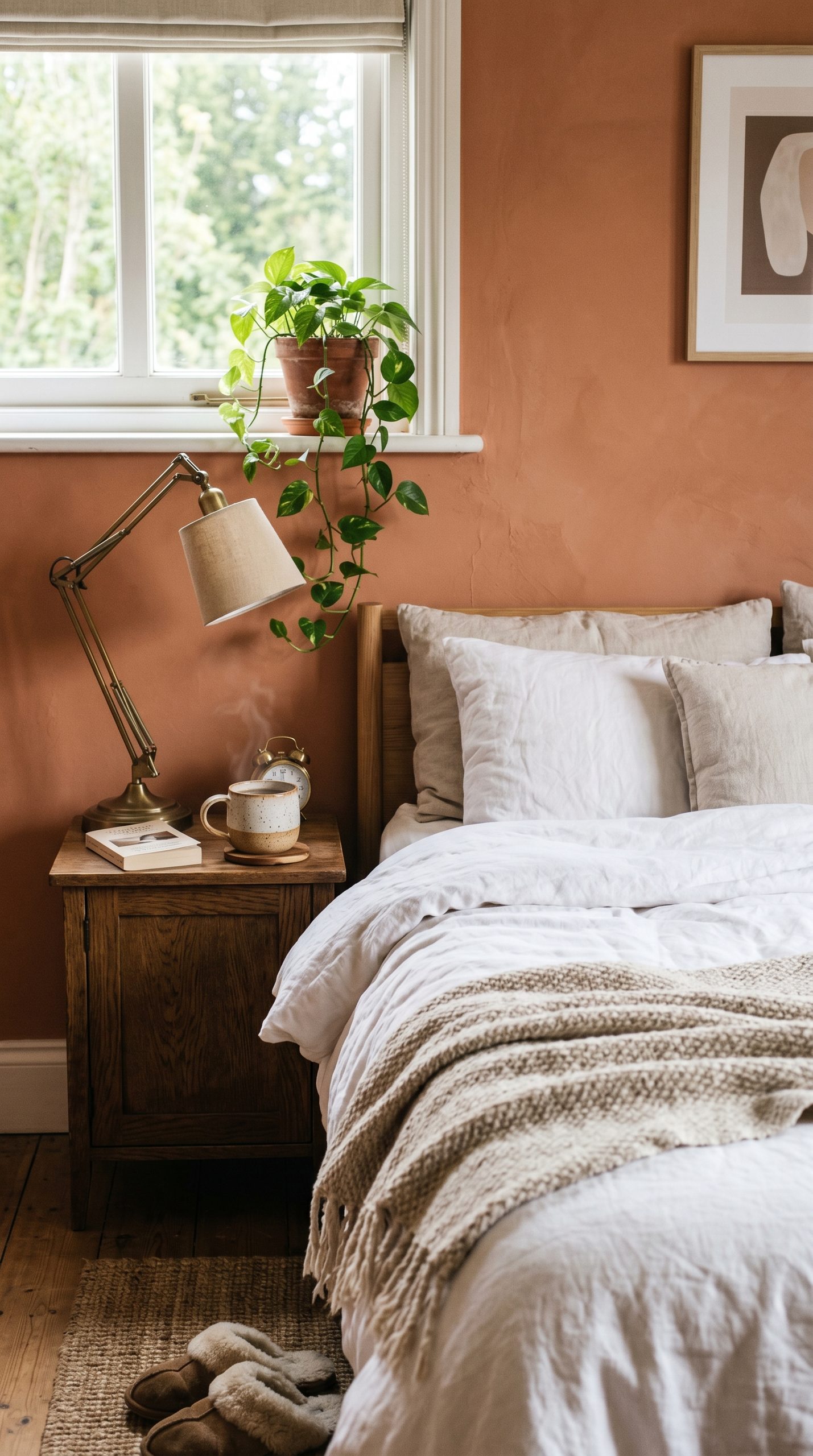
2. Try Terracotta as a Grounding Neutral
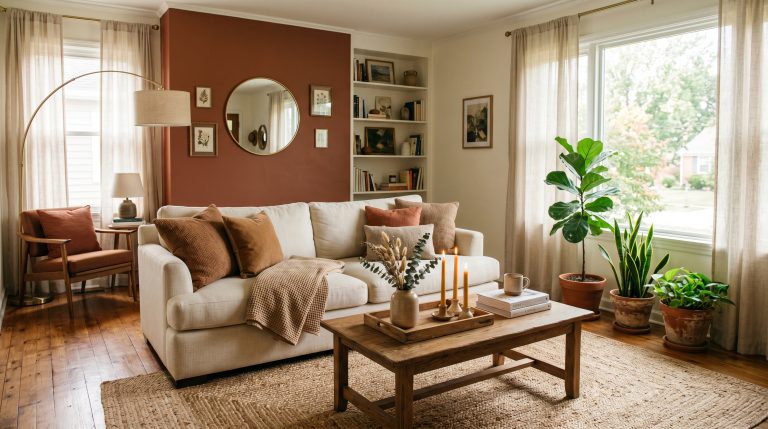
Terracotta is not just a summer or Mediterranean thing. In spring, it works beautifully as a warm base that keeps a room from feeling cold or washed out when the light is still unpredictable outside. Think of it as your grounding colour, the one everything else rests against. A terracotta-painted hallway or a terracotta accent wall in the dining room instantly makes a space feel more alive without relying on floral prints or pastel accents.
Pair terracotta with creamy whites, aged brass hardware, and linen in a natural undyed tone. In a bedroom, terracotta bedside walls paired with white bedding and woven wool throws create a warmth that feels appropriate for the in-between weeks of spring when evenings are still cool. For decor accessories, look for handmade ceramics in complementary earthy shades, small sculptural objects, and a few trailing houseplants like pothos or philodendron to soften the overall look.
Designer’s Note: Terracotta pots from the garden centre are one of the cheapest ways to bring this colour into your home without touching the walls. Group three different sizes together on a windowsill for an instant vignette.
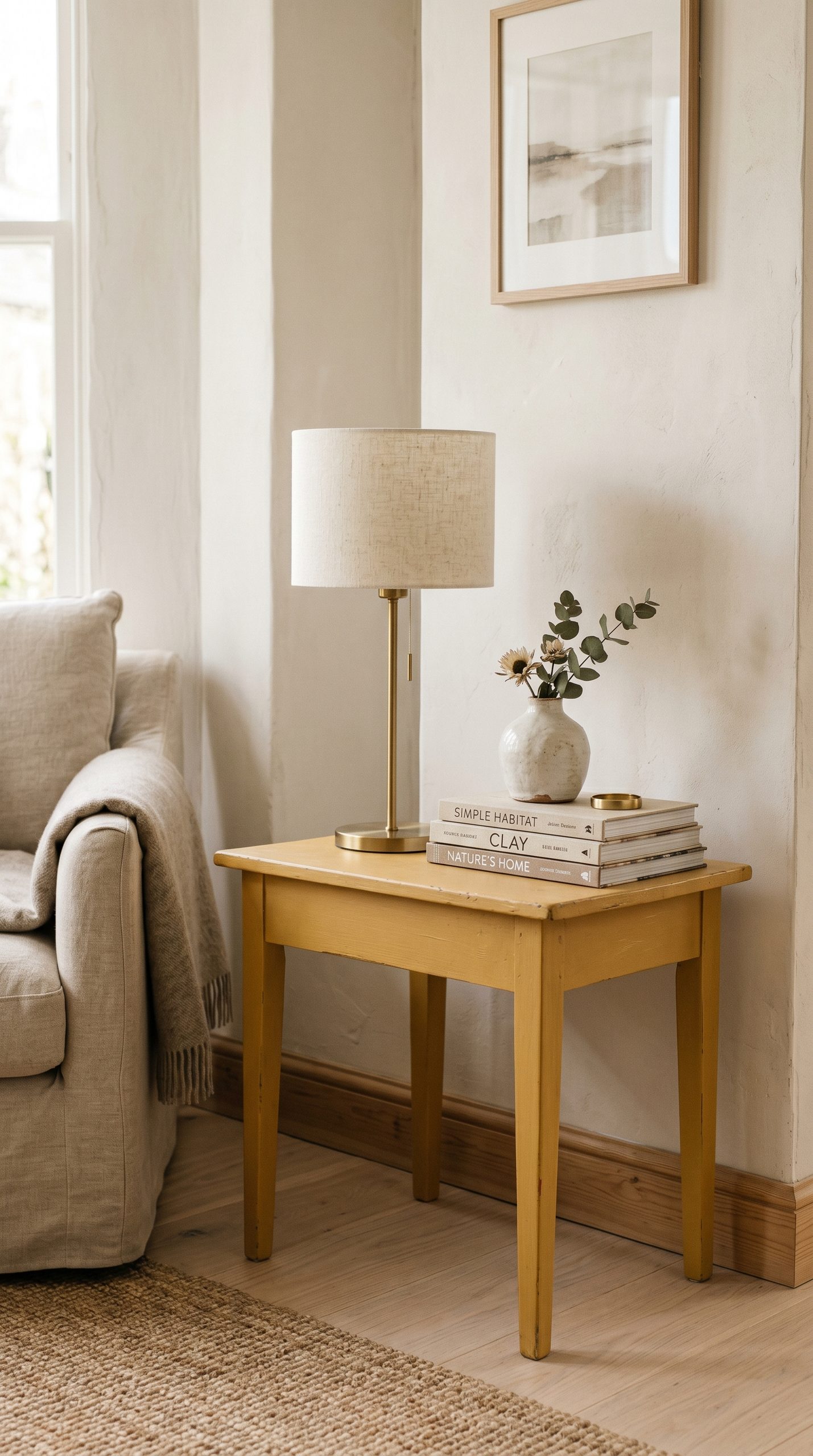
3. Bring In Unexpected Colour Through a Painted Side Table
One of the smartest things you can do to refresh a room for spring without redecorating is paint a single piece of furniture in an unexpected colour. A side table in marigold yellow, a small console in dusty violet, or a bookcase back panel in deep teal all act as conversation pieces that make the whole room feel more intentional. You are not overhauling the space. You are just adding one thing that says you thought about it.
The best pieces to paint are ones that have simple lines and no ornate carving, so the colour reads clearly. Sand lightly, apply a quality furniture paint in an eggshell finish, and give it two thin coats rather than one thick one. Once dry, style the table with a small lamp, a stack of books, and one ceramic object. The contrast between the painted piece and everything else in the room is what makes it work. Keep the rest of the room relatively neutral and let this one piece do the talking.
Designer’s Note: Charity shops and flea markets are full of solid wood side tables that are perfect candidates for this trick. You can find something for a few pounds, paint it in an hour, and have a completely original piece.
Bringing Nature Indoors
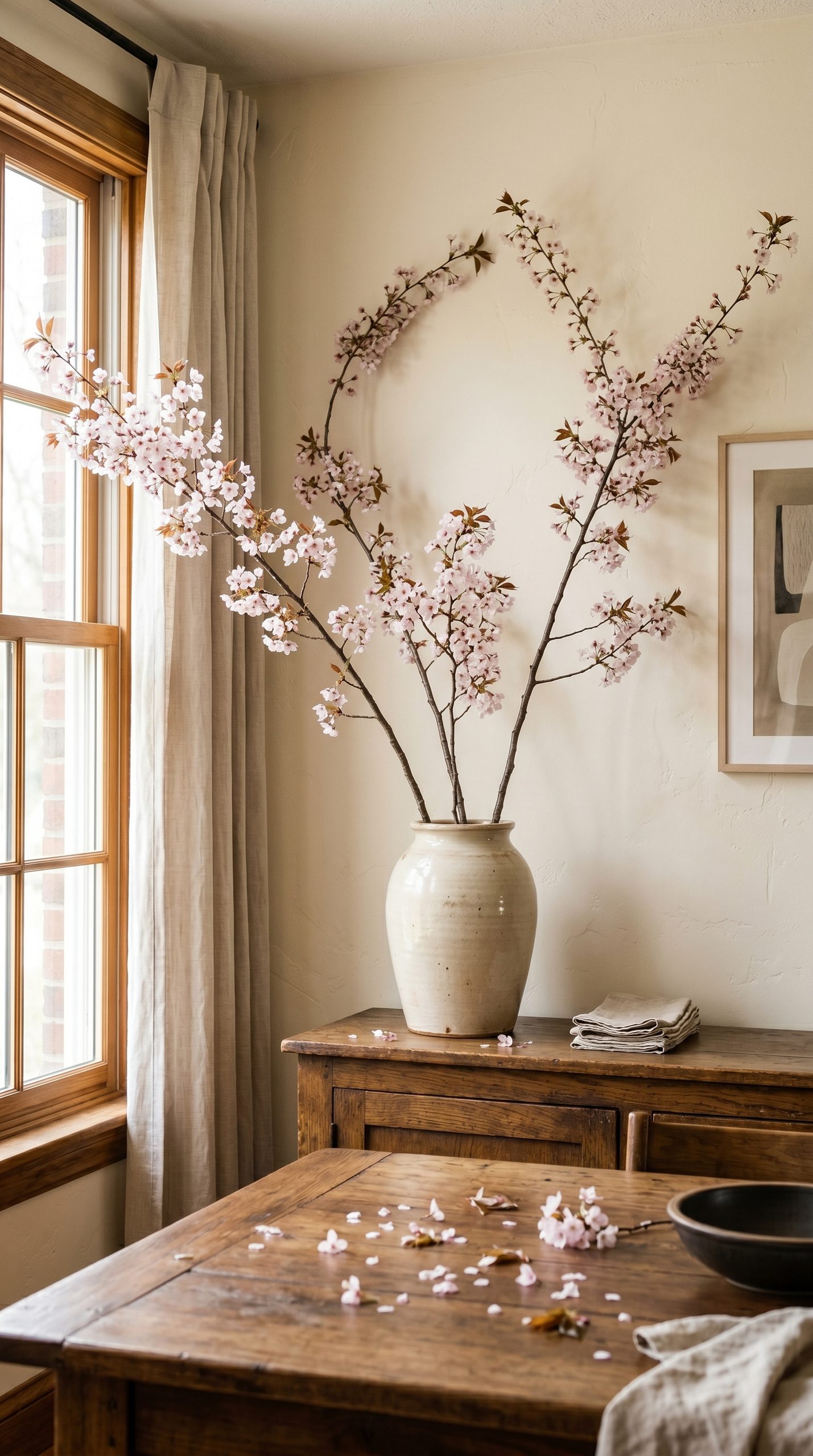
4. Force Flowering Branches Into a Statement Vase
If you have any flowering trees or shrubs in your garden, or access to a market that sells cut branches, forcing them to bloom indoors is one of the most impactful and genuinely free things you can do for your spring home. Cherry blossom, forsythia, quince, and magnolia branches all work brilliantly. Cut them when the buds are just beginning to swell, bring them inside, and place them in a tall vase of tepid water in a warm spot away from direct sunlight. Within a week or two they will burst into flower.
The visual impact of a tall vase of flowering branches in a corner of the living room or on a dining table is extraordinary, and it costs almost nothing. Use a large ceramic vase, a simple glass cylinder, or even a clean galvanised bucket for a more relaxed look. Arrange the branches so they arch naturally rather than standing rigid and upright. The slightly wild, branching quality is what makes this look so good. Change the water every few days to keep them fresh for as long as possible.
Designer’s Note: Group a few shorter cuttings in smaller bud vases alongside the main arrangement for a layered look that fills more of the table without feeling heavy.
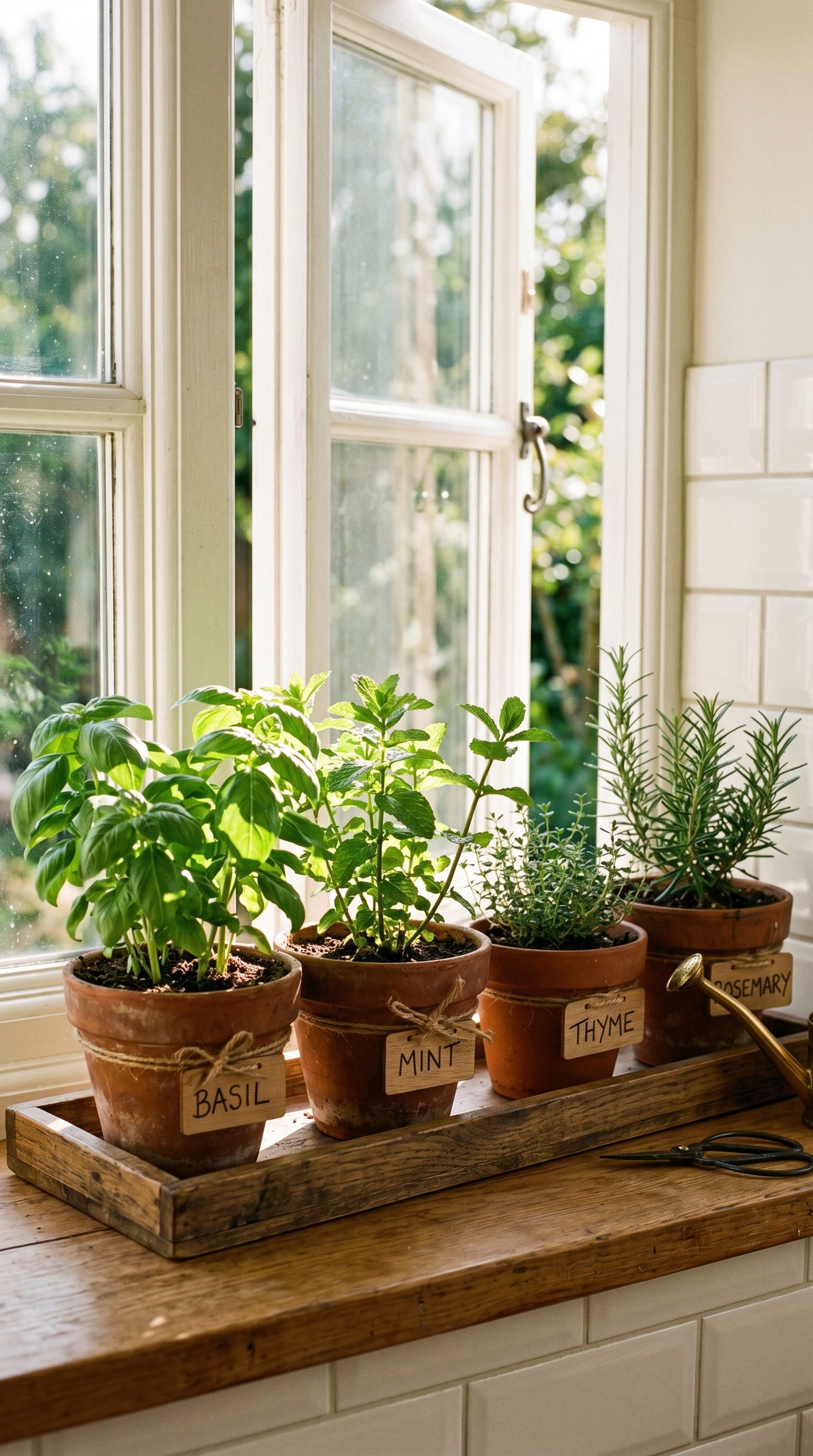
5. Create a Living Herb Display in the Kitchen
A cluster of fresh herbs on the kitchen windowsill is one of those ideas that works on every level at once. It looks good, it smells incredible, it is practical, and it costs very little to put together. In spring, pick up small pots of basil, mint, rosemary, and thyme from the supermarket or garden centre and arrange them on a wooden tray or a small slate board in front of the window. The varying heights and textures of different herb plants create a naturally interesting display without any styling effort.
Transfer them into terracotta pots of different sizes for a more cohesive look. Label each one with a small handwritten tag attached to a piece of twine for a touch of charm that feels organic rather than overdone. The sunlight through the window will backlight the leaves and make the whole kitchen feel alive in a way that a standard plant display cannot quite replicate. Keep a small watering can nearby so you actually remember to look after them, which in turn means you keep reaching for them in cooking.
Designer’s Note: If your kitchen gets limited light, move the herbs to a bright spot in another room and swap them out weekly. They will last far longer and continue to look their best.
6. Style a Spring Vignette on Your Coffee Table
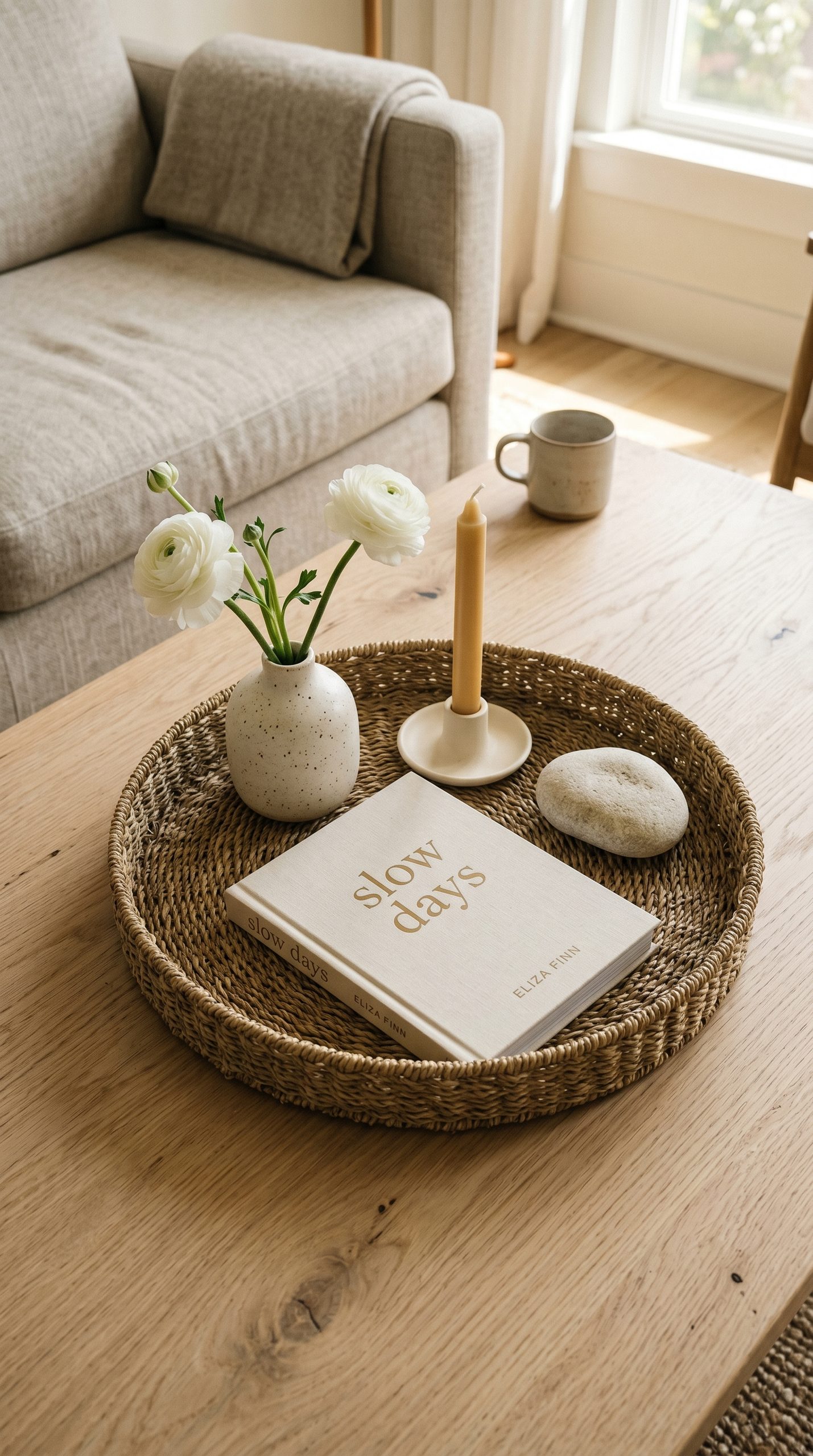
A coffee table vignette is one of the easiest ways to signal a seasonal shift in your living room without touching the walls or the furniture. The key is to work with odd numbers and vary the heights of what you put together. For spring, start with a low bowl or tray as your base, then layer in a small bud vase with two or three stems, a smooth stone or piece of driftwood, a slim candle in a ceramic holder, and a single book with an interesting cover.
Choose objects in a palette that reflects the season: soft sage, dusty blush, warm cream, or pale blue. Avoid arranging everything in a perfectly symmetrical line since a slight asymmetry is what makes a vignette feel natural rather than staged. Swap one or two items every few weeks to keep the display feeling current as the season progresses. A fresh flower from the garden or a small bird’s nest found on a walk can refresh the whole arrangement in seconds.
Designer’s Note: The tray or low bowl is the most important piece because it gives the vignette a boundary and stops it from looking like random objects left on a table. Choose one in a natural material like woven seagrass or pale wood.
7. Hang a Botanical Print Gallery Wall
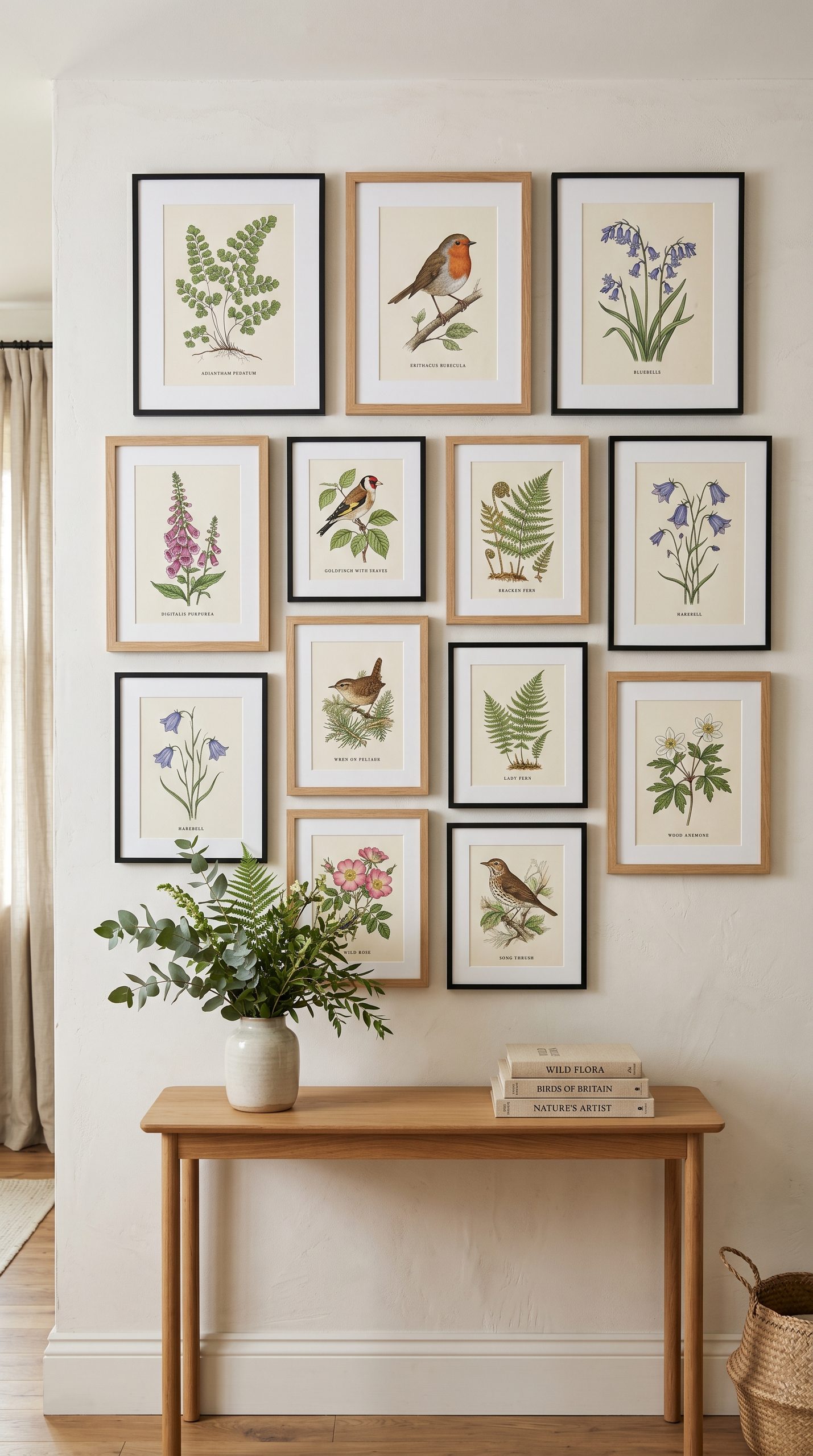
Switching out artwork is one of the quickest ways to change the mood of a room, and spring is the perfect moment to swap moody winter prints for something lighter and more botanical. A gallery wall of framed botanical illustrations brings a sense of the garden inside without requiring a single real plant. Look for vintage-style prints featuring wildflowers, ferns, garden herbs, or birds in natural settings. Mix frame styles slightly, combining thin black metal frames with simple wood ones, for a collected-over-time feel.
Keep the prints in a consistent colour range, mostly greens, creams, and soft blacks, so the wall reads as cohesive even if the frames vary. For layout, cut paper templates to the size of each frame and tape them to the wall before committing to any nail holes. Spend time adjusting the arrangement until you find one that feels balanced. A mix of portrait and landscape orientations adds visual rhythm, and including one slightly larger anchor print in the centre keeps the whole wall from feeling scattered.
Designer’s Note: Free printable botanical illustrations are available from several print archives online. Print them at home and pop them into frames you already own for a completely zero-cost refresh.
Textiles and Texture Swaps
8. Replace Heavy Curtains with Sheer Linen Panels
Nothing says spring like letting natural light pour into a room, and swapping heavy lined curtains for sheer linen panels is the single biggest visual change you can make to a room in about twenty minutes. Linen sheers filter the light beautifully, giving the room a soft, warm glow rather than a harsh brightness. They move in any breeze from an open window, which adds a sense of life and movement that heavier curtains simply cannot give you.
Hang them as high as possible on the wall and let them drop to the floor, ideally with a gentle pool of fabric. This elongates the room visually and makes ceilings feel higher. In an undyed or very pale natural linen, these curtains work with almost any existing colour scheme and furniture style. They are a genuinely versatile investment that will work through spring and summer and can be layered with a heavier panel again in autumn. Look for options with a simple eyelet or rod pocket heading to keep installation straightforward.
Designer’s Note: If buying new curtains is not in the budget right now, try looping a length of inexpensive cotton muslin over your existing curtain rod. It is not a permanent solution but it costs almost nothing and the effect is surprisingly good.

9. Layer in a Woven Rattan or Seagrass Rug
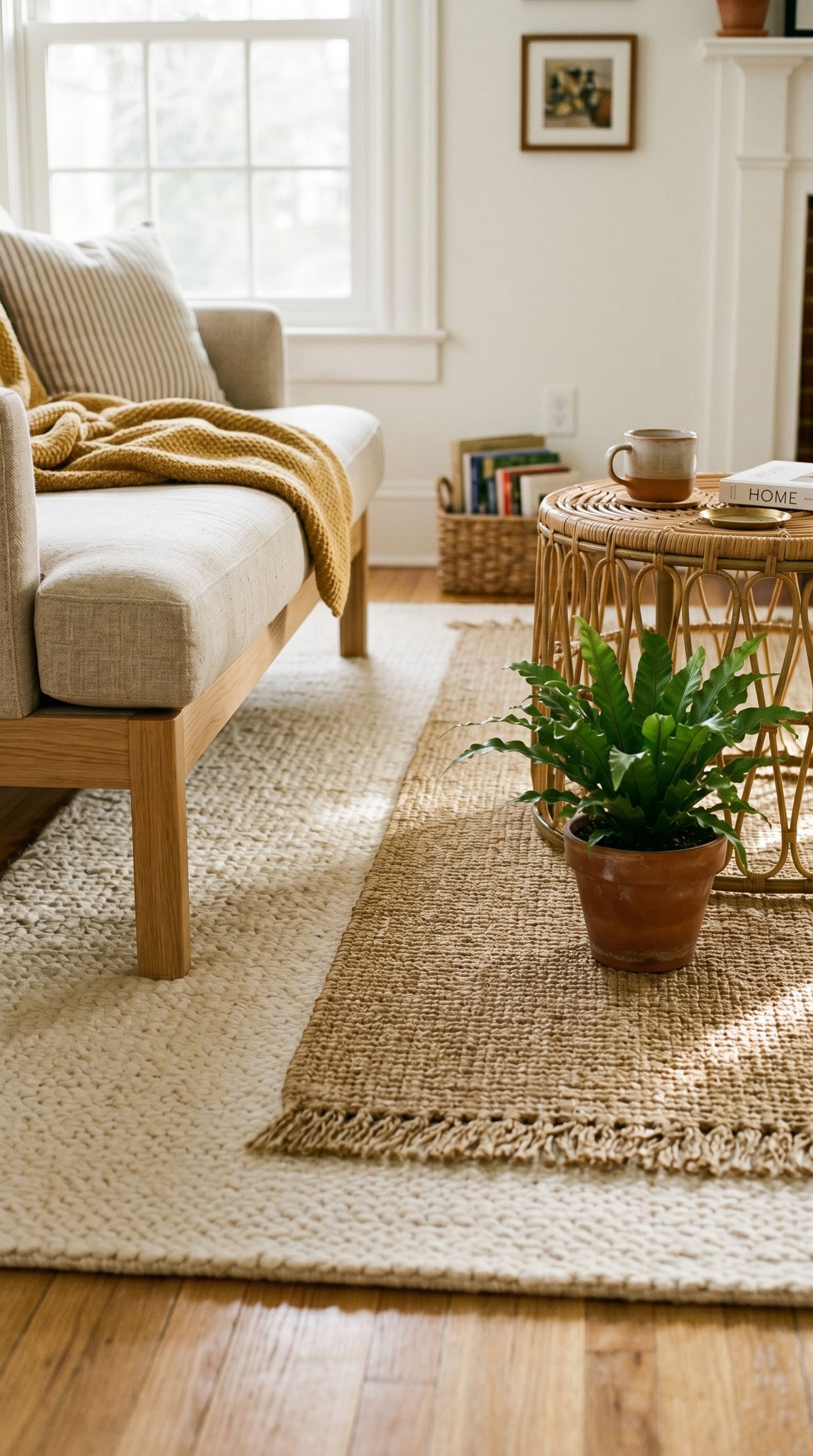
Rattan, seagrass, and woven jute rugs have had a moment in interior design for a while now, and that is because they genuinely work. For spring, layering a flat-weave seagrass rug over your existing rug, or using one as the main rug in a hallway or kitchen, immediately brings a texture that reads as light, natural, and seasonal. The tone of these rugs, usually a warm golden green or sandy beige, works with almost every colour palette.
In a living room, layer a smaller natural fibre rug over a larger plain rug to add depth and interest underfoot without covering up something you love. In a bedroom, a seagrass runner on either side of the bed works beautifully for spring and summer, giving your feet something warm and textured to land on in the morning. These rugs are generally more affordable than wool or synthetic alternatives, and their durability makes them a sensible investment for a high-traffic area.
Designer’s Note: Seagrass rugs can feel slightly coarser underfoot than wool. If texture sensitivity is a concern, opt for a tightly woven jute instead, which has a softer feel while still giving you the natural, spring-appropriate look.
10. Swap Your Cushion Covers to a Spring Palette
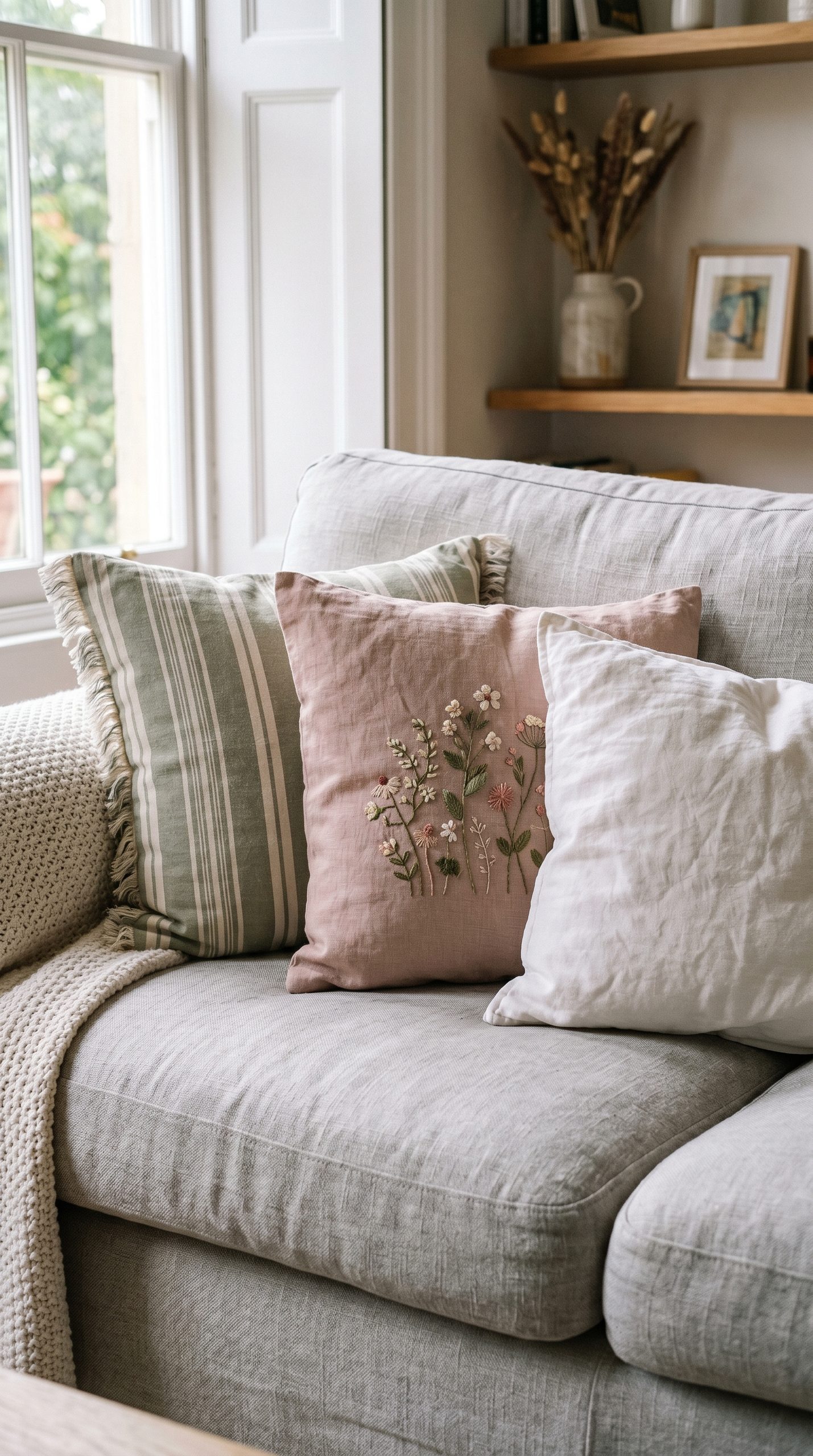
Cushion covers are one of the most cost-effective ways to shift a room’s mood entirely. If you are holding on to velvet or heavily textured cushions from winter, spring is the moment to swap them out for something lighter. Look for cushion covers in washed linen, printed cotton, or embroidered muslin. Colours that are working particularly well right now include soft apricot, pale cornflower blue, warm white, faded sage, and a dusty mauve that sits between pink and grey.
Rather than buying a full matching set, mix two or three different prints or textures that share a colour story. A striped linen cover next to a simple embroidered floral next to a plain washed cotton in a complementary tone creates a layered, interesting sofa rather than something that looks like it came pre-packaged. Keep your cushion insert pads and just change the covers seasonally. It is a fraction of the cost and takes up almost no storage space compared to whole cushions.
Designer’s Note: Store your winter cushion covers in a flat vacuum bag under the bed. They take up almost no room and will be ready to pull out again when the temperature drops, which means the seasonal swap costs you nothing after the first year.
11. Add Gingham and Stripe Patterns to the Dining Room
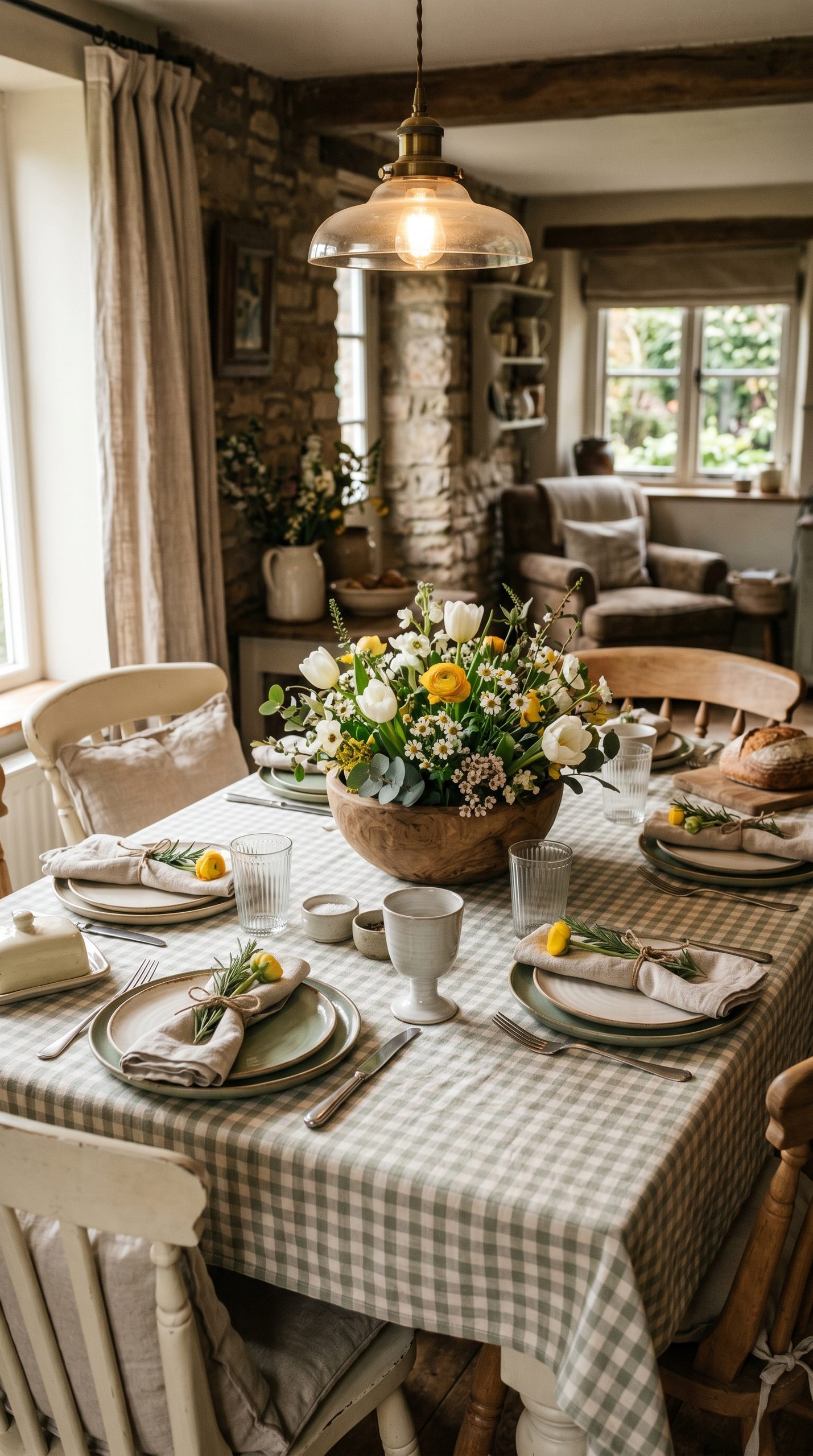
Gingham and stripes are having a genuine moment in interior design right now, and it is easy to see why. They are cheerful without being childish, graphic without being cold, and they instantly signal spring and summer without being overtly seasonal. The dining room is one of the best places to introduce these patterns because the table provides a natural surface to work with. A gingham tablecloth in a muted sage and cream, or a striped cotton runner in pale blue and white, immediately freshens up the space.
For a more layered look, pair the tablecloth with mismatched ceramic plates in complementary colours and linen napkins in a solid tone pulled from the check. Tie the napkins with a piece of jute twine and tuck in a sprig of rosemary or a small wildflower for a finishing touch that feels effortless but considered. If you prefer to keep the table clear most of the time, gingham cushion covers on dining chairs or a striped seat pad achieve the same effect with no setup required for every meal.
Designer’s Note: Gingham works best in muted, dusty tones for an interior setting. Avoid very bright or highly saturated checks, which tend to read more like picnic tablecloths than considered home decor.
Room-by-Room Refreshes
12. Refresh the Entryway with a Spring-Inspired Welcome
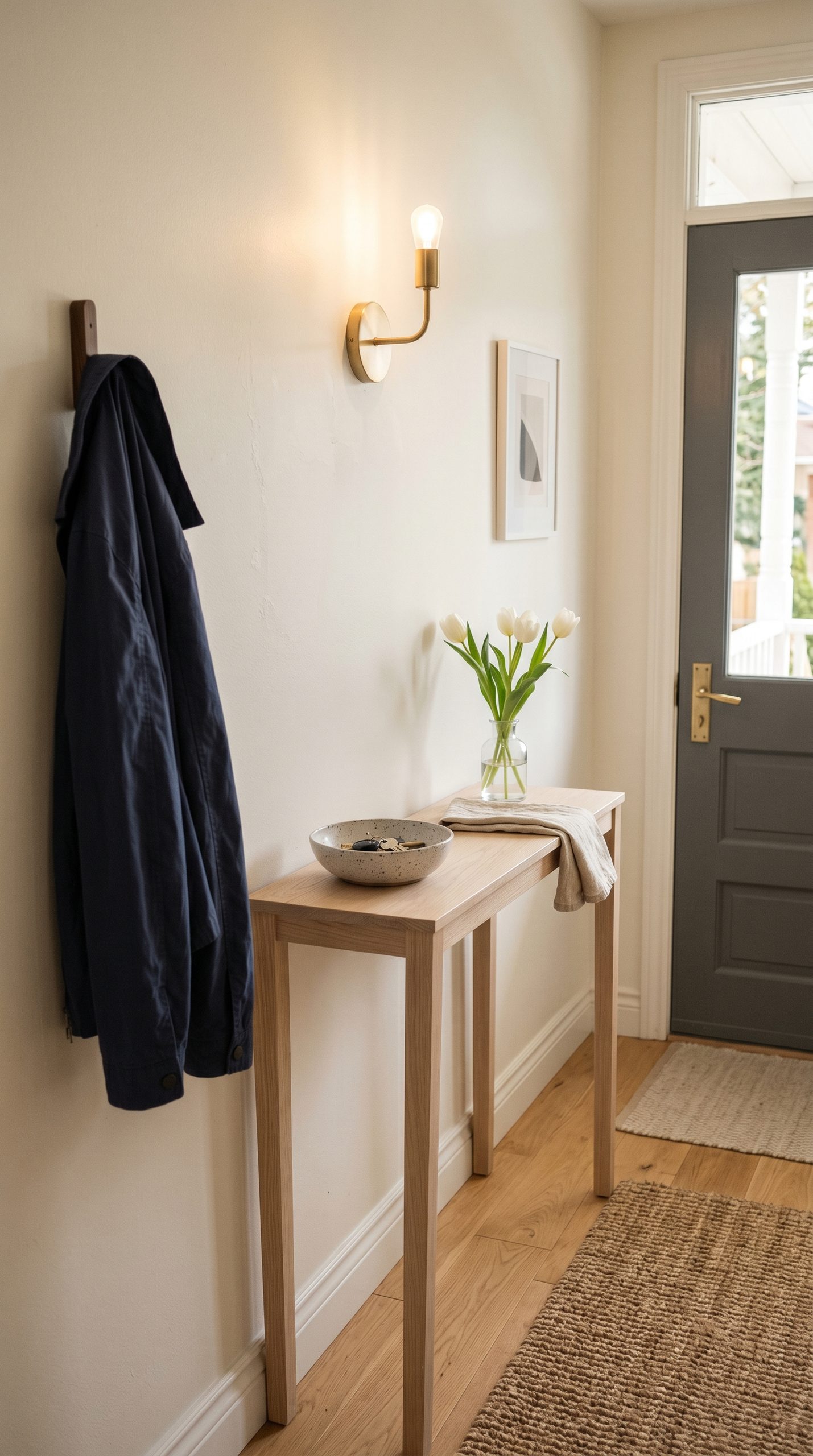
Your entryway is the first thing you and your guests see when they come inside, so it is worth giving it a proper spring update even if the rest of the house is a work in progress. Start with the front door itself if you can. Painting it in a fresh colour, a deep racing green, a warm sage, a faded blush, or even a glossy black, makes an immediate difference to kerb appeal and sets the tone before anyone steps inside. If painting is not an option, a new door handle in aged brass is a surprisingly impactful upgrade.
Inside the entryway, swap out any dark or heavy accessories and bring in something lighter. A small console table styled with a ceramic bowl for keys, a bud vase with one or two cut stems, and a neatly folded linen cloth creates a welcoming first impression. Swap out the doormat for something in a natural fibre with a simple pattern. Add a hook for lightweight spring jackets. If space allows, a slim floor vase with dried pampas or fresh eucalyptus in the corner adds height without taking up floor space.
Designer’s Note: Keep the entryway clear of clutter above all else. A beautifully styled but minimal space always reads as more welcoming than a crowded one, no matter how nice the individual pieces are.
13. Give the Bedroom a Light and Airy Makeover
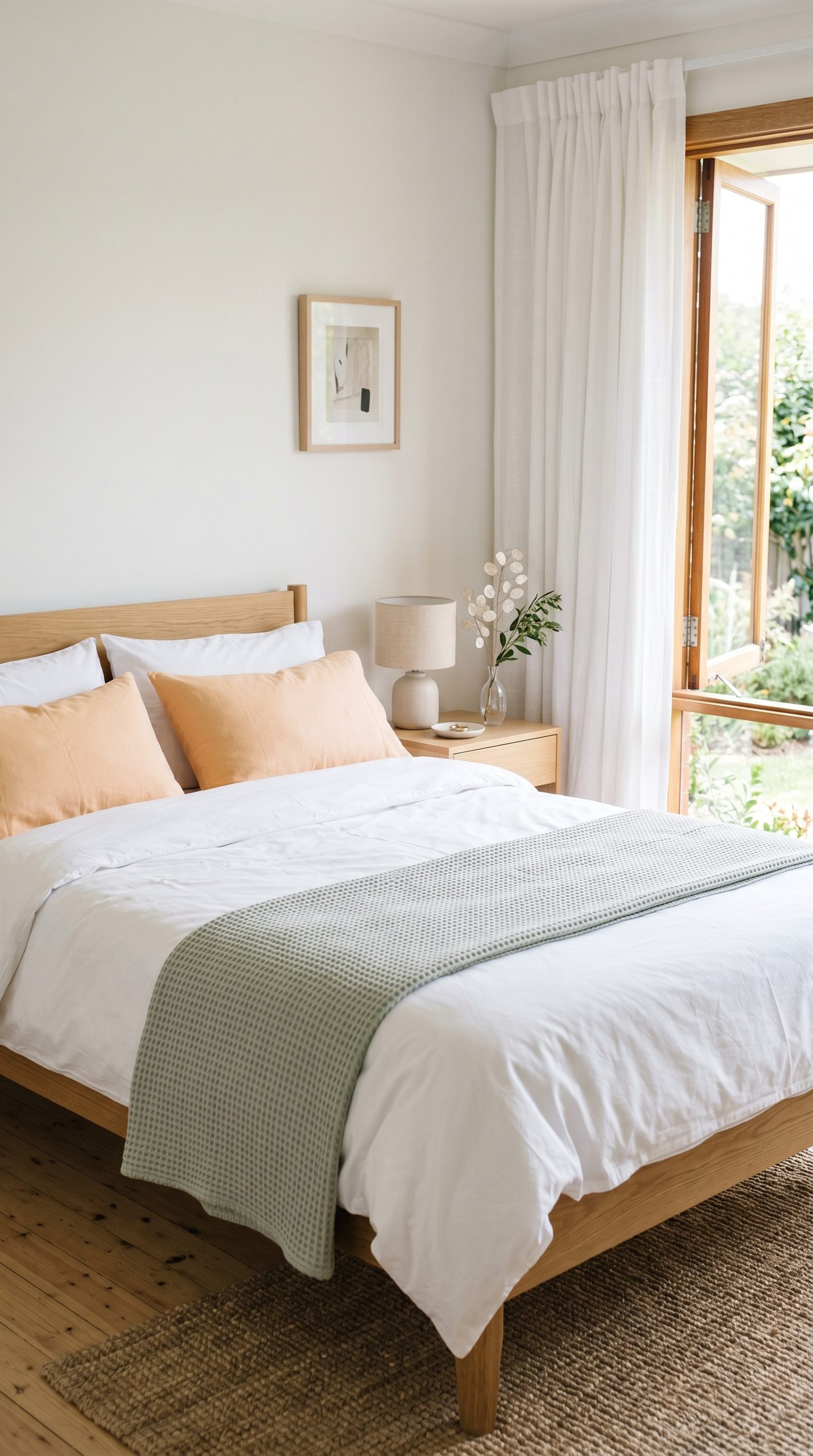
The bedroom is where spring decorating feels most personal because you start and end every day in that room. Swapping to spring bedding is the most obvious starting point, and it makes a bigger difference than people expect. Put away the heavy duvet or weighted blanket and bring out a lighter cotton percale or linen duvet cover in white, pale blue, or soft sage. The visual lightness alone is enough to change how the whole room feels in the morning.
Layer the bed with a light waffle-weave throw folded at the foot rather than tucked in, and add two or three extra cushions in spring colours. Keep the bedside table simply styled with a small lamp, one book, a glass of water, and a single vase with one stem. Strip back anything that does not need to be there. In spring the bedroom benefits from restraint more than any other room because the goal is a sense of airiness and light, not maximalist layering. Open the curtains fully during the day to let the light do the work.
Designer’s Note: Washing your existing bedding with a small amount of white vinegar in the rinse cycle refreshes the fabric, removes any residual mustiness from storage, and softens it noticeably without needing to buy anything new.
14. Update the Bathroom with Spa-Style Spring Touches
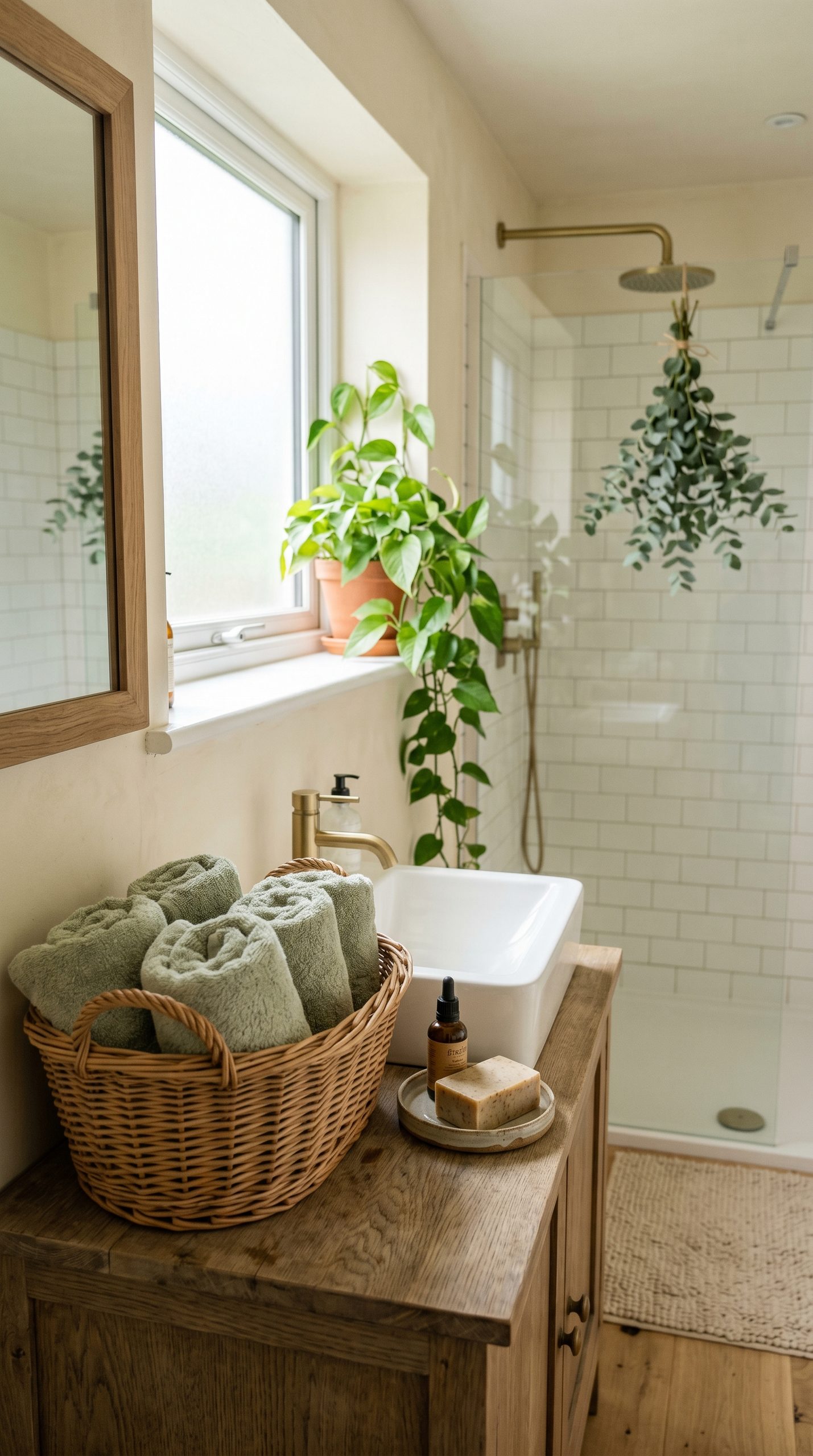
The bathroom is one of the most overlooked rooms in seasonal home refreshes, but it is also one where small changes have an outsized effect. Swapping out your winter towels for lighter ones in a fresh colour, a warm white, pale moss green, or a soft dusty blue, immediately shifts the whole atmosphere. Display them folded neatly on an open shelf or rolled in a basket on the floor rather than hanging them haphazardly on a rail. The simple act of folding or rolling towels the way you would in a hotel makes the bathroom feel more considered.
Add a small ceramic tray near the sink and arrange your hand soap, a small plant like a trailing pothos or a succulent, and a candle or diffuser on it. This creates a little moment of intentionality that makes the bathroom feel curated rather than functional. If your bathroom gets any natural light, a small plant on the windowsill is always worthwhile. Eucalyptus hung from the shower head releases a gentle scent in the steam, which is one of the simplest and most effective bathroom upgrades there is.
Designer’s Note: Replace liquid soap in a plastic dispenser with a beautiful bar of natural soap on a small ceramic dish. The visual upgrade is significant and the cost difference is minimal.
15. Rethink Your Living Room Mantel for the Season
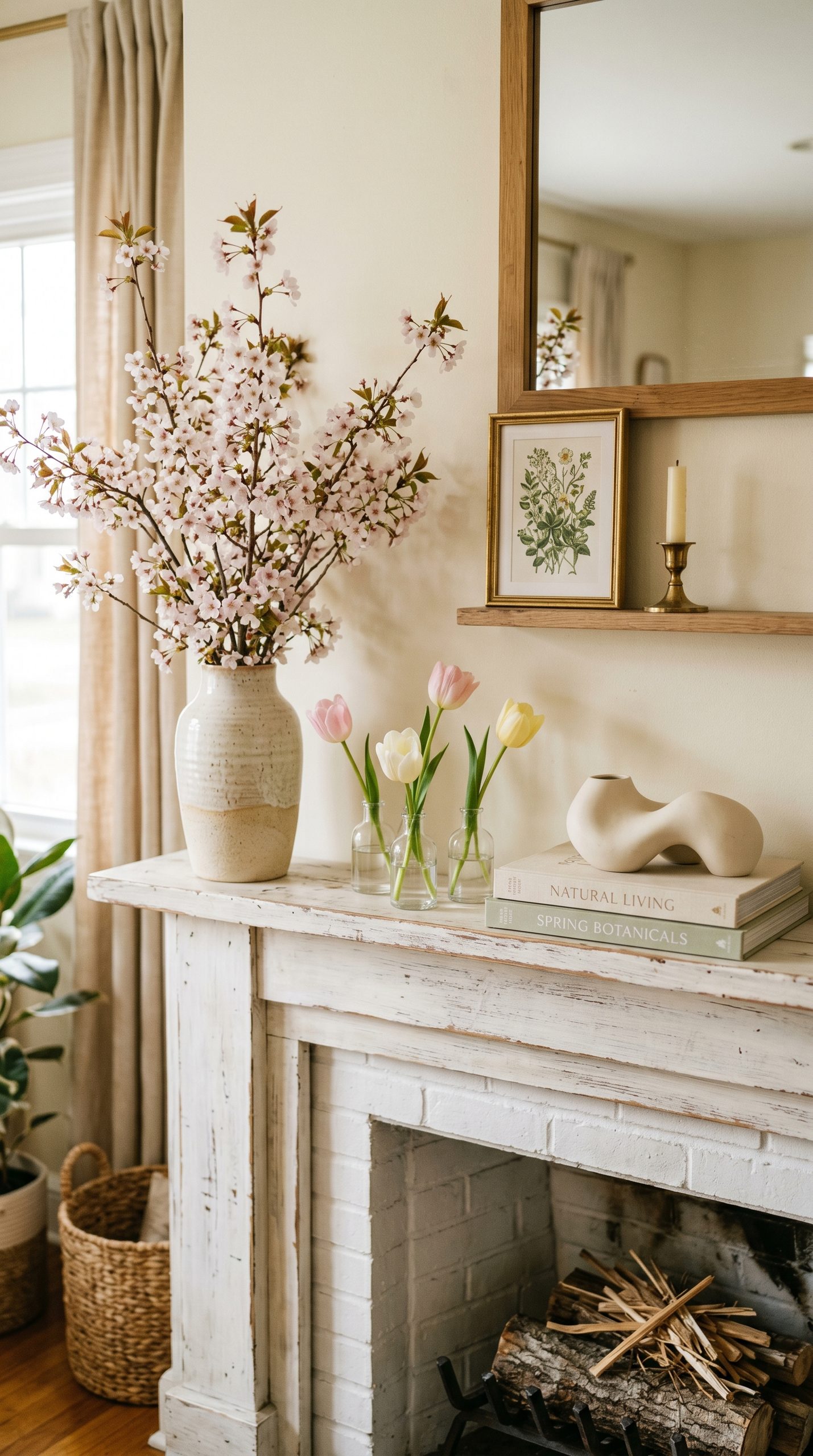
If your mantel has been holding candles and dark ceramic pieces since October, it is well overdue a spring reset. Clear everything off and start from scratch with a lighter, more nature-forward arrangement. Begin with a large mirror or a piece of artwork propped against the wall behind the mantel as a backdrop. From there, build an asymmetric arrangement using a mix of heights. A tall ceramic vase with flowering branches on one side, a small cluster of bud vases with single stems in the middle, and a low sculptural object on the other.
Keep the colour palette consistent. Cream, green, blush, and natural wood tones work together beautifully for a spring mantel without looking too themed or predictable. A few small books stacked horizontally can add height variation while also making the display feel personal. Avoid over-crowding the mantel since leaving some breathing space between objects is what makes each piece read clearly. Change the flowers or stems as the season progresses to keep the display feeling fresh.
Designer’s Note: If you do not have a fireplace, the same principle works on a long console table, a deep windowsill, or even the top of a bookcase. The arrangement logic is the same regardless of the surface.
Lighting and Ambience Updates
16. Swap Warm Bulbs for a Daylight-Balanced Option in Key Rooms
In winter, warm-toned bulbs create a cozy atmosphere that is exactly what you want. But in spring, that same warmth can make a room feel slightly oppressive or dim when you are craving brightness. Swapping your main overhead bulbs for a daylight-balanced option, around 4000K rather than 2700K, in workspaces, kitchens, and bathrooms can make those rooms feel noticeably fresher and more energised. You are not changing the fixture, just the bulb, which costs a few pounds.
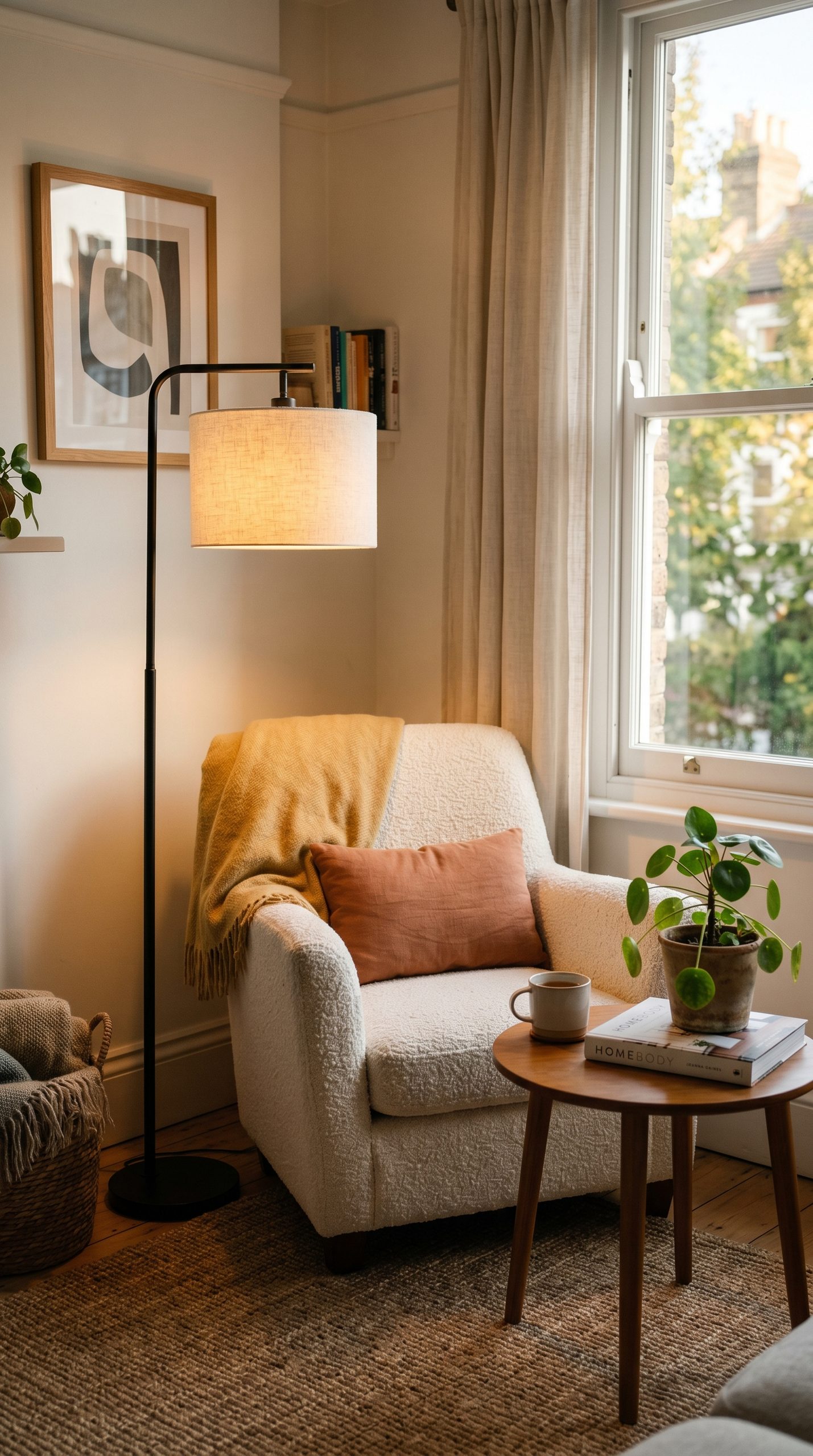
For living rooms and bedrooms, keep the warmer bulbs but supplement them with a couple of additional light sources. A simple floor lamp in a corner you have not previously lit can transform how a space feels in the evening, adding depth and making the room feel larger. Table lamps with white or cream linen shades diffuse light in a softer, more even way than bare bulbs and are generally more flattering. Think about your room in layers of light rather than relying on a single ceiling fixture to do everything.
Designer’s Note: Open your blinds or curtains as wide as they will go during the day and move furniture away from windows where possible. No bulb beats actual daylight for making a room feel spring-appropriate.
17. Use Candles and Diffusers to Change How a Room Feels
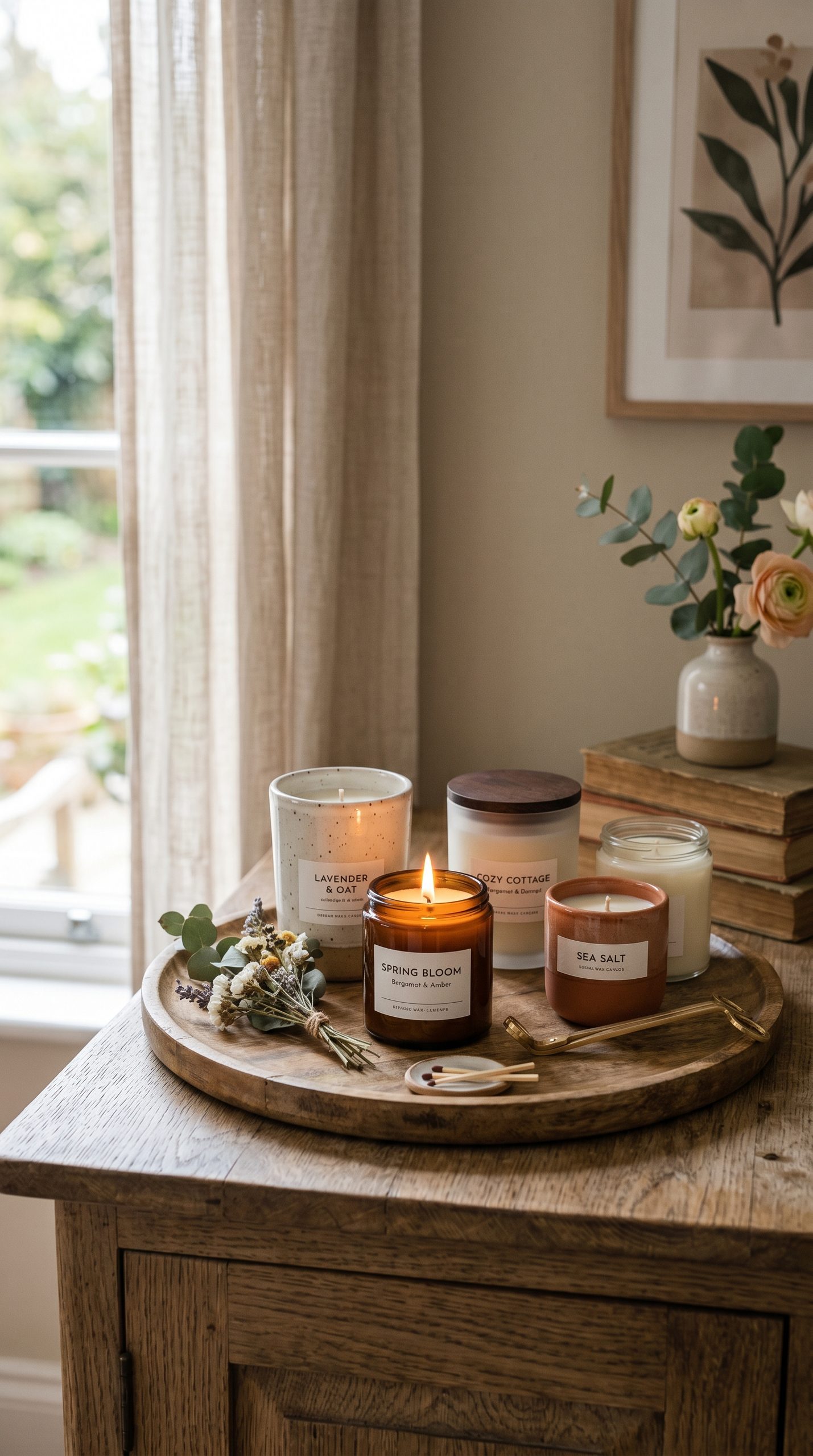
Scent is one of the most underused tools in home decorating, and spring is the perfect season to think about it deliberately. Swapping your heavy amber and spiced winter candles for something lighter, fresh cut grass, green tea, white peony, lemon verbena, or light musky florals, changes how a room feels the moment you walk into it. You do not even have to light the candle for the effect to work since simply having a spring-scented candle in the room adds something to the atmosphere.
Reed diffusers work well in rooms like bathrooms and bedrooms where you want a constant background scent rather than the occasional candlelit evening. For the living room, a soy wax candle in a simple glass or ceramic vessel looks beautiful as a decorative object even when unlit. Display candles on trays, in groups of different heights, or as part of a larger vignette. The vessel itself matters, so choose ones you would be happy to look at even when the wick is cold.
Designer’s Note: Open a window when you burn a candle and the scent will drift through more of your home. Fresh air combined with a spring-scented candle is one of the simplest seasonal sensory experiences you can create.
Vintage Finds and Character Pieces
18. Source One Vintage Ceramic Piece for a Seasonal Display
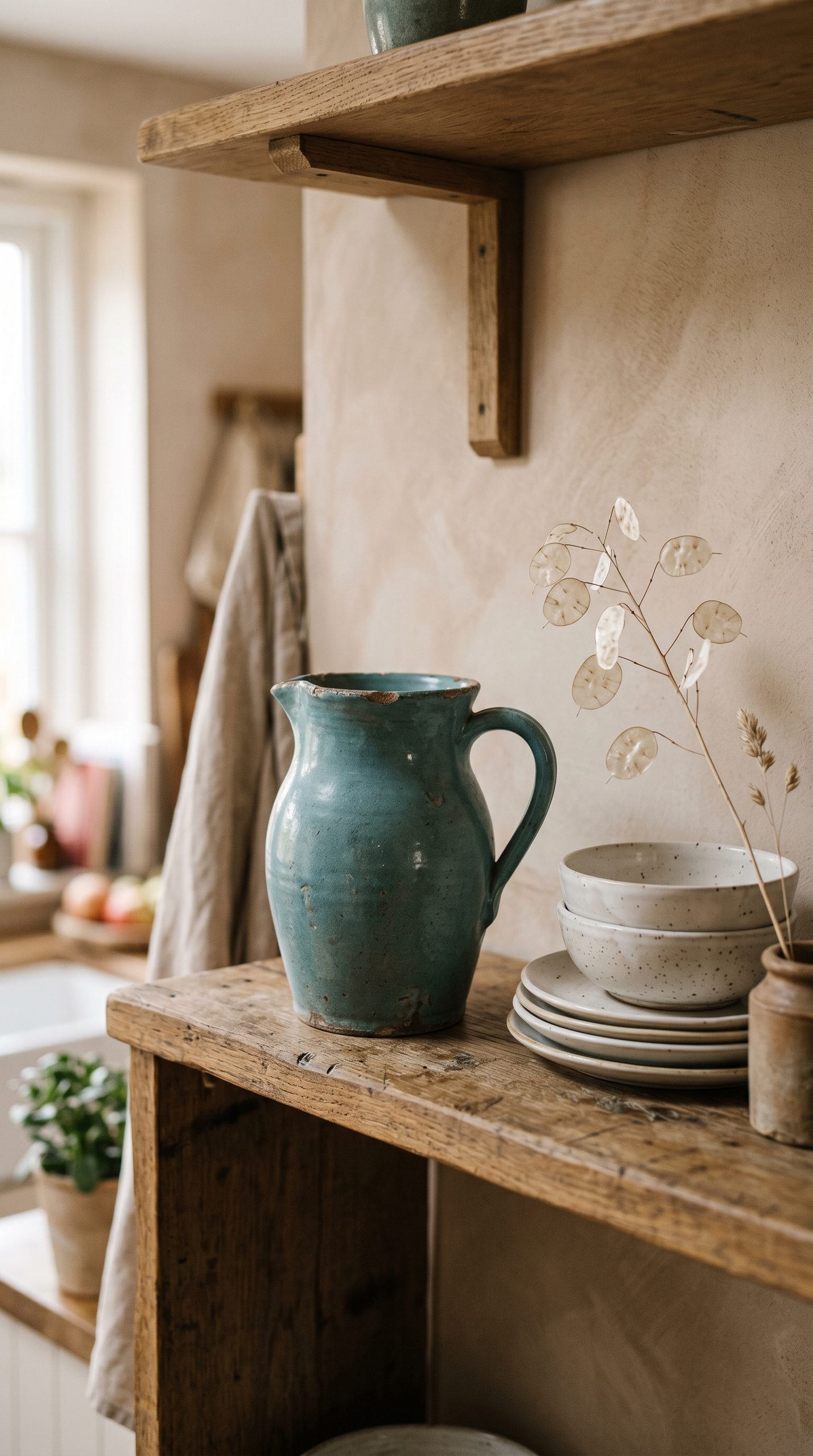
One of the biggest interior design directions for spring 2026 is the move toward pieces that feel collected and personal rather than matching and coordinated. Vintage ceramics are one of the easiest ways to introduce this quality. A single handmade jug, a glazed bowl with an imperfect rim, or a mid-century vase in a dusty teal or warm amber can anchor an entire shelf display and make everything around it feel more interesting by association.
Look for pieces at car boot sales, estate sales, charity shops, or online vintage marketplaces. You are not looking for anything matching or coordinated. You are looking for things that have a sense of character, a slightly irregular glaze, a lovely weight in the hand, a shape that feels different from what you would find in a high street homeware store. Place your find somewhere prominent, on the dining table filled with seasonal flowers, on the mantel as a statement object, or on a kitchen shelf paired with everyday crockery.
Designer’s Note: The best vintage finds are usually not the most expensive ones. A chipped rim or a slightly uneven glaze adds to the charm rather than detracting from it. Do not overlook imperfect pieces.
19. Rearrange a Room Using Furniture You Already Own
Before buying anything new for spring, try rearranging the furniture you already have. This is one of the most overlooked decorating moves because it feels too simple to be effective, and yet it genuinely works. Moving a sofa away from the wall, angling two chairs toward each other, pulling a bookcase from a dark corner into a brighter spot, or swapping a bedroom chair from one side of the room to another can make a space feel completely different without spending a penny.
Spring is a good time to rethink the layout of your living room in particular because the light changes significantly as the season progresses. A chair that was perfectly placed for winter afternoon light may now be sitting in direct glare, or conversely a spot that was always dark may now catch the best morning light. Spend a day without any furniture in its usual position and try a few different arrangements before committing. Take photos of each option on your phone so you can compare them properly before moving everything back.
Designer’s Note: Moving furniture toward the centre of the room, even slightly, rather than pushing it all against the walls almost always makes a room feel larger and more intentionally designed.
Outdoor Spaces and Front Porch Updates
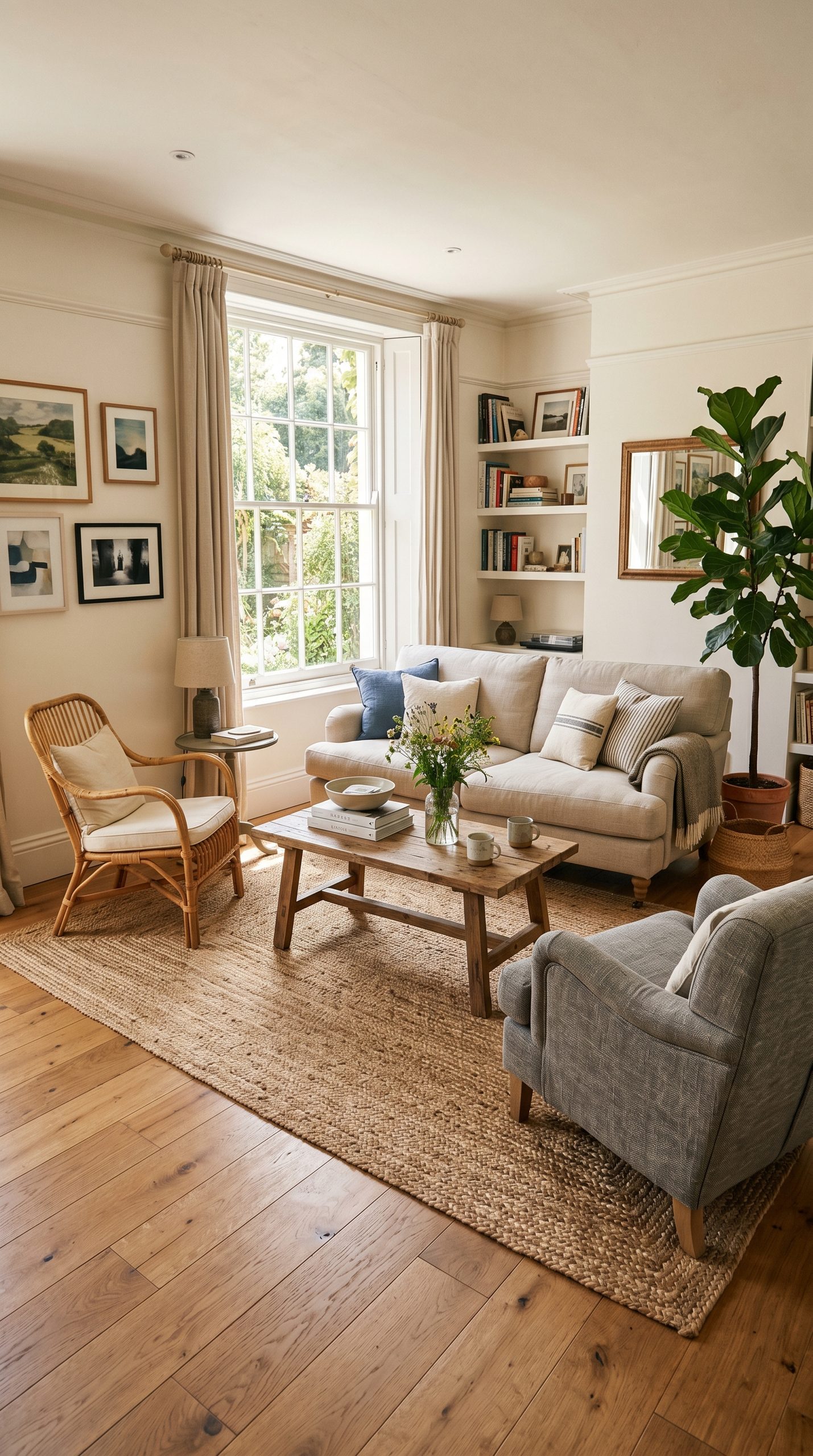
20. Style a Welcoming Front Porch for Spring
Your front porch or doorstep is the first impression your home makes on the world, and spring is the best possible season to make it count. Start by giving the door a clean, or a fresh coat of paint if it needs it. Add a new natural fibre doormat with a simple pattern. Flank the door with two matching pots planted with seasonal flowers, trailing ivy and white pansies for a classic look, or tulips and muscari for something with more colour. Keep the pots at a consistent height for visual balance.
A spring wreath on the door is optional but genuinely lovely when it is made from real or high-quality faux materials. Eucalyptus and white cotton blooms, dried lavender and wheat, or a simple willow wreath with a few small flowering stems all work beautifully. If you have a porch light fixture, make sure the bulb is working and clean the glass if it has become dusty. A lit porch in the evening, even just the soft glow through the front door glass, makes the whole house feel inhabited and welcoming.
Designer’s Note: Consistent pot sizes and a restrained planting palette are what make a front doorstep look professionally styled rather than improvised. Two or three things done well always beats six things done at once.
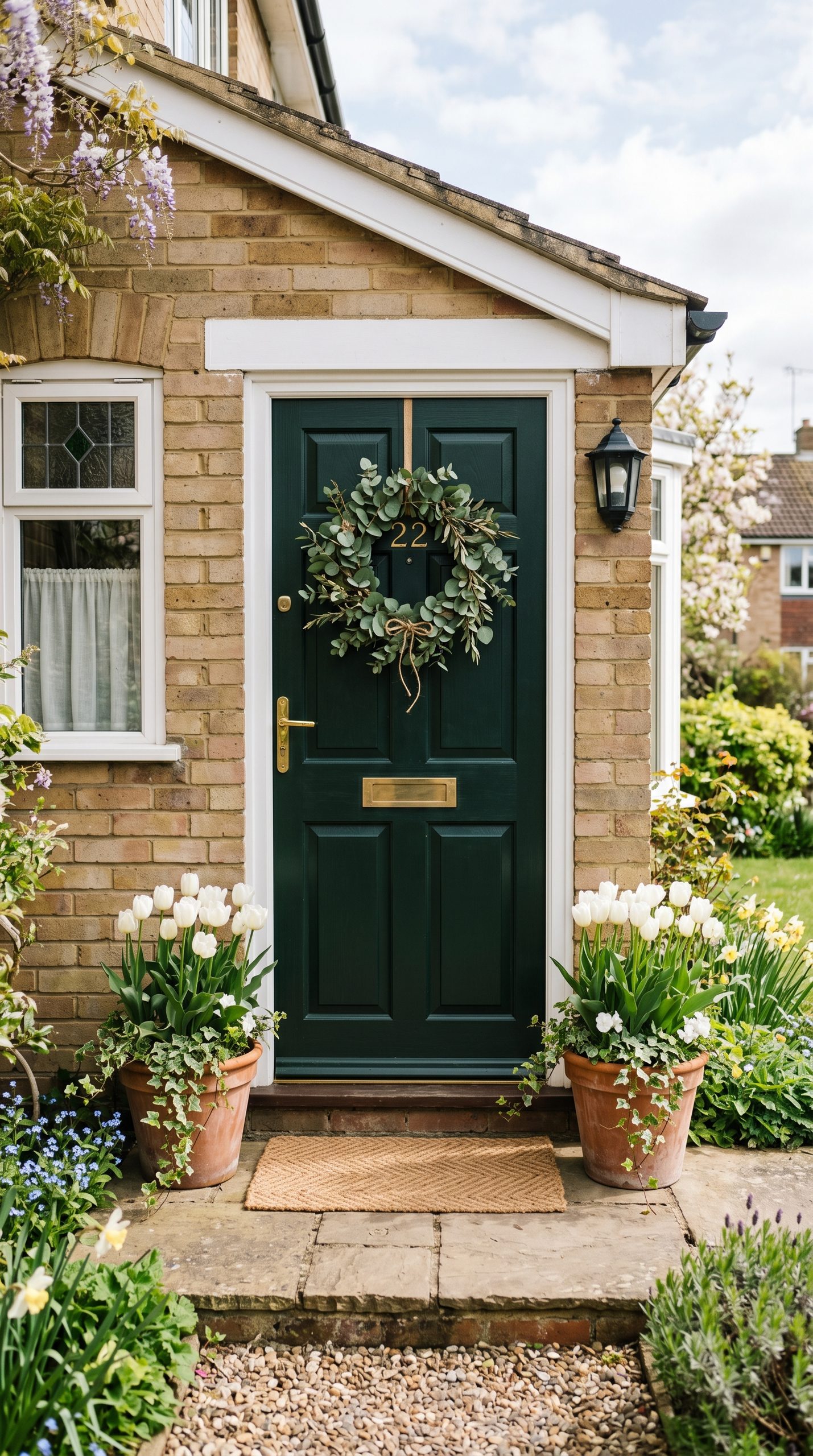
21. Set Up an Outdoor Dining or Seating Area Early in the Season
One of the best things you can do in spring is get your outdoor furniture out of storage and set it up earlier than feels strictly necessary. Even if it is only warm enough to sit outside for a couple of hours in the afternoon, having the space ready and styled makes you far more likely to actually use it. Bring out the table and chairs, wipe them down, and arrange them properly. Add a few outdoor cushions in a spring-appropriate colour and a simple outdoor rug if you have one.
A small outdoor side table with a battery-powered lantern, a few potted plants nearby, and a throw blanket folded over one chair creates an outdoor living space that feels as considered as the inside of your home. For an evening setting, string a few outdoor fairy lights or hang a solar lantern from a branch or hook. The earlier you set this space up and start using it, the more you will get out of the longer spring days as they arrive.
Designer’s Note: Keep a wicker basket near the back door with a throw blanket inside. Being able to grab it quickly when the temperature drops in the evening makes outdoor sitting in spring significantly more comfortable and more likely to happen.
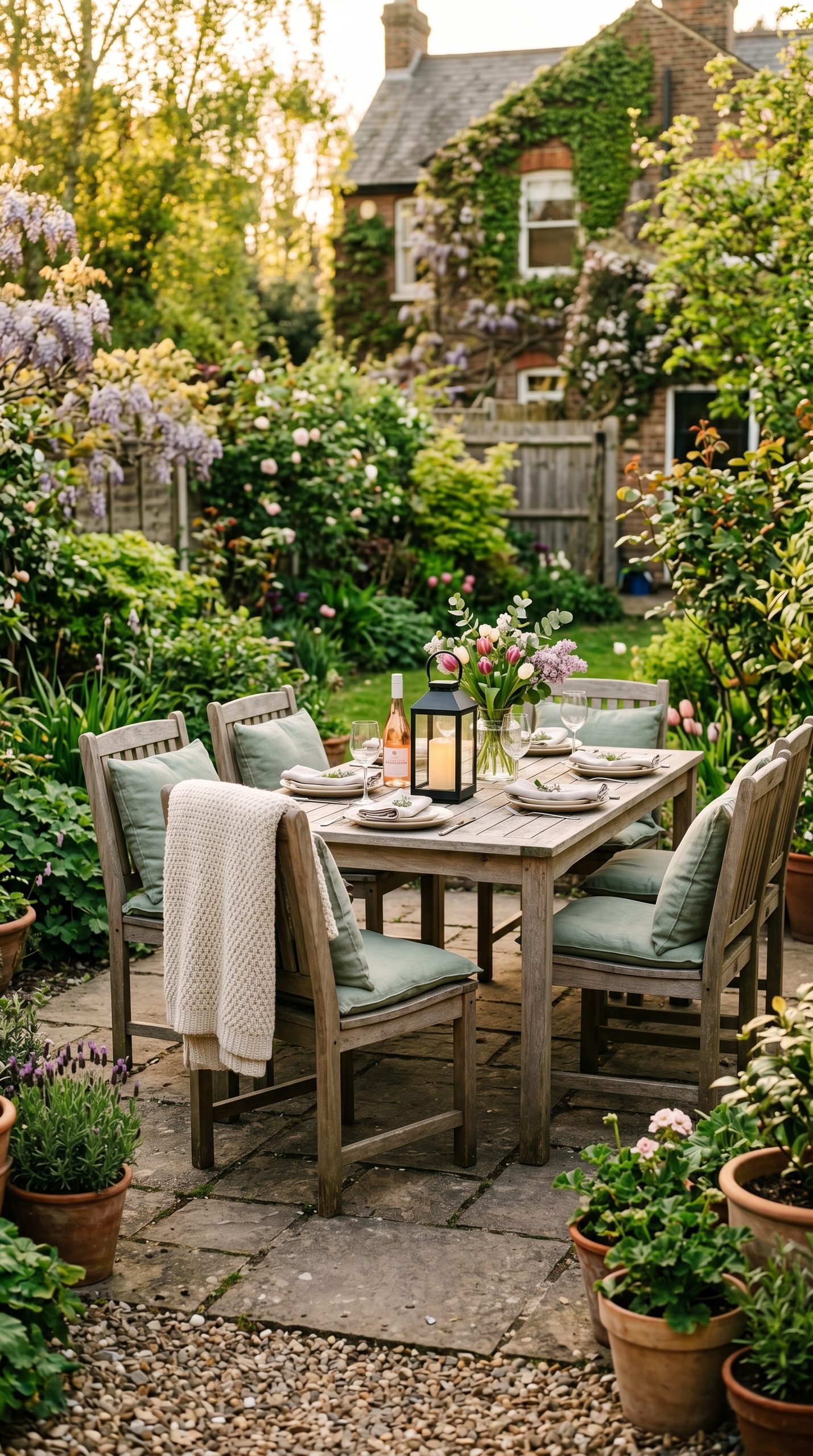
22. Plant a Container Garden for the Patio or Balcony
If you do not have a garden, a container garden on a patio, balcony, or even a deep windowsill is a genuinely satisfying alternative that brings spring colour and life to your outdoor space without needing a square inch of soil. Choose containers in different sizes and heights, terracotta pots, galvanised planters, wicker baskets lined with hessian, or simple wooden crates, and group them together for a layered effect. Mixing container materials and shapes is what makes this look natural rather than uniform.
Plant up a mix of flowering annuals for colour, some trailing plants for softness, and one or two taller structural plants for height. Good spring choices for containers include sweet peas, pansies, snapdragons, nemesia, and lobelia for flowering colour, and ivy, trailing rosemary, or cascading petunias for soft edges. Feed them once a week with a liquid fertiliser and deadhead flowers regularly to keep them blooming through the season. A well-planted container garden can look genuinely impressive from May through September with minimal ongoing effort.
Designer’s Note: Odd numbers of containers always look better than even numbers. A group of three or five pots feels natural and balanced, while two or four can look a little too symmetrical and formal unless that is deliberately the effect you are going for.
23. Decorate with Seasonal Fruits and Vegetables Indoors
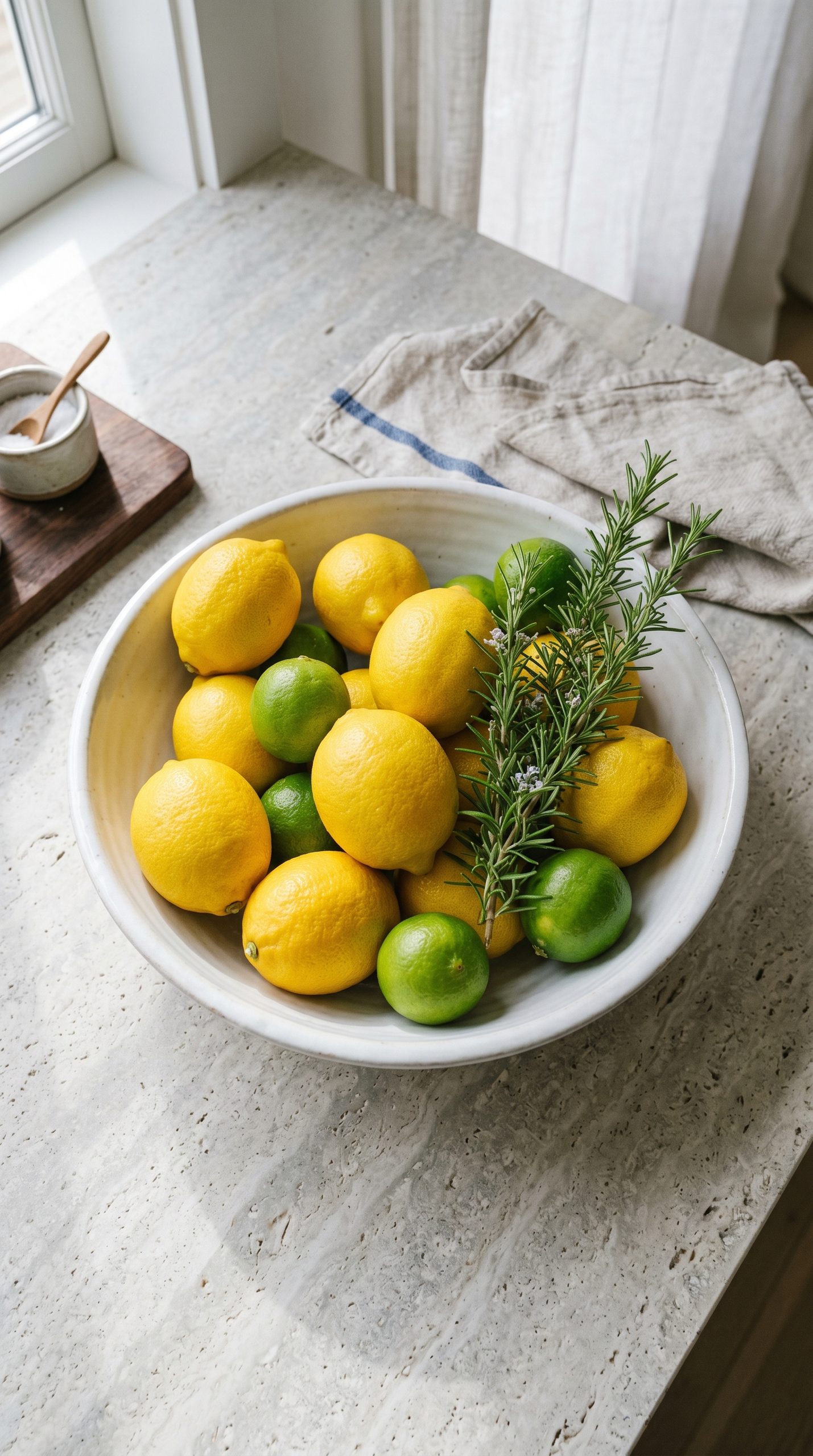
This is one of those ideas that sounds slightly unexpected until you actually try it, and then you realise it is one of the simplest and most effective spring decorating moves there is. A wooden bowl filled with bright lemons on the kitchen counter, a cluster of green apples in a white ceramic dish on the dining table, or a string of dried orange slices hanging in the kitchen window all bring colour, texture, and a genuine sense of the season to your space without any of the usual effort involved in decorating.
The beauty of using real fruits and vegetables as decor is that they are practical as well as visual. You can eat them when you are ready, or use them in cooking, which means nothing goes to waste. In spring, citrus fruits work particularly well because of their colour against neutral kitchen surfaces. A white bowl of lemons or a mix of blood oranges, regular oranges, and a few limes gives you the kind of colour pop that would cost far more if you were trying to achieve it with flowers. Replace them when they start to turn, and the display always looks fresh.
Designer’s Note: Add a few stems of fresh rosemary or thyme tucked in among the fruit for a fragrant, layered display. The combination of colour and scent makes the whole kitchen feel more alive.
Final Thoughts
Spring decorating is not about starting from scratch or spending a lot of money. It is about tuning into what the season is actually asking for, which is lightness, freshness, a little more colour, and a connection to the world outside your windows. The 23 ideas in this article cover everything from a five-minute cushion cover swap to a full room rearrangement, and none of them require a significant budget or a professional’s eye to pull off.
Start with just two or three ideas that feel most relevant to where you live and how your home currently feels. Maybe that means pulling your outdoor furniture out of storage this weekend, or spending a Saturday afternoon at a local car boot sale looking for a vintage ceramic piece. Maybe it is as simple as picking up a bunch of tulips and a pot of fresh basil from the supermarket on your next shop.
The goal is never a perfect, magazine-worthy home. The goal is a home that feels good to be in right now, in this season, at this point in the year. Spring gives you a real and legitimate reason to pay attention to your space again after months of winter. Take it.
Frequently Asked Questions
When should I start decorating for spring?
You can start as early as late February or the beginning of March, even before the weather has caught up. Bringing spring indoors through flowers, lighter textiles, and brighter colours can genuinely improve your mood during the last grey weeks of winter. There is no rule that says you have to wait for the first warm day.
What are the best colours for spring home decor in 2026?
Designers are pointing to soft sage green, warm terracotta, creamy apricot, dusty mauve, and pale cornflower blue as the colours leading spring 2026 interiors. The overall direction is toward warmer, earthier tones rather than the very pale pastel palette of previous springs, so do not feel like you need to stick to baby pink and mint to get it right.
How do I decorate for spring on a tight budget?
Start with what you already own. Rearrange your furniture, swap cushion covers you have in storage, and clear the clutter from surfaces to let what you have breathe. Then add inexpensive seasonal touches, a bunch of flowers from the supermarket, a pot of fresh herbs, a basket of lemons on the kitchen counter. You can refresh your whole home for well under twenty pounds if you approach it thoughtfully.
What plants work well for indoor spring decorating?
Tulips, daffodils, hyacinths, and ranunculus are all beautiful as cut flowers or pot plants for spring. For longer-lasting houseplants, a pothos, a trailing ivy, or a simple fern brings greenery and life without needing much maintenance. Herb plants like basil, mint, and rosemary also double as practical kitchen plants, which makes them excellent value.
How do I make a small space feel brighter for spring?
Light is the most powerful tool you have in a small space. Open curtains fully, swap heavy window treatments for sheer linen panels, and make sure any mirrors are positioned to reflect light back into the room. Add a daylight-balanced bulb in any overhead fixture that feels dim. Keep surfaces clear and decluttered so the light can move around the room unobstructed. A few fresh flowers in a bright colour will do the rest.
Is it worth buying spring-specific decor or should I stick to year-round pieces?
A mix of both is the most practical approach. Invest in pieces that are versatile enough to work across seasons, a good linen throw, quality ceramic vases, natural fibre rugs, and a few solid-coloured cushion inserts. Then supplement these with inexpensive seasonal touches that you swap in and out. Cushion covers, candles, flowers, and a few small accessories are all things you can change without significant cost, and they are what actually give your home its seasonal feeling.