Living Room Looks That Feel Expensive (Without the Price Tag)
There is a moment most of us know well. You walk into your living room, look around, and feel a quiet kind of frustration. Nothing is technically wrong, but nothing feels right either. The sofa is fine. The rug is fine. The whole room is just fine, and fine is exhausting when you spend so much time there. The good news is that a living room makeover does not have to involve a contractor, a credit card bill, or a weekend of regret. The changes that make the biggest visual difference are usually the smallest ones, and most of them cost far less than people expect.
This guide is organized by approach rather than by a random numbered list, because real decorating does not work that way. You tend to tackle a room in phases: walls first, then furniture, then lighting, then the layered details that bring everything together. That is exactly how this article is structured. Each section focuses on a different part of the room, with specific ideas inside it that you can pick up and use right away. Some will cost you nothing. Others might run you twenty dollars. A few might reach into the low hundreds if you decide to go bigger, but the goal throughout is always the same: more style, less spending.
Whether you are renting a flat and cannot paint the walls, or you own your home and just do not have the budget for a full renovation right now, there is something here for every situation. Work through the whole guide or jump to the section that feels most urgent. Either way, by the time you are done reading, you will have a clear plan and a few ideas you are genuinely excited to try.
Walls and Color: The Biggest Bang for the Fewest Dollars
1.Paint One Wall a Deep, Moody Tone
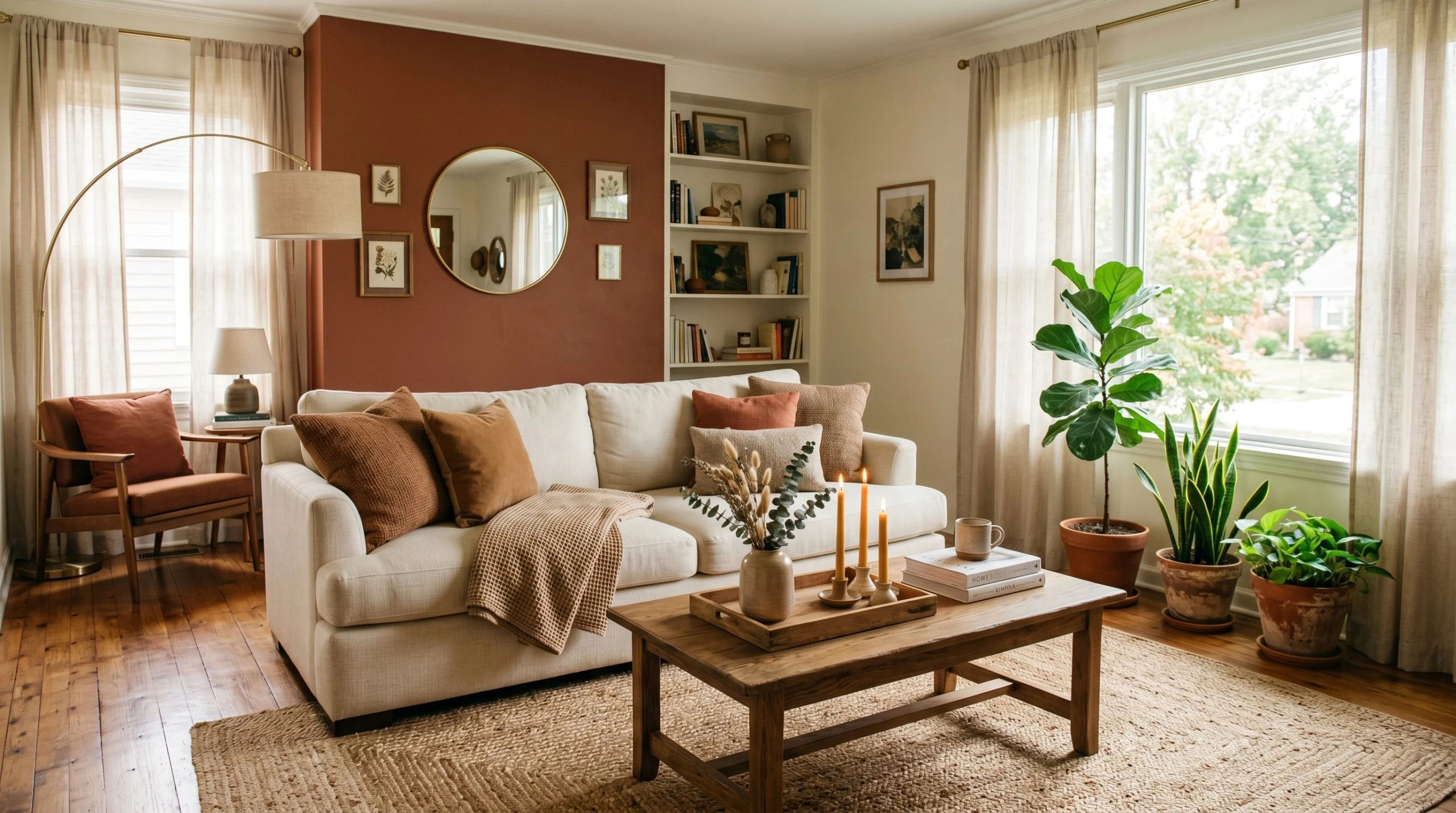
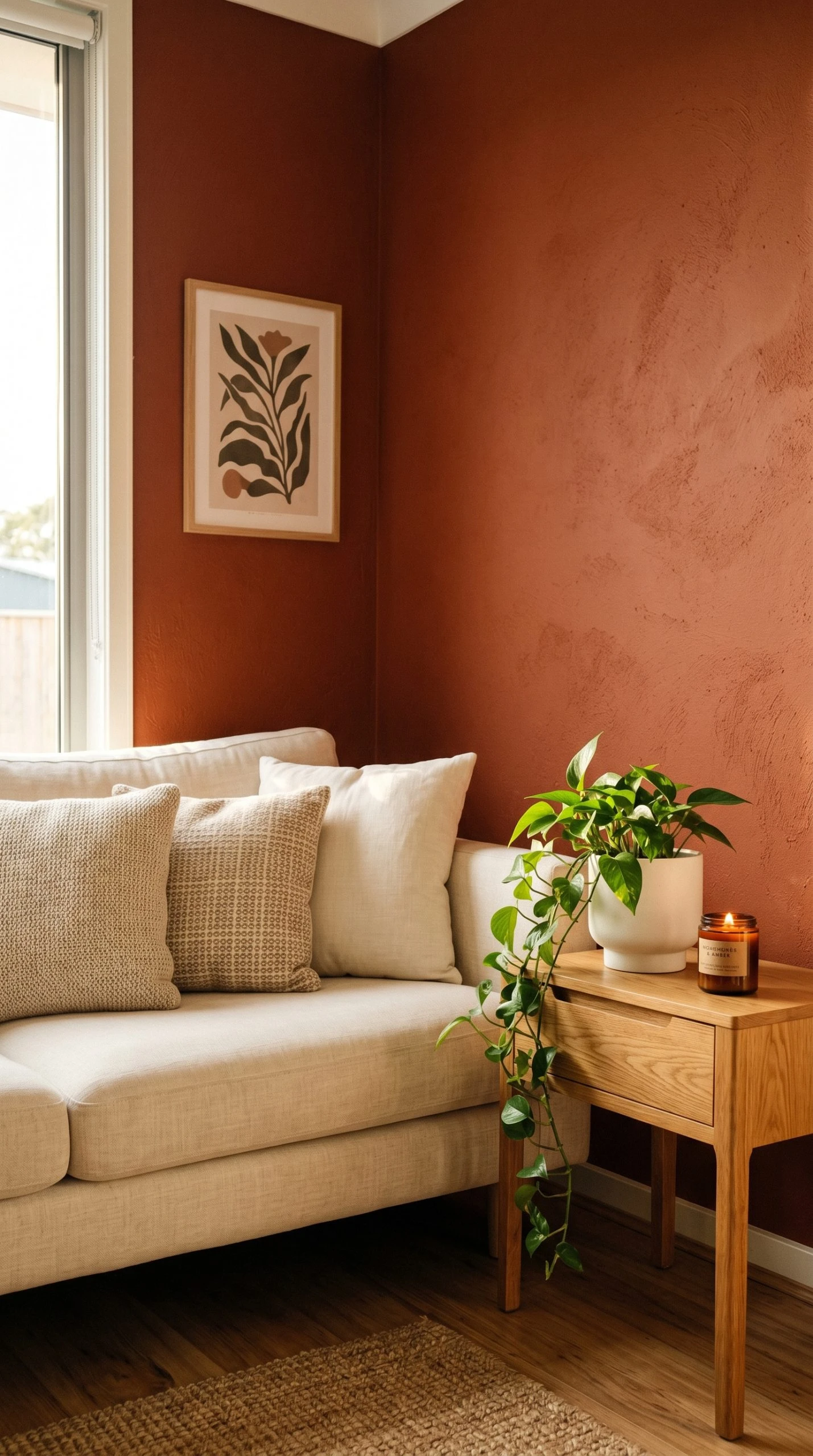
If you have been hesitant about color because it feels like too much of a commitment, painting a single wall is the answer. One accent wall in a rich, saturated shade does more for a living room than repainting the entire space in a safe off-white. The colors that tend to work best in a budget refresh are the ones with warmth built into them: terracotta, deep clay, warm slate blue, forest green, or a chocolatey brown. These shades photograph beautifully and read as deliberate and considered rather than accidental.
The wall you choose matters. The one your sofa sits against is almost always the right call, because it frames the main seating area and becomes the visual anchor of the room. One can of good-quality paint will typically cover a standard accent wall with enough left over for touch-ups. A paint finish in eggshell or satin is easier to wipe clean than flat and has a subtle sheen that feels a little more finished. Use a small angled brush along the edges and a roller for the main surface, and the whole job can be done in an afternoon.
Pair a deep accent wall with a neutral sofa and let the wall do most of the decorative work. You do not need much art on it. A single oversized print in a simple frame, or even nothing at all, can look intentional when the wall color is strong enough. This single change often makes people feel like they have an entirely different room.
Budget Win: A quart of paint covers roughly 100 square feet and costs about ten to fifteen dollars. That is usually enough for one average-sized accent wall, making this one of the highest-impact, lowest-cost updates in the entire guide.
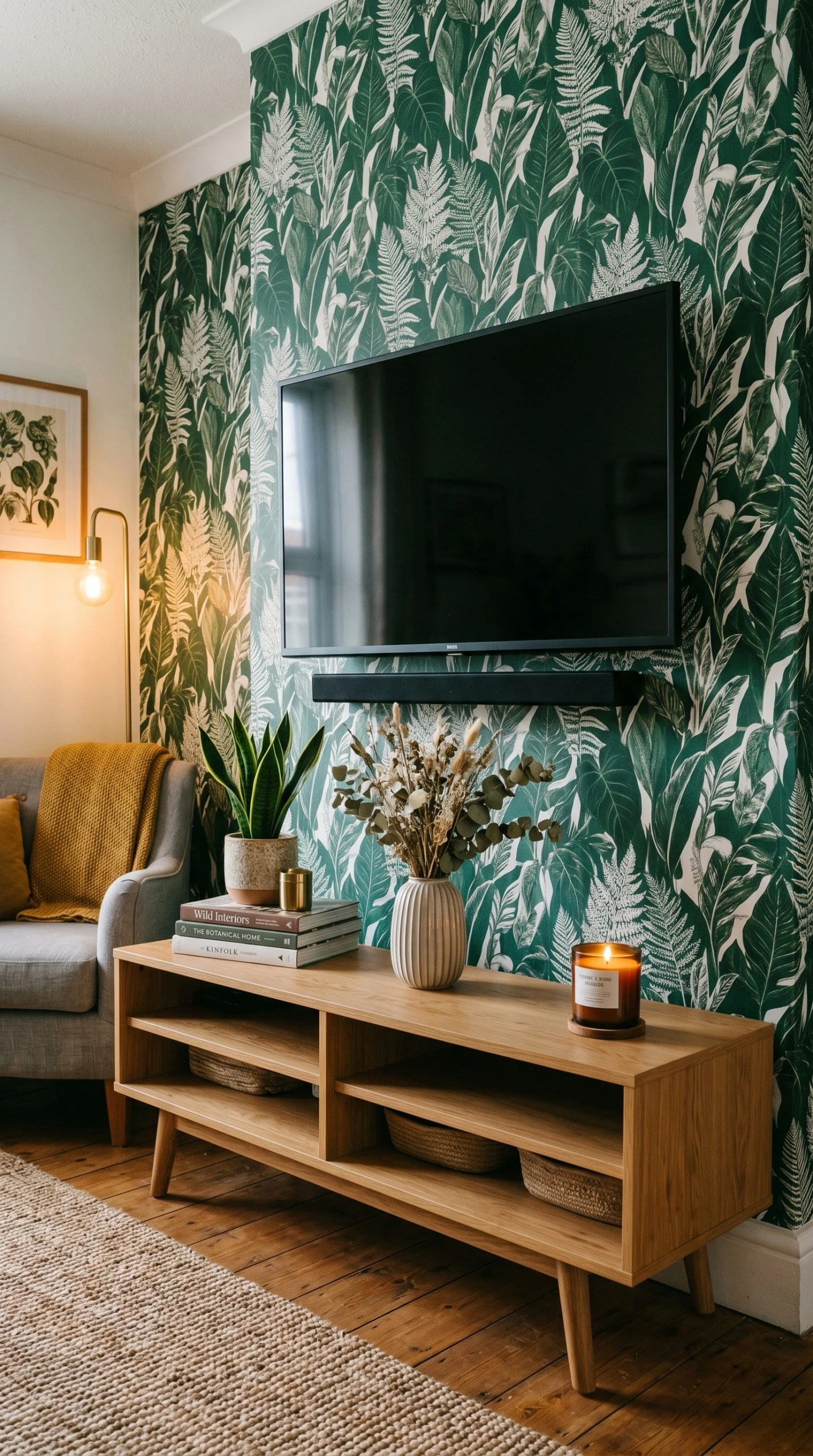
2.Add Peel-and-Stick Wallpaper Behind a Bookshelf or TV Console
Peel-and-stick wallpaper has come a long way in the last few years. The patterns are genuinely good now, and the product is much more reliable than it used to be. Using it behind a bookshelf or along the wall behind a TV console is a way to introduce pattern and texture without committing to an entire wall, and it is perfect for renters who cannot use traditional wallpaper or paint.
A botanical print, a simple geometric, or a textured grasscloth-look paper can all work well in a living room. The key is choosing a pattern that reads as intentional from across the room. Tiny, fiddly prints get lost. Bold shapes and clear contrast show up properly and add visual interest without competing with everything else in the space. Measure your wall section carefully before ordering, and buy a little more than you think you need to account for pattern matching.
The installation process is straightforward but benefits from patience. Start at the top, smooth as you go, and use a credit card or squeegee tool to push out air bubbles. Remove and reposition as needed before pressing firmly, because the adhesive is forgiving at first. The finished result looks far more expensive than the price tag suggests, especially once the shelves are styled and the rest of the room is in place.
Budget Win: A single roll of peel-and-stick wallpaper typically costs between fifteen and thirty dollars depending on the brand. A small accent section behind a media unit or bookshelf usually only needs one or two rolls.
3.Use Paint to Create a Two-Tone Wall Effect
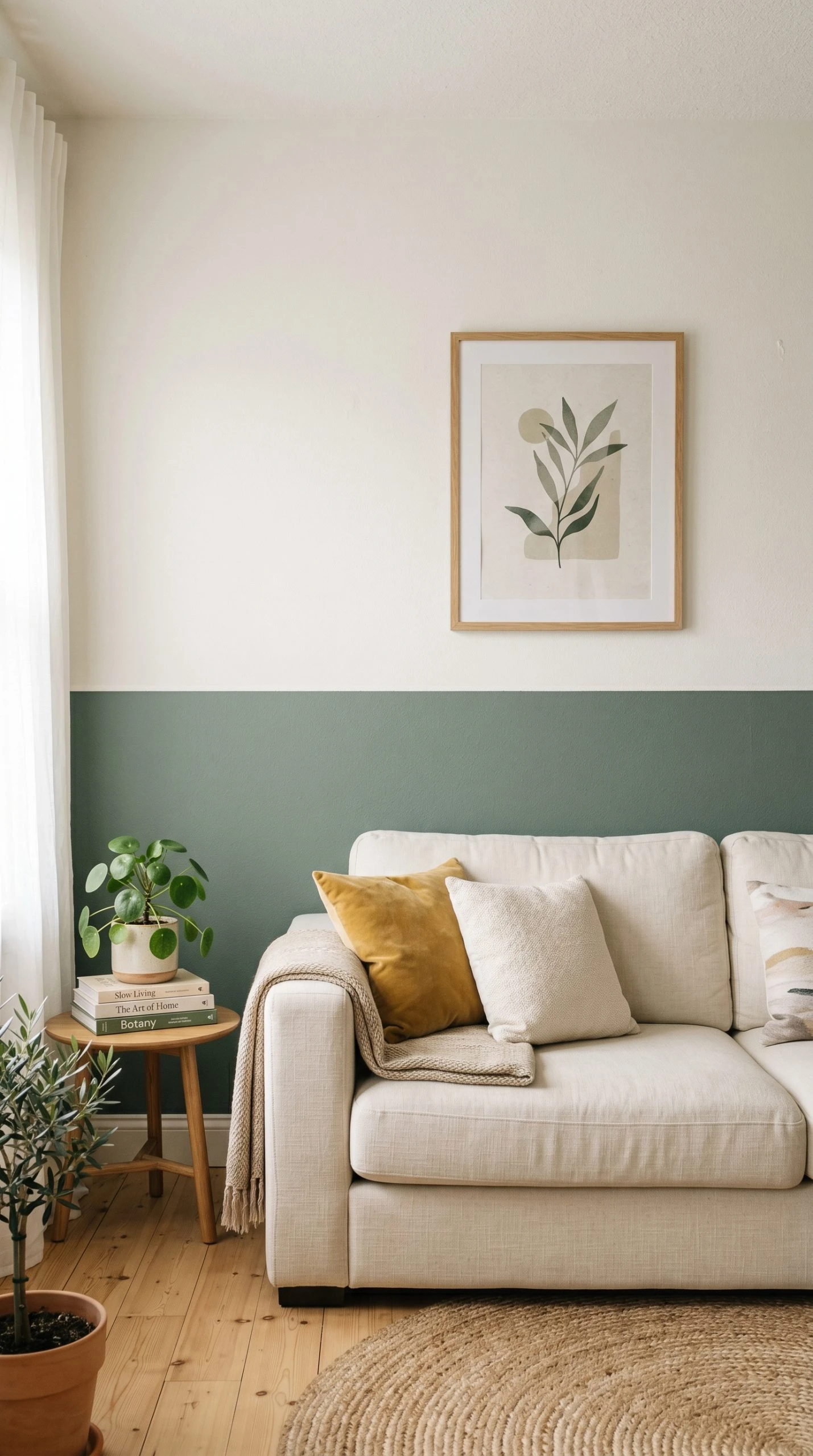
A two-tone wall uses color blocking to add architectural interest to a room that might otherwise feel flat. The most common version divides the wall horizontally, with a deeper color on the lower third and a lighter shade above it, sometimes separated by a strip of trim or a thin painted line. It mimics the look of wainscoting or picture rail paneling without requiring any woodwork or real renovation.
Decide on your dividing line height before you start. Thirty-two to thirty-six inches from the floor tends to work well in most living rooms, sitting at roughly the height of the back of a sofa or the top of a console table. Mark it with painter’s tape, check it with a level, and paint the lower section first. A deep warm greige, dusty sage, or navy below a clean warm white above looks classic and pulled-together. You can also reverse it with a lighter lower half and a more dramatic upper tone for a moodier, more contemporary effect.
This technique works especially well in rooms that feel a little bare or in older spaces where the walls are not perfectly smooth. The horizontal line draws the eye across the room rather than up and down, which can make low ceilings feel less noticeable. It is one of the more creative approaches to a painted wall and one that most people are surprised they had not tried sooner.
Budget Win: Because you are working with two colors in smaller quantities, this update can often be done with two sample-size pots or leftover paint from previous projects, keeping the cost very low.
Furniture and Layout: Work Smarter with What You Have
4.Rearrange the Furniture Around Conversation, Not the TV
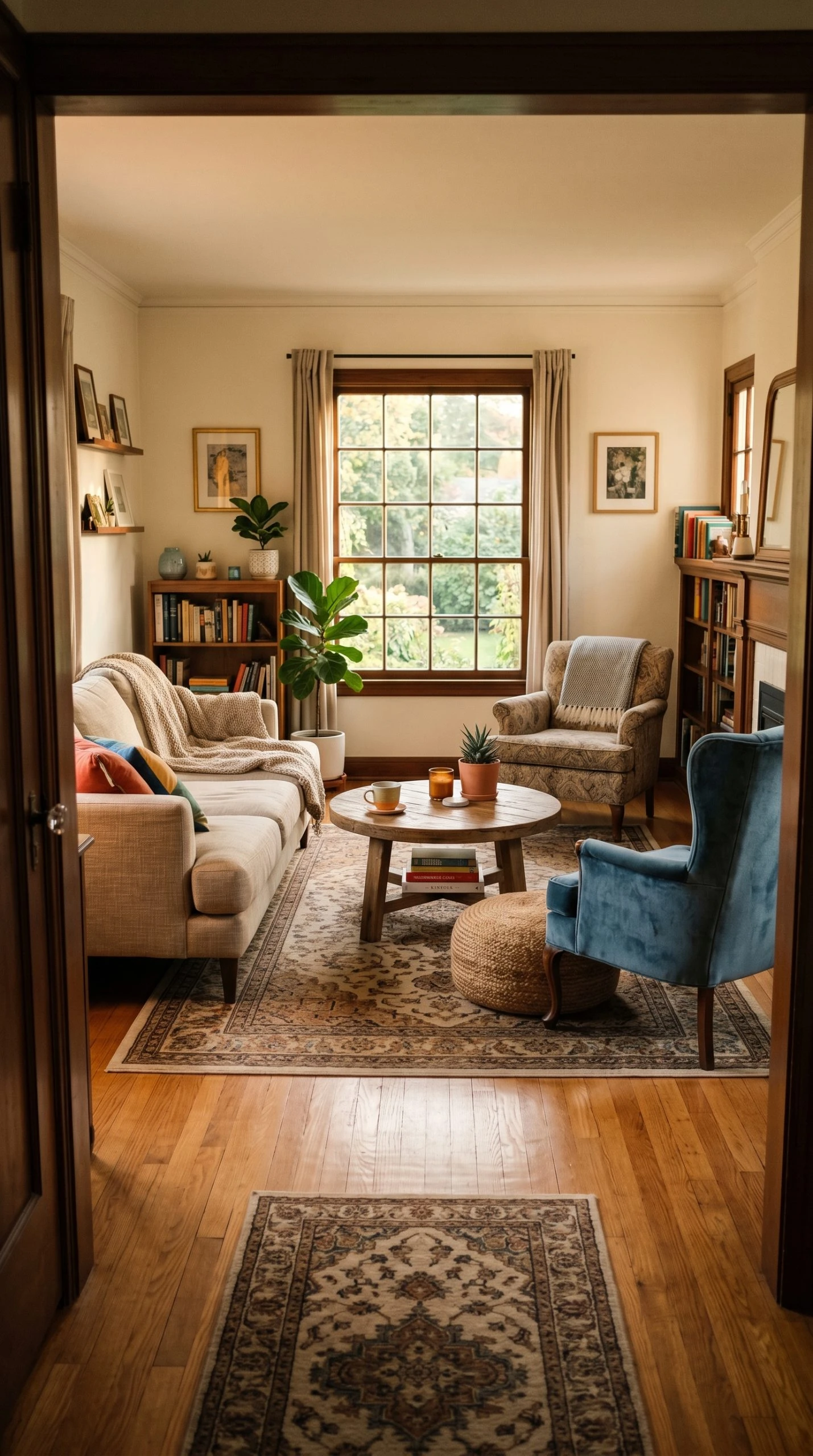
Most living rooms are laid out so that every seat faces the television. It is an understandable default, but it often makes the room feel less like a living space and more like a viewing area. Pulling the sofa away from the wall and angling it slightly, or creating a secondary seating cluster near a window or fireplace, changes the whole energy of the room in a way that no new purchase can replicate.
A good starting point is to clear the room completely and spend a few minutes thinking about how you actually use the space. If you watch television most evenings, the TV should still be visible from the main seating area, but it does not have to be the only focal point. A coffee table centered in the seating group, with chairs pulled in closer than you normally would, creates a sense of intimacy that makes the room feel more inviting. Try floating the sofa at least a foot away from the wall behind it. This is counterintuitive to most people but makes the whole arrangement look more intentional.
Layer in a side table or a pouf near each seat so everyone has somewhere to put a drink. A floor lamp in the corner behind a chair creates a reading nook feeling even in a small room. The goal is for the furniture to feel like it belongs together rather than like pieces that were each placed independently without reference to one another. This entire process costs nothing and can take less than an hour.
Budget Win: Free. Rearranging your furniture costs nothing but time, and the results can be just as dramatic as buying something new.
5.Give Old Furniture New Life with Paint and New Hardware
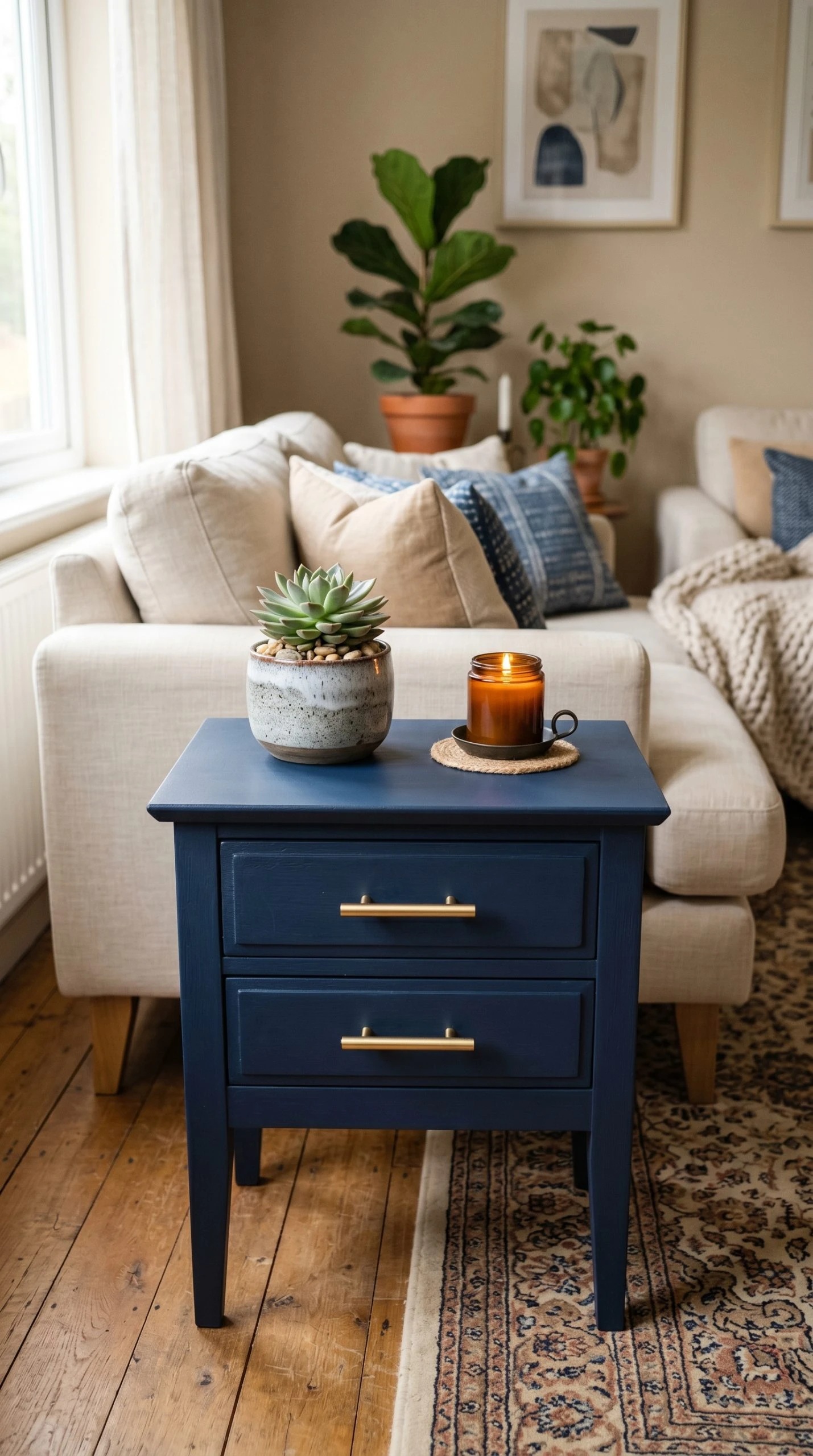
A tired side table, a dated console, or a scratched wooden storage unit can all be updated with a can of furniture paint and a set of new drawer pulls. This is one of those updates that people write off as too much work and then feel great about once they have actually done it. The process is simpler than it sounds, especially with modern chalk-type paints that require minimal prep and adhere well to most surfaces.
Choose a color that works with the rest of your room. A matte black or a deep navy on a side table looks sharp and current. A chalky white or linen tone on a storage console can make it feel lighter and more built-in. Sand lightly if the surface is glossy, apply two thin coats, and let it dry fully between each one. The hardware is the finishing touch. Simple black iron pulls, brushed gold knobs, or ceramic handles can be found very cheaply online and make an old piece look like it was bought that way.
Chairs can also be updated this way. A wooden dining chair or accent chair with a painted frame and a reupholstered seat pad looks completely different from the original piece. Fabric from a craft store, a staple gun, and an afternoon is all it takes to recover a seat cushion, and the result is something that looks genuinely custom.
Budget Win: A small can of chalk paint costs around ten to fifteen dollars, and a set of four new drawer pulls can be found for under ten. For the price of one decorative cushion, you can refresh an entire piece of furniture.
6.Add a Large Area Rug to Anchor the Seating Area
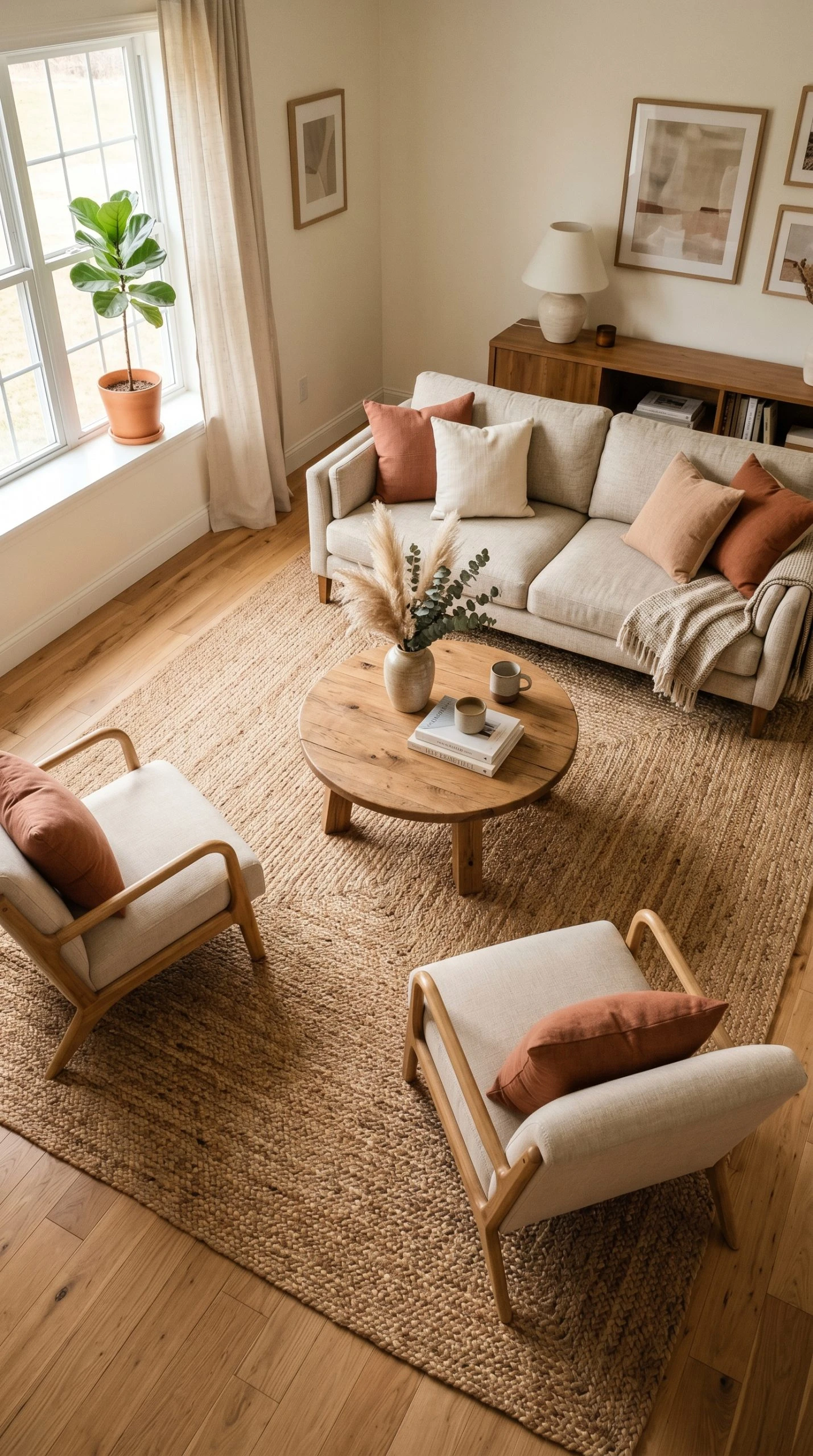
Nothing pulls a living room together faster than a rug that is properly sized for the space. The most common mistake people make is choosing a rug that is too small, which makes the furniture look like it is floating on an island and the room feel disconnected. The right size has the front legs of all the main seating pieces resting on it, or ideally all four legs if the rug is large enough.
For a budget makeover, jute and sisal rugs offer a lot of visual warmth and texture at a much lower price point than wool or hand-knotted options. A large natural fiber rug in a simple weave pattern can make a room look very considered, and it pairs well with almost any style from modern to traditional. If you want pattern, flatweave cotton rugs in geometric or striped prints are another affordable option that photographs well and adds color without overwhelming the space.
Layering a smaller printed rug over a larger neutral one is a styling trick that adds depth and makes a room feel more designed. The base layer can be something very inexpensive since it will mostly be hidden, and the top layer can be a smaller, more interesting piece that shows off the pattern without requiring you to buy it in a large size.
Budget Win: Large jute rugs in the 8×10 size range can be found for under one hundred dollars at many discount retailers, and even less during sale events. Layering two smaller rugs costs even less and gives a more styled result.
Lighting: The Fastest Way to Change a Room’s Mood
7.Replace Your Overhead Bulbs with Warm-Toned LEDs
Most living rooms are lit badly, and almost no one realizes it. The culprit is usually the bulb temperature. Daylight or cool white bulbs cast a blue-toned, clinical light that makes everything look flat and slightly uncomfortable, the opposite of what a living room should feel like. Switching to warm white bulbs in the 2700K to 3000K range is one of the cheapest and most impactful changes you can make, and it takes about five minutes.
Warm white light makes wood tones richer, fabric colors more vibrant, and skin tones more flattering. It also makes a room feel like a place you want to stay rather than a space you want to leave. If your ceiling fixture is a simple overhead light, replacing the bulb alone will make a noticeable difference. If you have a dimmer switch already installed, a dimmable warm white LED bulb turns a so-so living room into a genuinely atmospheric space.
A four-pack of good warm white LED bulbs costs around eight to twelve dollars and will last for years. This is the kind of change that sounds too simple to make much difference, but once you have done it, you will wonder how you lived with cool white light for as long as you did. The shift is immediate and visible from the moment you flip the switch.
Budget Win: A four-pack of warm white dimmable LED bulbs costs less than twelve dollars and is the single fastest improvement you can make to a living room’s atmosphere with no tools required.
8.Bring in a Floor Lamp to Layer the Light Sources
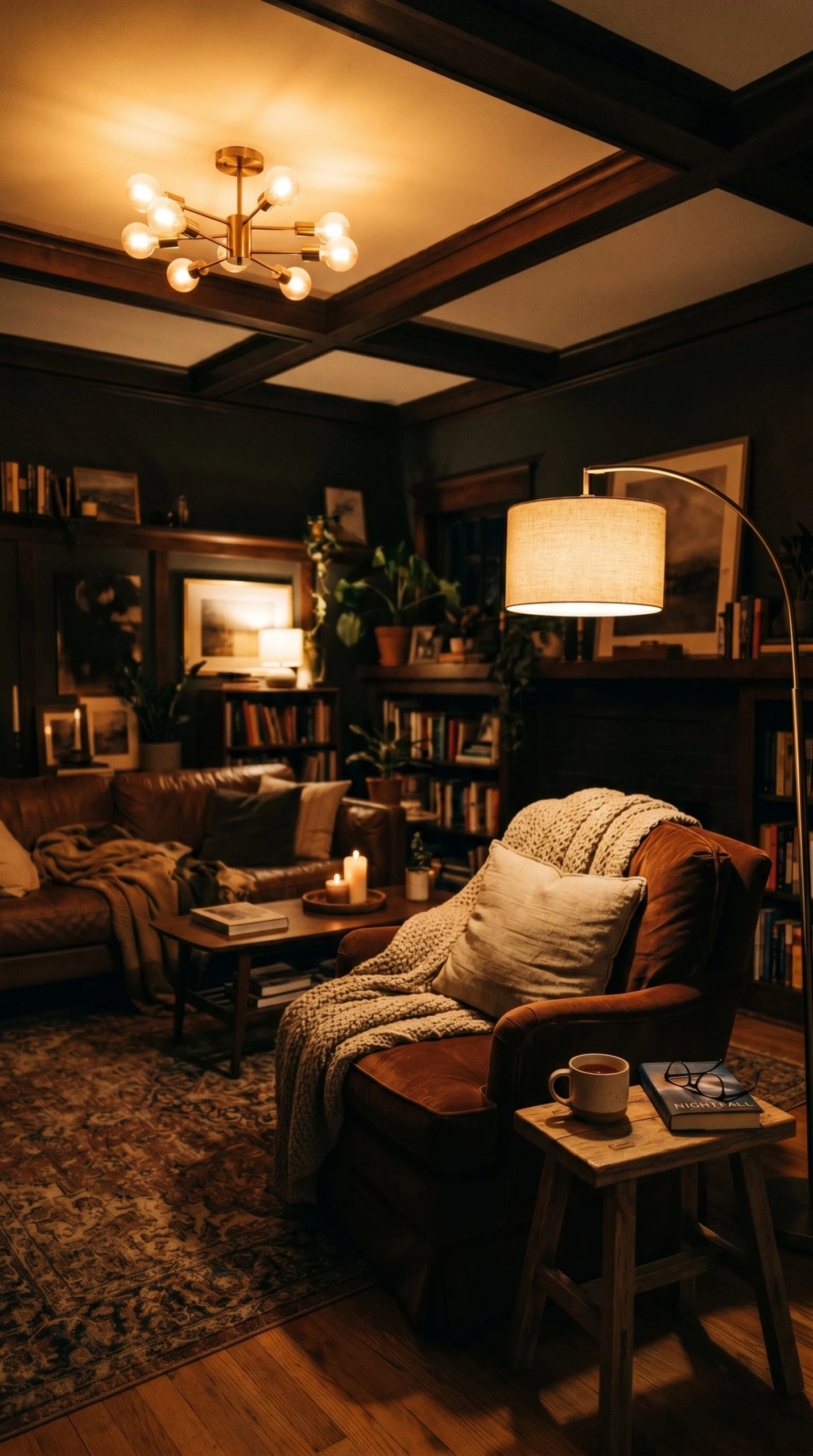
A living room with only overhead lighting will always feel a bit flat, no matter how good the bulb temperature is. Layered lighting, meaning a mix of overhead, ambient, and task sources at different heights, is what makes a room feel warm, cozy, and alive. A floor lamp is the easiest way to add that second layer without any wiring or installation.
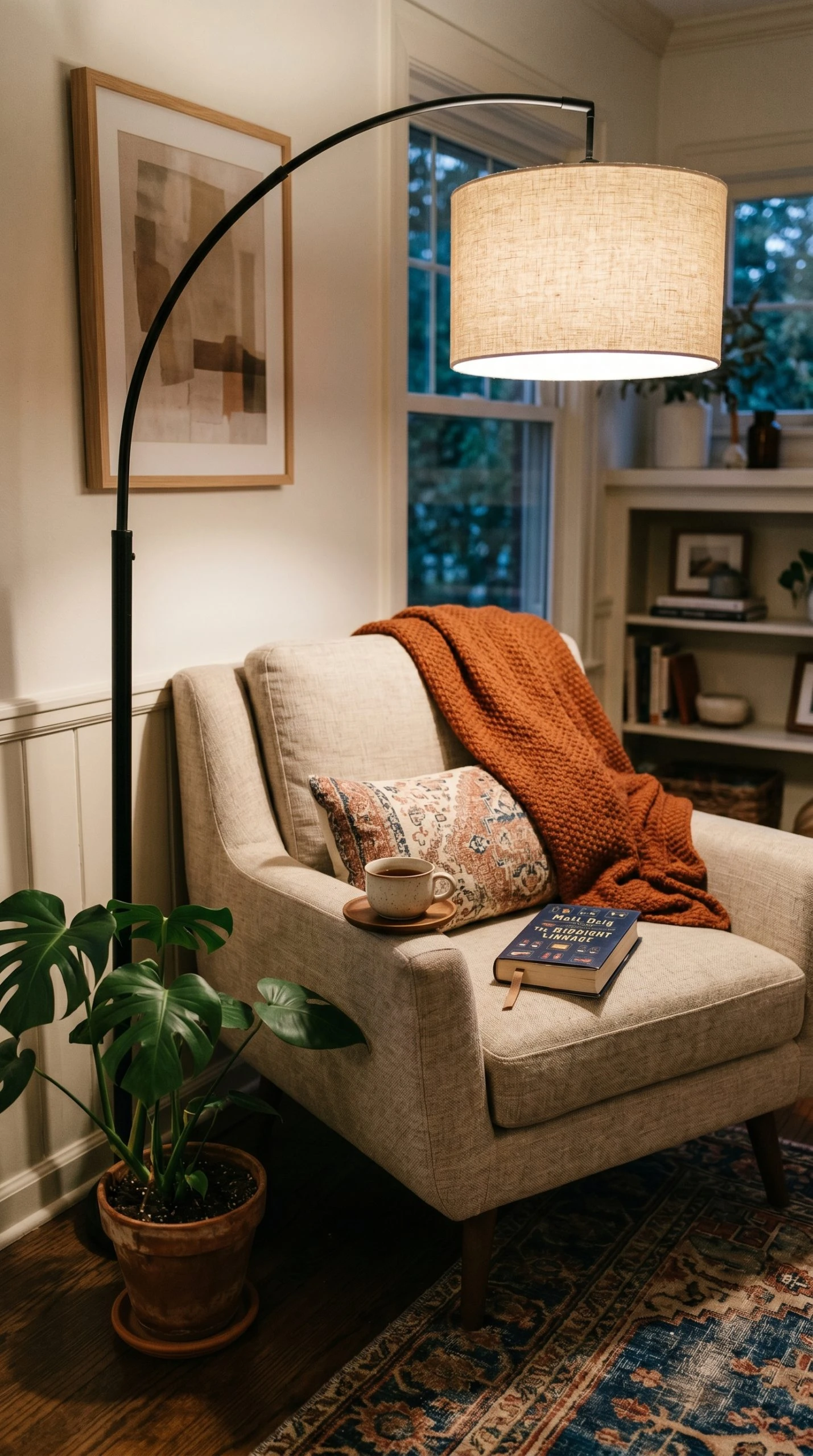
Position a floor lamp in a corner behind an armchair or at the end of a sofa. This creates a warm pool of light at eye level that immediately makes the seating area feel more intimate. Arched floor lamps are particularly useful because the arm reaches over a chair or sofa, providing reading light without needing a separate side table or surface. A rattan shade, a linen drum shade, or a simple cone in a warm off-white will all cast a soft, diffused glow that complements rather than competes with the overhead fixture.
Look for floor lamps at thrift stores, discount home stores, and online secondhand marketplaces. A lamp that needs a new shade can often be bought very cheaply and then fitted with a fresh shade from a home goods store for fifteen to twenty dollars. The combination of a secondhand base and a new shade often looks better than a brand-new budget lamp straight off the shelf.
Budget Win: A basic floor lamp from a discount retailer starts around thirty dollars. Thrifted lamps can cost five to ten dollars, and a replacement shade adds fifteen to twenty more. Either route delivers a lot of warmth for a small investment.
Textiles and Layers: The Quickest Visual Refresh
9.Update Your Throw Pillows with a Cohesive Color Story
Throw pillows are one of the most abused categories in home decor. They collect over time without a plan, a bright orange from one phase, a navy stripe from another, a gift from someone who meant well, and the result is a sofa that looks cluttered rather than styled. The fix is to pull everything off and start fresh with a small, intentional set built around two to three colors that already exist in the room.
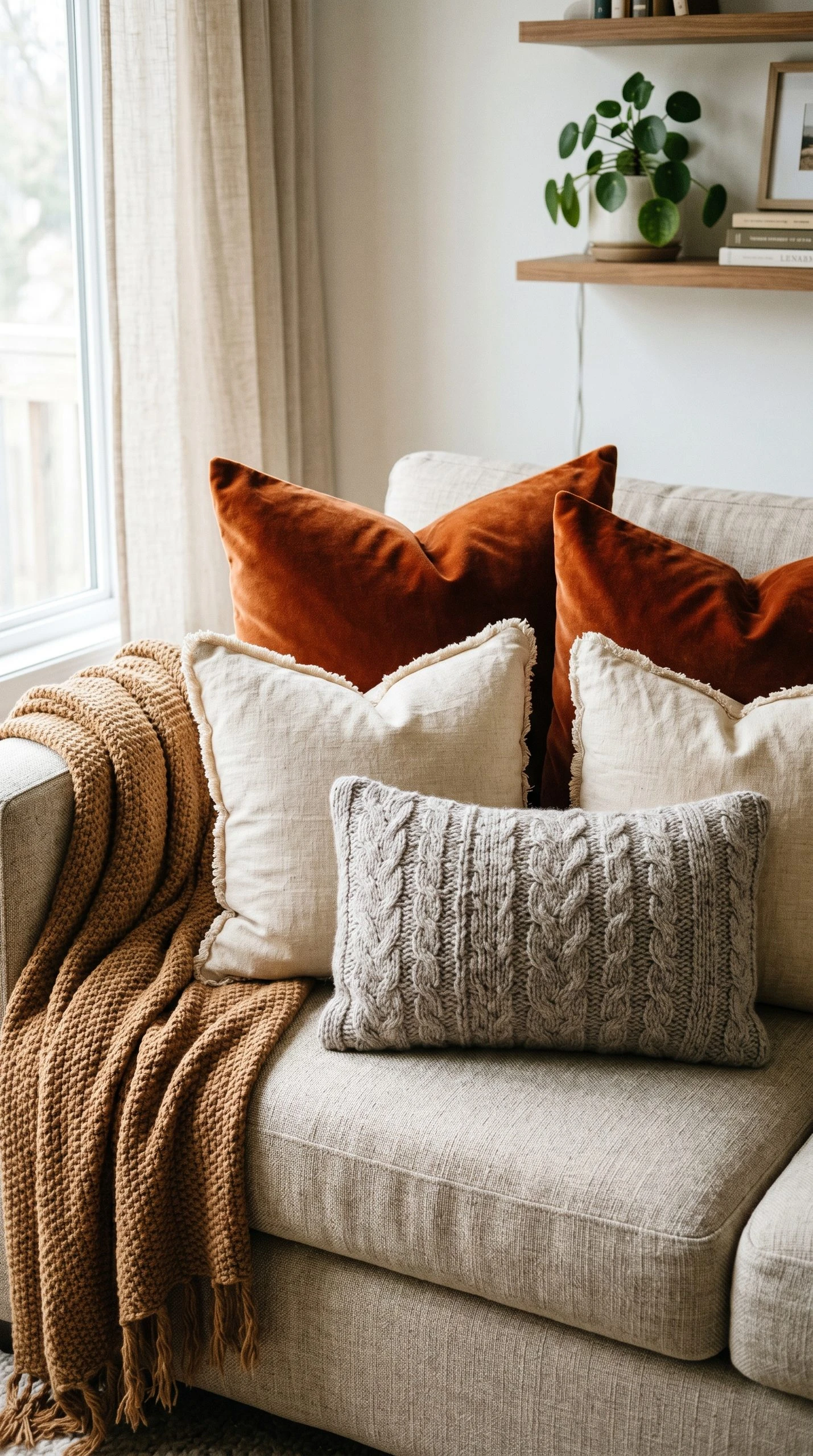
A typical sofa works well with four to six cushions arranged in a thoughtful mix of sizes. Two larger squares, two smaller squares, and one or two rectangular lumbar pillows is a layout that looks balanced without feeling over-styled. Vary the textures within your chosen color palette rather than trying to vary the colors too much. A velvet pillow in deep rust, a linen one in warm cream, and a knit one in a tone that sits between the two look like a considered set even though they are three completely different fabrics.
Pillow covers rather than full pillows are the smarter budget purchase because you can change the look seasonally without buying new inserts. Good-quality pillow inserts can be kept for years and simply recovered as trends and tastes shift. Covers in a range of textures can be found very cheaply at discount retailers and online stores, and the difference between old random pillows and a new intentional set is one of the most visually striking changes you can make to a sofa.
Budget Win: Pillow covers start at five to eight dollars each at most discount retailers. A new set of four covers for an existing set of inserts can cost under thirty dollars and give the whole sofa a genuinely fresh look.
10.Layer Throws for Texture and Warmth
A throw blanket draped over the arm or back of a sofa does two things at once. It adds a layer of texture that photographs beautifully and makes the room feel lived-in in the best way, and it signals that this is a comfortable space where relaxing is encouraged. The key is how it is draped rather than the throw itself. A casually folded throw that looks like someone just used it and set it aside reads as naturally cozy. A perfectly folded, symmetrically placed throw reads as staged.
The best textures for a budget living room refresh are chunky knits, waffle weaves, and lightweight cotton throws. These materials look substantial without being heavy, and they hold their shape even after washing, which matters when a throw is going to be used regularly. A neutral tone like cream, oatmeal, warm grey, or caramel works in almost any room, while a warm earthy rust or dusty sage can add a color accent if the rest of the room is mostly neutral.
Drape one throw over the arm of the sofa and let it fall naturally. A second throw folded neatly on an ottoman or armchair completes the look without overdoing it. More than two throws in a single seating area starts to feel like a storage problem rather than a style choice. Let each one breathe a little and resist the urge to fluff and arrange them too perfectly.
Budget Win: A good-looking throw can be found at most home goods stores for fifteen to twenty-five dollars. Chunky knit versions sometimes cost more but photograph so well that a single one can be enough.

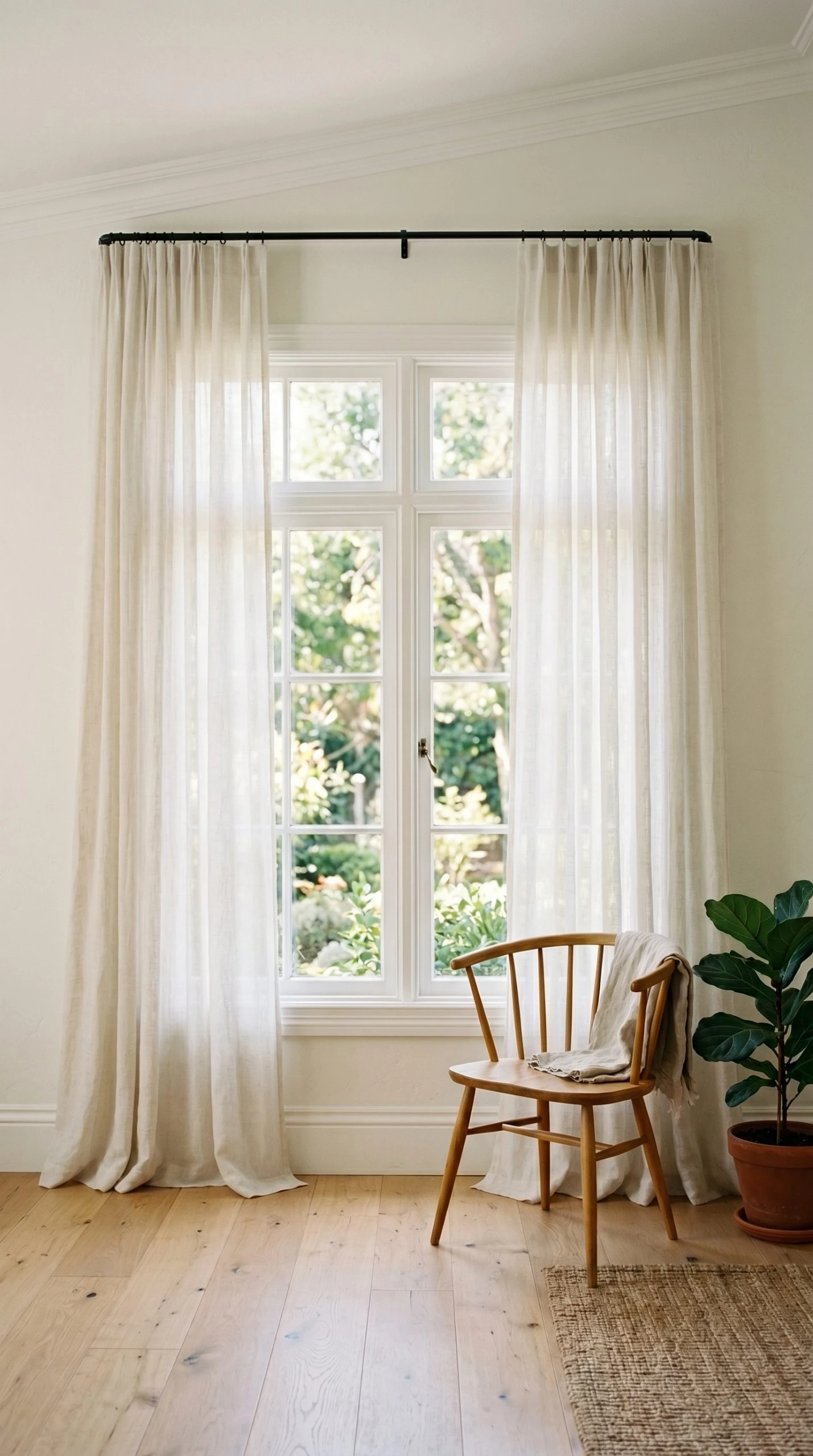
11.Hang Linen or Cotton Curtains at Ceiling Height
Curtains are one of the most underestimated tools in a living room refresh. The way most curtains are hung, just above the window frame and only as wide as the window itself, actually makes a room feel smaller and less finished. Hanging curtains from as close to the ceiling as possible and extending the rod well beyond the window frame on each side creates the impression of a much larger window and a much taller room.
For budget curtains, look for simple linen-blend or cotton panels in a natural, neutral tone. Off-white, warm ivory, oatmeal, and soft sage all work beautifully and let in enough light to keep the room from feeling dark. If the curtains are slightly sheer, even better, because the light filters through them and creates a soft, diffused glow during the day that no artificial lighting can quite replicate.
For rod placement, aim for four to six inches below the ceiling or just at the ceiling if the ceilings are low. For width, each panel should be about one and a half times the width of the window so that when the curtains are open, they frame the window fully rather than partially covering the glass. This one habit, hanging curtains high and wide, is one of the most consistent pieces of advice professional designers give, and it costs nothing extra when you are buying curtains anyway.
Budget Win: Tab-top or rod-pocket curtain panels in a basic linen blend can be found for under twenty dollars per panel at many discount retailers. A tension rod or simple curtain rod and brackets add another ten to fifteen dollars.
Decor and Styling: Small Details, Real Difference
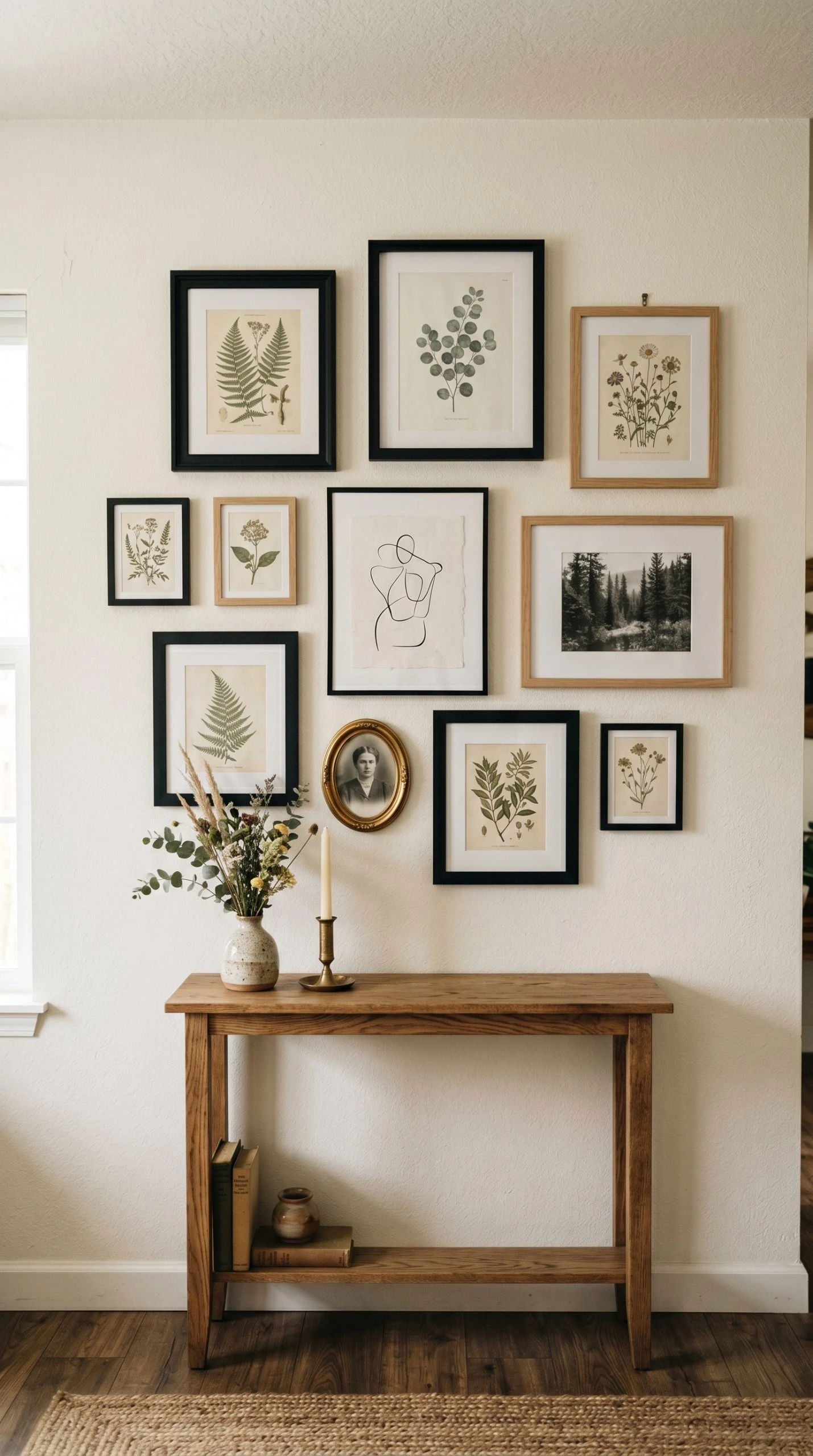
12.Create a Gallery Wall with a Mix of Thrifted Frames
A gallery wall sounds like a big project, but it really just means a collection of framed things hung together in a way that looks deliberate. The frames do not all need to match, and the art does not all need to be expensive. In fact, a mix of different frame styles and finishes looks more interesting than a perfectly matched set, as long as there is some thread of visual consistency holding things together, whether that is a shared color palette, a similar subject matter, or a mix of tones that work together.
Thrift stores are one of the best sources for frames. You can find frames in all sizes for one or two dollars each, and most of them look fine once the existing art is removed. If the frames are all different wood tones and you want them to feel more cohesive, a coat of spray paint in matte black or antique gold ties them together quickly and cheaply. The art inside them can be anything: downloaded and printed digital art, pages from a book or magazine, postcards, personal photos, or simple shapes cut from patterned paper.
Before you start putting nails in the wall, lay the arrangement out on the floor and play with the spacing until you are happy with it. Take a photo of the final layout so you can reference it when hanging. As a general rule, keep two to three inches of space between frames and treat the whole grouping as a single unit with clear edges rather than letting individual pieces drift far from the cluster.
Budget Win: A gallery wall built entirely from thrifted frames and printed or downloaded art can cost under twenty dollars for the whole thing. Even with a few new frames added in, the total stays very manageable.
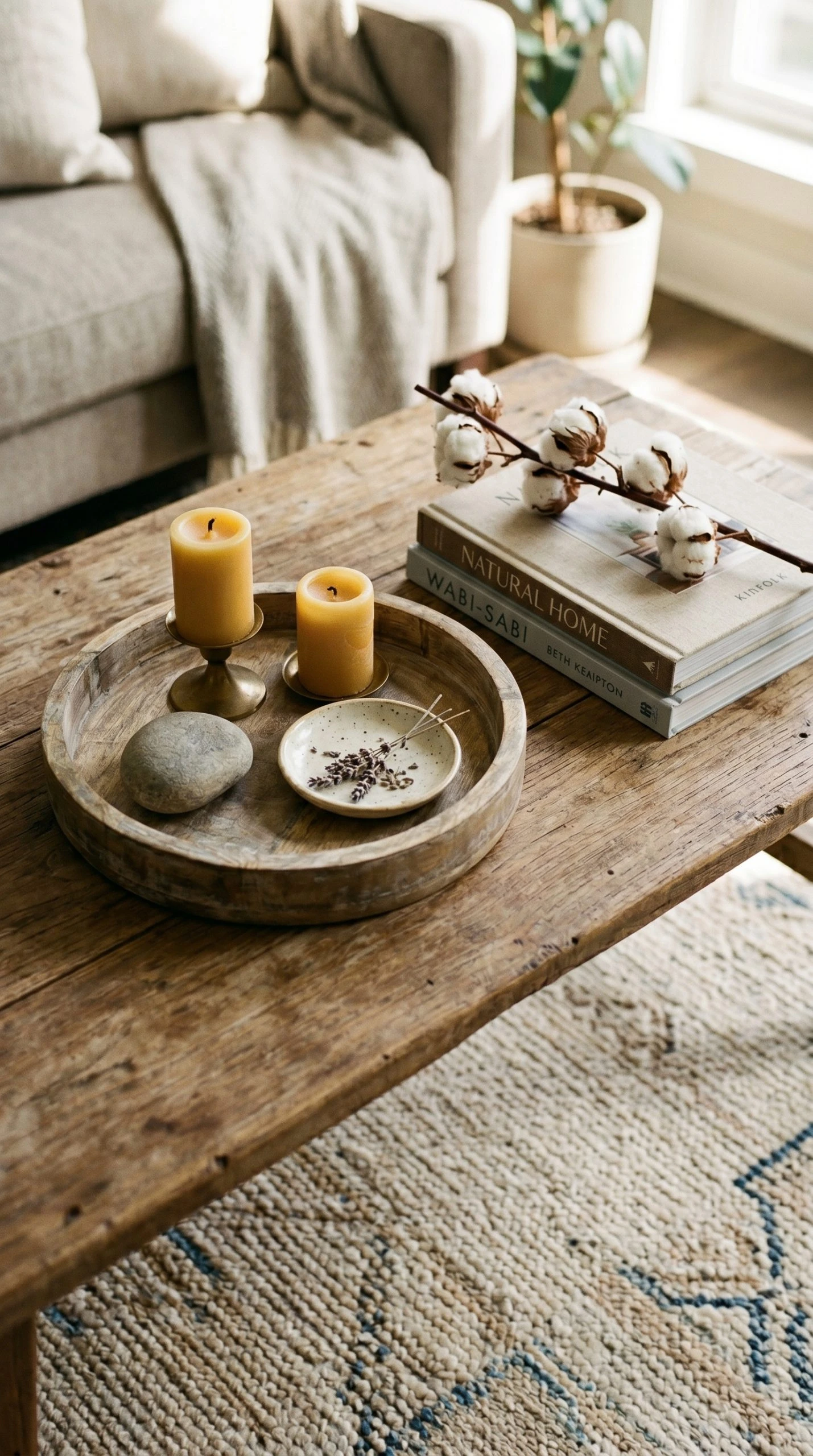
13.Style Your Coffee Table Like a Magazine Shoot
A coffee table that is either empty or covered in remote controls, coasters, and random objects is a missed opportunity. A styled coffee table acts as a visual anchor for the whole seating area and signals that the room was put together with some thought. The good news is that styling a coffee table does not require buying anything new; it just requires using what you already have in a more intentional way.
Start with a tray, which serves as a boundary and keeps the styling contained so it does not creep across the whole surface. Place a few items inside the tray: a small candle or two, a small object with interesting texture like a smooth stone or a small ceramic dish, and something with height like a single bud vase with a dried stem or sprig of greenery. Outside the tray, a coffee table book stacked with a small object on top adds another layer. Keep the overall arrangement asymmetrical and leave some empty space, because a coffee table that is too full just looks cluttered regardless of how nice each individual item is.
Look for trays at thrift stores where they are very commonly available in good condition. A small vase from a discount store, a candle from a grocery store, and a coffee table book from a charity shop are the only three purchases you might need to make, and together they cost less than fifteen dollars.
Budget Win: Coffee table styling is mostly about editing and rearranging what you already have. The one or two new items you might need cost almost nothing, and the result looks like you hired a stylist.
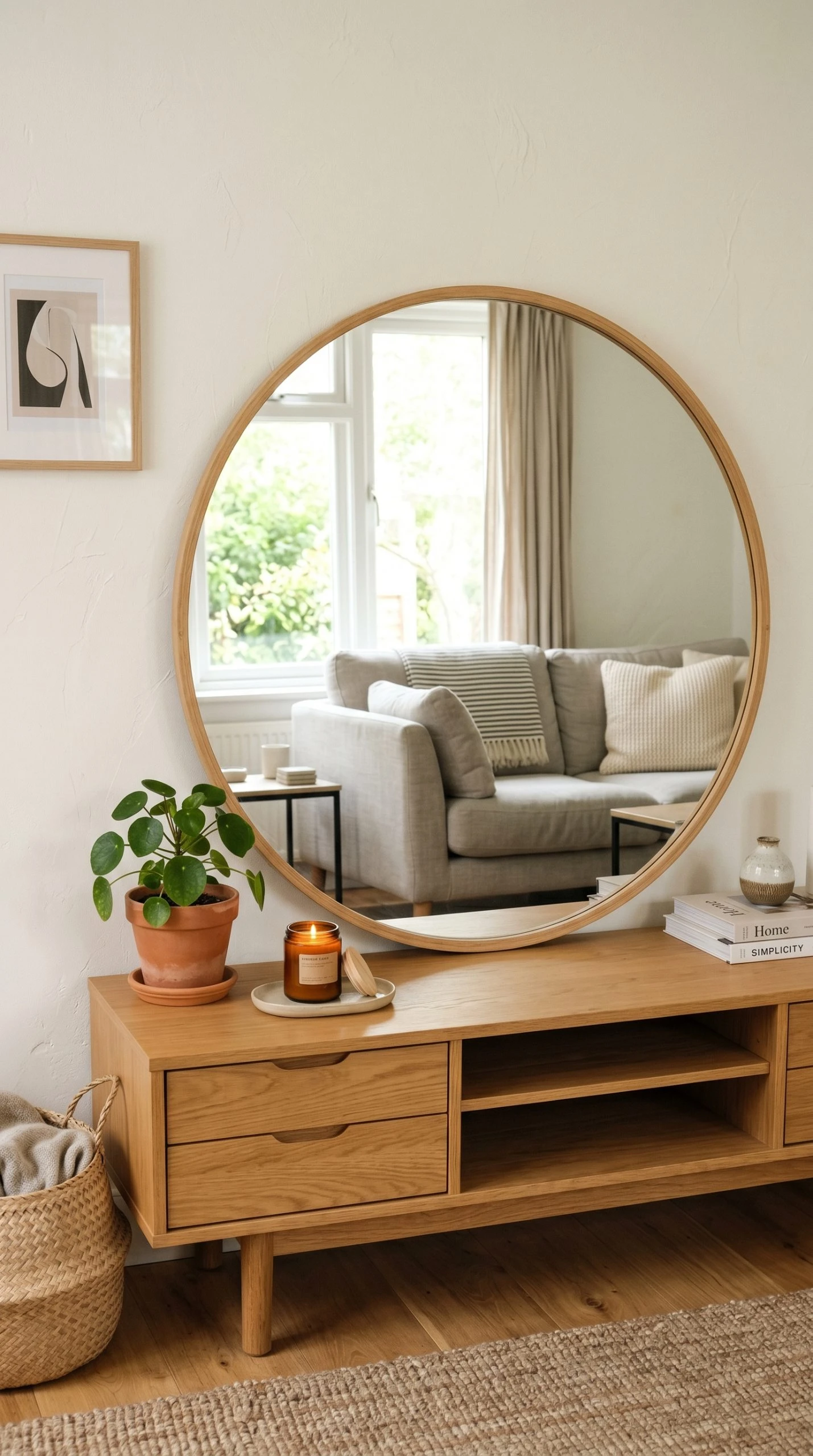
14.Hang a Large Mirror to Open Up the Space
A mirror is one of the hardest-working decorative objects in any room. It reflects light, makes the space feel larger, adds visual interest, and can pull a room together in the same way a piece of art does. In a living room, a large mirror leaned against the wall above or behind a sofa, or hung opposite a window to catch and bounce natural light, immediately makes the room feel more open and considered.
The size matters here. A small mirror does very little architecturally. You want something that makes a statement, ideally at least twenty-four by thirty-six inches for a standard living room. Round mirrors with simple frames work well in almost any style of room and look especially good leaned casually on a sideboard or mantle. Full-length rectangular mirrors add a sense of drama and height. Arched mirrors are a popular option right now and work well with both warm and cooler color palettes.
Thrift stores are a surprisingly good source for mirrors, especially simple rectangular or oval ones in wooden frames. A quick sand and repaint can make an old mirror look completely fresh. The glass itself is usually still good, and a frame in a new color is all it needs to look like a new purchase.
Budget Win: Thrifted mirrors can cost as little as five to ten dollars. Even a brand-new simple wall mirror at a discount retailer rarely costs more than thirty to forty dollars, making this one of the best value-per-visual-impact purchases in the guide.
Greenery and Nature: Free and Almost Free Updates
15.Bring in Low-Maintenance Houseplants for Life and Color
Plants do something to a room that no other decorative element can quite replicate. They add color, yes, but they also add a sense of life and movement that makes a space feel genuinely inhabited rather than staged. In a living room, a well-placed plant in a corner, on a side table, or on a windowsill can fill a gap that furniture cannot address without making the room feel crowded.
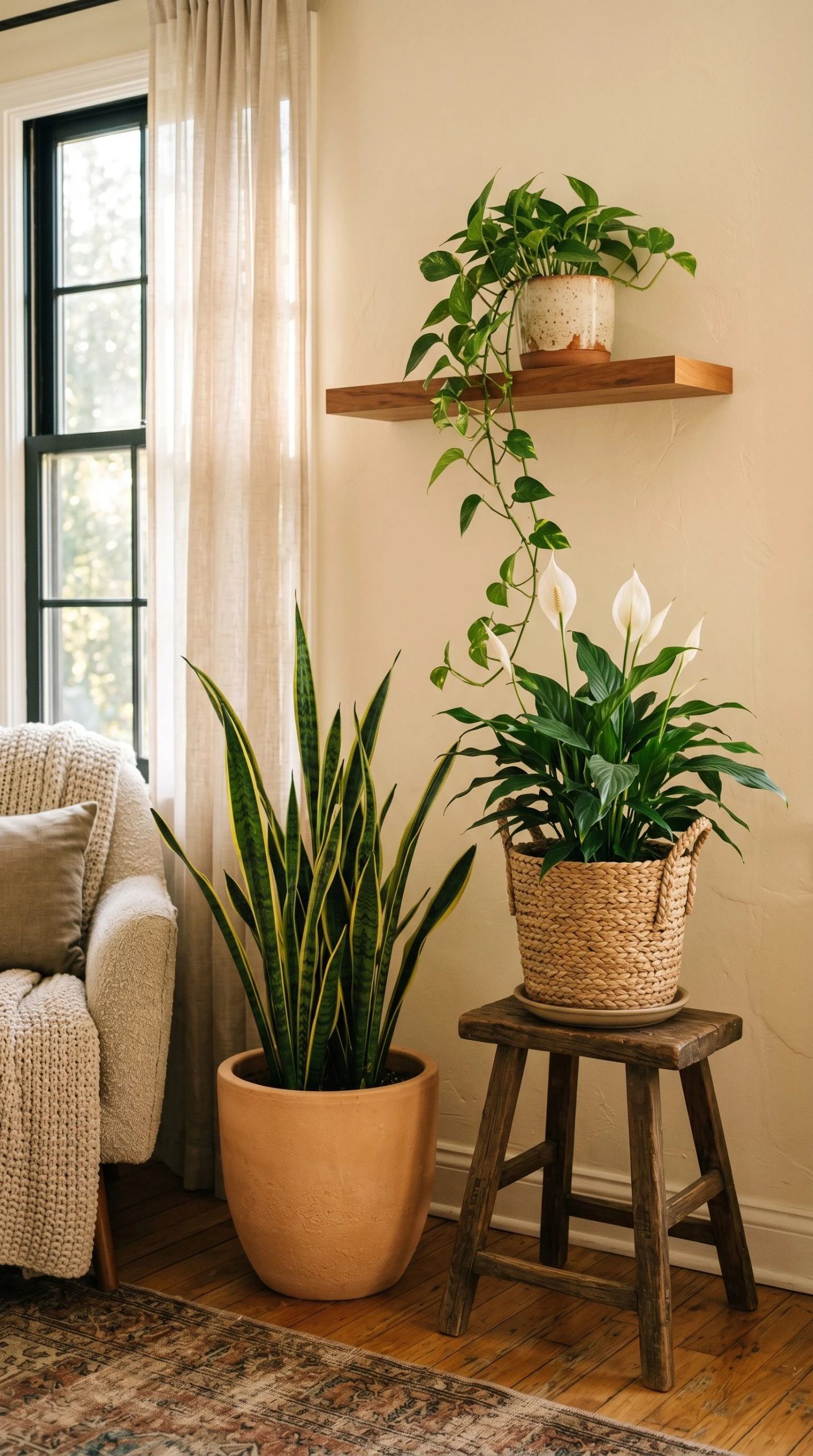
For a budget refresh, focus on low-maintenance varieties that look good with minimal effort. Pothos is almost impossible to kill and trails beautifully from a shelf or high surface. Snake plants are architectural in their upright form and tolerate low light very well. Peace lilies add a soft, lush quality and are among the most forgiving plants when it comes to watering schedules. Spider plants are fast-growing, inexpensive, and look great in hanging planters.
The pot matters as much as the plant. A grocery store plant in a plastic nursery pot does not look like much, but that same plant transferred into a simple terracotta pot, a woven basket planter, or a matte ceramic vase looks considerably more polished. Pots from thrift stores, charity shops, and discount home stores are all perfectly good options, and even an inexpensive terracotta pot picked up for a dollar or two does a lot to elevate the look of the plant inside it.
Budget Win: Small pothos or snake plants can often be found for three to five dollars at grocery stores or garden centers. A simple terracotta pot adds another dollar or two. For under ten dollars total, you can add a living element that makes a real visual difference.
16.Use Dried Botanicals for Long-Lasting, Zero-Maintenance Decor
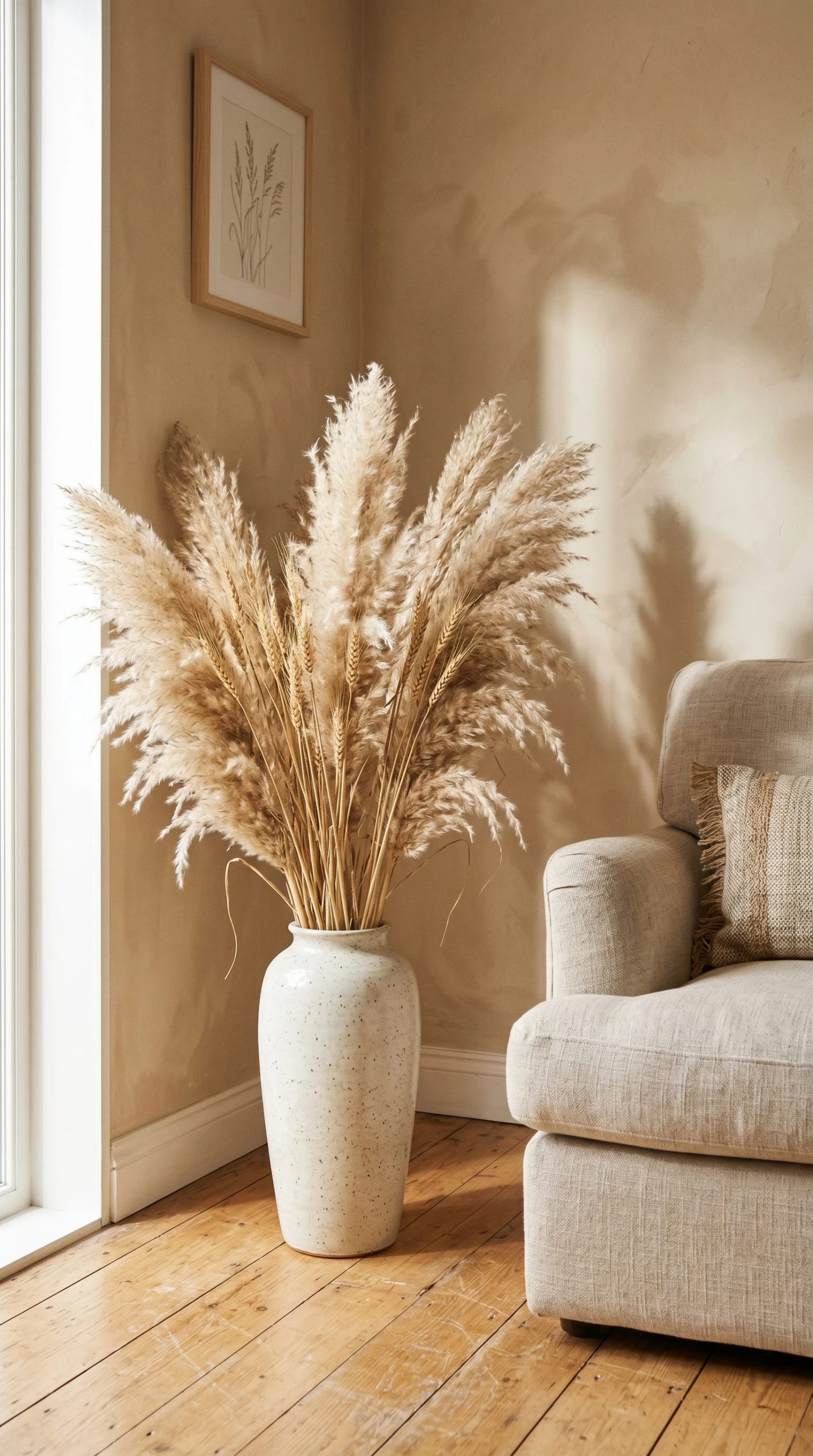
Dried flowers and botanicals have had a real moment in interior design over the last few years, and the appeal is understandable. They bring the warmth and texture of natural elements into a room without any of the maintenance that fresh flowers or living plants require. A bunch of dried pampas grass in a tall vase, a bundle of dried eucalyptus hung on a wall, or a few dried cotton stems in a simple ceramic jug can all look genuinely beautiful with almost no effort.
The colors in dried botanicals tend to sit in a warm, muted palette, blush, wheat, oatmeal, pale lavender, and warm brown, which works very well with the earthy, layered look that is popular in living rooms right now. They also last for months or even years without any attention, which makes them a genuinely practical choice for anyone who loves the look of flowers but not the upkeep or expense of fresh arrangements.
Look for dried stems at craft stores, farmers markets, and online shops. Some varieties, like dried grasses, cotton branches, and certain wildflowers, can even be gathered or dried at home from the garden or from a walk. A single bunch of dried pampas from a craft store, placed in a tall thrifted vase, costs very little and looks like something you would see in a professionally styled space.
Budget Win: A bundle of dried pampas grass or wheat stems typically costs five to fifteen dollars at a craft store. Paired with a thrifted vase, the total cost is under twenty dollars for a styling element that will last for well over a year.
Wrapping It All Up
A living room makeover on a budget is really just a series of small, thoughtful decisions made one at a time. You do not need to do everything at once. In fact, the rooms that look most intentional are usually the ones that were built slowly, with each piece given some real thought before it was added. Start with one section of this guide, make that change, live with it for a week, and then decide what comes next.
The goal is not a perfect room. It is a room that feels like yours, one that you actually want to spend time in. Paint a wall, swap a lamp, throw down a rug, or rearrange the furniture on a Saturday afternoon. Any one of those moves will shift how the whole space feels. Do two or three of them together and the difference can be genuinely surprising. Your living room is already closer to what you want it to be than you think. It just needs a little attention and a few of the right changes.
Frequently Asked Questions
What is the cheapest way to update a living room?
Rearranging your furniture costs nothing and can completely change how a room feels. After that, a fresh coat of paint on one wall is one of the most affordable ways to make a noticeable difference. New throw pillow covers from a discount retailer can also refresh a sofa for under twenty dollars.
How do I make my living room look more expensive on a tight budget?
Focus on lighting first. Replacing a cheap overhead fixture or adding a floor lamp with a warm-toned bulb instantly changes the mood of a space. Layering a large area rug under your furniture also makes a room feel more pulled-together and polished without requiring a big spend.
Can I update my living room without buying new furniture?
Absolutely. Slipcovers can give a tired sofa a completely new look. Rearranging what you already own, decluttering surfaces, and swapping out accessories like cushions, throws, and decorative objects can all make a significant impact without replacing a single piece of furniture.
What colors work best for a budget living room refresh?
Warm neutrals like terracotta, cream, and warm white are very forgiving and work with most existing furniture. If you want something with more personality, a single accent wall in a deep earthy tone like clay, slate blue, or forest green can add a lot of character without committing the entire room.
How do I make a small living room feel bigger without spending much?
Use a large mirror on one wall to reflect light and create the illusion of depth. Keep the floor as clear as possible and choose furniture with legs rather than pieces that sit flat on the ground. Lighter wall colors and layered lighting also help a small room feel more open and airy.
Is thrift shopping worth it for living room decor?
Yes, especially for items like lamps, picture frames, vases, side tables, and artwork. These are the categories where thrift stores tend to have the most variety, and a little paint or new hardware can make a secondhand piece look completely new. It takes some patience, but the finds are often genuinely good.