Neo Deco Done Right: Glamour You Can Actually Live With
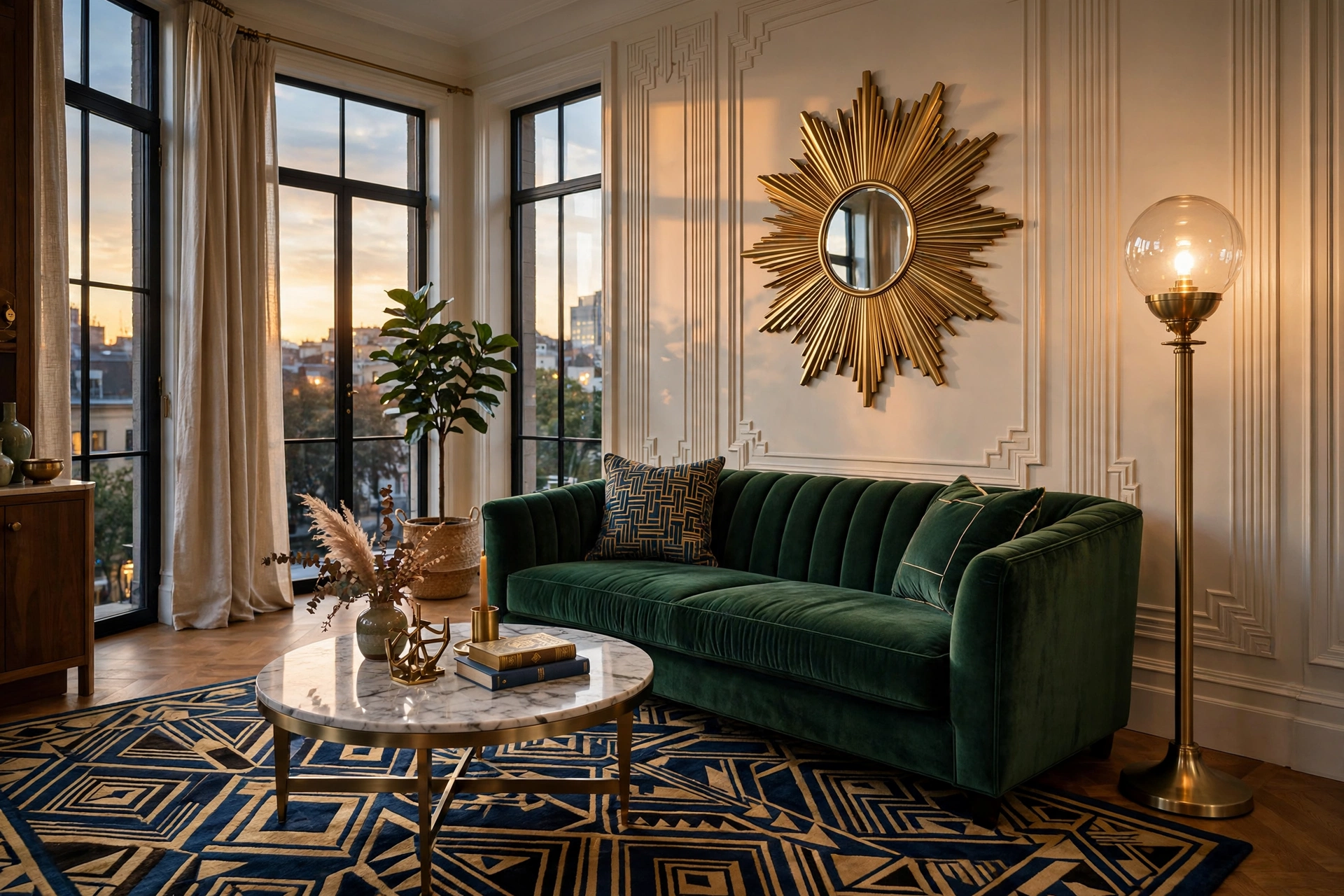
Your rooms do not need to look like a 1920s film set to borrow its confidence. Neo Deco takes the geometry, the shine, and the rich color of old-school glamour and edits it down to something you can actually live with. Here are 20 ideas, ordered from a single-afternoon swap to full-room commitment, so you can start exactly where your comfort level is.
Old Deco vs Neo Deco: What Changed
| Classic Art Deco (1920s-30s) | Neo Deco (today) | |
|---|---|---|
| Ornament | Heavy, layered, gilded detail everywhere | One strong gesture per room, then restraint |
| Silhouettes | Hard symmetry, stepped forms, rigid lines | Curves softened in: arches, scallops, rounded chairs |
| Finishes | High-gloss everything, chrome, mirror | Matte mixed with shine: brushed brass, honed marble |
| Palette | Bold jewel tones, black lacquer, gold | Earthier jewels (olive, tobacco, ochre) plus deep moody shades |
| Comfort | Looked rich, often felt formal | Built for real life: sit-able, touchable, livable |
Dip a Toe: Five Small Swaps That Read Instantly Deco
1. Trade basic knobs for geometric brass hardware
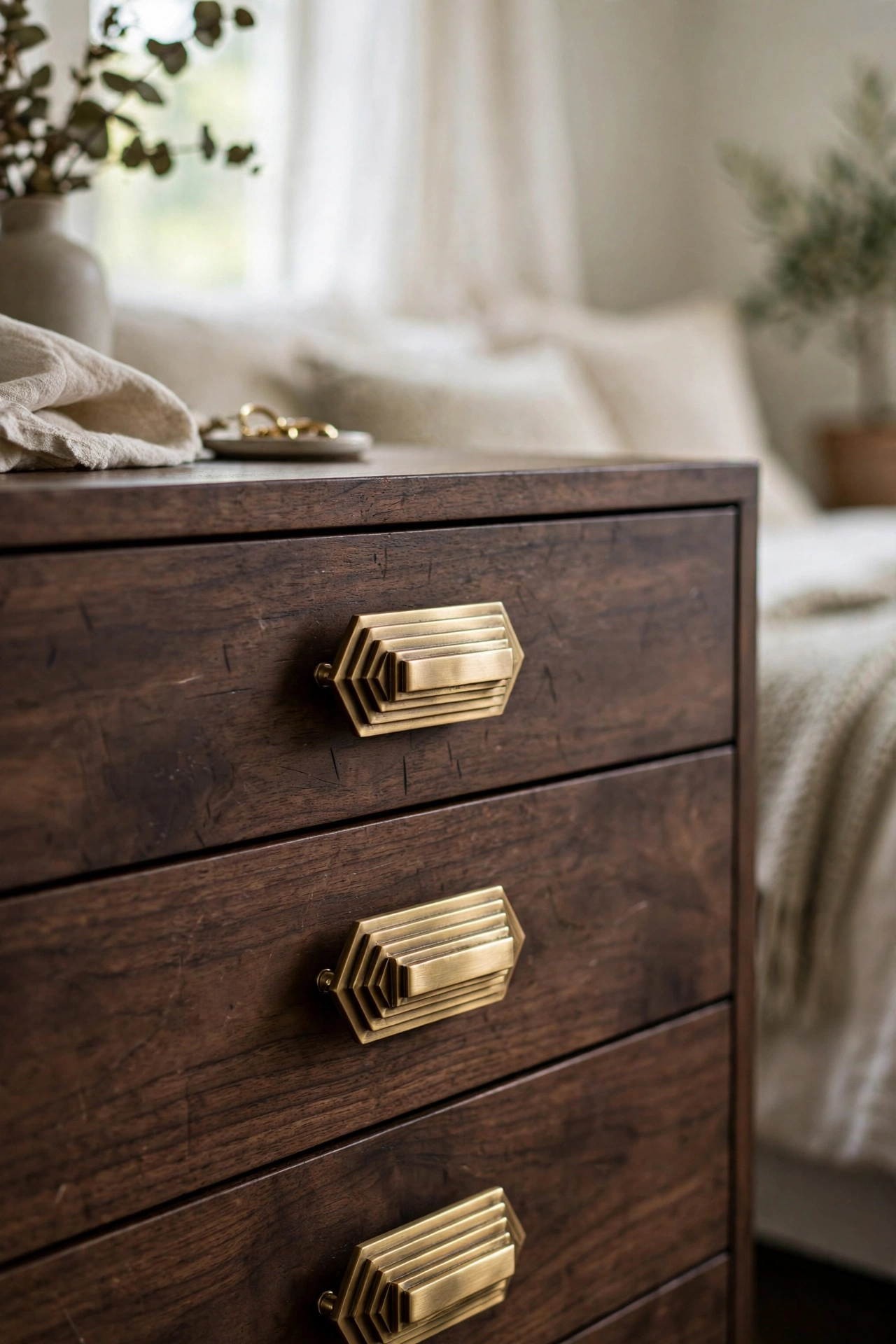
One of the cheapest ways into this look is the hardware already in your rooms. Swap plain knobs and pulls for brushed brass or bronze pieces with stepped, hexagonal, or reeded shapes, and a flat-front dresser suddenly has a point of view. In practice this works best when every other finish stays quiet, so the metal gets to be the jewelry of the room. Measure the hole spacing before you order, since older dressers often use non-standard widths that big-box pulls will not fit. Buy one spare pull while you are at it: if the finish gets discontinued, a single mismatched knob will bother you every day.
Quick Tip: Measure the hole spacing before ordering, since older dressers often use non-standard widths.
2. Hang a sunburst or fan mirror
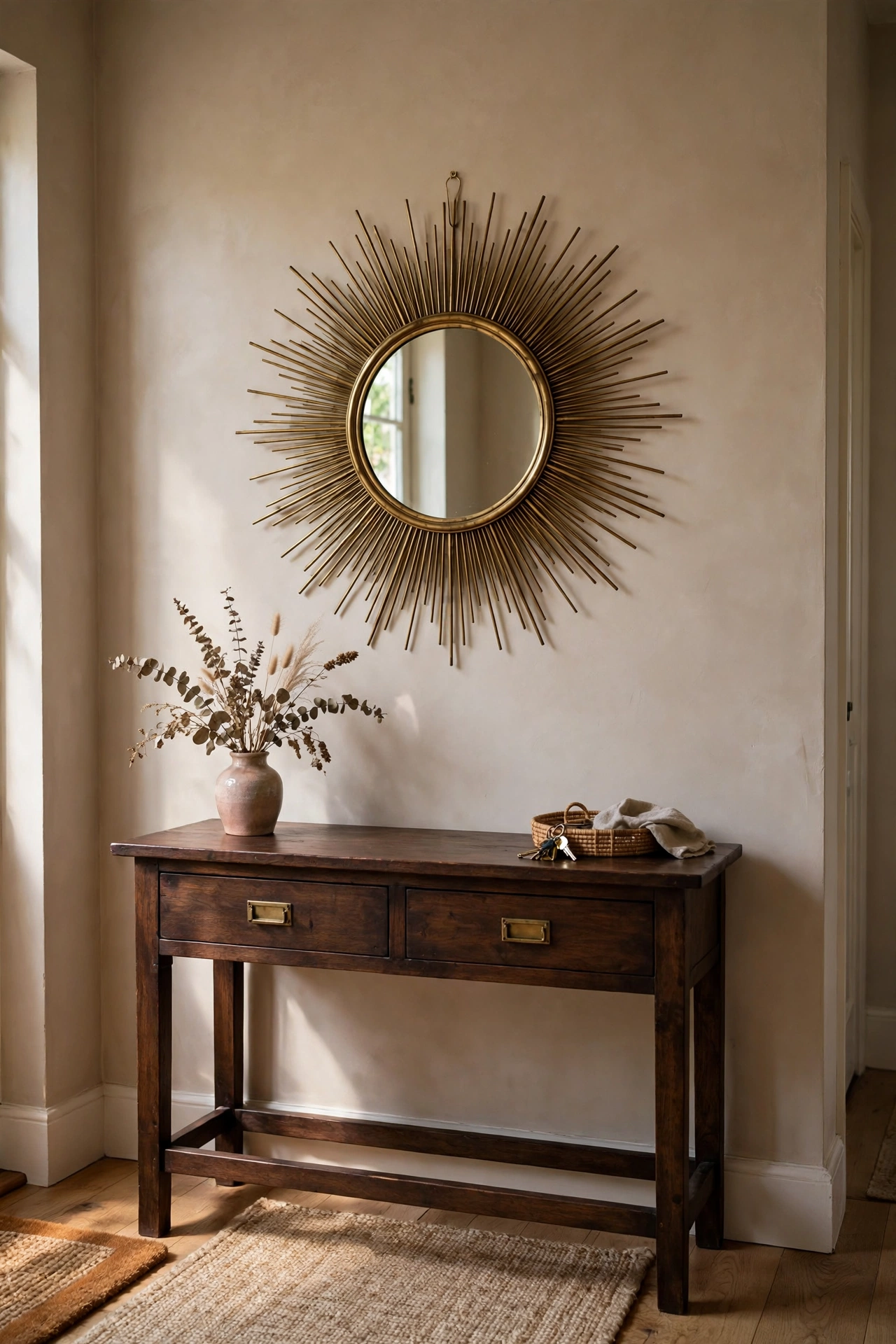
Nothing says Deco faster than a mirror with rays. A sunburst over a console or a fan shape above a mantel pulls the eye up and throws light around, which matters most in small entryways that need every bit of brightness they can get. Keep the frame finish consistent with your other metals, or the room starts to feel like a hardware store display. Hang it so the center sits at eye level, since higher than that the rays read as clutter instead of sculpture. One well-placed mirror beats three small ones fighting for attention.
Designer Advice: Hang it so the center sits at eye level, not higher, or the rays read as clutter.
3. Dress the sofa in jewel-tone velvet cushions
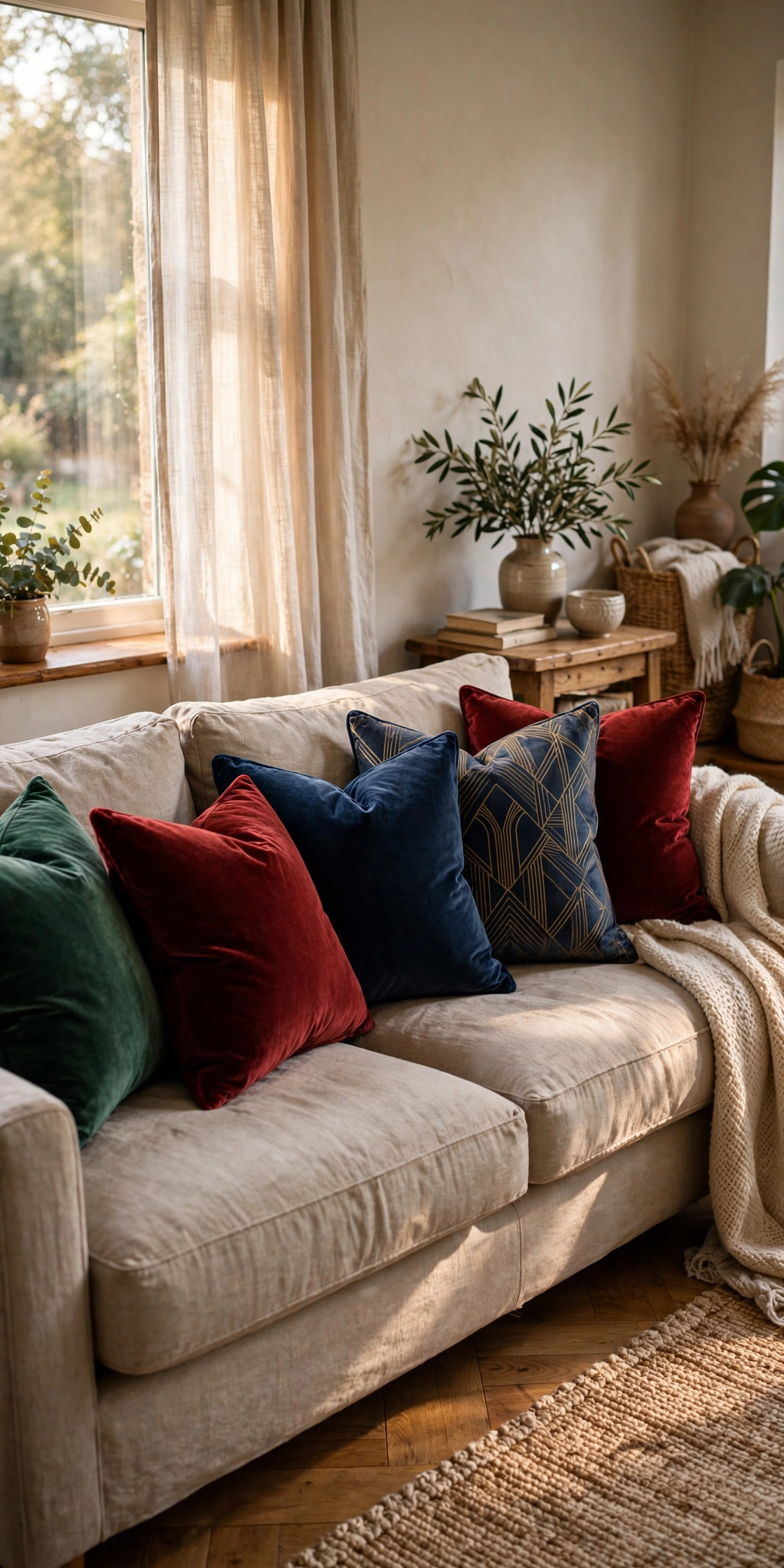
Velvet is the fastest fabric route into Neo Deco. Two or three covers in emerald, oxblood, or deep navy on a neutral sofa add the color saturation this style runs on, and the pile catches light in a way flat cotton never does. One thing that works really well here is mixing one patterned deco-geometric cover in with the solids, so the sofa looks collected rather than matched. Check for a dense pile and a rub count on the label, because cheap velvet crushes flat within months. If you have pets that shed, keep a lint roller nearby, since dark velvet shows every hair.
Heads Up: Cheap velvet crushes flat within months, so check for a dense pile and a rub count on the label.
4. Add one sculptural table lamp
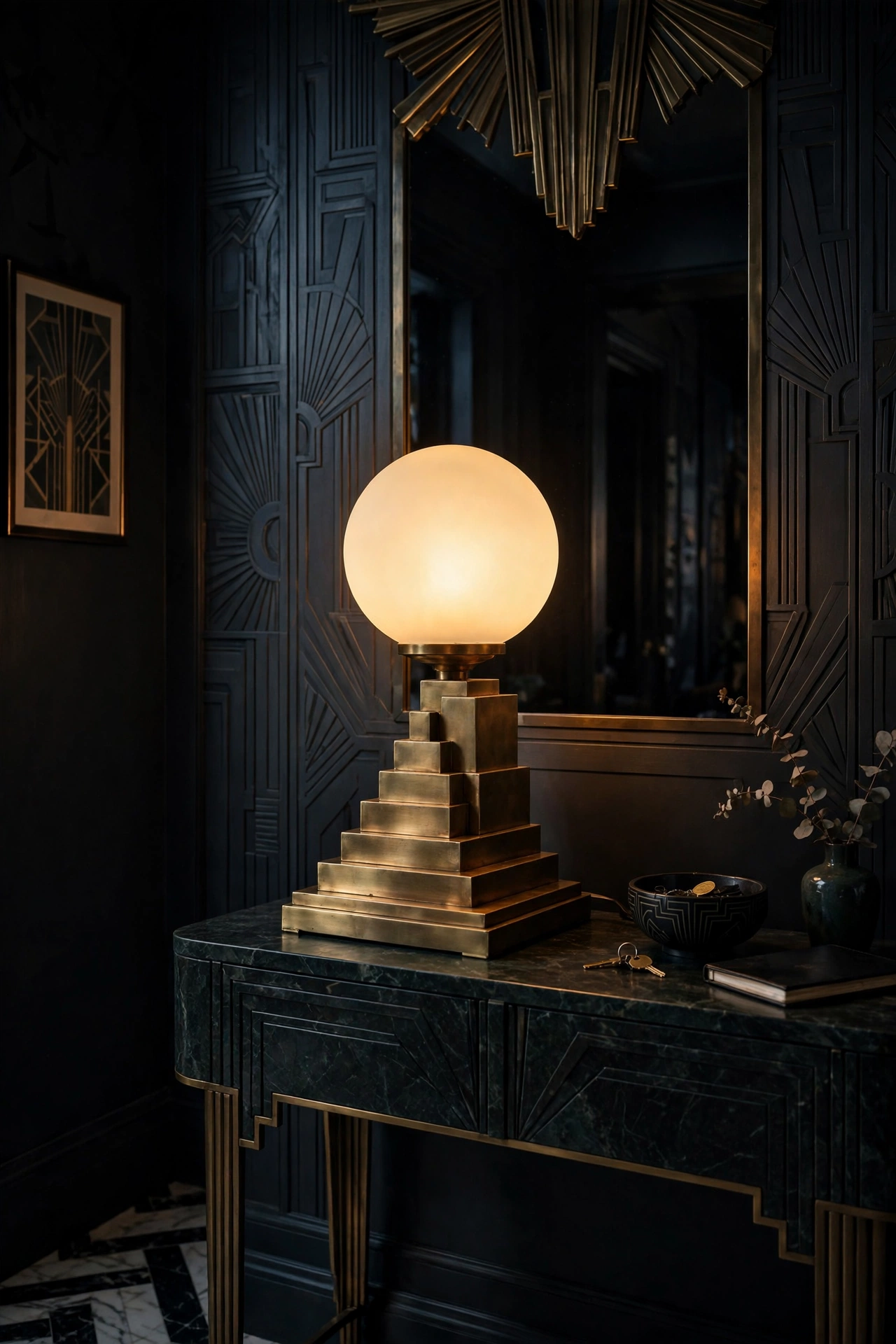
Look for a stepped base, a globe shade, or ribbed glass in brass or blackened metal, and place it where it gets seen at night, like a dark hallway console. A single sculptural lamp does more for evening mood than any overhead light, because it makes a pool of warmth at eye level. Stick to warm bulbs at 2700 to 3000K color temperature, since anything cooler kills the glow this style is going for. Put it on a timer so the room greets you lit when you walk in after dark. It is a small daily luxury that costs almost nothing to run.
Pro Move: Put it on a timer so the room greets you with that glow every evening.
5. Frame graphic black-and-white prints in thin brass
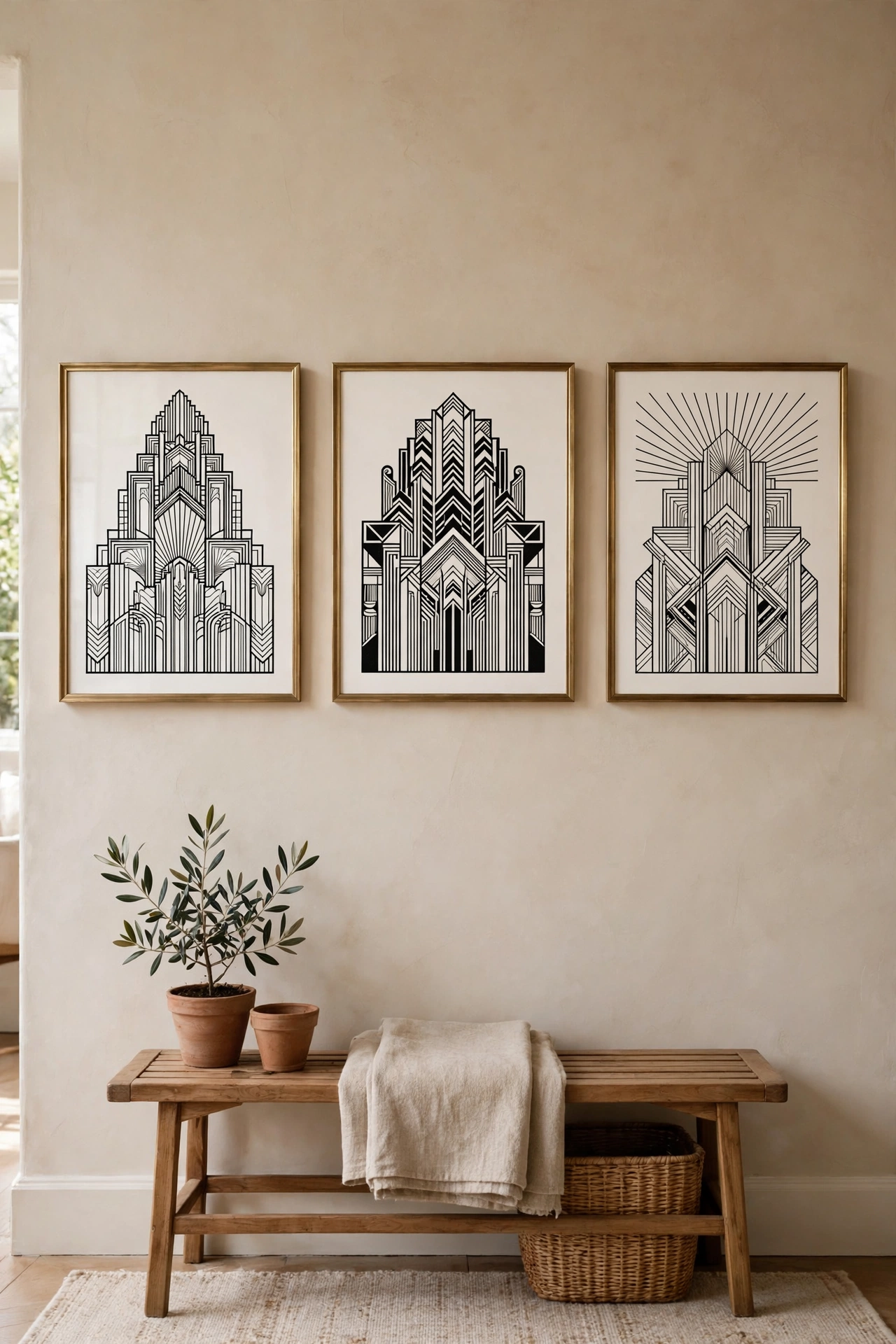
Deco loved bold graphics, and architectural photos, vintage travel posters, or geometric line art in slim brass or black frames deliver that hit for very little money. Group three in a tight row rather than scattering singles around the room, since the repetition is what gives it that deliberate, designed feeling. Keep the art itself graphic and confident, because soft watercolors in brass frames just look confused. Thrift stores are full of solid frames if you are willing to spray them. Print shops can enlarge a favorite photo cheaply if you bring a high-resolution file.
Reality Check: This reads Deco only if the art itself is graphic and bold; soft watercolors in brass frames just look confused.
Make a Move: Furniture and Lighting With Presence
6. Bring in a channel-tufted or fluted accent chair
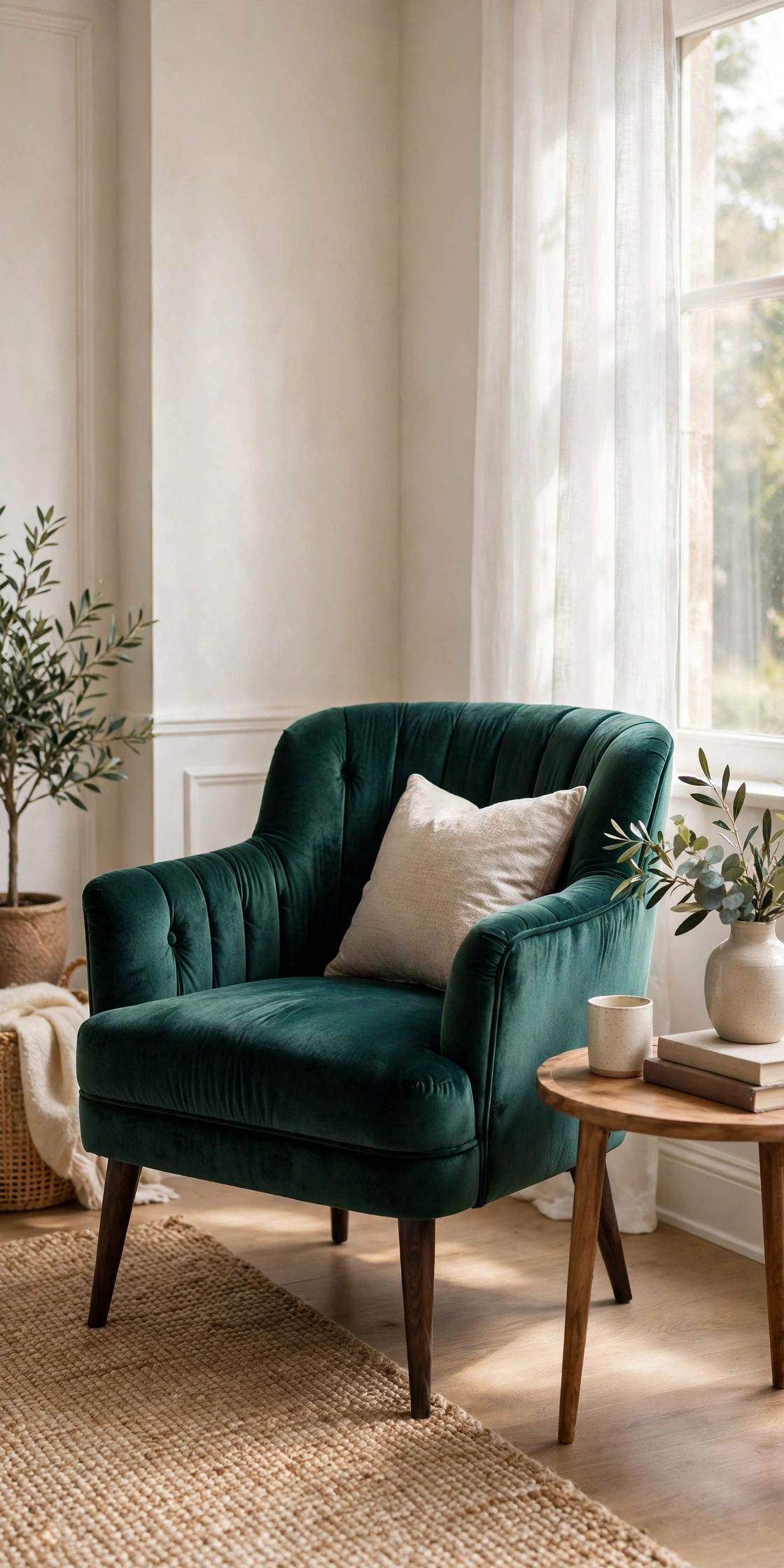
If you buy one piece of furniture for this look, make it seating with vertical lines. Channel tufting and fluted backs add Deco rhythm without any applied ornament, and they sit comfortably next to modern sofas without looking like a period set. In practice this look comes together best when the chair’s legs are simple and dark, so the upholstery does the talking. Sit in it before you commit, since deep tufting can feel stiff over cheap foam. Expect to pay more for good bones here, since this is the piece guests will actually touch.
Good to Know: Sit in it before you commit; deep channel tufting can feel stiff if the foam is cheap.
7. Hang a tiered chandelier or sculptural pendant
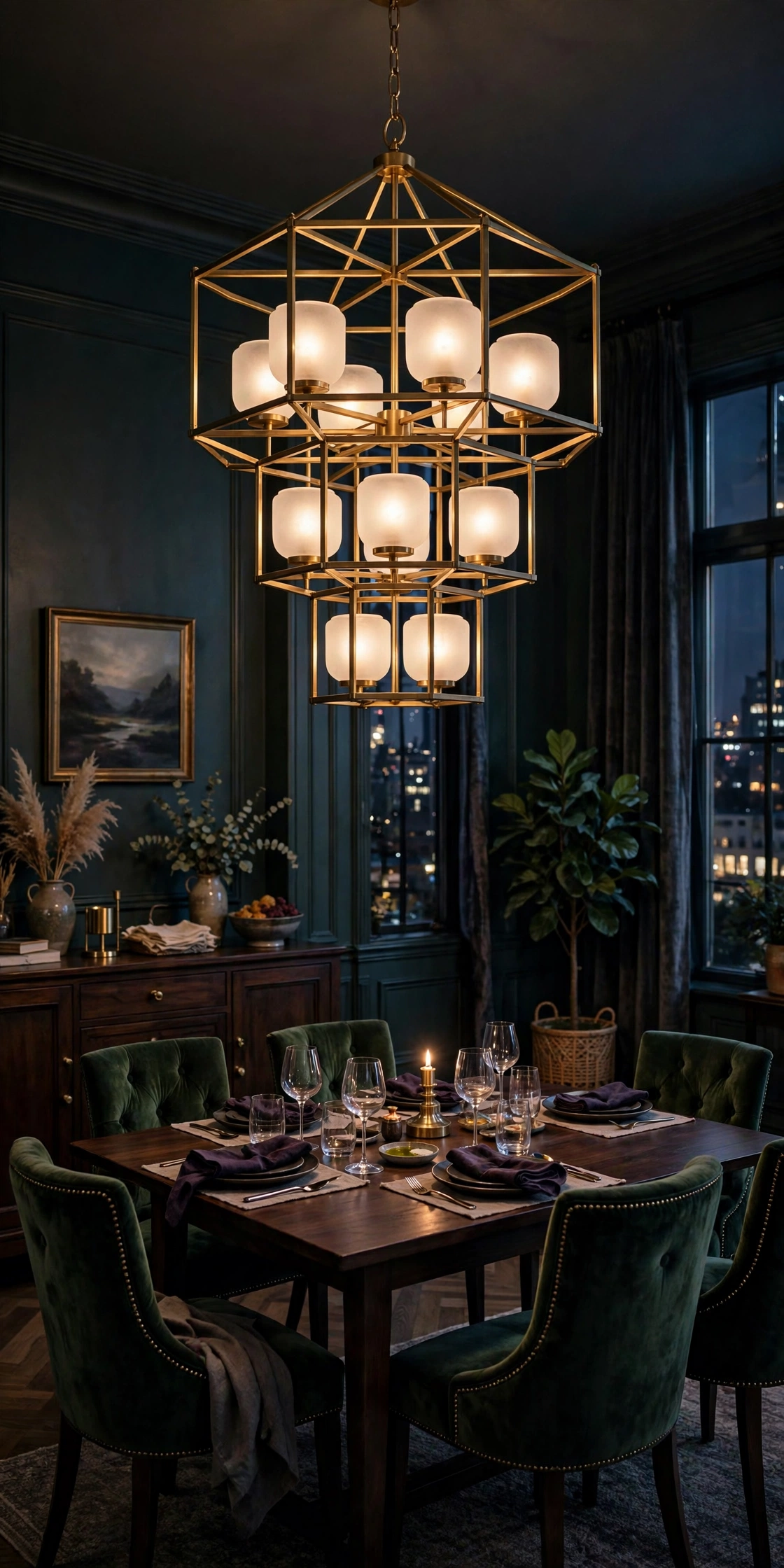
Statement lighting is the most visible doorway into Neo Deco. A tiered fixture with geometric silhouettes or a cluster of ribbed-glass pendants gives a dining room its focal point in one move, and designers keep naming lighting as the first place to spend. Measure twice before you buy: the bottom of a dining pendant should hang about 30 inches above the table, and too high reads as an afterthought. If your ceiling is under eight feet, a semi-flush geometric fixture gives the same effect without anyone ducking. Always check the bulb type, since some sculptural fixtures take pricey specialty bulbs.
Quick Tip: If your ceiling is under eight feet, choose a semi-flush geometric fixture instead of a hanging one.
8. Style a bar cart like it means it
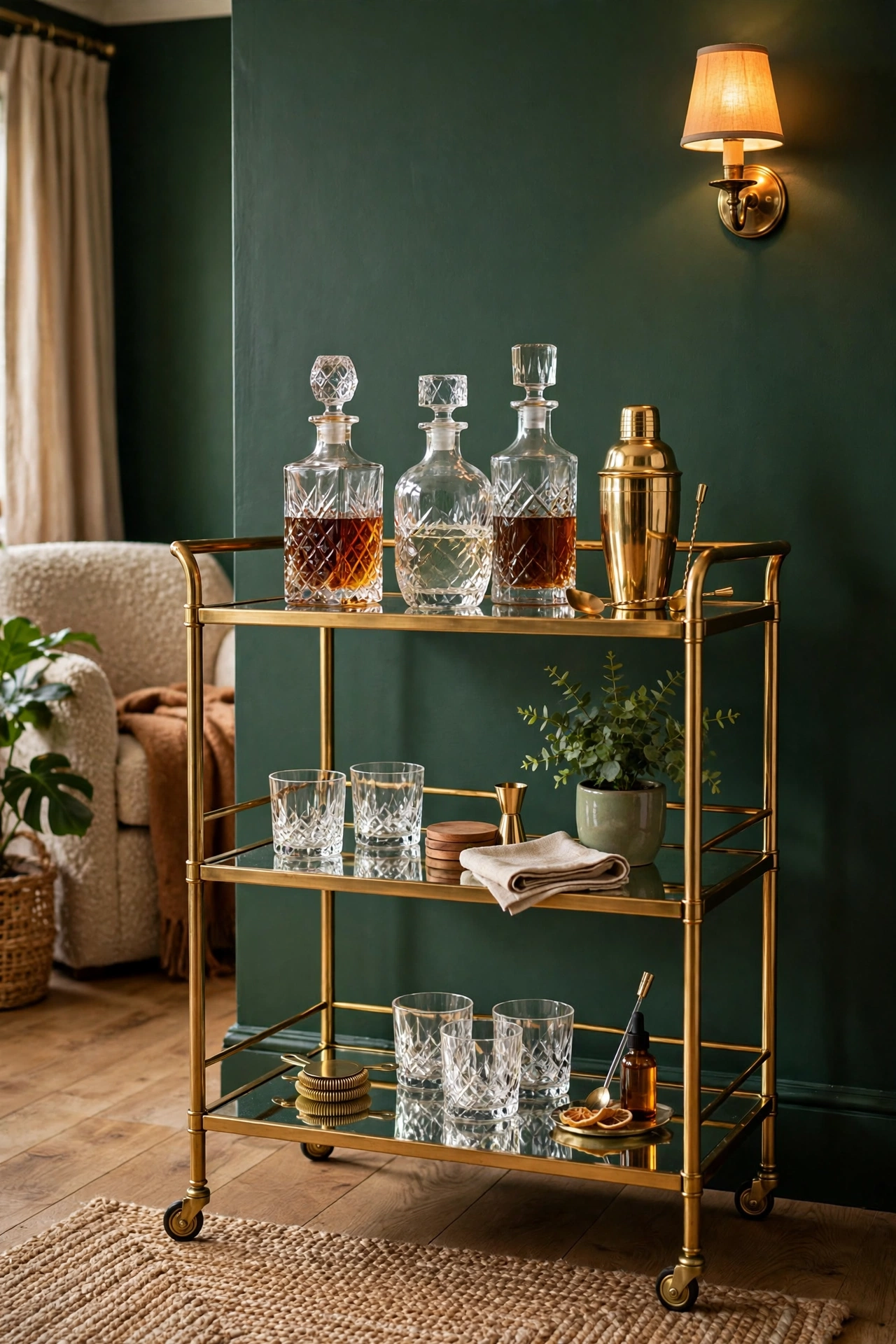
A brass or mirrored cart with cut-glass decanters, a cocktail shaker, and one small plant hits the era’s love of ritual without needing a wet bar. It is honestly the most fun five square feet in Deco decorating, and it works in a living room corner, a dining room, or even a wide hallway. Keep it to one cart styled with restraint, since two carts is a theme restaurant. Line the lower shelf with a small mirror tile to double the sparkle for a few dollars. Restock it seasonally so it never gathers dust and starts looking like storage.
Pro Move: Line the cart’s lower shelf with a small mirror tile to double the sparkle for a few dollars.
9. Add a marble-top side table with a brass base
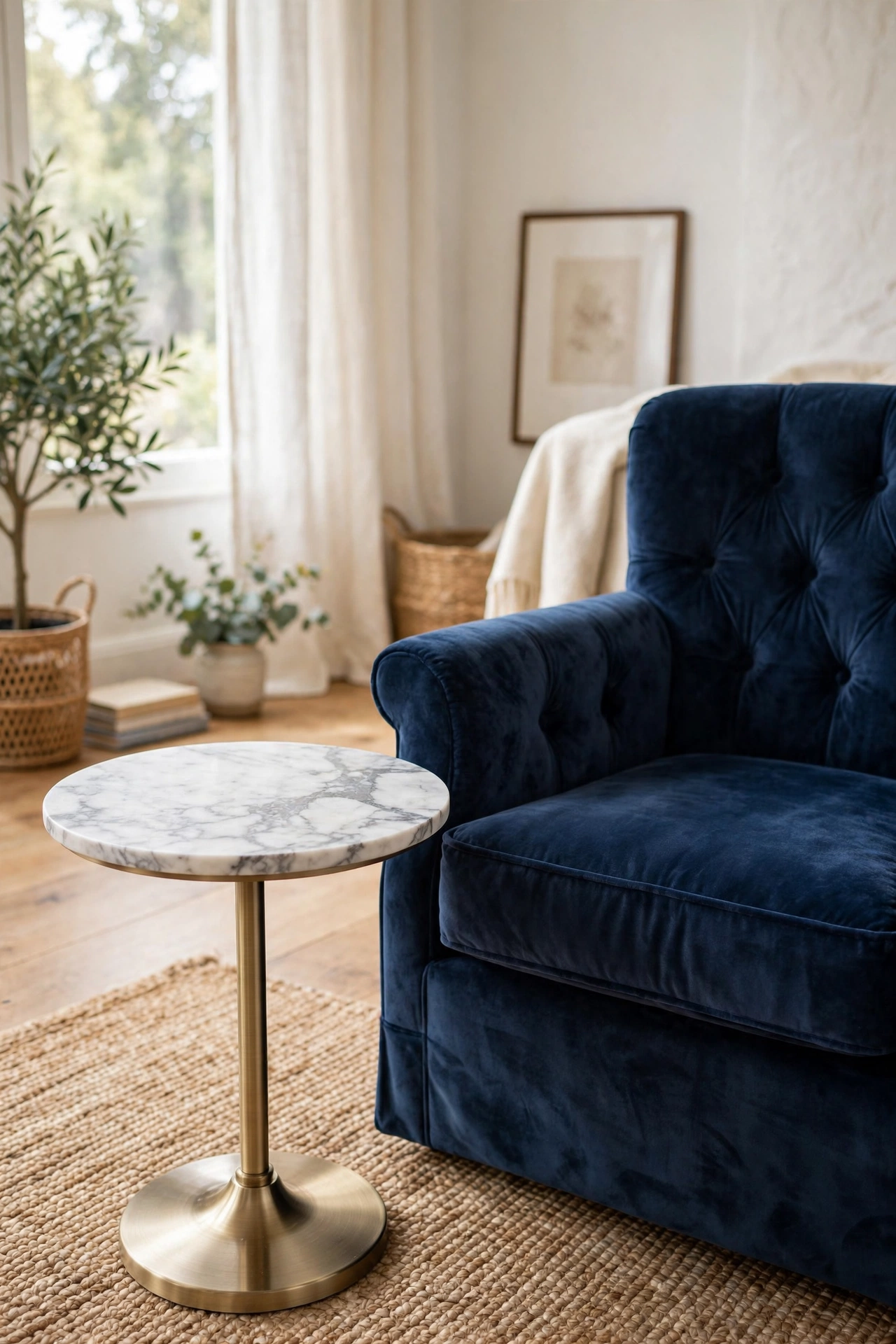
This combination is basically the Neo Deco uniform in miniature. A round marble top on a slim brass pedestal works next to a sofa, between two chairs, or as a nightstand, and the stone’s veining keeps it from feeling mass-produced. Honed marble hides fingerprints better than polished, which matters on a table you actually use every day. Coasters are non-negotiable and red wine stays far away, because marble stains faster than you would believe. If the maintenance worries you, a marble-look quartz top gives the same veining with none of the anxiety.
Heads Up: Marble stains, so coasters are non-negotiable and red wine stays far away.
10. Pair a curved chair with an angular side table
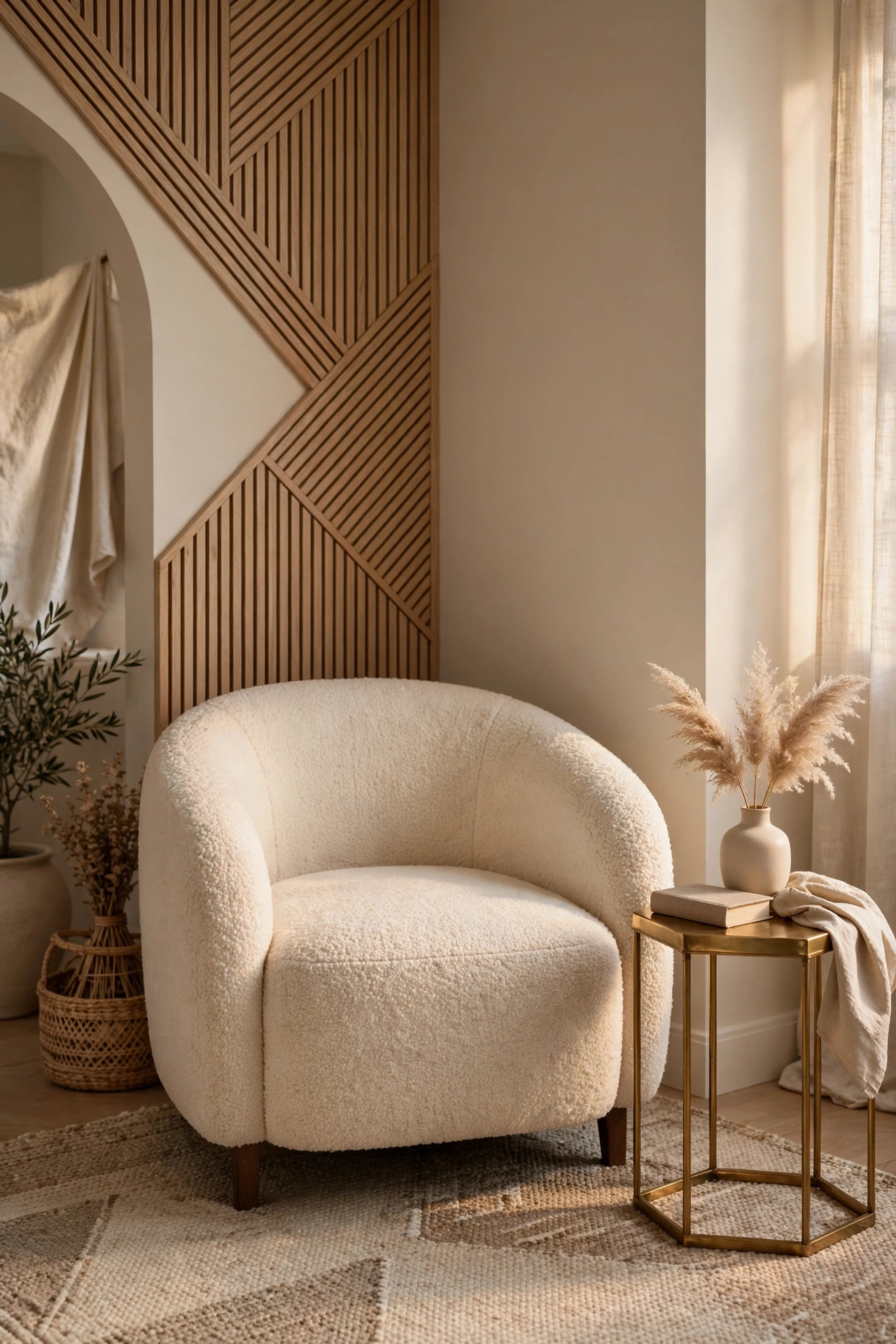
A rounded boucle or velvet chair next to a hexagonal or stepped side table creates the push-pull between soft curves and hard geometry that makes a room feel designed. This contrast of silhouettes is one of Neo Deco’s signature moves, and it costs nothing beyond choosing the right pairing. Keep both pieces in the same color family so the contrast stays in the shapes, not the palette. It also rescues rooms where everything is currently square and boxy. Try it first with pieces you already own before buying anything new.
Smart Save: This trick also rescues rooms where everything is currently square and boxy.
Go Bold: Surfaces, Color, and Pattern
11. Install fluted panels on one wall or cabinet front
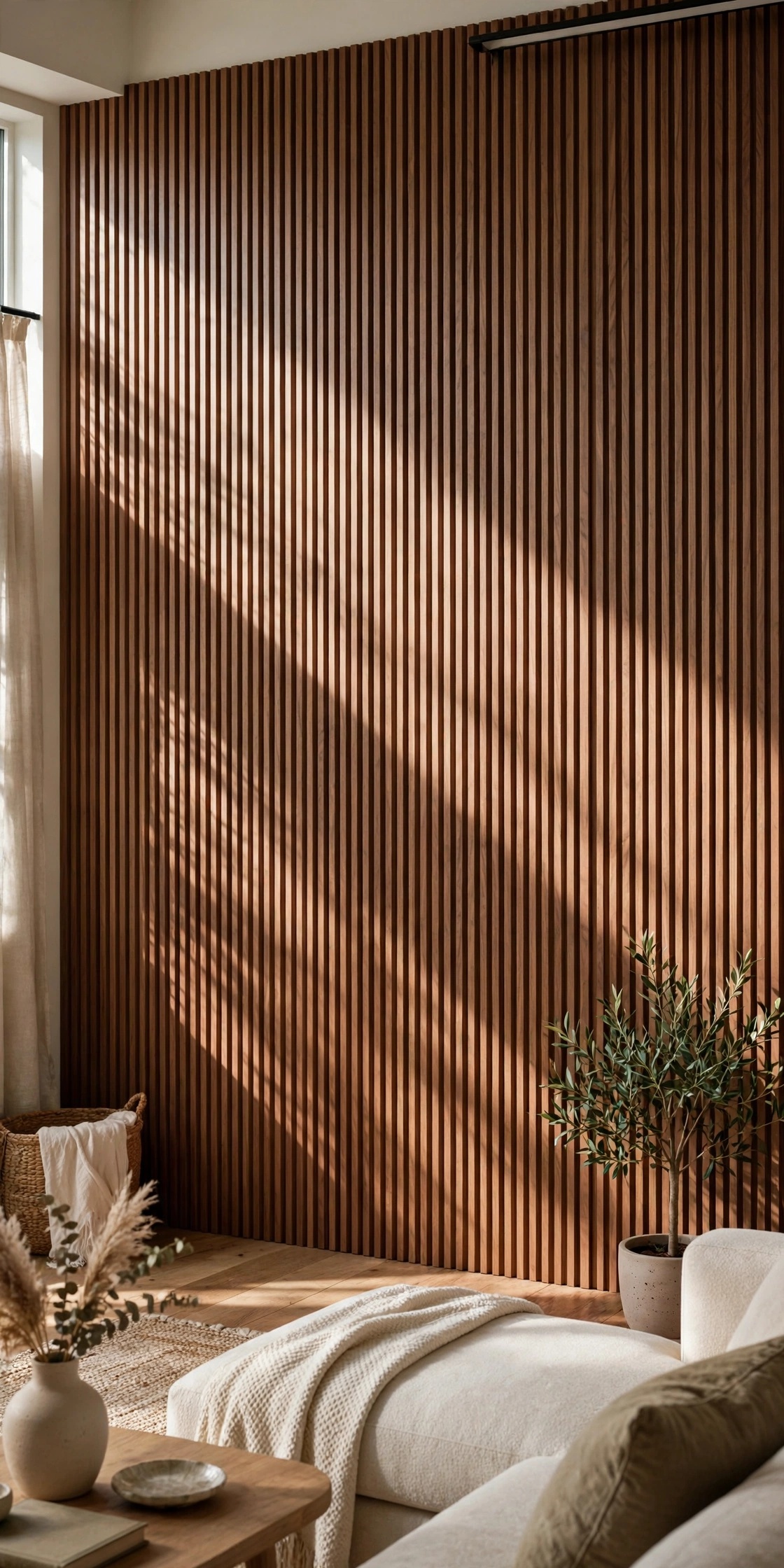
Narrow vertical reeds in wood or MDF catch light and shadow all day, giving flat walls the architectural interest Deco demands. Fluting shows up on kitchen islands, headboards, and cabinet fronts because it adds texture without any applied ornament. Keep it to one wall or a single furniture front, because a whole room of fluting starts to feel like a recording studio. The grooves collect dust, so keep a soft brush handy if you hate cleaning. Paint it the same color as the wall for subtlety, or go dark for drama.
Reality Check: Fluted panels collect dust in every groove, so keep a soft brush handy if you hate cleaning.
12. Lay a chevron or fan-pattern tile
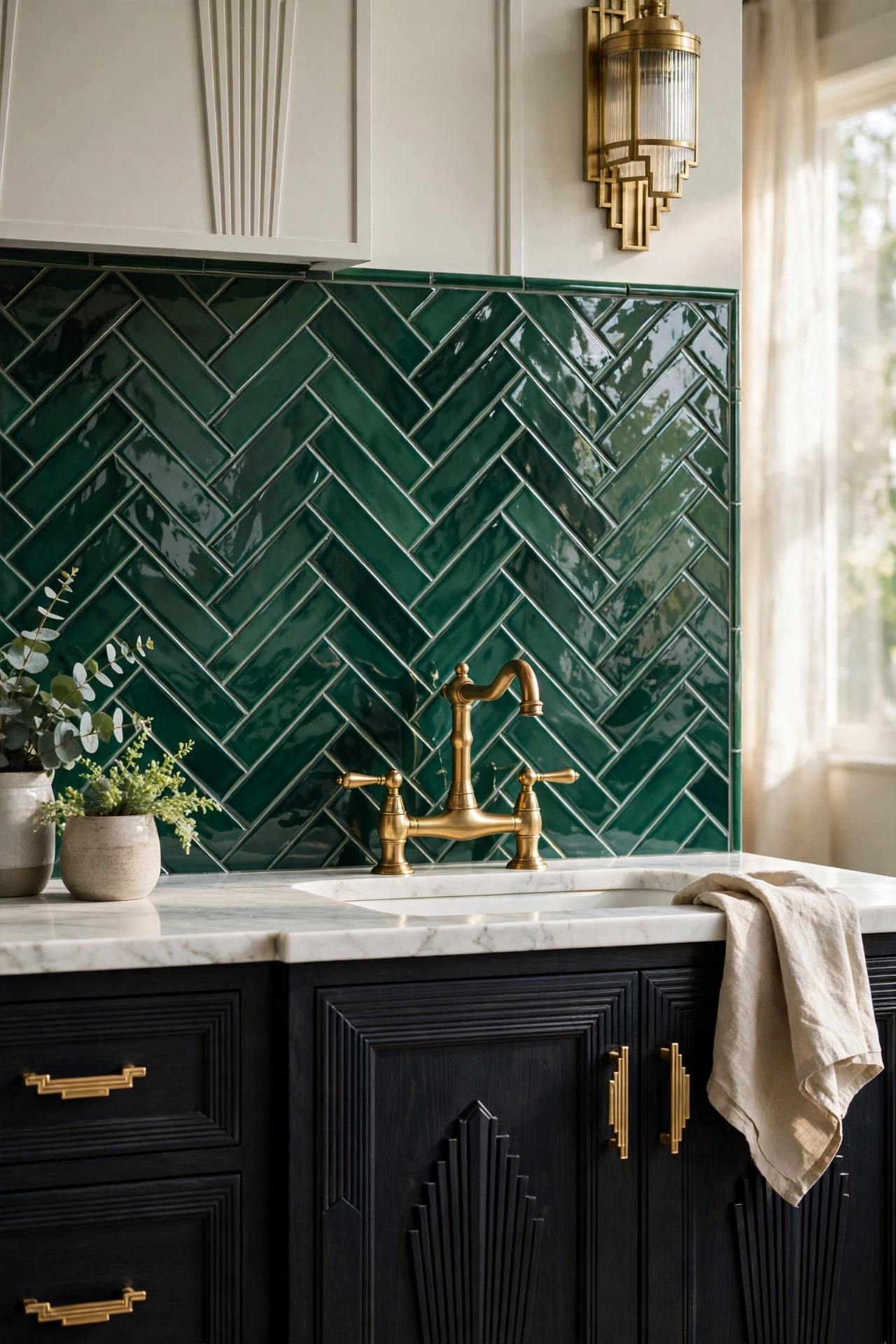
Geometric tile is where subway tile went to retire. A chevron backsplash or fan-motif bathroom floor delivers Deco pattern at a scale that feels current, especially in a gloss finish that bounces light around the room. In practice this works best when the grout closely matches the tile, since contrasting grout turns graphic pattern into visual noise. Order 15 percent overage, because cuts around edges and outlets eat more tile than you expect. This is a commitment, so live with a sample board for a week before the tiler arrives.
Designer Advice: Order 15% overage on patterned tile, since cuts around edges eat more than you expect.
13. Color-drench a room in one jewel tone
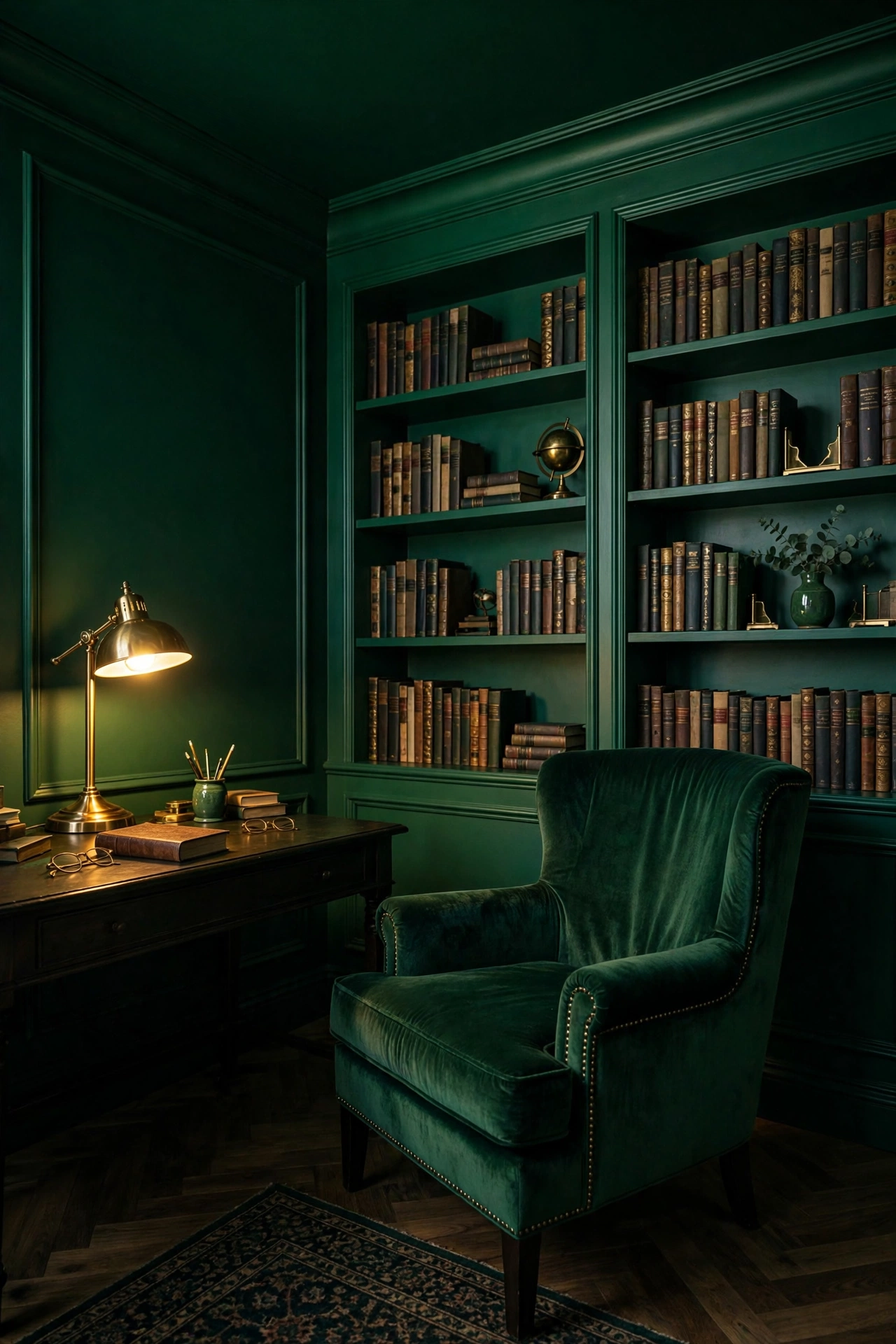
Painting walls, trim, and ceiling one saturated jewel tone removes every visual stopping point, which is why a sunlit study in deep emerald feels enveloping rather than dark. Color drenching is the boldest paint move going, and jewel tones were made for it. It needs good natural light to work, so skip it in windowless rooms where the same color reads as a cave. Test with a large painted board moved around the room for three days before committing to gallons. Sheen matters too: eggshell on walls with satin on trim keeps it rich without going shiny.
Smart Save: Test with a large painted board moved around the room for three days before committing to gallons.
14. Paper one wall in oversized Deco geometry
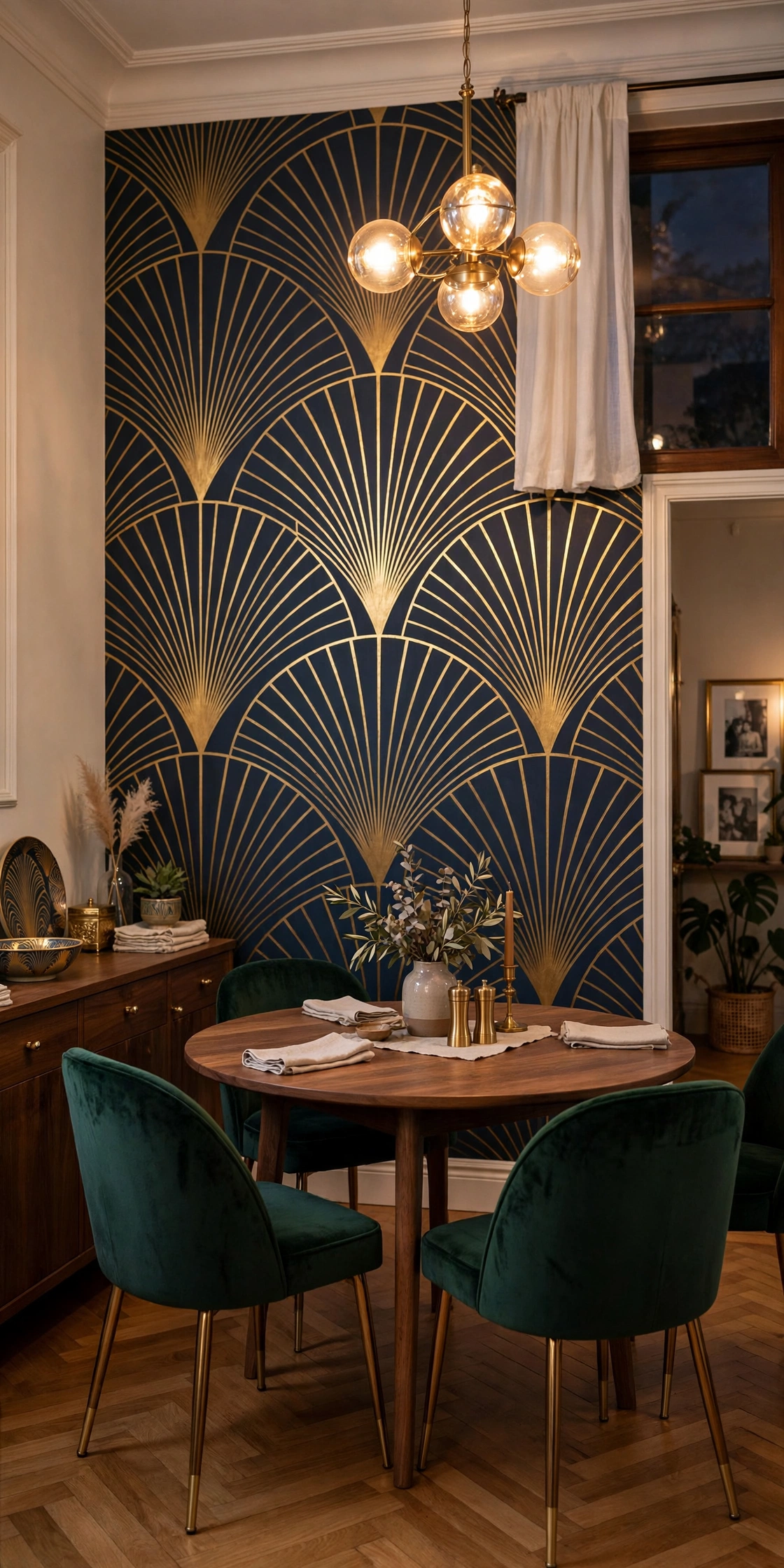
Wallpaper is back and Deco motifs are leading it. One wall in an oversized fan, arch, or stepped pattern gives a room instant identity, and tone-on-tone versions keep it grown-up rather than loud. Hang it on the wall you face when you enter, because pattern behind you is pattern wasted. Bold wallpaper shrinks small rooms visually, so keep the other three walls light and quiet. Paste-the-wall types are far more forgiving for first-timers than traditional paste-the-paper.
Good to Know: Bold wallpaper shrinks small rooms visually, so keep the other three walls light and quiet.
15. Give marble a starring role
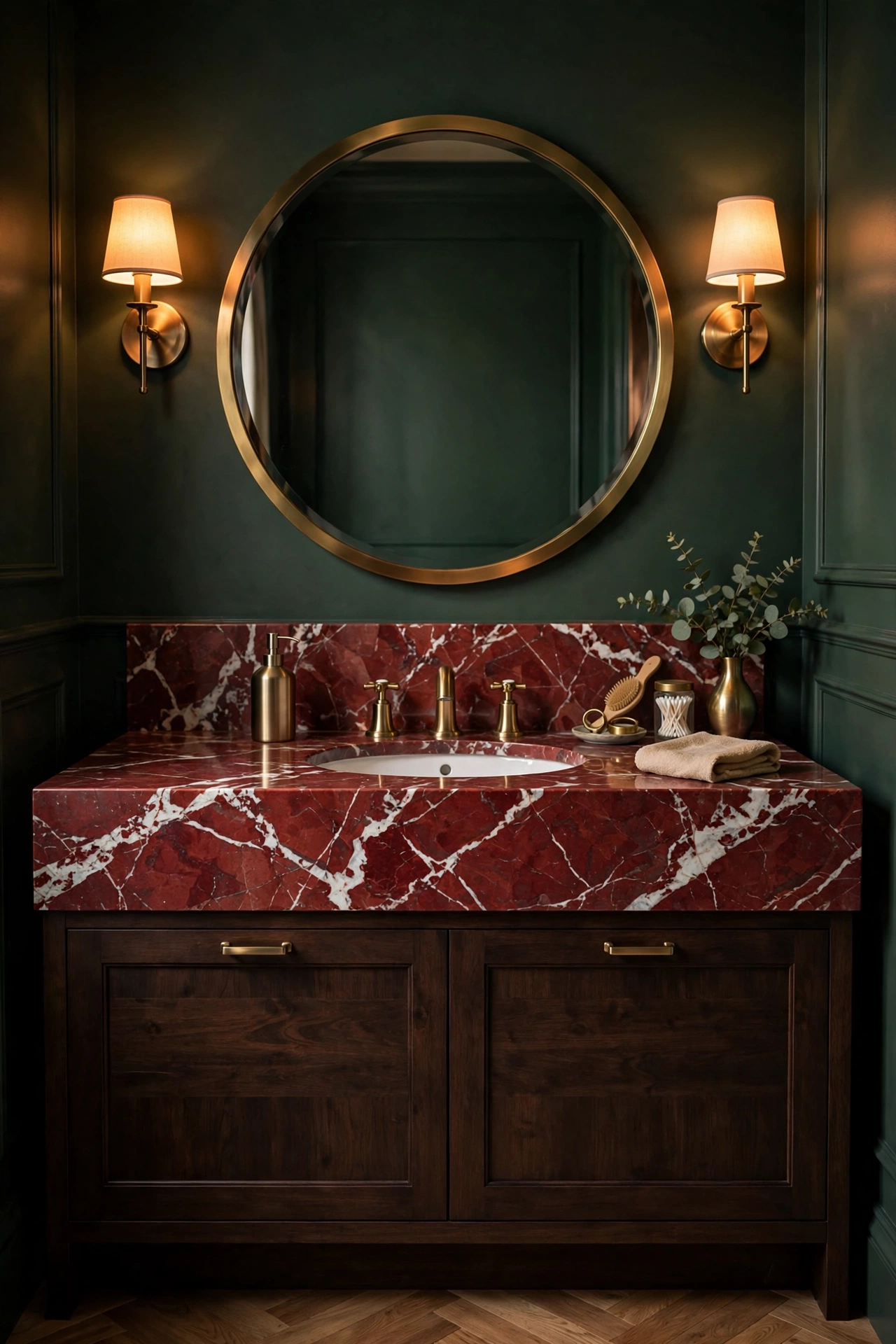
Even a small slab of marble goes a long way. A vanity top, fireplace surround, or thick shelf against dark walls reads as pure Deco luxury, and red marble bathrooms are up 80 percent in searches right now. Natural stone varies wildly, so always approve your actual slab rather than a sample chip. Real marble plus a tight budget do not mix, so a marble-look quartz gets you most of the way there for far less money. Whatever you choose, seal it and wipe spills fast.
Reality Check: Real marble plus a tight budget do not mix; a marble-look quartz gets you 80% there for 40% of the price.
Full Deco: Rooms That Commit
16. Build the living room around strict symmetry
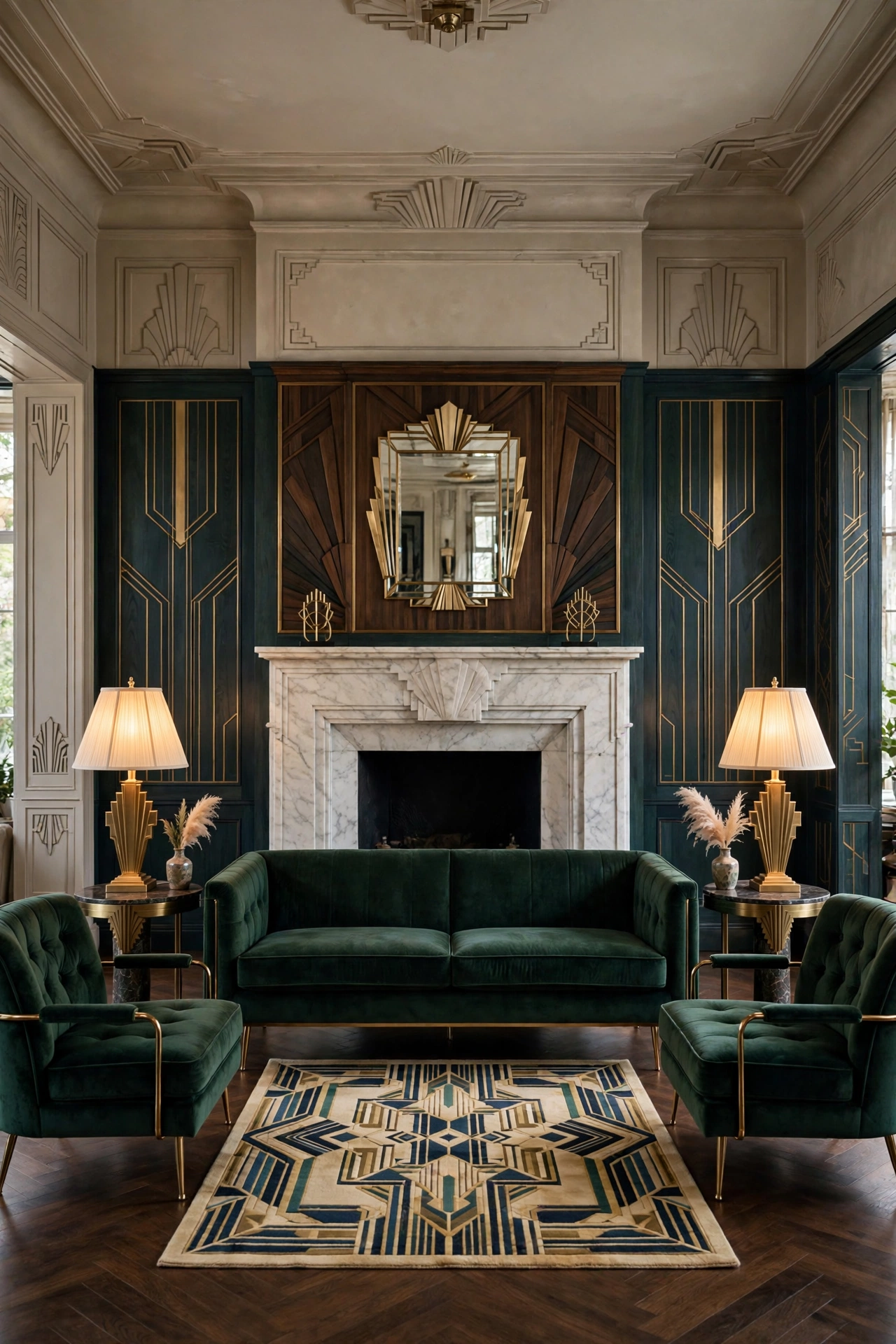
Match the armchairs, flank the sofa with identical lamps, and center the rug on the fireplace: symmetry costs nothing and gives an ordinary living room instant intention. It is Deco’s organizing principle, and it works because the human eye reads balanced pairs as calm and deliberate. Break it once on purpose, with one asymmetric piece like a leaning floor lamp, so the room feels designed rather than staged. Photograph the room from the doorway to check your work, since symmetry mistakes show up instantly on camera. This is the rare idea that improves almost any style, not just Deco.
Pro Move: Photograph the room from the doorway; symmetry mistakes show up instantly on camera.
17. Add an arch, real or faked
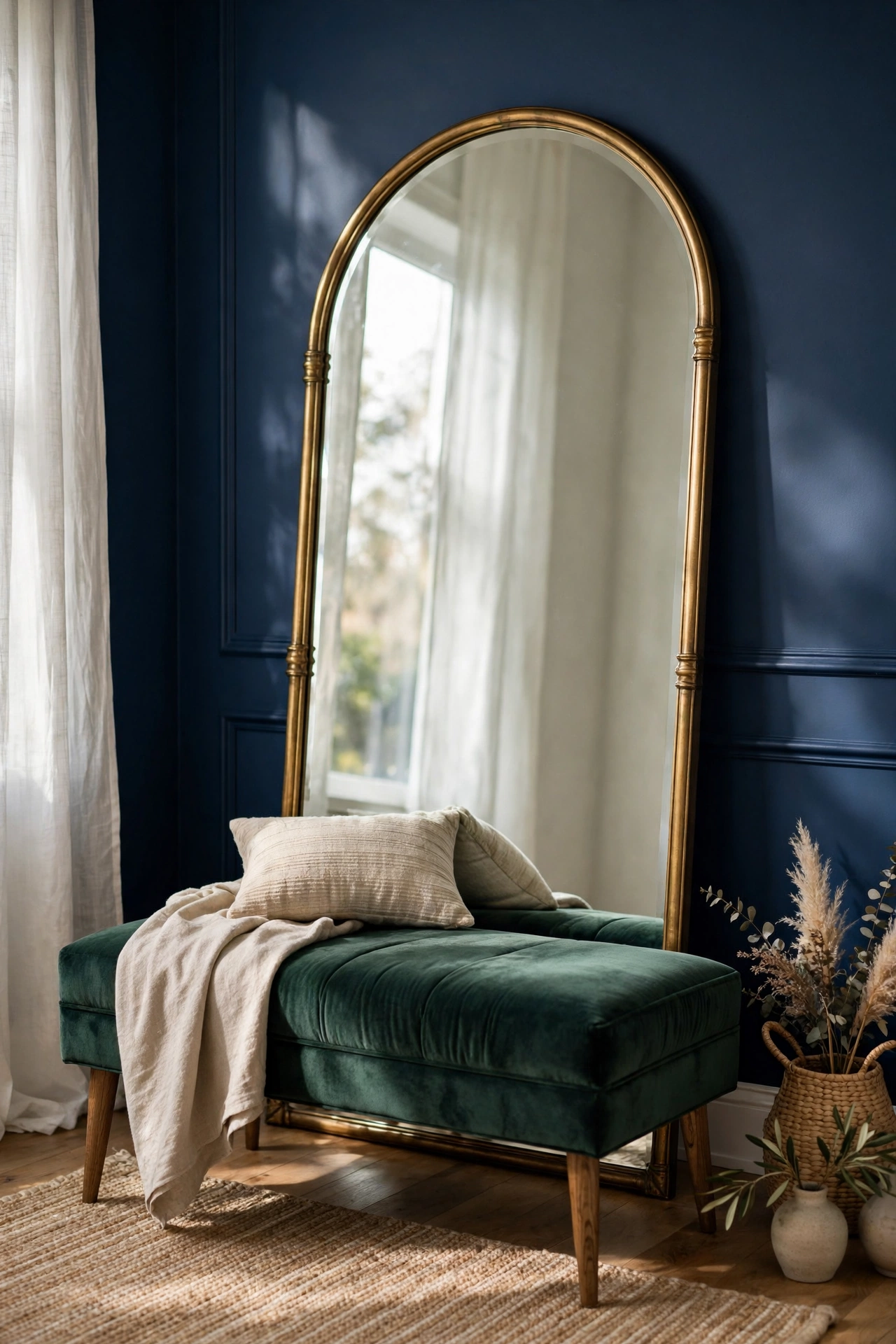
Arches soften Deco’s hard geometry and they are everywhere in 2026. If you cannot cut a new doorway, an arched mirror or a painted arched alcove in a contrasting color gives you the silhouette for a fraction of the cost. Painted arches need crisp edges, so tape carefully or hire it out, since wobbly lines cheapen the whole effect. Keep to one arch per sightline, because the curves start competing with each other past that. An arched floor mirror is the easiest version: it leans, it needs no installation, and it bounces light.
Quick Tip: One arch per sightline is the limit; more than that and the curves start competing.
18. Create a lacquered drinks niche
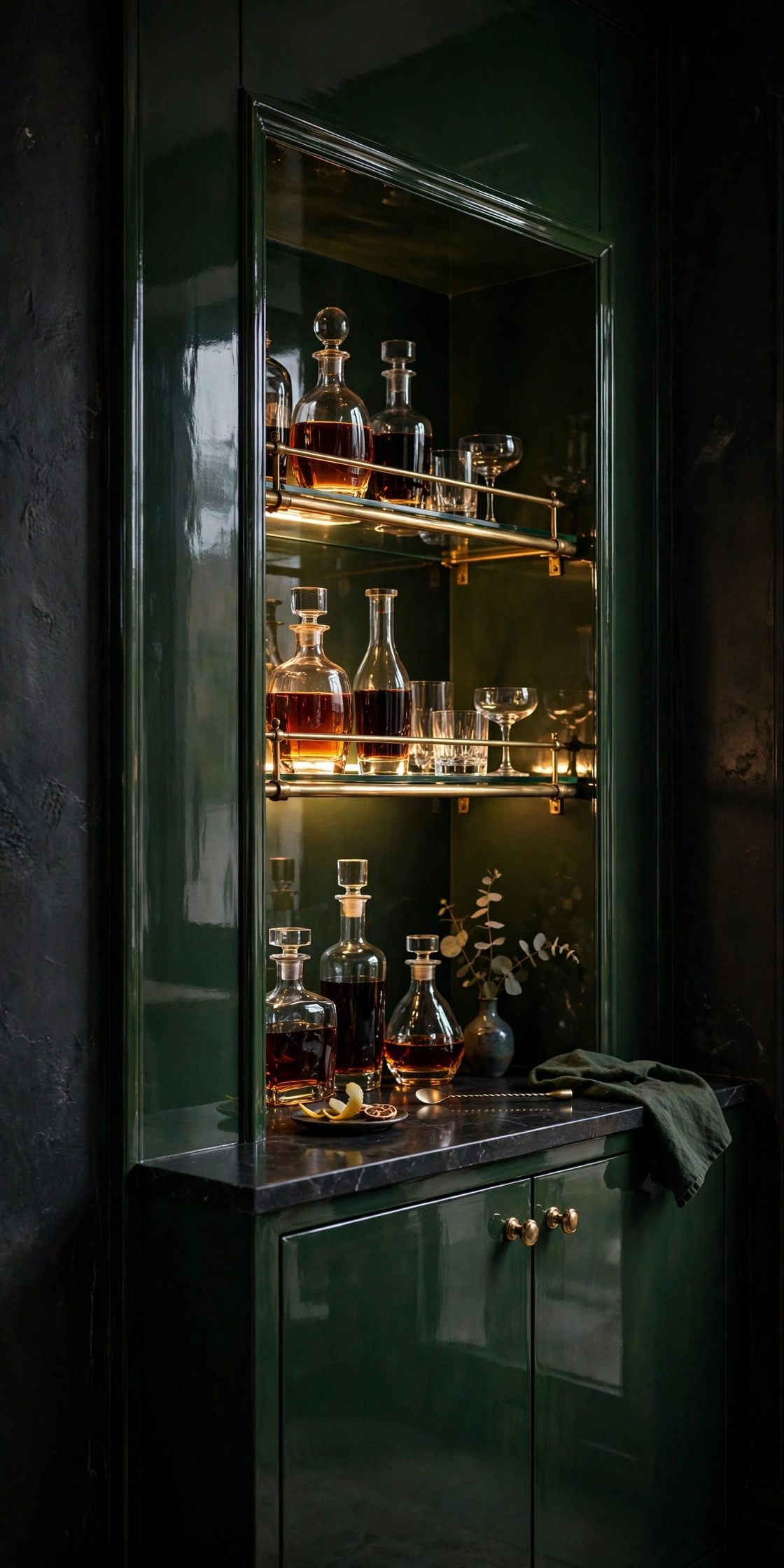
A small bar wall in deep green or black high-gloss lacquer with brass rail detailing becomes the room’s jewelry box, since lacquer reflects light like nothing else. It is the single most Deco surface you can own, and it makes even a modest collection of glassware look considered. High gloss shows every flaw underneath, so the prep work matters more than the paint itself, and you should budget for proper sanding and priming. A lacquer-look laminate on flat cabinet fronts fakes the effect convincingly for far less money. Keep what you display edited, because gloss plus clutter reads as chaos.
Smart Save: A lacquer-look laminate on flat cabinet fronts fakes the effect convincingly for far less money.
19. Make the headboard a Deco moment
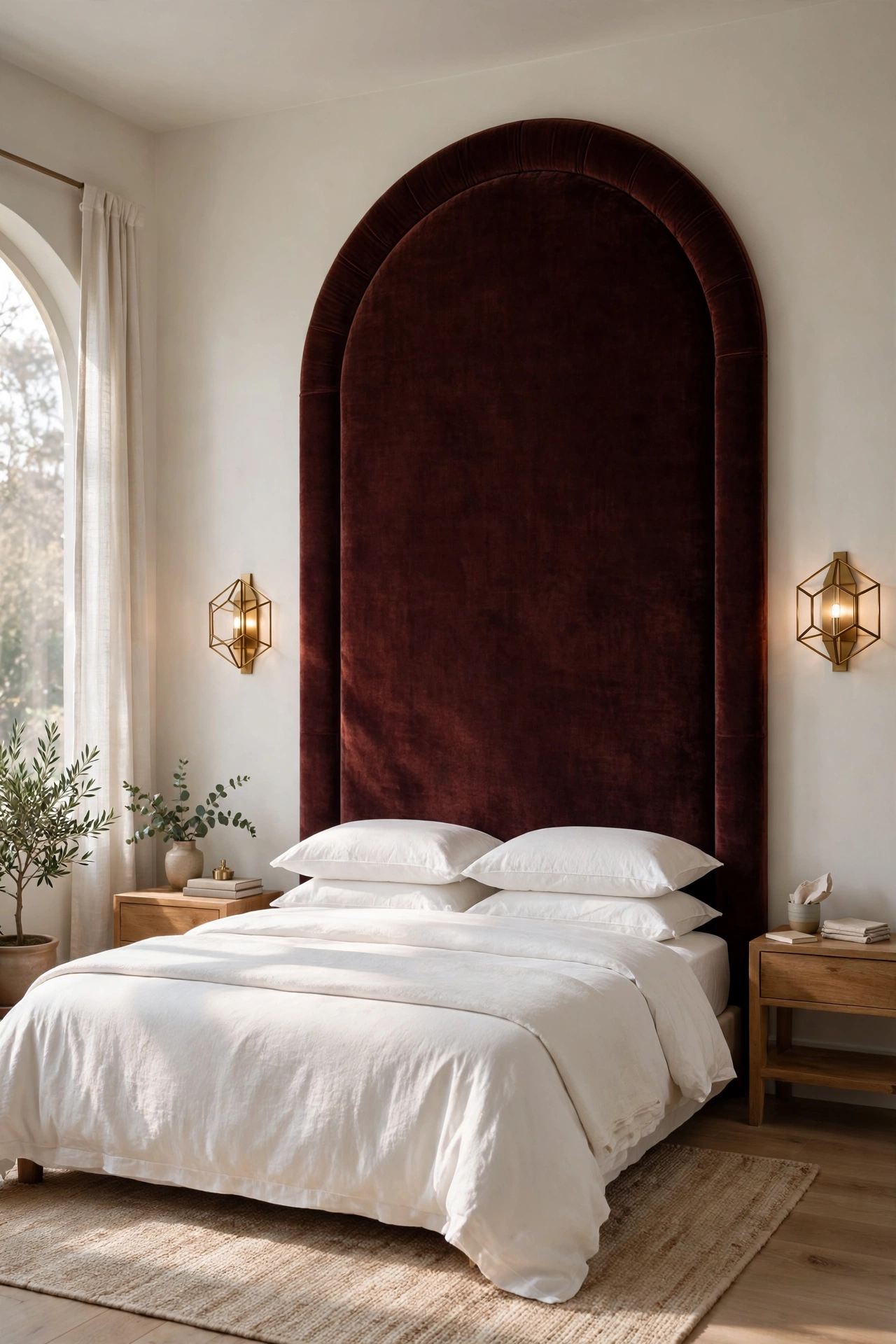
An upholstered headboard in an arch shape, a fluted wood panel wall behind the bed, or geometric sconces flanking the pillows deliver the look while you sleep in a calm room. Bedrooms take Deco beautifully when the bed wall does the heavy lifting and everything else stays quiet. Keep bedding simple and solid, since the headboard is the star and patterned duvets fight it. Extend the headboard treatment to the ceiling in small bedrooms to fake extra height. Two matching nightstands keep the symmetry the style loves.
Heads Up: Extend the headboard wall treatment to the ceiling in small bedrooms to fake extra height.
20. Layer lighting at three heights
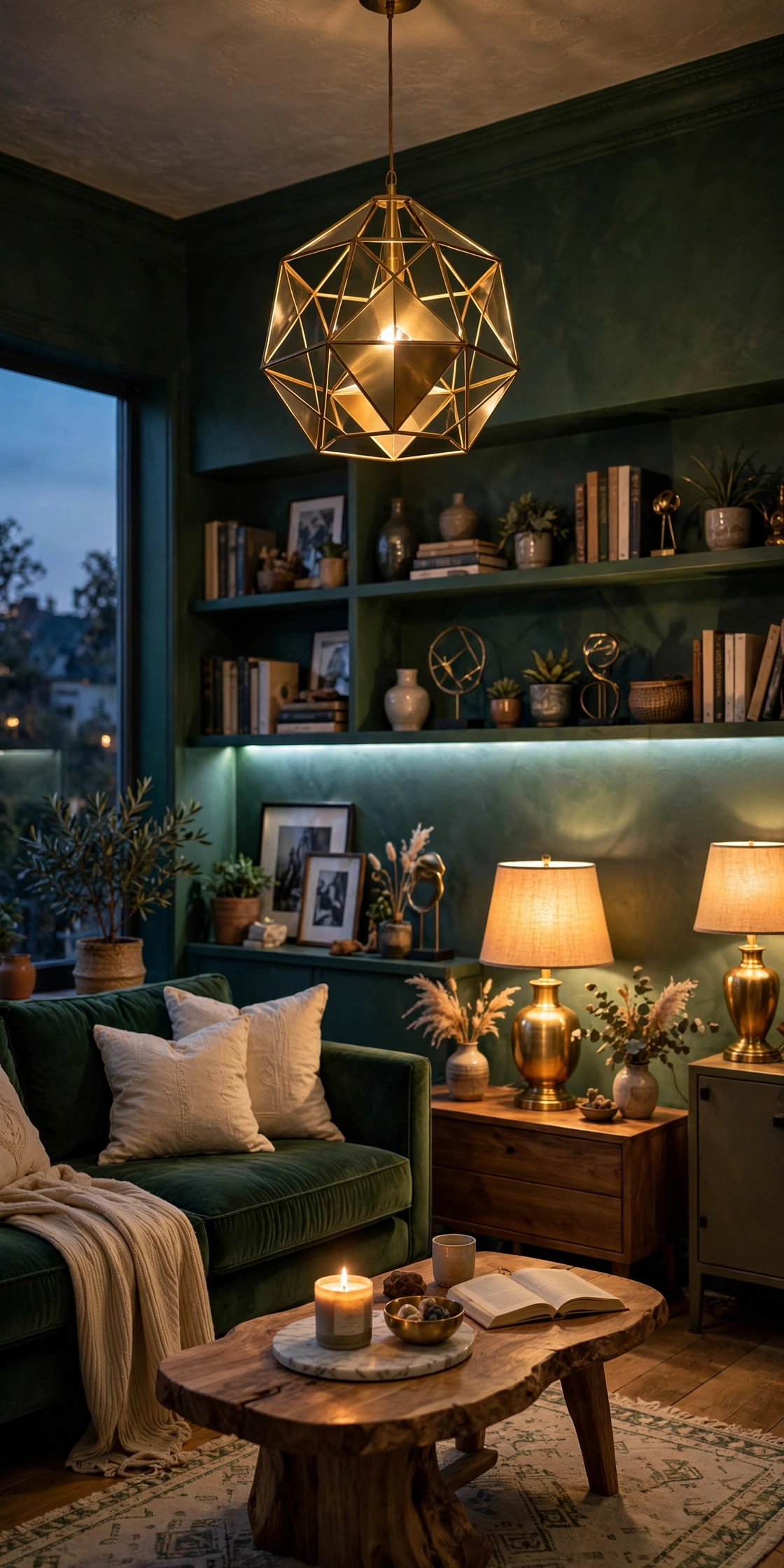
Deco rooms glow from multiple levels, never from one overhead can. Combine a sculptural pendant with table lamps and low picture lights, all on dimmers, and the room shifts mood on demand throughout the evening. Keep every bulb at 2700K color temperature so the layers blend instead of clash. Put each height on its own switch or smart scene, because one switch for everything defeats the purpose. Start with the pendant and one lamp if budget is tight, adding more layers over time.
Designer Advice: Put each height on its own switch or smart scene; one switch for everything defeats the purpose.
Neo Deco works because it borrows confidence without demanding a costume. Start with one idea from the top of this list and live with it for a week. You will know quickly whether you want more. The rooms that pull this off best are not the most expensive ones, they are the most deliberate. Pick your metal, pick your jewel tone, and let the geometry do the rest.