Scandinavian Kitchen Decor Ideas That Actually Feel Like Home

There is something genuinely satisfying about a Scandinavian kitchen. It is not just the clean lines or the pale wood tones, it is the way the whole room feels considered. Nothing is there by accident, nothing is overdone, and yet it never feels cold or clinical. If you have spent any time scrolling through Nordic design inspiration and wondering how to bring that feeling into your own kitchen without gutting the whole room, this guide is for you. The ideas here cover everything from major layout decisions to small, affordable swaps you can do this weekend.
Scandinavian kitchen design has evolved a lot in recent years. Yes, white cabinets and birch wood are still part of the story, but so are warm sage greens, chalky greys, dark slate, and even the occasional bold terracotta accent. The style is rooted in functionality and respect for natural materials, and that foundation gives you a lot of room to make it your own. Whether you are working with a compact galley kitchen or an open-plan space, these 23 ideas will give you a clear, practical direction to start from.
Working With Color the Scandinavian Way
1. Soft White With Warm Undertones
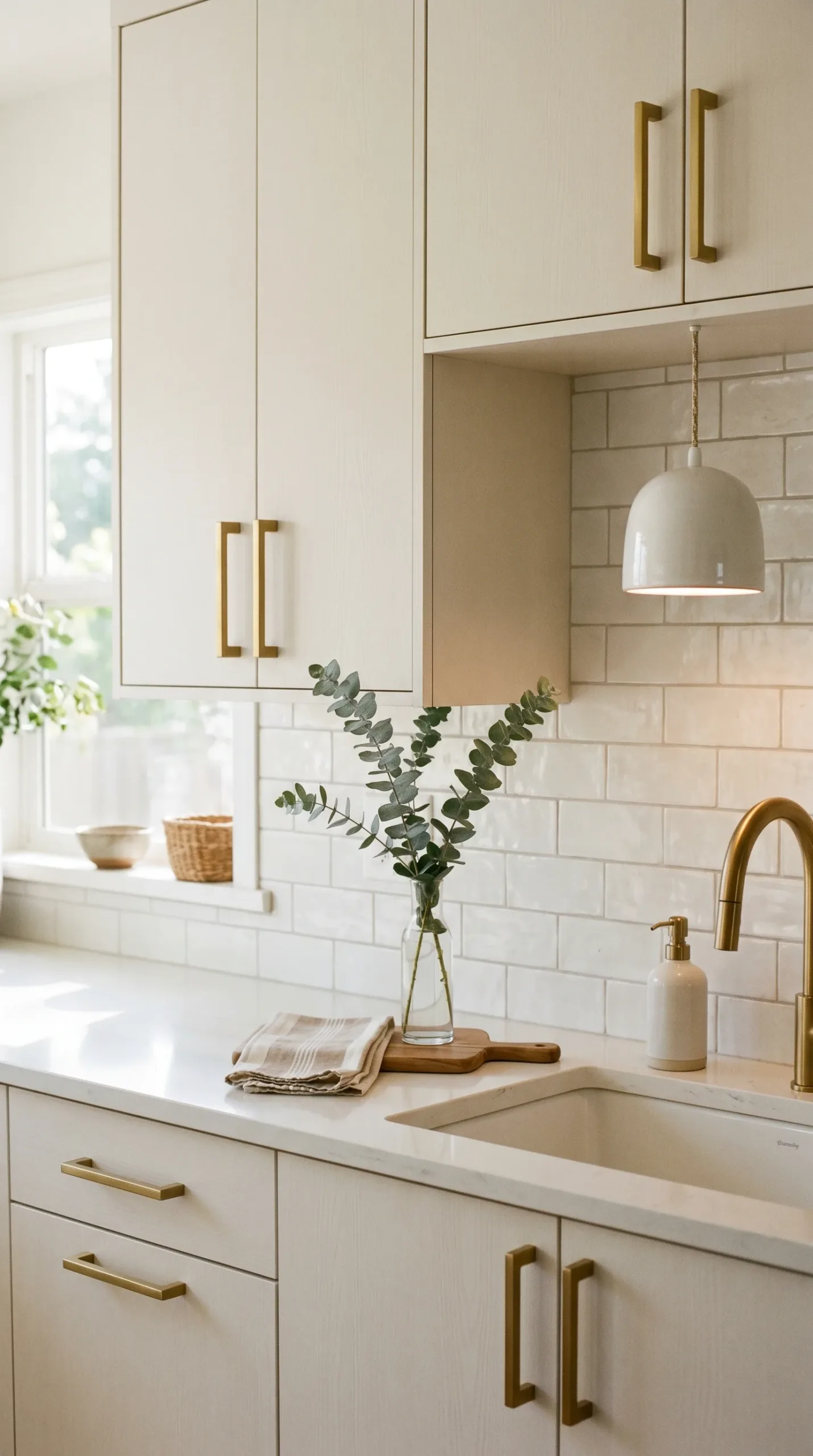
Pure, stark white is a common misread when it comes to Scandinavian kitchens. In practice, the white that works best in Nordic-inspired spaces leans slightly warm, think tones like Benjamin Moore Chantilly Lace or Farrow and Ball All White rather than a cold bright white. Pair these creamy whites with matte brushed brass hardware and a light oak floating shelf or two, and the result is warm and airy rather than sterile and showroom-like. For lighting, a warm-toned LED pendant (around 2700K) over the island or sink area makes a significant difference in keeping the space from feeling flat. The countertop material matters here too: honed white quartz or light limestone works beautifully, while high-gloss surfaces can tip the balance toward feeling cold. This idea works in most kitchen sizes, though very small kitchens may want to keep the soft white to upper cabinets only and anchor lower units with a slightly deeper tone.
Designer Note: Test your white paint at different times of day. North-facing kitchens may need a warmer white than south-facing ones to avoid a blue cast in morning light.
2. Chalky Grey Cabinets With Black Accents
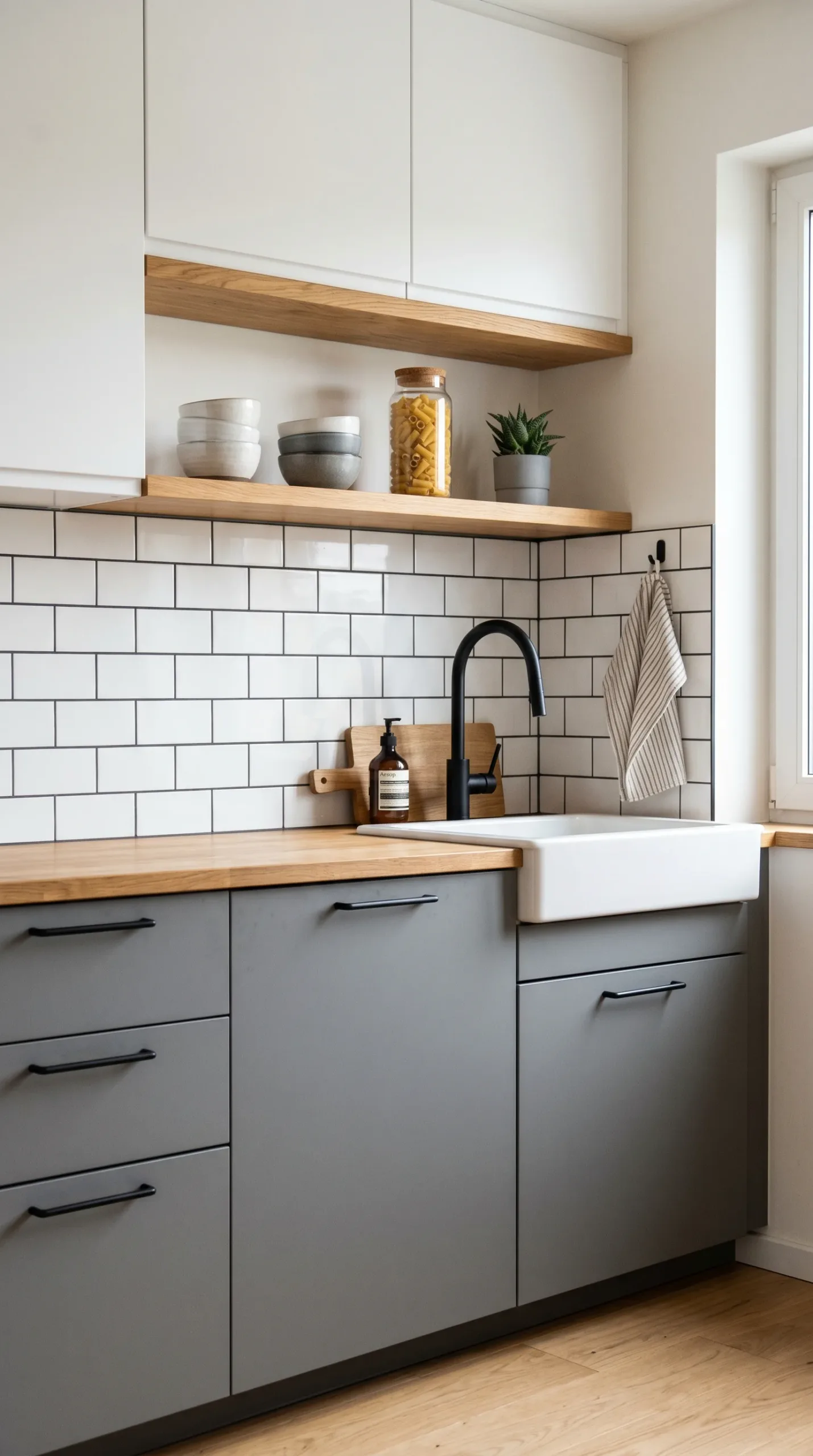
Grey is one of the most versatile shades in the Scandinavian palette, and when done right it reads sophisticated rather than gloomy. A chalky, matte mid-grey on flat-front or slim-shaker cabinets paired with matte black tapware, black-framed window panes, and a white or light concrete worktop creates a kitchen that feels graphic and modern while staying firmly within Nordic design principles. The key is to keep the grey matte rather than glossy, as matte finishes absorb light in a way that makes the space feel soft and tactile rather than harsh. Open shelving in natural oak or walnut adds the organic warmth that stops the grey from feeling heavy. Budget-friendly note: if a full cabinet repaint feels like too big a commitment, try grey on the lower units only with white above, a common and effective Scandinavian approach that also makes the ceiling feel higher.
Designer Note: Use a darker charcoal for a single accent wall or pantry cabinet to add depth without overwhelming a smaller kitchen.
3. Sage Green as a Quiet Statement
Sage green has become one of the most popular cabinet colors in contemporary Scandinavian kitchens, and for good reason. It sits right at the intersection of the natural world and the muted Nordic palette, feeling grounded and calm without being as safe as white or grey. Sage works particularly well paired with unlacquered brass or brushed copper hardware, both of which warm up the green and give it an earthy, collected quality. A white subway tile or zellige backsplash in an off-white or pale grey keeps the walls quiet so the cabinetry can do the talking. Countertops in light-veined marble or white quartz with subtle green veining tie the whole look together. This is a mid-range idea in terms of investment, as it typically requires repainting or replacing cabinet fronts, but the effect is dramatic and the color has proven staying power in design circles.
Designer Note: Avoid overly bright or yellow-leaning sage. The best Nordic sage greens have a grey or blue undertone that keeps them from looking too garden-centre.

4. A Two-Tone Cabinet Palette
Two-tone cabinetry is one of those ideas that looks deceptively simple but requires a bit of thought to pull off. The Scandinavian approach is to use a lighter shade on the upper cabinets and a deeper, richer tone on the lower units, which visually grounds the kitchen and gives the illusion of a higher ceiling. Common pairings include white uppers with dusty navy or forest green lowers, or off-white uppers with warm charcoal or even a deep terracotta on the island only. The hardware should be consistent across both tones to tie the look together. This is a high-impact idea for open-plan kitchens where the cabinetry is visible from the living area, as the color break creates a sense of considered design rather than a uniform block of color.
Designer Note: If you are doing this on a budget, paint only the island or lower units in the deeper tone and keep uppers white. It costs significantly less and achieves a very similar look.

Furniture and Layout Ideas
5. A Freestanding Kitchen Island
Not every Scandinavian kitchen has a built-in island, and in many cases a freestanding butcher-block or painted wood island is actually more interesting. A freestanding island can be moved, which matters in rented spaces, and it has a less rigid, more lived-in quality that suits the hygge principle of warmth and comfort over perfection. Look for islands with a lower shelf for storage, which keeps things practical, and top it with a thick maple or oak butcher block surface for an authentic Nordic feel. Style it simply: a ceramic bowl of fruit, a small potted herb in a terracotta pot, and a single pendant above. This idea works particularly well in kitchens that are already fitted with white or pale grey cabinetry, as the freestanding island introduces warmth and a sense of layered, organic design.
Designer Note: Butcher-block countertops need oiling a few times a year. If you want the look without the maintenance, opt for an oak-veneer or solid wood-effect laminate instead.
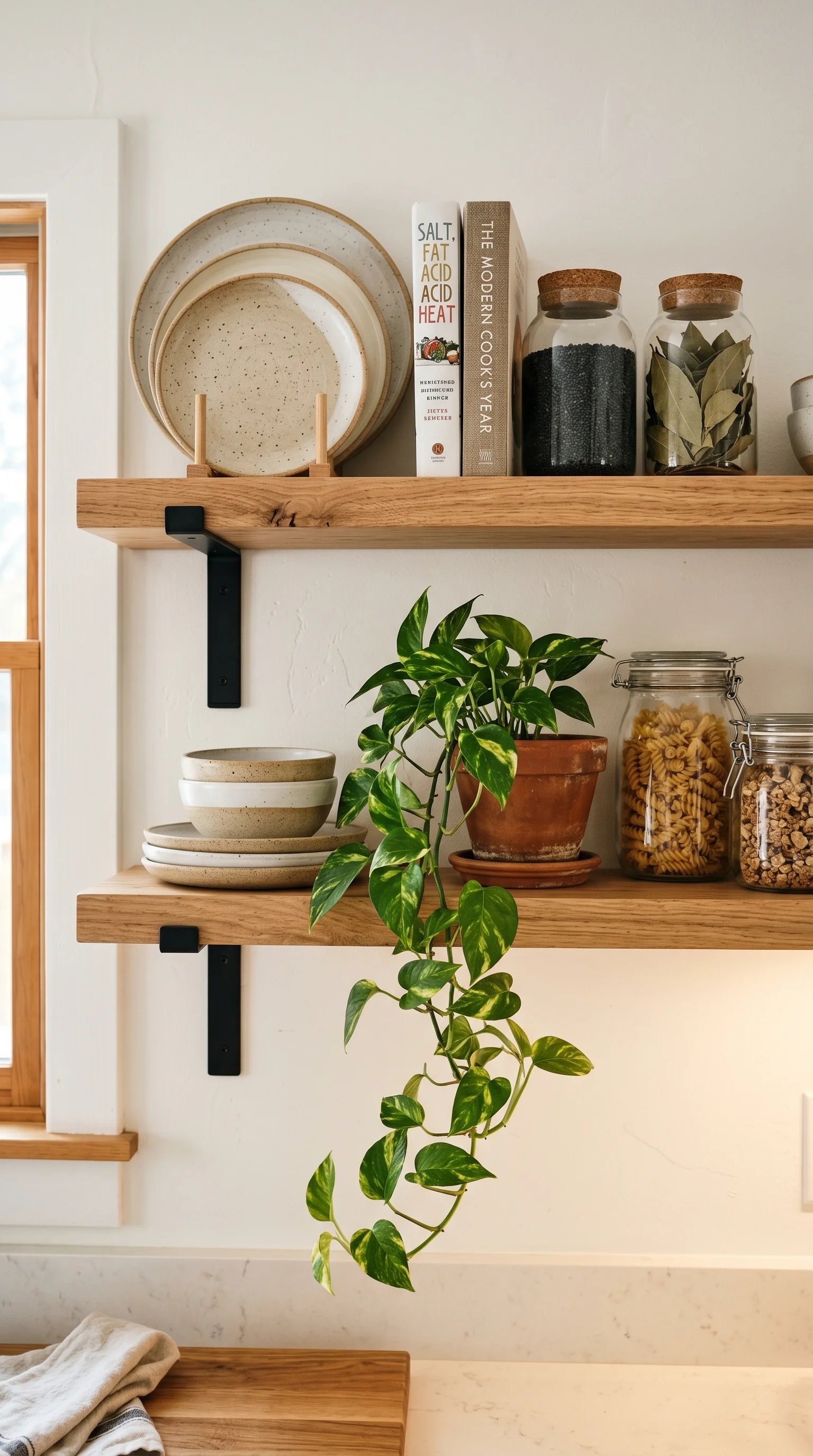
6. Open Shelving Instead of Upper Cabinets
Replacing some or all of the upper wall cabinets with open shelving is a defining move in Scandinavian kitchen design. It opens up the space, makes the kitchen feel larger and lighter, and forces a more intentional approach to what you keep on display. Floating shelves in solid oak or pine with simple metal brackets are the most common choice, and they complement almost any cabinet color below. The styling is important: think stacks of simple white or grey ceramic dishes, clear glass jars for dry goods, a few cookbooks stood upright, and one or two trailing plants. One honest note here is that open shelving does require regular tidying and dusting, and it is not well suited to kitchens that tend toward clutter. If you are not naturally tidy, consider doing open shelves on one section of wall only and keeping the rest closed.
Designer Note: Space shelves at least 12 to 14 inches apart so dinner plates can stand upright without feeling cramped.

7. Bar Stools With a Woven Seat
The seating around a Scandinavian kitchen island or breakfast bar does a lot of quiet work in terms of texture and warmth. The best choice for a Nordic kitchen is a simple wooden or metal-framed stool with a woven rush, rattan, or wool seat pad. Brands like MENU, Normann Copenhagen, and House Doctor make options in this space that are genuinely worth the investment, but there are also very good affordable versions at IKEA and H&M Home. The woven texture introduces natural warmth in a way that solid-seat stools simply cannot, and it fits the Scandinavian principle of using natural, tactile materials wherever possible. A pair of stools in natural oak with a papercord seat is a combination that almost never looks wrong in a Nordic kitchen setting.
Designer Note: Seat height matters more than most people realize. For a standard 90cm counter, choose stools with a 65cm seat height. For a 110cm breakfast bar, go for 75cm.
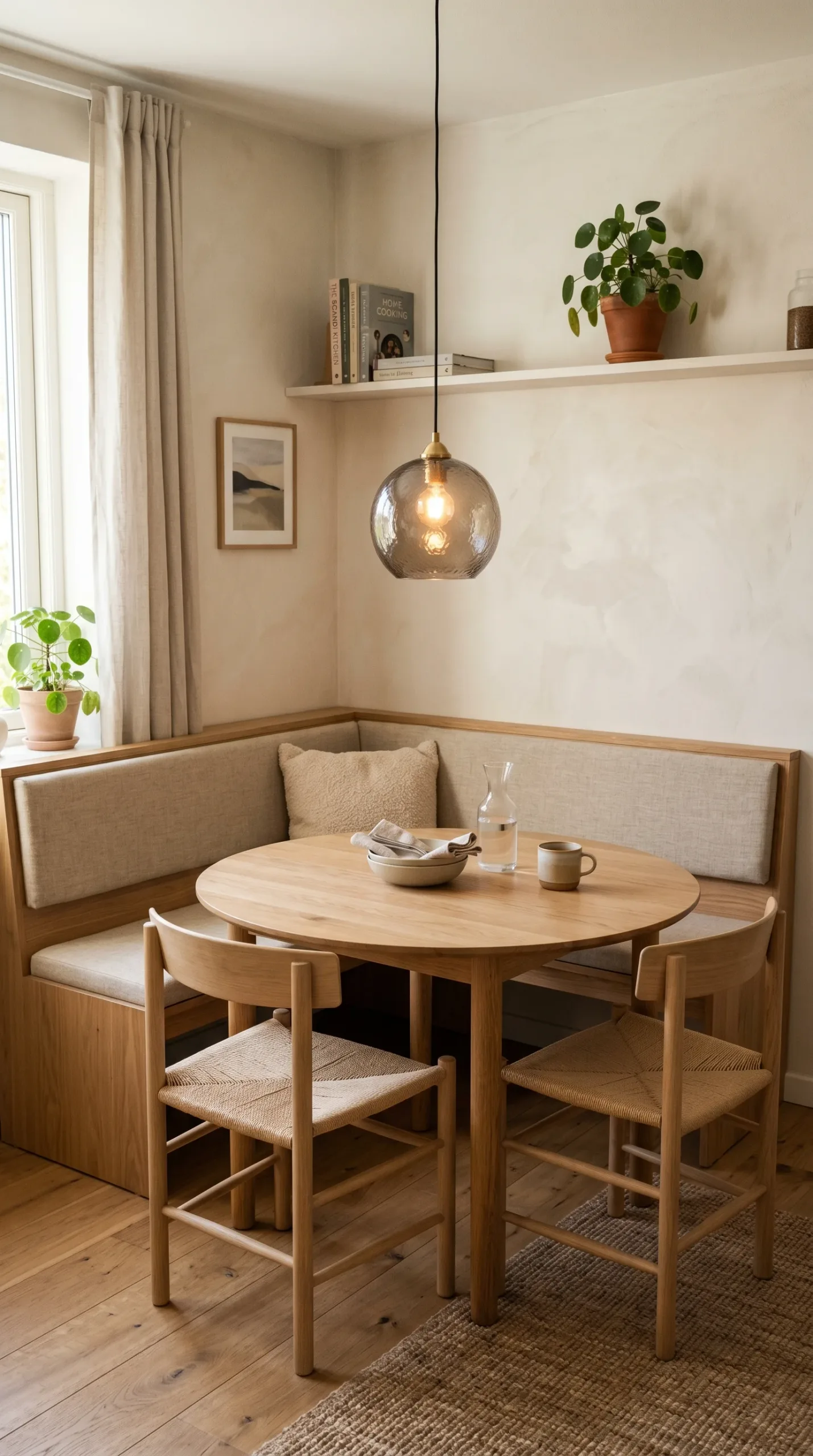
8. A Built-in Bench With Under-Seat Storage
In Scandinavian homes, especially older Nordic apartments, built-in benches along a kitchen wall or in a breakfast nook are a common feature. They make the most of every inch of space, they add a cozy, nook-like quality to the eating area, and the storage underneath is genuinely useful for tablecloths, seasonal serving pieces, and anything else that does not need to be out on a daily basis. A simple wooden bench with a cushion in a natural linen or bouclé fabric is the easiest way to add this element even in a modern kitchen. Pair it with a round or oval dining table rather than a rectangular one to maintain the soft, flowing quality of good Scandinavian design.
Designer Note: If you are building a bench from scratch, keep the seat height at 45 to 47cm for comfortable sitting without a cushion, or 42 to 44cm if you plan to use a cushion.

Lighting Ideas That Set the Nordic Mood
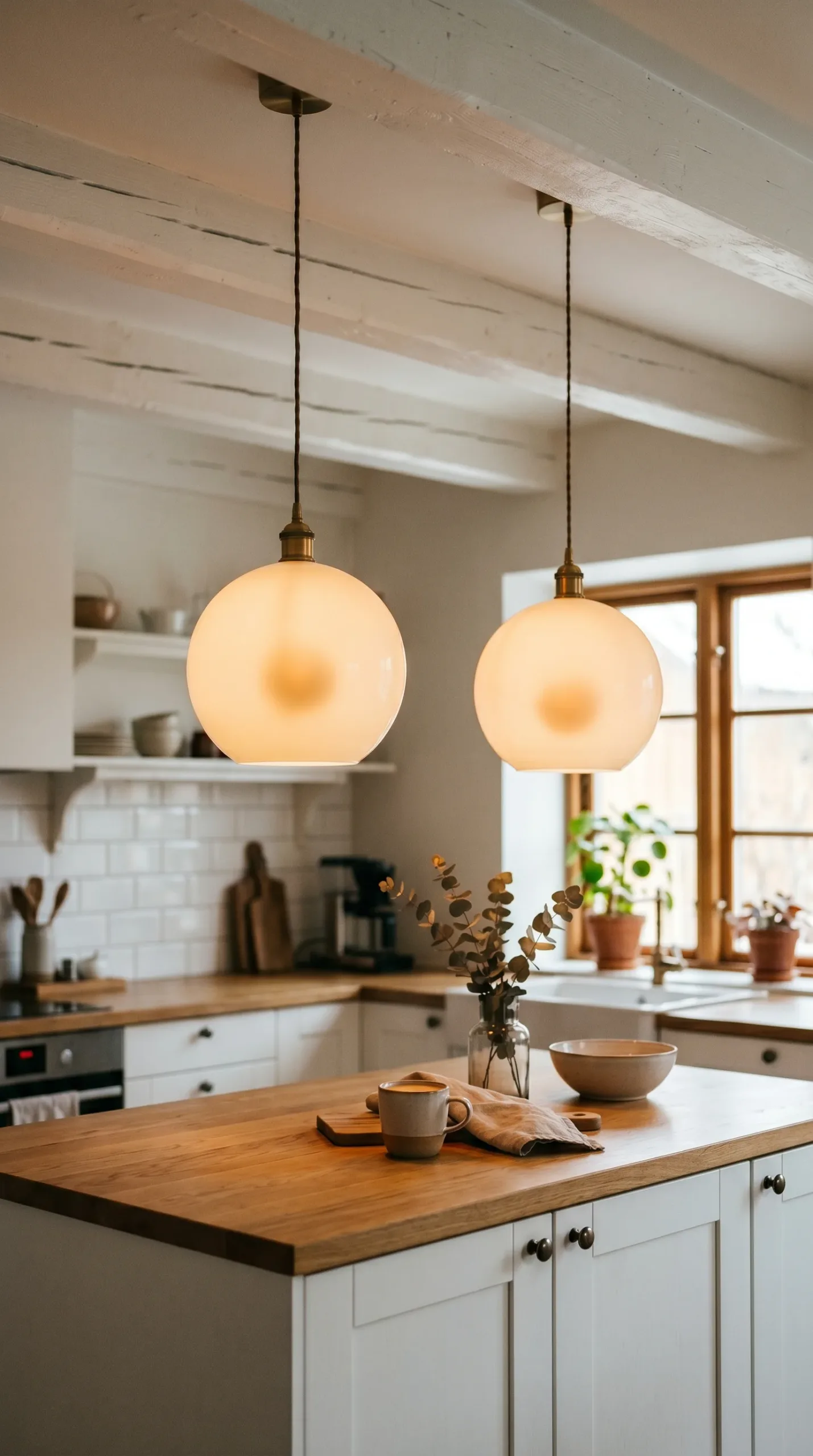
9. Pendant Lights Over the Island
Lighting is arguably the single most important design element in a Scandinavian kitchen, partly because Nordic countries spend a large part of the year in low natural light and have developed a real culture around creating warmth through artificial lighting. A pendant over the island or dining table is the starting point. For a Nordic kitchen, look for pendants with a simple silhouette in materials like smoked glass, opal glass, raw brass, or natural stone. Brands like Louis Poulsen, Muuto, and Ferm Living make pendants that are almost synonymous with the style, but good alternatives exist at more accessible price points. Hang pendants lower than you might think, around 70 to 80cm above the counter surface, to create an intimate pool of light rather than a spread of general brightness.
Designer Note: Use warm bulbs in the Edison or globe style at 2700K. Anything cooler than that will fight against the warmth you are trying to create elsewhere in the space.
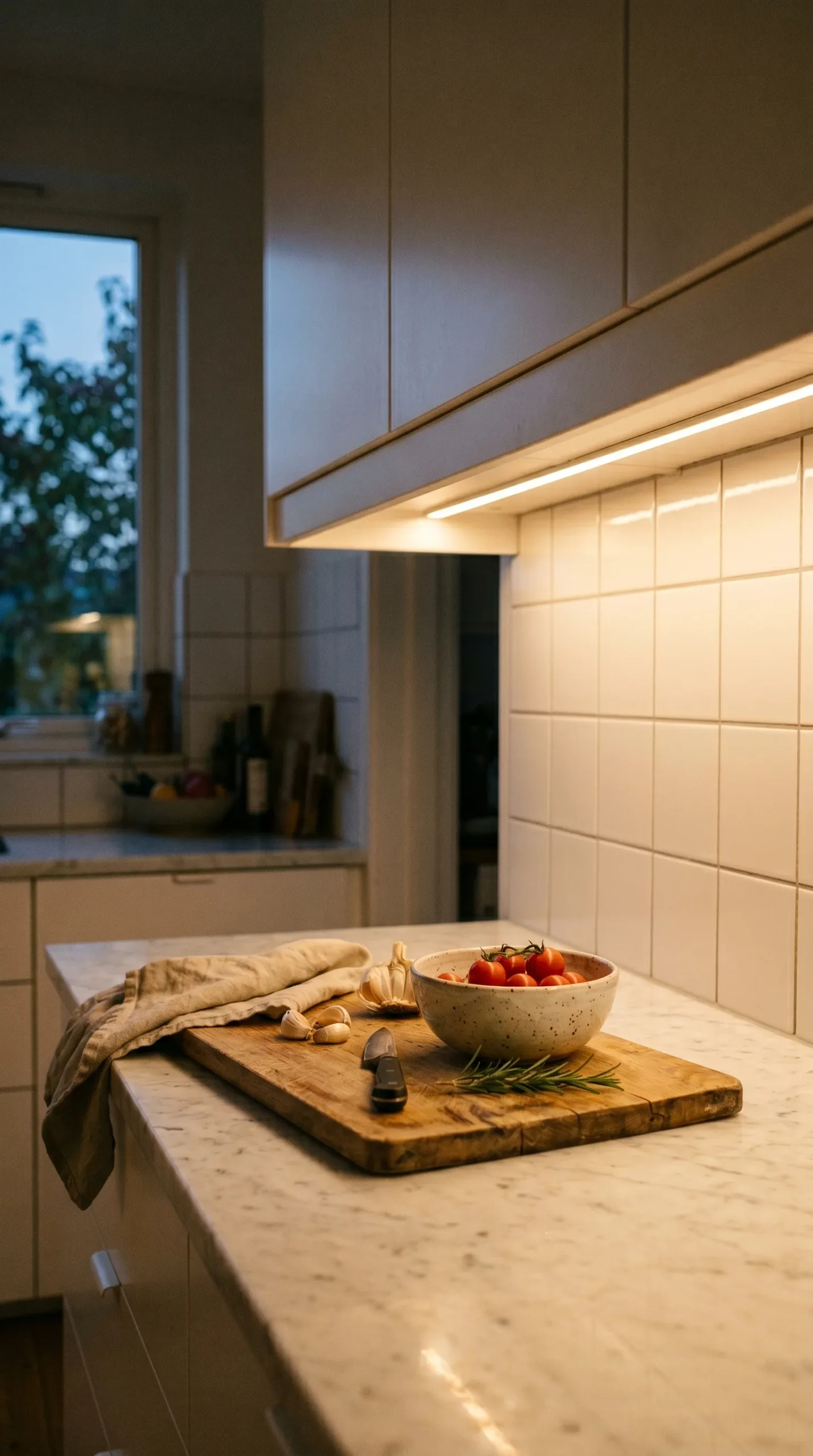
10. Under-Cabinet LED Lighting
Under-cabinet lighting is a practical and affordable upgrade that makes a noticeable difference to how a Scandinavian kitchen feels at night or on grey winter mornings. A warm strip of LED tape fixed underneath the upper cabinets, positioned toward the front of the underside rather than the back, throws a soft wash of light onto the countertop that is both functional for food prep and genuinely atmospheric. This works especially well in white or pale grey kitchens where the light bounces nicely off the surface. The installation is relatively straightforward and affordable compared to most kitchen lighting changes. Pair under-cabinet LEDs with a dimmer switch and you effectively have two entirely different kitchen atmospheres depending on the time of day.
Designer Note: Look for LED strip lights with a CRI (Colour Rendering Index) of 90 or above. A high CRI means food and surfaces look more natural and appealing under the light.
11. A Statement Ceiling Light in the Dining Area
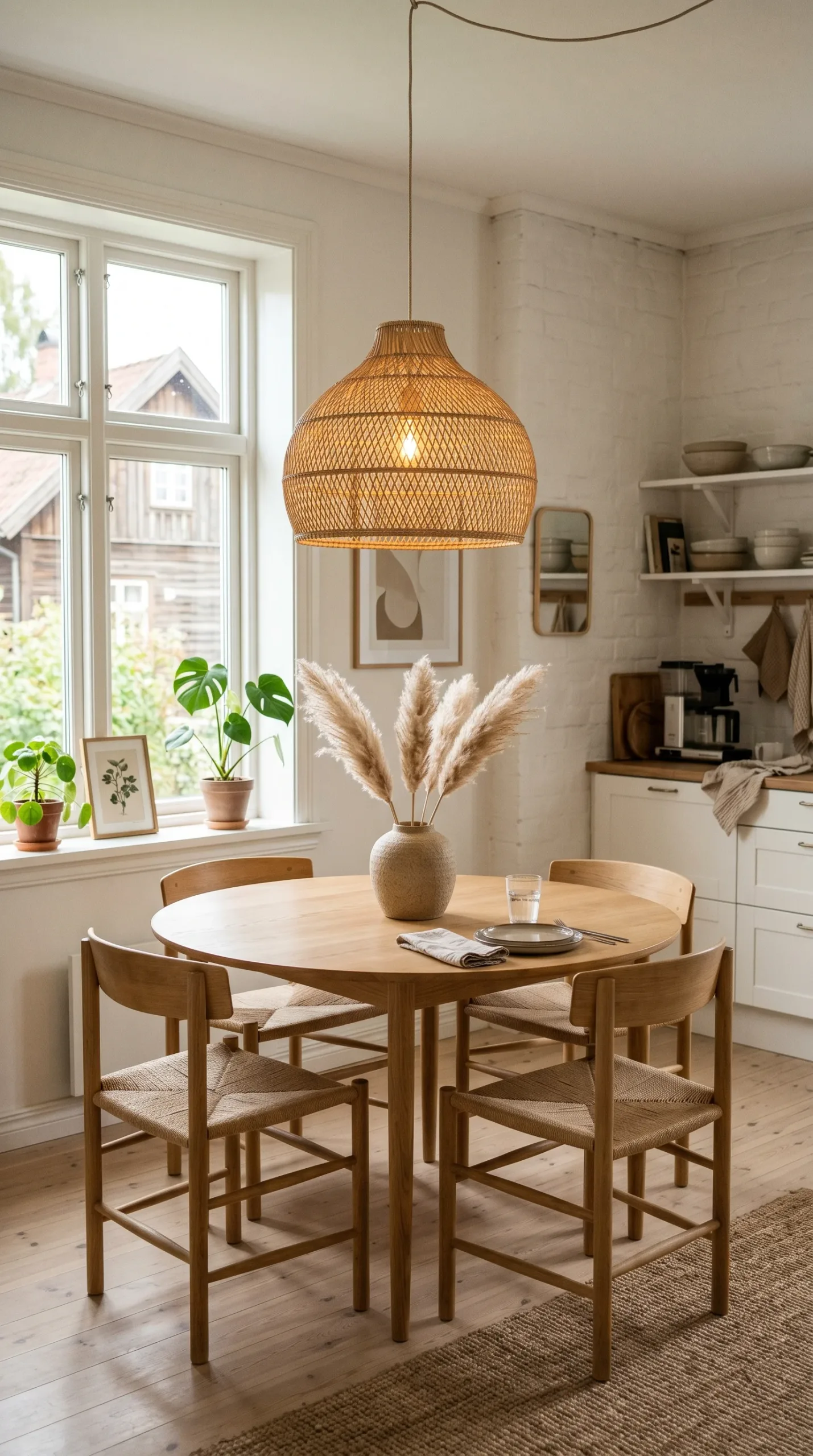
If your kitchen flows into a dining area, a single large statement ceiling light over the table is one of the most effective moves you can make. Scandinavian design has a long tradition of statement lighting in dining spaces, from the classic Louis Poulsen PH5 to the more recent organic pendant shapes coming from Danish and Swedish designers. The light does not need to be expensive to be effective. What matters is scale (slightly larger than you think you need), warmth (always warm white bulbs), and simplicity (clean lines, quality materials, no fussiness). A large pendant in natural rattan, opal glass, or raw brass over a round dining table with simple wooden chairs creates exactly the kind of slow, convivial atmosphere that Scandinavian dining culture is built around.
Designer Note: Size your pendant to be roughly two-thirds the diameter of the table below it. A 120cm round table calls for a pendant around 80cm wide for good visual proportion.
Textures, Materials, and Surfaces
12. Natural Wood Countertops
Wood countertops are one of the most characteristic features of an authentic Scandinavian kitchen and they work in a surprisingly wide range of settings, from a fully white fitted kitchen to a darker, more moody Nordic space. Oak is the most common choice, followed by maple and walnut. Walnut in particular has grown in popularity as part of the broader Japandi influence on Scandinavian design, with its darker, richer tones adding depth and warmth to white or pale grey cabinetry. The honest caveat here is that wood countertops are higher maintenance than stone or laminate. They need to be oiled regularly and they will develop marks and patina over time. Many people love this quality, seeing it as an expression of the Scandinavian wabi-sabi-adjacent value of materials that age gracefully. If you want the look without the upkeep, there are some very convincing oak-effect laminate surfaces available.
Designer Note: Always oil a new wood countertop with food-safe mineral oil or danish oil before first use. This seals the grain and makes it significantly more resistant to water and staining.

13. A Zellige or Handmade Tile Backsplash
The backsplash is one of the most affordable ways to introduce personality and texture into a Scandinavian kitchen without committing to a full renovation. Zellige tiles, the handmade Moroccan ceramic tiles with their subtly irregular surface and rich depth of color, have become popular in Nordic interiors in recent years because they bring exactly the kind of tactile, artisan quality that Scandinavian design values. In a white or pale grey kitchen, a zellige backsplash in an off-white, soft sage, or warm terracotta introduces texture and movement without disrupting the muted palette. Alternatively, a classic white subway tile laid in a brick pattern with a dark grey or charcoal grout is a cleaner, more minimal choice that reads very Nordic in the best way. Both options sit comfortably in the budget-to-mid-range category.
Designer Note: Zellige tiles have an uneven surface that can be tricky to clean in a high-splatter area directly behind the hob. Consider a sheet of tempered glass or a different tile type in that specific zone.

14. Concrete or Stone-Effect Flooring
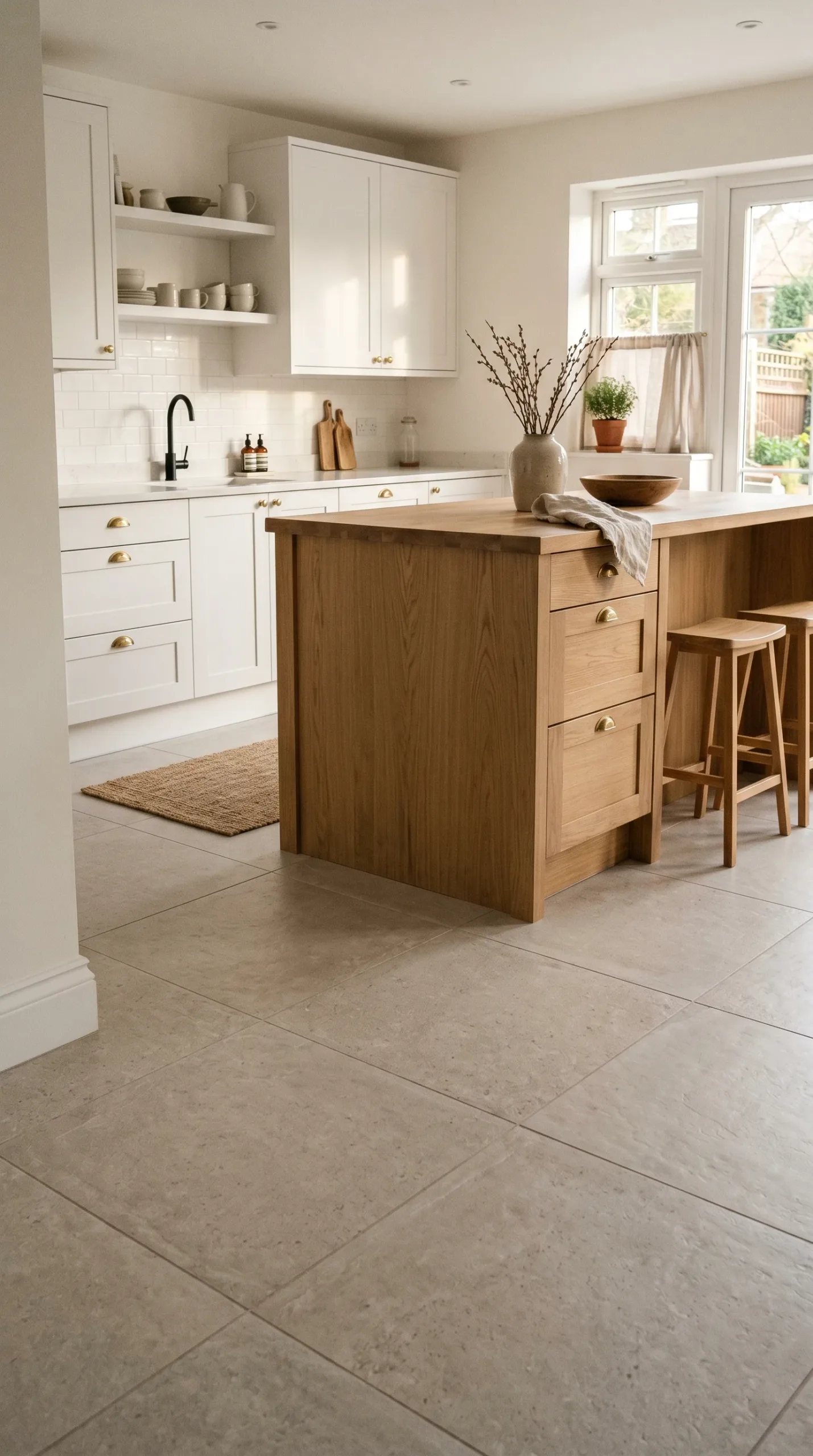
The floor is often an afterthought in kitchen design but it plays a significant role in how Nordic the overall space feels. Polished concrete or large-format stone-effect porcelain tiles in pale grey, warm beige, or soft white tie a Scandinavian kitchen together better than most other flooring options. They are practical, easy to clean, and durable, which aligns with the function-first philosophy of Nordic design. If full concrete or stone is outside your budget, consider large-format porcelain tiles with a matte surface in a similar tone. These are widely available at mid-range price points and the difference in visual effect compared to real stone is minimal. Avoid very dark floors in smaller kitchens, as they absorb light and can make the space feel closed in.
Designer Note: Heated underfloor heating makes a significant quality-of-life difference under a stone or concrete floor, especially in a kitchen where you spend a lot of time standing. If you are renovating anyway, it is worth adding.
15. Linen and Bouclé Textiles
Textiles in a kitchen might sound unnecessary, but in a Scandinavian space they are one of the most effective ways to introduce warmth and humanity. A pair of linen curtains at the kitchen window in a warm oatmeal or dusty sage, a bouclé cushion on the bench seating, and a natural jute or wool runner on the floor in front of the sink all do quiet but meaningful work in making the kitchen feel like a place where someone actually lives and enjoys being. Linen in particular is deeply Scandinavian in character. It is a natural fiber, it improves with washing, and its relaxed, slightly rumpled quality is exactly the opposite of the over-styled, nothing-out-of-place aesthetic that can make some minimalist kitchens feel cold and unwelcoming.
Designer Note: Keep kitchen textiles in the same muted, warm palette as the rest of the space. One rogue bright color in the textile choices can disrupt the calm of an otherwise well-put-together Scandinavian kitchen.

16. Marble or Limestone for a Worktop Accent
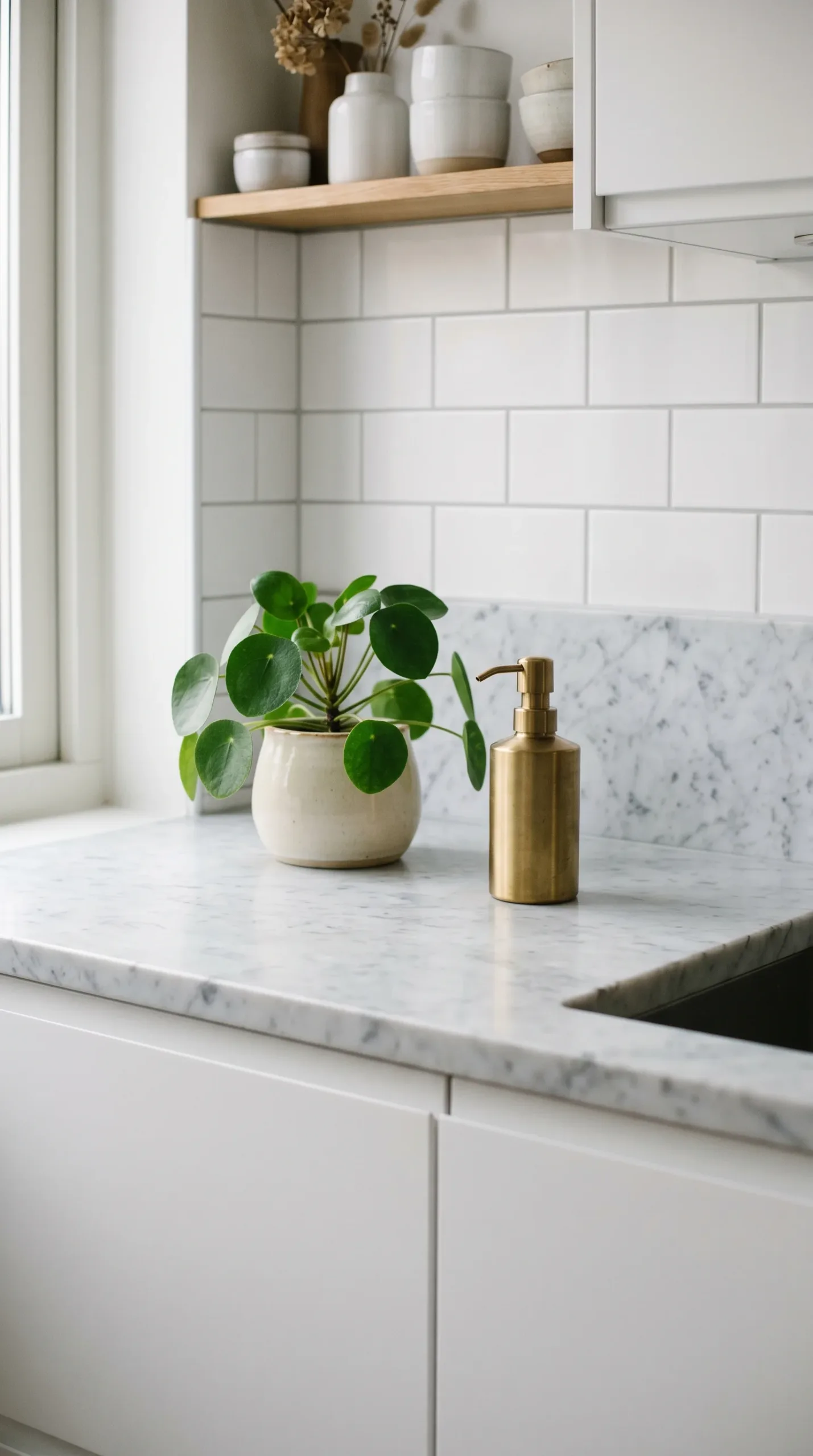
While wood is the classic Scandinavian worktop, marble and limestone have their own strong tradition in Nordic kitchen design, particularly in Swedish and Danish homes. Honed rather than polished marble is the right choice for a Scandinavian kitchen. The matte surface is less precious and more in keeping with the understated Nordic aesthetic than the high shine of a polished slab. Carrara marble with grey veining is the most recognizable option, but Calacatta Viola (with lavender-grey veins) and Portuguese limestone are both increasingly popular choices that offer a slightly warmer and more individual look. One honest note: marble is porous and can stain if not sealed and cared for. If you love the look but are worried about maintenance, a honed white quartz that mimics marble is a more forgiving alternative.
Designer Note: Hone your marble worktop rather than polishing it. Polished marble shows every fingerprint and water mark. Honed marble looks better daily and is far more forgiving in a working kitchen.
Decor Details That Make the Difference
17. Simple Ceramic Vessels and Bowls
No category of decor accessory is more Scandinavian than ceramics. A grouping of simple, hand-thrown or hand-finished ceramic bowls, pitchers, and vases on an open shelf or the kitchen windowsill is one of the easiest ways to add warmth and a sense of craft to a Nordic kitchen. The palette should stay within the muted, earthy range: warm white, oatmeal, pale grey, dusty sage, terracotta, and charcoal all work well together and with typical Scandinavian cabinet colors. Brands like HAY, Broste Copenhagen, and Bloomingville make affordable options that feel genuinely designed rather than mass-produced. Secondhand ceramic pieces from markets or charity shops are often even better, with the kind of character and imperfection that new production sometimes lacks.
Designer Note: Odd numbers look better than even numbers when grouping ceramics on a shelf. A trio of different-height vessels always reads as more intentional than a pair.

18. Fresh Herbs in Terracotta Pots
Plants in a Scandinavian kitchen are almost always functional as well as decorative. A row of terracotta pots on the windowsill growing rosemary, thyme, and basil fits the Nordic design principle that beautiful things should also do something useful. Terracotta pots have a warm, earthy texture that works particularly well against white or sage green cabinetry, and they introduce the organic, imperfect quality that keeps a minimal kitchen from feeling like a showroom. If the kitchen does not have enough natural light for herbs, low-light houseplants like trailing pothos or a small fiddle-leaf fig on a corner shelf serve the same decorative purpose. Real plants always beat artificial ones in a Scandinavian space, where authenticity of materials is a core value.
Designer Note: Group pots in clusters rather than spacing them out individually across the windowsill. A cluster of three or five creates a natural vignette; individual pots spaced evenly can look more like a garden center than a home.

19. A Curated Cookbook Display
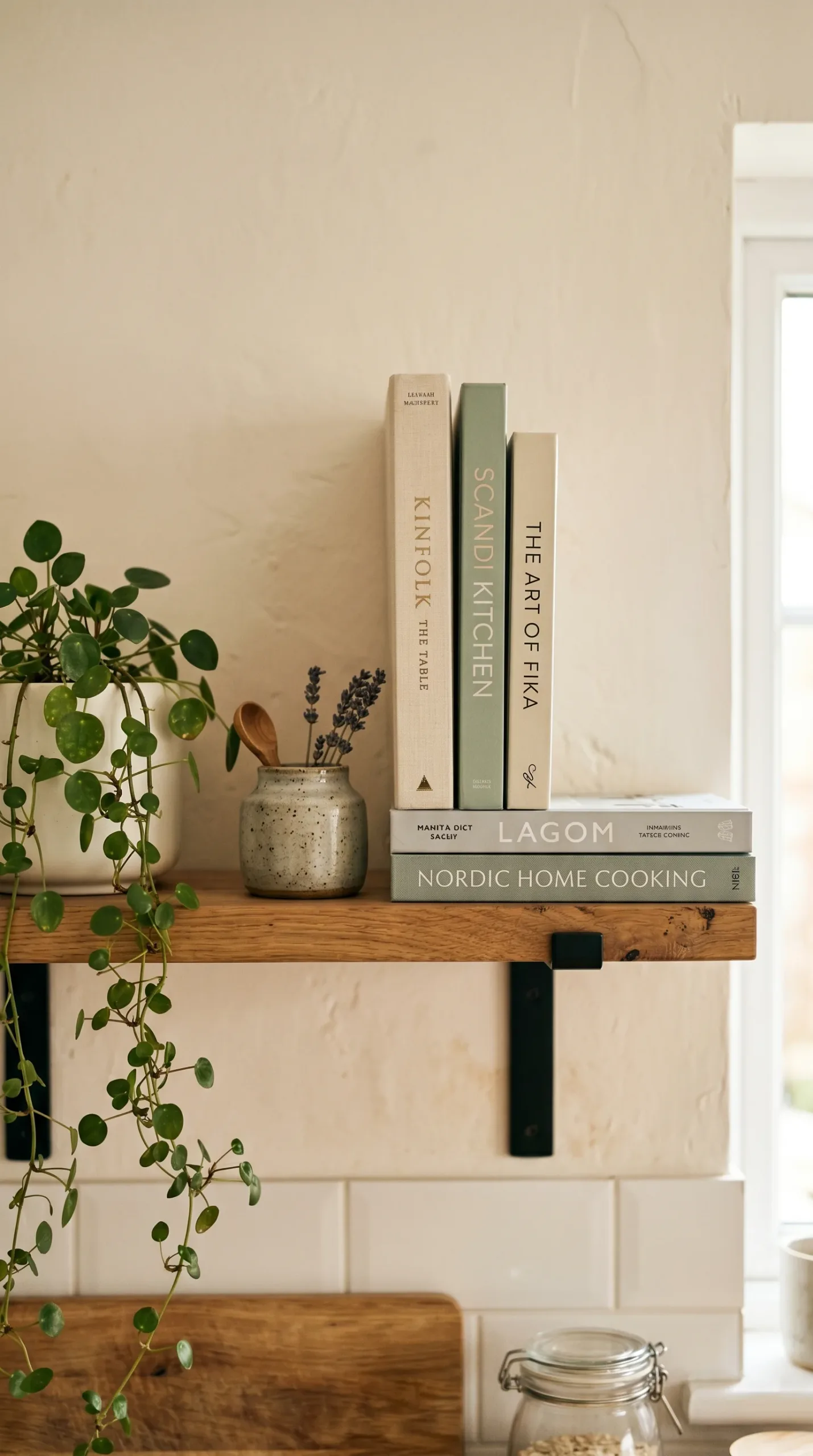
Cookbooks on open shelves are both practical and decorative in a Scandinavian kitchen. The trick is to be selective rather than displaying every cookbook you own. Choose a small number of books with attractive spines, remove the dust jackets from any that look better without, and intersperse them with a ceramic object or small plant. Nordics tend to value quality over quantity in every area of the home, and the cookbook display is a good example of that principle in practice. A few well-chosen books stacked horizontally and stood upright together create a natural focal point on a shelf that might otherwise look sparse or under-styled. This is an entirely free upgrade if you already own books, or a very affordable one if you buy secondhand.
Designer Note: Remove overly colorful or garish book covers that disrupt the palette. A simple paper bag or piece of linen wrapped around a cover you cannot live without keeps the shelf looking considered.
20. A Wooden Chopping Board as Decor
One of the most characteristically Scandinavian things you can do in a kitchen is to treat a beautiful object that also happens to be functional as decor. A large end-grain oak or walnut chopping board leaned against the backsplash, with a simple linen cloth draped over one end and a small ceramic salt pig nearby, creates a vignette that is both genuinely useful and genuinely beautiful. This is the hygge principle in its most practical kitchen form: the things that are around you every day should be worth looking at. A good quality chopping board is a mid-range investment but it will last for decades with proper care, making it one of the better value purchases in a Scandinavian kitchen.
Designer Note: Sand and re-oil your chopping board with food-safe mineral oil once every few months. A well-maintained board looks and feels dramatically better than a neglected one.

21. Black or Dark Metal Hardware
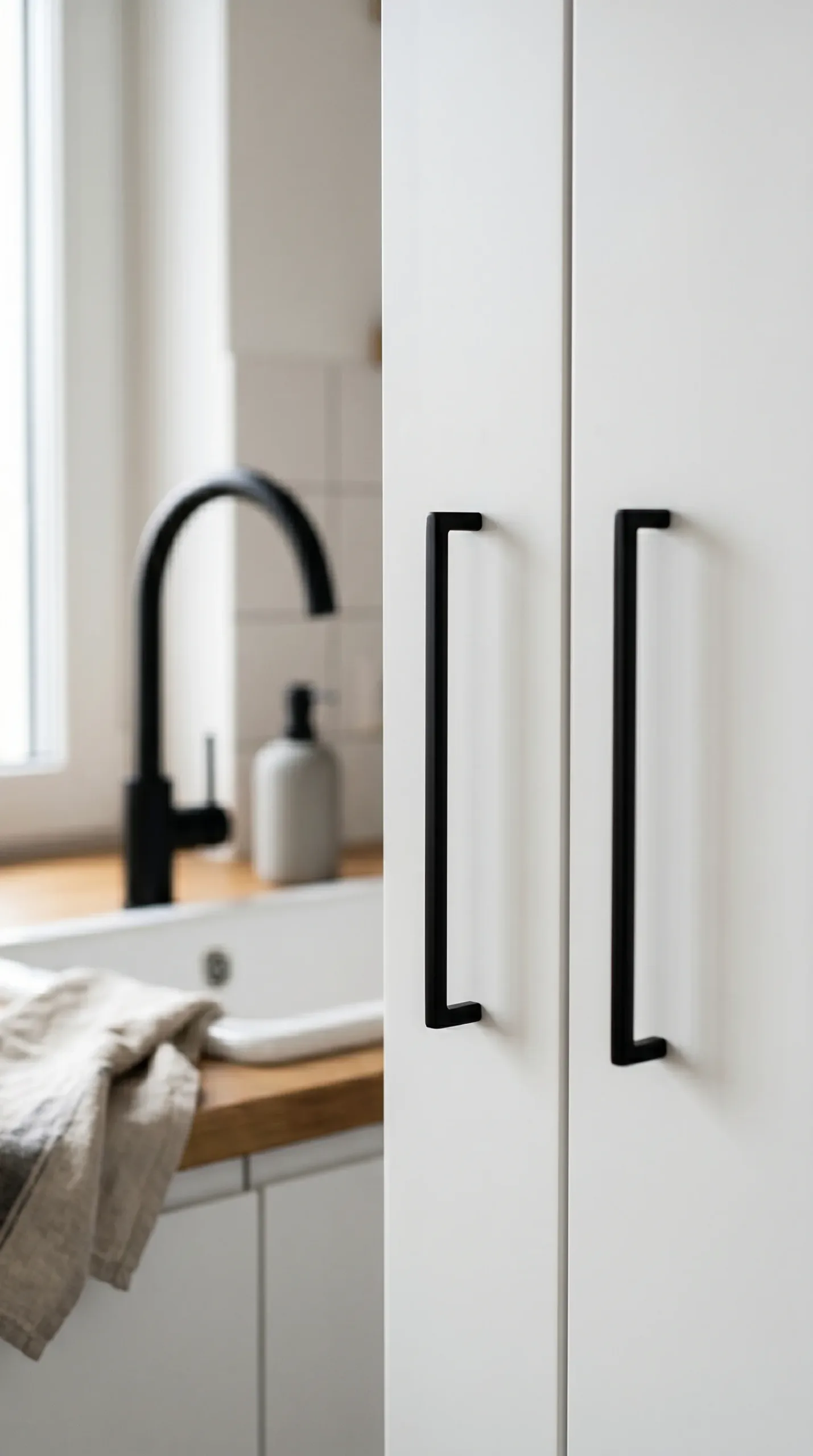
Hardware is the jewelry of a kitchen, and getting it right makes a meaningful difference to the overall feel. In contemporary Scandinavian kitchens, matte black has become one of the most popular hardware finishes because it reads as clean and graphic without being cold. Matte black bar handles on flat-front cabinets is a particularly good combination, giving the kitchen a confident, modern Nordic look. For a warmer alternative, brushed brass or unlacquered brass (which develops a natural patina over time) sits beautifully against white, sage, or grey cabinets and introduces the organic, slightly imperfect quality that Scandinavian design gravitates toward. Hardware replacement is one of the most cost-effective kitchen upgrades available, with a full set of handles for a typical kitchen often costing well under a few hundred dollars.
Designer Note: Be consistent with your hardware finish throughout the kitchen, including tap, cabinet handles, and light fittings. Mixing matte black with brushed nickel and brass simultaneously looks unresolved rather than layered.
22. A Pegboard or Wall-Mounted Rack
Wall-mounted storage in a Scandinavian kitchen is as much about display as it is about function. A simple wooden or painted pegboard fitted with hooks and small shelves can hold everything from utensils and small pans to a wooden spice rack and a hanging plant, and it does so in a way that is organized, accessible, and genuinely attractive. The SKADIS pegboard from IKEA is the most well-known affordable option and it has a clean, minimal profile that works in most Nordic kitchen settings. A more premium alternative is a handcrafted oak pegboard from a small design studio, which introduces the craft and materiality that the style values. Either way, the key is to keep what hangs on it to things that are actually used daily. The moment a pegboard becomes a storage solution for rarely-used items it starts to look cluttered rather than curated.
Designer Note: Paint the pegboard the same color as the wall behind it for a more seamless, built-in look. A contrasting pegboard on a white wall can sometimes feel more like a craft project than a design feature.

23. A Simple Herb Wall Garden
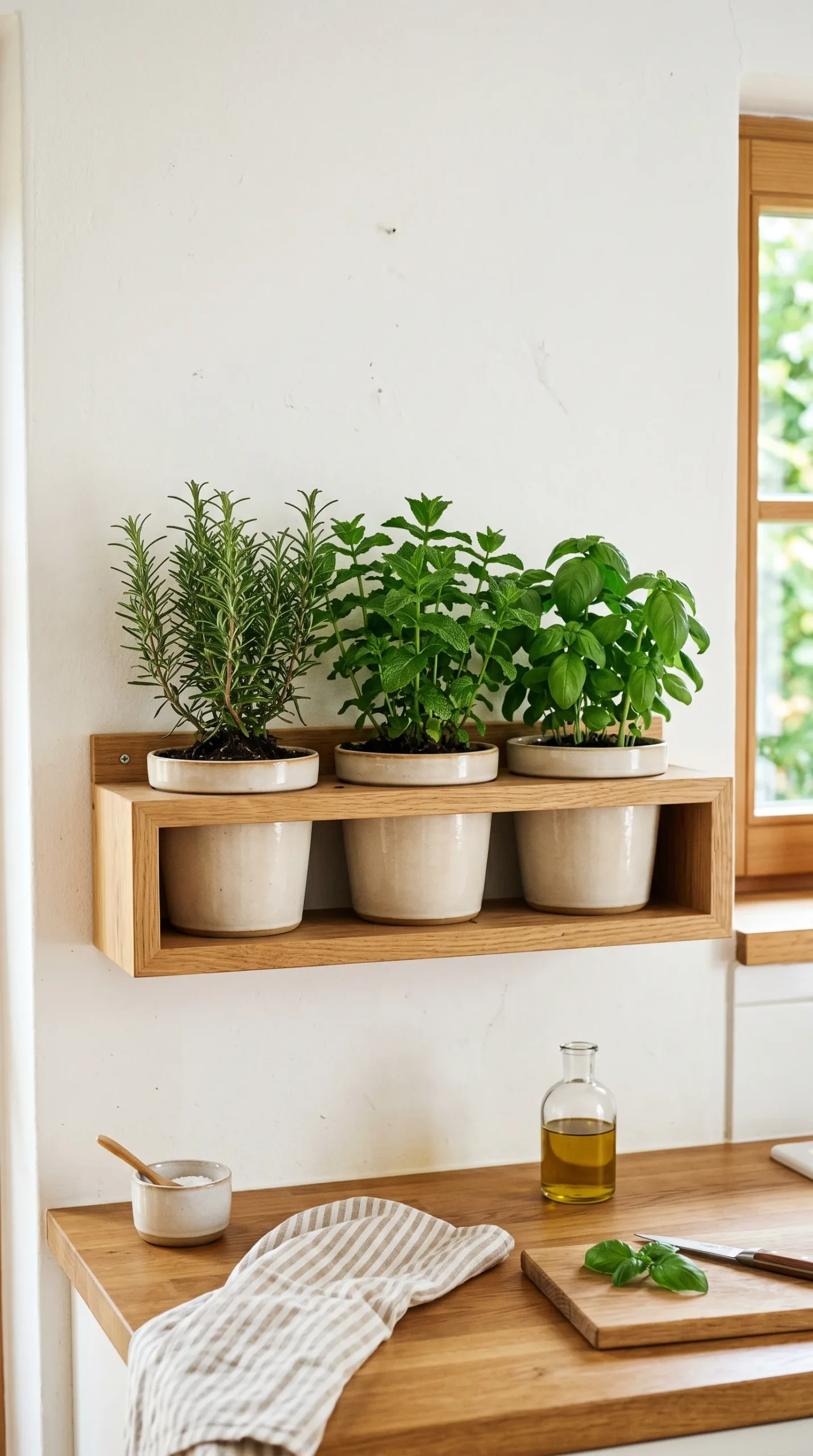
For kitchens with a blank wall and not much windowsill space, a small wall-mounted herb garden is a wonderfully Scandinavian solution. Wall-mounted modular planter systems that hold small pots of growing herbs bring vertical greenery into the kitchen without taking up counter or windowsill space, and they reinforce the Nordic design value of nature being present in the everyday domestic environment. Simple wooden wall-mounted frames with small terracotta or ceramic pots look the most considered in a Scandinavian kitchen context. The herb wall works best on a wall that receives reasonable indirect light, and it is most effective when kept to a small number of species, three or four herbs, rather than trying to grow everything at once. This is a genuinely affordable idea that adds life, color, and practical value in equal measure.
Designer Note: Mount the herb wall at eye level or just slightly above counter height for the most practical access. Too high and you will stop using it; too low and it gets in the way of prep work.
Bringing It All Together
Scandinavian kitchen design is not about achieving a look from a catalog. The thing that makes Nordic interiors feel so right is that they are designed around how people actually live and cook and gather, not around what looks impressive in a photograph. Every idea in this guide is rooted in that principle: function and beauty working together, natural materials used honestly, and a palette that is calm enough to live with every day without becoming dull.
You do not need to do all 23 ideas to get the feeling right. In practice, a Scandinavian kitchen comes together through a small number of considered choices made well: the right cabinet color, a pendant that fills the space with warm light, an open shelf styled with ceramics and a plant, and hardware that ties everything together. Start with whatever feels most manageable and most like you, because the best Scandinavian kitchens always have a sense of the person who lives in them. They are not sterile or impersonal. They are warm, thoughtful, and genuinely enjoyable to spend time in, and that is exactly what your kitchen should be.
Frequently Asked Questions
What colors work best in a Scandinavian kitchen?
The most effective colors for a Nordic kitchen are soft whites with warm undertones, chalky greys, sage green, dusty navy, and warm off-white. Avoid stark, cool-toned whites or overly bright colors. The Scandinavian palette is always muted and slightly earthy, drawing from natural landscapes rather than bold design statements.
Do I need white cabinets for a Scandinavian kitchen?
Not at all. While white is the most classic choice, contemporary Scandinavian kitchens use sage green, warm grey, charcoal, dusty navy, and even muted terracotta with great success. The key is to keep the tone muted and pair the cabinets with natural materials like wood and stone.
How do I add warmth to a Scandinavian kitchen without making it look cluttered?
Warmth in a Nordic kitchen comes from layering natural materials and textures rather than from adding more objects. A wooden shelf, a ceramic bowl, a linen cloth, and a warm-toned pendant light are all you need. Choose a few things that are genuinely beautiful and functional, and resist the urge to fill every surface.
What flooring suits a Scandinavian kitchen best?
Light-toned wood flooring, pale stone-effect porcelain tiles, and honed concrete are all excellent choices. The goal is a floor that reflects light and feels natural underfoot. Avoid very dark flooring in smaller kitchens, as it absorbs light and makes the space feel smaller than it is.
Can a Scandinavian kitchen work in a small space?
Scandinavian design is actually ideal for small kitchens because it prioritizes clarity and function over decoration. Replacing some upper cabinets with open shelving, using a pale, warm cabinet color, and maximizing natural light through simple window treatments are all strategies that work especially well in compact kitchens.
Is Scandinavian kitchen design expensive to achieve?
It does not have to be. Some of the most authentic-feeling elements of a Nordic kitchen, like a wooden chopping board leaned against the backsplash, a terracotta pot of herbs on the windowsill, or a simple linen cloth over a rail, cost very little. The most significant investment is usually in cabinetry and lighting, but even those can be managed on a budget by repainting existing cabinets and choosing mid-range pendant options.