The Bedroom Window Treatment Guide Worth Bookmarking
Most bedrooms are let down by one thing: windows that are dressed as an afterthought rather than a design decision. The treatment you choose controls light, privacy, temperature, room height, and the entire mood of the space, and getting it right changes everything.
Floor-to-Ceiling Blackout Drapes
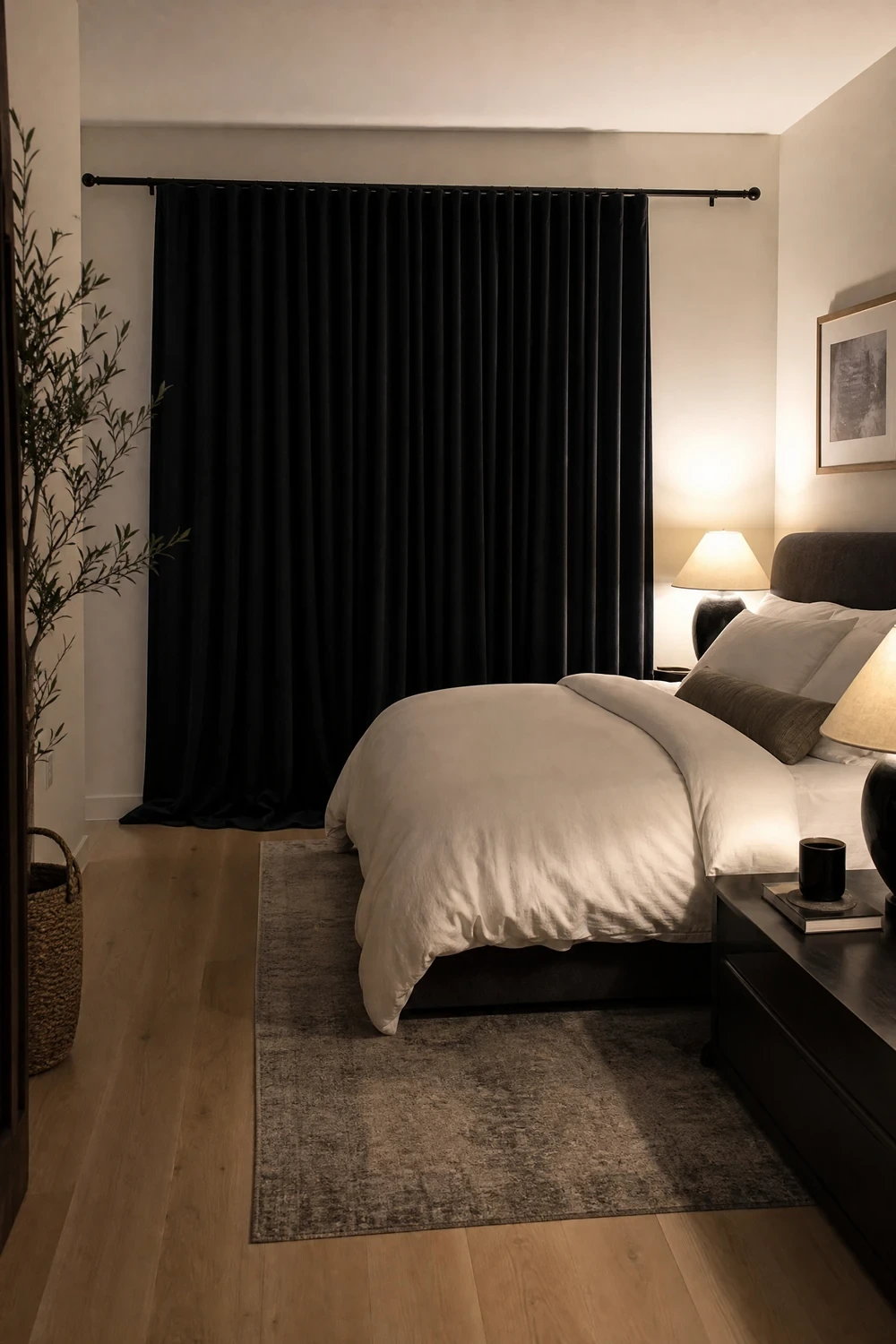
Mounting a blackout curtain rod within two to four inches of the ceiling and letting the panels fall to the floor is the single most effective way to get total darkness and the illusion of dramatically taller walls at the same time. Use a blackout lining sewn into any fabric you love, since the lining does the functional work while the outer fabric handles everything visual.
Pro Move: Hang the rod at least 12 inches wider than the window frame on each side so the panels park off the glass entirely when open, letting in maximum light without fabric eating into the window.
Sheer Linen Curtains for a Soft Morning Glow
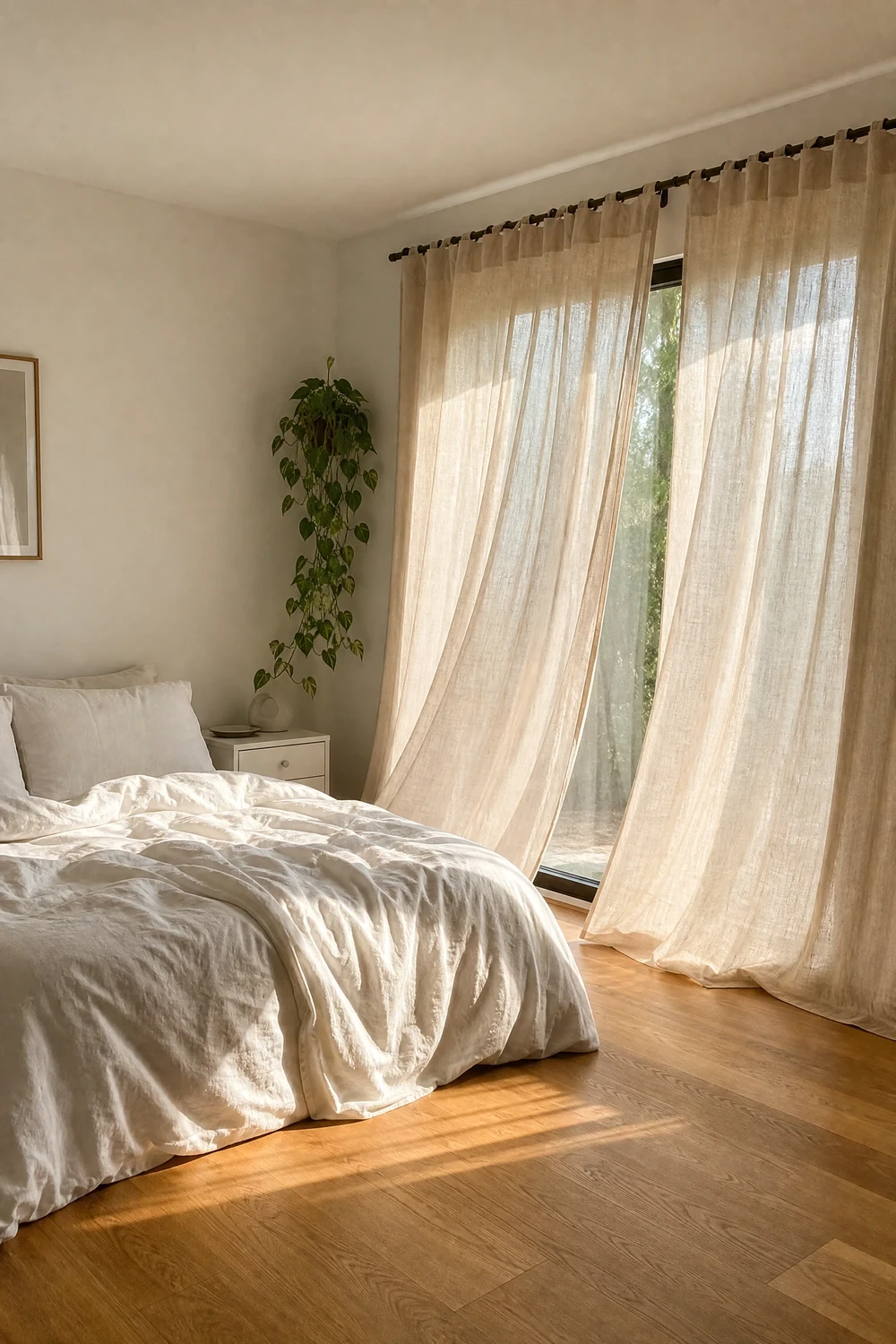
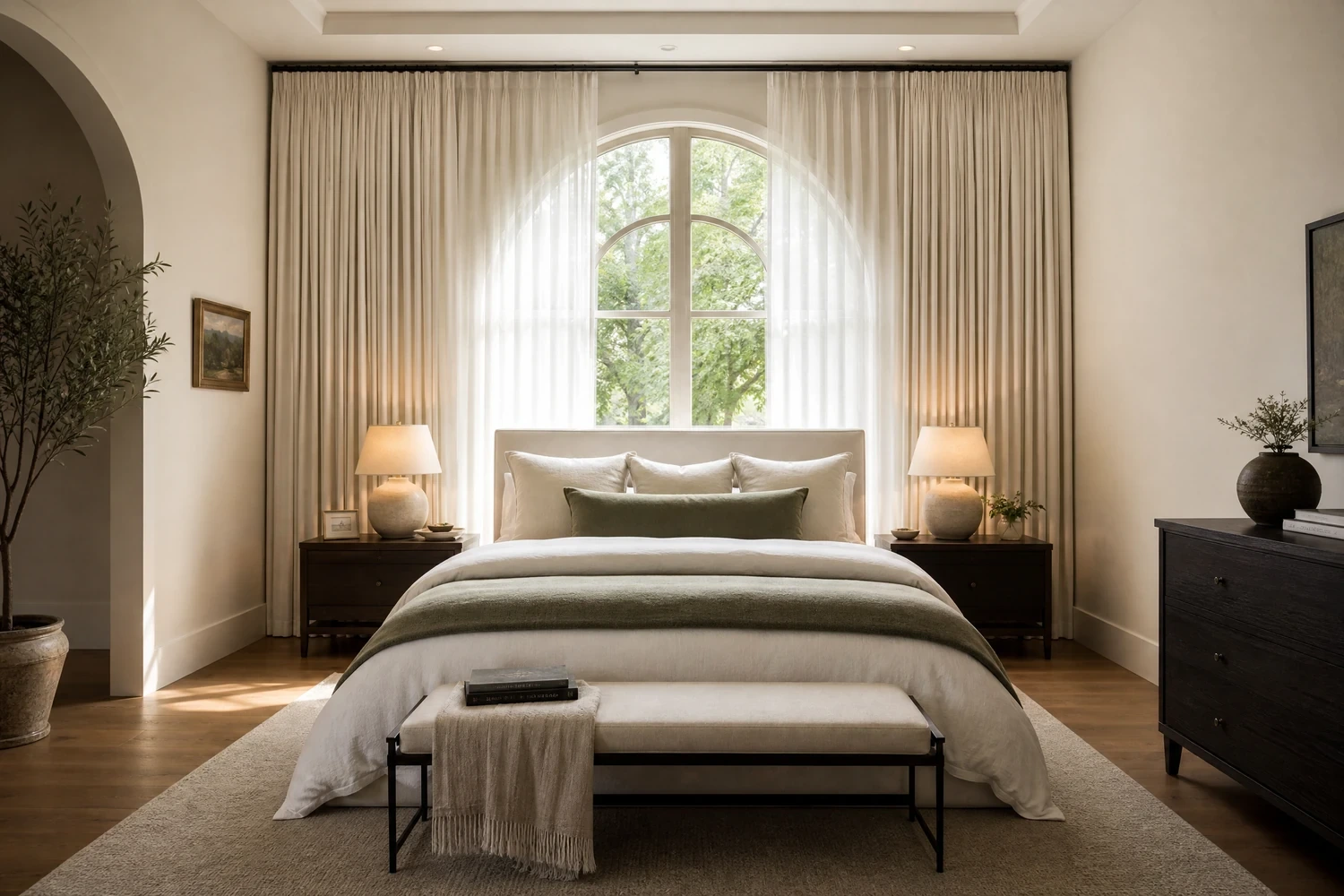
Natural linen sheers filter direct sunlight into a warm, diffused glow that feels genuinely calming rather than harsh, and unlike synthetic alternatives they have enough body to hold their shape while still moving beautifully in a breeze. Choose ivory, oat, or a barely-there blush rather than bright white, since those warmer tones interact with morning light in a way that flatters the whole room.
Designer Advice: Linen sheers improve with washing rather than degrading, making them a far better long-term investment than polyester alternatives at a similar price point.
Layered Sheer and Blackout Panels
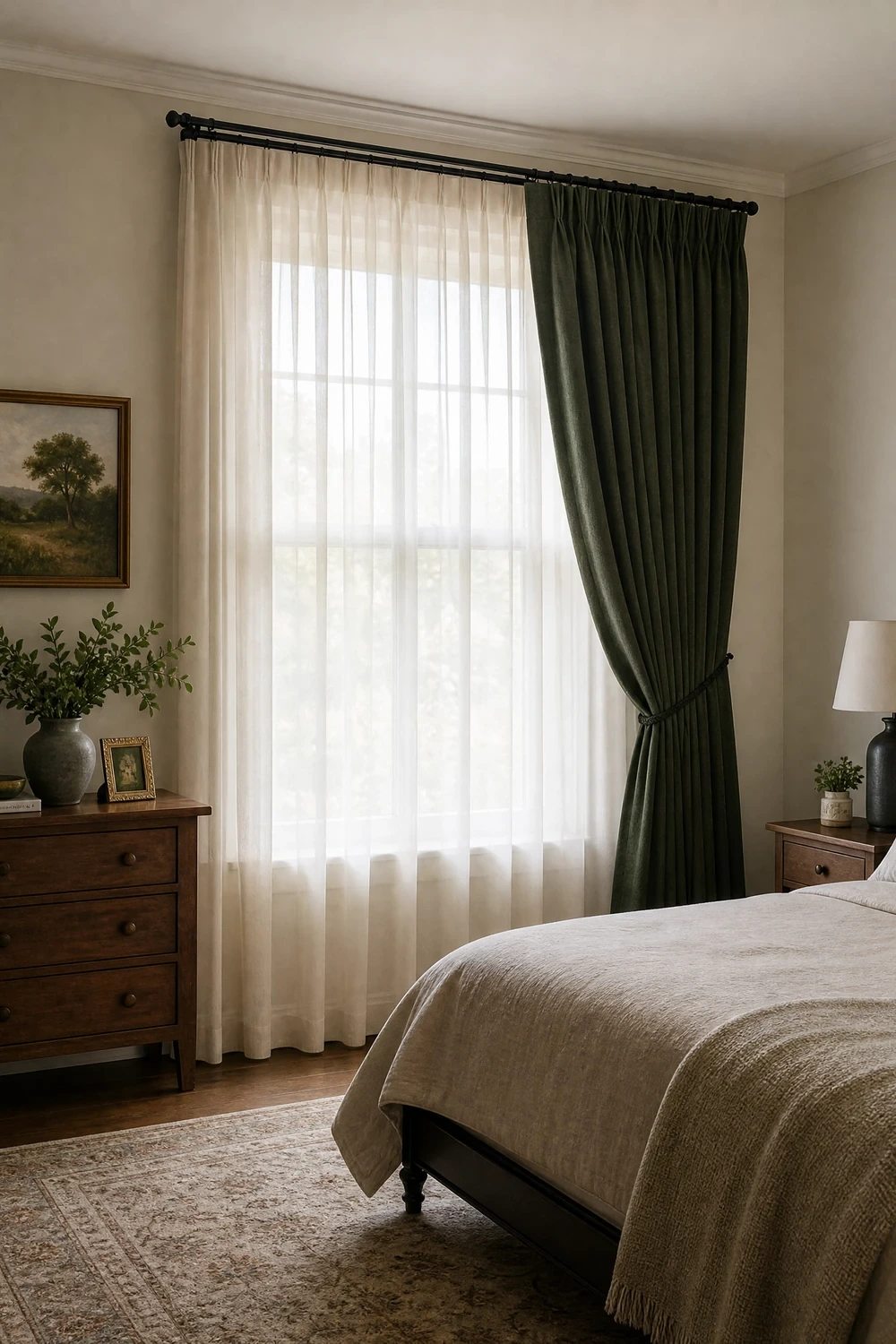
A double curtain rod with an inner sheer and an outer blackout panel gives you complete control over light and privacy at every hour of the day without committing to one extreme or the other. When both layers are hung from ceiling height in contrasting tones, the combination looks genuinely luxurious and far more considered than two single-layer installations would ever suggest.
Quick Tip: Choose a double rod where both tracks share a single bracket set so the layers sit close together and controlled, not splayed awkwardly apart.
| Layer | Role | Best Fabric | Best Tone |
| Inner (sheer) | Diffuses light, daytime privacy | Linen, voile, gauze | Ivory, oat, blush |
| Outer (blackout) | Blocks light, drama, insulation | Velvet, linen, cotton | Charcoal, navy, forest green |
Woven Wood Roman Shades
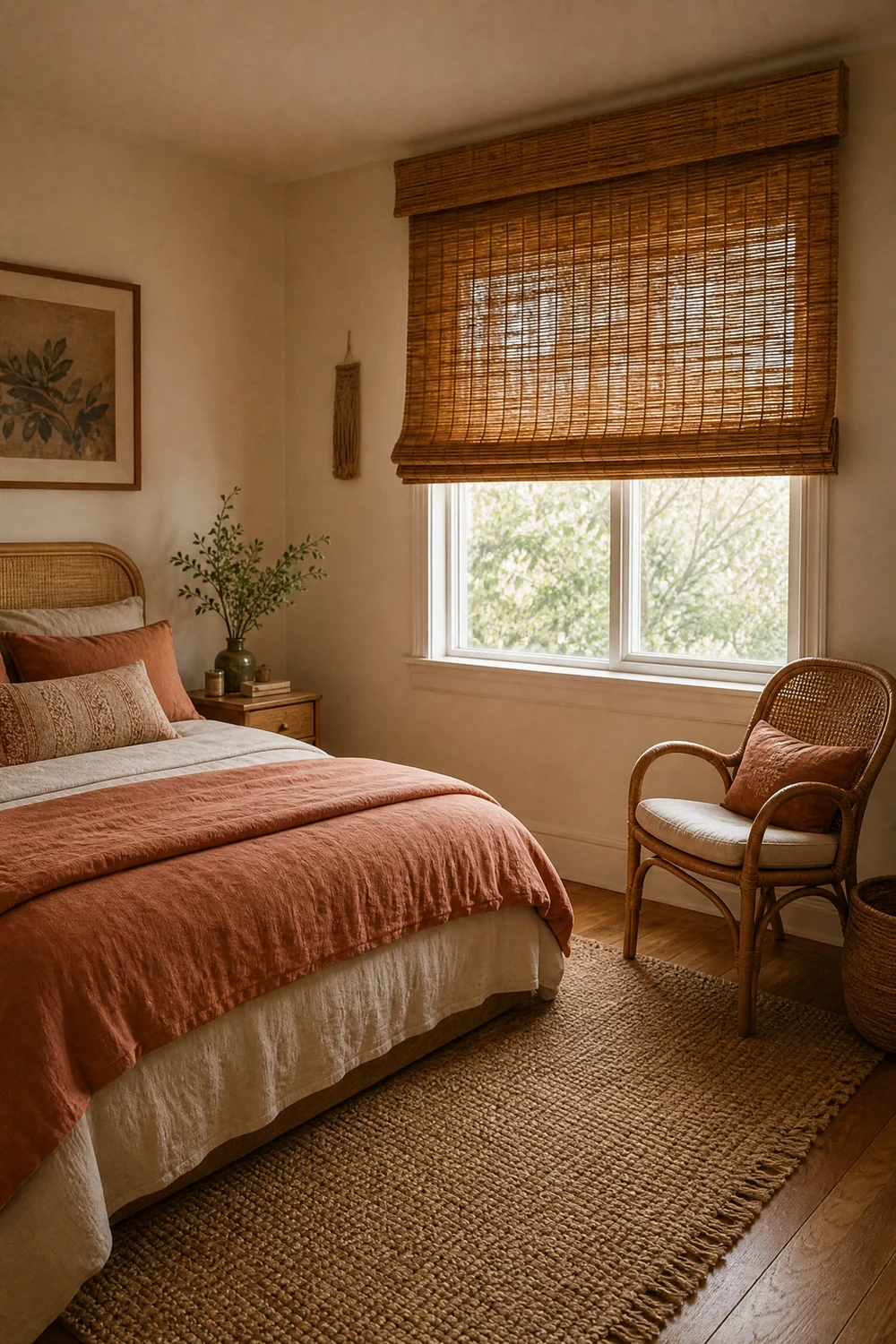
Woven wood shades made from bamboo, jute, reeds, or grasses bring an organic warmth to bedroom windows that no synthetic blind can replicate, and the way light filters through the natural weave creates a soft, dappled effect that suits everything from Japandi to coastal to earthy maximalist bedrooms. Look for versions with a privacy lining if your bedroom faces a street or close neighbors, since standard woven wood weaves allow visibility from outside, especially at night.
Reality Check: Woven wood shades alone will not achieve true darkness for sleep, but they layer beautifully under long drape panels that can be drawn closed at night.
Cellular Honeycomb Shades for Energy Efficiency
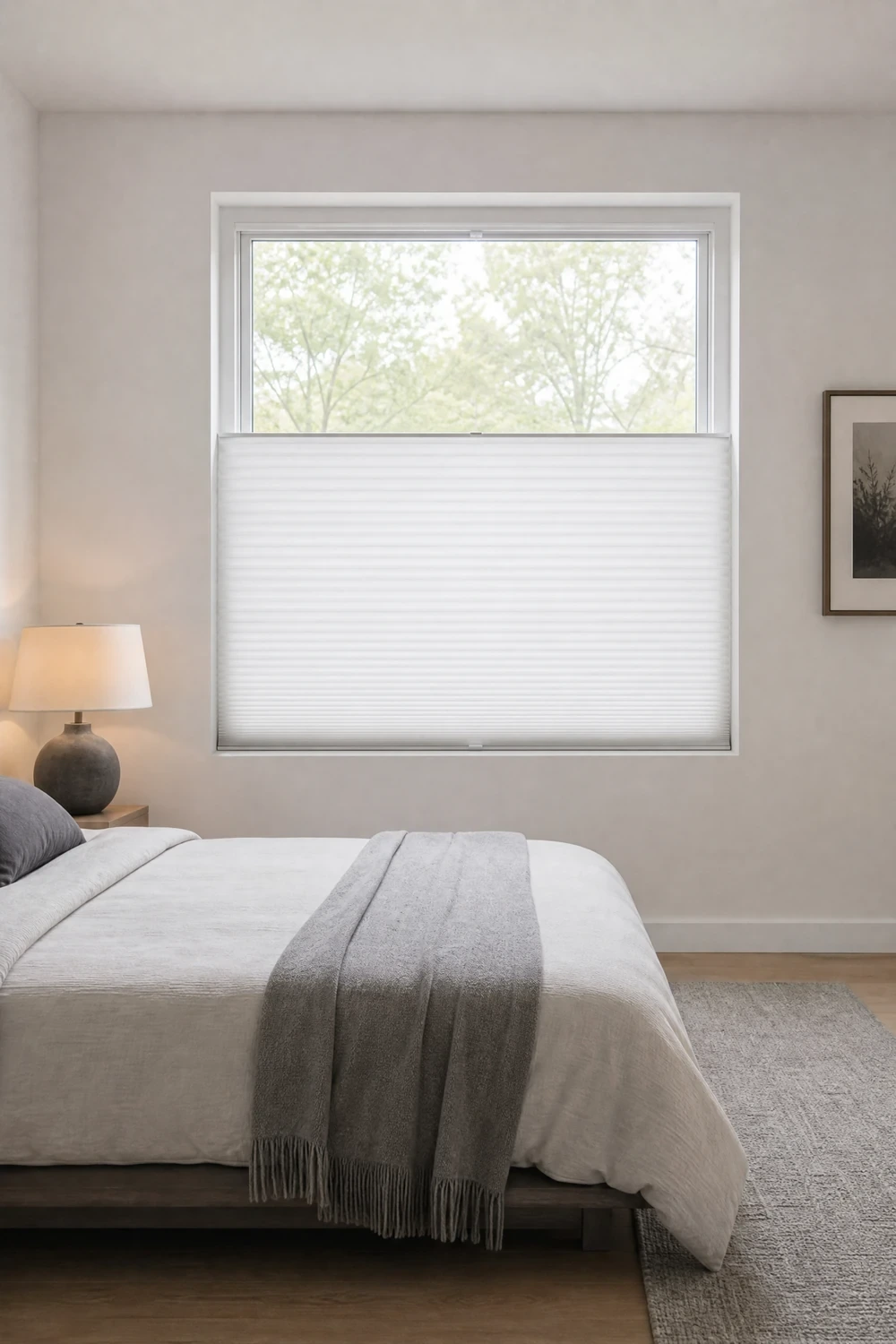
The hexagonal honeycomb structure of cellular shades traps air in its cells and acts as genuine insulation against heat and cold, which can noticeably reduce how hard your heating and cooling systems have to work in a bedroom, especially against single-pane windows. They come in light-filtering and blackout fabric options and look clean and minimal in a way that suits virtually any bedroom style without demanding visual attention.
Pro Move: A double-cell blackout honeycomb shade with a top-down bottom-up configuration is considered the gold standard for primary bedrooms where privacy and darkness both matter.
Plantation Shutters for Timeless Light Control
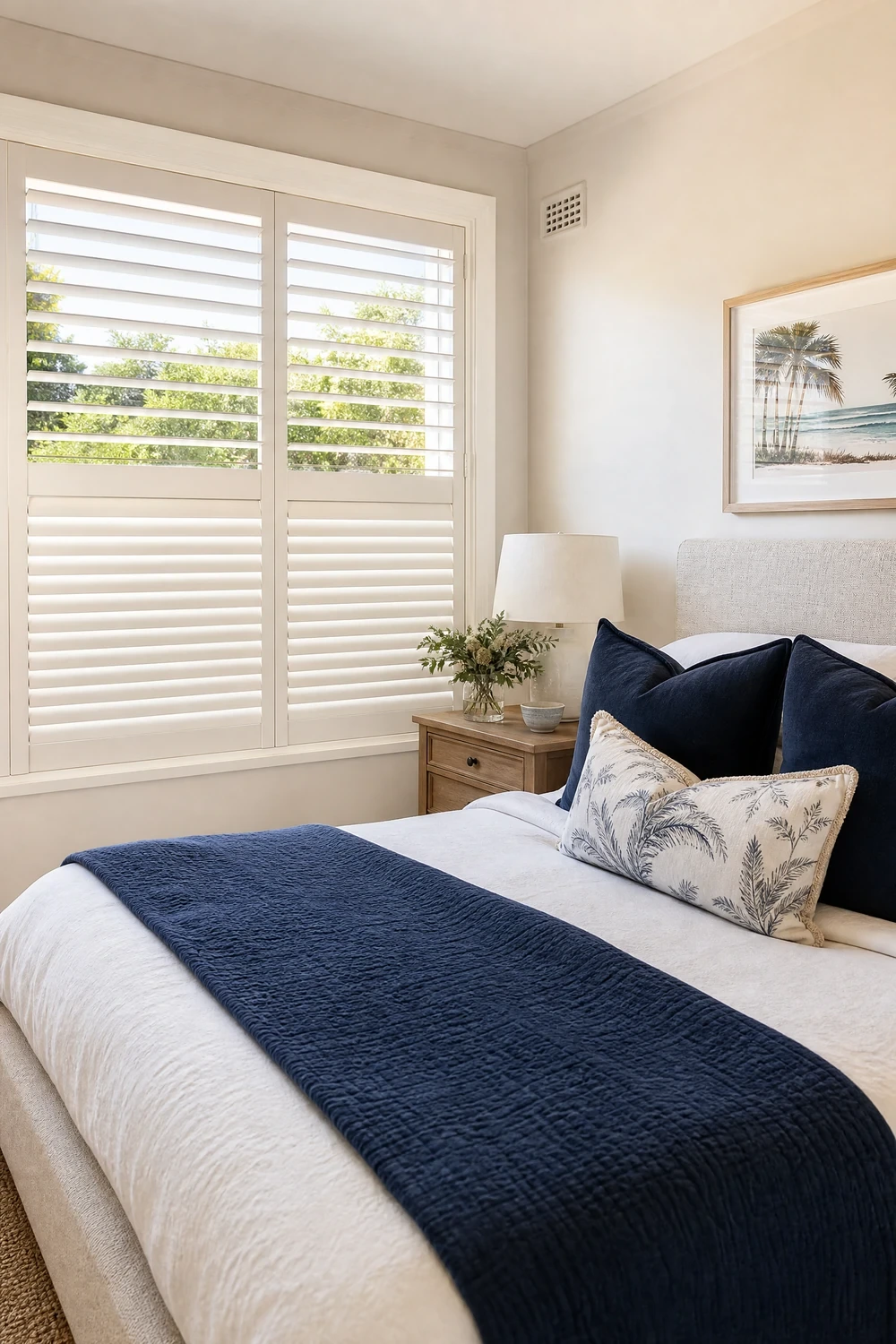
Wide louvered plantation shutters can be tilted at any angle to direct light exactly where you want it and block outside visibility precisely where it matters, and unlike fabric treatments they never fade unevenly, collect dust the same way, or need replacing every few years if you buy solid wood or quality composite from the start. A divider rail that splits the shutter into upper and lower halves is particularly useful in bedrooms since it lets you tilt the lower louvers closed for privacy while leaving the top open for light.
Designer Advice: Consider a warm stained hardwood finish in oak or walnut rather than default white if your bedroom leans natural and earthy, since it reads far more architectural.
Patterned Roman Shades as a Visual Focal Point
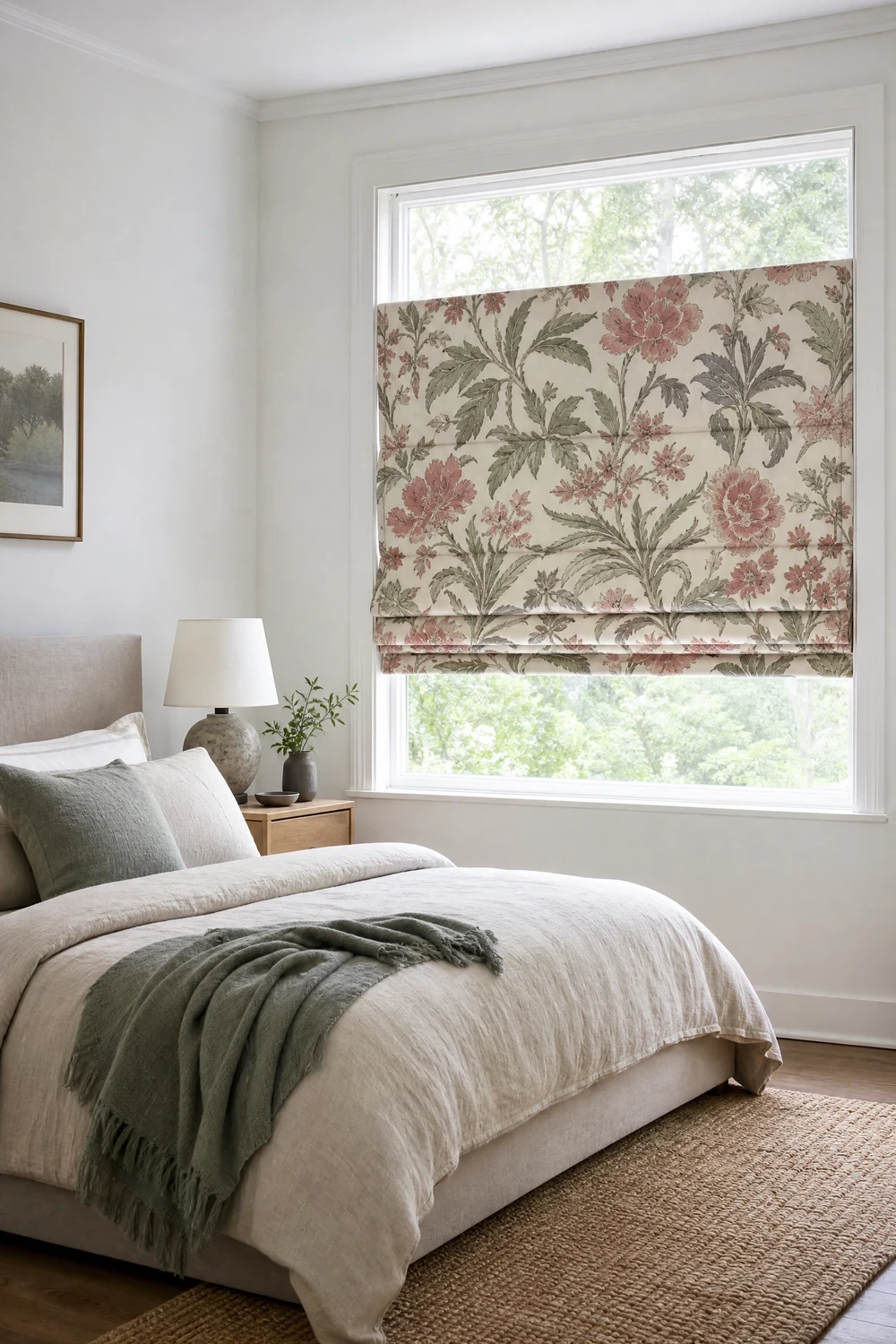
A Roman shade in a strong pattern, whether a bold botanical print, a graphic stripe, or an abstract geometric in tones that pull from the bedroom palette, does the work of art and window treatment simultaneously and is especially effective on windows where you want presence but not the bulk of full curtain panels. Keep everything else in the room relatively simple when going this route, since a patterned shade already anchors the window and a competing gallery wall or busy bedding will pull against it.
Heads Up: Measure your window carefully before ordering a patterned Roman shade since the pattern repeat affects the final yardage and custom versions run significantly more than solid options.
Motorized Smart Shades
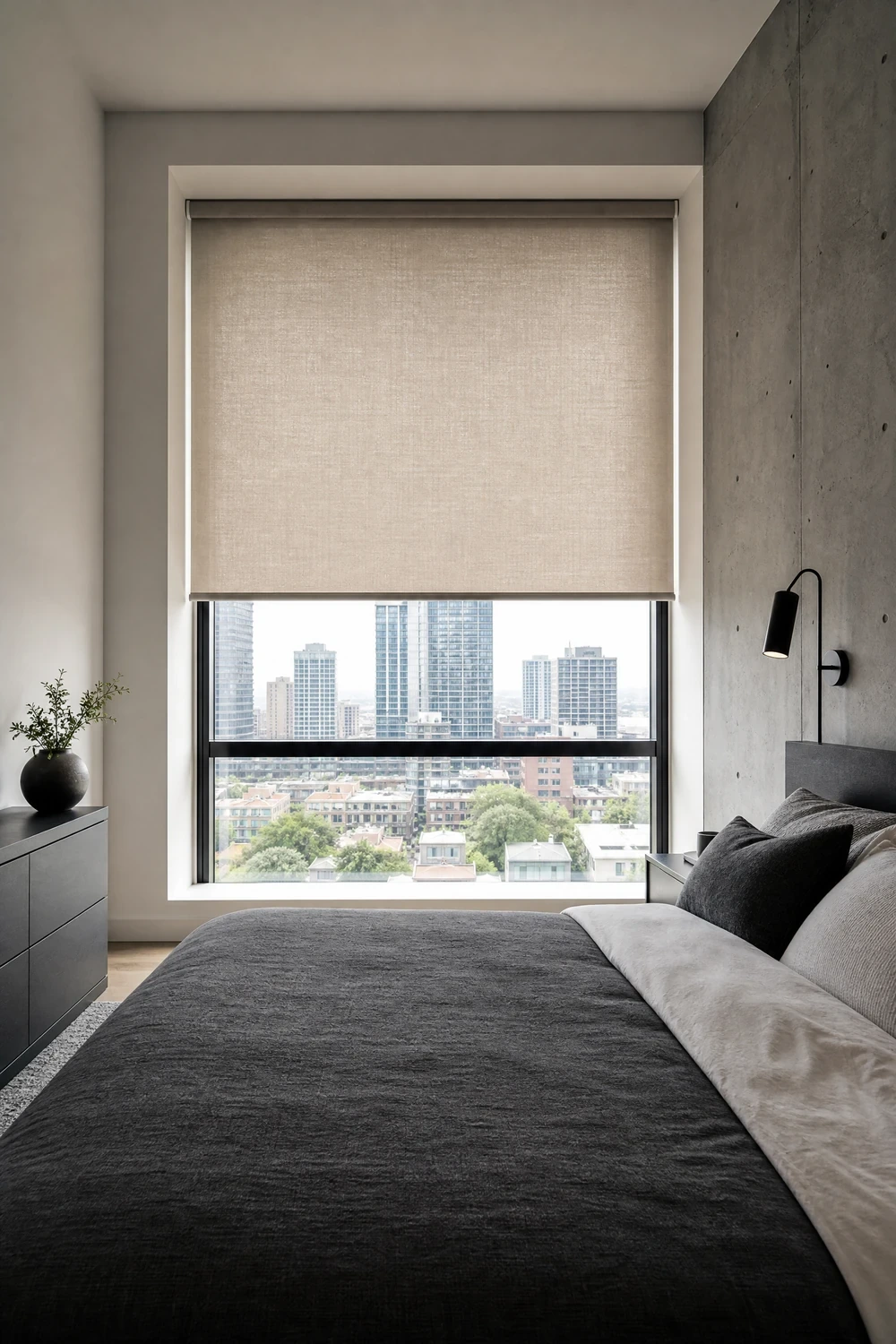
Motorized shades that open and close on a schedule, or at sunrise and sunset automatically, are one of the most genuinely life-improving bedroom upgrades available, since waking up to light gradually lifting rather than manually fumbling with cords half-asleep is a real difference in daily comfort. Most systems now integrate with Alexa, Google Home, and Apple HomeKit, and the hardware itself, typically a slim roller or cellular shade with a nearly invisible motor housing, looks cleaner than any corded alternative.
Quick Tip: Budget-friendly motorized roller shades from brands like IKEA FYRTUR and Lutron Serena deliver most of the functionality of high-end systems at a fraction of the custom installation price.
Velvet Drapes for Warmth and Sound Absorption
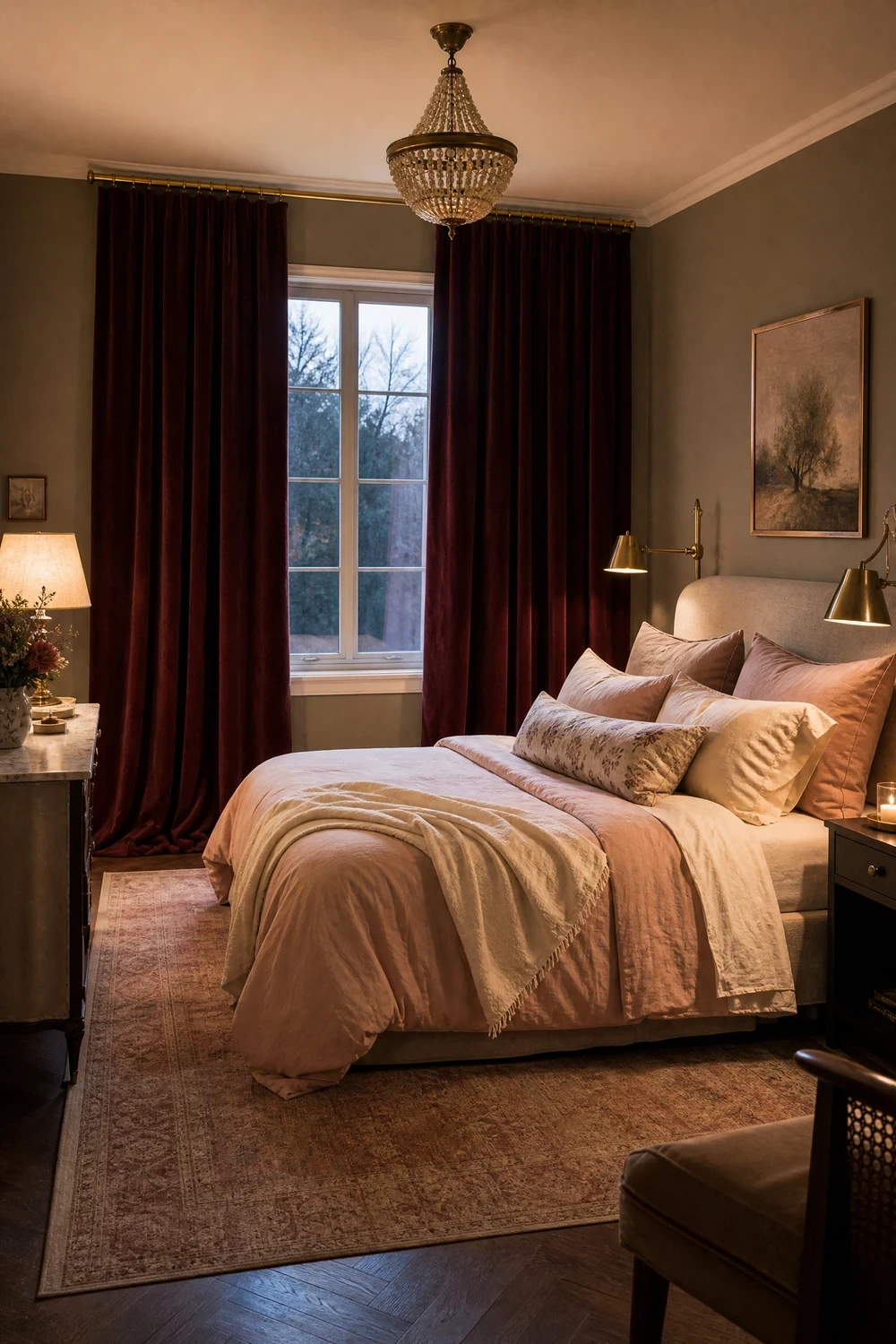
Heavyweight velvet curtains in a deep tone, whether charcoal, forest green, burgundy, navy, or dusty rose, add more warmth, texture, and acoustic softening to a bedroom than almost any other single fabric choice, and they look genuinely expensive even at off-the-shelf prices. The pile of velvet also absorbs sound, which makes the bedroom noticeably quieter, particularly in apartments above or beside busy spaces.
Pro Move: Velvet drapes benefit from steaming rather than ironing to restore the pile after shipping or washing, so plan to steam them once they are hung before forming any opinions about how they look.
Cafe Curtains for Lower-Half Privacy
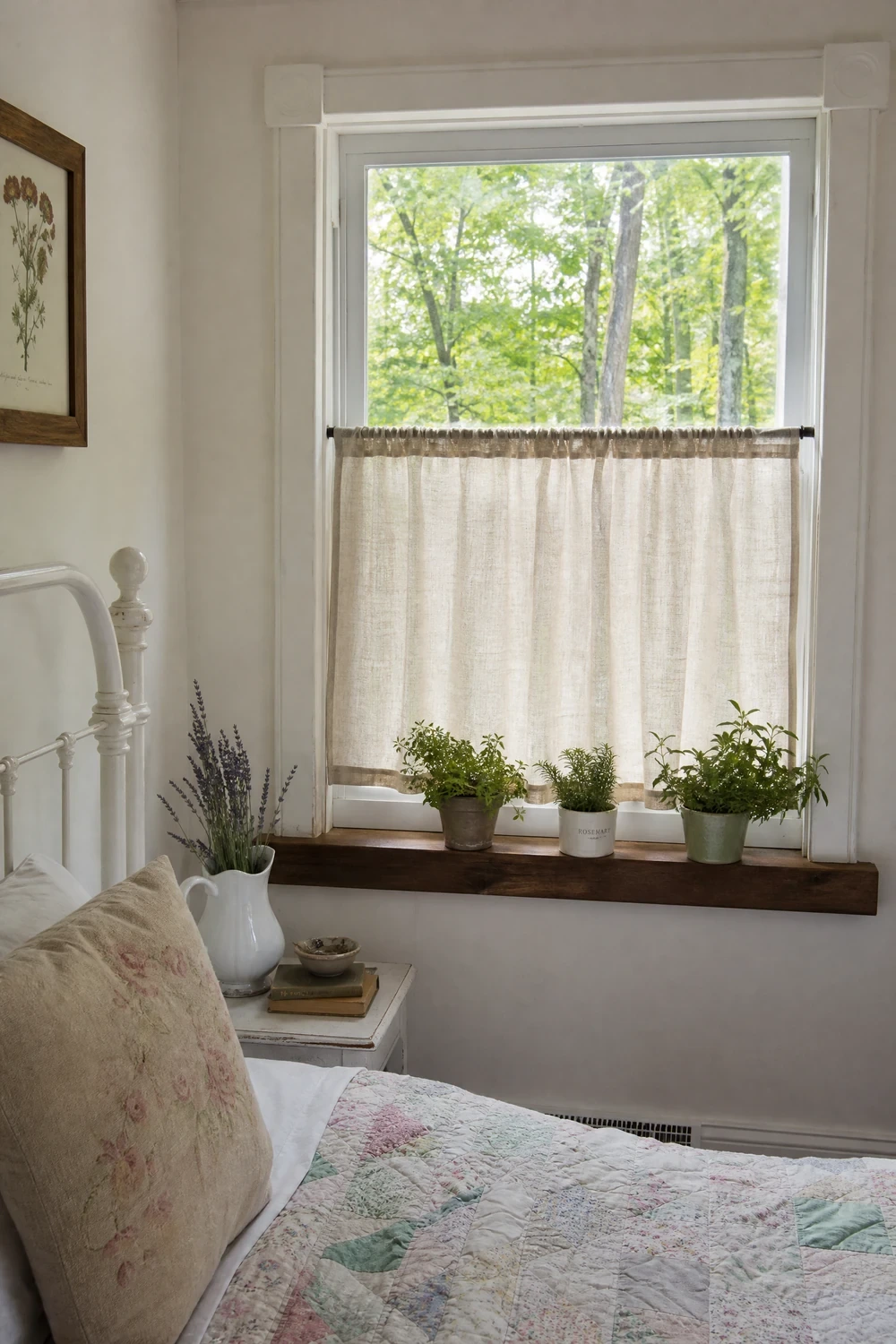
A cafe curtain mounted at the mid-point of the window covers the lower half where direct sightlines from outside matter most while leaving the upper portion completely uncovered for maximum natural light, making it an ideal solution for ground-floor bedrooms or bedrooms facing close neighbors. This treatment has a relaxed, European quality that suits cottage, French country, and Japandi bedrooms particularly well and costs almost nothing to install since it typically requires only a simple tension rod.
Designer Advice: Pair cafe curtains in a textured linen or cotton with a solid-color wall in a contrasting tone so the window becomes a clear visual moment rather than disappearing into the background.
Roller Shades in a Textured Solid
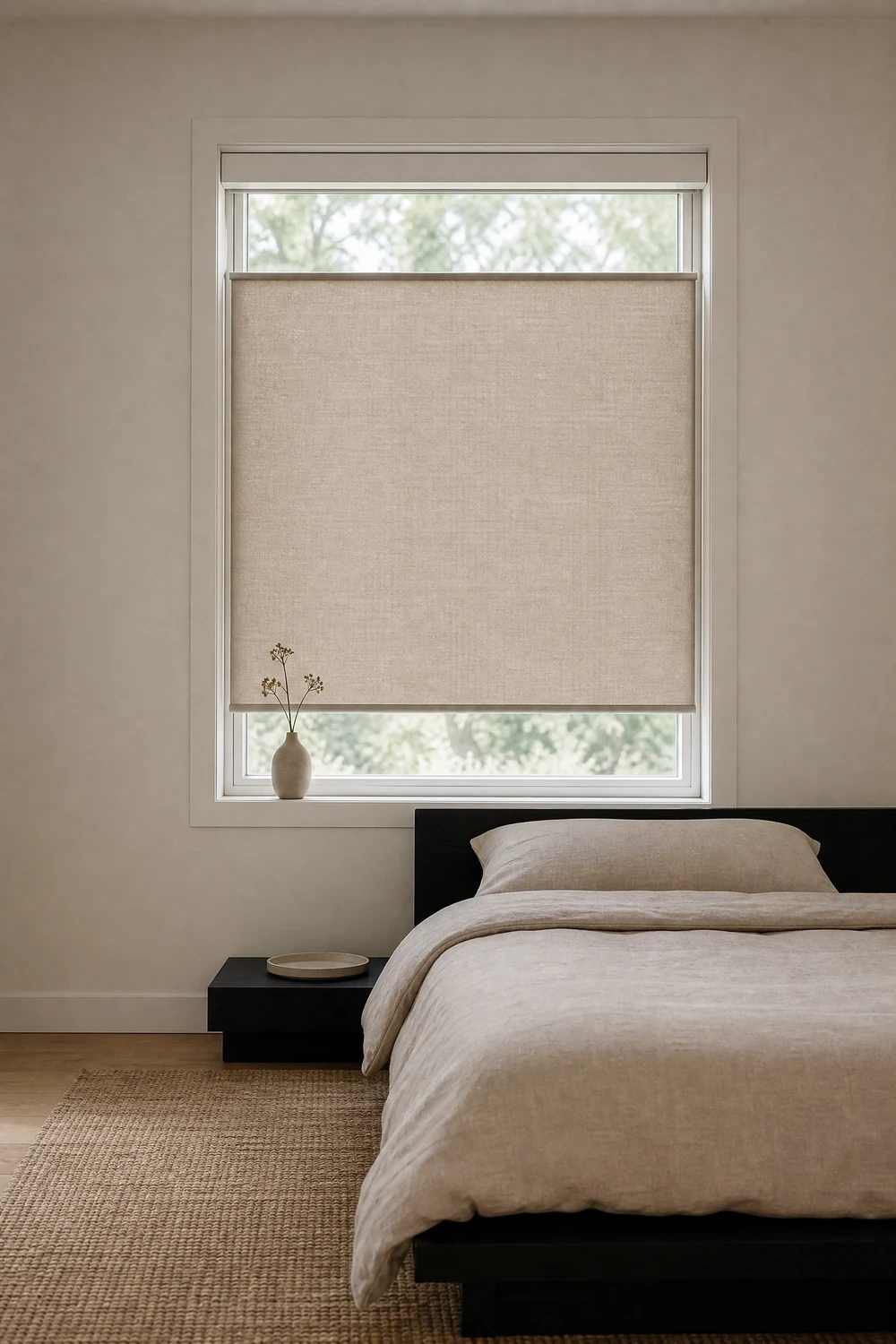
A flat roller shade in a textured solid fabric, such as a linen-weave, grasscloth-inspired, or boucle-look material, is the most minimal and architecturally clean window treatment available, and it suits modern, Japandi, and Scandinavian bedroom aesthetics better than almost any other option. Textured solids add visual depth without pattern complexity, which keeps the treatment from competing with the rest of the room while still feeling genuinely considered and designed.
Heads Up: Roller shades look best when paired with a fascia or cassette cover that hides the roll mechanism, since an exposed roll tube instantly cheapens even an expensive shade fabric.
| Treatment Type | Best Bedroom Style | Light Control | Budget Range |
| Roller shade (textured solid) | Modern, Japandi, Scandi | Light filtering or blackout | Affordable to mid-range |
| Velvet drapes | Glam, maximalist, cozy | Room darkening | Mid-range to investment |
| Plantation shutters | Traditional, transitional, coastal | Precise tilt control | Investment |
| Woven wood shades | Coastal, bohemian, earthy | Filtered only | Affordable to mid-range |
| Cellular honeycomb shades | Any style | Blackout or filtering | Mid-range |
Pinch Pleat Drapes for a Tailored Designer Look
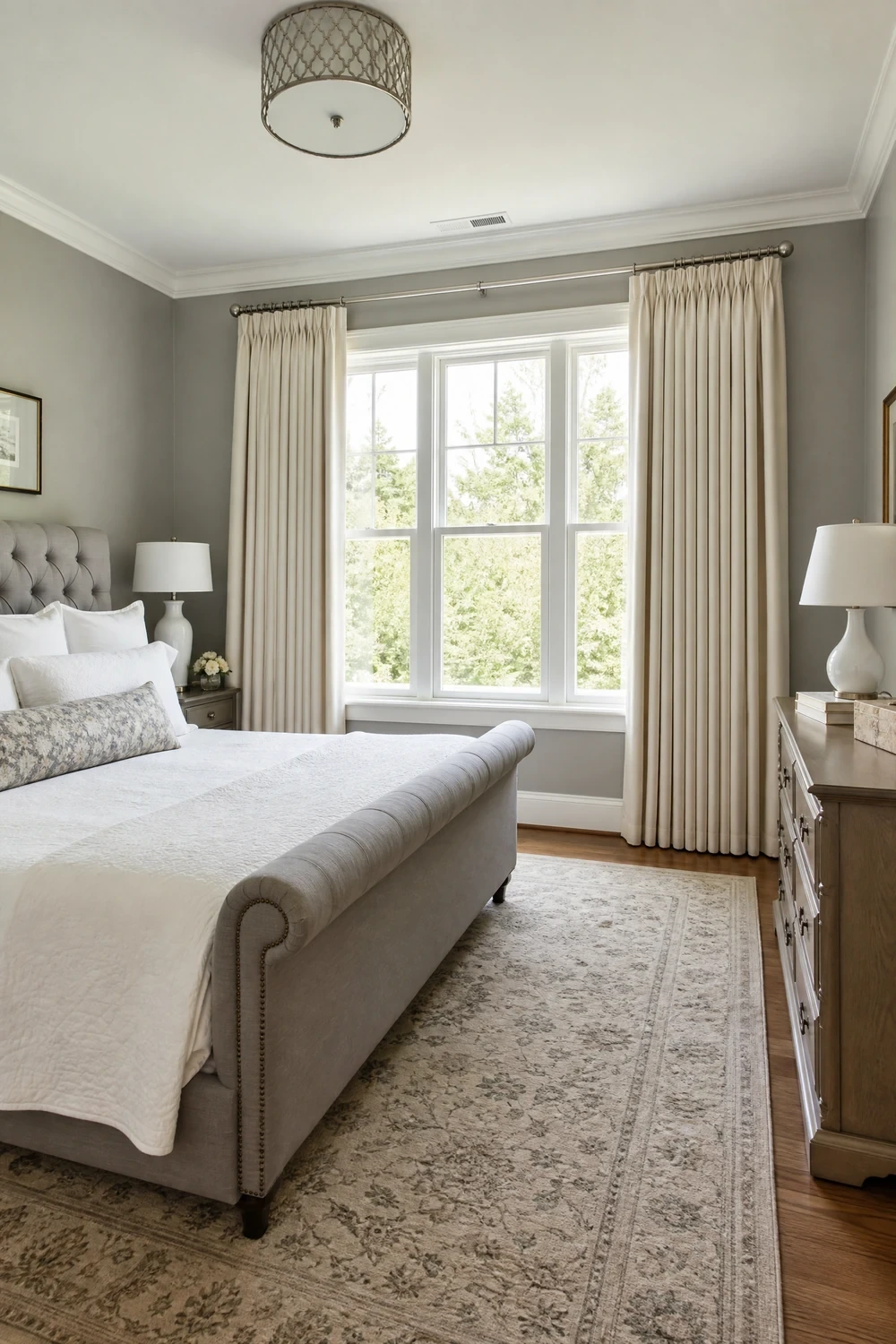
Pinch pleat curtains, where the fabric is gathered into neat clusters of two or three folds at the top before draping downward, are the heading style most commonly used by professional interior designers and the one most associated with a genuinely tailored, finished room. They require a specific pinch pleat track or rings rather than a standard rod pocket, but that minor hardware investment is what separates a bedroom that looks designed from one that looks like the curtains just happened to be hanging there.
Designer Advice: Triple pinch pleat headings give the most structured, formal look while double pinch pleat reads slightly more relaxed. Both require fabric that is at least two to two-and-a-half times the width of the window to pleat correctly.
Bamboo Blinds With a Linen Overlay
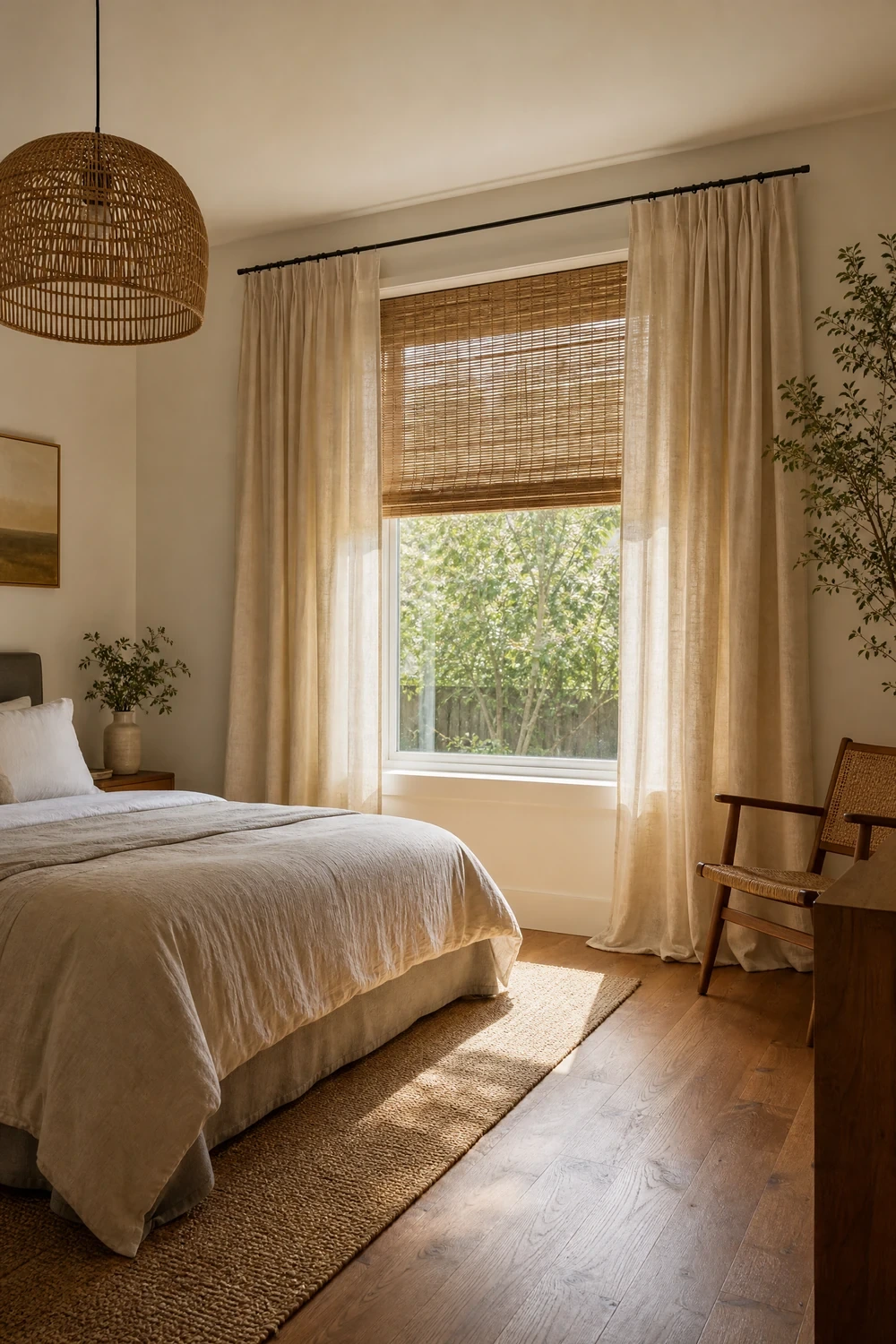
Pairing a bamboo blind with a loose linen panel hanging in front of it layers natural texture in a way that photographs beautifully and feels deeply considered in person, bringing together the organic warmth of both materials at a window that would otherwise feel underworked. The linen panel frames the bamboo without covering it when open, and at night the bamboo and linen together create a layered, cozy enclosure that a single treatment on its own could not achieve.
Quick Tip: Mount the bamboo blind inside the window recess and the linen panel outside on a wall-mounted rod for the cleanest separation between the two layers.
Top-Down Bottom-Up Shades
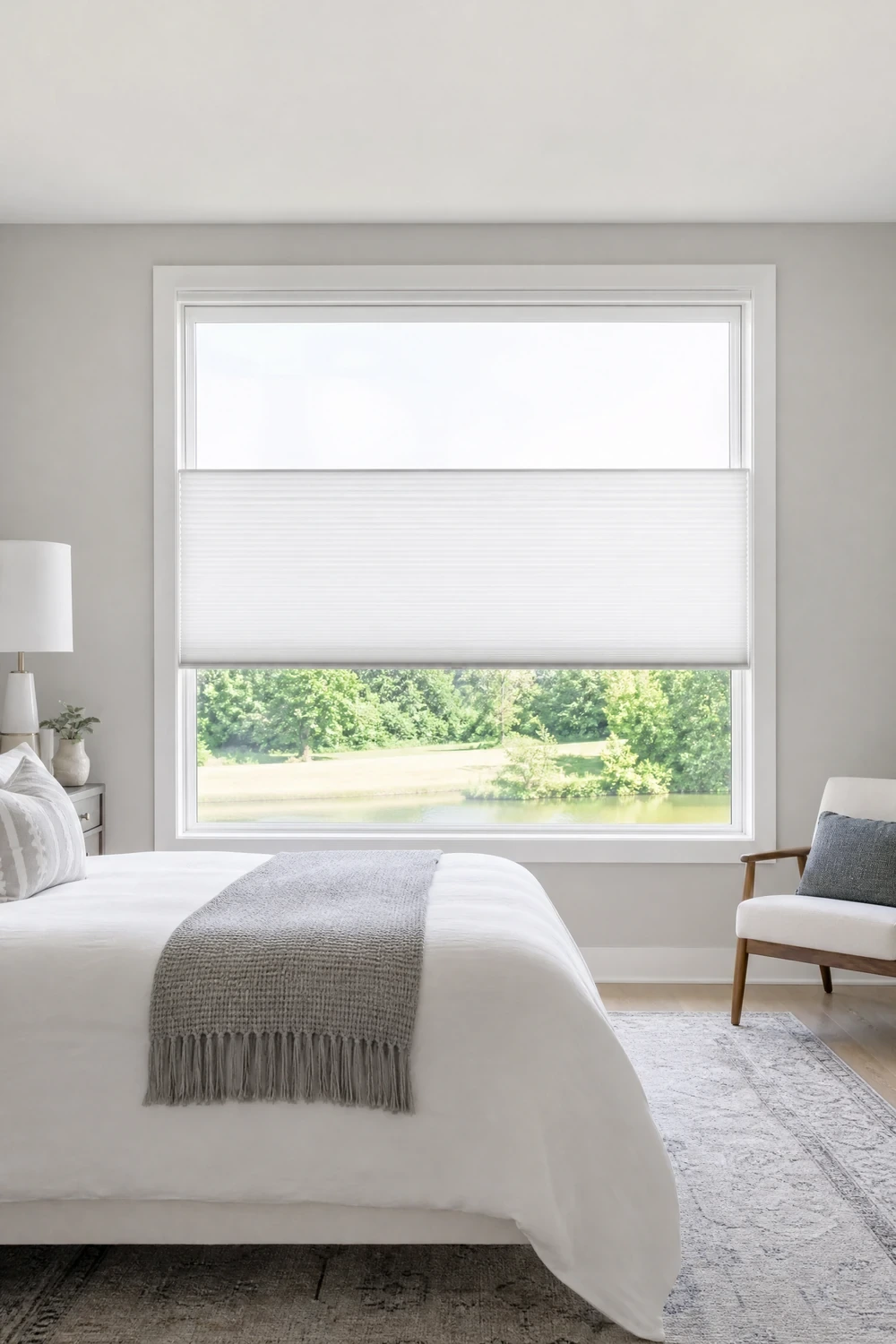
Top-down bottom-up shades, available in cellular, Roman, and roller configurations, are the most privacy-intelligent window treatment available for bedrooms because they let you pull the shade down from the top to flood the upper room with light while keeping the lower portion covered at exactly the height where outside sightlines are a concern. This configuration is particularly useful in bedrooms with windows at eye level when standing, since you can maintain privacy while still filling the room with natural daylight.
Pro Move: Top-down bottom-up cellular shades in a light-filtering fabric are the most versatile single-treatment solution for bedrooms where you want both privacy and natural light without layering two separate treatments.
Floor-Length Sheers for a Romantic, Airy Bedroom
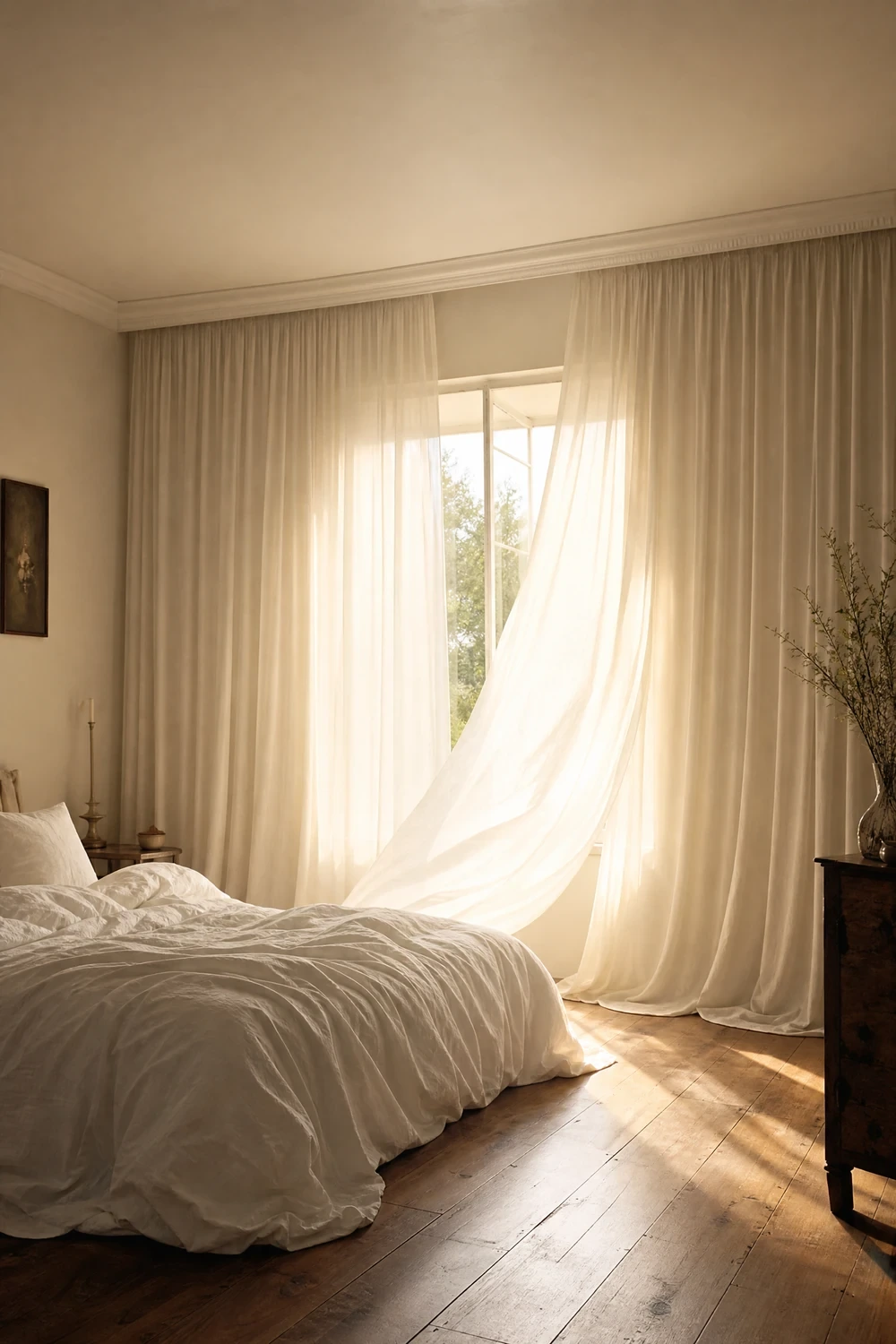
A window dressed in nothing but generous floor-length sheer panels, hung from a ceiling-mounted track or a wide rod that extends well past the frame on both sides, creates one of the most romantic and genuinely beautiful bedroom atmospheres available, particularly in rooms that face a garden, courtyard, or a quiet view. The movement of sheers in a gentle breeze is something that a photograph cannot fully capture, and it is the kind of detail that makes a bedroom feel genuinely lived-in and loved rather than just styled.
Heads Up: Full-sheer bedrooms work best in second-floor or above rooms or those with genuine privacy, since sheers offer almost no coverage from outside view once the interior lights are on at night.
Curtains in a Bold Saturated Color
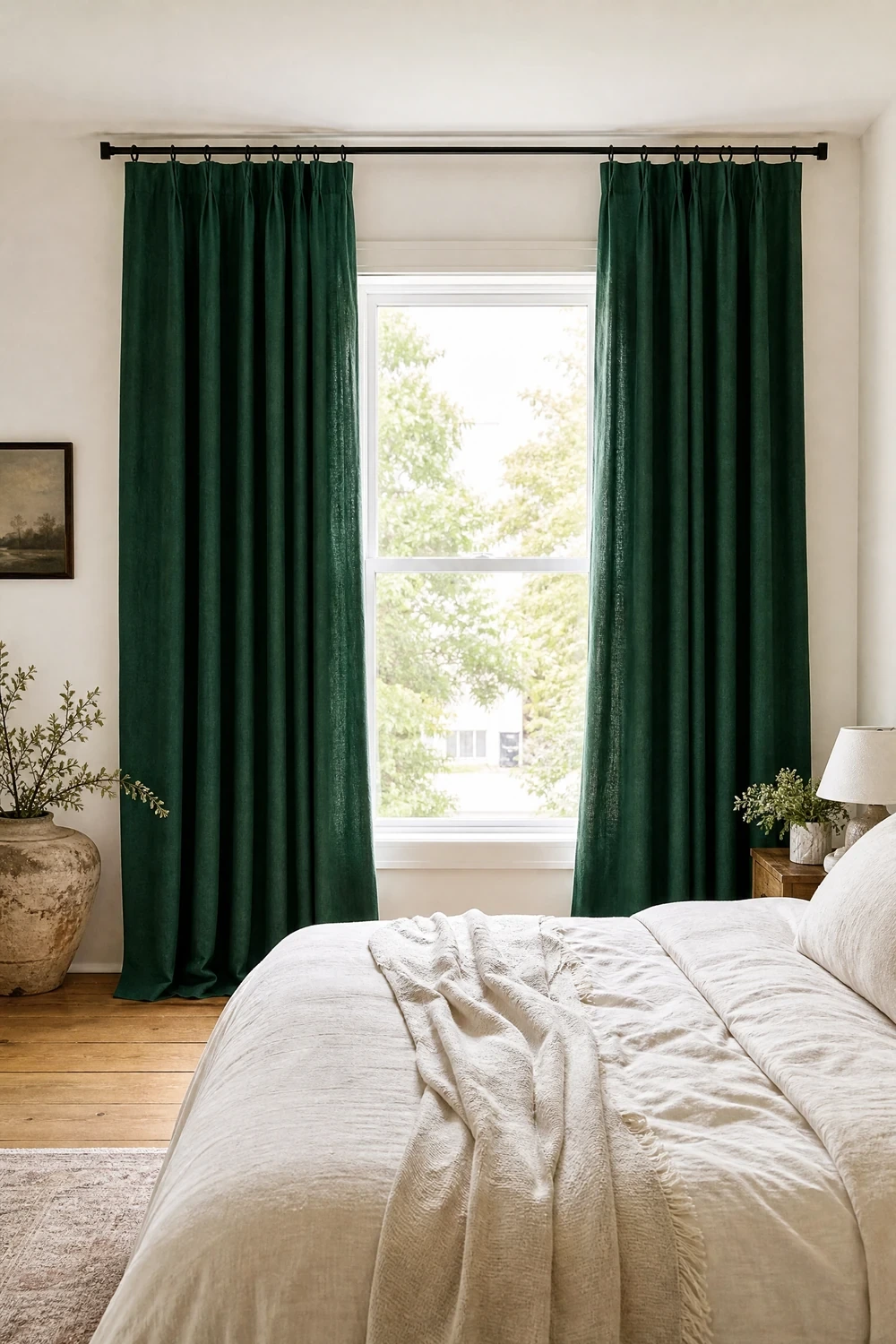
Deep emerald, rich terracotta, moody navy, or warm ochre curtain panels used as the single strong color in an otherwise neutral bedroom create a grounded, immersive quality that no other single decorating decision can produce at the same cost. In design terms this is called a color anchor, where the curtains draw the eye to the window and tie together the rest of the room through the undertones they bring, and it works particularly well in bedrooms that otherwise feel too safe or too beige to have any real personality.
Designer Advice: When using bold colored curtains, keep the hardware simple and matte rather than ornate, since the fabric is doing all the work and decorative rods compete for attention in a way that dilutes the impact.
Window Seat With Built-In Shutters or Shades
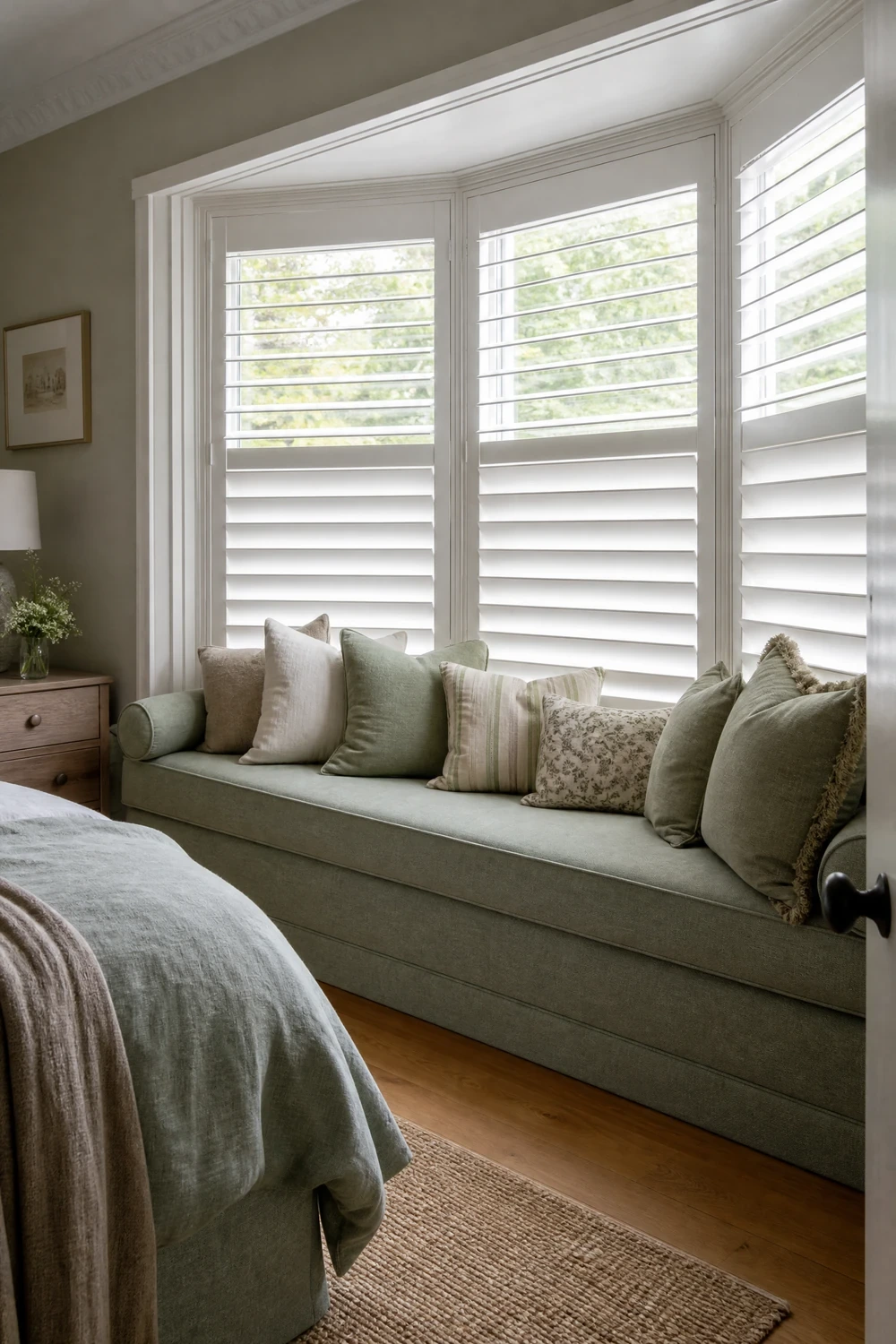
A window seat built into a bay or alcove creates one of the most coveted bedroom features in home design, and treating the windows above it with plantation shutters or neat Roman shades rather than hanging drapes makes the seat itself feel like an intentional architectural nook rather than a furniture arrangement that happened to end up near the window. The shutters or shades integrate with the built-in quality of the seat so the whole area reads as one designed unit.
Quick Tip: Custom fitted Roman shades in the same fabric as the window seat cushion create a cohesive, upholstered quality that makes the nook feel designed from the inside out.
Solar Shades for Rooms With a View
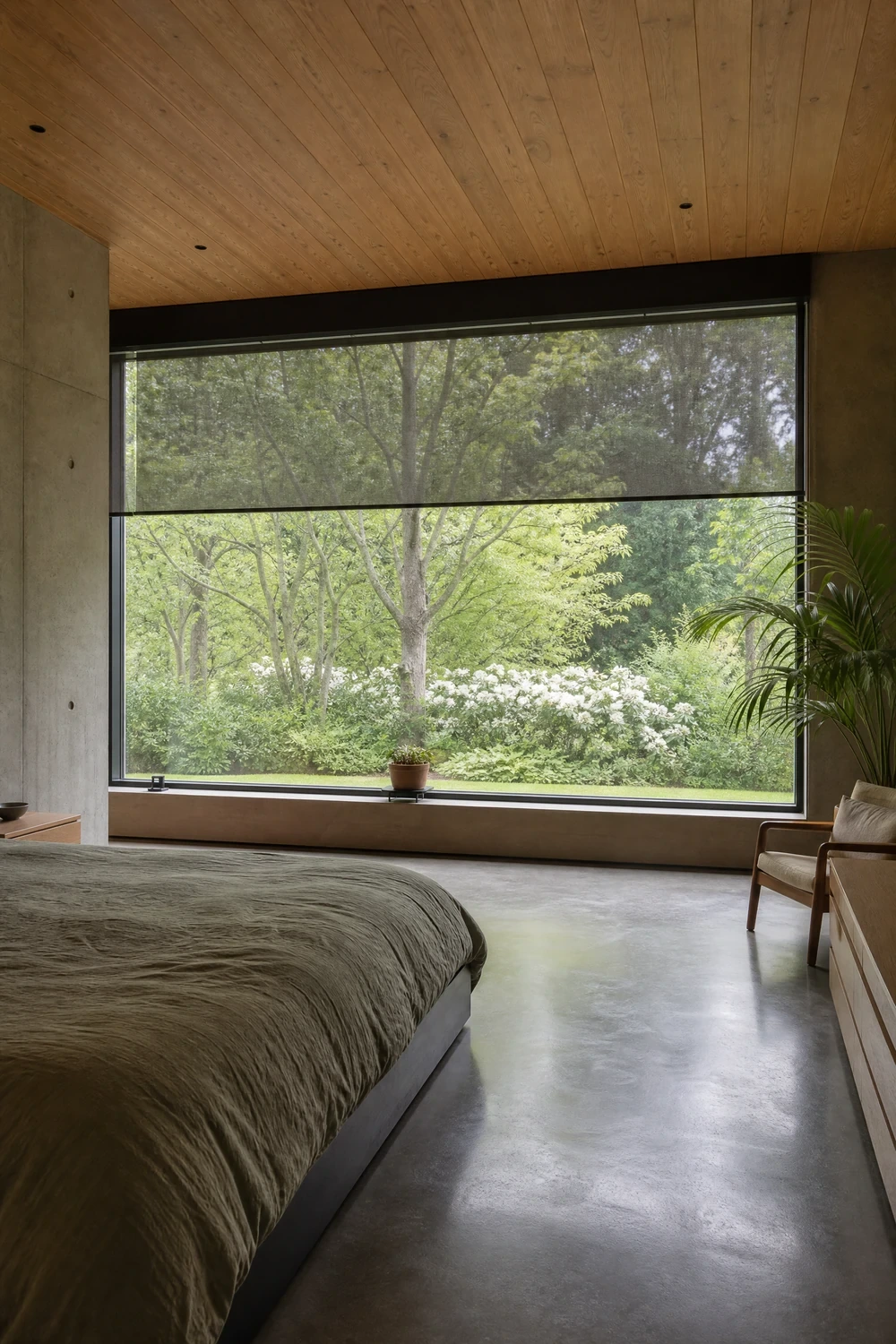
Solar roller shades are made from an open-weave screen fabric that dramatically reduces glare and UV radiation without blocking the view through the window, making them the ideal treatment for bedrooms with genuinely beautiful outlooks that you do not want to sacrifice to privacy or light control. They read as nearly invisible from inside the room when the view is lit and give the window a clean, frameless quality that suits modern and minimalist bedrooms particularly well.
Reality Check: Solar shades offer minimal privacy at night when interior lights are on since the screen fabric becomes a one-way mirror in reverse, so they work best layered with a blackout shade or drape for evening use.
Upholstered Cornice or Pelmet Above the Window
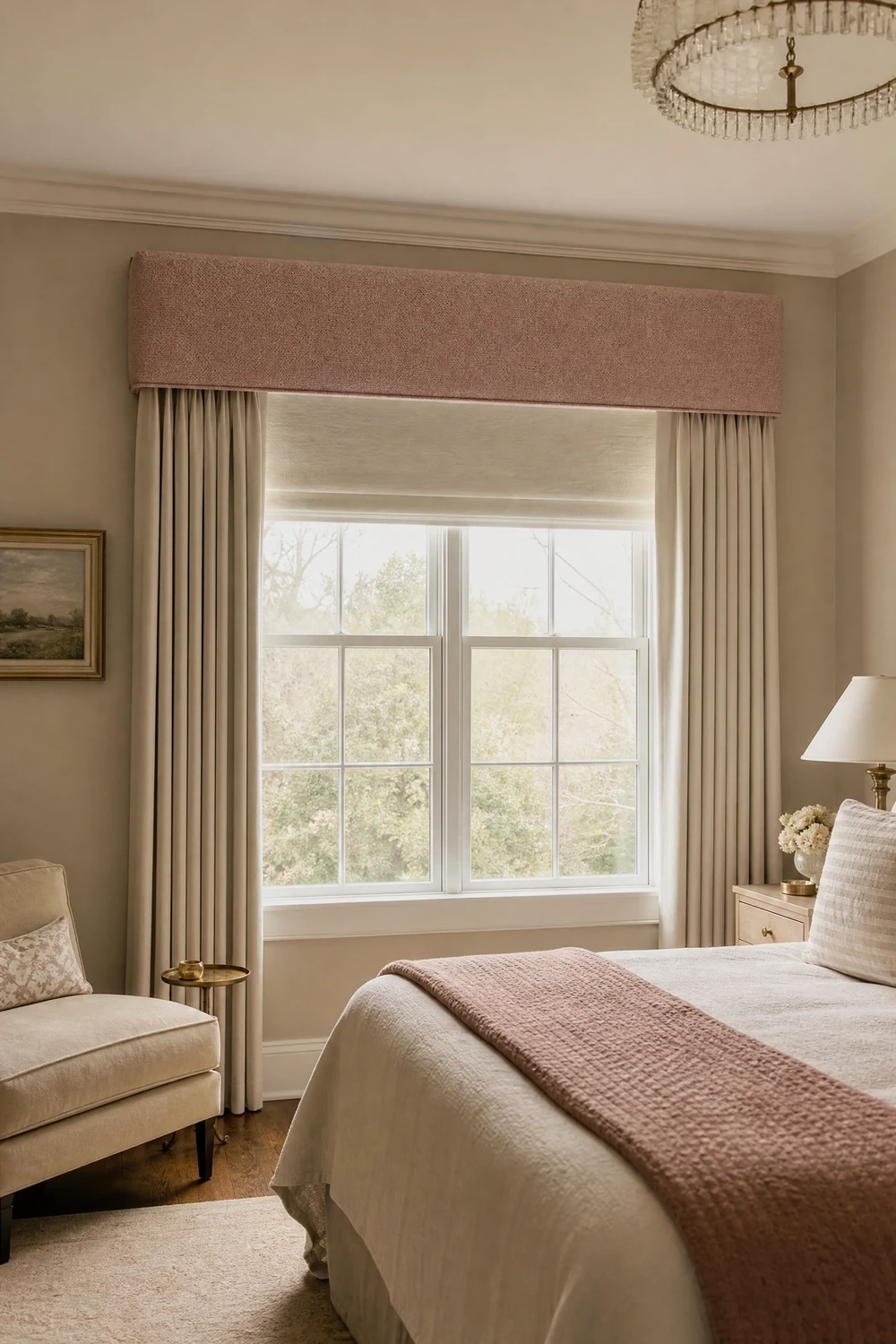
A fabric-covered cornice board or pelmet mounted above the window is one of the most underused treatments in contemporary bedroom design despite being a genuine game-changer for windows that need more presence without the weight of a full drape panel. The cornice adds height, frames the window architecturally, and hides any hardware, lining, or roller mechanism behind it in a way that makes the entire treatment look bespoke and deliberately considered.
Pro Move: A cornice upholstered in the same fabric as the headboard or bedding creates an intentional textile thread that runs through the room and signals a level of design coherence that most rooms never achieve.
Zebra or Dual-Layer Roller Shades
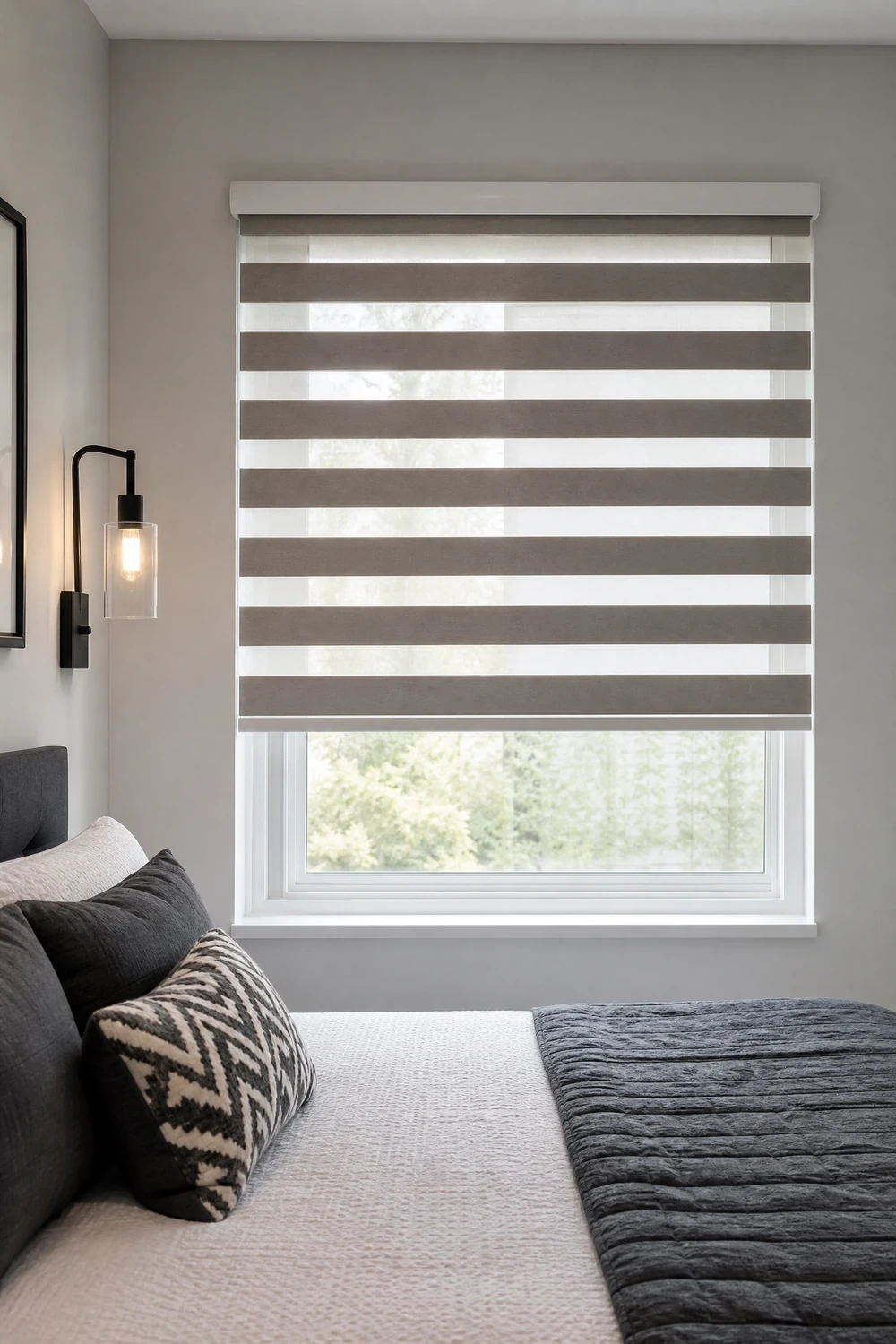
Zebra shades alternate between sheer and opaque horizontal bands that, when shifted against each other, give you a continuous range of light and privacy control from fully open to fully closed without the need for a separate treatment. They have a clean, graphic quality that suits modern and transitional bedrooms and operate as a single smooth shade with no cords, loops, or visible mechanisms beyond a slim housing at the top.
Heads Up: Zebra shades look most polished in a cassette housing that conceals the roll completely. A bare roll tube at the top reduces the overall finished quality significantly.
Linen Drapes in a Tone-on-Tone Match With the Walls
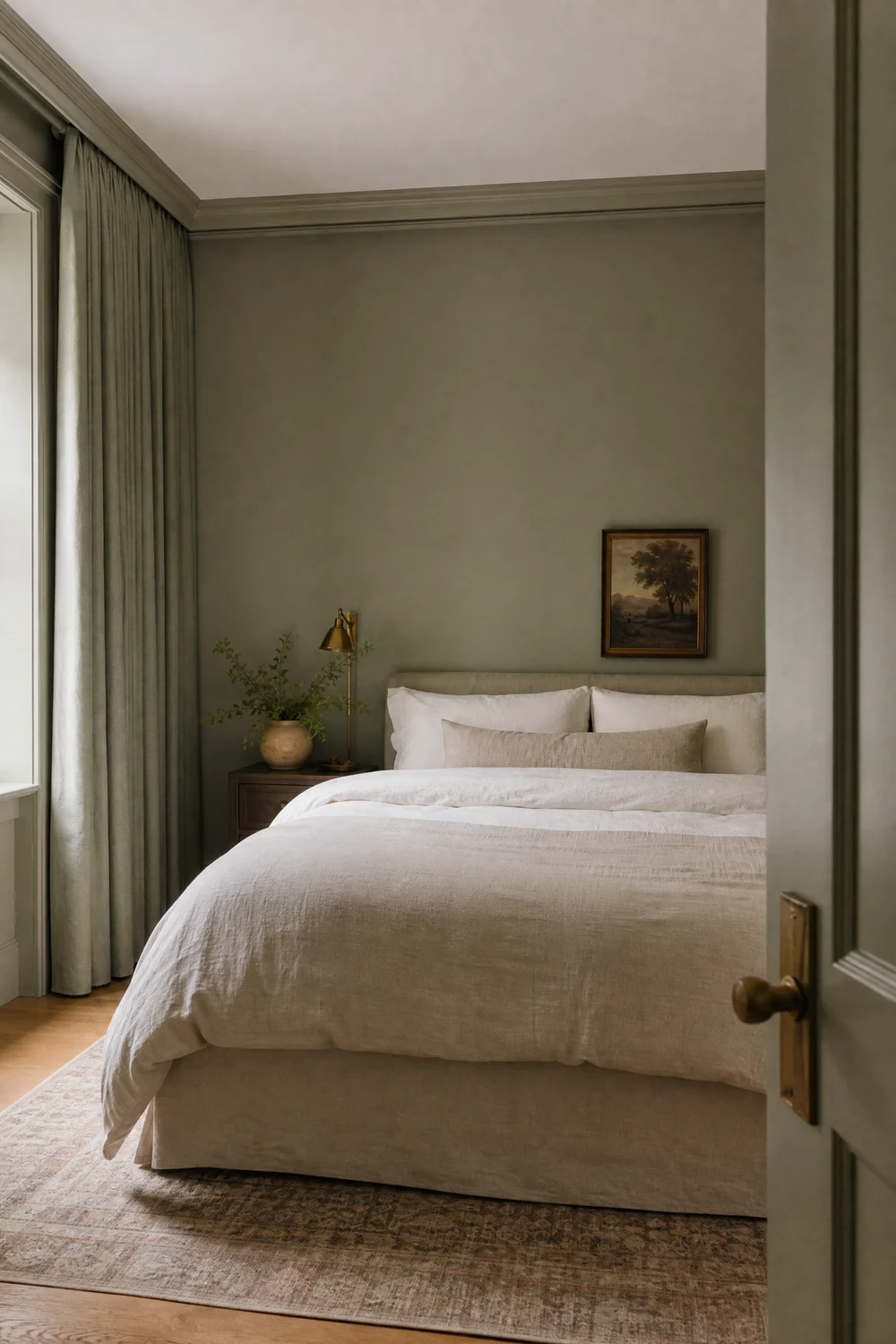
Hanging curtain panels in a shade that is the same color family as the wall, perhaps a slightly deeper or lighter tone of the same hue, creates a cocooning, immersive bedroom atmosphere where the windows feel like part of the room’s architecture rather than a separate decorating decision. This is one of the most sophisticated techniques used in high-end interior design and it works in virtually any color, from warm whites and sand tones to deep moodier shades like sage or slate.
Designer Advice: The tone-on-tone approach works best with matte or low-sheen fabrics like linen or cotton so the curtains absorb light similarly to the painted wall rather than catching it differently and drawing the eye.
Roman Shades Paired With Side Panels
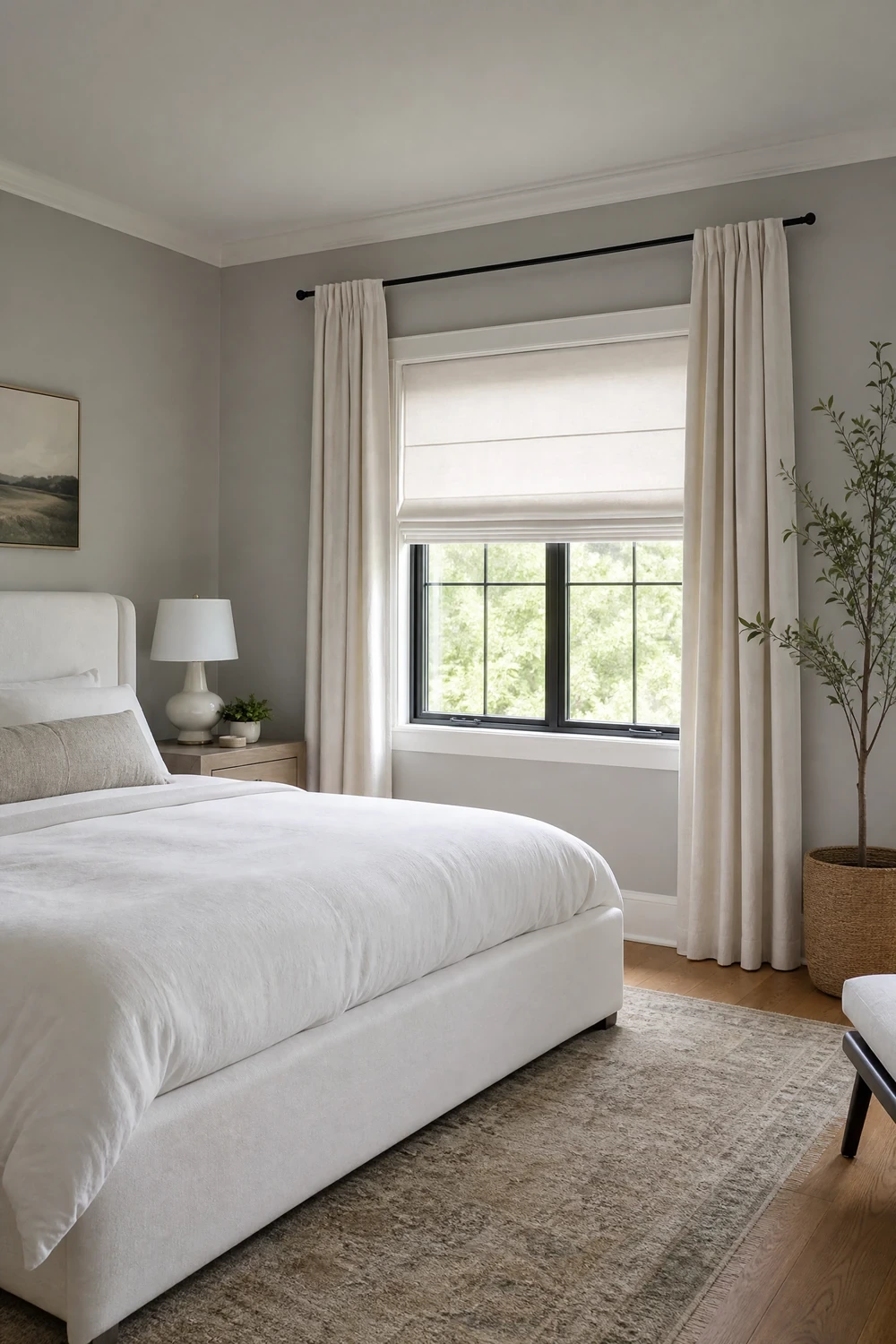
Mounting a clean Roman shade inside the window recess for light control and adding two fixed side panels that frame the window without covering it combines the architectural precision of a shade with the softness and visual width that drapery brings. The side panels do not need to open and close since the shade handles the functional work, which means they can be narrower and less expensive while still giving the window the framed, designed quality of a full curtain installation.
Quick Tip: Fixed side panels look best when they are mounted to the wall rather than the ceiling to keep the window frame clearly defined and the panels from engulfing the whole wall.
Blackout Roller Shade Behind a Decorative Curtain
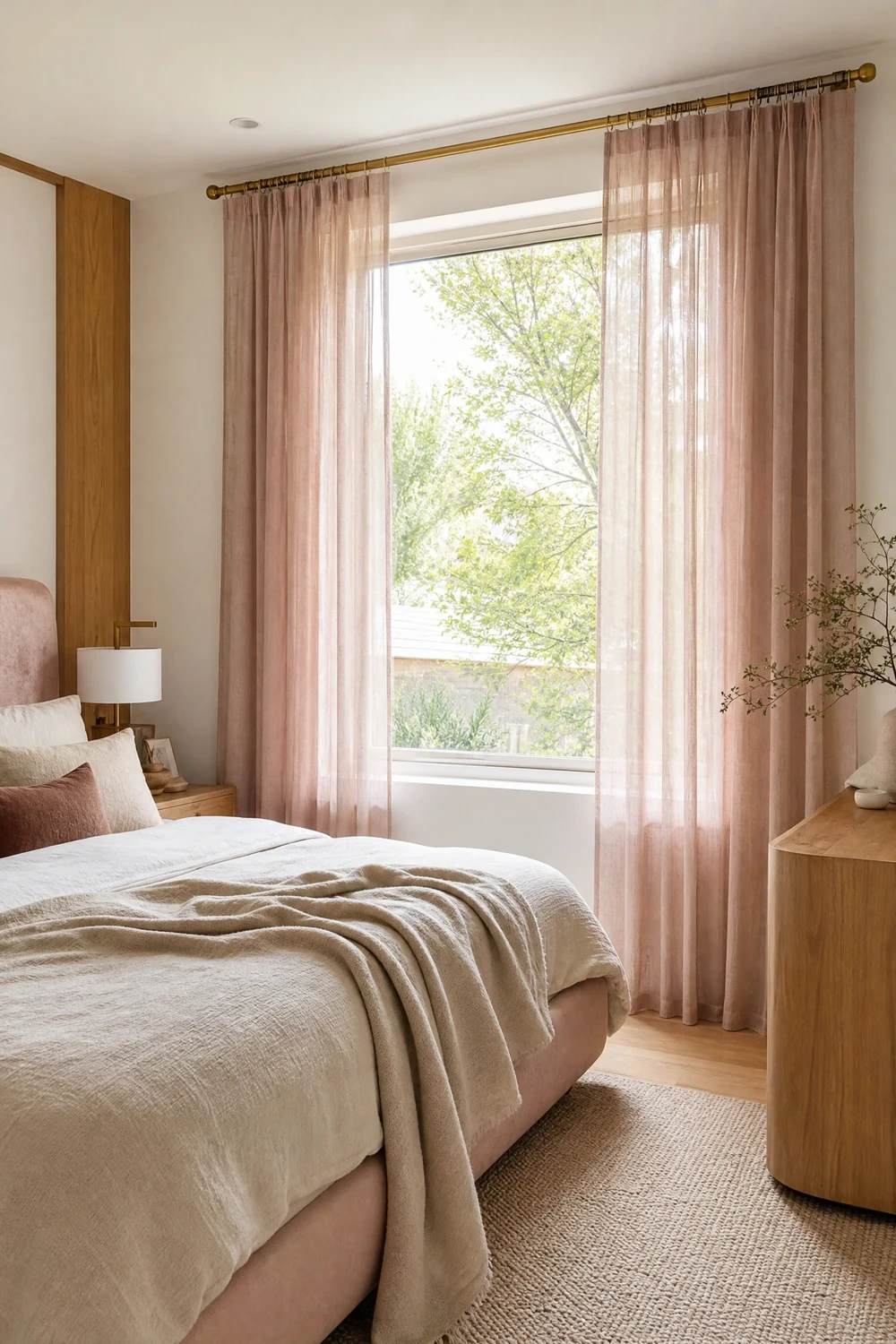
Installing a barely-visible blackout roller shade inside the window recess as a hidden functional layer and then hanging a beautiful decorative curtain panel in front purely for aesthetics is the approach professional designers use when they want a bedroom to look purely styled without the treatment looking obviously practical. The roller does all the blocking work invisibly and the decorative panel, which can be a sheer, a patterned fabric, or even a lightweight linen, handles the visual impression from inside the room.
Pro Move: A recessed roller shade mounted inside the window frame disappears completely behind the decorative curtain when both are open, so from inside the room you only ever see the beautiful fabric.
Tie-Up Curtains for a Relaxed Cottage Feel
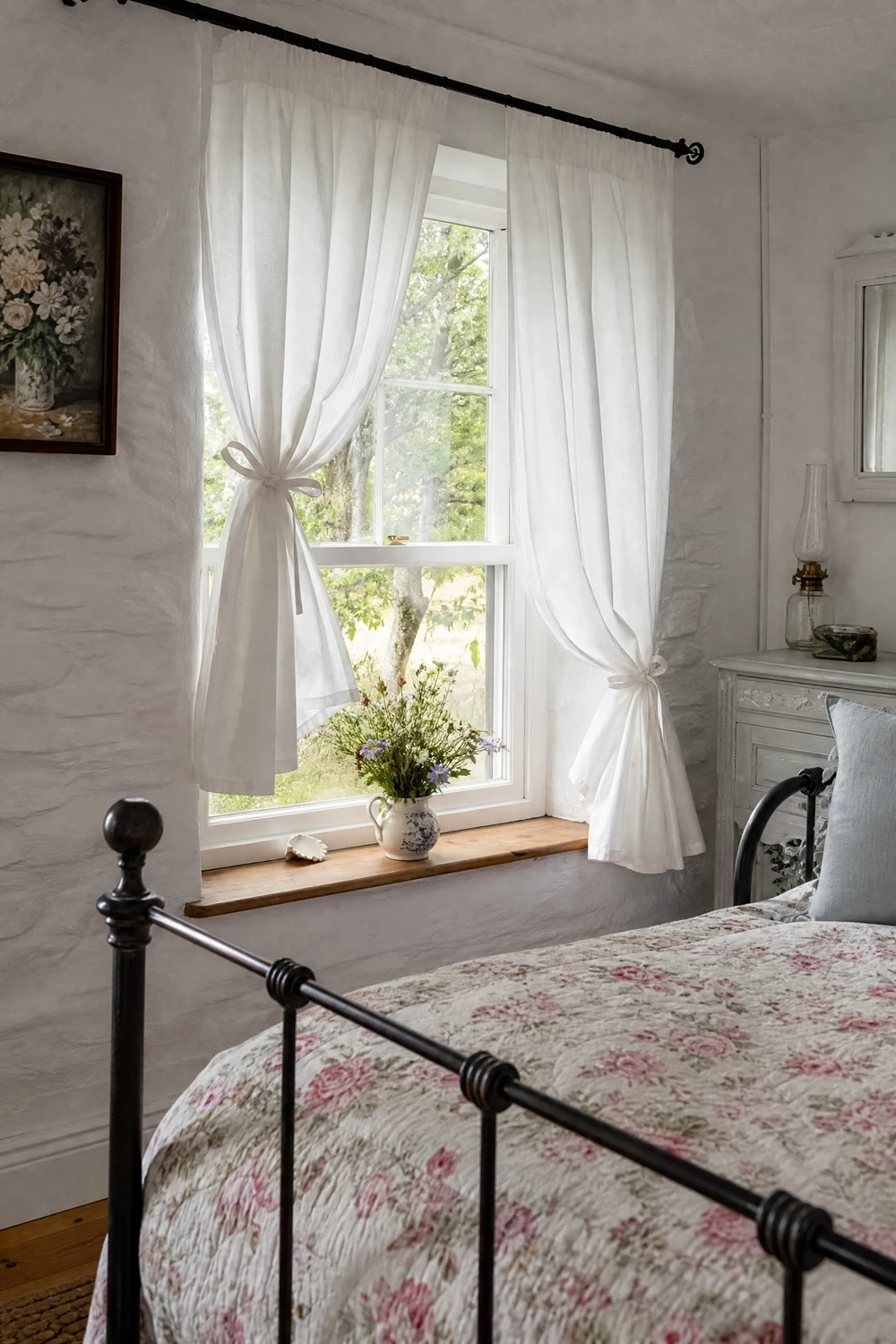
Tie-up curtains are panels gathered and tied at different heights with fabric ties rather than being pulled to the side, creating a relaxed, casual drape that suits cottage, farmhouse, and relaxed coastal bedrooms far better than structured drapery or clinical roller shades. They are among the easiest and most affordable window treatments to make yourself since they require no heading tape, no special hardware, and no sewing experience beyond a basic straight stitch.
Heads Up: Tie-up curtains are a purely decorative treatment with minimal light-blocking ability, so they work best in second-floor bedrooms where privacy is not a concern, or layered over a functional blind.
Valance With Roller or Cellular Shade Below
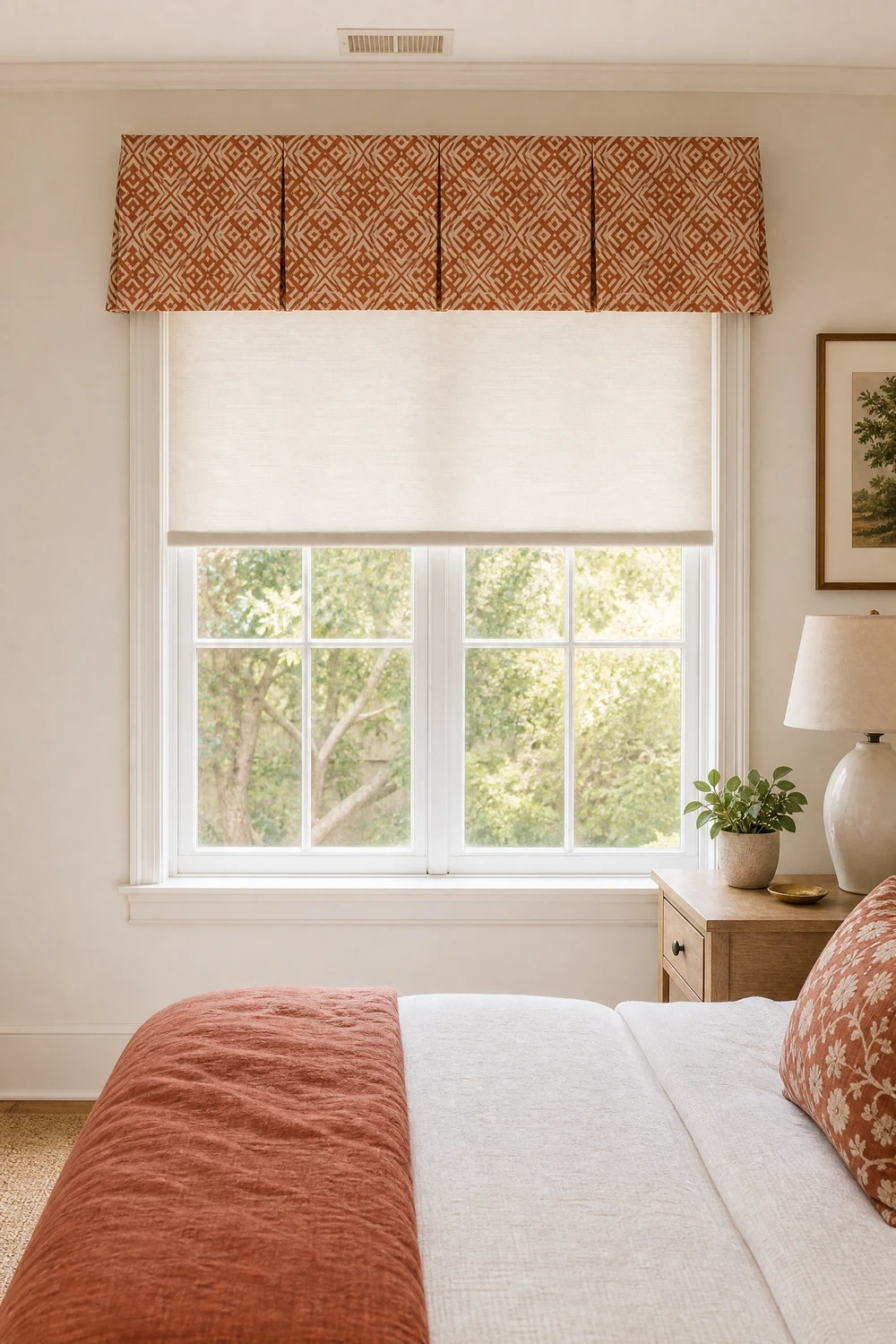
A decorative valance across the top of the window paired with a clean roller or cellular shade below is one of the most popular designer combinations for bedrooms that want some softness and personality at the window without the full commitment of floor-length curtains. The valance adds color, pattern, or texture right where the eye naturally lands when you look at a window, while the shade beneath handles the practical work of light control and privacy independently.
Designer Advice: Keep the valance relatively shallow, around 10 to 14 inches deep, so it frames the top of the window without swallowing the light. A valance that drops more than a quarter of the window height will make the room feel lower and the window feel smaller.
Frosted Window Film as a Minimal Privacy Layer
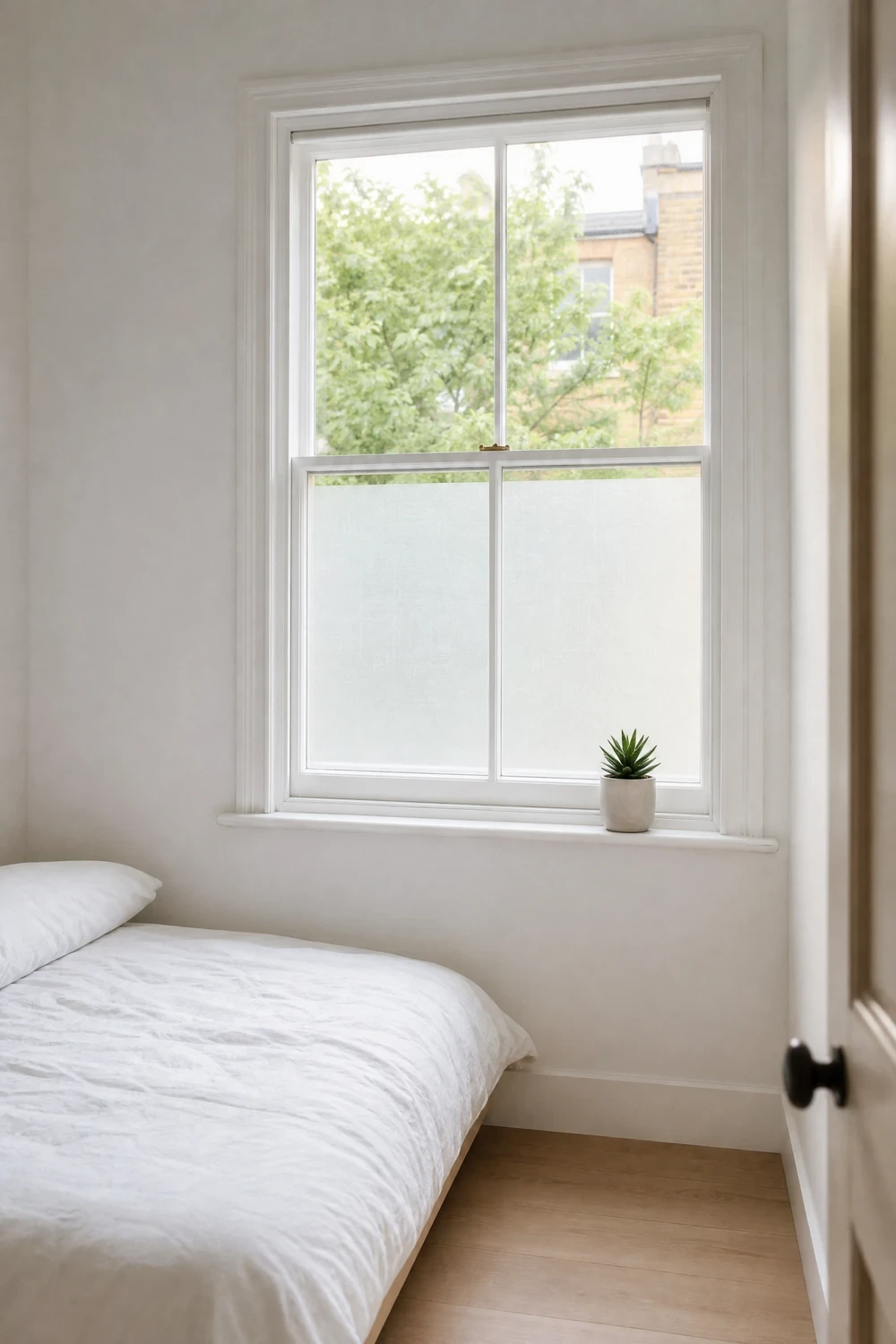
Frosted adhesive window film applied directly to the glass is the most affordable, most minimal, and most rental-friendly privacy solution available for bedroom windows, and modern versions have a translucent quality that allows light in beautifully while blocking outside visibility completely at any time of day or night. It works particularly well in bedrooms with small windows or obscure-shaped windows where hanging a standard curtain or shade would look awkward or disproportionate.
Quick Tip: Decorative frosted film with a subtle texture such as linen, reed, or geometric etching adds genuine visual interest to the glass itself and reads as an intentional design choice rather than a privacy compromise.