Industrial Living Room Looks That Actually Work
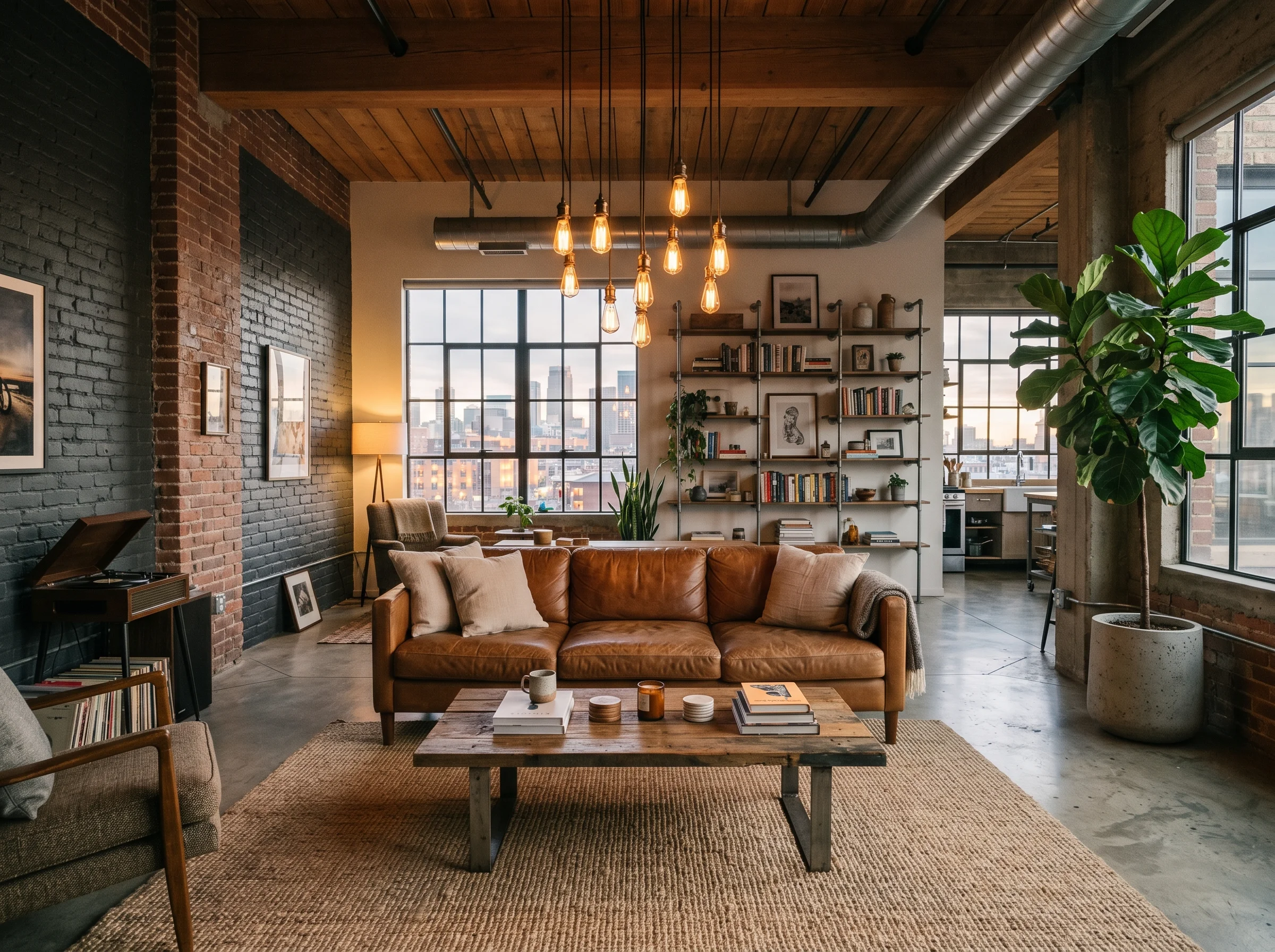
Industrial style has a reputation for being cold, stark, and hard to live in. But spend even a few hours in a well-designed industrial living room and that idea falls apart completely. When it is done right, the raw materials, honest textures, and no-fuss approach to decor create a space that feels genuinely comfortable, lived in, and full of character. The trick is knowing which elements to lean into and which ones to soften, and that balance is exactly what separates a welcoming industrial space from something that looks more like an unfinished warehouse.
This collection covers 24 real, workable ideas across every aspect of the industrial living room, from materials and color to lighting and furniture choices. Each idea is grouped by theme so you can dip into the sections most relevant to your space, whether you are starting from scratch or layering in a few new touches. You will also find honest notes throughout on cost, practicality, and what works better in theory than in real life.
Working With Raw Materials
Exposed Brick as a Feature Wall
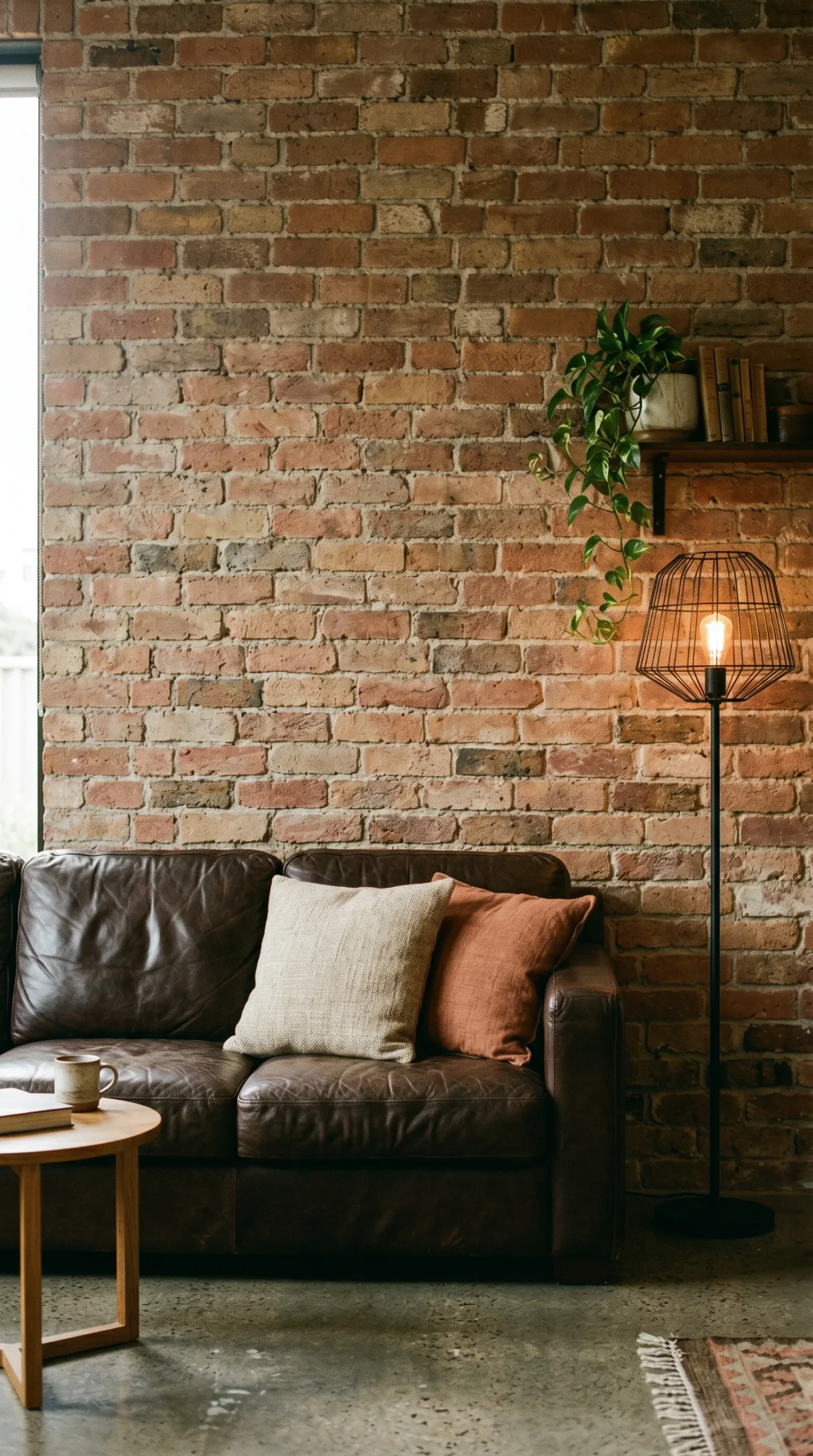
Exposed brick is probably the most recognizable element in industrial design, and for good reason. In practice, a single brick accent wall behind a sofa or media console gives the room an instant anchor point without overwhelming the space. The warm, slightly irregular texture of real brick introduces natural color variation, typically in shades of terracotta, rust, and warm grey, that plays beautifully against cool steel or dark wood furniture. If your walls are drywalled over original brick, a mason can expose them for a mid-range investment, though it is worth checking the condition first since crumbling or painted brick can be a headache to restore. For a budget-friendly alternative, thin brick veneer panels from most hardware stores are convincing and easy to install yourself. One thing that works really well here is leaving the mortar slightly rough rather than smoothed over, because that textural detail is what gives the wall its authentic, well-worn presence.
Designer Note: Seal exposed brick with a matte brick sealer to prevent dust and crumbling without giving it a shiny, plastic appearance.
Polished Concrete Floors
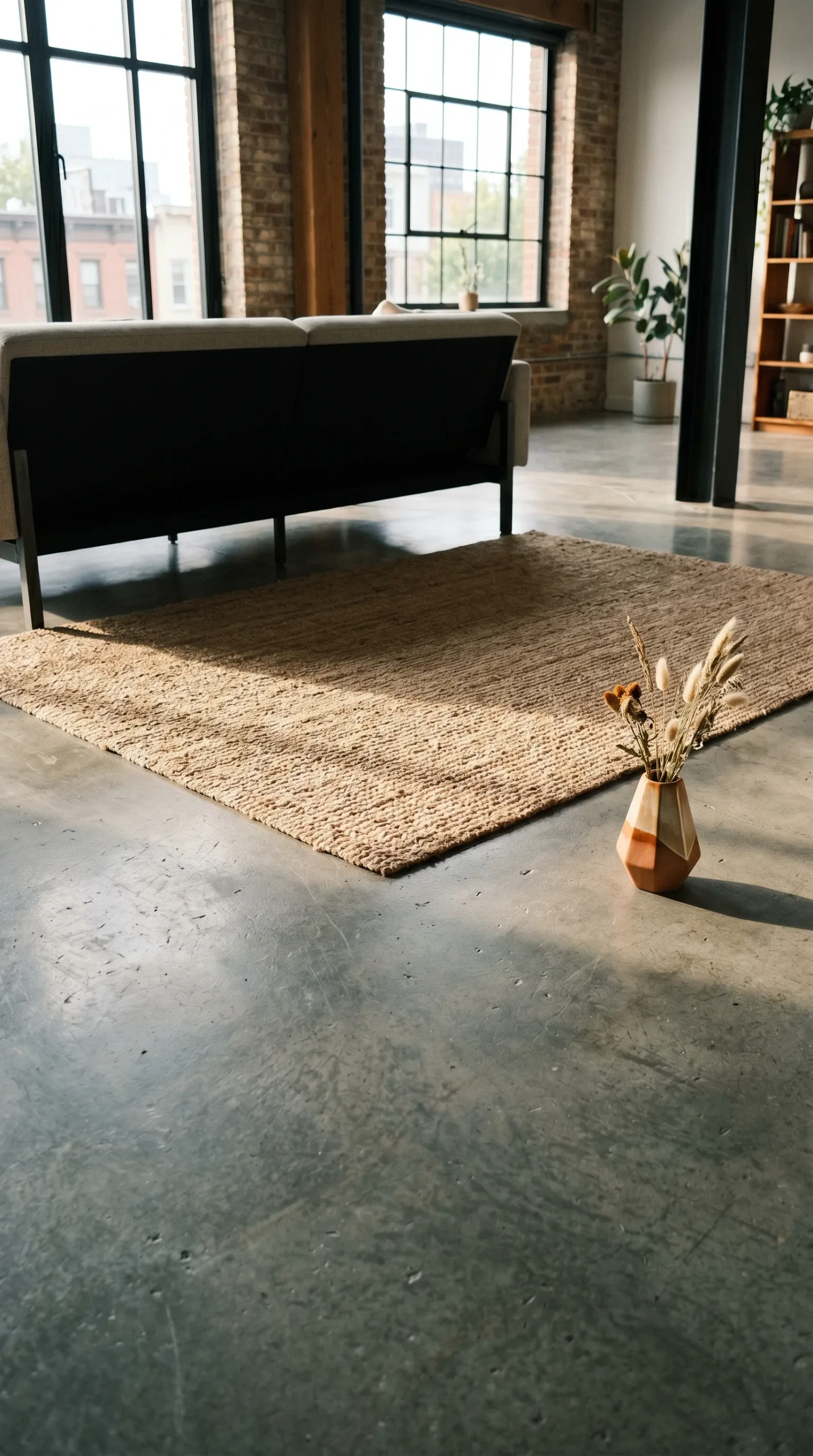
Polished concrete is one of the defining flooring choices in industrial interiors, and it earns its place for both aesthetic and practical reasons. When sealed and polished to a mid-sheen finish, concrete reflects light beautifully and gives the room a sense of visual weight and groundedness that softer flooring simply cannot match. Color-wise, concrete naturally reads as cool grey or warm taupe depending on the aggregate mix, and both tones pair well with the dark metals, aged wood, and leather typical of industrial rooms. In practice, polished concrete can feel cold underfoot in winter, so layering in a large area rug, something in jute, wool, or a distressed kilim pattern, is not optional. It is necessary for comfort. This is an investment-level flooring choice if you are pouring new concrete, but if you already have a concrete subfloor under existing flooring, refinishing it is considerably more affordable.
Designer Note: Choose a satin or matte sealer rather than a high-gloss finish. High gloss can make a living room look more commercial than residential.
Raw Steel and Iron Accents
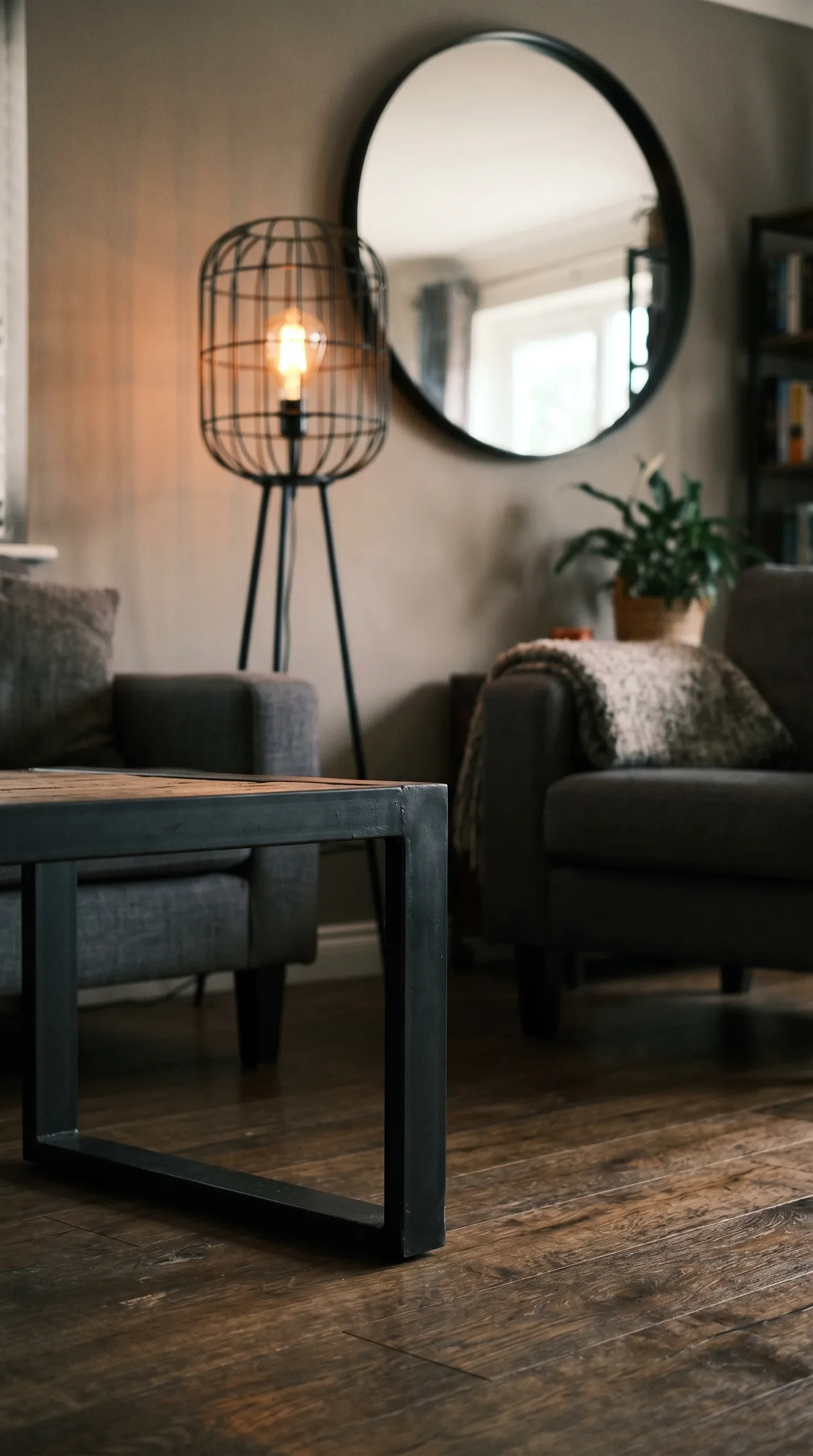
Steel and iron are the backbone of industrial design, showing up in everything from furniture legs to window frames to decorative objects. In a living room, the most effective approach is to use them consistently across multiple smaller pieces rather than one large statement item, so the metal reads as a design thread running through the room rather than a single focal point. Think flat-bar steel coffee table legs, an iron floor lamp with a cage shade, steel-framed shelving, and maybe a wrought iron mirror frame. The patina on these materials matters, too. Matte black and raw, slightly oxidized finishes feel much more authentic to the industrial aesthetic than polished chrome or brushed nickel, which tip the room toward a more contemporary look. One honest limitation: raw iron will rust if it gets wet, so keep it away from windows in humid climates unless you apply a clear protective coating.
Designer Note: Mix black-matte steel with natural aged brass on small accessories like handles, candleholders, or lamp sockets. The contrast keeps the room from looking one-dimensional.
Reclaimed Wood Beams and Shelving
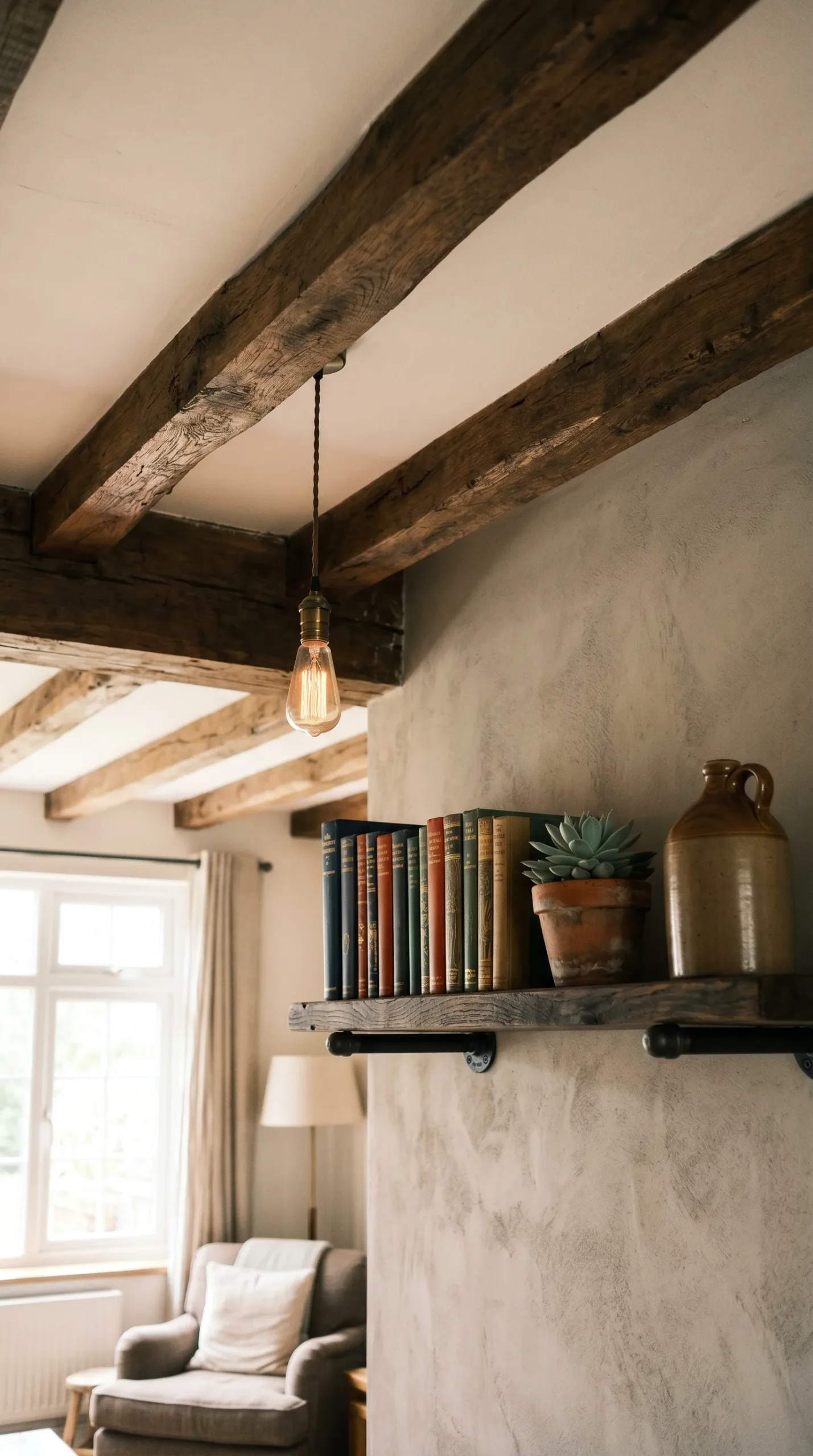
Reclaimed wood brings a sense of history and warmth that newly milled timber simply cannot replicate, and it is a natural fit for industrial rooms that might otherwise lean too hard into cold, hard surfaces. Overhead beams made from reclaimed oak or pine add architectural depth to a flat ceiling and are one of the most cost-effective ways to make a room feel more layered. At wall level, chunky reclaimed wood shelves mounted on black pipe brackets have become a staple of the industrial look, and rightly so, because the combination of rough-hewn wood grain and industrial pipe hardware is genuinely striking. Look for reclaimed timber at salvage yards, specialty lumber suppliers, or even barn demolitions in rural areas, where prices are often considerably lower than boutique reclaimed wood shops. Keep in mind that reclaimed wood may have slight warping or imperfections, which are part of the appeal but require checking for structural soundness before use as shelving.
Designer Note: Match the wood tone across beams and shelving for a cohesive look. Mixing too many wood tones in one industrial room can feel scattered.
Color and Palette Done the Industrial Way
Charcoal and Warm White as a Base Palette
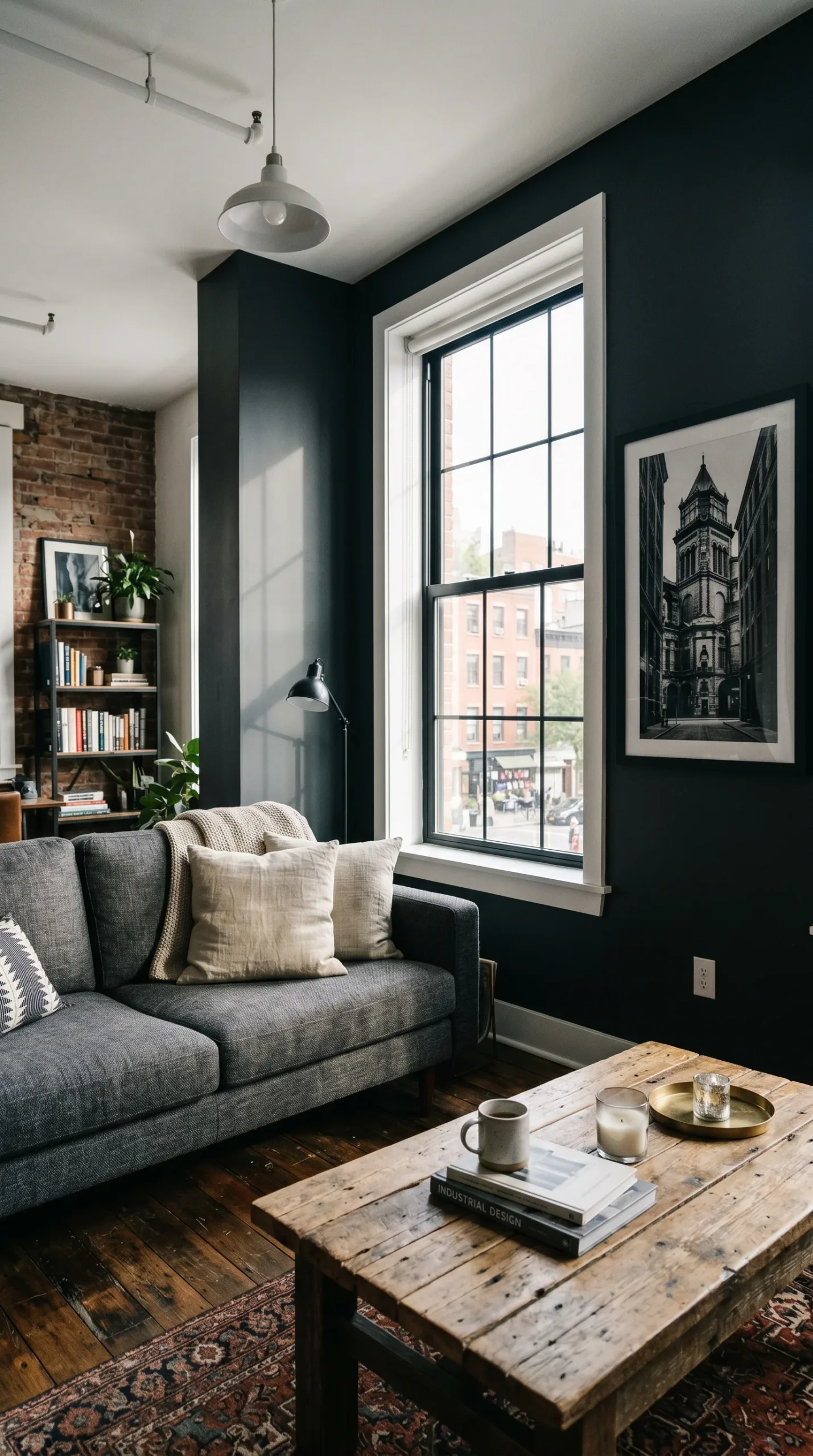
The most reliable color foundation for an industrial living room is a deep charcoal or soft graphite on the main walls paired with warm white on trim, ceilings, and architectural details. This combination respects the moody, understated quality of industrial design while keeping the room from feeling like a cave. Charcoal works particularly well when paired with warm-toned wood accents and aged leather upholstery, because those materials pull the yellow and brown undertones from the grey and create a coherent, earthy palette. Paint brands like Farrow and Ball, Benjamin Moore, and Sherwin-Williams all offer excellent mid-to-deep charcoal options; look for colors described as warm grey or slate rather than blue-grey, which can feel clinical in this context. If full charcoal walls feel like too much of a commitment, try it on a single feature wall behind the sofa or media unit and keep the other three walls in a lighter warm grey or greige.
Designer Note: Use flat or matte paint finish on charcoal walls. Eggshell or satin on dark colors reflects too much light and highlights wall imperfections.
Deep Navy and Aged Bronze
Deep navy is one of the most underused colors in industrial interiors, and it works remarkably well because it shares the same visual weight as charcoal without the neutrality. A navy accent wall or navy velvet sofa in an otherwise grey and black industrial room introduces a richness that feels intentional and layered. Pair navy with aged bronze or antique brass hardware, lamp bases, and decorative objects rather than the more expected matte black, and the combination immediately reads as more sophisticated and less predictable. In terms of color temperature, navy has a natural coolness that benefits from warm lighting, specifically incandescent-style Edison bulbs or warm-white LEDs in the 2700K range, which pull the blue tones toward a richer, almost midnight quality. This palette works best in rooms with at least one large window, as the combination of navy and dark metals can make smaller, poorly lit rooms feel noticeably heavier.
Designer Note: Introduce navy through upholstery first before committing to a wall color. It is far easier to swap a throw pillow than repaint a room.

Rust, Ochre, and Burnt Orange as Accent Colors
Industrial rooms built on a grey and black base can risk feeling flat and characterless without some warmth woven in. Rust, ochre, and burnt orange do that job better than almost any other accent color in this style, because they echo the natural tones of aged metal, oxidized iron, and warm brick. A rust-colored throw blanket draped over a charcoal sofa, a pair of ochre cushions on a leather armchair, or a large piece of abstract art with earthy, warm tones can shift the emotional feel of a room dramatically without requiring any structural changes. These colors also work beautifully in vintage or distressed textiles, think a weathered Persian rug or a heavy wool blanket, which add both color and texture in one move. Keep accents to roughly 10 to 15 percent of the total visual space so they punctuate rather than dominate. This is an affordable route to refreshing an industrial room without buying new furniture.
Designer Note: Look for ochre and rust in woven textiles, ceramic vases, and leather goods. Avoid overly bright or synthetic-looking versions of these colors, which read as modern rather than industrial.

Monochromatic Grey From Floor to Ceiling
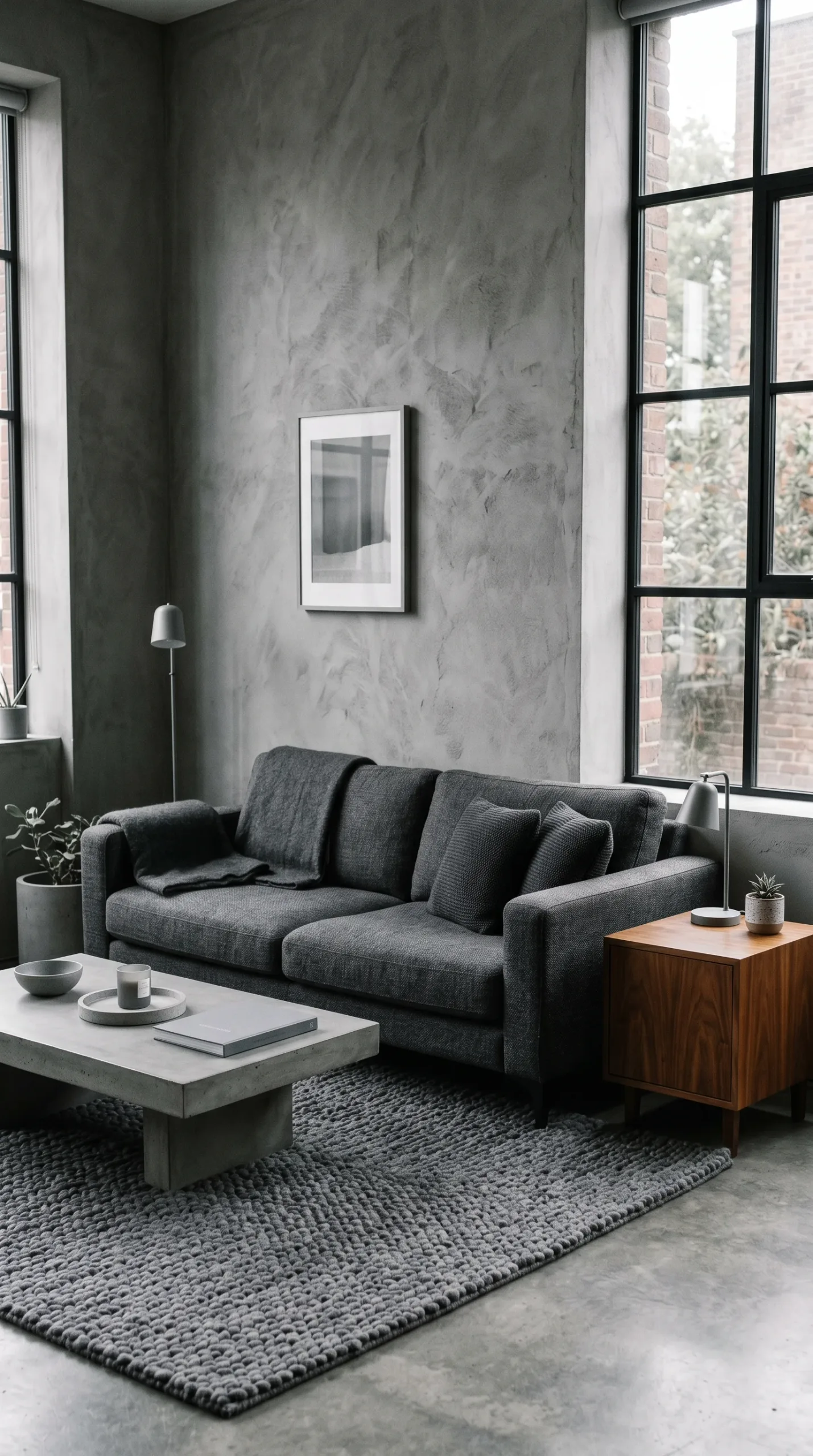
A fully monochromatic grey scheme, where walls, flooring, ceiling, and most furnishings share the same tonal family, is one of the bolder moves in industrial design but one of the most impactful when executed well. The key is to vary the finish and texture across surfaces rather than the color, so a matte grey concrete floor, a slightly warmer grey plastered wall, a dark slate-grey sofa in a textured fabric, and a grey wool rug can all coexist without the room looking unfinished or monotone. Depth comes from layering, and in a monochromatic scheme, that means paying close attention to the sheen, weight, and material of every surface. This look works best in rooms with strong natural light, which animates the different shades and prevents the space from feeling flat. Budget-wise, this can be an affordable approach since you are not investing in multiple contrasting pieces, but it requires careful planning to avoid a room that simply looks grey rather than intentionally designed.
Designer Note: Anchor a monochromatic grey scheme with one natural wood element, a coffee table, a floating shelf, or a side table, to prevent the room from feeling sterile.
Furniture That Fits the Industrial Look
Vintage Leather Sofa as the Centerpiece
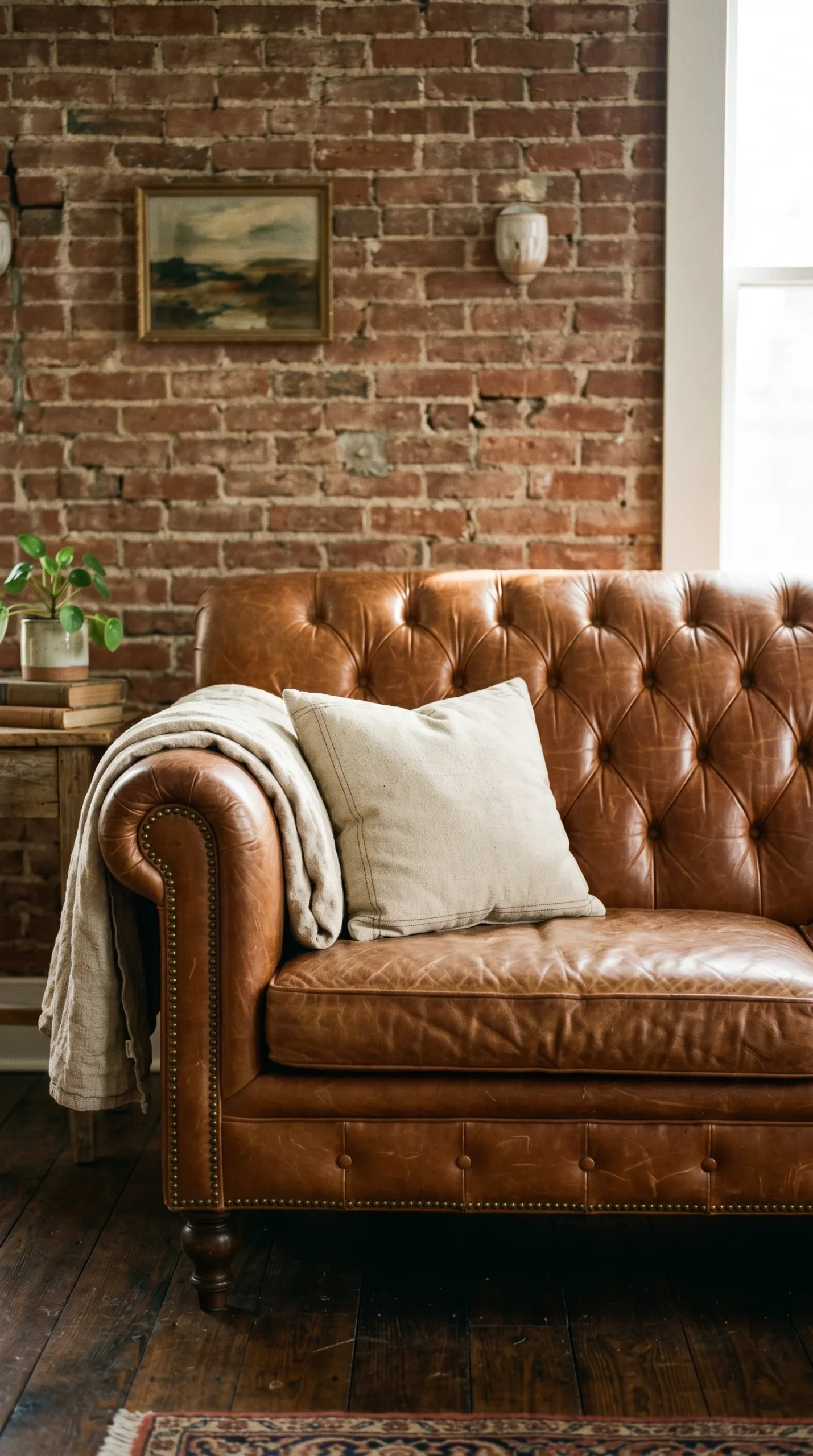
A well-worn leather sofa is one of the best investments you can make in an industrial living room. Full-grain or top-grain leather in cognac, saddle, or dark chocolate develops a patina over time that actually improves with age, making it one of the few furniture pieces that looks better after years of use rather than worse. In terms of silhouette, look for clean-lined, low-profile designs with tufted backs or simple cushions rather than overstuffed, rounded styles that belong more in a traditional or contemporary room. Pair the sofa with a few linen or canvas throw pillows in muted tones, avoiding anything too patterned or decorative, and a chunky knit or woven blanket for warmth. Genuine leather is an investment-level purchase, but vintage and second-hand leather sofas are widely available at a fraction of the cost, and a slightly scuffed piece with some character is usually more suited to industrial design than a pristine new one.
Designer Note: Condition leather sofas twice a year with a good-quality leather conditioner. It prevents cracking and deepens the color naturally over time.
Industrial-Style Coffee Table in Steel and Wood
The coffee table in an industrial living room should feel like it was built to last, which means prioritizing materials over ornamentation. A combination of a thick solid wood top, reclaimed oak, pine, or walnut, paired with a welded flat-bar steel base is the most authentic and functional option. The proportions matter more than you might expect: a table that is too small in relation to the sofa leaves the arrangement feeling unbalanced, so aim for a length that is roughly two-thirds the length of your sofa. Height-wise, the table should sit level with or slightly below the sofa seat cushions for comfortable use. Some industrial coffee tables include lower storage shelves built into the frame, which are genuinely useful for keeping books, magazines, and remotes accessible without cluttering the surface above. This is a mid-range to investment-level piece depending on the maker, but smaller independent metalworkers and furniture makers often offer custom versions at surprisingly competitive prices.
Designer Note: Style the coffee table with a small stack of design or architecture books, one or two ceramic vessels, and a simple candle. Restraint matters more than abundance on industrial surfaces.

Open-Frame Shelving Units
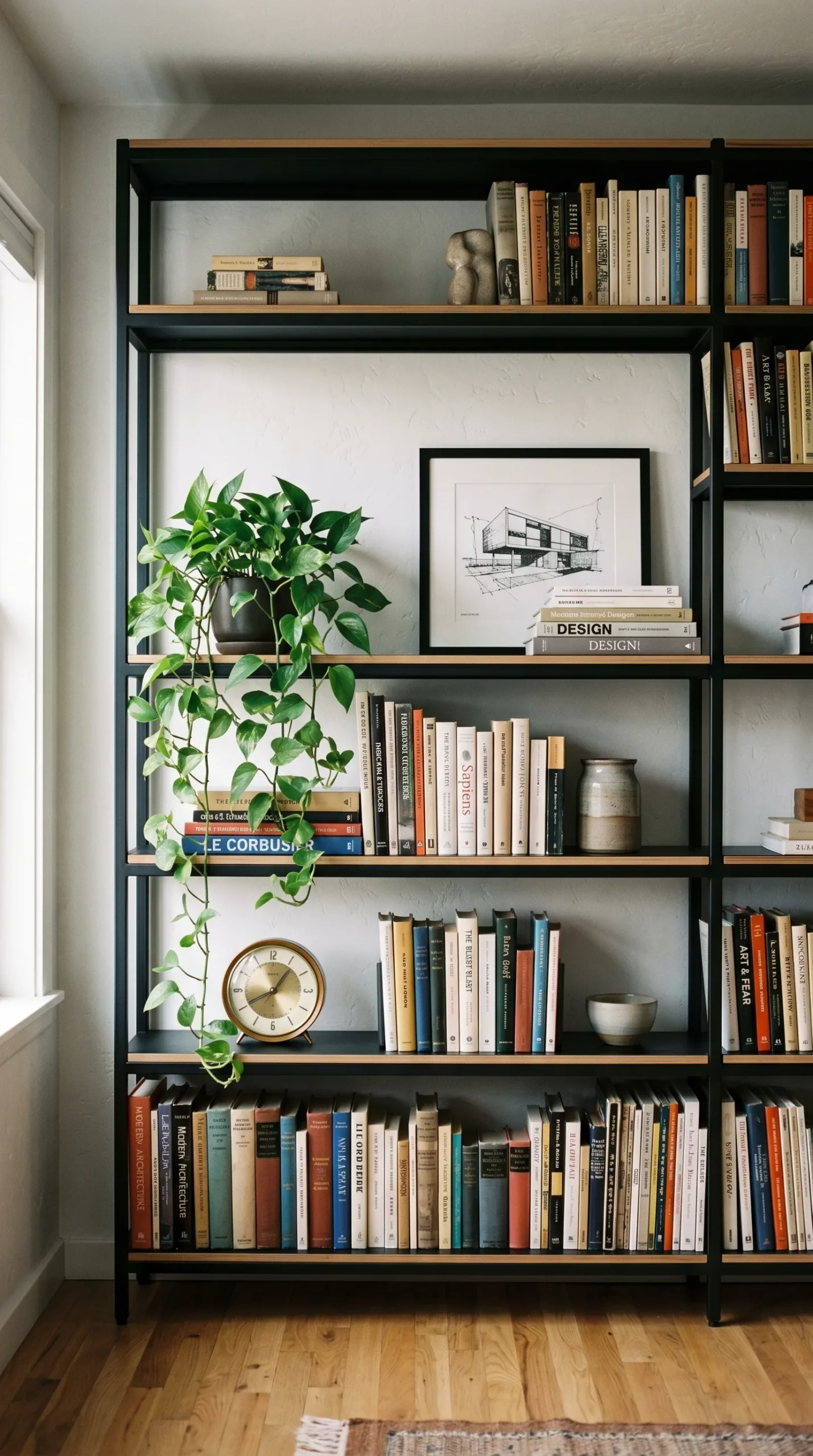
Open shelving is a foundational piece of furniture in industrial living rooms because it respects the style’s commitment to visibility and honesty about materials. A floor-to-ceiling shelving unit in black powder-coated steel with solid wood shelves serves both as storage and as a display opportunity, and the open structure keeps the room from feeling closed in. The contents of the shelves matter enormously in this style: a thoughtfully curated mix of books, plants, ceramics, vintage objects, and functional items like storage boxes creates the kind of intentional but not overly styled look that industrial design does best. Avoid filling every inch of the shelf. Negative space is part of the design. Open shelving does require a commitment to keeping things reasonably tidy since clutter is visible from across the room, which is worth bearing in mind if your household tends toward the lived-in side of organized.
Designer Note: Group items on open shelves in odd numbers, typically threes or fives, and vary the height between objects to create visual rhythm.
Mix of Seating Styles: Chair and Sofa Pairing
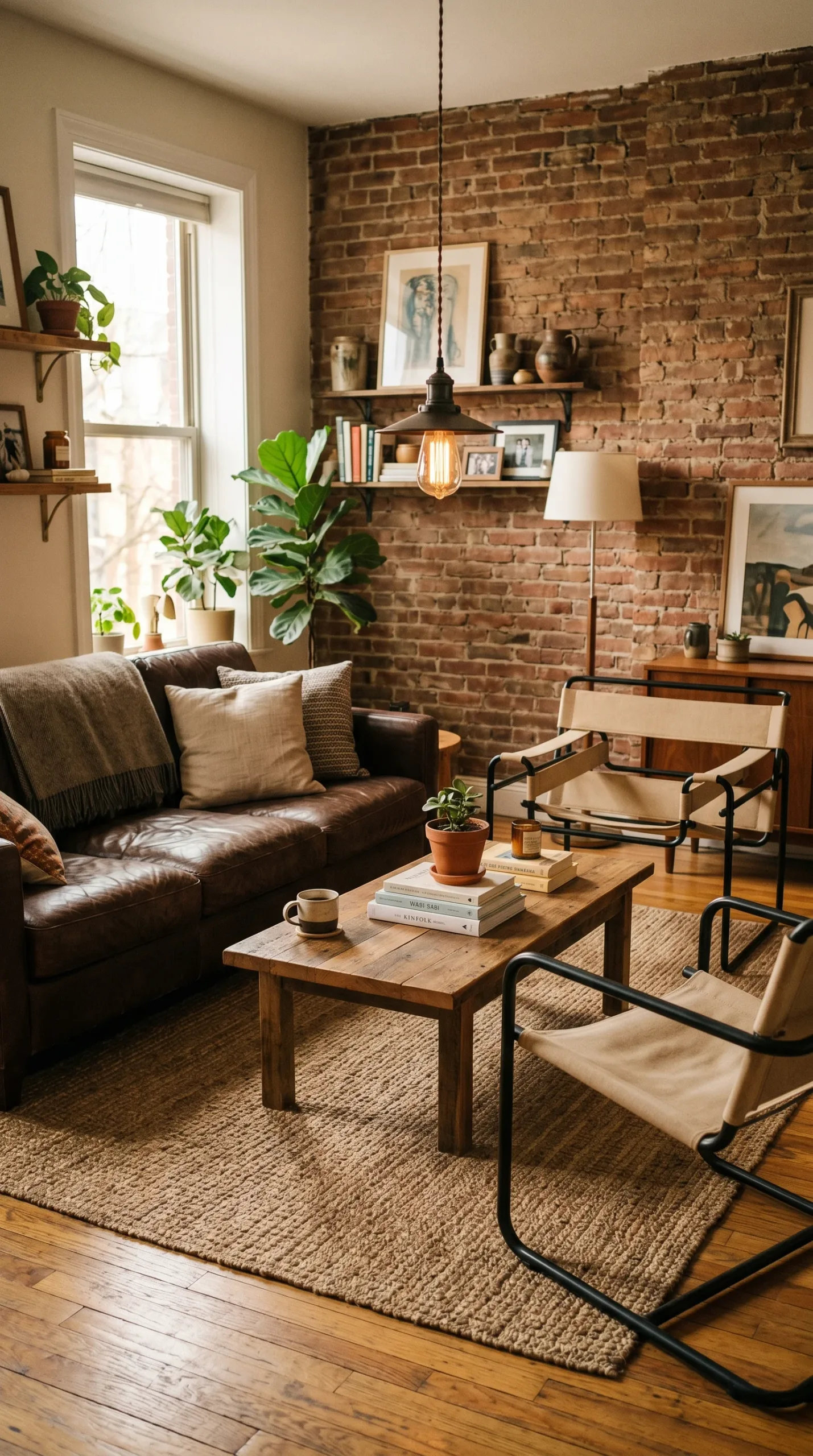
Industrial living rooms tend to work best with a mix of seating rather than a matched suite, because variety in silhouette and material reinforces the eclectic, collected quality of the style. A leather sofa paired with one or two different chairs, perhaps a tubular steel and canvas sling chair or a solid wood armchair with a simple cushion, creates a seating arrangement that feels genuinely gathered rather than showroom-purchased. In terms of visual weight, aim for one heavier, more upholstered piece and one or two lighter, more structural pieces so the arrangement does not feel top-heavy. Keep upholstery fabrics simple and matte: linen, canvas, aged leather, and rough-textured wool all work well. Avoid shiny or synthetic fabrics, velvet, glossy faux leather, and anything with decorative patterns, which quickly pull the room away from the industrial aesthetic.
Designer Note: The chairs do not need to match. What they should share is a similar design era or material language, both in natural materials, both in metal frames, or both in a muted palette.
Lighting the Industrial Way
Edison Bulb Pendant Cluster
A cluster of exposed Edison bulb pendants hung at varying lengths over a coffee table or seating area is one of the most effective lighting moves in an industrial living room. The warm amber glow of Edison filament bulbs, somewhere around 2200 to 2700K in color temperature, creates the kind of intimate, flattering light that makes a dark, moody industrial room feel genuinely inviting rather than oppressive. Hang the pendants at three different lengths within a cluster, with the longest dropping roughly 60 to 70 centimeters below the ceiling and the shortest about 40, for a dynamic visual grouping that reads as intentional. Use a black or raw copper canopy and matching cord covers to keep the hardware consistent with the rest of the room’s metal finishes. This is a relatively affordable lighting upgrade, and pendant kits with Edison-style LED bulbs are widely available, though the impact they make in the right room is significant.
Designer Note: Use LED Edison-style bulbs rather than incandescent. They look identical but use a fraction of the energy and last considerably longer.

Industrial Cage Floor Lamps
A cage-style floor lamp in black or aged iron is a practical and visually appropriate lighting choice for corners, reading areas, or spots that pendant lighting cannot reach. The metal cage shade allows the bulb to become part of the visual, which suits the industrial style’s preference for honesty about materials and structure. In practice, a single cage floor lamp in a corner with a warm-toned Edison bulb creates a secondary light source that makes the room feel layered and moody in the evenings, especially when combined with the ambient light from a pendant or ceiling fixture. Look for adjustable-arm versions that can be directed toward a reading chair or a piece of wall art for more flexibility. These lamps are available across a wide price range, from budget options at large home stores to higher-end handcrafted versions from independent makers, and both can look excellent in the right context.
Designer Note: Layer at least three light sources in an industrial living room: one overhead, one at eye level (floor lamp), and one low (table lamp or candles) for the most flattering result.

Exposed Conduit or Pipe Wall Sconces
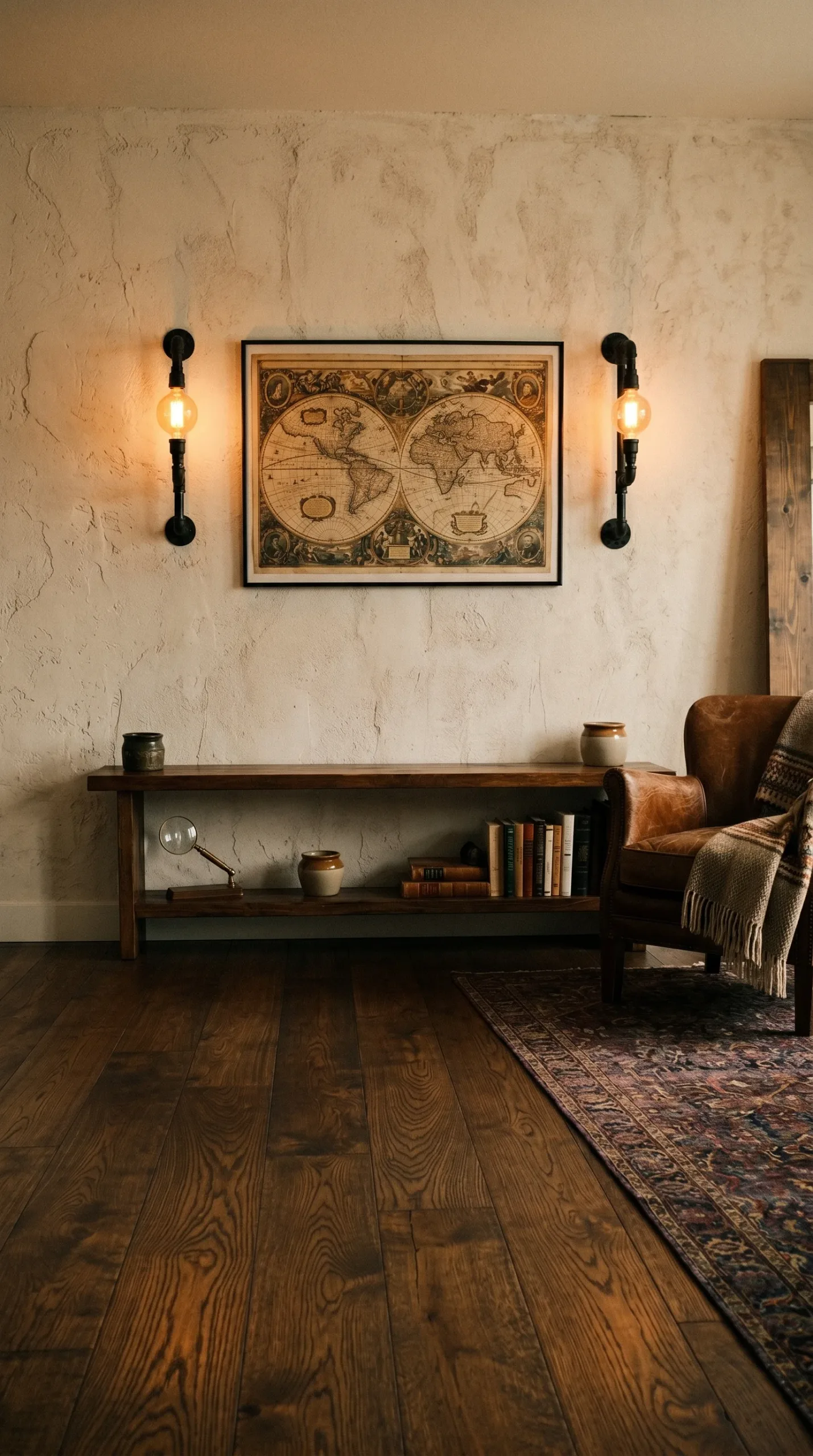
Wall sconces made from black iron pipe or conduit fittings are a popular and genuinely effective detail in industrial rooms because they reference the mechanical infrastructure that defines the style’s origins in factories and warehouses. Mounted on either side of a fireplace, along a brick feature wall, or flanking a large piece of art, pipe sconces add both functional light and an architectural detail that feels specific to the space. The piping itself becomes part of the design, so leave it visible rather than concealing the conduit where possible. In terms of installation, hardwired sconces require an electrician, but plug-in versions with cord covers are available and can be installed without any electrical work. For the most authentic look, pair them with carbon filament bulbs or globe-style Edison bulbs, which are small enough not to overwhelm the scale of the pipe fitting.
Designer Note: Position wall sconces at roughly eye level when seated, around 150 to 160 cm from the floor, for the most flattering and functional light placement.
Vintage Industrial Pendant Over a Reading Nook
A single oversized vintage-style factory pendant hung low over a reading chair or compact reading nook creates a focused pool of light that serves both a practical and decorative purpose. Pendants in enamel shades, typically white or green with a raw steel interior, or dome-shaped aluminium shades with a matte finish are the most authentic choices for this look, referencing the utility lighting found in mid-century workshops and factories. The key detail is hanging the pendant low enough to feel intimate, roughly 50 to 60 cm above the seat cushion height, so the light illuminates the reading area without casting shadows. Pair the chair with a small side table in raw wood or steel, a simple floor plant, and a plaid or wool throw for a corner that feels genuinely purposeful. This is one of the most affordable ways to add a strong industrial focal point to a living room.
Designer Note: Look for original vintage factory pendants at salvage yards, antique markets, and online vintage marketplaces. Authentic pieces have a quality and weight that reproductions rarely match.

Walls, Art, and Decorative Details
Large-Scale Black and White Photography
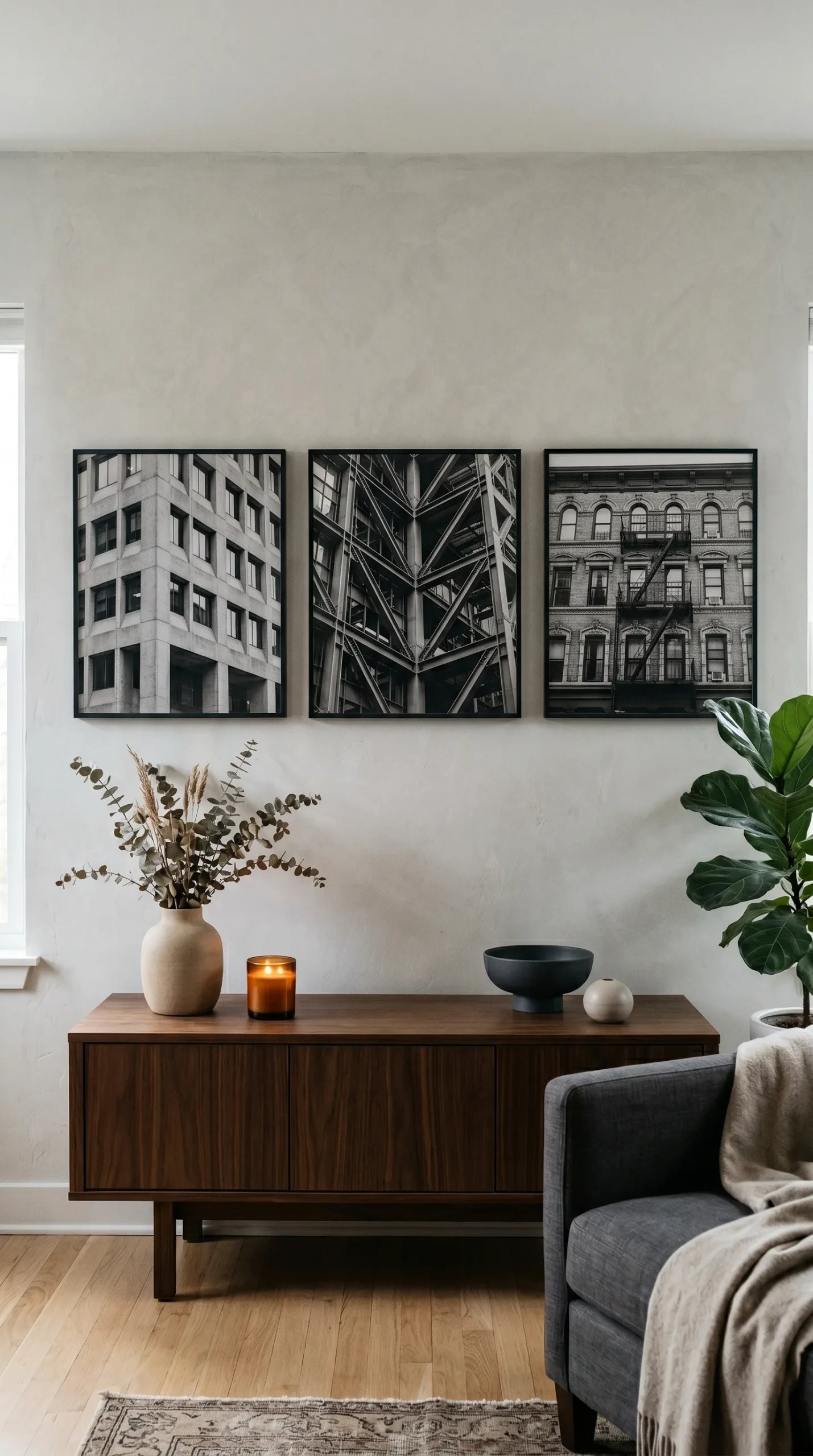
Black and white photography works particularly well in industrial interiors because it shares the same tonal palette, high contrast, and lack of sentimentality that defines the aesthetic. Large-scale prints, roughly 60 by 90 centimetres or bigger, make the strongest impact and work best when the subject connects to the spirit of the style: urban architecture, industrial landscapes, hands at work, or close-up material textures are all strong choices. Frame the prints in simple black steel or raw aluminium frames and hang them without a mat for a more direct, less formal look. A gallery wall of three or four similarly scaled black and white photographs arranged in a clean grid is a strong alternative to a single large piece and creates a real sense of intention on a plain or brick wall. Print-on-demand services make this a genuinely affordable option, with high-quality large-format prints available for a fraction of gallery prices.
Designer Note: Stick to one or two subjects across a gallery wall rather than mixing genres. Industrial architecture and abstract textures together work well; mixing portraits with landscapes often feels unfocused.
Pipe Shelving as Both Storage and Decor
Wall-mounted shelves using black steel pipes as brackets and solid wood planks as shelves are one of the most practical and authentic decorative choices in an industrial living room. The exposed pipe hardware is genuinely structural, meaning the shelves can hold real weight, books, plants, ceramics, and audio equipment, without the hardware being merely decorative. The planks themselves benefit from being left in a natural or lightly stained finish rather than painted, so the grain texture contrasts with the hard black steel. In practice, a row of three shelves staggered at different heights on a plain or brick wall creates a display area that feels dynamic and useful rather than static. This is a mid-range DIY project if you source the pipe fittings from a plumbing supply store and the wood from a timber yard, or a higher-cost option if you buy pre-assembled versions from home decor stores.
Designer Note: Mix object types on pipe shelves: books upright, books stacked, a plant at the end, one ceramic piece in the middle, and a small framed print leaned against the wall. That variation keeps the eye moving.

Vintage Maps and Technical Blueprints as Wall Art
Vintage maps, architectural drawings, and technical blueprints make for genuinely distinctive wall art in industrial rooms because they share the style’s roots in utility, precision, and purposeful design. A large antique city map framed in a thin black frame, a mechanical engineering blueprint mounted on kraft paper, or a reproduction of a Victorian-era architectural drawing all feel appropriate and specific to the aesthetic in a way that generic art prints often do not. The color palette of these pieces, typically aged cream, sepia, navy, and black, sits beautifully within the industrial color story without competing for attention. Find originals at antique fairs, estate sales, and online auction platforms, or download high-resolution reproductions from public domain archives for an affordable alternative. Frame them simply and let the content speak for itself rather than adding elaborate matting or ornate frames.
Designer Note: A single large blueprint framed behind glass and hung on a white or light grey wall creates a stronger impact than a cluster of smaller pieces. Scale matters more than quantity with this type of art.

Concrete or Plaster Feature Wall Texture
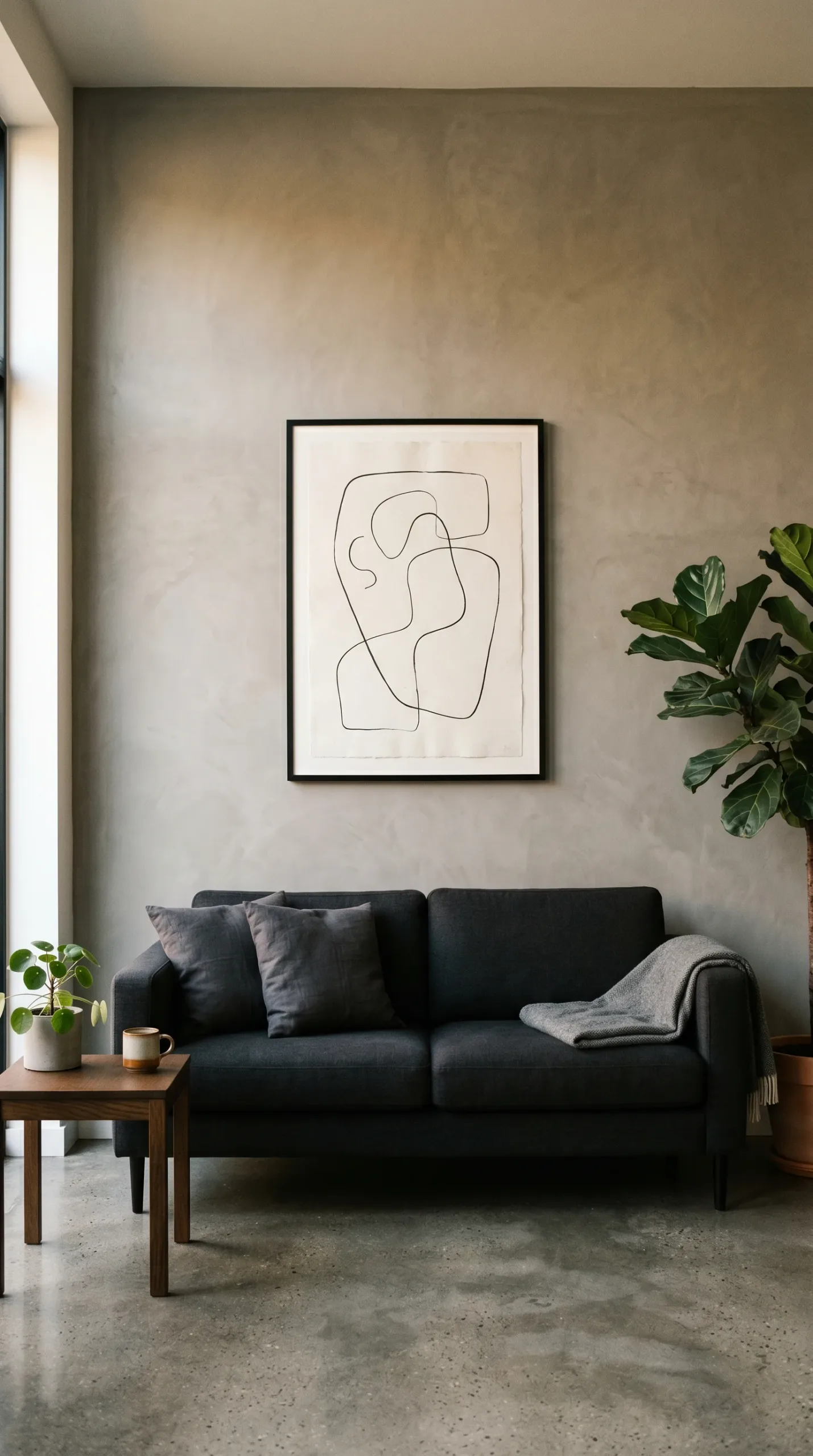
A concrete or rough plaster finish on one wall of a living room adds a layer of textural depth and material authenticity that paint alone cannot achieve. Microcement, a thin-layer concrete coating that can be applied over existing plaster or drywall, is one of the most practical options for achieving this look without the structural work of pouring actual concrete. It can be applied in a range of finishes from ultra-smooth to slightly grainy, and the color can be adjusted to sit anywhere from warm greige to cool slate grey. Applied to the wall behind the main sofa or the media unit, a microcement finish becomes a backdrop that makes every other element in the room look more deliberate and considered. This is a mid-range project, ideally done by a skilled applicator, as uneven application can look rough in the wrong way. For a budget alternative, textured Venetian plaster paint can create a similar depth of finish with more DIY-friendly application.
Designer Note: Seal microcement walls with a matte sealer immediately after installation. Unsealed microcement absorbs oils and moisture and is difficult to clean in a high-traffic living room.
Softening the Industrial Edge
Large Jute or Wool Area Rug
One of the most common mistakes in industrial living rooms is skipping the rug, and it shows. Without a rug, rooms built on concrete, hardwood, or tile floors can feel acoustically harsh and visually cold regardless of how well-designed they are. A large jute or chunky wool rug in a natural, undyed tone grounds the seating arrangement and introduces organic warmth that balances the hardness of the room’s other surfaces. Size is critical: the rug should be large enough for the front legs of both the sofa and the chairs to sit on it comfortably, which in most living room configurations means at least a 200 by 280 centimetre rug or larger. Jute rugs are the more affordable option and are very durable, though they can be scratchy underfoot; chunky wool rugs are softer and have more insulating quality but cost more. Both wear very well in high-traffic areas and develop a pleasing character over time.
Designer Note: Layer a smaller vintage kilim or distressed Persian rug over a plain jute base rug for added color, texture, and depth without committing to a single patterned rug across the full area.
Indoor Plants as Texture and Contrast
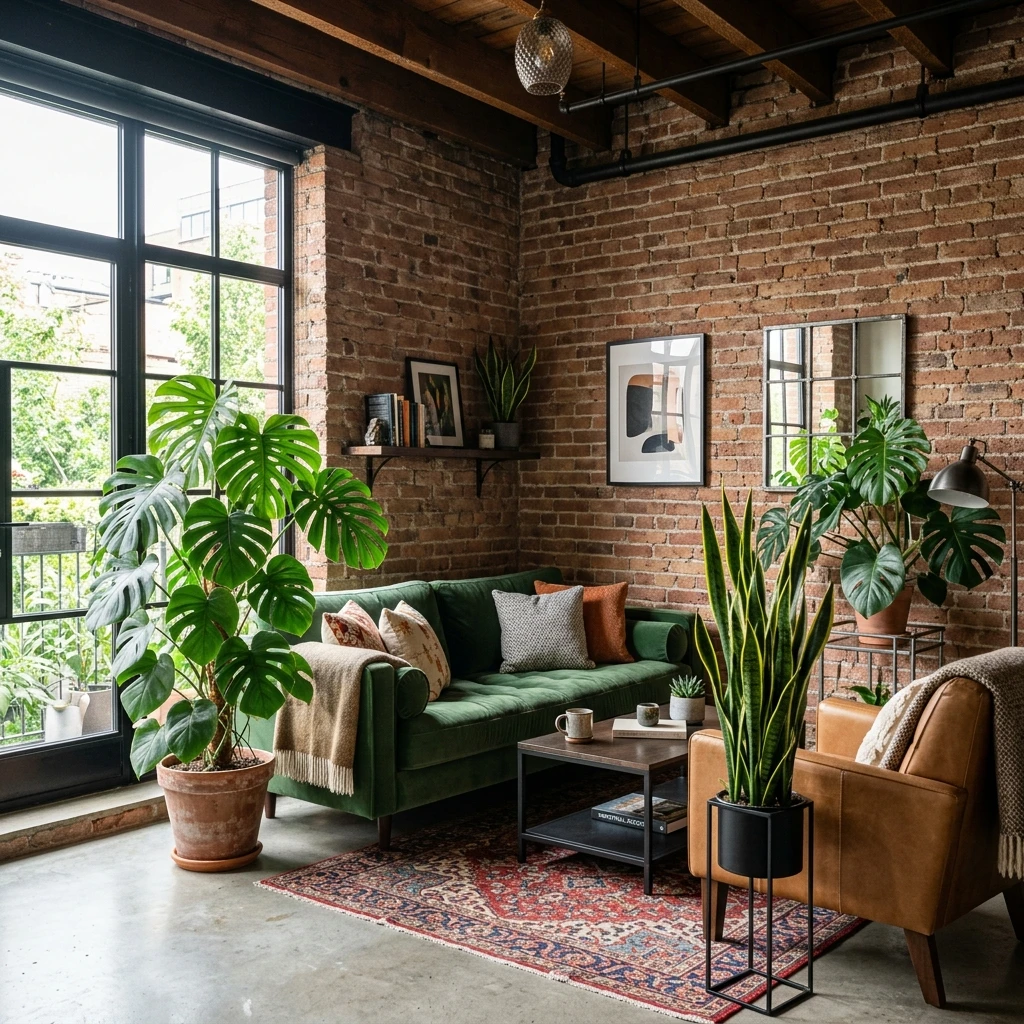
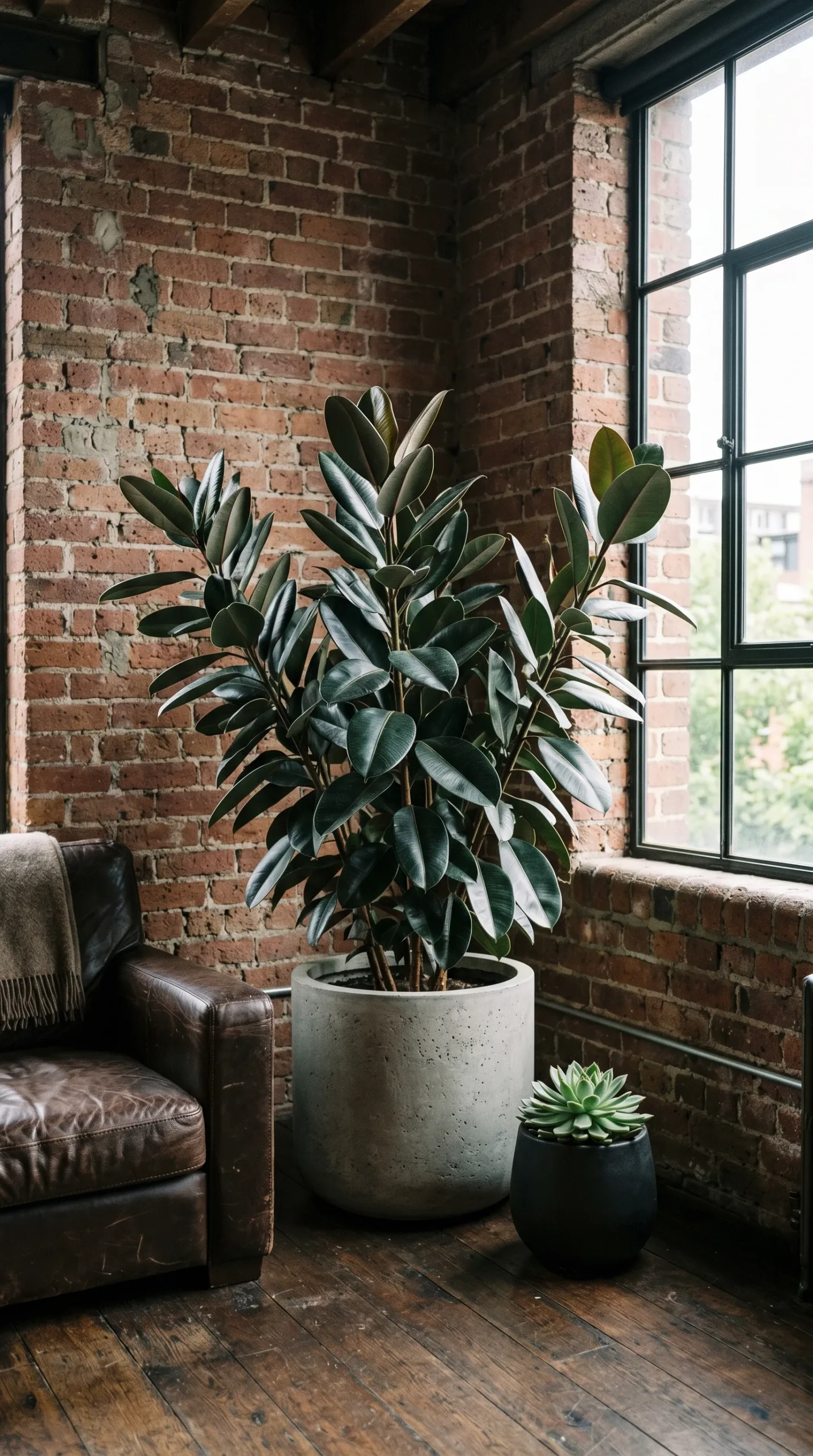
Plants introduce something that no industrial material can fully replicate: organic life, irregular form, and gentle movement. A large fiddle-leaf fig, rubber plant, or olive tree in a simple concrete or terracotta pot next to a leather sofa or in a dark corner immediately makes the room feel less rigid and more human. The contrast between the softness of leaves and the hardness of steel, concrete, and brick is genuinely striking, and it works better the more deliberate the plant placement is. A cluster of smaller plants on a pipe shelf, a trailing pothos above a high window, or a few hardy succulents on a concrete coffee table all contribute to the same effect at a smaller scale. Budget-wise, plants are one of the best-value additions you can make to any room, and most of the species that suit industrial interiors are low-maintenance and widely available.
Designer Note: Use pots in concrete, matte black, or terracotta exclusively. Brightly colored ceramic pots or ornate planters immediately clash with the industrial aesthetic.
Layered Textiles: Throws, Cushions, and Curtains
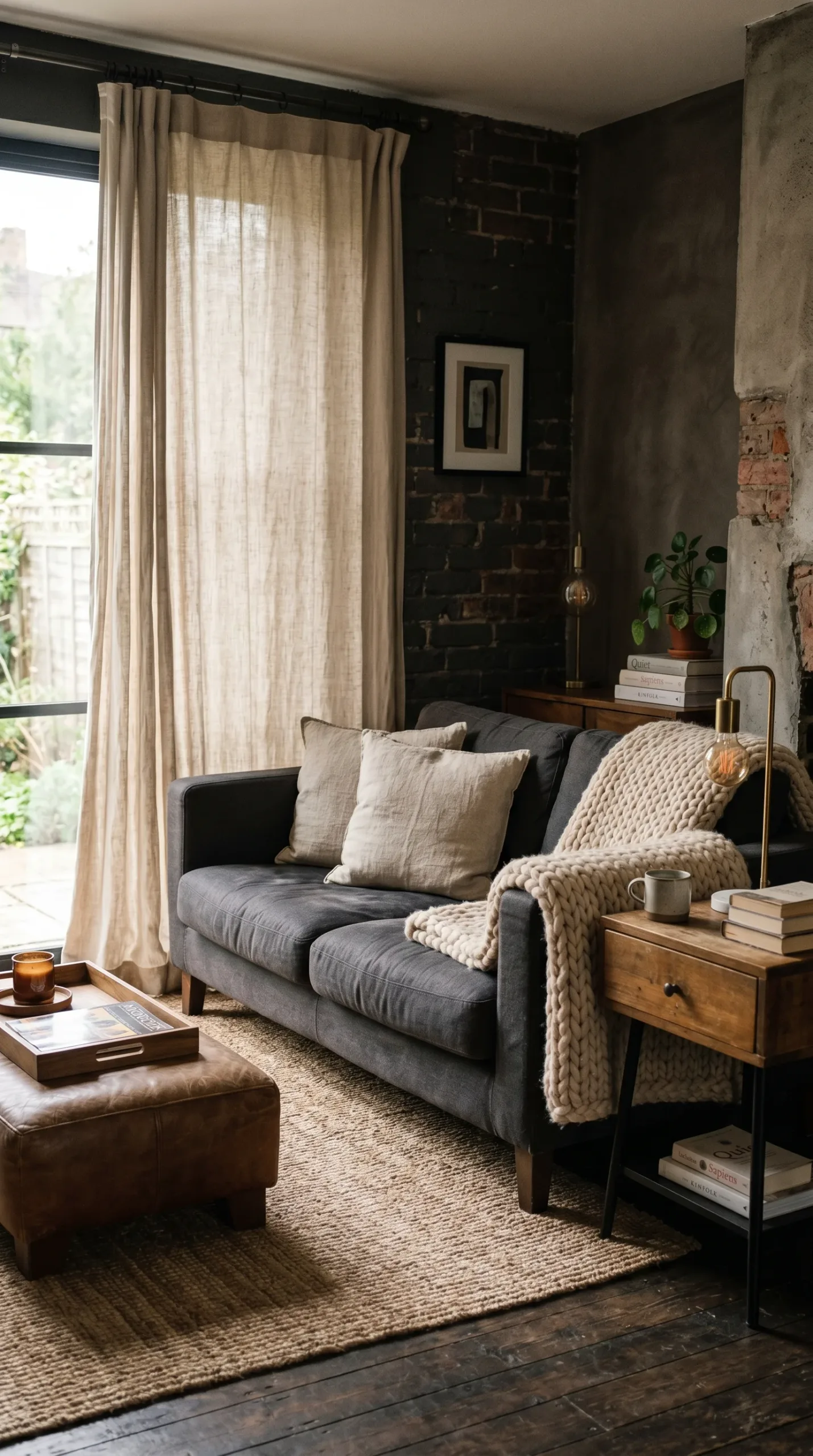
Textiles are what make an industrial room actually comfortable to spend time in, and they are often the detail that separates a room that looks good in photographs from one that genuinely feels good to live in. A chunky knit throw in oatmeal or charcoal draped casually over the arm of a leather sofa, two or three linen or canvas cushions with simple texture rather than busy pattern, and linen curtains in a natural or undyed finish all contribute softness and warmth without pulling the room away from its industrial character. Keep the fabric palette consistent with the room’s color story: muted naturals, deep greys, and earthy tones rather than bright or highly saturated colors. Curtain weight matters more than it might seem: heavy linen or cotton canvas in a floor-to-ceiling drop adds scale and gravitas to the room, while lightweight sheers feel out of place in an industrial context.
Designer Note: Hang curtains as high as possible, ideally at ceiling height or close to it, and let them pool slightly on the floor. This makes ceilings feel taller and windows look larger, both valuable effects in an industrial space.
Mixing Industrial with Mid-Century Modern
Industrial design and mid-century modern share enough visual DNA that they combine naturally and the results are almost always better than either style in isolation. Mid-century modern brings clean organic lines, warm walnut and teak wood tones, and a lightness of form that softens the heavier elements of industrial design without diluting its character. A pair of mid-century armchairs in taupe or mustard fabric, a walnut credenza used as a media unit, or a tulip-base side table next to a leather sofa can all introduce mid-century warmth while the brick, concrete, and steel elements maintain the industrial backbone of the room. In practice, the key is to keep mid-century pieces in a similar tonal range to the industrial palette, so warm walnut rather than painted or lacquered furniture, which can feel at odds with the rawness of the industrial elements.
Designer Note: Let one style lead and the other support. Decide whether the room is primarily industrial with mid-century touches or primarily mid-century with industrial details, and let that hierarchy guide every decision.
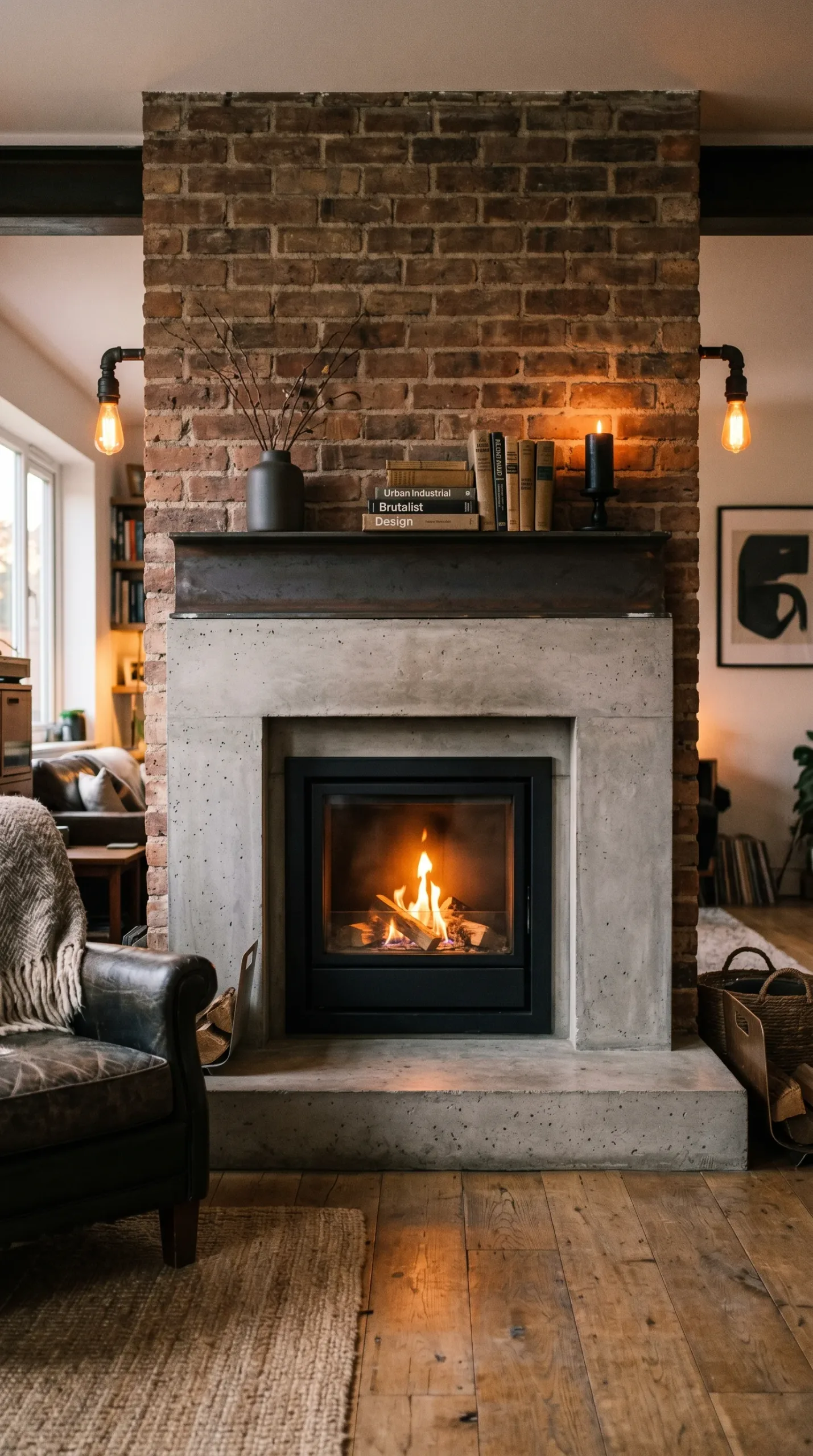
Industrial Fireplace Surround
A fireplace surround in raw steel, concrete, or reclaimed brick instantly becomes the focal point of an industrial living room and anchors the entire seating arrangement around it. If you are working with an existing traditional fireplace, replacing an ornate timber mantel with one in welded flat-bar steel or poured concrete is a relatively straightforward renovation that makes an enormous visual difference. For rooms without a chimney, a concrete or steel-surround bioethanol or electric fireplace achieves the same visual result without any structural work. The proportions of the surround matter: a wide, low mantel in concrete or steel with minimal ornamentation reads as modern and intentional, while something narrower and taller can feel more traditional. Style the mantel with a small number of carefully chosen objects, a clock, a ceramic vessel, a candle, and resist the urge to fill the space.
Designer Note: A steel I-beam used as a fireplace mantel shelf is one of the most striking and authentic industrial details you can add to a living room fireplace. Source from structural steel suppliers rather than specialty decor stores for better value.

Bringing It All Together
Industrial design is more forgiving and more flexible than it often gets credit for. The underlying principles, honesty about materials, a pared-back palette, functional furniture, layered lighting, and a few carefully chosen details, are actually a very useful framework for making decisions in any room. The ideas in this article are not a prescription to follow in sequence but a toolkit to draw from based on your space, your budget, and your own aesthetic instincts.
The most successful industrial living rooms are the ones that feel lived in rather than styled, rooms where the concrete floor has a rug that actually gets used, where the leather sofa has a throw that actually gets pulled over you on a cold evening, and where the plants are there because someone genuinely tends to them. That ease of occupation is what distinguishes a well-designed industrial room from a showroom set. Start with one or two of the ideas here that resonate most strongly, live with them for a while, and build from there. The industrial aesthetic rewards patience and accumulation over time far more than it rewards a single big-budget overhaul. Good design, in any style, is rarely finished all at once.
Frequently Asked Questions
Can industrial design work in a small living room?
Yes, and it can work very well. The key is to lean into the style’s preference for restraint and open space rather than cramming in too many elements. In a small living room, choose one or two strong industrial details, an exposed brick wall or a pipe shelf, and keep the remaining furnishings simple and low-profile. Light colors on the walls and good lighting are essential. Avoid dark feature walls in very small rooms as they can make the space feel significantly smaller.
How do I make an industrial living room feel warm and cozy?
Warmth in an industrial room comes from layering. Add a large area rug, layer in textiles like throws and linen cushions, use warm-toned Edison bulbs rather than cool white LEDs, and include plants. Warm wood tones, whether in flooring, shelving, or furniture, do a great deal of work in softening the harder elements of the style. An industrial room with all of those layers in place feels genuinely warm and inviting.
What flooring works best in an industrial living room?
Polished or sealed concrete is the most authentic choice, followed by wide-plank hardwood in a natural or dark stain, and large-format stone or porcelain tiles in grey or slate tones. Dark stained or wire-brushed oak is a popular mid-range choice that works particularly well because it bridges the gap between the warmth of wood and the darker palette of the industrial style. Avoid light-colored carpet, which feels at odds with the aesthetic, and high-gloss finishes of any kind.
Is industrial style expensive to achieve?
It does not have to be. Many of the most effective industrial details are also some of the most affordable: Edison bulb pendants, cage floor lamps, pipe shelving, and secondhand leather furniture are all accessible at various price points. The style’s appreciation for raw, unfinished, and salvaged materials actually makes it well-suited to a thoughtful budget, since authentic aged and worn pieces from salvage yards and vintage markets are genuinely appropriate and often cheaper than new equivalents.
What colors should I avoid in an industrial living room?
Avoid pastels, highly saturated bright colors, and anything in the coral, blush, or baby blue family, as these tend to pull the room toward a softer, more feminine aesthetic that works against the industrial mood. High-gloss whites can also feel too clinical. Stick to the earthy, muted end of the color spectrum: charcoals, warm greys, dark navies, blacks, rust, ochre, and natural wood tones. If you want to introduce a brighter accent, do it through a single object or textile piece rather than a wall color or large upholstered piece.
How do I combine industrial style with other design styles?
Industrial design blends most naturally with mid-century modern, Japandi, and rustic or farmhouse aesthetics because all of these styles share an appreciation for natural materials, honest construction, and functional design. The approach in each case is to let one style lead and the other provide accent. Industrial and Japandi work particularly well together because both value simplicity, restraint, and material quality over decoration. Industrial and boho can also be combined effectively, but require more care to prevent the layered, colorful quality of boho from overwhelming the clean rawness of the industrial foundation.