Small Entryway Rug Looks That Actually Make a Difference
Introduction
There is a corner of your home that works harder than almost anywhere else, and most people give it almost no thought at all. The entryway, whether it is a proper foyer or just the three feet of floor space between your front door and the rest of your life, gets walked on every single day. It holds the shoes, catches the dirt, and sets the first impression every time someone steps inside. A rug placed there is not a decorative afterthought. It is one of the most practical, personality-driven choices you can make for your home.
For small entryways especially, rug selection becomes even more meaningful. The right rug can make a tight space feel intentional and polished instead of cramped and cluttered. It can pull color from the rest of your home into the first thing people see, or it can stand alone as a bold little moment that nobody was expecting. The wrong rug, on the other hand, can make the whole entry feel off even if you cannot quite put your finger on why.
This article walks through eighteen ideas organized by style and theme, so you can find what actually fits your home rather than just scrolling through a random list. Each idea includes specific details on color, material, texture, and how to style around the rug so the whole entry feels complete. Whether your space is barely big enough for a welcome mat or a little more generous, there is something here for you.
Natural and Earthy: When You Want Warmth Without Overthinking It
1. The Classic Jute Flatweave
If you have ever walked into someone’s home and felt immediately at ease without knowing exactly why, there is a good chance a natural fiber rug was involved. Jute flatweaves have that particular quality about them. They are understated without being boring, and they bring a warmth that even a beige paint color cannot quite replicate on its own. In a small entryway, a jute flatweave in a 2×3 or 3×5 size works beautifully because the low pile never gets caught under the door and the texture provides just enough visual interest without competing with anything else in the space.
The color palette here leans naturally toward warm tans, sandy beiges, and honey tones, which means jute plays well with white walls, dark wood floors, oak furniture, and even painted entryway benches in sage or terracotta. A small console table in walnut with a ceramic vase and a simple mirror above it completes this look without any effort at all. For lighting, a warm-toned sconce on either side of the mirror keeps the entry from feeling clinical. The only real downside of jute is that it does not love moisture, so if your entryway doubles as a mudroom, look at a jute-cotton blend instead for better durability.
Designer Advice: Always place a non-slip rug pad underneath any flatweave in the entryway. Flatweaves have almost no grip on hardwood or tile and will shift every time the door opens.

2. Sisal Runner with a Cotton Border
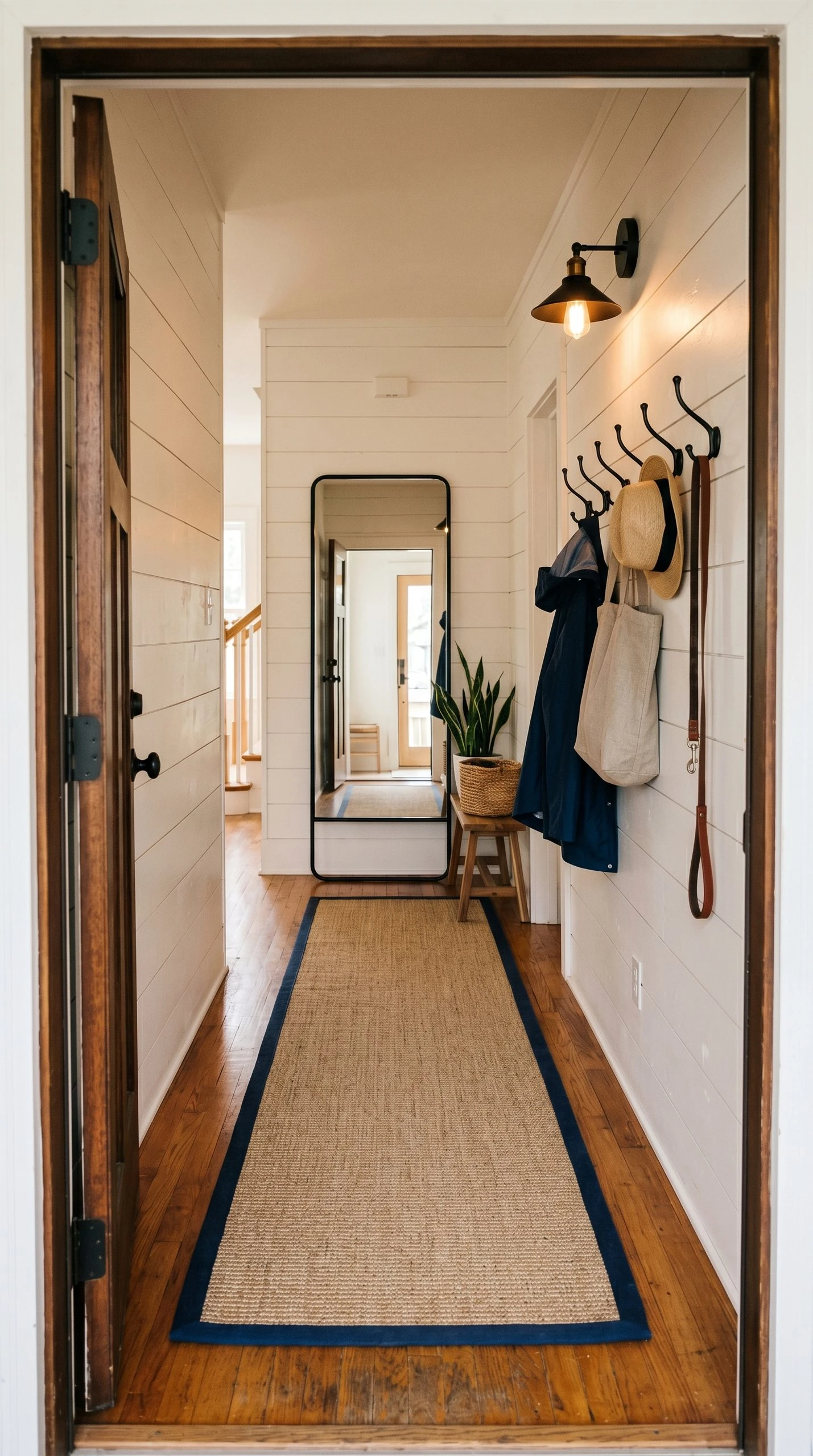
A sisal runner with a fabric border is one of those tricks that feels more custom and considered than it costs. The sisal itself brings a rougher, chunkier texture compared to jute, and the cotton border, usually in a solid color like navy, black, or rust, gives the rug a finished look that makes it feel intentional rather than purely functional. This works especially well in narrow entryways that run toward a hallway or staircase because the runner format naturally guides the eye and makes the space feel longer.
For styling, keep it simple. A coat hook rail on one wall with a small shelf below it, or a tall thin mirror leaning against the wall, lets the runner do its job without crowding the space. Sisal is more scratch-resistant and harder-wearing than jute, making it a better choice for homes with dogs or heavy foot traffic. The cotton border picks up color nicely, so if your interior has a recurring accent color, you can match the border to it for a pulled-together look that costs almost nothing extra.
Designer Advice: Size your sisal runner so it ends at least six inches before any doorway threshold or step. An abrupt edge right at a door frame looks unfinished and can become a tripping hazard.
3. Seagrass Round Rug for a Square Foyer
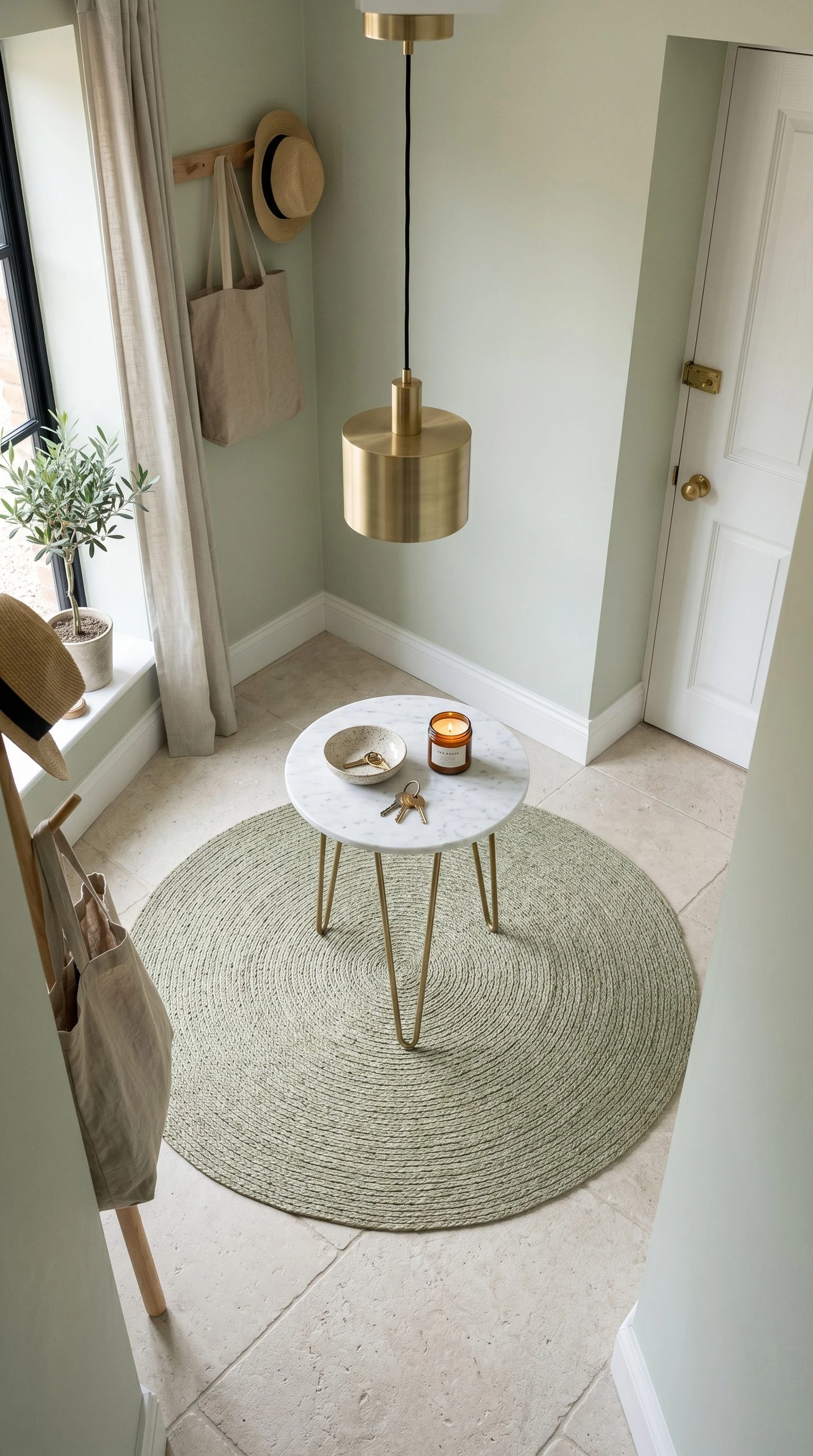
Square entryways are tricky because the symmetry can feel rigid if you play into it, or disconnected if you ignore it entirely. A round seagrass rug splits the difference beautifully. The rounded shape softens the hard corners of a square room, and the seagrass material brings a slightly greener, cooler tone compared to jute or sisal, making it a good fit for homes with coastal or tropical undertones. Even a 3-foot round rug can anchor a small square foyer without overwhelming it, especially when centered under a pendant light or beneath a round entry table.
Seagrass has a tighter weave than jute, which means it feels slightly smoother underfoot and holds up better to muddy shoes. Pair this with a round wood or marble-topped entry table, a simple ceramic bowl for keys, and a low-hanging pendant in brushed brass or black. The roundness of the rug, table, and light create a visual echo that makes even the smallest foyer feel deliberately designed rather than thrown together.
Designer Advice: In a square foyer, always center your round rug under the dominant fixture or piece of furniture. An off-center round rug in a square room reads as a mistake rather than a design choice.
Pattern and Personality: Rugs That Do the Talking
4. Bold Geometric in Black and White
A black and white geometric rug in the entryway is the interior design equivalent of a firm, confident handshake. It makes a clear statement from the moment the door opens, and it works with almost every wall color because black and white are neutral by nature. The key is to choose a pattern that has some scale to it, a large diamond grid, an oversized chevron, or a Greek key border, because small geometric patterns in a small space can read as busy rather than graphic. In a tight entryway, you want the rug to feel like a design choice, not visual noise.
The walls and furniture around a bold geometric should be kept clean. Think white walls, a simple black-framed mirror, and a natural wood console or floating shelf. Overhead lighting in matte black makes the whole scheme feel cohesive. This look works particularly well in apartments and townhomes where the entryway opens directly into a modern or minimalist living room, because the black and white rug creates a deliberate visual boundary between the two spaces without a physical divider.
Designer Advice: If your floors are light, go darker with the rug pattern and vice versa. A black and white rug on very dark floors loses its impact because the contrast disappears at the edges.

5. Vintage Persian in Muted Tones
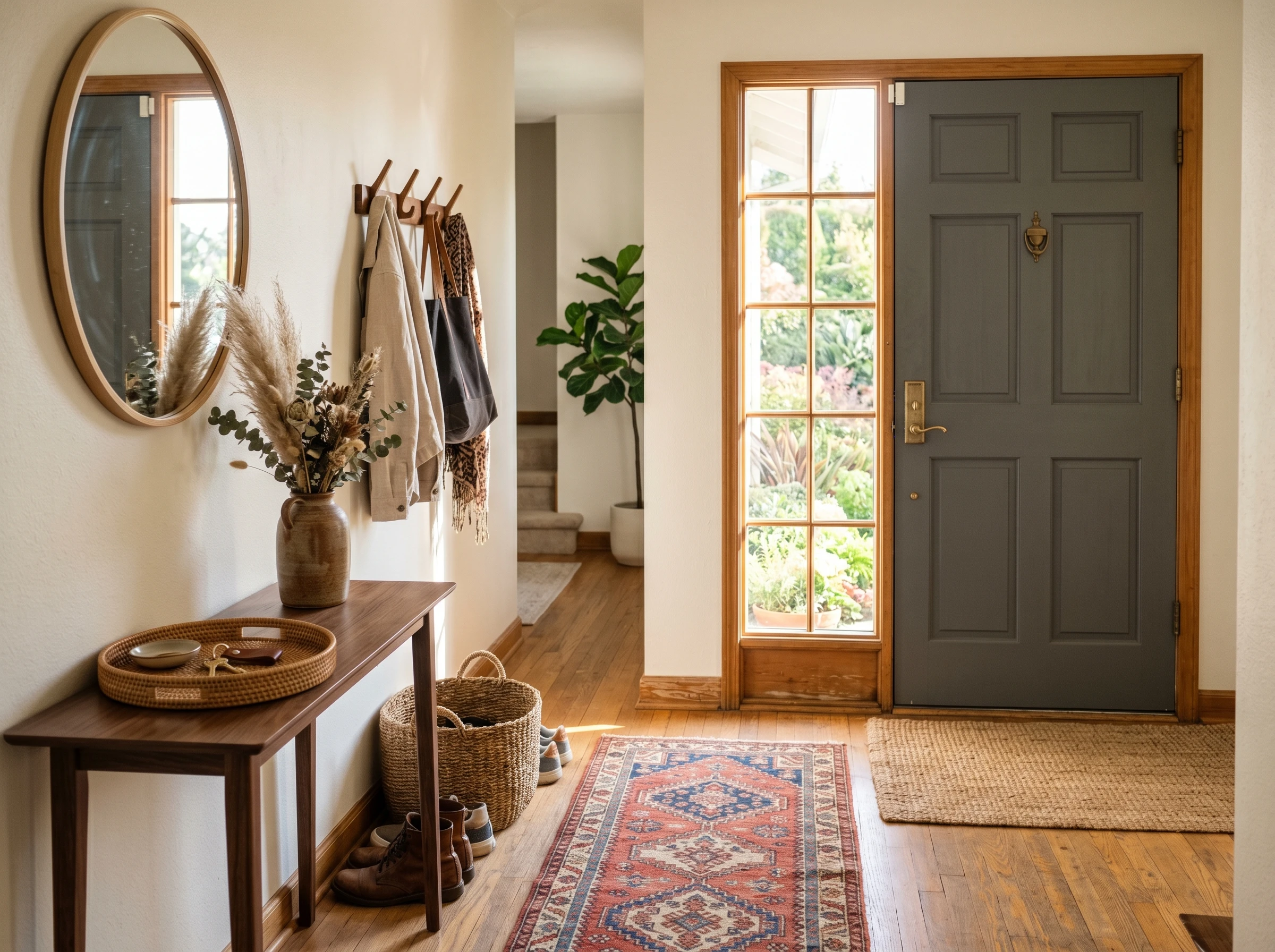
A Persian or Persian-style rug with softened, faded tones is one of the most forgiving choices you can make for a small entryway. The complexity of the pattern means that dirt and wear blend in rather than stand out, which is exactly what you want in the highest-traffic spot in your home. Muted versions in dusty rose, aged blue, faded ivory, and soft terracotta feel collected and personal rather than formal or stuffy, especially when placed in a modern or transitional home that does not lean fully traditional.
Budget-friendly versions of this look are widely available in machine-woven polypropylene, which handles moisture better than wool originals and costs a fraction of the price. Style it with a distressed wood console, an aged brass or antique gold mirror, and a small potted plant in a handmade ceramic pot. The lived-in quality of the rug makes everything around it feel richer without requiring expensive pieces. Even IKEA furniture reads more considered next to a well-chosen vintage-style rug.
Designer Advice: Avoid Persian rugs with very dark backgrounds in a small entryway as they can make the space feel smaller and heavier. Opt for lighter fields with rich border detailing instead.

6. Striped Cotton Runner in a Pop Color
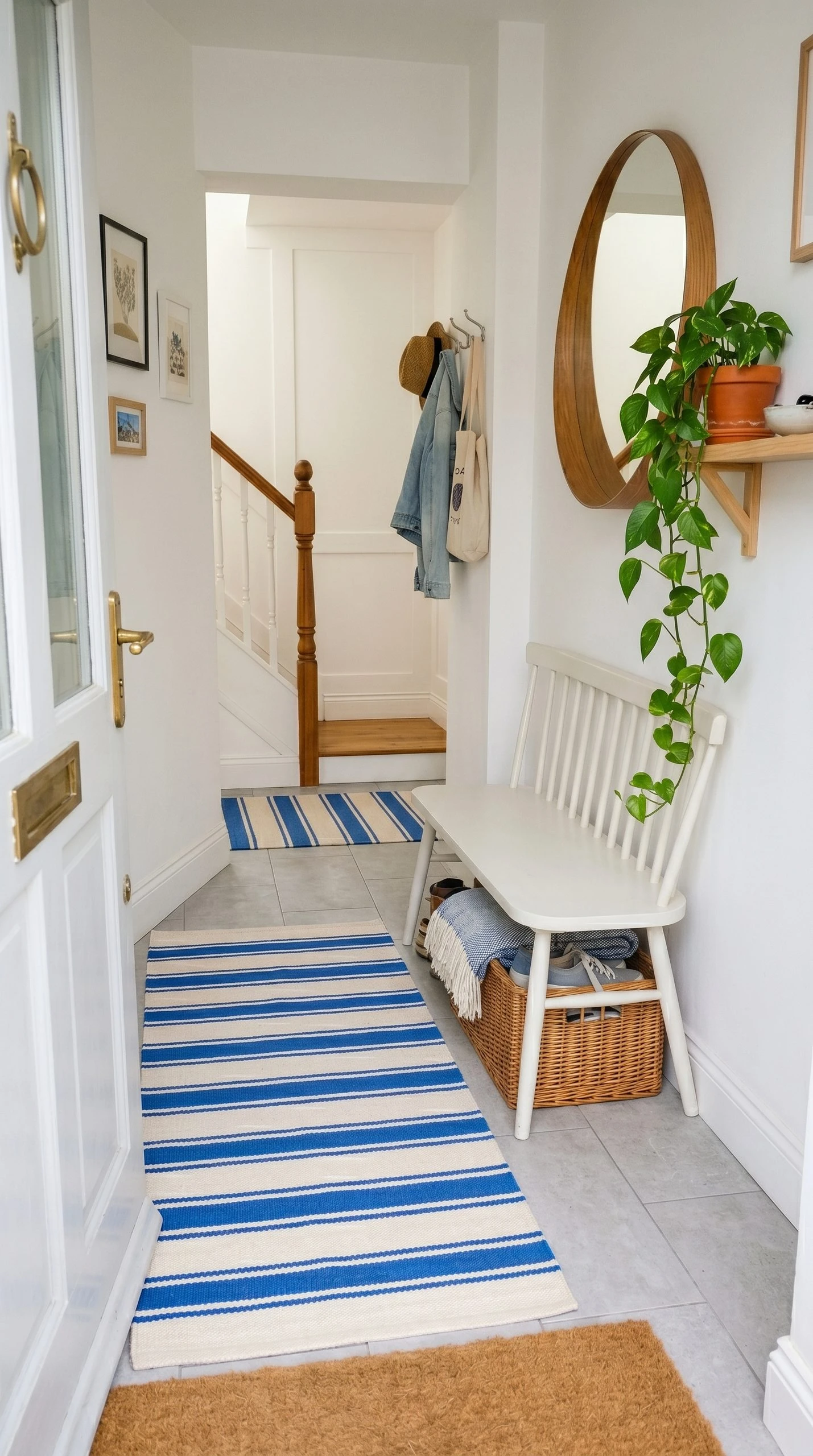
Stripes running lengthwise down a narrow entryway are a classic trick for making a short space feel longer, and a striped cotton runner delivers this without requiring you to do anything else to the room. Cotton flat-woven runners in a pop color, think a warm coral with cream, a cobalt blue with natural, or a forest green with white, bring personality and life to an otherwise blank entry space. They are also among the most affordable rug options available, which makes this a smart starting point if you are decorating on a budget.
Cotton runners are machine washable in most cases, which is a genuine advantage in an entryway that sees mud, rain, and pet paws on a regular basis. Choose a stripe color that picks up something from a nearby room, the throw pillows in the living room, the kitchen tile, or even the front door color, and you instantly create a sense of flow between spaces. Keep the walls and console simple so the runner’s pattern and color are the clear focal point.
Designer Advice: For the stripe effect to read properly as a space-lengthening tool, the stripes need to run parallel to the longest wall, not perpendicular to it. Check orientation before you buy.
7. Kilim Rug with Tribal Detail
Kilim rugs have a flatwoven construction that makes them naturally low-pile and door-friendly, and their tribal geometric patterns are bold enough to stand on their own in a small entryway without needing much else around them. Traditional kilims come from Turkey, Afghanistan, and the Caucasus region, and their handwoven origins mean that no two are exactly alike. If you find a vintage one at a market or thrift store, it will bring a story and a character to your entryway that no new rug can replicate.
Modern kilim-inspired rugs in synthetic fibers give you the look at a much lower price point and with better durability. The color palette of a kilim tends to run warm, deep reds, burnt orange, ochre yellow, and dark blue, which makes them a natural fit for entryways with warm wood tones, terracotta tile, or exposed brick. A simple wrought-iron hook rail and a small wooden stool are all you need alongside a kilim to make the entry feel complete.
Designer Advice: Because kilims are already visually busy, keep wall art in the entryway to a minimum. One simple mirror is enough. Too many competing patterns will make the space feel chaotic rather than collected.

Minimal and Modern: Clean Lines for Tight Spaces
8. Solid Charcoal Low-Pile Rug
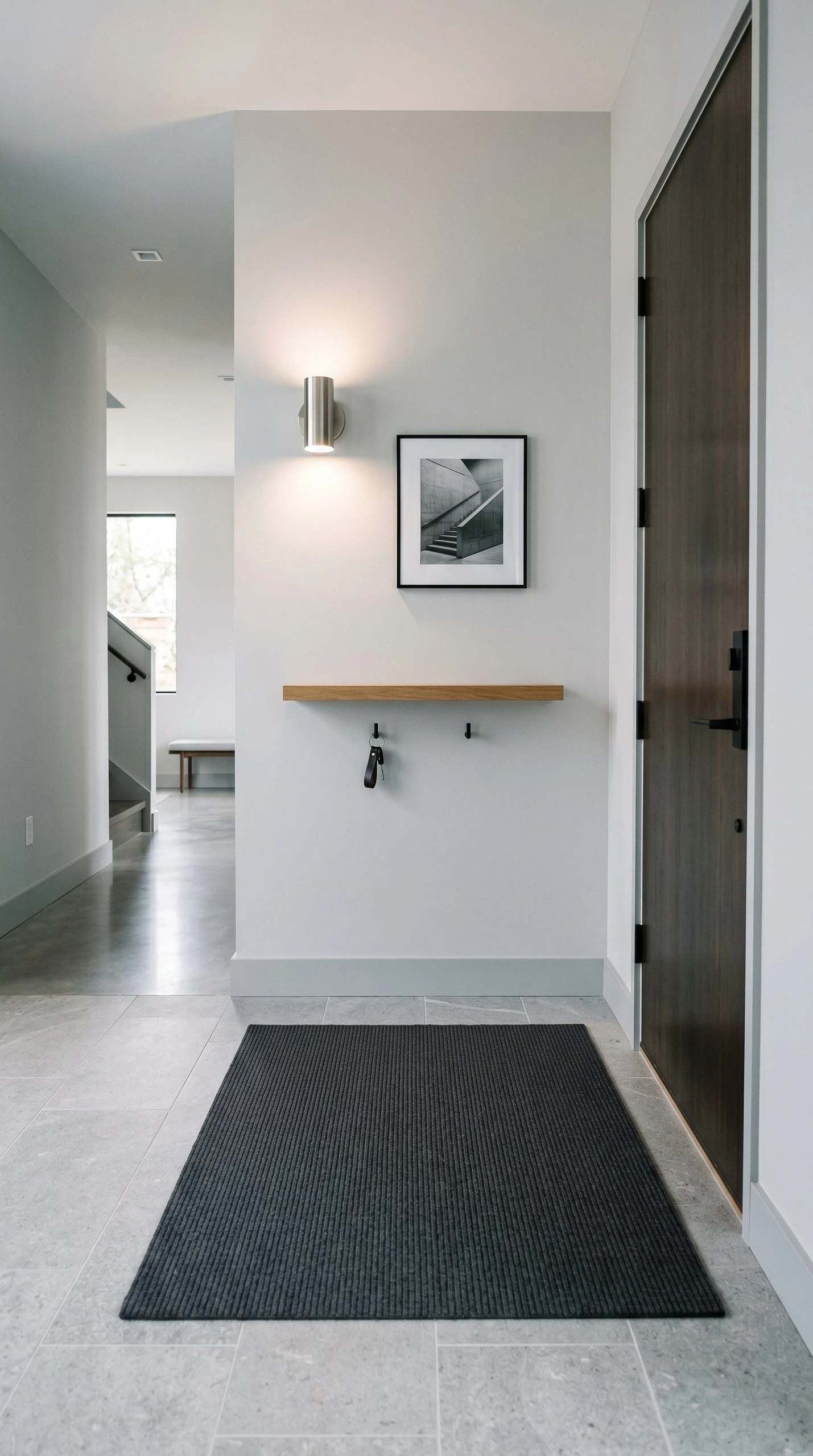
Solid rugs get underestimated. People assume they are the boring option, the fallback when nothing else works. But a well-chosen solid rug in a rich charcoal or deep slate does something that patterned rugs cannot always do: it grounds the space without competing with anything. In a modern entryway with clean architecture, minimal furniture, and a focus on materials and quality over decoration, a solid charcoal low-pile rug is exactly what the space needs. It makes every other element around it look more deliberate.
Low-pile options in polypropylene or tightly woven wool blends wear well under constant foot traffic and are easy to vacuum clean. Pair this with a white or light gray wall, a slim floating shelf with minimalist hooks below, and a single piece of wall art in a simple black frame. The lighting should be either a simple recessed fixture or a clean wall-mounted light in brushed nickel or matte black. The rug does not need to impress anyone. Its job is to make everything else in the room look expensive.
Designer Advice: In a solid rug, texture becomes the visual interest. Look for low-pile rugs with a slight ribbed or looped texture rather than a completely flat surface so they catch light and show depth.
9. Cream and Ivory Layered Look
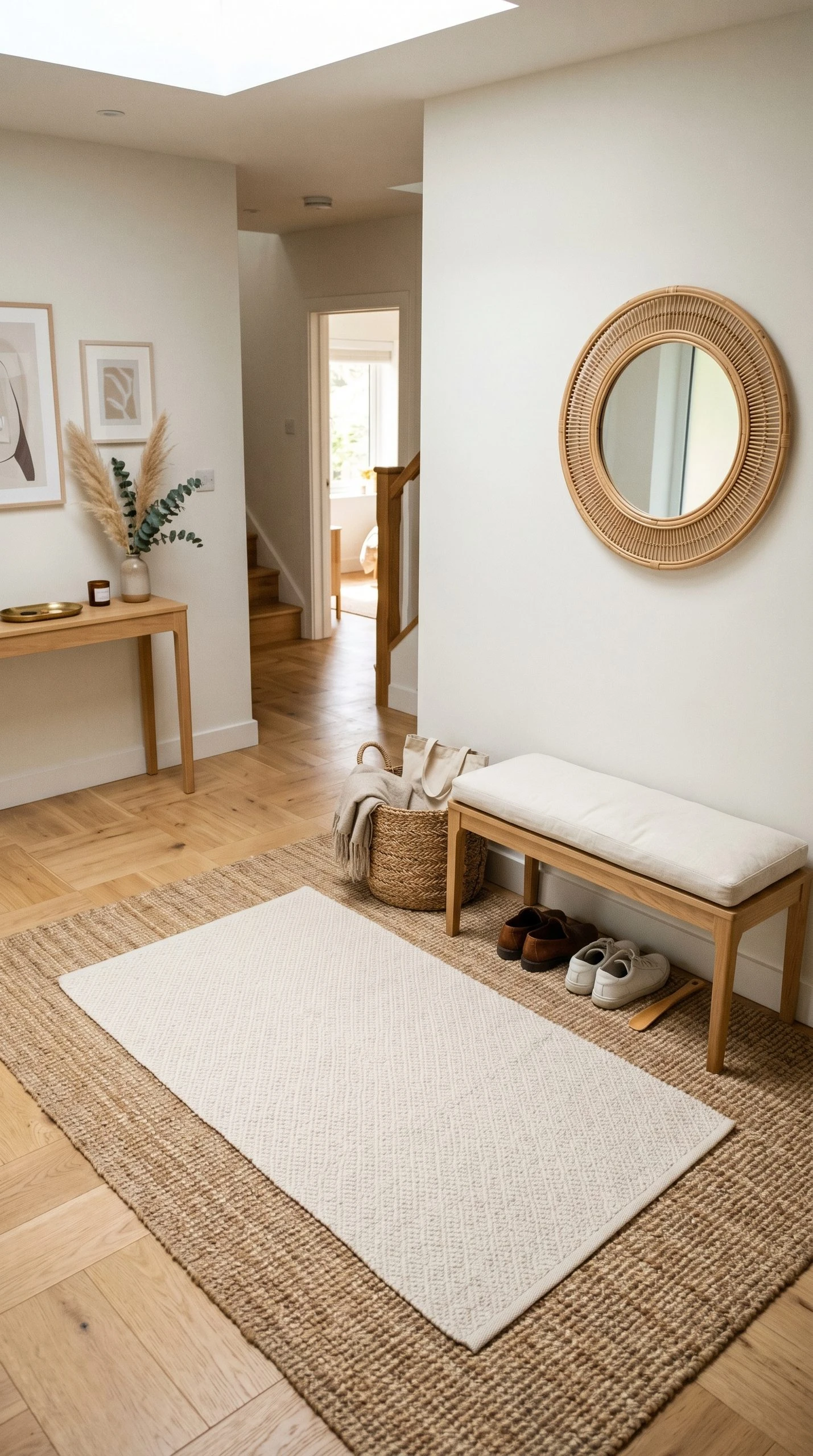
Layering a small decorative rug over a larger natural fiber base is a technique borrowed from living room styling, and it translates beautifully into a small entryway when done with restraint. The idea is simple: lay down a jute or sisal base rug that covers most of the entry floor, then place a smaller, softer rug on top, slightly off-center or angled just enough to feel intentional. When the top rug is in cream or ivory with a subtle pattern, the combination feels layered and considered without being busy.
This works particularly well in entryways with light-colored walls, blonde wood floors, and soft natural furnishings. A rattan mirror, a light wood bench with a cream linen cushion, and a small basket for shoes or umbrellas complete the look. The layered rug approach adds dimension to a flat floor without adding any height or bulk, which matters when you are working with a small space that can feel crowded quickly.
Designer Advice: Keep the bottom rug in a darker or more textured fiber than the top rug so there is enough visual contrast between the two layers. Same tone on same tone disappears.
10. Concrete-Tone Flatweave for Industrial Spaces
Industrial-style apartments and lofts often have polished concrete floors, exposed pipes, and the kind of raw aesthetic that makes most traditional rugs look completely out of place. For these entries, a flatweave rug in a concrete-inspired tone, medium gray with slight variation, cool taupe, or a heathered dark stone, bridges the gap between practical and purposeful. The low profile matches the utilitarian spirit of the space, and the gray palette complements rather than fights with the existing floor.
Look for rugs in recycled cotton or cotton-poly blends for this style, as they tend to have the flat, matte quality that reads well in industrial spaces. Keep the rest of the entry spare: a single metal coat hook, a low wooden bench in a dark stain, and a rubber-soled mat underneath if the surface is slippery. Overhead, a bare Edison bulb pendant or a simple cage-style sconce fits the aesthetic without trying too hard.
Designer Advice: In industrial spaces with dark flooring, go slightly lighter with your rug so the floor and rug remain distinct. A rug that blends entirely into the floor texture disappears and loses its purpose.

Color-Forward Choices: When You Want Your Entry to Make a Statement
11. Deep Navy Runner with Fringe Detail
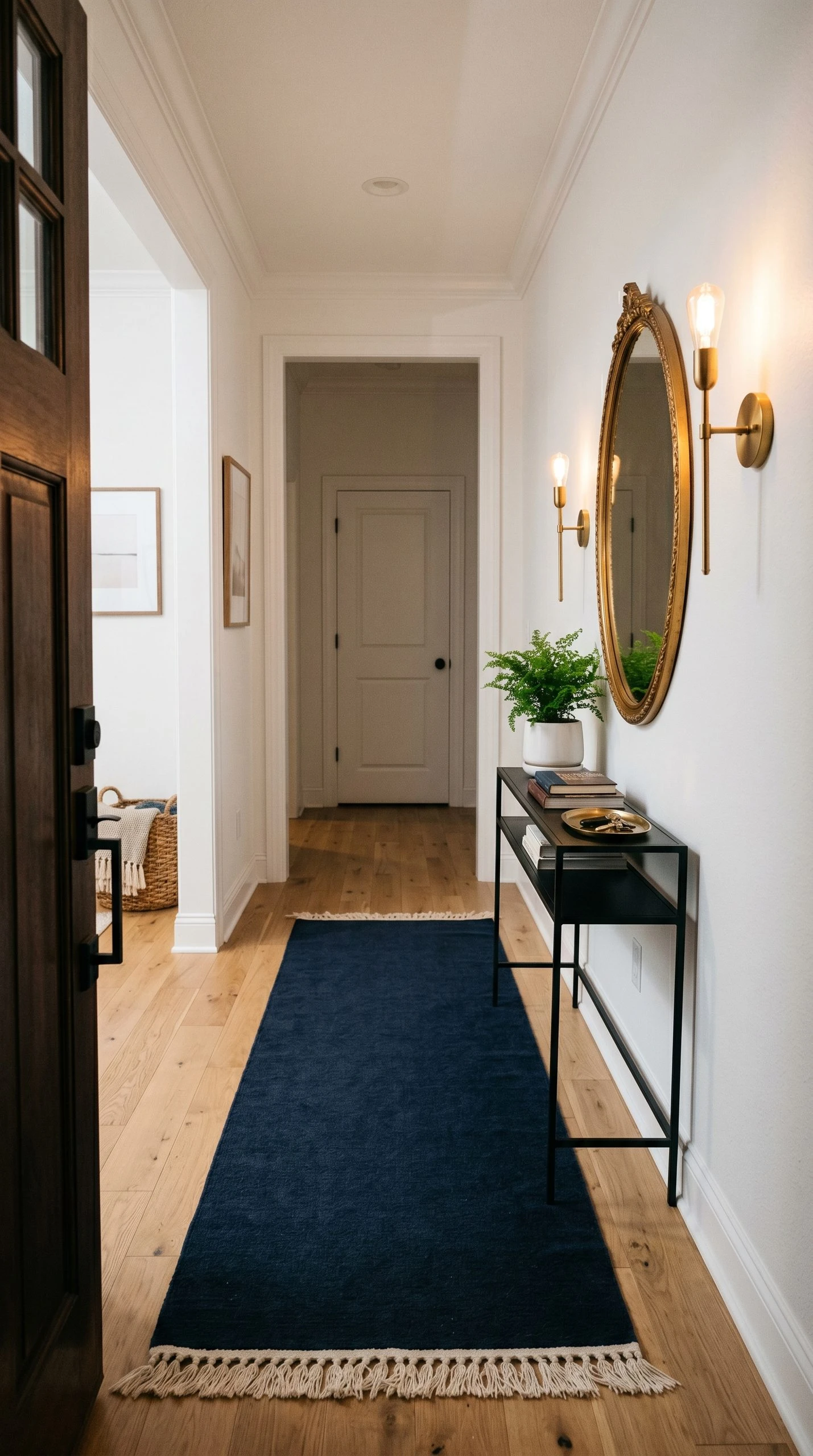
Navy is one of those colors that reads as both bold and versatile at the same time, which is a rare combination in home decor. A deep navy runner with fringe or tassel edges brings color and a touch of softness to a small entryway without overwhelming it. The fringe detail adds a layer of texture and movement that plain-edged rugs cannot replicate, and it makes the rug feel more artisanal even when it comes from a big-box retailer. Navy also has the practical advantage of hiding stains and dirt far better than light-colored rugs.
Style a navy runner against white or soft gray walls for maximum contrast, or go even bolder by pairing it with a dark forest green or rich burgundy painted wall if your space can handle the drama. Brass or gold hardware on coat hooks and mirrors picks up beautifully against the depth of navy. Add a small potted fern or eucalyptus stem in a simple white pot near the door for a fresh organic touch that breaks up all the richness.
Designer Advice: Fringe on a rug in a high-traffic entry needs to be checked regularly. Vacuum around it rather than over it to prevent the fringe from being sucked in and pulled loose.
12. Rust and Terracotta for a Warm Welcome
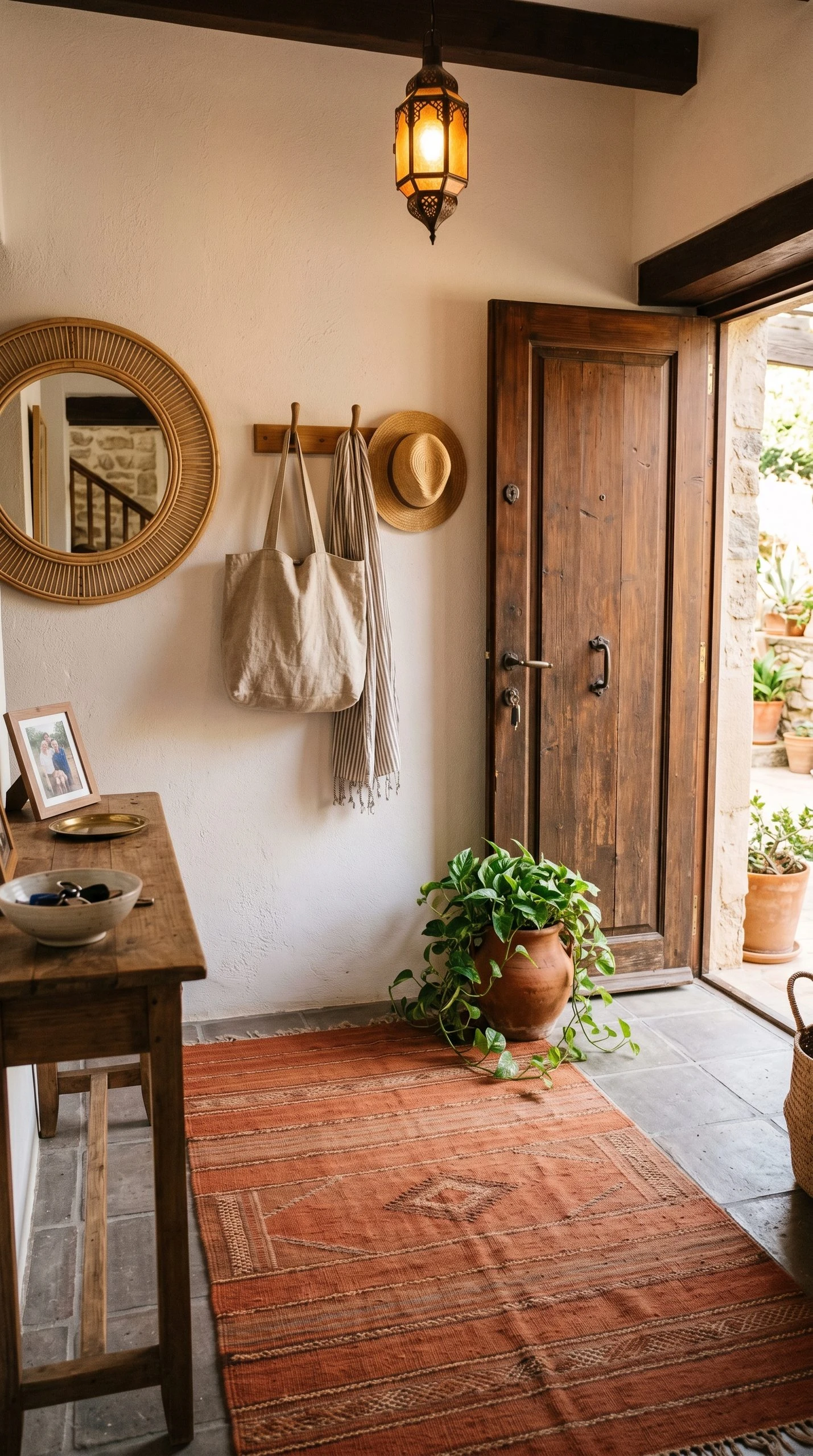
Rust and terracotta tones are having a genuine moment in interior design right now, and for good reason. These warm earthy reds sit at the intersection of modern and traditional, feeling simultaneously fresh and rooted. A rug in these tones, whether solid, subtly patterned, or in a woven texture, brings an immediate sense of warmth to an entry space that can otherwise feel cold and transient. If your home leans toward a warm, Mediterranean, or Southwestern aesthetic, this is the most natural choice you can make for your entry floor.
Pair a rust or terracotta rug with warm white walls, aged wood furniture, and ceramic accents in complementary tones like ochre, sandy beige, or olive green. A simple clay pot with a small succulent near the door, a rattan mirror, and warm-toned lighting in amber or honey tones complete the picture. These colors also work well in darker entryways because they add light and warmth to a space that might otherwise feel dim.
Designer Advice: Terracotta tones look best under warm-spectrum lighting. If your entry uses cool daylight bulbs, the rug can look muddy. Swap to warm white bulbs (2700K-3000K) to see the color at its best.
13. Blush Pink for a Soft, Unexpected Entry
Blush pink in the entryway feels unexpected and, when done right, completely lovely. The key is to treat it as a neutral rather than a statement color. A dusty blush or muted rose rug reads differently from a bright candy pink, and the former works in far more homes. Against a warm off-white or a pale sage wall, a blush flatweave or low-pile rug reads almost like a nude tone with warmth, adding color without shouting about it. This is a particularly good choice for apartments and smaller homes where the entryway is visible from the main living area.
Furniture around a blush rug should be light and airy. A white or pale wood console, a simple round mirror, and a small vase of dried flowers or pampas grass in a neutral ceramic pot complete the look without adding competition. Blush also works well in feminine or maximalist spaces where you are building a layered, collected look, in which case you can add a small gallery wall of botanical prints or abstract art in gold frames to build on the softness of the rug.
Designer Advice: Choose blush rugs with some texture, like a flatweave diamond pattern or a subtle loop pile, rather than plain solid blush. The texture keeps it from looking like a mistake and adds depth to the color.

Function First: Rugs Built for Real Life in Busy Entries
14. Indoor/Outdoor Polypropylene Rug for Mudroom Entries
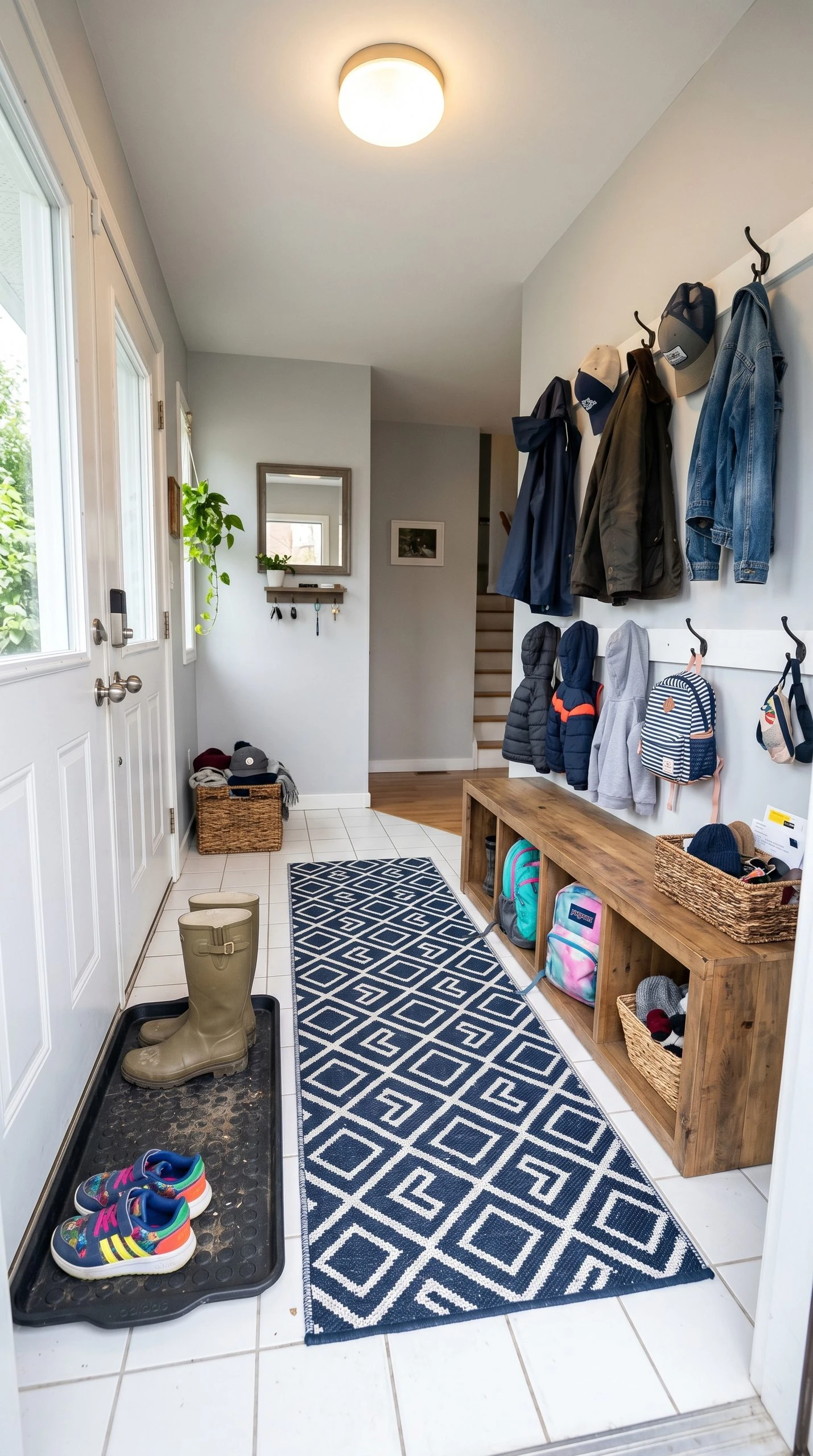
Some entryways are not really entryways. They are mudrooms without the dedicated space, the spot where wet boots land, where dogs shake themselves dry, and where school bags hit the floor every afternoon. If this sounds familiar, a rug made from polypropylene or indoor/outdoor material is the only practical choice. These rugs are water-resistant, stain-resistant, UV-stable, and in most cases can be taken outside and hosed down when they get truly disgusting. They have come a long way in terms of style, with lots of current options featuring good-looking patterns and clean color stories.
Look for indoor/outdoor rugs with a low pile or flatwoven construction so they dry quickly and do not harbor moisture. A geometric pattern in a dark navy, olive green, or charcoal hides dirt between cleanings and still looks intentional. Add a small boot tray alongside the rug to catch the worst of the outdoor mess before it reaches the rug itself. This combination, a boot tray plus a polypropylene rug, is one of the most practical entry setups for families and pet owners.
Designer Advice: Pair your indoor/outdoor rug with proper storage: hooks at the right height for kids, a small bench with cubbies, and a basket for gloves and hats. A good rug cannot compensate for a space with nowhere to put anything.
15. Machine-Washable Rug for Apartment Entries
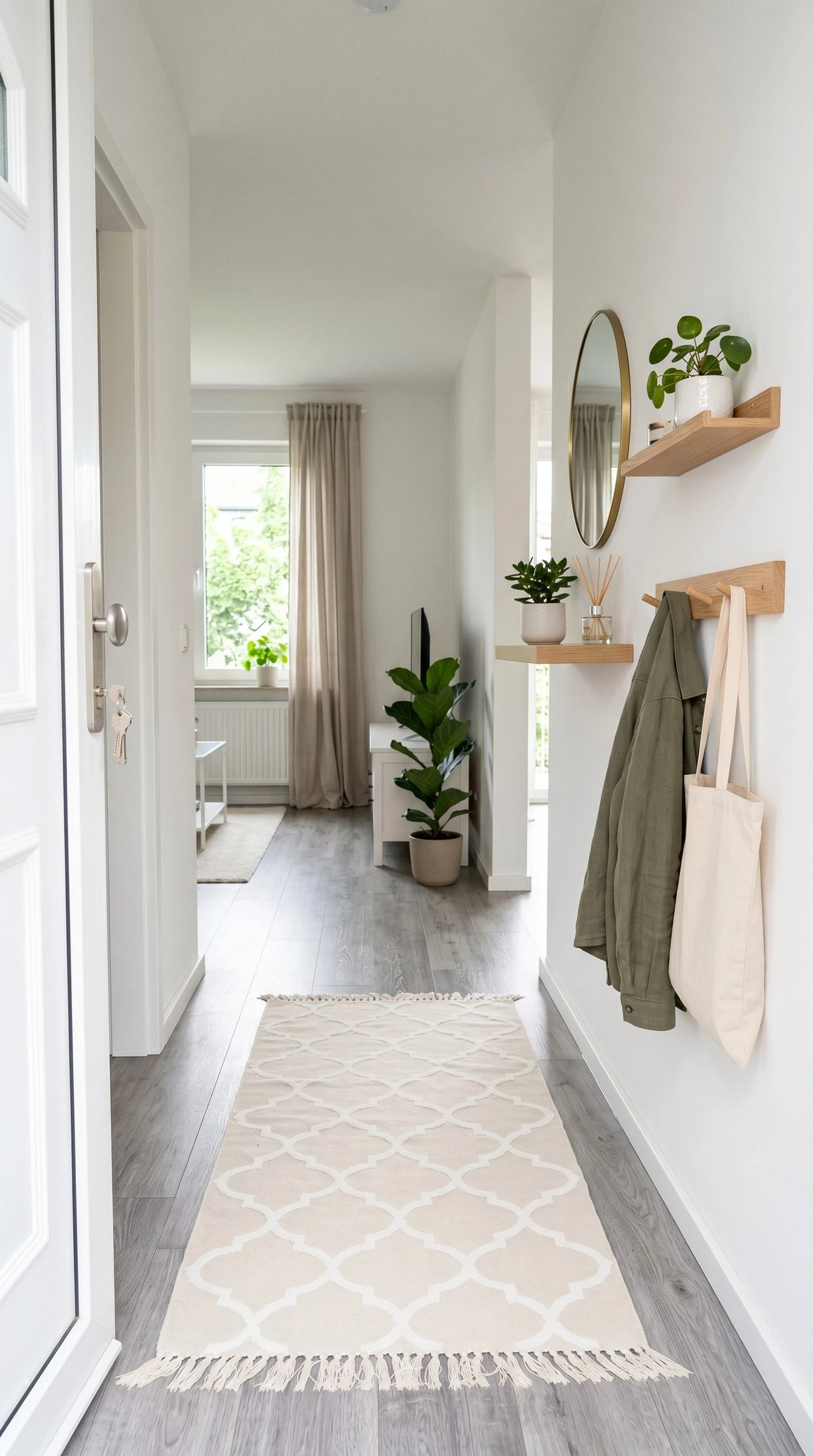
Machine-washable rugs used to mean flat, ugly, and short-lived. That is no longer true. Several brands now make beautifully designed rugs specifically intended for the washing machine, and for apartment entries where the rug gets daily use with no outdoor area to shake things out, this is a genuine practical upgrade. Look for options in cotton, recycled cotton, or certain poly blends that are rated for machine washing on a gentle cycle. Sizes in the 2×3 and 3×4 range are easy to fit in a standard washer.
Design-wise, machine-washable rugs now come in everything from simple solids to Moroccan-inspired prints to abstract watercolor patterns. Pick one that mirrors the mood of your apartment, whether that is clean and modern or warm and eclectic. The ability to wash it every few weeks means you can afford to go lighter in color than you might otherwise feel comfortable with, since a cream or pale gray rug stays much easier to maintain when it can go through the laundry.
Designer Advice: Always use a rug pad with a machine-washable rug. Without grip, these lighter rugs tend to slide with every step and can become a hazard on slick floors.
16. Overdyed Rug for a High-Traffic Look
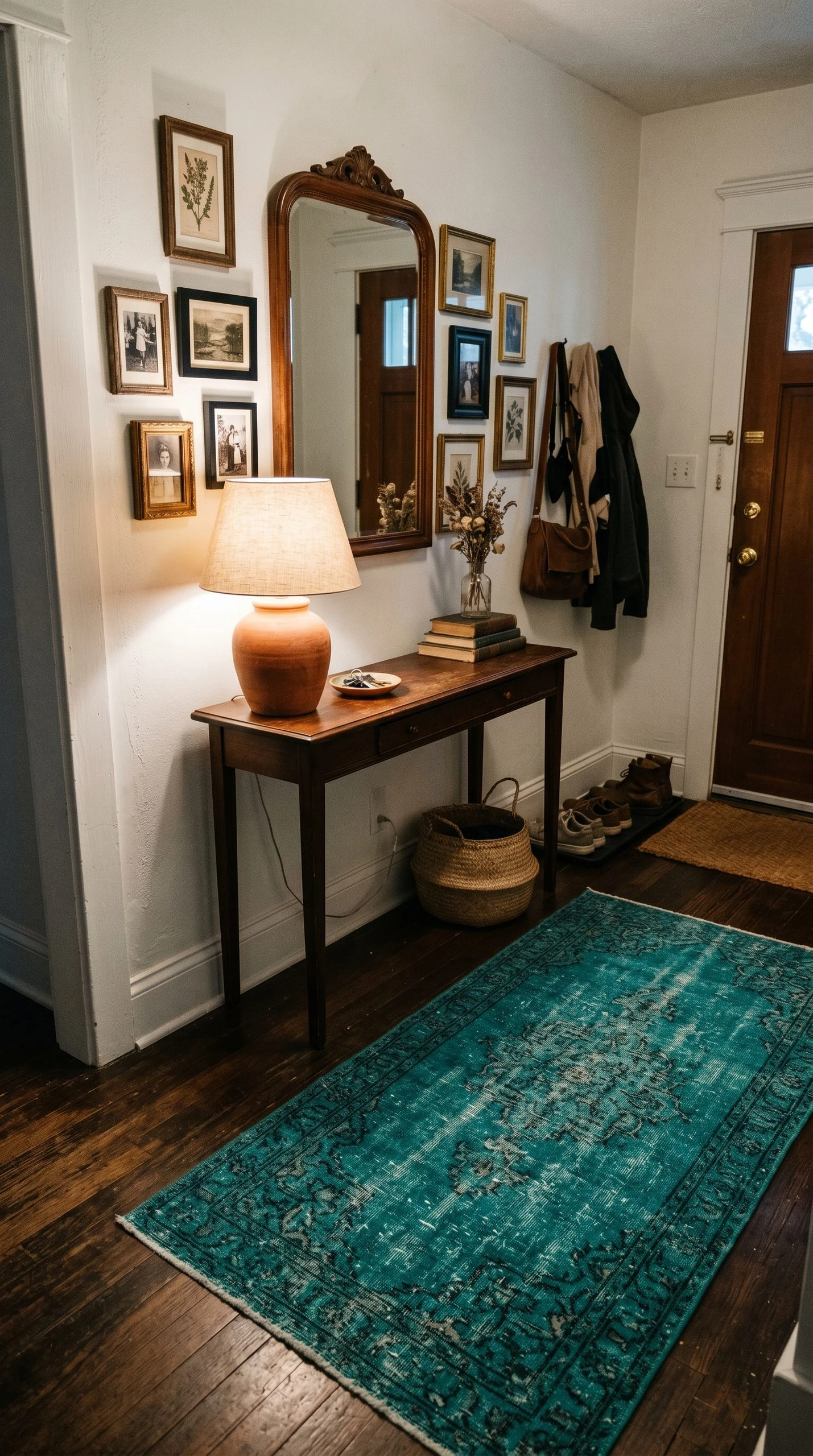
Overdyed rugs are traditional or vintage-style rugs that have been submerged in a solid dye bath, creating a wash of color over an existing pattern. The result looks intentionally faded and layered, almost like the rug has been somewhere interesting for a long time. In an entryway, this is a clever choice because any actual fading or wear that happens over time just adds to the character of the rug rather than making it look old and tired. The most popular overdye colors are teal, cobalt blue, faded red, and dusty purple.
Overdyed rugs work best in transitional or eclectic homes where you are mixing old and new, global and local, formal and casual. A cobalt overdyed rug in a small entry with white walls, dark wood floors, and a simple rattan mirror feels collected and personal. The pattern beneath the dye provides subtle visual interest without being loud, and the saturated color makes a real impression the moment the door opens.
Designer Advice: When buying overdyed rugs, check the pile quality in addition to the color. Older rugs that have been overdyed sometimes have thinner pile from years of prior use, which affects how long they will last in a high-traffic entry.
Shape and Size Tricks: Using Rug Form to Change How Your Entry Feels
17. Oval Rug to Soften Hard Lines
Oval rugs are one of the most underused shapes in small entryway design, which is a shame because they solve a specific problem beautifully. When your entryway has sharp architectural edges, a square tile floor, a perfectly rectangular door frame, a boxy console, the introduction of a soft oval shape breaks the rigidity and makes the whole space feel more welcoming. Oval rugs are also slightly longer than wide, which suits the proportions of many narrow entries without the formal strictness of a rectangle.
Braided oval rugs in cotton or wool blends are a classic choice that brings texture and a slightly rustic or cottage feel, while flatwoven oval rugs in a Persian or botanical pattern read more formal. For modern spaces, look for oval rugs in solid tones with a simple loop construction. Center the oval under whatever the dominant furniture piece is in your entry, and make sure at least an inch or two of floor shows on all sides so the shape can read properly rather than being squeezed into a tight corner.
Designer Advice: Oval rugs look best when they are oriented with their long axis parallel to the main traffic flow. Turning an oval sideways in a narrow entry creates an awkward visual block rather than a natural path.

18. Two Small Rugs Instead of One for Split Entries
Some entryways are not a simple rectangle. They have an L-shape, a split between the door and a staircase, or two functional zones that need to be defined separately. In these cases, using two small coordinating rugs instead of one larger rug is often the smarter solution. Two rugs in the same color family but with slightly different patterns, or the same pattern in different sizes, define each zone clearly without creating the visual confusion of a single rug placed awkwardly across an irregular space.
The most important thing when using two rugs in an entryway is that they share at least one clear design element, whether that is color, texture, material, or pattern style. Two completely unrelated rugs look like a mistake. Two rugs that clearly belong together look like a thoughtful design decision. A practical pairing might be a jute flatweave near the door and a smaller printed cotton rug at the base of the staircase, connected by their warm neutral palette.
Designer Advice: Leave at least eight inches of bare floor between the two rugs. Rugs that touch or overlap look like a sizing error. The gap between them is what signals that two rugs are a deliberate choice.

Final Thoughts
A small entryway rug is one of the highest-impact, lowest-effort changes you can make to your home. It does not require a renovation, a big budget, or even a full afternoon of your time. What it does require is a little thought about what you actually need from the space, whether that is durability, color, texture, a specific shape, or just something that makes you smile every time you walk through the door.
The eighteen ideas in this article cover a wide range of styles, materials, and situations because there is no single right answer for every entryway. A jute flatweave is perfect for one home and completely wrong for another. A bold geometric runner that looks sharp in a modern apartment would feel out of place in a cozy cottage. The best choice is always the one that fits how you actually live in the space, not the one that looks best on a mood board.
Start with what bothers you most about your current entry, too much dirt showing, too little personality, a space that feels cold or unwelcoming, and let that narrow your options down. From there, trust the details: choose the right size, use a rug pad, and give yourself permission to go slightly bolder than feels completely safe. Entryways are exactly the right place to take a small design risk.
FAQ
What size rug works best for a small entryway?
For most small entryways, a 2×3 or 3×5 area rug covers the key floor zone without blocking the door or crowding the space. Runners in the 2×6 or 2×8 range work well for long, narrow entries. Always measure and leave a few inches of bare floor visible on all sides so the rug does not look squeezed in.
What material is most durable for an entryway rug?
Polypropylene and other synthetic fibers are the most durable and moisture-resistant choices for high-traffic entries. Natural fibers like sisal and wool also hold up well but are less resistant to wet conditions. If your entry sees a lot of rain, mud, or snow, an indoor/outdoor polypropylene rug is the most practical pick.
Should an entryway rug match the rest of the home?
It does not need to match exactly, but it should connect to the rest of your home through at least one shared element, whether that is a color, a material, or a general design tone. A rug that looks completely unrelated to everything else in the home feels jarring rather than styled. Aim for cohesion, not a perfect match.
Can a rug make a small entryway look bigger?
Yes, certain rug choices help. Lengthwise stripes on a runner visually elongate a narrow entry. Round rugs in a square space create the illusion of more room around them. Lighter-colored rugs reflect more light and make the floor feel less heavy. Avoid very large rugs that leave no floor border visible, as they make small spaces feel even more cramped.
How often should I clean an entryway rug?
Entryway rugs should be vacuumed or shaken out at least once a week because they collect more dirt than rugs in any other room. A deeper clean every one to three months is reasonable for most households. Machine-washable rugs make this much easier, but even non-washable rugs can be spot cleaned with mild soap and water for most everyday stains.
Do I need a rug pad under an entryway rug?
Yes, almost always. Entryway rugs on hard flooring, whether hardwood, tile, or laminate, will slide without a rug pad, and a sliding rug in an entry creates a genuine safety hazard. A thin, grippy rug pad also extends the life of the rug by reducing wear from movement against the hard floor beneath it.