Coastal Entryway Looks That Make Guests Stop and Stare
There is something really special about the moment you step through a front door and immediately feel like you are somewhere beautiful. That first glance into a home sets the whole tone, and if you have been dreaming of giving your entryway that easy, breezy, beach-inspired feel, you are in exactly the right place. A coastal entryway does not need to be obvious or overdone. It should feel like a gentle breath of salt air, something fresh and welcoming rather than a collection of anchors and ropes slapped on every surface.
In practice, putting together a coastal entryway is less about buying a bunch of beach-themed stuff and more about understanding what the coastal aesthetic actually does well: light colors, natural textures, layered materials, and a sense of calm order. Whether you are working with a tiny hallway or a grand foyer, these ideas will give you a clear direction. Some are easy weekend fixes, others are small investments that pay off every single day.
1. The Console Table That Started Everything
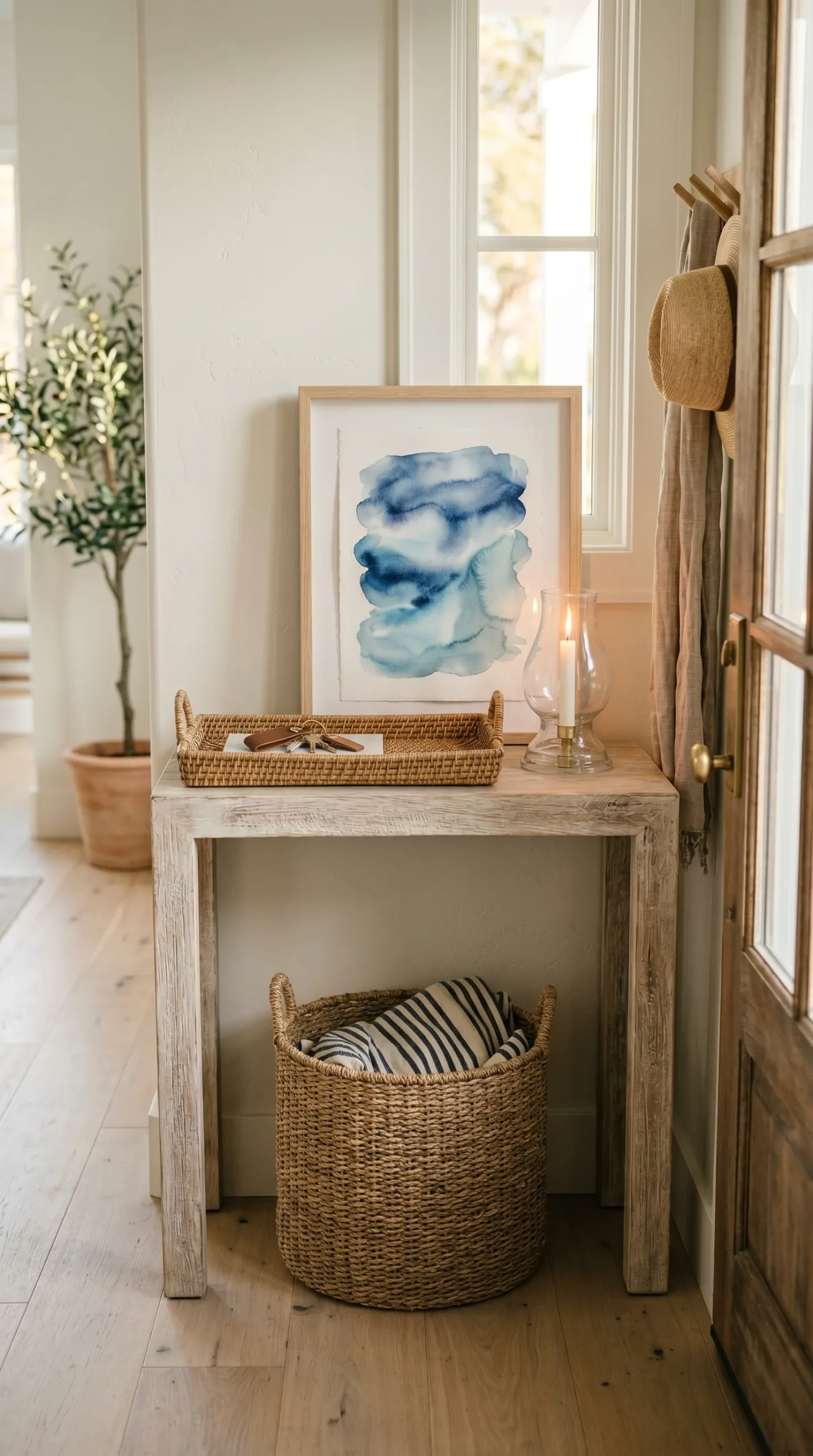
You walk through the front door with grocery bags in both hands, no surfaces available, keys already lost in a tote bag. Sound familiar? That is exactly the scenario that made me fall in love with the coastal console table as an entryway anchor. A low-profile console in whitewashed oak or natural rattan instantly creates a landing zone that looks beautiful while doing real work. Style the top with a glass hurricane lamp, a shallow tray for keys and mail, and a piece of abstract ocean art leaning against the wall behind it. Finish with a woven seagrass basket beneath the table to hold shoes or umbrellas, and the whole space reads as put-together without feeling precious. This is one of those ideas that works in rooms as small as a four-foot hallway, making it extremely versatile. Budget note: you can find whitewashed console tables at most big-box furniture stores for well under $200, and the look scales up or down easily depending on your accessories.
2. A Mirror That Does More Than Reflect
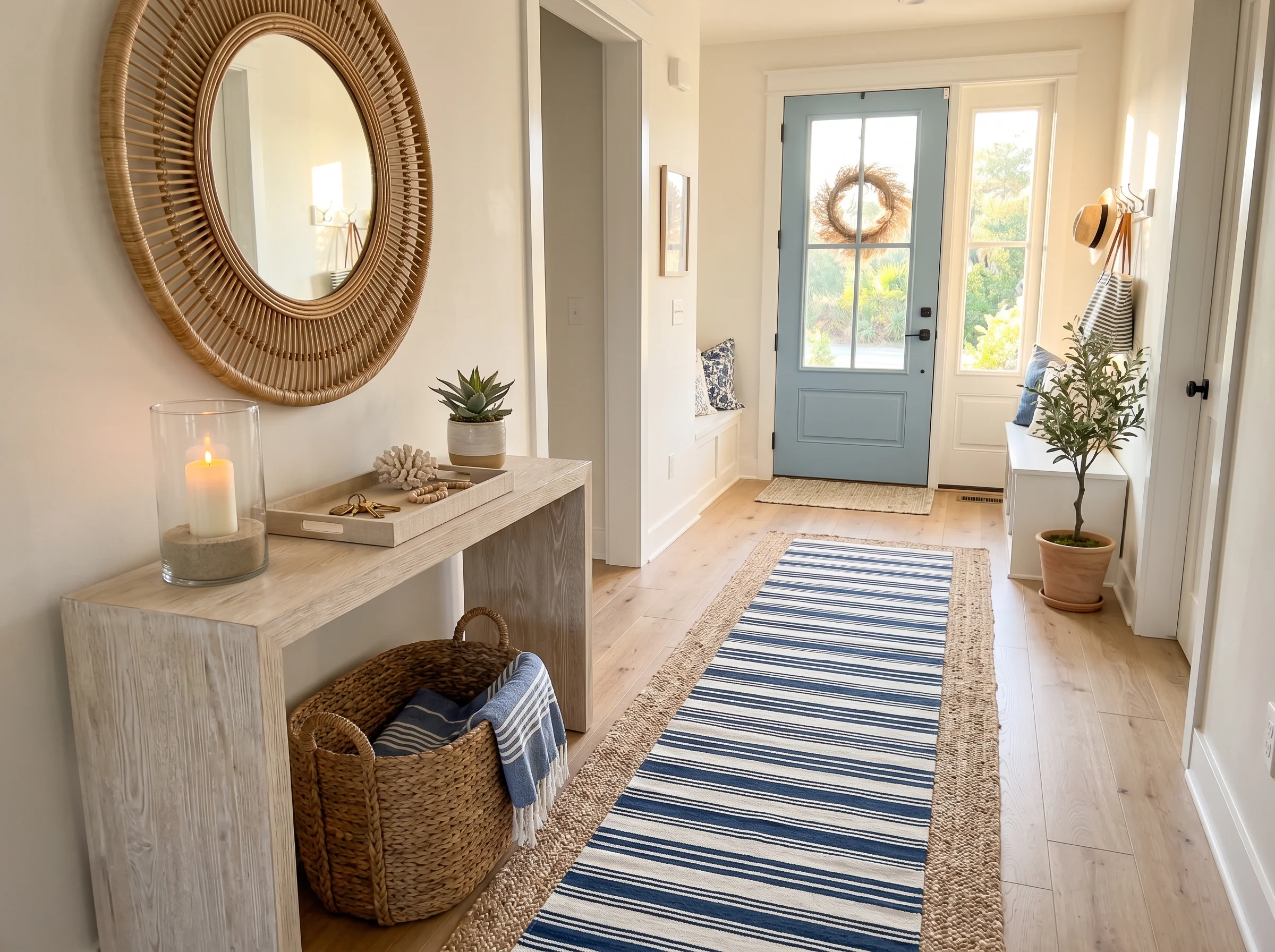
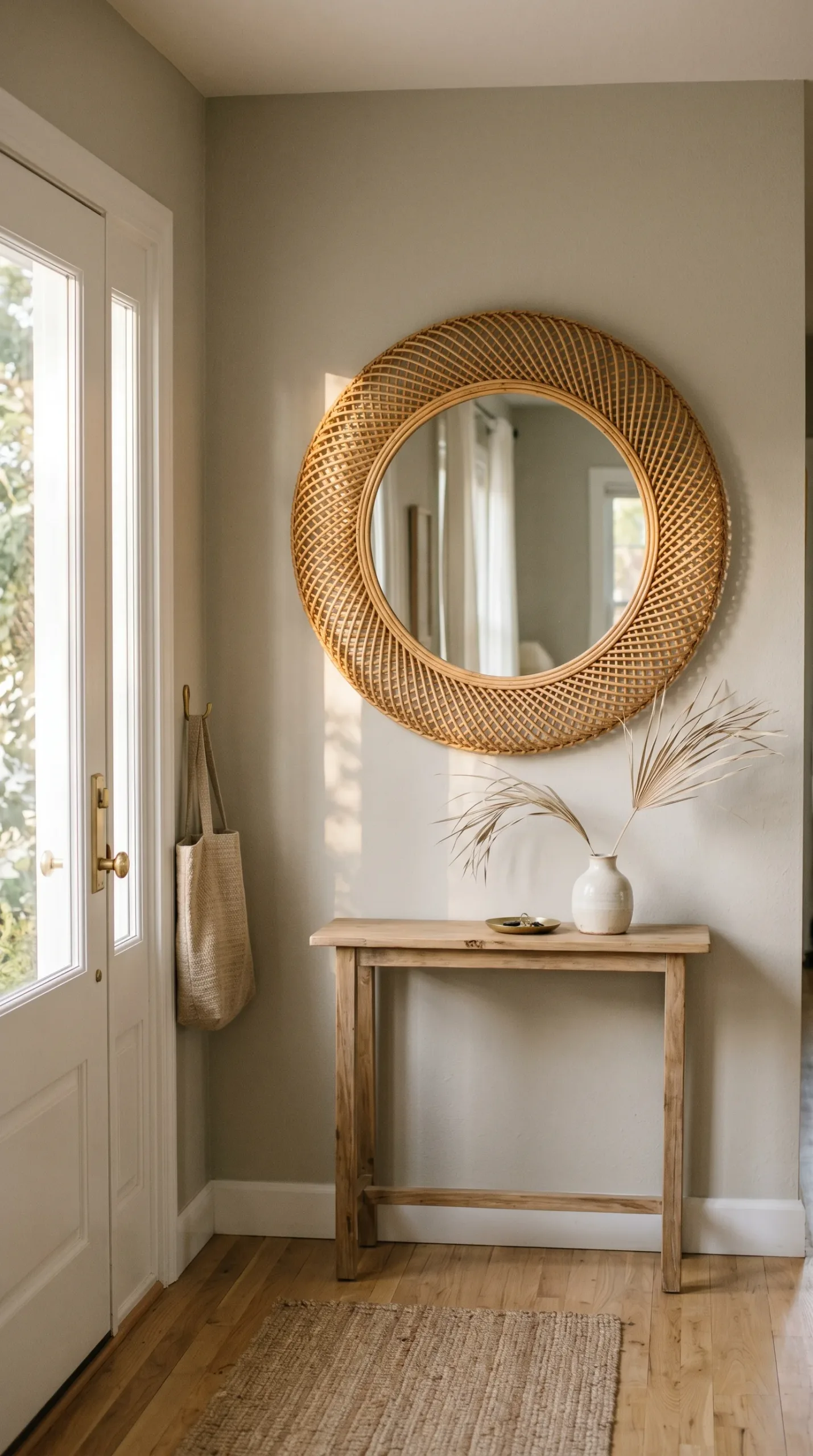
Most people hang a mirror in an entryway for practical reasons, a quick check before leaving the house. But in a coastal entryway, the right mirror becomes the room’s focal point entirely. Imagine coming home after a long day, opening your door, and the first thing you see is a large round rattan-framed mirror catching the afternoon light. The warm honey tones of the rattan complement sandy-colored walls beautifully, and the circular shape adds softness to what is often a boxy, angular space. For a more elevated look, a sunburst mirror in whitewashed wood works extremely well. One thing to get right here is scale: a mirror that is too small will look lost on an empty wall, so go bigger than you think you need, at least 30 inches in diameter. Hang it at eye level and allow the reflection to bring more perceived depth into the space.
3. Layered Rugs That Carry the Coastal Story
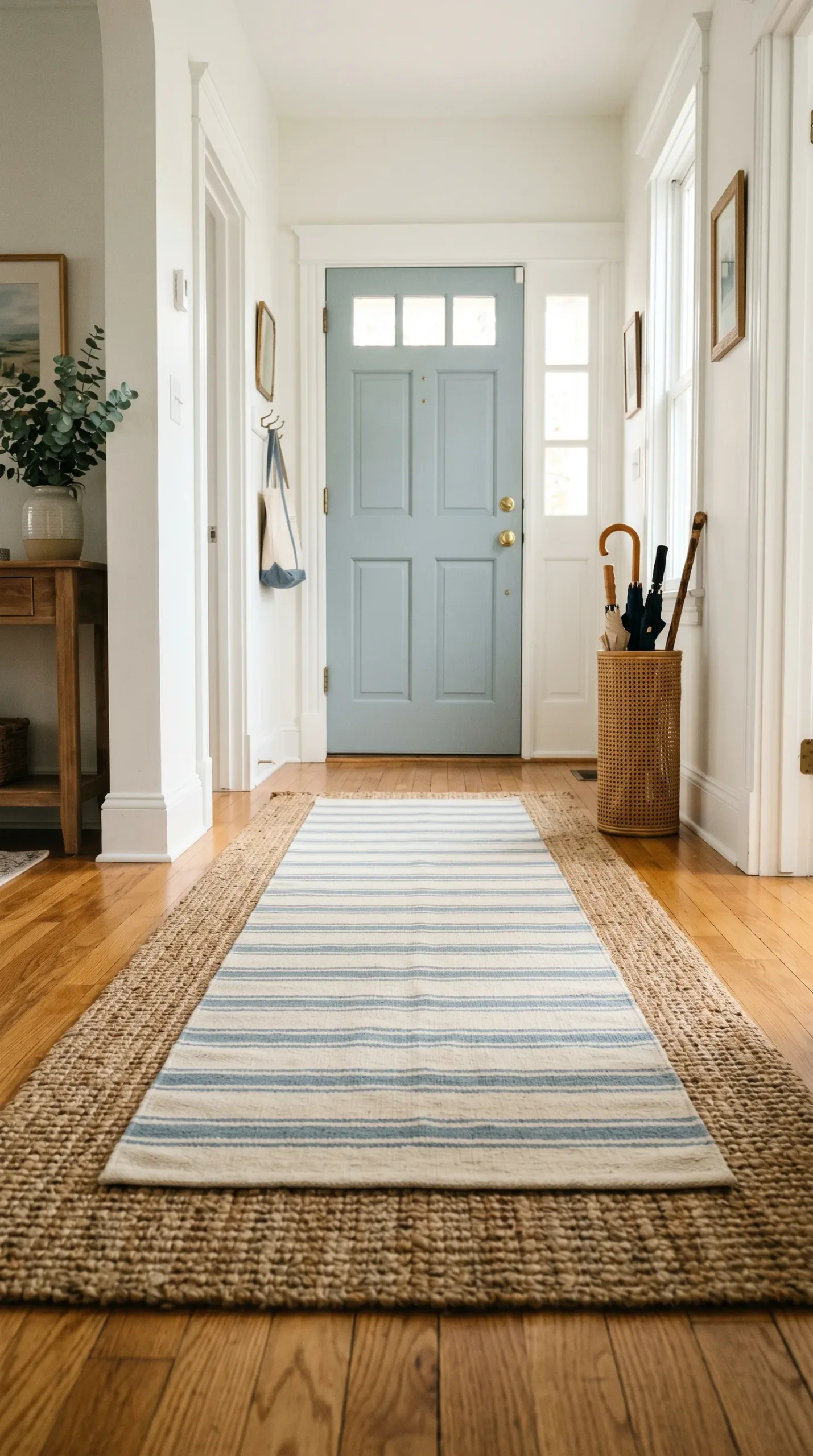
Picture this: you have just arrived from the beach, the kids have sandy feet, and your entryway rug is doing absolutely nothing to protect your floors. The layered rug approach solves both the practical and the aesthetic problems at once. Start with a flat-weave jute rug as the base layer, which is durable, natural, and easy to shake out. Layer a smaller, striped cotton rug in soft blue and cream on top for that coastal personality. The combination adds visual depth, defines the entry zone even in an open floor plan, and introduces texture without a single piece of furniture. In practice, keep the striped runner to about half the size of the base jute rug so the layering reads intentionally. This is also one of the most budget-friendly approaches in coastal entryway decorating, as jute rugs in particular are widely available and affordable.
4. Driftwood Art and the Wall That Tells a Story
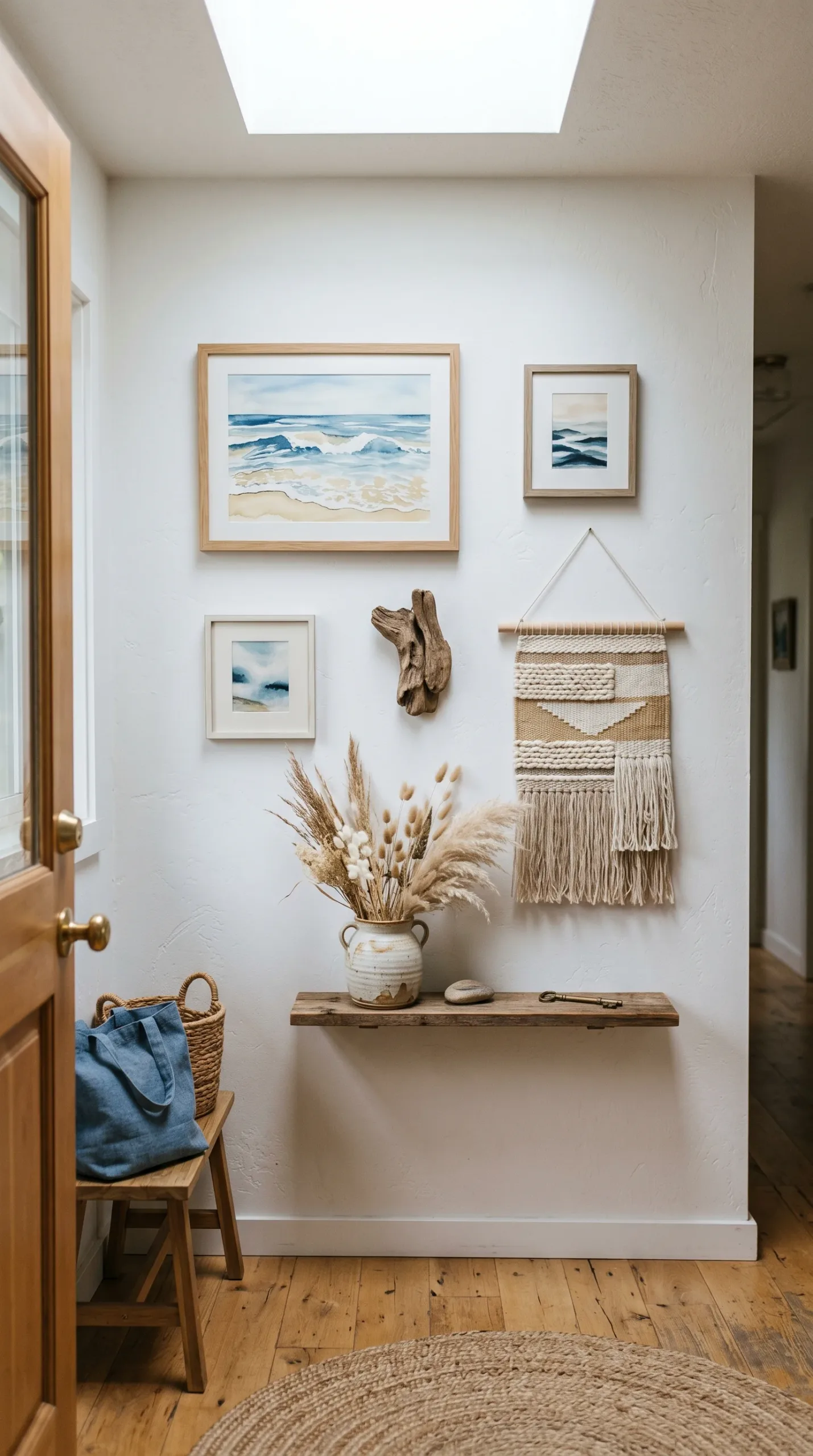
A blank wall in an entryway can feel awkward, like it is waiting for something important. One of the most impactful decisions in any coastal entryway I have styled is turning that wall into a soft gallery moment rather than filling it with a single statement piece. Try grouping three to five pieces of coastal-inspired art at varied heights: a framed watercolor of sea waves, a small driftwood sculpture, and a woven wall hanging in cream and sand tones. The result is layered, personal, and genuinely interesting. Driftwood art in particular brings real organic texture into the space and is a million miles away from the kitschy seashell-on-the-wall approach. For color balance, keep the art palette within a tight range of warm neutrals, dusty blues, and soft whites so the grouping reads as cohesive rather than scattered.
5. Wallpaper That Makes a Real Statement
Walking into a friend’s house and being greeted by a single wall of coastal wallpaper is one of those experiences that genuinely stops you in your tracks. In an entryway, an accent wall with a wave-print or abstract water-inspired wallpaper in soft aqua, ivory, and sand creates instant atmosphere without committing the entire home to a coastal theme. Modern coastal wallpaper has come a long way; look for designs that feel abstract and artistic rather than literally nautical. A woven seagrass accent chair and a narrow console beneath the wallpapered wall pulls everything together. One honest limitation here: wallpaper in high-traffic entryways needs to be wipeable and scrubbable, so check the product specifications carefully before purchasing.

6. The Woven Storage Basket System
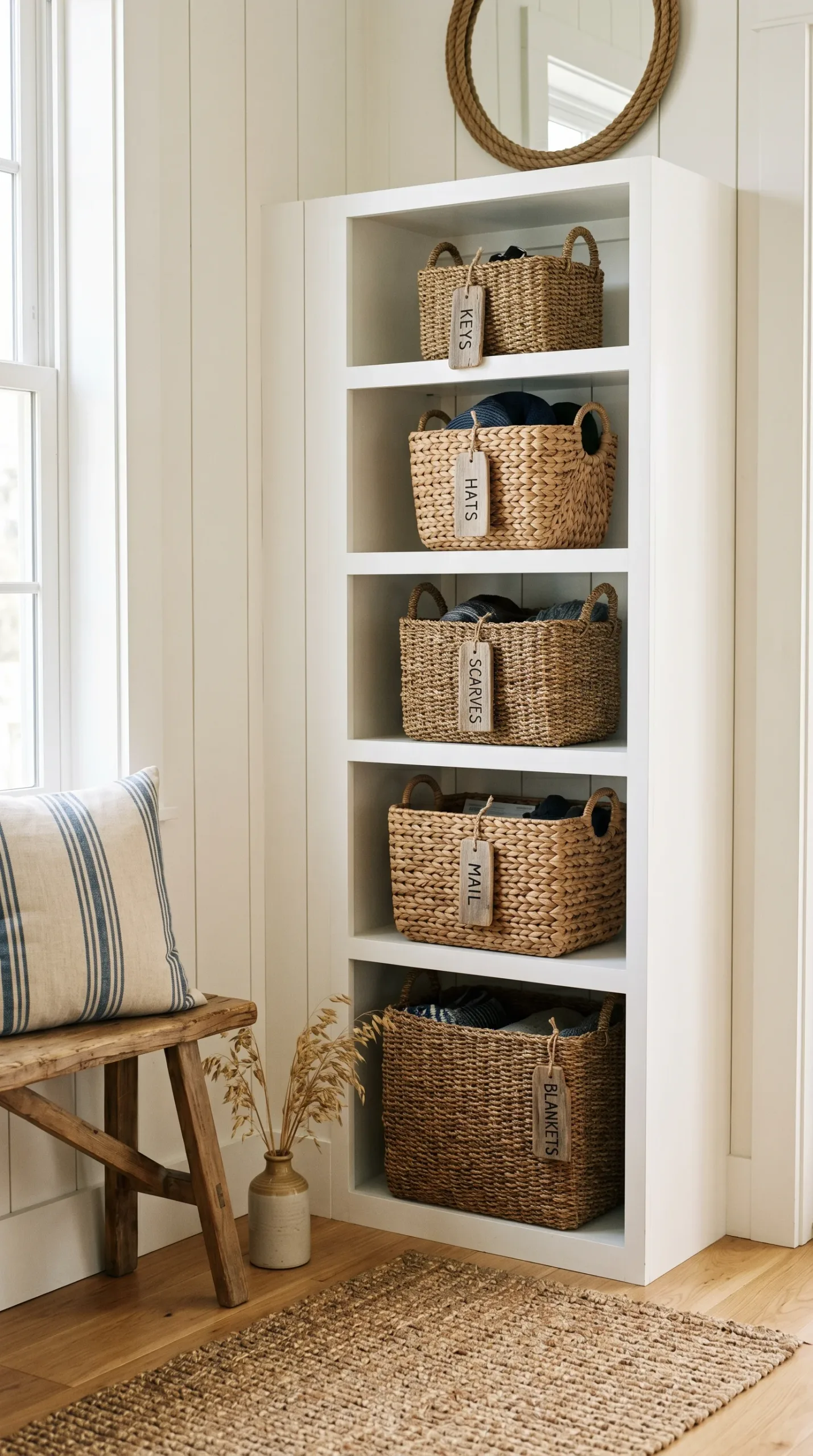
Anyone with kids or a busy household knows that the entryway is ground zero for clutter. The woven basket system is one of those solutions that actually works in real life and also looks genuinely beautiful. Install three to five open cubbies or use a freestanding shelving unit and fill each slot with a different-sized seagrass or water hyacinth basket. Each basket gets a job: one for shoes, one for scarves and hats, one for dog leashes and keys. Label them with small driftwood tags if you want to go the extra mile. The natural fiber textures are warm, earthy, and completely on-brand for a coastal look, and the layered sizes of the baskets add visual interest to what could otherwise be a utilitarian wall. This approach is also highly functional for small entryways where floor space is limited.
7. Pendant Lighting That Changes Everything
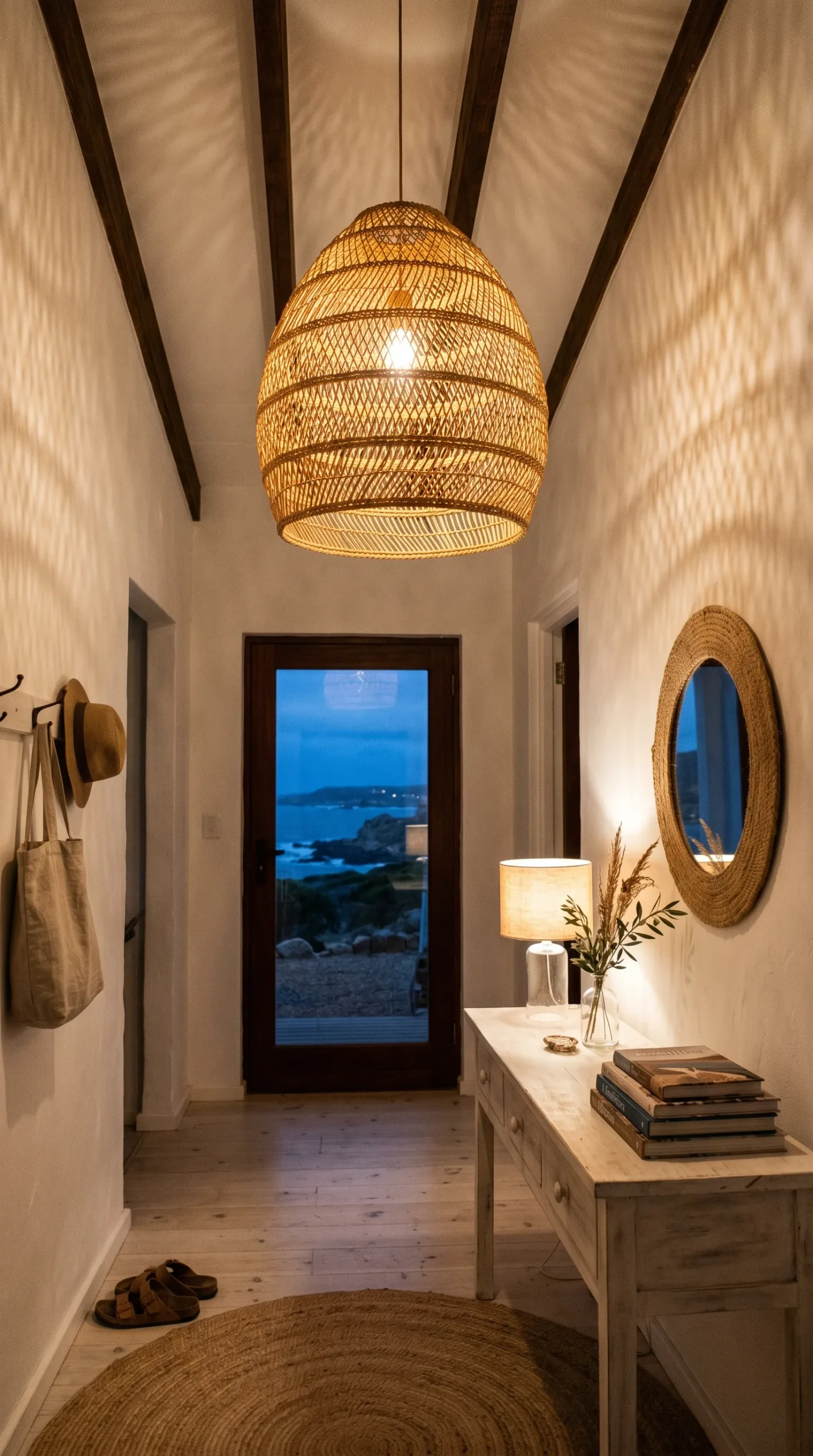
The difference between a coastal entryway that feels designed and one that feels like an afterthought often comes down to lighting. I say this from personal experience: swapping a builder-grade ceiling fixture for a rattan or seagrass pendant light is the single fastest upgrade you can make. The woven texture of the shade casts a warm, dappled light pattern on the walls and ceiling, creating an immediate sense of warmth and relaxed atmosphere. For entryways with low ceilings, a flush-mount rattan fixture works just as well. Pair the overhead light with a small table lamp on the console below, giving you two layers of light that make the space feel intentional and inviting at any time of day. Warm-toned bulbs, around 2700K, are key here because they bring a golden glow that feels far more welcoming than cool white light.
8. Coastal Color Palette on the Walls
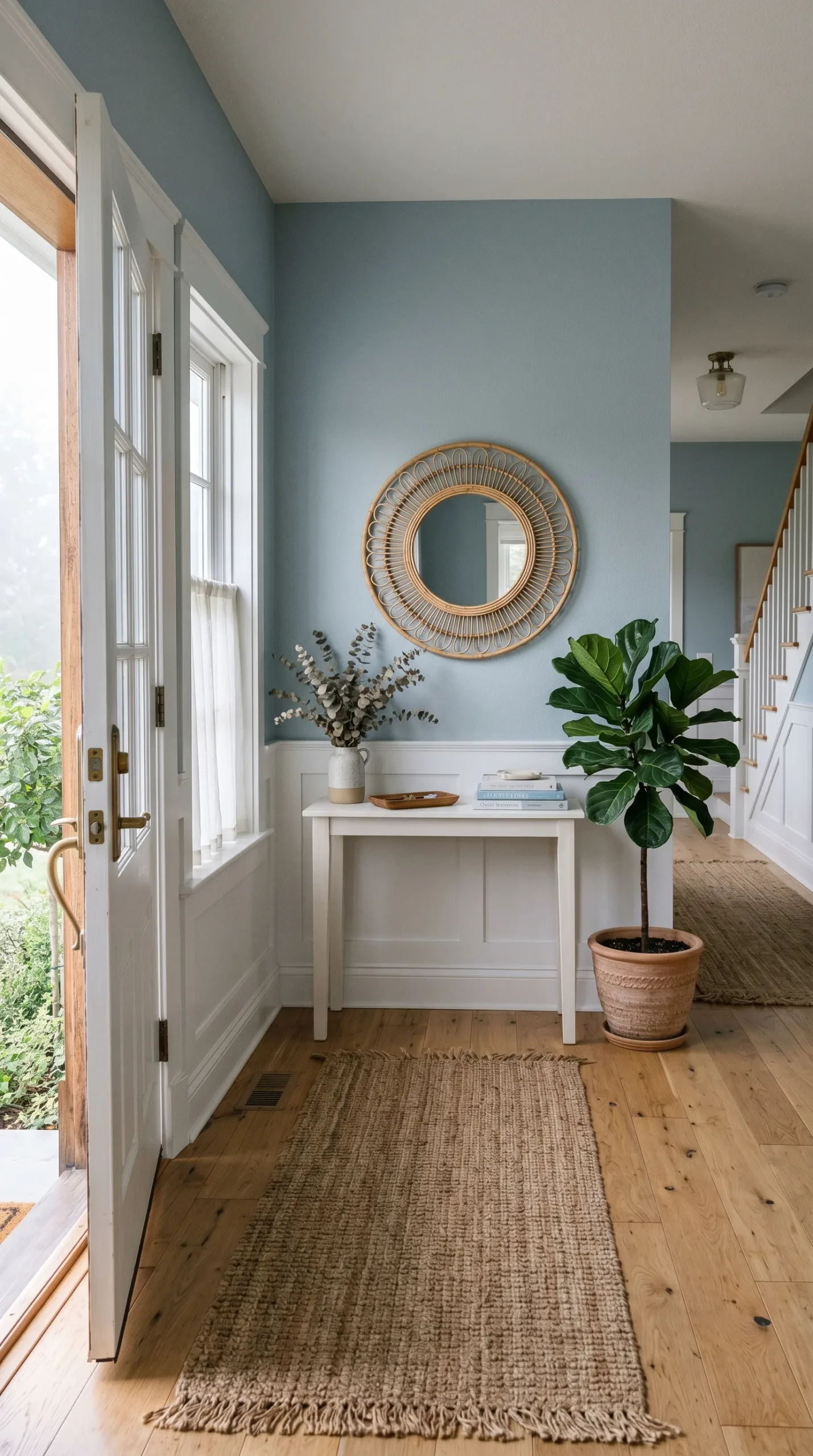
Most coastal entryways in design publications lean toward bright white walls, and while that works beautifully, it is not the only option. A soft haze of blue-gray, like Benjamin Moore’s Harbor Gray or Sherwin-Williams’ Watery, can immediately signal that this is a home that embraces the coast without screaming beach house. These colors work especially well in north-facing entryways where natural light is limited, as the cool undertone actually reads as fresh and airy rather than cold. Pair the wall color with white trim and natural wood flooring for a classic combination. If you want something warmer, a sandy greige like Clare’s Salt Air gives a softer take on the coastal palette that pairs beautifully with rattan and jute accessories. One honest note: test your paint samples at different times of day because coastal colors are particularly sensitive to changing light conditions.
9. A Coastal Bench with Hidden Storage
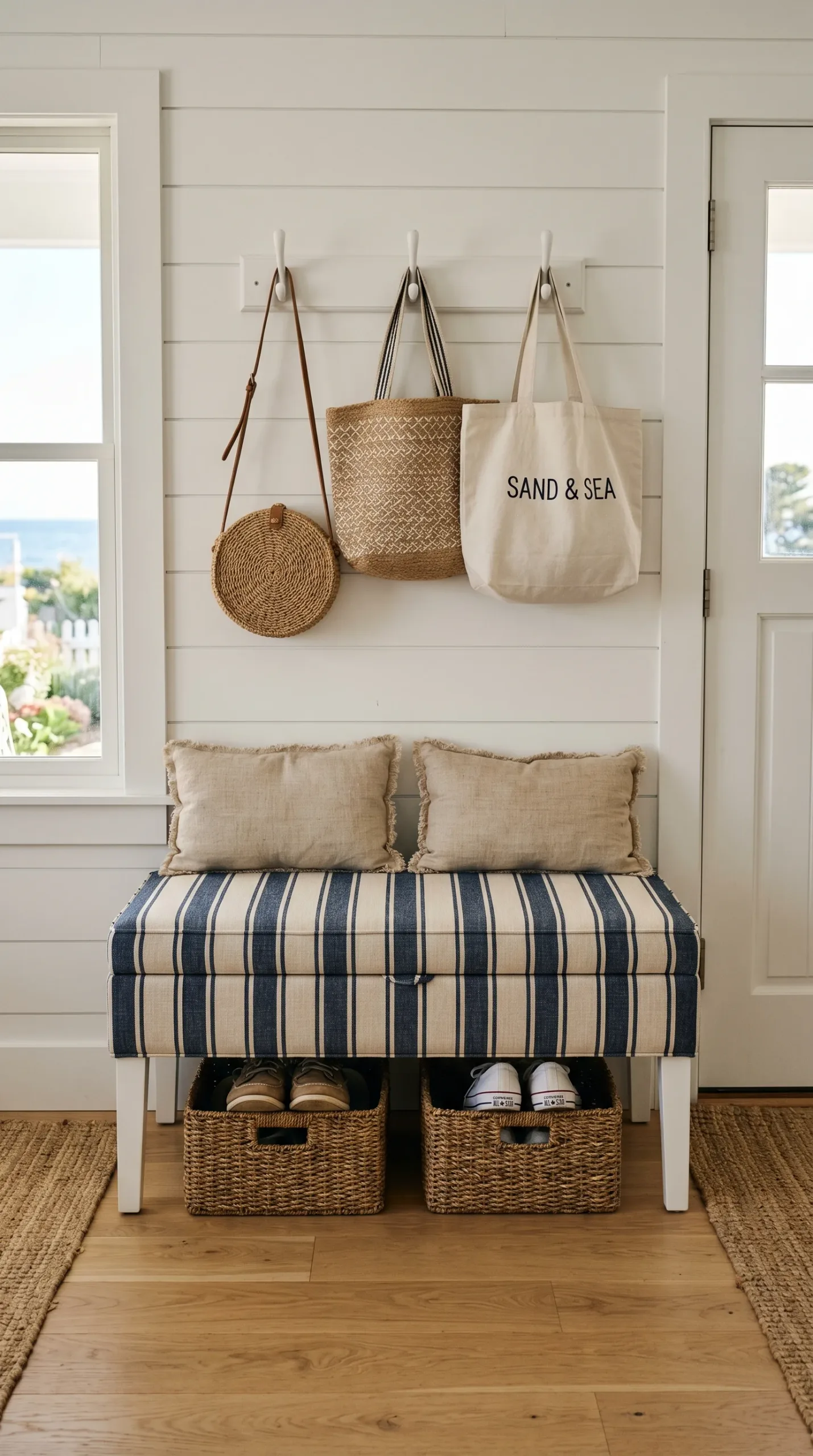
Coming through the front door with shoes to kick off and nowhere to sit is a daily frustration in many homes. A storage bench upholstered in a durable, coastal-inspired fabric, think a subtle stripe in navy and cream or a textured weave in sandy beige, solves the seating problem while adding real decorative value. Look for a bench with a lift-top storage compartment underneath, which can hold everything from extra throws to seasonal accessories, keeping the entryway looking clean. In terms of scale, a 48-inch bench is ideal for most standard entryways, wide enough to be useful but not so large that it blocks movement through the space. Style the top with two linen cushions and leave one end clear for sitting. Add a pair of matching seagrass baskets beneath for shoes.
10. Fresh Botanicals and Coastal Greenery
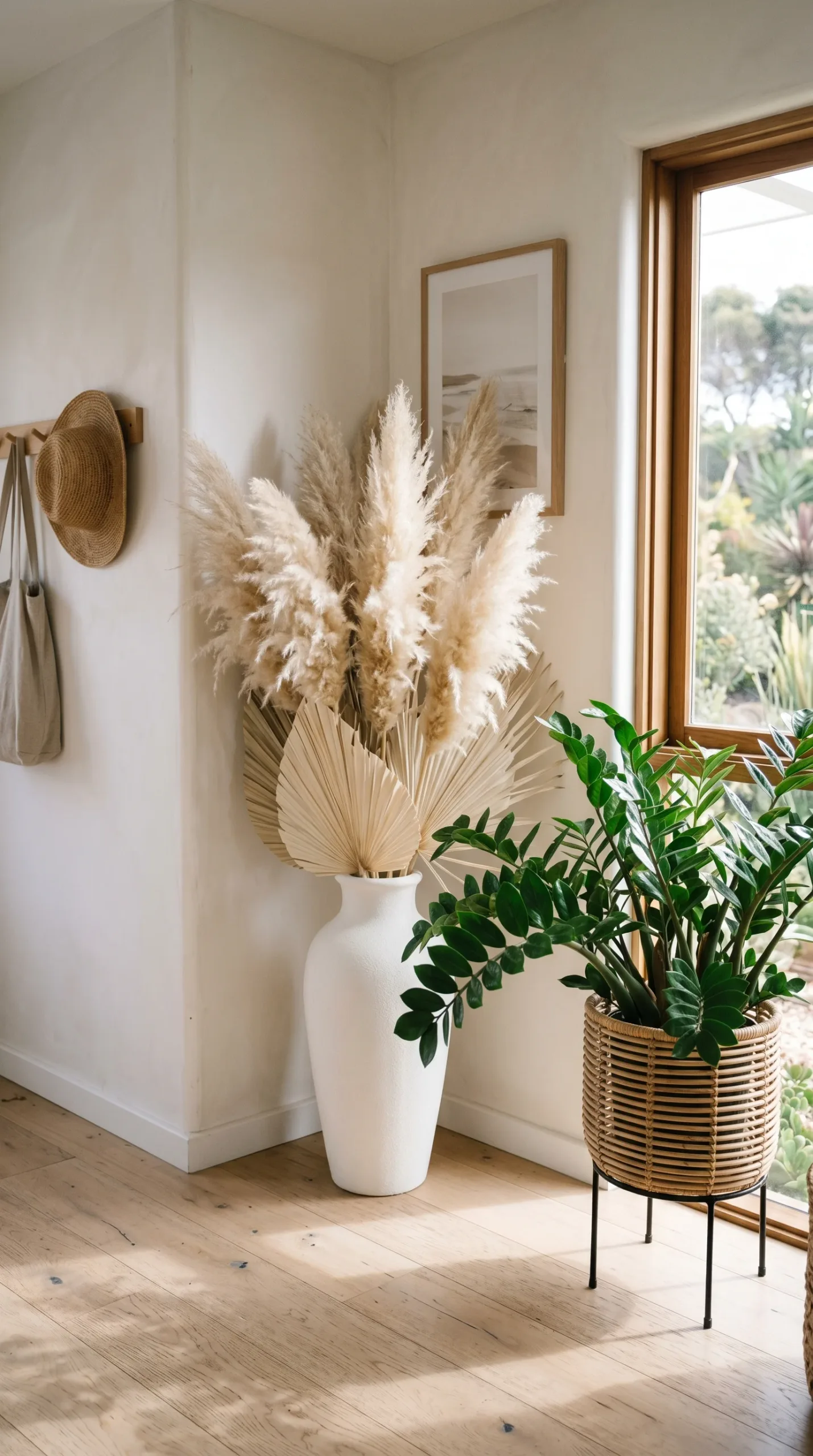
There is a version of coastal design that includes the dried starfish and the artificial succulents, and then there is the version that actually looks real and alive. Fresh or realistic-looking botanicals are what separate the two. A tall, slender vase in matte white or sea-glass green filled with pampas grass, dried palm fronds, or tall bunches of dried natural grasses instantly brings the coastal outdoors inside without a single seashell in sight. This kind of arrangement reads organic and modern at the same time, fitting both traditional beach house aesthetics and the newer coastal grandmother and coastal grandmother-adjacent styles that are popular right now. Place the vase on the floor beside the console table if it is tall, or on the console itself if the arrangement is smaller. A rounded rattan pot holding a low, leafy houseplant like a ZZ plant works beautifully as a companion piece.
11. Nautical Without the Cliches
The word nautical makes a lot of people nervous because it brings up images of anchor-covered wallpaper and captain’s wheel clocks. But there is a genuinely sophisticated version of nautical coastal design that is completely different. Think a navy blue lacquered console table paired with a polished brass ship’s lantern-style pendant and a single piece of abstract maritime art in muted grays and whites. The palette is deeply nautical but the execution is clean and modern. A pair of navy blue velvet or linen pillows on a storage bench ties the blue into the textiles without overplaying it. This is a look that has been featured in coastal design publications for good reason: it bridges traditional coastal charm with something that feels genuinely considered and current.
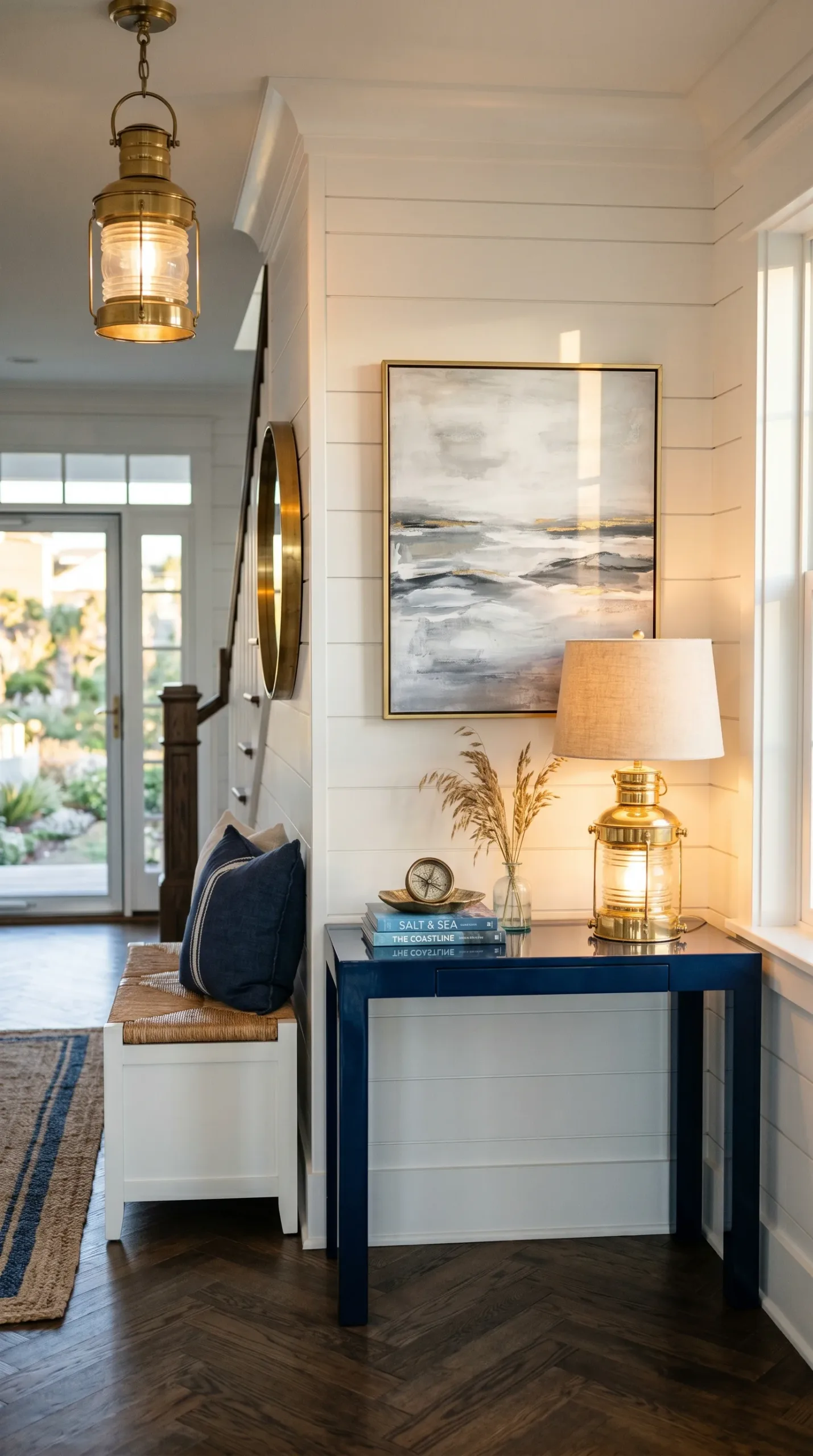
12. The Organic Modern Coastal Entry
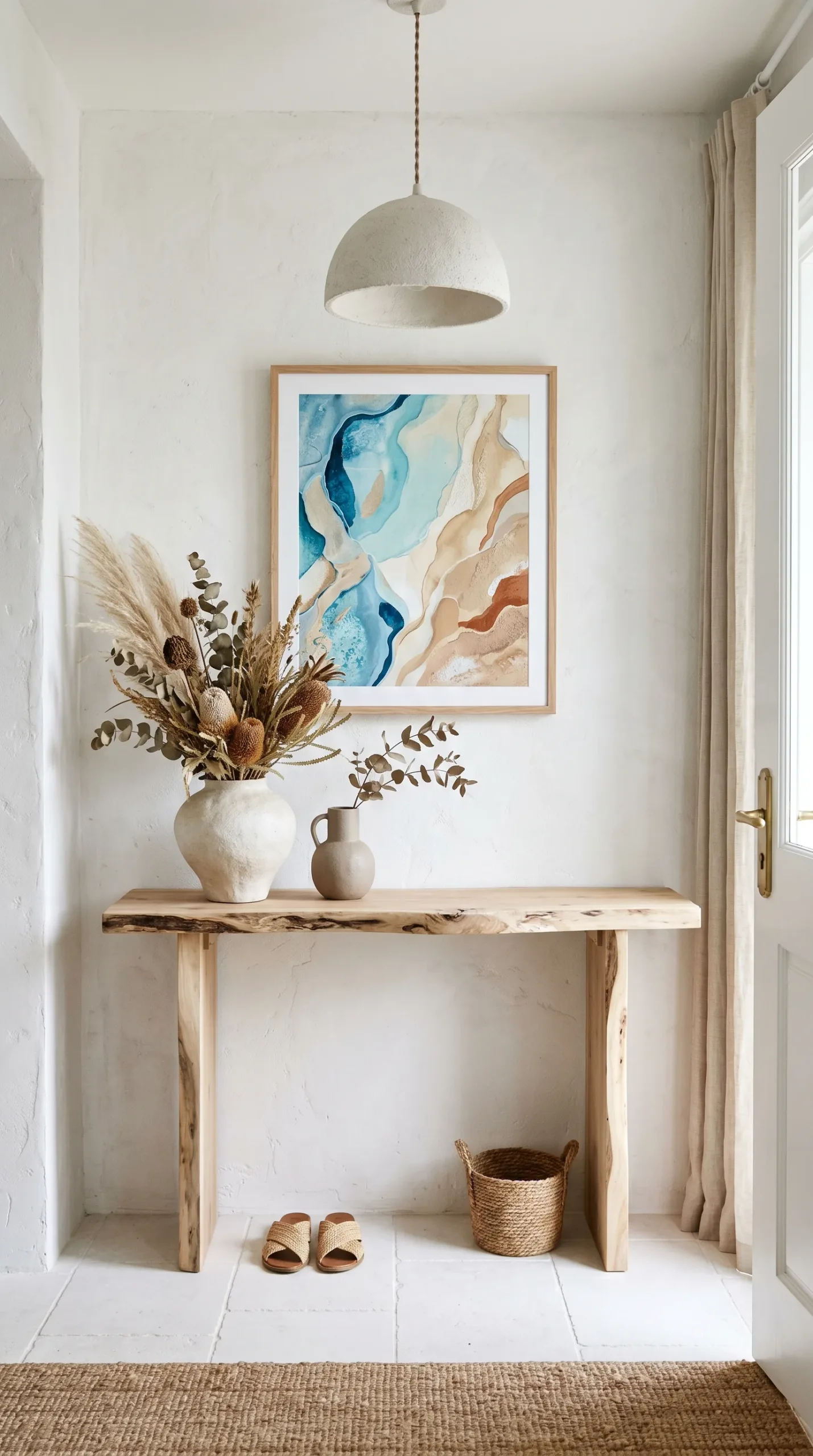
One of the most exciting directions in coastal interior design right now is organic modernism, which is the layering of natural, irregular materials with clean-lined furniture to create something that feels both fresh and grounded. In an entryway, this translates to a console table in live-edge oak or a rough-hewn reclaimed wood, paired with sculptural ceramic vessels in earthy whites and taupes, a plaster-finish pendant light overhead, and an abstract artwork in ocean-inspired blues and sand tones. The textures here are doing all the heavy lifting: rough wood against smooth ceramic against soft linen creates a layered, interesting space that does not look themed at all. This approach is particularly good for homeowners who want coastal vibes without anything that reads as beachy in a literal sense.
13. Sea Glass and Color Accents
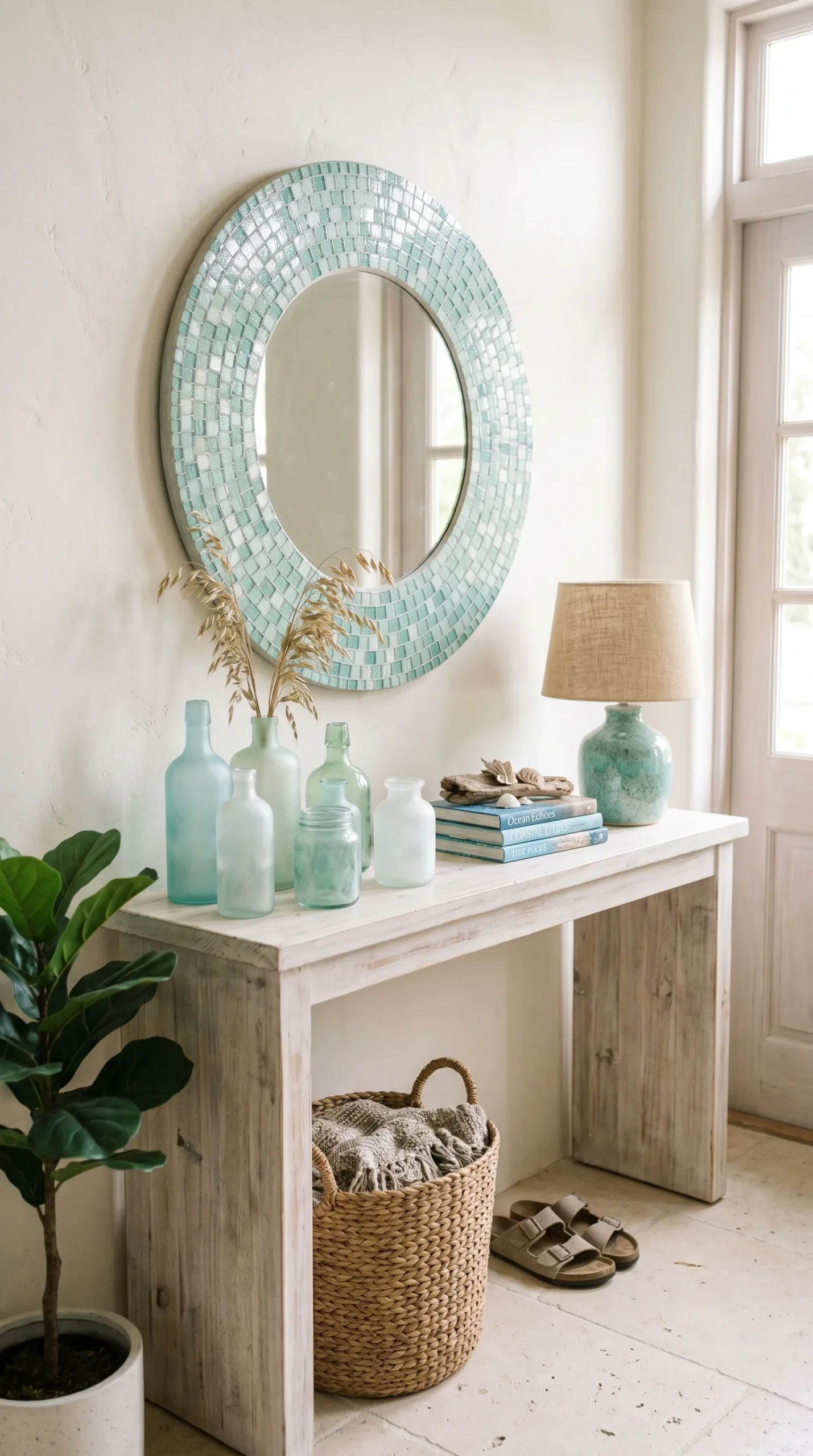
Sea glass is one of nature’s prettiest color palettes: frosted aqua, soft green, pale lavender, and milky white. Using this palette as an accent layer within a neutral entryway is a subtle, sophisticated way to bring coastal personality into the space. Start with warm white or greige walls and natural wood furniture, then introduce sea glass colors through accessories: a cluster of colored glass vessels on the console, a mosaic mirror in pale aqua and green, a ceramic table lamp with a sea glass glaze finish. The key is keeping these accents restrained because the beauty of the sea glass palette is in its softness, not its intensity. Two or three pieces in complementary sea glass tones are more effective than a shelf full of them.
14. Shiplap and Coastal Texture on the Walls
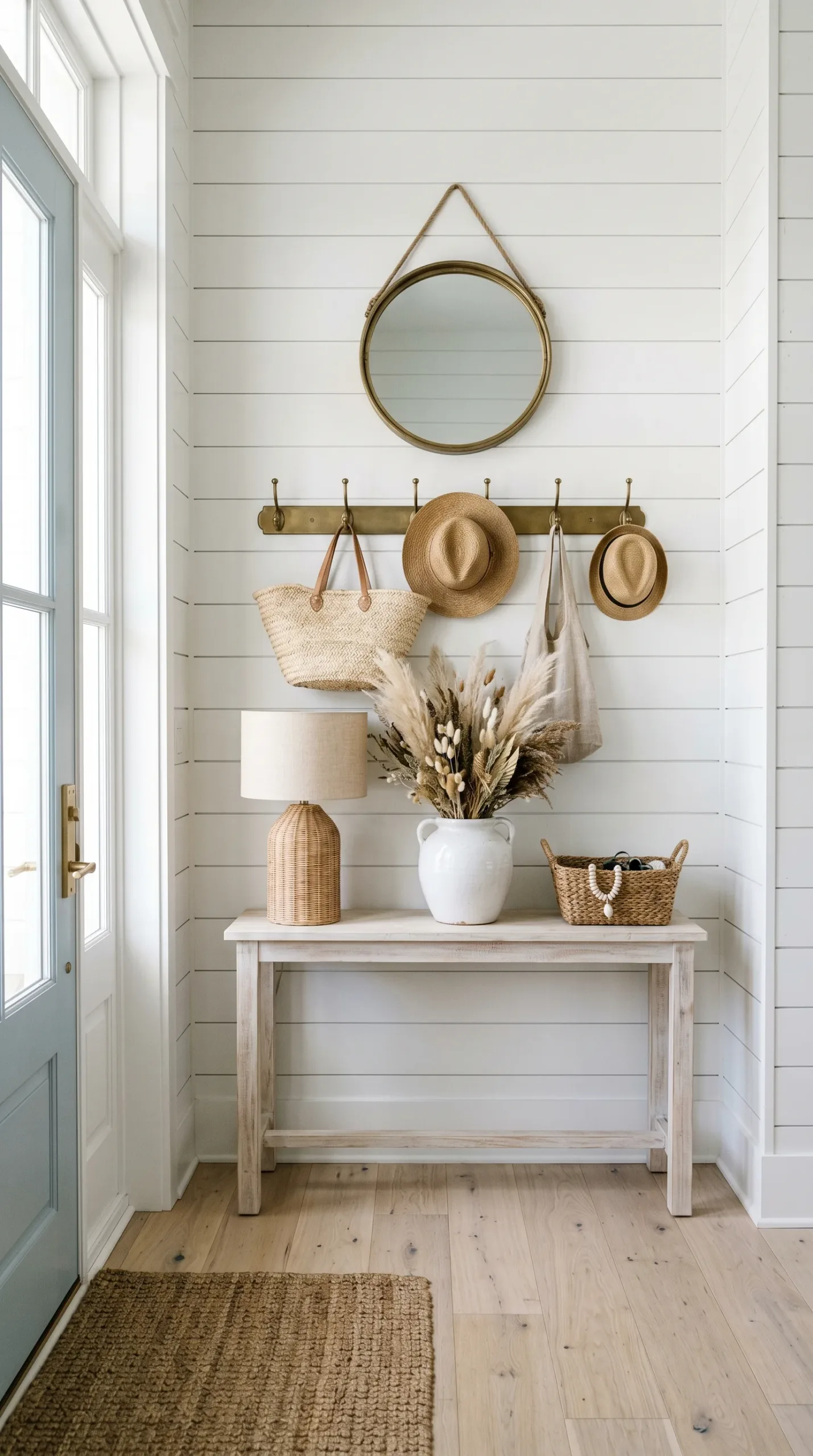
Shiplap wall paneling in the entryway is one of those design moves that adds enormous character to a space without requiring a full renovation. Painted in crisp white or a very soft off-white, shiplap immediately reads as coastal and brings a beautiful horizontal line rhythm to the walls. In a tall entryway, running shiplap from floor to ceiling creates a dramatic backdrop. In a smaller hallway, installing it on a single accent wall behind the console table creates just the right amount of visual interest. Pair with brass or oil-rubbed bronze hardware on doors and hooks for a finish that feels both coastal and slightly elevated. Add a cluster of woven baskets and a rattan pendant for the full effect.
15. A Coastal Scent and Sensory Welcome
Coastal design is about more than what you see. Some of the most memorable entryways I have ever walked into were remarkable partly because of how they smelled, a clean, faintly oceanic scent that made the whole atmosphere feel complete. A reed diffuser in a sea glass or stone vessel sitting on the console table, filled with a scent like sea salt, driftwood, or white tea, completes the sensory experience of your coastal entryway in a way that no piece of furniture can. This is not just a nice touch; it is something that guests actually notice and comment on, and it is one of the most affordable additions in this entire list. Pair the diffuser with a small, sculptural tray and perhaps a washed coral stone or two for a naturally beautiful display that requires zero maintenance.

Conclusion
A coastal entryway can be as simple or as layered as you want it to be. The most important thing is that it feels right for your home and your life, not like a stage set from a beach house magazine. Start with one or two of these ideas, probably the console table and the pendant light since those two changes alone make the biggest difference, and build from there as your budget and inspiration allow. Real coastal style is never fussy or overdone. It is calm, natural, warm, and above all, welcoming. When your entryway gets that right, every single day starts and ends on a better note.
The details are what elevate an ordinary entryway into something truly special, not expensive overhauls but thoughtful choices layered together over time. A beautiful mirror, a woven rug, the right lighting, a scent in the air. These are the things that make a home feel like a home. Take what resonates from this list, skip what does not, and give yourself permission to build your coastal entryway slowly. The best-decorated rooms in the world were not done in a weekend, and your entryway is no different.
FAQ
Q: What colors work best for a coastal entryway?
Soft blues, sandy whites, warm greiges, and muted aquas all work beautifully. The best coastal color palettes avoid anything too saturated or bright and instead lean toward the soft, washed tones you find naturally at the beach.
Q: How do I make a small entryway feel coastal without cluttering it?
Focus on one strong statement piece, usually a rattan mirror or a woven pendant light, and keep everything else minimal. A layered rug and one interesting piece of art are all you need in a tight space.
Q: Can I do coastal decor without using obvious beach items like shells and anchors?
Absolutely, and in fact the most sophisticated coastal entryways avoid those items entirely. Focus on natural textures like rattan, seagrass, and jute, a soft coastal color palette, and organic shapes rather than literal nautical motifs.
Q: What kind of furniture works best in a coastal entryway?
Console tables in whitewashed wood, rattan, or light oak are the most versatile. A storage bench in a durable, stripe-patterned fabric is also a great addition if you have the floor space.
Q: How do I keep a coastal entryway looking organized?
Woven baskets are your best friend here. Assign each basket a specific purpose and keep the console surface clear of everything except decorative items. A designated tray for keys and mail is also essential.
Q: Is coastal decor appropriate year-round or just for summer?
Coastal design, especially in its more modern, organic interpretation, is absolutely a year-round style. Swap in warmer textiles like wool throw baskets and richer greenery in the colder months to keep the look feeling seasonal without abandoning the coastal theme.