
Coastal Furniture Looks That Actually Feel Like Home
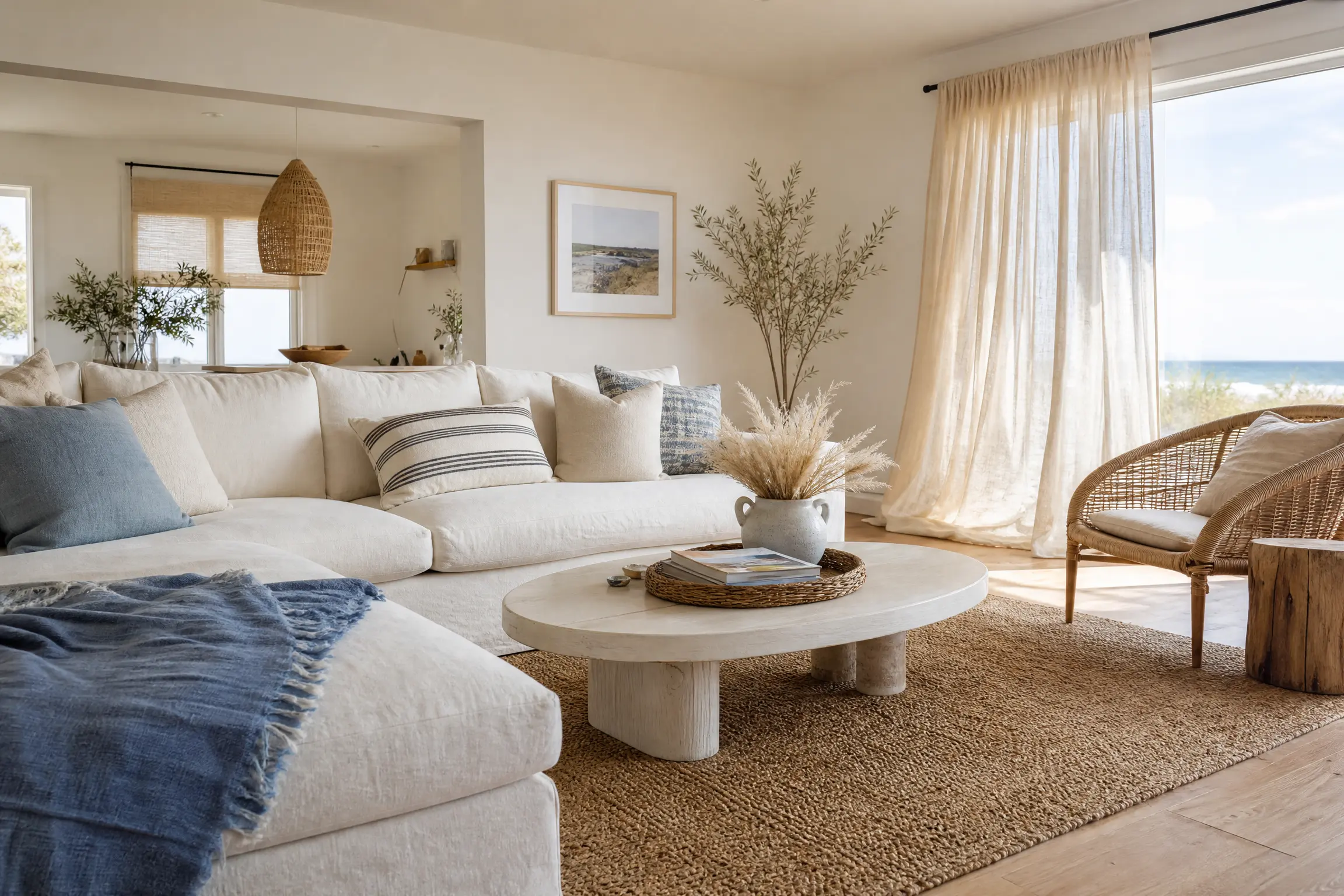
There is something about coastal furniture that feels immediately right, even when you are nowhere near the water. It is not just the color palette or the rattan accents. It is the way the whole room seems to exhale. Furniture choices in a coastal interior are doing a lot of quiet work: they are keeping things light, grounding the space with natural materials, and letting air and light move through without obstruction. When it comes together well, a coastal room never looks like it tried too hard, and that is the whole point.
This guide covers 25 coastal furniture ideas across every room in the house. Whether you are starting from scratch or just looking to shift the feeling of a space that already exists, these ideas are specific, practical, and grounded in how rooms actually function. Some lean into the classic beach house look with whitewashed wood and linen. Others take a more modern coastal direction with curved silhouettes, warm sandy neutrals, and just a hint of the sea. All of them are worth stealing.
Living Room Furniture Ideas
1. The Deep-Seated Linen Sectional
If there is one piece of furniture that defines the modern coastal living room, it is a generously proportioned linen sectional in a soft sand or warm white tone. In practice, this look works best when the sectional has low-profile arms and loose cushions, which gives it that lived-in, relaxed quality that tight-back upholstery never quite achieves. Pair it with a jute area rug in a natural weave to anchor the seating area and add textural contrast underfoot. Keep throw pillows simple: a mix of solid cream, dusty blue, and a subtle stripe in both tones reads as coastal without going overboard. Linen is the fabric of choice here because it breathes well, drapes beautifully, and develops a soft, slightly rumpled character over time that actually improves the look. Honest note: linen does wrinkle and is not the most forgiving with spills, so slipcover versions are worth considering if you have kids or pets.
Designer Note: Look for a sectional with natural wood legs in a light oak or whitewash finish. Even small leg details reinforce the coastal material story without adding clutter.
2. A Rattan or Cane Accent Chair
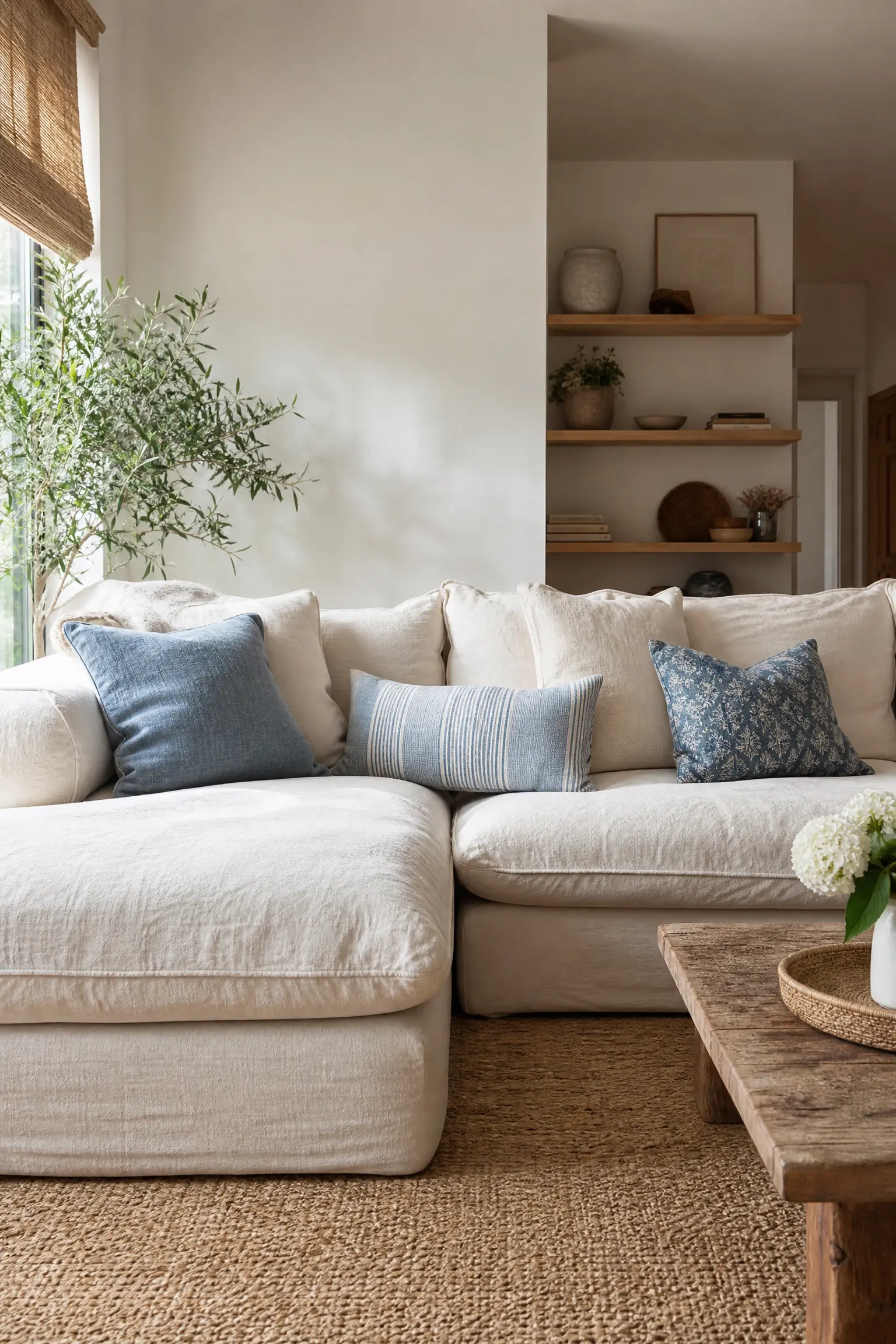
A single rattan or cane accent chair is one of the most effective ways to bring natural texture into a coastal living room without committing to a full furniture overhaul. The open weave of rattan allows light to pass through it, which keeps the piece from adding visual weight to the room, and that transparency is exactly what you want in a space that is meant to feel airy. A chair with a curved back and a cushioned seat in natural cotton or linen is the most versatile version, working equally well in a bohemian coastal setup or a cleaner, more pared-back Scandinavian coastal direction. Position it near a window if possible so the natural light catches the warm amber tones in the weave. Budget note: good quality rattan chairs vary widely in price, but mid-range options from brands like IKEA or World Market perform surprisingly well and hold up better than you might expect.
Designer Note: If you want more visual impact, choose a swivel rattan chair. The added function is practical, and the round base has an organic, sculptural quality that reads as intentional rather than casual.
3. A Whitewashed Wood Coffee Table
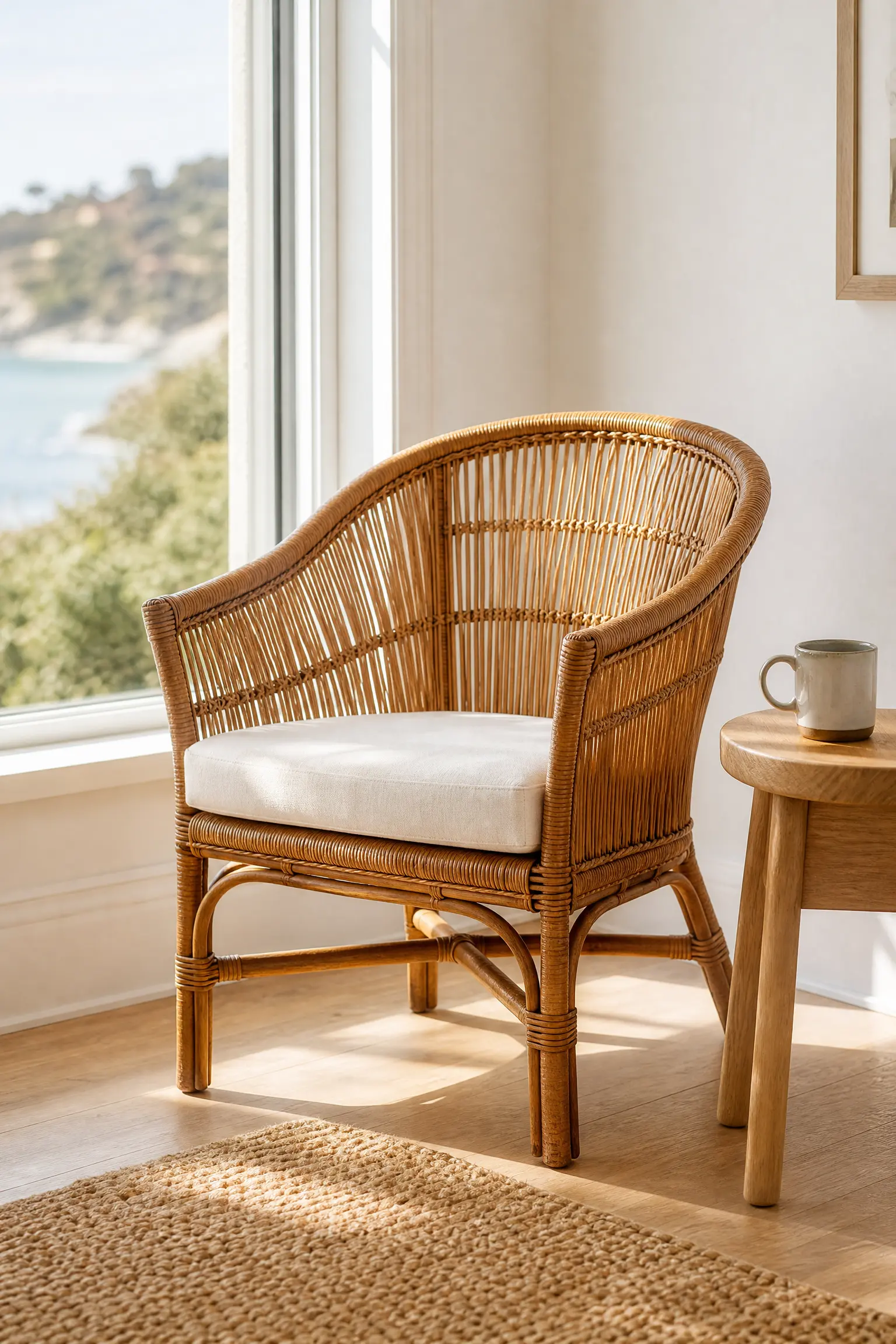
A whitewashed or limed-oak coffee table is a cornerstone of the coastal aesthetic, and the reason it works so well is a matter of visual weight. Coastal rooms depend on a sense of lightness, and a dark, heavy coffee table fights against that at the center of the seating area. A whitewashed finish keeps the wood grain visible, which means you get the warmth and character of real wood without the heaviness of a darker stain. Rectangular and oval shapes both work well; oval tables are trending right now in coastal interiors because the curved silhouette feels softer and more in line with the organic shapes found in nature. Style the tabletop with a woven tray, a stack of coffee table books with neutral spines, and a single piece of driftwood or a low vase with dried pampas grass for a look that is effortless but clearly considered. This is a mid-range investment piece: expect to spend $300 to $700 for a solid wood version that will last.
Designer Note: Avoid coffee tables with thick, chunky legs in a coastal room. Tapered or hairpin legs maintain that sense of openness and keep the floor plane visible, which makes the whole room feel larger.
4. Built-In Bookcase with Slatted or Open Shelving
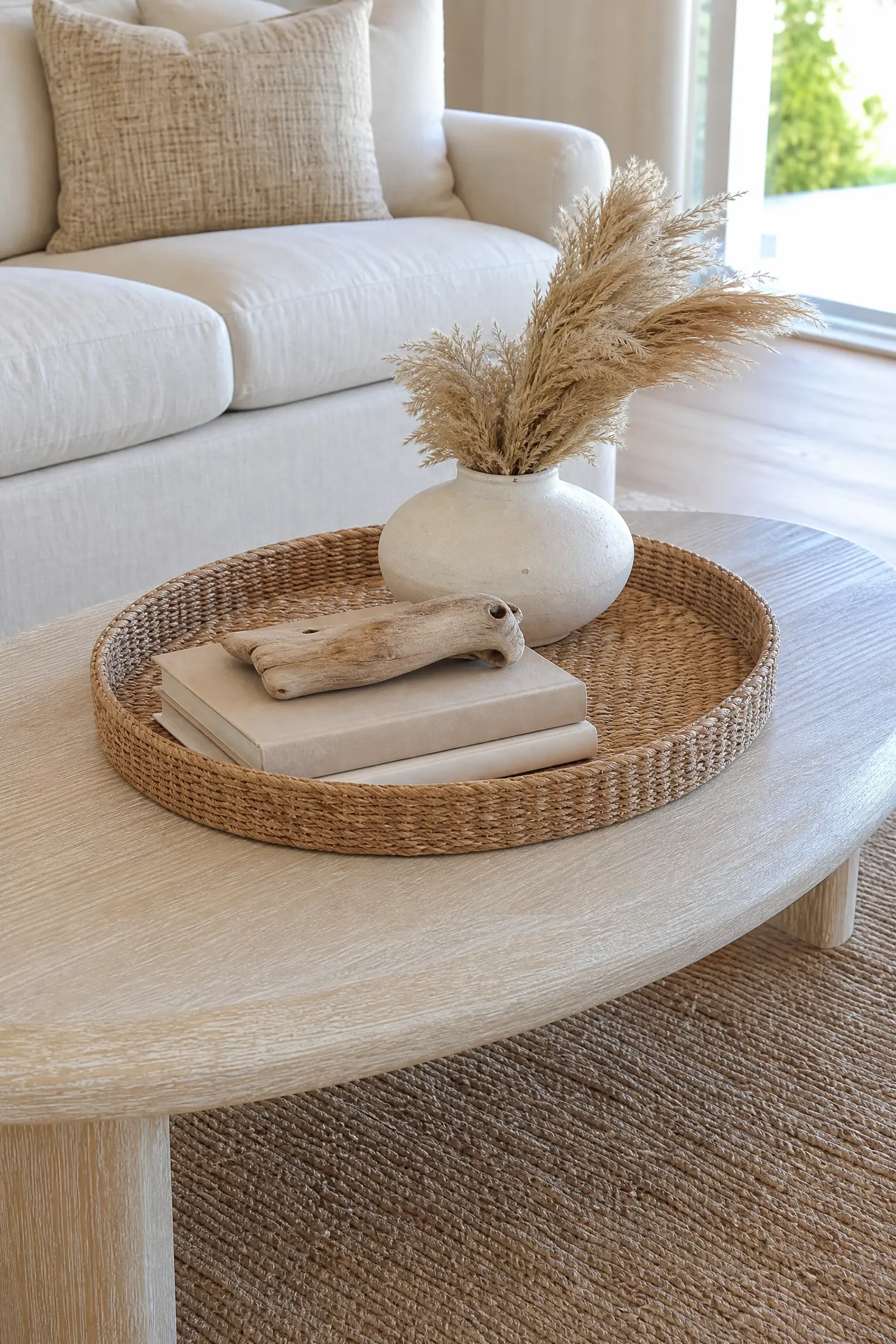
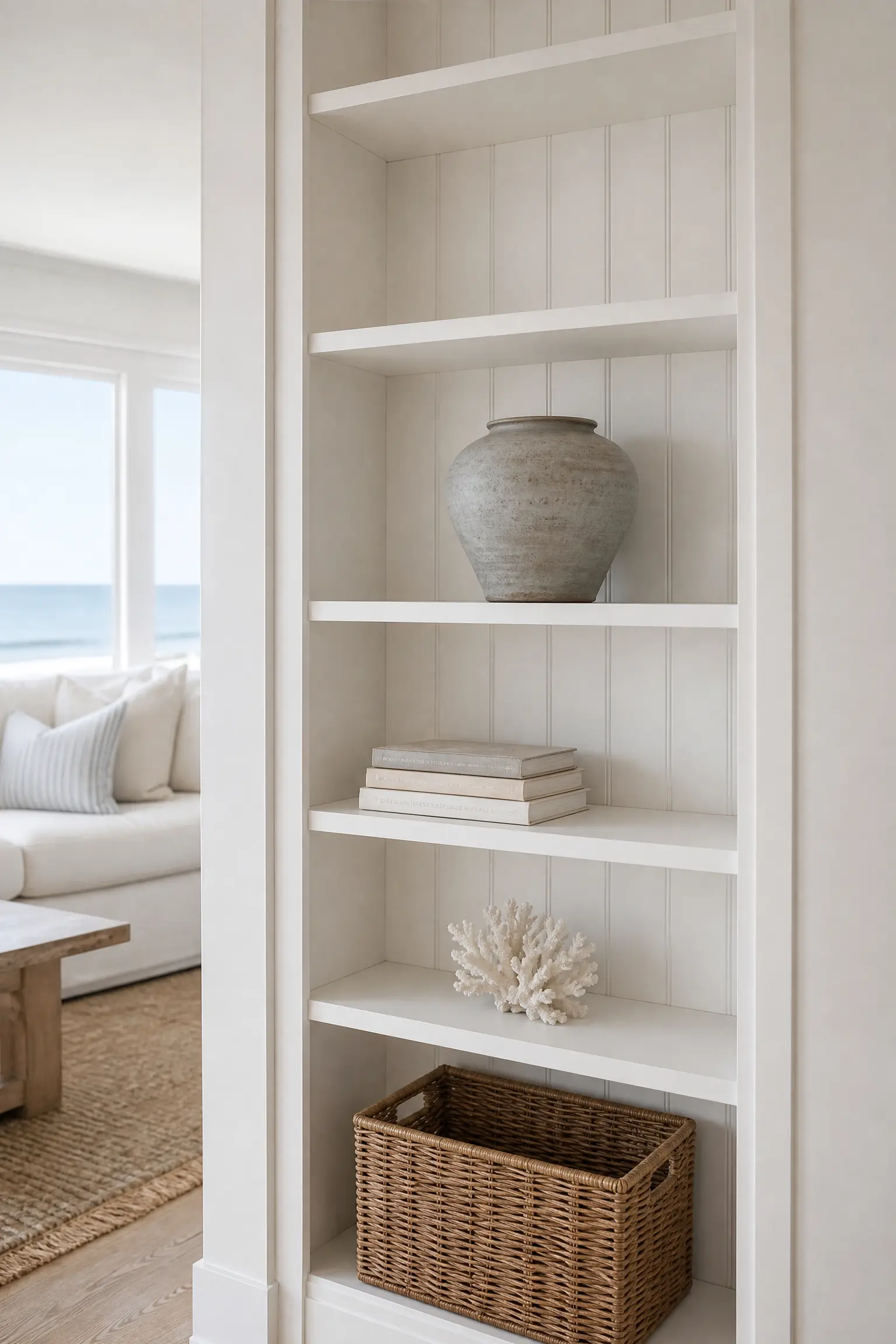
Open shelving or a slatted bookcase in white or natural wood creates a focal point in a coastal living room while keeping things from feeling too heavy or enclosed. The key is restraint in how you style it. Coastal shelving works best with a mix of functional items and a few considered decorative pieces: a large ceramic vessel, a small piece of coral or weathered wood, a stack of books turned spine-in for a cleaner look, and maybe a woven basket on a lower shelf for hidden storage. The negative space on the shelves matters as much as what you put on them; leaving some shelves partially empty or completely empty is what gives the arrangement that relaxed, unhurried feeling. Built-in versions are an investment but add significant value and give the room a more polished, considered look than freestanding units. If built-ins are not in the budget, a simple white freestanding unit from IKEA styled thoughtfully reads well.
Designer Note: Use the bottom shelves for wicker or rattan storage baskets. They handle the practical storage need while reinforcing the natural material palette of the room.
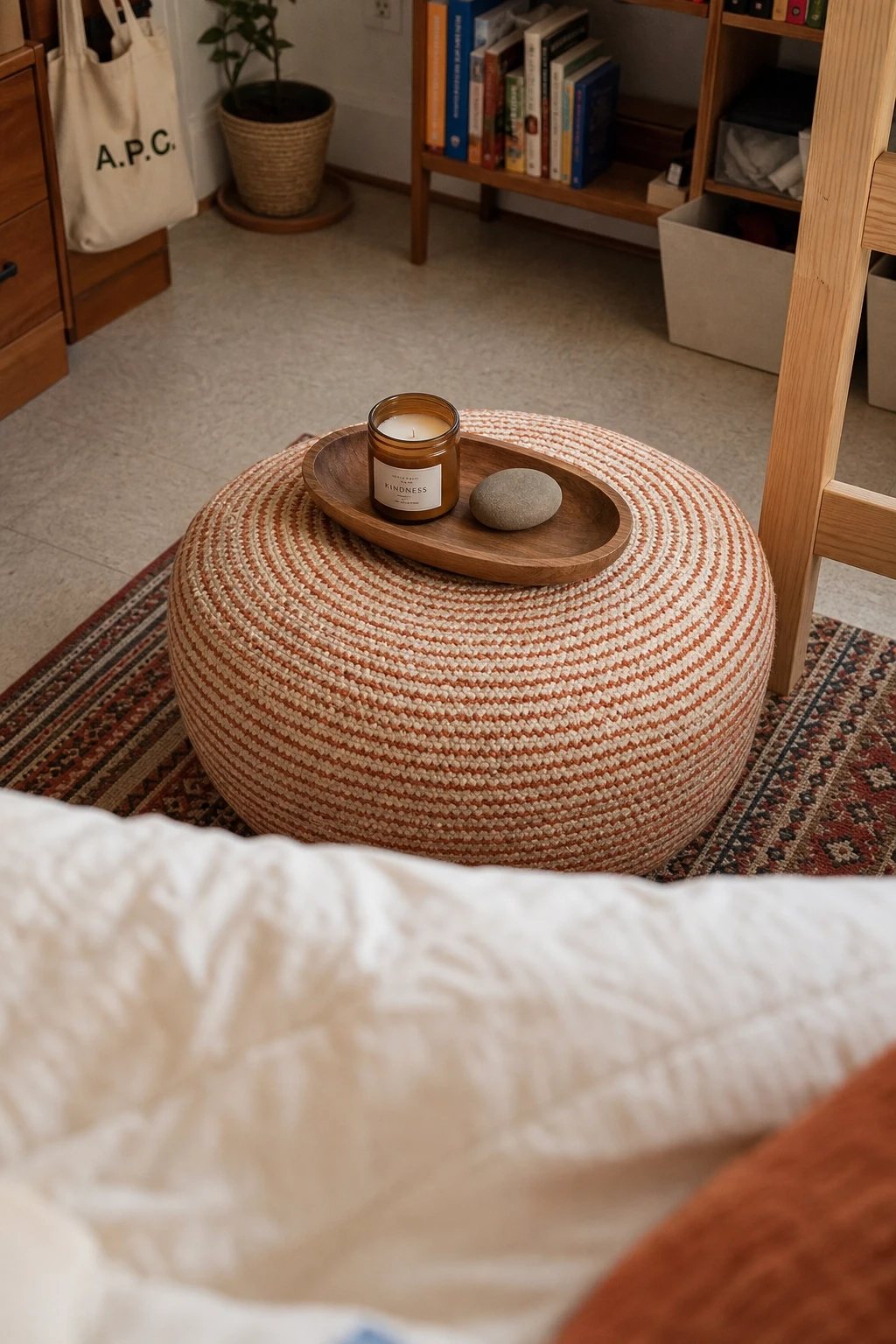
5. A Woven Ottoman as a Coffee Table Alternative
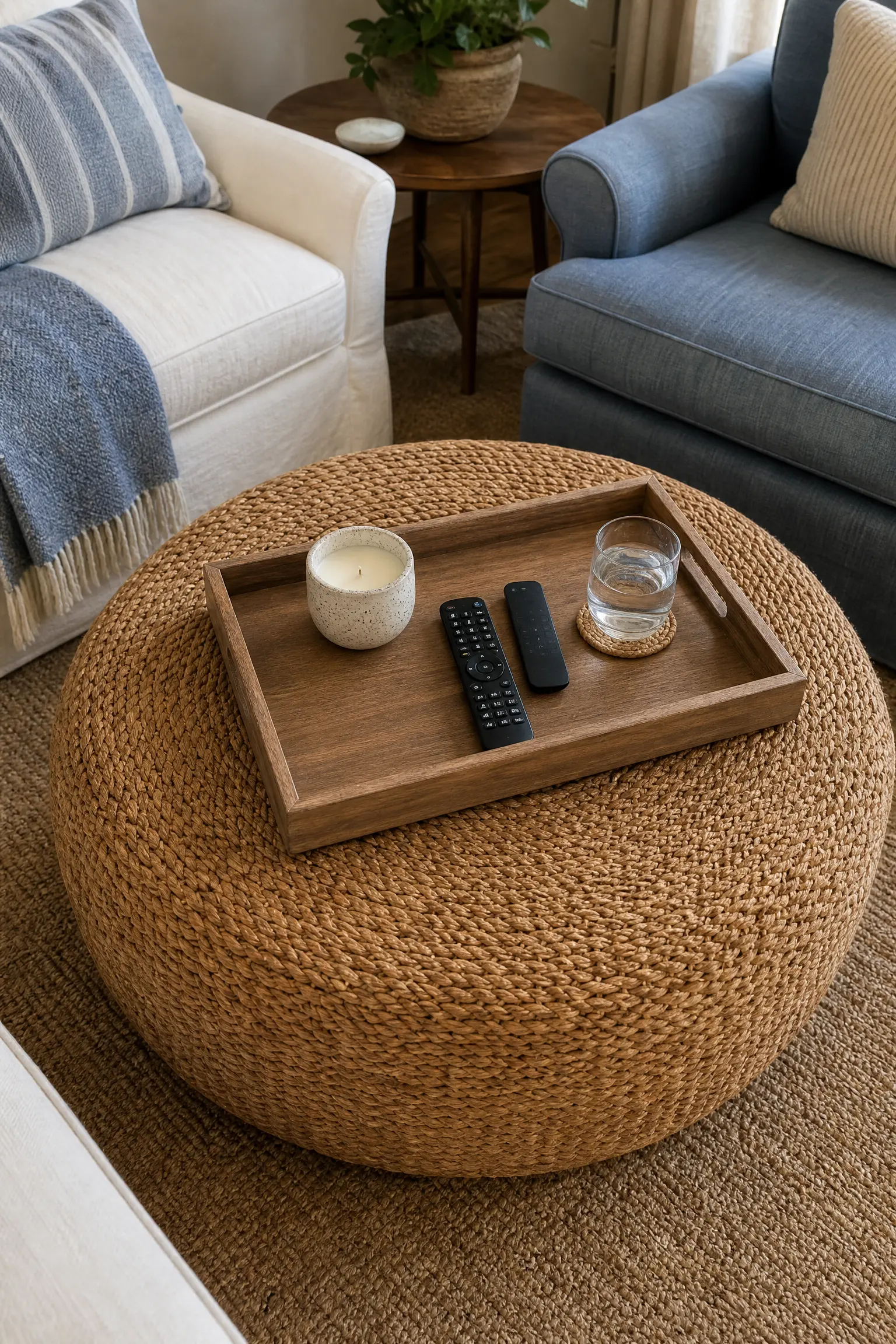
Swapping a traditional coffee table for a large woven seagrass or jute ottoman is a move that pays off in multiple ways in a coastal living room. It adds texture at the center of the room, which is exactly where you want it, and it doubles as extra seating when you have guests over. Place a large wooden tray on top to create a stable surface for drinks and remotes, and the ottoman functions just as a coffee table would but with far more warmth and softness. Round shapes work especially well in coastal rooms because they echo the organic, rounded forms you see throughout the style. This is also one of the more budget-friendly furniture ideas on this list; a quality woven ottoman can be found in the $100 to $250 range, and it tends to be a workhorse piece that holds up well.
Designer Note: Choose a seagrass or chunky-knit woven ottoman rather than a leather or velvet one. The natural fiber material is what ties it into the coastal story. Leather and velvet read as a different aesthetic entirely.
Bedroom Furniture Ideas
6. A Rattan or Wicker Bed Frame
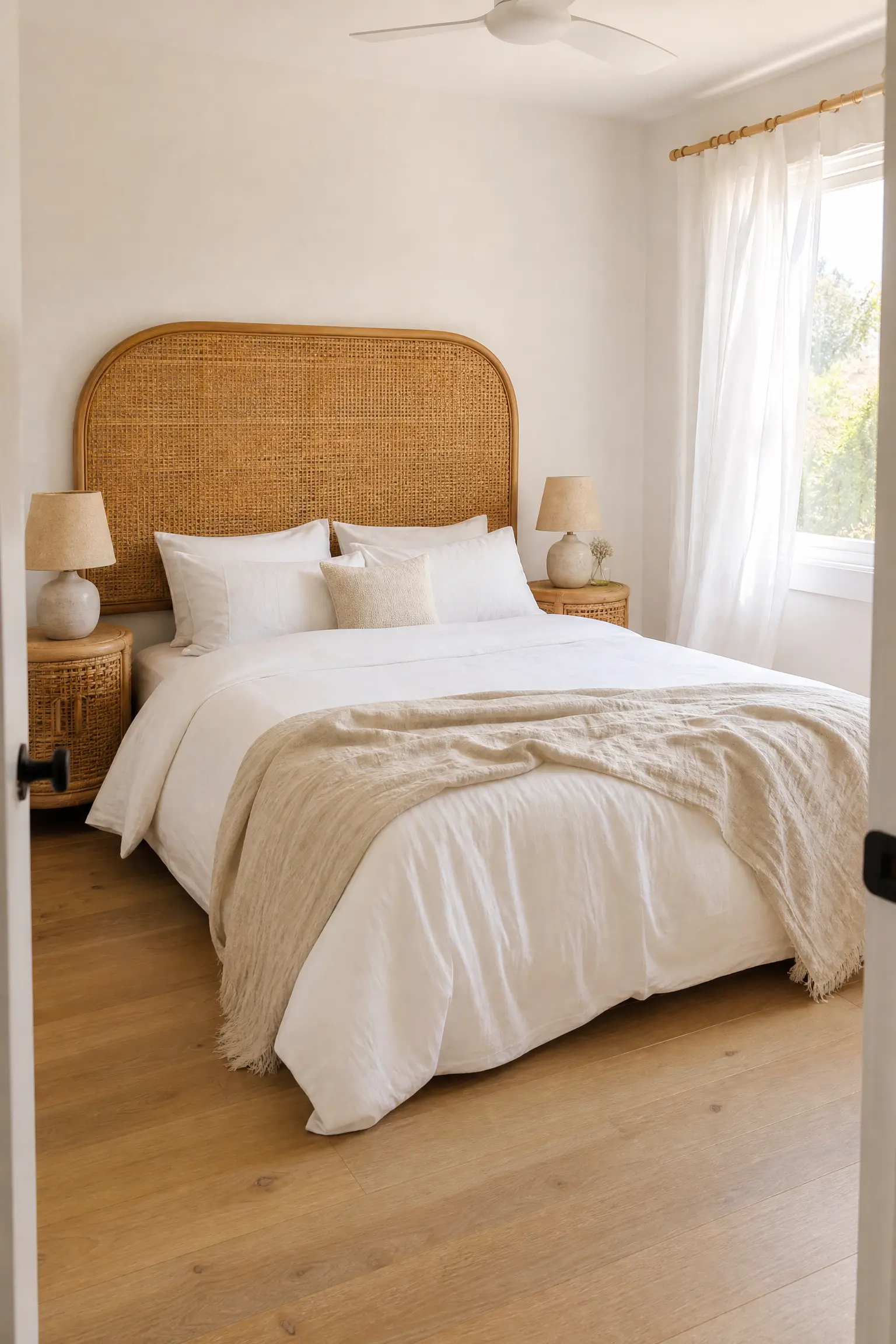
A rattan or wicker bed frame is one of the most signature pieces in a coastal bedroom, and it earns that status because it manages to feel both relaxed and genuinely beautiful at the same time. The natural material brings warmth into the room without making it feel heavy, and the woven texture adds visual interest that you do not need to layer with a lot of other decorative elements to feel complete. Pair a rattan headboard with white or linen-toned bedding in a soft, high-thread-count cotton for a combination that feels resort-like without a lot of effort. Keep the nightstands simple, either matching rattan or a complementary light wood, so the headboard remains the focal point. Be honest with yourself about the room: rattan bed frames have the most impact in rooms with decent ceiling height and natural light. In a small, dark room, a lighter upholstered headboard in a sandy beige might actually deliver a more convincing coastal result.
Designer Note: A woven rattan headboard against a soft white wall with sheer linen curtains is one of the most photographed coastal bedroom looks for good reason. It works. Repeat it confidently.
7. A Whitewashed Dresser with Rope or Ceramic Handles
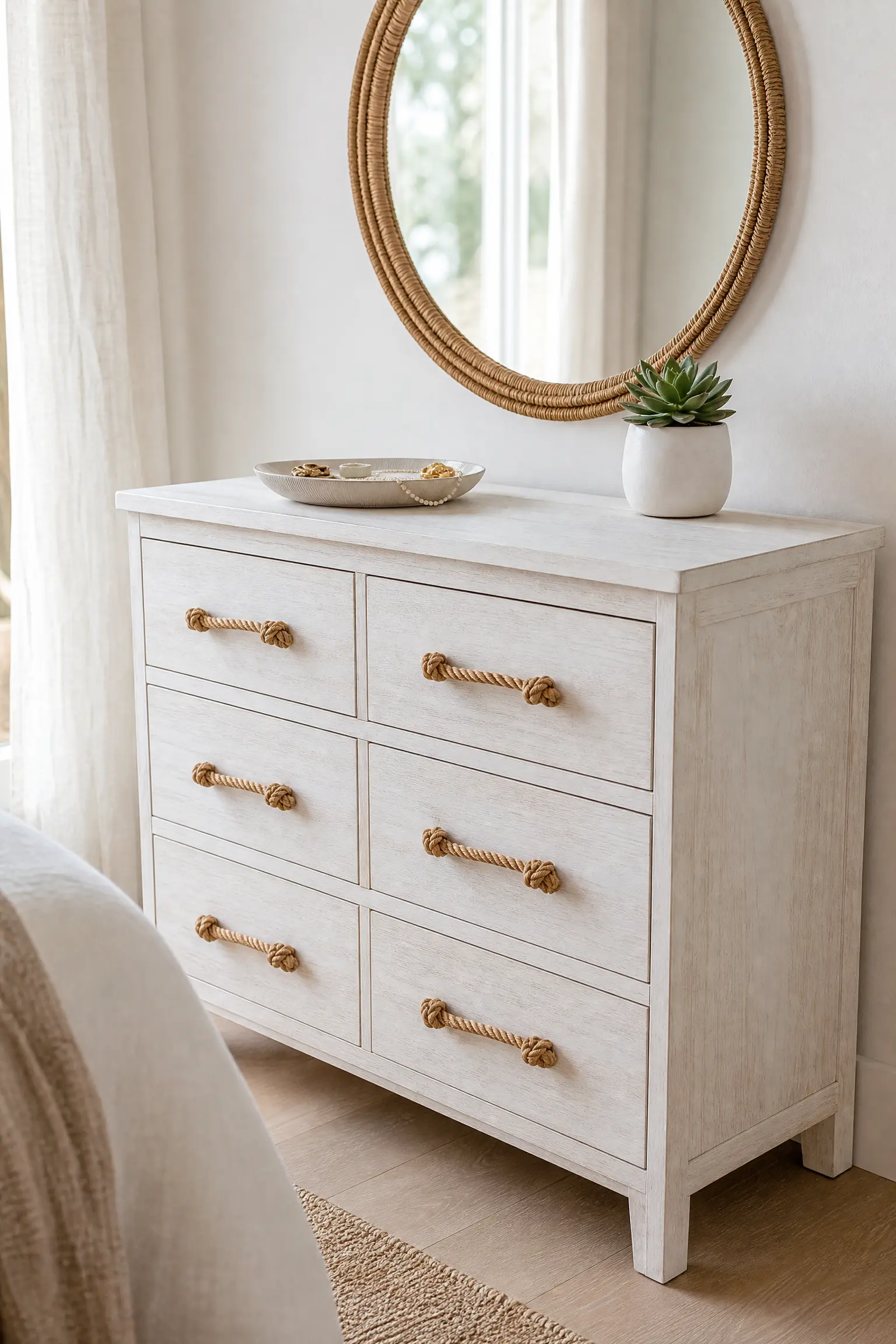
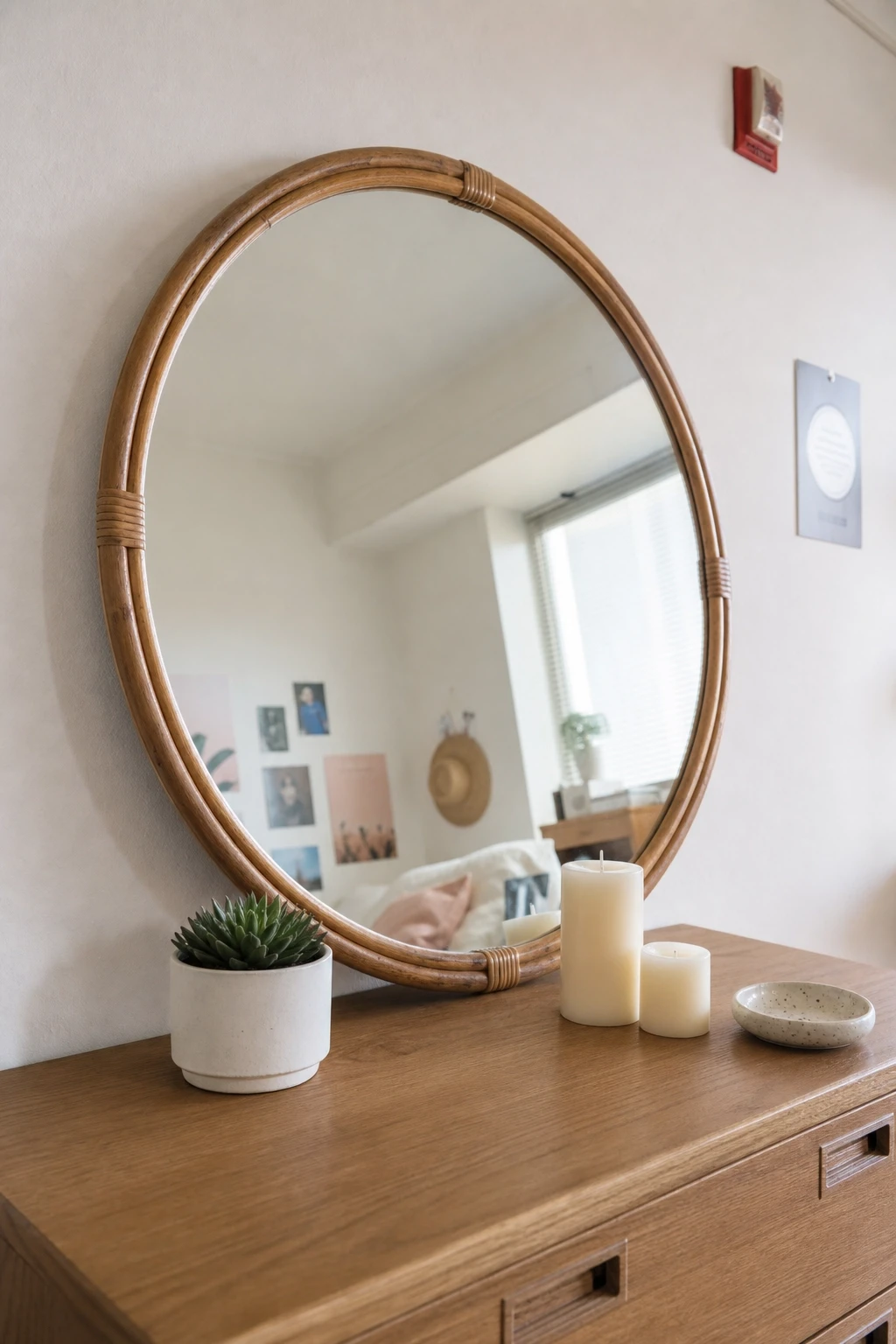
A whitewashed or pickled-finish dresser brings the coastal palette into the bedroom storage piece, and the hardware choice is where you can really lean into the theme without it tipping into kitsch. Rope pulls are a wonderful option: they are subtle, tactile, and read as genuinely coastal rather than a costume version of it. Ceramic knobs in a soft white or a matte sea-foam blue are another strong choice. The dresser itself does not need to be ornate; in fact, simple drawer fronts with clean lines work better than heavily carved or decorative ones because the material finish and hardware do the storytelling. Top the dresser with a round or arched mirror in natural rattan or light wood, a simple ceramic tray, and a small potted succulent or air plant for a styling arrangement that takes about five minutes and looks completely put-together.
Designer Note: If your dresser is already a solid, well-built piece in a darker finish, consider repainting it in a chalk-based paint in soft white or pale driftwood gray and swapping the hardware. That single update can shift the whole feel of the room.
8. A Canopy Bed with Sheer Linen Drapes
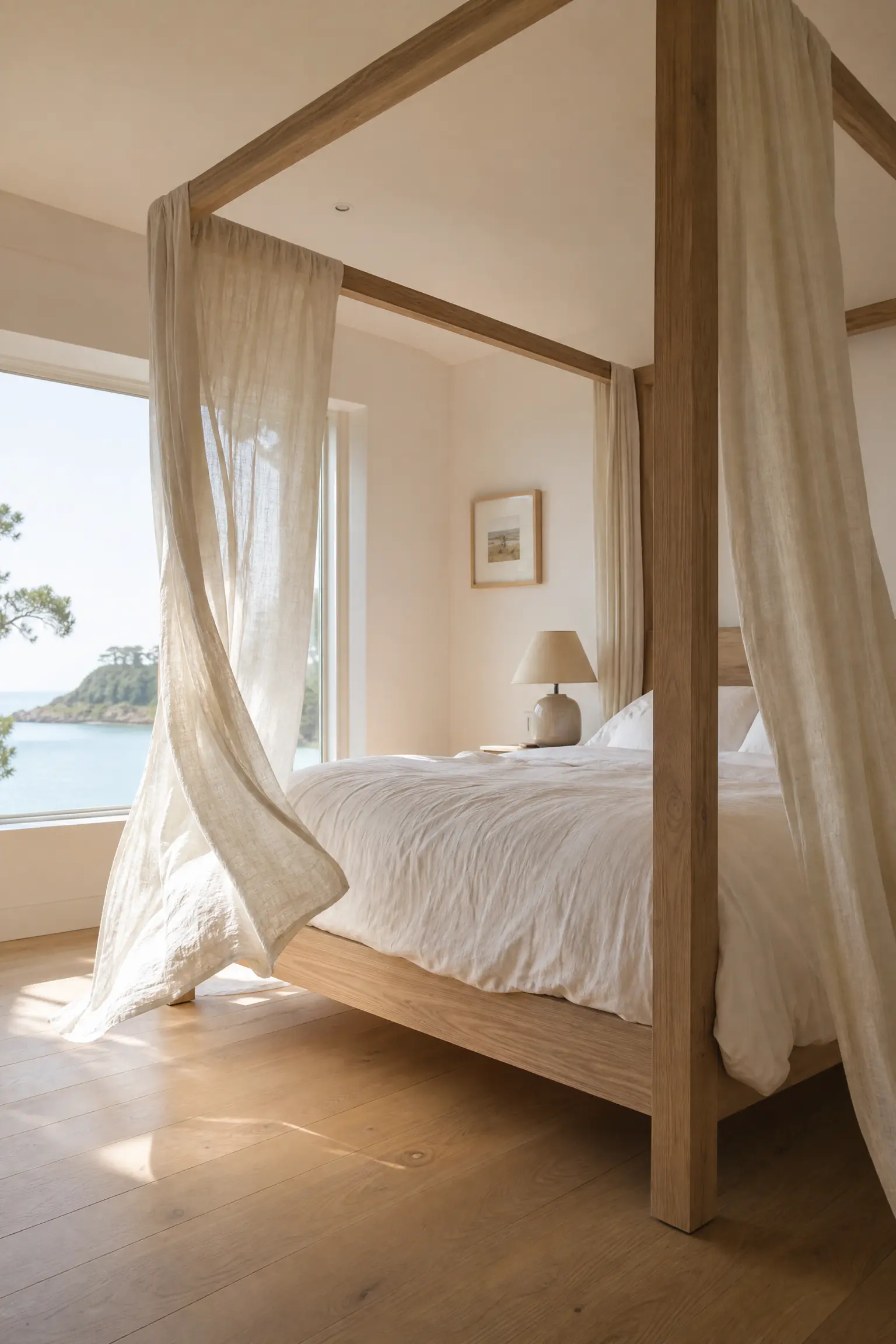
A canopy or four-poster bed in light wood or white iron with sheer linen drapes gives a coastal bedroom a quietly luxurious quality that is hard to achieve any other way. The draping fabric moves gently in any airflow, which reinforces that breezy, seaside quality that coastal design is always chasing. Keep the canopy fabric simple: unlined sheer linen in white or natural ecru is the standard, and anything more heavily patterned or structured starts to feel like a different aesthetic entirely. This idea works particularly well in master bedrooms with higher ceilings where there is enough vertical space for the canopy to breathe. In lower-ceilinged rooms, even a modest wooden four-poster without draped fabric is worth considering because the open frame still creates that sense of definition around the bed without closing in the room.
Designer Note: Keep the rest of the bedroom furniture low and simple when using a canopy bed. The bed is the statement. Competing visual weight from tall armoires or busy furniture clutters the room and undermines the whole effect.
9. A Curved Upholstered Bench at the Foot of the Bed
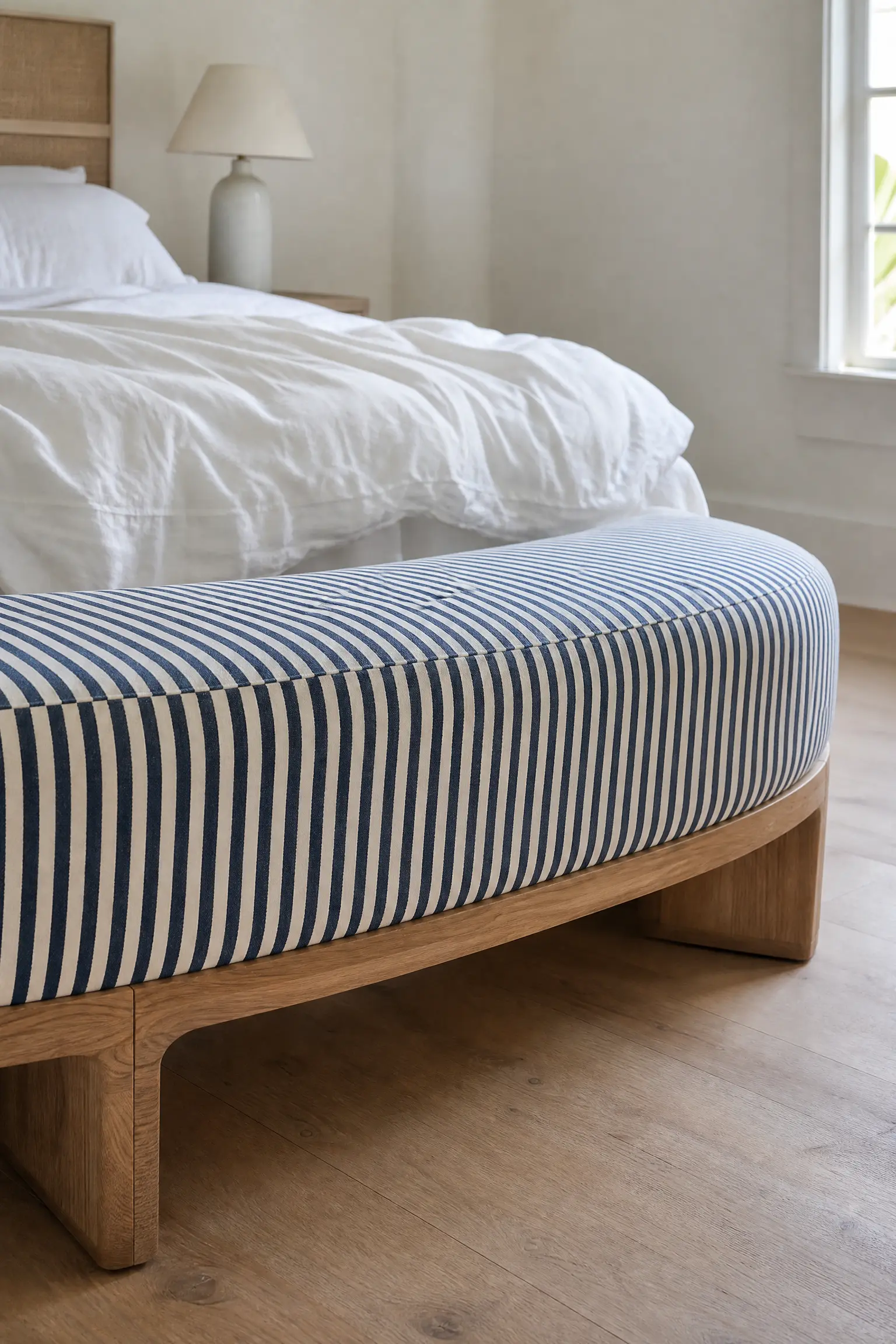
A curved or gently arched upholstered bench at the foot of the bed is both practical and visually finishing in a coastal bedroom. It gives you a place to sit while putting on shoes, adds a layer of softness and material to the floor plane, and anchors the bed in the room so the whole arrangement feels intentional rather than just furniture placed in a space. For a coastal bedroom, choose upholstery in a natural linen, washed cotton, or a subtle stripe that picks up the tones in the rest of the room. The leg finish should match or complement the bed frame: light oak, whitewash, or brass are all strong options. Curved silhouettes specifically are a big trend in coastal interiors right now because the organic shape echoes dunes and waves, and in practice they do feel softer and more welcoming than rectangular benches.
Designer Note: A bench in the $150 to $300 range from a furniture retailer like CB2, Article, or West Elm often hits the right balance of quality and price for this kind of accent piece.
10. Floating Nightstands in Light Oak or White
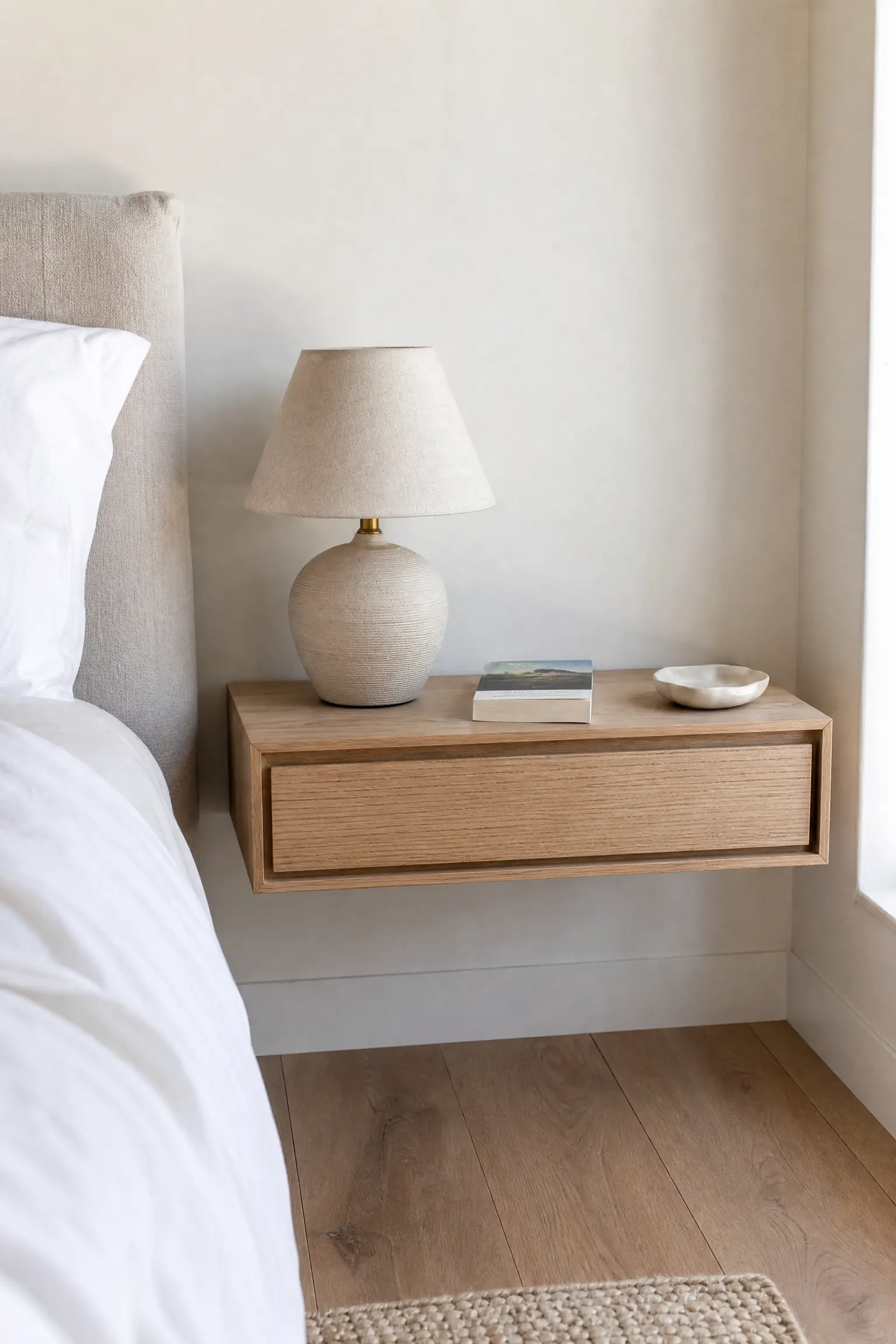
Wall-mounted floating nightstands are a detail that makes a coastal bedroom feel more designed and intentional, and they are genuinely practical in smaller rooms because they keep the floor clear and make the space read as larger. In a coastal context, floating shelves or small wall-mounted units in light oak or a painted white finish work best. A single drawer or open shelf below is enough storage for most people’s bedside essentials. Style each side simply: a small lamp with a linen shade, a book or two, and maybe a small ceramic dish for jewelry or a charging cable. The pairing of light wood floating shelves against a soft white or subtle blue-gray wall is a combination that appears again and again in coastal interior photography because it is genuinely effective.
Designer Note: Floating nightstands require proper wall anchoring, especially in plaster walls. Budget for professional installation if you are not confident in your DIY skills. A nightstand that tilts or pulls away from the wall is both annoying and potentially unsafe.
Dining Room Furniture Ideas
11. A Reclaimed Wood Dining Table
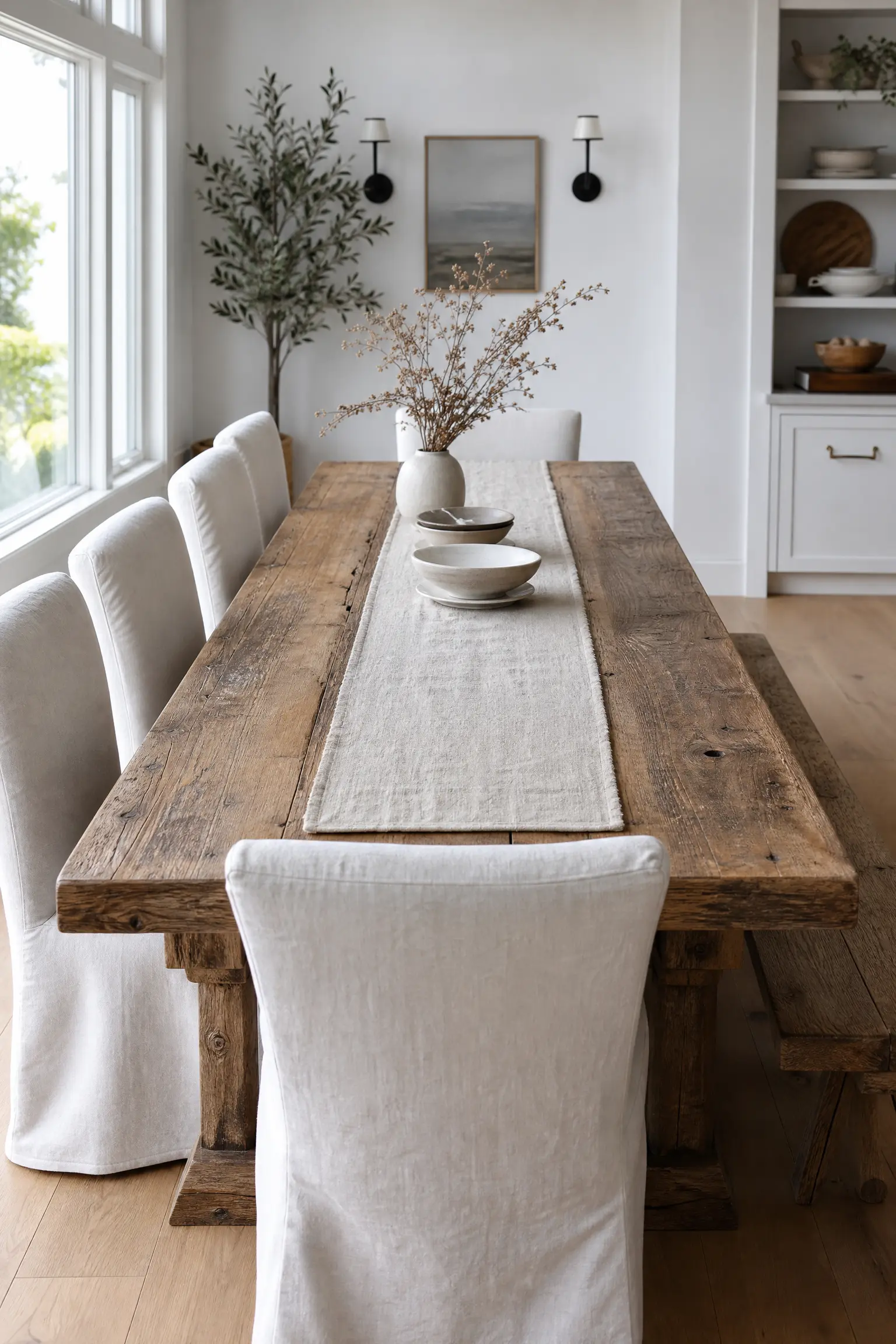
A reclaimed or live-edge wood dining table is one of the most authentic pieces you can put in a coastal dining room because it carries the actual history and character of natural material. The grain variations, the knots, the slight imperfections are all features rather than flaws in a coastal context, and they tell a story about provenance and natural beauty that a machine-finished table simply cannot replicate. Pair a reclaimed wood table with white or natural linen dining chairs for a balance of warmth and lightness. A bench on one side of the table, in a complementary wood or a painted finish, adds an informal, beach-house quality that feels right for a coastal dining room. Reclaimed wood tables are an investment, typically starting around $800 and running well over $2,000 for larger pieces, but they are genuinely heirloom-quality items that hold up and improve with age.
Designer Note: Seal a reclaimed wood table with a food-safe oil or wax finish rather than a high-gloss polyurethane. The matte finish looks more natural and more consistent with the coastal aesthetic.
12. Rattan or Woven Dining Chairs
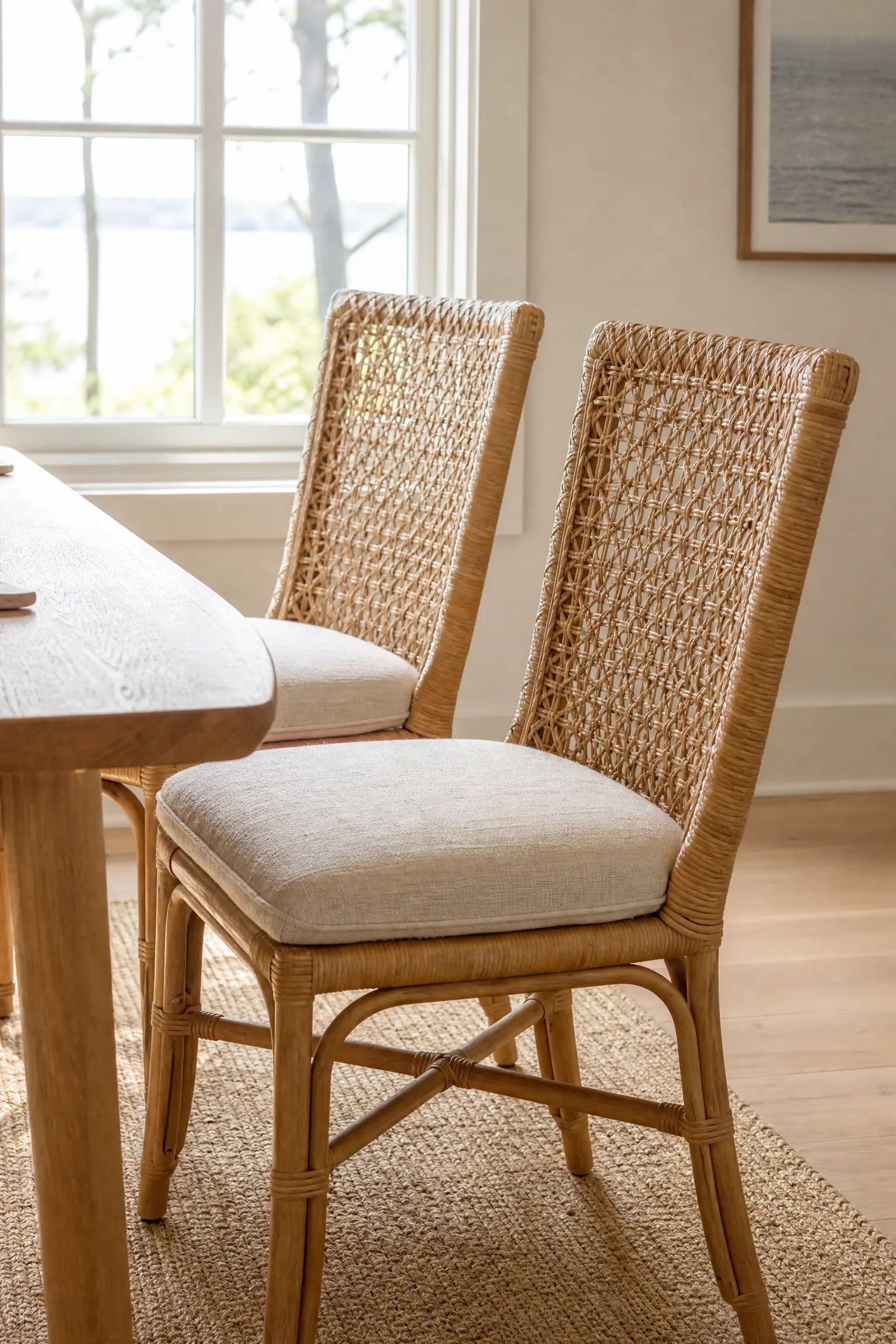
Rattan or woven dining chairs are one of the most practical coastal furniture choices because they are lightweight, easy to move, and add natural texture at eye level in the dining room. The most versatile version is a chair with a woven back and a simple, solid seat cushion in cotton or linen, which handles the comfort requirement while keeping the overall look from becoming too heavy. These chairs pair well with almost any dining table material: they look at home beside a painted white table, a reclaimed wood surface, or even a simple glass-topped table on a more modern coastal setup. One honest limitation: all-wicker or all-rattan dining chairs without cushions can be uncomfortable for long meals. A chair pad in a performance fabric that is easy to wipe clean is a worthwhile addition, especially for households that use the dining room regularly.
Designer Note: Mixing rattan chairs with one or two painted wood side chairs in a complementary color adds dimension and keeps the dining arrangement from looking like a showroom set.
13. A Coastal Buffet or Sideboard in Whitewash or Natural Oak
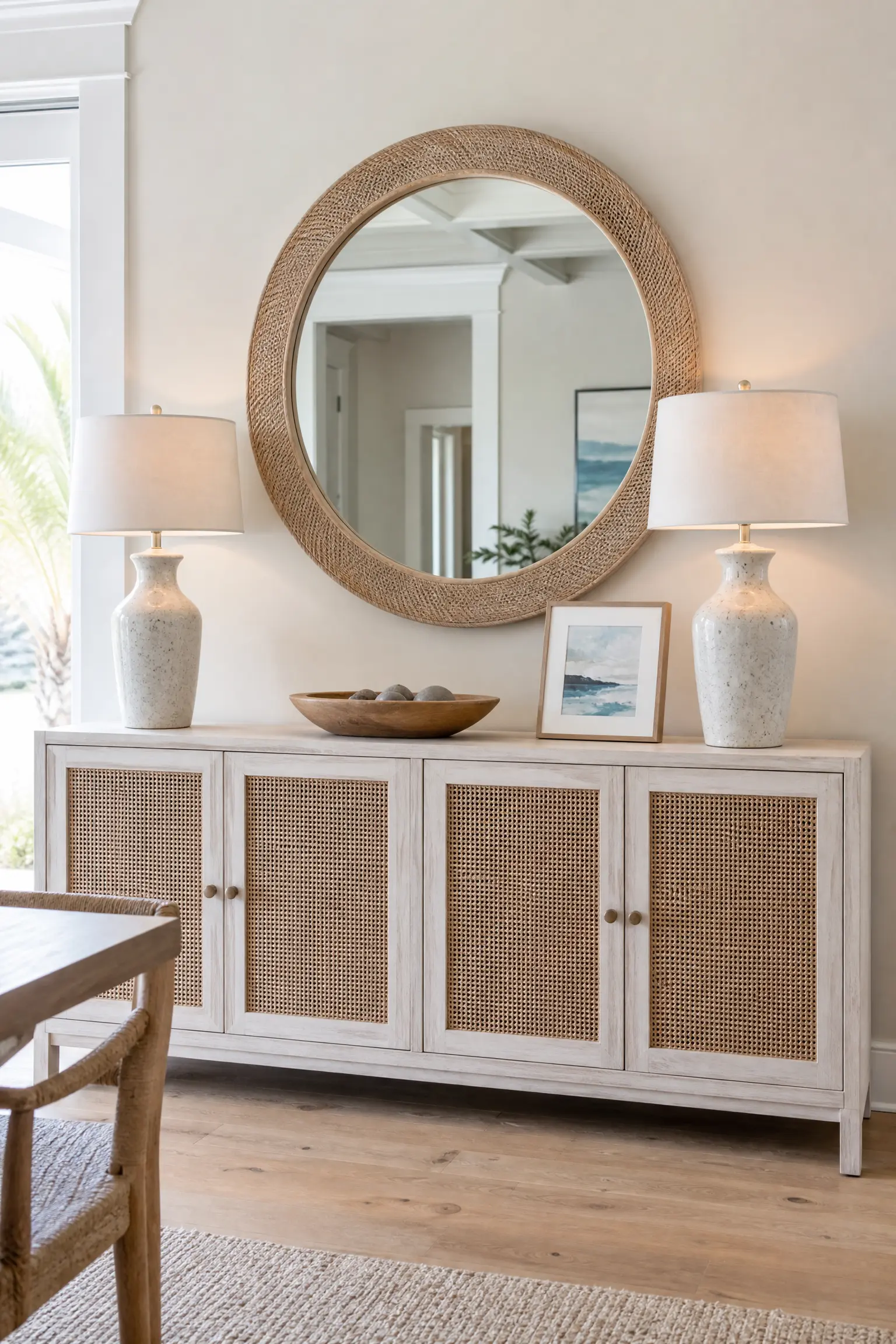
A well-chosen buffet or sideboard does significant work in a coastal dining room: it handles storage, creates a display surface, and anchors one wall of the room with intention. In a coastal context, look for a sideboard in whitewashed, limed, or natural light oak with simple hardware in brushed brass or ceramic. Avoid pieces with too many decorative carvings or dark stain finishes, as both tend to pull the room in a different direction. Style the top with a large round mirror or a piece of ocean-inspired art above it, a pair of ceramic table lamps with linen shades on either side, and a simple arrangement of natural elements like a driftwood piece or a shallow bowl of smooth stones. A sideboard in the dining room is particularly useful if you entertain regularly, since it creates a natural serving station that keeps the main table clear.
Designer Note: A sideboard with cane-front doors is a particularly good coastal choice. The cane detail adds natural texture to what might otherwise be a flat, featureless front, and it feels consistent with the material story of the room.
14. A Round Pedestal Dining Table
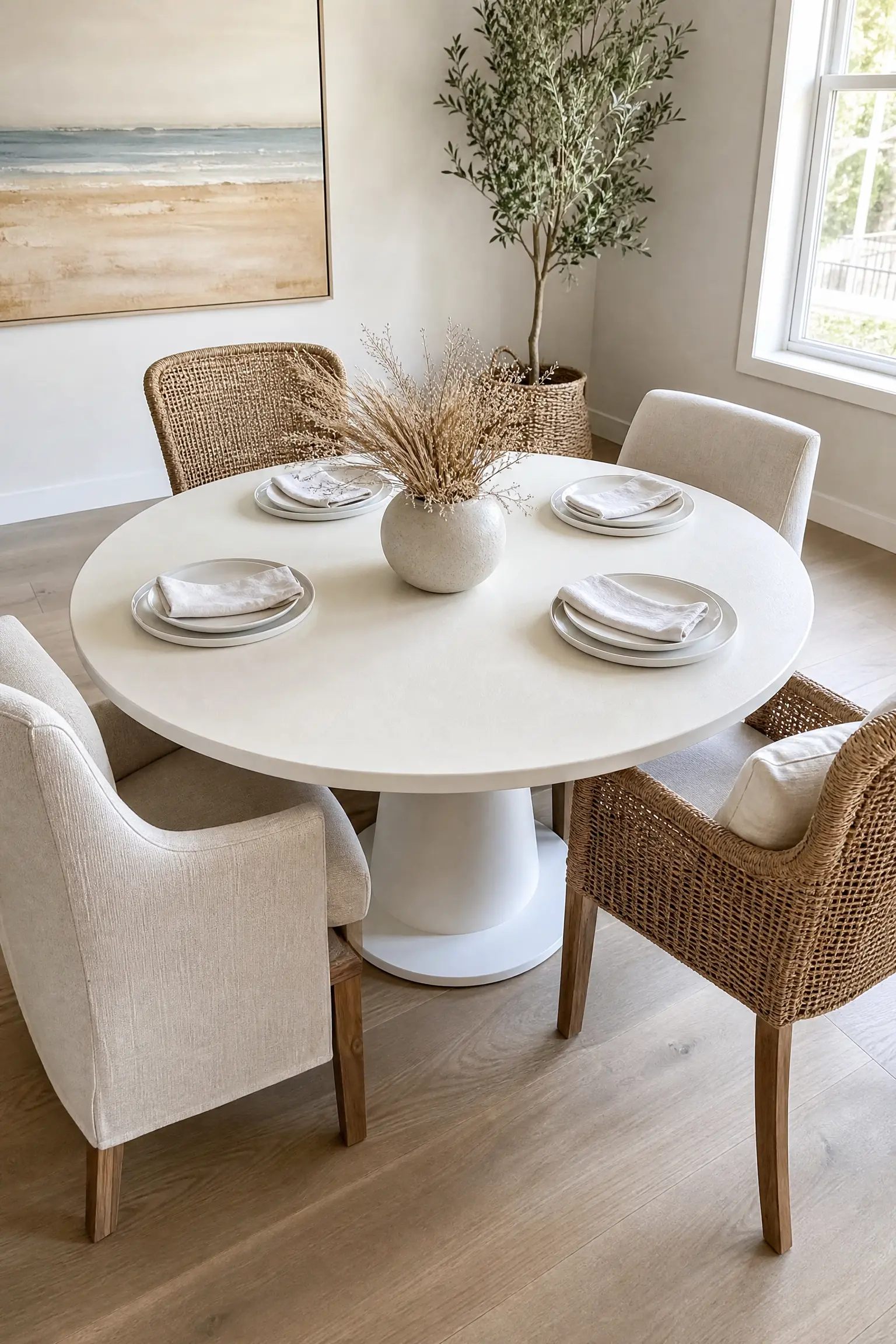
A round pedestal dining table encourages conversation and fits naturally into the organic, curved design language of coastal interiors. The single central base means there are no legs to navigate around when seating guests, which makes smaller coastal dining rooms function more smoothly. In a coastal context, a round table in white or light wood with a simple pedestal base reads as both practical and design-forward. This shape also works particularly well in square rooms or rooms that open onto a kitchen on one side, because the circular footprint keeps the traffic flow around the table natural and unobstructed. Pair with a mix of upholstered dining chairs and one rattan chair for a collected, layered look. A round table seats fewer people than a comparable rectangular surface, so it is worth thinking honestly about how often you host large groups before committing.
Designer Note: A 48-inch round table comfortably seats four adults and fits well in most dining rooms. If you regularly host six or more, consider a 60-inch round or an extendable oval table instead.
Entryway Furniture Ideas
15. A Driftwood-Style Console Table
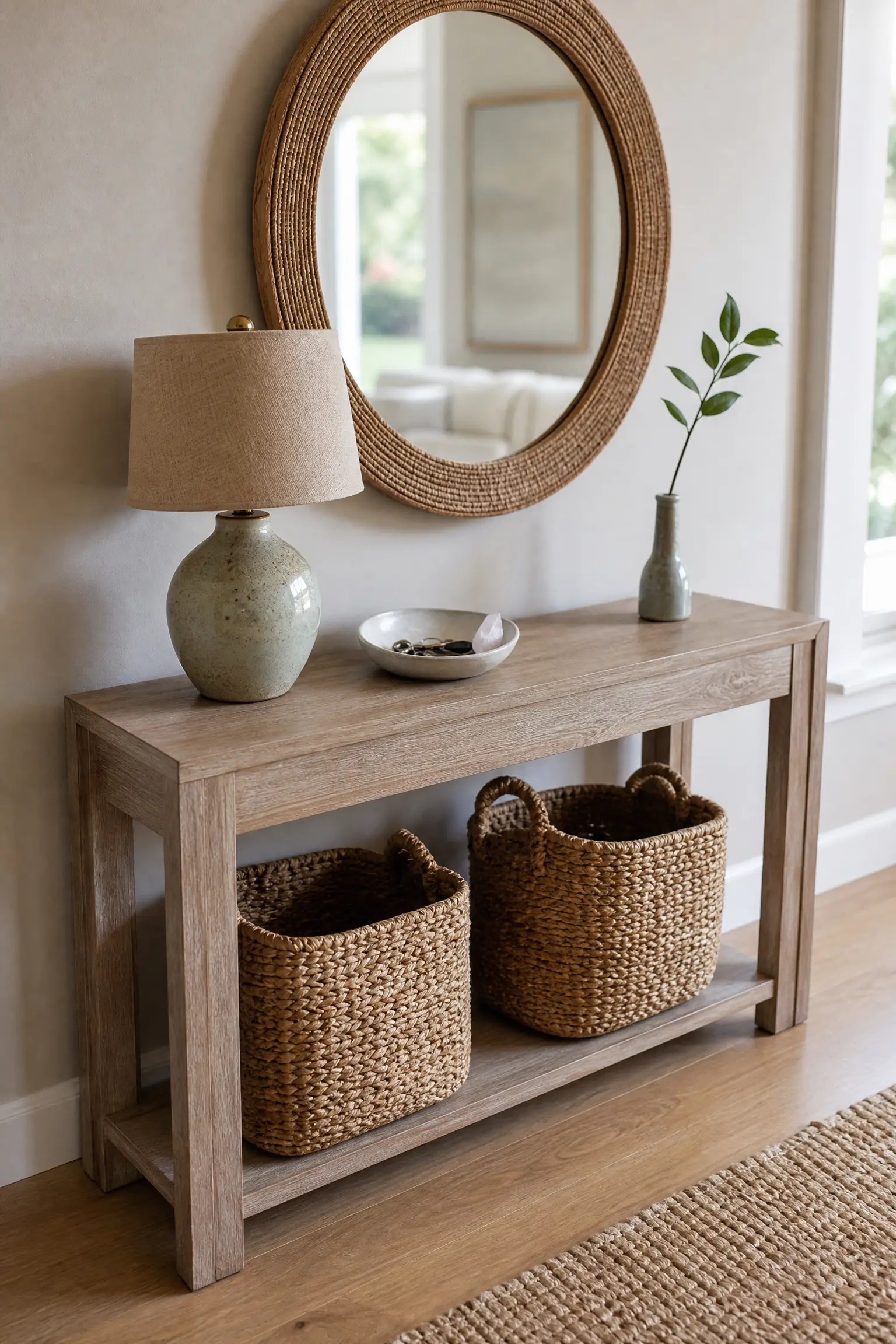
The entryway is the first interior impression your home makes, and in a coastal home it is an opportunity to set the tone immediately with a console table that feels both welcoming and specific to the style. A console in a driftwood-inspired finish, meaning a wood grain that is pale, slightly weathered, and with visible texture, is the most immediate coastal signal you can send in an entryway. The table does not need to be wide or deep; a narrow 10-to-12-inch depth is enough to hold a small lamp, a ceramic bowl for keys, and a low vase with dried coastal grasses or stems. Above it, a large round mirror in a natural fiber or light wood frame doubles the natural light in the space and gives the entryway the sense of openness that is central to the coastal feel. This is also a very budget-friendly room to start with if you are building a coastal look gradually.
Designer Note: A woven basket or two tucked underneath the console table handles shoes, bags, or umbrellas while adding to the natural material palette. Functional and considered at the same time.
16. A Built-In or Freestanding Mudroom Bench with Hooks
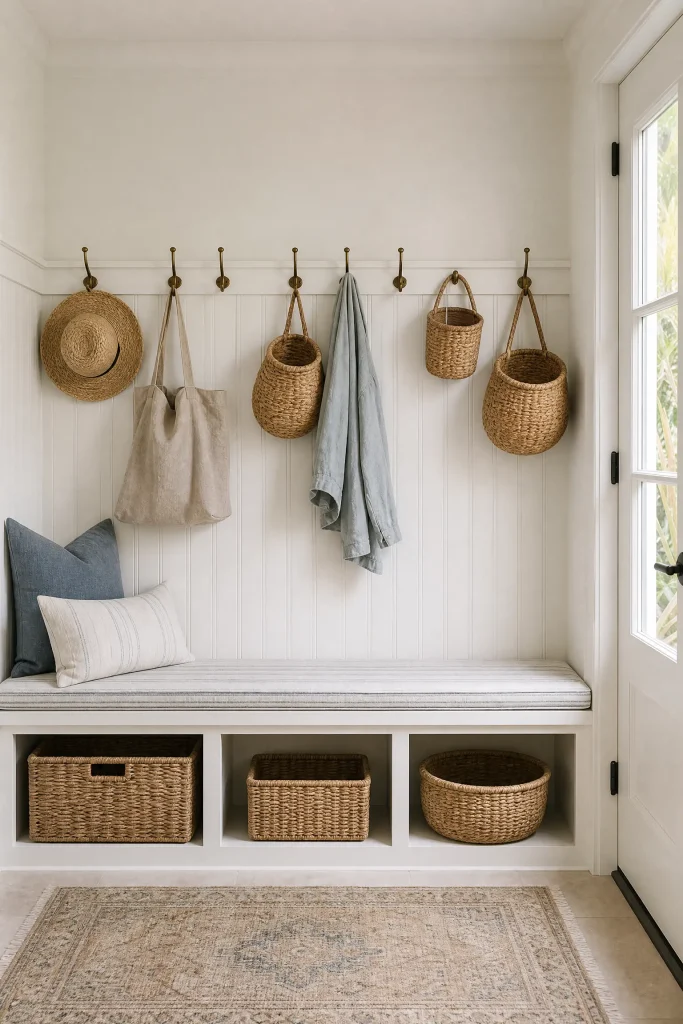
A coastal home, particularly one near the water, needs an entryway that can handle the practical reality of people coming in from the beach, the boat, or a walk through humid air. A mudroom bench in painted white or light wood with hooks above for bags, hats, and light jackets is the most functional coastal entryway furniture choice you can make. In design terms, it gives the entryway a built-in, considered quality. Style the hooks with woven baskets in two or three sizes for visual interest and practical storage. Add a small drawer unit or cabinet below the bench for beach gear, sunscreen, and other seasonal items. This setup is particularly good for families and for homes that double as beach or vacation rentals, where high-traffic function is as important as appearance.
Designer Note: Choose hooks in a matte black or aged brass finish rather than chrome or brushed nickel. Both feel more organic and less utilitarian, which sits better in a coastal context.
17. A Slatted Wood Entryway Cabinet
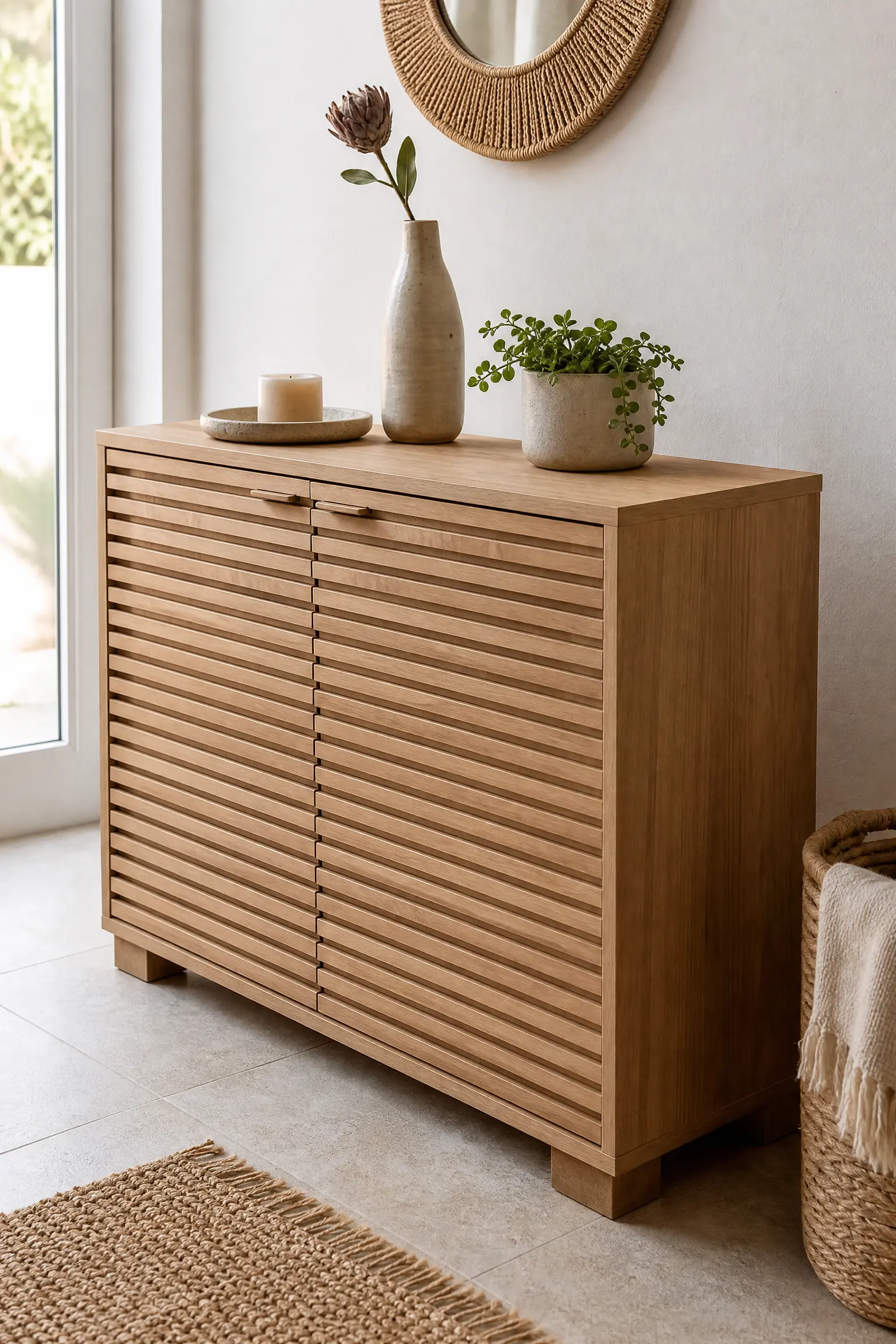
A slatted wood cabinet or credenza at the entryway level is one of those pieces that earns its place through texture alone. The vertical or horizontal slat detail, whether in natural light wood or a painted white finish, creates shadow and dimension on what would otherwise be a flat furniture face. It also allows a small amount of airflow through the cabinet, which is practical in coastal environments where humidity can be a factor for stored items. Use the top of the cabinet as a display surface in the same way you would a console, keeping it spare and curated rather than cluttered. A slatted entryway cabinet at around 30 to 36 inches in height is a strong choice because it sits below most people’s sightline, keeping the upper portion of the entryway open and light.
Designer Note: The slatted look is particularly on-trend in coastal interiors right now and shows up across furniture categories from bed frames to room dividers. It is a detail worth repeating in two or three pieces throughout the home for a cohesive material story.
Home Office Furniture Ideas
18. A Light Wood Desk with Clean Lines
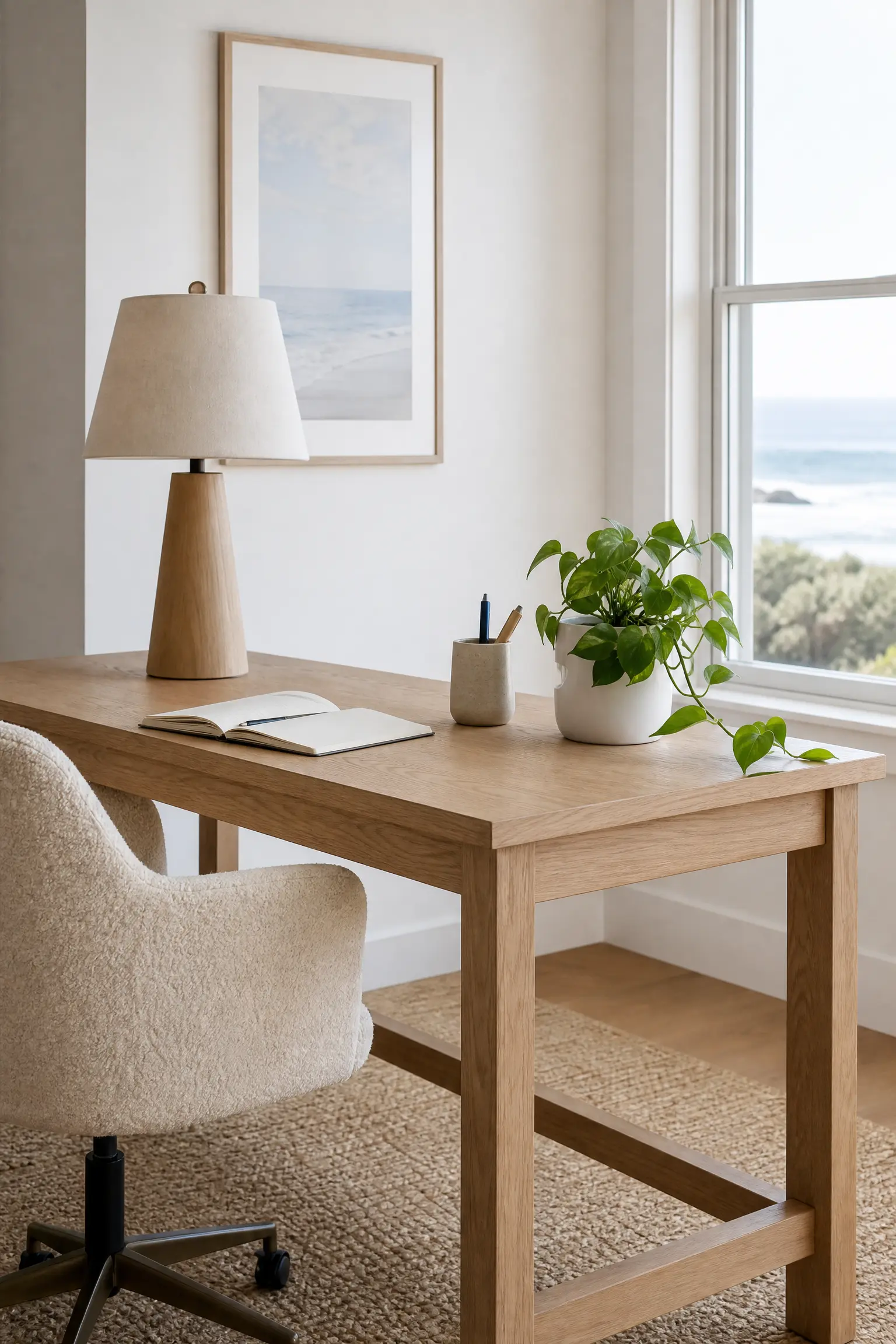
A coastal home office does not need to look dramatically different from the rest of the house, and the desk is the key piece that sets the tone for the whole room. A simple desk in light oak, ash, or a painted white finish with clean lines and minimal decorative detail works best in a coastal context because it does not fight with the relaxed, airy quality that is the whole point of the style. Pair it with a linen or boucle office chair in a warm white or sandy tone rather than a black mesh or faux leather chair, which tends to read as corporate and pulls against the coastal vibe. If the desk sits near a window, position it so you are seated facing or beside the light source rather than away from it, which makes the workspace feel connected to the outdoors in the way a coastal room should.
Designer Note: A small potted plant on the desk, even a simple succulent or a trailing pothos, brings the organic coastal feel into a workspace that can otherwise tip toward feeling clinical.
19. Rattan or Wicker Storage Baskets as Office Organization
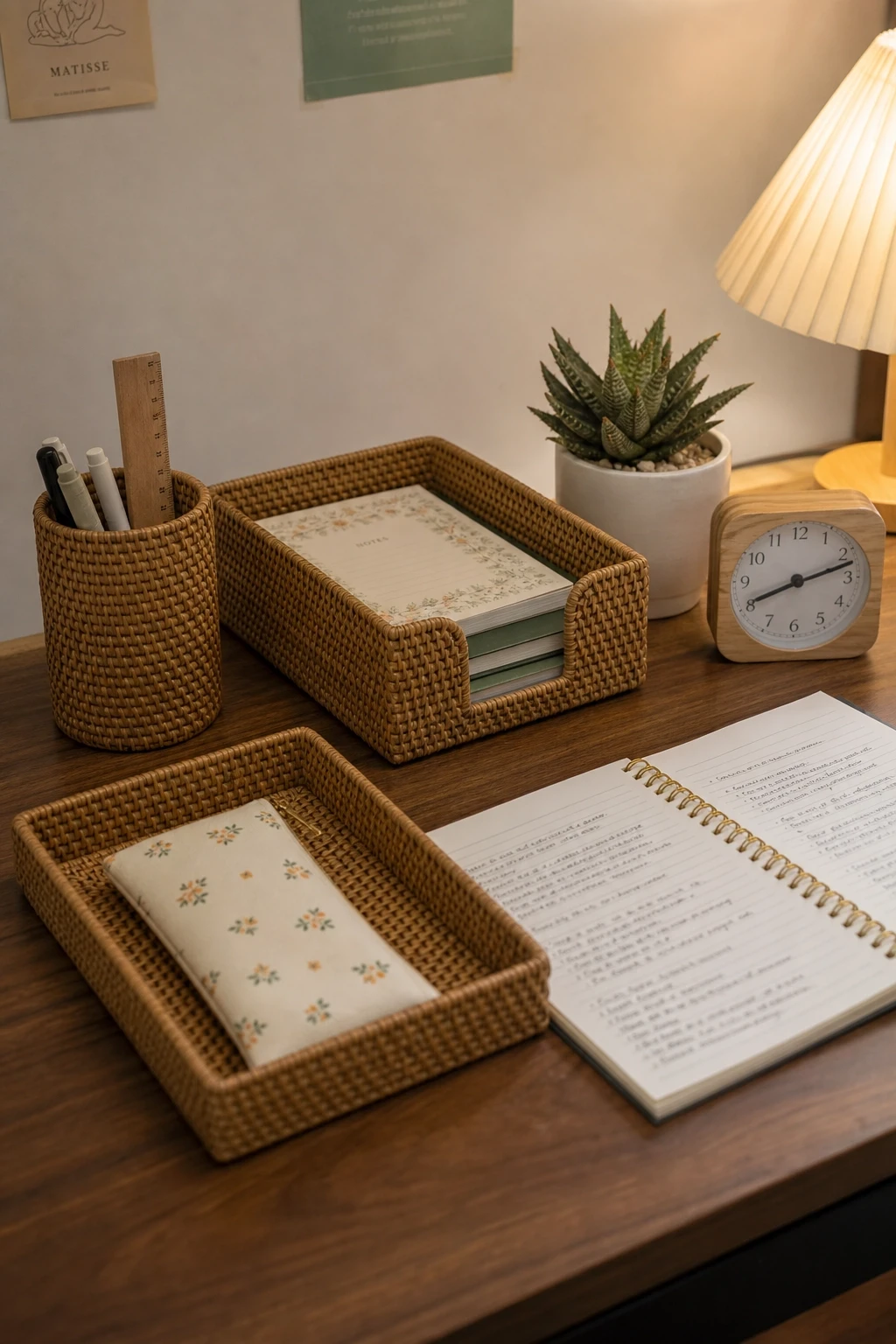
In a coastal home office, the storage solution matters as much as the desk itself, and rattan or wicker baskets are the most consistent and practical choice for keeping the room feeling on-theme. Use a mix of sizes: a large floor basket beside the desk for file folders or rolled blueprints, a medium basket on an open shelf for office supplies, and small round baskets on the desktop for pens, scissors, and daily essentials. The key is to keep the baskets loosely organized rather than overstuffed. A basket that is crammed to capacity loses its visual appeal and starts to look like clutter. In terms of cost, this is a very budget-friendly area to work with; quality woven baskets are widely available at reasonable prices and are one of the easiest ways to shift the feel of a room toward a more coastal direction.
Designer Note: Seagrass baskets have a slightly finer, denser weave than rattan and look particularly refined in a home office context. They are a small step up in sophistication from the standard wicker option.
Outdoor and Transitional Furniture Ideas
20. A Teak Outdoor Sofa with Sunbrella Cushions
Teak is the gold standard for outdoor coastal furniture because it is naturally resistant to moisture, salt air, and UV exposure in a way that most other wood species are not. A teak outdoor sofa with Sunbrella cushions in natural, cream, or a soft stripe is a combination that sits beautifully on a coastal porch, deck, or patio and requires relatively little maintenance. Sunbrella fabric specifically is worth the investment for coastal outdoor use: it resists fading, repels moisture, and can be scrubbed clean, which is exactly what you need in a space that is exposed to the elements. Teak furniture also weathers gracefully to a soft silver-gray if left unsealed, which actually looks wonderful in a coastal context and requires no maintenance beyond an occasional rinse. New teak furniture is an investment starting around $1,000 for a sofa, but it genuinely lasts for decades.
Designer Note: If teak is out of budget, look for furniture in eucalyptus, which has very similar natural properties at a lower price point. Avoid pine or other softwoods for outdoor coastal use; they do not hold up well.
21. A Hanging Rattan Egg Chair for the Porch or Sunroom
A hanging rattan egg chair has become something of a signature piece in coastal and tropical interior design, and while it has been everywhere in recent years, it continues to deliver because the form is genuinely good. The curved, enclosed shape creates a sense of gentle enclosure that feels both private and relaxed, and suspended from a porch ceiling or a dedicated stand, it becomes an instant focal point that draws people toward it. For outdoor use in a coastal climate, look for all-weather rattan or a synthetic wicker that mimics the look of natural rattan but withstands humidity and rain without warping or deteriorating. The cushion inside should be in an outdoor-rated fabric, again Sunbrella or similar. This works best on a covered porch or in a sunroom rather than a fully exposed outdoor space, where unprotected fabric and cushions take a beating from direct sun and rain.
Designer Note: Make sure the ceiling joist or anchor point can support at least 250 to 300 pounds before installing a hanging chair. Safety first, always.
22. An Outdoor Dining Set in All-Weather Wicker
An all-weather wicker outdoor dining set on a coastal deck or patio creates the kind of relaxed, European-summer quality that coastal outdoor dining is all about. The wicker weave in a natural honey or warm brown tone sits beautifully against the outdoor environment, whether that is a sea view, a garden, or a simple patio. Choose a table with a glass or tile top rather than a solid wicker surface, since the top needs to be easy to clean after meals and needs to handle food and drinks without staining. Pair with wicker dining chairs in a matching finish and add seat cushions in a stripe or solid Sunbrella fabric in navy, sage, or natural. This type of set is widely available at mid-range price points, roughly $600 to $1,500 for a six-piece set depending on quality.
Designer Note: An outdoor rug in a natural fiber or flatweave pattern underneath the dining set pulls the arrangement together and defines the dining zone on an open deck in the same way it would in an indoor room.
Accent and Functional Pieces
23. A Jute or Seagrass Area Rug as the Room Anchor
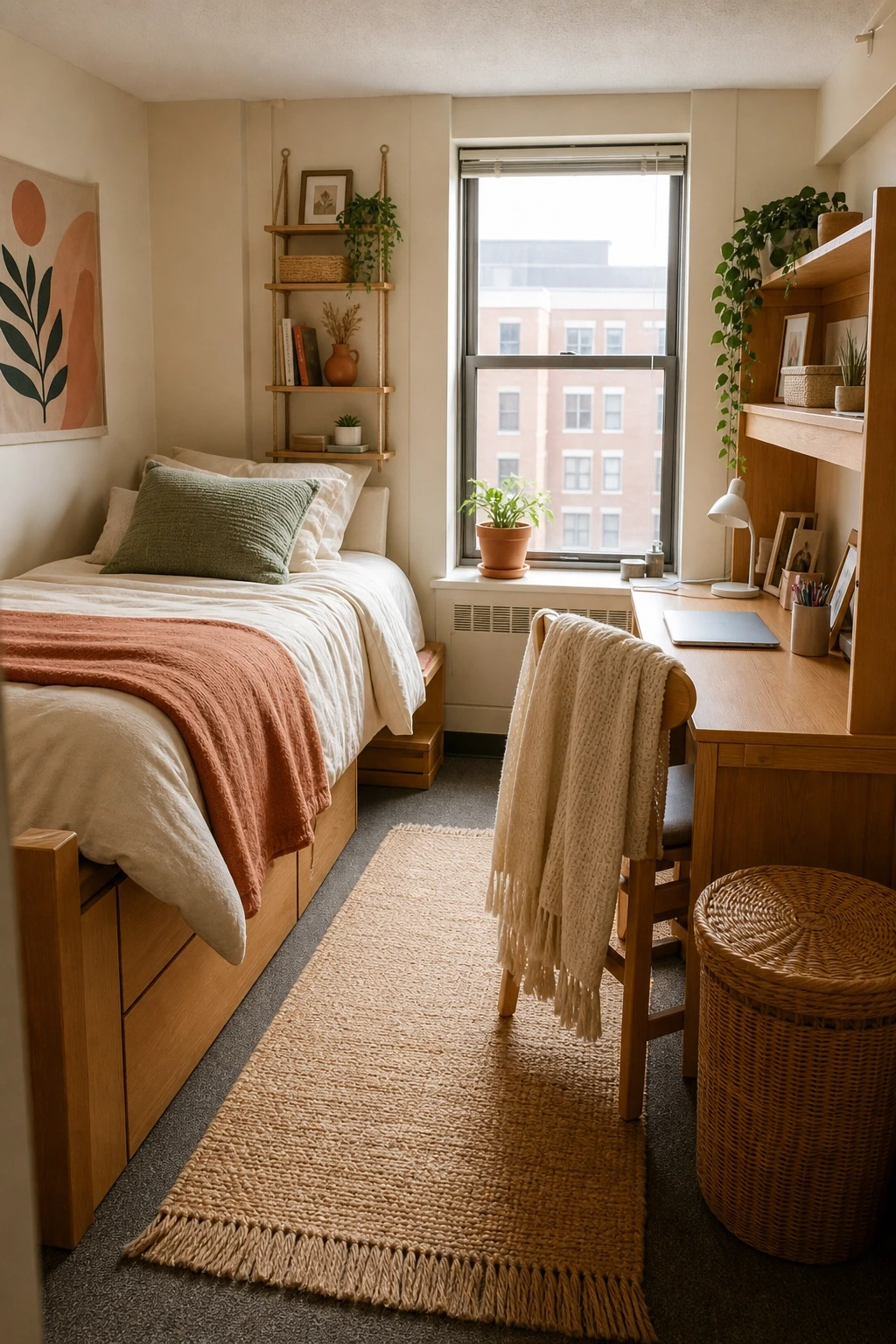
A jute or seagrass area rug is one of the most foundational pieces in a coastal room, and it earns that role because it brings natural texture to the floor plane in a way that shapes the whole feel of the space. The rough, organic weave of natural fiber adds warmth and substance without adding color, which means it works underneath almost any furniture arrangement and supports almost any coastal color palette. Size matters here more than people often appreciate: a rug that is too small leaves furniture legs floating above it, which makes a room feel unanchored and visually uncomfortable. In a living room, the front legs of all major seating pieces should sit on the rug; in a bedroom, the rug should extend at least 18 inches past the sides of the bed. One honest limitation of natural fiber rugs is that they are not well-suited to high-moisture areas like bathrooms or covered outdoor spaces, as they can develop mold in persistently damp conditions.
Designer Note: Layering a smaller printed cotton rug over a larger jute base rug is a technique that professional designers use to add pattern and color without committing to a single large patterned rug. It is also more affordable than a single large statement rug.
24. A Multifunctional Storage Ottoman with Coastal Upholstery
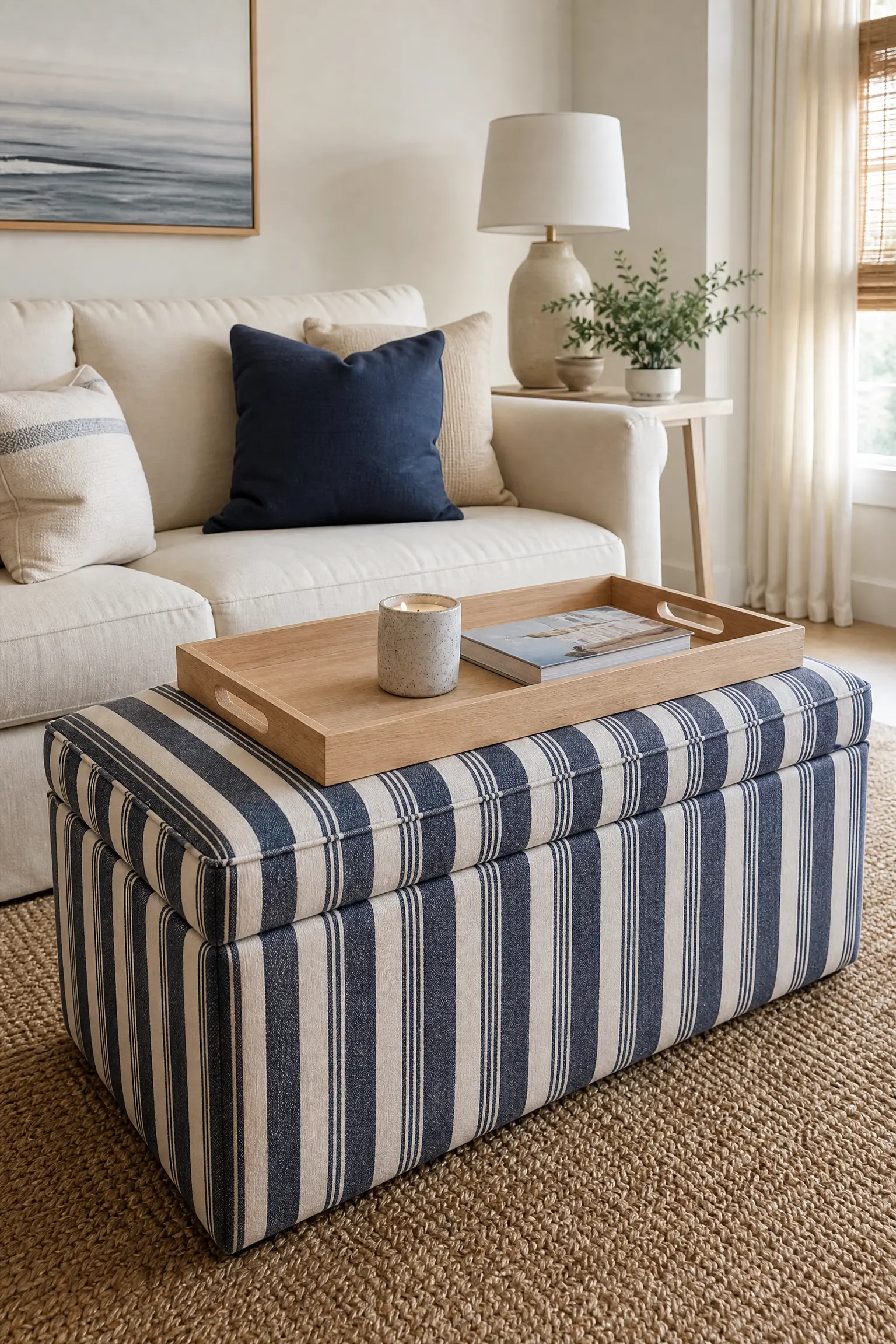
A storage ottoman in a striped, woven, or solid coastal fabric serves multiple functions in a coastal home: it provides a soft surface for feet, hides away blankets and miscellaneous items, acts as extra seating, and adds pattern or texture to a room that might otherwise read as too neutral. In a coastal context, look for upholstery in a classic navy and white stripe, a natural linen weave, or a textured boucle in warm cream. The storage function is particularly valuable in smaller coastal homes and beach cottages where storage is often limited, and where the room is expected to shift between relaxing, entertaining, and sleeping modes depending on who is visiting. This is also a very accessible price point for most budgets; quality storage ottomans are available from $80 to $300 depending on size and material.
Designer Note: A tray on top of a storage ottoman doubles its function and makes it usable as a surface. Choose a tray in light wood, woven seagrass, or white-painted wood to stay consistent with the material story.
25. A Ladder Shelf in White or Natural Wood
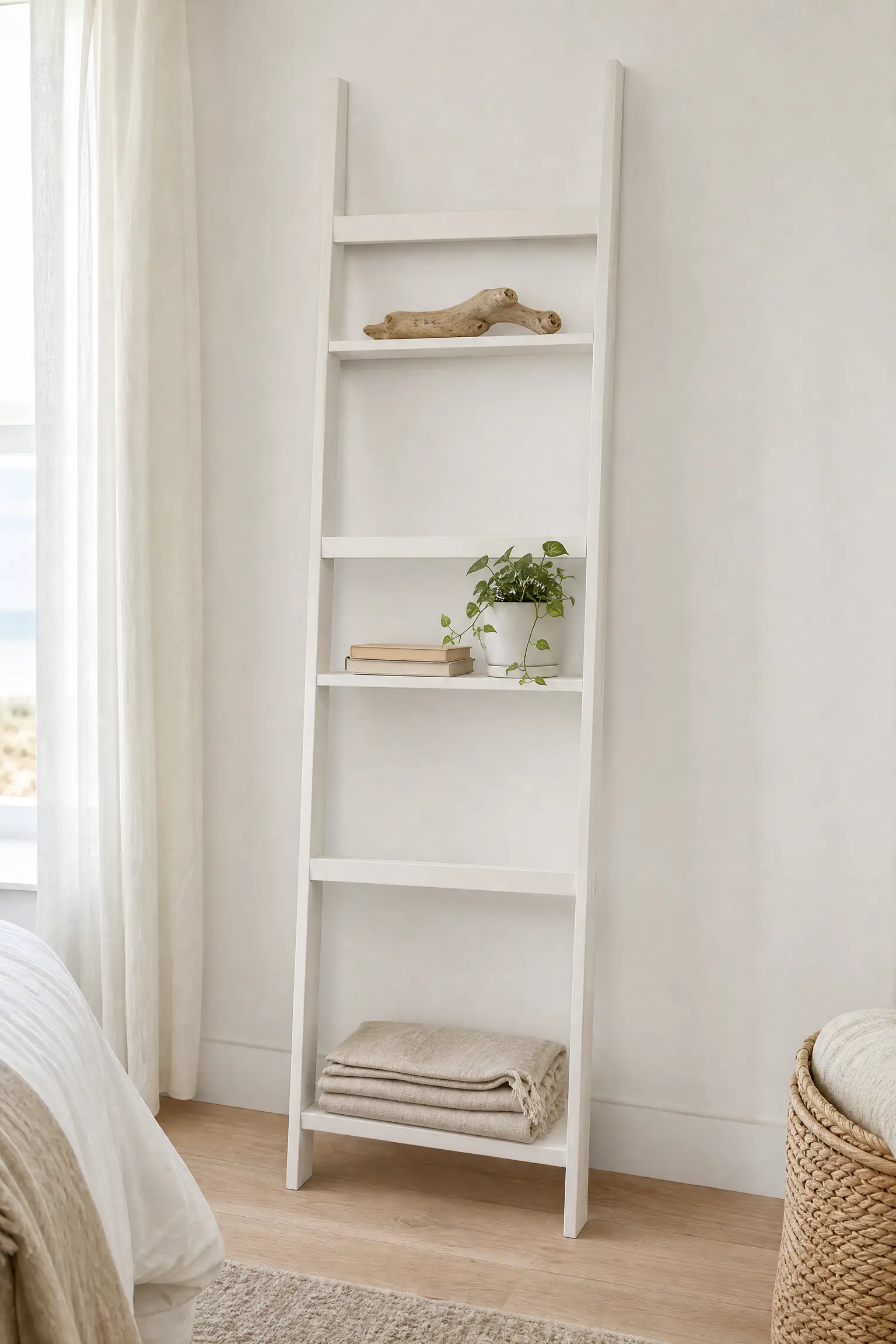
A ladder shelf is one of the most versatile and space-efficient furniture pieces in a coastal interior, and it is particularly useful in rooms where wall space for built-ins is limited or where you want display and storage without the visual mass of a closed cabinet. In a coastal bedroom or living room, a white or natural wood ladder shelf leaned against a soft white wall carries a lightweight, casual quality that feels completely at home in the aesthetic. Style each rung intentionally: a folded linen throw on the lowest rung, a stack of books and a small plant on the middle shelf, a piece of driftwood or a ceramic vase on the upper shelf. Keep the total number of displayed items restrained. A ladder shelf that is overloaded with objects looks cluttered regardless of how carefully each piece was chosen. This is a budget-friendly furniture pick; quality options exist in the $80 to $200 range and require minimal assembly.
Designer Note: A ladder shelf works particularly well in a coastal bathroom or guest bedroom where a full bookcase would overwhelm the room. It delivers display and storage function in a form that never feels heavy.
Final Thoughts
Coastal furniture is not about buying a room full of matching beach-themed pieces and calling it done. The best coastal interiors feel that way because of intentional choices across materials, scale, and color, not because of a theme that was applied from the outside. What ties all 25 of these ideas together is a consistent commitment to natural materials, light finishes, and furniture with clean lines that does not overcrowd the room. You do not need to implement all of them at once. In fact, the rooms that feel most naturally coastal are often the ones that came together gradually, one good piece at a time, each chosen with the whole room in mind.
Start with the pieces that have the most impact for the least investment: a jute rug, a rattan accent chair, or a set of woven storage baskets can shift a room’s feel considerably without a major budget commitment. From there, build toward the larger investment pieces like a linen sectional, a reclaimed wood dining table, or a teak outdoor set, knowing that these are the pieces that will anchor your coastal aesthetic for years. Whatever your starting point, the goal is a home that feels genuinely relaxed and connected to the natural world, and that is something worth taking your time to build right.
Frequently Asked Questions
What is the most important furniture piece in a coastal living room?
The sofa or sectional is the most important piece because it sets the scale and tone for everything else in the room. In a coastal living room, the right choice is a generous, low-profile sofa in linen or cotton upholstery in a neutral tone. Get that piece right and the rest of the room builds naturally around it.
Do coastal furniture ideas only work near the ocean?
Not at all. The coastal aesthetic is really about a feeling rather than a geography, and it translates well into urban apartments, suburban homes, and landlocked spaces. The keys are natural materials, light finishes, and a restrained color palette. The ocean does not need to be visible through the window for the furniture to do its job.
Is rattan furniture durable enough for everyday use?
Good quality rattan furniture is quite durable for indoor use and holds up well with normal everyday use. It does not perform as well in high-humidity outdoor environments without protective treatment. For outdoor coastal use, look specifically for all-weather synthetic rattan, which mimics the look of natural rattan but is engineered to withstand moisture and UV exposure.
What colors work best with coastal furniture?
The classic coastal palette of white, soft blue, and sandy neutral is reliable and effective, but modern coastal interiors are expanding that range to include warm terracotta, sage green, and soft clay tones. The rule of thumb is to keep the primary palette neutral and let natural materials like jute, rattan, and linen provide the texture. Accent colors from the sea and shore can then be introduced through cushions, throws, and decor.
How do I make a small room feel coastal without overcrowding it with furniture?
Choose furniture with visual lightness: pieces with open bases, tapered legs, or transparent materials that let the eye move through rather than around them. Keep the number of pieces low and prioritize multi-functional items like storage ottomans and floating shelves. A large mirror on one wall will also expand the perceived scale of the room significantly, which is very much in the coastal spirit of openness and light.
What is the difference between coastal style and nautical style?
Nautical style leans into specific maritime motifs: anchors, ropes, navy and red color schemes, ship-related decor. Coastal style is broader and more relaxed; it draws from the general feeling of being near the sea, with natural materials, soft blues and sandy neutrals, and organic textures, without necessarily referencing boats or sailing. Coastal furniture choices tend to look more like a well-designed beach house than a sailing vessel, which is why the style has broader appeal and feels more livable across different types of homes.