Gazebo Ideas for Small Gardens That Are Actually Worth Trying
There is something about a small garden that makes people assume they have to give up on the bigger ideas. The gazebo gets crossed off the list first because it seems too bulky, too elaborate, or simply too much for a compact outdoor space. But that assumption is wrong, and anyone who has squeezed a well-chosen gazebo into a modest garden knows it. The right structure does not shrink your space, it gives it a purpose. It turns a random patch of grass or paving into a destination.
The trick is not to pick the biggest or flashiest gazebo you can find. It is about choosing a shape, size, and style that works with what you already have rather than fighting against it. A small garden rewards clever thinking. When every square metre counts, you start to notice how much a defined zone, even a simple covered one, changes how the whole garden feels and functions. Suddenly there is a place to eat, read, or just sit without the garden looking like a furniture showroom.
This article walks through eleven gazebo ideas that genuinely work in smaller outdoor spaces. Each one has been chosen because it brings something specific to the table, whether that is space-saving design, clever plant integration, or a style that feels tailored rather than thrown together. If you have been putting off the gazebo idea because your garden felt too small, these suggestions might just change your mind completely.
1. The Corner Gazebo That Uses Space Everyone Forgets About
You know that awkward corner in your garden where nothing really works? The soil is patchy, the paving does not quite reach it, and every pot you put there ends up looking like an afterthought. That corner has been waiting for a purpose, and a compact corner gazebo is exactly the right one. Corner-specific gazebo designs, usually triangular or L-shaped, slot right into that wasted area without eating into the rest of your garden. What you end up with is a covered spot that actually feels intentional.
For colour, keep the gazebo frame in a soft grey, warm white, or natural wood tone so it reads as part of the garden rather than a separate object dropped into it. A bistro table and two chairs fit perfectly inside a corner gazebo without crowding it. Use a simple canvas or polycarbonate roof panel to keep the structure lightweight, and paint or stain the frame to match your fence for a seamless look. Underfoot, lay small porcelain tiles or composite decking boards in a colour that links back to the main patio surface.
Lighting in a corner gazebo works best when it draws the eye into the space rather than spilling out. Two small solar-powered pendants hung from the roof frame create a warm glow at night without the need for any wiring. Add a trailing plant like a chocolate vine or a small climbing hydrangea along one outer post and the whole corner will feel like it belongs there.
Designer Advice: Measure the corner diagonally before buying. Many corner gazebo kits assume a 90-degree angle, so an irregular corner may need a custom build or a freestanding square model placed at an angle instead.

2. A Pop-Up Gazebo That Earns Its Keep All Year Round
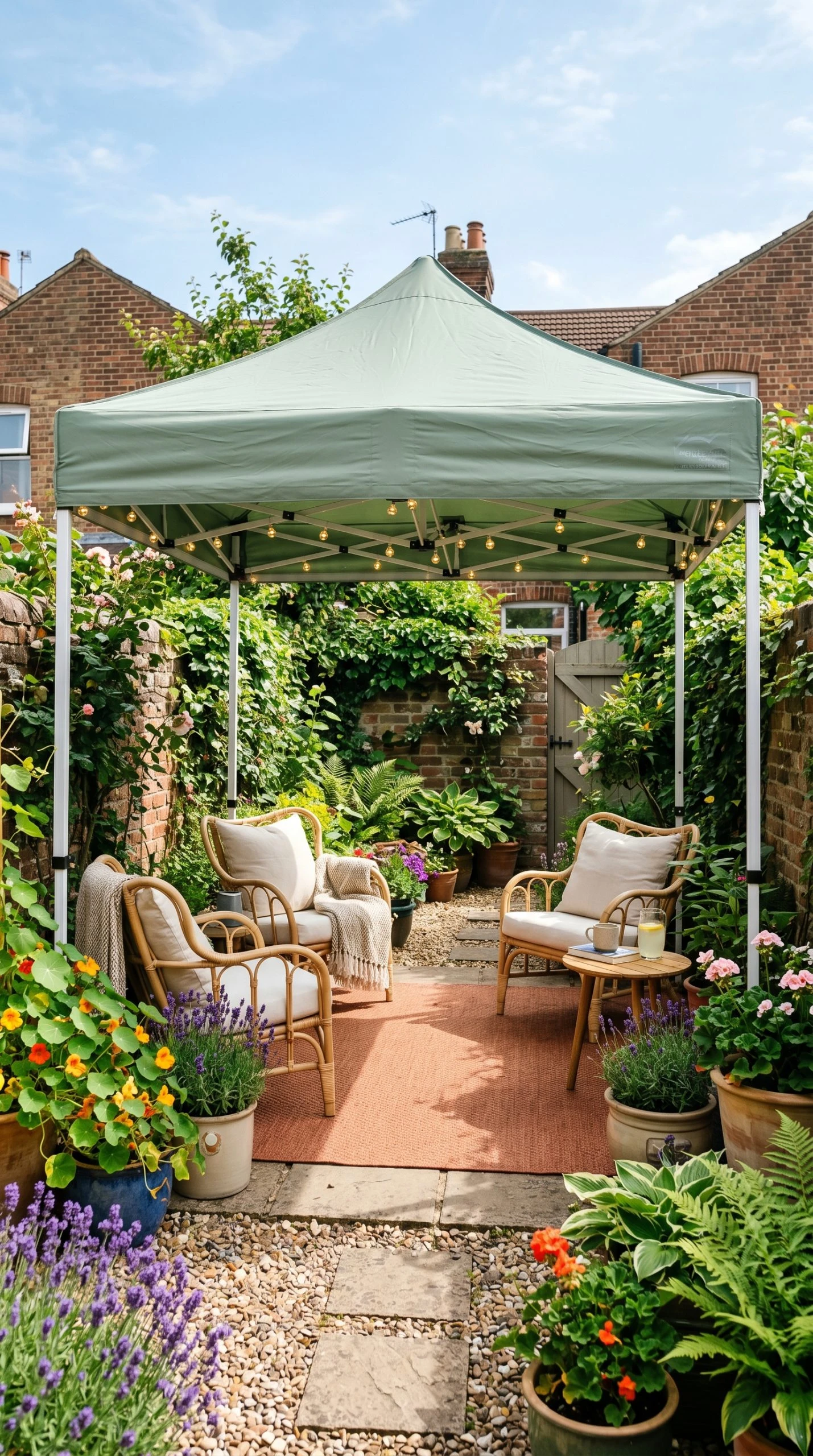
Picture a Sunday afternoon with unexpected guests arriving. The sun is out, the table is set, but there is no shade and no plan B if the clouds roll in. A good-quality pop-up gazebo solves that problem in under ten minutes, and the newer generation of pop-up models have moved well beyond the saggy canvas versions you associate with school fetes. Powder-coated steel frames with ripstop polyester canopies now come in sophisticated neutral tones that look genuinely intentional in a small garden setting.
The appeal of a pop-up or collapsible gazebo for a small garden is total flexibility. You get all the benefits of a covered outdoor space without committing any permanent footprint. When it is not in use, it folds flat and stores in a slim bag that slides behind the shed or under the stairs. For a garden where space is non-negotiable, that reversibility matters. Choose a 2.5m x 2.5m model in sandy beige, sage green, or charcoal, and pair it with weather-resistant rattan furniture in similar tones.
Dress it up rather than leaving it bare. Add clip-on solar fairy lights along the inner roof frame, hang a couple of outdoor-safe lanterns from the corner poles, and lay an outdoor rug in a warm terracotta or rust tone underneath. The rug does the most work here because it visually anchors the whole setup so it looks like a designed space rather than an emergency shelter. When the gazebo goes away, the rug stays and marks the spot as a seating area in its own right.
Designer Advice: Always peg a pop-up gazebo into the ground even on calm days. Lightweight frames can lift suddenly in a gust, and four simple screw pegs take less than two minutes to secure.
3. A Wooden Pergola-Gazebo with a Climbing Plant Roof
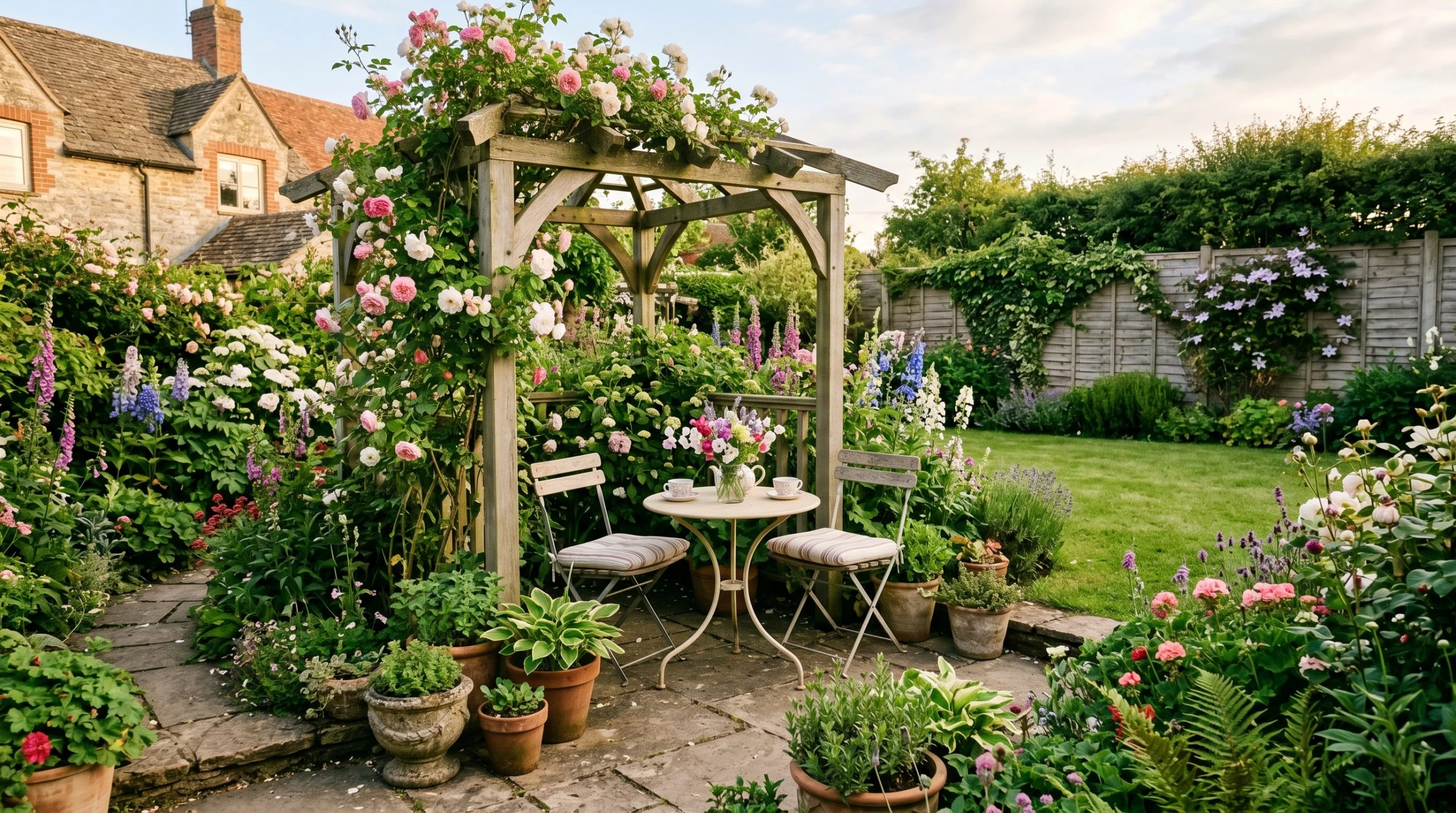
There is a version of this that exists in every beautiful cottage garden photograph you have ever saved. A simple wooden frame, open at the sides, with roses or wisteria winding their way across the top until the flowers ARE the roof. It sounds romantic and a little high-maintenance, but it is actually one of the most practical and budget-friendly approaches to a small garden gazebo. You are letting the plants do the design work while the structure itself stays minimal and unobtrusive.
Build or buy a basic square pergola frame in pressure-treated timber or FSC-certified hardwood. Sizes from 2.4m x 2.4m work well in smaller spaces without overwhelming them. Paint it in a classic colour such as Farrow and Ball Moles Breath, dark slate, or a deep forest green. The colour makes the frame disappear once the plants take hold, so it reads as part of the garden rather than a structure sitting on top of it. Plant one climbing rose and one fragrant clematis at the base of alternate posts for layered interest across the seasons.
Underneath, keep the furniture simple. A small hardwood bench with a couple of weather-resistant cushions in a garden-appropriate print is enough. The plants are the main event here, so resist the temptation to overcrowd the space with accessories. A single lantern hung from the central crossbeam and a small side table for drinks is all you need. The result is a covered spot that changes character month by month as the plants grow, flower, and change with the seasons.
Designer Advice: Train your climbing plants sideways along the crossbeams from the start rather than letting them grow straight up. Horizontal growth produces far more flowers on most rose and clematis varieties.

4. The Compact Outdoor Dining Gazebo
Eating outside is one of those simple pleasures that gets complicated surprisingly fast. The sun is too bright, the breeze picks up, the neighbour decides to mow their lawn. A dedicated dining gazebo in a small garden solves most of these problems without requiring planning permission or a professional installation crew. The key is sizing it for the furniture rather than the other way around. A round table with four chairs fits beautifully under a gazebo with a 3m x 3m footprint, leaving enough clearance to move around comfortably.
For a dining-specific gazebo in a small garden, a metal frame with a solid polycarbonate or powder-coated steel roof panel works better than a canvas canopy because it keeps the rain completely out and does not flap in the wind mid-meal. Choose a frame in anthracite grey or matte black for a modern look, or warm brushed aluminium for something softer. Keep the table round rather than rectangular because round tables allow better conversation, take up less visual space, and are far easier to navigate around in a tight area.
Lighting is everything for an outdoor dining space. Hang a weather-rated pendant light from the central roof support and set it on a battery timer so it comes on automatically at dusk. A simple warm white bulb in an open cage fitting looks genuinely elegant in an outdoor context. Line the base of the gazebo with a few terracotta pots of herbs, rosemary, basil, and mint, so the garden contributes to the meal. It is one of those small details that makes a dining spot feel thought through rather than assembled in a hurry.
Designer Advice: If your gazebo roof is transparent polycarbonate, apply a UV-filtering film to the underside. It cuts glare significantly and makes afternoon lunches much more comfortable without reducing light dramatically.

5. The Japanese-Inspired Minimalist Gazebo
In a small garden, clutter is the enemy. Every extra element competes for attention and makes the space feel smaller than it actually is. A Japanese-inspired approach to a garden gazebo works brilliantly in this context because the entire philosophy is built around restraint. Simple lines, natural materials, negative space. The gazebo itself becomes part of the garden rather than the centrepiece of it, and that shift in thinking changes the whole experience of being out there.
Choose a clean square frame in natural cedar, bamboo, or pale FSC oak. Leave the wood unsealed or finish it with a clear matte oil that lets the grain show through. The roof should be open-slatted, either shou-sugi-ban charred cedar boards or bamboo poles laid close together, allowing filtered light through rather than blocking it completely. This dappled shade effect is one of the most beautiful things a small garden can offer, and it costs almost nothing to achieve once the structure is in place.
Inside the gazebo, place a single low platform bench with a simple linen cushion in off-white or pale stone. Resist adding too much. A ceramic planter with a single architectural plant, perhaps a slim bamboo, a Japanese acer in a muted glaze pot, or a clipped box sphere, placed just outside the gazebo entrance creates a sense of arrival without adding clutter inside. Rake a small section of gravel around the base for a clean, intentional ground treatment.
Designer Advice: Sand and oil natural cedar or oak annually. Untreated hardwood in a small garden weathers to a beautiful silver-grey but can develop surface mould in wet climates, so a light annual treatment keeps it clean without changing its character.

6. The Evening Garden Gazebo Lit Up with Warm String Lights
Some gardens only really come alive at night. During the day they are pleasant enough, but once the sun goes down and the lights come on, the space transforms into something genuinely special. An evening-focused gazebo leans into that idea completely. The structure itself is almost secondary here because the lighting is what creates the atmosphere, and in a small garden, a well-lit gazebo becomes a focal point that pulls the whole space together after dark.
Use a simple powder-coated steel frame in matt black as your base. The dark colour will disappear visually at night, leaving only the light. Run three or four strands of warm white outdoor fairy lights back and forth across the roof frame so the ceiling of the gazebo becomes a canopy of light. Add two or three larger filament bulb pendants hanging at different heights from the crossbeam for a more layered effect. Warm white only here, around 2700K, because cooler white or blue-toned lights kill the atmosphere entirely.
Inside, keep the furniture comfortable and low-key. Deep outdoor cushions in charcoal, navy, or deep olive green work well because dark colours look rich and inviting at night rather than washed out. Add two or three outdoor pillar candles in hurricane glass holders on a side table for a secondary light source that flickers beautifully in a gentle breeze. Surround the outside of the gazebo with solar stake lights placed in a loose cluster in the borders so the gazebo appears to emerge from a softly glowing garden.
Designer Advice: Connect your string lights to an outdoor smart plug with a dusk-to-dawn setting. The lights come on automatically at sunset and switch off at midnight without any effort, and it genuinely makes you use the space more.

7. A Wall-Mounted Lean-To Gazebo That Borrows from the House
If your small garden sits directly against the back wall of your house, you have a structural advantage that freestanding gazebo buyers do not. A lean-to or wall-mounted gazebo attaches directly to the house wall, using it as one side of the frame and cutting the material cost and footprint almost in half. You end up with a covered outdoor area that genuinely feels like an extension of the house rather than a separate structure, which is both practically and visually ideal in a tight space.
Choose a polycarbonate or glass-effect roof panel for a lean-to gazebo in a small garden because solid roofs can make the adjoining room feel dark. A clear or bronze-tinted twin-wall polycarbonate panel lets the light through while still providing weather protection. The frame should match your house in some way, either mirroring the window frames, the fascia board colour, or picking up on the brick tone. A lean-to that looks designed for the house rather than added to it always looks more expensive than it actually is.
Use the back wall of the house to your advantage inside the covered space. Fix a slim outdoor shelf or two to the wall for plants, lanterns, or outdoor dinnerware. Add an outdoor-rated wall light in a style that matches the interior, and suddenly the transition from inside to outside feels genuinely considered. Keep the floor level consistent with the interior if possible, using matching stone or porcelain tiles that flow from the kitchen or living room straight out under the gazebo canopy.
Designer Advice: Always check your building regulations before attaching any structure permanently to a house wall. Most lean-to garden structures fall under permitted development, but this varies by location and house type.

8. The Boho Rattan and Macrame Gazebo with Layered Textiles
Not every small garden needs to be architecturally polished. Some gardens call for a more relaxed, layered approach where the vibe matters more than the precision. A bohemian-style gazebo leans into texture, warmth, and personality, and done well it creates the kind of outdoor space that people actually want to spend an afternoon in. The key to making it work in a small garden is keeping the structure simple so the textiles and accessories can do the visual heavy lifting without tipping into chaos.
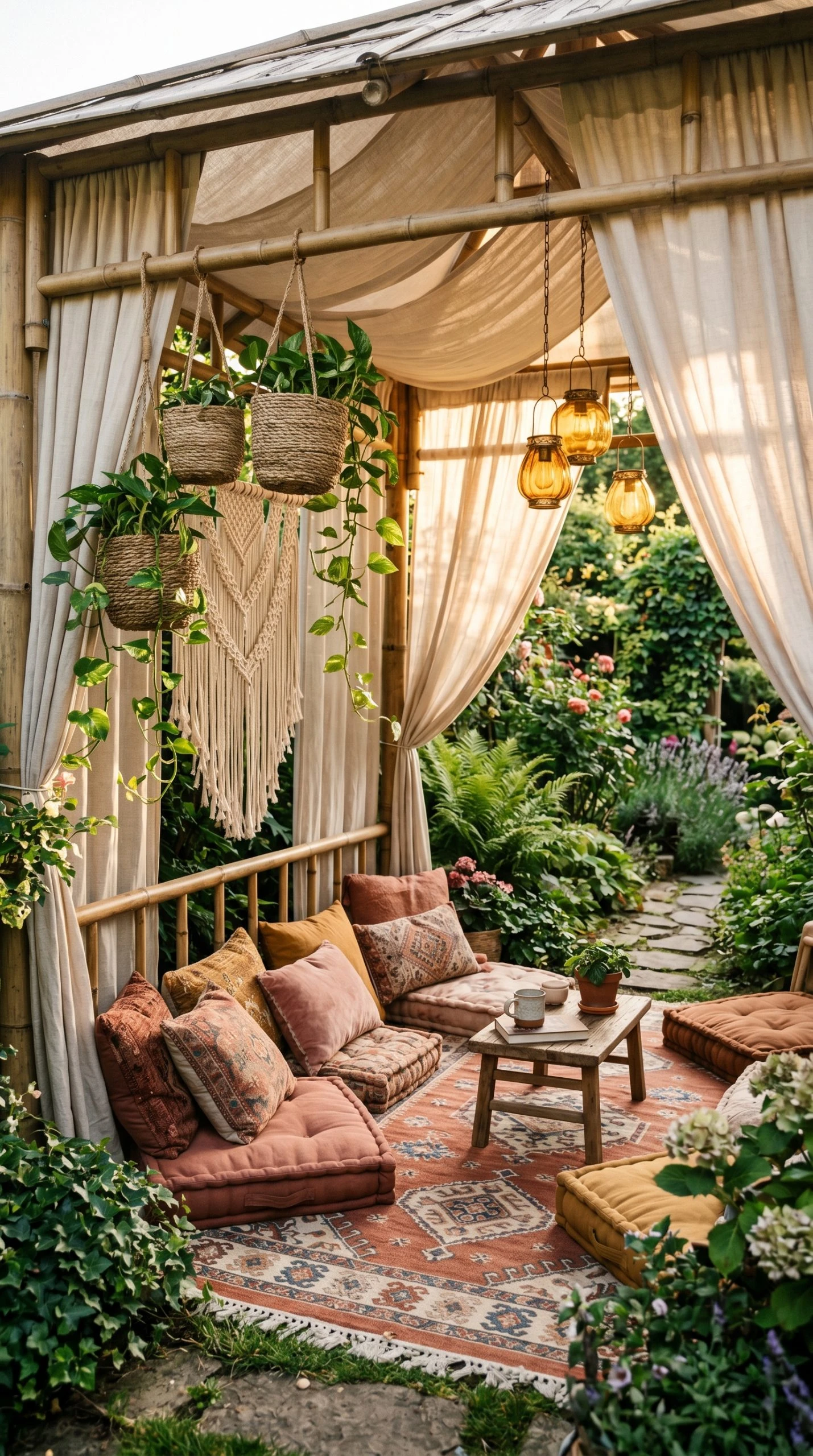
Start with a basic square metal or bamboo gazebo frame in a warm bronze or natural wood finish. Hang lightweight cotton or linen curtain panels from the corners so they move gently in the breeze without feeling too formal. Layer a large outdoor rug in a warm terracotta, rust, or dusty pink underneath the seating area. Use a mix of floor cushions and one small outdoor sofa rather than a matched furniture set, because the eclectic mix is part of the aesthetic. Introduce macrame wall hangings on one or two of the inner frame sides for texture without blocking light.
Plants are essential to this look. Hang three or four trailing plants in woven baskets from the roof frame, pothos, string of hearts, or trailing geraniums all work well and bring that lived-in, overgrown quality that makes boho outdoor spaces feel so welcoming. Add a small collection of mismatched candles and lanterns in amber and warm copper tones for evening light. The overall effect should feel collected and personal rather than purchased all at once.
Designer Advice: Weight down your floor cushions and lightweight textiles with a heavy outdoor rug underneath. A layered boho setup can catch the wind more than you expect, and a good rug anchors everything in place without being visible.
9. The Retractable Canopy Gazebo for Gardens That Change
Some gardens get used in very different ways depending on the time of year, the weather, and who is using them. A small garden that doubles as a play space, a yoga spot, and a dinner party venue needs flexibility above all else. A retractable canopy gazebo is built for exactly that scenario. The canopy pulls out when you need shade or shelter and retracts completely when you want open sky, leaving the frame as a lightweight architectural feature rather than a barrier.
Modern retractable canopy systems use UV-resistant acrylic fabric in tightly woven weaves that resist fading, repel light rain, and pull back smoothly without bunching. Choose a neutral colour, slate grey, warm sand, or soft khaki, so the canopy reads as a design choice rather than a practical afterthought. The frame should be aluminium for low maintenance and light weight, ideally wall-mounted on one side to reduce the post count in a small space. This keeps the ground area clear and makes the garden feel more open even when the canopy is extended.
Because the canopy retracts, the fixed elements of this gazebo need to work in both covered and open modes. Choose furniture that looks equally good under shade as it does in full sun, clean lines, weather-resistant teak or powder-coated aluminium. Add a few potted architectural plants along the edges of the frame posts, olive trees, standard bay, or slim hornbeam topiary, to give the structure a sense of permanence even when the canopy is tucked away.
Designer Advice: Always retract a canopy before high winds or heavy rain. Even the toughest acrylic fabrics are not designed to take sustained weather loads when extended, and retracting takes less than a minute.

10. A Gazebo Designed Around a Single Water Feature
There is something about the sound of moving water in a garden that changes the atmosphere completely. Pair that with a covered sitting area and you have created a sensory space that feels genuinely restorative, even in the middle of a busy week. A small garden gazebo designed specifically around a water feature works because both elements reinforce each other. The gazebo frames the view of the water, the water draws the eye through the gazebo, and the two together create a focal point that makes the garden feel much larger than it actually is.
Position a compact self-contained wall fountain or a small raised millstone water feature just outside the gazebo entrance so it is visible from the seating position inside. Choose natural stone, slate, or reconstituted limestone for the water feature to keep it looking grounded and authentic. Line the inside of the gazebo with weather-resistant seating that faces toward the water, a simple bench with cushions or two armchairs at a slight angle. The sightline from the seating to the water is the design here, so keep everything else restrained.
Sound matters as much as sight with water features. A small recirculating pump that moves the water gently produces a low, steady trickle that is genuinely calming rather than obtrusive. Surround the water feature with moisture-loving plants such as hostas, ferns, or compact ornamental grasses to make the planting feel appropriate to the context. Inside the gazebo, use grey-green or blue-toned cushion fabrics that echo the water palette and tie the two elements together visually.
Designer Advice: Place your water feature and pump on a timer that runs during the hours you actually use the garden. Running water 24 hours a day increases pump wear and electricity use without any real benefit, and a timed pump is quieter for neighbours overnight.

11. The Year-Round Gazebo with a Heating Element
Most gazebos get used from late spring to early autumn and then locked up until the following year. That represents a significant waste of a good outdoor space, especially in a small garden where every corner needs to earn its keep. A gazebo designed for year-round use adds a heating element, either a freestanding outdoor heater, a wall-mounted infrared panel, or a small fire basket, and suddenly the covered space becomes genuinely usable across all four seasons.
For a small garden, an infrared wall-mounted heater is often the smartest choice because it produces instant, directional warmth without taking up floor space or creating fire risk. Mount it on the back wall or from the roof frame of the gazebo and it will heat the seated area directly without wasting energy warming the surrounding air. Pair this with a solid roof rather than a fabric canopy, either timber-clad, polycarbonate, or metal sheeting, to keep the heat in and the rain out properly.
Inside a year-round gazebo, invest in better quality furniture than you might for a seasonal space. Proper all-weather wicker with thick cushions, a small outdoor side table for drinks and books, and one good lantern all make the space feel like a room rather than a temporary setup. Add a simple outdoor-rated roller blind or two on the windward side so you can cut the breeze without closing the space off completely. In winter, the gazebo with the heater on, a hot drink in hand, and the garden visible but outside in the cold is genuinely one of the more pleasurable spots in a well-designed home.
Designer Advice: If you install a wall-mounted electric infrared heater, use a qualified electrician and ensure the unit has an IP rating of at least IP55 for outdoor use. This is not a DIY job and the rating matters for safety.

Conclusion
Small gardens do not need small thinking. A gazebo, chosen carefully and placed with intention, gives even the most compact outdoor space a real sense of purpose and personality. The ideas in this article cover a wide range of styles, budgets, and functions, from the permanent corner structure to the flexible pop-up, from the plant-covered pergola to the year-round heated retreat. What they all have in common is that they work with the garden rather than against it.
The most important thing before buying or building anything is to spend time in your garden at different points in the day. Note where the light falls, where the wind comes from, which corners get used and which get ignored. That information will tell you more about the right gazebo for your space than any list of specifications. A gazebo that suits how you actually live in your garden will get used far more than one chosen purely for how it looks in a photograph.
Start with one idea that genuinely excites you, keep the scale appropriate for the space, and do not rush the finishing details. The plants, the lighting, the textiles, and the furniture are what make a gazebo feel like yours rather than a showroom display. Get those right and a small garden can end up being the most special outdoor space on the street.
FAQ
What is the best size gazebo for a small garden?
For most small gardens, a gazebo between 2.4m x 2.4m and 3m x 3m is the ideal range. This size gives you enough covered space for a table and chairs or a comfortable seating arrangement without dominating the garden. If your garden is particularly narrow or irregular, a corner design or a lean-to style attached to the house wall will feel less imposing than a freestanding central structure.
Do I need planning permission for a garden gazebo?
In most cases, no. In the UK and many other countries, small freestanding garden structures fall under permitted development rights as long as they do not exceed certain height limits (usually around 2.5m for structures near boundaries) and do not cover more than a set percentage of the garden. However, listed buildings, conservation areas, and leasehold properties may have additional restrictions. Always check with your local authority before installing any permanent structure.
What materials last longest in an outdoor gazebo?
Powder-coated aluminium frames are among the most durable for gazebos because they resist rust, require almost no maintenance, and stay looking good for many years. Pressure-treated hardwood is also excellent if you are willing to oil or stain it every couple of years. For roofing, twin-wall polycarbonate panels offer a good balance of durability, light transmission, and weather resistance. Fabric canopies can last well if they are UV-stabilised acrylic rather than basic polyester, and if they are removed or retracted during heavy weather.
Can I put a gazebo on grass in a small garden?
Yes, although a level, stable base will make the gazebo safer and more comfortable to use. Laying a simple base of compacted gravel or a few paving slabs under the gazebo footprint before installing it makes a significant difference. This also prevents the frame legs from sinking into soft ground over time and stops the area underneath from becoming muddy in wet weather. For a pop-up or temporary gazebo, grass is fine as long as you peg the frame down securely.
How do I make a small garden gazebo feel private?
The most effective ways to add privacy to a gazebo in a small garden are outdoor curtain panels hung from the roof frame, trellis side panels with climbing plants trained across them, or bamboo screening fixed to the outer frame. Curtain panels are the most flexible option because they can be tied back during the day and drawn closed in the evening. A climbing plant over a trellis takes longer to establish but creates the most natural-looking privacy screen and adds real seasonal interest to the space.
Are there gazebo options that work for rented gardens?
Absolutely. Pop-up and collapsible gazebos are the obvious answer since they leave no permanent trace, but there are also freestanding pergola kits that sit on weighted base plates rather than being fixed into the ground. These can be assembled, enjoyed, and dismantled at the end of a tenancy without any damage to the garden. When choosing furniture and accessories for a rented outdoor space, opt for pieces that can move with you, so invest in good quality rather than anything built into the structure.