Bedroom Designs Borrowed from the Nordic Playbook

If you have ever walked into a Scandinavian bedroom and felt an immediate, involuntary relaxation, as though the room itself was asking you to slow down, you already understand what this design tradition is reaching for. Scandinavian bedroom design is rooted in the idea that a bedroom should function as a genuinely restorative space, not just somewhere to sleep but somewhere your mind and body actively unwind. That goal shapes every choice from the wall color to the light switch placement.
The bedroom, more than any other room, benefits from the Scandinavian principles of simplicity, functionality, and warmth. When a bedroom contains only what it needs, nothing more and nothing less, the result is a space that is naturally calming and easy to maintain. This guide compares two approaches for each key design area and recommends the one that delivers the best results in a real Nordic-inspired bedroom. Some of the answers might surprise you.
1. Warm White vs. Cool White Walls
Approach A: Cool stark white walls for maximum brightness.
Approach B: Warm white or very pale greige walls for livable comfort.
In theory, a stark cool white wall maximizes light reflection, which is especially appealing given that Scandinavian design emerged from climates with limited daylight. In practice, however, cool white walls in a bedroom can feel clinical and sleep-disrupting, particularly in north-facing rooms where the natural light has a cool cast. Warm whites, specifically those with cream, yellow, or blush undertones, reflect almost as much light but create a far more comfortable, restful atmosphere. Benjamin Moore’s White Dove, Farrow and Ball’s Wimborne White, and Sherwin-Williams’ Alabaster are all excellent choices.
Recommend: Approach B. The warmth of the wall color creates a bedroom that feels genuinely welcoming at all times of day, not just in bright morning light.

2. Platform Bed vs. Elevated Traditional Bed Frame
Approach A: A low platform bed in light oak, sitting close to the floor.
Approach B: A traditionally elevated bed frame on visible legs, 18 inches from the floor.
Both can work, but they create very different moods. A platform bed in light oak or birch emphasizes horizontal lines, which creates a sense of visual calm and lowered energy that is deeply appropriate for a sleep space. It also keeps the visual center of the room low, making walls feel taller and the ceiling feel higher. The elevated bed on visible light wood legs, a staple of mid-century modern design, creates a lighter-feeling room because the visible floor space beneath the frame keeps the room feeling more spacious. In a small bedroom, the elevated frame usually wins. In a larger bedroom with good ceiling height, the platform bed creates a more dramatic, intentional statement.
Recommend: Based on room size: platform for larger rooms, elevated frame for smaller rooms and apartments.
3. Linen Bedding vs. Cotton Sateen Bedding
Approach A: Linen bedding in natural or washed tones.
Approach B: Cotton sateen bedding in crisp white or soft gray.
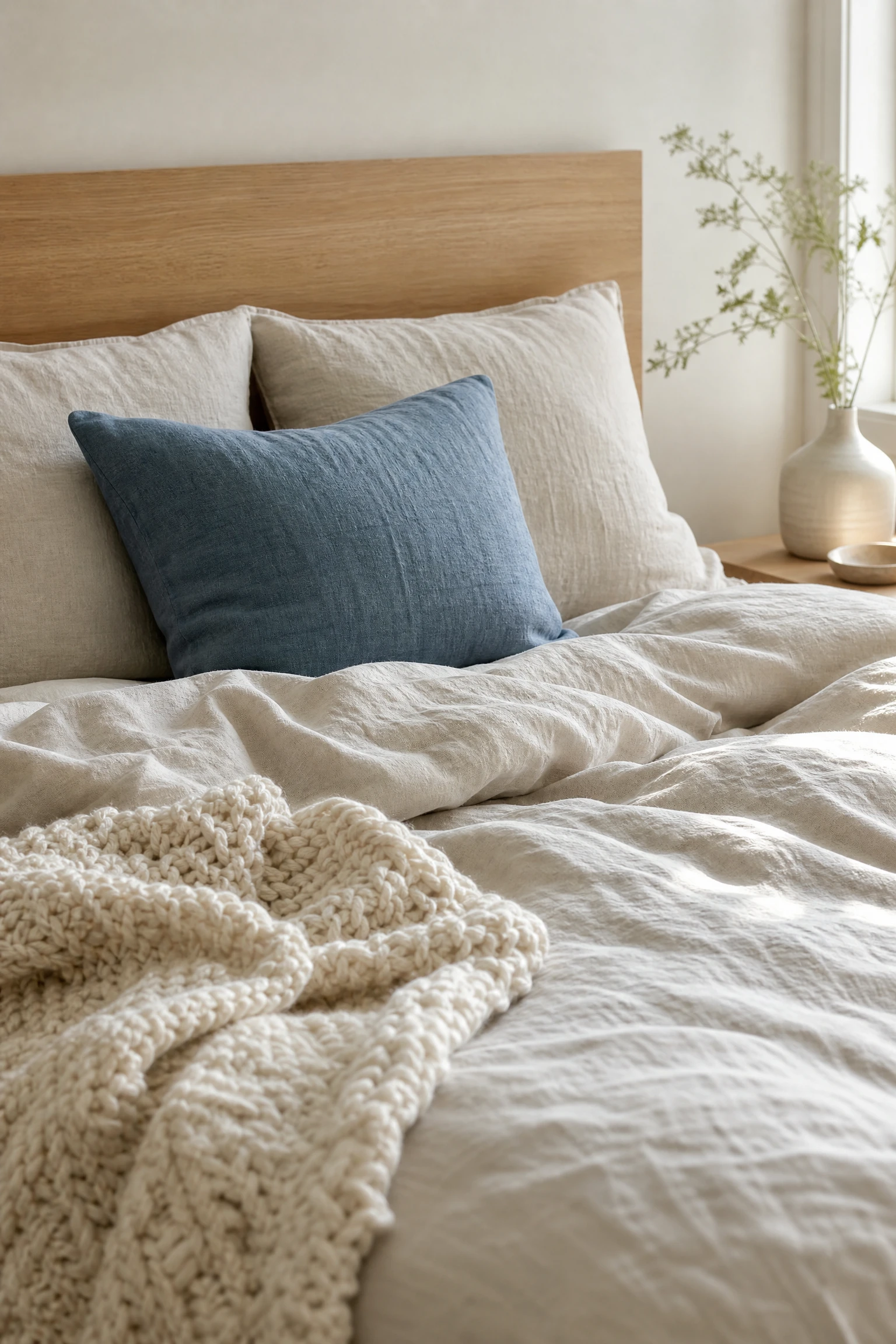
Both are legitimate Scandinavian bedroom choices, but they create different atmospheres. Linen bedding has an organic, slightly rumpled quality that looks effortlessly beautiful and reads as natural and unpretentious, which is deeply in keeping with Nordic design values. It is also naturally temperature-regulating, which makes it genuinely practical. Cotton sateen is smoother, crisper, and creates a more hotel-like, groomed appearance. The sateen look requires more maintenance to look its best; linen actually looks better slightly imperfect. For a true Scandinavian bedroom feel, the slightly casual, organic quality of linen is far more authentic. Look for linen in washed natural, warm cream, or soft dusty blue, all of which layer beautifully together.
Recommend: Approach A.
4. Pendant Bedside Lights vs. Table Lamps
Approach A: Pendant lights hung on either side of the bed from the ceiling or wall-mounted arms.
Approach B: Matching table lamps on bedside tables on each side.
Table lamps are the default choice in most bedrooms, and there is nothing wrong with them. But pendant bedside lights, either ceiling-hung pendants or wall-mounted swing-arm versions, offer a significant advantage in a Scandinavian bedroom: they free up the entire surface of the bedside table for other uses, whether that is a glass of water, a stack of books, or a small plant. They also give the room a more considered, designed quality that looks genuinely intentional. Pendants in a natural paper shade, woven rattan, or blown glass in a warm amber work beautifully in this context. Honest limitation: pendant bedside lights require installation work if the wiring is not already in place.
Recommend: Approach A for new builds or renovations; Approach B if rewiring is not feasible.

5. Exposed Light Wood Flooring vs. Wall-to-Wall Carpet
Approach A: Light oak or birch wood flooring left exposed with a rug.
Approach B: Wall-to-wall carpet in warm neutral tones.
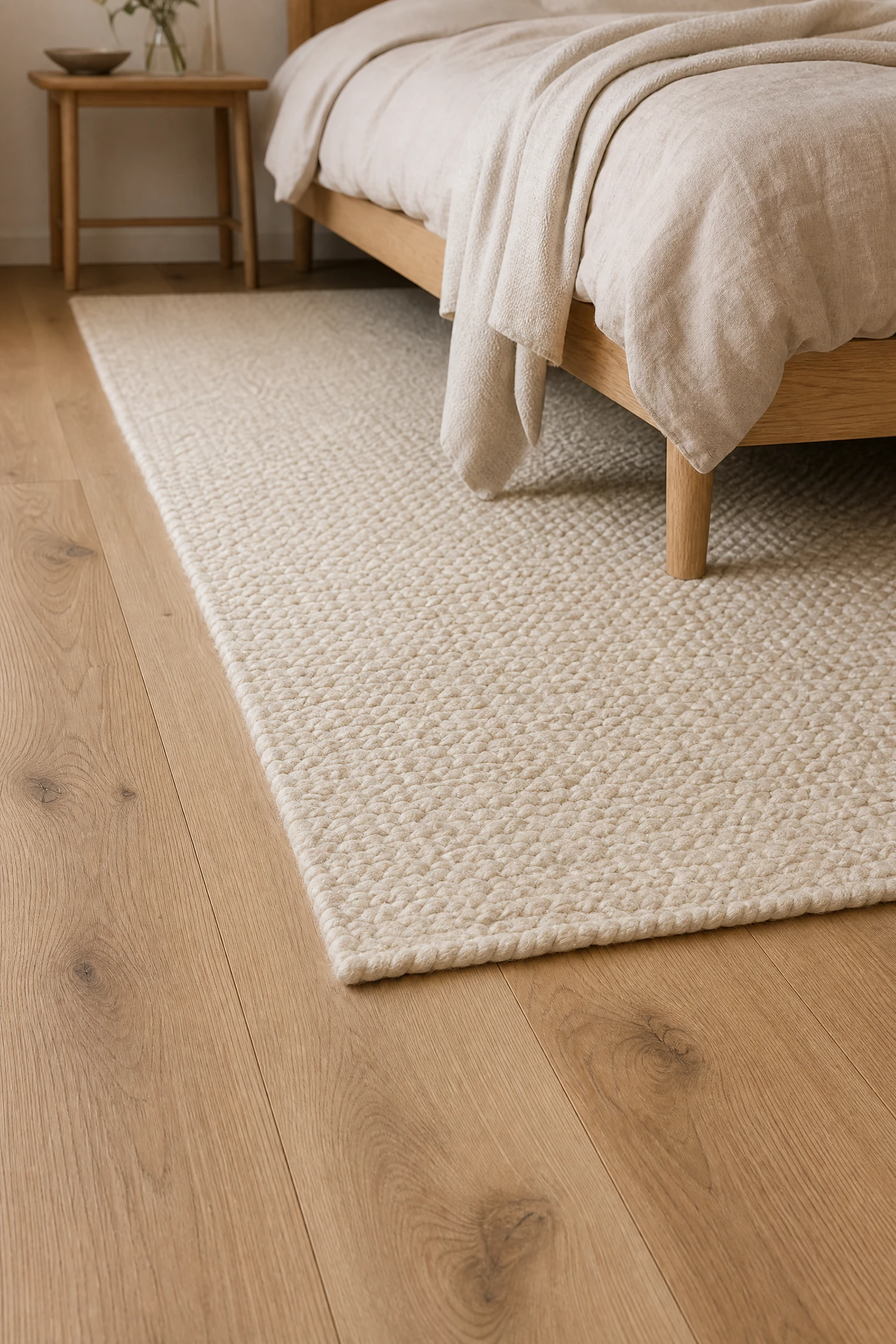
This is one of those choices where the Nordic context is genuinely clarifying. In Scandinavian countries, hard wood flooring, particularly in light oak or birch, is the standard for bedrooms. It is easier to keep clean, looks beautiful with a layered rug on top, and does not trap allergens the way carpet does. A large area rug in a hand-woven wool or a plush flat-pile in warm cream or warm gray adds the softness underfoot that makes a bedroom feel comfortable, without the maintenance challenges of wall-to-wall carpet. The combination of light wood flooring with a large, luxurious rug is one of the most beautiful and functional setups in any Scandinavian bedroom.
Recommend: Approach A. Wall-to-wall carpet works in a pinch but rarely achieves the same visual quality.
6. Minimalist Open Shelving vs. Closed Wardrobe Storage
Approach A: Minimalist open shelving for books, plants, and curated objects.
Approach B: Closed-front wardrobes or built-in storage to hide all clothing and clutter.
The Scandinavian bedroom philosophy values both approaches but for different reasons. Open shelving is beautiful when it is genuinely curated, showing only the books you are currently reading, a plant or two, a ceramic vessel, and nothing else. The moment it becomes a dumping ground, it destroys the calm the bedroom is working so hard to create. Closed storage, on the other hand, is almost always the safer choice for the bedroom because it keeps the visual field clean and the room feeling restful. The best Scandinavian bedrooms often combine the two: built-in closed wardrobes for all clothing and practical items, and one or two small open shelves for genuinely beautiful objects.
Recommend: Approach B as the primary storage strategy, with small, tightly curated open shelving as a secondary layer.

7. Botanical Green vs. No Plants in the Bedroom
Approach A: One or two well-chosen plants to bring organic life into the bedroom.
Approach B: No plants, keeping the bedroom purely calm and uncluttered.
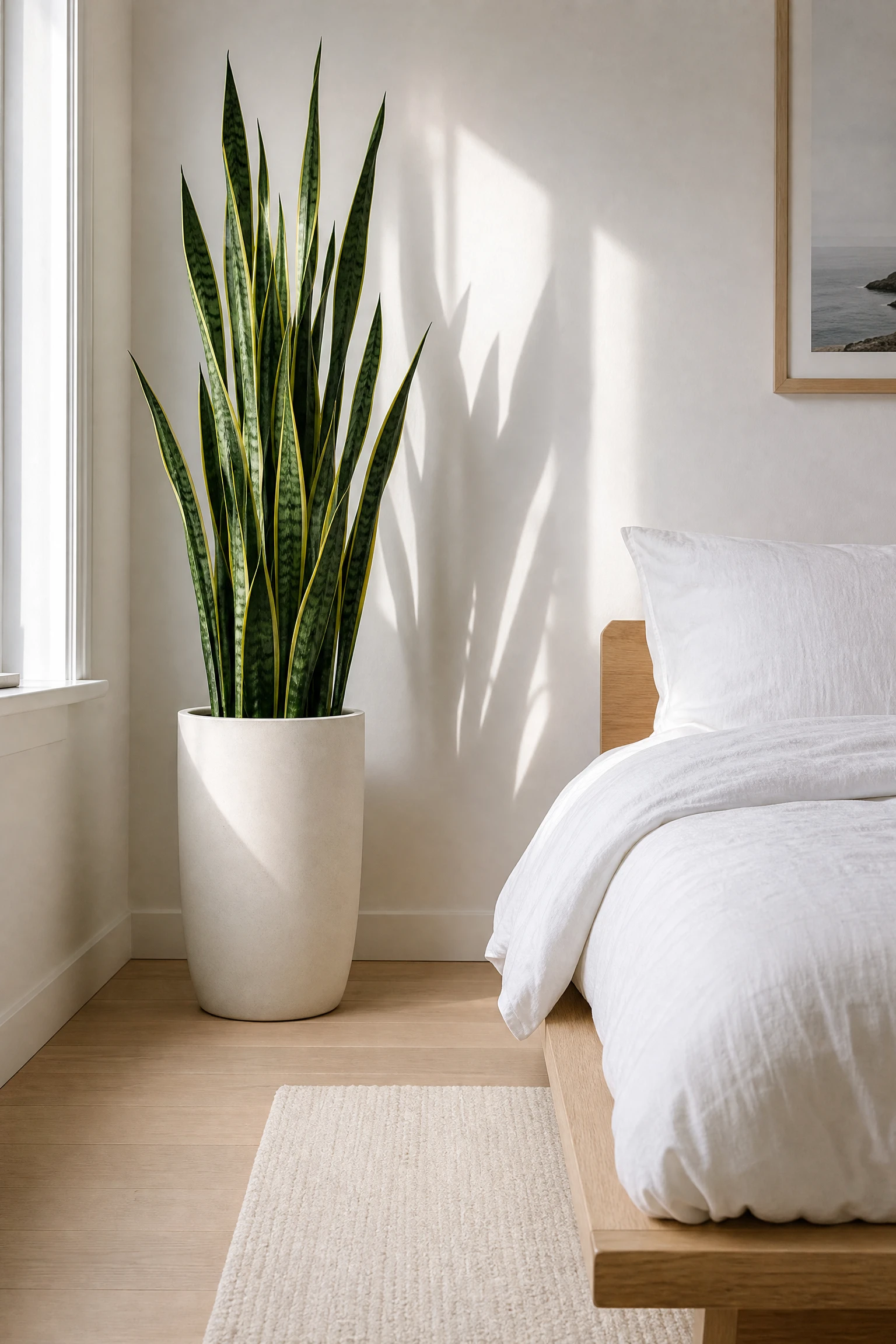
Both are valid choices, and the decision often comes down to personal preference and maintenance willingness. In Scandinavian design, the philosophical connection to nature is strong, and a single beautiful plant in a bedroom, perhaps a snake plant or a small fig tree, connects the interior to the living world outside. Snake plants in particular are an almost perfect Scandinavian bedroom plant: they are architectural, easy to care for, and known for air-purifying properties. They look beautiful in a simple matte ceramic pot in white, warm gray, or sage green. The important thing is not to overcrowd the bedroom with plants; one or two statement pieces are ideal.
Recommend: Approach A for those willing to maintain them, particularly focusing on low-maintenance varieties.
8. A Chunky Wool Throw vs. Multiple Light Throws
Approach A: One substantial, chunky knit wool throw draped over the bed.
Approach B: Two or three lighter-weight throws in different textures layered together.
In practice, both approaches create beautiful beds, but they do it differently. A single chunky knit throw in natural cream, warm gray, or dusty sage is a powerful focal point that photographs beautifully and reads as deliberate. It is the kind of throw that guests immediately want to touch, which makes it a strong sensory element as well as a visual one. Multiple lighter throws, perhaps a waffle-weave cotton, a thin linen, and a light wool, create a more layered, relaxed look that can feel more welcoming in everyday use. The multi-throw approach also allows more color flexibility, as you can swap one piece out seasonally.
Recommend: Approach A for a cleaner, more photographed look; Approach B for everyday cosiness and seasonal versatility.

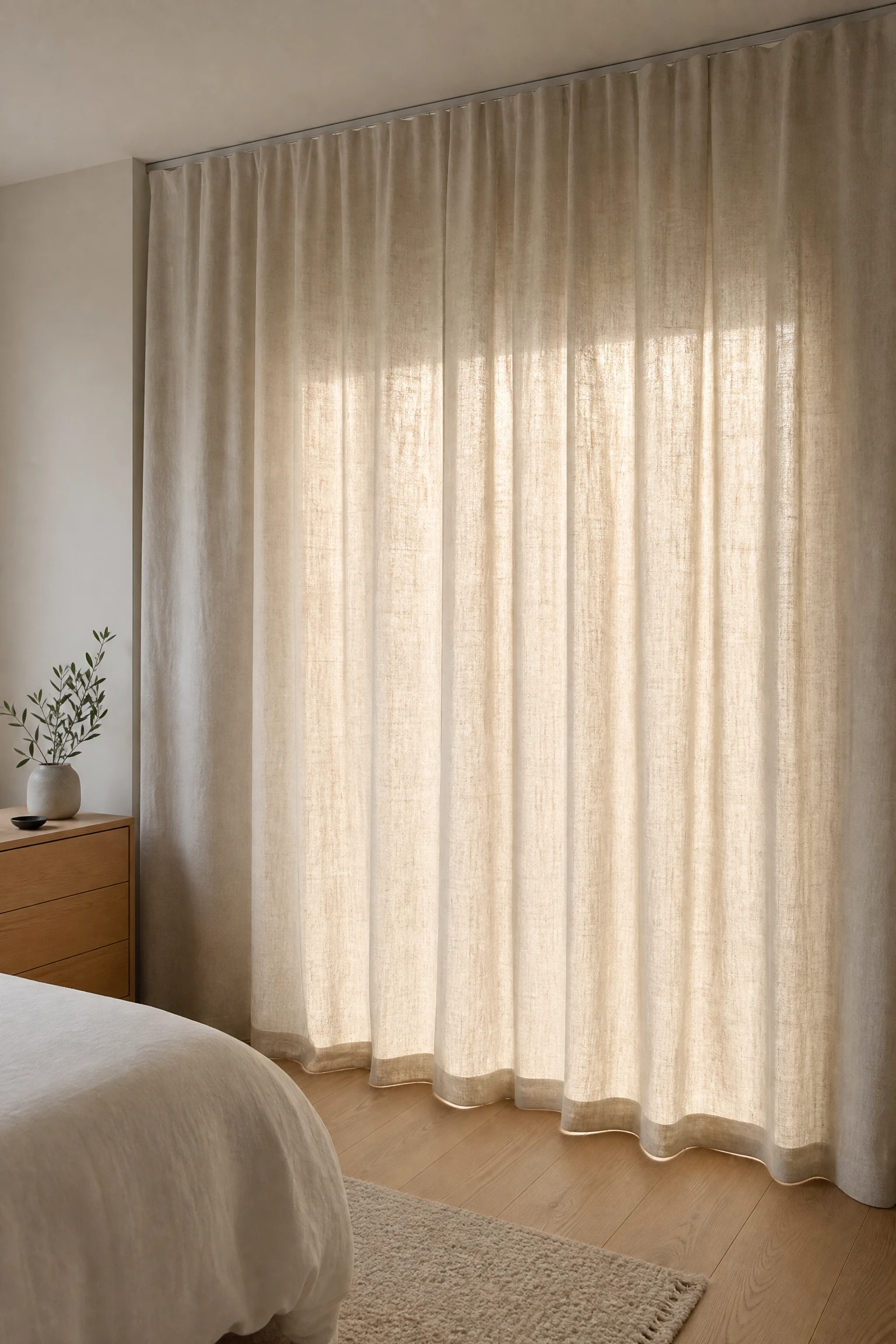
9. Blackout Curtains vs. Sheer Linen Curtains
Approach A: Linen blackout curtains in warm white or pale natural tone.
Approach B: Sheer linen curtains that filter but do not fully block light.
This is a genuinely practical decision that varies with individual sleep needs. If you wake with the sun, blackout curtains are a genuine quality-of-life improvement, particularly in summer. For a Scandinavian bedroom, the key is choosing blackout curtains that do not look utilitarian: linen-fronted blackout curtains in a warm natural white create a beautiful, soft appearance at the window while doing the practical work of blocking light when you need it. Sheer linen curtains are gorgeous in a bedroom, allowing the light to filter gently through while providing privacy, but they only work if light does not disrupt your sleep.
Recommend: Approach A for most people, with blackout lining sewn behind a decorative linen front for the best of both worlds.
10. Accent Wall vs. Uniform Painted Walls
Approach A: One accent wall in a deeper, richer color behind the bed.
Approach B: All four walls the same warm white or pale neutral.
An accent wall in a Scandinavian bedroom works best when the color is a soft, muted version of a nature-inspired tone rather than a bold statement color: deep dusty blue, warm clay, muted sage green, or a charcoal. These colors, used behind the bed, create a sense of depth and framing that makes the bed feel like a genuinely designed focal point. The alternative, four uniform pale walls, creates maximum brightness and calm but can feel slightly flat, particularly in a large bedroom with limited architectural detail. The accent wall approach adds sophistication without requiring a full redesign.
Recommend: Approach A for bedrooms that need more visual interest; Approach B for smaller rooms where maximum brightness is a priority.

11. Sculptural Pendants vs. Recessed Ceiling Lights
Approach A: A single sculptural pendant light as the main ceiling fixture.
Approach B: Recessed downlights for clean, unobtrusive overhead lighting.
Recessed downlights are popular for their clean, minimal ceiling appearance, but in a Scandinavian bedroom, a beautiful pendant light does something recessed lights cannot: it adds personality, warmth, and a genuine sense of considered design to the overhead zone of the room. A pendant in woven rattan, natural paper, or blown warm glass immediately makes the room feel more human and designed. Recessed lights tend to create a flat, even light wash that can feel institutional if not supplemented with table or floor lamps. That said, recessed lights are an excellent supplement to pendant lighting rather than a replacement for it.
Recommend: Approach A as the primary ceiling fixture, supplemented with dimmer-controlled recessed lights as an optional layer.

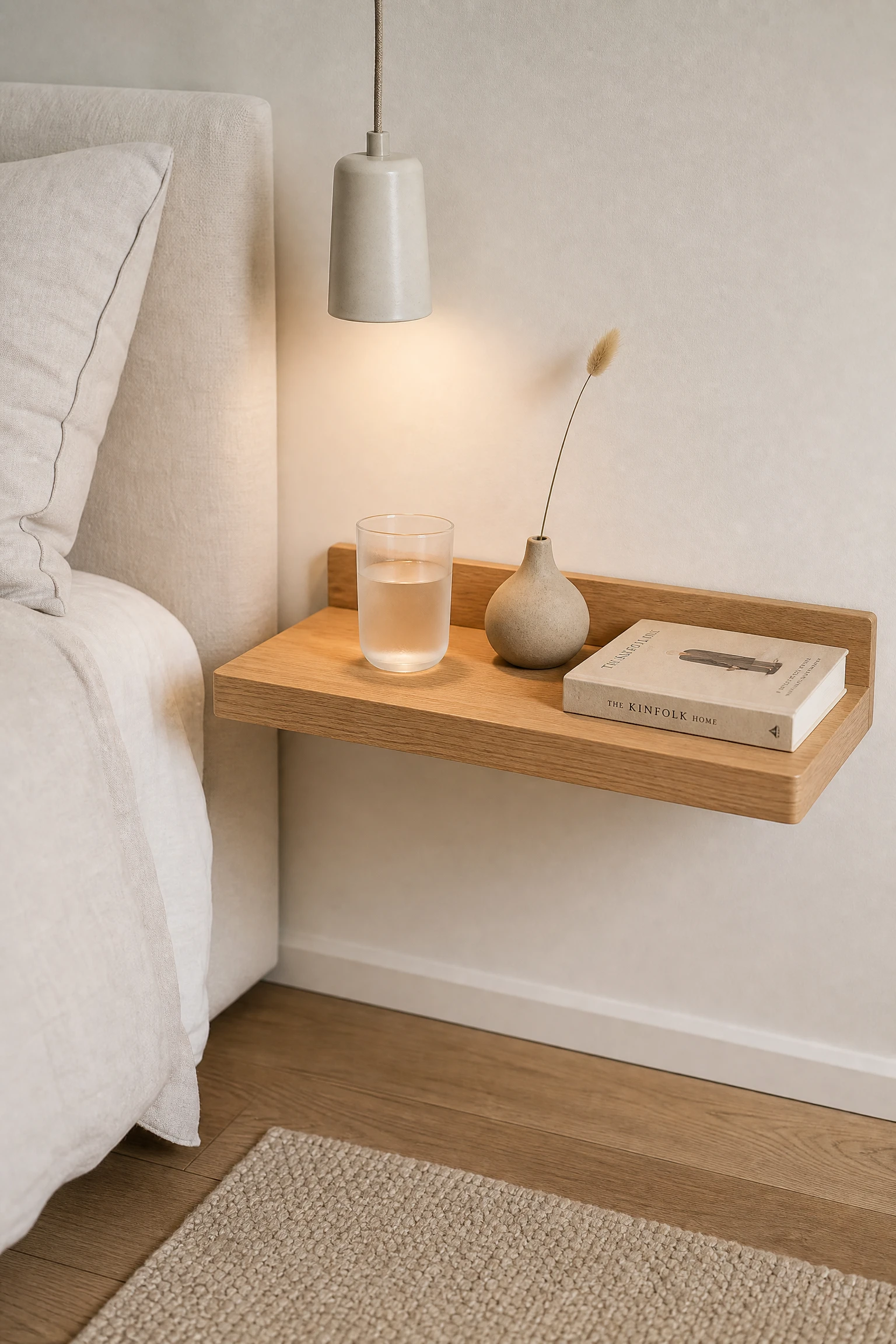
12. Bedside Table in Light Wood vs. Floating Wall Shelf
Approach A: A matching pair of light oak or birch bedside tables on either side of the bed.
Approach B: Two floating wall-mounted shelves at bedside height instead of tables.
Both approaches are common in Nordic bedrooms, but floating shelves have become increasingly popular in smaller Scandinavian spaces because they free up floor area and create a lighter, more airy feel. They are also significantly more budget-friendly than matching bedside furniture. On a floating shelf, there is space for exactly what you need at night: a small lamp, a glass of water, a book, and perhaps a small plant. Anything beyond that becomes clutter. The discipline this imposes is actually an advantage in a design philosophy that values restraint. Matching light wood bedside tables are the more traditional and formal choice, and they work beautifully in larger rooms.
Recommend: Approach B for small bedrooms and apartments; Approach A for larger, more generous bedroom spaces.
13. Geometric Rugs vs. Plain Natural Rugs
Approach A: A hand-woven rug with a subtle geometric Nordic pattern in warm neutrals.
Approach B: A plain, solid flat-pile rug in cream or warm gray.
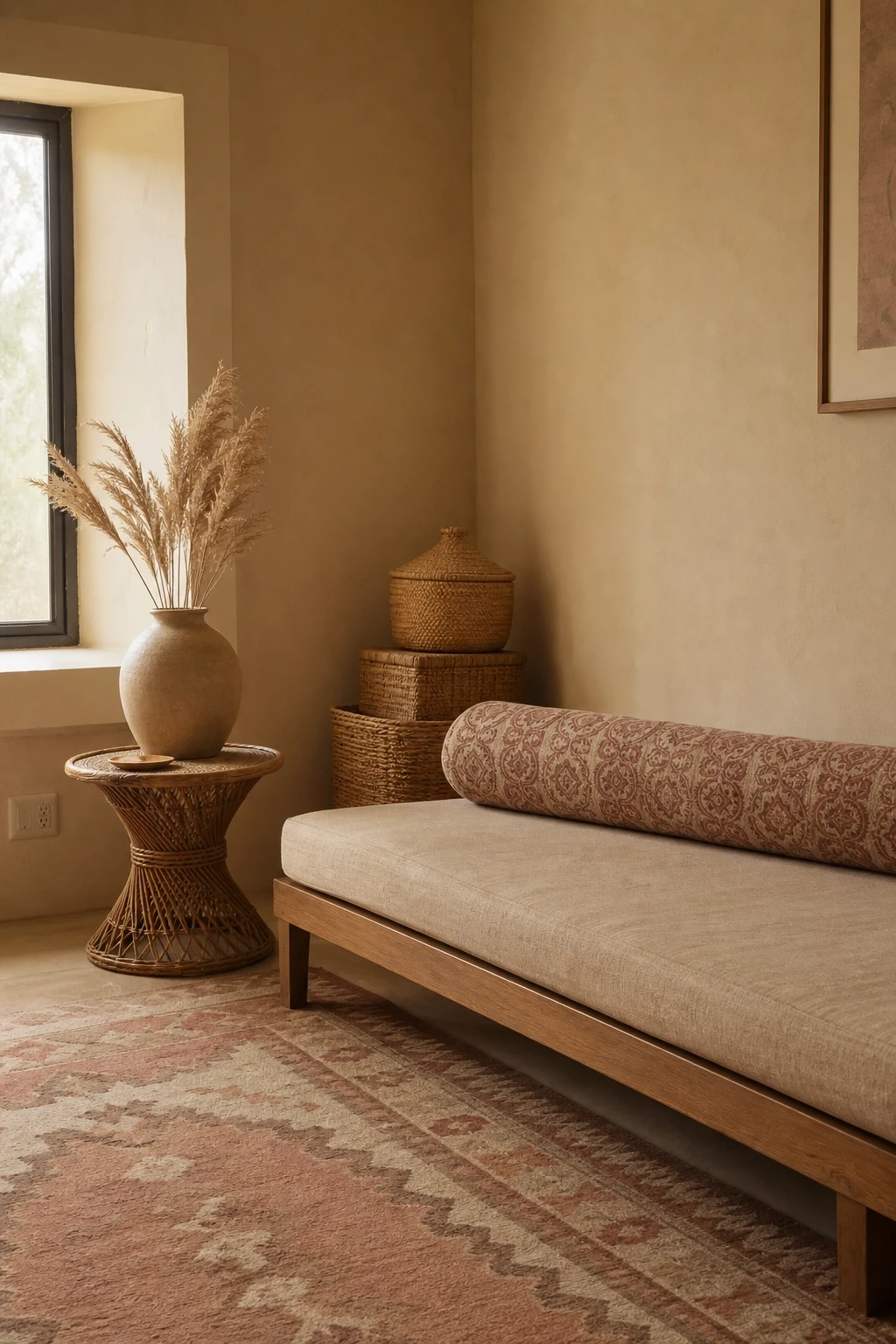
Both are appropriate for a Scandinavian bedroom, but they create different energy in the space. A flat-pile rug in a solid neutral is the safer, more versatile choice: it grounds the room without competing with any other pattern in the space, and it works with virtually any furniture combination. A hand-woven rug with a subtle Nordic geometric pattern, particularly in traditional Scandinavian motifs like simple diamond or cross patterns in cream, gray, and dusty red, adds heritage and warmth that a plain rug cannot. The geometric option works best when the rest of the bedroom is kept very simple, allowing the rug to be the one textured, patterned element in an otherwise quiet space.
Recommend: Approach B for most bedrooms; Approach A when the bedroom needs a heritage or artisanal focal point.

14. Wabi-Sabi Ceramics vs. Matching Ceramic Sets
Approach A: Individual, handmade-looking ceramic vessels with organic imperfections.
Approach B: A matching set of ceramic vessels in a consistent size and finish.
The wabi-sabi influence on Scandinavian design, particularly through the Japandi crossover aesthetic, has made imperfect, handmade-looking ceramics one of the most popular accessories for Nordic interiors. A small collection of individual pieces, a pinch pot, a slightly irregular bud vase, a rough-textured bowl, sitting together on a bedside shelf or dresser top, looks far more interesting and authentic than a matched set. Matching ceramic sets can feel generic and mass-produced, which runs counter to the Scandinavian value of quality over quantity.
Recommend: Approach A. Look for handmade ceramics at local markets or online ceramicists working in matte whites, warm grays, and natural clay tones.

Conclusion
The Scandinavian bedroom at its best is one of the most genuinely comfortable spaces you can create in a home. It is not about deprivation or excessive minimalism; it is about making choices carefully and refusing to settle for things that do not serve you well. That philosophy translates into a bedroom that is easier to sleep in, easier to maintain, and easier to feel good in every morning when you open your eyes.
The comparison approach in this guide is intended to show that there is rarely one single right answer in interior design, but there are usually better answers given the specific circumstances of your room, your budget, and your daily life. Take the recommendations as starting points rather than rigid rules, and allow your own preferences to shape the final result. A bedroom that reflects your genuine taste and works for your actual life will always outperform a room that was put together to match someone else’s ideal. That is, in the end, the most Scandinavian thing of all.
FAQ
Q: How do I create a Scandinavian bedroom on a tight budget? Start with paint, which is the most affordable and highest-impact change. Then focus on bedding, a good quality linen duvet cover set in natural white or washed tones makes an enormous difference. Add one large plant, candles, and a simple floating shelf for accessories.
Q: What is the best rug size for a Scandinavian bedroom? A rug should ideally extend at least 18 to 24 inches beyond each side of the bed. For a queen bed, an 8×10 foot rug is the minimum comfortable size. Going slightly larger is almost always better than going too small.
Q: Can a Scandinavian bedroom work in a room with dark wood flooring? Yes. Use a large, warm-toned area rug to lighten the floor visually, keep walls in a warm white, and choose light wood furniture to counterbalance the darker floor. The contrast can actually be very beautiful.
Q: How do I make a Scandinavian bedroom feel warm in winter without losing the clean aesthetic? Layer your textiles: add a chunky knit throw to the bed, swap lighter cushions for wool ones, and add an extra layer of candle lighting. Winter calls for more textile warmth and more candlelight, and both are completely in keeping with the Scandinavian aesthetic.
Q: Is the Japandi style the same as Scandinavian? They share many qualities but are distinct. Japandi is a deliberate blend of Scandinavian and Japanese design, incorporating slightly darker tones, bamboo materials, and the Japanese concept of wabi-sabi. Scandinavian design tends to stay lighter and warmer.
Q: What art looks best in a Scandinavian bedroom? Simple, nature-inspired prints, abstract artwork in muted organic tones, or classic Nordic graphic design posters in black and white are all strong choices. The frame should be simple, thin, and in a natural wood or matte black finish.