Bathroom Window Privacy Ideas That Actually Look Good
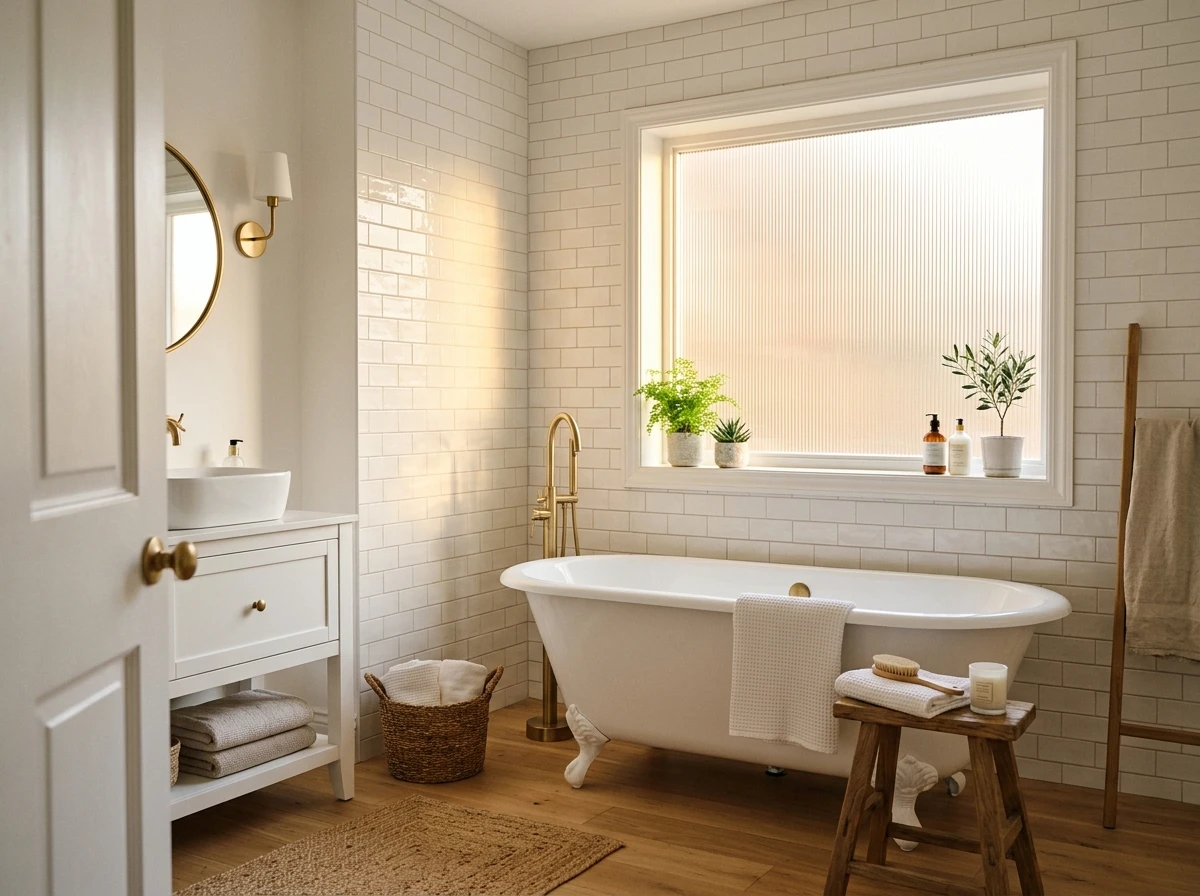
The bathroom is the one room in your house where privacy is non-negotiable. But for so many people, the window situation in there is a total afterthought, either covered with a sad paper blind that is starting to peel at the corners, or left completely bare because nobody could figure out what to do with it. The challenge is real: you need total privacy, but you also do not want to completely block out the only natural light source in a room that can easily feel like a cave.
The good news is there are genuinely great solutions out there, and plenty of them look just as intentional as anything else in a well-decorated home. Whether your bathroom leans modern and clean, warm and vintage, or somewhere in between, there is a window treatment or DIY fix that fits without looking like you just slapped something up to block the neighbor’s view. This list covers everything from affordable film options to beautiful stained glass looks, each one tailored to a different style of bathroom and a different budget.
Before you pick anything, think about two things: how much natural light you actually want coming in, and whether your window is frosted or clear glass to begin with. Those two factors will narrow your options quickly. Some of these ideas work beautifully on clear glass windows, others are better suited to small transom windows up high, and some are so versatile they work across the board. Read through, figure out which one speaks to your space, and go from there.
1. Frosted Window Film
If you have never used window film before, this is going to be a pleasant surprise. Frosted film is one of the easiest and most affordable privacy solutions you can put on a bathroom window, and it looks genuinely clean and modern when it is done well. You apply it directly to the glass, it blocks the view from outside, and it still lets in a soft, diffused light that makes the whole room feel bright without being exposed. The installation is a DIY-friendly process that usually just involves cutting the film to size, spraying the window with a water and soap solution, and smoothing it on with a squeegee.
The range of frosted film styles has expanded a lot in recent years. You can go with a simple all-over frost that mimics factory-frosted glass, or choose a patterned option with geometric shapes, leaf prints, or abstract designs etched into the frosted surface. For a bathroom with white tiles and matte black fixtures, a simple solid frost looks sharp. For a bathroom with warmer tones and wood accents, a film with a delicate nature-inspired pattern adds a bit of personality. Most films are removable without damaging the glass, which makes them ideal if you are renting.
Designer Tip: Apply the film to a clean, dry window on a slightly humid day. The moisture in the air helps the film set more evenly and reduces bubbles.

2. Cafe Curtains
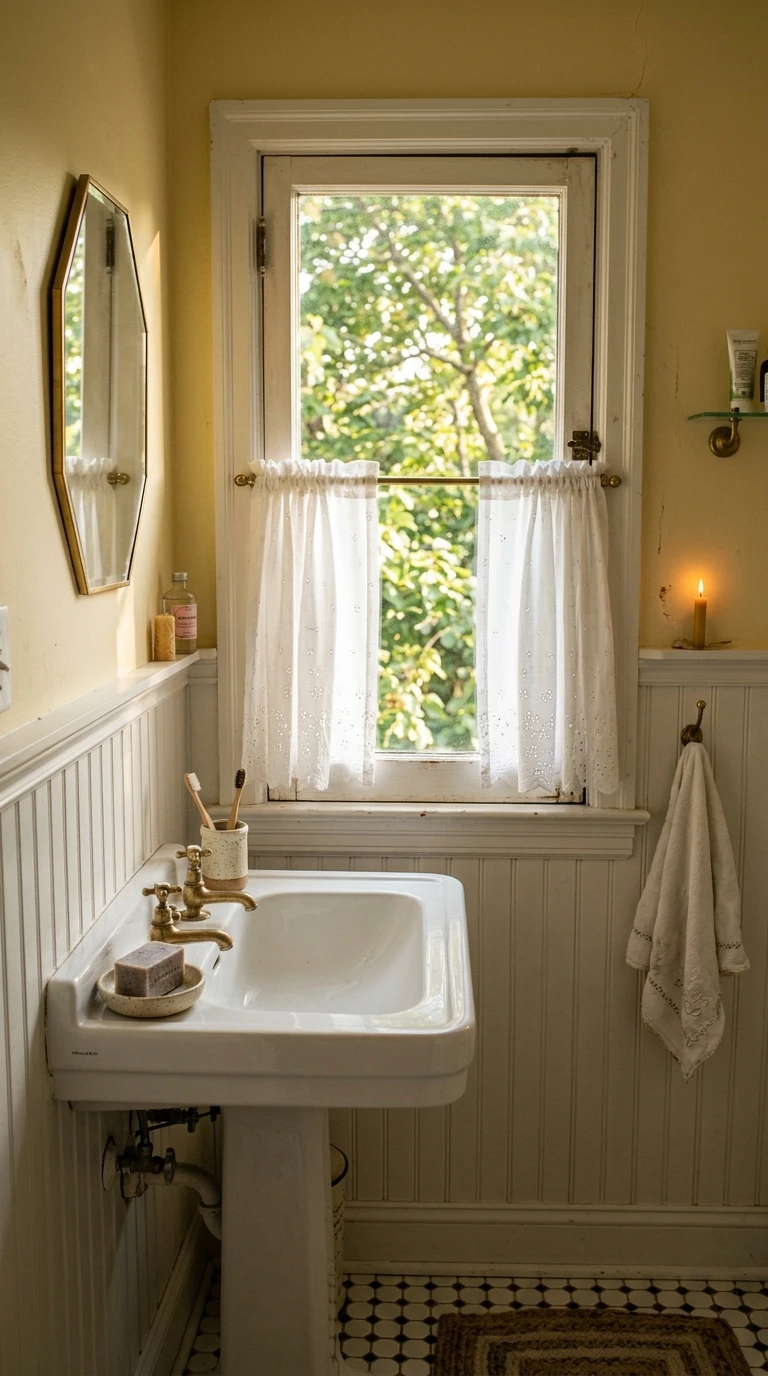
Cafe curtains are one of those ideas that works beautifully in bathrooms and gets overlooked far too often. The concept is simple: instead of covering the entire window, you hang a short curtain panel that covers just the bottom half of the window. The top half stays completely open to let in light, and the bottom half blocks the direct line of sight from outside. In a bathroom, this is often all you need since most people are not pressing their faces to your window to see what is happening at sink level.
Style-wise, cafe curtains have a lot of range. A white eyelet fabric in a cottage bathroom looks charming and fresh. A linen panel in soft oat or sage brings warmth to a more minimal space. For a kitchen-meets-bathroom aesthetic that has become quite popular in recent years, a lightweight gingham in muted colors works really well. You hang them on a simple tension rod or a small decorative rod mounted inside the window frame, and the whole thing takes about 15 minutes to put together. It is also an easy way to add color or texture to the bathroom without committing to anything permanent.
Designer Tip: Look for tension rods that fit inside the window frame so you avoid drilling. Most home improvement stores carry them in standard window widths.
3. Roman Shades in Moisture-Resistant Fabric
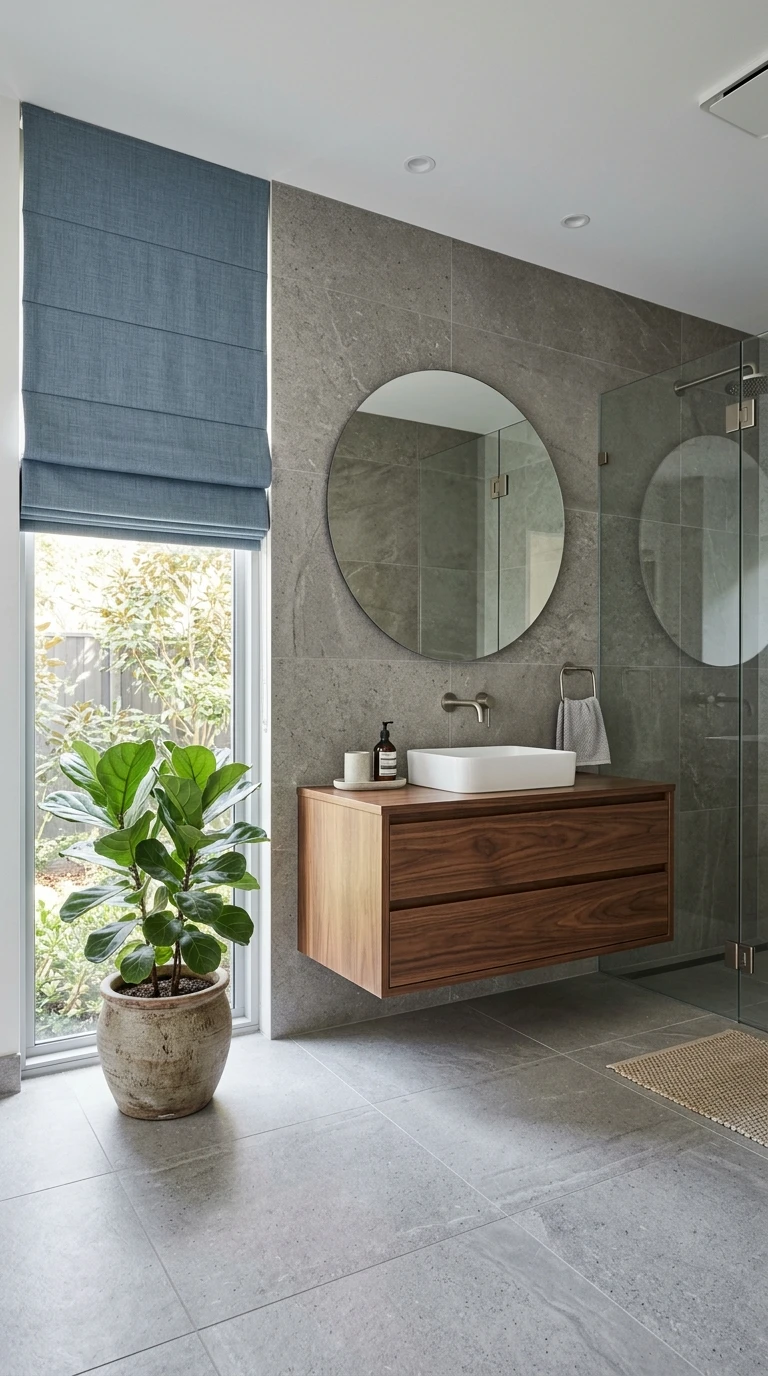
Roman shades bring a more polished, intentional look to a bathroom window than a lot of other options, and when you choose the right fabric, they hold up really well in a humid environment. The key is to stick to synthetic blends or treated fabrics specifically marketed as moisture-resistant. These fabrics resist warping, mildew, and the general degradation that happens when you hang untreated linen or cotton in a steamy room over time. They still look soft and textured, but they are built to handle the environment.
For a modern bathroom with neutral walls and clean lines, a flat Roman shade in a solid dusty blue or warm grey reads as very sophisticated. For a bathroom with patterned tile or a maximalist look, a simple white or off-white shade keeps the window from competing. Roman shades stack up neatly when raised, which means you can open them fully on days when you do not need privacy and the window still looks tidy. They work best on windows that are a standard rectangle shape and at least 18 inches wide.
Designer Tip: Mount Roman shades inside the window frame for a clean, built-in look. Outside mount works too if your frame is too shallow to fit the hardware inside.
4. Textured or Patterned Glass Film
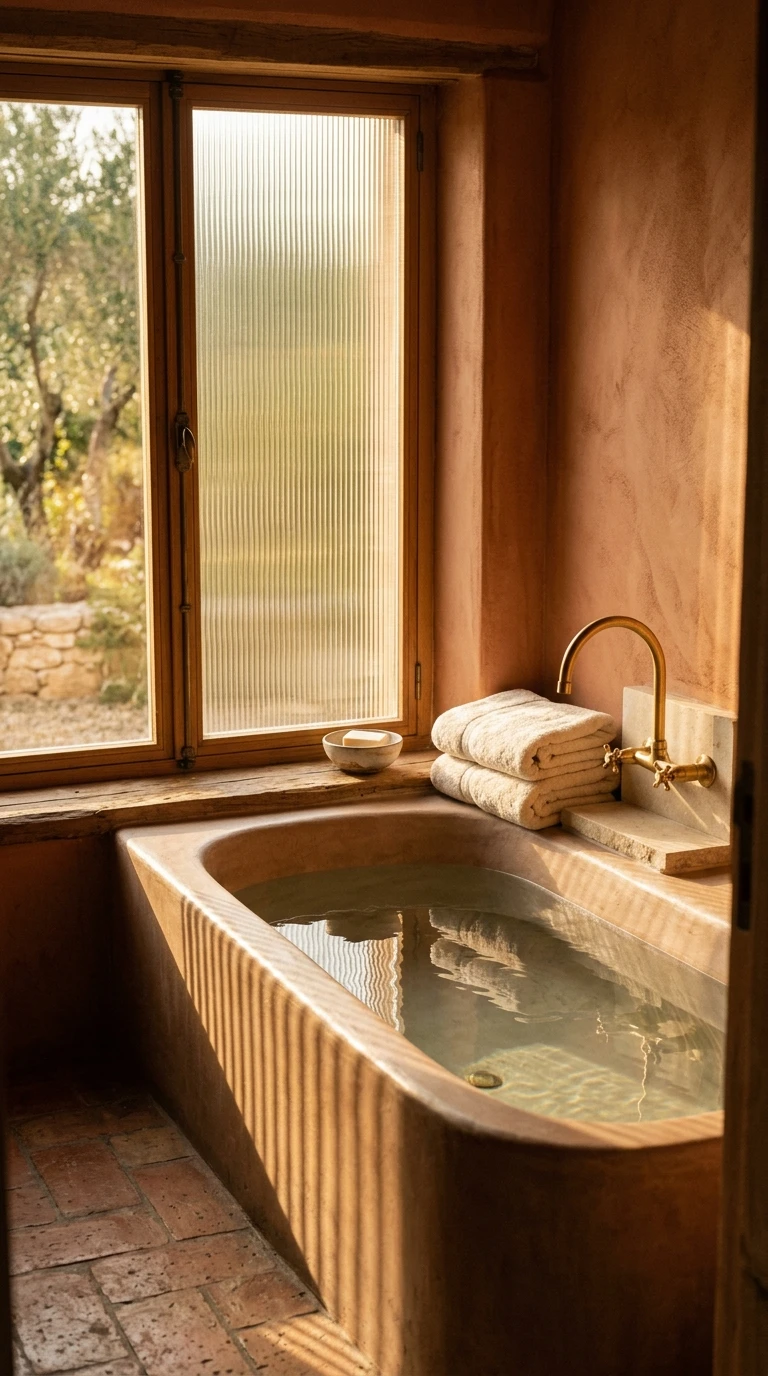
This is a step up from basic frosted film, and it is worth knowing about. Patterned glass films come in designs that closely mimic the look of actual decorative glass, including rain glass, reeded glass, fluted glass, and Art Deco-style geometric cuts. When light hits these films, they scatter it in a way that genuinely looks intentional and design-forward rather than like a privacy fix. In a bathroom with modern or eclectic decor, installing a reeded glass film on your window can look like you splurged on a custom glass panel when you actually spent under $30.
Reeded film, which mimics the vertical ribbed texture of reeded glass, has become especially popular thanks to how frequently it appears in contemporary interior design right now. It diffuses the view completely while letting in a nice warm glow. Rain glass film does the same thing with a slightly more organic, flowing texture. If your bathroom has vintage tile, brass fixtures, or an Art Deco bent, the more geometric diamond and chevron pattern films look exactly right. The installation process is the same as standard frosted film, and most of these products come with clear instructions and peel-off backing.
Designer Tip: Clean the glass thoroughly with rubbing alcohol before applying any film. Even tiny dust particles trapped underneath will be visible once the film is on.
5. Interior Shutters
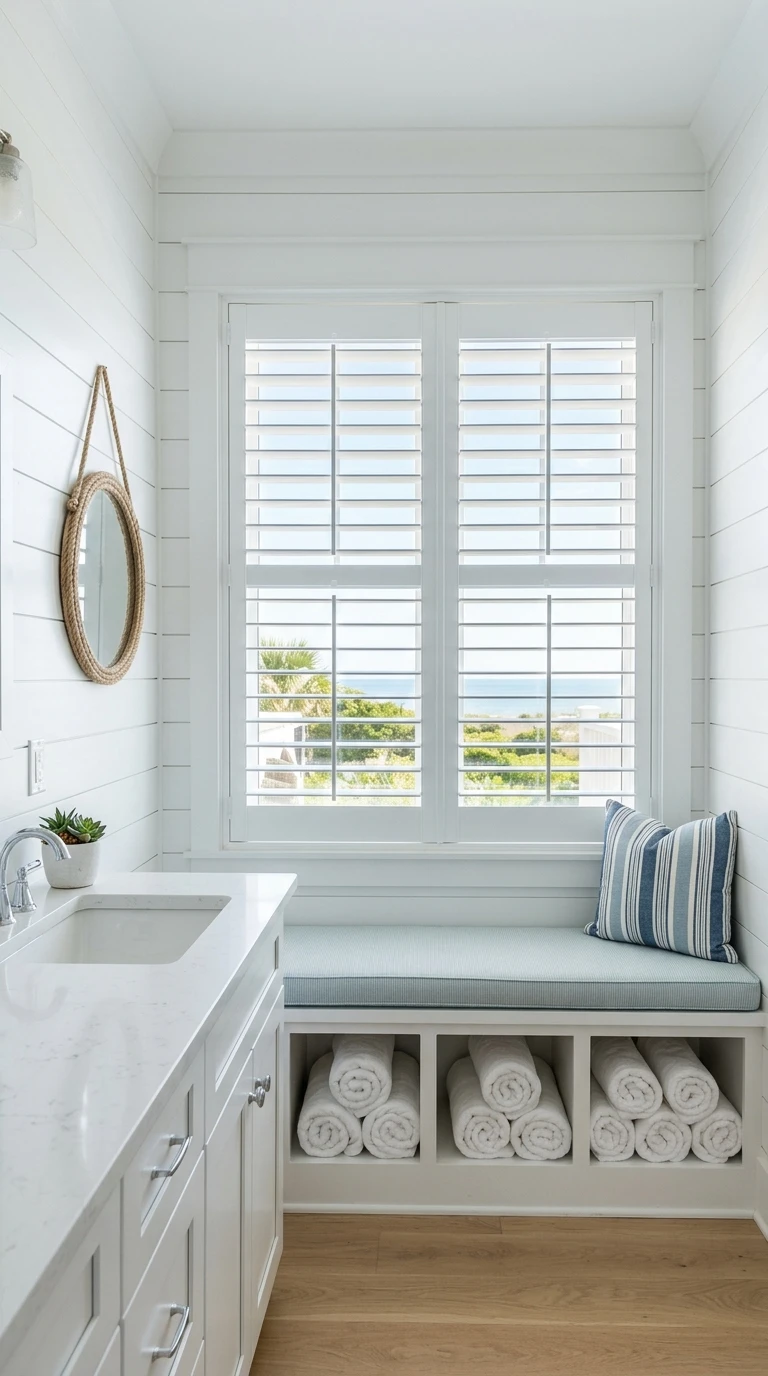
Interior shutters, also called plantation shutters, are one of the more permanent and higher-investment options on this list, but they deliver privacy, light control, and a visual upgrade that is hard to match with any other window treatment. In a bathroom, they work especially well on larger windows or double windows, and they give the room a finished, architectural look that reads as intentional and high-end. You adjust the louvers to control both privacy and light independently, which gives you a lot of flexibility depending on the time of day.
For bathrooms, look for shutters made from PVC or composite materials rather than real wood. Solid wood shutters will warp and crack over time in a humid bathroom environment, but PVC options hold their shape and finish without any special maintenance. They come in a wide range of colors, though most people choose white or a soft off-white that feels clean against bathroom walls. Shutters pair especially well with a more classic or transitional bathroom style, where the architecture of the louvers adds to the overall character of the room. If your bathroom leans coastal or Californian in its aesthetic, white shutters are almost a given.
Designer Tip: Choose shutters with a hidden tilt rod for a cleaner look. The traditional center tilt bar does the same job but interrupts the sightline when the louvers are open.
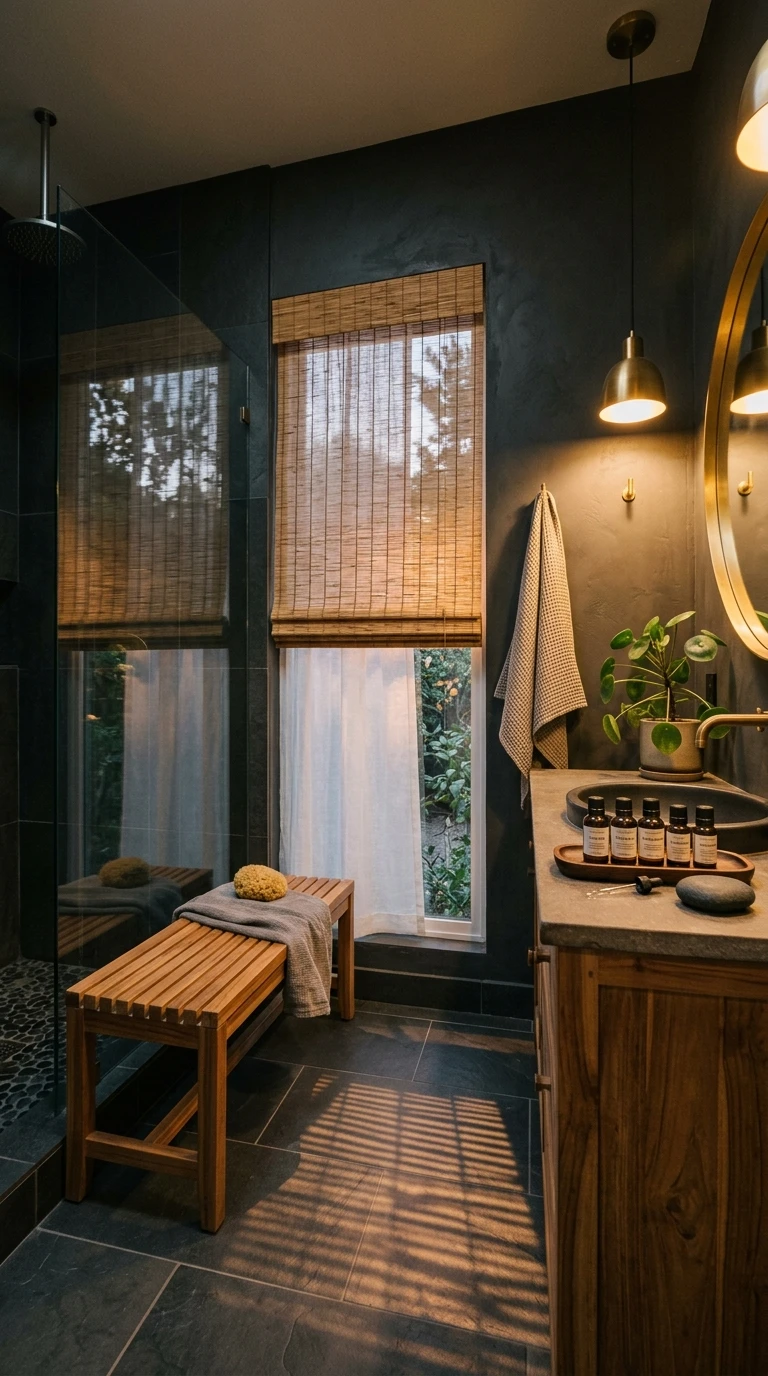
6. Bamboo or Woven Wood Shades
Woven wood shades are a natural fit for bathrooms that lean earthy, warm, or organic in their design direction. The texture of the bamboo or grassy reeds adds visual warmth to a space that can otherwise feel cold and hard-surfaced. These shades filter light in a way that is not quite opaque, so they work best for bathroom windows that are positioned high on the wall or for situations where the view in from outside is not direct. If you have a window that faces a fence, a wall, or a garden rather than a neighbor’s window, a woven shade gives you enough privacy while keeping the room feeling connected to the outside.
For complete privacy, pair a woven shade with a simple white linen liner that hangs behind it. The liner provides the opacity while the woven shade provides the texture and warmth on the room side. Together, they look layered and well-thought-out rather than like a functional fix. Woven wood shades come in a wide range of tones from pale blonde bamboo to deep espresso grass, so they work in bathrooms with light wood tones as well as ones with darker, moodier finishes. They are also relatively affordable as a window treatment category goes.
Designer Tip: Look for woven shades that are pre-sized for standard window widths. Many retailers sell them in set sizes that you can trim to fit, which cuts the cost significantly compared to custom orders.
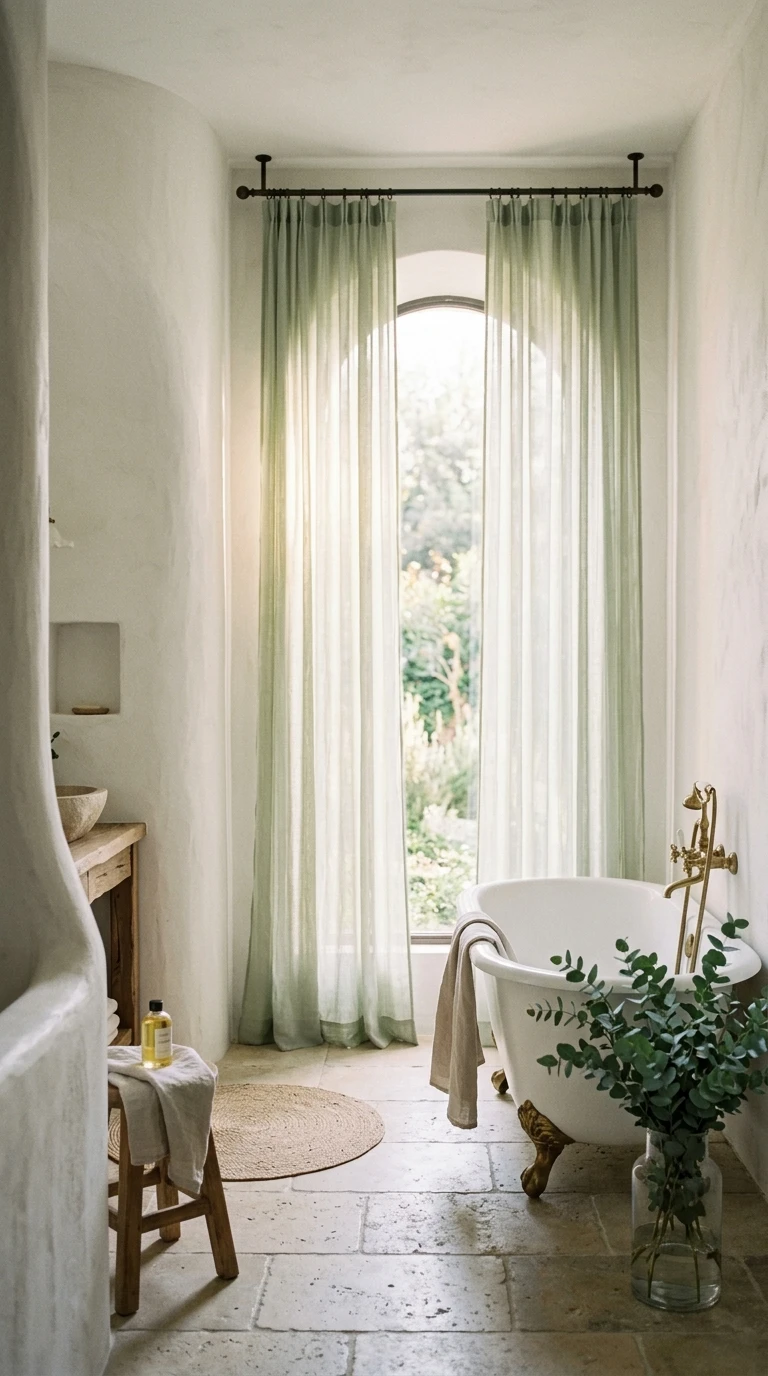
7. Sheer Privacy Curtains
This one sounds like a contradiction, but privacy sheers are a real product category and they work differently than you might expect. Unlike regular sheer curtains that simply soften the view from outside, privacy sheers use a tighter weave or a specialized fabric that blocks the view from outside during daylight hours while still letting filtered light into the room. From the inside, you can see out. From the outside, the fabric just looks like a soft, glowing panel. It is a clever solution for bathrooms where you want to keep the light and the airy feeling without feeling completely exposed.
These curtains work best in bathrooms with natural wood tones, soft plaster walls, or a generally light and airy decorating approach. They come in white, ivory, sage, pale blue, and other muted colors that feel right in a bathroom setting. Hanging them from a simple rod with ring clips keeps the look casual and easy to change out. For a bathroom with higher ceilings, hanging the rod close to the ceiling and letting the curtains puddle slightly at the floor makes the window look taller and more dramatic. This is a good option for people who want a soft and romantic look rather than something structured or architectural.
Designer Tip: Wash privacy sheers on the gentlest cycle and hang them back on the rod while still damp. They dry with fewer wrinkles that way and you avoid any shrinkage from the dryer.
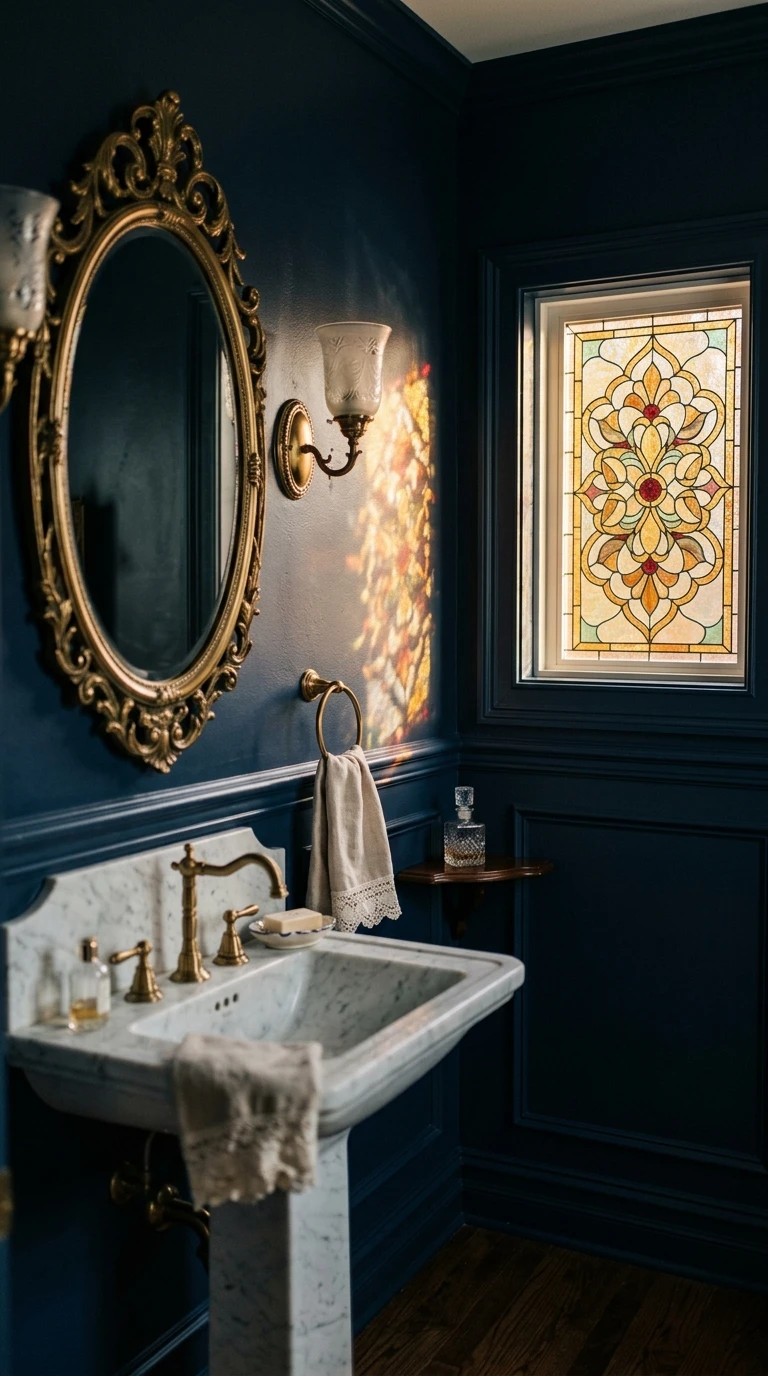
8. Stained Glass Window Film
If your bathroom has a window with an interesting shape, an older home with original frame molding, or a style that leans vintage or eclectic, a stained glass film could be one of the best things you put in that room. These films come in designs that mimic true leaded stained glass, with sections of color separated by simulated leading lines. They catch the light in a way that creates soft colored reflections on the walls and floor around the window, which in a bathroom can be genuinely beautiful during morning light hours.
The level of quality varies across brands and price points. Better quality stained glass films have richer color saturation and more accurate leading details. For a bathroom that leans cottage, Victorian, or Arts and Crafts in its style, a floral or nature-based stained glass pattern feels right. For a bathroom that is more modern with a hint of color, a simple geometric stained glass pattern in amber and gold tones adds warmth without pushing into too much of a traditional direction. Either way, the film provides full privacy since the glass effect is completely opaque to outside viewers while filling the room with colored light.
Designer Tip: Position the film to start about 6 inches from the bottom of the window frame. This leaves a small clear strip at the very bottom that lets in extra light without compromising privacy at eye level.
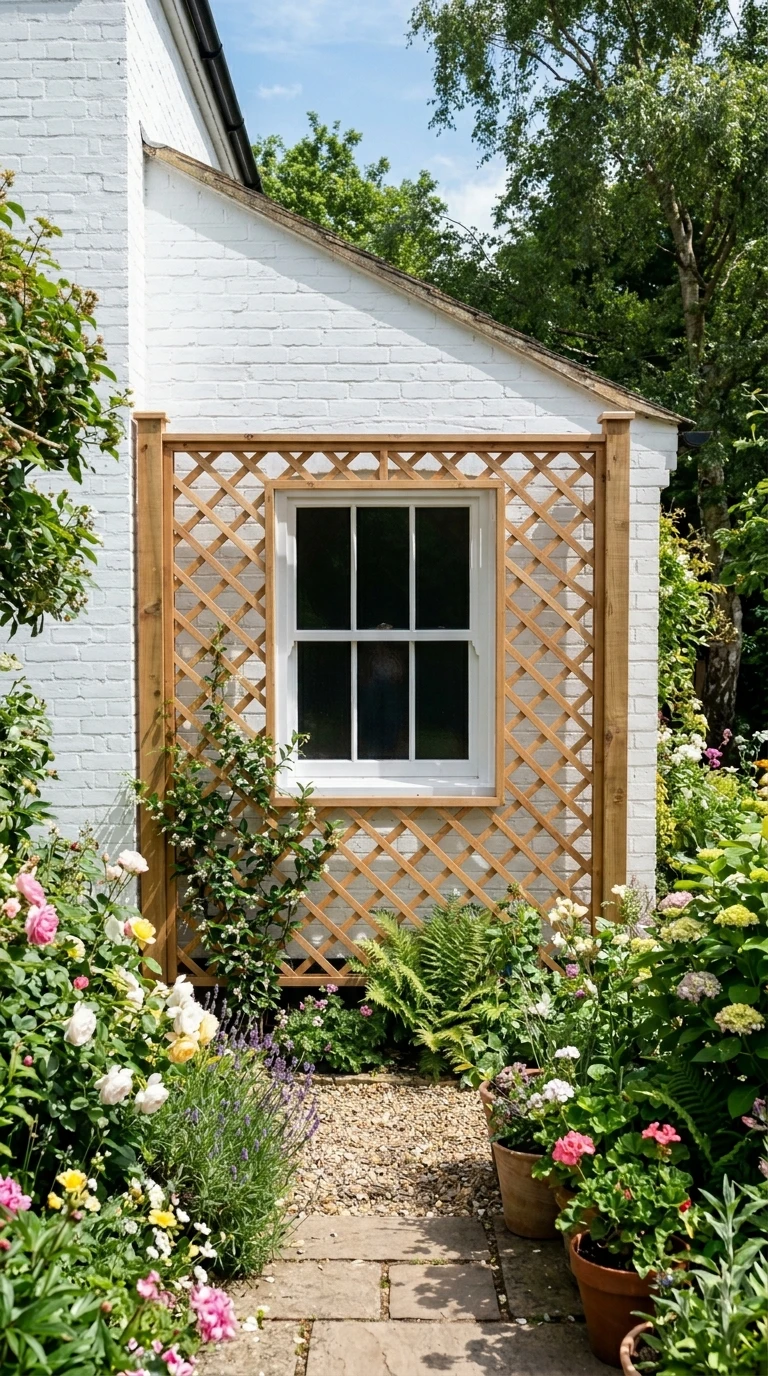
9. Exterior Privacy Screen or Lattice
Sometimes the best solution is to address the privacy problem from the outside rather than covering up the window from within. An exterior privacy screen, trellis, or lattice panel installed just outside the bathroom window can block the line of sight from outside while leaving the window itself completely open and unobstructed. This is especially useful in bathrooms where you want to be able to open the window for ventilation without any fabric or film getting in the way of the airflow.
A wooden lattice panel painted to match the exterior of the house looks architectural and intentional rather than like a privacy fix. You can plant a fast-growing climbing vine against it for added coverage and texture over time. Metal privacy screens in a laser-cut geometric design are another option that looks sharp against a more contemporary home exterior. The distance between the screen and the window matters: ideally you want at least 12 to 18 inches of space so the screen does not block all the light. This solution requires a bit more effort and potentially a handyperson to mount the panel securely, but the result is a window that is fully functional and completely private from outside.
Designer Tip: Choose rot-resistant wood like cedar or redwood for an exterior lattice, or go with powder-coated aluminum for a metal screen. Both hold up well against weather without frequent maintenance.
10. Frosted Glass Window Spray
This is one of the most budget-friendly options on the list and it deserves more attention than it typically gets. Frosted glass spray paint creates a permanent frosted effect directly on glass and it looks very similar to factory-etched frosted glass when applied correctly. You tape off the window frame, apply light even coats of the spray, and let it dry completely. The result is a soft, even frost that diffuses the view completely without blocking light. For a bathroom window that you never open and where you want the cleanest possible look, this is genuinely a great option.
The key to making it look professional is patience and thin coats. Spraying too heavily in one go creates drips and an uneven finish. Three or four thin, even passes with the can held at a consistent distance from the glass gives you the smoothest result. You can also tape off sections of the window to create a pattern rather than doing the whole surface uniformly. For example, frosting just the lower two-thirds of the window and leaving the top third clear gives you privacy at eye level while keeping the upper window transparent. The spray is not as easily reversible as film, but it can be scraped off glass with a razor blade if you ever want to change it.
Designer Tip: Practice the spray technique on a piece of glass or a spare picture frame before applying it to your actual window. Getting the feel for the distance and speed of the spray pass makes a noticeable difference in the final result.

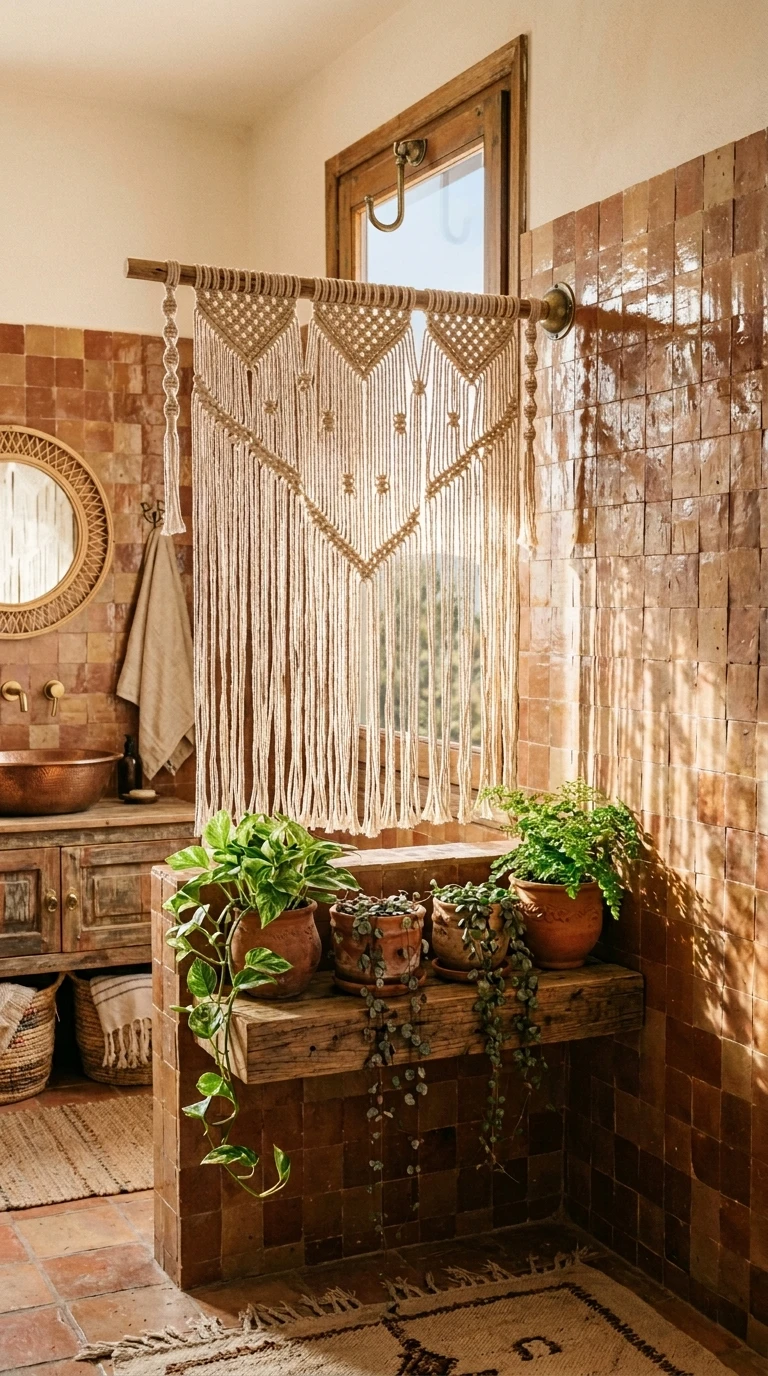
11. Macrame or Woven Wall Hanging
This one is a bit more unconventional, but it works beautifully in the right bathroom. A macrame or woven textile panel hung in front of a bathroom window creates a soft, boho privacy screen that filters light through the knots and weave of the textile. It does not provide complete blackout privacy since light and some visibility still come through the gaps, so it is better suited for windows that are higher up on the wall or positioned in a way where direct sightlines are not the main concern. Think of it more as a beautiful alternative to bare glass that adds texture and warmth while softening the view.
In a bathroom with warm terracotta tiles, jute accessories, and plants, a natural cotton macrame hanging looks completely at home. You can find them in natural off-white, dusty pink, sage green, and a range of other colors that work in bathroom settings. Hang the panel from a simple wooden dowel or a brass tension rod mounted inside the window frame. The look is casual, creative, and entirely different from any other option on this list. If your bathroom already leans toward a natural, artisanal, or globally inspired aesthetic, this is a window solution that doubles as a piece of decor.
Designer Tip: Keep macrame away from direct water spray since repeated dampness can cause the cotton fibers to mildew over time. Position it on a window that is not directly adjacent to the shower or tub.
12. Mirror Film on Lower Window Panels
One-way mirror film is a fascinating option that a lot of people do not know exists for residential use. This film makes the glass reflective on the outside during daylight hours, so anyone looking toward the window from outside sees only their reflection rather than through into your bathroom. From the inside, the glass looks slightly tinted but you can still see out clearly. The privacy effect is strongest during the day when there is more light outside than inside, which is exactly when most bathroom windows are most exposed.
The visual effect on the exterior of the home is clean and modern since the reflective glass reads as intentional rather than covered up. For a contemporary bathroom with minimal styling, this is one of the cleanest-looking privacy solutions available. You apply it the same way as frosted film, and it is available in silver, gold-tinted, and charcoal mirror finishes depending on what suits your exterior. One important note: at night, when the lights are on inside and it is dark outside, the effect reverses and the film does not provide privacy. So this works best as a daytime solution, with a simple shade or curtain available to pull down in the evenings.
Designer Tip: Apply mirror film on a cloudy day rather than in direct sunlight. The heat from direct sun can cause the adhesive to set unevenly during application.

Conclusion
Bathroom window privacy does not have to mean ugly, dark, or boring. As this list shows, there are options across every budget, every style, and every level of commitment, from a $10 can of frosted spray to a full set of custom interior shutters. The trick is figuring out what your actual priorities are. Do you need total blackout coverage, or is filtered privacy enough? Do you want something you can remove easily, or are you ready to commit to something more permanent? Is the look going to be modern and spare, or warm and organic?
Once you answer those questions, the right option usually becomes obvious. Start with whatever fits your current budget and your existing bathroom style. A well-chosen frosted film or a perfectly hung cafe curtain can do as much for the overall feel of a bathroom as a more expensive treatment. And if you are in a rental or just not ready to commit, the film options and tension rod curtains give you full flexibility without any damage to the window or walls. Pick something you love and feel genuinely comfortable with, because the bathroom is the one space in your home where you deserve to feel fully at ease.
FAQ
What is the cheapest way to add privacy to a bathroom window?
Frosted window film is consistently the most affordable option, with most rolls costing between $10 and $30 depending on the size and pattern. Frosted glass spray paint is another budget-friendly choice at a similar price point. Both are DIY-friendly and produce results that look far more polished than the price suggests. Cafe curtains on a tension rod come in a close third, especially if you can find fabric from a discount store or repurpose something you already own.
Can I use regular curtains in a bathroom?
You can, but you need to think carefully about the fabric. Regular cotton or linen curtains will absorb moisture in a steamy bathroom and can develop mildew fairly quickly, especially if the window is near the shower or tub. If you want curtains in your bathroom, look for fabrics that are specifically treated for humidity resistance, or choose synthetic blends like polyester that resist moisture naturally. Cafe curtains in a tight-weave cotton work well if they are positioned away from direct water spray and washed regularly.
How do I get privacy without losing natural light?
Frosted film is probably the best answer here since it diffuses the view completely while still allowing a generous amount of soft, scattered light through the glass. Sheer privacy curtains do a similar thing with a softer, more fabric-based look. Woven shades with a liner provide privacy with some light filtering. The key is avoiding anything solid and opaque across the entire window if light is a priority. Even covering just the lower half of the window with frosted film or a cafe curtain lets you keep the upper half fully clear for maximum light.
What window treatment works best in a steamy bathroom?
Interior shutters in PVC or composite material are the most durable long-term option since they do not warp, mildew, or deteriorate with humidity. Frosted window film is also very resilient in humid conditions and requires no special maintenance. Roman shades in moisture-resistant synthetic fabrics hold up better than natural fiber versions. The options to avoid in a very steamy bathroom are untreated natural linen or cotton curtains, real wood shutters, and bamboo shades without a moisture-resistant coating, as all of these tend to show wear quickly in a humid environment.
Is frosted window film easy to remove?
Yes, most frosted films are designed to be removable. You typically start at one corner, peel the film away from the glass slowly, and then clean off any remaining adhesive residue with a small amount of rubbing alcohol or a commercial adhesive remover. The process is straightforward as long as you go slowly and do not rush the peel. Some lower-quality films leave more residue than others, but even those clean up without damage to the glass. This makes frosted film particularly popular with renters who need a privacy solution that does not alter the property permanently.
What is the best option for a small bathroom window up high?
For a small high window, you have more options than you might think since the sightline from outside is naturally more limited. A simple frosted film is the most fuss-free solution for a small high window. Stained glass film looks beautiful on smaller windows since the design scale translates well to a compact pane. You could also leave a small high window partially or fully clear and add an exterior screen or plant screening outside for the portions that feel exposed. The good news is that privacy pressure is lower on high windows, which gives you more flexibility to choose something decorative over purely functional.