Tiny Home Storage Secrets That Actually Change How You Live
There is a specific kind of frustration that comes with living in a tiny home. You love the coziness, you love the simplicity, but somewhere between the kitchen drawer that will not close and the shoes piled by the front door, things start to feel less like a sanctuary and more like a puzzle you cannot solve. If that sounds familiar, you are not alone. Most tiny home dwellers spend the first few months in their space figuring out what works and what does not, often the hard way.
The thing is, storage in a tiny home is not really about having less. It is about being smarter about where things go and how your space works for you. The homes that feel the most open and breathable are usually the ones where every inch has a job. A wall that holds a coat rack, a staircase that doubles as a dresser, a kitchen corner that stores a week’s worth of spices without a single extra shelf visible. That is the kind of thinking this article is built around.
These are not generic tips pulled from a listicle about decluttering. These are real, specific ideas that people are actually using in their tiny homes right now. Some involve a bit of planning, some are weekend DIY projects, and a few you could pull off with a trip to the hardware store. What they all have in common is that they work. Keep reading and you will find at least a handful of ideas you will want to try immediately.
1. The Staircase That Moonlights as a Dresser
Picture this: you are in your tiny home loft getting dressed for the day, and you realize your entire wardrobe is tucked neatly into the very stairs you just climbed. No dresser taking up wall space, no overflowing closet, just clean wooden steps that pull open like drawers. This is one of the most beloved storage solutions in the tiny home world, and for good reason. Stair drawers make use of what would otherwise be completely hollow, wasted space.
The key to making stair storage work beautifully is in the finish. Use the same wood stain or paint as the rest of your staircase so the drawers blend right in and do not look like an afterthought. Deep drawers near the bottom are perfect for bulky items like sweaters, jeans, and off-season clothes, while shallower drawers higher up can hold socks, accessories, or even small books and electronics. Adding soft-close drawer slides makes the whole thing feel polished and keeps things quiet.
If you are building or renovating, this is something to plan into the original structure so the proportions are right. If you are retrofitting, a skilled carpenter can usually make it work with minimal changes to the stair frame. Either way, line the inside of each drawer with a thin cedar sheet to keep clothes smelling fresh and to discourage moths, which is a practical bonus you will appreciate every time you open one.
Space Saver Secret: Dedicate the widest stair drawer to seasonal item rotation. When summer clothes come in, winter gear goes in vacuum storage bags and slides right in beneath them. One drawer, two seasons, zero extra storage needed.

2. Floor Hatches and Under-Floor Storage
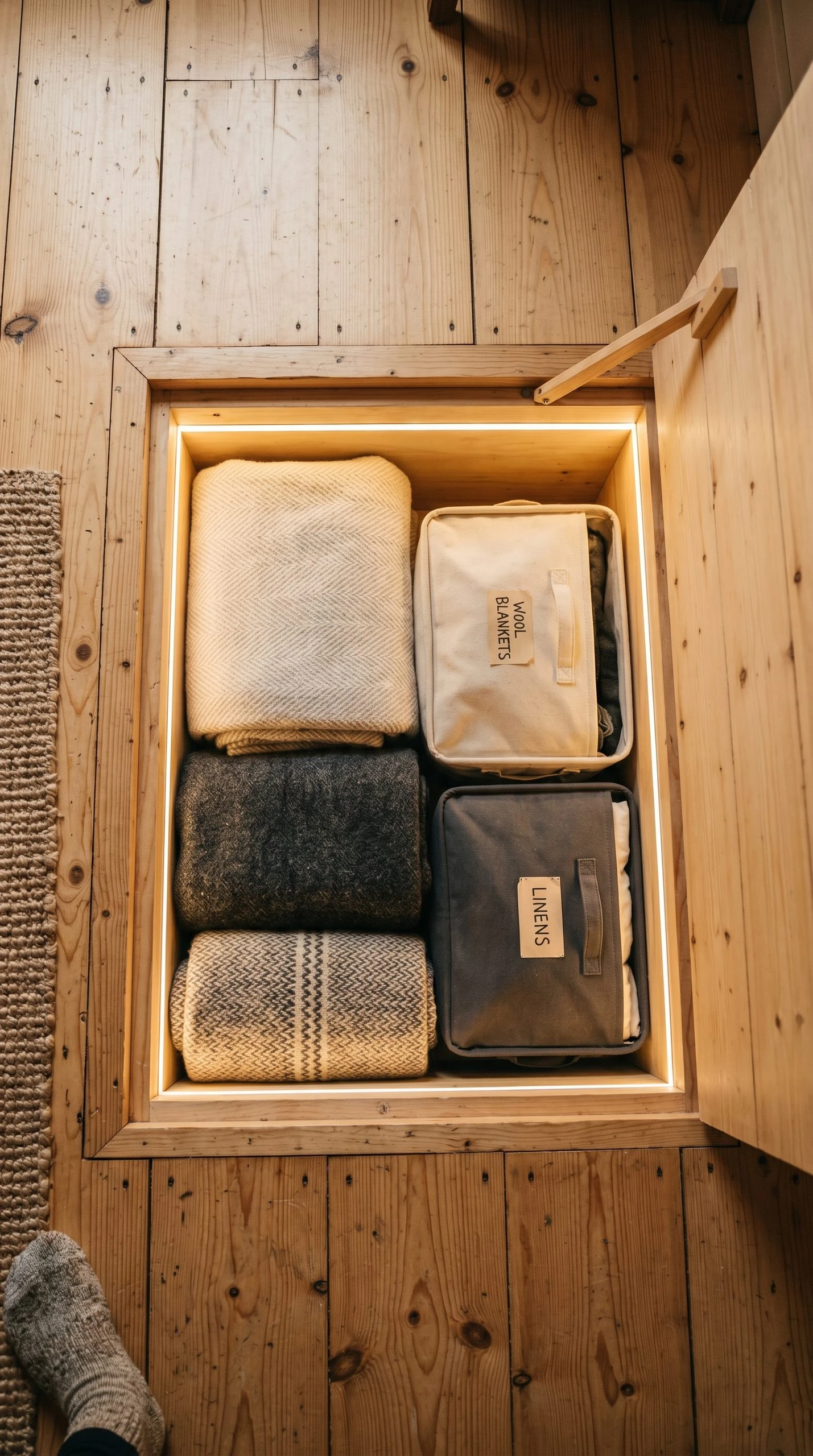
Most tiny home owners think about the walls and the furniture when it comes to storage. Very few think about what is literally beneath their feet. A floor hatch is exactly what it sounds like: a hinged or removable panel in your floor that reveals a storage cavity underneath. Depending on how your tiny home is built, this space can be surprisingly generous, and it is completely hidden from view.
This kind of storage is best used for items you do not need every day. Think camping gear, extra bedding, emergency supplies, rarely used tools, or even a collection of items you want to keep but not necessarily display. Because the access point is in the floor, it is not something you want to be digging through constantly, but for seasonal or backup storage it is almost unbeatable.
For aesthetics, choose a hatch that matches your flooring as closely as possible. Recessed ring pulls keep the surface flush and prevent tripping hazards. Inside the cavity, use shallow plastic bins or labelled fabric boxes to keep everything organized so you are not rummaging around in a dark hole every time you need something. Add a small battery-powered LED strip inside the cavity so you can actually see what you are reaching for.
Space Saver Secret: Use the under-floor cavity near your entrance for bulky outdoor gear like hiking boots, folded tarps, or a compact camping stove. Guests will never know it is there, and your living area stays clear.
3. Magnetic Knife Strips Repurposed All Over the House
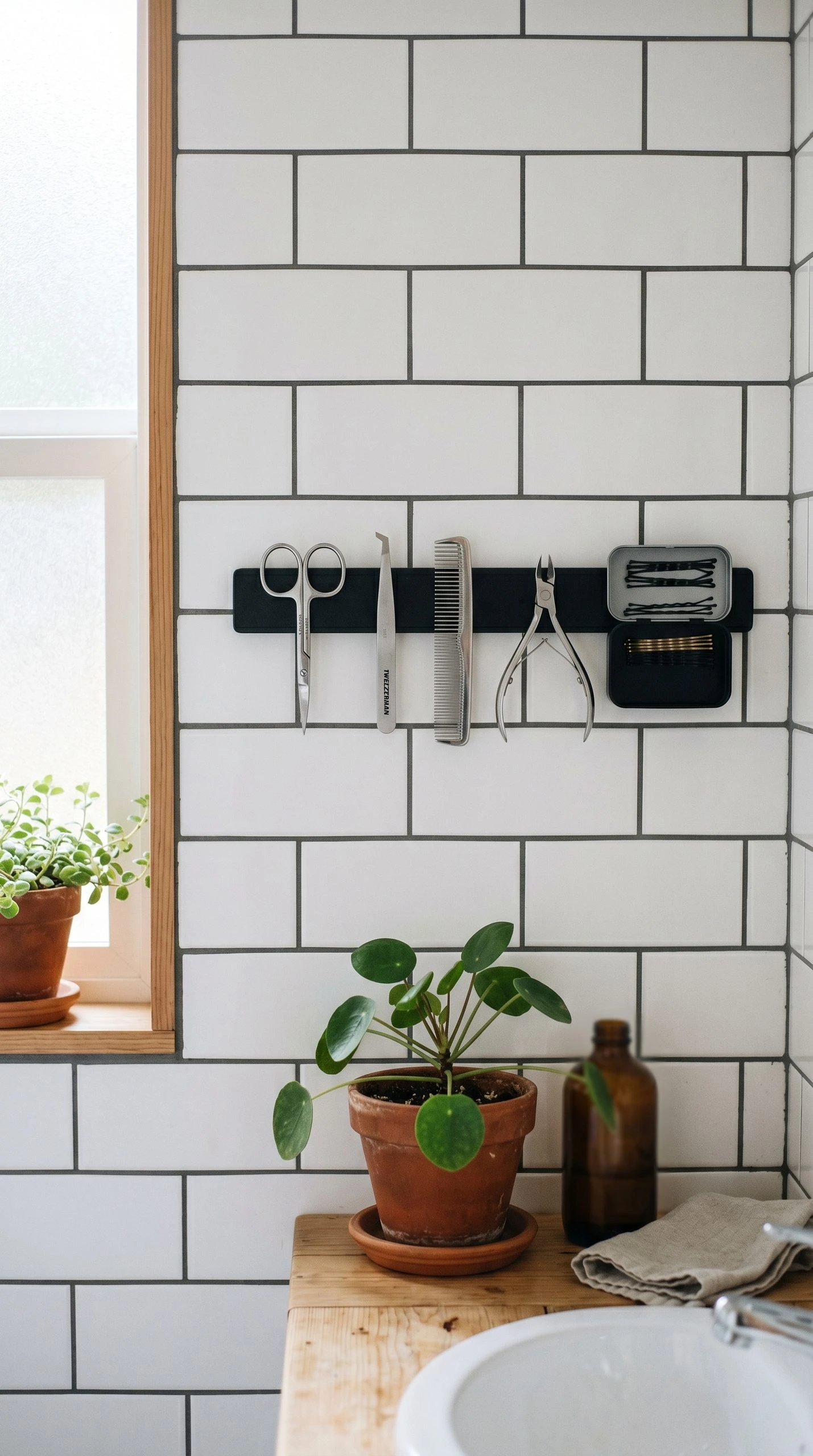
You probably know about magnetic knife strips in kitchens, but here is where tiny home dwellers get clever: they use them in every room. A magnetic strip in the bathroom holds tweezers, nail scissors, bobby pin cases, and even small metal-capped beauty tools. One in the entryway keeps keys in exactly the same spot every single time. One mounted inside a cabinet door stores spice lids or small metal canisters. Once you start thinking magnetically, you will see opportunities everywhere.
The beauty of this solution is the cost. A basic magnetic knife strip runs anywhere from five to twenty dollars depending on the size and brand, and installation is just two screws. For renters or tiny home dwellers who prefer not to drill, there are adhesive-mounted magnetic strips that hold surprisingly well on smooth walls and cabinet interiors. They come in stainless steel, matte black, and even bamboo finishes, so they look intentional rather than improvised.
In the kitchen specifically, consider mounting one under a wall cabinet rather than on a backsplash. This keeps your most-used knives and metal utensils at hand without eating into counter space or visual clutter on the walls. You can also use small magnetic spice jars on the side of a fridge or on a dedicated metal panel, turning a blank surface into a fully functional pantry wall that looks genuinely nice.
Space Saver Secret: Mount a magnetic strip inside your junk drawer to corral metal odds and ends like bread clips, batteries, and pen caps. Suddenly your drawer has room again, and everything metallic has a home.
4. Fold-Down Murphy Beds with Built-In Shelving
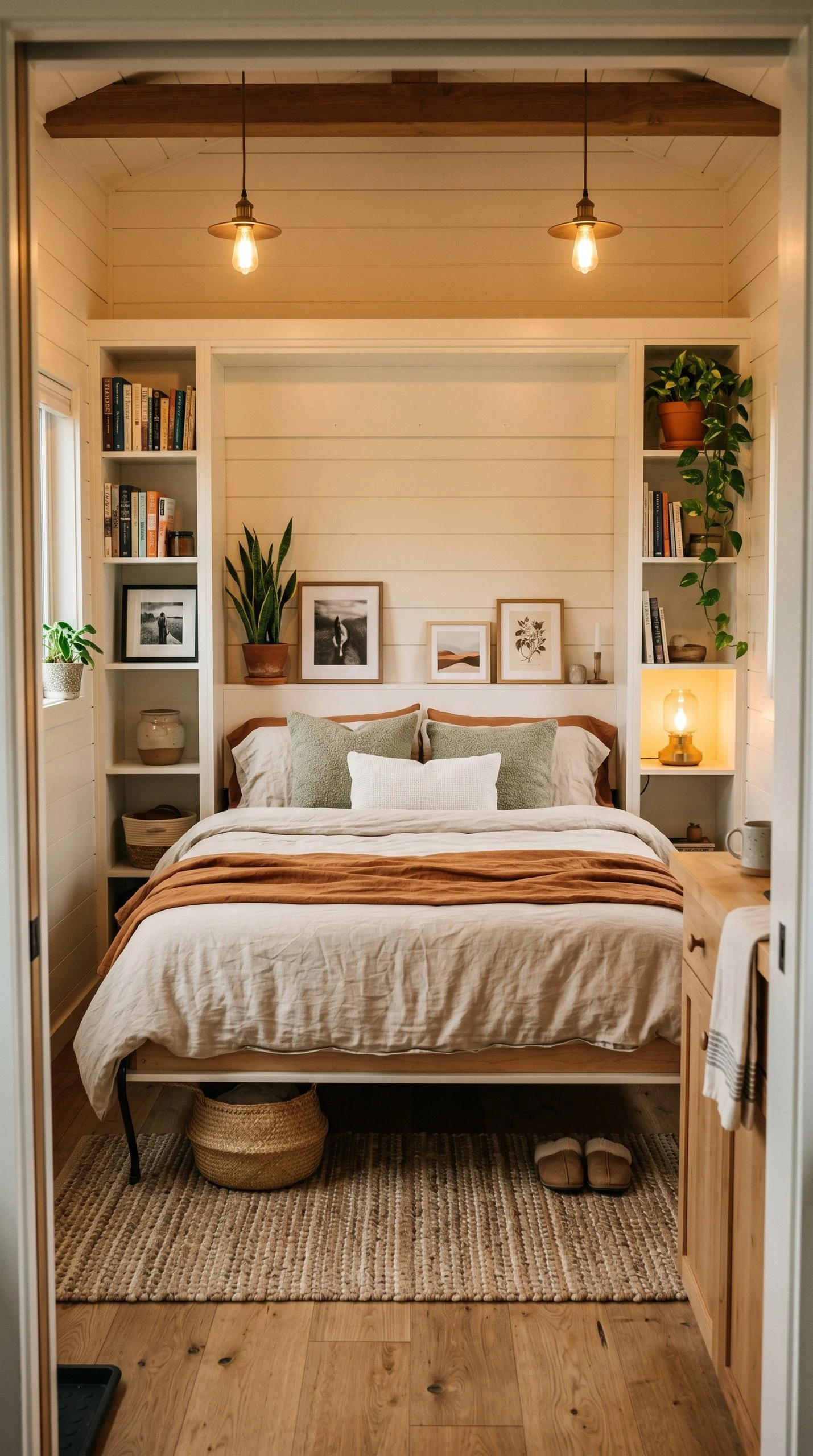
Imagine walking into what looks like a beautiful built-in bookcase with shelves full of books, plants, and framed photos. Now imagine pulling a handle and watching the entire thing fold down into a perfectly made bed. Murphy beds have been around for over a century, but the modern versions built specifically for tiny homes are genuinely impressive. The best ones include shelving, lighting, and even a fold-out desk on the sides so the wall unit functions beautifully in its closed position too.
The reason Murphy beds work so well in tiny homes is that they give your floor space back. During the day, that area becomes your living room, yoga space, or dining area. At night, it becomes a bedroom in under thirty seconds. This kind of flexibility is fundamental to tiny home living, and a Murphy bed executed well does not look like a compromise at all. It looks like thoughtful design.
When choosing a Murphy bed for a tiny home, look for ones that include storage in the unit itself, not just the fold-down mattress platform. Side cabinets, overhead shelves, and integrated lighting make the piece a true storage wall rather than just a sleeping solution. Opt for a cabinet finish that matches your existing furniture or wall color so the whole thing reads as one cohesive element rather than a retrofitted piece of hardware.
Space Saver Secret: Use the side cabinet of your Murphy bed unit to store your most-reached-for items, books, phone chargers, glasses. When the bed is up during the day, those items are neatly contained. When the bed comes down, everything you need at night is right there within arm’s reach.
5. Behind-the-Door Storage Done Properly
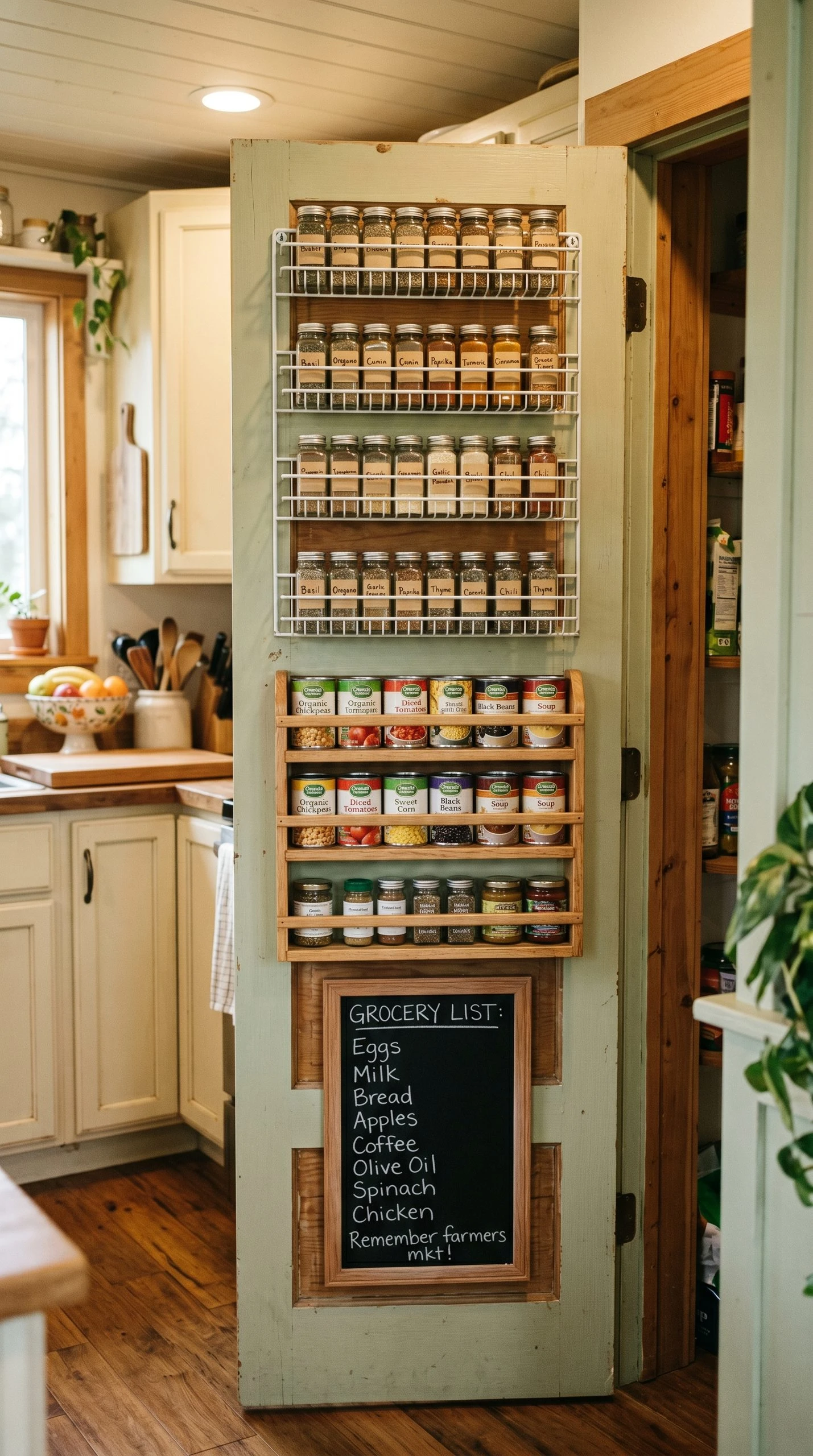
Every door in your tiny home is a missed storage opportunity if you are not using the back of it. The inside of a pantry door can hold a full spice rack. The back of a bathroom door can store towels, toiletries, and a full-length mirror with pockets. The inside of a bedroom closet door, if you have one, can hold shoes, accessories, or cleaning supplies. This is not a new idea, but most people underutilize it because they go with generic over-the-door organizers that do not fit the space properly.
The better approach is to measure your door and then look for organizers that mount directly with screws rather than hooking over the top. Over-the-door hooks work, but they often make doors feel heavy and can scratch frames over time. Screwed-in racks and shelves sit flush, feel sturdier, and look considerably more intentional. For the bathroom, a mounted rack with small labeled baskets keeps toiletries tidy. For the kitchen pantry, adjustable wire shelving on the inside of the door can hold cans, jars, and dry goods at perfect eye level.
One clever use that not enough people try: mount a corkboard or small chalkboard on the inside of a cabinet door in the kitchen. Use it to keep a running grocery list, meal plan, or quick notes. It takes up no wall space, costs almost nothing, and adds a layer of organization that keeps your counters and fridge front free of sticky notes and paper clutter.
Space Saver Secret: If your bathroom has a mirrored medicine cabinet, also add a small mounted organizer to the back of the bathroom door. You essentially double your bathroom storage without touching a single surface inside the room.
6. Floating Shelves at Ceiling Height
In a tiny home, the space between the top of your furniture and the ceiling is almost always wasted. Those upper few feet of wall are out of arm’s reach and easy to ignore, but they are genuinely usable storage real estate. Installing floating shelves at or near ceiling height creates what designers often call a storage crown, a line of shelves that runs around the upper perimeter of a room holding items you do not need constantly but want accessible.
This works especially well in living areas and kitchens. In the living room, high shelves can hold a curated collection of books, decorative baskets with folded blankets inside, or seasonal items like holiday decorations in attractive matching boxes. In the kitchen, the same shelves can hold rarely used appliances, large serving platters, or extra dry goods in labeled canisters. Because the shelves sit so high, they do not intrude on the space visually the way lower shelving would.
The trick to making high shelves look intentional rather than cluttered is to keep what sits on them visually consistent. Use matching baskets, uniform box sizes, or a cohesive color palette so the upper shelves read as a design feature rather than an overflow area. Warm accent lighting, either from a small strip of LED lights tucked just below the shelves or from nearby ceiling fixtures, can make those upper shelves look genuinely inviting.
Space Saver Secret: Run a single continuous floating shelf around the top perimeter of a small bedroom just below the ceiling line. Use it for books, baskets, and soft decor. The room gains enormous storage and the continuous line actually makes the walls feel taller.

7. Ottoman and Bench Storage in Every Seating Area
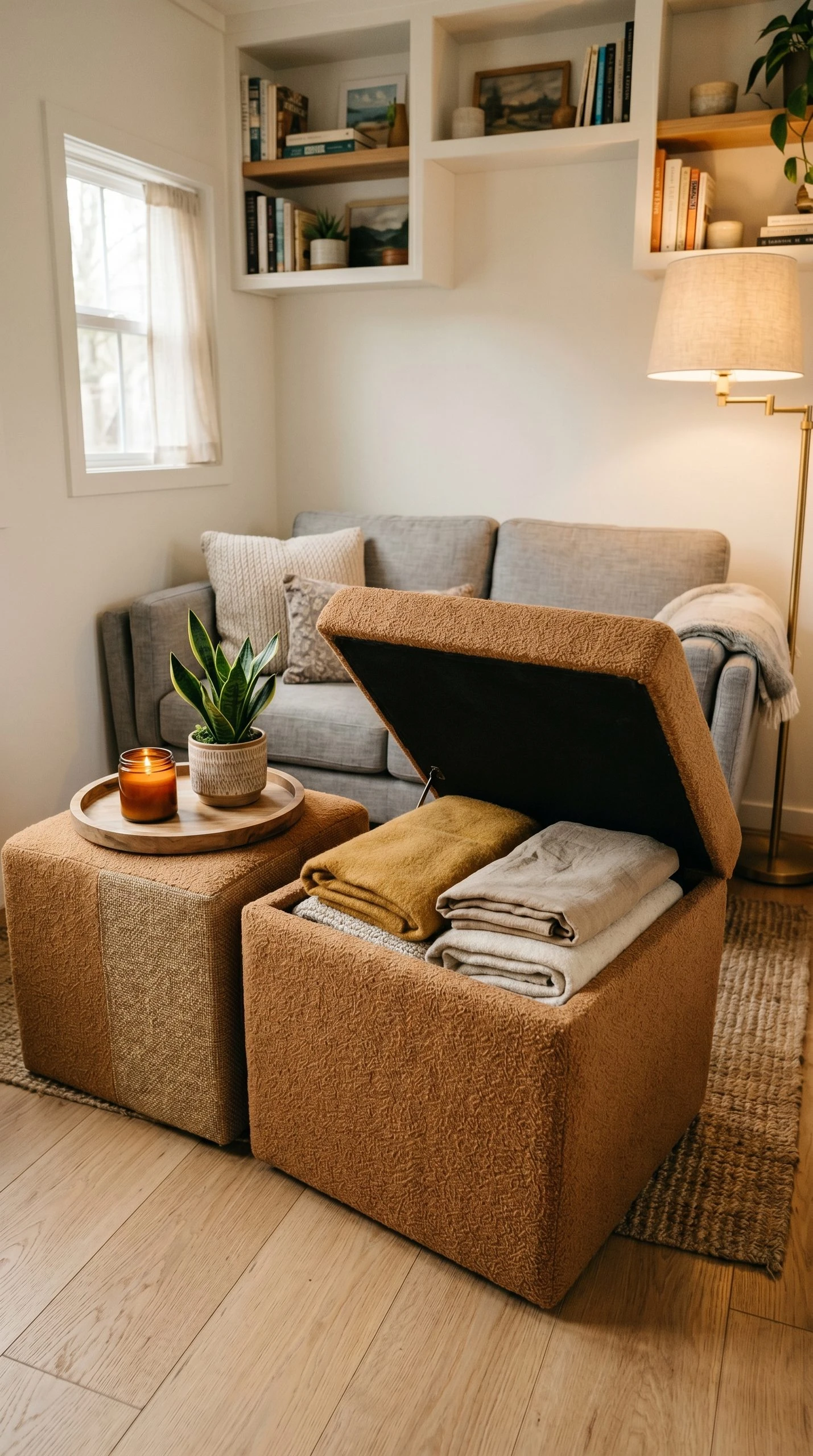
You are sitting on the couch in your tiny living room and you realize there is nowhere to put the extra blanket, the board game you just finished, or the kids’ toys that need to disappear before company arrives. Now imagine your coffee table is actually an oversized storage ottoman. You lift the lid, everything goes in, the lid closes, and suddenly the room looks clean and considered. This is the kind of storage solution that tiny home dwellers rely on every single day.
Storage ottomans, benches with lift-top lids, and trunks used as coffee tables are among the most practical investments for a tiny living room or entryway. A storage bench at the base of a loft ladder or near the front door can hold shoes, outdoor gear, pet items, or seasonal accessories in a way that looks completely tidy from the outside. Choose one with a cushioned top and you also gain extra seating when guests come over.
Material matters here both for durability and aesthetics. For a boho or natural tiny home, a rattan or wicker trunk-style ottoman adds warmth and texture while doing real storage work. For a modern or Scandinavian-influenced space, a simple upholstered cube in a neutral fabric keeps things clean and understated. In either case, the interior of the ottoman benefits from a simple insert or divider so small items do not just pile up loosely inside.
Space Saver Secret: Place two smaller cube ottomans side by side under a tray to create a coffee table that stores twice as much as one large piece. The tray ties them together visually and gives you a stable surface on top.
8. Toe-Kick Drawers in the Kitchen
Most kitchen cabinets sit on a small raised platform called the toe kick, that recessed strip at the bottom of your cabinets where your feet go when you stand at the counter. In a standard kitchen, this space is completely hollow and completely wasted. In a clever tiny home kitchen, it is converted into shallow pull-out drawers that hold cutting boards, baking sheets, flat pans, kitchen linens, and other slim items that are otherwise impossible to store without stacking them awkwardly.
Toe-kick drawers are one of the most impressive things you can add to a tiny kitchen because they are completely invisible when closed. You would never know they were there just by looking at the kitchen. They feel like a magic trick the first time you see them, which is probably why they tend to get the most impressed reactions when tiny home owners show off their space. Installation can be DIY with the right hardware kit, or a carpenter can build them into a new kitchen from scratch.
Because toe-kick drawers are shallow, they are best suited for flat items. Think sheet pans, wire cooling racks, pizza stones, placemats, and linen napkins. You could also use one exclusively for plastic bag storage, a perpetual kitchen clutter problem that these drawers solve beautifully. Mount small label holders on the front of each drawer so you know at a glance which one holds what without having to crouch down and look.
Space Saver Secret: Install a toe-kick drawer specifically for dog or pet food and bowls. The bowls go in the drawer when not in use, and pet food bags get decanted into labeled bins inside. Your kitchen floor stays completely clear and the whole setup is hidden in plain sight.

9. Pegboards Beyond the Garage
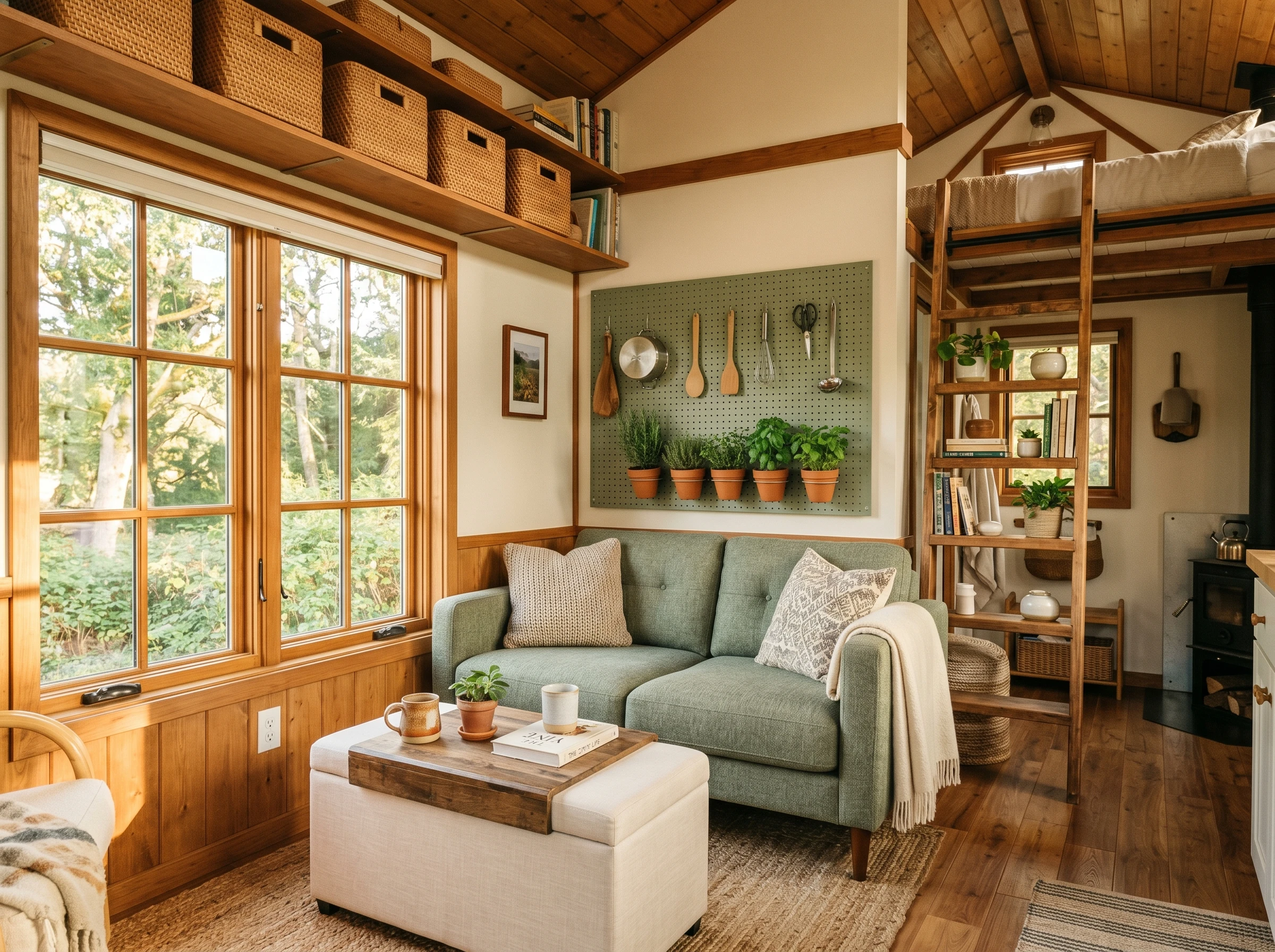
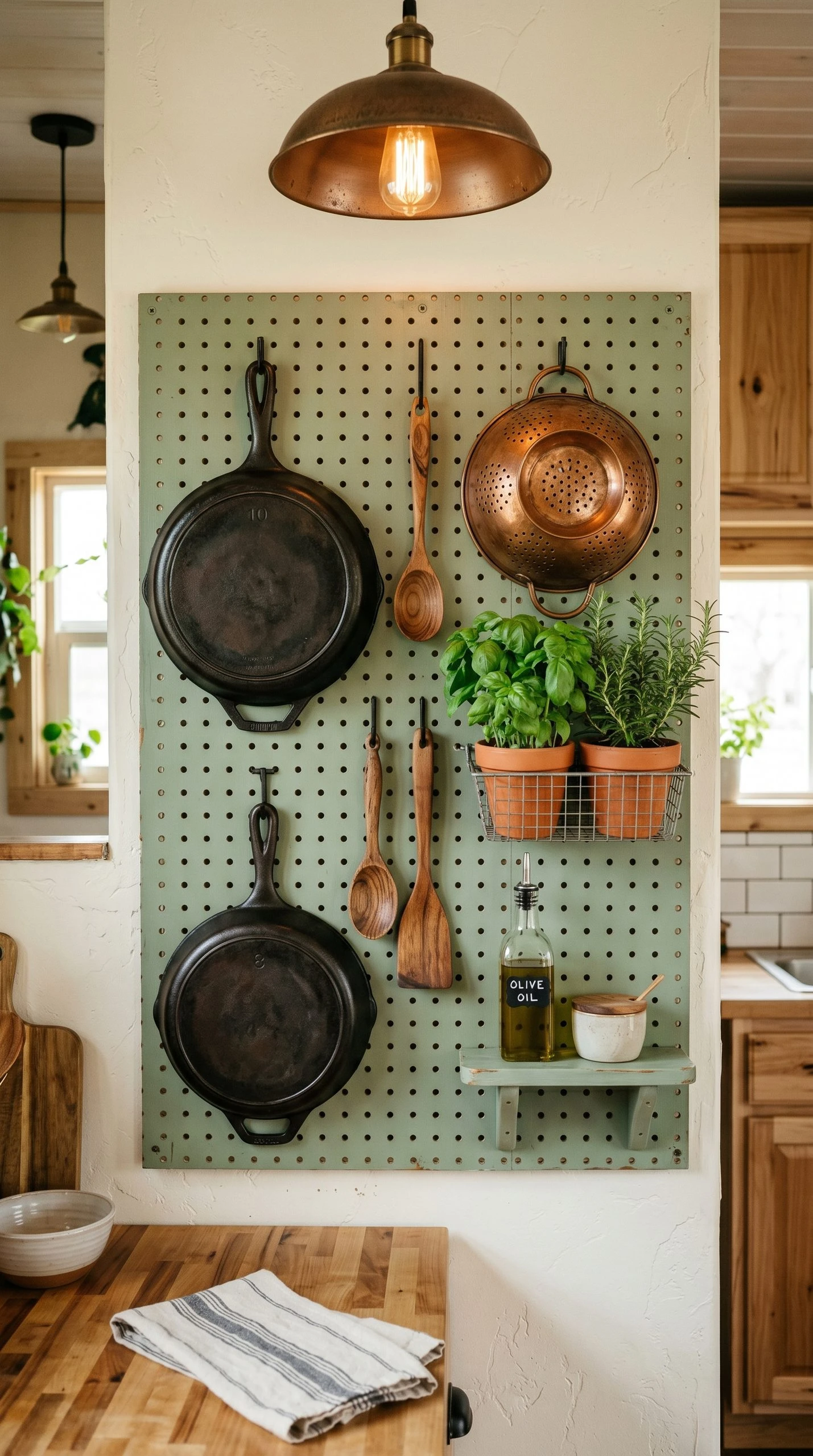
Pegboards have a reputation as strictly garage or workshop territory, but tiny home designers have been bringing them into living spaces for years and the results are genuinely attractive when done right. A painted pegboard mounted in a kitchen, entryway, home office corner, or craft area becomes a fully customizable organizational wall that can be rearranged any time your needs change. No screws in the wall, no permanent commitment to a layout, just hooks and shelves that slot into the grid and hold whatever you need.
The key to making a pegboard feel like a design feature rather than a hardware store display is in the color and accessories. Paint the board in a matte color that complements your existing palette, whether that is a deep olive green, a warm terracotta, a soft sage, or simply a clean white. Then choose pegboard accessories in a coordinating finish, matte black hooks and brass shelf brackets both look beautiful against a painted background and elevate the whole thing instantly.
In the kitchen, a pegboard can hold pots, pans, cooking tools, herb pots in small mounted planters, and even a paper towel holder. In a home office nook, it holds supplies, charging cables, notebooks, and calendars. In an entryway, hooks for bags and jackets, a small shelf for keys and mail, and even a mounted mirror turn the board into a complete drop zone. For renters, lean a large pegboard against the wall or hang it from a picture rail to avoid making holes.
Space Saver Secret: Mount a small pegboard inside a deep pantry or wardrobe to turn the back wall into extra storage. Hang small baskets for spices or accessories, and you instantly double what that closet can hold without touching a single shelf.
10. Ladder Shelving as a Room Divider
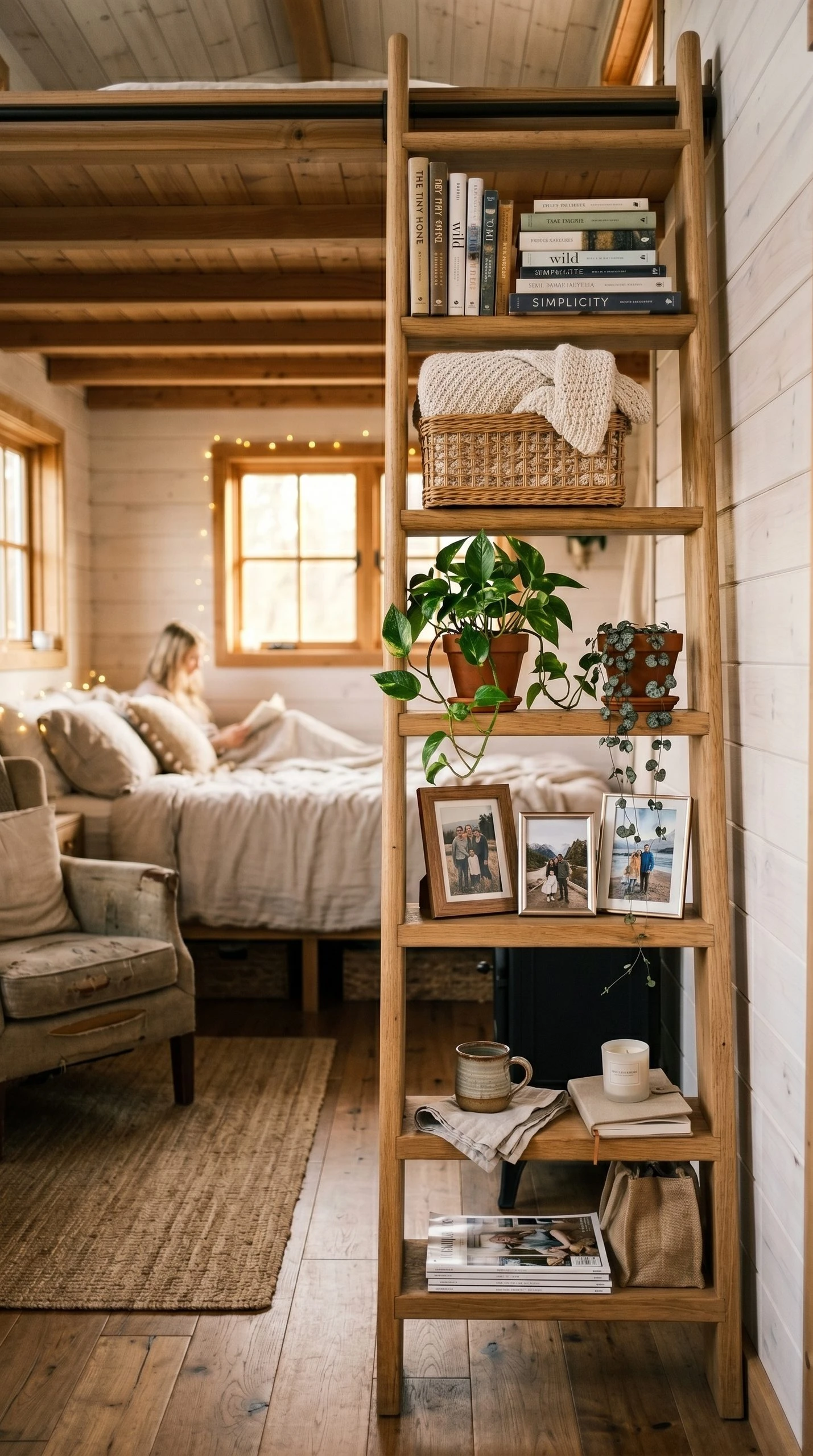
In an open-plan tiny home, creating visual separation between the sleeping area and living area without putting up a full wall is a genuine design challenge. A tall leaning ladder shelf positioned between the two zones solves this beautifully. It provides a soft visual boundary, adds substantial storage on both sides, and because it is open rather than solid, it does not block light or make the space feel smaller.
The storage capacity of a well-chosen ladder shelf is impressive. Five or six rungs of varying widths can hold books, plants, folded textiles, small baskets, speakers, framed photos, and decorative objects. The asymmetrical shape means you can style each rung differently and the whole thing reads as a collected, layered display. Anchor the shelf to the wall for safety, especially in any space that might experience movement, and make sure the base sits on a non-slip mat if you have smooth flooring.
For a tiny home with a loft, a ladder shelf positioned at the base of the loft area does double duty as a decorative element and a subtle privacy screen. Style the lower rungs with heavier items for stability and keep lighter, more decorative pieces toward the top. Natural materials work particularly well here: rattan baskets, linen-folded throws, terracotta pots, and stacked books in complementary cover tones all look genuinely beautiful on this kind of shelf.
Space Saver Secret: Use the back side of a ladder shelf divider to store items you want accessible from the bedroom side, charging cables, a reading lamp, nighttime skincare. The front faces the living area styled beautifully, and the back does practical work.
11. Repurposed Vintage Suitcases as Stacked Storage
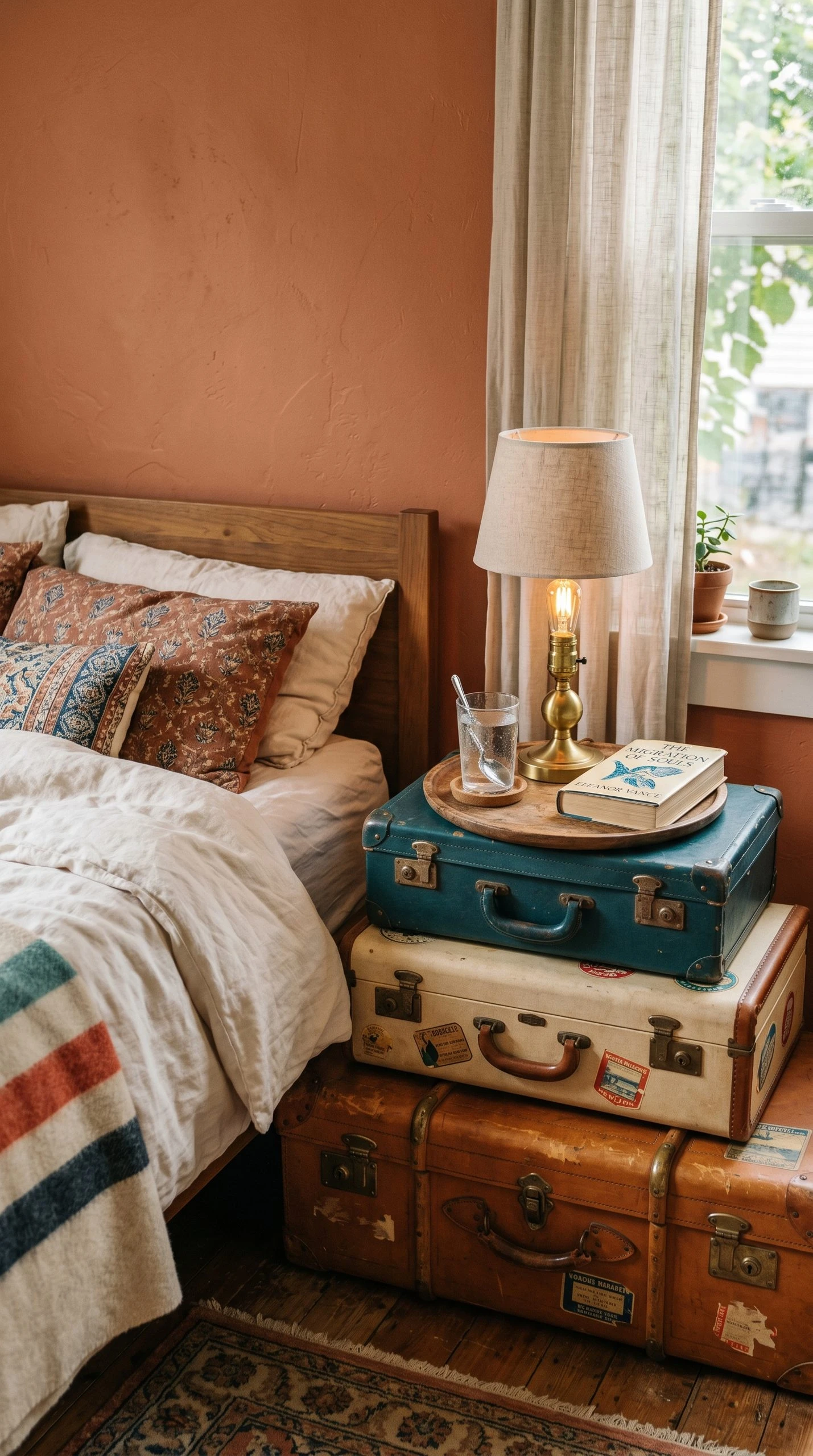
Here is a storage idea that doubles as genuine decor: a stack of vintage suitcases used as a side table, storage unit, and design statement all at once. Each suitcase holds a category of items, seasonal clothing in the largest one, spare bedding in the medium, and books or keepsakes in the smallest. Stacked beside a bed or in a corner of the living room, they look like something out of a carefully styled travel magazine and nobody has to know they are doing heavy storage work.
The beauty of this approach is that it is completely portable, which matters in tiny homes where layouts often change. Suitcases can be repurposed, rearranged, or taken with you when you move. They are also relatively affordable when sourced from thrift shops, estate sales, or online marketplaces. Look for cases with sturdy latches, good leather or hard-shell construction, and ideally some personality whether that is a colorful lining, vintage stickers, or an interesting clasp.
If you want to make the stack extra functional, mount a small tray on top of the uppermost suitcase to hold a lamp, a glass of water, and a phone charger. This turns the whole stack into a bedside table with hidden storage that looks completely at home in a bohemian, eclectic, or vintage-inspired tiny space. You can also line the insides with cedar sheets or lavender sachets to keep contents fresh.
Space Saver Secret: Label the inside lid of each suitcase with a handwritten index card listing what is stored inside. When you need to find something, you flip open the right case immediately without rummaging through every one.
12. Wall-Mounted Fold-Down Desks
Working from home in a tiny home presents a very specific challenge: where does the desk go when work is done? A dedicated room is not an option, and a full-sized desk taking up floor space in a small living area is not great either. The answer that tiny home dwellers have settled on is the fold-down wall desk, a slim panel mounted to the wall that folds out flat to create a work surface and folds back up flush against the wall when you are finished for the day.
When the desk is folded up, it can look like a cabinet door, a piece of wall art in a nice wood finish, or a chalkboard surface you can write notes on. When it folds down, it typically reveals small interior shelves for supplies and a surface large enough for a laptop, notebook, and a cup of coffee. Some versions include a power strip mount and cable management built in, which keeps the space genuinely functional rather than just technically a desk.
Install the fold-down desk at a comfortable working height and mount it to a stud in the wall for stability. Below the desk, consider a slim rolling cart that slides out when you are working to hold a printer, extra supplies, or a small file organizer, and then rolls back under a counter or into a closet when the workday ends. This combination of fold-down surface plus rolling cart gives you a complete home office setup that disappears in under a minute.
Space Saver Secret: Mount your fold-down desk in a hallway or unused wall nook rather than in the living room. Hallways are often completely ignored as usable space, and a desk tucked there creates a separate work zone without encroaching on your main living area at all.

13. Hollow Furniture and Decor with Hidden Compartments
One of the quieter pleasures of tiny home living is the moment you discover that something decorative is also secretly storing something. A large decorative vase that holds umbrellas. A stack of beautiful hardcover books that are actually a hollow box holding a first aid kit. A carved wooden side table that opens from the top to reveal a compartment perfect for remotes, candles, and chargers. Hollow furniture and decor with hidden compartments are among the most satisfying tiny home storage solutions because they look like pure style while doing genuine work.
This approach works especially well in living areas where you want storage without visual clutter. A hollow pouf that holds extra throw pillows, a decorative trunk that stores board games, a wall-hung shadow box that holds small collectibles in its visible section while concealing a charging station behind a removable back panel. The options are more widely available than people realize, and many are genuinely well-designed pieces that would look at home in any interior.
If you enjoy DIY projects, creating hollow furniture is not as complicated as it sounds. A basic wooden box with a decorative exterior and a hinged lid can be upholstered, painted, or tiled to match any aesthetic. Hollow book safes are a weekend project that requires only a few books, some PVA glue, and patience. The result is storage that nobody looks twice at because it looks completely like decor.
Space Saver Secret: Use a hollow decorative box as your tiny home’s first aid and emergency kit. It stores everything you need without the clinical look of a plastic pharmacy kit, and it fits right in on a shelf or coffee table without drawing attention.

14. Bathroom Storage That Uses Every Inch of the Wall
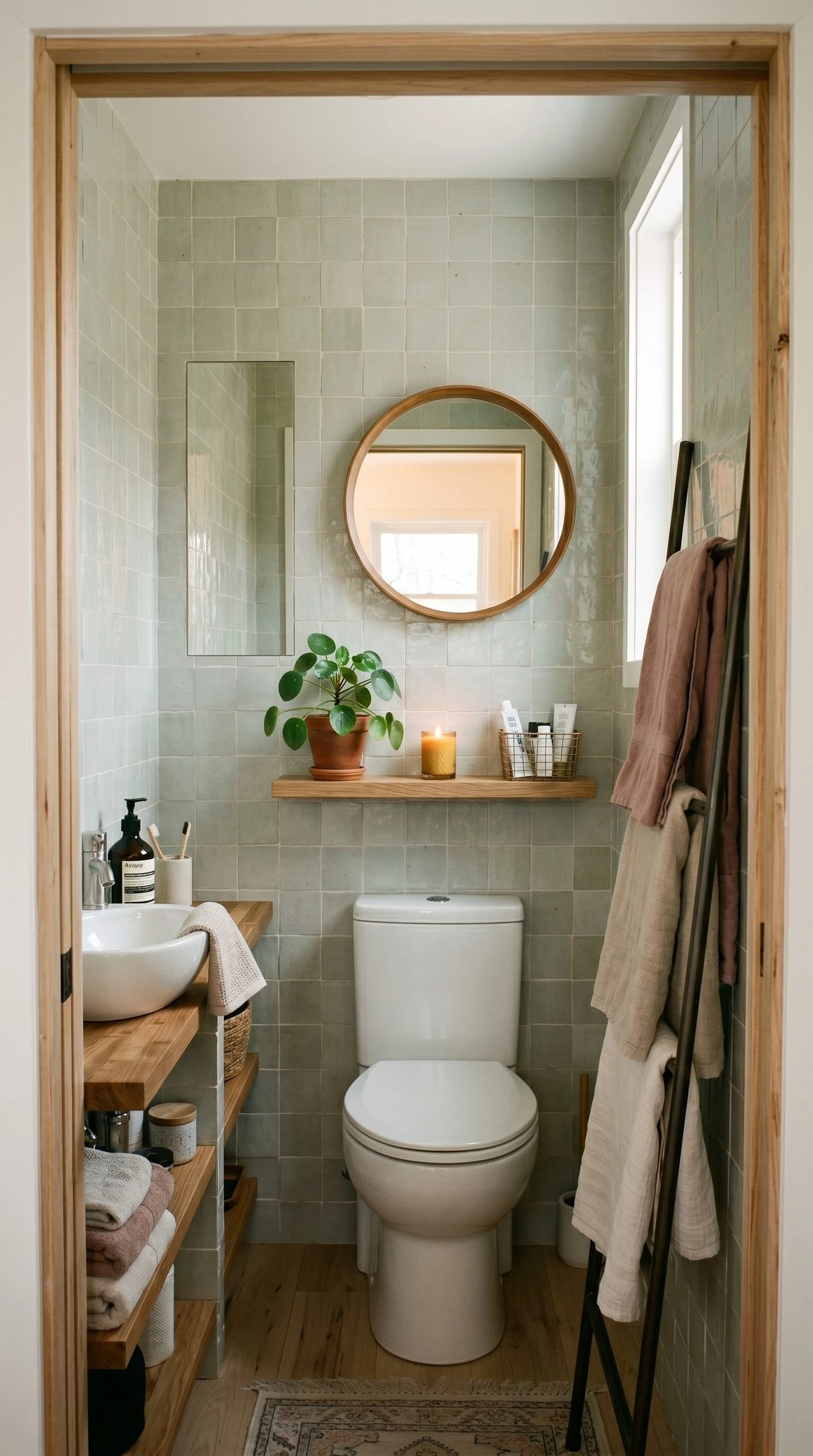
Tiny home bathrooms are notoriously tricky. The floor space is minimal, the counter is usually small, and finding room for toiletries, towels, and all the items that accumulate in a bathroom can feel genuinely impossible. The solution is to treat every wall surface as storage real estate and then choose your fixtures accordingly. This means installing a recessed medicine cabinet rather than a surface-mounted one, using vertical ladder towel rails instead of horizontal bars, and adding a row of small hooks near the door for robes and bags.
A recessed cabinet between the wall studs is one of the best bathroom upgrades in a tiny home. By sitting inside the wall rather than projecting out of it, it takes up zero floor space and zero visual real estate, yet provides a generous amount of storage for medications, skincare, and personal items. Pair this with a small floating shelf above the toilet, if there is a toilet, for additional storage that would otherwise go unused.
For the shower or wet area, a mounted corner caddy that hooks over the shower head or attaches to the wall with suction cups keeps shampoo, conditioner, and body wash off the floor and tub ledge. Magnetic strips for bobby pins and metal tools on the inside of a cabinet door, a narrow rolling cart that slides into a gap beside the sink, and over-the-toilet shelving units round out a bathroom storage system that genuinely covers every need without requiring extra square footage.
Space Saver Secret: Install a small floating shelf at eye level directly beside the bathroom mirror rather than below it. Use it for the two or three items you reach for every single morning. Getting them off the counter clears the sink area completely and makes the bathroom feel twice as spacious.
15. Custom Built-In Benches with Storage at the Entry
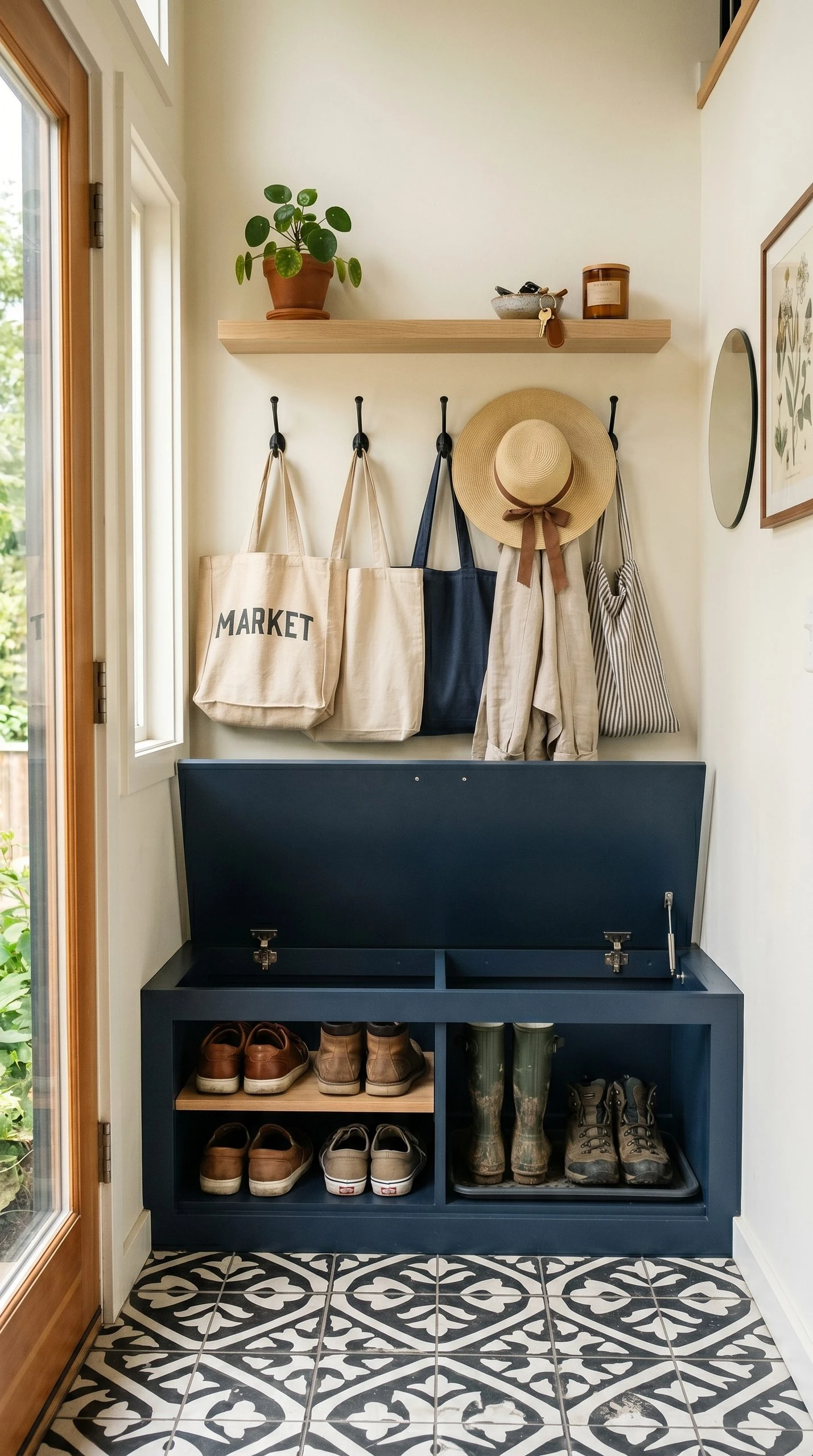
The entryway of a tiny home is both the hardest-working and most overlooked space in the whole building. Everything that comes in from the outside lands there first: shoes, bags, coats, umbrellas, dog leashes, mail, and anything else that needs to transition from outdoor to indoor. A custom built-in bench with storage underneath and hooks mounted above is the single best thing you can do for that space, and it transforms the entire entry from chaos to calm.
The bench itself serves as seating for putting on shoes, a visual anchor for the entryway, and a lid that opens to reveal storage for shoes, boot trays, bags, or seasonal gear. Above the bench, a row of mounted hooks holds jackets, bags, and hats at easy reach. A narrow floating shelf above the hooks can hold keys, sunglasses, mail, and a small plant or lantern that makes the entryway feel warm and welcoming rather than utilitarian.
For the build, painted MDF or solid pine are both affordable and easy to work with. Choose a bench height between 17 and 19 inches, which is standard seating height and comfortable for sitting. Add a cushion on top in a durable fabric like canvas or outdoor upholstery that can handle the daily contact with outdoor clothing. The whole unit, bench plus hooks plus shelf, can typically be built for a few hundred dollars and represents one of the best investments per square foot in any tiny home.
Space Saver Secret: Add a small drawer or divided tray inside the bench compartment specifically for items that need to leave the house every day: keys, transit cards, earbuds, a spare charger. You will never stand at the door frantically searching for your keys again.
Making It All Work Together
Storage in a tiny home is never really about finding one perfect solution and calling it done. It is an ongoing conversation between how you live, what you own, and how much you are willing to let your space work as hard as you do. The ideas in this article are not meant to be done all at once. Pick two or three that match where your biggest frustrations are right now and start there.
What you will find, once you start making intentional storage choices, is that the tiny home begins to feel different. Not bigger exactly, but clearer. There is less friction in the day because things have places. The space looks better because surfaces are free. And the whole experience of living small starts to feel more like a choice you are happy with and less like a problem you are managing. That shift is what good storage actually does.
Whether you go all in on a stair drawer renovation or simply mount a pegboard in your kitchen this weekend, every step toward intentional storage is a step toward a tiny home that genuinely works. You built or chose this space for a reason. These ideas are just about making sure the space returns the favor.
Frequently Asked Questions
How do I make storage look good in a tiny home without it looking messy?
Consistency is the main thing. When storage items like baskets, boxes, and containers match in color, material, or style, the whole thing reads as intentional decor rather than clutter. Stick to two or three materials across your storage solutions, say wood, rattan, and white canvas, and the space will feel cohesive even when it is packed with stuff.
What is the most underused storage space in a tiny home?
Easily the toe-kick area under kitchen cabinets and the space above upper cabinets near the ceiling. Most people walk past both every day without considering them. Toe-kick drawers and ceiling-height floating shelves together can add a genuinely meaningful amount of storage without changing the footprint of your space at all.
Can I add storage to a tiny home I am renting and cannot drill into walls?
Absolutely. Freestanding shelving units, leaning ladder shelves, tension rod systems, over-the-door organizers, furniture with built-in storage, and command hook systems all work without a single hole in the wall. Magnetic strips mounted with adhesive also work well in kitchens and bathrooms. The key is choosing quality adhesive products rather than the cheapest option, which tend to lose grip over time.
What should I prioritize first when organizing a tiny home?
Start with whatever causes you the most daily frustration. If shoes are always piling up at the door, solve that first. If the kitchen counter is always covered in things that have nowhere to go, start there. Solving your biggest pain point first gives you an immediate improvement in how the space feels and keeps motivation high for tackling the rest gradually.
Is Murphy bed storage worth the investment?
For tiny homes where the bedroom and living area share the same footprint, a Murphy bed is one of the best investments you can make. The floor space it returns during the day changes how the whole home functions and feels. A quality unit with built-in storage on the sides adds even more value. It is a significant upfront cost, but few upgrades change daily life in a tiny home as dramatically as this one.
How do I deal with kitchen storage when I have almost no counter or cabinet space?
Think in layers. A pegboard on an open wall, magnetic spice jars on the side of the fridge, hanging pot racks from the ceiling, toe-kick drawers below existing cabinets, and a rolling cart that tucks away when not in use can collectively add a significant amount of kitchen storage without touching your existing cabinet layout at all. Address each category of kitchen item separately and you will find a solution for most of them.