Nordic Wall Looks That Actually Make a Room Feel Complete

There is something about a well-dressed wall that pulls a whole room together, and nobody does this better than the Scandinavians. The Nordic approach to wall decor is not about filling every inch or going bold for the sake of it. It is about being deliberate, choosing pieces that carry meaning, and letting the wall breathe. In practice, this means a mix of natural textures, carefully chosen art, and functional objects that are beautiful enough to display. What strikes most people when they walk into a genuinely Scandinavian-styled room is how calm it feels, not empty, just calm.
The ideas in this guide go beyond the obvious framed print above the sofa. You will find textile hangings, slatted wood panels, ceramic wall sculptures, pegboard displays, and more. Some ideas work best in smaller spaces, others need a bit of room to breathe, and a few can be done for very little money. One thing that runs through all of them is that Scandinavian wall decor rewards restraint. You pick one or two strong ideas per room rather than layering everything at once. That discipline is what separates a genuinely Nordic-looking space from a room that just has a lot of stuff on the walls.
1. Oversized Botanical Line Art in a Simple Oak Frame
Large-scale botanical line art is one of those ideas that works almost anywhere, and once you see it done properly, it is hard to go back to smaller prints. The key is going genuinely big, at least 60×80 cm, so the piece has real visual weight on the wall. Choose a single plant illustration printed in black on warm white paper, and frame it in light oak with a wide white mat to give it breathing room. Pair the print with a wall painted in soft warm white or a barely-there greige, and the composition looks effortlessly put together. In a living room, hang it at eye level roughly 15 to 20 cm above a linen sofa in oatmeal or dusty sage. Add a ceramic table lamp nearby with a linen shade to cast warm side lighting that makes the art glow in the evenings. This approach works best in rooms with decent natural light, and it is a genuinely affordable option since botanical prints are widely available through print-on-demand shops for under $30, with the frame costing most of the budget.
Designer Note: Source your frame from IKEA’s RIBBA range or look for secondhand light oak frames at charity shops. The mat makes as much difference as the art itself, so never skip it.

2. Woven Wool Wall Hanging in Earthy Neutrals
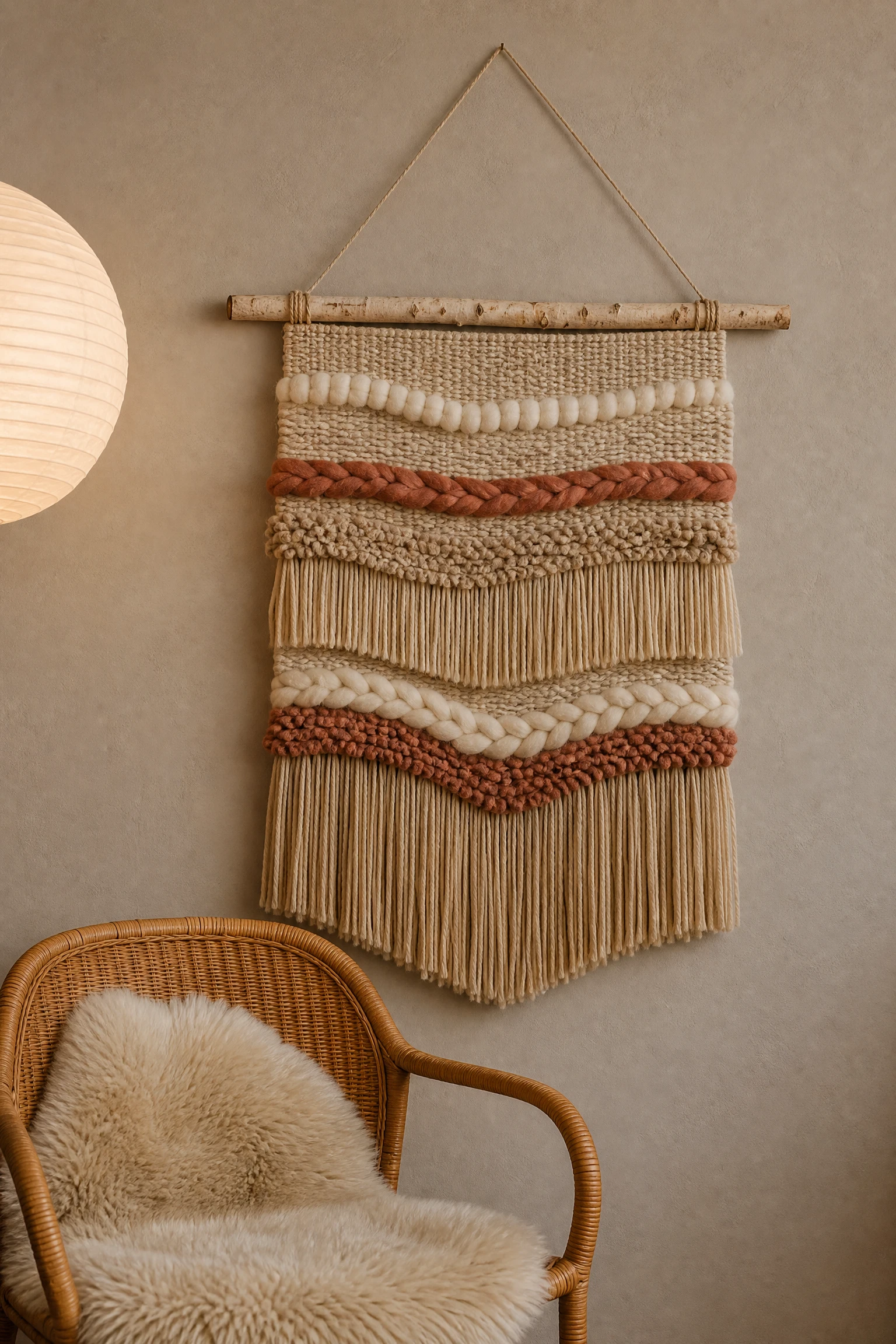
Textile art has been central to Nordic interiors for centuries, and the handwoven wall hanging is its most approachable modern form. A wool hanging in layers of oatmeal, warm sand, and muted terracotta adds exactly the kind of tactile warmth that flat prints cannot deliver. In practice, this works best on a wall with little else competing for attention, because the hanging itself becomes the focal point. Hang it from a raw oak or birch dowel using natural fiber cord, which adds to the handmade quality. The ideal backdrop is a warm white or soft greige wall, and the piece pairs well with rattan furniture, a sheepskin throw, and the kind of knubby linen cushions that look like they have lived a good life. For lighting, a pendant with a paper or bamboo shade hung nearby gives off a diffused glow that makes the wool fibers look rich and dimensional. Be aware that wool hangings can attract dust, so give them a gentle shake outdoors every few months. Handwoven pieces from small makers on Etsy run anywhere from $80 to $300 depending on size, which puts this in the mid-range budget category.
Designer Note: For a more affordable version, DIY wall hangings using macrame cord and natural dye techniques are widely documented online and can look just as striking as purchased pieces.
3. Vertical Slatted Wood Panel as a Feature Wall Section
Slatted wood panels, sometimes called SlatWall or acoustic panels, have become one of the most genuinely useful ideas in Scandinavian interior design, and for good reason. They add texture, warmth, and depth to a wall without overwhelming the space, and they double as mild sound absorbers, which makes rooms feel quieter and more settled. Oak or pine slats in a natural finish or a soft warm white work best for a Nordic feel. Rather than covering an entire wall, consider applying a panel section behind a bed headboard or a living room console, roughly 120 to 180 cm wide and floor to ceiling. The vertical lines draw the eye upward and make ceilings feel higher, which is a genuine practical benefit in compact rooms. Pair the panel with brushed brass or matte black wall sconces on either side for layered lighting, and keep the surrounding walls in a soft off-white so the panel reads as a deliberate feature rather than an afterthought. This is an investment-level option, with quality panels typically costing $200 to $600 depending on the material and coverage area.
Designer Note: If the budget is tight, individual pine slats from a hardware store, sanded smooth and painted in warm white or left natural, can replicate the look for a fraction of the cost.

4. Black and White Photography Gallery in Mixed Frame Sizes
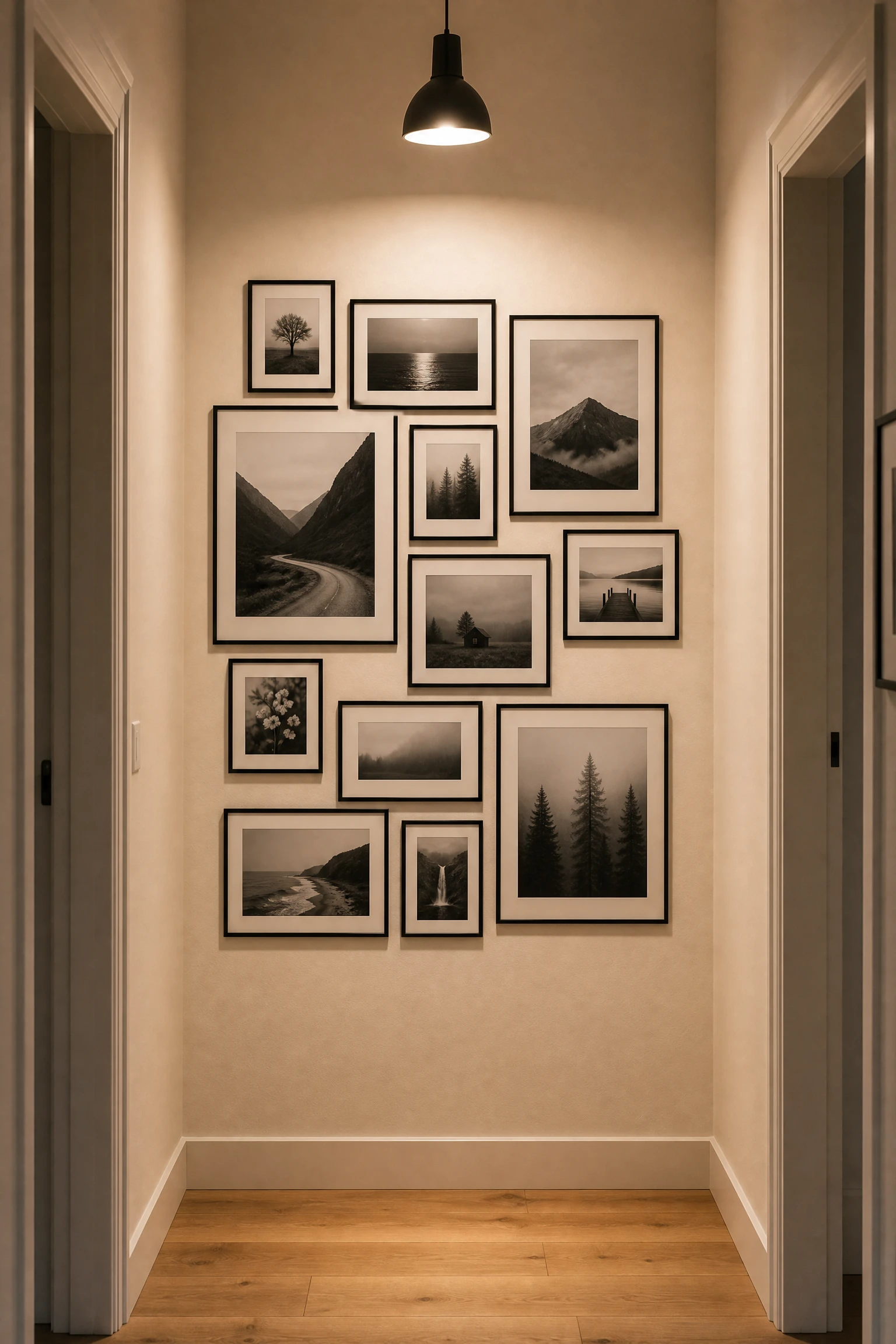
Converting personal photographs to black and white and grouping them in a gallery arrangement is a deeply personal and genuinely Scandinavian approach to wall decor, capturing the Nordic philosophy that homes should tell the story of the people who live in them. The key to making a gallery wall look intentional rather than chaotic is to commit to a consistent frame style, slim black metal frames work particularly well here, while varying the sizes of the prints. Mix portrait and landscape orientations in sizes ranging from 13×18 cm up to 40×50 cm, and lay the arrangement out on the floor before anything goes on the wall. A common mistake is spacing frames too far apart; keep gaps to around 5 to 7 cm for a tight, cohesive cluster. Black and white photography sits beautifully against a wall painted in soft warm white, deep charcoal, or a dusty sage green. A gallery like this works especially well in a hallway or bedroom wall, where it creates a personal, lived-in feeling. Budget-wise, this is one of the most affordable ideas since you are printing your own images, and slim frames are easy to find at low cost.
Designer Note: Print your photographs through a local print shop rather than a home printer for noticeably better tonal depth. Matte paper looks far more editorial than glossy in a Scandinavian setting.
5. Ceramic Wall Sculptures in Organic Shapes
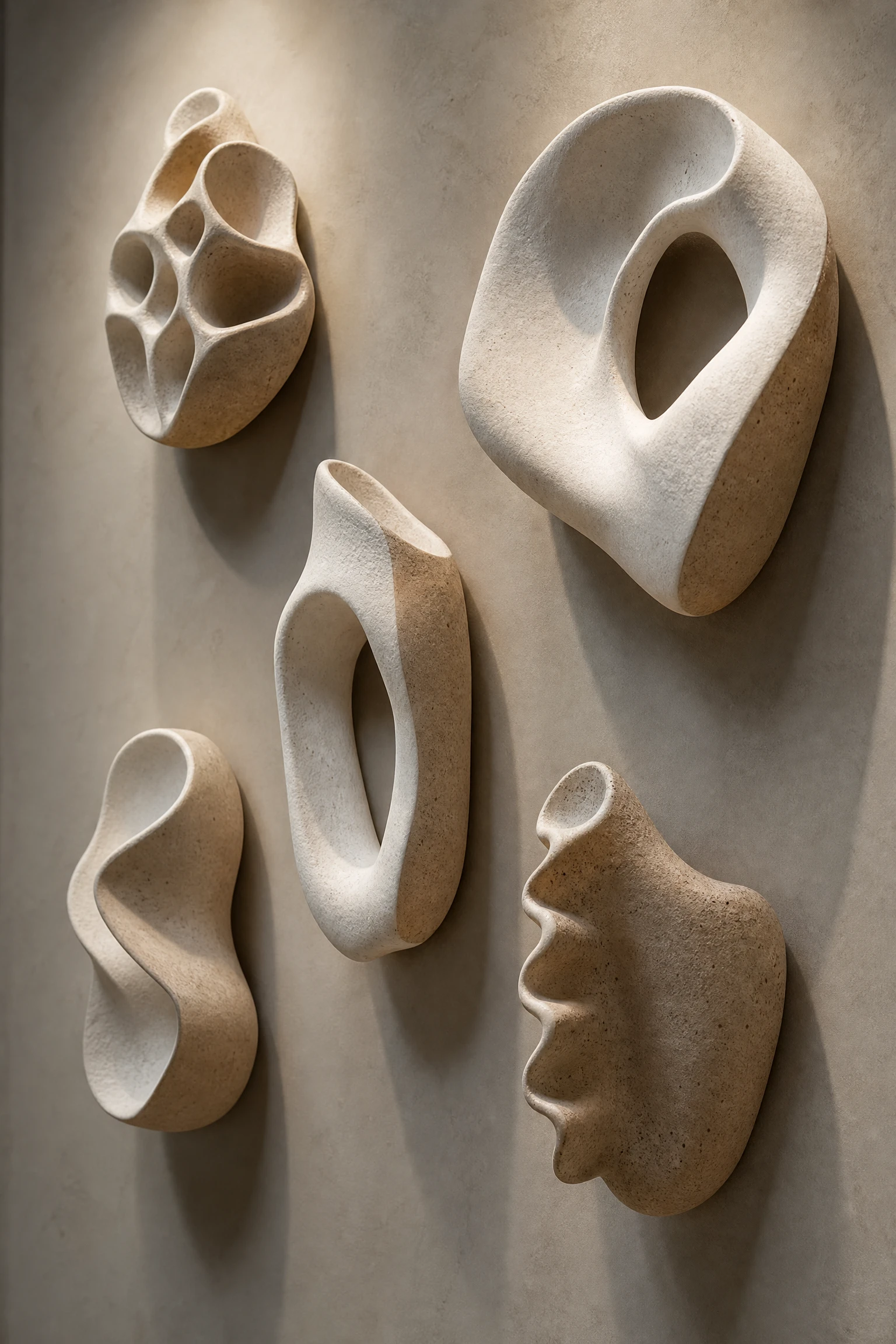
Handmade ceramic wall pieces are having a real moment in Nordic interiors, and they deserve it. Unlike flat art, ceramic sculptures introduce a three-dimensional quality to a wall that changes the way light moves across it throughout the day. Look for organic, abstract forms in warm whites, warm greys, or raw clay tones. A cluster of three to five pieces in varying sizes, arranged loosely rather than in a grid, creates an installation feel that looks genuinely collected rather than bought as a set. These pieces work especially well on a wall painted in a warm off-white or soft stone, and they look their best under directional track lighting or a picture light that casts shadows along their curves. In a bedroom, a small cluster above the nightstand is a quiet and sophisticated touch. In a living room, a larger arrangement above a sideboard has real impact. One honest consideration here is that quality handmade ceramics are not cheap. Expect to spend $40 to $150 per piece from independent ceramic makers, though similar forms in resin or plaster can be found for much less.
Designer Note: Space the pieces so they feel like they are in conversation with each other rather than just filling the wall. Odd numbers almost always look more natural than even groupings.
6. Pegboard Display in Natural Beech or Oak
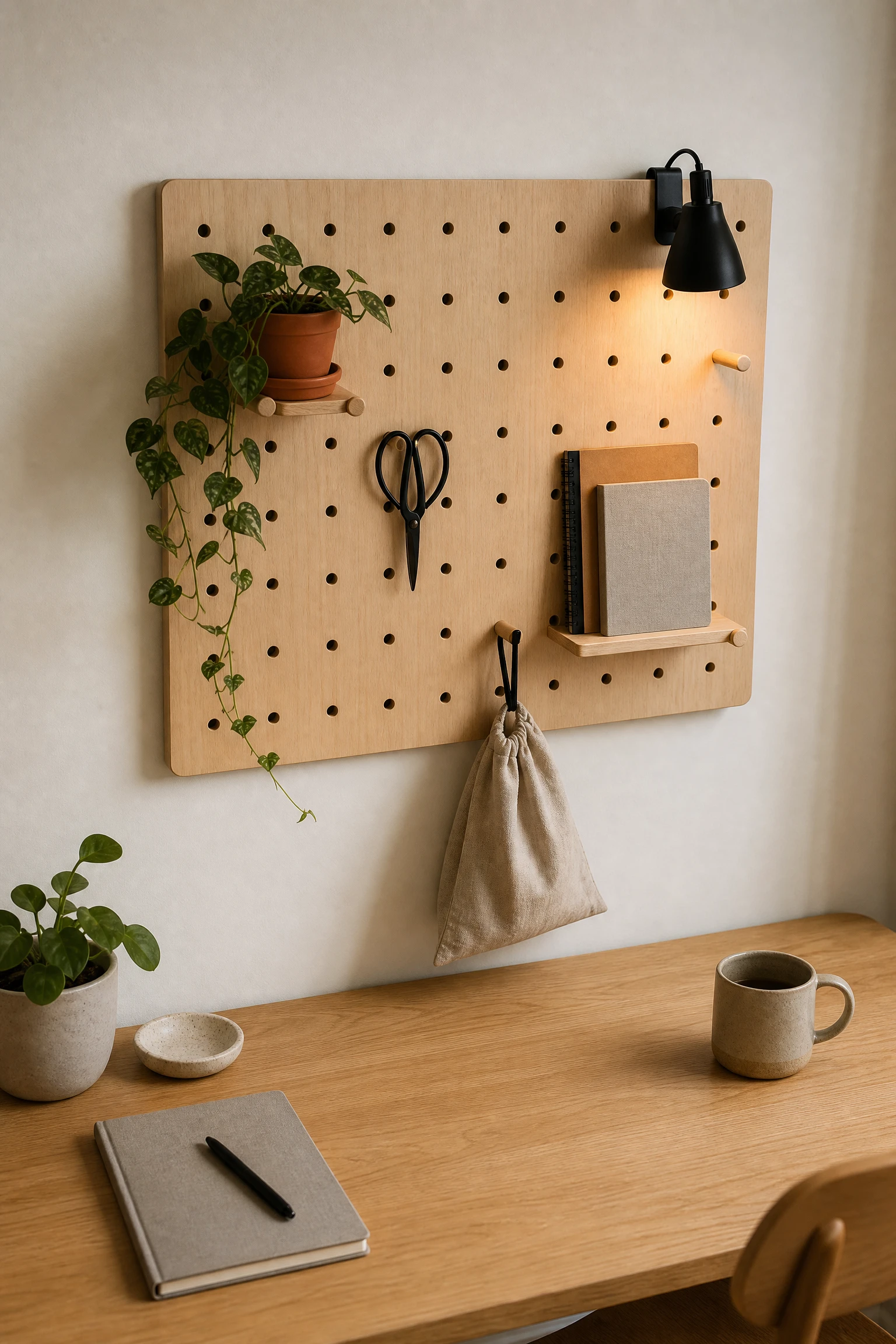
A wall-mounted pegboard in a natural wood finish is one of those ideas that manages to be both deeply functional and genuinely attractive, which is about as Scandinavian as it gets. In a home office, kitchen, or entryway, a beech or oak pegboard becomes a living display where daily objects like scissors, small plants in clay pots, notebooks, and hooks for keys become part of the decor. The trick is to style it thoughtfully rather than treating it as storage overflow. Choose accessories in a consistent palette of natural tones, black metal, and clay, and resist the urge to fill every hook. Negative space on a pegboard is as important as the objects themselves, which is where most people go wrong. For lighting, a small clip-on task light attached to the pegboard itself looks intentional and adds warm light at eye level. This works particularly well in spaces where wall space is limited, since a pegboard turns a functional need into a decorative one. Budget-friendly at its core, a plywood pegboard with routed holes can be made at home for well under $50.
Designer Note: Limit the color palette of pegboard accessories to two or three tones maximum. The moment it starts to look like a craft fair display, edit it back down.
7. Minimalist Abstract Art with a Muted Scandinavian Palette
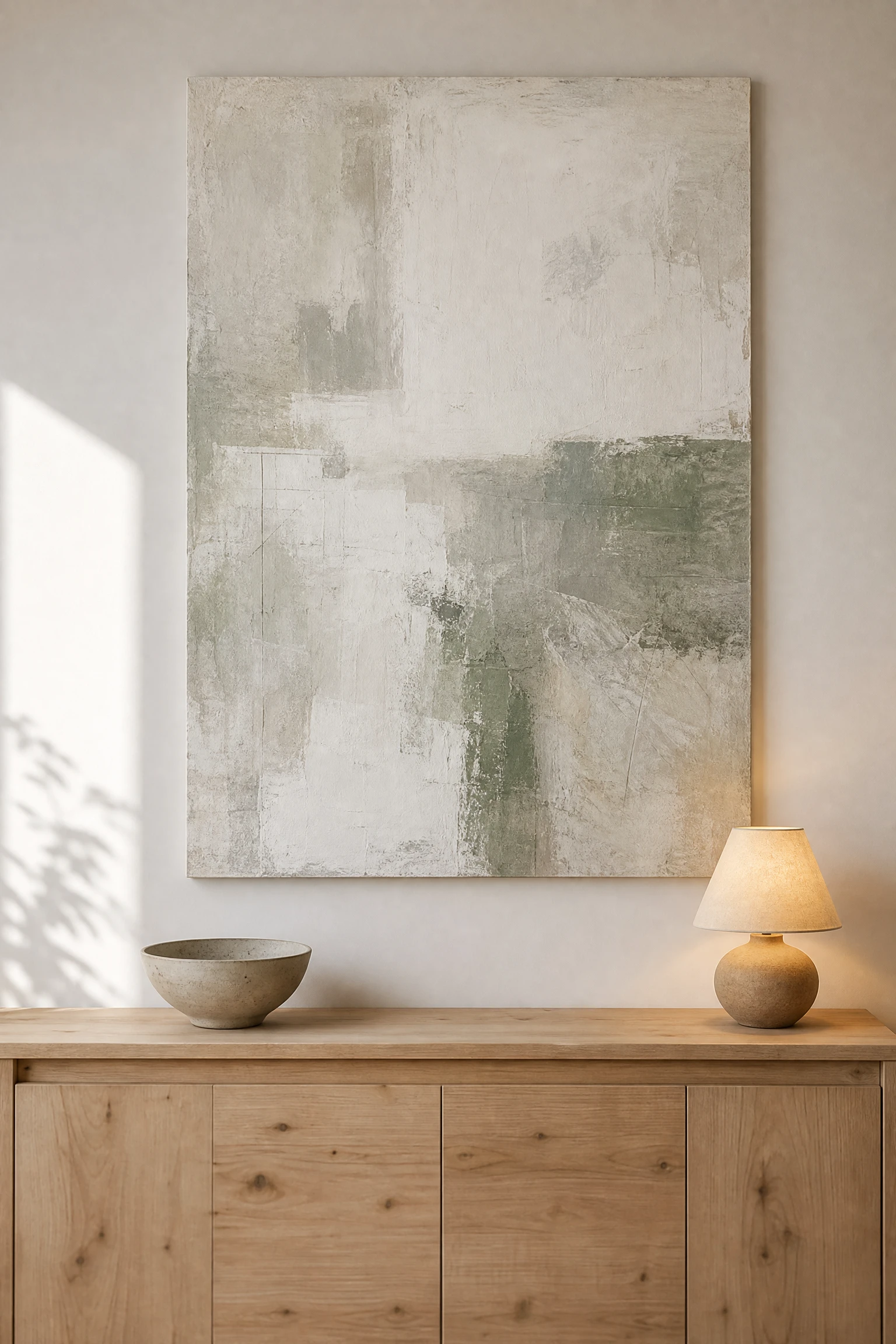
Abstract art is easier to get right in a Scandinavian interior than most people think, as long as you choose work with a genuinely restrained palette. Look for pieces that use warm greys, chalky whites, dusty blush, muted sage, or soft terracotta rather than anything bright or highly saturated. A single large abstract canvas or print, roughly 80×100 cm, can carry an entire wall in a living room or dining space without needing anything else beside it. The composition of the art should feel loose and gestural rather than hard-edged and graphic, as this adds warmth and humanity to the wall. Frame it in natural oak or leave it unframed with clean edges for a more contemporary Nordic look. Hang it at true eye level, which is typically around 145 to 150 cm from the floor to the center of the piece. Good quality art prints in this style are widely available through Poster Store, desenio, and Society6, with prices starting at around $25 for a digital print you have framed locally.
Designer Note: If you are unsure whether an abstract piece fits, photograph the wall with your phone and use a design app to overlay the print digitally before committing to a purchase.
8. Dried Botanicals Arranged in a Shallow Shadow Box Frame
Dried grasses, seed heads, and pressed botanicals arranged inside a deep shadow box frame is one of the most quietly beautiful wall decor ideas in the Nordic tradition, rooted in the Scandinavian appreciation for nature even in its most understated forms. A shadow box in natural oak with a depth of around 4 to 6 cm gives the botanicals enough room to sit dimensionally against a cream or raw linen backing. Choose a mix of dried pampas stems, lunaria seed pods, and pressed leaves in muted amber, straw, and dusty green tones. The whole arrangement should feel like something found on an autumn walk through a Nordic forest, not over-arranged or symmetrical. Hang the shadow box in a bedroom or reading corner where it can be appreciated up close. The natural materials pair beautifully with linen curtains, warm wood furniture, and the kind of soft ambient lighting that comes from a table lamp with a paper shade. This is a very affordable idea since dried botanicals cost very little and shadow box frames are inexpensive.
Designer Note: Seal dried botanicals with a light mist of hairspray or florist’s sealant before framing. This slows deterioration and keeps delicate pieces like lunaria from becoming brittle too quickly.

9. A Single Large Landscape Photograph in Panoramic Format
A panoramic landscape photograph is one of the most powerful ways to bring the Nordic landscape into a home, and when it is done right, it changes how a room feels immediately. Think a wide, misty forest shot, a grey-blue fjord at dusk, or a snow-covered birch woodland printed in soft, low-contrast tones. The panoramic format, roughly 100×40 cm or wider, works best above a sofa, console, or low sideboard where the horizontal format echoes the furniture line beneath it. Print in black and white or very muted color on fine art matte paper and frame in a slim natural wood or brushed steel frame. The image should feel serene and slightly ethereal rather than dramatic or sharp, since the goal is calm rather than spectacle. In practice, this works best in rooms with cool light where the misty tones of the photograph feel at home. Keep the surrounding decor simple; a panoramic photograph this size is enough on its own. Printing through a fine art lab gives significantly better results than standard photo printing and is worth the extra cost.
Designer Note: The most common mistake with panoramic prints is hanging them too high. The center of the print should sit at around 148 cm from the floor, even if that feels lower than expected.

10. Wabi-Sabi Inspired Textured Plaster Wall Panel
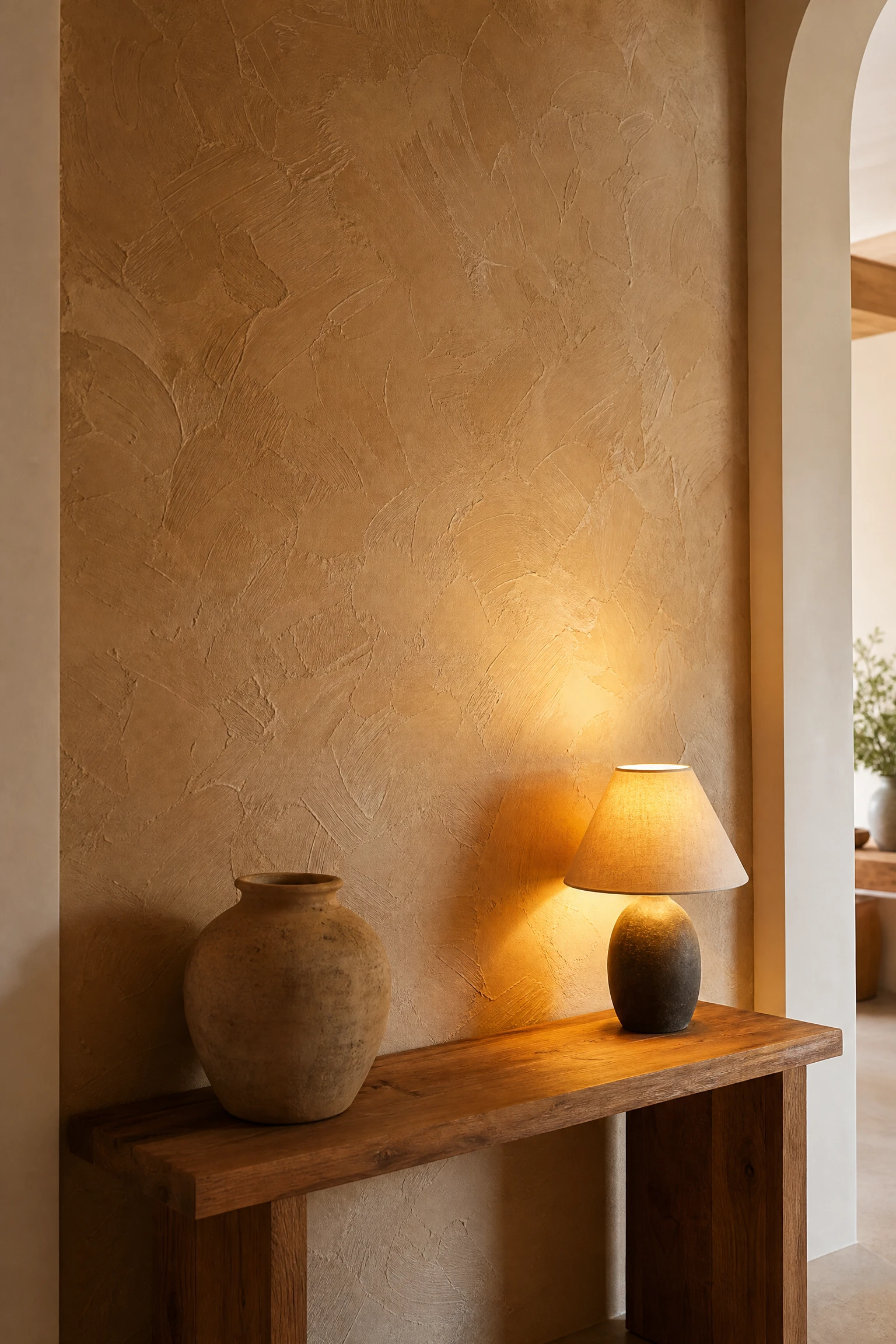
The wabi-sabi philosophy, originally Japanese but deeply resonant with Scandinavian design values, embraces imperfection, natural aging, and the beauty of things made by hand. A textured plaster panel applied to a section of wall brings all of these qualities into a Nordic interior in a way that no print or photograph can match. The technique involves applying a base coat of tinted plaster in a warm sand or pale clay tone, then adding a second layer with broad, irregular strokes and allowing the texture to show through. The result is a wall that looks handmade and organic, with subtle variation in color and depth that changes under different lighting conditions. This works especially well as a backdrop for a low wooden console with a single ceramic vase and a dim table lamp. Be aware that this approach is more permanent than other ideas here, and the technique takes some practice to get right, so test it on a small section or a piece of board before committing to the full wall. Material costs are low, but if you hire a specialist plasterer, this becomes an investment.
Designer Note: Natural clay and lime plasters are more sustainable and breathable than synthetic alternatives, and they develop a beautiful patina over time that synthetic versions cannot replicate.
11. Rattan or Seagrass Wall Mirrors in Grouped Arrangement
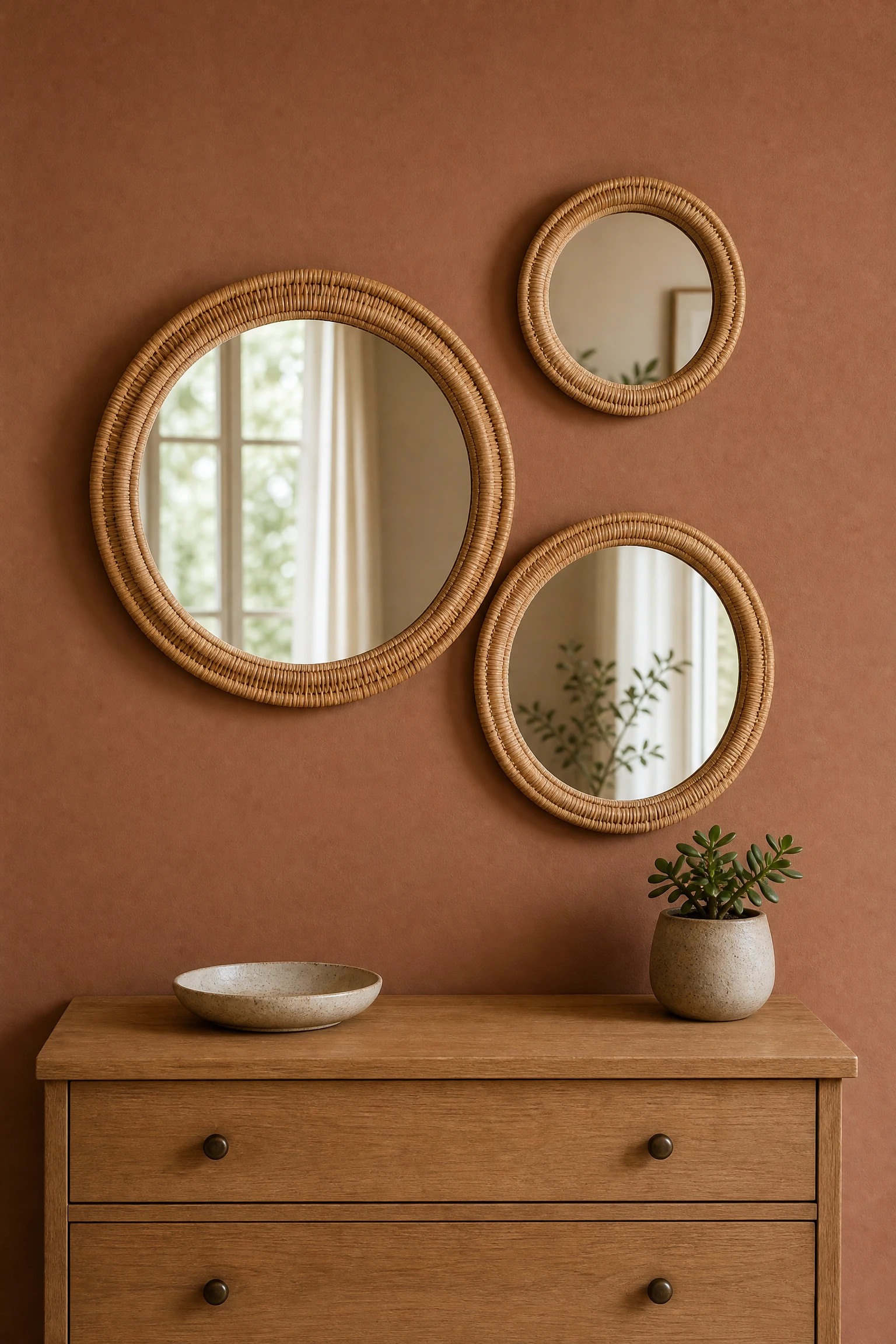
Mirrors with woven rattan or seagrass frames have moved well beyond trend status and into genuine Scandinavian-interior staple territory, particularly when grouped in clusters of two or three in varying sizes. The natural fiber frames bring warmth and organic texture to a wall in a way that metal or painted wood cannot, and the reflective quality of the mirrors adds light without electricity. Choose circular forms in diameters ranging from 30 cm to 70 cm and arrange them in a loose cluster with gaps of around 8 to 12 cm between them. A trio works particularly well above a bedroom dresser or in a hallway where a single mirror would feel too predictable. Pair the arrangement with warm-toned wall paint in a dusty clay or soft warm white, and add a pendant light nearby so the mirrors catch and amplify it. One practical note: rattan frames can warp slightly in very damp rooms, so this idea is better suited to bedrooms and living spaces than bathrooms.
Designer Note: Vary the frame thickness as well as the diameter when grouping mirrors. A thin-framed large mirror paired with a thick-framed small one creates more visual interest than identical frames in different sizes.
12. Hand-Lettered Nordic Quote in a Linen or Fabric Hoop
A hand-lettered quote stitched or printed onto natural linen and mounted in a simple embroidery hoop is a deeply personal and very Nordic wall decor idea. Choose a phrase in Swedish, Norwegian, or Danish for authentic character, something short and meaningful like ‘lagom’ (just the right amount) or a brief phrase about light, home, or togetherness. Natural linen with black or dark navy thread feels the most Scandinavian in character. The hoop itself should be raw wood rather than painted, and the finished piece looks best displayed on a shelf leaning against the wall rather than hung flat. For a bedroom or reading nook, this kind of detail adds a warm, human quality that mass-produced art never quite achieves. Layer it with a small ceramic plant pot and a softly glowing candle on the shelf beneath for a hygge-style vignette. This is one of the most affordable ideas on the list since linen fabric, embroidery thread, and hoops are all inexpensive, and the result is something genuinely unique.
Designer Note: If hand-stitching is not your skill, transferring a printed design onto linen and mounting it in a hoop achieves a very similar look and is something almost anyone can do in an afternoon.

13. Floating Oak Shelves Styled as a Curated Wall Display
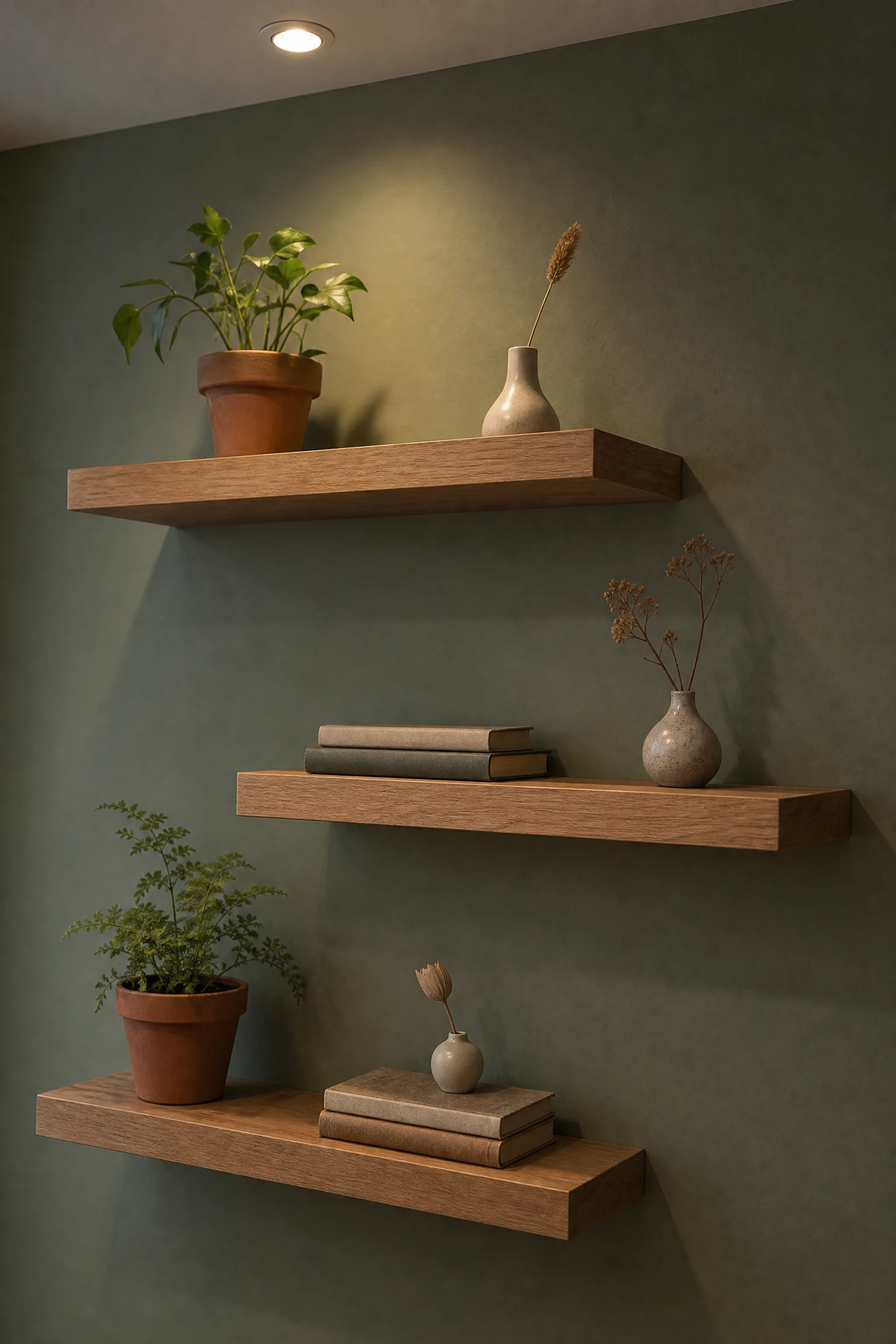
Floating shelves in solid oak or oiled pine do double duty in a Scandinavian interior: they are functional storage and a wall display at the same time, which is exactly the kind of purposeful design Nordic interiors are built on. Install two or three shelves in staggered lengths rather than perfectly aligned rows for a more considered, lived-in look. Style each shelf with a restrained combination of objects: one small plant in a terracotta pot, one or two books stacked horizontally, a single ceramic vase, and perhaps a small framed print leaning against the wall rather than hung. The mistake most people make is filling the shelves too fully. Each shelf should feel deliberately light. Paint the wall behind the shelves in a contrasting tone, a dusty sage or soft slate blue, to make the shelves and objects read as a cohesive installation rather than random items. Warm directional lighting from a wall-mounted picture light or a small ceiling spotlight above makes the whole display look intentional and gallery-like.
Designer Note: Solid oak shelves look better than veneer options and age beautifully, but they are heavier. Always fix them into wall studs or use appropriate wall anchors rated for the load.
14. Japandi-Style Ink Brush Paintings on Rice Paper
The Japandi aesthetic, a natural meeting point between Japanese minimalism and Scandinavian simplicity, has become one of the most genuinely interesting directions in Nordic interior design, and ink brush paintings on rice paper fit perfectly into this world. A single large ink brush painting showing an abstract branch, a minimalist mountain outline, or a loose gestural form in black ink on soft cream rice paper brings both styles together without either one overwhelming the other. Frame it in a natural oak frame with no mat, or use a simple clip frame so the delicate edges of the rice paper are visible. The visual weight is quietly dramatic: the dark mark of the ink against the pale paper has a stillness that is hard to achieve with other art styles. This works best in a space that is already leaning minimal, perhaps a bedroom with low furniture in warm wood tones and linen bedding in undyed white. Keep the surrounding decor intentionally sparse so the painting can hold the room’s attention on its own.
Designer Note: Rice paper prints are available affordably through specialist art suppliers online, but an original small work from a local calligraphy artist costs surprisingly little and carries far more character.

15. Vintage Scandinavian Textile Fragment Mounted and Framed
Framing a fragment of vintage woven textile, a piece of traditional Norwegian rya, Swedish dukagång, or Finnish ryijy weaving, is a way of bringing genuine cultural heritage onto the wall in a form that feels contemporary rather than nostalgic. Even a small piece, 30×40 cm or so, carries enormous character when mounted on a linen backing inside a simple oak frame. Look for pieces with geometric patterns in the muted reds, blues, and natural wools that characterize traditional Nordic weaving. The frame should be wide enough to give the textile room, and the mounting fabric behind it should be in a neutral linen or cream cotton that lets the colors of the weaving speak without competition. This kind of piece works particularly well in a dining room or hallway where it can be seen at close range and appreciated for its texture and craftsmanship. Vintage textile fragments can be found through Scandinavian antique dealers, estate sales, and specialist Etsy sellers at prices ranging from $30 to over $200 depending on age and condition.
Designer Note: Always mount textile pieces on acid-free backing to prevent the fibers from deteriorating over time, especially if the piece is genuinely vintage.

16. Monochrome Geometric Print Pairing in Matching Frames
Two geometric prints in a shared monochrome palette, hung side by side with consistent spacing, is one of the cleanest and most versatile wall decor ideas for a Scandinavian interior. Choose prints that share a visual language but are not identical: perhaps one with a triangular composition and another with overlapping circles, both in soft black and warm white. Frame them identically in slim black metal or natural oak and hang them at the same height with a gap of around 8 cm between them. This pairing works above a narrow console table, a bed, or even in a corridor where wall space is limited. The geometric language feels precise and considered without being cold, especially when the prints are kept in soft tones rather than harsh black and white. Add a small shelf or ledge below the pairing for a single object, a ceramic bowl or a single stem in a bud vase, to ground the composition. This is a very affordable idea since geometric prints are among the most widely available and least expensive types of art in the Scandinavian style.
Designer Note: Measure both frames and the wall carefully before hanging. Even a millimeter of misalignment between a pair of framed prints is surprisingly visible, so use a level every single time.

17. Nature-Inspired Wall Decals in Soft Muted Tones
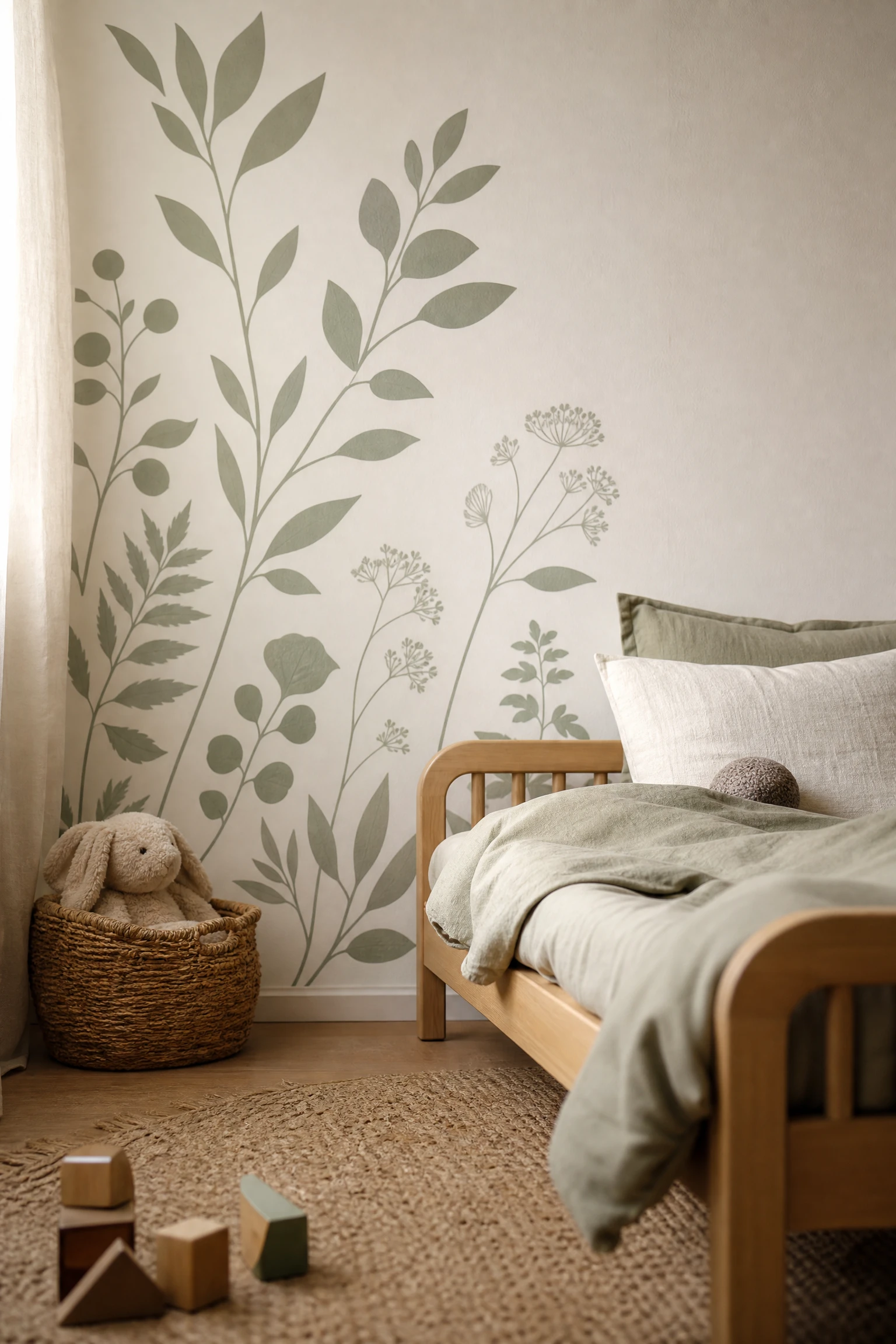
Well-designed wall decals in the right palette can look genuinely sophisticated in a Scandinavian interior, though the quality of the design matters enormously and the wrong choice looks cheap immediately. Look for botanical or abstract nature-inspired decals in muted sage, warm terracotta, dusty blue, or soft charcoal rather than bright or saturated colors. A cluster of oversized leaf or branch silhouettes applied loosely to a corner of a wall, as if growing organically from the edge of the room, adds a quiet natural quality without the permanence of painted or wallpapered designs. This approach works especially well in a child’s bedroom or nursery where the Scandinavian style lends itself beautifully to clean, calming environments, and where a non-permanent wall treatment makes practical sense as tastes change. The surface behind the decals should be a clean, flat paint in warm white or soft greige for best adhesion and appearance. Removal leaves no damage, which is a genuine practical advantage in rented spaces.
Designer Note: Decals designed by independent Scandinavian artists on Etsy are consistently better in quality and originality than mass-market versions, and they usually support small studios.
18. Staggered Grid of Identical Small Prints
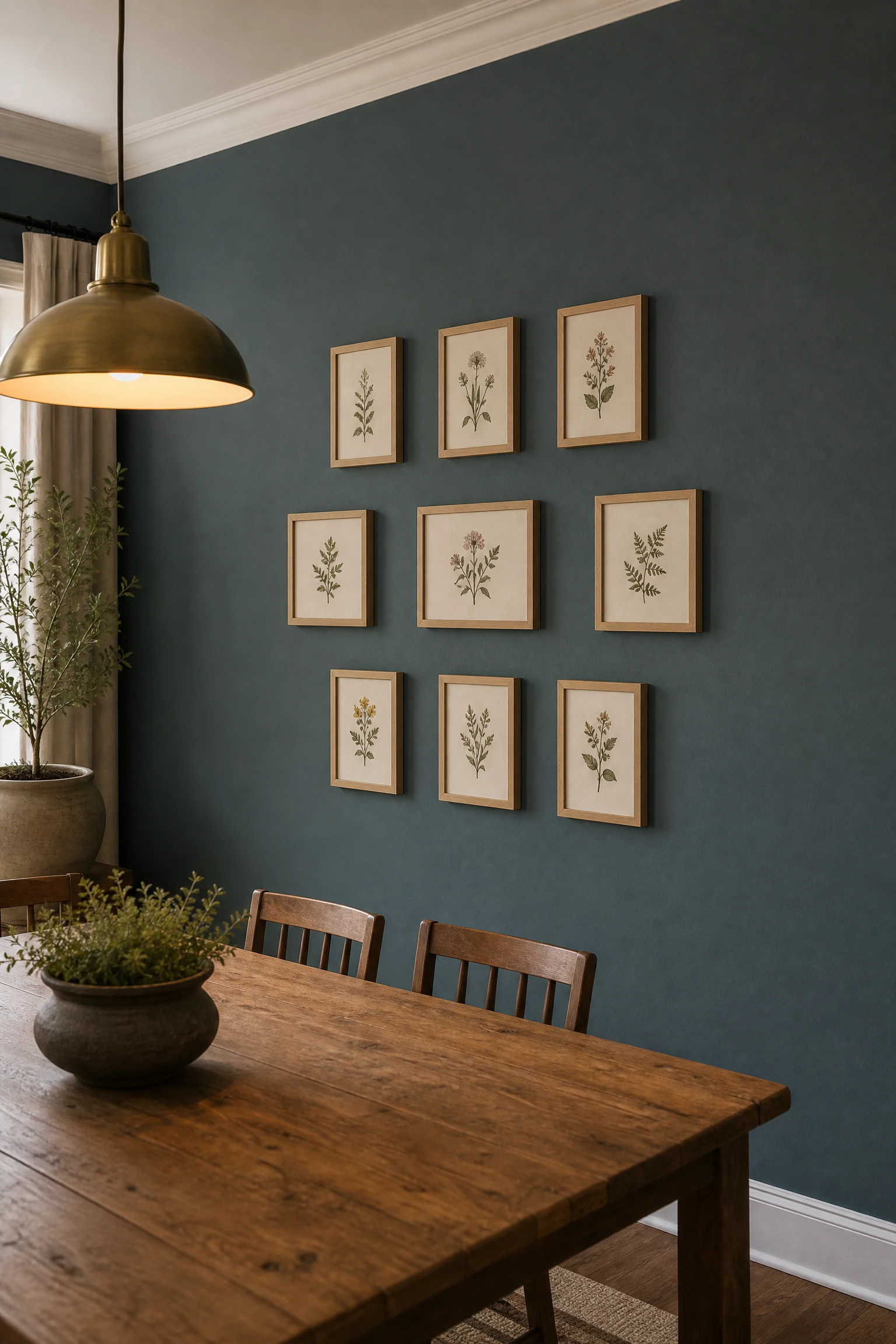
A staggered grid of small identical prints is a more structured approach to gallery walls that suits the Scandinavian preference for order and visual calm over eclecticism. Choose a single print design, perhaps a simple botanical illustration or a minimal abstract shape, and print it in multiples at the same size, around 15×20 cm each. Frame all prints identically in slim natural oak and arrange them in a grid of three across and three down, but offset every other row by half a frame width so the grid has movement without feeling chaotic. This arrangement works particularly well on a long narrow wall in a dining room or hallway and has a quietly graphic quality that feels considered and intentional. The wall color behind the grid matters: warm white keeps things airy, while a deeper tone in dusty blue or forest green makes the grid feel more dramatic and art-gallery-like. Nine identical frames and prints at this size should be achievable for under $100, making this one of the more affordable multi-piece options.
Designer Note: Print all copies in the same batch if possible, even through an online print service. Color consistency across a grid arrangement is essential, and separate print jobs often have slight tonal differences.
19. Linen Wall-Mounted Magazine Rack as Functional Decor
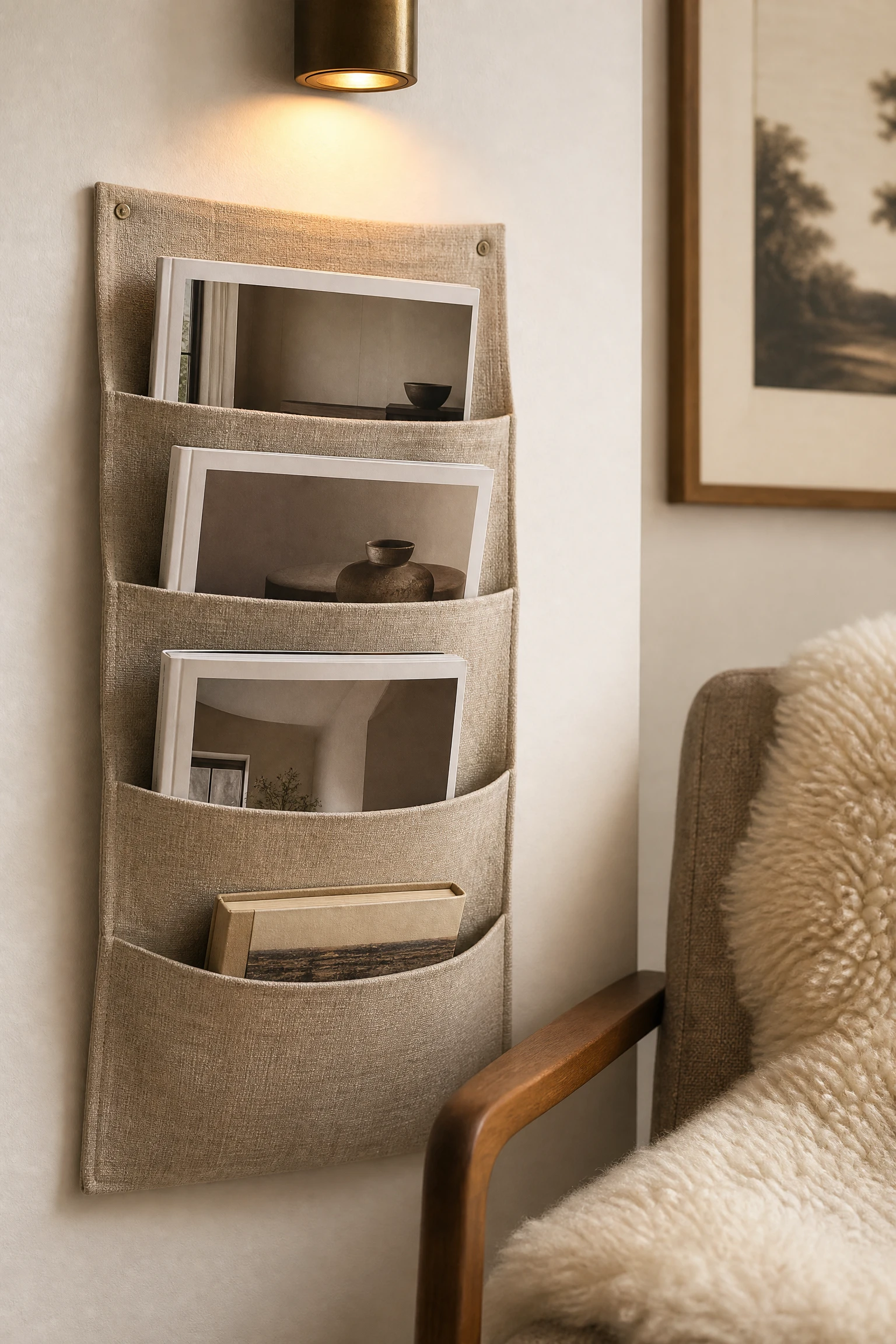
A wall-mounted linen or canvas magazine rack is a clever piece of functional wall decor that earns its place in a Scandinavian interior by being genuinely useful while also looking good. Choose a version in undyed natural linen with a simple structure and minimal hardware in matte black or natural brass. Style it with a small selection of design and interiors magazines, a couple of journals, and perhaps a thin paperback whose spine has appealing typography. When styled thoughtfully, this kind of piece reads as a deliberate display rather than a storage solution. It works particularly well in a living room reading corner, a home office, or a bedroom wall near a reading chair. The natural linen texture pairs well with warm wood furniture and woven textures elsewhere in the room, adding to the layered, tactile quality that good Scandinavian interiors are built on. Keep the magazines curated; three or four titles maximum, so the rack never looks cluttered. Linen magazine racks are affordable and widely available through homeware retailers for $30 to $60.
Designer Note: Rotate the magazine and book selection every month or two. A stale display is easy to overlook when it has been the same for months, but a freshly styled rack draws the eye every time.
20. Driftwood Installation as Sculptural Wall Art
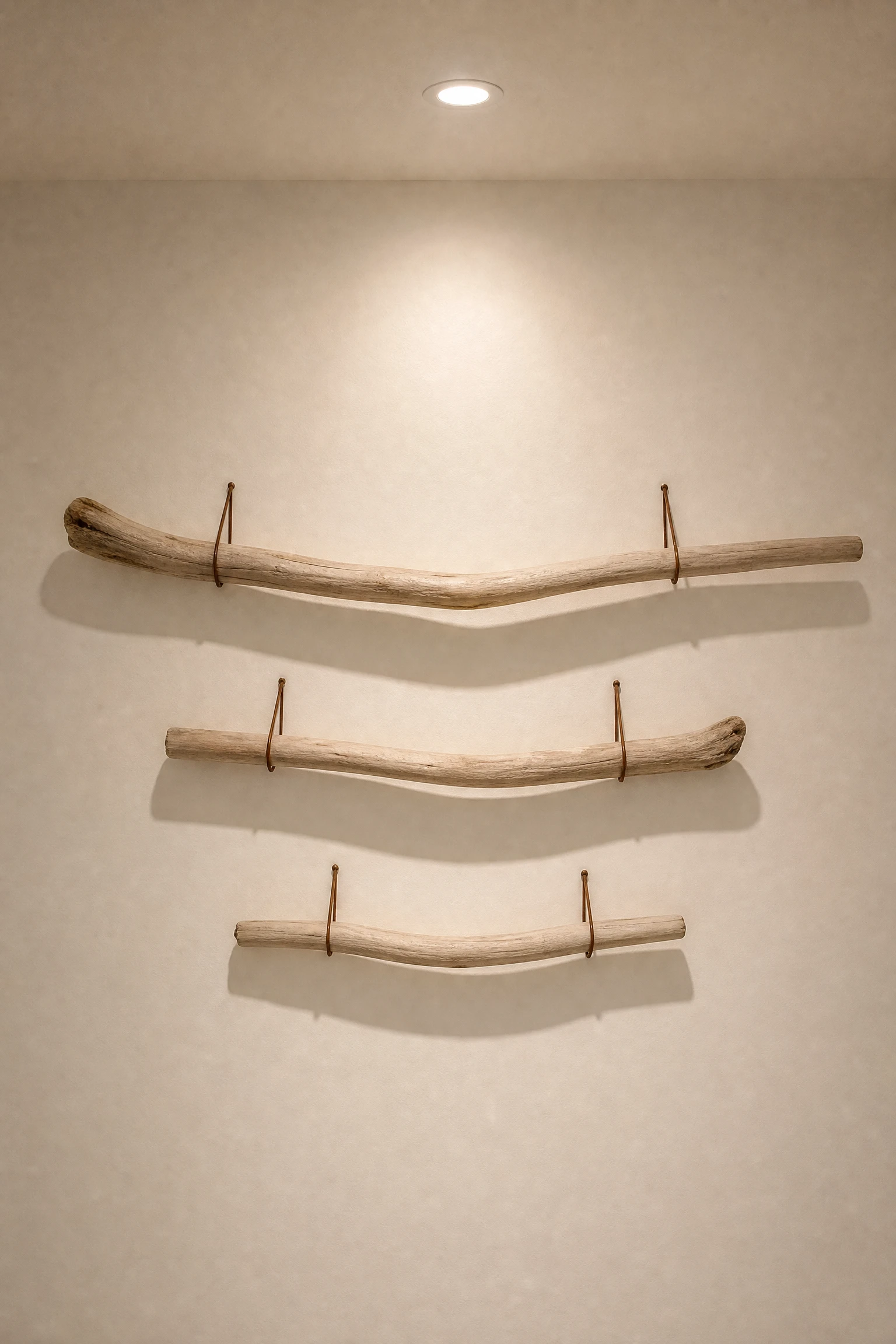
Collected and arranged driftwood is one of the most naturally Nordic wall decor ideas possible, rooted in the Scandinavian tradition of bringing the coastal and forest landscape directly into the home. A simple installation using three to five pieces of pale, smooth driftwood in varying lengths, mounted horizontally on a wall using small invisible fixings or thin leather cord, creates a quietly sculptural piece that brings texture, organic form, and a sense of place to a wall. The pieces should be genuinely smooth and pale, not raw or rough, and should be sealed lightly with a matte wax to prevent any fine dust or fiber from releasing over time. This looks best against a very simple backdrop in warm white or soft stone, with nothing else competing on the surrounding wall. A single overhead pendant or directional spot throwing light across the driftwood from above will cast shifting shadows that make the installation feel alive at different times of day. This is one of the most affordable ideas on the list since the material itself is free if you live near a coastline or river.
Designer Note: Source driftwood from beaches or riverbeds where it has been naturally bleached and smoothed. Avoid pieces that are still bark-heavy or rough, as these do not have the same quiet elegance once on a wall.
21. Layered Art Ledge Display with Rotating Prints
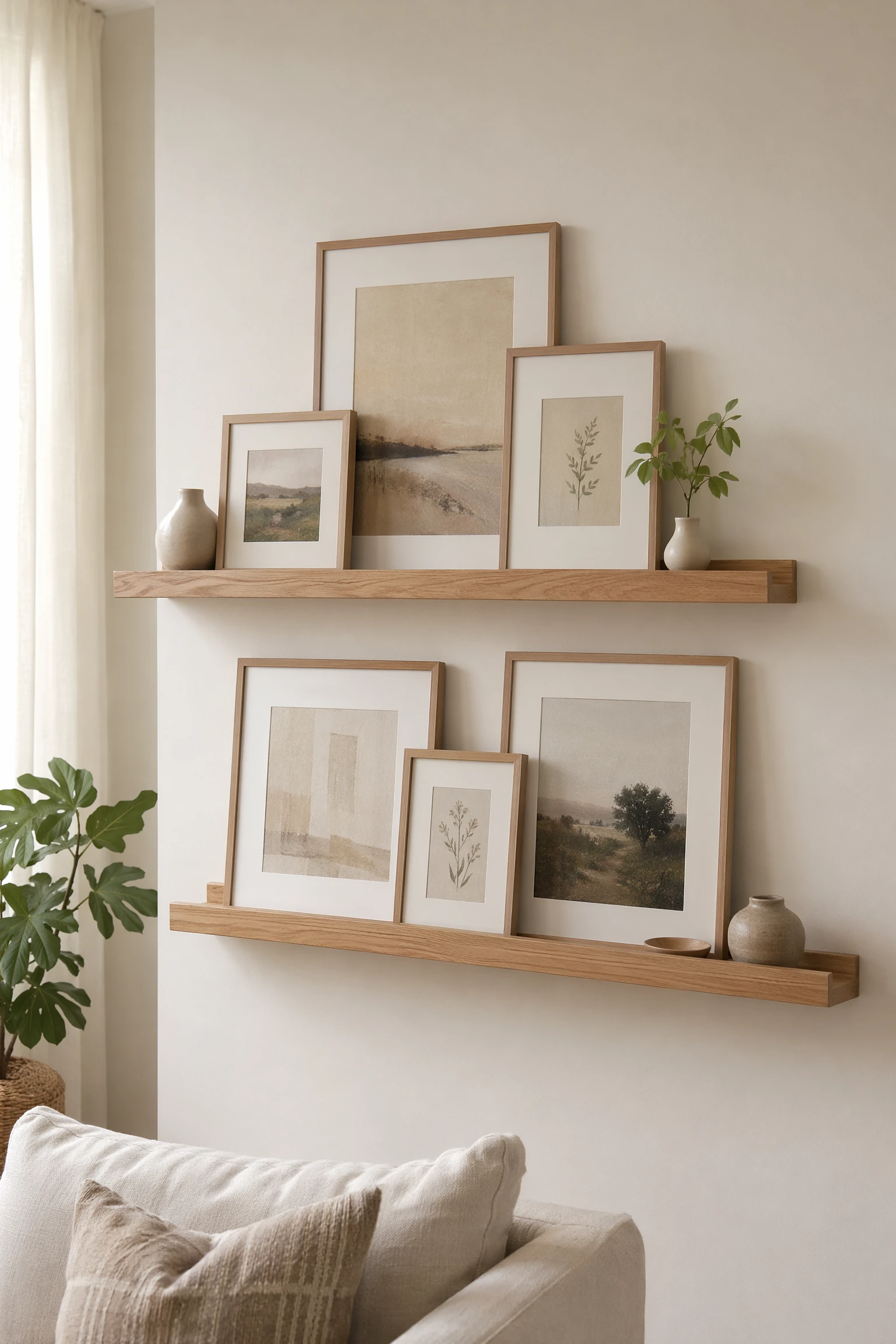
Art ledges, narrow shelves just deep enough to lean framed prints against the wall, are one of the most practical solutions in Scandinavian interior design because they allow the display to change without any new holes in the wall. Install one or two ledges in natural oak at different heights and lean a mix of framed prints, unframed art cards, and small objects against the wall in layers. The front-to-back layering creates depth, and the casual lean of the pieces feels genuinely relaxed and confident rather than rigid. Rotate the prints seasonally or whenever the room needs a refresh without touching a drill. This approach works in virtually any room and suits renters particularly well for obvious reasons. Layer in small ceramic objects, a plant cutting in a bud vase, or a small mirror to add dimension beyond the flat prints. Keep the palette consistent across all pieces so the layered arrangement reads as a cohesive display rather than a collection of unrelated objects.
Designer Note: IKEA’s MOSSLANDA picture ledge in oak is an honest, affordable starting point and holds frames up to around 1 kg each without issue. For heavier pieces, fix the ledge into wall studs.
22. Hand-Printed Lino Block Print in Earthy Tones
Hand-printed lino block art has a warmth and imperfection that mass-produced prints simply cannot replicate, and it fits naturally into the Scandinavian aesthetic that values craft, honesty of materials, and the visible mark of the human hand. A single lino print in a simple botanical or geometric motif, printed in a warm terracotta, dusty sage, or soft navy ink on cream cartridge paper, carries a quality of character that is immediately apparent in person. Frame it in a natural oak frame with a generous white mat, and hang it in a bedroom or home office where it can be appreciated at close range. The uneven ink coverage and slight registration marks that come with hand-printing are features rather than flaws in this context. If you want something genuinely unique, taking an introductory lino printing class is a rewarding afternoon activity that results in wall art no one else has. For those who prefer to buy rather than make, independent printmakers on Etsy and at local craft markets offer beautiful options, typically at $40 to $120 for original prints.
Designer Note: When printing your own lino art, pull several prints in one session since the first one or two are rarely the best. The pressure and ink consistency improves as you go, and having multiples gives you display options.

23. Upholstered Panel Headboard Treatment Extending Up the Wall
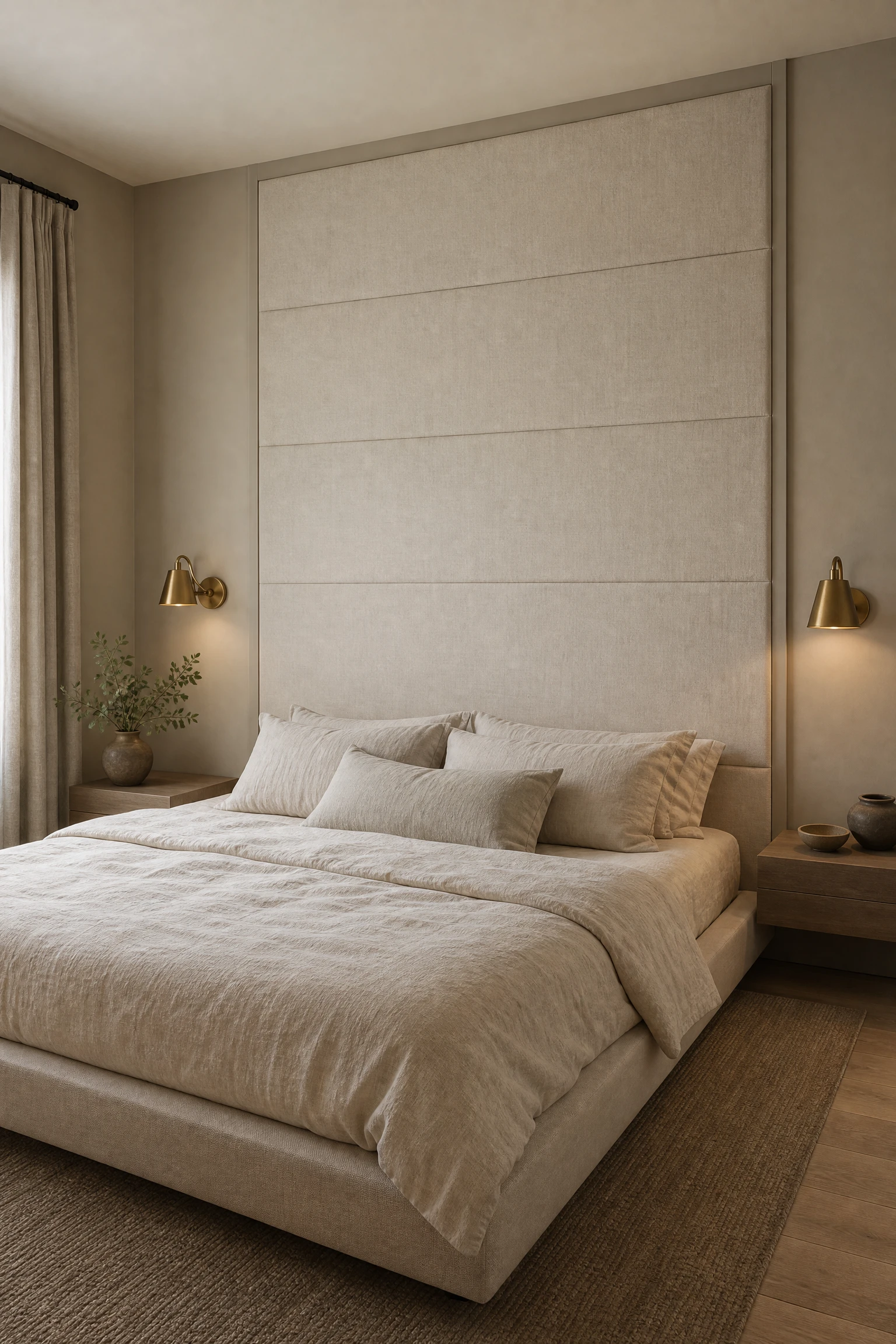
An upholstered wall panel above a bed is one of the more considered wall decor approaches in modern Scandinavian design, sitting at the intersection of functional headboard and decorative wall treatment. Choose a fabric in linen, boucle, or a fine-weave wool in a warm neutral, off-white, warm grey, or dusty blush, and upholster a panel in a simple rectangular form that starts at the mattress line and extends roughly 90 to 120 cm up the wall. The padded surface adds acoustic softness to the bedroom, which improves the sense of quiet in the room in a way that is genuinely noticeable. Flank the panel with a pair of wall-mounted sconces in brushed brass or matte black at bedside height, and keep the surrounding wall paint in a close but slightly different tone so the panel stands out with subtlety rather than drama. This is a mid-to-investment level idea, with quality upholstered panels typically costing $150 to $400, though a handy person can make a version using a cut piece of MDF, thick wadding, and staple-gun upholstery for considerably less.
Designer Note: Boucle fabric is particularly beautiful for this application but picks up lint visibly. If low-maintenance is a priority, a tightly woven linen or wool blend is a more practical choice.
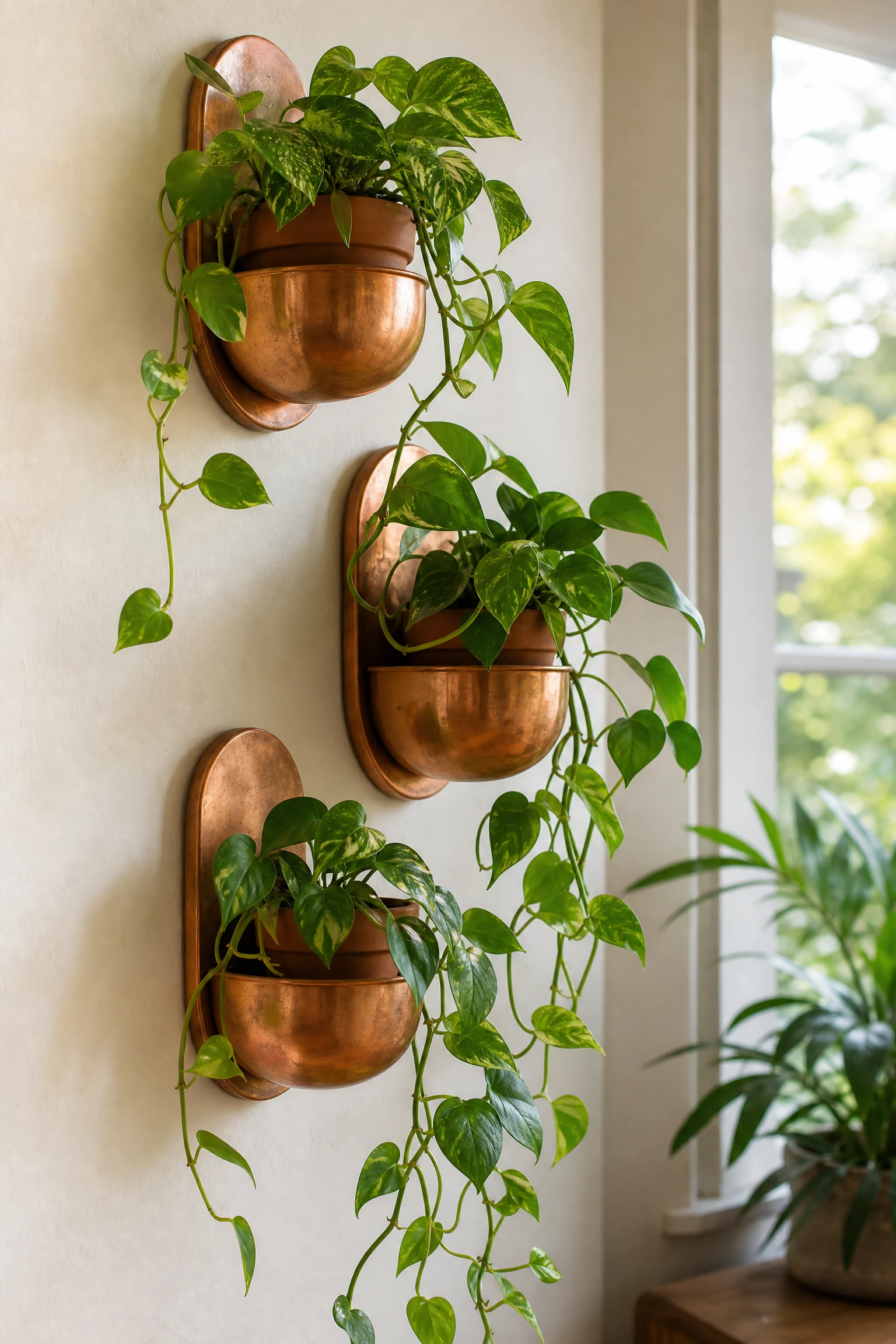
24. Copper or Brass Wall-Mounted Plant Holders
Wall-mounted plant holders in copper or brushed brass bring a warm metallic quality to a Scandinavian interior without veering into glam or maximalist territory, particularly when the plants chosen are simple and green rather than elaborate. Small hanging wall sconces in copper, designed to hold a single trailing plant in a clay pot, work beautifully in clusters of two or three at staggered heights on a plain warm white wall. Choose plants that thrive in the conditions of the room rather than simply those that look good in photographs. Pothos, heartleaf philodendron, and string of pearls all trail beautifully and are forgiving of irregular care. The copper or brass patinas gently over time, which only improves the look in a Scandinavian interior where natural aging is celebrated rather than hidden. This kind of living wall element adds color, texture, and literal life to a wall in a way that no flat art can match. Copper wall sconces are available at very accessible price points, typically $15 to $40 each, making this one of the most affordable decorative investments on this list.
Designer Note: Group the plant holders at varying heights between 140 and 180 cm from the floor so the trailing foliage fills the space between them naturally and creates an informal vertical garden effect.
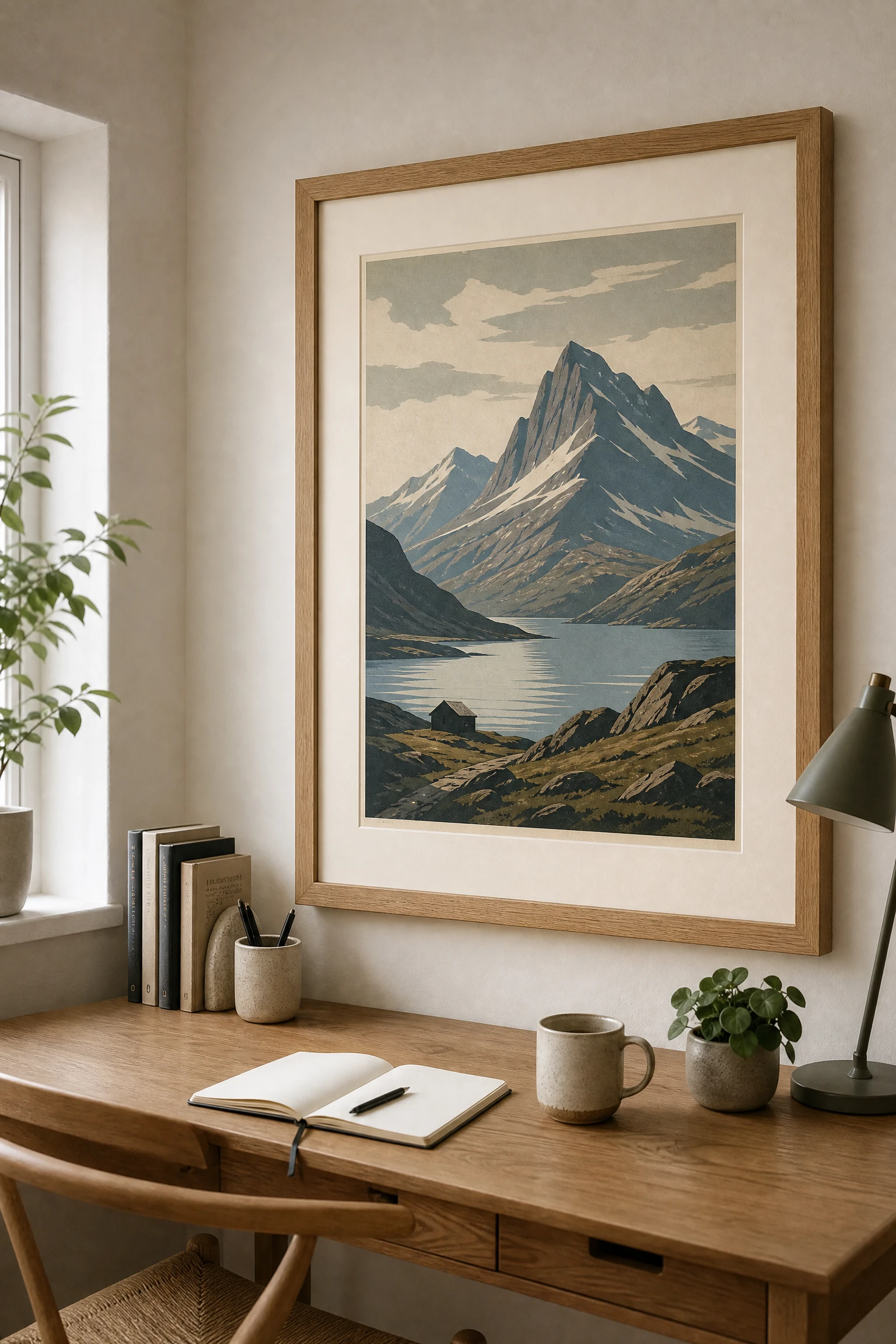
25. Framed Vintage Nordic Map or Illustration
A framed vintage map of Scandinavia, a historical illustration of a Nordic city, or a reproduction of a classic mid-century Nordic design poster is a wall decor idea that carries genuine character and a sense of place without requiring any original art budget. Look for reproductions of mid-century Scandinavian travel posters from Norway, Sweden, or Finland, which typically feature muted colors, bold typography, and graphic landscapes that look every bit as current as they did when they were originally printed. Frame the piece in a wide-profile natural oak frame with a generous cream mat, and hang it as a single statement on a wall that has nothing else competing for attention. These work especially well in a home office, a reading room, or a dining space where something with a bit of history and story gives the room a sense of depth. Vintage map and poster reproductions are widely available online at very low cost, typically $10 to $40 for a print, with the frame being the main investment.
Designer Note: Search specifically for Scandinavian SAS airline poster reproductions from the 1950s and 1960s. These have a graphic quality and restrained palette that works beautifully in contemporary Nordic interiors.
Bringing It All Together
Scandinavian wall decor is not about doing more. It is about doing less, better. The ideas in this guide range from a single oversized botanical print to a handcrafted lino block on cream paper, from natural driftwood arranged on a plain wall to floating oak shelves styled with genuine restraint. What connects all of them is the Nordic understanding that a wall should feel considered, not decorated for decoration’s sake.
The most common mistake people make when trying to achieve a Scandinavian look is adding too many things at once. Pick one or two ideas per room and give them space to work. Let the wall breathe around them. The calm that people feel when they walk into a genuinely Nordic-inspired room comes from that discipline, that willingness to leave space and trust that what is there is enough.
Start with the idea that appeals to you most and build from there. Some of these ideas cost almost nothing. Others are more of an investment. All of them reward care and intention over speed and volume. That, more than any specific piece of art or textile, is what Scandinavian wall decor is really about.
Frequently Asked Questions
What colors work best for Scandinavian wall decor?
Soft warm whites, greige, muted sage green, dusty blush, warm terracotta, and quiet slate blue all work well in a Scandinavian wall decor context. The key is staying away from colors that are bright, saturated, or cool-toned, since Nordic design gravitates toward warmth and calm rather than vibrancy. Even black works well in this context when used in a slim frame or a restrained graphic print, because it grounds the palette rather than disrupting it.
How do I avoid making a Scandinavian wall look too plain?
The answer is texture, not quantity. A single woven textile hanging or a cluster of ceramic wall sculptures adds visual interest through material and dimension rather than through volume of objects. When a wall looks too plain, the instinct is to add more art, but in a Scandinavian interior the better move is usually to swap a flat print for something with physical depth, a shadow box, a driftwood installation, or a slatted wood panel.
Can I do Scandinavian wall decor on a tight budget?
Absolutely. Some of the best ideas in this guide cost very little. A gallery of black and white personal photographs in slim frames, a DIY linen and embroidery hoop display, dried botanicals in a shadow box, or a botanical print ordered from a digital print shop and framed in an IKEA frame can all look genuinely beautiful without significant expense. The styling and restraint matter far more than the price tag.
How many pieces should I put on one wall?
As a general guide, one strong piece is almost always better than three mediocre ones. In a Scandinavian interior, the wall itself is part of the composition, and empty space around a piece is not a problem to be solved. For gallery-style arrangements, a cluster of three to nine pieces works well when they are consistent in frame style and palette. Beyond that, the wall starts to feel busy rather than considered.
Does Scandinavian wall decor work in small rooms?
It works particularly well in small rooms because the restraint built into the Nordic approach prevents the kind of over-decoration that makes compact spaces feel cramped. In a small room, a single large print or a slatted wood panel section actually makes the room feel bigger by giving the eye a clear resting point. Avoid cluttered gallery walls in very small spaces, as they can make low ceilings feel lower and tight corners feel tighter.
What is the difference between Scandinavian and Japandi wall decor?
Both share minimalism, natural materials, and a restrained palette, but Japandi leans further into asymmetry, negative space, and the wabi-sabi appreciation for imperfection and natural aging. Scandinavian wall decor tends to be slightly warmer and cozier in feel, with more emphasis on hygge-style comfort elements like textiles and botanicals. Japandi is typically more austere and architectural. In practice, the two styles overlap considerably, and many of the ideas in this guide sit comfortably in either category.