Coastal Bathroom Looks That Actually Feel Like the Beach
There is something about a coastal bathroom that just makes the whole house feel lighter. Maybe it is the soft blue-green palette that reminds you of a morning walk along the shore, or the way natural wood and linen textures make even the smallest space feel unhurried and calm. Whatever it is, the good news is that you do not need to live near the ocean to get that feeling. With the right combination of colors, materials, and small styling choices, you can bring that breezy, easy atmosphere into your bathroom all year round.
The ideas in this article cover a wide range of coastal styles, from clean and modern nautical setups to warm organic looks, moody deep-sea palettes, and even a Japandi-coastal blend that has been quietly taking over design feeds for the past couple of years. Each idea is approached from a real decorating angle, meaning you will find specific color names, material suggestions, furniture pieces, and lighting choices, not just the usual advice to add a starfish and call it a day. Whether you are doing a full bathroom renovation or just looking for a few affordable updates, there is something here that will work for your space.
Category One: Fresh Nautical Classics
1. Navy and White Stripe Walls With a Freestanding Tub
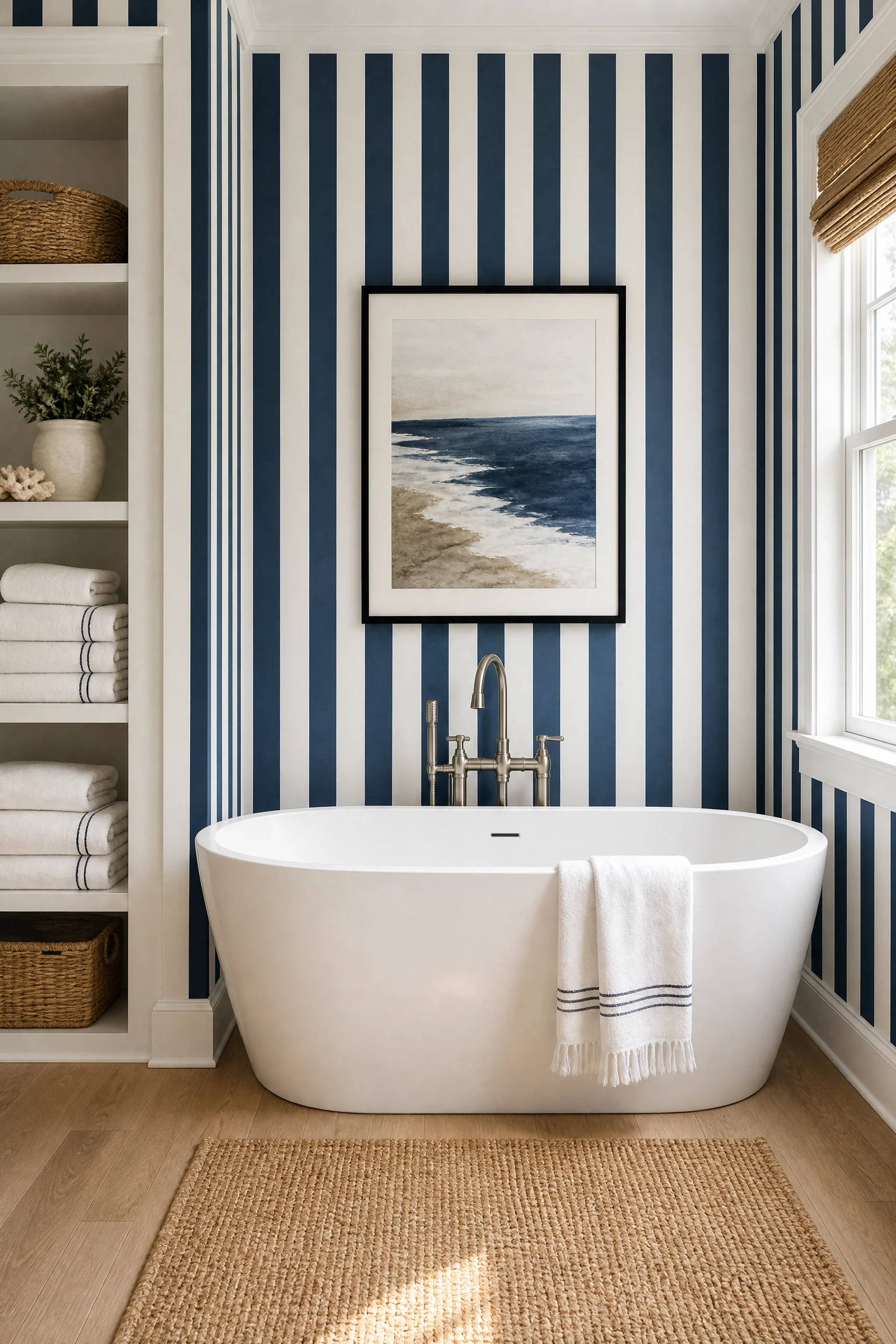
Picture this: you have a plain white bathroom that feels more clinical than calming, and you are trying to figure out how to give it personality without a full renovation. Painting the walls with vertical navy and white stripes is one of those moves that looks like you hired a designer but costs very little to execute. The stripes create a strong visual direction that draws the eye upward, making the ceiling feel taller, which is a real win in most bathrooms. Pair this wall treatment with a white freestanding soaking tub, ideally one with clean lines rather than an ornate clawfoot style if you want to keep things modern. Brushed nickel or matte black faucet hardware works well against the stripe backdrop without competing with it. Bring in a jute bath mat, a few white Turkish cotton towels folded on an open shelf, and a single black-framed coastal artwork above the toilet to anchor the look. One honest note: very bold stripes can feel overwhelming in a bathroom smaller than 50 square feet, so if your space is compact, consider using the stripe treatment on one accent wall only. This is a mid-range idea, achievable with quality paint and a steady hand or painter’s tape for around $80 to $150 in materials.
2. Rope Accents and Ship-Lap Walls for a Coastal Cottage Feel
You do not need to be in a beachside cottage to pull this look off, though it certainly helps the mood. Ship-lap paneling on one bathroom wall, painted in a warm white or pale cream, is one of the most effective ways to add architectural texture to a flat, boring space. The horizontal lines give the room a sense of movement and depth that standard painted drywall simply cannot match. Layer in rope accents carefully, and the emphasis here is on carefully, because rope can tip very quickly into nautical kitsch. The best applications are subtle: a rope-wrapped towel ring on the wall, a small hanging shelf held by thick jute rope from a ceiling hook, or a rope-handled woven basket on the floor holding rolled towels. For color, think warm whites, sandy beige, and hints of weathered driftwood brown. Wall sconces with an aged brass or oil-rubbed bronze finish work well here, casting a warm light that plays nicely off the ship-lap texture. A practical note: ship-lap in a bathroom needs to be properly sealed and painted with a moisture-resistant paint or primer to prevent warping over time, especially near the shower. Budget-wise, ship-lap panels are available at most home improvement stores for a manageable investment, and peel-and-stick versions are a renter-friendly alternative that costs even less.

3. Classic White Subway Tile With a Navy Grout Surprise
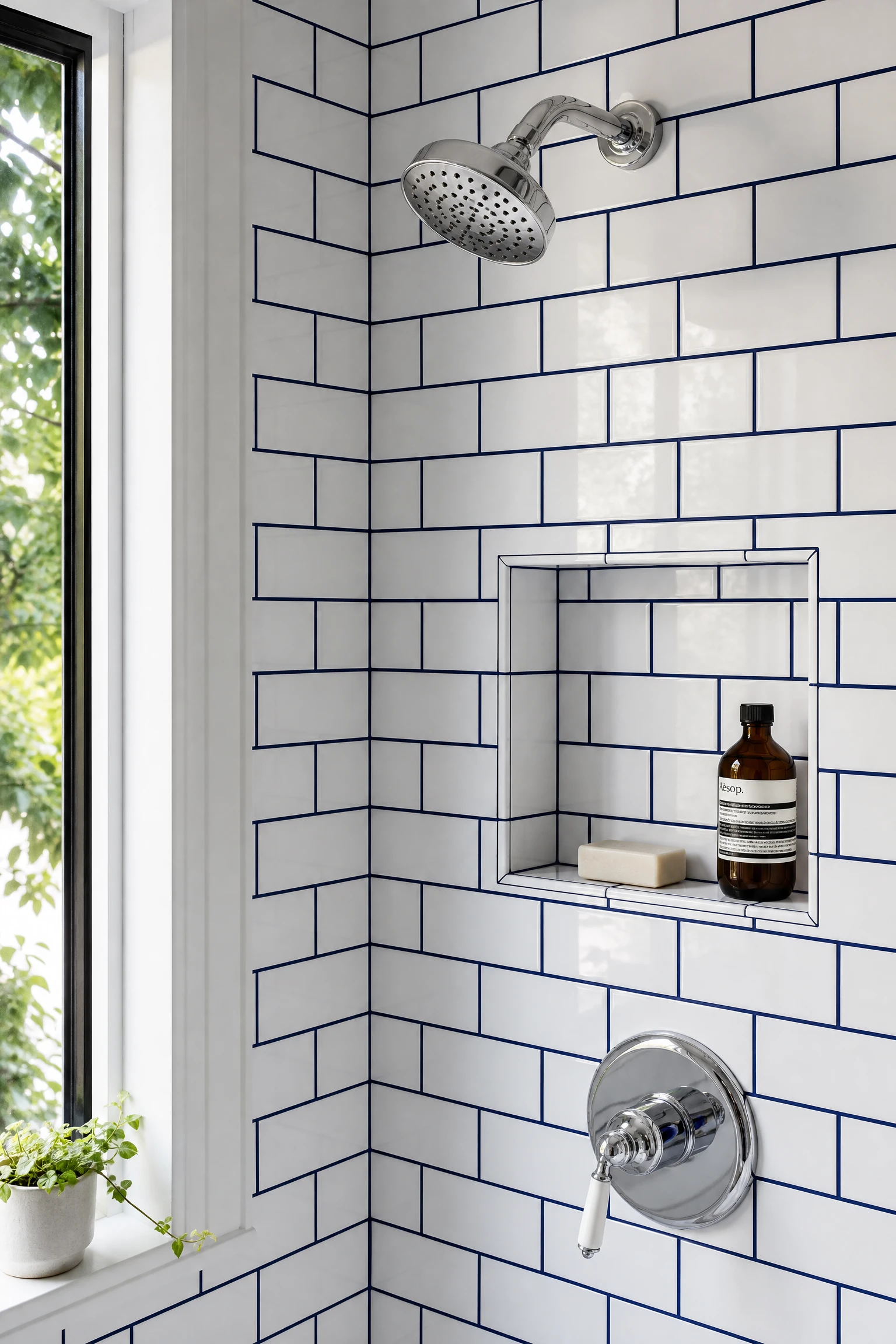
You have probably seen white subway tile a hundred times, and at this point it can feel a little expected. The move that changes everything here is the grout color. Swapping standard white grout for a deep navy or charcoal grout on classic white subway tile instantly makes the whole installation feel intentional and design-forward. The lines between the tiles become a graphic element of their own, almost like a grid drawing across the wall. Use this treatment in the shower surround or as a backsplash behind the vanity for maximum impact. Keep the rest of the bathroom simple, crisp white walls, a white or light wood vanity, and simple chrome or brushed nickel hardware. The contrast does all the heavy lifting. For lighting, a pair of globe-shaped wall sconces in polished chrome or matte white on either side of the mirror gives balanced, flattering light while keeping the nautical mood soft rather than heavy. One thing to be aware of: dark grout does show soap scum and water spots more visibly than light grout, so a sealed grout and regular wiping down will keep it looking sharp. This is a mid-range to investment-level idea depending on whether you are retiling or starting fresh.
4. Seashell Mirror as a Bathroom Focal Point
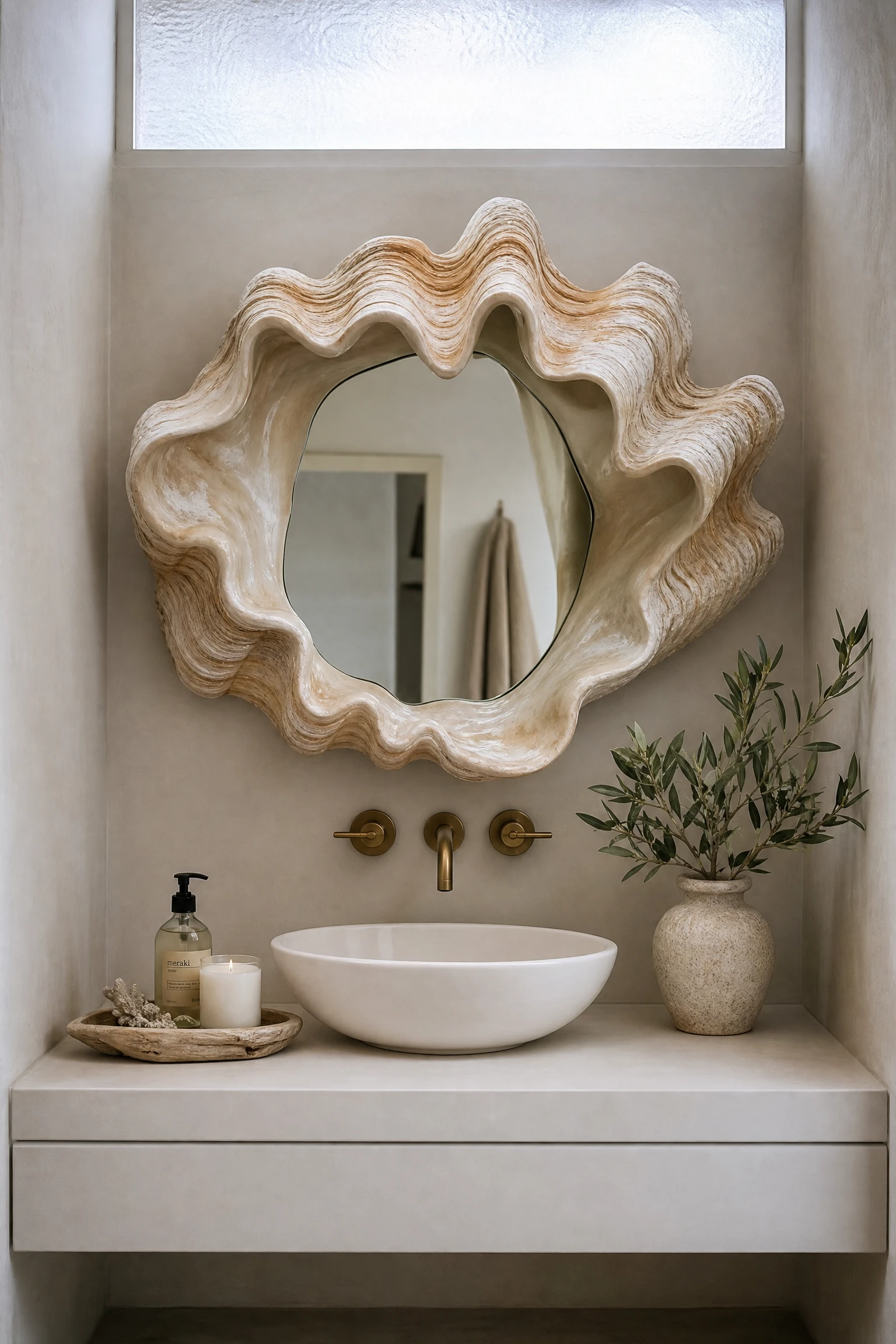
You are standing in front of a plain rectangular mirror that has been in the bathroom since the house was built, and you are trying to figure out why the room still feels unfinished no matter what you add around it. The mirror is almost always the answer. A large seashell mirror, the kind where real or resin shells are set directly into the frame in a natural, organic pattern, serves as an instant focal point and anchors the whole coastal theme without requiring you to change anything else. Look for options where the shells vary in size and species rather than being perfectly uniform, as the variation reads as more natural and less like a craft project. Hang it above a floating white vanity with a vessel sink for a clean, spa-like pairing. Below the mirror, a small tray in bleached wood or matte white ceramic can hold everyday items like hand soap and a candle in a sea salt or driftwood scent. For lighting, a simple LED strip light concealed behind a frosted glass panel above the mirror provides even, shadow-free illumination, which is practical as well as atmospheric. Seashell mirrors range from very affordable ($40 to $80 at coastal decor shops) all the way up to handcrafted artisan pieces at several hundred dollars, so there is an option for every budget.
Category Two: Organic Coastal
5. Driftwood Vanity With a Wabi-Sabi Ceramic Sink
In practice, one of the most grounding combinations you can bring into a coastal bathroom is natural wood with imperfect, hand-thrown ceramic. The wabi-sabi design philosophy, which celebrates the beauty of things that are slightly uneven, weathered, or organically shaped, translates beautifully into a coastal context where things are meant to look like they have been shaped by wind and water over time. A driftwood-finish vanity, achieved either by purchasing a pre-finished piece or by applying a driftwood stain to a plain wood cabinet, pairs naturally with a rough-edged ceramic vessel sink in off-white, pale grey, or warm sand. The combination creates a focal point that feels genuinely organic rather than manufactured. Keep the walls in a warm plaster white or a pale sage green to complement the earthy tones. A simple round mirror with a thin wooden frame above the vanity keeps the look clean without being too minimal. For lighting, rattan or bamboo pendant lights on either side of the mirror add warmth and texture. This idea works particularly well in bathrooms with natural light, since sunlight really brings out the depth in driftwood finishes. Be aware that real driftwood-effect finishes may require occasional re-sealing in humid bathrooms.

6. Pebble Tile Shower Floor for a Barefoot-on-the-Beach Feeling
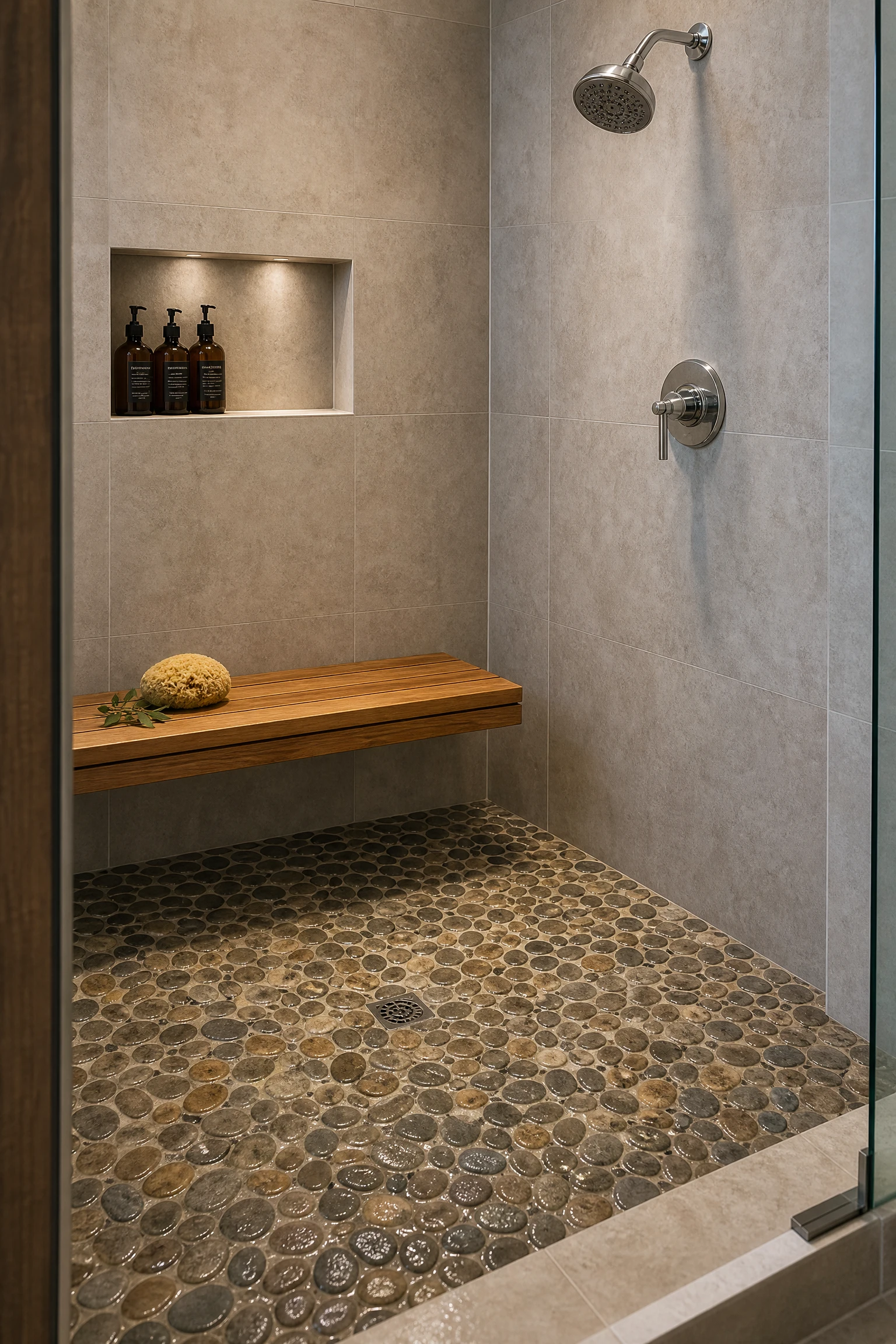
One of the things that makes a walk along the shoreline so satisfying is the physical sensation underfoot, and you can actually replicate a version of that in your shower. River pebble tiles, which are small, smooth, rounded stones set into a mesh backing, create a shower floor that genuinely feels different from standard ceramic or porcelain tile. Underfoot, the sensation is gentle and grounding, and visually the floor adds a layer of natural texture that no standard tile can match. The pebbles come in a range of natural color mixes, from warm sandy browns and creams to cooler grey and slate tones, so you can choose based on your overall palette. Pair the pebble floor with large-format white or pale grey wall tiles in the shower surround to give the eyes a place to rest. Outside the shower, a teak bath mat works perfectly thematically and practically, as teak is naturally water-resistant. Pebble tile is an investment-level flooring choice and does require proper sealing and more frequent cleaning between the stones, which is worth knowing upfront. For a more budget-friendly version, look for pebble-effect porcelain tiles that mimic the look with much easier maintenance.
7. Rattan Storage Baskets and Open Shelving Instead of Closed Cabinets
Closed bathroom cabinets serve a practical purpose, but they can also make a small bathroom feel heavier and more enclosed than it needs to be. Replacing one or two closed storage units with open wooden shelving and a set of rattan or seagrass baskets creates storage that actually contributes to the coastal aesthetic rather than hiding from it. The key is to keep what is on display intentional: rolled white towels, a few baskets holding toiletries, a small trailing pothos or air plant in a simple terracotta pot. The rattan material brings in that warm, woven texture that reads immediately as coastal without being on-the-nose about it. For the shelves themselves, solid teak or pine painted in white or warm cream works well, with brass or matte black brackets for hardware. This is also one of the most budget-friendly ideas in this article since open shelves and rattan baskets are widely available and affordable. One thing to be honest about: open shelving does require more regular tidying than closed cabinets, and items stored in baskets near the shower will eventually absorb some moisture, so check basket liners periodically and replace as needed.

8. Linen Curtains and Bamboo Blinds for Breezy Window Styling
If your bathroom has a window, the way you dress it has an outsized effect on the overall mood of the room. Heavy curtains make a bathroom feel dark and enclosed. No window treatment at all gives you privacy issues. The sweet spot for a coastal bathroom is lightweight linen curtain panels in white, natural, or pale aqua, paired with a bamboo or woven wood blind underneath for privacy when needed. Linen moves gently even in the lightest breeze from a cracked window, and that movement alone reinforces the coastal, unhurried feeling you are going for. The natural texture of the bamboo blind adds another layer of organic material without competing with the curtain. Install the curtain rod a few inches above the window frame and let the panels extend slightly past the frame on each side, a classic interior design trick that makes the window look larger than it is. For a cohesive look, repeat the linen material in hand towels or a shower curtain so the texture feels intentional throughout the space. Linen curtains and bamboo blinds are both widely available and reasonably priced, making this one of the most accessible ideas here.

9. Sea Glass Color Palette With Matte Ceramic Tile
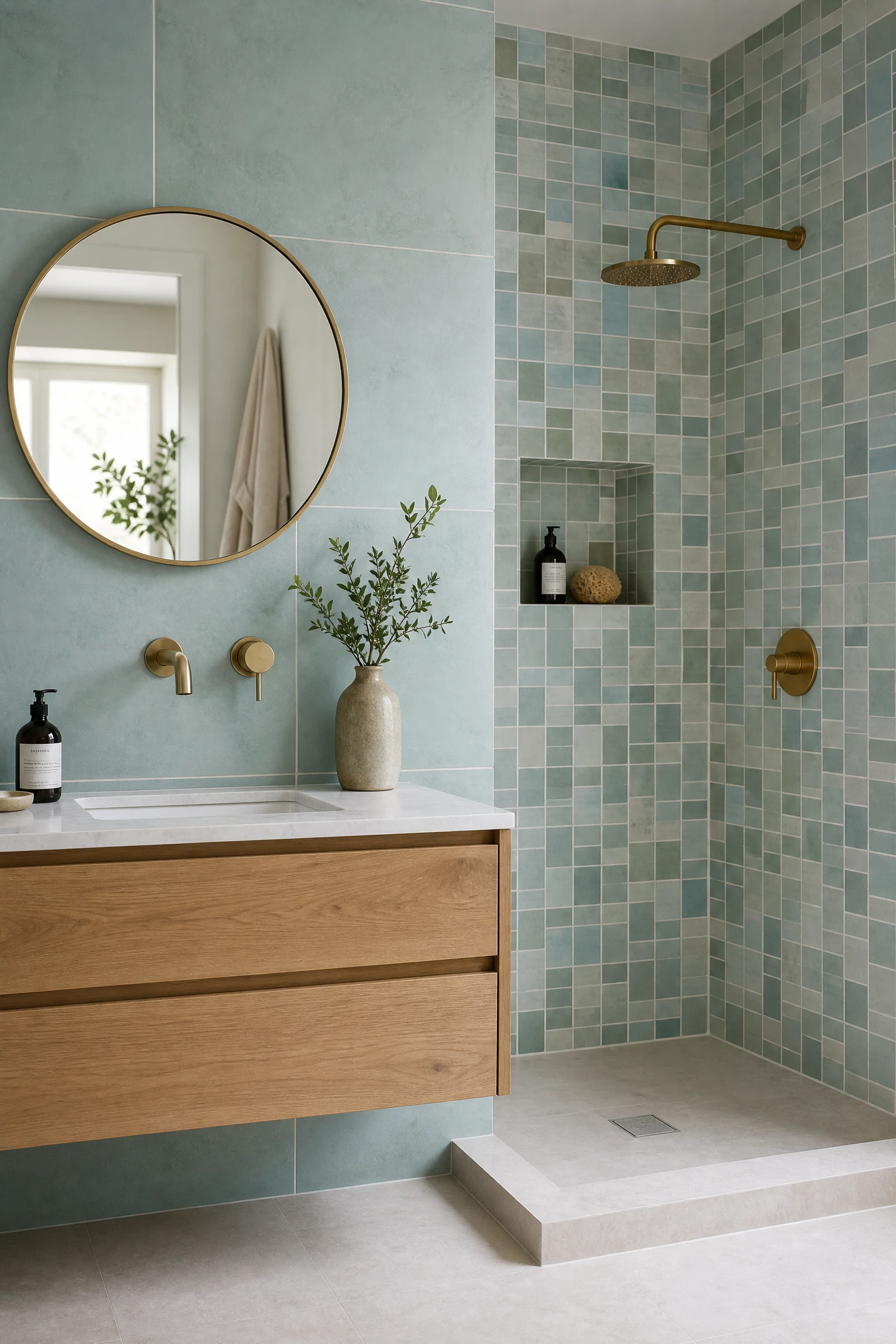
Sea glass, those smooth, frosted pieces of glass worn down by the ocean and sand, comes in the most beautiful range of greens, blues, and aquas, and these colors translate directly into a bathroom palette that feels genuinely coastal without being loud. Think celadon green, pale aqua, misty blue-grey, and soft turquoise, used across matte ceramic tiles in a mix-and-match pattern. The matte finish is important here because it absorbs light rather than reflecting it, which gives the tiles a softer, more weathered look that feels organic rather than glossy and commercial. Use a combination of tile sizes, perhaps a large-format aqua tile on one wall and a small mosaic of sea glass tones in the shower niche, to add visual interest without changing the palette. White grout keeps the look fresh and clean. Pair with natural wood accents, a simple white vanity, and brushed brass hardware for warmth. Layered lighting works well here: recessed ceiling lights for overall brightness and a small wall sconce with a linen shade beside the mirror for ambient warmth. Sea glass palettes suit both large master bathrooms and compact guest bathrooms equally well.
Category Three: Soft Coastal (Coastal Grandmother Style)
10. Warm Sandy Beige From Floor to Ceiling With Shell Details
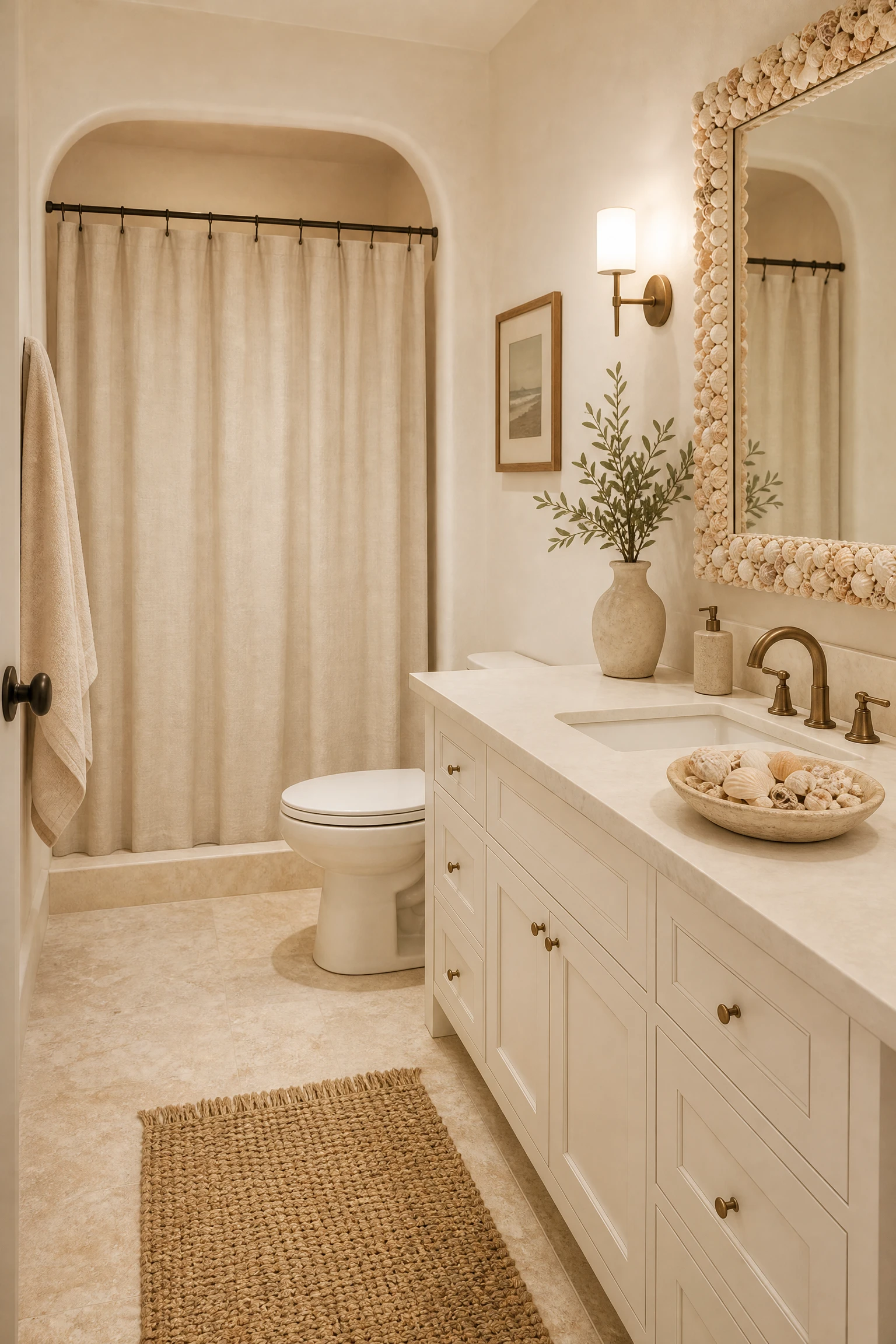
Not every coastal bathroom needs to reach for blue. The sandy, warm side of coastal design, sometimes called coastal grandmother style, leans into the tones of dune grass, bleached wood, sun-faded linen, and dry sand. Used from floor to ceiling, layering beige, warm white, and soft cream creates a bathroom that feels genuinely restful without a single drop of ocean color. The secret is to vary the texture at each surface so the tonal palette reads as rich rather than flat. Think a smooth plaster wall finish in warm white, a sandy beige stone-look floor tile with visible veining, a cream linen shower curtain, and a woven sisal bath mat. Add shell details thoughtfully, a small dish of real shells on the vanity, a shell-framed mirror, or mother-of-pearl drawer pulls, rather than plastering them everywhere. This palette is also remarkably forgiving in terms of lighting because warm whites and beiges look flattering under almost any bulb temperature. One honest note: a fully beige bathroom can feel dated if not executed carefully, so the key is in the quality and variety of textures rather than relying on the color alone to do the work.
11. White Shiplap Ceiling for a Covered-Porch Coastal Feeling
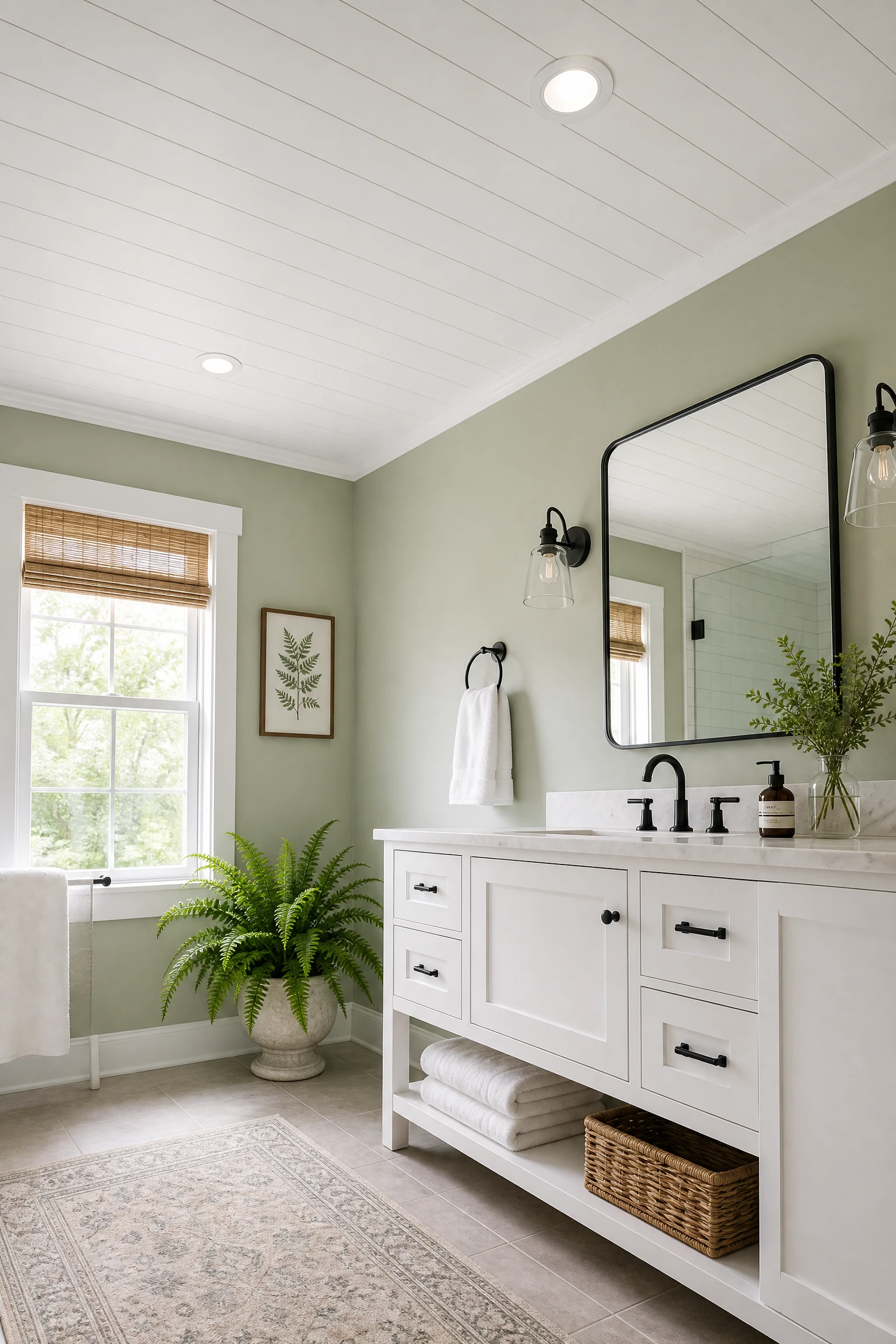
Most people think about shiplap on walls, but one of the most underused applications is the ceiling. A white-painted shiplap ceiling brings a warmth and architectural interest to a bathroom that standard smooth drywall simply cannot offer. It reads like the ceiling of a coastal porch or a classic New England beach house, which instantly changes the feeling of the whole room even if everything else stays the same. This works particularly well in bathrooms with higher ceilings where the shiplap lines draw the eye upward in an interesting way. Pair with soft grey or sage green walls for contrast, or keep everything white for a bright, airy beach house look. Simple polished nickel or chrome pendant lights or recessed lighting flush to the shiplap ceiling keep the look clean. Below, a white or warm wood vanity, white cotton towels, and a few coastal accessories complete the picture. Shiplap ceiling installation is a moderate DIY project if you are comfortable with power tools, or a very reasonable hire for a carpenter, typically a half-day job for a standard bathroom. Seal and paint with a moisture-resistant coating specifically formulated for high-humidity rooms.
12. Brass Hardware and Aged Fixtures for a Weathered Coastal Cottage Look
One of the fastest ways to update a coastal bathroom without replacing any tiles or cabinetry is to swap out the hardware. Unlacquered brass or aged brass hardware, things like towel bars, robe hooks, faucet handles, and cabinet pulls, brings an immediate warmth and softness to a bathroom that chrome or stainless steel cannot match. The slightly imperfect, lived-in quality of unlacquered brass, which develops a gentle patina over time, fits the coastal cottage aesthetic perfectly because it looks like something that has been in the same beach house for thirty years. Pair aged brass with a soft warm white wall color, natural wood shelving, and white waffle-weave towels for a look that feels genuinely relaxed rather than styled. One thing to know about unlacquered brass: it will change color over time as it oxidizes, developing a darker, richer patina. Some people love this quality; others find it requires more maintenance. If you want the look without the upkeep, look for PVD-coated brass finishes that offer durability with a similar aesthetic. This is a budget-friendly upgrade since replacing hardware is one of the most affordable bathroom updates available.

13. Coastal Wallpaper on One Accent Wall
You walk into a bathroom and want it to feel like a real moment rather than just a utilitarian space, but you do not have the budget or inclination for a full renovation. A single accent wall of thoughtfully chosen coastal wallpaper does this job better than almost anything else. The key word here is thoughtfully because there is a wide range between a wallpaper that feels genuinely beautiful and one that looks like a themed hotel from 2005. Avoid patterns that feature cartoon fish, anchors, or lobsters. Instead, look for designs that lean abstract, like watercolor ocean wave patterns in dusty blue and cream, hand-drawn botanical coastal grasses, or an organic coral reef pattern in sage green and warm sand. Apply the wallpaper to the wall behind the vanity or the wall facing the door so it is the first thing you see when you enter. Keep the other three walls in a neutral color that is pulled from the wallpaper’s palette. This approach also protects the wallpaper from the most moisture-heavy areas of the bathroom. Peel-and-stick wallpaper options have improved significantly in recent years and are a great low-commitment way to try this idea before committing permanently.

14. Freestanding Towel Ladder in Weathered Wood
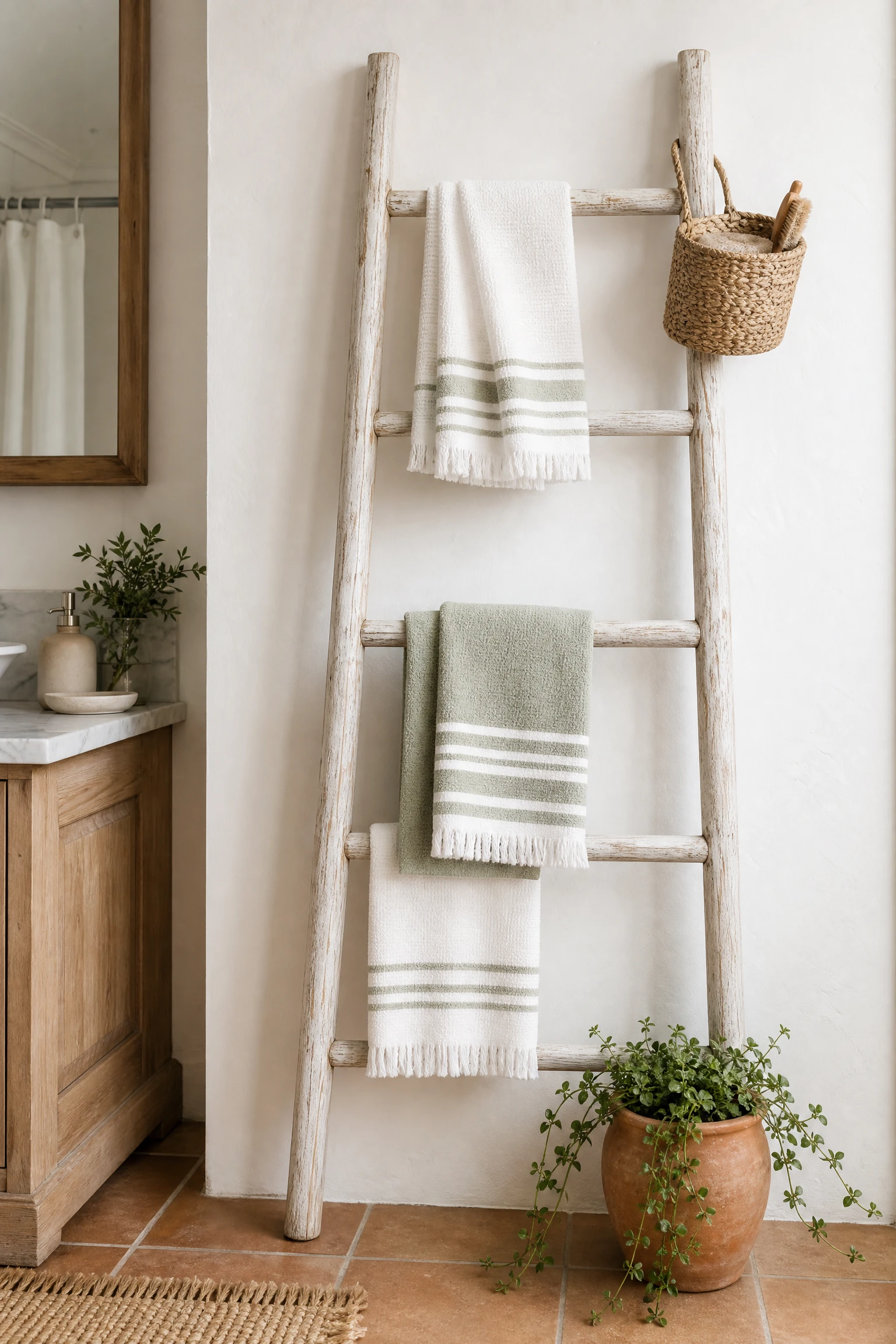
It sounds like such a small thing, but swapping a standard towel bar or ring for a freestanding wooden towel ladder genuinely changes the visual weight and warmth of a bathroom. A ladder in a weathered white or driftwood grey finish leaned against the wall holds several towels at once, and the way the towels drape over the rungs creates an easy, lived-in look that feels immediately coastal without trying too hard. Look for ladders made from solid pine, teak, or bamboo for the best durability in a humid bathroom environment. Style it with a mix of white Turkish cotton towels and one or two in a soft sage or sand stripe for visual interest. You can also hang a small woven basket on one of the upper rungs to hold a hand cream or a few small candles. A freestanding towel ladder is one of the most affordable decor additions in this article, typically available for $30 to $80 at most home goods stores, and it requires absolutely no installation. The only practical note is that it works best in bathrooms with at least a small amount of floor space, as it does take up a footprint that a wall-mounted bar would not.
Category Four: Bold and Moody Coastal
15. Deep Ocean Blue Walls With Gold Accents
Most coastal bathrooms default to pale and airy, which is lovely but not the only direction available to you. A bathroom painted in a deep, saturated ocean blue, think navy, dark teal, or a rich indigo, creates a moody, immersive feeling that is genuinely dramatic and sophisticated. This is the color of deep water rather than a clear shallow sea, and it works beautifully in bathrooms that have at least one natural light source. Pair the deep wall color with unlacquered gold or polished brass hardware to create warmth and prevent the room from feeling too cold or cave-like. A large mirror with a gold or brass frame doubles the light in the room while acting as a design statement on its own. White marble countertop or sink adds contrast and a note of luxury. Keep textiles simple: white towels, a white or cream bath mat, and perhaps one dark blue accent towel with a gold border thread. For lighting, wall sconces with warm Edison-style bulbs on either side of the mirror are essential in a dark-walled bathroom because overhead lighting alone will not provide enough illumination. This is a bold commitment, and it is worth knowing that dark paint in a windowless or very small bathroom can feel oppressive, so save this idea for spaces with at least one window.
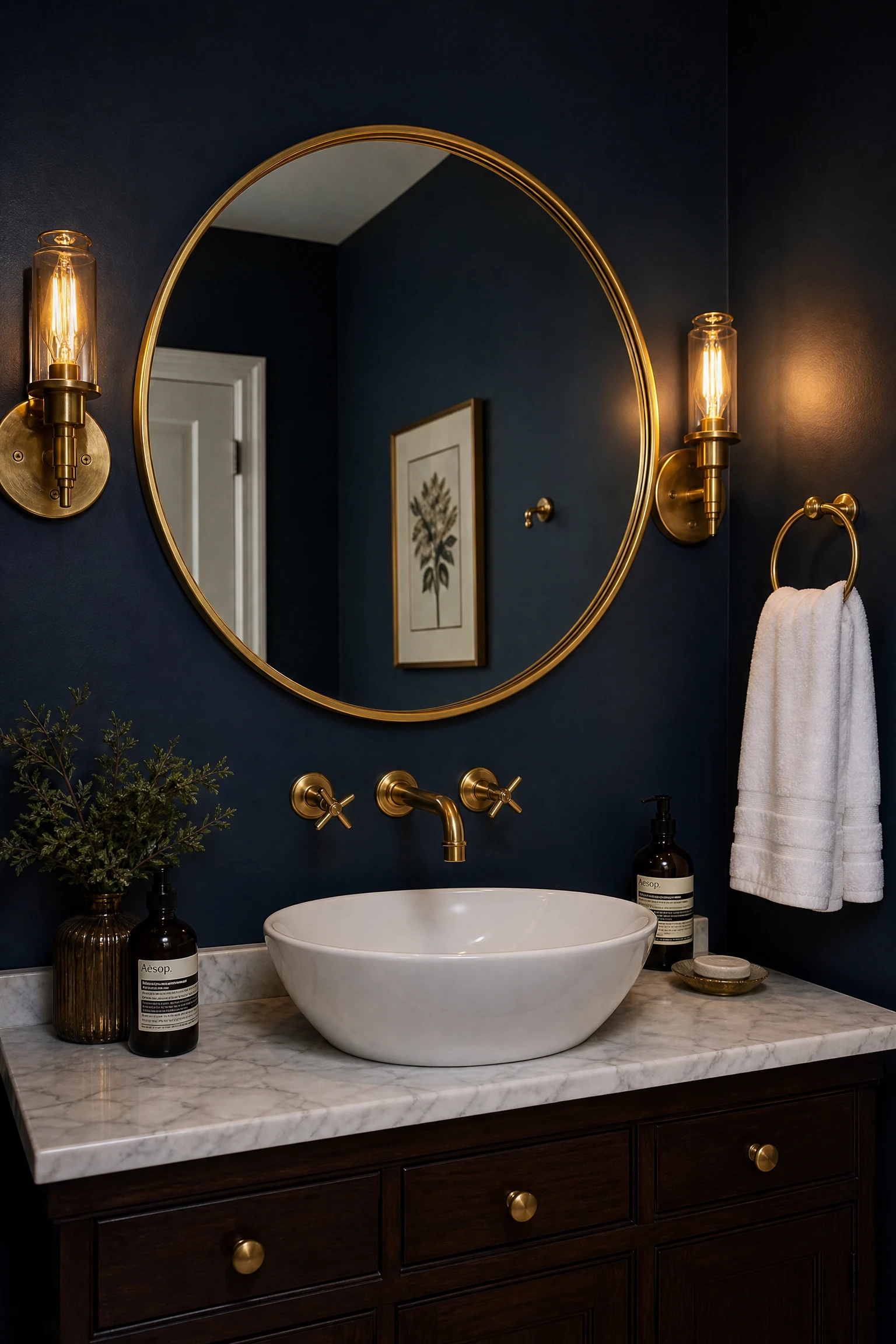
16. Charcoal and White Coastal Minimalism
When you think of the beach in winter or overcast weather, there is a quieter, more contemplative palette at work: pale sand, grey sky, dark stones, white sea foam. This is the inspiration for a charcoal and white coastal bathroom, which takes the usual sun-and-sand associations out of the equation and replaces them with something more sophisticated and year-round. Start with large-format charcoal or dark grey porcelain floor tiles and a white wall, either smooth plaster or large white subway tile. The contrast is clean and sharp. Add a floating white vanity with a simple undermount sink and minimal hardware in matte black. A round mirror with a thin matte black or dark wood frame keeps the lines clean. Textiles in white and light grey, a fluffy white bath rug, white towels with a thin grey stripe, soften the harder edges. For coastal reference without being literal, a single piece of abstract ocean photography in matte black and white, framed simply and hung above the toilet, is enough. This palette works well in both small and large bathrooms, and the minimal nature of the design means it stays looking fresh with very little upkeep. It is also genuinely budget-friendly since charcoal and white are among the most widely available and affordable tile options on the market.

17. Emerald Green Tile With Rattan and Brass
Emerald green might not be the first color that comes to mind for coastal design, but spend any time looking at the water in tropical coastal destinations and you will find that deep, jewel-toned green is absolutely present in the palette. An emerald green tile wall in the bathroom, particularly in the shower surround, creates a lush, exotic coastal feeling that is different from anything else in this list. The tile can be subway-format, zellige-style with slight variation in surface finish, or a large-format glossy rectangle; any of these will carry the color beautifully. Pair with natural rattan or cane light fixtures or a small rattan stool beside the tub. Brass hardware is the natural partner here, warm and slightly glamorous against the deep green. Keep the floor in a neutral cream or white to balance the intensity of the wall color. A large format frameless mirror maximizes light reflection and prevents the room from feeling too enclosed. This combination leans toward a resort or tropical coastal feeling rather than a New England cottage vibe, which makes it a good option for people who want something with a bit more personality. Be aware that very saturated tile colors can be harder to update around if your tastes change, so consider this an investment in a look you genuinely love.

18. Concrete and Coastal: Industrial Meets Seaside
Concrete and coastal might seem like an unlikely pairing, but there is a reason you see this combination showing up in high-end coastal hotels and beach house renovations. Polished concrete walls or a concrete-effect porcelain tile in the bathroom creates a raw, textural backdrop that makes every natural element, the wood, the linen, the shell, the plant, feel more alive by contrast. The key to keeping this from feeling like a parking garage is the warmth you bring in through other materials. A teak or walnut floating vanity, warm brass or copper hardware, a large round mirror with a wooden frame, and natural linen hand towels all work together to soften the concrete surface. Lighting is critical in a concrete-heavy bathroom: aim for warm-toned bulbs (2700K to 3000K color temperature) in wall sconces that cast a soft, flattering light rather than the harsh overhead lighting that makes concrete look institutional. A large window or a skylight is ideal in this scheme to flood the space with natural light. This design suits bathrooms in modern coastal homes or contemporary apartments with architectural character, and it is more of an investment-level renovation than a simple update.

Category Five: Japandi Coastal
19. Pale Wood and White Stone for a Japandi Beach House Feeling
Japandi, the design movement that blends Japanese minimalism with Scandinavian warmth, has found a natural home in coastal design because both sensibilities share a deep respect for natural materials, understated color palettes, and spaces that feel quietly beautiful rather than loudly decorated. In the bathroom, this translates to a combination of pale solid oak or ash wood cabinetry, white or pale grey stone countertops with subtle veining, and walls in a very quiet, warm off-white. Everything is simple and well-proportioned, with no unnecessary decoration. The hardware is slim and functional, in matte black or brushed nickel. A low, wide vanity mirror rather than a tall narrow one reinforces the horizontal, grounded quality of Japandi design. For coastal reference, a single, perfect piece of sea pottery or a smooth beach stone on the counter is all that is needed. This is a design language that says everything through quality of materials and restraint of decoration, which means the execution needs to be careful. Inexpensive materials will read as cheap rather than minimal in this aesthetic. Consider it a medium to investment-level project, but one that will look just as good in ten years as it does today.

20. Limewash Walls With a Soaking Tub and Ocean-View Window
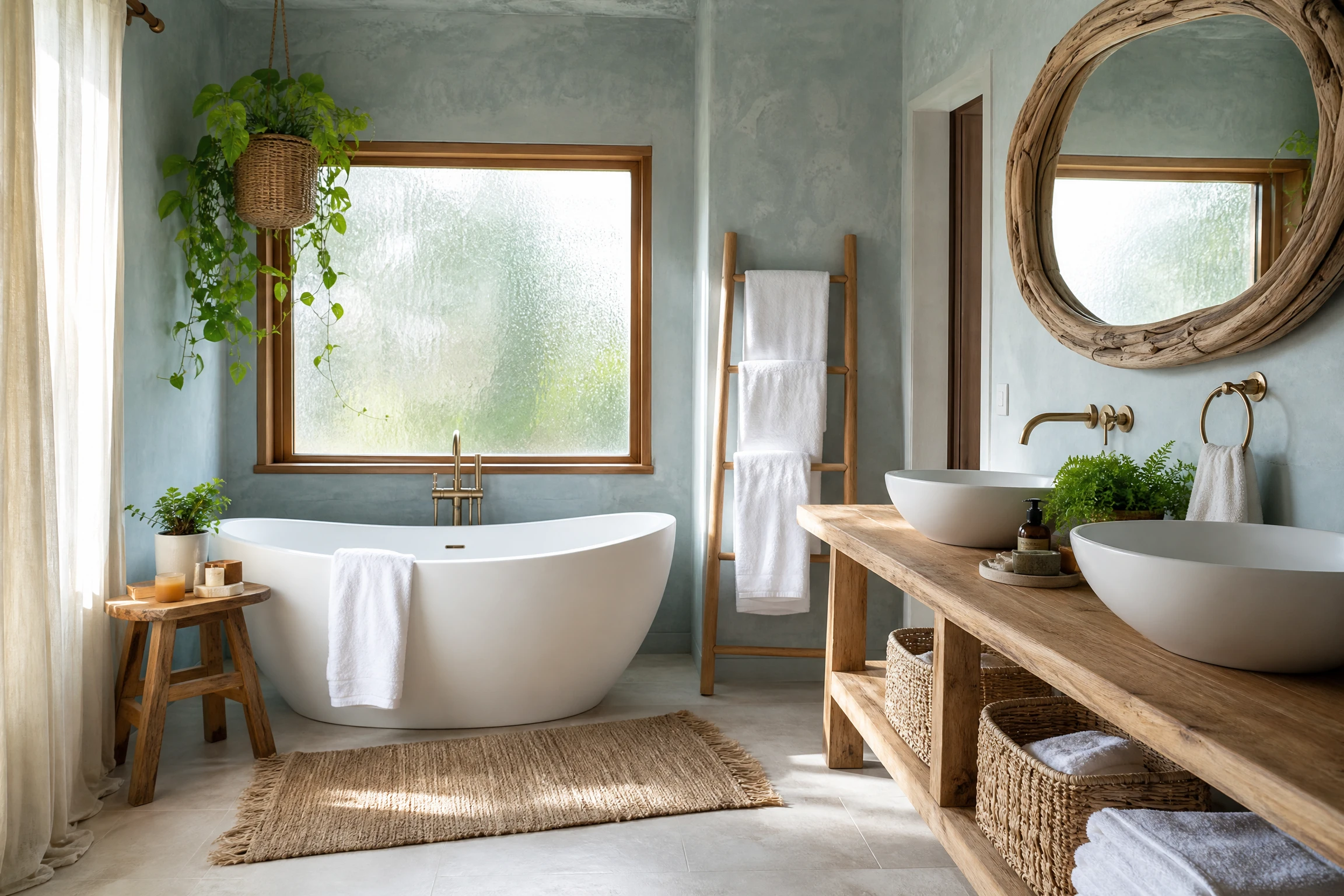
Limewash is a paint technique that creates a softly mottled, chalky, ancient-looking wall finish, and it is one of the most quietly beautiful surfaces you can put in a bathroom. In a pale blue-grey or warm plaster white applied with a limewash technique, the walls seem to breathe and shift with the light throughout the day, which is exactly the kind of atmospheric quality that makes a bathroom feel special. Place a deep soaking tub, ideally a simple rectangular or oval form without decorative feet, below or near a large window, and if possible orient that window toward garden greenery or sky. The combination of the textured wall surface, the still water in the tub, and natural light from the window creates a visual calm that is hard to match with any other approach. Keep everything else in the bathroom almost deliberately simple: a wall-mounted faucet in matte white or brushed brass, a simple wooden bath tray across the tub holding a candle and a book, and a single large-leaf plant like a bird of paradise or a monstera in the corner. Limewash paint is available from specialist suppliers and is a project manageable for a careful DIY painter, though professional application will give you more consistent results.

21. Bonsai and Stone: Bringing Japanese Zen to Coastal Spaces
One of the most interesting developments in coastal interior design right now is the blending of Japanese garden aesthetics with beach house sensibility, and it works better than you might expect because both traditions are built around the idea of nature made intentional. In a bathroom, this looks like a small, carefully positioned bonsai tree on the windowsill or vanity counter, a shallow dish of smooth river stones as a decorative element, and a wall in pale sage, stone, or misty grey-blue that reads as both Japanese and oceanic. The vanity is simple, in solid light wood with a flat-front design, and the basin is a shallow rectangular vessel sink in matte white ceramic. Wall-hung storage keeps the floor clear, which is an important quality in Zen-influenced design because visual weight on the floor creates a sense of heaviness. A long, narrow horizontal mirror rather than a square or oval one gives the space a proportioned, architectural quality. For practical advice: real bonsai trees need natural light and regular watering, so position one only near a window with good light, or opt for a high-quality preserved moss arrangement if your bathroom has limited natural light.

22. Wabi-Sabi Shower With Handmade Zellige Tile
Zellige tile, the hand-pressed, kiln-fired Moroccan ceramic tile that has been beloved by interior designers for the past several years, is genuinely one of the best tile choices for a coastal bathroom because its slightly uneven, reflective surface captures and plays with light in a way that factory-perfect tiles simply cannot. Each zellige tile is slightly different in shade, surface texture, and light reflection, which means a wall of them shimmers and shifts throughout the day almost like the surface of water. In a soft aqua, white, or pale sage color, a zellige tile shower surround creates a wabi-sabi coastal aesthetic that is simultaneously modern and timeless. Pair with a simple teak shower bench, a wall-mounted rain showerhead in matte brass, and a handful of natural bath products in simple amber glass bottles on a small built-in niche. The imperfection is the point with zellige, so resist the urge to grout perfectly or align tiles with military precision. Zellige tile is an investment, generally running $25 to $50 per square foot or more from quality suppliers, but the visual quality it brings to a bathroom genuinely elevates the room in a way that is hard to replicate with budget alternatives.
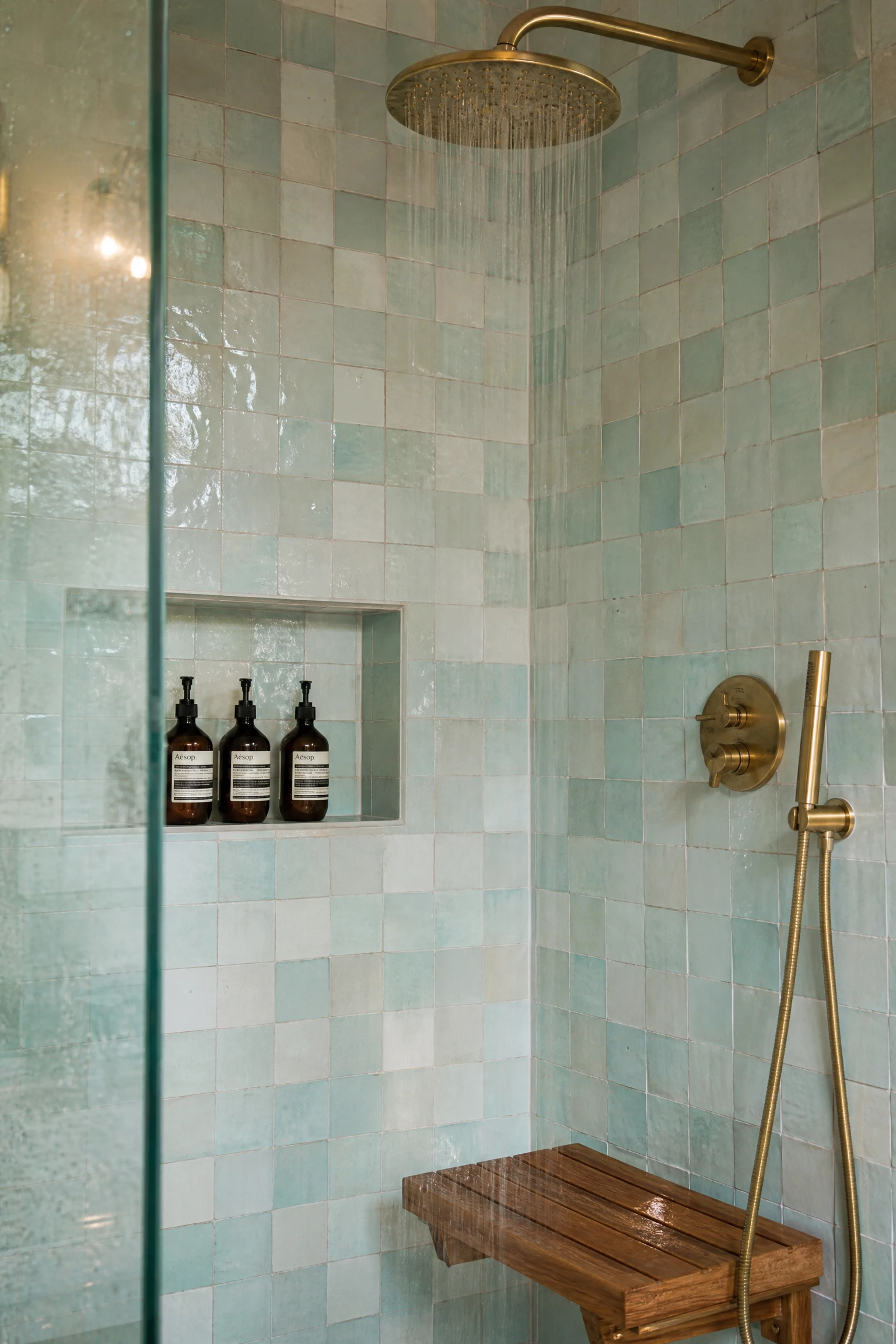
23. Neutral Linen Textiles and Tonal Layering Throughout
One thing that the most successful coastal bathrooms do that less successful ones do not is use textiles to create depth. A single style of towel, one bath mat, and a plain shower curtain can all be technically coastal without the room ever feeling finished or rich. The trick is tonal layering, which means using multiple shades of the same color family across your textiles so that the variation between them creates visual interest. In a neutral coastal bathroom, this might look like natural linen hand towels, an ivory waffle-weave bath towel, a cream cotton bath mat, and a linen shower curtain in a very subtle stripe of oatmeal and white. None of these compete with each other, but together they create a layered, full feeling that a single towel color cannot achieve. Repeat the same approach with other soft elements: a linen window curtain, a rattan basket, a woven seagrass mat under the vanity. In practice, one of the things that makes this work is making sure your textiles are all made from natural or natural-feeling materials, cotton, linen, bamboo, jute, rather than synthetic fabrics, which carry a sheen and texture that breaks the organic quality of the look. This is an entirely budget-friendly idea since it involves only purchasing and layering textiles you would buy anyway.

24. Indoor Plants as Coastal Decor: The Living Element
One of the most overlooked elements in coastal bathroom design is the living plant, and it is overlooked mostly because people worry about whether plants can survive in a bathroom. The answer is that many thrive there, because bathrooms offer the humidity and indirect light that certain tropical plants love. The right plant in a coastal bathroom does more than add color; it adds a living, breathing quality to the space that no decor item can replicate. For a coastal bathroom with good natural light, a bird of paradise in a large terracotta pot is spectacular and reads as tropical coastal. For lower-light bathrooms, a pothos in a hanging rattan planter above the bathtub, a peace lily on the vanity counter, or a cluster of air plants (Tillandsia) mounted on a small piece of driftwood are all genuinely beautiful and easy to maintain. Ferns are classic in this context and love bathroom humidity, though they do need regular misting if your bathroom runs dry. From a design standpoint, the plant brings a vertical element, a natural color that is impossible to fake with paint, and a sense of life that makes a bathroom feel genuinely cared-for. Group pots in odd numbers for the most visually balanced arrangement, and choose simple pots in terracotta, white, or woven materials rather than bold or patterned ones.
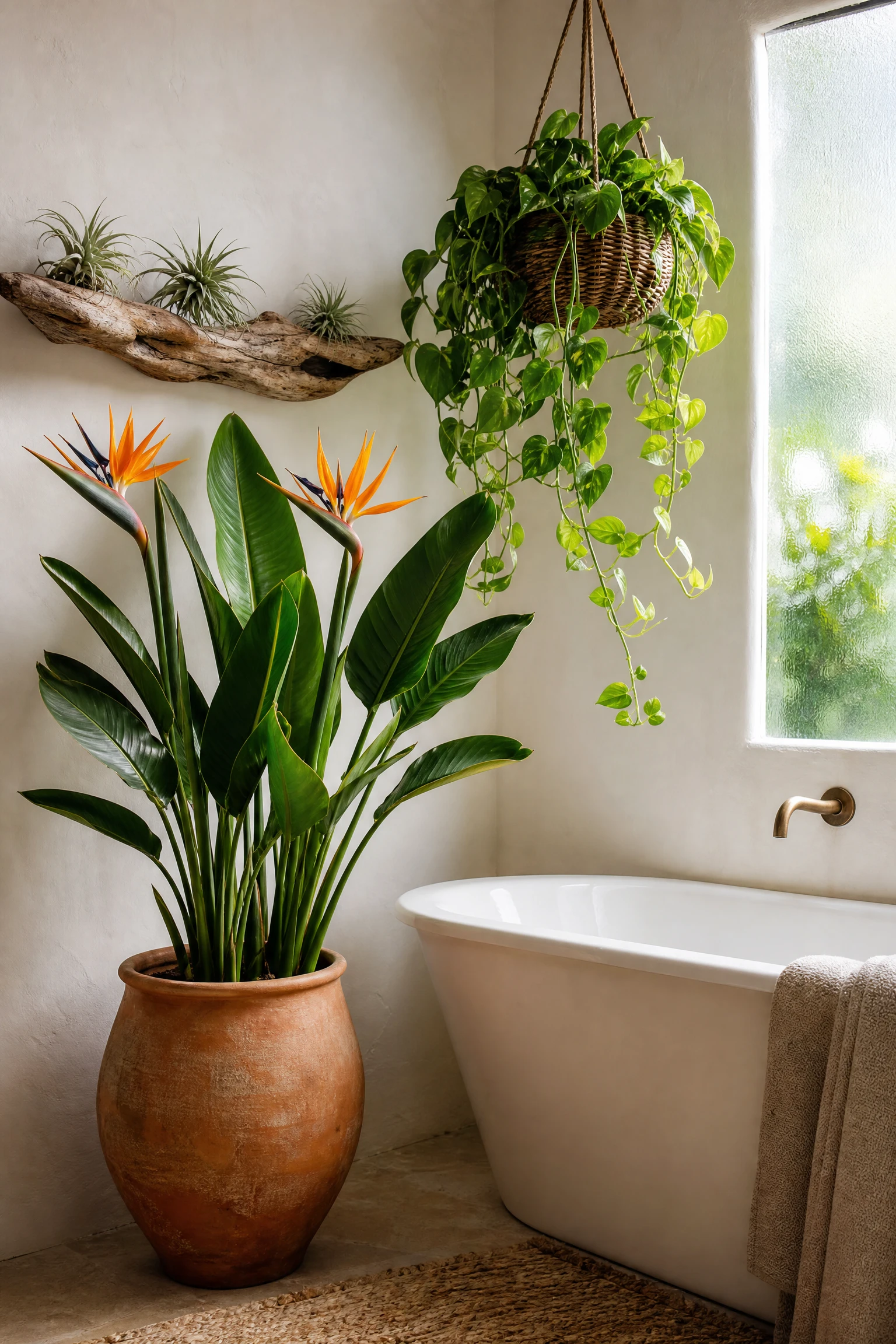
Bringing It All Together
The best coastal bathrooms are not the ones that commit hardest to anchors and seashells. They are the ones that understand what the coast actually feels like: unhurried, natural, light-filled, and a little imperfect in the most beautiful way. Whether you gravitate toward the clean lines of a navy-and-white nautical scheme, the quiet warmth of organic driftwood and linen, or the moody depth of emerald tile and brass, the thread connecting all of these ideas is an honesty about natural materials and a resistance to the overly polished or overly themed.
The practical takeaway is that you do not need to do everything at once. Start with one change, a new mirror, a wallpaper accent wall, a set of layered linen towels, and see how it shifts the room before adding more. Good design rarely happens all at once, and coastal style in particular rewards spaces that look like they have been loved and lived in over time rather than installed in a single weekend. Whatever direction you choose from this list, the goal is the same: a bathroom that makes you feel, even for a few minutes in the morning, like you are somewhere near the water.
Frequently Asked Questions
What colors work best for a coastal bathroom?
The most versatile coastal bathroom colors are soft blue-greens, warm whites, sandy beige, sage green, and pale aqua. For a more dramatic look, deep navy, emerald, or charcoal also work very well when balanced with natural wood, brass, and white textiles. The key is to choose colors that feel natural and relaxed rather than loud or synthetic.
How do I make a small bathroom feel coastal without overcrowding it?
In a small coastal bathroom, less is genuinely more. Choose one or two statement elements, such as a wallpaper accent wall, a seashell mirror, or a pebble tile floor, and keep everything else simple and neutral. Avoid placing too many decorative objects on surfaces, and prioritize light-reflective colors on the walls to make the space feel larger. Open shelving rather than closed cabinets also helps a small bathroom feel more open.
What materials are best suited for a coastal bathroom?
Natural materials are the backbone of coastal bathroom design. Teak, bamboo, rattan, jute, linen, stone, and ceramic are all excellent choices because they are both visually appropriate and practically suited to a humid environment when properly maintained. Avoid synthetic materials that look or feel plastic, as they undercut the natural, organic quality that makes coastal design work. For tiles, stone-effect porcelain or matte ceramic are practical and durable alternatives to natural stone.
Can I create a coastal bathroom look on a tight budget?
Yes, and some of the most effective ideas in this article are also the most affordable. Swapping hardware to unlacquered brass, adding a freestanding towel ladder, layering linen and cotton textiles in coastal tones, and placing a few indoor plants cost very little but make a significant visual difference. Peel-and-stick wallpaper and peel-and-stick tile panels are also useful budget tools for renters or people who want to test a look before committing.
Do coastal bathrooms have to include nautical decor like anchors or starfish?
Not at all, and in fact the most sophisticated coastal bathrooms avoid these literal references almost entirely. Modern coastal design is more about evoking a feeling, the calm, the natural materials, the light palette, than about decorating with ocean-themed objects. A room can feel completely coastal through its color palette, material choices, and texture alone without a single anchor or starfish in sight.
How do I keep plants alive in a bathroom with low natural light?
For bathrooms with limited natural light, choose plants that are specifically adapted to low-light and high-humidity conditions. Pothos, peace lilies, cast iron plants, ferns, and ZZ plants all tolerate low light well. If your bathroom has no windows at all, consider using a small grow light on a timer to supplement. Air plants are another good option since they need no soil and can absorb moisture directly from the air in a humid bathroom.