Cozy Boho Bedroom Looks That Sage Green Was Made For

There is something about sage green that feels like the color already knows it belongs in a boho bedroom. It is soft without being washed out, green without being overwhelming, and earthy in a way that plays beautifully with rattan, linen, macrame, and all the layered, collected-over-time pieces that make bohemian spaces so livable. If you have been scrolling through bedroom inspiration wondering why some rooms feel effortlessly calm and full of personality at the same time, sage green is usually part of the answer.
What makes this combination work so well is that boho style is not really about perfection. It is about warmth, texture, and putting things together in a way that feels personal rather than showroom-polished. Sage green gives you a foundation that is grounded and nature-inspired, so all those rattan mirrors, vintage rugs, trailing plants, and linen throws have something to anchor them without competing for attention. The palette does the quiet work, and your layers do the personality.
Whether you are starting from scratch with a blank room or trying to bring a little more life into a bedroom that already exists, these ideas cover a wide range of approaches. Some lean into deep, moody sage. Others keep things bright and airy. Some are built for small spaces, others for larger rooms with room to breathe. Every idea here is fully thought through, from colors and furniture to lighting, textiles, and the small accessory details that actually make a room feel finished. Scroll through and find what speaks to you.
1. The Sage Wall and Rattan Frame Combo
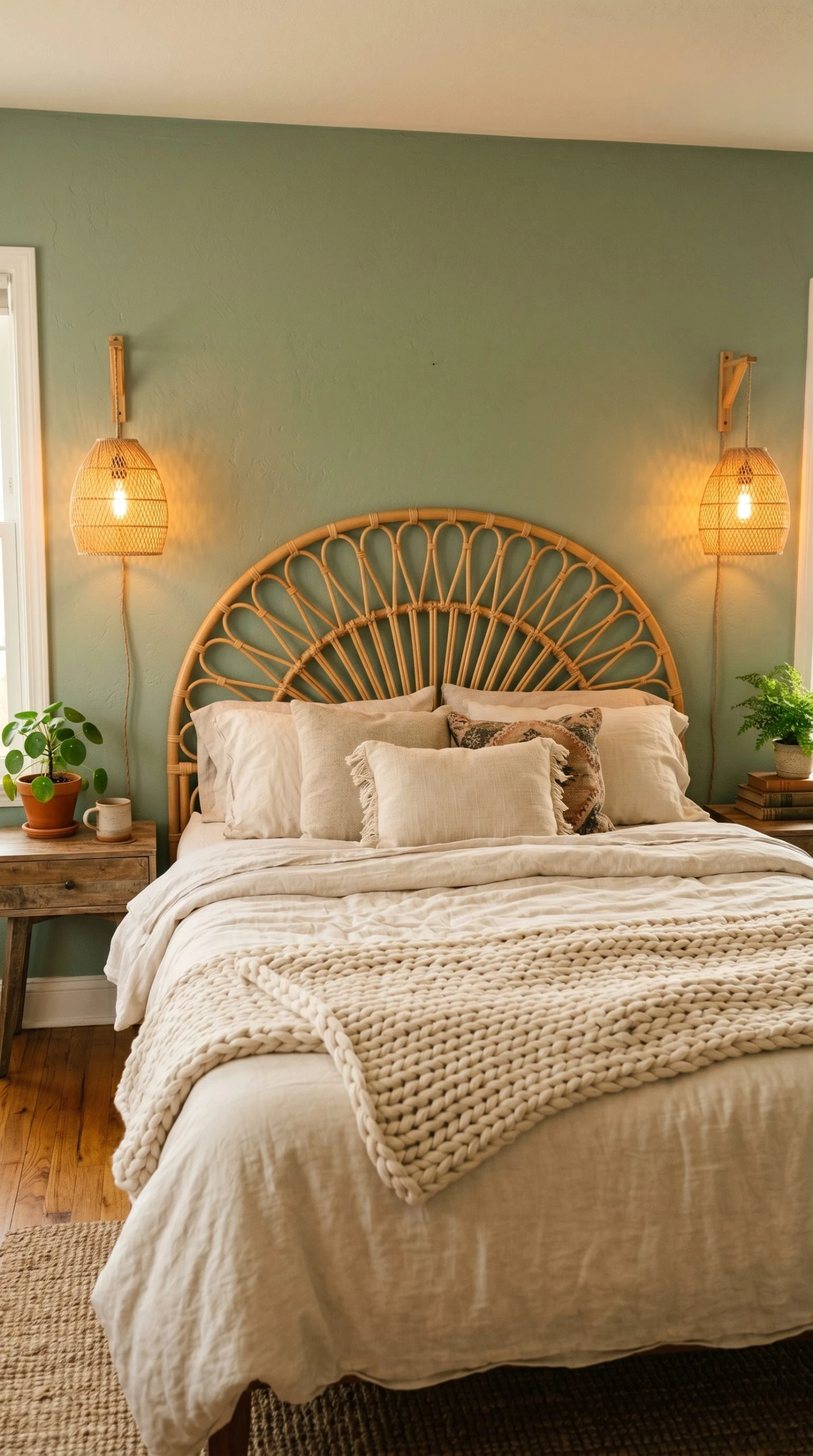
You have been staring at plain white walls for long enough. You painted the trim, hung a few things, but the room still feels like it is waiting for something. That something is sage green on the walls paired with a rattan or cane bed frame, and the difference it makes is genuinely surprising. The wall color wraps the room in a hazy, muted green that feels nothing like a bold paint choice but everything like a deliberate one.
A natural rattan or cane bed frame is the perfect furniture partner here because the warm honey-brown tones of the woven material pull the coolness of sage into something that feels grounded and inviting. Look for styles with an arched headboard for extra drama, or keep it low and simple if you prefer a more relaxed silhouette. Dress the bed in cream or warm white linen bedding with a chunky cotton throw folded at the foot.
For lighting, wall-mounted sconces on either side of the bed work beautifully in this setup. Choose woven rattan shades or paper pendant styles that cast a warm amber glow in the evenings. The combination of sage walls, rattan textures, and soft warm light creates a layered visual effect that feels very intentional without requiring a lot of extra decorating.
Quick Designer Tip: Paint the ceiling in a shade one or two tones lighter than your wall sage green. It makes the room feel taller and ties the whole color story together in a way that painted walls alone cannot achieve.
2. Sage Bedding on Neutral Walls
Maybe you are renting and cannot paint, or maybe you genuinely love your white or greige walls and do not want to give them up. That is a completely valid starting point, and this approach proves you do not need to commit to walls to get the full sage green boho effect. Start with sage green bedding as your anchor, and build everything else from there.
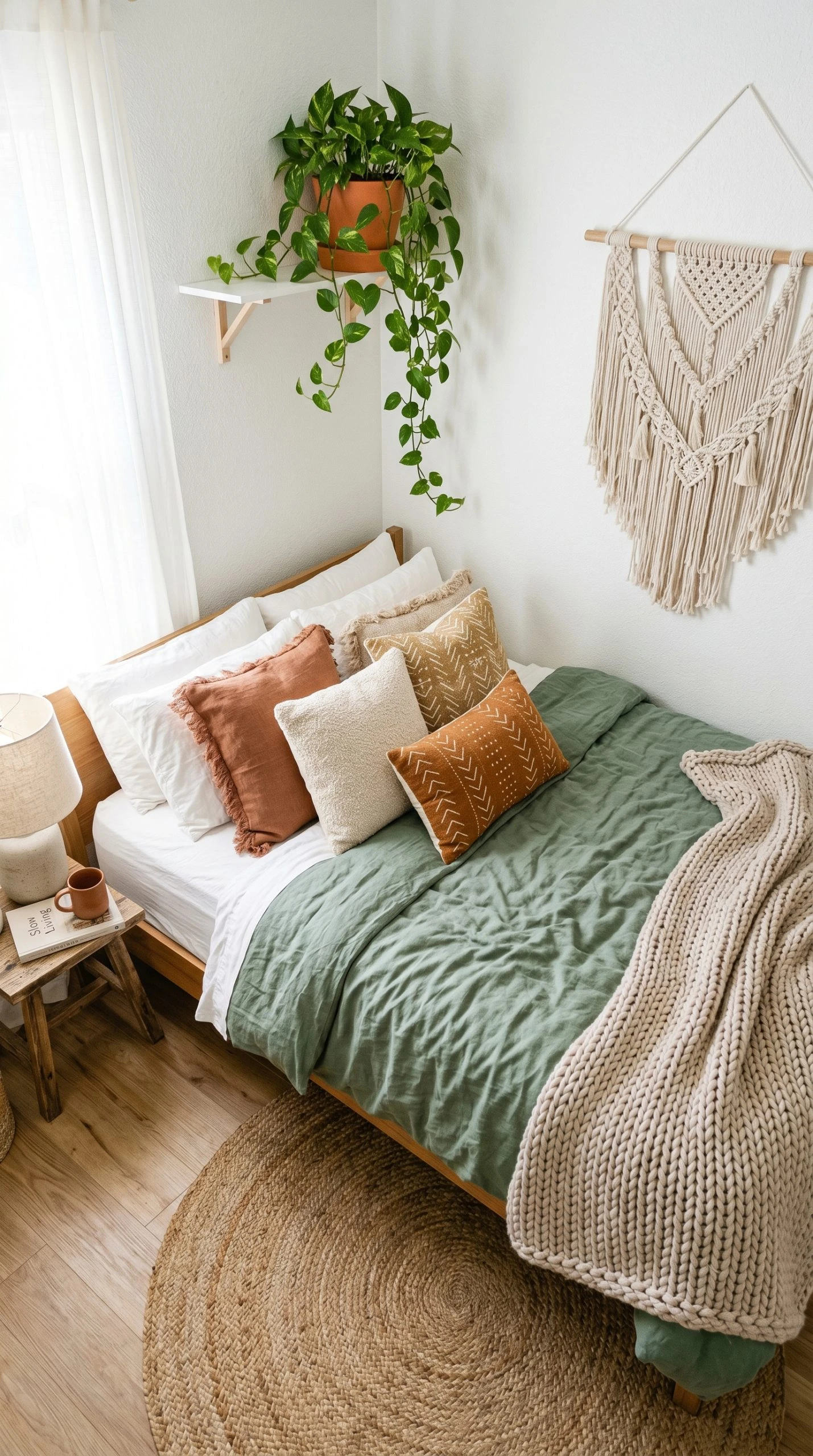
Choose a linen duvet cover in a muted sage, the kind that has natural wrinkling and texture built in rather than that flat, hotel-smooth look. Add two or three throw pillows in cream and terracotta, and layer a chunky knit blanket in oatmeal or warm beige across the lower third of the bed. A woven jute or cotton rug beneath the bed brings in more natural texture at floor level.
On the walls, lean into a mix of natural-toned art prints and one or two macrame wall hangings. The sage from the bedding will pull the room together without the walls needing to match. A couple of trailing pothos or string of pearls plants in terracotta pots on floating wooden shelves reinforce the green and earthy palette without requiring paint.
Quick Designer Tip: Get two or three extra sage green pillowcases in slightly different tones. Having slight variation in your greens actually makes the whole look feel more intentional and organic, rather than color-matched to the point of looking stiff.

3. The Moody Dark Sage Room
Most people default to the lighter, airier end of sage green, but there is a whole other world in the deeper, almost grey-green versions that feel cozy in a completely different way. Think of a rainy afternoon light, a room that feels like it belongs in a forest cabin, cozy and a little bit dramatic. That is the energy of a dark sage bedroom.
Paint the walls in a deep, smoky sage, something like a dusty hunter green with grey undertones. Pair it with dark walnut wood furniture, a low-profile bed with a padded linen headboard in warm taupe, and bedding in cream, dusty brown, and terracotta. The contrast between the deep walls and the lighter, warmer bed creates a visual anchor that pulls your eye immediately to the center of the room.
Lighting is especially important in a darker room. Layer multiple sources: a ceiling fixture with warm Edison bulbs, two bedside table lamps with fabric shades, and a string of small warm lights draped above the headboard or along a shelf. The result is a room that glows rather than just being lit. Add a large mirror with a dark wood or black metal frame to bounce some of that light back into the space.
Quick Designer Tip: In a dark sage room, keep at least one large piece of light-colored textile visible, like a creamy linen throw or a pale boho rug. It stops the room from feeling too heavy and gives your eye a place to rest.
4. Sage Green With Terracotta Accents
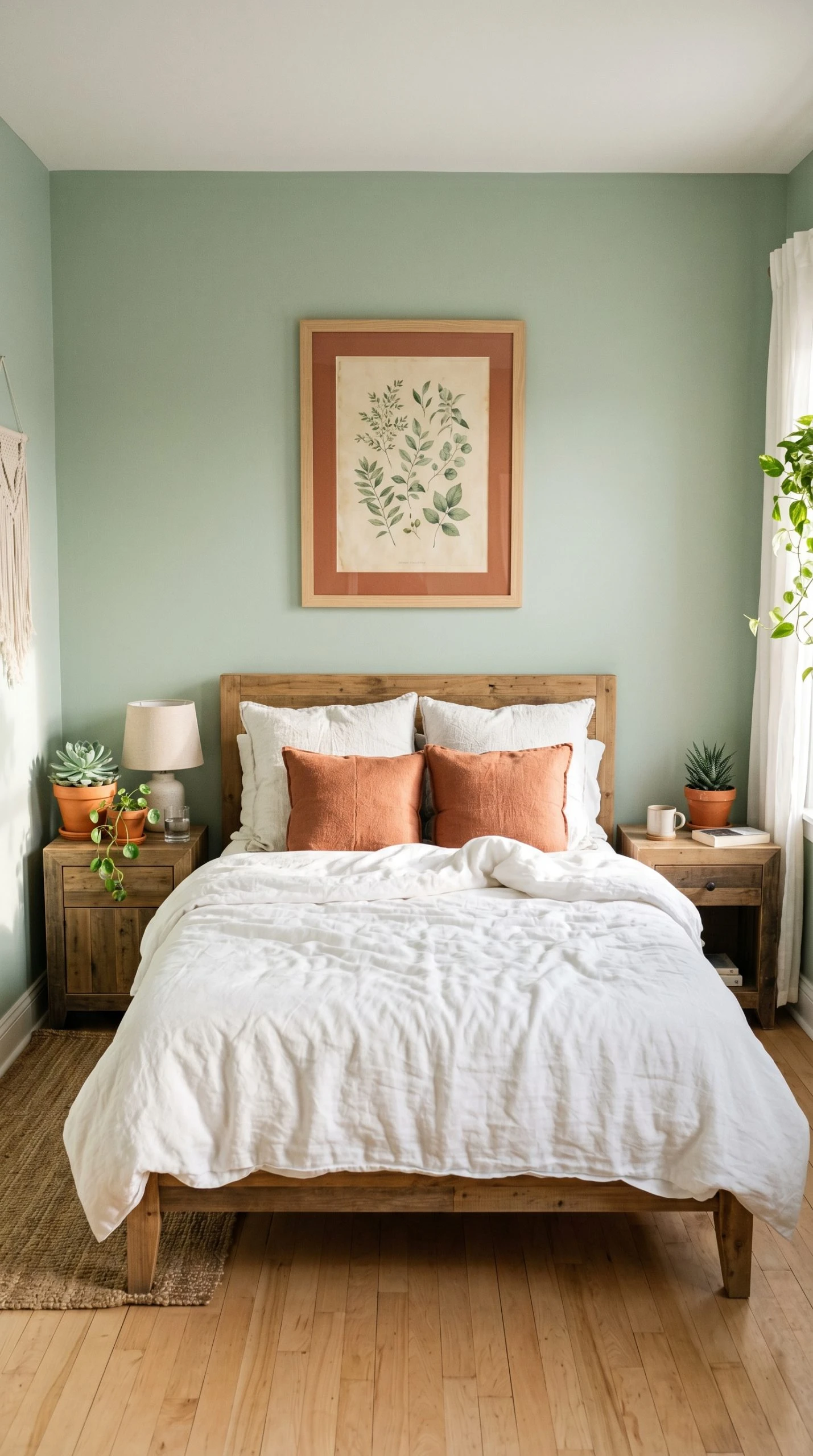
If you have ever looked at a succulent garden and felt immediately at peace, this bedroom idea will make complete sense to you. Sage green and terracotta are one of those color pairings that feel genuinely natural because they are borrowed directly from nature, cool muted green leaves and warm reddish-brown clay soil. In a bedroom, that combination reads as effortlessly boho without trying too hard.
Start with sage green walls and bring in terracotta through the accessories rather than the furniture. Terracotta ceramic pots holding plants, a rust-toned throw pillow here and there, a hand-thrown pottery lamp base on the nightstand, and a framed botanical print with terracotta-colored matting. These small hits of the warm tone pop beautifully against the cool sage without overwhelming it.
For furniture, stick to natural wood tones and light rattan rather than anything with a dark stain. A reclaimed wood nightstand or a whitewashed dresser keeps the room feeling light and earthy rather than heavy. Linen bedding in cream or warm white balances the palette by sitting between the cool green and the warm terracotta.
Quick Designer Tip: Group your terracotta accessories in odd numbers, three small pots together, a cluster of two candles and one book. Odd-numbered groupings always look more natural and less staged than even ones.
5. The Macrame and Plant Wall Moment
You have probably seen it: that bedroom with one wall completely covered in a combination of macrame wall hangings, hanging plants, and woven art. It looks like it took years to collect and somehow all came together perfectly. The good news is that this look is genuinely achievable, and a sage green backdrop makes every piece on that wall look intentional.
Pick one wall behind the bed as your feature wall. Paint it sage green if the rest of the room is neutral, or keep it the same sage if everything else already has color. Then start layering: one large macrame piece as the centerpiece, two or three hanging planters in different sizes with trailing or cascading plants, a few small framed pressed botanical prints, and maybe a small woven basket or two hung flat against the wall as art.
The trick is to vary the heights and sizes so nothing looks too uniform. You want some pieces lower, some higher, some closer together, and some with breathing room. The plants add movement and softness that no static art piece can replicate. Keep the bedding simple, white or cream linen, so the wall becomes the star without competing with the bed.
Quick Designer Tip: Use removable hooks for anything lightweight and actual wall anchors only for the heavier macrame pieces. Staggering the installation heights by a few inches makes the whole arrangement look more organic and gallery-like.

6. Vintage Boho With Sage as the Anchor
Vintage furniture and boho style were practically made for each other, and sage green is the thread that pulls mismatched pieces into something cohesive. If you love hunting through thrift stores and bringing home things that do not obviously match, this approach is for you. The idea is to let sage green do the work of tying everything together while the individual pieces bring their own history and personality.
Paint the walls sage green or use sage green bedding as your dominant color. Then start mixing: a vintage wooden dresser with original hardware, a mismatched nightstand that is clearly from a different decade, a brass or aged gold mirror with a little patina, a velvet chair in dusty rose or worn olive that you found at an estate sale. None of these need to match each other because the sage green creates a visual baseline that makes them all feel like they belong together.
Textiles are where you bring in more pattern and color. A vintage-looking Persian rug in muted reds, blues, and creams on the floor ties the whole palette down. Layered throw blankets in linen and cotton add softness to the harder vintage furniture pieces. Do not try to make things matchy, the goal is collected, not coordinated.
Quick Designer Tip: When sourcing vintage pieces, look for items with warm wood tones or aged metal finishes rather than anything with a cool grey or silver base. Warm metals and warm woods keep the palette cohesive even when the individual pieces are wildly different from each other.

7. Sage Green With Warm Brass and Wood
There is a version of the boho bedroom that leans a little more polished than the pure free-spirit aesthetic, and it is built on the combination of sage green, warm brass hardware and fixtures, and rich natural wood tones. If you want a room that feels grown-up and curated but still relaxed and layered, this is the version for you.
Sage green walls or a sage green upholstered headboard set the tone. Then bring in warm brass through the details: cabinet pulls on a wooden dresser, a slim brass floor lamp beside the bed, small brass candlestick holders on a floating shelf, and a brass-framed mirror above the dresser. The warmth of the metal plays off the cool muted green in a way that feels rich without being overdone.
For wood, choose medium to warm tones, walnut, oak, teak, or acacia rather than anything that reads as grey or bleached. A solid wood bed frame or a wooden bench at the foot of the bed adds that essential organic weight. Linen bedding in warm cream or oatmeal sits between the green and the warm metals and ties the whole palette together.
Quick Designer Tip: Brass fixtures and accessories do not all need to match in finish. A mix of brushed brass, matte brass, and slightly antiqued gold actually looks more collected and intentional than a perfectly matched set from the same product line.

8. The Plant-Filled Sage Green Room
Some people want a bedroom with a few plants. And then there are plant lovers who want the room to feel like an indoor forest. If you fall into the second category, sage green is your best friend because the wall color essentially extends the green palette of the plants so everything feels continuous rather than like pots placed on shelves in a random room.
Go big and go varied. A large fiddle leaf fig or bird of paradise in one corner. Trailing pothos and heartleaf philodendron spilling off a floating shelf above the dresser. A string of pearls in a small terracotta pot on the nightstand. A hanging planter with an ivy near the window. The more variety you have in leaf shape, size, and texture, the more interesting and layered the room feels.
Keep the rest of the room fairly neutral so the plants do not compete with too many other visual elements. White or cream bedding, natural wood furniture, and simple woven baskets for storage. The sage walls and all that greenery create the color story, so the textiles and furniture can stay quiet. A few small fairy lights woven around a shelf of plants add warmth in the evenings.
Quick Designer Tip: Cluster your smaller plants in groups at different heights rather than spacing them evenly around the room. Grouping creates a more lush, jungle-like effect and is much easier to water because everything is in one area.

9. Sage Green and Blush Pink for a Soft Boho Look
The combination of sage green and blush pink sounds like it belongs in a nursery, but done right in an adult bedroom it is one of the softest, most romantic color pairings you can use in a boho space. The key is keeping both colors muted, dusty sage and dusty blush rather than anything bright or saturated.
Use sage on the walls and introduce blush through textiles and accessories. A blush linen pillow nestled among cream ones, a dusty pink vintage rug with faded pattern, a blush-toned cotton throw draped casually over the corner of the bed. A small piece of botanical or floral art with pink and sage tones on the wall ties both colors together in one frame.
For furniture, stick to natural rattan or whitewashed wood to keep things light and airy. Avoid heavy or dark furniture pieces because the soft palette needs light, open surroundings to breathe properly. A gathered linen curtain in cream or blush at the window filters light beautifully and adds movement.
Quick Designer Tip: If the blush starts to read too pink in your room, add a natural warm-white or cream throw pillow between the blush ones. That buffer of neutral tones the pink down and keeps the palette feeling soft rather than sweet.

10. The Minimalist Boho Sage Room
Boho does not always mean layered to the point of overwhelming. There is a version of this style that embraces restraint, choosing fewer pieces but making each one count. If you are drawn to calm, uncluttered spaces but still want the warmth and texture of boho style, the minimalist approach with sage green is exactly the right fit.
Start with sage green walls and strip the room down to only the essentials: a simple low platform bed with clean lines, a single wooden nightstand on each side, a woven jute rug beneath the bed, and linen bedding in undyed natural cream. The negative space is intentional here. Not every wall needs something, not every surface needs to be filled.
The few accessories you do choose should have real texture and quality. One large macrame piece above the headboard instead of several smaller things. A single large potted plant in the corner. Two or three books stacked on the nightstand with one small ceramic dish for rings. The spare approach actually lets each item stand out more clearly, and the sage green walls give the whole room a sense of quiet richness.
Quick Designer Tip: In a minimalist boho room, vary texture rather than color to add interest. Smooth linen next to rough jute, cool ceramic next to warm wood, flat paint next to a woven textile. The contrast of textures creates visual richness without needing more stuff.

11. Sage Green With Deep Earthy Neutrals
There is a version of sage green that leans warmer and earthier, and it pairs beautifully with a palette of deep, rich neutrals like dark chocolate brown, deep caramel, and warm charcoal. This combination creates a bedroom that feels anchored and grounded, like a space that has been lived in and loved rather than recently assembled.
Paint the walls in a warm-leaning sage green, one with more yellow or brown undertones than grey. Bring in the dark neutrals through the bedding: a deep brown duvet or linen coverlet, chocolate-toned throw pillows, and a caramel or dark tan knit blanket layered at the foot. A large Persian or vintage-style rug in burgundy, brown, and cream pulls the floor together and adds pattern without competing with the walls.
Wood furniture should lean dark here rather than light, something in walnut or a dark stained oak. A wicker or rattan lamp with a linen shade brings in the boho texture without lightening the palette too much. This room does not rely on airy whites or pops of terracotta, it gets its warmth from the richness of the neutral tones themselves.
Quick Designer Tip: Layer two different textures of brown in your bedding, like a smooth linen duvet with a nubby knit throw on top. The tonal layering within one color family creates depth that reads as intentional and sophisticated rather than monochromatic.

12. A Sage Green Reading Nook Corner
Not every bedroom is large enough to dedicate a full corner to a reading nook, but even in smaller rooms there is usually one spot that is underused, beside a window, in the corner behind the door, or along a wall that has been left bare. Converting that spot into a cozy sage green reading corner pulls double duty as both a functional space and a design moment.
Start with a comfortable armchair in a complementary tone, cream linen, warm terracotta velvet, or faded olive. Add a small side table or stool for books and a drink. Install a wall-mounted adjustable reading lamp above or beside the chair for proper task lighting. If the nook has a wall behind it, paint just that section in sage green even if the rest of the room is a different color, it creates a natural boundary for the space.
A small floor plant beside the chair, a woven basket for extra blankets, and a floating shelf above with a few books and a small candle or plant complete the corner. Hang a sheer curtain nearby if the nook is beside a window, something that filters light without blocking it. The result is a micro-space within your bedroom that has its own distinct character.
Quick Designer Tip: Add a small rug under just the reading chair, something round or oval works especially well. It defines the space visually and makes the nook feel like a separate zone even in a smaller bedroom without walls or physical separation.

13. Sage Green Accent Wall With Gallery Display
If full-room painting feels like too much of a commitment, an accent wall lets you dip into sage green in a targeted way that still makes a real impact. The wall behind the bed is the obvious choice, and it becomes an excellent backdrop for a curated gallery arrangement that would get lost against a white or beige wall.
Paint the headboard wall in sage green and give it time to fully dry before arranging your gallery. The arrangement can include framed botanical prints, abstract art in earthy tones, small mirrors with natural frames, pressed dried flowers in simple clip frames, and one or two small hanging macrame pieces. Mix the sizes and shapes, but keep a rough alignment either centered or left-leaning to avoid a scattered look.
Leave a few inches of sage green visible between pieces rather than cramming everything together. The wall color is part of the composition and it needs room to breathe. Linen bedding in cream or warm white in front of the sage wall creates a clean contrast that lets both the bedding and the gallery display look their best.
Quick Designer Tip: Before putting any nails in the wall, lay your gallery arrangement on the floor first to test the composition. Take a photo of the floor layout and use it as a reference when you start hanging pieces. It saves a lot of patching and rehang frustration.

14. String Lights and Sage Green at Night
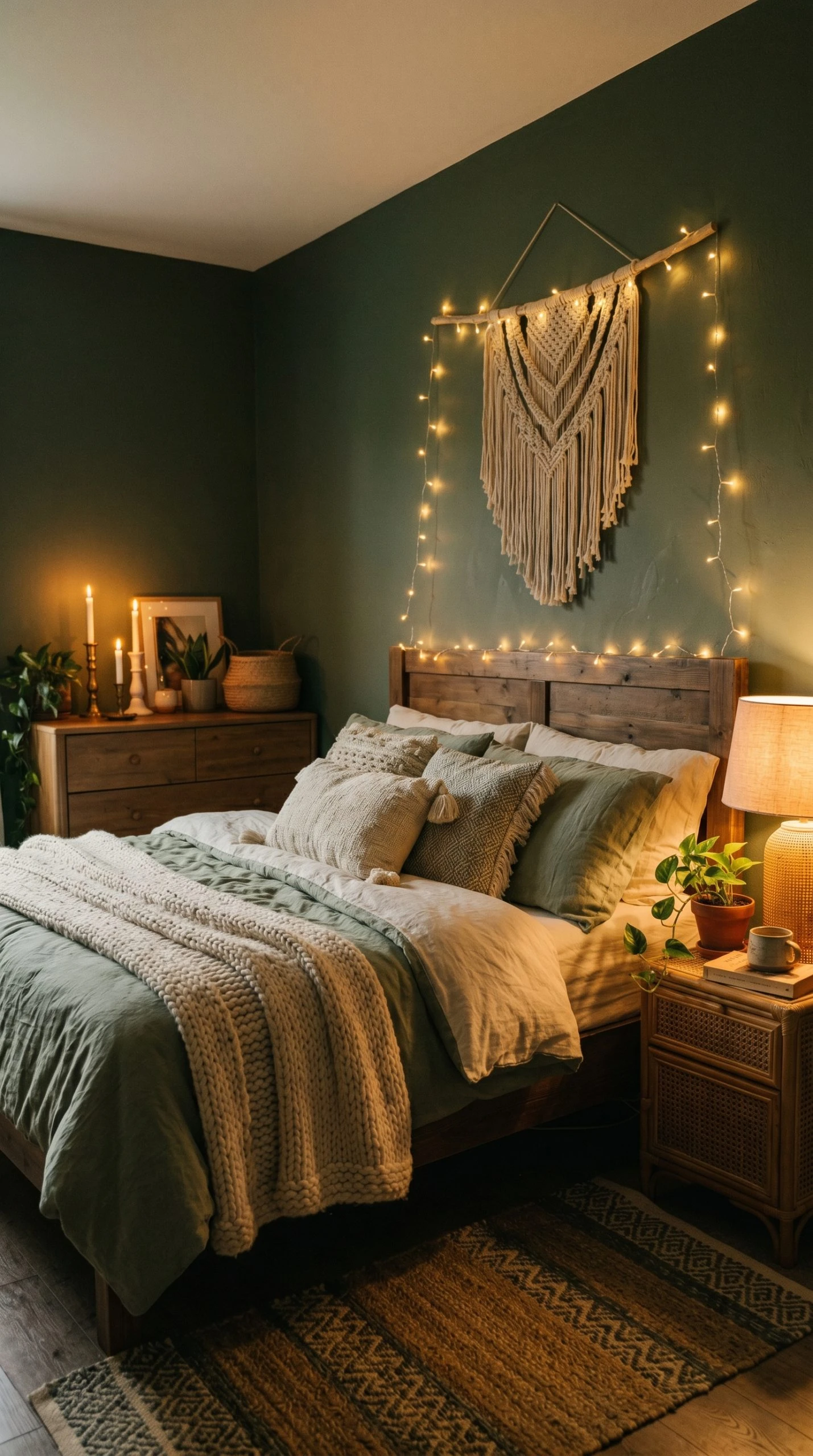
The right lighting can make even a modest bedroom feel like a completely different space after dark, and in a sage green boho room, the combination of warm string lights and the muted wall color creates an evening atmosphere that is genuinely hard to walk away from. This is the version of the bedroom that makes you actually look forward to winding down at night.
Hang a strand of warm white fairy lights along the ceiling perimeter or drape them across the wall above the headboard in a loose, casual curve. Add a warm amber bedside lamp on each nightstand, one with a woven or ceramic base and a fabric shade rather than a harsh bright fixture. Candles in terracotta holders or simple glass votives on the dresser or a floating shelf add a final flicker of warmth.
The sage green walls respond beautifully to warm light in a way that cool blue or grey walls do not. The green takes on a deeper, more golden quality in the evening that feels completely different from how it reads during the day. That shift makes the room feel like it has two personalities, bright and fresh in daylight, warm and atmospheric at night.
Quick Designer Tip: Use warm bulbs with a color temperature of 2700K or lower for all your bedroom lighting. Anything above 3000K starts to feel clinical and cancels out the cozy effect you are building with the sage walls and soft textiles.
15. Sage Green With Global Boho Textiles
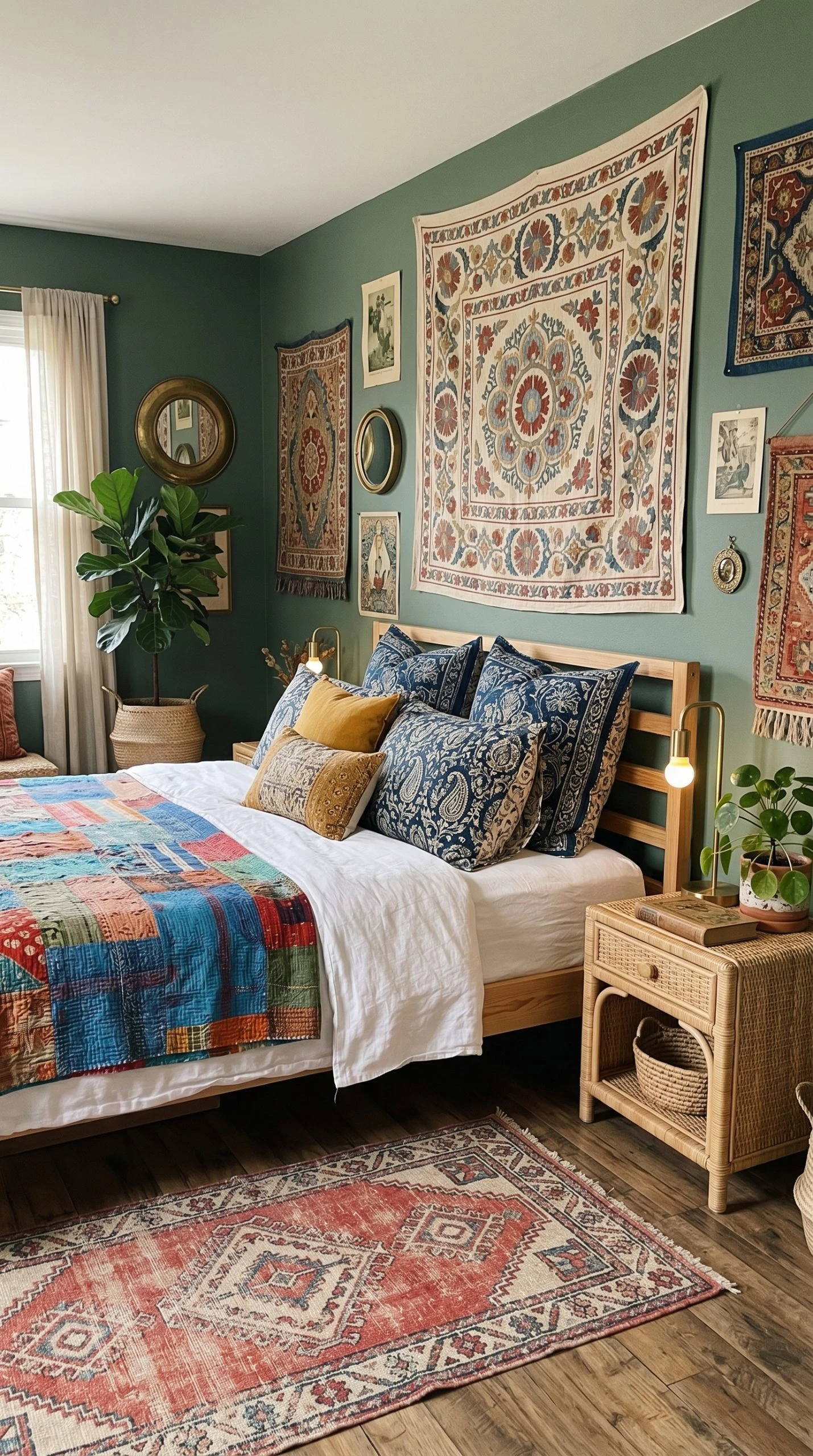
One of the defining characteristics of true bohemian style is the mixing of textiles and patterns from different cultures and traditions, the kind of layering that looks like someone who has traveled a lot and brought back beautiful things. Sage green provides the perfect grounding backdrop for this kind of colorful, patterned mixing because it is neutral enough to hold a lot of pattern without the room feeling chaotic.
Layer a Moroccan-style rug in faded reds, blues, and ivory on the floor. Add a Kantha quilt or a printed Indian cotton throw across the bed in warm amber and rust. Place a few block-print pillow covers in indigo and cream among your sage and neutral pillows. Hang a woven tapestry or a suzani wall textile on one wall. None of these need to match each other, they just need to share a warmth of tone that sage green connects.
Keep the furniture itself simple and in natural wood or rattan so it does not compete with all the pattern. A simple wooden bed frame, a carved wooden mirror, or a basic rattan nightstand lets the textiles be the visual interest. The overall effect is layered and well-traveled without feeling like a museum display.
Quick Designer Tip: When mixing multiple patterns, the easiest way to keep them cohesive is to find one color that appears in all of them, even in small amounts. That shared thread, even something as simple as a warm cream or a rust accent, ties completely different prints together into something that reads as collected rather than clashing.
16. Low Bed Setup With Floor Cushions and Sage Walls
There is a relaxed, almost meditation-room quality to a bedroom that sits low to the ground, and it translates perfectly to the boho aesthetic. A low platform bed or even a mattress directly on the floor surrounded by floor cushions and poufs, with sage green walls behind the whole setup, creates a room that feels completely intentional in its casualness.
Choose a platform bed without a headboard or with a very low, simple headboard. Style the bed with layers of bedding in cream, sage, and warm amber. Around the bed on the floor, place two or three large floor cushions in different patterns and textures, some cotton, some woven, some with fringe or tassels. A large round pouf in braided cotton or leather beside the bed serves as a nightstand substitute.
Keep window treatments simple and flowing. A sheer linen panel in cream or white that reaches the floor adds height to the space and makes the low furniture feel intentional rather than incomplete. Plants at varying heights around the room also help balance the low center of gravity of the furniture layout.
Quick Designer Tip: If you are using a mattress on the floor rather than a frame, invest in a slatted wooden base or a bunkie board beneath it. This allows airflow and prevents moisture buildup, which is a real concern for mattresses that sit directly on hard floors.

17. Sage Green With Dried Flowers and Pampas Grass
Fresh flowers require maintenance, but dried botanicals bring the same natural warmth to a sage green boho bedroom without the upkeep. Pampas grass, dried lavender, dried cotton stems, preserved eucalyptus, and bundles of dried wildflowers have all become staples of the modern bohemian interior, and they look especially beautiful against a sage green backdrop.
Place a large vase of pampas grass in a corner of the room, something tall and feathery in cream or pale blush. On the dresser, arrange a smaller bouquet of dried lavender alongside a ceramic candle and a small plant. Above the bed, consider a hanging arrangement of dried flowers and foliage tied with natural twine as an alternative to traditional wall art. The soft, muted tones of dried botanicals complement sage green in a way that feels completely organic.
Natural vessels make a big difference here. Choose ceramic, terracotta, or woven baskets rather than glass or metal vases. The earthier the vessel, the more the dried botanicals feel like a natural extension of the room rather than a decorative element placed on top of it. A reclaimed wood shelf with a row of different-sized vessels and botanical bundles is one of the most satisfying vignettes you can create in this style.
Quick Designer Tip: Pampas grass and dried flowers do shed over time. Place a thin layer of hairspray over the stems when you first bring them home to lock in some of the loose fibers and extend their decorative life without changing their appearance.

18. Textured Sage Green Walls
A flat coat of paint on a smooth wall is one approach, but textured walls bring a completely different depth and tactile quality to a sage green boho bedroom. The texture catches light differently at different times of day, making the wall feel alive and dimensional in a way that flat paint simply cannot replicate.
Limewash paint is one of the best options for this look. It creates a soft, aged, slightly mottled effect that looks like plaster walls in an old Mediterranean home, natural and full of depth. Apply sage green limewash to the headboard wall or all four walls and watch how differently it reads in morning light versus evening lamplight. It pairs beautifully with the rough textures of rattan, jute, and macrame that are typical of boho bedrooms.
Another option is textured paint, which adds a very subtle grain or sand-like quality to the surface. It is more uniform than limewash but still brings more interest than standard flat paint. Either approach works better with warm-toned lighting to emphasize the texture rather than washing it out.
Quick Designer Tip: Before committing to a full wall in limewash, test a large swatch, at least two feet by two feet, on the actual wall you plan to paint. Limewash changes considerably as it dries and looks very different from the small color chips. The larger the sample, the fewer surprises you will get when the full wall is done.

19. Sage Green With Woven Pendant Lighting
Lighting is one of the most underrated elements of bedroom design, and in a boho bedroom, the fixture itself is part of the decor. Woven pendant lights, the kind made from rattan, bamboo, seagrass, or woven paper, do double duty as both a light source and a sculptural piece, and they look genuinely beautiful hanging above or beside a bed set against sage green walls.
Instead of standard bedside table lamps, consider hanging two matching woven pendants from the ceiling on either side of the bed. They free up your nightstand surface and bring the light source up to eye level when you are lying down, which is actually much better for reading than a lamp sitting on a surface. Choose a natural rattan shade with a warm Edison bulb inside for the best combination of style and function.
If the ceiling situation does not allow for pendants, a woven rattan table lamp on the nightstand achieves a very similar effect. Look for styles with a sculptural weave pattern that creates interesting shadow play on the wall when the light is on. Against a sage green wall, those woven shadows have a warm, almost mossy quality that is very much at home in a boho bedroom.
Quick Designer Tip: Woven pendant shades vary a lot in how much light they actually emit. Look for shades with larger openings or more open weave patterns if you plan to use the lamp for reading. Tighter weaves look beautiful but can be too dim for practical task lighting.

20. Sage Green With a Canopy Bed
A canopy bed in a boho bedroom is one of those ideas that sounds like a lot, but when you see it done with flowing sheer fabric in cream or ivory over a sage green backdrop, it makes complete sense. The canopy adds height, romance, and architectural interest to a room that might otherwise feel flat, and the soft fabric movement gives the whole space a slightly dreamy quality.
You do not need an actual four-poster bed frame to create this effect. A ceiling-mounted canopy frame or even a ceiling hook with a sheer fabric panel draped over and gathered at each corner of the bed achieves the same look for a fraction of the cost. Choose a sheer fabric in cream, white, or very pale sage so the canopy does not block too much light or make the space feel too enclosed.
Sage green walls behind and beneath the canopy create a lush, layered backdrop. Keep the bedding relatively simple, linen in cream or warm white, so the focus stays on the canopy effect rather than competing with heavy patterns. A few hanging plants or cascading dried flowers near the canopy frame add to the organic, slightly wild quality of the look.
Quick Designer Tip: Iron or steam your canopy fabric before hanging it, then give it a light mist of water and let it hang to release any remaining wrinkles. Wrinkled sheer fabric looks neglected rather than romantic, and the difference between pressed and unpressed is dramatic from across the room.

Final Thoughts
Sage green and boho style are one of those combinations that feel immediately right once you see them together. The color does not fight for attention, it simply holds the space together while everything else, the textures, the plants, the layered bedding, the collected accessories, gets to do the expressive work. Whether you painted every wall or just started with a single sage green duvet, the path to this kind of room is gradual and personal.
The most important thing to take away from all of these ideas is that there is no single correct way to do a cozy boho bedroom in sage green. Some of these rooms are full and layered and busy with beautiful things. Others are restrained and spare, where space itself is part of the design. What they all share is a sense of warmth, of natural materials, of a space that feels lived in rather than assembled.
Start with one idea from this list, the one that made you think yes, that. Get it right before adding the next layer. Boho style, done well, is never finished all at once. It grows and changes as you find pieces you love and let go of things that do not work. Sage green will be there the whole time, doing exactly what it does best, making everything around it feel a little calmer and a little more at home.
Frequently Asked Questions
What colors go best with sage green in a boho bedroom?
Sage green works especially well with warm neutrals like cream, oatmeal, and warm white, as well as earthy tones like terracotta, caramel, and dusty brown. For a softer look, dusty blush pink pairs beautifully with sage. For something richer and more dramatic, deep walnut brown and warm brass are excellent choices. The key is to avoid anything too cool or grey-toned, as sage green already has a slight grey quality and cool accents can make the palette feel flat rather than warm.
What type of furniture works best in a sage green boho bedroom?
Natural materials are your best friends here. Rattan, cane, bamboo, and wicker furniture all complement sage green beautifully because they share that earthy, nature-inspired quality. For larger pieces like bed frames and dressers, warm wood tones in oak, walnut, acacia, or reclaimed wood work well. Avoid anything too shiny, lacquered, or ultra-modern as it tends to clash with the organic softness of sage green boho style.
How do I make a small bedroom feel cozy in sage green without it feeling too dark or closed in?
In smaller rooms, use a lighter, softer sage rather than a deep grey-green on the walls. Balance the color with plenty of cream and warm white in your bedding and textiles. Keep window treatments light and sheer to maximize natural light. Mirrors, especially rattan or wooden framed ones, reflect light and visually expand the space. Avoid dark furniture in a small sage green room and stick to lighter wood tones and natural rattan instead.
Can I do a sage green boho bedroom on a tight budget?
Absolutely. The most budget-friendly entry point is sage green bedding, which you can find at most major retailers, paired with a few affordable accessories like a small macrame piece from a craft market, some terracotta pots with cuttings from existing plants, and a jute rug from a discount home store. Thrift stores are excellent sources for the kind of eclectic, vintage-feeling accessories that make boho spaces look collected rather than bought all at once. You do not need to replace furniture to get this look.
What kind of plants work best in a sage green boho bedroom?
Trailing plants like pothos, heartleaf philodendron, and string of pearls are especially popular in boho bedrooms because they spill beautifully off shelves and nightstands. Larger statement plants like fiddle leaf figs, bird of paradise, or a generous monstera work well in corners where you want a strong vertical presence. For smaller spaces or windowsills, succulents and small ferns work well in terracotta pots. Choose plants that are comfortable in lower light if your bedroom does not have strong direct sun.
How do I keep a boho sage green bedroom from looking too cluttered?
The key is to be intentional about what goes on display rather than filling every surface. Choose a few high-quality, meaningful pieces over many small decorative objects. Use baskets and woven storage to corral anything that does not need to be seen. Group smaller accessories in clusters of three rather than scattering them individually around the room. And give the sage green walls some breathing room. Not every inch of wall needs to have something on it. The open wall space is part of the design.