Dining Room Walls That Actually Do Something

Most dining rooms have at least one wall that just sits there, doing absolutely nothing. Maybe it’s that stretch of beige behind the buffet, or the big blank canvas across from the window that you keep meaning to do something with. You probably walk past it every single day and think, “I’ll figure that out eventually.” Well, eventually is now.
Dining room walls are some of the most overlooked real estate in the home, and that’s honestly a missed opportunity. This is the room where people linger after dinner, where you light candles on a Friday night, where family gatherings happen year after year. The walls in this space should feel like part of the story, not just a backdrop you stopped noticing.
The good news? You don’t need a massive renovation budget or a designer on speed dial to make your dining room walls look thoughtful and put-together. Whether you’re working with a tiny eat-in kitchen nook or a formal dining room with high ceilings, there are real, doable ideas here that go beyond the standard “hang a mirror above the sideboard” advice.
This article covers ideas across different styles, budgets, and room sizes. Each one is specific enough to actually act on, not just admire on Pinterest. Some of them start with a relatable problem, because most of us are figuring this out as we go. So pull up a chair, and let’s talk about what your dining room walls could actually look like.
1. A Gallery Wall That Looks Like You Actually Meant It
You’ve pinned a hundred gallery walls online and they all look incredible. Then you try to do one yourself and end up with a random cluster of frames that nobody asked for. The secret is that a great dining room gallery wall isn’t about filling space, it’s about building something that feels collected rather than assembled.
Start by picking a cohesive thread. It doesn’t have to be matching frames or the same color family, but there should be something tying things together, whether that’s subject matter (botanical prints, black-and-white travel photos, vintage food illustrations), frame finish (all black, all brass, all natural wood), or size relationship (one large anchor piece surrounded by smaller ones). In dining rooms, a mix of food-related art, abstract pieces, and personal photos tends to feel warm without being too themed.
For the arrangement, lay everything on the floor first and take a photo of your composition. This saves you from hammering sixteen holes in the wall and rearranging things for three hours. Hang the largest piece first, then build outward. Leave about two to three inches between frames rather than cramming them together. A gallery wall that breathes always reads better than one that’s packed wall to wall.
Designer Advice: Use paper templates (trace each frame on kraft paper, cut them out, tape to the wall) before you hammer a single nail. This lets you test the actual composition on the wall without any commitment.

2. Wainscoting or Board and Batten for a Room That Feels Finished
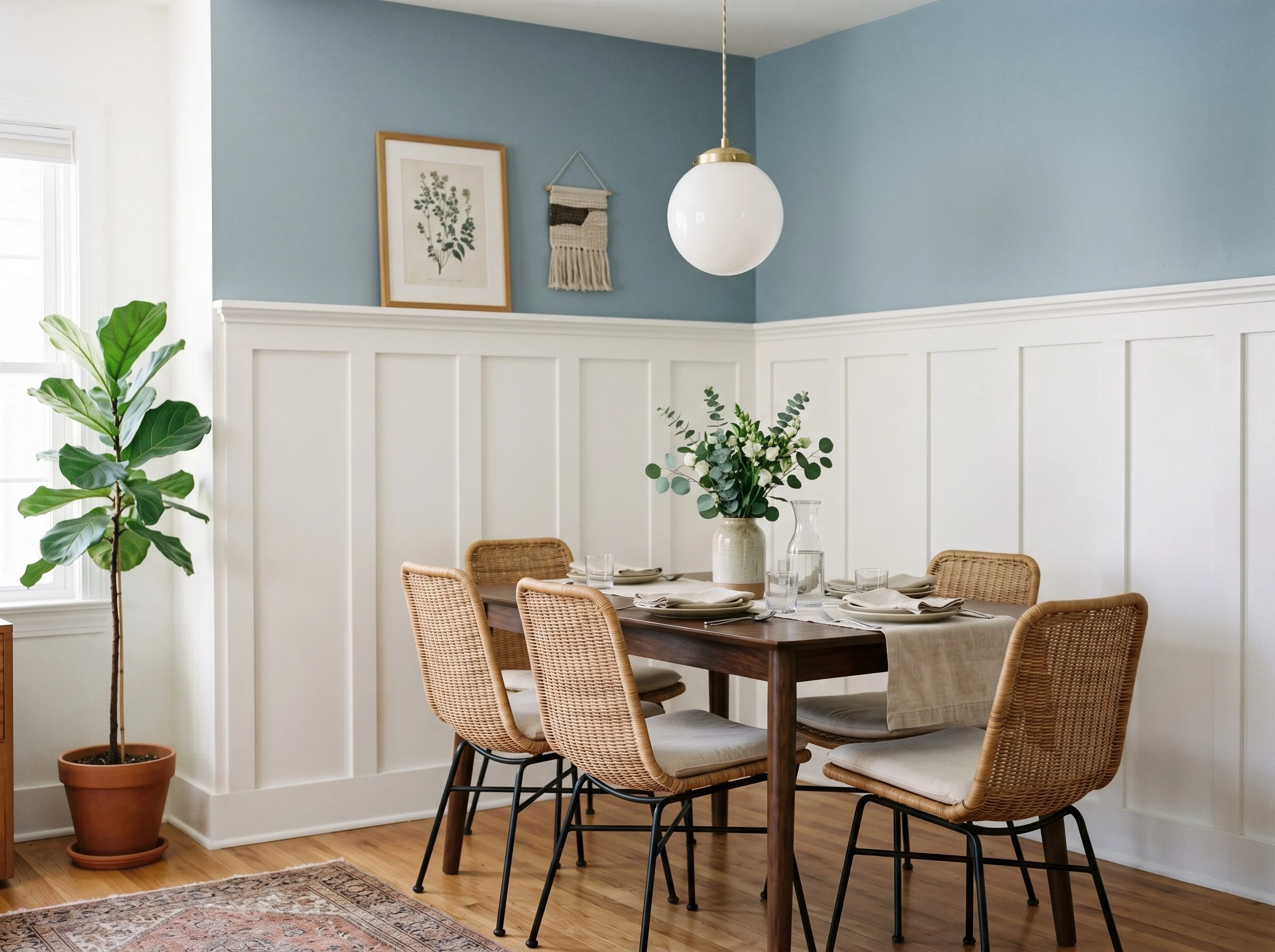
There’s a reason certain dining rooms feel polished and expensive even before you look at the furniture. Chances are, there’s some kind of paneling on the lower half of the walls. Wainscoting and board-and-batten treatments are among the most effective ways to add architectural detail to a space that otherwise feels a little flat.
Traditional wainscoting features raised or recessed panels, usually topped with a chair rail, and runs about one-third of the way up the wall. Board and batten is slightly more relaxed, using vertical strips of trim spaced evenly across the wall. Both work beautifully in dining rooms, and both can be done as a weekend DIY project with pre-primed MDF trim from a home improvement store. The total material cost is usually well under a few hundred dollars for an average-sized room.
Paint the paneling a contrasting color from the upper wall for the most dramatic effect. Navy lower panels with warm white above, deep forest green with cream, or classic white paneling against a moody sage are all combinations that look deliberately designed. Add a simple pendant light above the table and the room feels like it has always been this finished.
Quick Tip: Keep the panel height at about one-third of your total wall height for the most proportionate look. Too short and it reads like a chair bumper. Too tall and it starts to feel like a school hallway.
3. One Large-Scale Piece of Art Instead of a Cluster
Collective wisdom says more is more when it comes to art. But sometimes the most striking dining room walls are the ones where a single large-scale artwork gets the entire wall to itself. If your dining room has an obvious focal wall, especially one that faces you as you walk in, one oversized piece can anchor the whole room with a confidence that no gallery arrangement can quite replicate.
We’re talking genuinely large here. A piece that’s 40 inches wide or bigger. In a standard dining room, something in the 48-to-60-inch range tends to hit the sweet spot between statement and overwhelming. Abstract oil paintings work especially well because they add color and texture without competing with whatever else is in the room. Landscape photography, oversized botanical illustrations, and large-format prints of vintage maps are also strong choices.
Hang the piece so that its center sits at roughly eye level, which in a dining room often means slightly lower than you’d hang it in a living room since people are seated while eating. Leave plenty of wall space around it rather than cramming it between shelves or sconces. The negative space is part of the look. If budget is a concern, art print marketplaces have made large-format prints affordable, and many can be ordered un-framed and mounted in a simple poster frame from IKEA for well under $100 total.
Quick Tip: If a piece feels too small for the wall once you hang it, add a simple frame with a wide mat. A wide mat visually increases the size of the artwork without adding bulk.

4. Wallpaper on One Wall for Big Impact Without the Commitment
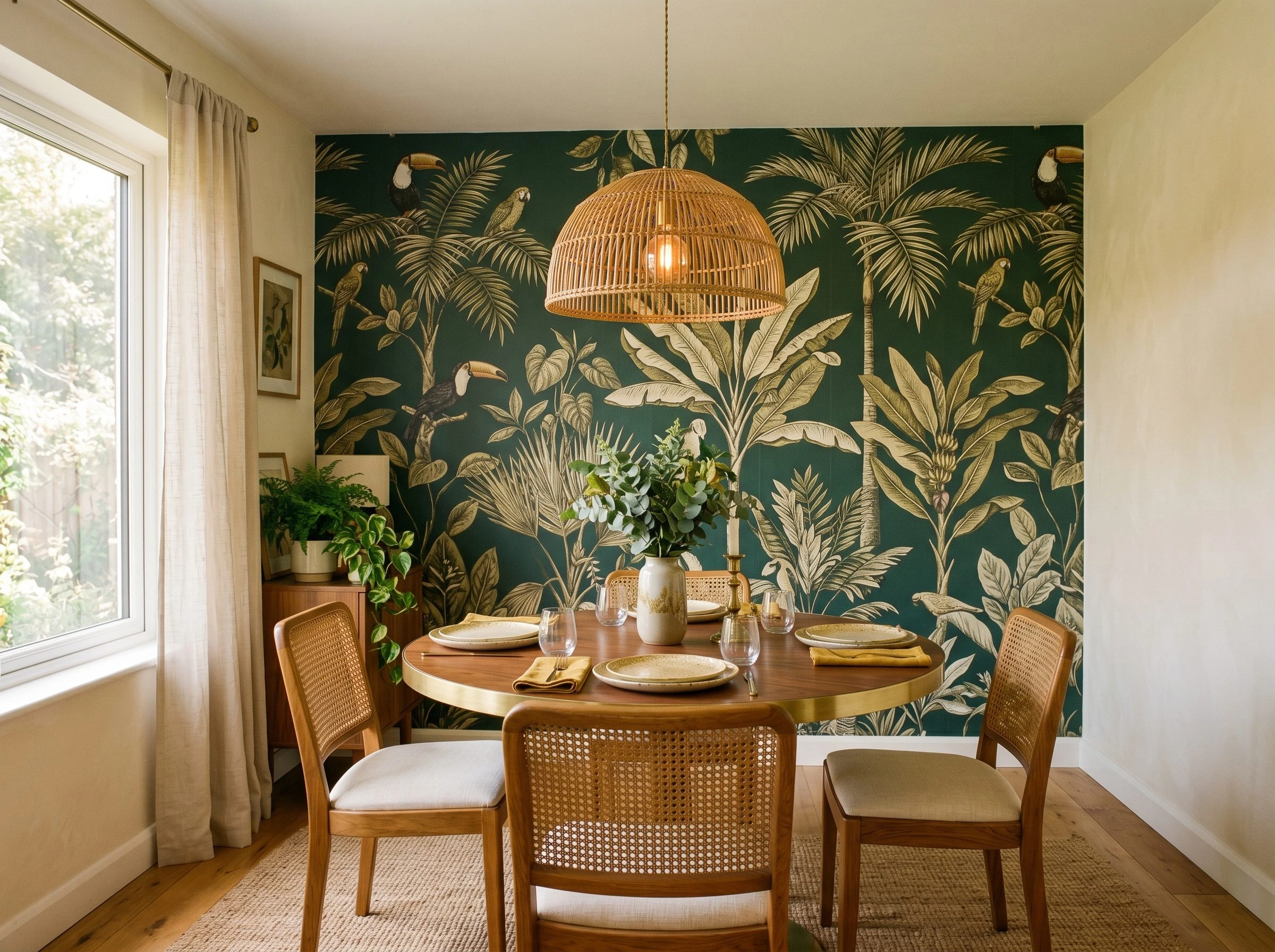
Full-room wallpaper is a project. Accent wall wallpaper? That’s a Saturday. If you’ve been wanting to try a bold botanical print, a graphic geometric, or a moody dark-ground pattern but you’re not ready to live with it on every wall, putting it on a single feature wall is the perfect compromise. In a dining room, the wall behind the sideboard, buffet, or the wall opposite the kitchen is usually the most natural choice.
The patterns working especially well in dining rooms right now include large-scale tropical prints in deep greens and terra cottas, subtle linen-texture wallpapers in warm neutrals, art deco-inspired geometric designs in navy and gold, and painterly floral prints in faded, almost vintage-looking colorways. Peel-and-stick versions have improved dramatically in quality over the last few years and are a great option for renters or anyone not ready to fully commit to traditional paste.
When hanging an accent wall, start in the center and work outward so the pattern stays balanced, particularly if your wall has a window or architectural element breaking it up. Keep the other three walls a solid color pulled from the wallpaper to tie the room together. This approach makes even a busy pattern feel considered rather than chaotic.
Designer Advice: Order one extra roll of your wallpaper and keep it stored flat. If you ever need to patch a section later, having the same dye lot makes matching much easier.
5. Floating Shelves That Pull Actual Duty
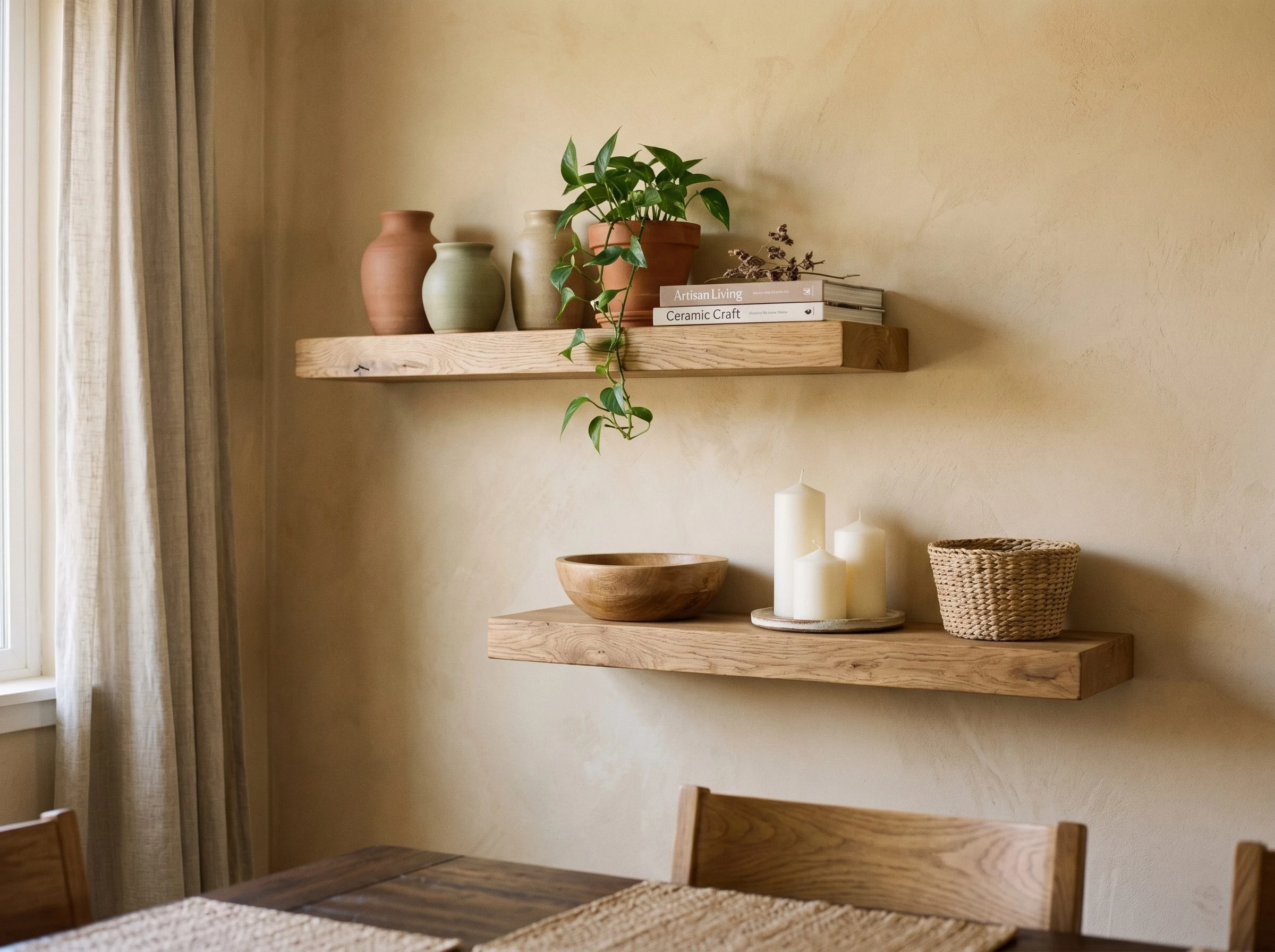
Floating shelves in a dining room are one of those ideas that seem obvious once you’ve done it. They add storage, they give you a place to style objects, and they make the walls feel intentional without covering them entirely. The trick is treating them like a display opportunity rather than extra kitchen storage.
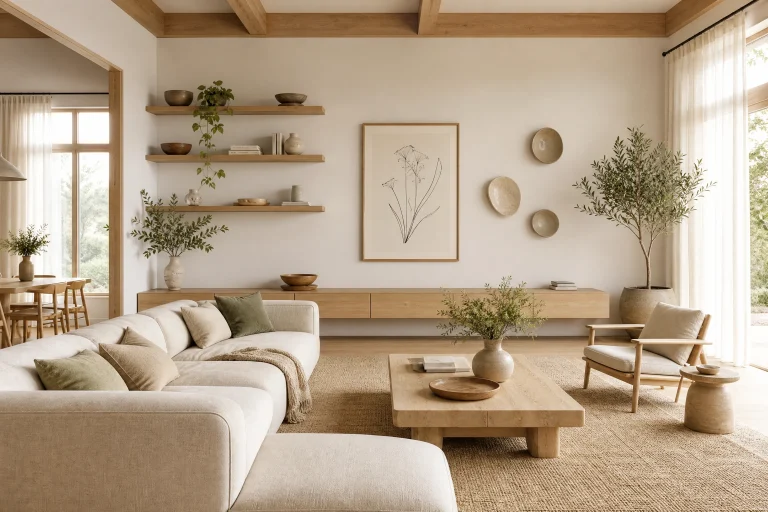
In a dining room context, floating shelves work best when styled with a mix of functional and purely decorative objects. Think a few pieces of your actual nice ceramics alongside a sculptural vase, a small potted trailing plant, some interesting books stacked horizontally, and maybe a candle or two. Keep items grouped in odd numbers (threes and fives tend to look more natural than pairs) and vary the heights so the eye moves across the shelf rather than reading it as a flat line.
Hardware matters more than most people think. Simple black metal brackets for an industrial feel, brass for something warmer and more traditional, or completely invisible floating mounts for a clean modern look. White oak or walnut shelves give a warm, natural quality to the walls that painted shelves can’t quite replicate. For a dining room, two or three shelves staggered at different heights tends to feel more curated than a straight row at the same level.
Quick Tip: Leave some negative space on each shelf. A shelf that’s packed edge to edge reads as cluttered no matter how beautiful the individual objects are.
6. A Mirror That Earns Its Place
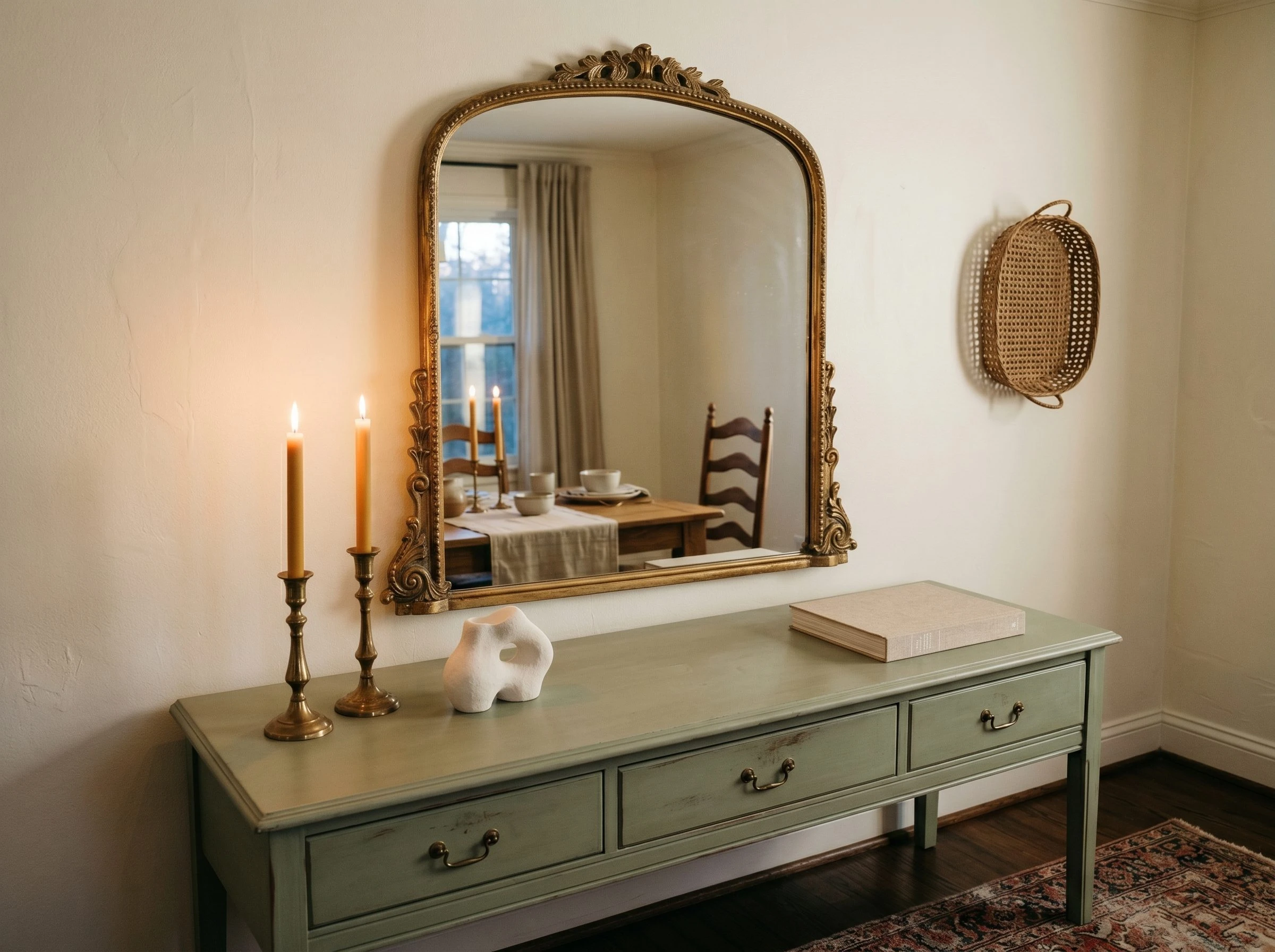
A mirror above the sideboard is almost a dining room cliche at this point, but there’s a reason it keeps showing up: a well-chosen mirror actually does a lot of functional work. It reflects the chandelier, it bounces natural light around the room, it creates depth in a space that might feel a little boxy, and it gives you somewhere to quickly check that you haven’t got food on your face before guests arrive.
The key is going bigger than you think you need and choosing a frame that has actual character. A small round mirror in a brass frame is fine. A large arched mirror with an antiqued gold frame, or an ornate scalloped edge, or a black metal multi-panel grid mirror? That’s a design moment. Aim for a mirror that’s at least two-thirds the width of whatever furniture piece sits below it.
If you don’t have a sideboard and the wall is freestanding, a large leaning mirror works beautifully in a dining room, especially in smaller spaces where a wall-mounted piece might feel static. Lean it against the wall at a slight angle, add a small wooden tray or sculptural object at its base, and it becomes an intentional composition rather than an afterthought. Vintage mirrors from thrift stores and antique markets are often more interesting than new options and much cheaper.
Designer Advice: Hang your mirror so the bottom edge sits about six to eight inches above the top of the furniture below it. Too high and they feel disconnected. Too low and it reads as if the mirror is resting on the sideboard.
7. Shiplap or Textured Wall Panels for a Room With Warmth
A dining room with textured walls just feels different from one with flat painted drywall. There’s something about physical texture that makes a room feel warmer, more alive, and more finished. Shiplap is the most well-known option, but it’s far from the only one. Bamboo paneling, grasscloth wallcoverings, limewash paint, and three-dimensional geometric wall panels are all alternatives that achieve that same quality of depth without the farmhouse aesthetic that shiplap sometimes brings.
For a dining room, consider where the texture works hardest. A full shiplap accent wall behind the table creates a cozy, cabin-like quality. Grasscloth or limewash paint on three walls keeps the room feeling warm without getting too rustic. Geometric 3D panels in a contemporary dining room add a sculptural quality that flat paint simply can’t. The material and finish you choose should match the overall direction of the room.
Budget-conscious option: peel-and-stick shiplap panels have become significantly better in quality and can be painted any color once applied. Real hardwood shiplap runs higher but adds genuine character and feels noticeably better in person. For the most dramatic effect, paint it in a deep color, charcoal, navy, dark terracotta, and watch how the room completely changes.
Quick Tip: Before committing to any textured wall treatment, get a few samples and live with them on the wall for at least a week. Textures look dramatically different under different lighting conditions throughout the day.

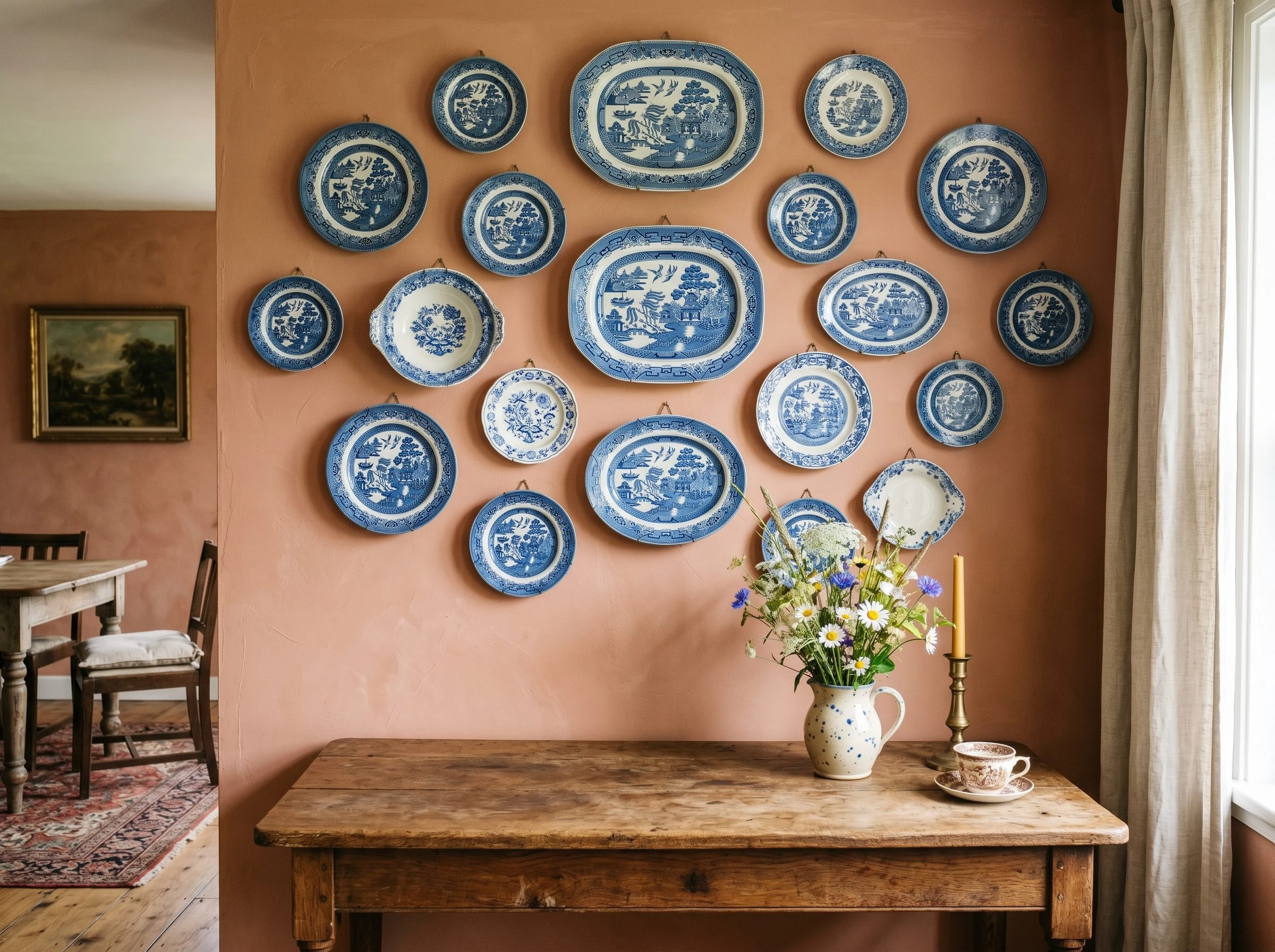
8. Vintage or Antique Plates as Wall Art
If you’ve ever been in a restaurant in France or a farmhouse in Tuscany, you’ve probably seen a wall covered in antique plates and thought it looked charming without being able to explain exactly why. The answer is that it has the quality of something gathered over time rather than purchased in an afternoon. A plate wall in a dining room carries that same energy when it’s done with intention.
The most successful plate walls mix sizes, periods, and patterns within a cohesive color family. Blue and white transferware is the classic combination, but plates in muted earth tones, hand-painted botanical patterns, or even solid-glazed ceramics in a range of warm neutrals all work well. Avoid matching sets unless you’re intentionally going for a formal look. Mix in a few pieces that are slightly different, a scalloped edge here, a different blue shade there, and the arrangement becomes genuinely interesting.
Plate hangers are cheap and work with almost any plate. Space your plates so there’s breathing room between them, usually two to four inches, and start with the largest piece at the center of the arrangement. This is a wonderful weekend thrift store project. Beautiful antique plates are almost always available for a few dollars each at estate sales and flea markets, and the total cost of a full plate wall is often less than a single piece of artwork.
Designer Advice: Keep plate walls to one wall only and make sure that wall has something to anchor the arrangement, like a sideboard or console below it. A plate wall floating in the middle of a blank space looks random rather than collected.
9. A Statement Paint Color That Makes the Room Feel Like a Room
Paint is the most underrated dining room wall decor decision. It is also the one that has the most impact per dollar spent. If you’re working with four walls that are currently a shade of builder beige or off-white, a single coat of a rich, saturated color can make the dining room feel like it was actually designed rather than just furnished.
Deep colors work especially well in dining rooms because this is often a space used in the evening with lower, warmer light. Hunters green, deep navy, rich burgundy, dark forest green, warm terracotta, and moody charcoal are all colors that look extraordinary in dining rooms, especially with warm candlelight and a pendant above the table. The trick is going dark enough that the color reads as intentional rather than just a darker version of safe.
You don’t necessarily need to paint all four walls either. Painting three walls a rich color and leaving the fourth a warm white or cream creates a natural feature wall effect without the drama of going full dark on everything. Pair the wall color with trim in a contrasting finish, warm white, cream, or even the same dark color in high gloss, and the room starts to feel designed rather than painted. Sample pots are about five dollars each. Buy three candidates and live with them for a few days before committing.
Quick Tip: Dark paint colors almost always need two coats to read properly. If a dark paint looks streaky or uneven after the first coat, don’t panic. Let it dry fully before adding the second coat.

10. Sconces That Add Light and Wall Interest at the Same Time
This one solves two problems at once. Dining rooms often have one overhead light source, which means the walls stay dim and the room feels a little flat once the sun goes down. Adding wall sconces on either side of a mirror, art piece, or window not only fills the walls with something intentional, it also adds a layer of ambient light that makes the whole room feel warmer at dinner time.
Hardwired sconces are the dream but require an electrician. Plug-in sconces with a simple cord cover or a cord hidden behind a furniture piece are a more accessible alternative and have improved enormously in design quality. Look for sconces with warm bulb temperatures (2700K is ideal for dining rooms) and shades or shades that diffuse the light rather than blasting it directly outward. Fabric shades, frosted glass, or antique bronze caged fixtures all produce a warmer, more flattering quality of light.
For style, brass and aged gold sconces work with almost any dining room direction, from traditional to mid-century modern. Black matte sconces add edge to a contemporary space. Rattan or woven shades bring warmth and texture to more casual or natural dining rooms. A pair of sconces flanking a piece of art or a mirror makes the entire wall composition feel symmetrical and intentional, even if the rest of the room is more eclectic.
Designer Advice: Install sconces at about 60 to 65 inches from the floor to the center of the fixture. This puts them above seated eye level and below standing eye level, which is the sweet spot for creating ambient light without glare.

11. Hanging Textile Art or a Woven Wall Hanging
Textile wall art in a dining room is still a relatively unexpected choice, which is exactly what makes it interesting. A well-chosen woven hanging, tapestry, or framed textile brings texture, warmth, and a softness to the room that no framed print can quite replicate. It also absorbs sound, which is a genuinely useful quality in a room where people sit around a table and talk for hours.
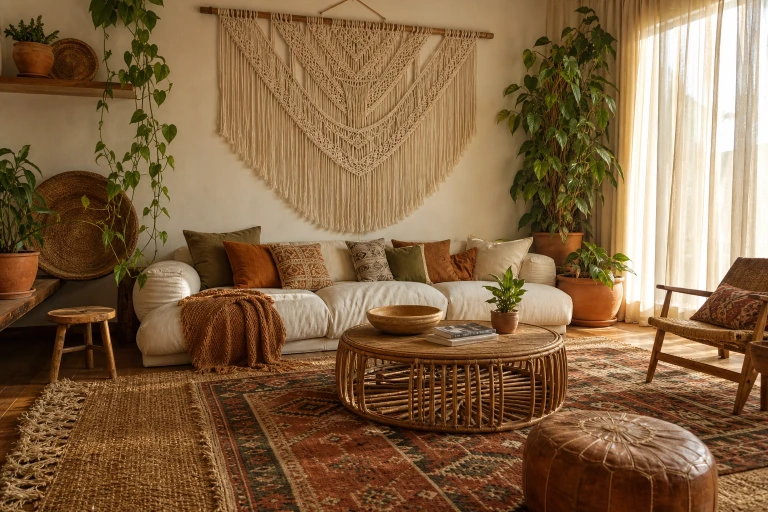
For a dining room, the textile should be substantial enough to make an impact, something at least two feet wide and preferably larger. Macrame hangings work best in casual, bohemian-leaning dining rooms. Handwoven wool or cotton textiles in earthy, natural tones work across a wider range of styles, from Scandinavian modern to farmhouse to contemporary. Vintage or antique tapestries can be genuinely beautiful in a more traditional or eclectic dining space. Abstract textile art in bold colors is a strong option for a contemporary room that needs warmth without going traditionally artsy.
Hang the textile from a simple wooden or metal dowel with leather or linen loops for an intentional, gallery-quality presentation. The rod itself becomes part of the visual. If the textile is particularly precious, keep it away from the dining table to avoid splashes, and consider a spot where direct sunlight won’t fade it over time.
Quick Tip: Textile art tends to relax and shift over time. Hang it for a few days before you take a photo or finalize the position, as the piece will settle into its final shape once it’s been hanging for a bit.

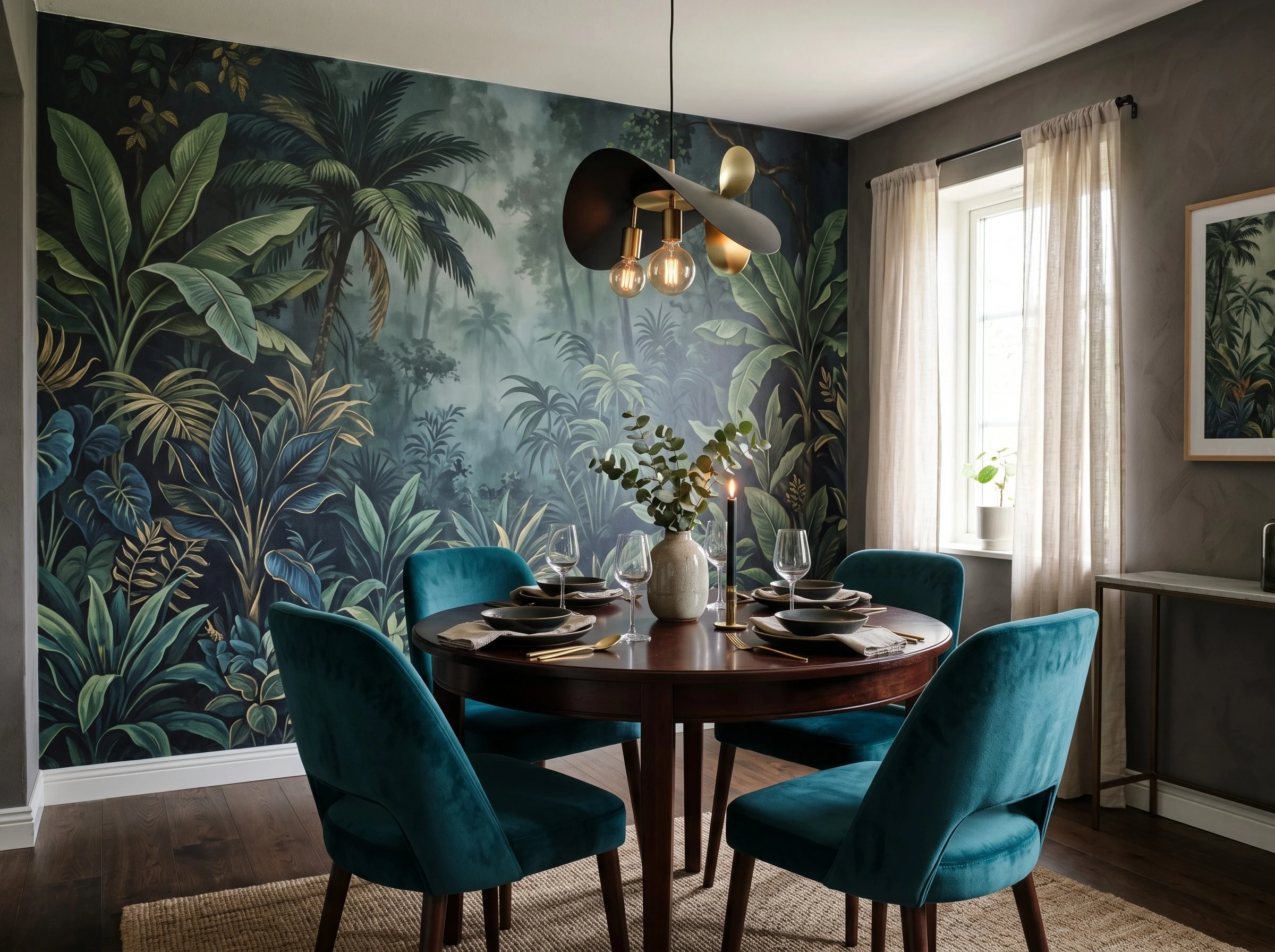
12. A Mural or Wallpaper Mural for a Dining Room That Surprises
A hand-painted mural used to be the kind of thing only a hired artist could pull off. These days, the options have expanded dramatically. Wallpaper murals, which are essentially large-scale photographic or illustrated prints designed to span an entire wall, are available from dozens of sources at a range of price points, and many of them look genuinely spectacular.
For a dining room, a mural creates a completely immersive effect that no other wall treatment can match. Popular choices include lush jungle or forest scenes (which make the room feel like eating outdoors), abstract painterly murals in warm neutrals, panoramic European landscape murals for a formal dining room, and vintage botanical or bird illustrations scaled up to mural size. The key is that the mural should feel like it belongs in the space rather than being pasted on top of it, which means the colors in the mural need to work with your furniture and flooring.
Installation is more manageable than it sounds. Most wallpaper murals come in numbered panels and go up much like regular wallpaper. The main preparation is ensuring the wall is smooth, clean, and primed, so any imperfections in the drywall get addressed before the mural goes up. Budget options start around $100 to $200 for a full wall mural from online retailers. Higher-end custom murals can run into the thousands, but the mid-range options at a few hundred dollars can look exceptional.
Designer Advice: A mural looks best when the wall behind it has no other decor competing for attention. Remove everything else from that wall and let the mural do its job on its own.
13. A Chalkboard Wall for a Dining Room That Stays Fresh
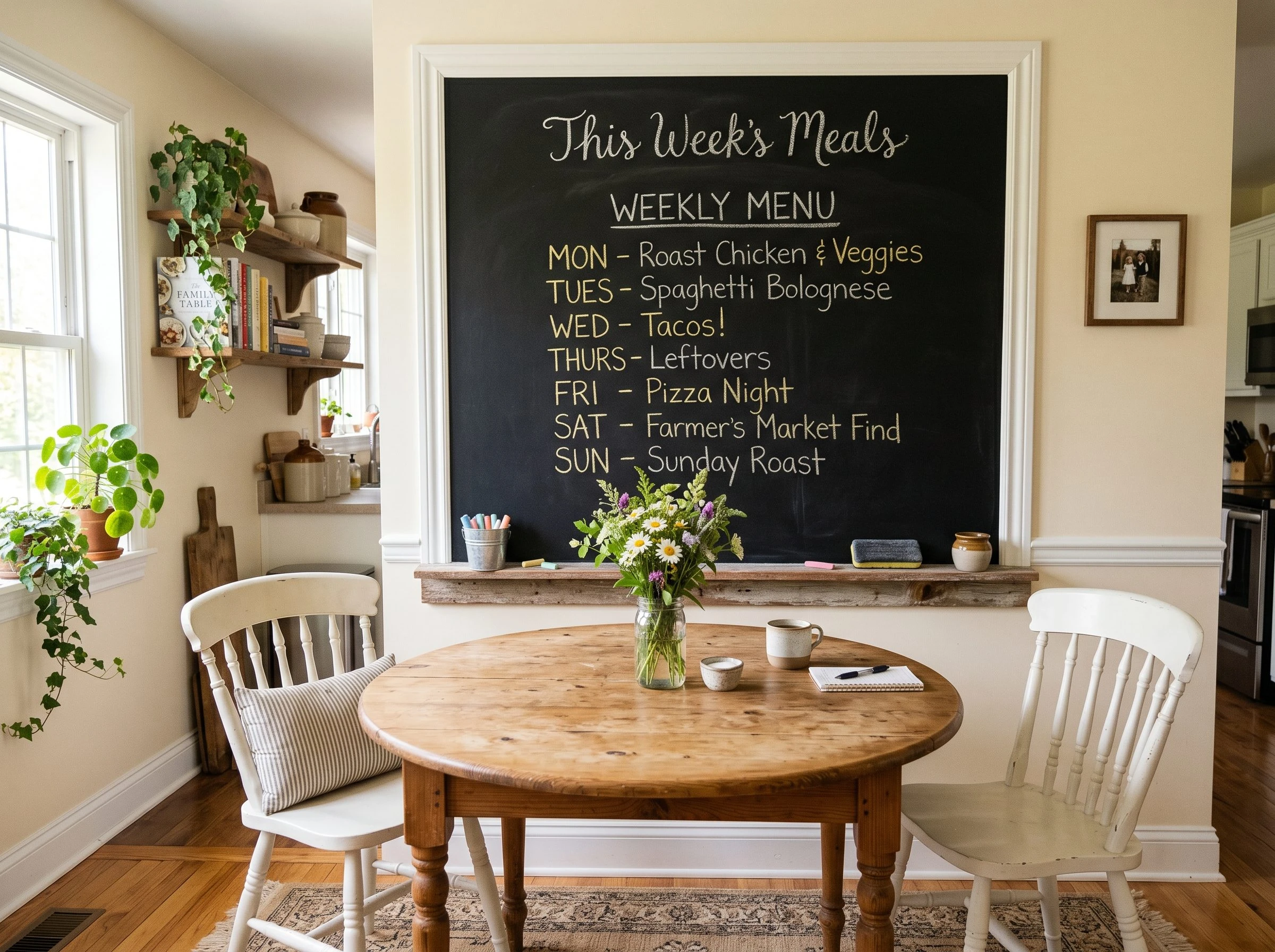
This one is specifically for informal dining rooms, eat-in kitchens, and spaces used by families with kids. A chalkboard wall sounds like a children’s bedroom idea but in a casual dining room it can actually be a genuinely fun, functional piece of wall decor that changes as often as you want it to. Use it to write the week’s menu, a favorite quote, a reminder for who’s cooking tonight, or just let it become a canvas that the whole family contributes to.
Chalkboard paint can be applied to any smooth wall surface after proper priming, and it’s available in matte black as well as several other dark tones including charcoal green, deep navy, and even a soft dark gray. The application process is simple: two to three coats with light sanding between each, followed by a curing period before use. Magnetic chalkboard paint adds an extra layer of functionality by turning the wall into a giant bulletin board for photos, kids’ artwork, and notes.
For the wall to feel designed rather than accidental, frame the chalkboard area with simple painted trim or wall molding to give it defined edges. An outlined rectangle or arch shape on the wall, created with molding strips, transforms the chalkboard section from something that looks unfinished into something that looks intentional. Add a small built-in or wall-mounted ledge below it to hold chalk and an eraser and the whole thing becomes a complete, functional feature.
Quick Tip: Season a new chalkboard wall before first use by rubbing the flat side of a piece of chalk over the entire surface, then erasing it. This prevents ghost images from the first thing you write permanently showing through.
14. Architectural Salvage and Vintage Frames as a Collection
Some of the most interesting dining room walls aren’t decorated with things bought specifically for them. They’re made up of pieces that were found, salvaged, or collected over time and arranged with care. Architectural salvage, which includes old window frames, ornate vintage mirrors, antique tin ceiling tiles, and decorative corbels, can create a wall composition that feels genuinely one-of-a-kind.
Vintage window frames are particularly beautiful on dining room walls. An old six-pane window frame in chippy white paint, hung flat against the wall above a sideboard, adds texture, depth, and a sense of history that no purchased wall art can replicate. Antique tin ceiling tiles mounted in a grid pattern create an industrial, collected quality. A grouping of ornate vintage frames, some with art inside and some deliberately left empty, reads as artistic and intentional when arranged with care.
The best sources for architectural salvage are habitat for humanity restore locations, architectural salvage stores (most mid-sized cities have at least one), estate sales, and antique markets. Prices vary but genuinely beautiful salvage pieces are often very affordable. The key to making it work as a wall composition is consistency in the color story even if the individual pieces are wildly different in style. Unifying them with the same spray paint or wax finish brings the collection together without erasing their individual character.
Designer Advice: When working with salvage pieces, less is more. Three to five really interesting pieces arranged thoughtfully beats fifteen pieces crammed together. Give each piece room to breathe.

Finding the Right Wall Idea for Your Dining Room
Here’s the honest truth: the best dining room wall is one that feels like yours. It doesn’t have to come from a design magazine or match anything you’ve pinned online. It just needs to do something, add warmth, create interest, hold objects you love, or bring a color you’re drawn to into the room.
Start with the wall you look at the most while seated at the table. That’s the one that deserves the most attention. From there, work outward. You don’t need to tackle all four walls at once, and you probably shouldn’t. Adding one element at a time gives you room to see what works and what you’d actually like to change before you’ve gone all in on something that doesn’t fit the way you expected.
Budget doesn’t have to be the limiting factor either. Some of the most striking dining rooms have gallery walls made up of thrift store finds, or shiplap panels installed over a weekend with a $30 tool rental. A can of paint in the right color costs less than a throw pillow and can change the entire energy of the room. The ideas in this article cover a range of price points intentionally, because good design isn’t about how much you spend. It’s about how thoughtful the choices are.
Pick one idea that genuinely excites you and start there. The walls will figure themselves out from that first decision forward.
Frequently Asked Questions
What is the most impactful wall decor idea for a dining room?
A large-scale piece of artwork or a bold paint color tends to have the highest impact for the cost. Both change the entire character of the room without requiring much in the way of installation or ongoing maintenance. If you want something even more dramatic, a single-wall wallpaper mural delivers an immersive effect that no other single decor decision can match.
How high should I hang art or decor in a dining room?
In a dining room, people spend a significant amount of time seated, so art should be hung slightly lower than you might in a living room or hallway. Aim for the center of the artwork to sit at roughly 57 to 60 inches from the floor. If the art hangs above a sideboard or buffet, make sure the bottom edge of the frame is about six to eight inches above the top of the furniture.
What wall decor works in a small dining room?
Mirrors are the most practical choice for small dining rooms because they reflect light and create the illusion of more space. A large mirror in an interesting frame does more for a small dining room than almost any other wall decor option. Beyond mirrors, a single large piece of art (rather than a cluster of smaller pieces) tends to read better in a small room because it doesn’t add visual clutter.
Can I do a gallery wall in a rental apartment dining room?
Absolutely. Command strips and picture-hanging adhesive strips have become strong enough to hold most frames without leaving permanent marks. For heavier pieces, small adhesive hooks can work. Another option is to lean frames on a picture rail or a floating shelf rather than hanging them directly on the wall, which avoids the nail issue entirely.
What colors work best for dining room walls?
Warm, saturated colors tend to work particularly well in dining rooms because this is often a room used in the evening under warm, lower lighting. Deep greens, rich navies, warm terracottas, and moody charcoals all look exceptional in dining rooms. If you prefer lighter walls, warm whites, soft creams, and blush tones keep the room feeling welcoming without going fully neutral.
How do I make a dining room wall look expensive on a budget?
The highest-impact, lowest-cost change you can make to a dining room wall is a fresh coat of paint in a confident, specific color. After that, a large vintage mirror from a thrift store, floating shelves styled with a few well-chosen objects, and framed art prints in wide-matted frames all read as expensive without requiring a big investment. The key is intentionality: fewer, more deliberate choices look more considered than a lot of random pieces.