Bathroom Towel Rack Ideas That Actually Make Your Space Look Better
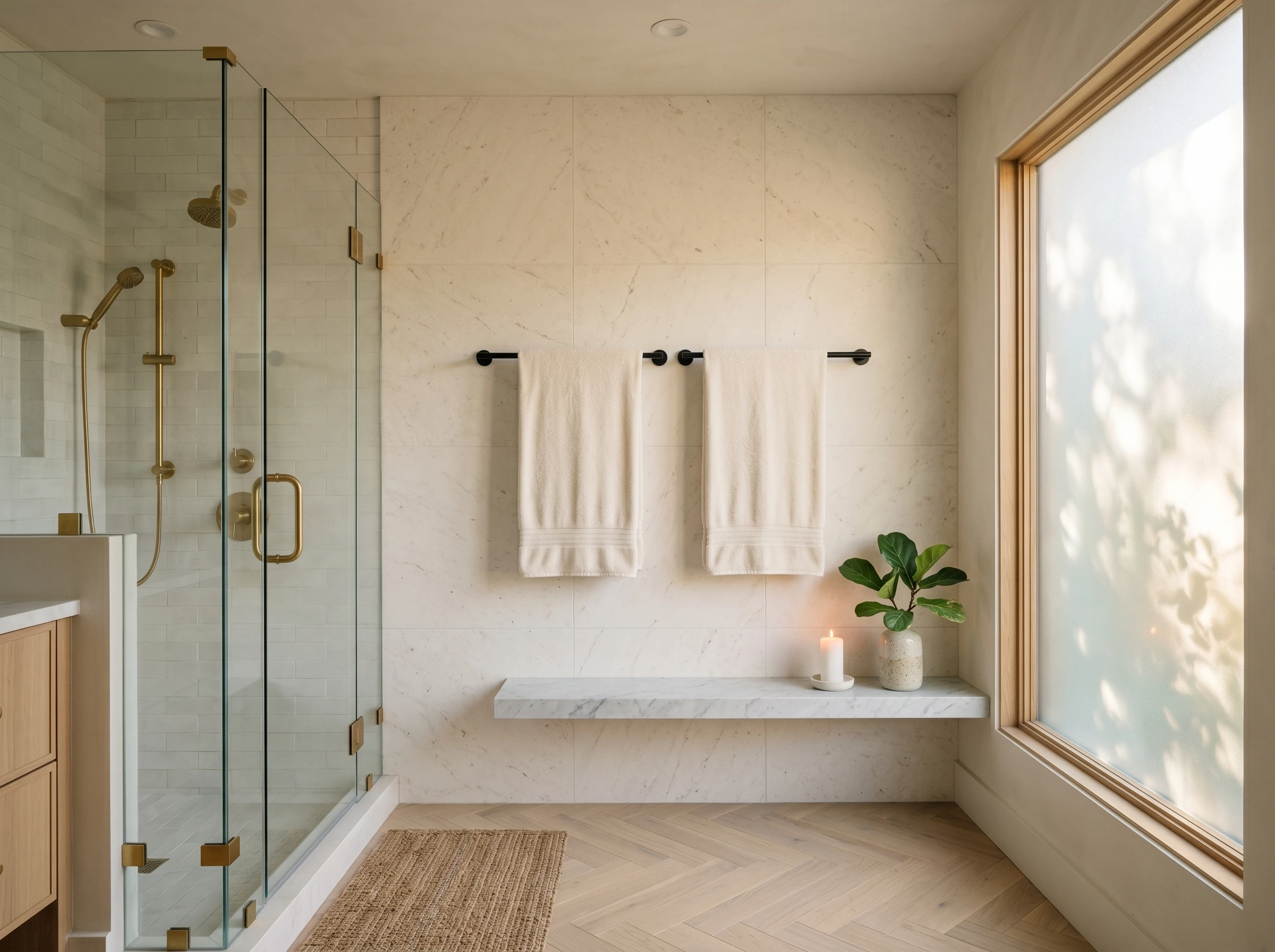
There is a specific kind of frustration that hits when you step out of the shower, reach for your towel, and find it bunched up on a bar that has been sliding off the wall for six months. Or maybe your towels are folded neatly enough, but they take up counter space you desperately need, or they are just hung over the back of the door in a way that makes your bathroom look messy no matter how clean it actually is. The towel rack is one of those details that most people do not think about until it is actively annoying them, and then they realize it has been annoying them for years.
Here is the thing though: the right towel rack can do a lot more than hold your towels. It can add warmth to a cold, clinical bathroom. It can free up precious wall space. It can act as a piece of decor on its own, the way a good light fixture or mirror does. And it can genuinely make your daily routine feel a little more put-together. Whether you are renting an apartment and cannot drill a single hole, remodeling a primary bath from scratch, or just trying to bring some order to a shared family bathroom that seems to explode with towels every morning, there is an option here that will actually work for your space.
This article covers twenty different towel rack approaches, organized not by style category but by the real-life problem each one solves. Each idea starts with a scenario you might recognize, then walks through exactly how to pull it off, including the materials, the placement, and the little details that make the difference between something that looks intentional and something that just looks like you bought a thing and stuck it on the wall.
1. The Classic Double Bar, Done Right
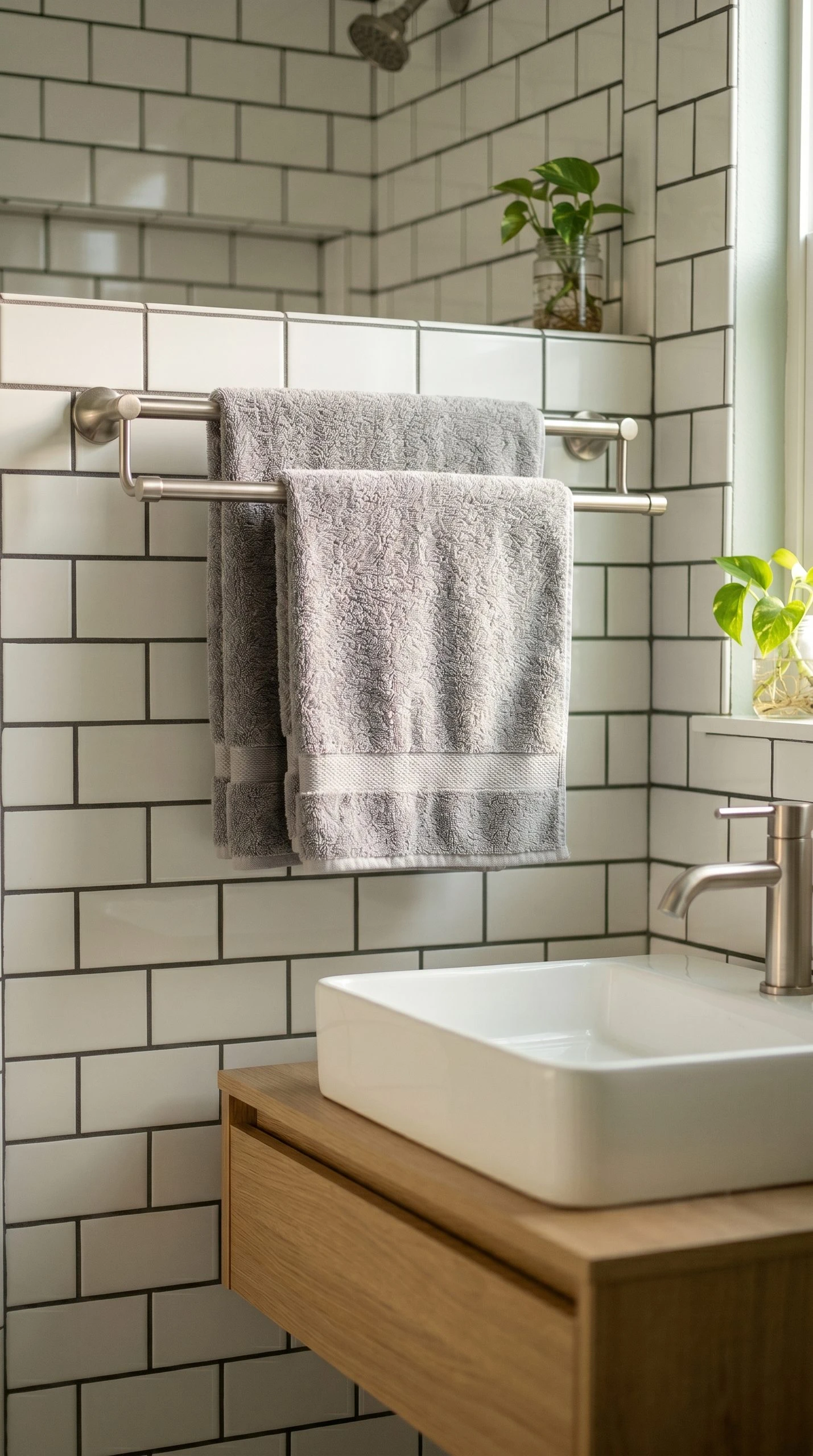
You know that bathroom that always looks polished even though it is not doing anything flashy? It usually has a double towel bar mounted at the right height, with two full-size bath towels hanging flat and evenly spaced. The secret is not the bar itself but the placement and the towels. A brushed nickel or matte black double bar mounted about 48 inches from the floor gives you room for two adult-size towels without them dragging on the ground. Stick with matching towels in a neutral or slightly earthy tone, fold them in thirds before hanging, and the whole setup looks intentional without any effort.
If your bathroom already has chrome fixtures, match the bar finish to those so everything feels like one decision instead of a collection of accidents. For walls with drywall, always anchor into studs or use heavy-duty drywall anchors rated for at least 50 pounds, because a bar that slowly pulls out of the wall is a slow-motion disaster.
Quick Tip: Mount the bar parallel to your vanity or tub edge, not just wherever the studs happen to be. Visual alignment matters more than you might think.
2. The Leaning Ladder for Renters Who Cannot Drill
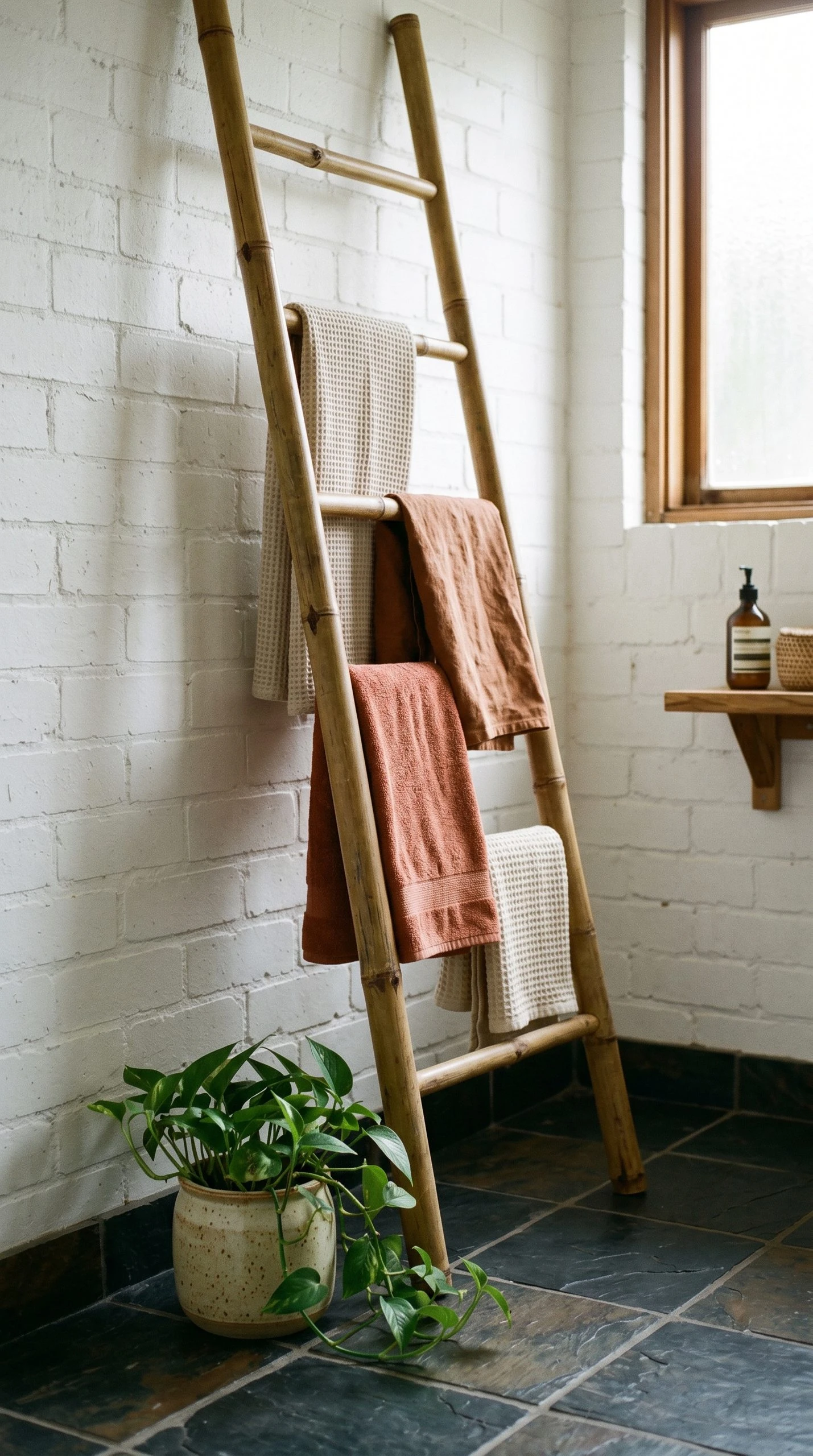
Picture a renter who moves into a new apartment and discovers the bathroom has exactly one small towel bar that wobbles when you touch it. Installing anything new is not an option. The leaning ladder is the answer here, and it is genuinely one of the most flexible and good-looking options available right now. A slim wooden or bamboo ladder, 5 to 6 feet tall, leans against the wall near the shower and holds multiple towels on its rungs without touching the wall at all.
The key is choosing a ladder with a narrow depth, ideally 3 to 4 inches, so it does not stick out far enough to become a tripping hazard. A light teak or oak finish reads much warmer than plain pine, and it pairs naturally with plants, woven baskets, and the kind of layered-texture bathroom that is all over design blogs right now. Budget options start around $40, while solid wood versions can run up to $300, but even the mid-range ones look expensive when styled right.
Quick Tip: Layer your towels by size on the ladder, largest at the bottom and hand towels near the top, for a hotel-shelf look that is practical and styled at the same time.
3. The Heated Towel Rail for Cold-Climate Bathrooms
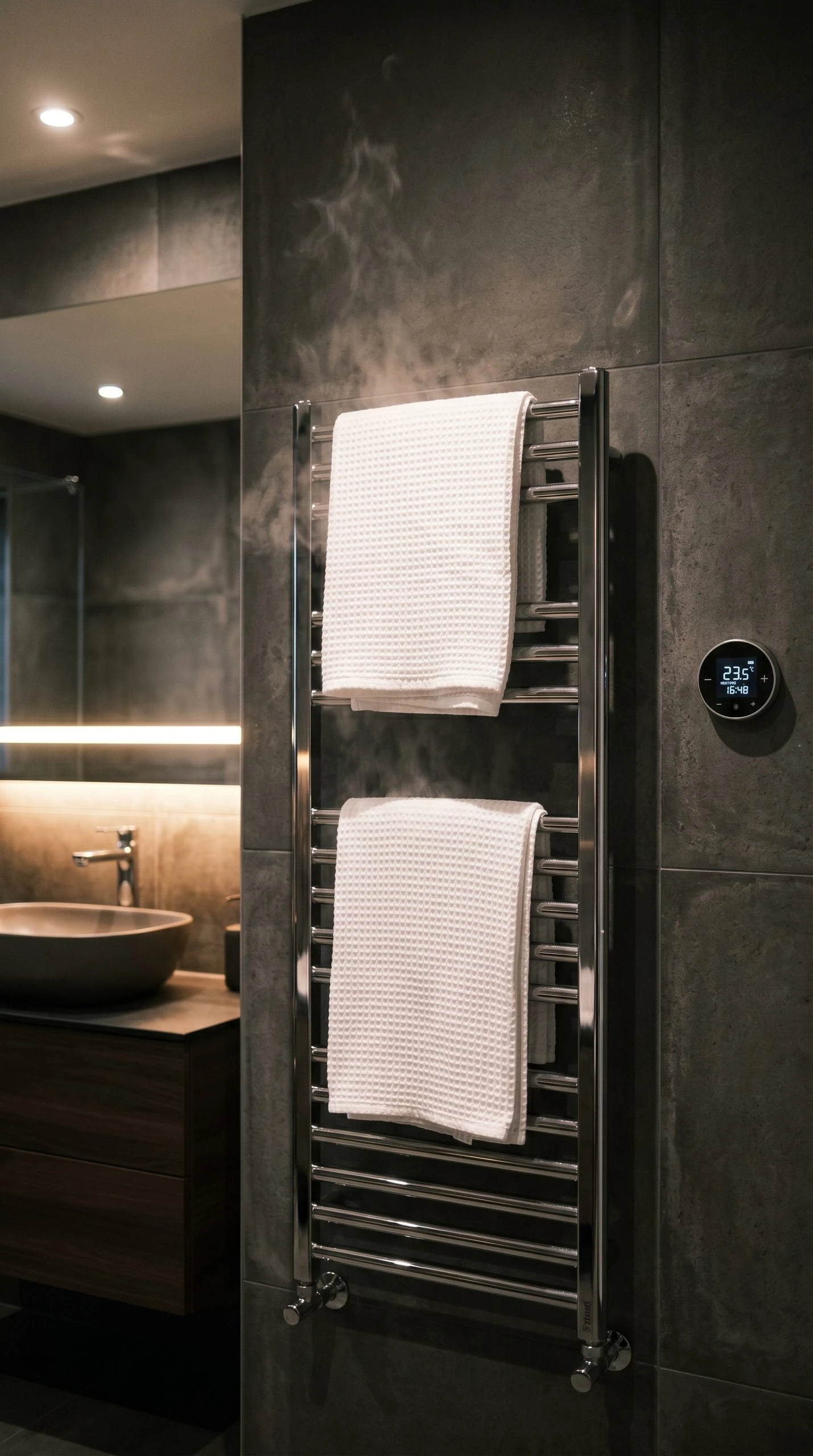
Anyone who has gotten out of a shower in January in a cold bathroom knows the specific misery of a cold, damp towel. A heated towel rail fixes this completely and also functions as a secondary heat source in smaller bathrooms. Electric heated rails are the easiest to install because they do not require any plumbing connections, just a nearby electrical outlet or hardwired connection. They come in wall-mounted vertical designs that take up almost no floor space, and in most bathrooms they can be installed between the vanity and the shower wall where a regular bar would go anyway.
The rails heat up in about 10 to 20 minutes and keep towels warm and dry between uses, which also extends how long towels stay fresh before needing a wash. Matte white and chrome are the most popular finishes, but brushed gold options have become widely available and look particularly good in bathrooms with warm-toned tile. Most electric models run between $150 and $400 depending on size and brand.
Quick Tip: Set a smart plug timer so the rail heats up 20 minutes before your usual shower time. You will never think about it again and always have a warm towel waiting.
4. Hooks on a Reclaimed Wood Board for Farmhouse Bathrooms
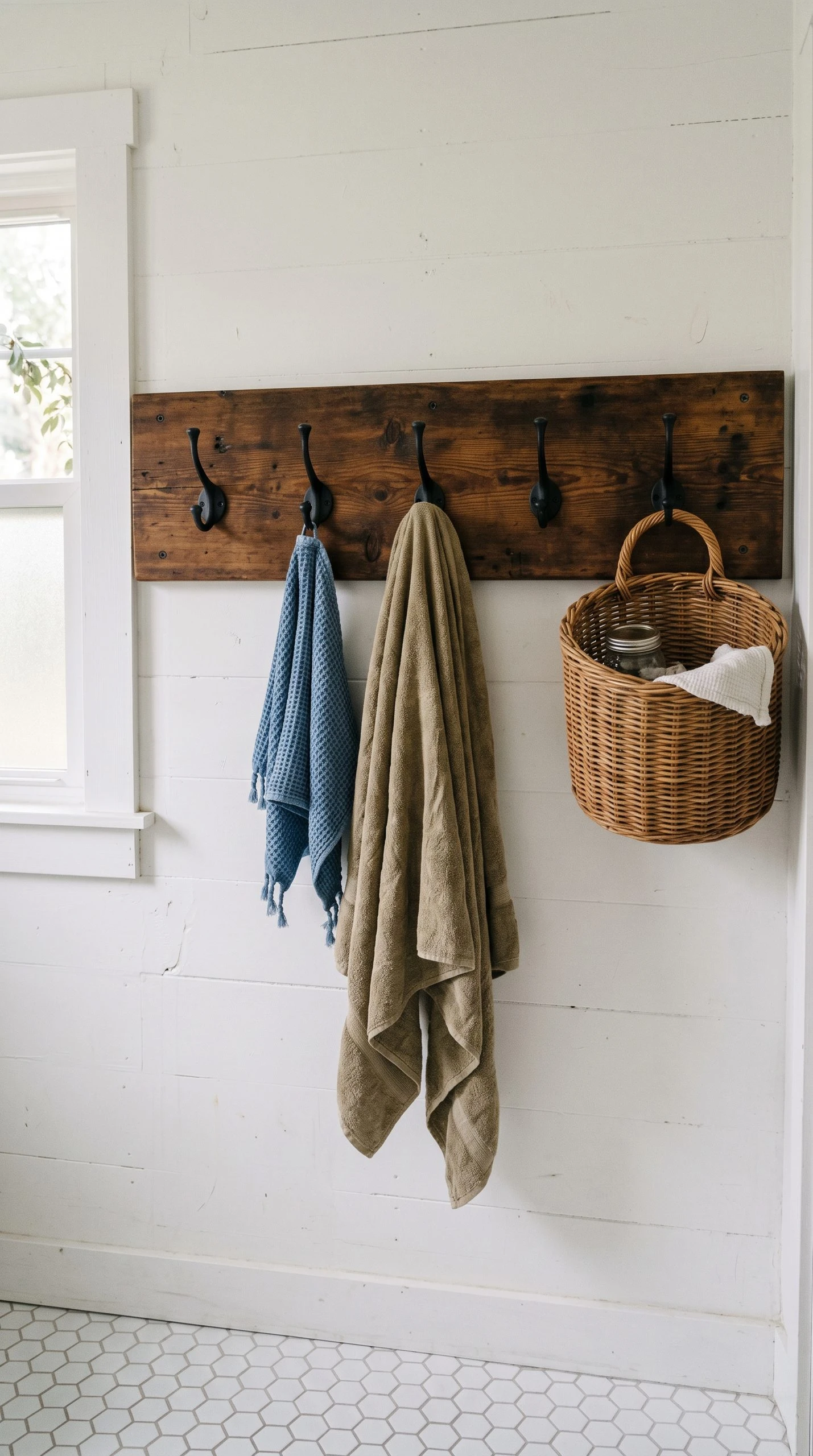
The bathroom that inspired this idea belongs to someone who spent years looking at sleek chrome bars and felt nothing, then saw a plank of old barn wood with three matte black hooks and knew immediately that was the answer. A reclaimed wood board, anywhere from 24 to 48 inches long, mounted horizontally on the wall with three to five matching hooks gives you a surface that works hard and looks like a design decision. The wood brings warmth and texture that no metal bar can replicate, and the hooks make it easy to hang towels, robes, a small basket, or whatever else ends up in your bathroom.
Sand the edges lightly so it does not splinter, apply a water-resistant sealant to protect it from steam, and use matching screws to attach the hooks before mounting the whole board as one unit. The total cost for a DIY version runs between $25 and $60 depending on whether you source the wood yourself or buy a pre-made board.
Quick Tip: Space your hooks at least 8 inches apart so towels have room to dry without bunching against each other and staying damp.
5. The Over-Door Rack for Doors That Never Get Used as Doors
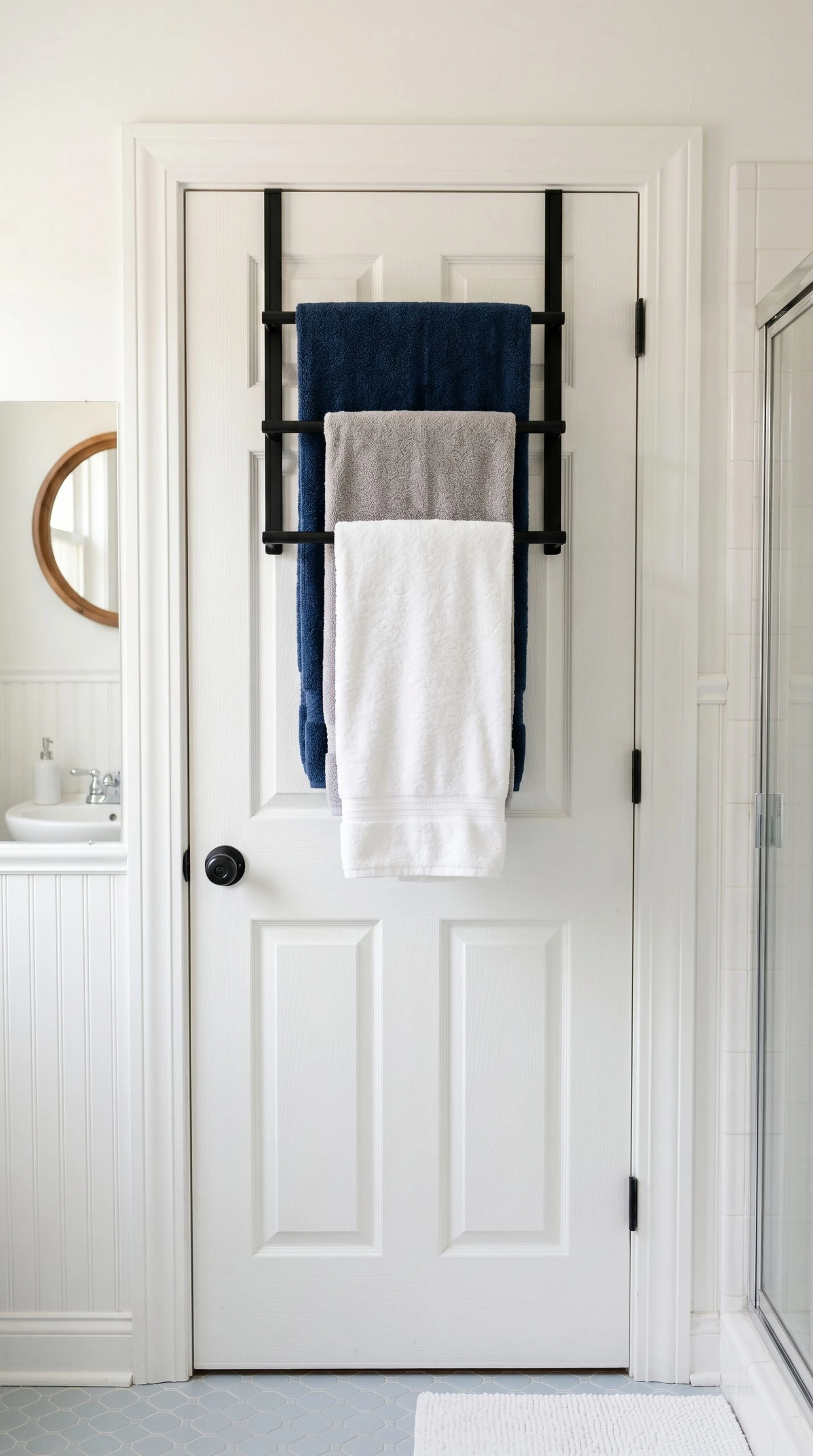
In many bathrooms, especially smaller ones, the back of the bathroom door faces a blank wall and gets used for nothing. An over-door towel rack turns that dead space into active storage without a single screw going into the wall. Look for an over-door design with multiple bars rather than just hooks, so towels hang flat and dry properly. Stainless steel or powder-coated steel options resist humidity better than untreated metal, and they are available in chrome, matte black, and brushed nickel to match most existing fixtures.
The best over-door racks have non-slip padding on the top hooks to protect the door finish and felt or rubber bottoms to prevent the door from rattling. These are also ideal for small kids’ bathrooms where multiple people need their own towel spots but wall space is limited. Most quality options are available for $30 to $70 and take about five minutes to install.
Quick Tip: Assign each hook or bar to a specific family member using color-coded towels. It eliminates the “which towel is mine” conversation permanently.
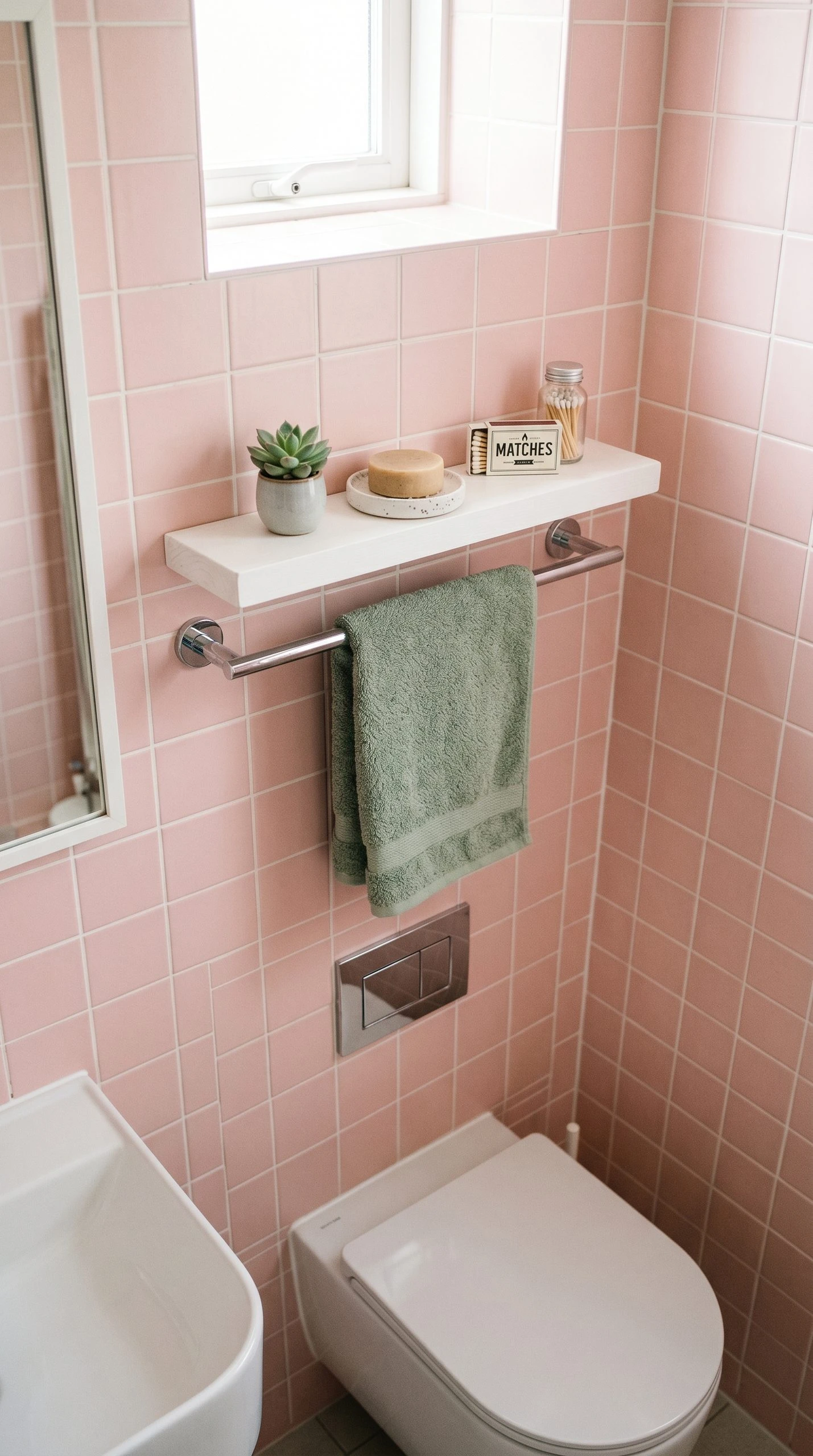
6. A Floating Shelf With a Bar Underneath for Micro Bathrooms
Some bathrooms are so small that every inch of wall feels like a negotiation. The shelf-plus-bar combination solves two problems at once: you get a bar for full-size towels hanging below the shelf, and the shelf itself becomes usable surface area for candles, a small plant, or a soap dish. These are available as single units, which means one installation and two functions. Powder-coated steel versions are the most durable in humid environments, but wood-fronted versions with a hidden metal frame look warmer and blend better with vanity cabinetry.
Mount this unit above the toilet tank if wall space is otherwise spoken for, at about 24 inches above the toilet lid, and you have turned an awkward dead zone into a purposeful spot. The bar underneath should hang at least 16 inches below the shelf so towels have room to fall open and dry without bunching against the wall.
Quick Tip: Keep the shelf items minimal, three objects maximum, so the space reads as styled rather than cluttered.
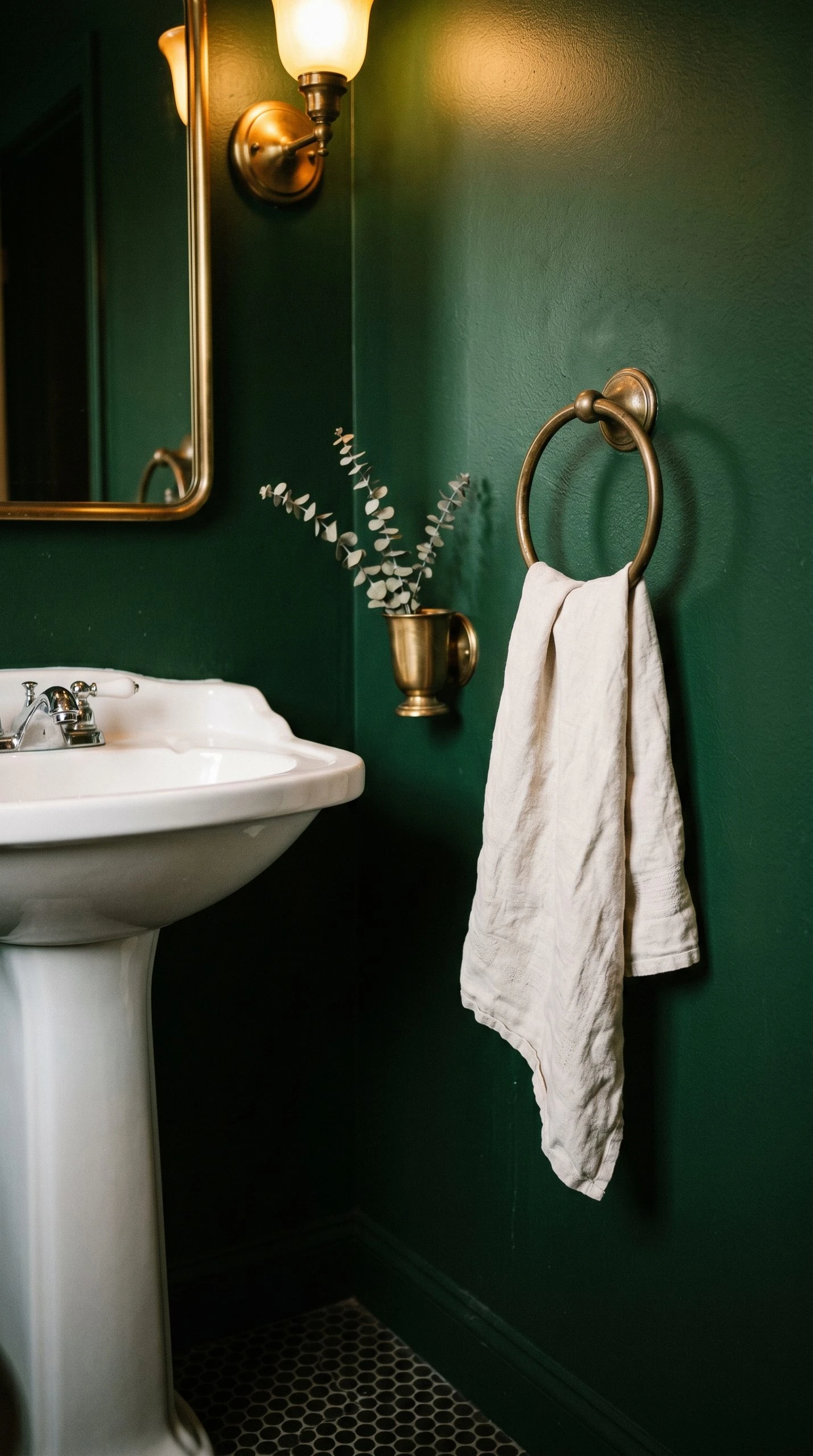
7. Brass Towel Ring for the Powder Room
Powder rooms get a disproportionate amount of attention from guests, which means every choice in there carries weight. A hand towel ring in brushed or antique brass, mounted next to the sink at roughly counter height, is one of the smallest changes that reads as the most deliberate. Rings work better than bars in powder rooms because you only need one hand towel at a time, and a ring shows it off properly without taking up wall space.
Unlacquered brass develops a patina over time that gets more interesting, not less, and it pairs well with warm neutrals, terracotta tile, and dark cabinetry. If the powder room is very small, choose a ring with a low-profile wall mount so the towel sits close to the wall without protruding much. Add a high-quality hand towel in a contrasting color and fold it loosely rather than flat for a casual, editorial look that photographs extremely well.
Quick Tip: Replace your hand towels seasonally in the powder room. It is the easiest room in the house to refresh and guests always notice.
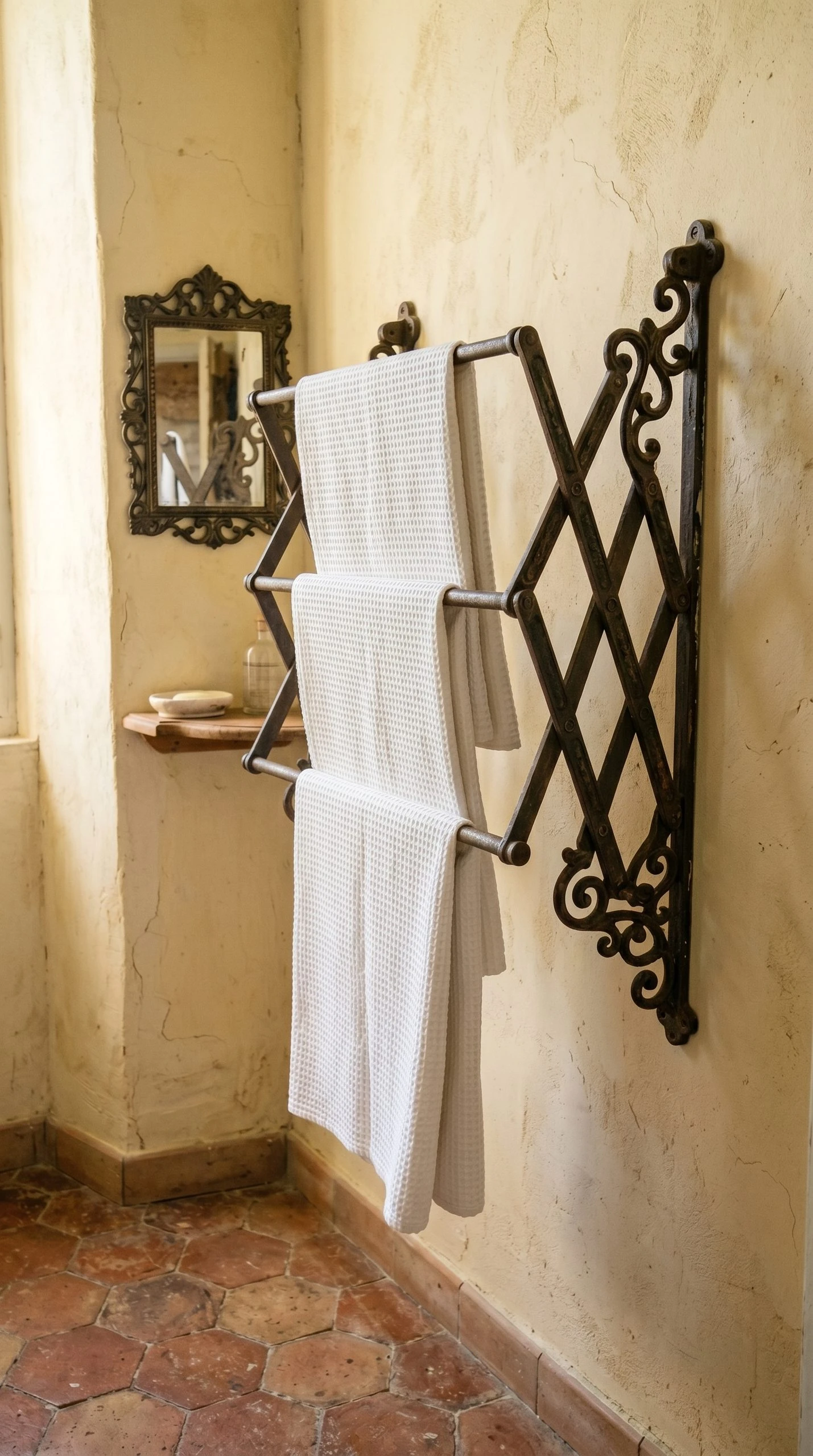
8. The Vintage Accordion Rack for an Eclectic Look
Accordion-style towel racks, the kind that fold flat against the wall and extend outward on hinged arms, had their first moment in early twentieth century European bathrooms and are having a very genuine second moment right now. They are compact when folded, practical when extended, and they read as a found or vintage piece even when purchased new. Cast iron or brass versions with an aged finish look at home in bathrooms that lean eclectic, Victorian, or maximalist.
Newer versions in matte black work well in more modern spaces too. Most accordion racks mount with just two screws and can hold three to five towels on their extended arms. The mechanical nature of them, the way they fold and unfold, is a small joy that a plain bar cannot offer. Look for them at antique stores or architectural salvage shops for the real thing, or search online for reproduction versions that start around $35.
Quick Tip: Extend the arms at slightly different lengths rather than fully extending all of them at once. It creates a layered look and makes the towels easier to grab individually.
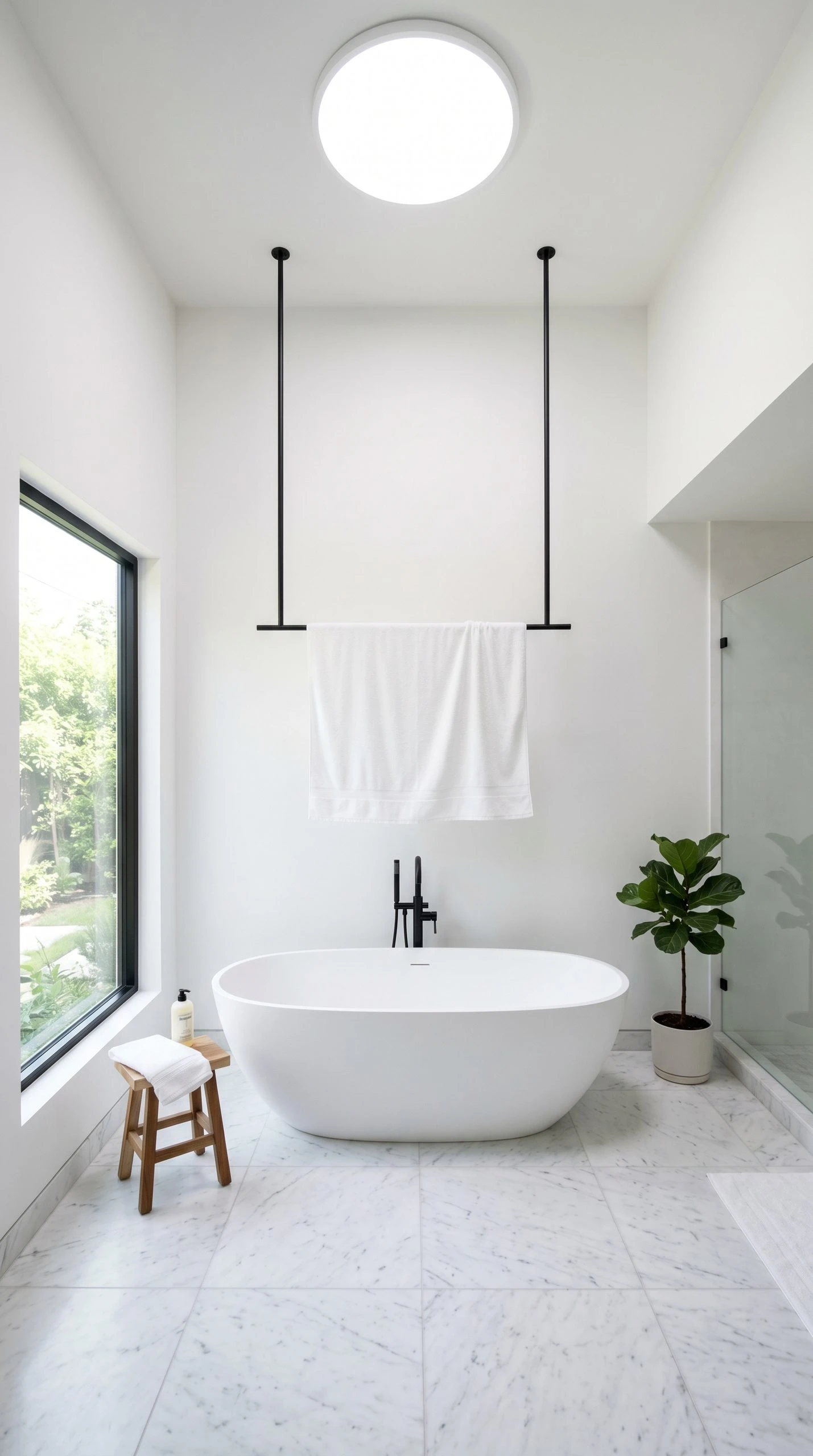
9. A Ceiling-Mounted Bar for Freestanding Tub Bathrooms
A freestanding soaking tub in the middle of a large bathroom is a beautiful thing to have and a logistical headache for towel storage, because you cannot put a wall-mounted bar close enough to be useful without it being on the wrong wall entirely. A ceiling-mounted towel bar, essentially a bar suspended from the ceiling on two rods directly above the end of the tub, solves this exactly. The towel is within reach when you step out, it is not on the floor, and the vertical lines of the mounting rods add an architectural detail to what can otherwise feel like empty ceiling space.
Black iron or brushed brass work particularly well for this application. Ceiling mounting requires locating joists and using appropriate hardware, so if this is not a confident DIY project, a plumber or carpenter can install it in under an hour. It is a less common solution so it always draws comments from guests who have not seen it before.
Quick Tip: Hang a single large bath sheet rather than two standard towels here. One high-quality piece looks more considered than two average ones.
10. Wicker Baskets Mounted as Open Shelves for a Boho Touch
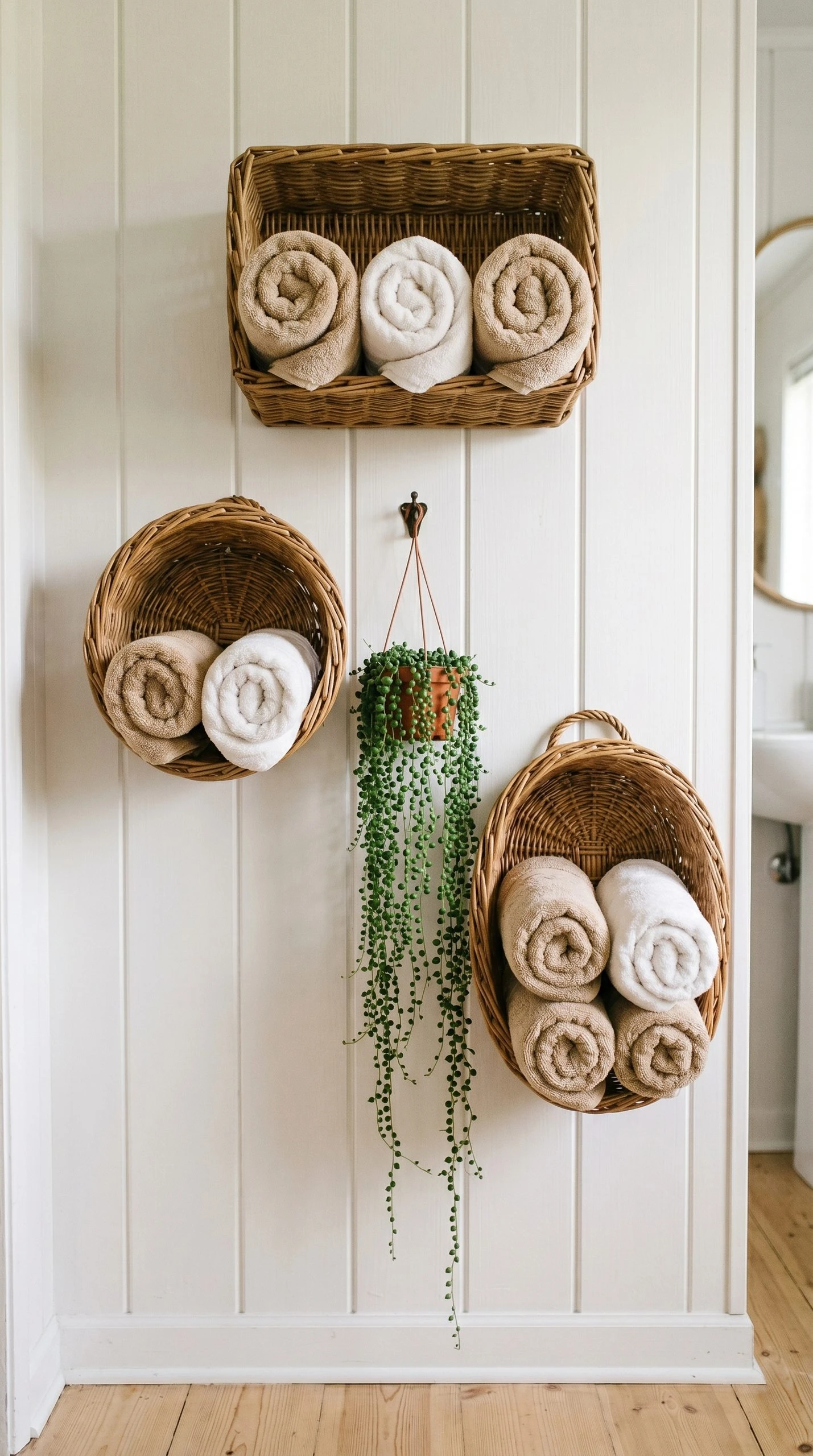
This one works best in bathrooms that already have texture happening, whether through woven mats, plants, or natural wood. Wicker or seagrass baskets, the kind with a flat back and a hanging loop, can be mounted directly to the wall and used to hold rolled towels. The rolled presentation is key because it shows off the color of the towel and makes the basket feel intentional rather than just stuffed. Use two or three baskets at varying heights to break up the visual monotony of a flat wall and create something that looks more like a display than a storage solution.
Seal the baskets with a light spray of water-resistant coating before mounting, because wicker and humidity are not natural friends over the long term. This approach works particularly well in bathrooms with white or light tile that needs warmth added without a full renovation.
Quick Tip: Roll towels tightly and stand them upright in the basket rather than folding them flat. They fit more and look tidier.
11. A Freestanding Floor Rack for Large Family Bathrooms
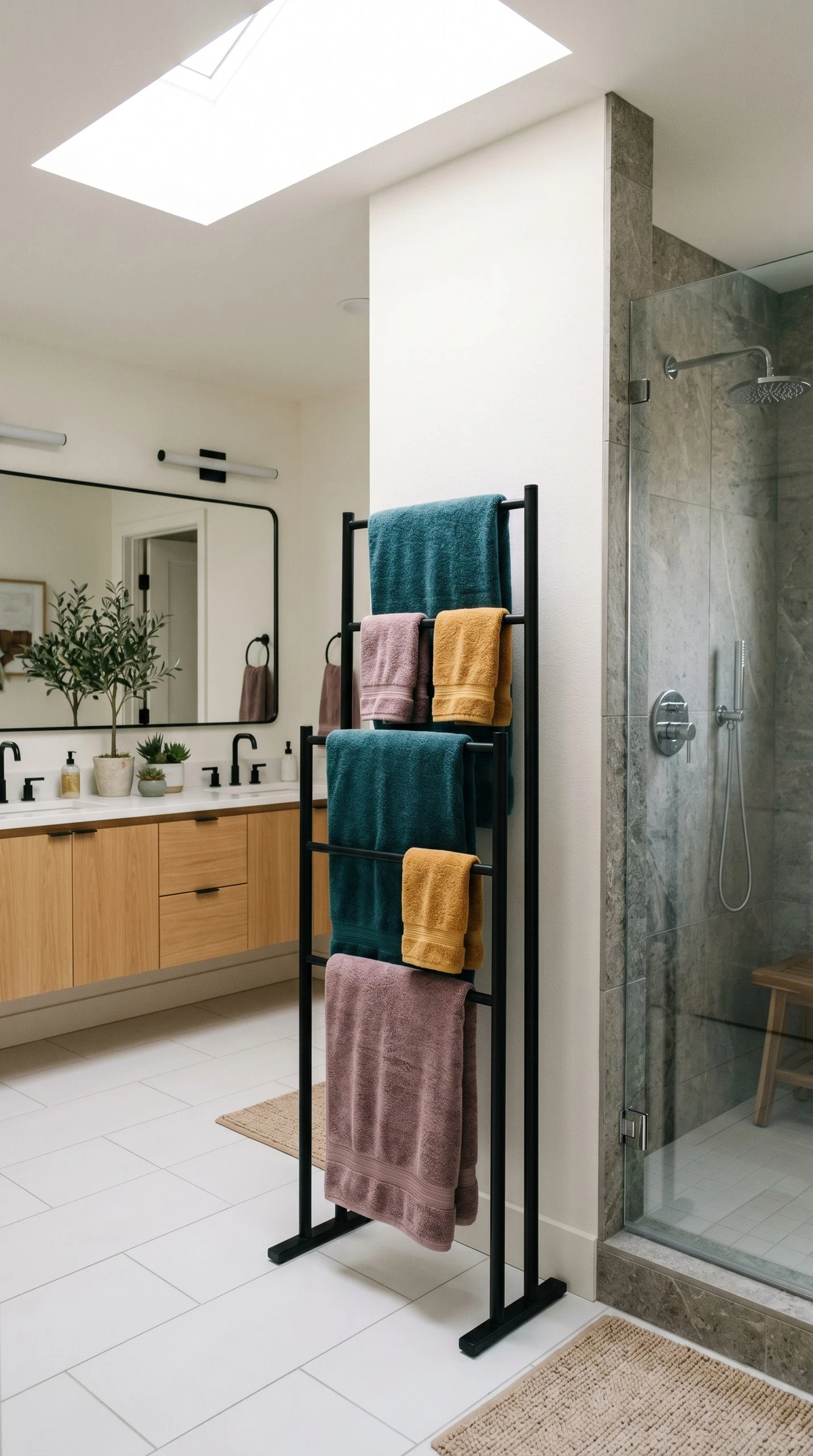
When four people share one bathroom and everyone needs a towel that is both accessible and actually drying between uses, a single wall bar is simply not enough surface area. A freestanding multi-bar floor rack, with three to five horizontal bars at different heights, gives every person their own designated space without requiring any wall installation at all. Position it near the shower or tub so towels are within reach without dripping across the floor, but far enough from the water source that they actually dry between uses.
Steel or powder-coated iron options are the most durable, and T-shaped or branching designs take up less floor space than square floor ladders while holding just as many towels. Look for rubber feet on the base so the rack does not slide on wet tile. Most quality freestanding racks are available for $50 to $150 and can be moved easily when you clean the floor.
Quick Tip: Add a small hook or bar on the side of the rack using a clip-on addition for robes. It keeps everything in one zone instead of scattered.
12. A Glass Shower Door Rail for a Streamlined Spa Look
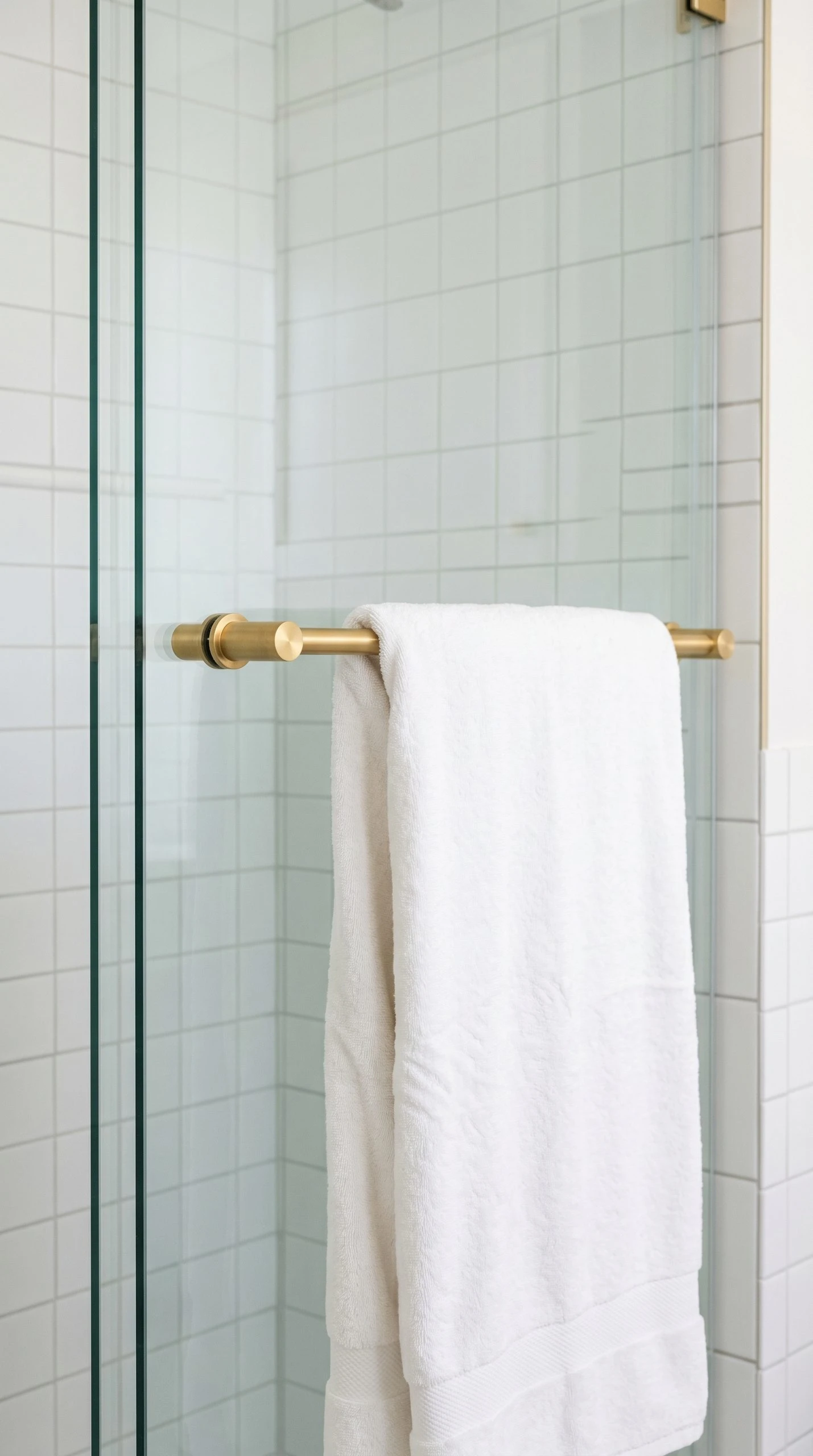
In a bathroom that prioritizes clean lines and minimal visual clutter, a rail mounted directly to the glass shower door or panel keeps the towel exactly where it needs to be without adding anything to the walls. These rails attach to the glass with specialized hardware that does not require drilling through the glass, using clamps or adhesive mounts rated for wet environments. The towel hangs on the outside of the door so it stays dry during the shower, and you can grab it the moment you step out.
This approach works best with a single bath sheet for one person or in a bathroom where the shower is used by one person at a time. Matte black hardware against clear glass looks particularly clean and modern, while polished chrome suits more traditional or neutral spaces. The whole installation often takes under 30 minutes and costs between $40 and $120 for the rail and hardware combined.
Quick Tip: Only use this for your daily towel, not for storage. Keeping the rail to one towel preserves the clean look that makes it worth doing in the first place.
13. A Leather Strap Towel Holder for a Modern Industrial Feel
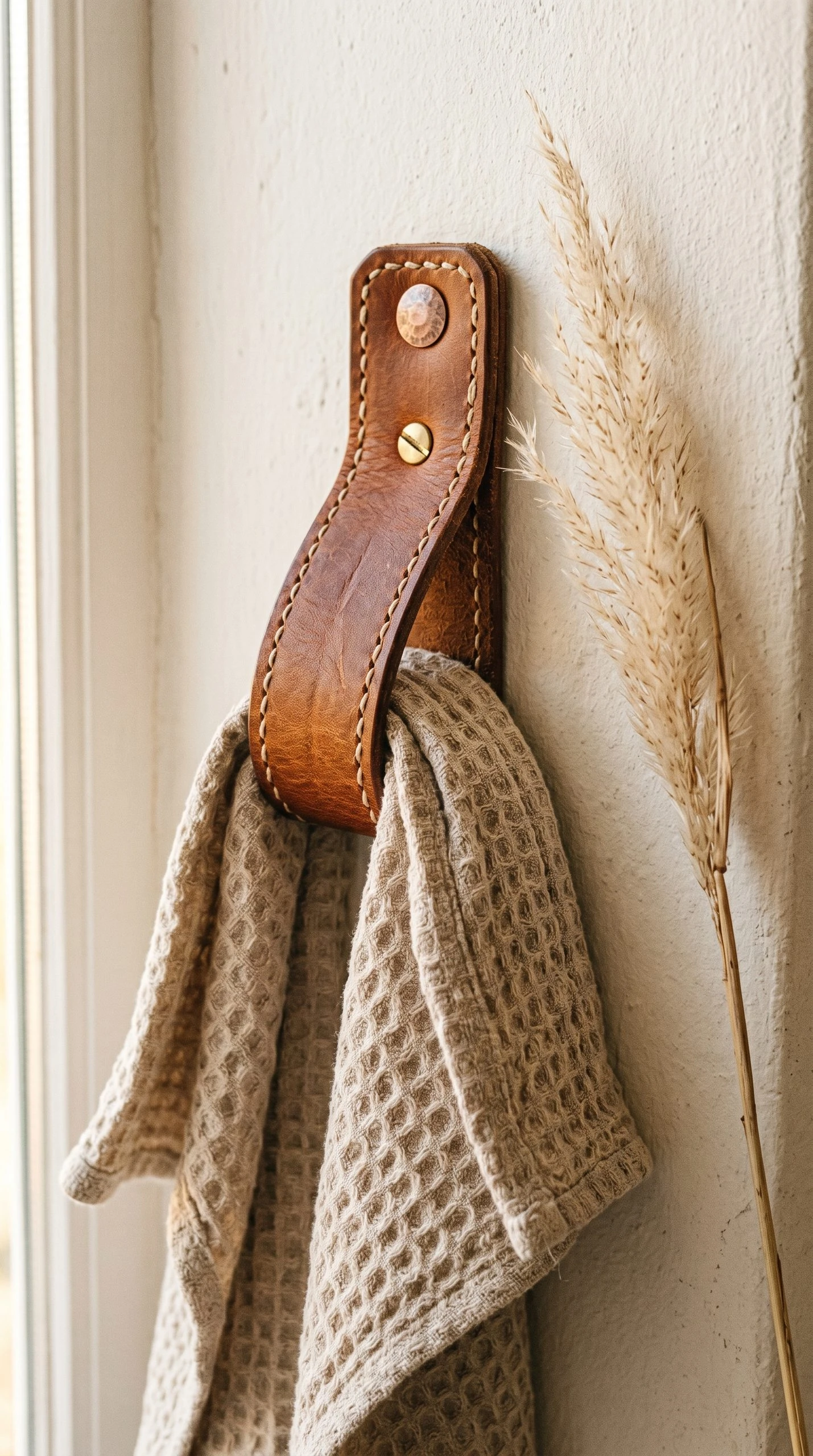
Someone designed this and it seemed like it would not work, and then it worked immediately. A leather strap, folded and riveted into a loop, mounted to the wall with a single screw or a small wooden block, holds a folded hand towel in a way that looks like something from an expensive boutique hotel. The leather softens the hard edges of tile and metal fixtures and brings a warmth that feels genuinely different from every other option on this list. Vegetable-tanned leather develops a patina with use and moisture, which makes it look better over time rather than worse.
These are available from small makers on platforms like Etsy for around $30 to $80, or they can be made with two strips of leather, a metal rivet, a small drill, and an afternoon. They work best as a single hand towel display next to the sink rather than as a primary bath towel holder, because the scale of most leather straps suits smaller towels.
Quick Tip: Condition the leather every few months with a natural leather balm to prevent cracking from repeated humidity exposure.
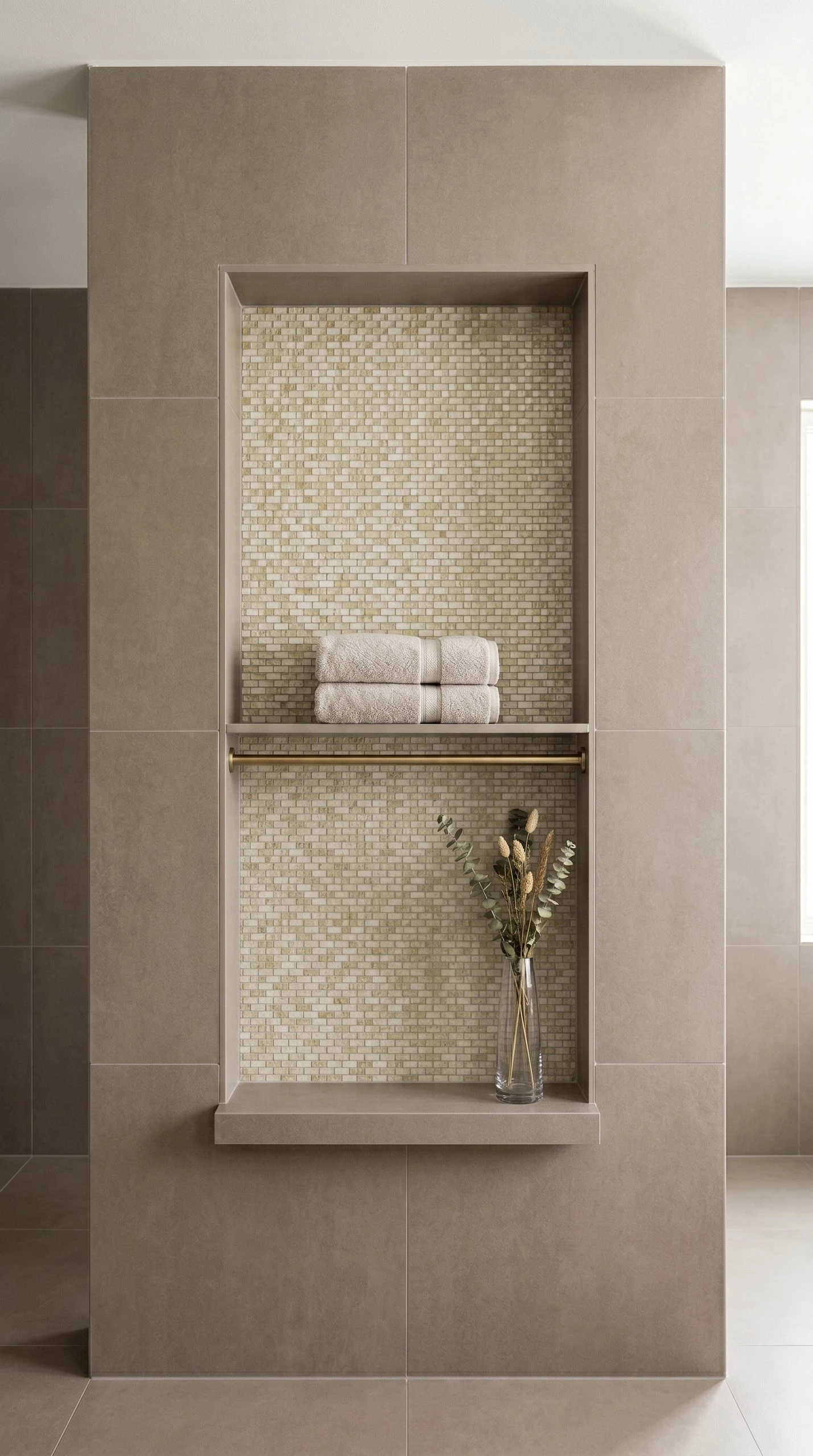
14. A Built-In Niche With a Towel Bar for New Construction or Remodels
If you are building a new bathroom or in the middle of a full tile job, a recessed niche with a built-in towel bar at the bottom is worth planning from the beginning. The niche sits inside the wall cavity between studs, projects nothing into the room, and can hold folded towels on the shelf area while the bar holds hanging towels below. It reads as a completely integrated design feature rather than a separate accessory and requires zero wall space beyond what is already there.
Tile the niche to match the surrounding wall for a flush look, or use a contrasting tile inside for a defined accent. The bar itself can be a standard curtain rod cut to size, a plumbing pipe, or a purpose-made niche bar depending on the look you want. This is one of those additions that costs relatively little to include during a remodel but would cost significantly more to add after the walls are tiled.
Quick Tip: Plan the niche width to fit your folded towels exactly with a little breathing room on each side. Measuring your folded towels before setting the niche dimensions is a step most people skip and then regret.
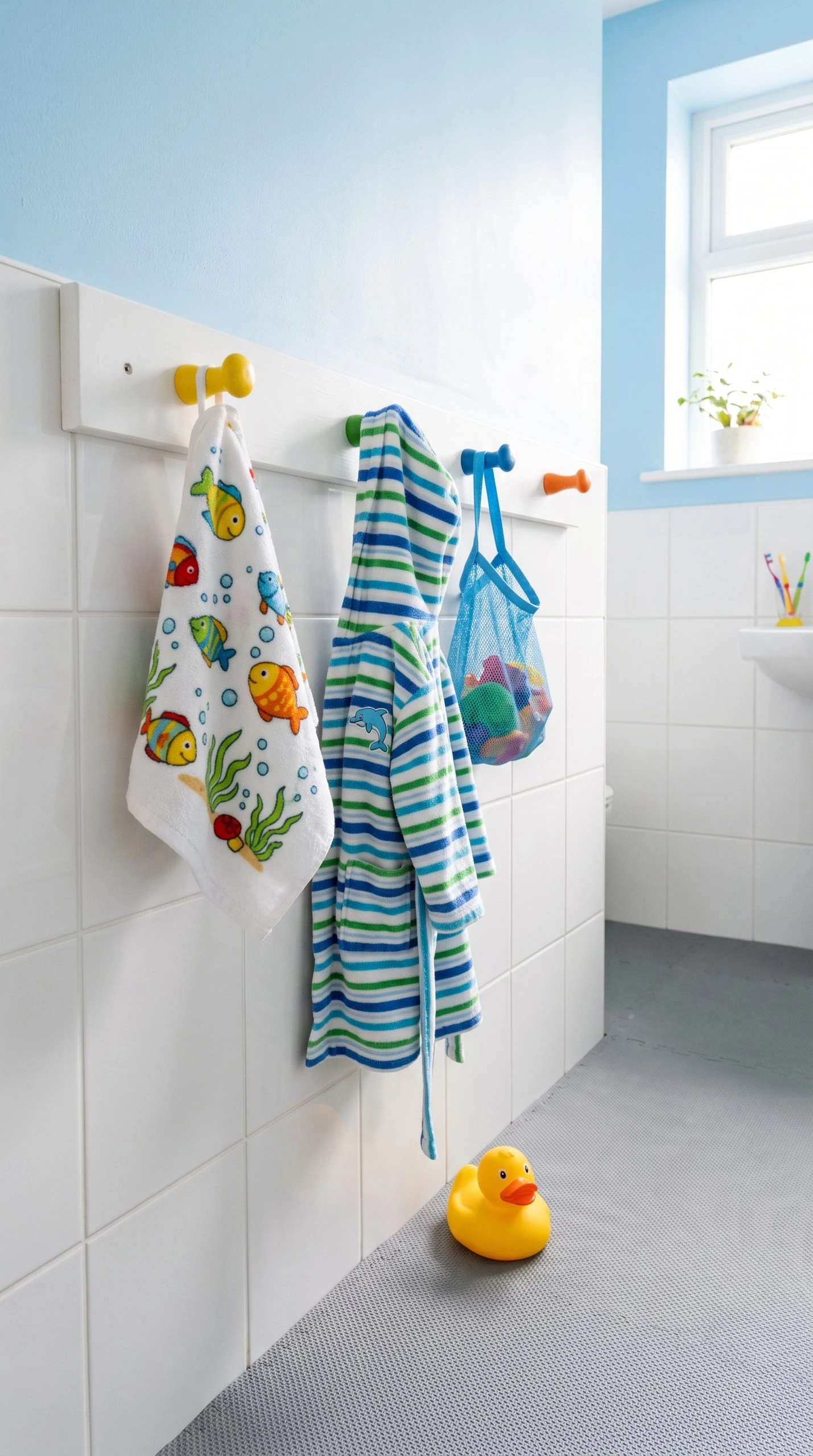
15. A Peg Rail for a Shared Kids’ Bathroom
Peg rails belong in mudrooms and entryways, and also in kids’ bathrooms where ease of use matters more than aesthetics. A painted wood peg rail, mounted at a height kids can actually reach without stretching, with pegs spaced 6 to 8 inches apart, makes it effortless for children to hang their own towels after a bath. Paint the rail in a color that matches the room, or leave it natural white and paint each peg a different color to assign them to different kids without any confusion.
Shaker-style peg rails are the most traditional and work with almost any bathroom style, while tapered modern pegs look better in contemporary spaces. The rail should be mounted into studs because kids will inevitably pull on it, and the hardware needs to take the force of an excited seven-year-old without giving way. A complete rail for a 36-inch section costs around $30 to $60 and takes under an hour to install.
Quick Tip: Mount a second row of pegs near the floor for small kids, then remove it and patch the holes when they outgrow it. The kids can reach their own towels and you maintain your sanity.
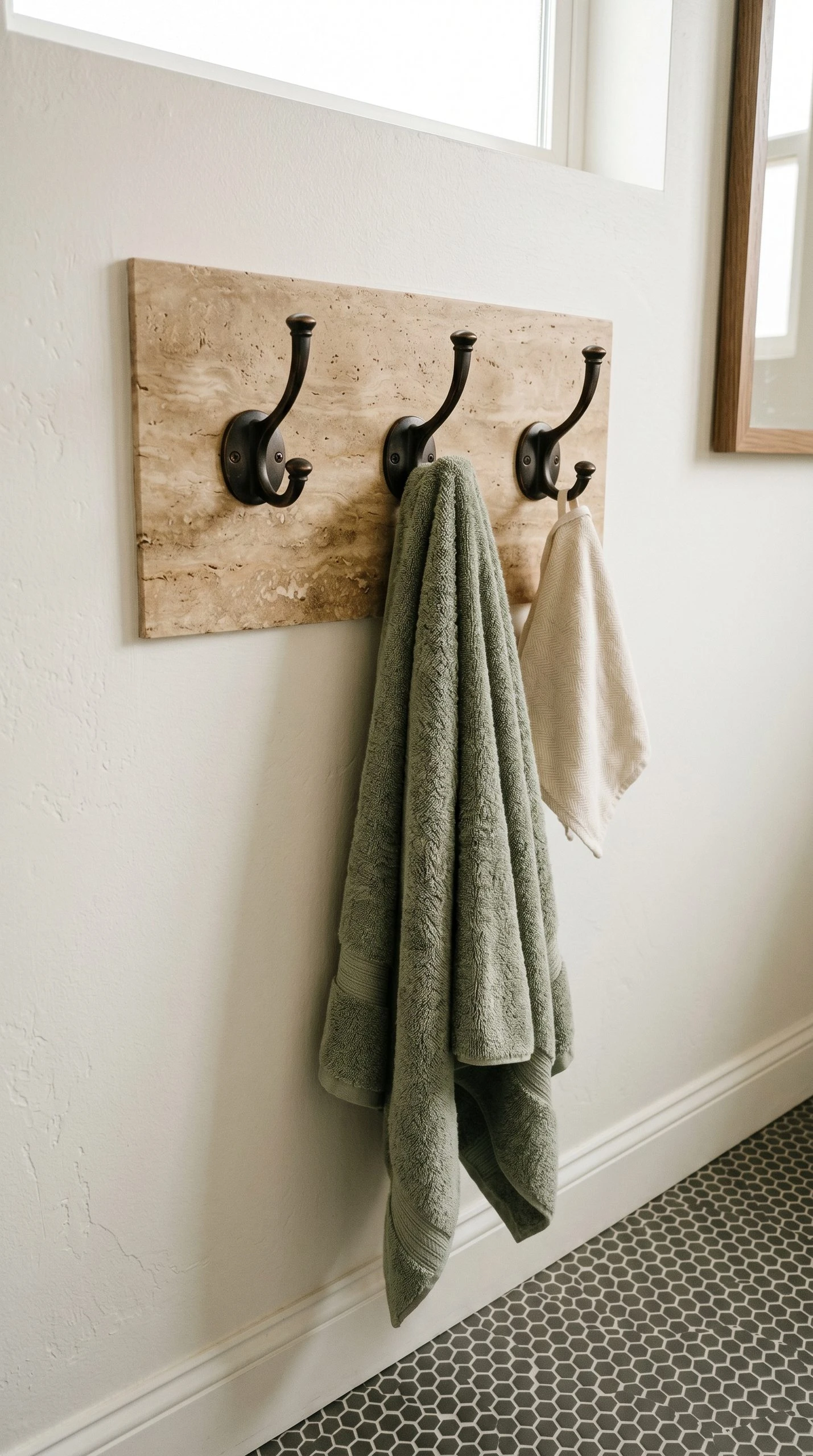
16. Decorative Bronze Hooks on Stone for a Spa-Inspired Bathroom
The specific pleasure of a spa bathroom comes from the feeling that every material was chosen with purpose, and nothing communicates that more directly than a set of beautiful hardware against natural stone. Bronze or oil-rubbed brass hooks, mounted on a slab of travertine, slate, or marble tile, look like something from a high-end resort and are completely achievable in a home bathroom. The tile acts as a backplate that protects the wall and creates a defined zone for the hooks without requiring a shelf.
Use three hooks spaced evenly on a piece of tile that is 24 to 36 inches wide, grout the tile to the wall, and mount the hooks through it with the appropriate hardware for your wall type. The overall look is finished, intentional, and far more interesting than a standard bar even when the hooks themselves are simple in design.
Quick Tip: Choose a tile for the backplate that picks up a secondary color in your floor or shower tile. It makes the whole room feel more cohesive without any extra effort.
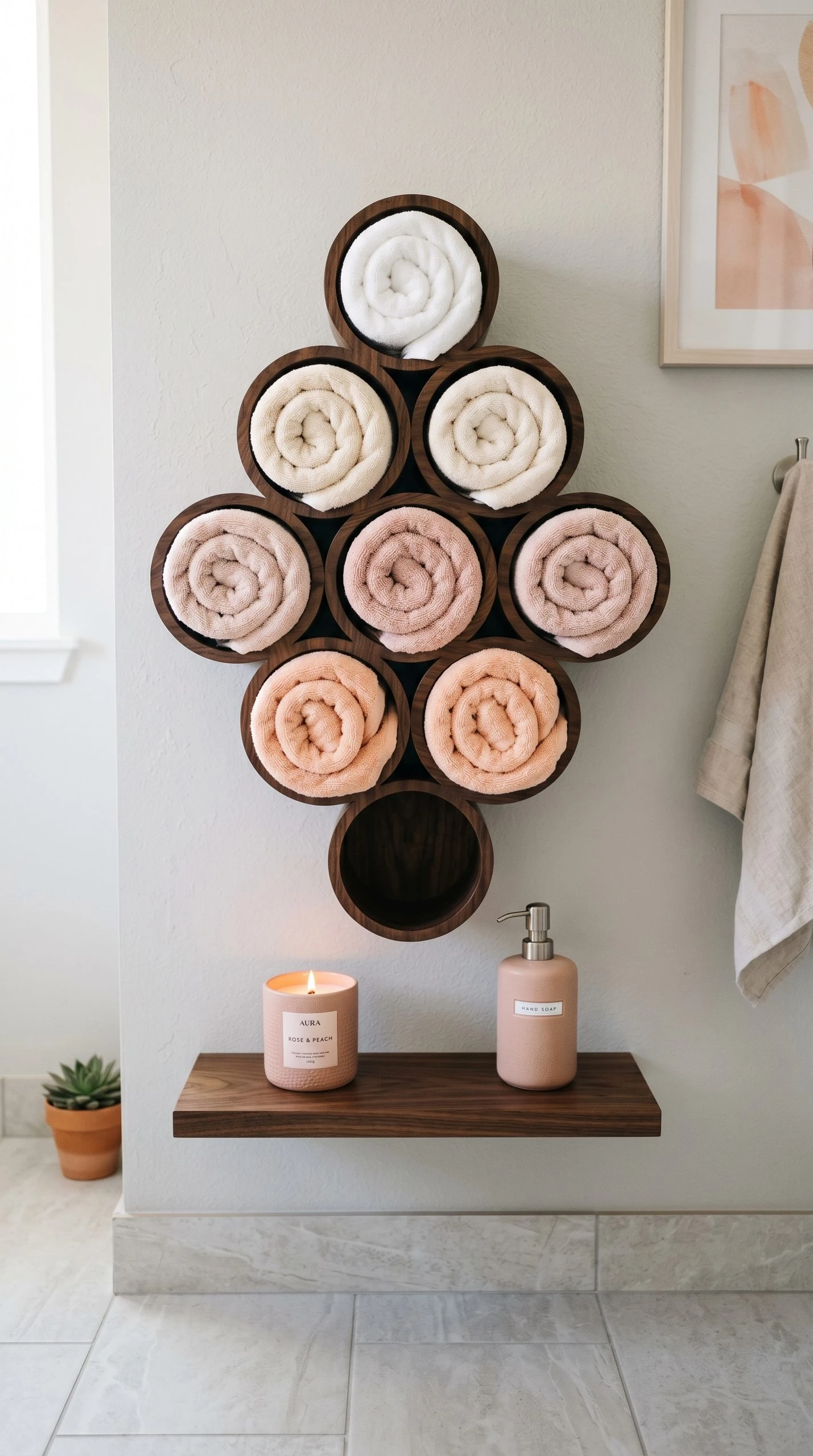
17. A Repurposed Wine Rack for Rolled Towels
The first time you see rolled towels stored in a wine rack, it feels slightly absurd, and then you realize it is genuinely clever. A wall-mounted wine rack, or even a small freestanding countertop version, holds rolled towels in exactly the same compartments that would hold wine bottles, and the cylindrical shape suits both perfectly. The presentation is casual, accessible, and adds a layer of texture and warmth that a flat bar cannot offer. Wooden wine racks in a dark stain or natural finish work best in bathrooms that have wood accents elsewhere.
Metal grid-style wine racks work in more industrial or modern spaces. Roll the towels tightly and tuck them in with the center facing outward so the spiral is visible. This works best for guest towels or extra towels rather than daily use, because pulling a tightly rolled towel out of a compartment first thing in the morning is not quite as quick as grabbing one off a bar.
Quick Tip: Color-coordinate your rolled towels so the visible ends create a pattern in the rack. It takes two seconds when you fold laundry and looks like a styled photo.
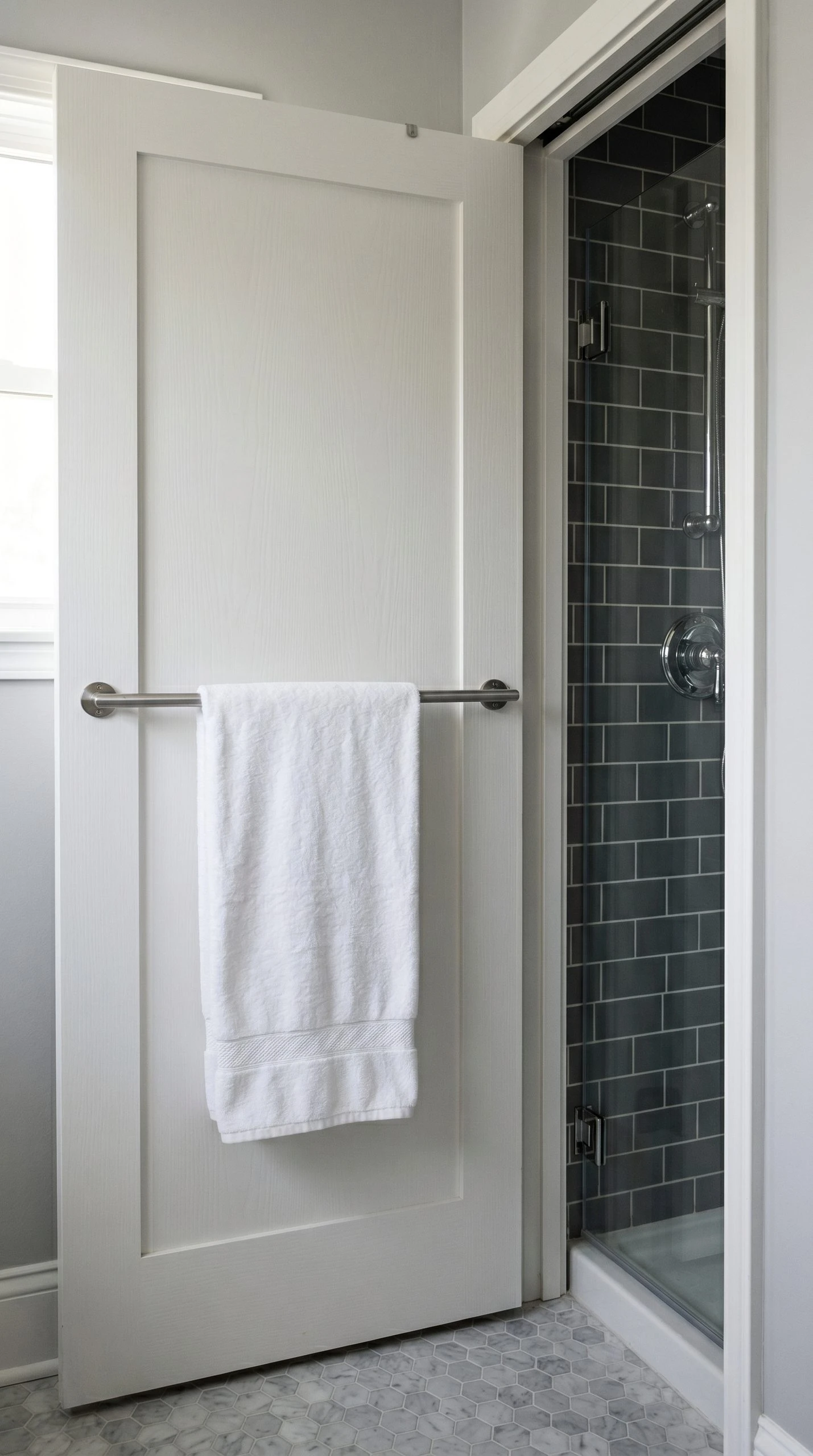
18. A Sliding Pocket Door Bar for Ultra-Tight Spaces
Most people never consider the outer surface of a pocket door as usable space, but it is one of the few truly underused surfaces in any bathroom. Mounting a slim towel bar on a bracket system that attaches to the exposed face of a sliding pocket door adds towel storage without touching a single wall. The bar slides with the door, which is actually useful because you can position it wherever is most convenient. This works best with a door that slides mostly open during bathroom use, leaving the mounted bar accessible near the shower.
Use hardware designed for sliding doors, which accounts for the slight flex in the door panel and does not interfere with the sliding mechanism. The bar should be lightweight and slim so it does not add significant weight to the door. This is a genuine space-saving trick in bathrooms where every wall is already claimed.
Quick Tip: Use this for a single hand towel only. A full bath towel is too heavy for most pocket door installations and the weight can affect how smoothly the door slides over time.
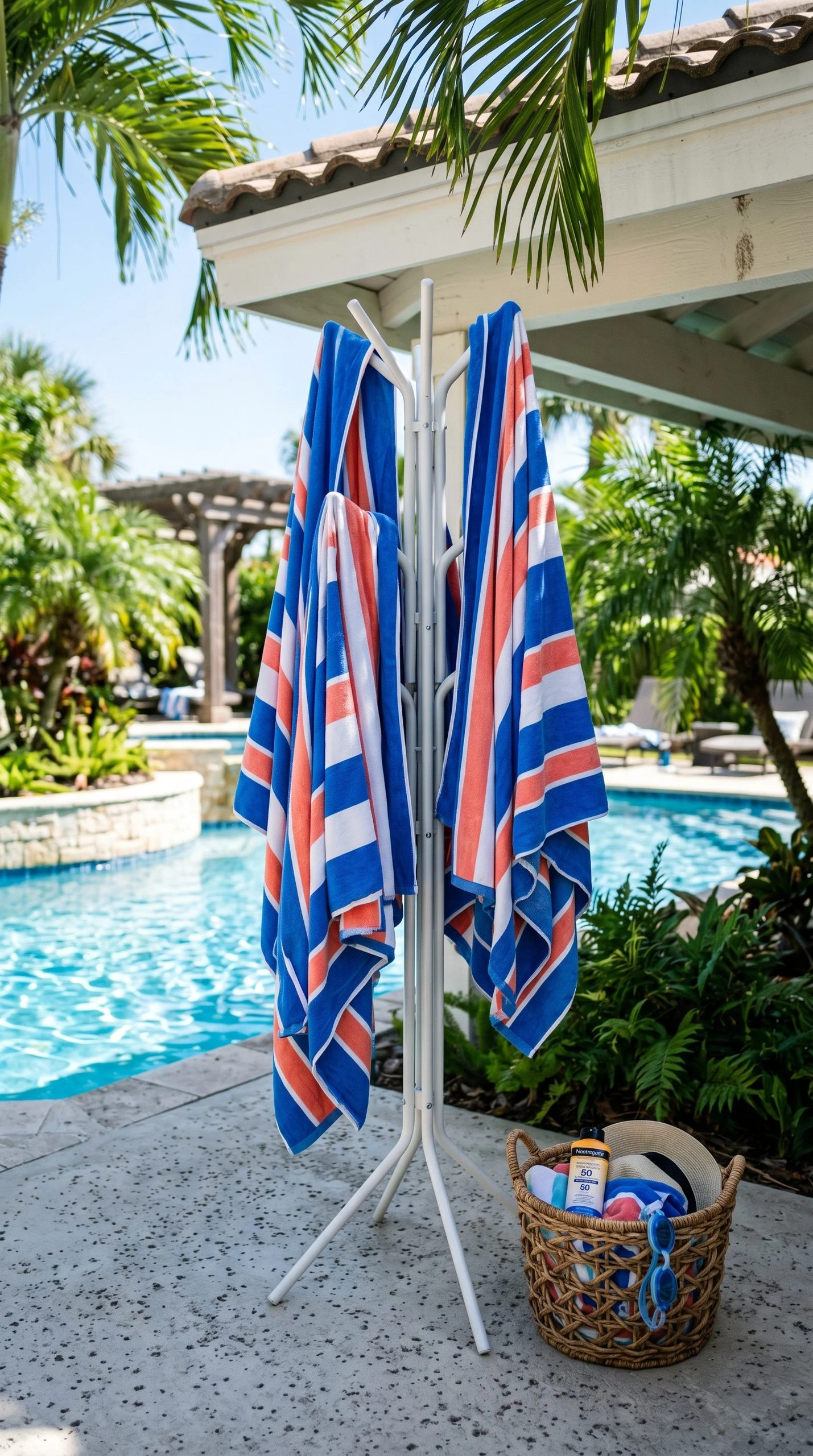
19. A Multi-Tiered Standing Rack for Pool and Beach Homes
Beach houses and pool homes have a towel problem that regular bathrooms do not: multiple people coming in from outside with wet, sandy towels that need to air out somewhere before they go in the wash. A freestanding multi-tiered outdoor-rated rack, with arms extending from a central pole at several heights, can hold six to ten towels at once and is designed for exactly this purpose. Powder-coated steel or aluminum versions resist salt air and moisture far better than untreated metal or unsealed wood.
Place it in a mudroom, on a covered porch, or in a large bathroom adjacent to the pool entrance so towels never end up on the floor. The branching arm design allows airflow around each towel so they actually dry between uses rather than sitting damp. These are also available in wall-mounted versions for smaller spaces, with fold-flat arms that press against the wall when not in use.
Quick Tip: Mount a basket or tray at the base of the rack for goggles, flip-flops, and sunscreen. Everything pool-related ends up in one zone and does not spread through the house.
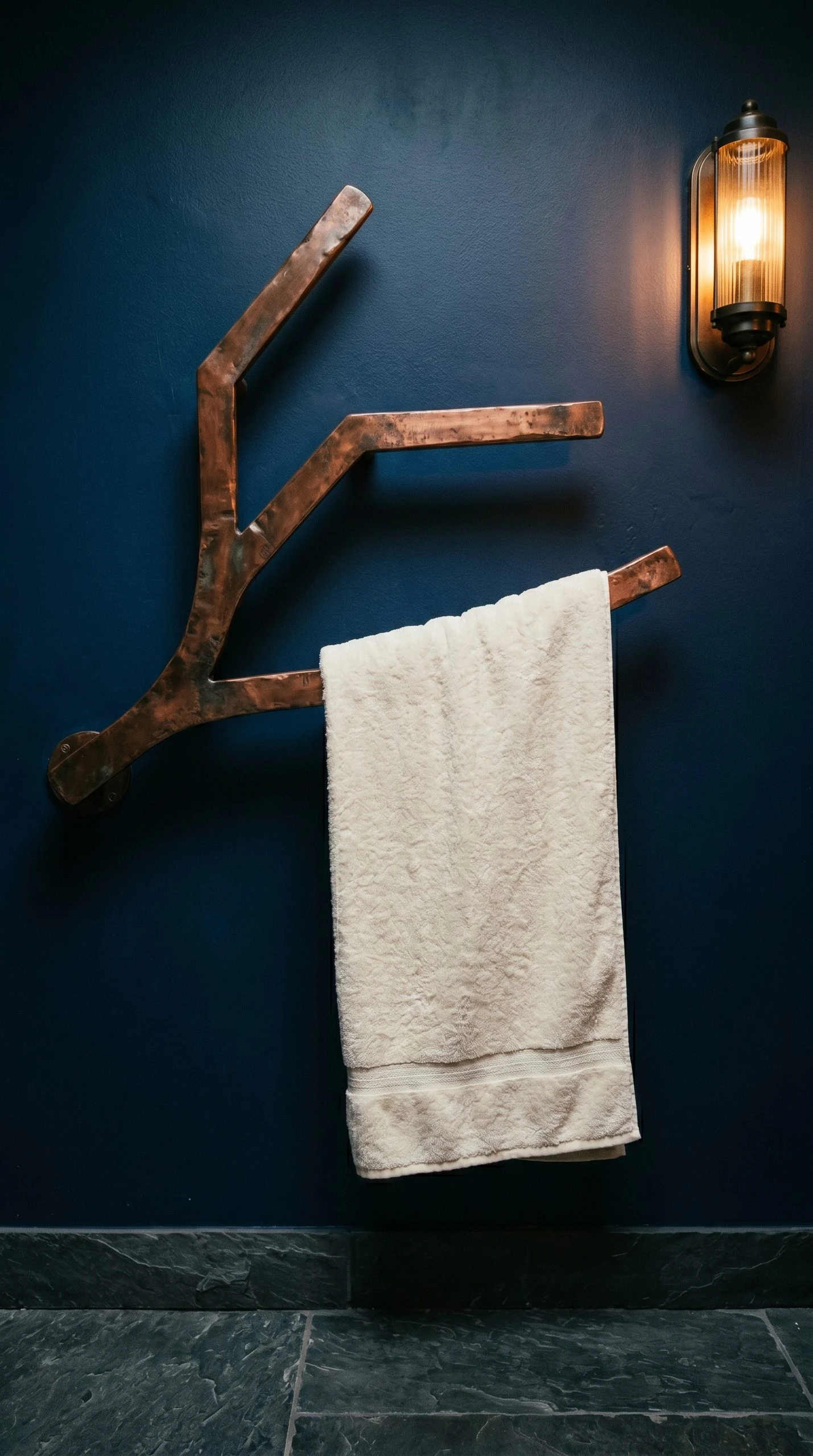
20. A Geometric Metal Bar in a Bold Finish for a Statement Bathroom
Some bathrooms are already making a statement with dramatic tile, a colored vanity, or an unusual light fixture, and the towel rack should be part of that conversation rather than an afterthought. A geometric metal towel rack, whether it is hexagonal, asymmetrical, or has an angular branching structure, in a finish like rose gold, matte black, or aged copper, functions as a piece of wall art that also holds your towels. These are increasingly available from design-forward brands and independent makers, and they vary from simple angular bars to sculptural forms that read as art when the towels are off them.
The key to making this work is restraint everywhere else in the bathroom. A geometric statement rack works because everything around it is clean and simple, so the rack has room to be the interesting thing in the room.
Quick Tip: Hang your towels off this kind of rack loosely rather than folded precisely. A slightly casual drape looks more natural with sculptural hardware than perfectly aligned folds do.
Final Thoughts
The right towel rack is one of those small decisions that ends up mattering more than you would expect. Once it is right, the bathroom feels more organized, more considered, and genuinely more pleasant to be in every single day. Whether you are working with a tiny rental bathroom where you cannot touch the walls, a large primary bath that needs a spa-level upgrade, or a family bathroom that is basically a towel emergency every morning, there is a practical, good-looking option in this list that fits your actual situation.
The most important thing is to choose based on what your bathroom actually needs rather than what looks best in a photo, because a rack that frustrates you in daily use will frustrate you every single day. Measure your space, think about how many people are using the bathroom and how often, match your finish to your existing fixtures, and then commit. Your future self will thank you every time a warm, dry towel is exactly where it should be.
FAQ
How many towel bars does a bathroom actually need?
It depends on how many people use the bathroom. A single-person or couple’s bathroom generally works well with one double bar or two single bars. A family bathroom with three or more people usually needs a combination of a main bar plus hooks or a secondary rack. As a loose rule, aim for at least one bar or two hooks per person who uses the space regularly.
What is the correct height to mount a towel bar?
The standard recommendation is 48 inches from the floor for an adult bathroom, which positions the bar at roughly mid-torso height and leaves room for full-size towels to hang without touching the floor. In a kids’ bathroom, 36 inches is more practical. For a towel ring next to a sink, align the bottom of the ring with the edge of the countertop.
What towel rack material is best for a humid bathroom?
Stainless steel and powder-coated steel are the most moisture-resistant. Solid brass resists corrosion well and develops a patina rather than rusting. For wood, teak and bamboo have natural water resistance. Pine and MDF without proper sealing will warp and deteriorate with consistent humidity exposure.
Can I install a towel rack without drilling into the wall?
Yes. Leaning ladders, freestanding floor racks, over-door hooks, and suction-cup bars all work without drilling. For suction cup options, test them on your specific tile type first because textured or matte tiles hold a suction cup less reliably than smooth, glazed surfaces.
How far apart should towel bars be spaced when installing two of them?
At least 8 to 10 inches between the lower edge of the top bar and the upper edge of the bottom bar. This gives each towel room to hang open and dry without the two towels pressing against each other, which keeps them smelling fresh longer.
How do I make a basic towel bar look more stylish without replacing it?
Upgrade the towels first, since the bar is mostly backdrop. Use matching towels in a quality material like Turkish cotton or waffle-weave, in a color that works with your wall and tile. Fold them consistently, either flat in thirds or loosely draped, and replace them regularly. A plain chrome bar with beautiful, well-folded towels always looks better than a fancy bar with mismatched, worn-out ones.