Tiny Home Shed Looks That Actually Work

There is something quietly exciting about a shed sitting in a backyard, full of untapped potential. More and more people are looking at those compact little structures and seeing something completely different from storage space. They are seeing a bedroom, a kitchen, a full living area, a home that costs a fraction of what a traditional house would and offers a lifestyle that most people do not even know they are craving until they have it.
Tiny home shed living is not about sacrifice. It is about rethinking what you actually need and making every square foot count. When you design a small space with intention, something interesting happens. It stops feeling small. It starts feeling personal, efficient, and surprisingly comfortable. The difference between a shed that feels cramped and one that feels like a real home usually comes down to a handful of design decisions made early on.
This article covers nineteen distinct ideas for turning a shed into a tiny home, each one different from the last. Whether you are working with a 10×16 structure or a larger 14×40 footprint, you will find ideas here that apply to your situation. The approach is practical, the suggestions are specific, and every idea is built around making the space look and feel better than you thought possible. From color choices and furniture to lighting and storage, these are the ideas worth trying.
1. The Warm Minimalist Living Space
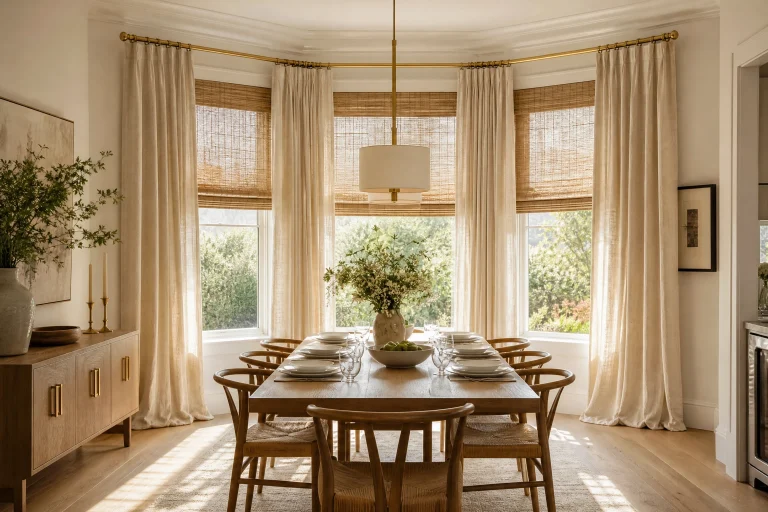
Minimalism in a tiny shed home does not mean cold or bare. The warm minimalist approach layers soft neutrals with natural materials to create a space that feels pared back but never unwelcoming. Think walls painted in a creamy off-white like Benjamin Moore White Dove or Sherwin-Williams Alabaster, paired with warm wood tones in the flooring and shelving. These two elements alone do most of the heavy lifting.
For furniture, choose pieces that are low-profile and multifunctional. A sofa with a pull-out bed works well, and a coffee table with hidden storage below keeps clutter off the floor. Stick to two or three furniture pieces maximum in the main living area. The open floor plan created by fewer pieces makes the shed feel noticeably larger than its footprint suggests.
Lighting is where this style really comes to life. Warm-toned Edison bulbs in a simple pendant fixture above the center of the room add ambiance without overwhelming the space. Add a small floor lamp in the corner for reading light and you have two light sources that create layered warmth at different heights. Layer in a chunky wool throw, a woven jute rug, and a single potted fiddle leaf fig, and the space reads as designed, not improvised.
Designer Advice: Choose furniture legs that are visible rather than pieces that sit flush to the floor. Visible legs keep the eye moving and make the room feel more open and less boxed in.

2. The A-Frame Loft Bedroom
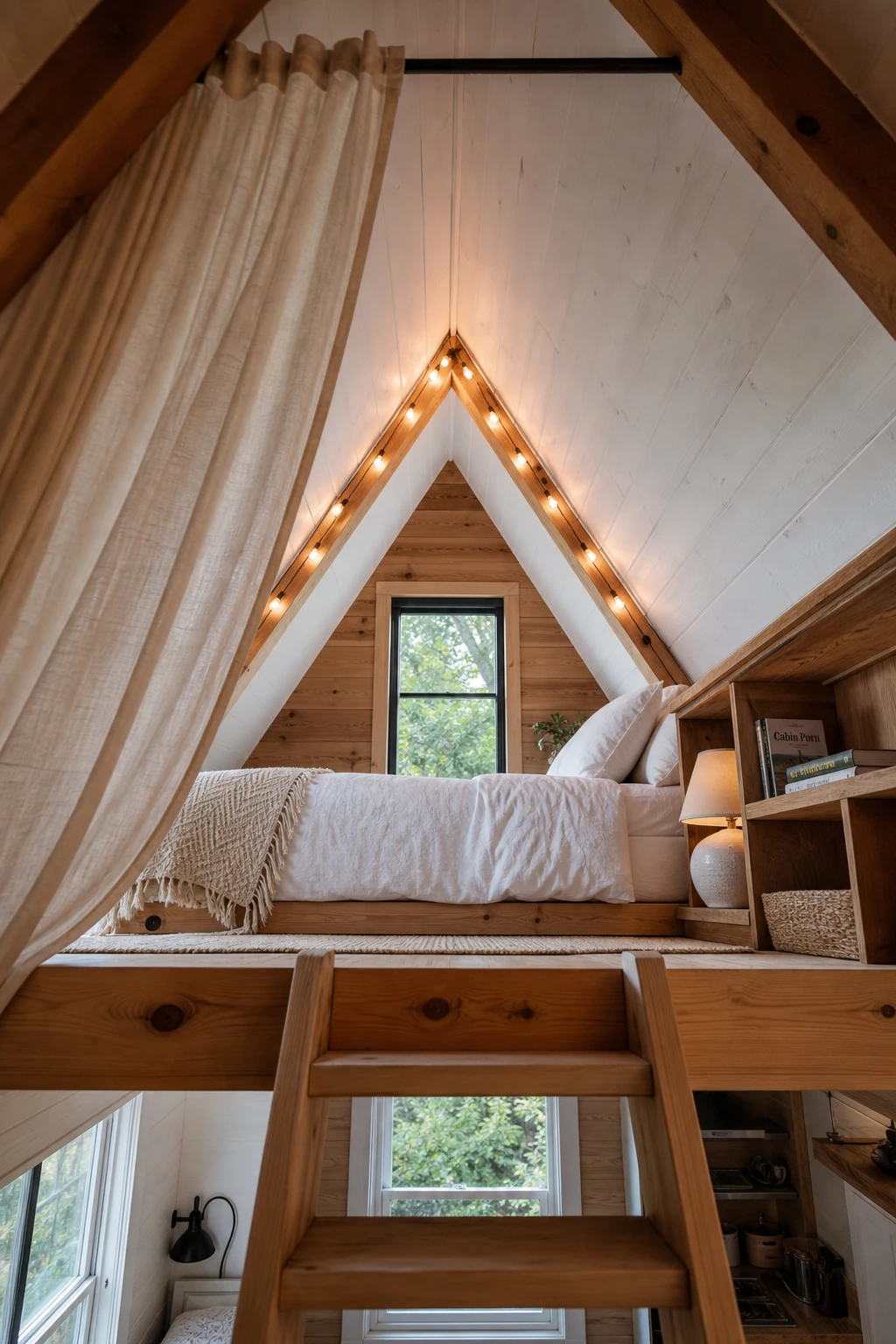
If your shed has an A-frame or gambrel roof, you are sitting on one of the best natural opportunities in tiny home design. The upper section of the roof creates a loft space that works perfectly as a sleeping area without eating into the square footage below. Lofted beds are one of the most efficient uses of vertical space in any small home, and in a shed with a peaked roof, they feel completely natural.
Install a simple platform loft frame using Douglas fir or pine lumber. Keep the mattress low profile, a standard twin or full works well here, and add built-in cubbies along the side walls for books, a lamp, and small personal items. The slanted ceiling of the loft area creates a cocoon effect that most people find genuinely cozy rather than claustrophobic.
Paint the loft area a shade or two darker than the main living space below. A warm greige or dusty sage on the upper walls helps visually define the sleeping zone and makes the space feel intentional. Use string lights along the roofline instead of a conventional ceiling fixture, they are low profile and cast a soft glow that is perfect for a bedroom. A small skylight or roof window in this area is worth the investment if your budget allows.
Designer Advice: Run a short curtain rod at the loft opening and hang linen drapes that can be drawn for privacy. This one detail makes the loft feel like a proper room rather than an elevated platform.
3. The Cottage Kitchen Built Around a Window
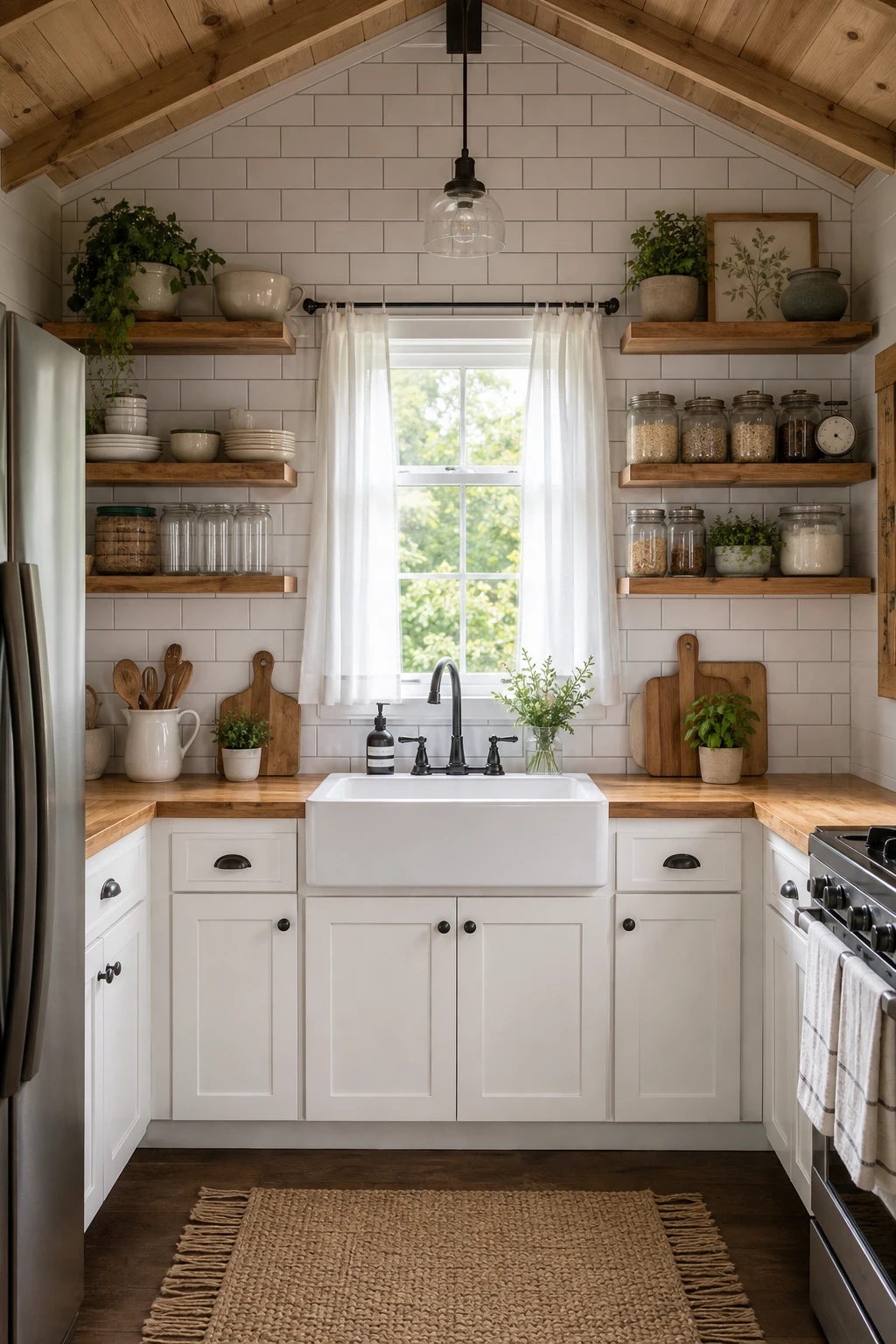
In a tiny shed home, the kitchen almost always has to earn its space. The cottage kitchen approach keeps things charming and functional by anchoring the entire design around a single well-placed window above the sink. Natural light over the prep area makes even the smallest kitchen feel more open and pleasant to work in.
Choose open shelving over upper cabinets wherever possible. Open shelves keep the walls from closing in and give you an opportunity to style the kitchen with ceramic bowls, glass jars, and small plants. Keep the palette simple: white or cream shaker cabinets below, light wood open shelves above, and a butcher block countertop that adds warmth and can be sanded and re-oiled to stay looking fresh for years.
For appliances, a two-burner induction cooktop takes up about a quarter of the counter space a standard range would. A compact refrigerator in the 7 to 10 cubic foot range fits neatly under the counter. A small combination microwave and convection oven mounted on the wall frees up even more surface area. These three appliances handle the vast majority of what most people cook on a daily basis.
Designer Advice: Run your subway tile backsplash all the way to the ceiling rather than stopping at the bottom of the upper cabinets. In a small kitchen, this pulls the eye upward and creates an illusion of height.
4. The Industrial Modern Studio
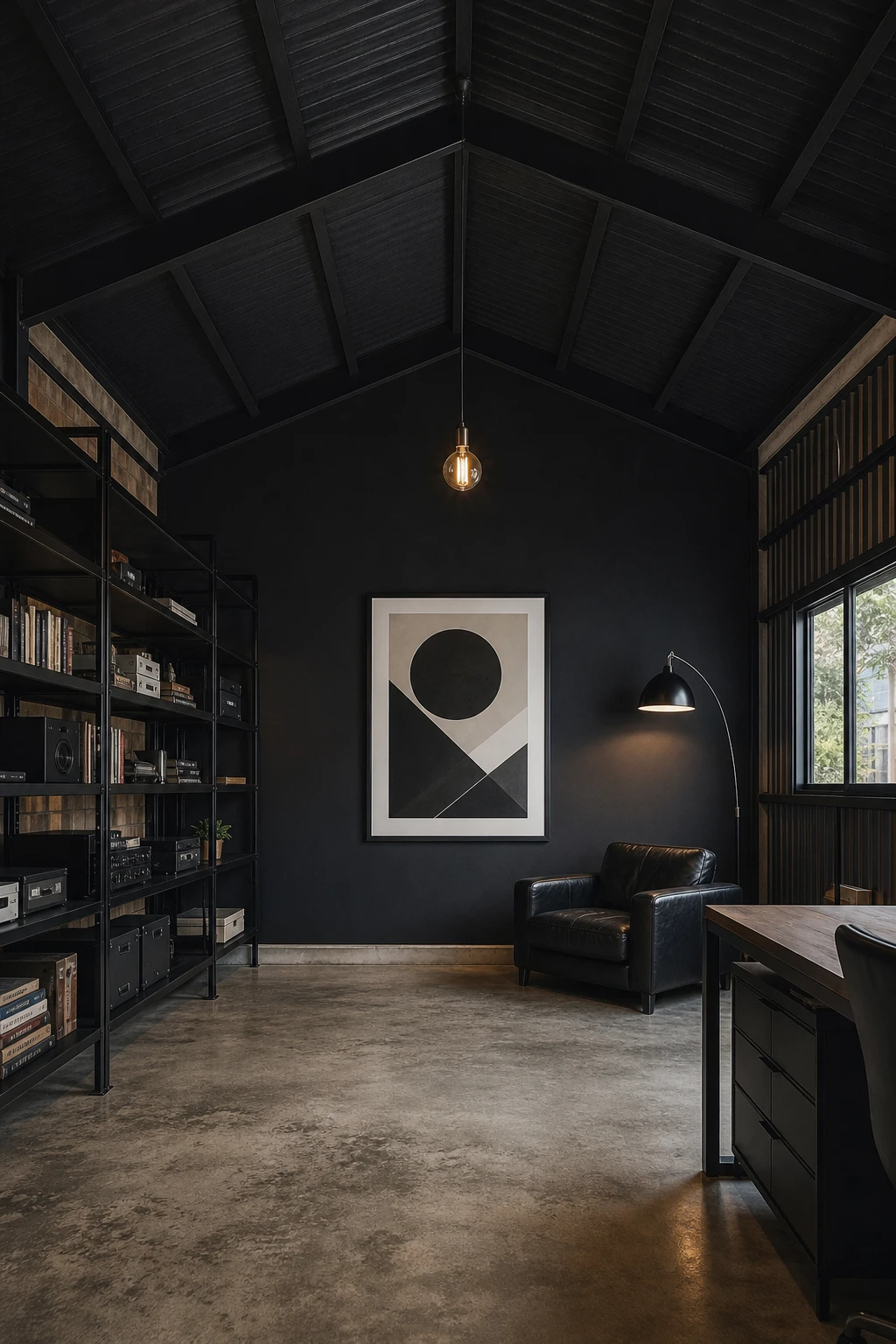
The industrial modern look translates particularly well into shed homes because it leans into the structural elements rather than trying to hide them. Exposed metal roofing screws, raw wood ceiling joists, and unfinished concrete floors all become design features rather than problems to solve. The key is pairing those raw elements with clean, contemporary furniture so the space reads as intentional.
Start with the floor. Polished concrete or large-format gray porcelain tile creates the right base. If your shed sits on a wood subfloor, large gray luxury vinyl plank is a budget-friendly option that reads similarly from a distance. On the walls, leave one or two areas in raw OSB or plywood and paint the rest in a deep charcoal or warm black. The contrast between the two surfaces is what makes the industrial look work.
For furniture, stick to black metal frames and leather or faux leather upholstery. A black steel shelving unit along one wall doubles as storage and display. Add a drafting-style pendant light in matte black above the main seating or work area. Edison bulbs work here, though a cooler white light source is also perfectly appropriate and reads more modern. Keep accessories minimal: a clock, a few books, one or two plants, and nothing else.
Designer Advice: Add a single large artwork or framed print in a bold graphic style on the main wall. In a space with raw materials and dark tones, one strong focal point gives the eye a place to land and keeps the room from feeling unfinished.
5. The Scandinavian Sleep Nook
Scandinavian design was practically invented for small spaces. The philosophy centers on functionality, natural light, and a restrained palette, which are exactly the principles that make tiny home shed bedrooms work well. The Scandinavian sleep nook idea takes the bedroom area and refines it down to its most essential and most beautiful version.
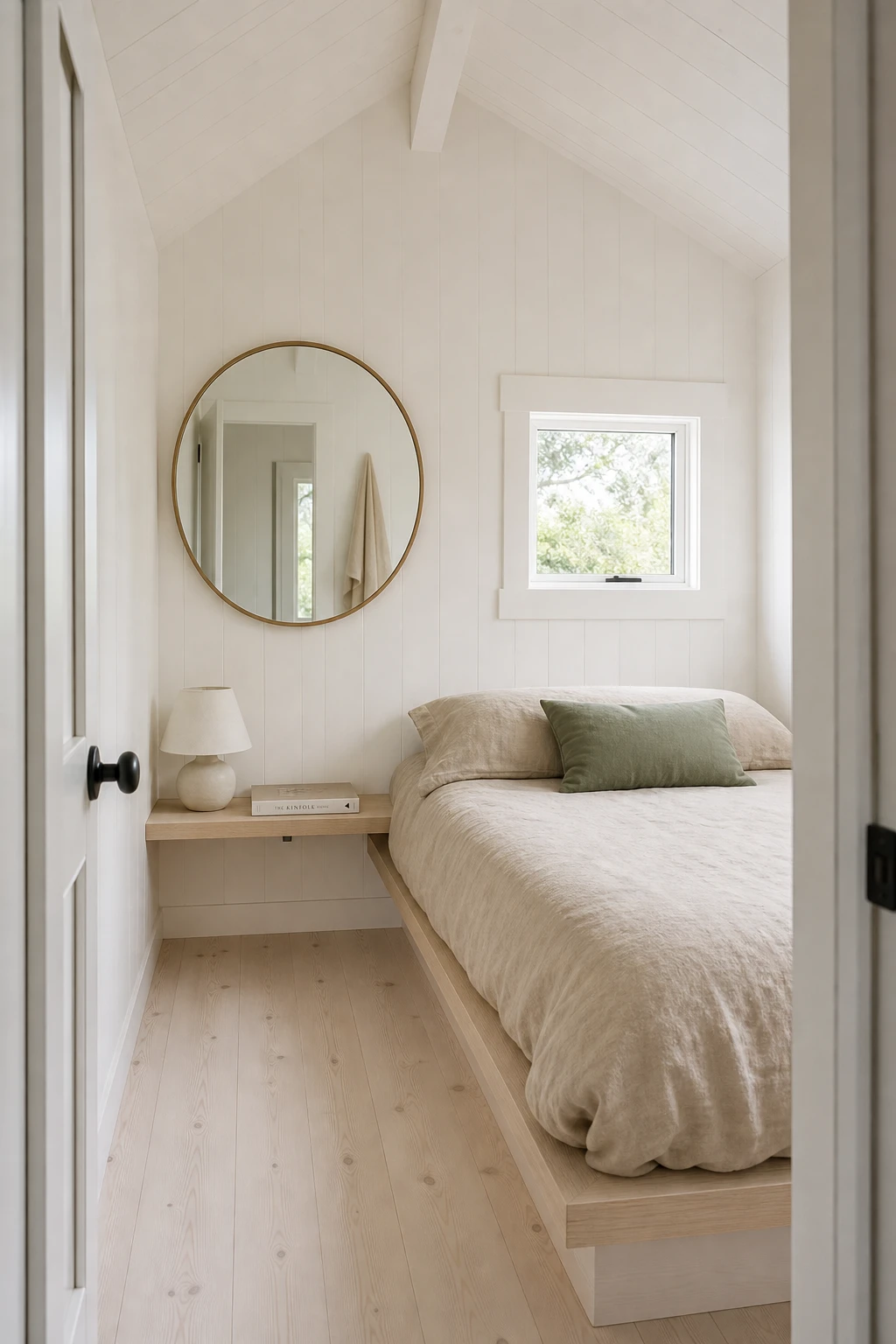
Paint the walls white, a true white with no yellow undertone works best. Use white or light pine wood for any built-in shelving or headboard framing. The floor should be light as well: white-washed oak, light ash, or pale gray laminate all work. The goal is to keep everything in the room as reflective of light as possible so that even a small window makes the space feel genuinely bright.
Layer the bedding in natural linen: a white or oatmeal duvet cover with one or two subtle texture variations like a waffle-knit throw or a loosely woven blanket draped at the foot of the bed. Add one or two throw pillows in muted dusty tones, a soft sage or faded terracotta. Keep the nightstand simple, a floating shelf at bed height with a small ceramic lamp and one or two items is perfect.
Designer Advice: Hang a single large round mirror on the wall opposite the window. It bounces natural light around the room and makes the space feel twice as wide without requiring any structural changes.
6. The Boho Studio with Layered Textiles
Bohemian style is forgiving in small spaces because it thrives on layering rather than uniformity. A boho tiny shed studio uses color, pattern, and texture to create a space that feels collected and personal rather than carefully curated. The starting point is almost always the rug, and in a boho space, bigger is better. A large Moroccan-style rug in warm terracotta, rust, and ochre anchors the entire room.
Walls in a boho studio work best in warm earth tones: a terra cotta like Farrow and Ball’s Dead Salmon, a dusty rose, or a deep warm amber. Macrame wall hangings add texture at eye level without taking up any floor space. Hang a few pieces of different sizes at varying heights rather than centering a single piece.
For seating, a low sectional or a collection of floor cushions and poufs gives the space a relaxed, low-to-the-ground feeling that is characteristic of boho interiors. Layer a mix of patterned throw pillows in prints that relate to each other without perfectly matching. Trailing plants like pothos or string of pearls in terracotta pots add living texture that ties the organic elements together.
Lighting makes or breaks the boho look. Skip overhead fixtures and instead use a combination of floor lamps with rattan shades, string lights along the ceiling perimeter, and small candles on surfaces. The layered, low light creates an atmosphere that feels warm and intimate regardless of how small the space actually is.
Designer Advice: Keep the floor as clear as possible. In a heavily layered boho space, an uncluttered floor is what separates a cozy room from a chaotic one.

7. The Murphy Bed Living Room
A Murphy bed, or wall bed, is one of the single most effective space-saving tools available for tiny home shed design. When the bed is folded up, the main area of the shed functions entirely as a living room or work space. When it is pulled down at night, the bedroom appears fully formed. This one piece of furniture essentially gives you two rooms in the footprint of one.
Modern Murphy bed units come with integrated shelving, a fold-down desk, and even sofa attachments that swing out as the bed comes down. Look for units from companies like Resource Furniture or Ori Systems if budget allows, or explore flat-pack options from IKEA-compatible manufacturers for a more affordable approach. The wall unit itself should be painted or finished to match the surrounding walls so it reads as a design feature rather than a piece of equipment.
Because the living room has to convert to a bedroom each night, furniture choices need to be flexible. A sofa that does not block the bed path, a coffee table on wheels, and a compact bookshelf along a side wall give you enough furnishings to make the space feel lived in without creating obstacles. Keep the color palette on the lighter side to keep the room feeling open during the day.
Designer Advice: Frame the Murphy bed unit with sconce lighting on either side at the wall. When the bed is folded down, the sconces become bedside lights. When it is up, they read as wall accents flanking a decorative panel.

8. The Off-Grid Cabin Look
Off-grid tiny shed homes have a design sensibility all their own. Because they operate on solar power, rainwater collection, and composting systems, every material choice tends toward the natural and the durable. The result is an aesthetic that feels deeply grounded and honest in a way that is very difficult to fake. If your shed home leans off-grid, lean into the look.
Start with reclaimed wood. Reclaimed barn wood paneling on one or two walls gives the interior an instant sense of history and warmth. It also happens to be an excellent insulator when installed correctly. Pair it with a concrete or stone feature around the woodstove or pellet stove, which is often the primary heat source in an off-grid setup. The stove itself becomes a natural focal point of the room.
Use natural fiber textiles throughout: wool blankets, cotton canvas curtains, linen upholstery. These materials not only look right in an off-grid cabin aesthetic but they also perform well in spaces that may experience more humidity variation than a conventional home. On the floor, consider cork tiles, which are sustainable, warm underfoot, and naturally antimicrobial.
Solar-powered lighting requires thoughtful planning. Use high-quality LED fixtures that offer a warm color temperature around 2700K to avoid the cold, clinical look that cheaper LEDs can produce. Rechargeable battery-powered lamps and candles supplement the electric lighting on evenings when you want a lower energy draw.
Designer Advice: Hang a hand-drawn or topographic map of your local area in a simple wooden frame. It anchors the space to its location and adds a personal detail that no catalog can replicate.

9. The Garden Studio Office
The garden studio shed that doubles as a home office is one of the most practical configurations for people who need a dedicated workspace separate from the main house. The design challenge is creating a space that feels professional during work hours and comfortable outside of them. It is a balance, but it is very achievable with the right approach.
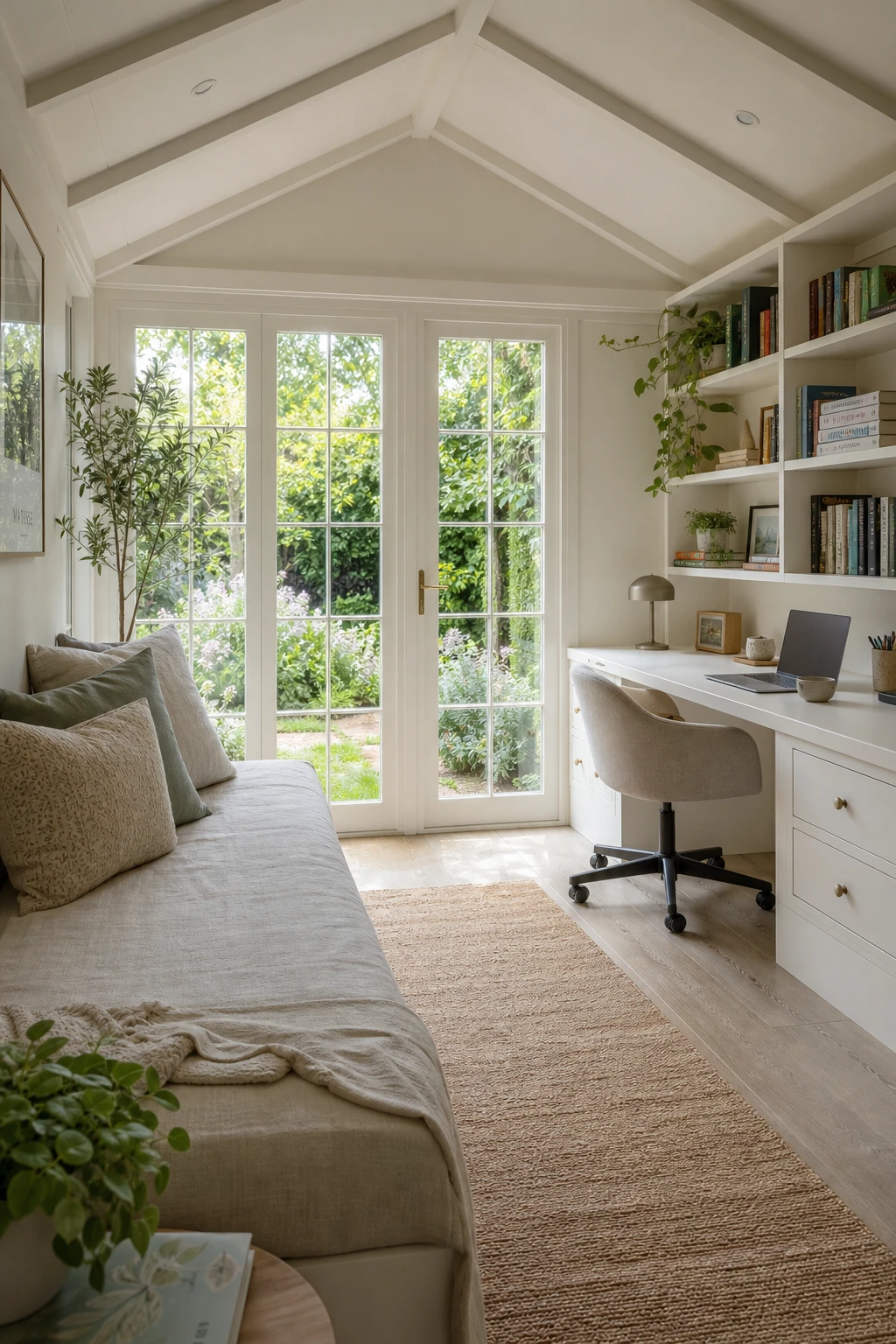
Large windows are the foundation of a garden studio. If your shed does not already have them, adding one or two French-style or floor-to-ceiling windows on the garden-facing side dramatically changes the feel of the interior. The view of greenery outside acts as a natural stress reducer and makes the space feel connected to the outdoors in a way that conventional offices never do.
For the work area, a built-in desk spanning one full wall gives you ample surface without dominating the room visually. Paint it the same color as the wall to make it feel architectural rather than like added furniture. Open shelving above holds books, binders, and a few plants or small objects that make the space feel personal. A quality task chair in a neutral fabric keeps the seating professional.
After work hours, a small daybed or loveseat tucked against the opposite wall transforms the studio into a reading or relaxation space. Keep it dressed in softer textiles than the rest of the room so it reads distinctly as a rest zone rather than an extension of the work area.
Designer Advice: Install a pegboard panel behind the desk in a finish that matches your shelving. It keeps cables, accessories, and tools off the desk surface and looks intentional rather than improvised.
10. The Japanese-Inspired Zen Space
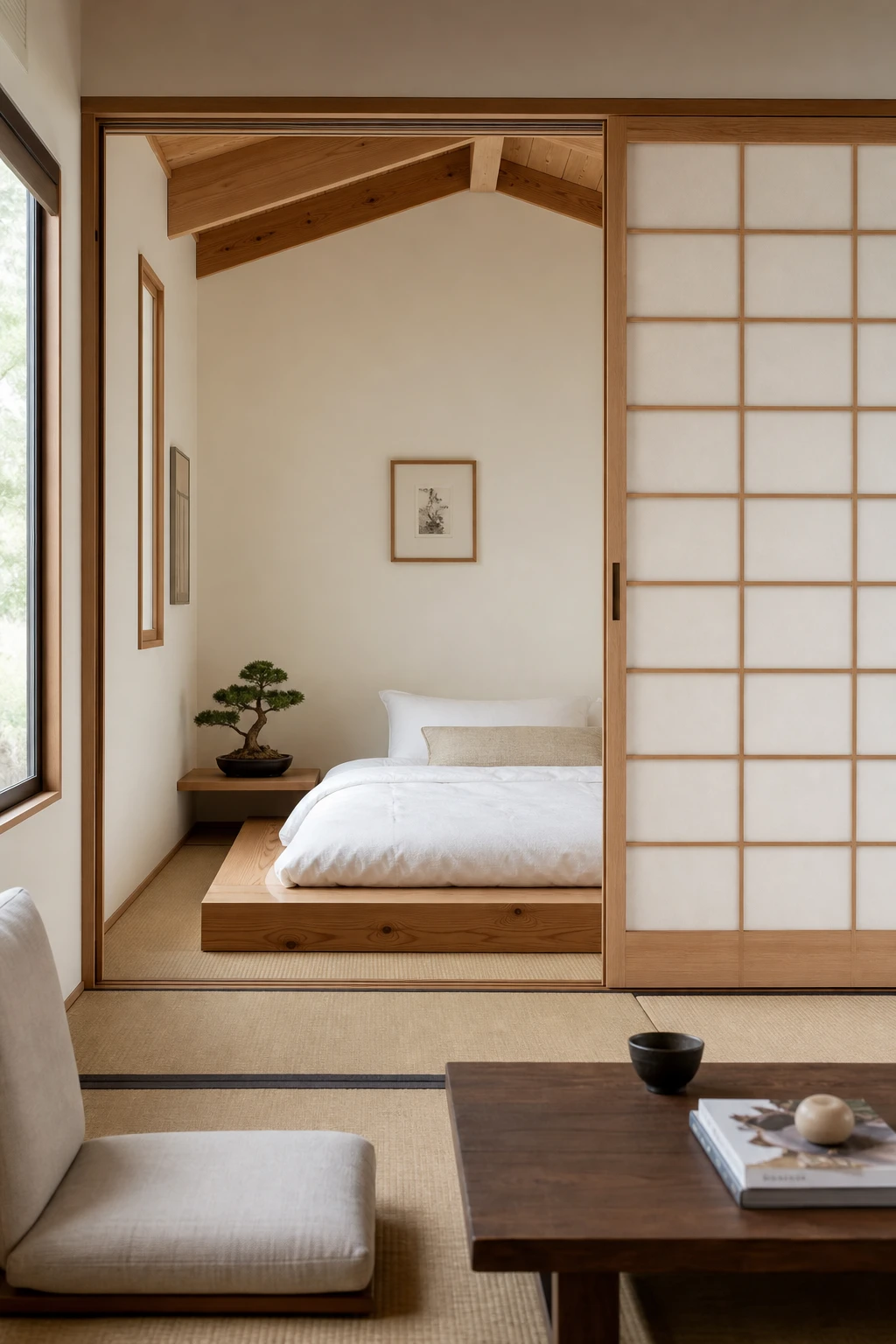
Japanese interior design principles were developed in part to make small spaces feel calm and ordered, which makes them an almost perfect fit for tiny home shed interiors. The Zen approach is about removing everything that does not serve a purpose and giving each remaining object room to breathe. In a shed home, this philosophy produces a space that feels surprisingly spacious and genuinely peaceful.
The color palette for a Japanese-inspired shed is quietly beautiful: warm stone whites, deep charcoals, mossy greens, and natural wood tones in cedar or bamboo. Shoji-style sliding screens made from translucent paper or frosted film on wood frames can divide the space into zones without blocking light. They are also inexpensive to make and install.
On the floor, tatami-style mats or cork tiles with a woven texture give the authentic low-to-the-ground feeling of Japanese interiors. A platform bed frame in natural wood sits close to the floor and doubles as a sofa base during the day with the addition of a few floor cushions. Built-in wooden storage with clean-lined sliding doors keeps belongings completely out of sight.
A single ikebana-style flower arrangement, a small ceramic bowl, or one bonsai plant placed deliberately on a low shelf is all the decoration this space needs. The discipline of choosing one beautiful thing rather than many decent things is at the core of what makes this aesthetic work.
Designer Advice: Leave at least one surface in the room completely clear at all times. A bare section of countertop, an empty low shelf, or a stretch of clean floor is not wasted space in a Zen interior. It is the point.
11. The Coastal Cottage Bathroom
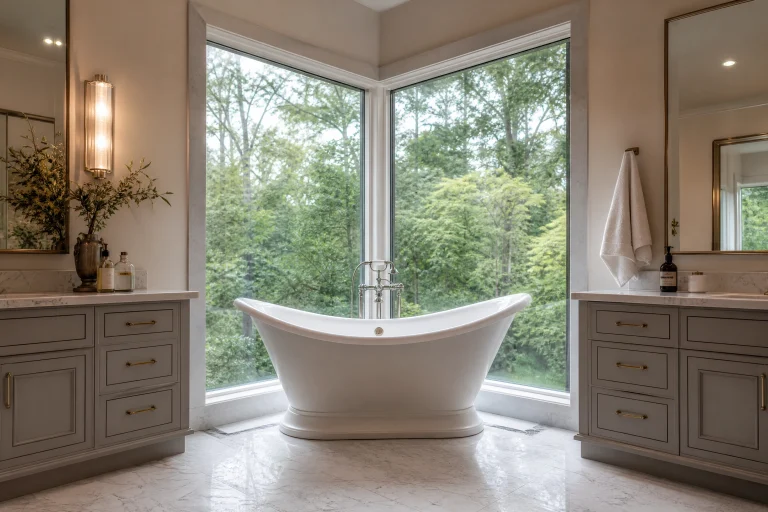
Tiny shed homes that include a full bathroom face a design challenge that most larger homes never encounter: making a bathroom that is genuinely small feel clean and pleasant rather than merely functional. The coastal cottage approach does this beautifully by using light, texture, and a carefully limited palette to create a space that feels like a beach house retreat rather than a utility closet.
White subway tiles from floor to ceiling work particularly well in a small bathroom because they reflect light, are easy to clean, and the grout lines add visual texture without competing with the fixtures. Pair them with a small vanity in a driftwood or whitewashed finish and a round mirror with a simple wooden frame. The combination reads as coastal without being heavy-handed.
Natural materials are key to making this look work: a small jute bath mat, cotton rope hooks for towels, a wood bath caddy across the tub or shower edge. These details add warmth to an otherwise predominantly white and tiled space. A small potted snake plant or air plant on the window ledge adds life and does not require much light to survive.
For fixtures, brushed nickel or matte black faucets and towel bars give the space a clean, finished look without competing with the natural materials. A rainfall showerhead in brushed nickel installed in a walk-in shower with a frameless glass panel adds a sense of luxury that is inexpensive relative to the impact it has.
Designer Advice: Paint the ceiling the same shade as the walls rather than leaving it white. In a small bathroom, matching the ceiling color makes the room feel more cocoon-like and deliberate, which works far better in this size than a stark white above.

12. The Jewel-Toned Reading Room
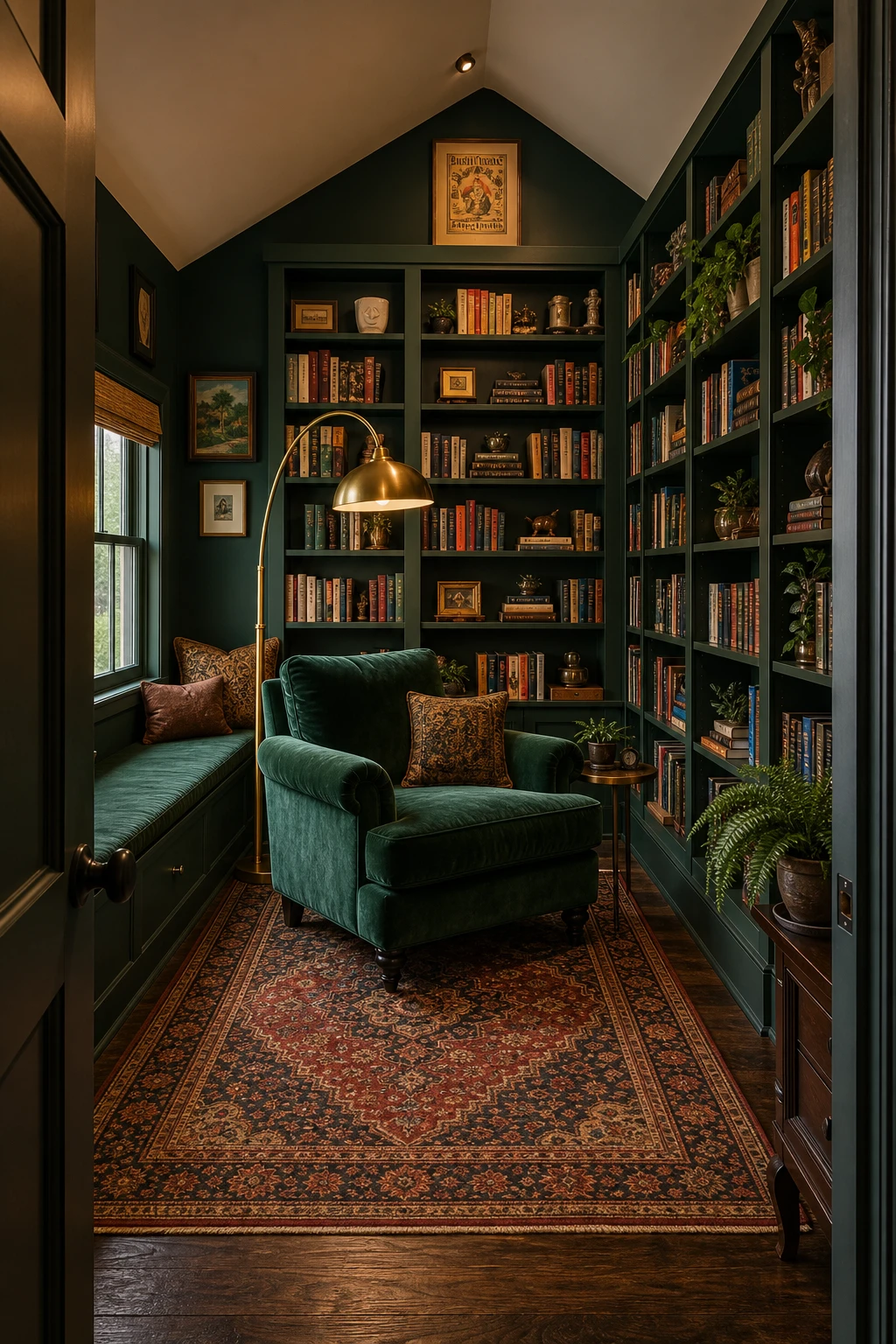
Not every tiny shed home needs to serve as a full living situation. Some of the most beautiful shed conversions are single-purpose spaces: a reading room, a library, a writing studio. The jewel-toned reading room takes one compact shed and turns it into the kind of space most avid readers only dream about having.
Choose a deep, saturated wall color: forest green, sapphire blue, burgundy, or inky navy. These colors work in small rooms in a way that surprises people who have only ever seen them in large spaces. In a shed reading room, a deep wall color wraps around you rather than closing in on you. Pair it with built-in bookshelves that run floor to ceiling on at least two walls. The books themselves become part of the design and add texture and color.
For seating, a large, deeply cushioned armchair in a complementary leather or velvet is the anchor piece. Add a good floor lamp positioned over the right shoulder of the chair for proper reading light, and a small side table for a cup of tea or coffee. A window seat with built-in storage below, if your shed has a window on a suitable wall, doubles the seating and adds a charming secondary reading spot.
A Persian or Turkish-style area rug in warm reds and golds on the floor ties the jewel tones together and adds an element of richness underfoot. Keep the ceiling lighter than the walls, a soft gold or warm cream works beautifully and keeps the room from feeling dark even with rich wall color.
Designer Advice: Install picture rail molding near the ceiling and use it to hang artwork at different heights with thin wire or cord. It adds dimension and avoids putting holes in your walls, which matters in a shed home where the wall structure may be thinner than in a conventional house.
13. The Farmhouse Kitchen and Dining Combo
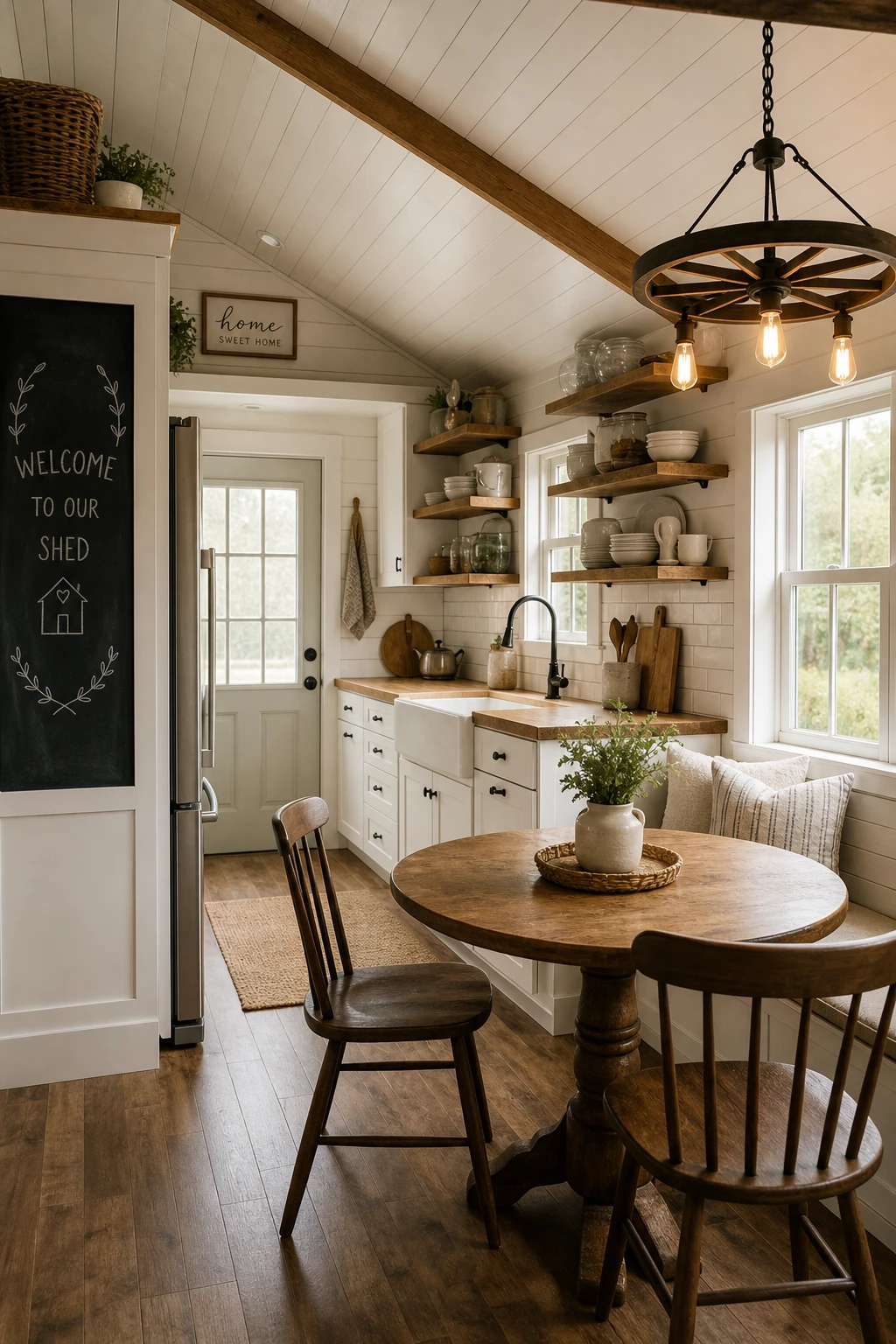
Combining the kitchen and dining area into one cohesive farmhouse space is one of the most natural layouts for a tiny shed home. In a traditional farmhouse, the kitchen was the center of the home and the place where people gathered. Bringing that idea into a compact shed creates a space that feels warm, social, and deeply lived in.
The farmhouse look starts with shaker-style cabinetry in white or soft sage, paired with a farmhouse sink in white porcelain. Add open wooden shelving above one section of the countertop and display a mix of everyday items: a few ceramic plates, a wooden cutting board, a small crock of utensils. These elements are functional and decorative at the same time, which is essential in a small space.
A round or small oval dining table works better in a compact shed kitchen than a rectangular one because it allows easier movement around the space. Two to four wooden chairs with simple turned legs or a bench on one side complete the dining area. Keep the table close to the window so mealtimes feel connected to the outdoors and natural light makes the whole space feel more open.
Warm lighting is everything in a farmhouse kitchen. A simple wagon wheel or lantern-style pendant over the dining table, under-cabinet LED strip lighting in a warm tone over the counter, and a small candle or two on the table surface during evenings create the layered, welcoming glow that defines this aesthetic.
Designer Advice: Add a chalkboard panel on one wall near the kitchen. It functions as a grocery list, a recipe holder, or a place for notes, and it brings an authentic farmhouse detail that no printed sign can replicate.
14. The Mid-Century Modern Living Room
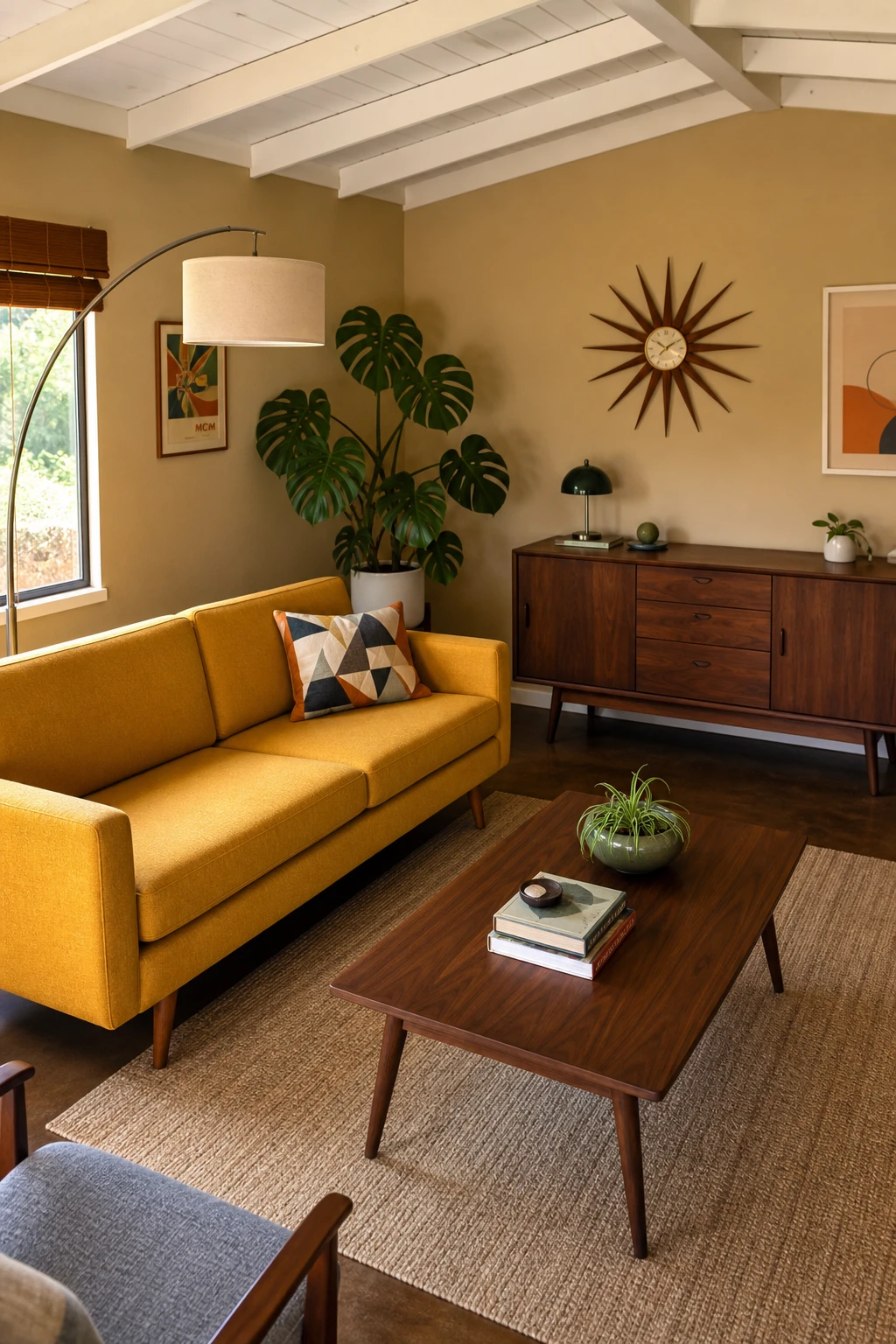
Mid-century modern design has a particular advantage in tiny spaces: its furniture is designed to appear visually light even when it is substantial in scale. The tapered legs, open frames, and clean lines that define the style keep the room from feeling weighed down, which is exactly what you want in a shed home living room.
Choose a sofa in a warm mustard, olive green, or burnt orange, classic mid-century tones that give the space immediate character. Pair it with a walnut or teak coffee table on tapered legs and a matching sideboard along one wall that doubles as a media console. Keep the wall color neutral, a warm white or pale sand lets the furniture do the visual work.
Lighting in a mid-century modern space should include at least one arc floor lamp, the style’s most iconic piece. Positioned behind the sofa with the arc extending over the seating area, it provides excellent ambient light while adding a strong visual line to the room. Add a small ceramic table lamp in a complementary warm tone on the sideboard.
Geometric patterns work well in textiles: a diamond or chevron pattern on a throw pillow, a graphic abstract print on a framed poster. Keep the wall art to one or two pieces maximum and choose frames in wood tones that coordinate with the furniture. A fiddle leaf fig or monstera in a simple white or terracotta pot completes the look without overcomplicating it.
Designer Advice: Use a sunburst or starburst clock on the wall rather than purchasing a decorative piece separately. It functions and decorates at the same time, which is precisely the kind of double-duty thinking that makes mid-century modern work so well in small homes.
15. The Artist Studio Shed
A shed converted into an art studio is one of the most practical and satisfying uses of the space. Artists need good light, ample storage for supplies, durable surfaces, and enough clear floor space to work comfortably. These requirements, when designed around intentionally, also produce a space that is genuinely beautiful in its functional honesty.
North-facing windows, or skylights, provide the most consistent natural light for creative work because they avoid direct sun that creates glare and shifts significantly throughout the day. If your shed is already positioned with windows in a useful direction, consider adding a second window or a simple polycarbonate roof panel to maximize the available light. White walls help by bouncing what light comes in around the entire space.
Storage is a major design challenge in an art studio. Pegboard systems are inexpensive, endlessly customizable, and keep tools visible and accessible without taking up floor space. Rolling carts with shallow drawers work well for smaller supplies. A tall cabinet with doors hides any organized chaos for the moments when you need the space to feel cleaner.
The floor needs to be durable and easy to clean. Sealed concrete, vinyl plank, or even heavy-duty floor paint over a plywood subfloor all work well. Protect a section of the floor near the main work area with a large drop cloth that can be easily washed or replaced.
Designer Advice: Hang your own work on the walls. Not only does it personalize the space in a way nothing purchased can, but seeing your finished pieces around you while you work is genuinely motivating.

16. The Two-Tone Exterior That Sets the Tone Inside
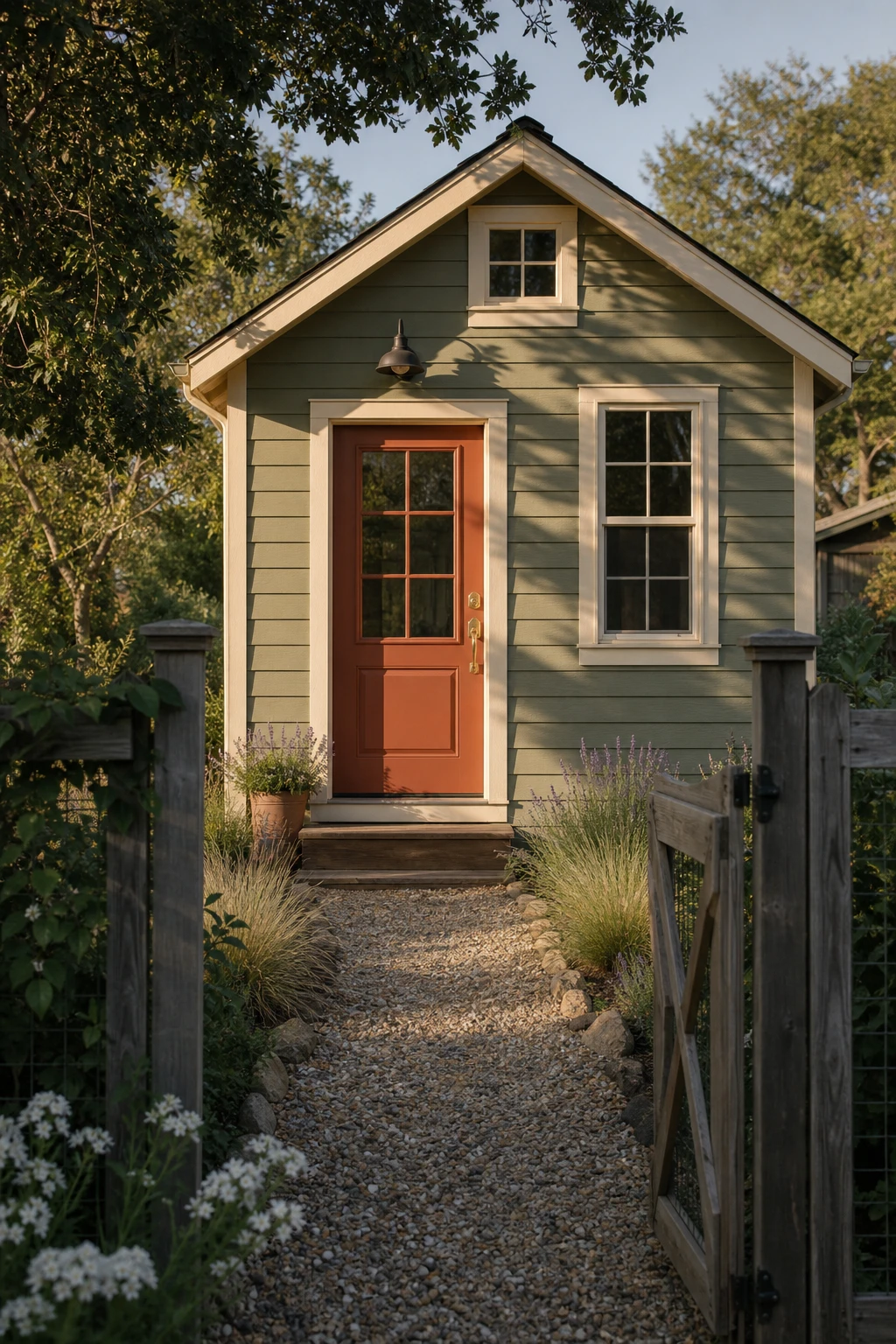
The exterior of your tiny shed home sets expectations before anyone steps inside. A two-tone exterior paint approach, where the siding is one color and the trim, windows, and door are a contrasting or complementary shade, gives even a basic rectangular shed a lot of visual personality. And because the exterior color communicates the design sensibility of the interior, it is worth getting right.
Popular two-tone combinations for tiny shed homes include: deep charcoal siding with white trim for a contemporary look, sage green with cream trim for a cottage feel, warm black with cedar trim for a modern farmhouse vibe, and navy with bright white for a coastal look. The trim color should relate to or exactly match a wall color inside the home so the inside and outside feel connected.
The door color is the most impactful single decision you will make on the exterior. A front door in a bold but considered color, a deep red, a warm terracotta, a saturated forest green, gives the shed home a sense of identity. Hardware in brushed brass or matte black on the door handle and house numbers pulls the look together.
Landscaping at the base of the shed matters more than most people expect. A simple border of low-growing ornamental grasses, a few lavender plants, or a line of boxwood shrubs at the foundation visually anchors the structure to the ground and makes it look like it belongs to the landscape rather than just sitting on it.
Designer Advice: Paint the inside of the front door a bright, happy color that is visible when the door is open. It creates a small, surprising moment of color that connects the personality of the exterior to the interior.
17. The Tiny Shed Bathroom with a Wet Room Layout
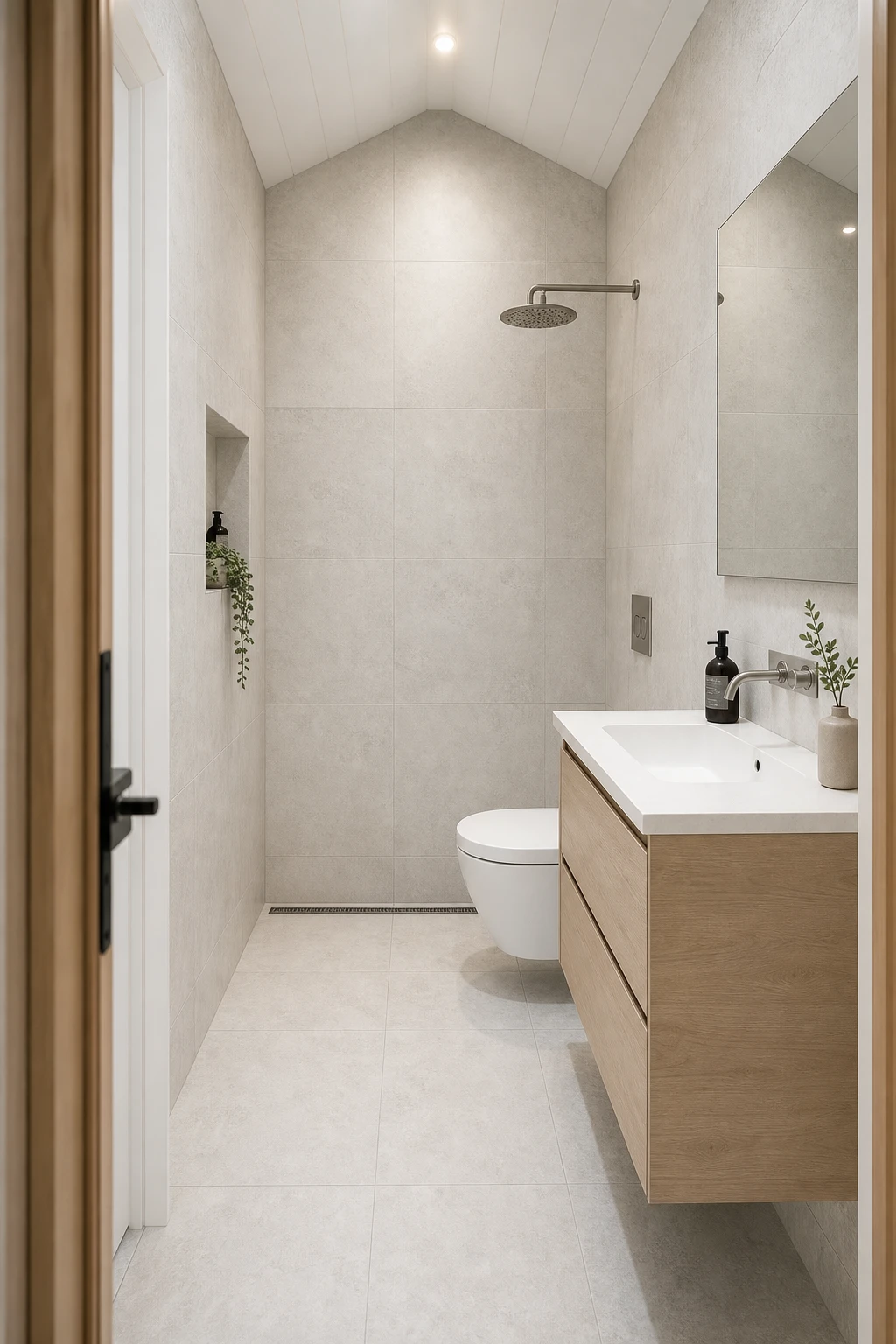
In a very small shed home, the wet room bathroom layout, where the shower has no separate enclosure and the entire tiled bathroom floor is the shower floor, is one of the smartest choices you can make. It eliminates the need for a shower tray, a glass door, or a curtain, and it makes the bathroom look significantly larger than it actually is.
Large-format tiles in a light stone or concrete look work beautifully in a wet room because the fewer grout lines there are, the cleaner and more spacious the space appears. Run the same tile from floor to ceiling on all walls and choose a slightly textured finish for the floor section to prevent slipping. A linear drain along one wall keeps the floor slope minimal and nearly invisible.
Choose a wall-mounted toilet and a wall-mounted vanity so the floor is entirely clear beneath both fixtures. This detail alone makes a tiny bathroom feel more open than a conventionally fitted one. A small floating vanity with a single undermount basin and a simple rectangular mirror above it keeps the design clean and practical.
Heated floor tiles are a worthwhile investment in a shed bathroom, particularly in climates that get cold. The cost is reasonable when installed during a new build or renovation, and the comfort difference is significant in a space where you will be stepping out of the shower onto the floor.
Designer Advice: Install the showerhead on the wall rather than overhead in a wet room layout. A wall-mounted rainfall showerhead allows you to step into the shower zone without the spray reaching the rest of the bathroom floor until you are ready.
18. The Storage-First Bedroom
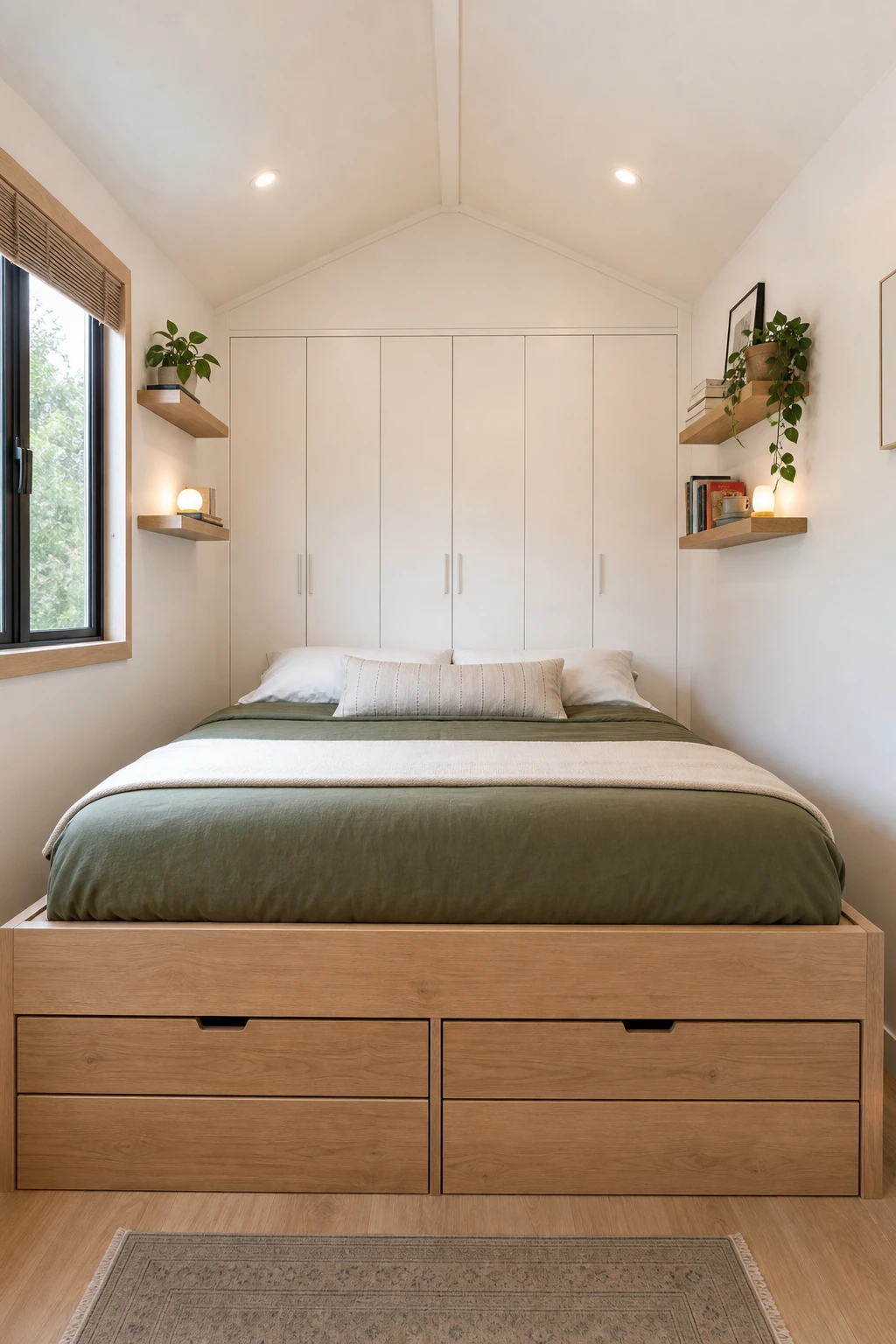
One of the most common complaints about tiny home shed bedrooms is the lack of storage. Clothes, bedding, personal items, and seasonal things all need somewhere to go. The storage-first bedroom design approach solves this by making built-in storage the dominant feature of the room and then designing everything else around it.
A built-in wardrobe that runs the full length of one wall, floor to ceiling, stores far more than a freestanding wardrobe of the same width because it uses the full height of the room and can be completely customized on the inside with hanging rails, shelving, and drawers in exactly the proportions you need. Choose a simple flat-front door in white or the same color as the wall so the wardrobe recedes visually rather than dominating the room.
Under-bed storage is the other major opportunity. A platform bed frame with deep drawers below handles bedding, off-season clothing, and anything else that does not need frequent access. Build the platform 18 inches off the ground rather than the standard 12 inches to maximize the drawer depth. It looks slightly more dramatic but functions significantly better.
On the walls, floating shelves at varying heights above the bed replace the need for nightstands and add display space for books, a lamp, and a few personal objects. Keep them relatively minimal so the room does not feel busy.
Designer Advice: Choose a sliding door wardrobe over a hinged one. In a small bedroom, a hinged door needs clearance space when it opens, which limits how you can arrange the rest of the furniture. A sliding door requires no clearance and gives you back those precious inches.
19. The Wraparound Porch Extension
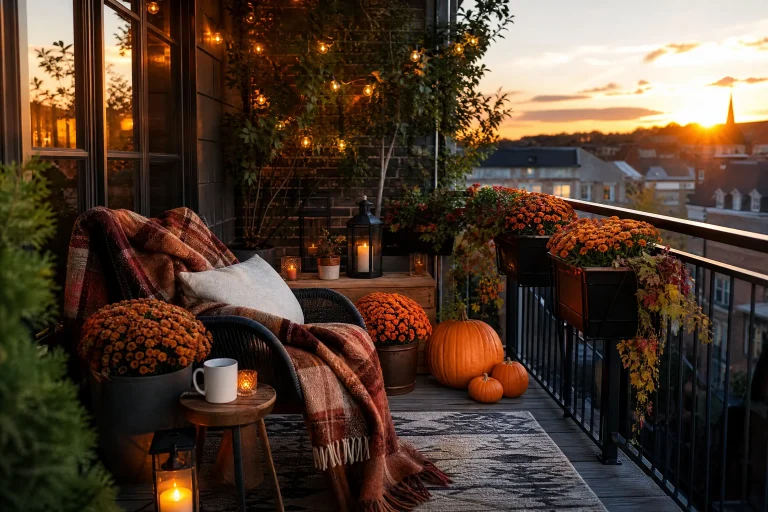
A small covered porch or deck added to the exterior of a tiny shed home effectively expands the usable living space without adding to the interior square footage or the permitting footprint in most jurisdictions. Even a 6×10 covered porch can house outdoor seating, a small dining area, or a hammock and becomes an extension of the interior in good weather.
The porch design should relate directly to the shed home’s exterior aesthetic. If the shed is a farmhouse style, use turned wooden porch posts and a painted wood plank floor. If it is more contemporary, go with steel posts and composite decking in a warm gray. If it is off-grid cabin style, rough-cut log posts and a gravel floor feel completely authentic.
Outdoor furniture for a tiny porch should be lightweight and easy to rearrange. A pair of rocking chairs, a loveseat with weather-resistant cushions, or a pair of folding director’s chairs all work well. Add a small side table and a simple string of outdoor lights overhead, and the porch becomes genuinely usable in the evenings.
Outdoor rugs on the porch floor add warmth and define the seating area within the porch space. Choose a flat-weave or polypropylene rug in a pattern that complements the exterior color of the shed. It is a small detail that makes the porch feel finished rather than like an afterthought.
Designer Advice: Add a vertical wall planter or a few hanging baskets on the porch posts. Growing herbs on the porch of a shed with a cottage kitchen is both practical and beautiful, and it gives the structure a layered, lived-in quality that takes time to develop naturally.

Final Thoughts
Tiny home shed living rewards people who approach it with intention. Every one of these nineteen ideas works not because it is clever for its own sake, but because it starts with the reality of a small space and finds the most honest and comfortable version of what that space can be. Whether you choose the warm minimalist approach, the Japanese-inspired Zen layout, or the farmhouse kitchen and dining combo, the principle is the same: make deliberate choices, choose quality over quantity, and give each element in the room a real reason to be there.
What makes a tiny shed home feel like a home rather than a compromise is the same thing that makes any home feel that way: personal details, good light, and spaces that are genuinely suited to how you actually live. Start with whichever idea resonates most with your lifestyle and build from there. The best tiny shed home is not the most impressive one. It is the one that fits you perfectly.
Frequently Asked Questions
What is the minimum size for a tiny home shed that is comfortable to live in full time?
Most people find that a 12×24 footprint, around 288 square feet, is the practical minimum for full-time living with a separate sleeping area, a small kitchen, and a bathroom. A 10×16 or 10×20 shed can work for a single occupant with a very minimalist lifestyle, particularly if a loft sleeping area is included to free up the main floor for other functions.
Do I need a building permit to convert a shed into a tiny home?
In most areas, yes. If you are connecting the shed to water, electrical, or sewer services and intend to use it as a dwelling, local building codes and zoning laws typically require permits. Requirements vary significantly by municipality, so check with your local planning department before beginning any conversion work. Some rural areas have more flexibility, while urban and suburban areas tend to have stricter requirements.
How do I insulate a shed home properly for year-round living?
Spray foam insulation is the most effective choice for shed homes because it seals air gaps as well as adding R-value, and it works well in the irregular spaces common in shed framing. Rigid foam board panels are a more affordable alternative for walls and the underside of the floor deck. The roof and floor are the most critical areas to insulate thoroughly since that is where the greatest heat loss occurs in most shed structures.
What is the most budget-friendly design approach for a tiny home shed?
The warm minimalist approach tends to be the most budget-friendly because it uses a limited number of pieces and relies on paint, natural light, and one or two quality textiles to do most of the design work. Avoiding custom furniture and shopping secondhand for pieces like wooden chairs, small side tables, and shelving units keeps costs down significantly. Painting walls in a warm neutral and adding good lighting covers more ground than most individual furniture purchases.
Can a tiny home shed be stylish enough to use as a rental property?
Absolutely. Some of the most successful short-term rental properties are converted shed homes that have been designed with a strong, consistent aesthetic. The cottage kitchen, the Scandinavian sleep nook, and the boho studio approaches all photograph exceptionally well and appeal to guests looking for a unique experience. Investing in quality bedding, good lighting, and a few well-chosen accessories makes a significant difference in how a rental space is perceived.
How do I choose between an open plan layout and defined rooms in a tiny shed home?
It depends on how you live and whether you have one or more occupants. For a single person, an open plan layout almost always makes the space feel larger and is easier to keep clean and organized. For two people or a small family, having at least a partial division between the sleeping area and the living area adds a quality of life benefit that outweighs the slight reduction in perceived space. Sliding screens, curtains, or partial-height shelving units create that division without permanently committing to walls