High-End Terrace Looks That Are Worth Every Penny
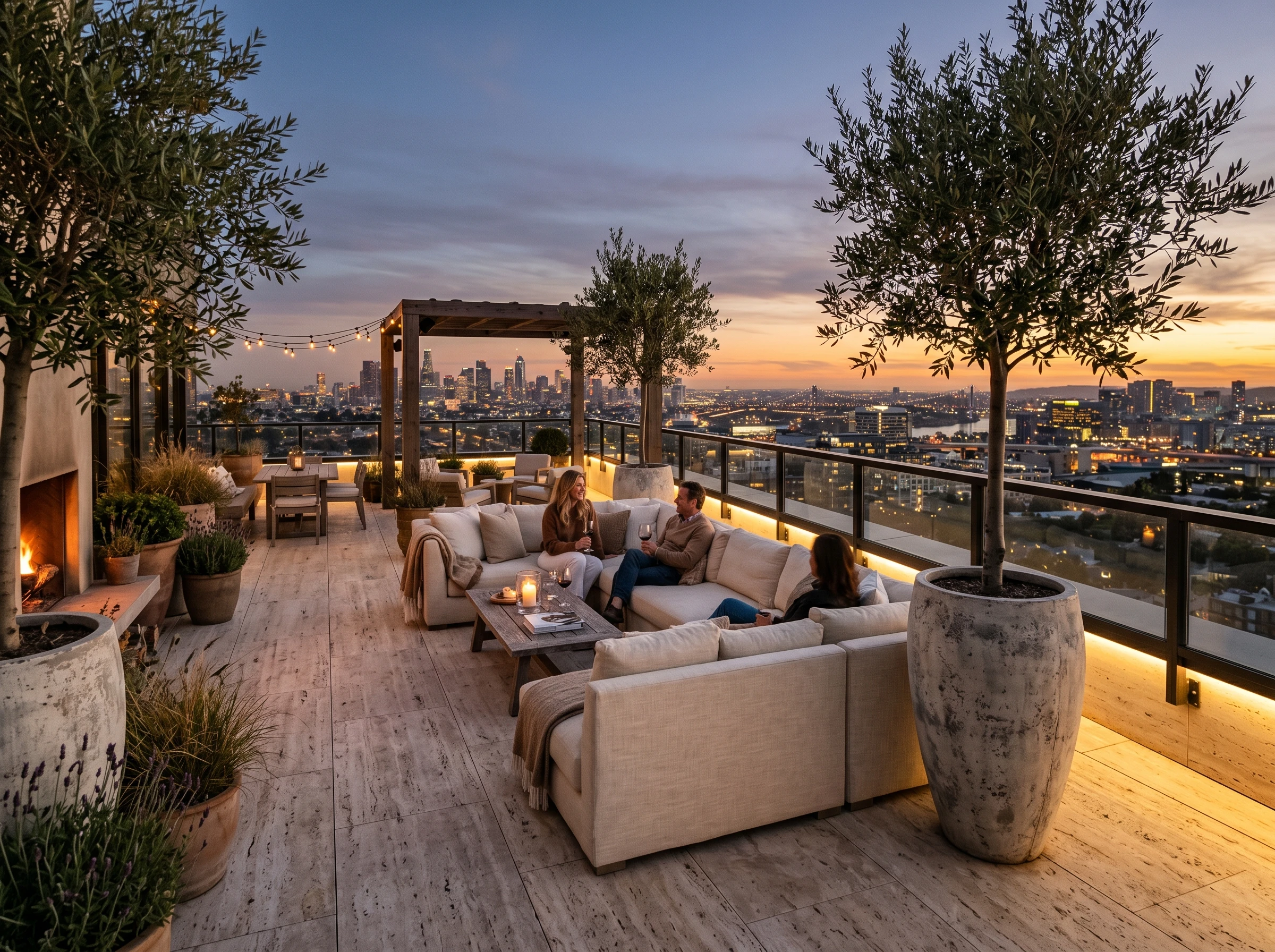
There is something about a well-designed terrace that just stops you in your tracks. Maybe it is the way the light catches a marble-topped side table at golden hour, or the feeling of sinking into a deep, cushioned outdoor sofa while the city hums below you. A luxury terrace is not just an outdoor space. It is an extension of how you live, how you entertain, and what you want to feel when you step outside.
The good news is that creating a truly high-end terrace does not always mean starting from scratch or spending a fortune all at once. It is more about making intentional choices: the right materials, the right furniture proportions, the right lighting layers, and the details that signal quality without screaming it. Whether you have a sprawling rooftop or a generously sized penthouse terrace, the principles are the same.
In this guide, we have grouped these ideas by design category so you can zero in on whatever direction excites you most. Each idea goes deep on color palettes, furniture choices, lighting, textures, and the kind of finishing touches that separate a pretty outdoor space from one that genuinely feels like a five-star experience. You will also find a Designer Tip at the end of each section because sometimes one sharp piece of advice makes all the difference between good and great.
Ready to see what your terrace could actually look like? Let us get into it.
Sleek and Sculptural: The Modern Luxury Approach
Marble Floors with Monochrome Furniture
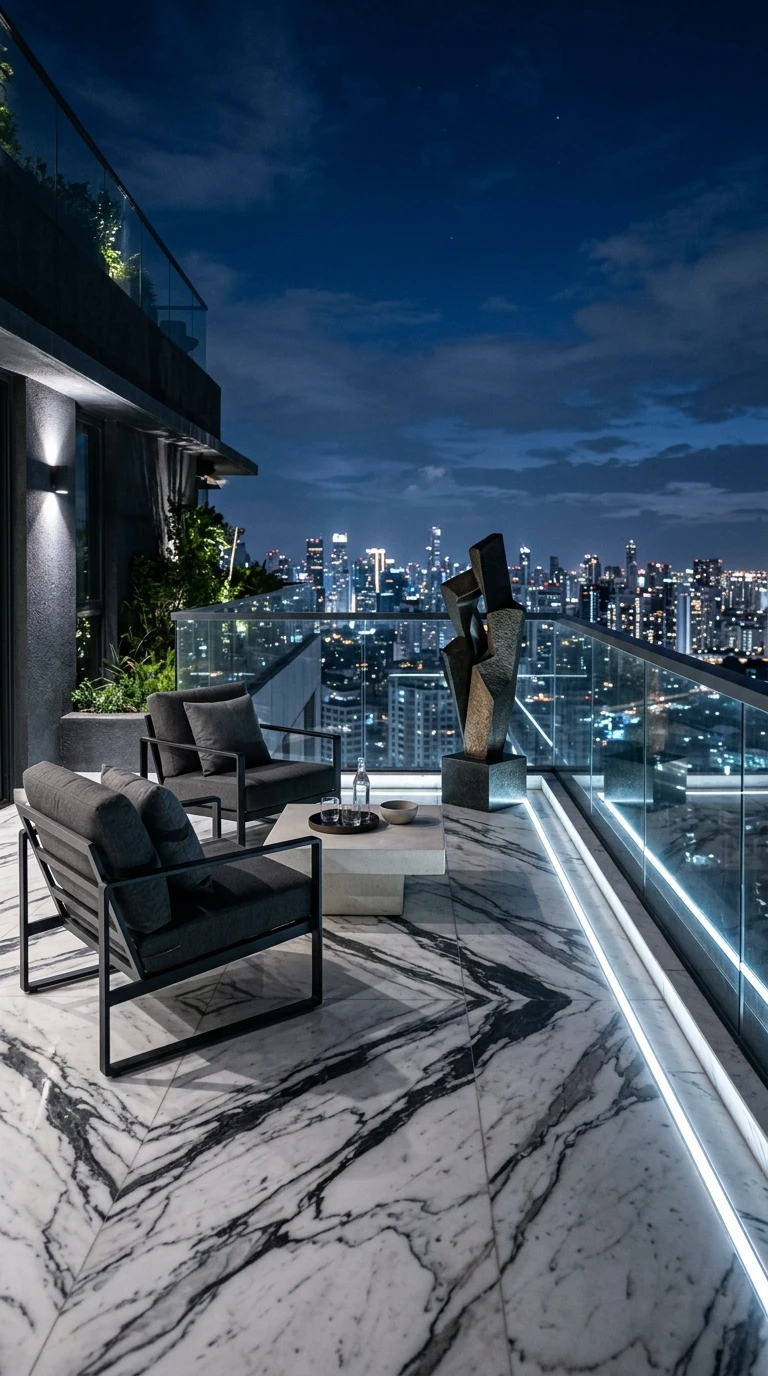
If there is one material that communicates luxury without any effort at all, it is marble. Using large-format marble tiles on a terrace floor, think slabs of at least 60×60 cm in warm Calacatta or dramatically veined Nero Marquina, creates a surface that reflects light beautifully and anchors the whole design in something genuinely premium. Pair this with a monochrome furniture palette: matte black powder-coated lounge chairs, a low white concrete coffee table, and a black linen umbrella for shade.
The color palette here lives in whites, charcoals, and deep blacks with no warm tones interrupting the clarity. Lighting should be recessed floor LEDs along the perimeter and perhaps a sleek wall sconce or two in brushed gunmetal. For texture, introduce a single large outdoor rug in a flat-weave geometric pattern to ground the seating area without softening the overall edge of the design. Add one abstract sculpture near the railing as a focal point, and resist the urge to over-accessorize. Restraint is the luxury here.
Designer Tip: Use large-format tiles with minimal grout lines. The fewer the breaks in the floor surface, the more expansive and expensive it looks.
Glass Railings and the Floating Terrace Effect
Nothing makes a terrace feel more architecturally ambitious than glass railings. When the barrier between you and the view is completely transparent, the terrace appears to extend endlessly outward, almost as if it is floating above the city or garden below. This works best with a restrained palette: pale stone flooring, furniture in warm sand or off-white tones, and lighting that runs beneath the glass panels to create a soft glow at night.
For furniture, go with low-profile modular pieces that do not compete with the railing line visually. A slung leather daybed, a slim teak side table, and two angular lounge chairs are all you need. Layer in light outdoor curtains on one side to define the space without closing it off. In terms of accessories, a single oversized ceramic planter with a sculptural olive tree brings enough organic warmth to stop the design from feeling cold. The overall effect is quiet confidence, which is the best kind of luxury.
Designer Tip: Orient your main seating to face the best sightline your terrace offers. Let the view do the decorating, and keep everything else in the background.
Warm and Organic: The Natural Material Aesthetic
Teak and Rattan with Earthy Linen
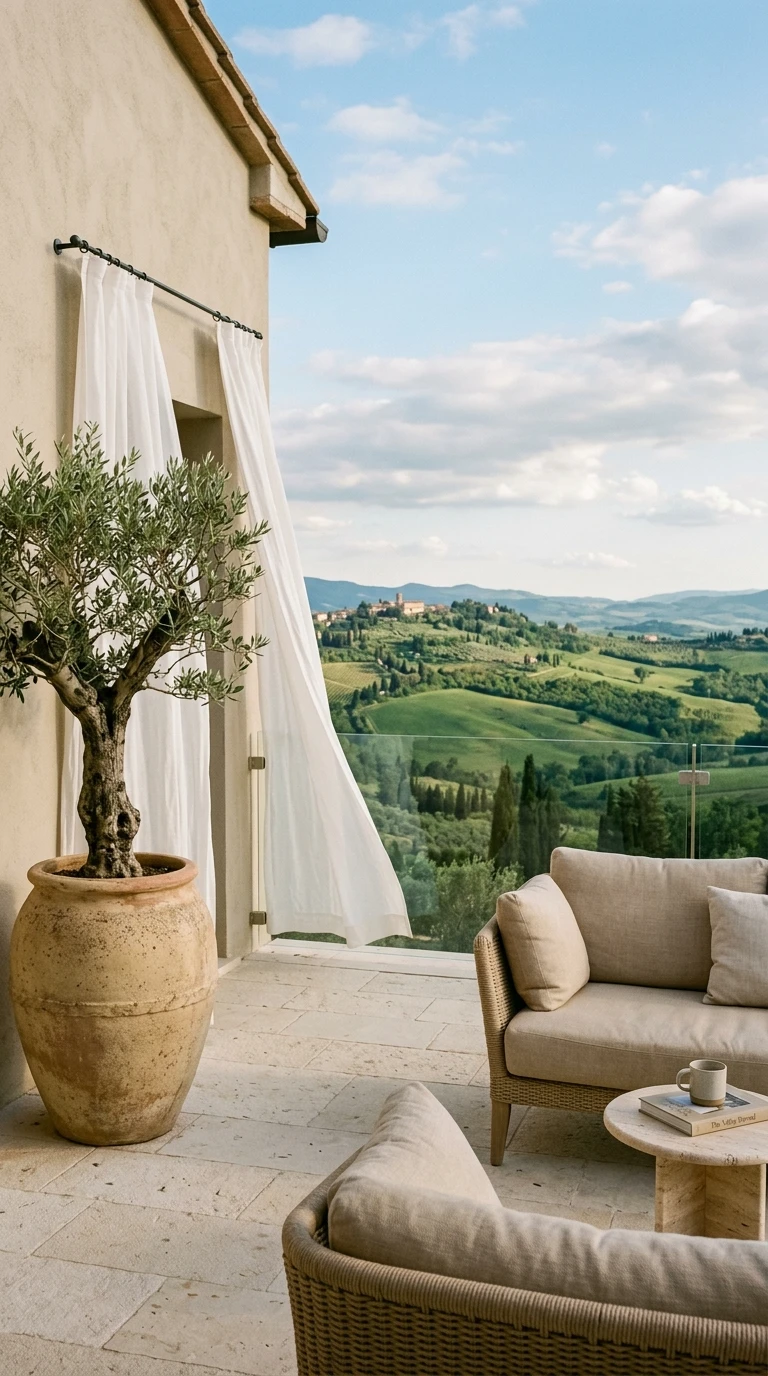
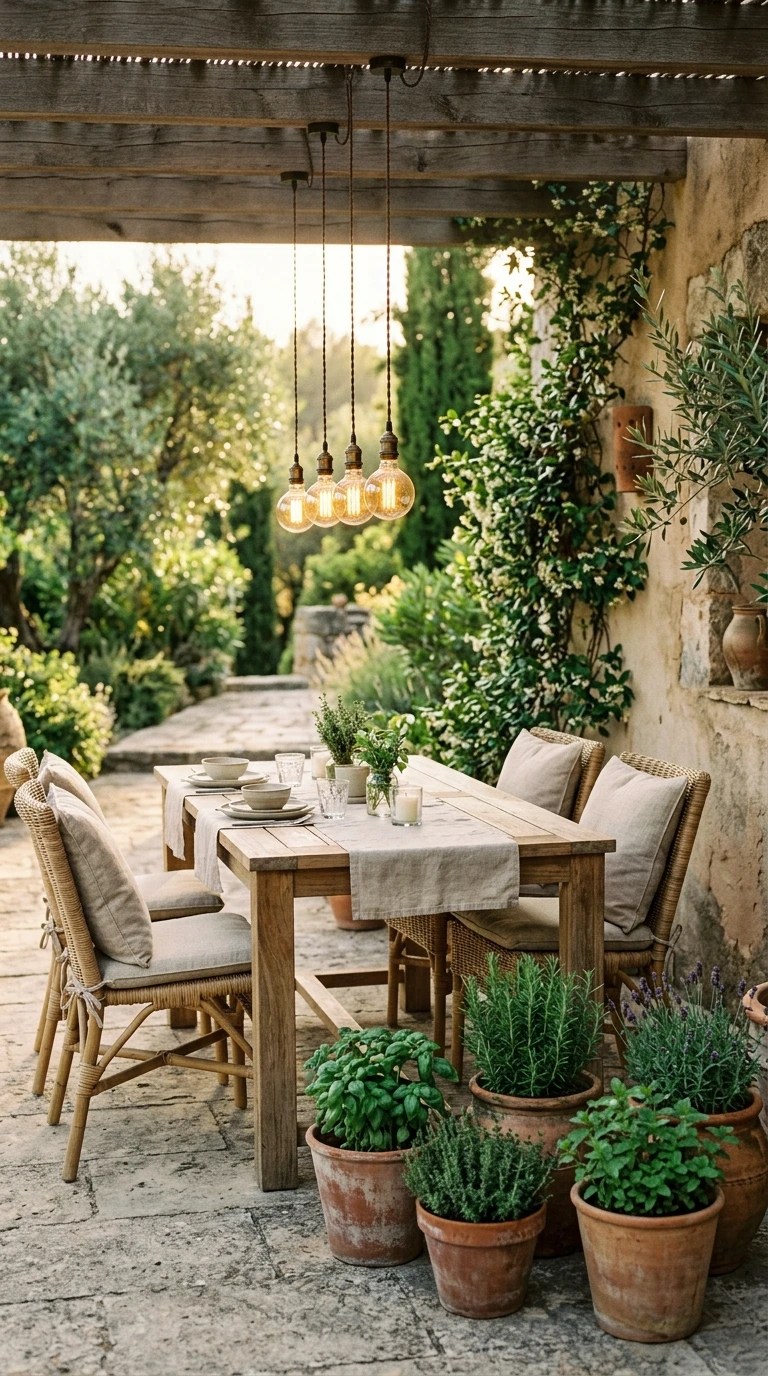
Natural materials have never been more at home on a luxury terrace than they are right now. Teak is the gold standard for outdoor furniture because it ages beautifully to a silver-grey patina, holds up in all weather, and carries an intrinsic warmth that no synthetic material can replicate. Pair a solid teak dining table and matching benches with rattan lounge chairs, and the terrace immediately reads as considered and high-end without being stiff.
For the color palette, think warm sand, terracotta, clay, and the muted green of olive leaves. Linen cushion covers in a natural undyed tone are the ideal upholstery choice: they breathe well, they look effortlessly elevated, and they layer beautifully with a heavier wool throw for cooler evenings. Lighting here should be warm-toned, not cool white. Think Edison filament pendants hung from a simple pergola or a cluster of rattan lanterns at varying heights. Finish with a collection of aged terracotta pots in varying sizes, filled with herbs, lavender, and trailing succulents.
Designer Tip: Mix teak and rattan deliberately rather than accidentally. A teak table with rattan chairs, for example, reads as curated. Matching sets in natural materials can look too expected.
Travertine Paving with Warm Brass Accents
Travertine is having a serious moment in high-end outdoor design, and for good reason. Its naturally pitted surface, creamy beige tones, and subtle veining give it a depth that plain stone or tile simply cannot match. When used as terrace paving, travertine creates a foundation that looks as though it has always been there, aged and confident. Combine it with furniture in warm white and natural linen, and add brass accents through side table legs, lantern frames, and planter trims.
The warmth of brass against travertine is one of those combinations that just works. It feels expensive without being obvious about it. Lighting should carry the warmth through: wall-mounted brass sconces, candles in hurricane glasses on the dining table, and soft downlighting from a fabric-paneled pergola overhead. For greenery, tall cypress or bay laurel in square travertine-finish planters add vertical structure. Drape a Moroccan-style runner rug in cream and terracotta beneath the seating area to define the lounge zone and add texture at foot level.
Designer Tip: Seal travertine annually for outdoor use. Unsealed, it stains easily from food and drink, which is a costly fix for such a beautiful surface.

Grown-Up Glamour: The High-End Entertainment Terrace
Outdoor Bar with Custom Cabinetry
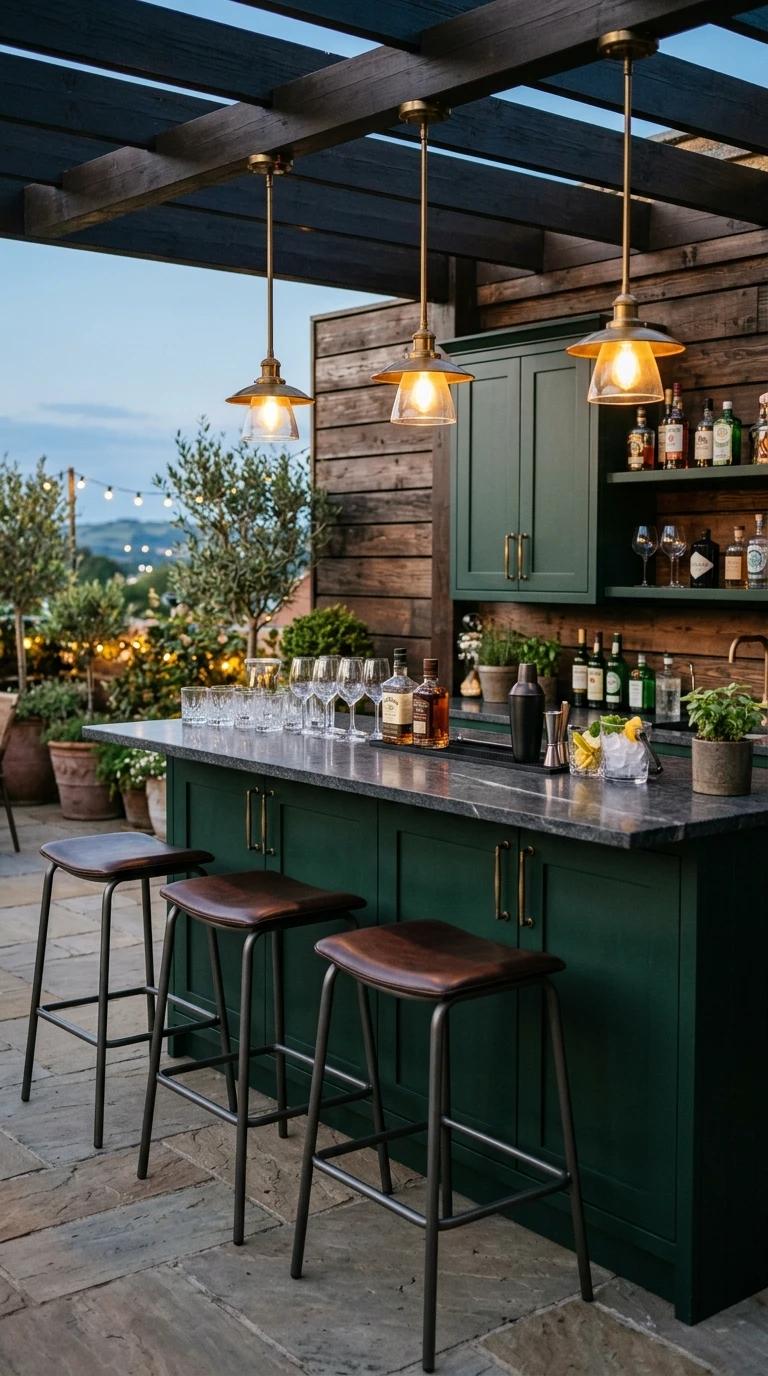
If you entertain regularly, few things signal hospitality and intention as clearly as a properly designed outdoor bar. This is not a folding trolley or a plastic side table with some bottles on it. This is custom powder-coated cabinetry in a deep hunter green or matte charcoal, topped with a thick slab of honed granite or Corian. Install a built-in wine cooler, a small sink, and open shelving for glassware. Add four bar stools in a sleek metal frame with weather-resistant leather seats.
The palette for this zone should be intentional and distinct from the lounge area, creating a sense of separate rooms on one terrace. Deep greens, blacks, and warm metals look exceptional together. Lighting above the bar should be task-focused but atmospheric: two or three pendant lights in aged brass or smoked glass hanging directly overhead. On the surrounding wall, mount a slatted wood panel or a vertical garden of boxwood for texture and depth. A bar this well-designed becomes the centrepiece of every gathering, and guests will genuinely notice.
Designer Tip: Install a pull-out hose fitting beneath the bar sink for easy cleaning after parties. Practicality is a form of luxury too.
Outdoor Dining Room with a Statement Chandelier
The idea of a chandelier outside still surprises people, but once you see it done well, you cannot unsee it. An outdoor-rated chandelier, in wrought iron, rattan, or a modern sculptural form, hung above a large dining table transforms the entire energy of the terrace. Suddenly dinner out here is not just dinner. It is an occasion. Choose a table that seats eight comfortably, in a natural teak or polished concrete finish, with upholstered dining chairs in an outdoor-grade fabric.
Color palette here: warm cream, wicker, warm black, and candlelight. String fairy lights around the pergola columns for secondary ambiance when the main chandelier is dimmed. Add a low centerpiece of fresh herbs in vintage clay pots down the middle of the table rather than cut flowers, which wilt in outdoor heat. The floors in this zone should be grounded with an outdoor flatweave rug in a warm neutral that defines the dining footprint and prevents chairs from scratching the terrace surface. The combination of the chandelier, the rug, and the right table is enough to make this zone feel like an indoor dining room that just happens to be open to the sky.
Designer Tip: Always install a dimmer switch for outdoor chandeliers. The ability to lower the light as the evening progresses is what separates a good dinner from a great one.

The Wellness Terrace: Designed for Rest and Restoration
A Canopied Daybed as the Focal Point
In luxury interior design, the daybed is making a strong comeback, and nowhere does it feel more appropriate than on a generously sized terrace. A canopied outdoor daybed, with a solid teak or powder-coated steel frame, sheer weather-resistant drapes on all four sides, and a thick foam mattress covered in a washable outdoor linen, is an investment that pays off every single day. Position it to face the best view or toward a garden planting bed.
The palette for this setup should be deeply relaxing: off-white drapes, ivory cushions, a cotton throw in pale sage or warm beige, and nothing bright enough to jolt you out of your calm. Around the daybed, place two low rattan side tables, a stack of hardcover books, a small candle lantern, and an oversized ceramic pot with a trailing plant. Lighting at this end of the terrace should be entirely ambient: no overhead spots, just a few solar-powered stake lights in the surrounding planting and perhaps a paper lantern hung low above the bed frame. This is the corner of your terrace designed purely for not doing very much, and it should feel like it.
Designer Tip: Choose drape fabric that is rated for UV and moisture resistance. Standard linen and cotton will bleach and mold within a season outdoors.

A Built-In Fire Feature with Wraparound Seating
There is something almost prehistoric about gathering around a fire, and a built-in fire feature on a terrace taps directly into that instinct. A linear bioethanol fire pit set into a low stone or concrete plinth, flanked by wraparound built-in seating, creates a focal point that draws everyone toward it naturally. Line the seat bases in powder-coated steel and top them with deep cushions in a weather-resistant fabric in warm charcoal or smoked plum.
The color palette in this zone should be warm and moody: deep charcoal, blackened steel, warm terracotta, and the glow of firelight doing most of the work. Add wall-mounted sconces on either side of the fire at low level to reinforce the amber warmth without competing with it. Scatter a few woven outdoor poufs around the fire for extra seating on busier evenings. A planting bed running along the back wall of this zone, filled with ornamental grasses that move in the breeze, adds organic life and frames the fire beautifully. In cooler months, this is the terrace zone that never closes.
Designer Tip: Bioethanol fires are cleaner than wood and require no flue, making them far easier to install on upper-level terraces where chimneys are not possible.

Lush and Layered: The Garden Terrace
A Vertical Garden Wall as the Design Anchor
A vertical garden wall does something no piece of furniture can do: it makes a terrace feel alive. Using a modular panel system, you can cover an entire boundary wall in a structured planting of ferns, box hedging, trailing jasmine, and seasonal colour. For a luxury result, keep the planting colour-controlled: all greens with occasional white or cream flowers rather than a rainbow of colour. This restraint is what makes it feel designed rather than chaotic.
The furniture in front of a vertical garden wall should be simple and let the planting take the lead. A pair of sculptural outdoor armchairs in a warm stone-white, a low glass coffee table to keep sightlines clear, and a single brass floor lamp for evening use. The floor beneath this zone works beautifully in a natural decking, teak or composite, which echoes the organic texture of the planting. At night, low uplighters built into the base of the planting system illuminate the wall from below, creating a dramatic living backdrop that changes with the seasons.
Designer Tip: Install an automatic drip irrigation system within the vertical panel. Manual watering on a large wall planting is inconsistent and time-consuming, and dry patches undermine the whole effect.

Terrace Kitchen Garden with Raised Herb Planters
A kitchen garden on a luxury terrace is one of those ideas that manages to be both practical and deeply stylish. Raised planters in powder-coated steel or sealed concrete at counter height, filled with culinary herbs, edible flowers, and compact salad varieties, bring a sense of living intentionality to the space. Position them along a sunny wall or railing and label each variety with small brass or slate markers.
The palette here is fresh and natural: deep forest green planter boxes, warm terracotta pots for the smaller herbs, and the vivid green of actively growing plants. Add a small wooden stool or a wall-mounted fold-down work surface nearby so there is somewhere to snip herbs and arrange them before taking them inside. Light the planting wall with clip-on grow lights in a sleek, minimal fitting that does not look industrial. Underneath the planters, a herringbone brick or stone floor surface adds warmth and echoes the kitchen-garden aesthetic. The result is a terrace that feels genuinely productive, generous, and deeply personal.
Designer Tip: Group herbs by watering needs, not just by culinary use. Mediterranean herbs like rosemary and thyme need much drier soil than basil or mint, and mixing them leads to losses.

Detail-Driven Luxury: The Finishing Touches That Matter
Layered Outdoor Rugs and Cushion Styling
The fastest way to lift the feel of any terrace is through textiles, and layered outdoor rugs are where many high-end designers start. Using two rugs of different sizes in related tones, one larger flatweave as the base and a smaller Moroccan-style piece layered over it, creates depth and visual richness without adding any permanent fixtures. Choose rugs rated for outdoor use in polypropylene or recycled PET, which handle rain and UV exposure without fading.
For cushion styling, the key is abundance and variety in weight rather than pattern. A deep sofa looks genuinely luxurious when loaded with cushions in three different sizes: two large 60cm backs, two medium 45cm fills, and two smaller 30cm accent pieces. Keep the palette in three tones maximum, perhaps natural linen, warm ivory, and a dusty sage, and vary the fabric texture between flat weave, velvet-finish outdoor fabric, and something with a subtle embossed pattern. Add a single indoor-quality throw folded across one arm of the sofa for that hotel-suite touch that signals someone has thought carefully about the styling.
Designer Tip: Store cushion covers rather than full cushion pads over winter. The covers compress for storage and the pads last much longer when kept dry.

Statement Outdoor Lighting as Sculpture
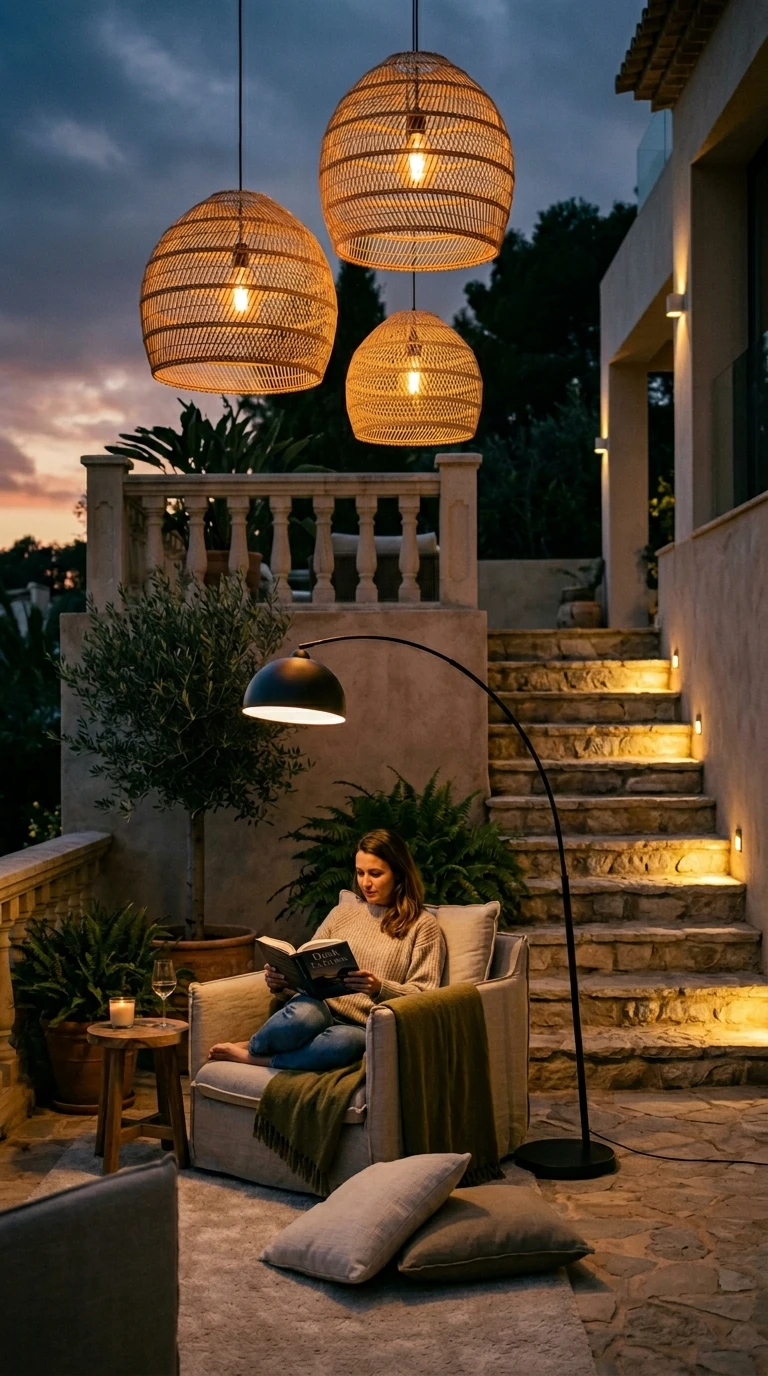
Lighting on a luxury terrace should never be an afterthought, and it should certainly not be limited to a string of fairy lights around the railing. Think of outdoor lighting as sculpture that happens to illuminate. A cluster of oversized rattan pendant lights hung at different heights above a lounge corner. A single arc floor lamp in matte black leaning over a reading chair. Recessed step lights in blackened steel running along a staircase edge. Each fitting is chosen for how it looks in daylight as much as for what it does after dark.
Layer the lighting into three zones on any terrace: ambient overhead or perimeter lighting for general use, task lighting at dining and bar areas, and accent lighting for plants, sculptures, and architectural features. The interplay between these three layers is what creates the kind of terrace atmosphere that makes people linger well past midnight. Choose fittings in finishes that tie back to the furniture, whether that is brushed brass, aged bronze, or matte black, so the lighting becomes part of the overall design language rather than an add-on.
Designer Tip: Put all terrace lighting on a smart system or at minimum three separate circuits. The ability to switch zones independently transforms the terrace from functional to atmospheric in seconds.
Bringing It All Together
The best luxury terraces are not the ones with the most expensive furniture or the most square footage. They are the ones where every decision, from the flooring material to the throw draped over the sofa arm, has been made on purpose. They are spaces that feel both polished and genuinely comfortable, where you could host a dinner for twelve or spend a Sunday afternoon alone with a book and a coffee and feel equally at home.
Start with the bones: flooring, railings, and any structural elements like pergolas or built-in seating. Then build the layers outward, furniture, lighting, textiles, and finally the accessories and plants that bring personality. Take your time. A great terrace usually arrives through a series of considered additions rather than one big purchase.
Whether you are drawn to the sharp lines of modern marble and glass, the warmth of teak and travertine, or the lush abundance of a living garden wall, there is a version of a luxury terrace that fits how you actually live. The ideas in this guide are your starting point. What comes next is entirely yours to decide.
Frequently Asked Questions
What flooring works best for a luxury terrace?
Marble, travertine, large-format porcelain tiles, and composite decking are all popular choices for high-end terraces. Marble and travertine look exceptional but require sealing and maintenance. Composite decking is lower maintenance and very durable. The right choice depends on your climate, your maintenance tolerance, and the overall aesthetic you are working toward.
How do I make a smaller terrace feel luxurious?
Focus on quality over quantity. One beautifully upholstered chair is more luxurious than four average ones. Use large-format floor tiles to minimize grout lines and make the space feel bigger. Keep the palette tight, two or three tones only, and invest in one statement piece of lighting that draws the eye upward. Mirrored panels or glass railings also help a compact space feel more open.
What furniture materials hold up best outdoors?
Teak, powder-coated aluminium, stainless steel, and all-weather wicker are the most reliable materials for outdoor furniture. Teak is the premium natural choice and ages beautifully. Powder-coated aluminium is lightweight and completely rust-resistant. For cushions, choose fabrics rated for outdoor use, such as Sunbrella or similar solution-dyed acrylics, which resist UV fading and moisture.
How should I approach lighting for a luxury terrace?
Layer your lighting across three types: ambient lighting for general atmosphere, task lighting for functional areas like dining and bar zones, and accent lighting to highlight plants, sculptures, and architectural details. Invest in fittings with finishes that match your furniture hardware, and put circuits on separate switches or a smart system so you can change the mood of the space with a single tap.
Can I create a luxury terrace on a budget?
Absolutely. Start with the big-impact items that cost less: textiles like cushions, rugs, and throws make an enormous difference and are relatively affordable. Lighting is another area where you can get high visual return for a reasonable spend. Save your bigger budget for the items you touch every day: the main sofa, the dining chairs, and the flooring, because quality really does show in those.
How do I choose the right plants for a luxury terrace?
For a high-end look, stick to a curated palette of three to five plant varieties rather than a mix of everything. Structural plants like olive trees, bay laurel, ornamental grasses, and box balls in large planters create the architectural backbone. Add seasonal interest with lavender, white geraniums, or trailing rosemary. Choose planters that match the design language of your terrace, whether that is matte concrete, aged terracotta, or powder-coated steel.