Scandinavian Dining Room Ideas That Understand Why the Style Works
Most Scandinavian dining room inspiration falls into one of two traps. Either it is so minimal that the room feels cold and empty, with nothing to anchor a meal or a conversation in warmth, or it is a flat collection of light wood and white walls that looks Nordic in a generic way without feeling Nordic in the specific, considered, deeply liveable way that genuine Scandinavian interiors do. The difference between those two outcomes almost always comes down to whether the room was built around the visual surface of the style or around the principles underneath it.
This article is organized around those five underlying principles: natural materials and their role in a Nordic dining room, light and the specific way Scandinavian interiors manage it, functional simplicity as a discipline of what to keep and what to remove, hygge through texture as the quality that stops minimalism from becoming cold, and considered detail as the final layer that makes a Scandinavian dining room feel genuinely designed rather than simply uncluttered. Each group delivers specific ideas that apply the principle in practice. The rooms that get this style right are almost always the ones where someone understood what they were trying to achieve, not just what they were trying to imitate.
Principle 1: Natural Materials
In a Scandinavian dining room, natural materials are not decoration. They are the structure of the room. Wood, stone, linen, wool, leather, and ceramic are chosen because they connect the interior to the natural world outside, because they age in ways that look considered rather than worn, and because the sensory quality of natural materials at a dining table, the warmth of timber underhand, the weight of a ceramic cup, the give of a linen seat pad, makes meals feel genuinely different from eating at a surface surrounded by synthetic materials.
1. A Light Timber Dining Table as the Room Anchor
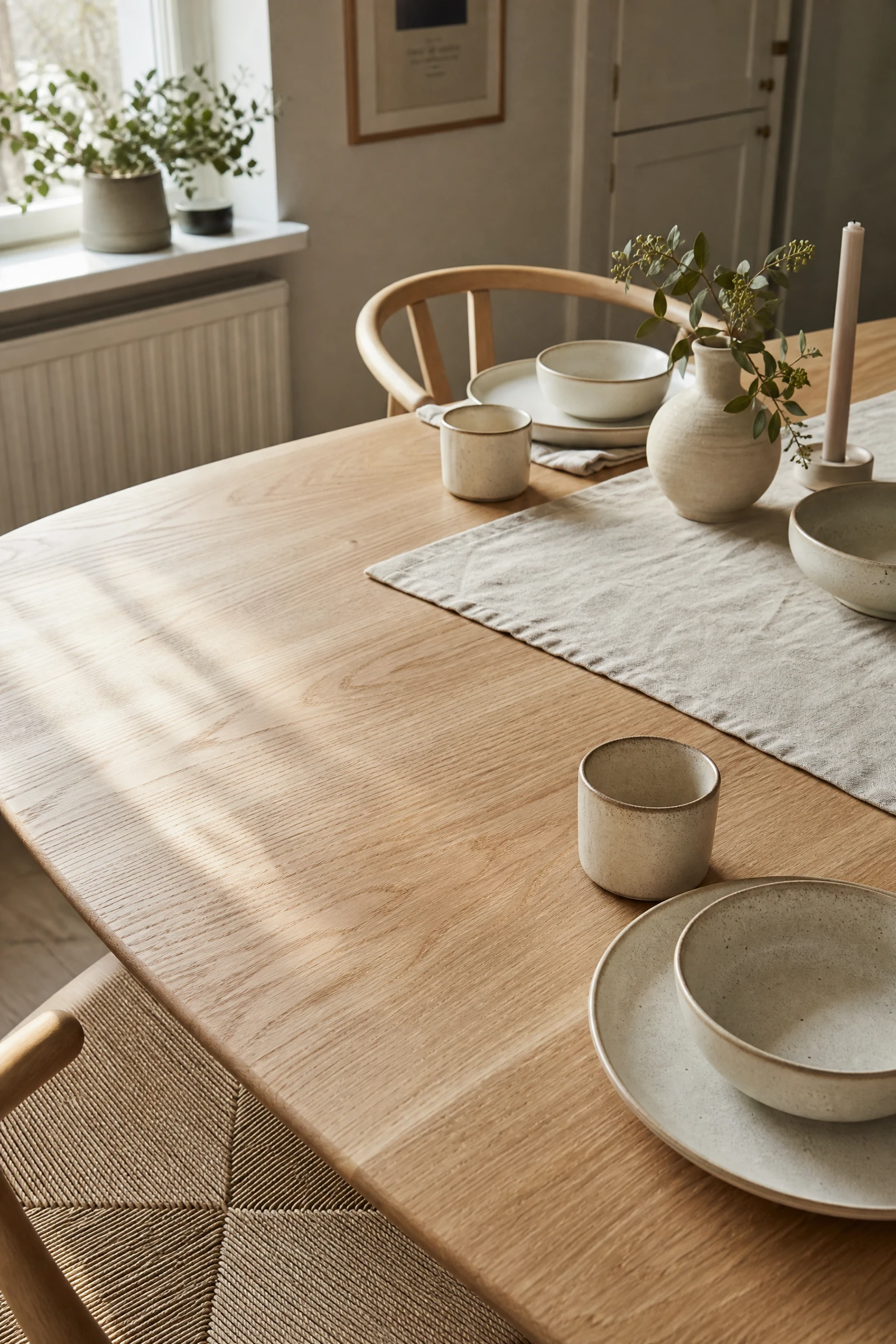
The dining table in a Scandinavian room is the most important piece of furniture in the house, and the material of its surface is the most important decision of all. Light timber, whether white-oiled oak, pale ash, bleached beech, or lightly finished birch, creates a table surface that is warm to the touch, that shows the grain and natural variation of the wood, and that reads as the organic centre of the room. The Scandinavian tradition of furniture making has produced some of the most refined and most imitated dining table designs in the history of furniture, and the characteristic quality of the best of them is a precise, considered simplicity: tapered legs, clean horizontal surfaces, no ornamental carving or applied decoration, and a scale that is generous enough to seat a family but not so large that the table dominates the room at the expense of everything around it. The dining table in a Scandinavian room needs to be the right size for the space: a table that is too large for its room loses the specific quality of Scandinavian design, which is ease of movement through a space rather than its maximum occupation of it.
Pro Move: Oil or wax a light timber dining table rather than lacquering it. A lacquered surface is harder to repair and loses the natural feel of the timber underhand that makes a Scandinavian dining table genuinely pleasant to sit at. White oil or hardwax oil finishes maintain the warmth and texture of the wood grain and can be spot-repaired when scratched or marked without refinishing the whole surface.
2. Mixed Chair Materials Around a Single Table
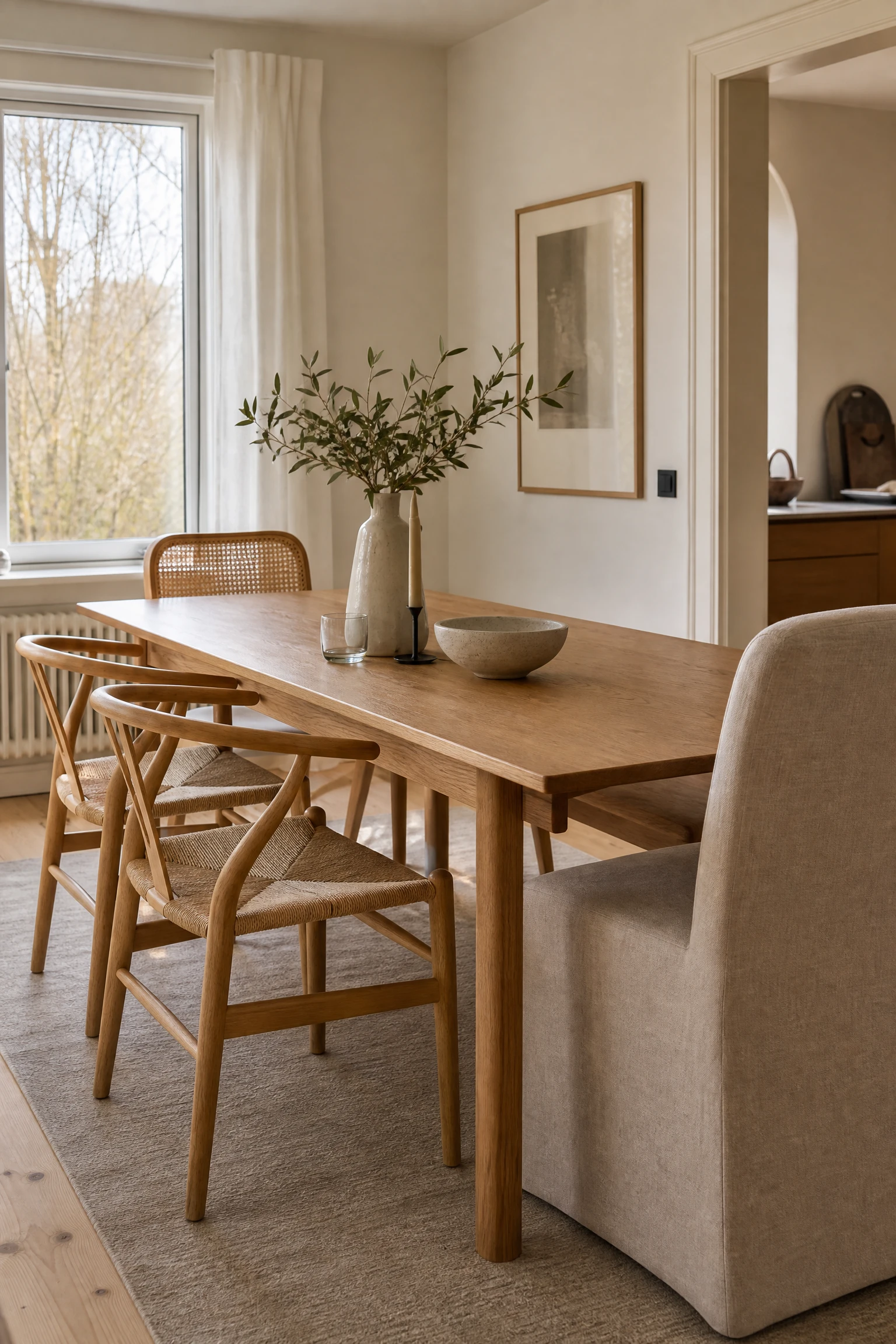
One of the most characteristic qualities of a well-considered Scandinavian dining room is the mixing of chair materials around the same table: a set of solid timber chairs on one side, a bench on the other side, and perhaps two upholstered chairs at the heads of the table, all in materials that share the same tonal family, light timber, natural linen, pale rattan, and warm leather, without matching exactly. This approach, which is the opposite of the matched dining set that dominated much of twentieth-century Western dining room convention, creates a dining room that looks collected and personal rather than purchased as a package. The mixing works when all the materials share a warmth of tone and a natural quality: a pale oak chair alongside a rattan-backed chair alongside an upholstered chair in oatmeal linen reads as considered and characterful. The same mix in synthetic or cold materials reads as incoherent.
Designer Advice: The Wishbone chair, or Y-Chair, designed by Hans Wegner in 1949, remains the most recognizable and most widely used dining chair in the Scandinavian aesthetic and for good reason: its woven paper cord seat, solid timber frame, and distinctive Y-shaped back splat give it a sensory richness, a visual lightness, and a genuine comfort that most contemporary interpretations do not match. If budget allows, the original from Carl Hansen and Son is worth the investment for a dining room that will be used daily for decades.
3. A Solid Timber Dining Bench

A dining bench along one side of the table is both a practical and a characteristically Nordic approach to seating that addresses several qualities of Scandinavian dining room design simultaneously. It accommodates more people than chairs at the same table width, which suits the Nordic emphasis on gathering and hospitality. It keeps one side of the dining table visually open and less visually busy than a row of chairs. And a bench in solid natural timber, whether in oak, pine, or ash, introduces a piece of furniture with genuine mass and materiality at floor level that grounds the room in a way that slim-legged chairs do not. The bench can be softened with a long linen or wool seat cushion in a neutral or muted colour that adds comfort for extended meals and introduces a layer of textile warmth to the otherwise hard material of the timber seat.
Quick Tip: Position the bench against the wall side of the table rather than the open aisle side. A bench against the wall is more comfortable to sit at because it allows the sitter to lean back against the wall rather than sitting unsupported in open space. It also frees the aisle side for chairs that can be pushed in and pulled out easily without disturbing the bench.
4. Natural Stone or Concrete as a Counterpoint to Timber
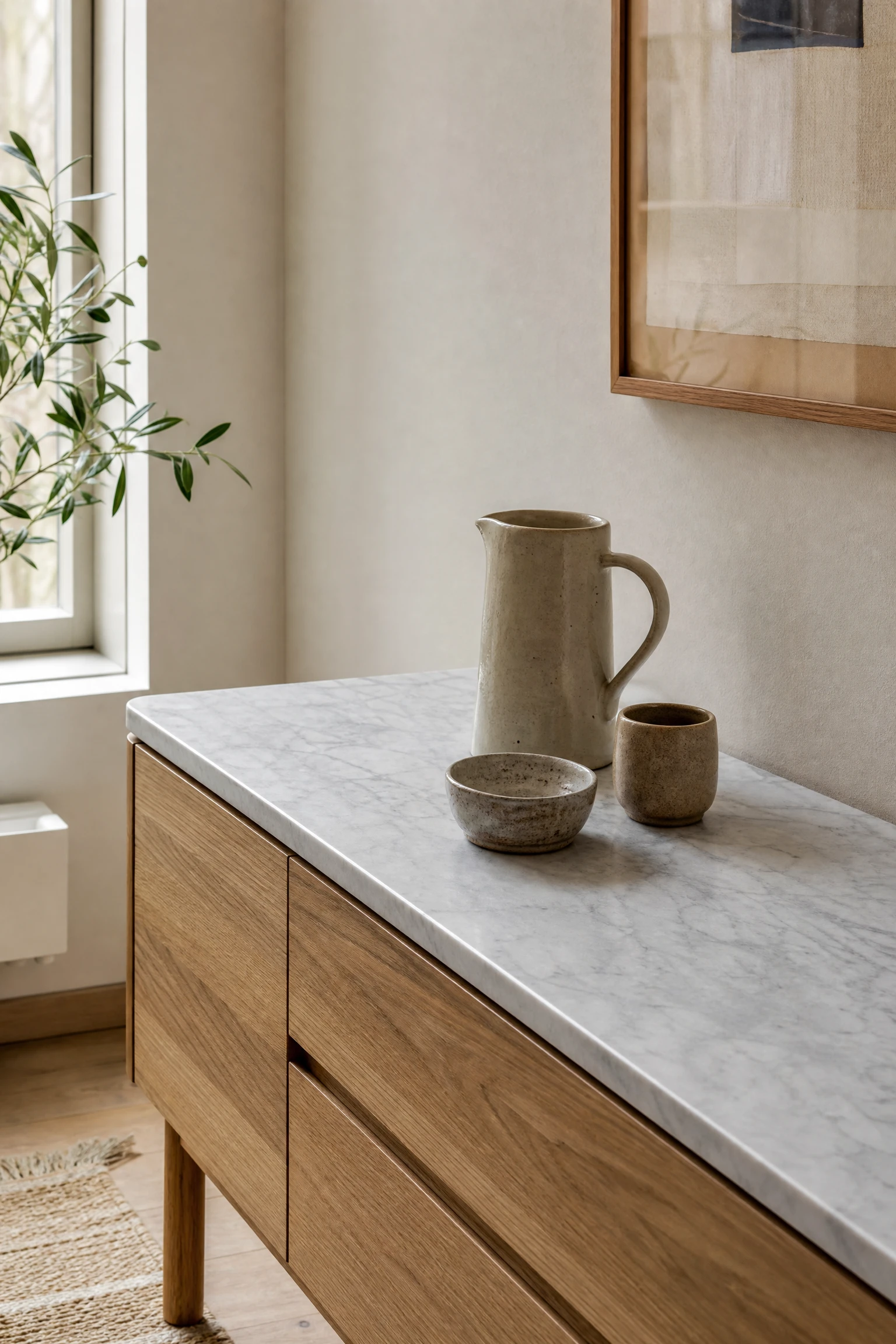
In a Scandinavian dining room that uses primarily warm timber, the introduction of one cooler natural material as a counterpoint prevents the room from reading as uniformly warm and slightly heavy. A stone-topped side table, a concrete or limestone pendant light shade, a marble slab used as a serving surface on the sideboard, or a slate floor in the dining zone all introduce the cool, mineral quality of stone alongside the warmth of timber and create the material tension that gives Nordic interiors much of their visual interest. The Nordic landscape itself provides this same contrast: the warmth of pine and birch forests alongside the cool grey of granite, fjord water, and winter light. Replicating that material contrast in a domestic dining room creates an interior that feels genuinely connected to a natural environment rather than simply furnished with natural materials.
Reality Check: Marble and stone surfaces in a dining context require more maintenance than timber or ceramic. Marble in particular is vulnerable to acid etching from wine, vinegar, and citrus, which are all common at a dining table. A sealed honed marble or a limestone surface is more forgiving than polished marble for a dining sideboard or surface that will be in regular contact with food and drinks.
5. Rattan and Woven Elements at the Table
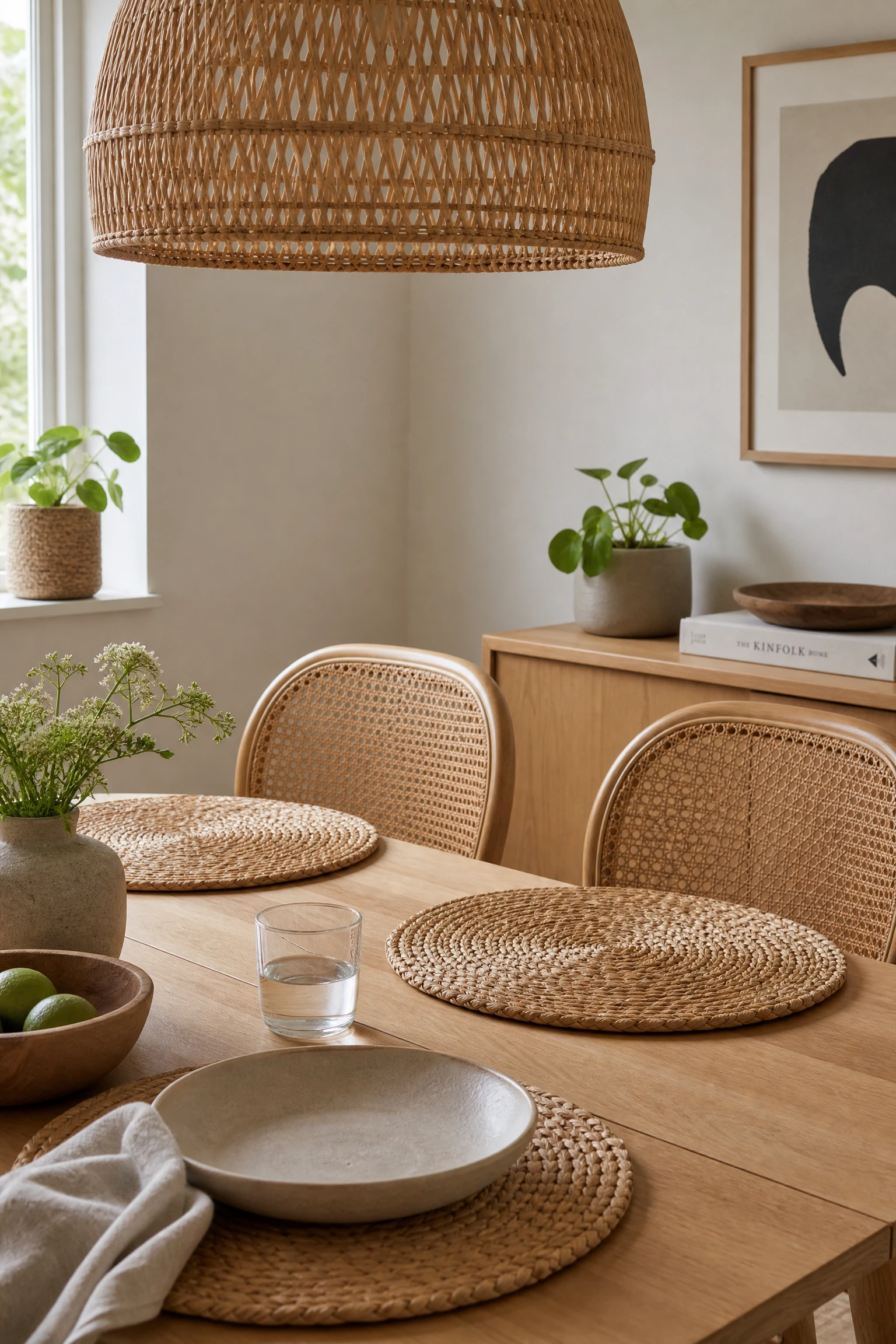
Rattan chair backs, woven seagrass place mats, a rattan pendant above the table, or a woven basket used as a centrepiece vessel all introduce the natural fibre texture that connects the Scandinavian dining room to the broader Nordic tradition of craft and handmade material. The open weave of rattan and natural fibre allows light to travel through the material rather than being stopped by it, which creates a visual lightness in the dining room that a solid timber or opaque ceramic equivalent does not have. In a room where the surfaces are primarily smooth, hard, and light in tone, the introduction of natural woven texture at multiple scales, from the fine weave of a woven seat pad to the open structure of a rattan pendant, creates a layered material richness that reads as genuinely handmade and genuinely Nordic.
Heads Up: Natural rattan and woven chair backs require different care than solid timber or upholstered alternatives. Rattan should be cleaned with a damp cloth rather than submerged in water, kept away from sustained direct sunlight that causes the fibres to bleach and dry out, and treated with linseed oil once a year to prevent the natural material from becoming brittle over time.
| Natural Material | Best Use in Dining Room | Maintenance Level | Nordic Connection |
| Light timber (oak, ash, birch) | Table, bench, chairs, floor | Low (oil or wax annually) | Forest, craft tradition |
| Rattan and woven fibre | Chair backs, pendants, mats | Low (damp cloth, annual oil) | Craft, coastal tradition |
| Natural stone (marble, slate) | Sideboard surface, floor | Medium (seal regularly) | Landscape, mineral quality |
| Linen and wool | Seat cushions, table runner | Low (hand wash or cool cycle) | Textile tradition, warmth |
| Ceramic and stoneware | Table setting, centrepiece | Very low (dishwasher safe) | Craft, functional beauty |
Principle 2: Light and Atmosphere
Scandinavian design is rooted in the reality of long, dark winters in which natural light is a scarce and precious resource. The way Nordic interiors manage light, both maximizing natural daylight and creating genuinely warm and atmospheric artificial lighting, is not just an aesthetic preference but a design response to a specific environmental condition. In a dining room, the approach to light determines whether the room functions as a pleasant place to eat in all seasons and at all hours of the day or only looks good in the specific conditions of a well-lit afternoon.
6. A Single Statement Pendant Positioned Low Over the Table

The defining lighting element of a Scandinavian dining room is a single pendant light hung directly over the centre of the dining table at a height of between 70 and 90 centimetres above the table surface. This low pendant position, which feels counterintuitive to anyone accustomed to high ceilings and uplighting, creates a focused pool of warm light at the table that makes everything on the surface of the table, the food, the tableware, the faces of the people seated at it, more visible and more warmly lit than any ceiling-level light source could achieve. The pendant at this height also functions as an intimate overhead presence that psychologically encloses the dining zone and creates the sense of a room within a room that makes a dining table genuinely inviting to sit at. The specific form of the pendant matters: designs in paper, linen, rattan, smoked glass, or simple white-painted metal all suit the Scandinavian dining context. Elaborate or highly decorative pendants fight the material restraint of the style.
Pro Move: Connect the dining table pendant to a dimmer switch before installing it. The ability to reduce the pendant from full brightness during meal preparation through to a warm, intimate level during eating and conversation is one of the most impactful functional changes available in a dining room and one that most people do not plan for until after the fitting has been installed.
7. Candles as the Essential Dining Table Element
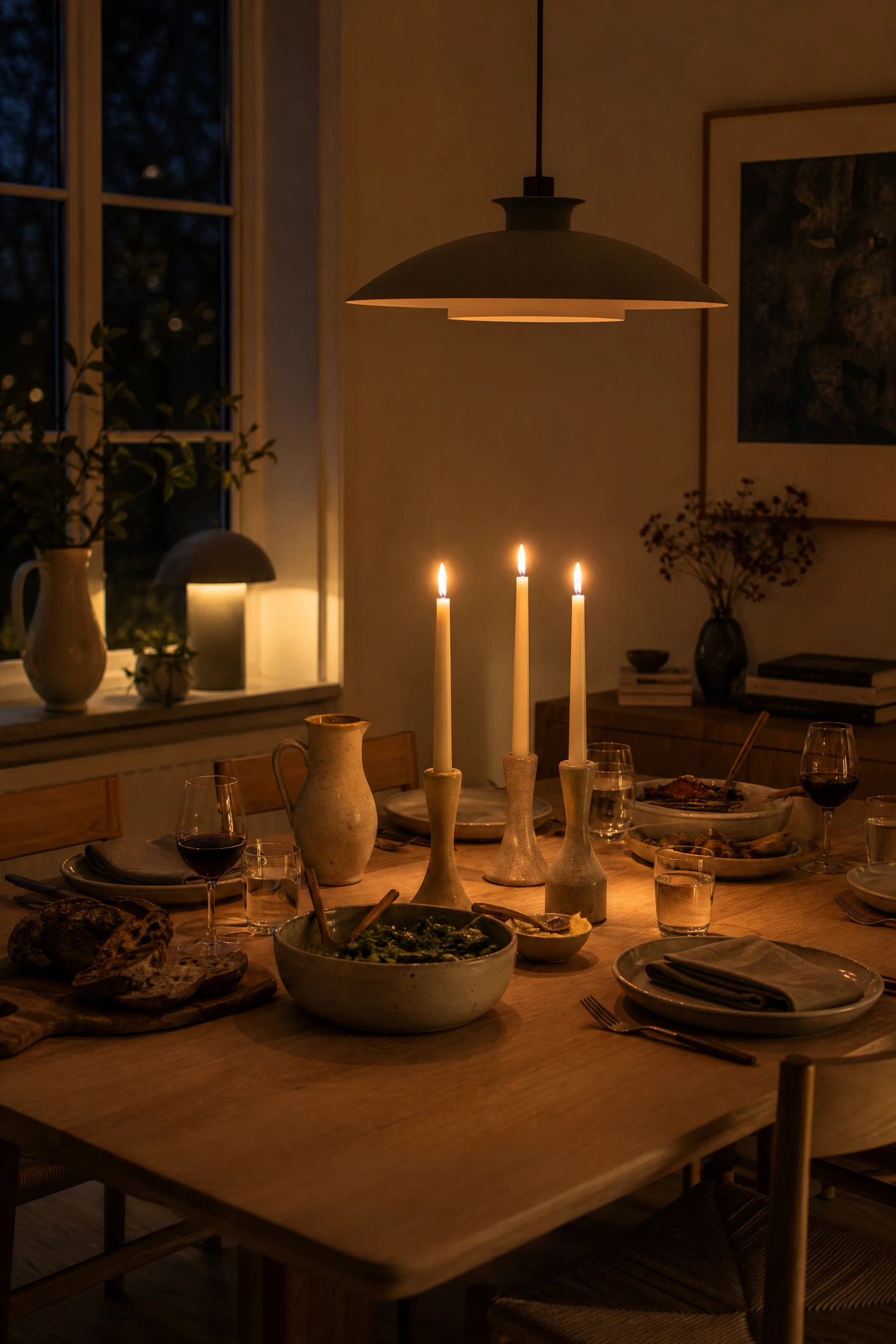
In Nordic countries, candles are not a special-occasion decorative element. They are a daily necessity of domestic life that has been refined over centuries into a genuine cultural tradition. The Danish concept of hygge is inseparable from candlelight, and a Scandinavian dining table without candles at a meal is, in the Nordic understanding of the word, not quite finished. The approach to candles in a Scandinavian dining room is generous and considered rather than occasional and token: two or three tall taper candles in simple ceramic or timber candleholders, a group of tealight candles on a wooden tray at the centre of the table, or a cluster of pillar candles at different heights are all appropriate expressions of this tradition. The candlelight at the dining table creates a warmth and intimacy that supplements the pendant above and reaches into the corners and faces of the room in a way that electric light at any level does not replicate.
Designer Advice: Use unscented or very lightly scented candles at the dining table. A strongly scented candle at the dining table competes with the smell of the food and can make eating unpleasant regardless of how atmospheric the light is. Unscented beeswax or stearin candles in a warm cream or natural white tone are the most authentically Nordic choice and the most practically appropriate for a dining context.
8. Maximizing Natural Daylight With Bare or Sheer Windows

The Scandinavian approach to windows in a dining room is to treat them as light sources rather than as design opportunities for elaborate window dressing. Heavy curtains, thick blinds, or elaborate pelmet treatments all reduce the natural light entering the room, which in Nordic homes is the most valuable and least abundant resource. Bare windows, or windows dressed only with sheer linen or cotton panels that diffuse rather than block the incoming light, maintain the maximum possible natural light in the dining room through the day. In a room with a dining table positioned near a window, the quality of the morning light on the table surface, on the table setting, and on the faces of people eating together creates a daily ritual that is central to the Nordic experience of home and that heavy window treatments systematically eliminate. Where privacy is a concern, a simple roller blind in a neutral tone installed on the window itself, with sheer linen panels on the sides, provides the necessary privacy without sacrificing the essential quality of the incoming light.
Quick Tip: Position the dining table to use natural light as a design element rather than as a background condition. A table positioned so that morning light falls across it from the side creates a different and more interesting daily experience than a table positioned in the centre of the room with the window at its back. In a Nordic dining room, the light is a participant in the meal rather than simply a functional condition.
9. Warm White Walls as a Light-Reflective Surface

The white walls of a Scandinavian interior are not a neutral default or a design-neutral backdrop. They are an active choice rooted in the function of reflecting and multiplying whatever natural or artificial light is available in the room. In a Nordic dining room, white or very near-white walls with a warm undertone, not a cool bright white but a chalky, slightly cream or putty-toned white, create a surface that bounces light around the room continuously and makes the space feel larger, brighter, and more luminous than any coloured wall could achieve at the same light level. The specific quality of the white matters: a cool, slightly blue-toned white can make a dining room feel clinical and unwelcoming, particularly in winter conditions. A warm white with a very slight warm undertone, such as Farrow and Ball All White, Dulux White Cotton, or Little Greene Slaked Lime, creates the specific quality of warmth within brightness that defines the Scandinavian interior palette.
Reality Check: The most common failure in a Scandinavian-influenced dining room is choosing a white that is too cool or too bright for the light conditions of the specific room. In a room with limited natural light, a bright cool white will read as slightly grey and flat. In a room with strong southern light, the same white can read as harshly bright. Test warm white samples in the actual room before committing to a full-wall application.
10. A Floor Lamp in the Dining Room Corner

A floor lamp positioned in a corner of the dining room, switched on during evening meals, adds a secondary layer of warm ambient light at a completely different height from the pendant above the table and from any table-level candles. This layering of light sources at different heights, high pendant, mid-level candles, and low corner floor lamp, creates the specific quality of light that defines a genuinely atmospheric Scandinavian interior: no single bright source, but a warm, varied, multidirectional illumination that makes the room feel alive and present at every level. The floor lamp in a Scandinavian dining room context should have a warm-toned shade, in linen, oatmeal cotton, or smoked glass, and a warm bulb at 2700K to 3000K that complements rather than competes with the pendant and candlelight above the table.
Heads Up: A floor lamp in a dining room corner is only effective as an atmospheric element if it is on a separate switch from the pendant, ideally on a dimmer, and is switched on at the beginning of the meal rather than left off as unnecessary. A dining room floor lamp that is never used because it requires crossing the room to switch on is an investment that does not deliver its intended effect. Plan the switching arrangement before installation.
Principle 3: Functional Simplicity
In Scandinavian design, simplicity is not an aesthetic preference. It is a functional discipline: a commitment to keeping only what is useful and beautiful, and removing everything that is neither. In a dining room, this principle is most visible in the furniture selection, the table setting, and the storage approach, and it requires ongoing decisions about what enters the room and what does not.
11. An Extending Dining Table for Flexible Hospitality

The extending dining table is one of the most characteristically Nordic furniture forms because it embodies the Scandinavian approach to functional design: a beautiful object at its smallest everyday size that adapts invisibly to accommodate the demands of Nordic hospitality when needed. The best Scandinavian extending tables use a mechanism that allows the table to expand without any visual disruption to the top surface when closed: a butterfly extension stored within the table body, or a central extending section that aligns perfectly with the fixed ends. When closed, the table reads as a simple, refined piece of furniture at a scale appropriate for daily family use. When extended, it can accommodate a dinner party without the dining room needing to change its character. This flexibility is a genuine design achievement that the best Nordic furniture makers have refined over decades, and it is one of the reasons Scandinavian dining tables tend to be among the most imitated furniture forms in the world.
Quick Tip: Measure not just the extended table dimensions but the path required to reach the extension mechanism when deciding on a table size and model. Some extension mechanisms require access from below the table or from the ends, which can be complicated by existing chairs or a bench positioned against a wall. Test the full extension and retraction process before purchasing.
12. A Sideboard or Credenza for Concealed Dining Room Storage

A low sideboard or credenza in light timber or a white-painted finish along the dining room wall provides the concealed storage that keeps a Scandinavian dining room free of the visual clutter that accumulates when tableware, serving pieces, extra place settings, and table linens have no dedicated home. The sideboard in a Nordic dining context is both a functional storage piece and a display surface for the one or two carefully chosen objects that earn a visible presence in the room: a ceramic jug with seasonal branches, a simple clock, two or three ceramic vessels in coordinating tones, or a single plant. The discipline of the Scandinavian dining sideboard is that the display on its surface is edited to five items or fewer and everything else is behind the doors below. The surface is a styling opportunity, not a storage surface, and the distinction between the two is what keeps the dining room looking considered rather than accumulated.
Designer Advice: Choose a sideboard height that brings the display surface to between 85 and 95 centimetres from the floor, which is also the approximate counter height of most kitchens. At this height, the sideboard surface is comfortable for serving and placing dishes during a meal and becomes a natural extension of the kitchen at the dining room boundary rather than purely a display piece.
13. Dining Chairs With a Slim Profile to Keep the Room Open

One of the most consistent qualities of Scandinavian dining room design is the visual openness of the space around the table, and this quality depends significantly on choosing chairs with a slim, transparent profile rather than large, heavily upholstered ones. A chair with tapered legs, a slender back, and a minimal seat footprint, whether in solid timber, moulded plywood, or a minimal metal frame, allows the floor beneath the table to remain visible even when the chairs are occupied and in use. This floor visibility is the quality that prevents a Nordic dining room from feeling crowded and that creates the sense of air and space that is one of the defining pleasures of Scandinavian interiors. Chairs with wide upholstered sides, thick arms, or very broad seat pans fill the visual space around the table and make the room feel smaller and more enclosed than it actually is.
Reality Check: Dining chairs in a Scandinavian room that feel beautiful when selected in a showroom can feel insufficiently comfortable for extended meals if the seat and back angle are not genuinely ergonomic. Sit in any chair for at least ten minutes before purchasing for a dining context. A chair that becomes uncomfortable after twenty minutes will subtly reduce the pleasure of every long meal in the room regardless of how well it suits the aesthetic.
14. The Minimalist Table Setting as a Daily Discipline
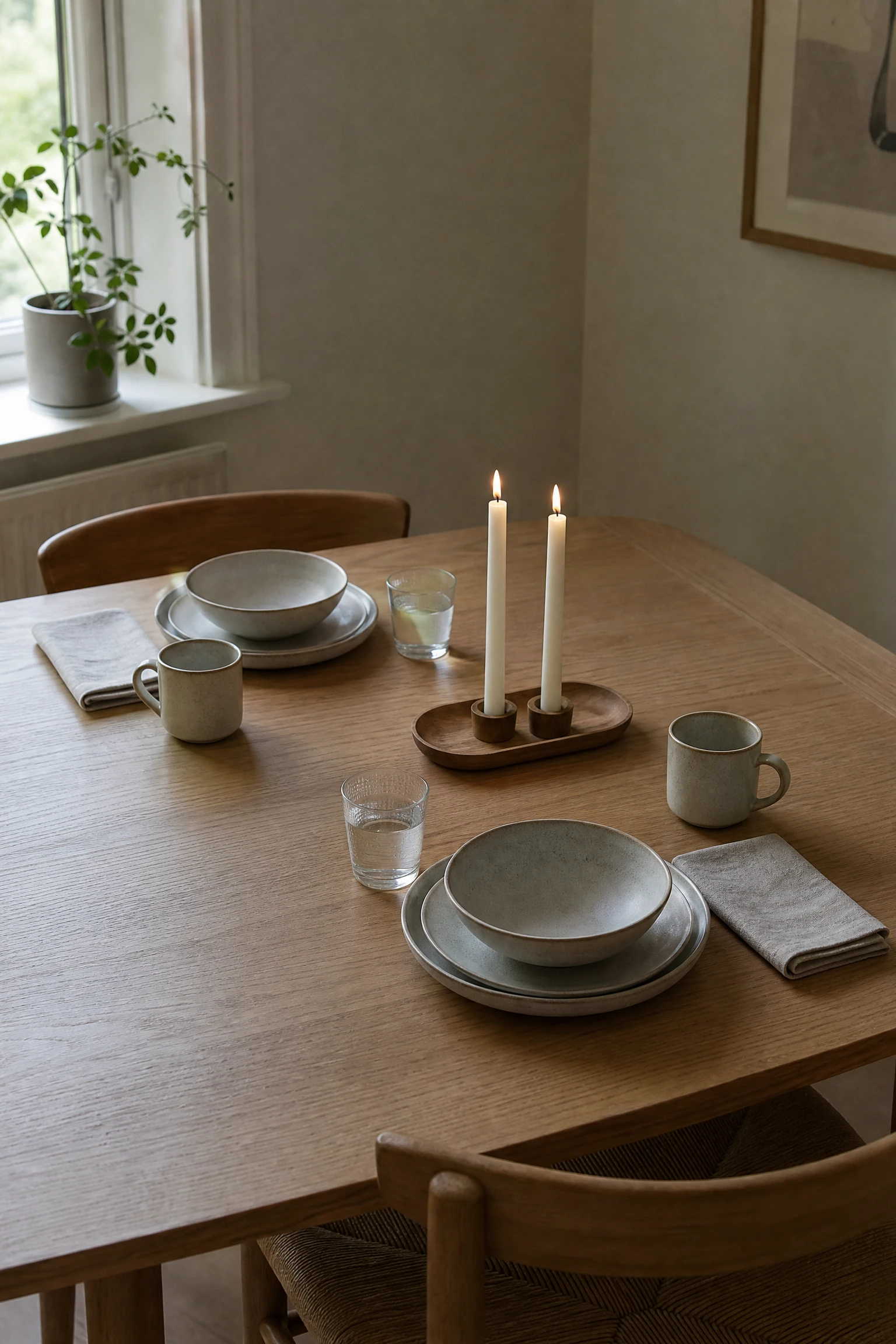
The Scandinavian approach to a daily table setting is that the table is set with only what is needed for the specific meal and nothing more. No elaborate centrepiece that gets in the way of conversation, no excessive glassware for a simple weekday dinner, no unnecessary decorative elements that need to be moved to serve the food. What is on the table has been placed there because it has a function in the meal: a simple ceramic jug of water, two or three taper candles in low holders, a linen napkin folded simply beside each place, and the specific tableware appropriate to what is being served. This discipline of the everyday table, setting only what is needed and making that selection as beautiful as possible, is one of the most direct expressions of the Nordic philosophy of finding beauty in functional objects rather than adding decoration to compensate for their absence.
Pro Move: Invest in a set of everyday tableware in a material and design that you genuinely find beautiful, such as a simple stoneware with a matte glaze in a warm neutral, rather than keeping a “special” set in the cabinet and using a mismatched everyday set for daily meals. The Scandinavian approach to tableware is that everyday objects deserve the same quality and consideration as those brought out for occasions, and the daily experience of using beautiful plates and cups at every meal is central to the Nordic understanding of domestic wellbeing.
“In a Scandinavian dining room, simplicity is not about having less. It is about choosing more carefully what earns its place in the room.”
15. Open Shelving as a Functional Display
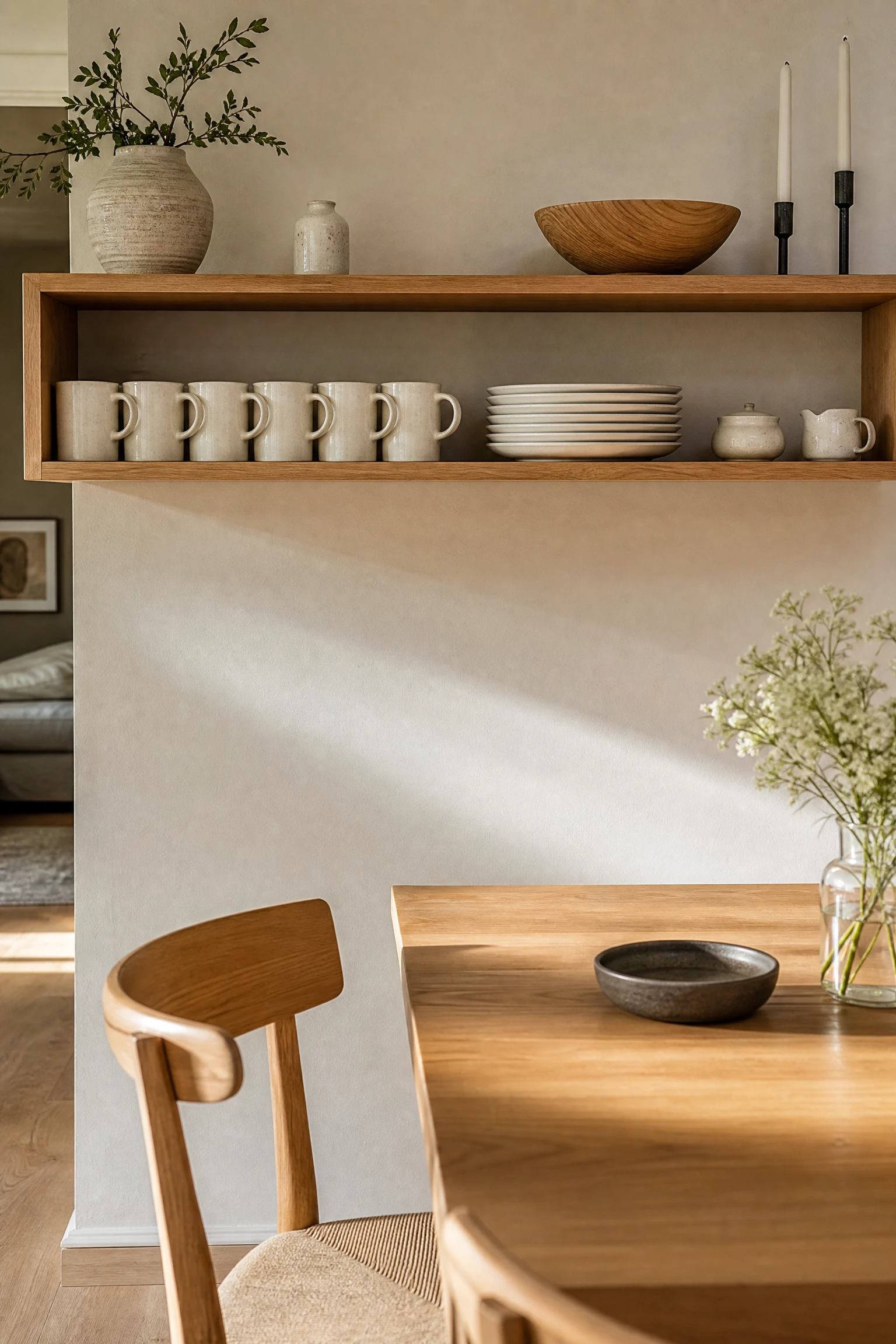
Open shelving in a Scandinavian dining room, whether a wall-mounted shelf, a simple timber shelf unit along one wall, or floating shelves in an alcove, serves a dual function: it provides accessible storage for everyday tableware and it creates a display surface for objects that are both beautiful and functional. The Nordic approach to open shelving in a dining room is that the objects on the shelf should be things that are actually used rather than decorative objects chosen purely for their appearance. A row of ceramic mugs in coordinating tones, a stack of simple white dinner plates, a wooden salad bowl, and two or three simple stoneware serving pieces are all appropriate open shelf objects in a Scandinavian dining room. Objects that are purely decorative and have no function in the dining context, ornamental figurines, picture frames, or elaborate decorative objects that would look at home in a display cabinet but not in a dining service context, are not consistent with the Nordic approach to functional beauty.
Heads Up: Open shelving in a dining room collects dust from cooking and from general air circulation more readily than closed storage, and the objects on the shelves become dusty and greasy more quickly than those in a cabinet. The visual appeal of open shelving in a Scandinavian dining room depends on the objects on the shelves being kept genuinely clean and ordered, which is a maintenance commitment to factor into the decision to use open rather than closed storage.
Principle 4: Hygge Through Texture
Hygge is not a visual quality. It is a sensory and emotional one: the feeling of comfort, warmth, and wellbeing that comes from being in a space that is genuinely pleasant to inhabit. In a dining room, hygge is created primarily through texture, the feel of the materials on the hands and body while seated at the table, and through the specific combination of warm light and soft material that characterizes the Nordic domestic interior at its most inviting.
16. Linen Seat Pads or Chair Cushions

Linen seat pads on dining chairs or a long linen cushion on a dining bench transform the comfort of sitting at a Scandinavian dining table for an extended meal. The natural weave of linen sits comfortably against clothing without slipping, the material breathes rather than trapping heat, and the slight texture of the linen surface creates a tactile quality that a hard timber seat does not have. In the specific context of a family dinner or an extended gathering, the difference between a hard chair seat and one padded with a linen cushion is the difference between a meal that people want to linger at and one that people begin to feel physically compelled to leave after an hour. Seat pads in an oatmeal, warm cream, or muted sage tone complement the light timber and white palette of a Scandinavian dining room and introduce a soft textile element at the seated level where it has the most direct sensory impact.
Quick Tip: Choose seat pads with a thin layer of foam or horsehair padding rather than very thick wadding. A very thick seat pad changes the relationship between the seat height and the table height, particularly on chairs designed for a specific table height. A pad of one to two centimetres in thickness adds the tactile comfort without disrupting the ergonomic relationship between the chair and the table surface.
17. A Wool or Jute Rug Beneath the Dining Table

A rug beneath the dining table in a Scandinavian room is an optional but highly effective element for creating the enclosed, defined quality that makes a dining zone feel like a deliberate room rather than a table placed in a larger open space. The most important practical specification for a dining rug is size: the rug needs to extend at least 60 centimetres beyond the table edge on all sides so that chairs can be pulled out and pushed in without catching the rug edge, which is the most common and most frustrating failure mode of a dining room rug that is too small. A wool flatweave or a natural jute rug in a warm neutral, beige, oatmeal, or soft grey, at the correct size for the table adds warmth, sound absorption, and visual grounding to the dining zone without introducing a pattern or colour that competes with the restrained Scandinavian palette.
Designer Advice: Natural fibre rugs like jute and sisal are among the most practical choices for a dining room because their flat weave makes them easy to clean and food debris does not become embedded in deep pile. The honest limitation is that natural fibre rugs are not comfortable underfoot in a room where people walk barefoot regularly. In a household where the dining room is used before shoes are on in the morning, a wool flatweave is a better choice than a jute for underfoot comfort.
18. A Sheepskin Draped Over a Chair Back
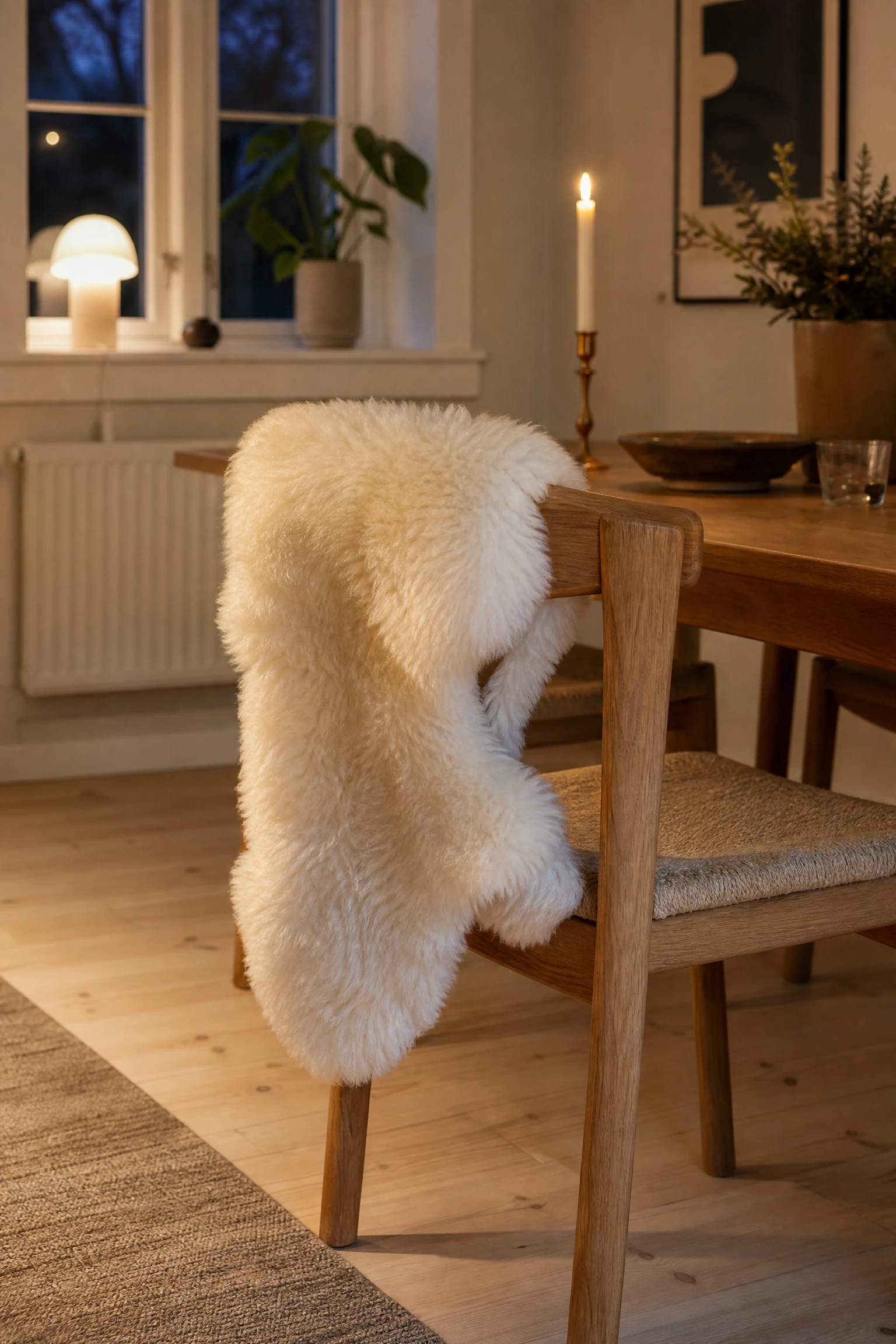
A sheepskin, either natural white or a softer undyed cream, draped over the back of one or two chairs at the dining table introduces the most characteristic and most immediately recognizable element of the Nordic interior at the scale of a single object. The sheepskin at the chair back provides warmth on a cool evening, it softens the visual outline of the chair with an organic, irregular form that contrasts beautifully with the clean geometry of the timber frame, and it signals a specific kind of domestic comfort and consideration for the people seated at the table that is entirely consistent with the hygge principle. A sheepskin on a chair back is not a decoration placed for aesthetic effect but a considered provision for the comfort of the people who will sit in the chair and use the room.
Reality Check: Natural sheepskins in a dining room require regular shaking out and occasional brushing to maintain their appearance. Food debris and crumbs inevitably fall onto a sheepskin draped at chair height during a meal and need to be removed promptly to prevent them being worked into the fibres. A sheepskin that is left uncleaned in a dining room quickly loses the soft, inviting quality that makes it such an effective hygge element.
19. A Linen Table Runner Instead of a Full Tablecloth
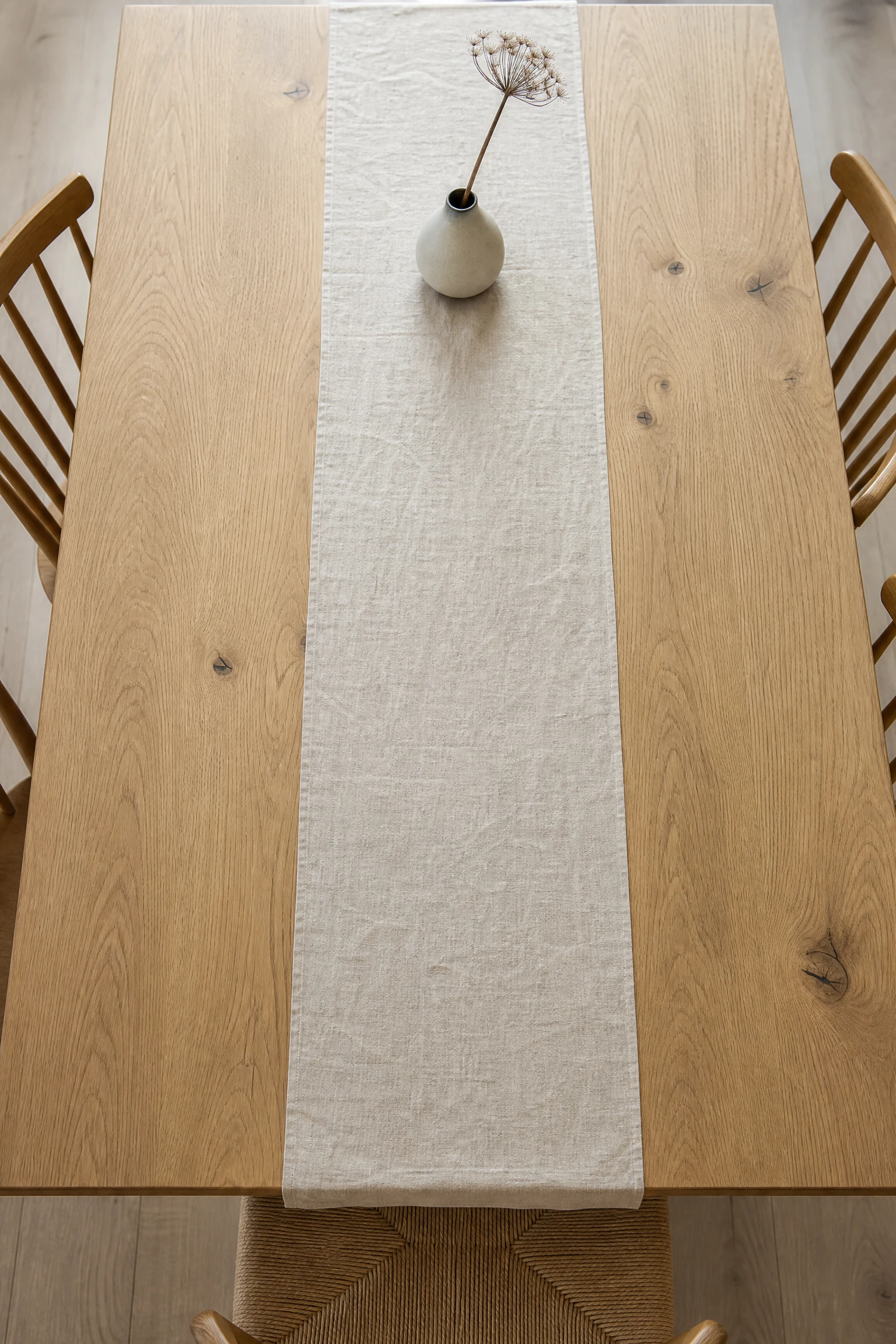
A narrow linen runner laid lengthwise along the centre of the dining table is the Nordic alternative to the formal tablecloth and it represents the Scandinavian approach to textile in the dining room perfectly: it softens the hard surface of the timber table, it introduces a layer of natural woven material at the dining surface, it provides a defined zone for a centrepiece arrangement, and it does all of this while leaving the natural beauty of the timber table surface visible on either side of the runner. A full tablecloth in a Scandinavian dining room obscures the table material that is one of the primary reasons for choosing a natural timber table in the first place. The linen runner, in a warm cream, natural flax, or washed white, uses textile at the right scale for a Nordic dining room and leaves the table to perform its own material function rather than hiding it.
Pro Move: Choose a linen runner that is slightly narrower than feels instinctively correct for the table. A runner that spans the full centre third of the table width reads as a decorative tablecloth at reduced scale. A runner that spans roughly a quarter of the table width reads as a precisely placed textile element that connects a centrepiece arrangement to the table without dominating the surface. The narrower choice almost always looks more considered.
20. Seasonal Natural Centrepieces
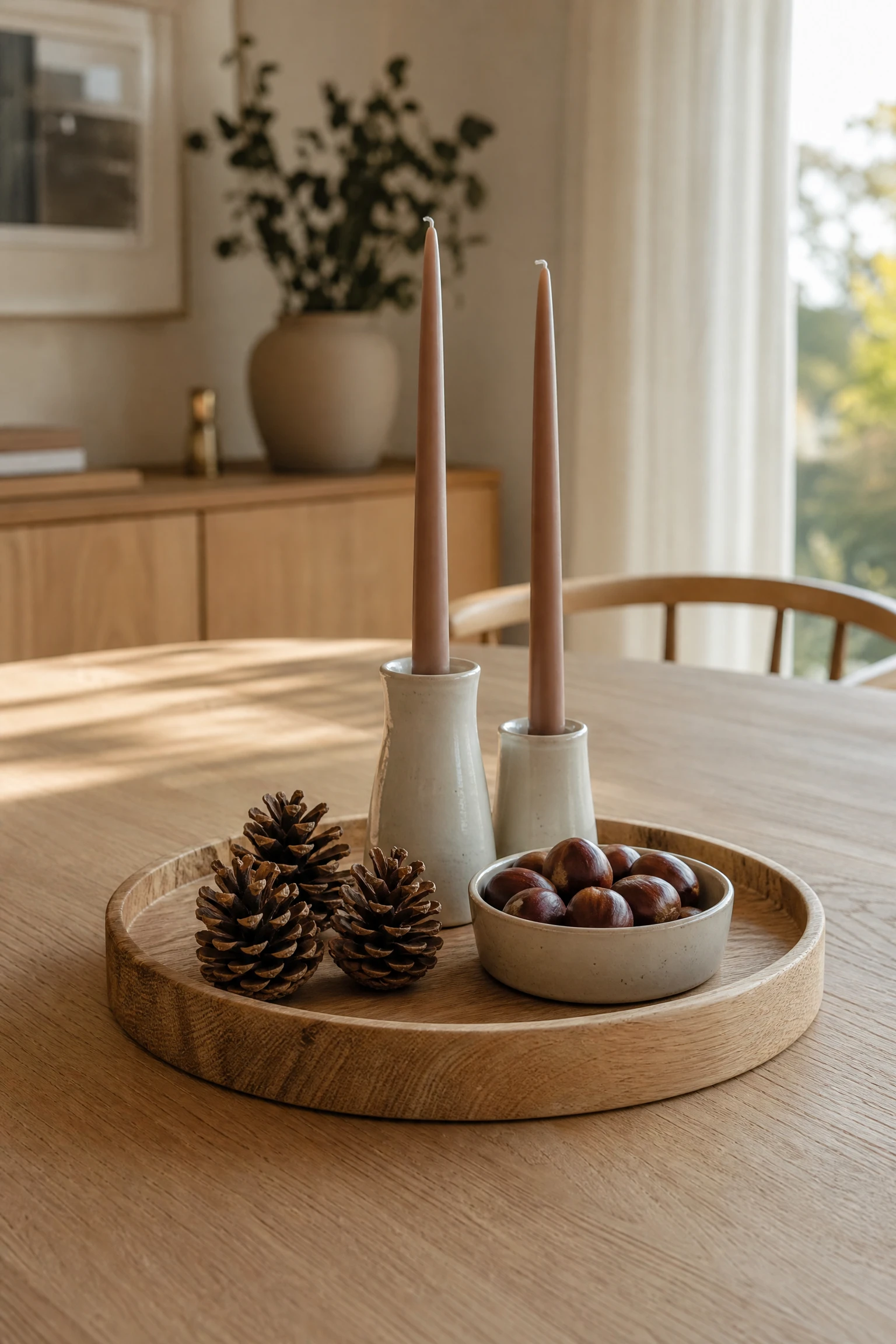
The centrepiece of a Scandinavian dining table should be seasonal, natural, and changing rather than fixed, artificial, or elaborate. In autumn, a low ceramic dish with chestnuts, a small pumpkin, and a few dried seed heads in earth tones sits alongside two or three taper candles. In winter, a group of pine cones in a timber bowl, a branch of bare birch twigs in a tall ceramic vase, or a cluster of pillar candles on a wooden tray creates the atmosphere of the Nordic winter interior. In spring, a single stem of cherry blossom in a simple bud vase or a handful of snowdrops in a small ceramic pot brings the first signs of the Nordic spring indoors. In summer, a low jug of wildflowers or garden herbs, loosely arranged, is all the centrepiece the table needs. The Nordic approach to the dining table centrepiece is not to dress the table but to bring the season to the table.
Designer Advice: Keep the centrepiece at a height below eye level when seated at the table. A centrepiece that is taller than the eye level of the people seated at the table physically interrupts conversation across the table and makes a meal less connected and less social than one where the centrepiece stays low. The maximum practical height for a dining centrepiece is approximately 35 to 40 centimetres above the table surface.
Principle 5: Considered Detail
In a Scandinavian dining room, every object and every detail earns its place through genuine consideration of its function, its material quality, and its relationship to everything around it. The final layer of a Nordic dining room is not decoration but considered selection: of the one piece of art on the wall, the specific timber of the furniture, the precise shade of the wall, the quality of the tableware. These decisions are the difference between a dining room that looks Scandinavian and one that feels it.
21. A Single Large-Format Artwork or Botanical Print

A Scandinavian dining room typically has one piece of art on the wall and it is chosen with the same care that goes into selecting the table or the chairs. The most characteristic Nordic dining room artwork is either a large-format abstract print in muted tones, a simple botanical or natural science illustration in a plain timber or thin metal frame, a black and white photograph of a Nordic landscape or a natural subject, or a piece of handmade ceramic art mounted on the wall as a three-dimensional object. The scale matters: a single piece of wall art in a Scandinavian dining room should be large enough to anchor the wall it occupies rather than looking small and tentative. A piece that covers at least two-thirds of the wall height reads with the presence and confidence that the Nordic design aesthetic requires, while a smaller piece on a large wall reads as an afterthought regardless of the quality of the art itself.
Quick Tip: Hang the artwork at a lower position than feels instinctively correct if the dining table is the primary viewing position. Standard gallery hanging height positions the centre of the artwork at approximately 150 to 160 centimetres from the floor, which is appropriate for a standing viewer. In a dining room where the artwork is typically seen from a seated position, lowering the centre point by 10 to 15 centimetres makes the art more directly within the sightline of people seated at the table.
22. Ceramic and Stoneware Tableware as Design Objects

The tableware in a Scandinavian dining room is one of the most visible and most frequently used set of objects in the home, and the Nordic tradition of treating functional ceramic objects as genuine design achievements means that the plates, cups, serving bowls, and pitchers on the table are chosen with the same seriousness as the furniture. The defining qualities of Scandinavian ceramic tableware are simplicity of form, quality of material and glaze, and a restraint in colour and pattern that allows the food being served to be the visual focus rather than the plate it is served on. Matte glazes in warm neutrals, cream, stone, soft grey, and warm white are the most authentically Nordic choices. Hand-thrown or artisan-made stoneware in these tones has a quality and irregularity that mass-produced equivalents lack and that makes the table look genuinely considered. Brands including Bornholms Keramikfabrik, Kähler, and Bloomingville produce ceramic tableware that sits authentically within this tradition at accessible price points.
Reality Check: Handmade stoneware and artisan ceramic tableware in matte glazes is significantly less standardized in size and shape than mass-produced porcelain. Cups may not stack perfectly, plates may vary slightly in diameter, and the handmade quality means that each piece has its own specific character rather than being identical to its companions. This variability is a quality in the Nordic context, not a defect, but it requires a different approach to storage and stacking than the uniform pieces of a standard dining set.
23. Functional Objects as Decor on the Dining Sideboard
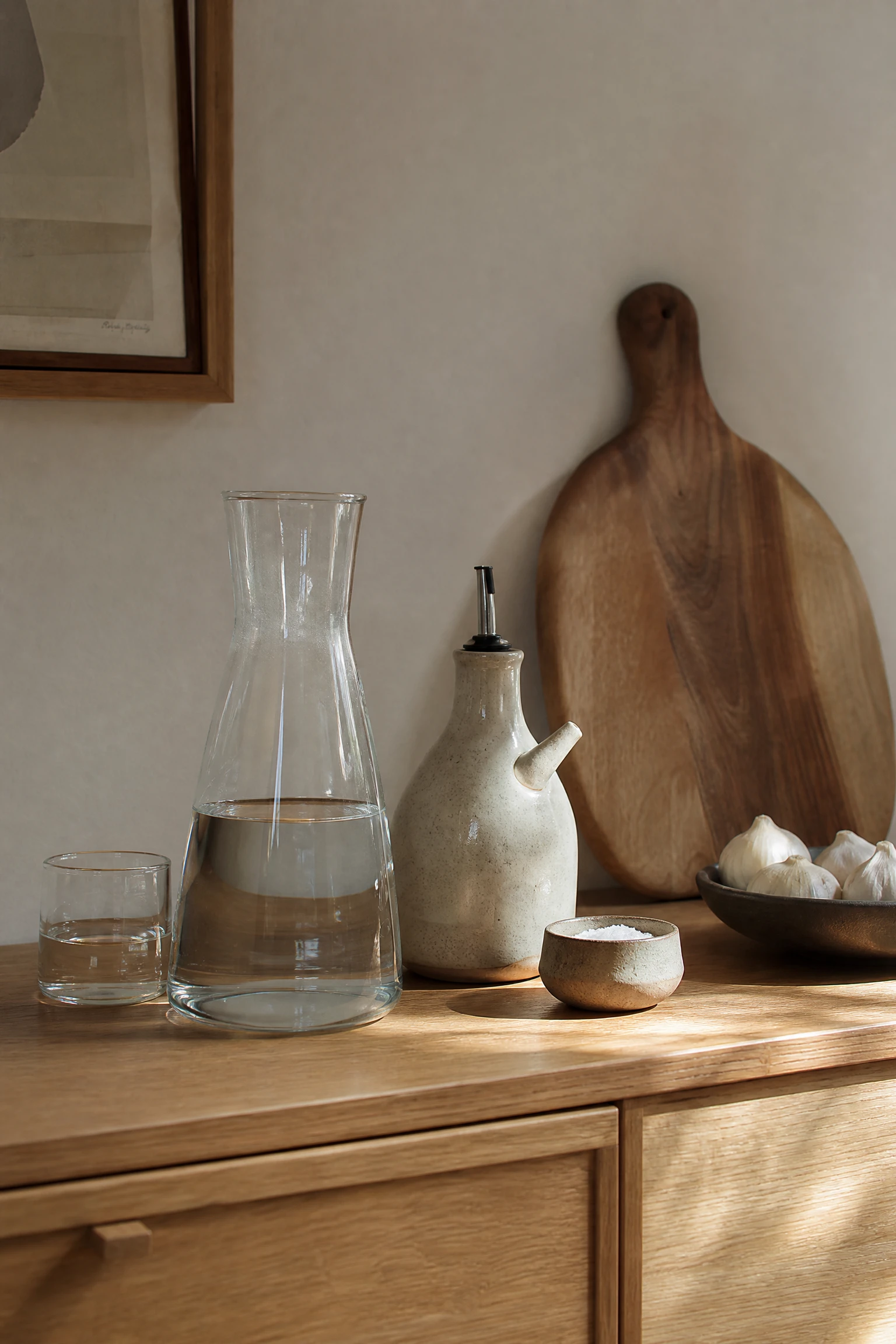
The objects displayed on the surface of a Scandinavian dining sideboard are chosen for their functional relationship to the dining context and for the specific material quality they bring to the room. A simple ceramic jug that is used for water at the table during meals, a timber chopping board leaned against the wall that doubles as a serving board for cheese, a handmade glass carafe for wine, and a small plant in a ceramic pot: each of these objects has a direct connection to eating and gathering and is also genuinely attractive in its own right. The Nordic approach to the dining sideboard display is not to decorate the surface with objects chosen purely for their visual effect but to display the functional objects of the dining life in a way that acknowledges their material quality and their daily importance. A beautiful jug that is used every meal at the table is worth more attention than an elaborate ornament that serves no function.
Pro Move: Replace the plastic or commercial-design versions of functional kitchen and dining objects, vinegar bottles, oil pourers, salt cellars, serviette holders, with versions made in quality natural materials, ceramic, glass, timber, or brushed steel, and display these on the sideboard as objects worthy of being seen. The transformation of functional everyday objects into beautiful ones is one of the most consistent and most characteristic expressions of the Scandinavian approach to domestic life.
24. Indoor Plants as a Living Design Element
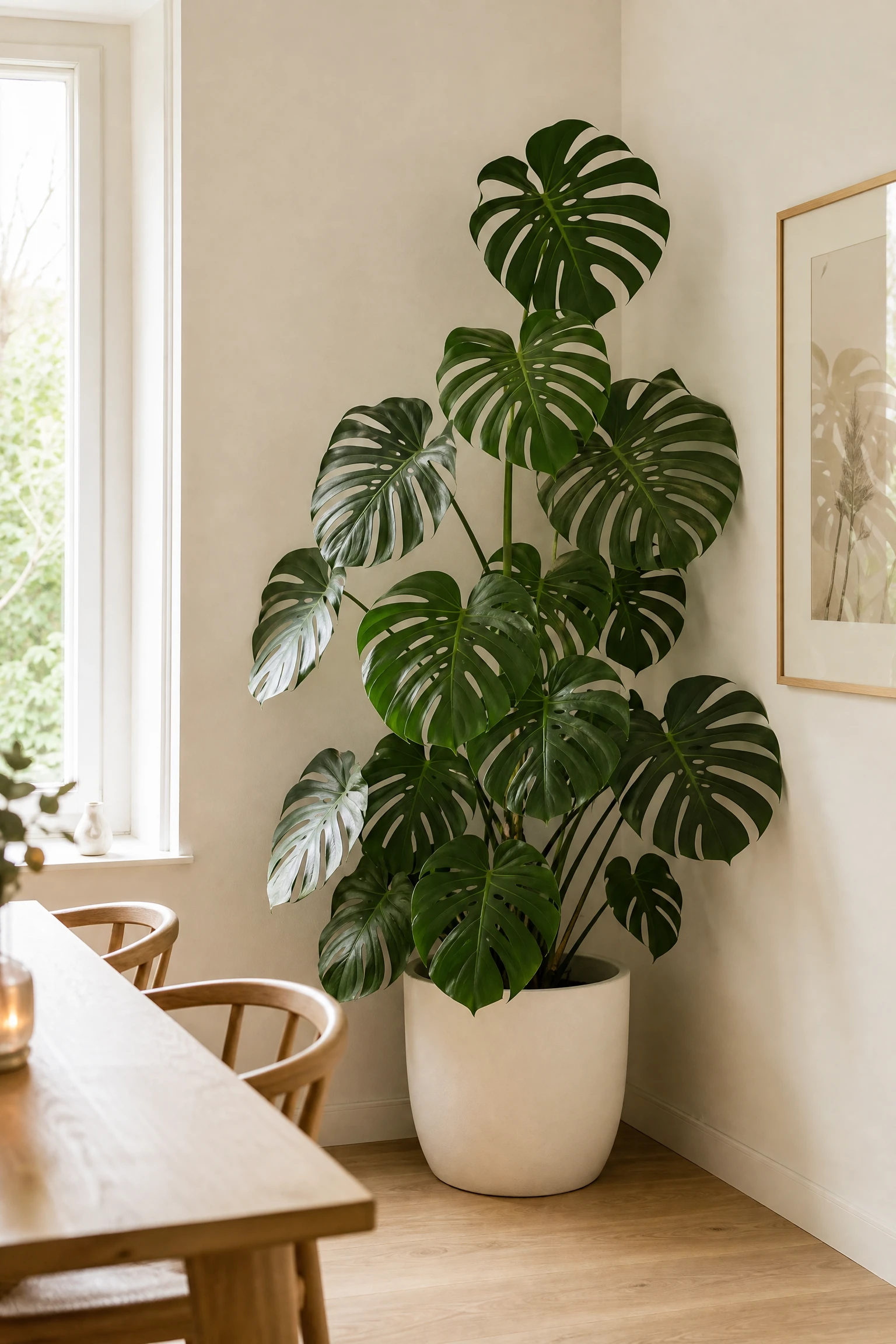
A single well-chosen plant in a Scandinavian dining room does more for the atmosphere of the space than a collection of decorative objects chosen purely for their appearance. The most characteristic plant choices for a Nordic dining room are those with a sculptural, architectural quality: a large leafed plant in a floor corner that introduces a strong vertical element, a trailing plant at the top of the sideboard that adds an organic, flowing quality to the otherwise linear arrangement, or a simple herb pot on the window sill that connects the dining room to the kitchen and the function of cooking. The container for the plant matters as much as the plant itself: a plain ceramic or concrete pot in a neutral tone suited to the Nordic palette houses a plant in a way that reads as designed. A standard plastic nursery pot, even containing a beautiful plant, reads as temporary and unconsidered.
Designer Advice: Choose one larger plant rather than several small ones for a Scandinavian dining room. A single monstera, a tall snake plant, or a mature fiddle-leaf fig in a floor corner creates the architectural presence of a natural element that multiple small plants arranged on a shelf cannot match. Scandinavian design favours the single strong gesture over the collected arrangement in most contexts, and plant styling follows the same principle.
25. A Thoughtfully Chosen Dining Room Floor

The floor of a Scandinavian dining room is one of the most important material decisions in the room because it is the surface that everything else sits on and is seen against. Wide-plank light timber flooring, whether in solid or engineered oak, ash, or pine, is the most characteristic and most appropriate floor material for a Nordic dining room. The width of the plank matters: wide planks of 15 centimetres or more create the generous, unhurried quality of a traditional Nordic floor rather than the busy, narrow-strip quality of a floor laid with narrow boards. A light oil or white oil finish on the timber maintains the pale, warm tone that the Scandinavian palette requires and ages gracefully over years of use, developing the specific patina of a floor that has genuinely been lived on rather than simply installed.
Reality Check: White-oiled and raw timber dining room floors show marks, spills, and dirt more readily than darker or lacquered floors, and they require more frequent cleaning to maintain the clean, pale appearance that makes them look so characteristic in photographs. In a household with young children, pets, or high traffic through the dining room, a slightly warmer-toned or lightly stained timber floor in the same Nordic material tradition is more practical without significantly compromising the aesthetic.
26. Brass or Matte Metal Accents as the One Material Contrast

In a Scandinavian dining room that is primarily in light timber, white, and warm neutral tones, the introduction of one metal finish as an accent creates the material contrast that prevents the room from feeling uniform and slightly flat. Brass, in its warm aged form rather than polished or lacquered, is the most widely used metal accent in current Nordic interior design: a brass pendant fitting above the table, brass handles on the sideboard drawers, a brass candleholder on the table, or a brass-legged side table in the corner each introduce a warm metallic quality that reads as refined and historically rooted in the Scandinavian craft tradition. Matte black metal is the alternative for a cooler, more contemporary Nordic room: the contrast between matte black and light timber in a Scandinavian dining room creates the same clean, graphic quality without the warmth of brass. Avoid mixing multiple metal finishes in the same room: one metal tone applied consistently across all the metallic elements in the Nordic dining room reads as designed. Multiple competing finishes read as unresolved.
Heads Up: Unlacquered brass develops a natural patina over time, darkening and developing a slight warmth that is considered a quality rather than a defect in the Scandinavian design tradition. If you prefer the brass to stay at its original bright tone, choose a lacquered or PVD-coated brass finish that resists patination. If you appreciate the way the metal ages, unlacquered brass is the more authentic choice.
27. The Complete Scandinavian Dining Room: When All Five Principles Work Together

The Scandinavian dining room that genuinely feels Nordic rather than simply looking minimal is always the one where all five principles are active simultaneously rather than applied selectively. Natural materials provide the sensory foundation: the warmth of the timber table, the texture of the linen runner, the weight of the stoneware. Light creates the atmosphere: the low pendant, the candles on the table, the warm white walls reflecting every available lumen. Functional simplicity keeps the room honest: only what is needed is present and what is present is the best version of it that the budget allows. Hygge through texture makes the room genuinely comfortable: the seat pad on the chair, the sheepskin on the back, the wool rug on the floor beneath. And considered detail makes it personal: the artwork chosen for its relationship to this room, the tableware chosen for its everyday use, the plant chosen for its architectural quality in this specific corner. When these five principles are each given a deliberate response in a specific dining room, the result does not look like a style exercise. It looks like a home.
Pro Move: Before buying anything for a Scandinavian dining room refresh, spend fifteen minutes sitting at the existing dining table and writing down what the five principles suggest the room currently does well and what is missing in each category. The act of assessing the room through the five principles rather than through a shopping list identifies the genuinely impactful changes as distinct from the aesthetic ones that would look good but not change the fundamental quality of the room.
Final Thoughts
Scandinavian dining room design is one of the most widely referenced and most consistently misunderstood interior aesthetics in contemporary home design. The version that is most commonly replicated is the visual surface, the light timber, the white walls, the wishbone chair, the single pendant, and the result is a room that looks Scandinavian from a photograph but that does not feel Nordic in the specific quality that the authentic style delivers: genuinely warm, genuinely comfortable, genuinely considered, and genuinely connected to the natural world in a way that makes daily meals feel like a pleasure rather than a functional necessity.
The five principles in this article are the building blocks of that authentic quality. A dining room built on all five of them, even with modest furniture and a limited budget, will feel more genuinely Nordic than a dining room furnished with the most expensive Scandinavian designer pieces but without the light strategy, the hygge texture, the seasonal centrepiece, and the functional discipline that give the style its depth. Start with the principle that your dining room most obviously lacks and work from there. The room will respond to every genuine application of these principles and the accumulated effect of all five working together is a dining room that people genuinely want to spend time in.
“Which of the five principles does your dining room most need? Drop it in the comments below and tell us where you are starting.”
Frequently Asked Questions
What makes a dining room look Scandinavian?
The defining visual qualities are light timber furniture with clean lines and tapered legs, warm white walls, natural materials including linen, wool, rattan, and ceramic, a single statement pendant light hung low over the dining table, candles at every meal, minimal decoration, and the specific editing discipline that keeps only what is functional and beautiful in the room. The quality that makes a Scandinavian dining room feel as good as it looks is the layering of texture through seat pads, rugs, sheepskins, and natural fibre, which prevents the minimal palette from reading as cold or empty.
What wood is most commonly used in Scandinavian dining room furniture?
Light oak, ash, birch, and beech are the most authentically Nordic timber choices for dining room furniture. White-oiled or naturally finished surfaces that show the grain of the wood rather than lacquered surfaces that hide it are the most characteristic finish. Pine is historically significant in Nordic interiors, particularly in Scandinavian country contexts, and in its knotted, natural form gives a warmer and slightly more rustic version of the Nordic aesthetic than the cleaner-grained oak and ash.
Is a rug necessary in a Scandinavian dining room?
No. Many authentic Scandinavian dining rooms use a bare timber floor with no rug, and the simplicity of the floor without a textile layer is consistent with the Nordic principle of not adding elements that are not genuinely necessary. If a rug is used, it must extend at least 60 centimetres beyond the table on all sides to allow chairs to move freely without catching the rug edge. A rug that is too small is consistently cited as one of the most common mistakes in a Scandinavian dining room and is worse than no rug at all in both visual and practical terms.
What colours work in a Scandinavian dining room?
Warm white and very light neutral tones are the primary palette. Muted sage, dusty blue-grey, and warm putty are the most characteristic secondary accent colours. Charcoal and black are used as precise accents in hardware, lamp fittings, or a single piece of furniture. The palette avoids bright or highly saturated colours, cool grey-whites that read as clinical, and warm earth tones that fight the specific quality of Nordic light. A small amount of warm natural colour, the honey of timber, the oatmeal of linen, the cream of ceramic, provides all the warmth the palette needs without introducing a competing colour.
How many chairs should a Scandinavian dining room have?
The Scandinavian approach to dining room seating is to provide exactly the number of seats needed for the household plus the flexibility to add more for gatherings. An extending table with a bench on one side and chairs on the other, and two upholstered chairs at the heads, is a typical Nordic arrangement that accommodates a family of four at the table every day and a dinner party of eight or ten when extended. The bench is particularly important because it takes up the same linear space as two chairs but at significantly less visual mass, keeping the table arrangement open and uncongestioned.
What lighting is most important in a Scandinavian dining room?
The pendant above the dining table, hung at 70 to 90 centimetres above the table surface and connected to a dimmer switch, is the most important single lighting element. Candles at the table during every meal are the second most important, not because they provide functional light but because they create the specific warm, intimate quality that electric lighting at any level cannot replicate. A warm floor lamp in a corner of the room provides the third lighting layer that makes the room feel genuinely atmospheric rather than simply lit. All light sources should use warm-toned bulbs at 2700K to 3000K.