Nature Calls: Bathroom Ideas That Bring the Outdoors Right Inside

There is something about spending time outside that does something good to you. The air feels different, the light is softer, and your whole body seems to relax in a way that a plain white bathroom with chrome fixtures just cannot replicate. That is exactly why so many homeowners are now looking at their bathrooms differently, not as purely functional rooms, but as spaces that can actually feel restorative. Nature-inspired bathroom design is not a new concept, but the way people are approaching it in 2025 has gotten genuinely interesting.
It goes well beyond placing a succulent on the windowsill and calling it done. Today’s nature-inspired bathrooms are thought-out spaces where materials, colors, lighting, and textures all work together to create the feeling of being near the woods, beside a river, or tucked into a quiet garden. The results can be absolutely beautiful, and the best part is that you do not need a huge renovation budget to get there. A lot of these ideas work just as well in a small bathroom as they do in a large master suite.
In this article, I have put together 25 ideas organized by the type of natural environment they draw from. Whether you are drawn to the calm of a forest, the ease of a beach, the drama of mountains, the freshness of a meadow, or the lushness of a tropical setting, there is something here for you. Each idea goes deep on materials, colors, textures, and specific tips so you walk away with a real plan, not just a mood board.
Whether you are doing a full remodel or just refreshing what you already have, these ideas will give you a starting point that feels genuine and personal. Nature has been designing beautiful things for a long time. Let it help you do the same in your bathroom.
Forest-Inspired Bathroom Ideas
Deep Green Walls with Warm Wood Vanity
Forest green is one of those colors that does almost everything right in a bathroom. It feels rich without being heavy, natural without being boring, and pairs beautifully with warm wood tones that evoke the feeling of birch trees and pine floors. For this look, paint the walls in a deep, muted green like Farrow and Ball’s Studio Green or Benjamin Moore’s Tarrytown Green. Choose a vanity in a warm honey-toned oak or walnut with flat-panel cabinet doors and simple hardware in brushed brass.
The flooring in this setup works especially well in large-format stone-look porcelain in a warm beige or sand tone. Keep the countertop simple with honed marble or a quartz that has earthy veining. For lighting, go with warm-toned sconces on either side of the mirror rather than overhead lighting alone. This creates a soft, dappled effect that feels like light coming through tree branches. Add a fern or two in terracotta pots near the window or in a corner shelf.
Towels in cream, off-white, or forest green help tie the palette together without introducing anything jarring. The key is restraint. You want the room to feel like walking into a clearing in the woods, where everything is cohesive and calm.
Designer Tip: If your bathroom gets limited natural light, opt for a slightly lighter version of forest green such as sage or eucalyptus to avoid the room feeling dim. A large mirror also reflects light beautifully and opens up the space.

Bark-Texture Feature Wall
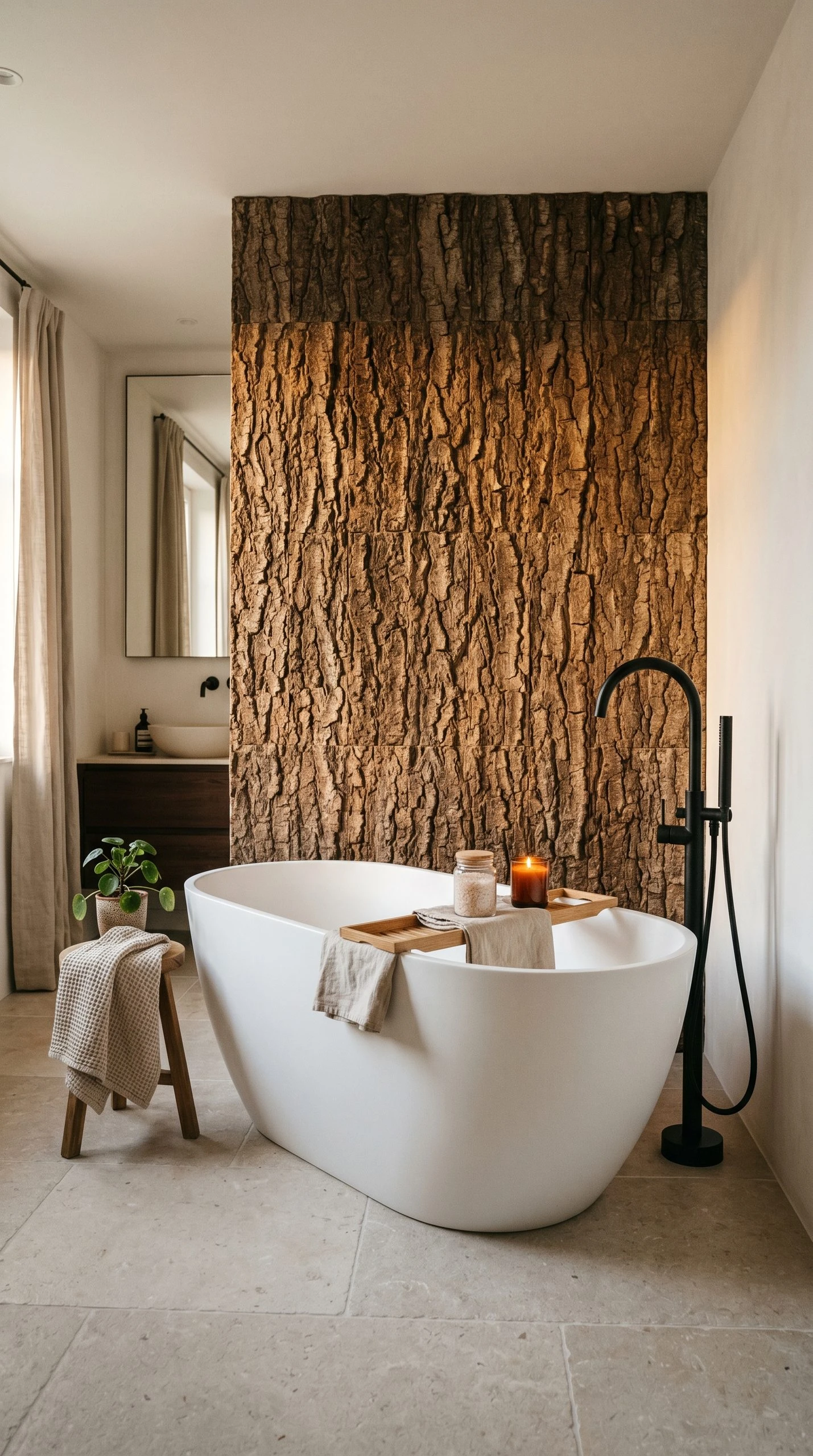
One of the most tactile ways to bring the forest into a bathroom is with a textured wall treatment that mimics the look and feel of tree bark. There are some excellent options available now including textured plaster in warm brown tones, relief-pattern tiles that replicate bark patterns, and wood-look porcelain panels that can be used even in wet areas. You do not need to cover every wall. One strong feature wall behind the vanity or the bathtub is enough to anchor the whole room.
Pair this feature wall with very simple, smooth surfaces elsewhere to let it breathe. White or light beige smooth plaster on the remaining walls creates contrast that makes the textured wall feel even more intentional. For fixtures, matte black works well here, giving an earthy, grounded quality. If the bathroom has a freestanding tub, positioning it against or near the bark-texture wall creates a natural focal point.
Lighting for this idea should be warm and directional. Wall-mounted uplights or small recessed spotlights angled at the feature wall will bring out the texture in a really satisfying way, especially in the evening. This is a bathroom that genuinely looks different at different times of day.
Designer Tip: Use a wood-look porcelain tile rated for wet areas rather than real wood on shower or tub-adjacent walls. Engineered options give the same visual warmth with far better moisture resistance.
Moss Wall Accent
Preserved moss walls have become one of the most talked-about biophilic design features, and the bathroom is actually one of the best places to use them. Unlike fresh moss that requires specific care, preserved moss panels require no watering, no sunlight, and almost no maintenance. They come in various tones from bright spring green to darker forest shades, and they add an incredible amount of texture and warmth to a space that could otherwise feel flat.
A moss wall works particularly well behind a freestanding bathtub or as a small accent panel above a vessel sink. Frame it with a thin piece of black metal or natural wood trim to give it a polished, intentional look. The color palette around it should stay neutral, think warm whites, light taupe, or soft grey, so that the moss becomes the natural focal point it deserves to be. Rattan pendant lighting or a woven lamp shade nearby reinforces the organic aesthetic without competing.
Scent is something worth thinking about in this setup too. A eucalyptus bundle hung near the shower, or a reed diffuser with a forest or cedar fragrance, completes the sensory experience in a way that a purely visual approach cannot.
Designer Tip: Preserved moss panels from reputable suppliers last for years without maintenance. Look for panels certified as using sustainable, non-toxic preservation methods, especially in an enclosed room like a bathroom.
Cedar and Stone Wet Room
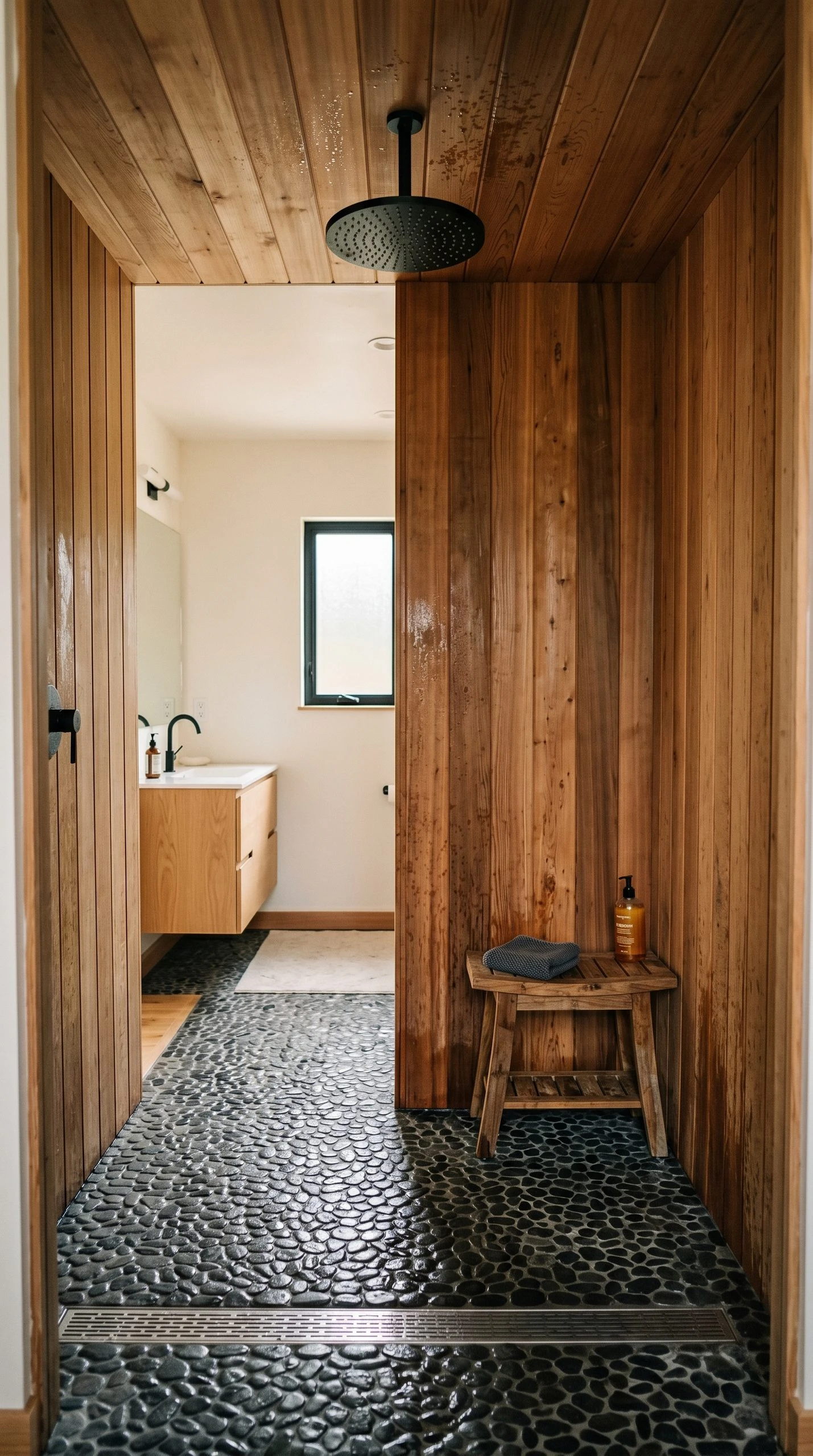
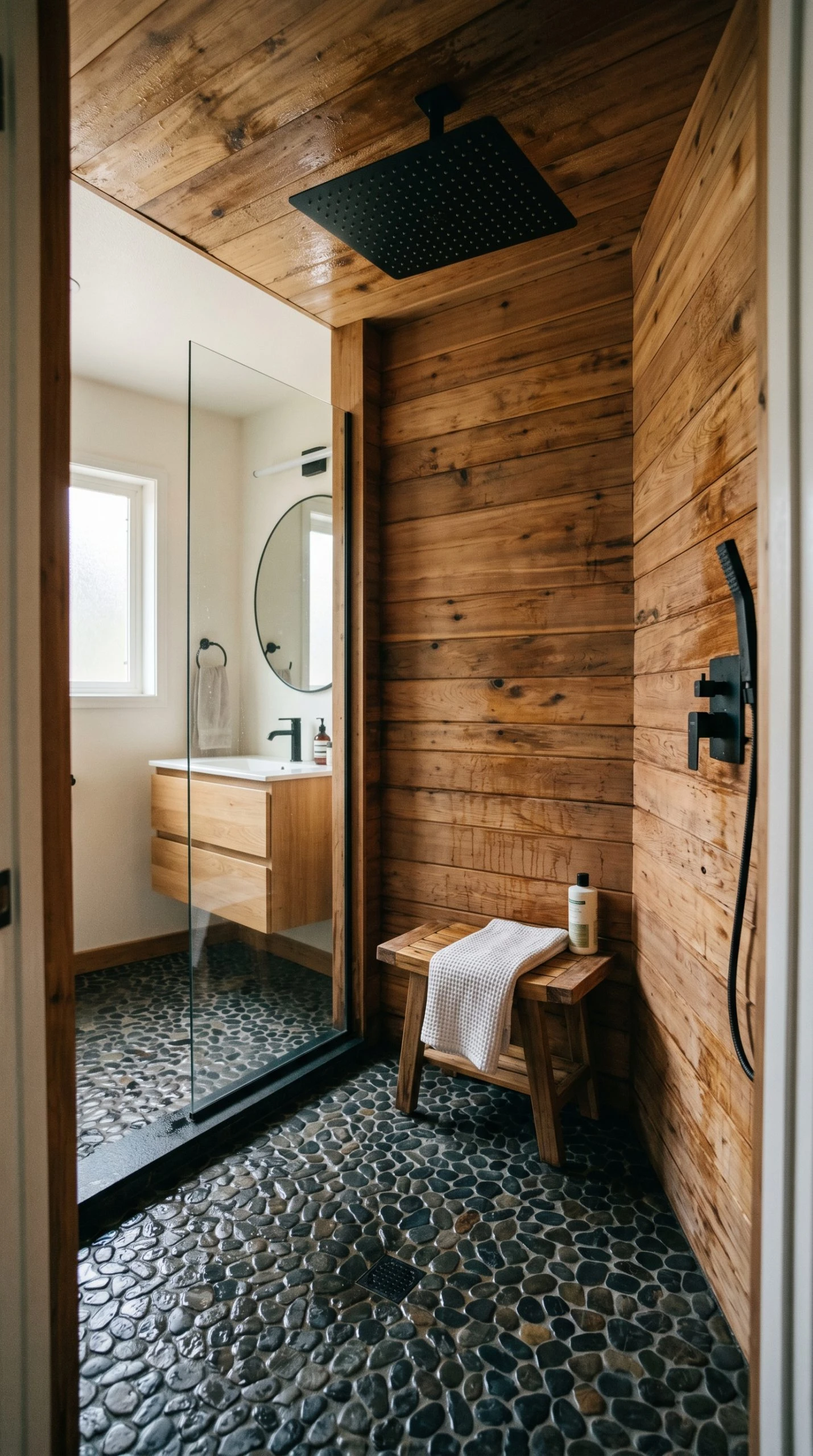
The wet room format, where the shower is fully open and the floor flows seamlessly throughout the space, is one of the cleanest ways to bring a forest bathing aesthetic into a bathroom. In this version, the walls and ceiling of the shower area are clad in water-resistant cedar or cedar-look porcelain panels. Cedar has a natural, spa-like scent when it gets warm and wet, and it gives the shower an almost Nordic quality that feels genuinely restorative.
Pair the cedar walls with a floor in pebble mosaic tile or smooth slate in dark charcoal. The contrast between the warm wood tones above and the cool stone below creates a grounding visual balance. A rainfall showerhead in brushed nickel or matte black adds to the feeling of standing under a forest canopy in the rain. Keep shelving minimal and natural, a simple teak shower bench or a small teak shelf for toiletries keeps things functional without cluttering the clean lines.
Outside the shower zone, continue with stone-effect large-format floor tiles and a vanity in a light wood tone. The warmth of the cedar and the coolness of the stone create exactly the kind of balance you find in a real forest, and the result is a bathroom that feels genuinely different from anything you would find in a catalog.
Designer Tip: Cedar wood in shower areas needs to be properly sealed and the shower must have excellent ventilation. Run the exhaust fan during and after every shower to prevent moisture buildup and extend the life of the wood.
Mushroom and Earth Tones with Wabi-Sabi Details
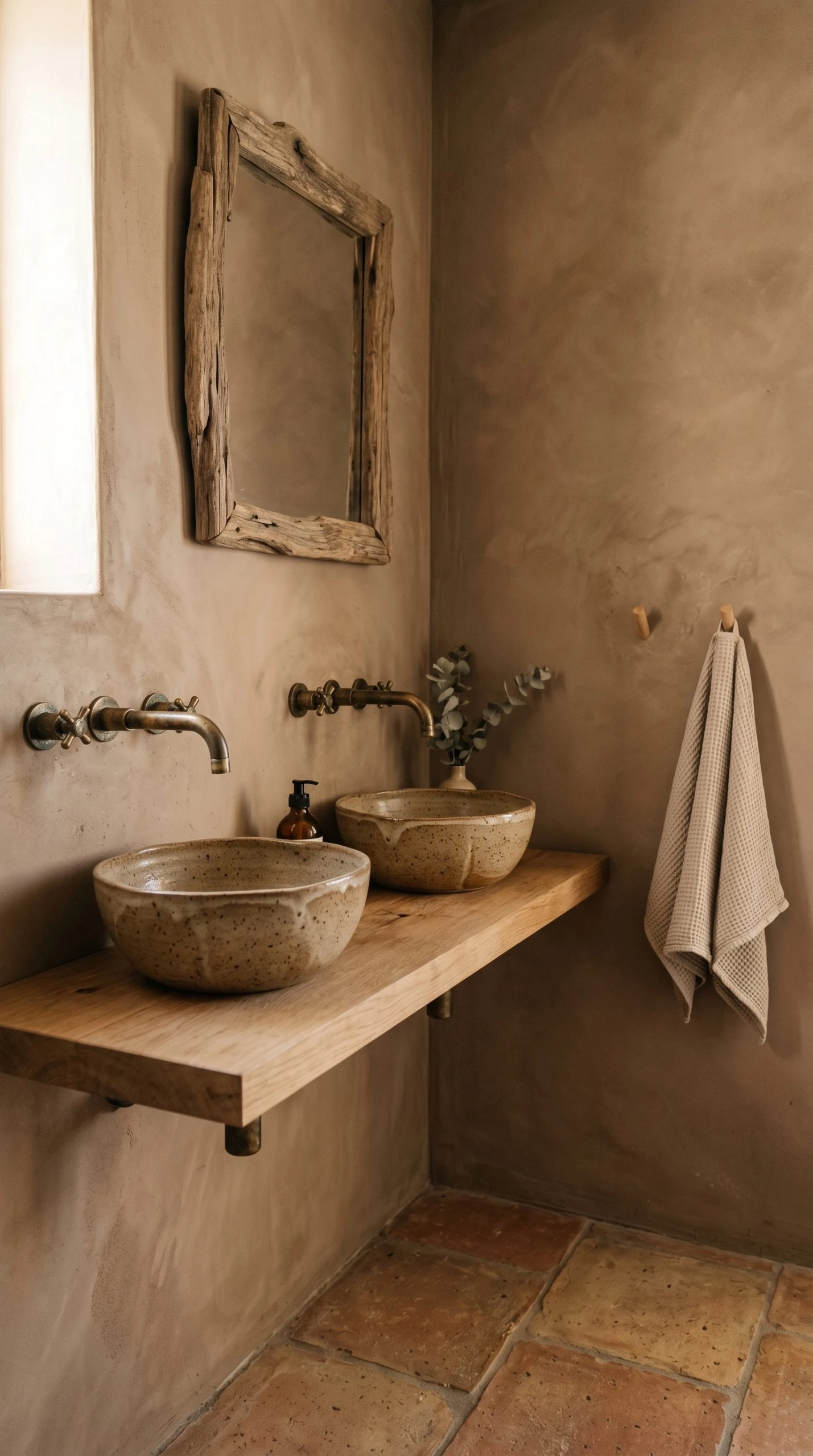
The Japanese concept of wabi-sabi celebrates imperfection, impermanence, and the beauty found in natural wear and irregularity. In a bathroom, this translates into a color palette of mushroom brown, warm taupe, clay, and soft off-white, with finishes that are intentionally matte and slightly rough-edged. This is the opposite of the high-gloss, perfectly symmetrical bathroom and it is deeply connected to the feeling of the forest floor.
Think hand-thrown ceramic vessels for soap dispensers and toothbrush holders. An irregular-edge mirror in natural wood. A linen shower curtain in undyed or natural beige. Cement or plaster walls in a soft mushroom or warm grey tone with a slightly textured finish. The fixtures in this bathroom look best in unlacquered brass, which will patina naturally over time and contribute to the wabi-sabi story rather than fighting against it.
Small imperfections are intentional here. A slightly uneven tile, a mismatched set of pottery accessories, a bare linen hand towel with a frayed edge. All of these details tell a story about slowness and authenticity that feels genuinely restful in a world that is otherwise very polished and fast.
Designer Tip: Unlacquered brass fixtures will change color and develop a patina over time. This is part of the design. If you prefer consistency, choose brushed brass with a lacquer finish, which holds its tone better long-term.
Beach and Coastal Bathroom Ideas
Whitewashed Walls with Driftwood Accents
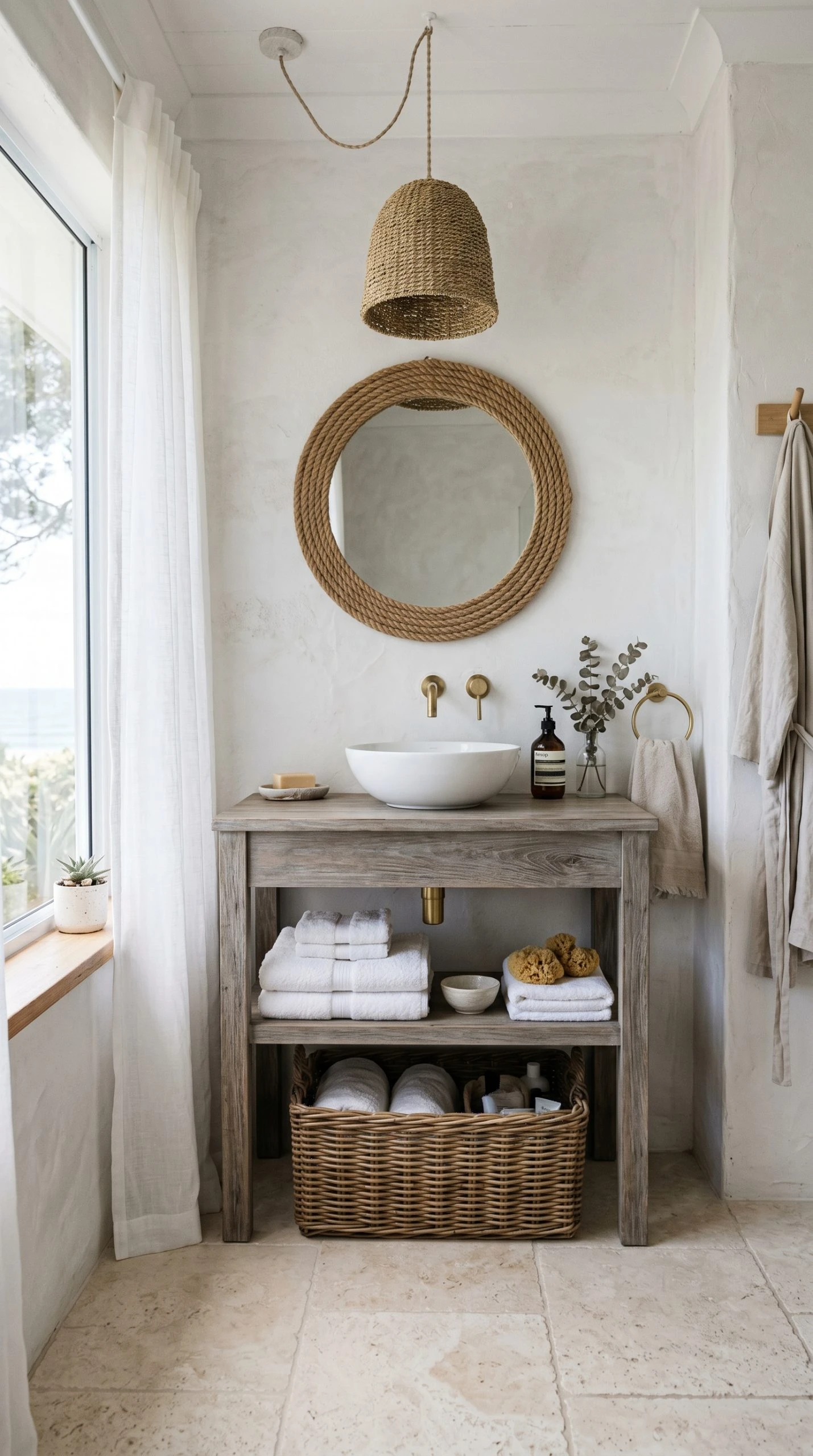
Coastal bathrooms done well feel breezy, light, and genuinely relaxed, not like a collection of seashell tchotchkes from a gift shop. This version uses whitewashed walls, either true white limewash paint or a plaster finish with a slightly chalky texture, to create the bleached, sun-dried quality of driftwood and sandy dunes. The vanity in this setup works beautifully in actual driftwood or a weathered wood finish with a slightly grey-washed tone.
Keep the floors light, large-format white or cream porcelain with a soft texture works particularly well and does not show sand or footprints as obviously as dark floors would. For hardware, go with brushed nickel or soft chrome rather than bright chrome, which can feel too sharp against the softened palette. Woven baskets for storage, a rope-wrapped mirror, and a set of fluffy white towels folded neatly on an open shelf complete the look without overworking it.
Lighting here should be soft and warm. A pendant light with a woven seagrass or rattan shade is one of the most affordable ways to instantly shift the character of a bathroom. Position it over a freestanding tub or a reading nook if space allows. The overall result is a bathroom that feels genuinely restful, like a good morning at a beach house.
Designer Tip: Limewash paint is a great budget-friendly alternative to plaster for getting that chalky, whitewashed texture. It goes on over existing painted walls with minimal prep and creates beautiful depth and character.
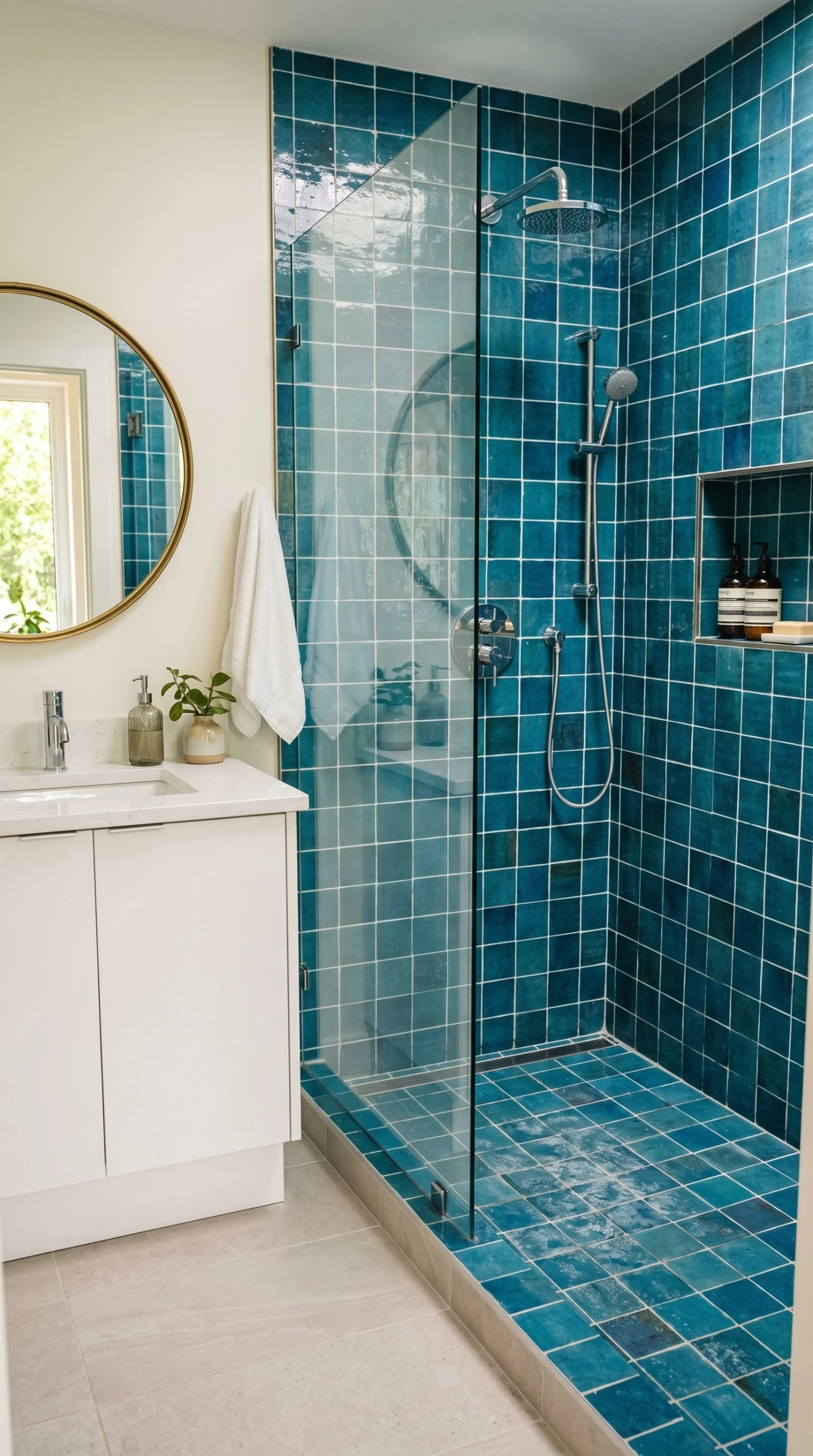
Ocean Blue Zellige Tile Shower
Zellige tiles are handmade Moroccan ceramic tiles with naturally irregular surfaces and slight color variations across each tile. In shades of deep ocean blue, teal, and aquamarine, they bring the layered, shifting quality of water right into a shower. No two tiles are identical, which means the finished wall has real visual depth and life to it in a way that machine-made tiles simply cannot replicate.
Use zellige tiles as the full shower surround and pair them with a warm white grout so the variation in each tile really stands out. Outside the shower, keep walls neutral in warm white or a very light sand tone so the tile has space to shine. The vanity in this setup looks best in white or a very light painted wood, with chrome or polished nickel hardware to echo the watery quality of the tile. A frameless glass shower screen rather than a door or curtain keeps the whole wall visible.
A concrete or terrazzo floor in a light grey-blue tone grounds the space and connects the shower tile to the rest of the room. Add a rolled cotton bathmat in a natural cream or white, a simple white ceramic vessel sink, and a couple of floating shelves in natural oak for a finishing touch that feels current without being overdone.
Designer Tip: Zellige tiles require a slightly wider grout joint than standard tiles because of their irregular surface. Work with a tiler who has experience with handmade tiles to avoid cracking and uneven lines during installation.
Sandy Terrazzo Floor with Rattan Details
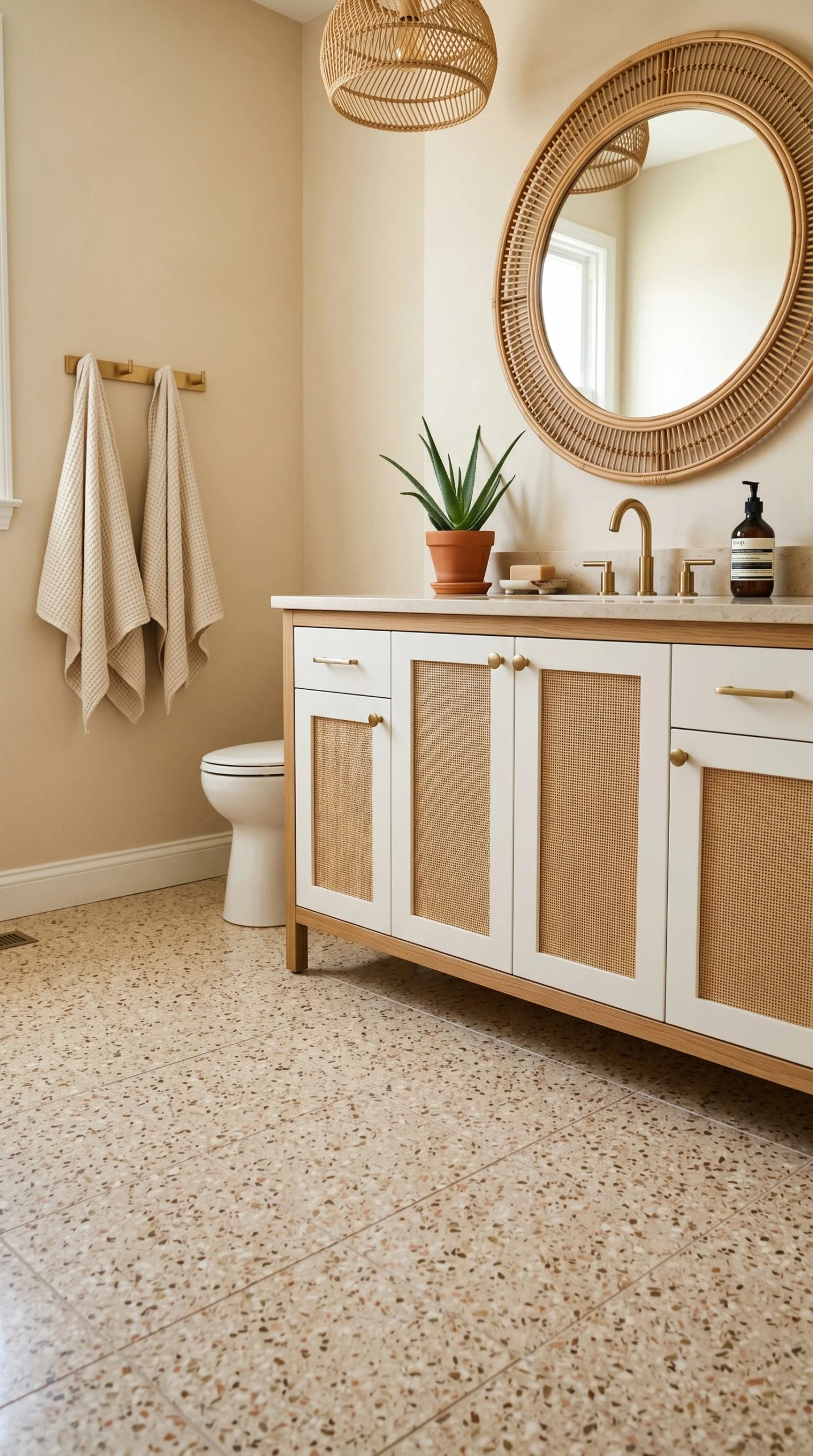
Terrazzo is one of those materials that has come back in a very strong way, and for good reason. The speckled, aggregate quality of terrazzo is a natural fit for coastal and beach-inspired spaces because it genuinely looks like compressed sand and pebbles. A terrazzo floor in warm sandy tones with flecks of cream, taupe, and soft coral brings real warmth to a bathroom without requiring a lot of additional styling to feel cohesive.
Wall colors in this setup work best in warm white, pale sand, or a very soft blush to complement the terrazzo without competing with it. Rattan and cane details are the ideal companion: a rattan mirror frame, cane-front cabinet doors on the vanity, a woven pendant light. These textures add organic warmth and a relaxed, coastal quality that feels genuinely lived-in rather than staged.
For fixtures, choose matte black or warm brass. Brass in particular picks up the warm tones in terrazzo beautifully and gives the room a more considered, less generic look. This is a bathroom that does not need to shout to feel interesting. The terrazzo floor does most of the work on its own, and everything else just needs to support it well.
Designer Tip: If a full terrazzo floor is out of budget, look for terrazzo-look porcelain tiles, which have improved dramatically in quality and now come in large formats that are easier to install and maintain than original terrazzo.
Pebble Mosaic Shower Floor
A pebble mosaic shower floor is one of the most tactile, sensory elements you can add to a nature-inspired bathroom. Walking on smooth, rounded pebbles in a warm shower activates the bottoms of your feet in a way that a flat tile floor simply does not, and it creates a massaging effect that genuinely adds something to the experience of a daily shower. The pebbles come in mesh-backed sheets that make installation relatively straightforward.
The color palette for this idea works best in warm neutrals, river rock grey, warm sand, or a mix of both, depending on whether you want the floor to feel cooler and more coastal or warmer and more earthy. Pair the pebble floor with smooth, large-format tiles on the shower walls in a complementary tone so the visual interest stays on the floor where you want it. A teak shower bench or teak grate adds another layer of natural material and gives the shower a genuine spa-like quality.
Outside the shower, continue with a complementary stone-look tile in a larger format to create a visual flow. A simple wooden stool, a plant hung from the ceiling near the window, and clean white towels on a simple hook rail finish the room without overcomplicating it.
Designer Tip: Pebble mosaic floors need to be properly sealed because the increased grout surface area makes them more vulnerable to staining and mildew. Seal them at installation and re-seal once a year for best results.

Sea Glass Color Palette with White Shiplap
Sea glass comes in the most beautiful soft, muted tones: soft aqua, pale sage, dusty mint, cloudy white, soft grey-blue. These colors have a quality to them that feels both aged and fresh at the same time, which is exactly what makes them so appealing for a bathroom. A sea glass palette used across walls, tiles, and accessories creates a bathroom that feels like spending time at the edge of the water, where things are a little soft, a little faded, and very peaceful.
White shiplap is the ideal partner for sea glass colors because it gives the room a clean, airy structure without introducing anything that competes with the palette. Use shiplap on one feature wall, typically behind the vanity, and paint the remaining walls in the softest shade of aqua or pale sage you can find. The vanity itself works best painted in white or a very soft blue-grey with simple chrome or brushed nickel pulls.
Layer in sea glass green towels, a soap dish in pale aqua ceramic, a few glass bottles in varying heights on the windowsill, and a simple cotton runner in off-white on the floor. Nothing needs to match exactly. The beauty of this palette is that all the tones sit harmoniously together with minimal effort.
Designer Tip: When working with multiple soft colors in a small bathroom, keep the largest surfaces (floor and ceiling) in the most neutral tone and save the more saturated sea glass shades for smaller areas like the feature wall, towels, and accessories.
Mountain and Stone Bathroom Ideas

Raw Slate Walls and Heated Stone Floor
Slate is one of the most characterful natural stones available for bathrooms, and it is significantly less expensive than marble while being harder-wearing and more forgiving in wet environments. Raw slate wall tiles in a charcoal, dark grey, or blue-grey tone bring an immediate sense of mountain drama to a bathroom that no manufactured tile can really replicate. The cleft surface of natural slate catches and scatters light in a way that keeps the wall looking alive and interesting throughout the day.
Pair slate walls with a heated stone floor, either in a matching slate or in a contrasting warmer tone like travertine or sandstone, to soften the overall palette and add physical warmth underfoot. Heated floors are worth the investment in a bathroom that uses cooler stone tones because they make the room usable and comfortable even in winter without layering rugs over a surface you want people to see.
For fixtures, go with brushed nickel or gunmetal grey to stay in the cooler, mineral palette. A simple rectangular mirror with a thin black or dark metal frame, a wall-mounted vanity in white or light grey, and a rain shower in matte black all work together to create a bathroom that feels solid, grounded, and very grown-up. Add a single large plant in a concrete or stone pot for a note of life.
Designer Tip: Slate is naturally water-resistant but still benefits from sealing. Use a penetrating sealer rather than a surface sealer to protect the stone without dulling its natural finish or altering its texture.

Marble and Brass Mountain Lodge Look
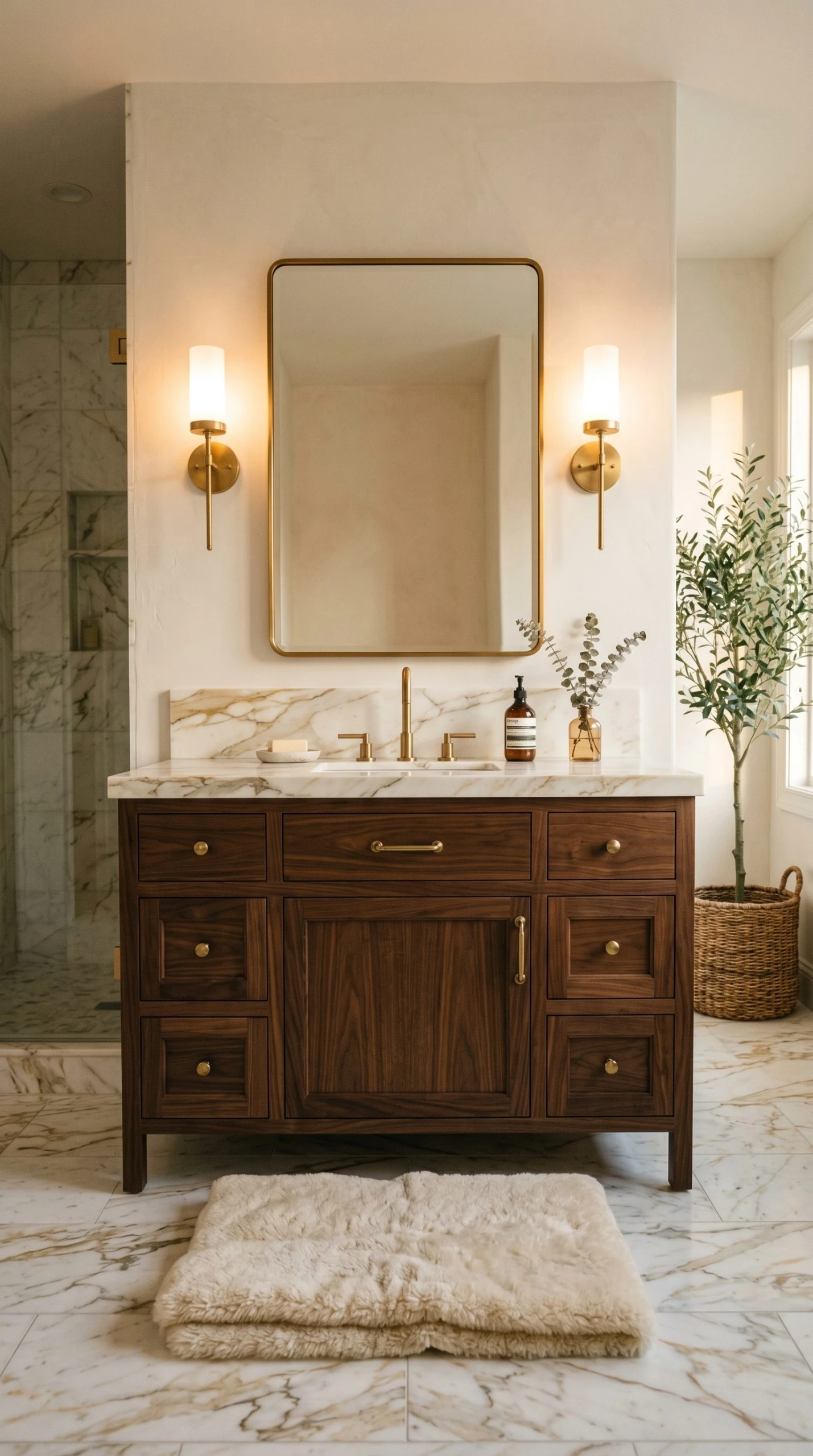
This idea takes the classic combination of marble and brass and roots it firmly in the natural world by layering in warm wood, woven textiles, and earthy accents that feel more lodge than hotel. The marble here should have visible, natural veining in warm tones, think Calacatta with gold veining or a Emperador marble in caramel and cream rather than the stark white-on-grey option that reads more clinical than natural.
Pair the marble with a vanity in deep walnut or dark-stained oak with unlacquered brass hardware and a vessel sink in white or cream stone. The floor works well in the same marble as the countertop to create a cohesive look, or you can alternate with large-format warm beige porcelain for a more budget-conscious version. Layering in a sheepskin bathmat, a brass soap dispenser, and a few linen hand towels in warm cream or rust gives the room the organic softness it needs to feel like a mountain retreat rather than a showroom.
Lighting here is important. A pair of warm brass wall sconces with frosted glass shades on either side of the mirror give that warm, golden evening glow that makes the marble look particularly beautiful. Add a single potted olive tree or a trailing vine in a high corner shelf for a finishing touch of greenery.
Designer Tip: If full marble is beyond budget, use marble on the vanity countertop only and pair it with large-format marble-look porcelain on the walls and floor. The visual result is nearly identical and significantly more affordable.
Granite Vessel Sink with Minimalist Mountain Palette
A granite vessel sink is one of those details that stops people in a bathroom and makes them look twice. Natural granite in a dark forest green, deep charcoal, or warm grey with natural crystal inclusions is a genuinely beautiful material, and using it as the sink itself rather than just a countertop surface turns it into a proper focal point. These sinks are available from specialist stone suppliers and, while not inexpensive, they last indefinitely and get more beautiful as they develop their patina.
The supporting palette for this idea should be deliberately minimal. White walls, a simple floating oak vanity, and a large circular mirror with a thin metal frame. The floor works well in a soft grey large-format porcelain with a subtle texture. Let the sink be the star and keep everything else supportive and quiet. For the faucet, a wall-mounted bridge-style tap in brushed brass or matte black looks particularly good with a vessel sink because it does not visually compete with the stone.
This is a bathroom that works particularly well in smaller spaces because the vessel sink becomes a conversation piece without requiring any architectural tricks or expensive structural work. A trailing pothos plant on a floating shelf and a simple linen hand towel finish the look without adding clutter.
Designer Tip: Granite is very durable but certain finishes, particularly polished granite, can show water spots more easily in a bathroom setting. A honed or brushed finish is more forgiving and tends to look more natural.

Concrete and Quartz with Mountain Stream Vibes
Concrete and Quartz with Mountain Stream Vibes
Polished concrete and quartz together create a bathroom aesthetic that feels like a high mountain stream, clean, cool, mineral-rich, and very still. This is a contemporary interpretation of nature-inspired design that works especially well in modern or industrial-leaning homes. Poured concrete walls in a warm grey or soft taupe, combined with a quartz countertop in a white-and-grey veined pattern, give the room a material honesty that feels inherently connected to the natural world.
The floor in this setup works best in a large-format concrete-look porcelain tile, which gives the same visual effect as poured concrete with much better practical performance in a wet environment. A frameless walk-in shower with a simple bench in smooth white quartz and a linear drain set into the floor creates an incredibly clean silhouette. Matte black fixtures throughout add contrast and weight against the cool stone palette.
Greenery is essential in this kind of bathroom to prevent it from reading as cold or clinical. A large monstera or bird of paradise plant in a simple concrete pot, placed near the window, brings warmth and life into the mineral palette without disturbing the very clean lines of the design. Keep textiles minimal but thoughtful, one good quality waffle-weave bath towel in warm white is enough.
Designer Tip: Polished concrete walls in bathrooms need to be properly sealed and the room needs excellent ventilation to prevent moisture penetrating the surface over time. Concrete microcement applied over existing walls is a more practical option than poured concrete for most renovation projects.

Boulder-Shaped Freestanding Tub
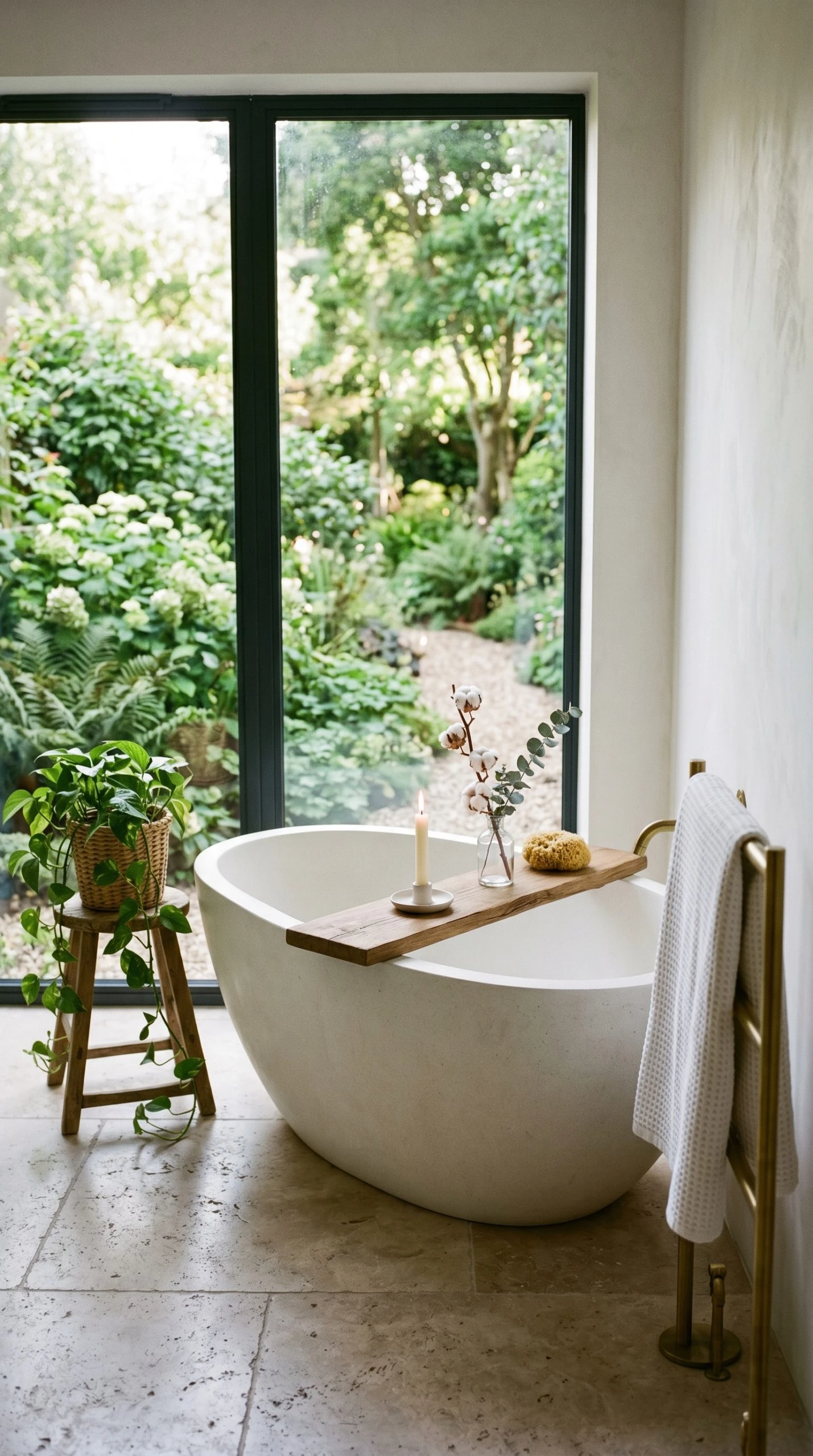
Some freestanding bathtubs are designed to look almost exactly like naturally rounded boulders found in a mountain stream, with smooth, organic shapes and a matte stone or stone-resin finish. These tubs are a genuine statement piece, and the rest of the room can be designed entirely around them. The color in this setup should stay within the natural stone range, warm white, soft pebble grey, or a very light sand.
Position the tub near a window if at all possible, framed by a view of the garden or sky. If there is no suitable window position, create the feeling of a view with a large botanical print or a floor-to-ceiling photograph of a mountain landscape on the wall behind the tub. The floor works well in a brushed travertine or a soft limestone-look porcelain. A simple wooden bath tray across the tub, a floor-standing towel rail in brushed brass nearby, and a low trailing plant on a stool beside the tub complete the picture.
The rest of the room should take its cue from the tub, simple, organic, and unhurried. Wall-mounted taps in brushed brass, a simple oval mirror on the wall, and warm but subtle lighting make this bathroom feel genuinely restorative.
Designer Tip: Stone-resin tubs retain heat significantly better than acrylic or steel options, which is a real practical advantage for a long soak. They are heavier though, so check that your floor structure can support the weight before purchasing.
Meadow and Botanical Bathroom Ideas
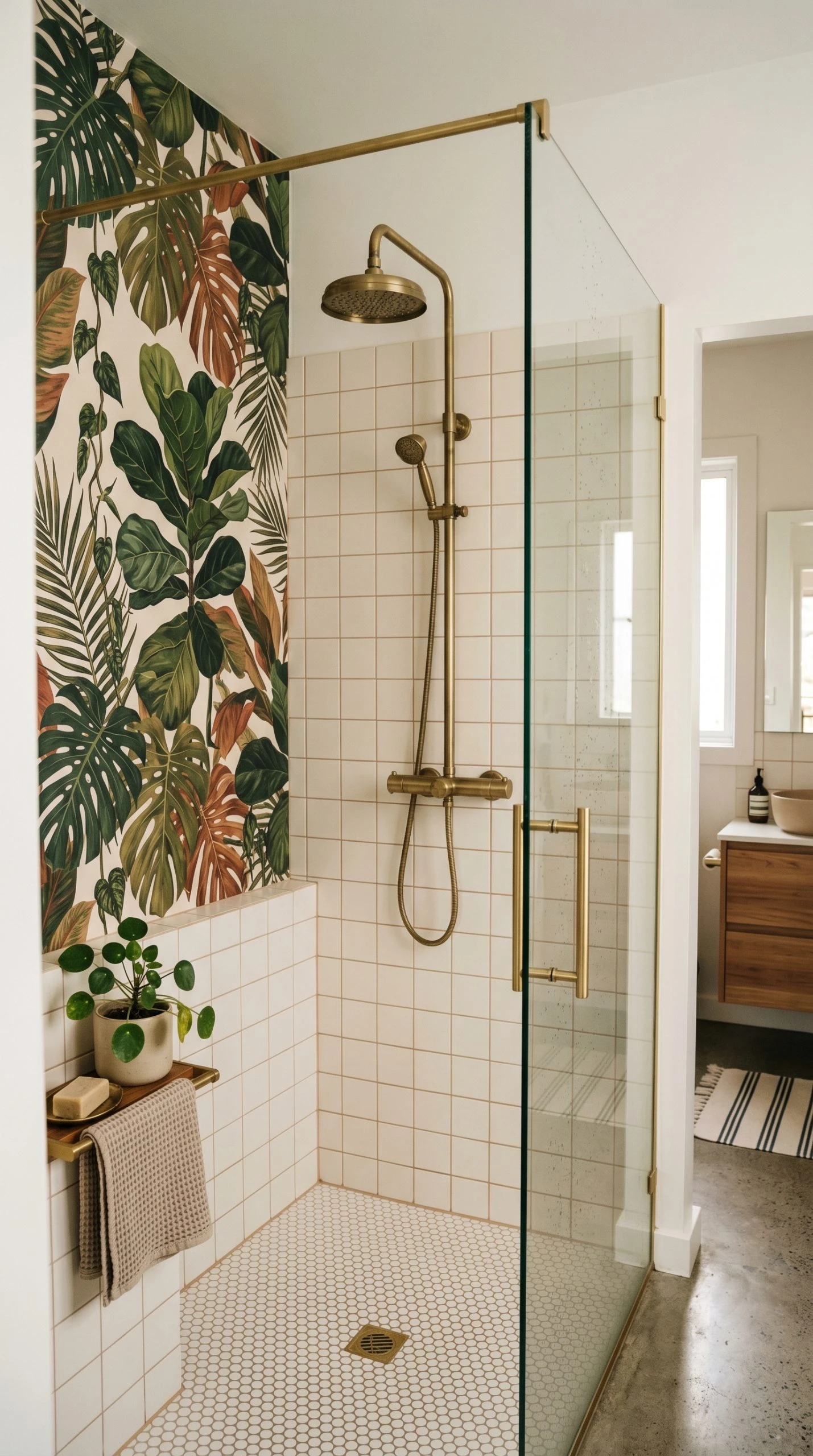
Botanical Wallpaper in the Shower
Waterproof botanical wallpaper designed specifically for wet environments has made enormous strides in the last few years, and using it inside the shower enclosure is one of the most unexpected and impactful design moves you can make in a bathroom. Large-scale botanical prints with oversized leaves, trailing vines, or dense floral patterns in rich greens and warm earth tones create the feeling of being inside a greenhouse or garden pavilion rather than a standard shower box.
The key to making this work is balance. The wallpaper should go on one wall only inside the shower, with the remaining walls tiled in a simple complementary colour. Outside the shower, keep walls plain and calm, a warm white or soft sage, to let the print have space to breathe. The vanity and fixtures should be simple, white or light wood with brushed brass hardware, so that attention stays on the wallpaper rather than competing with it.
Bring in one or two real plants on the vanity or on a floating shelf near the window to blur the line between the print and actual greenery. A woven pendant light and a wooden-framed mirror keep the natural material story going throughout the rest of the room.
Designer Tip: When ordering waterproof wallpaper for a shower area, always order at least 15% more than you calculate you need. The pattern matching in botanical prints can be complex and having extra material gives your installer the flexibility to get it right without running short.
Wildflower Color Palette: Blush, Sage, and Cream
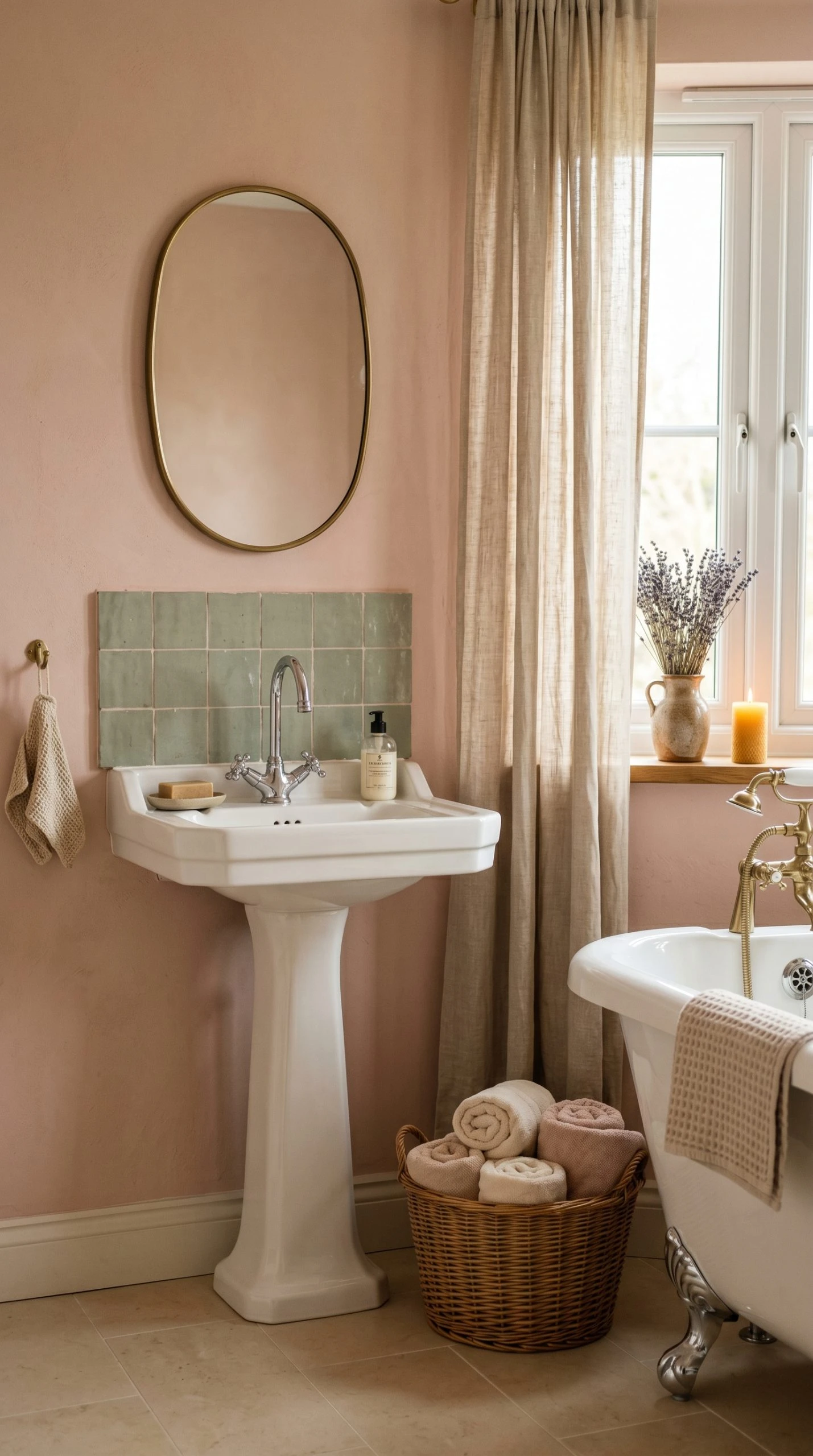
Wildflower palettes are softer and more nuanced than either a bold botanical green or a stark white bathroom, and they have a quality of gentle warmth that makes a bathroom feel very personal and welcoming. The combination of blush pink, muted sage green, and warm cream is particularly beautiful because it reads as both vintage and fresh, and all three colors exist abundantly in actual wildflower meadows.
Use the blush as a wall color in a matte or eggshell finish, the sage in tile form for a simple backsplash behind the vanity or a shower accent wall, and keep the large floor area in warm cream or a soft sand tone. A white clawfoot tub in this setting looks absolutely right, as does a pedestal sink with chrome fixtures and a simple oval mirror. Keep the accessories in natural materials: a wicker basket for towels, a small ceramic pot of dried lavender or eucalyptus, a glass apothecary jar for cotton balls.
The linen curtain at the window is important in this bathroom. Choose something in unbleached natural linen or a very soft blush cotton voile that filters light beautifully and adds a softness to the room that a blind cannot replicate. This is a bathroom that rewards the details.
Designer Tip: Dried botanicals work particularly well in a wildflower-palette bathroom because they add texture and a warm, faded quality that fresh flowers do not have. A bundle of dried pampas grass or lavender in a simple ceramic vase on the countertop costs almost nothing and looks genuinely lovely.
Hanging Ferns and a Rattan Ceiling Feature
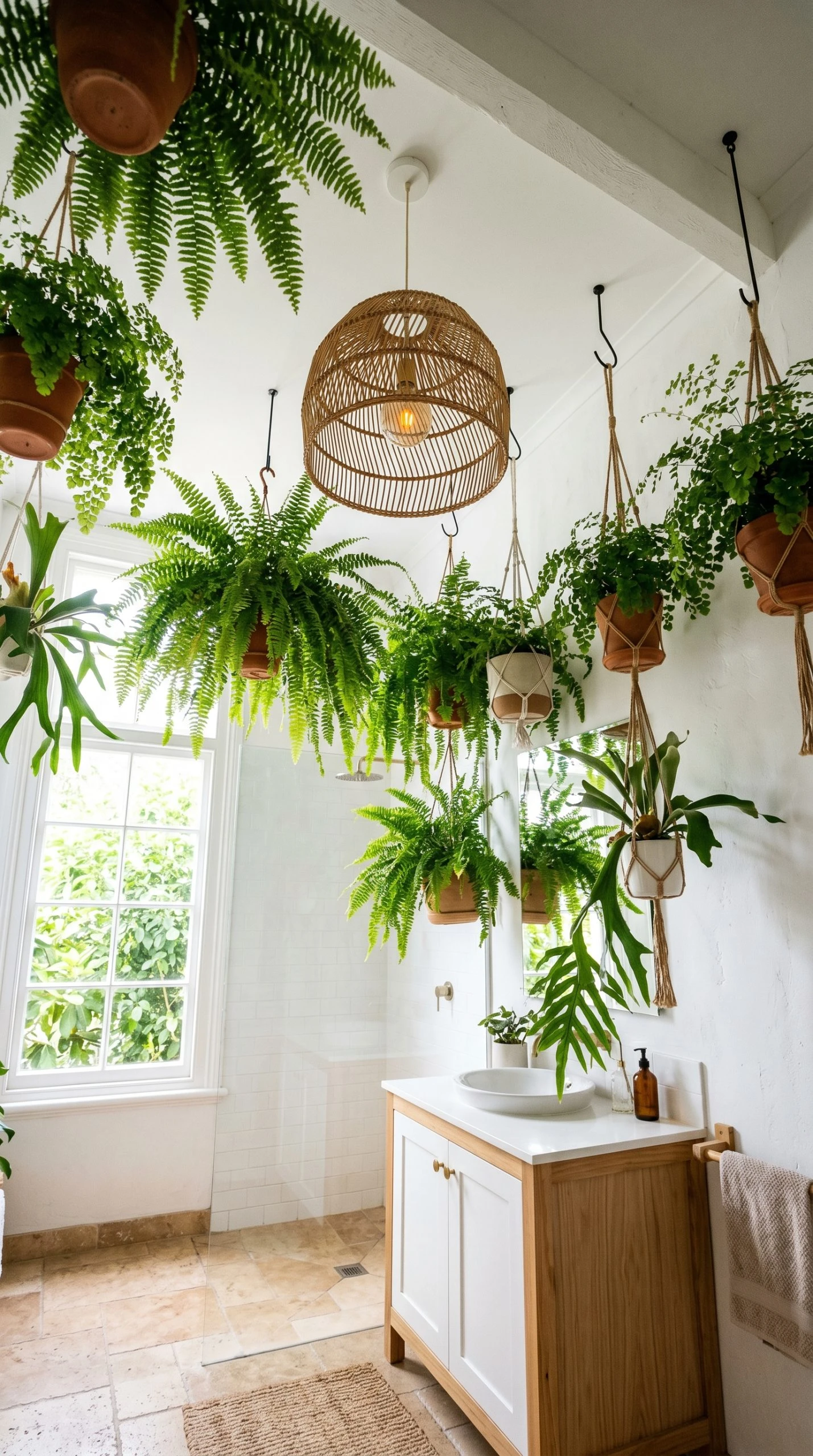
This idea is about creating a bathroom that feels like a roofed garden, where plants hang overhead, light filters through, and the whole room has a gentle, verdant quality. Start by installing a simple rattan or seagrass pendant light or a woven rattan ceiling panel over the main bathing area. This immediately introduces an organic overhead element that changes how the whole room reads.
Hang ferns and trailing plants from ceiling hooks at varying heights. Boston ferns, maidenhair ferns, and pothos all handle the humidity of a bathroom very well and look beautiful when they trail and cascade. Keep the rest of the bathroom relatively simple so the plants and ceiling feature do the work: white walls, a natural wood vanity, a simple rectangular mirror, and warm white towels on a hook rail.
The floor in this bathroom looks best in a natural stone-look tile in warm beige or cream, which gives the impression of garden paving without the maintenance of real stone. A flat woven jute rug in a drier corner of the bathroom adds texture underfoot and contributes to the garden-room feeling.
Designer Tip: If your bathroom ceiling is not suitable for heavy plant hangers, look into tension-rod systems that span the width of the room and can hold lighter hanging plants without any permanent ceiling fixtures. These work surprisingly well.
Pressed Botanical Tile Pattern
There are some extraordinarily beautiful encaustic and handmade ceramic tiles available now that feature pressed botanical patterns, delicate leaf prints, or wildflower motifs pressed into the clay surface before firing. These tiles have an artisan, handmade quality that mass-produced tiles cannot match, and they work beautifully as a feature floor in a small bathroom, a single accent wall, or a shower niche liner.
The palette for these tiles tends to stay in the soft, earthy range: sage green, dusty terracotta, warm cream, muted blue. Choose a single tile design and use it consistently rather than mixing patterns, which can quickly become overwhelming. Pair the tiles with very simple surrounding materials, white plaster walls, a plain wood vanity, a simple round mirror, so that the craftsmanship of the tiles gets the appreciation it deserves.
This idea works particularly well in smaller bathrooms and powder rooms where you do not need many tiles to make an impact. A pressed botanical tile floor in a powder room is a genuinely beautiful detail that guests will notice and remember long after they leave.
Designer Tip: Encaustic cement tiles are porous and must be sealed before grouting and again after installation. Use a good quality penetrating sealer and re-seal annually. They are also best kept away from heavy-traffic areas or used with a good quality mat over them in wet zones.

Living Plant Wall Panel
A living plant wall in a bathroom is more achievable than it sounds, particularly if you use a specialist modular panel system designed for indoor vertical gardens. These systems include a growing medium, irrigation provisions, and drainage built into the panel, making them far more manageable than trying to construct a custom living wall from scratch. A panel of around one square meter is enough to make a real visual statement in a bathroom.
Choose humidity-loving plants for the panel: pothos, heartleaf philodendron, baby’s tears, and various ferns all thrive in the moisture-rich environment of a bathroom. Position the living wall where it receives the most available natural light, typically near a window or skylight. The surrounding palette should stay very neutral, white walls, simple concrete or stone floor, clean white fixtures, so that the lush greenery of the living wall is the undisputed star of the room.
This is a bathroom that is also doing something genuinely good for air quality. Plants absorb excess moisture, release oxygen, and help regulate the atmosphere of an enclosed space in small but real ways. The fact that it also looks extraordinary is simply a bonus.
Designer Tip: Before installing a living plant wall, make sure the wall behind can handle moisture and weight. Waterproof the wall surface thoroughly and check the floor loading. A modular system with a drip tray is far safer than a DIY irrigation setup for a first install.
Tropical and Jungle Bathroom Ideas

Black and Tropical Green with Rattan Furniture
Tropical bathrooms do not have to be bright or garish. This version uses a deeply considered palette of matte black, rich tropical green, and warm natural rattan to create something that feels both bold and completely in tune with the natural world. Paint walls in a deep, dark shade like charcoal or warm black, or tile them in matte black rectangular tiles. Then introduce tropical green through large-leaf plants, green towels, and a printed shower curtain or blind.
A rattan vanity stool or a rattan shelf unit introduces the natural texture and lightness needed to prevent the dark walls from feeling heavy. Brass fixtures glow beautifully against black walls and bring warmth into a palette that could otherwise feel cold. A large monstera, a bird of paradise, or a rubber plant in a simple wicker basket planter in the corner of the room gives the space the tropical density it needs without requiring a massive window or greenhouse conditions.
Lighting in this bathroom needs careful thought. Warm pendant lights or wall sconces rather than overhead cool-white lighting will keep the room feeling warm and inviting rather than cave-like. Candlelight on the edge of the tub on evenings creates an atmospheric quality that the darkest, most dramatic bathrooms reward particularly well.
Designer Tip: Dark bathrooms can look stunning but they need the right lighting to avoid feeling gloomy. Layer at least three light sources: overhead ambient, mirror sconces, and a table or accent lamp if space allows. Dimmer switches are essential.

Tropical Mural Behind the Tub
A hand-painted or printed tropical mural on the wall behind a freestanding bathtub is one of the most dramatic moves you can make in a bathroom, and when it is done well, the result is genuinely breathtaking without ever being fussy or overdone. The best tropical murals use rich, botanical illustration styles with oversized tropical leaves, birds of paradise, and climbing vines in deep greens, warm golds, and soft terracotta tones.
Commission a local mural artist for a custom hand-painted version, or choose from the excellent selection of large-format botanical wallpapers now available from specialist suppliers. Position the freestanding tub directly in front of the mural and keep all other surfaces completely neutral: white walls, white ceiling, a simple pale stone or white tile floor. The tub in this setup looks best in a pure white or soft cream finish that does not compete with the mural palette behind it.
Brass fixtures throughout the room help tie the warm botanical tones together. A simple wooden bath tray across the tub with a single candle and a small vase of fresh tropical flowers from the grocery store on the windowsill are all the accessories this bathroom needs.
Designer Tip: If a full mural feels too permanent, large-scale peel-and-stick botanical wallpapers are now very high quality and can be removed and replaced without damaging the wall. A good option for renters or anyone wanting the look with more flexibility.

Bamboo Accents with Warm Linen and Earthy Plaster
Bamboo is one of the most sustainable materials available for home interiors, growing to full maturity in just a few years compared to the decades required for most hardwoods. In a bathroom, it brings an immediately tropical and organic quality without requiring a large statement. Bamboo towel rails, bamboo shelving, a bamboo bath mat, and bamboo-handled accessories all work together to create a cohesive natural material story that feels genuinely fresh.
Pair bamboo with walls in a warm earthy plaster finish in terracotta, warm sand, or a deep clay tone. These colors are inherently tropical without resorting to bright or synthetic shades. Linen towels and a linen shower curtain in natural undyed tones bring in a softness that balances the structure of the bamboo and the warmth of the plaster walls. The floor in this bathroom looks best in a terracotta tile, either traditional square terracotta or a modern large-format version, both of which carry the earthy palette beautifully to the ground plane.
A simple ceiling fan in a natural wood finish is a nice finishing touch in this bathroom, particularly in warmer climates. It reinforces the tropical quality and is genuinely practical in a humid bathroom environment. Plants here should lean toward tropical species: a small palm, a peace lily, or a cluster of pothos trailing from a high shelf.
Designer Tip: Bamboo accessories and fittings in a bathroom need to be properly treated for humidity. Look for bamboo products that are sealed or carbonized rather than untreated raw bamboo, which can split, swell, or develop mold in consistently wet conditions.

Outdoor Shower Aesthetic with Indoor Comfort
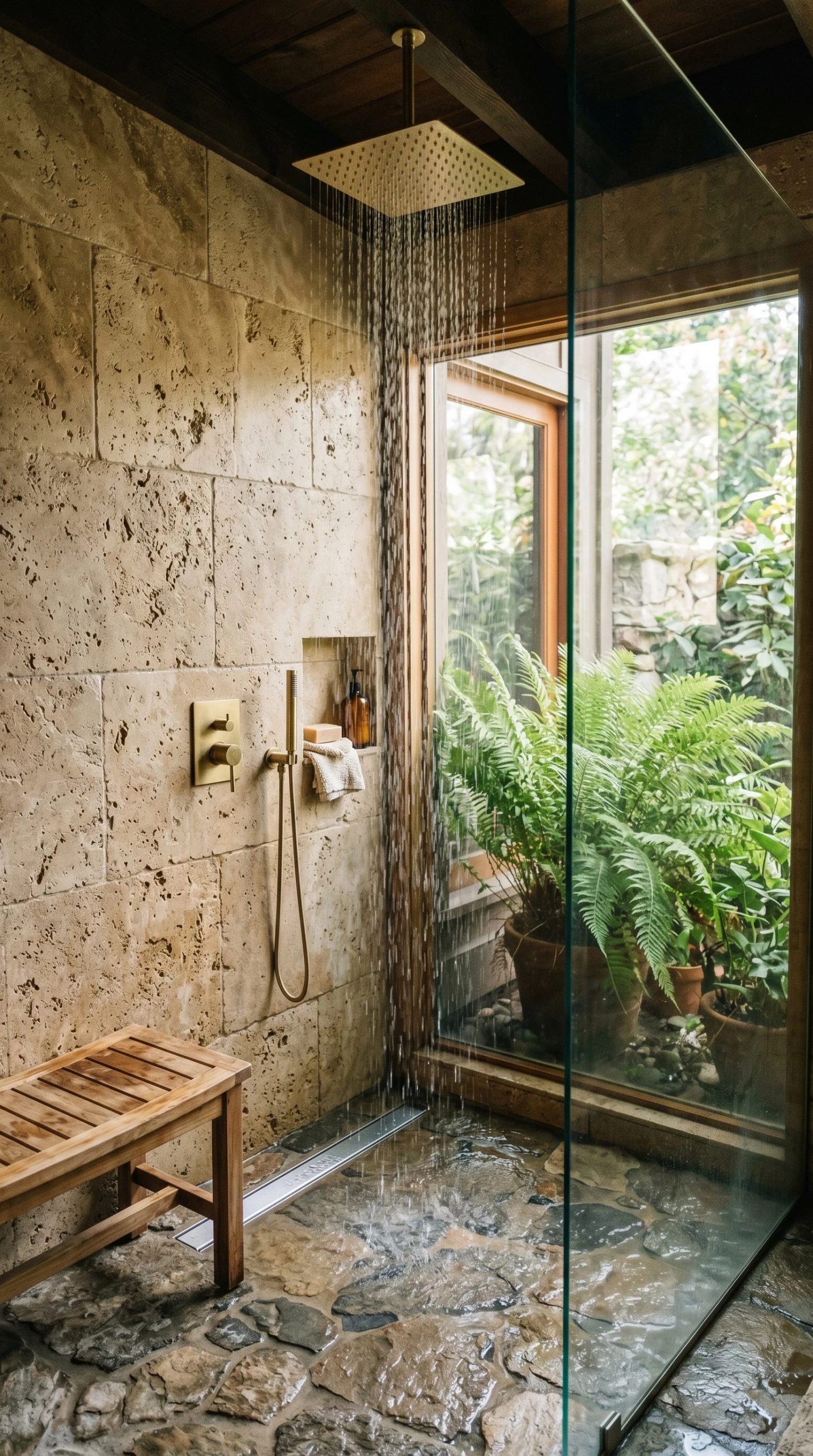
The outdoor shower experience, where you stand in the open air with the feeling of rain or warm sun on your skin, is one of the most genuinely restorative things you can replicate in an indoor bathroom. The design goal here is to create a shower enclosure that feels as open and outdoor-connected as possible while still being indoors. Start with a frameless glass shower screen that maximises the sense of openness, and position it near the best natural light source in the room.
Line the shower walls in large-format natural stone or stone-look porcelain, and use a pebble mosaic or rough travertine on the shower floor for a real outdoor-path quality underfoot. A ceiling-mounted rainfall showerhead is essential here, one that covers a wide area and delivers a genuinely heavy, rain-like flow rather than a gentle drizzle. Add a simple teak bench or stool inside the shower and a teak grate over the drain for a resort-quality finishing detail.
Outside the shower, open the bathroom up as much as possible. A large plant positioned beside the shower screen so it is partially visible through the glass, a window positioned to show sky or garden, and a natural stone or wood floor that flows from inside to outside the shower create the visual continuity that makes this idea work.
Designer Tip: A large rainfall showerhead requires adequate water pressure to perform well. Check your home’s water pressure before purchasing. A pump or pressure-boosting system can be installed if needed and is usually worth the investment for this kind of showerhead
Jungle Green and Terracotta Powder Room
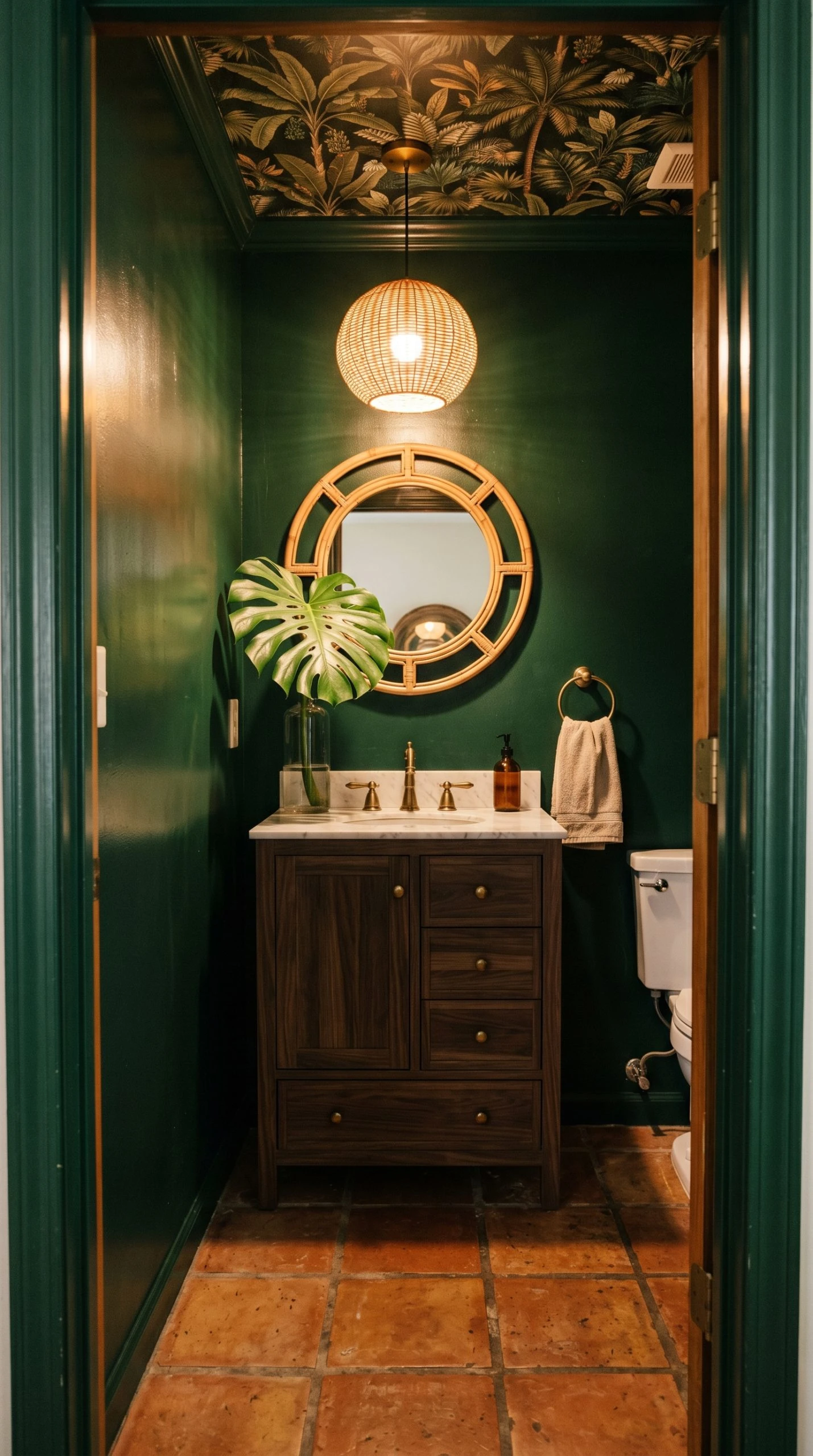
The powder room is often the most underused opportunity in a home. Because it is small, rarely used for bathing, and does not need to accommodate a family’s daily routine, it can carry design choices that might feel too bold or high-maintenance in a main bathroom. This tropical interpretation uses jungle green walls in a deep, glossy paint, terracotta floor tiles in a classic square format, and a bold botanical print wallpaper on a single accent wall or ceiling for maximum drama in a compact space.
A small statement vanity in a deep green or dark walnut, a round mirror with a bamboo or rattan frame, and a single overhead pendant light in a woven natural fiber shade are all that is needed to furnish the space well. A fresh-cut palm leaf or monstera stem in a simple tall glass vase on the countertop changes weekly and costs almost nothing but immediately elevates the room.
Brass fixtures throughout tie the warm terracotta and deep greens together and give the room a genuinely finished quality. This is a bathroom that people walk into and immediately want to take a photograph of, and getting to that level of character in a small powder room costs far less than most homeowners expect.
Designer Tip: Gloss paint on powder room walls is much easier to maintain than matte because it wipes clean and holds up well in a small space that sees a lot of hand traffic. It also reflects light beautifully, which works particularly well with bold dark colors in a compact room.
Final Thoughts
Nature has always been the best designer. The shapes, colors, textures, and materials found outdoors are the ones our eyes find most restful and our bodies respond to most positively, and that is exactly why bringing them into the bathroom makes such a real difference to how a space feels day to day. Whether you have gone all in on a cedar wet room or simply switched out your accessories for natural materials and added a plant or two, the changes add up to something that is much greater than the sum of its parts.
The ideas in this article span a wide range of budgets, styles, and bathroom sizes. Some require professional installation and real investment, others can be achieved on a weekend with a trip to a good home store. What they all share is an intention to connect the built environment of a bathroom with the natural world outside it, and that intention is what makes them work so well.
Start with the idea that resonates most strongly with you right now, whether that is a moss wall, a pebble shower floor, a botanical wallpaper, or simply a deep green paint color, and let it guide the rest of your choices. Nature-inspired bathrooms reward a considered, layered approach. Take your time, choose materials you genuinely love, and build something that feels like yours.
Frequently Asked Questions
What plants work best in a nature-inspired bathroom?
Plants that thrive in humid, warm conditions are the best choices for bathrooms. Pothos, Boston ferns, snake plants, peace lilies, spider plants, and heartleaf philodendrons are all excellent options. If your bathroom gets good natural light, you can also try bird of paradise, monstera, or small palms. For low-light bathrooms, snake plants and pothos are the most forgiving choices.
How do I use natural materials in a bathroom without maintenance problems?
The key is choosing the right version of the material. Solid untreated wood in wet areas is a maintenance challenge, but engineered wood or wood-look porcelain is much more practical. Natural stone is beautiful but needs sealing. Stone-look porcelain gives a very similar appearance with almost no maintenance. Sealed cork, bamboo treated for humidity, and properly installed slate or travertine are all good long-term choices when installed correctly.
What colors work best for a nature-inspired bathroom?
The most successful nature-inspired palettes draw directly from a specific natural environment rather than trying to include every natural color at once. Forest palettes work in deep greens and warm wood tones. Coastal palettes use soft aquas, sandy neutrals, and bleached whites. Mountain bathrooms lean on stone greys, slate blues, and warm brass. Meadow and botanical spaces work well in blush, sage, cream, and soft terracotta. Choose one environment and build from there.
Can a small bathroom work with a nature-inspired design?
Absolutely, and in some ways small bathrooms suit this approach particularly well. A bold botanical wallpaper or a deep nature-inspired paint color that might feel overwhelming in a large room can be perfectly balanced in a small space. The most effective approaches for small bathrooms include a strong feature wall, a vessel sink in a natural material, one or two well-chosen plants, and natural material accessories that add texture without taking up much room.
How do I add nature elements on a limited budget?
You do not need to renovate to get a nature-inspired bathroom. Start with paint in a nature-inspired color, which is one of the highest-impact, lowest-cost changes you can make. Add a plant or two, swap out chrome accessories for brushed brass or matte black options, introduce a woven pendant light or rattan mirror frame, and replace your towels with natural linen or cotton options in earthy tones. These changes together cost a fraction of a renovation and can completely change the feeling of a bathroom.
Is biophilic design actually good for wellbeing or is it just a trend?
The research behind biophilic design is solid and has been accumulating for decades. Studies consistently show that exposure to natural materials, colors, light patterns, and especially live plants reduces cortisol levels, lowers blood pressure, and improves mood. In a space like a bathroom, which we use at the beginning and end of every day, those effects are genuinely meaningful. So while it is absolutely a trend in 2025, it is a trend with a real foundation in how human beings respond to their environments.