Tiny Home Bedroom Looks That Actually Work

Living in a tiny home forces you to get creative, and honestly, that is not always a bad thing. When every square foot matters, you start making decisions that feel intentional rather than accidental. The bedroom, in particular, becomes one of the most interesting rooms to design because it needs to pull double duty: it has to be a place where you genuinely rest, but it also has to store your things, feel visually open, and not make you feel like you are sleeping in a closet. That is a lot to ask of a small room, but the good news is that designers have figured out how to make it happen beautifully.
The biggest mistake people make in tiny home bedrooms is trying to shrink everything down uniformly. They buy a smaller bed, a smaller dresser, a smaller nightstand, and end up with a room that just looks like miniature furniture floating in space. The better approach is to think in terms of layers: how the space is laid out, how light moves through it, how storage is hidden, and how the colors and textures work together to make the room feel bigger than it actually is.
This article covers 21 specific ideas organized by theme so you can mix and match what works for your layout. Whether you are working with a loft-style sleeping area, a main-floor bedroom tucked behind a sliding door, or a compact alcove that barely fits a queen bed, there is something here that will help you make it feel like a real room, not an afterthought. Some of these ideas cost almost nothing to pull off. Others require a bit of planning. All of them are worth knowing about.
Smart Layouts That Make the Most of Every Inch
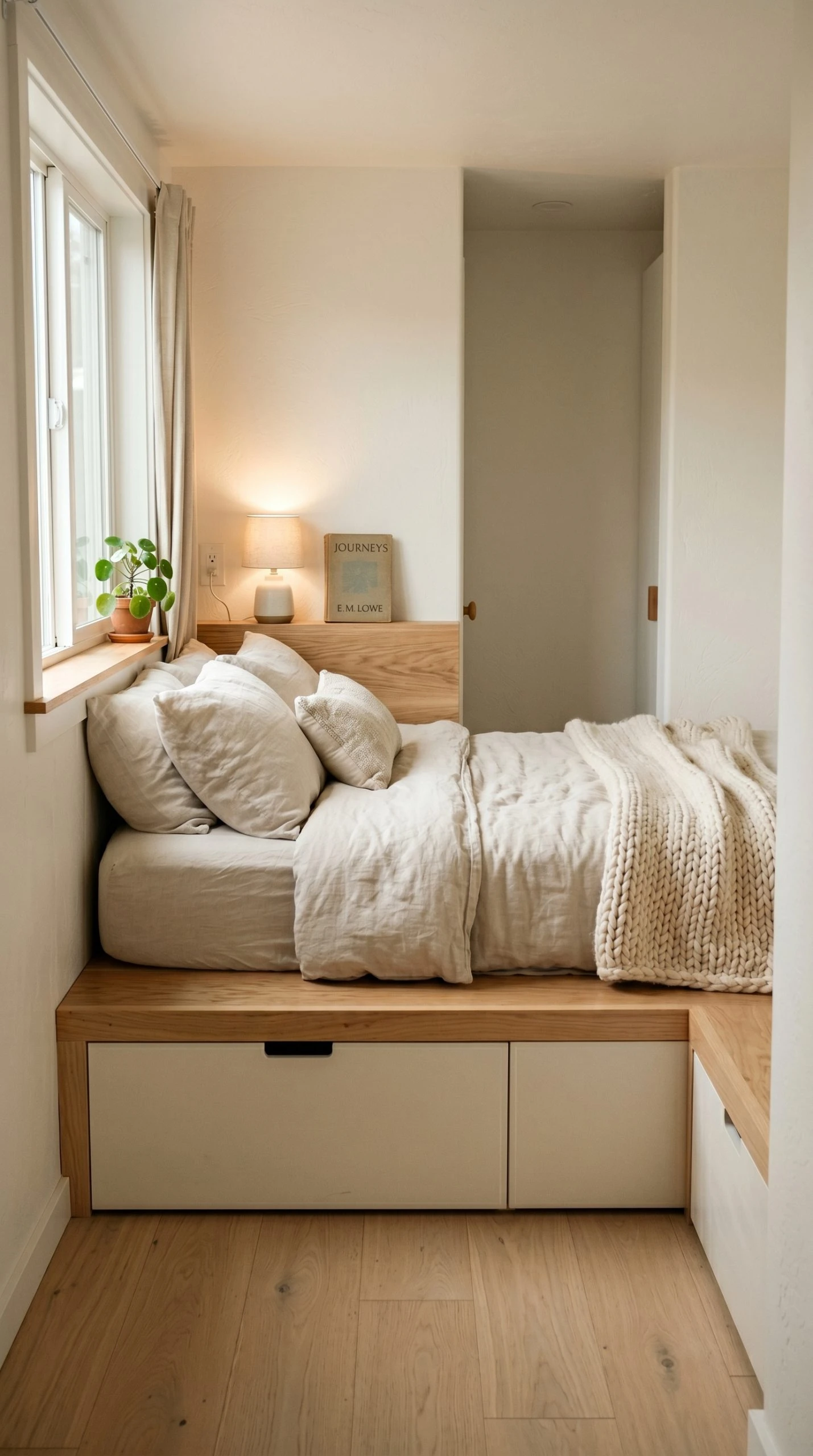
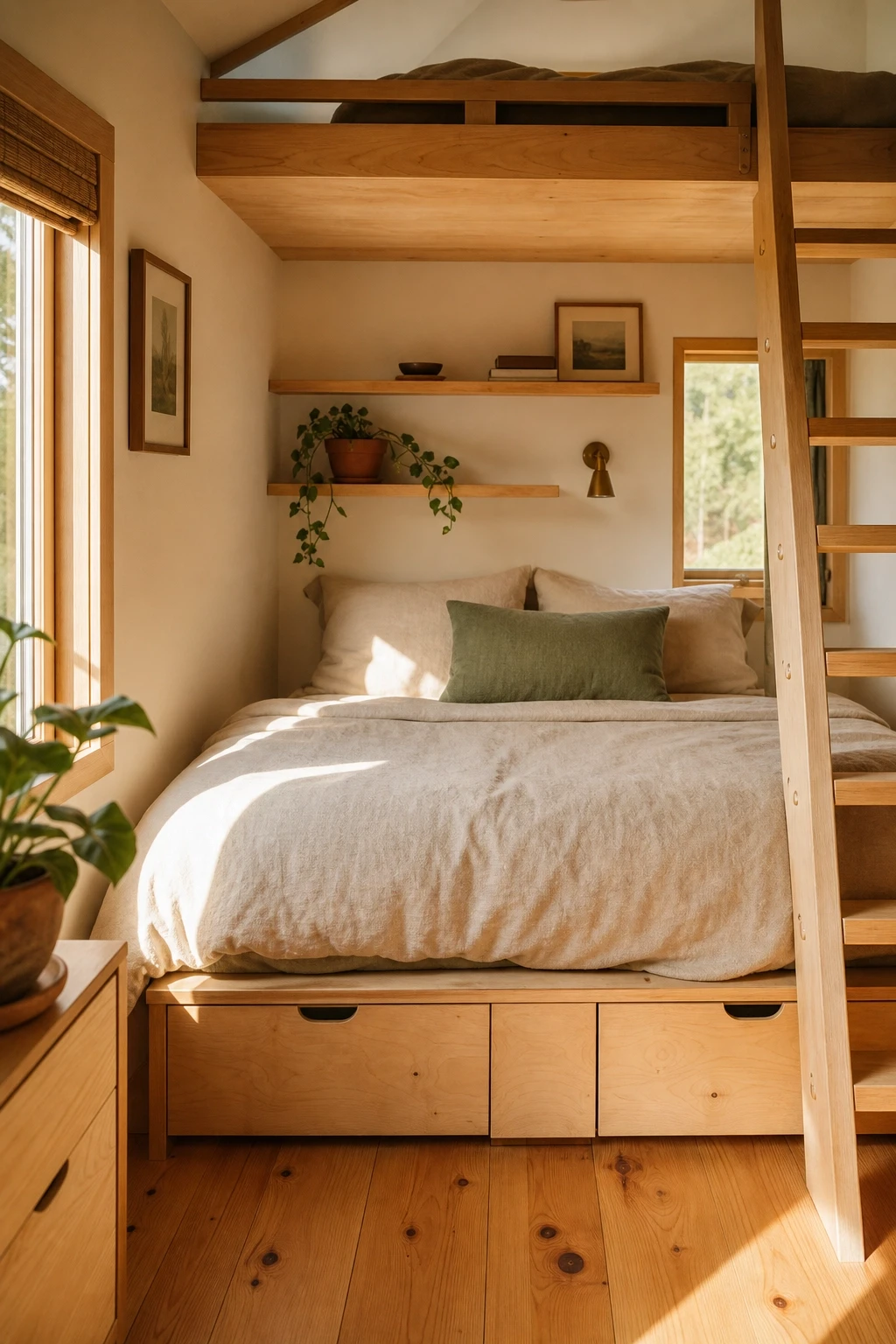
1. The Platform Bed with a Built-In Storage Base
One of the most practical things you can do in a tiny bedroom is raise the bed on a platform and turn the entire base into storage. This is not a new idea, but the way designers are executing it now has gotten a lot smarter. Instead of basic pull-out drawers on the sides, some builds include drawers on all four sides, or even a lift-top mattress mechanism that reveals a large open compartment below. In a room where a regular wardrobe is not an option, this under-bed storage can hold a full season of clothing, extra bedding, and shoes without taking up any additional floor space.
The platform itself can be built from plywood and finished with a wood veneer or painted to match your walls, which makes it feel like a custom piece rather than a DIY project. Keep the bed low to the ground so the room does not feel top-heavy. A low-slung platform with thin-profile storage drawers painted the same color as the walls practically disappears into the room. Pair it with a simple linen duvet in a warm neutral, and the bed becomes the calm anchor of the entire space.
Designer Tip: Paint the platform the same color as your walls to make it look like it grew from the floor rather than sitting on top of it.
2. The Loft Bed with Functional Space Below
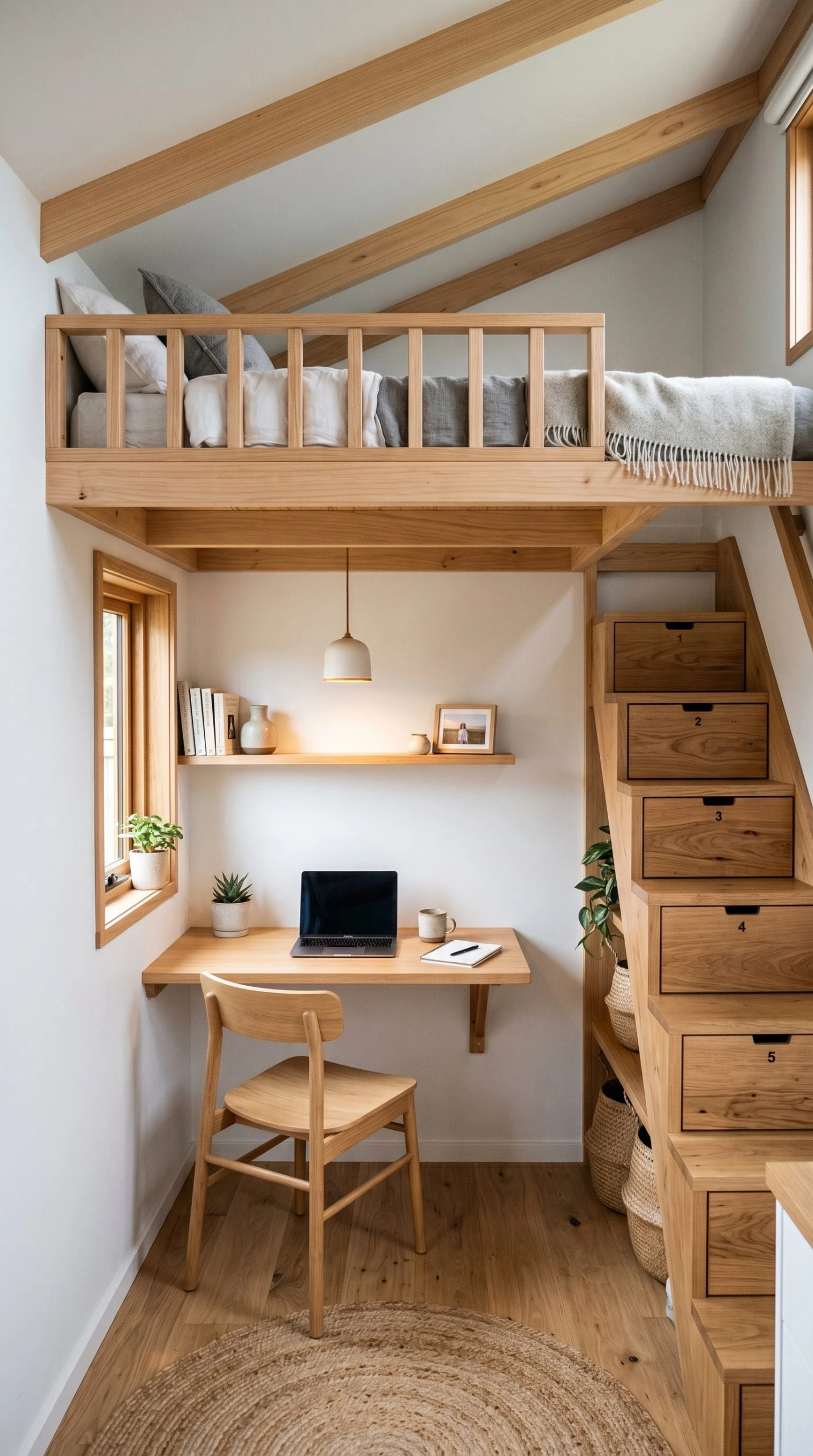
Loft beds are practically standard in tiny homes, but the trick is making the space underneath actually useful rather than dead space. The most successful loft setups dedicate the area below to a specific function: a mini wardrobe with a hanging rod and shelves, a compact desk built into the wall, or even a small seating nook with built-in cushions and storage underneath. This way, the loft is not stealing square footage from the room, it is doubling it.
For the loft itself, think carefully about headroom. You need enough space to sit up without hitting the ceiling, which typically means a minimum of 30 to 36 inches of clearance. The access ladder or stairs matter too. Ladder-style stairs with deep treads are easier to climb than steep narrow rungs, and you can build shallow drawers into each step for extra storage. Use the wall beside the loft ladder to mount a few hooks for tomorrow’s outfit and a small shelf for your phone and reading glasses so you are not climbing up and down in the dark.
Designer Tip: Choose a ladder with angled rungs rather than straight vertical ones. It is easier on your knees and feels less like climbing into a bunk bed and more like going to bed.
3. The Alcove Bed Built Into the Wall
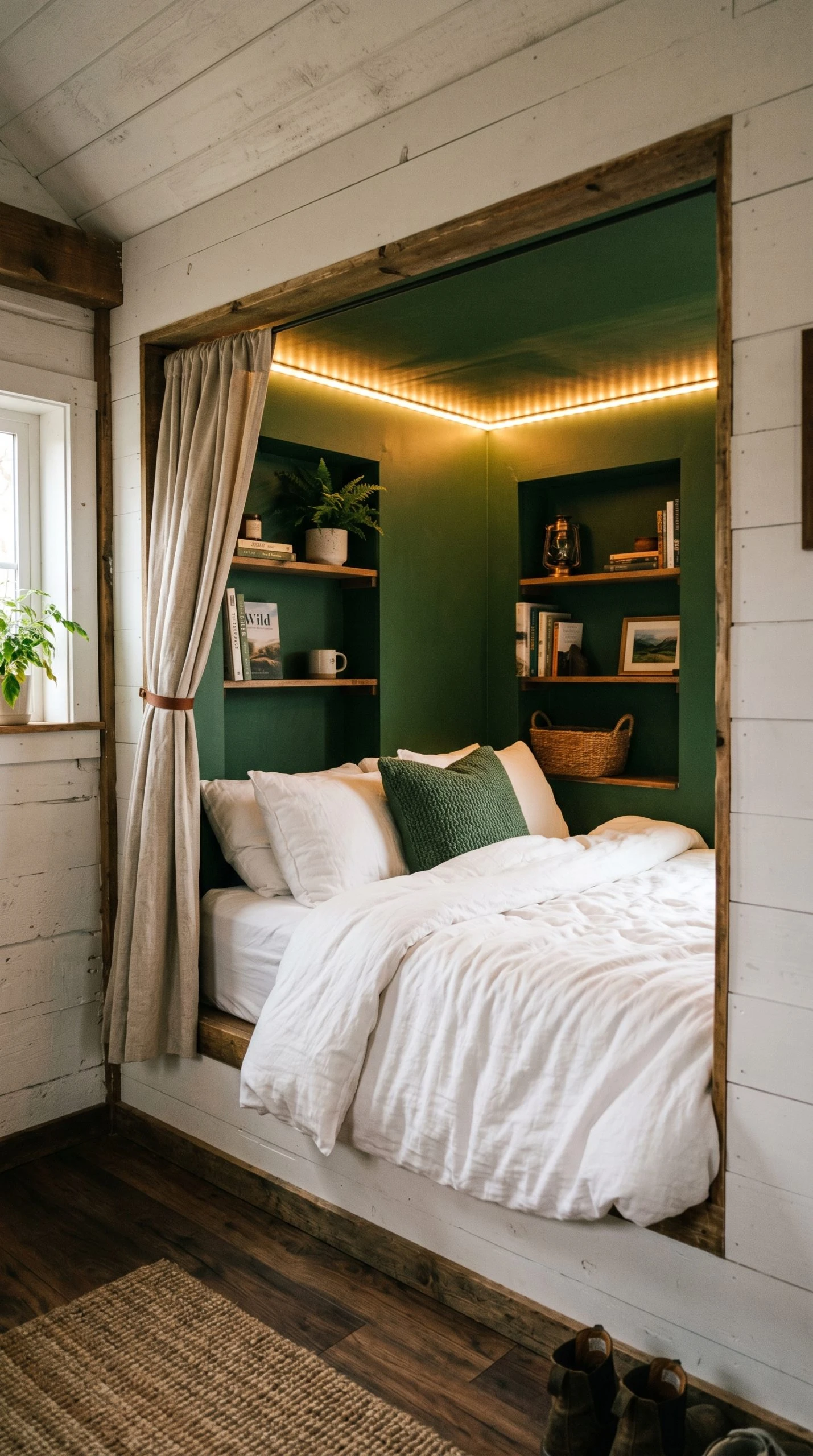
An alcove bed, sometimes called a built-in bed or a nook bed, is when the sleeping area is framed into a recessed section of the wall, essentially creating a sleeping pod. This works especially well in tiny homes because it separates the sleeping zone from the rest of the living space without needing a door. The structural frame around the bed also creates natural shelf space on either side and above, which means you gain storage you would not have had otherwise.
Finish the inside of the alcove in a contrasting color or texture from the rest of the room to define the space and make it feel cozy rather than cramped. Deep navy, forest green, or warm terracotta all work beautifully inside an alcove because the enclosed feeling amplifies the depth of the color. Add a simple roller shade or linen curtain at the front of the alcove so you can close it off when you want privacy or during warmer months when you want airflow.
Designer Tip: Run a row of small puck lights or LED strip lights along the inside top edge of the alcove for soft ambient lighting that makes the nook feel like its own little world.
4. The Murphy Bed with a Multi-Use Wall
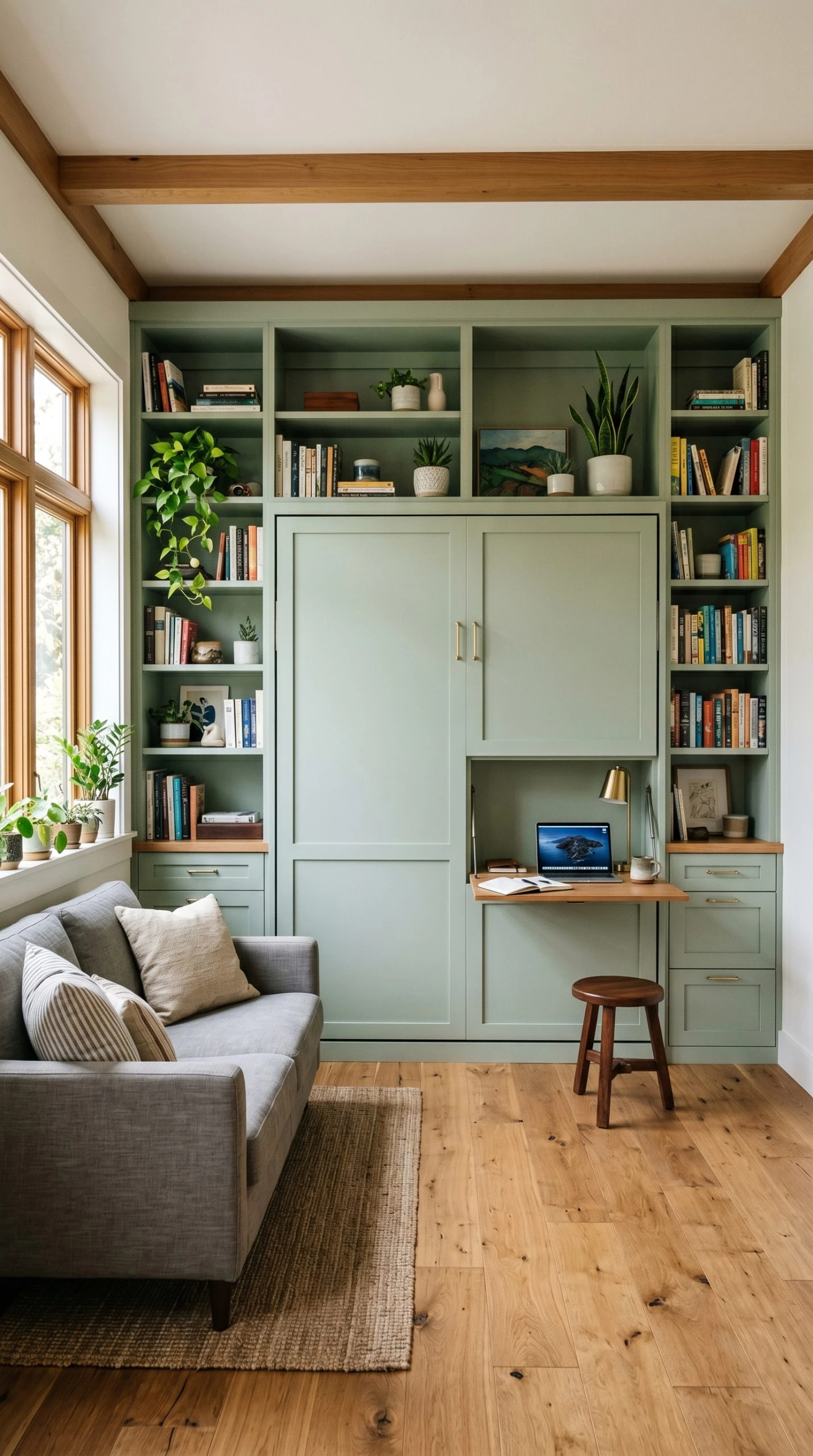
A Murphy bed is the obvious choice for tiny spaces, but the execution matters enormously. The versions that work best are the ones where the bed is integrated into a larger wall unit that includes shelving, a fold-out desk, or a sofa that swings out as the bed folds up. When the bed is tucked away, the wall looks like a living room or a home office. When the bed is down, the room shifts completely into a bedroom. This kind of fluid, multi-use design is what makes tiny homes feel genuinely livable rather than just tolerable.
Choose a wall unit that is custom-built or semi-custom to fit your wall from floor to ceiling. This removes any awkward gaps and makes the whole thing look intentional. Paint the cabinetry the same color as the walls so the unit blends in even further. For the mattress, use one specifically designed for Murphy beds as they are typically thinner and more flexible, which means the mechanism works smoothly for years without sagging.
Designer Tip: Mount a thin full-length mirror on the inside face of the Murphy bed panel. When the bed is up, the mirror doubles the visual space of the room instantly.
Color and Light Ideas That Open Up Small Spaces
5. A Single-Tone Room in Warm White
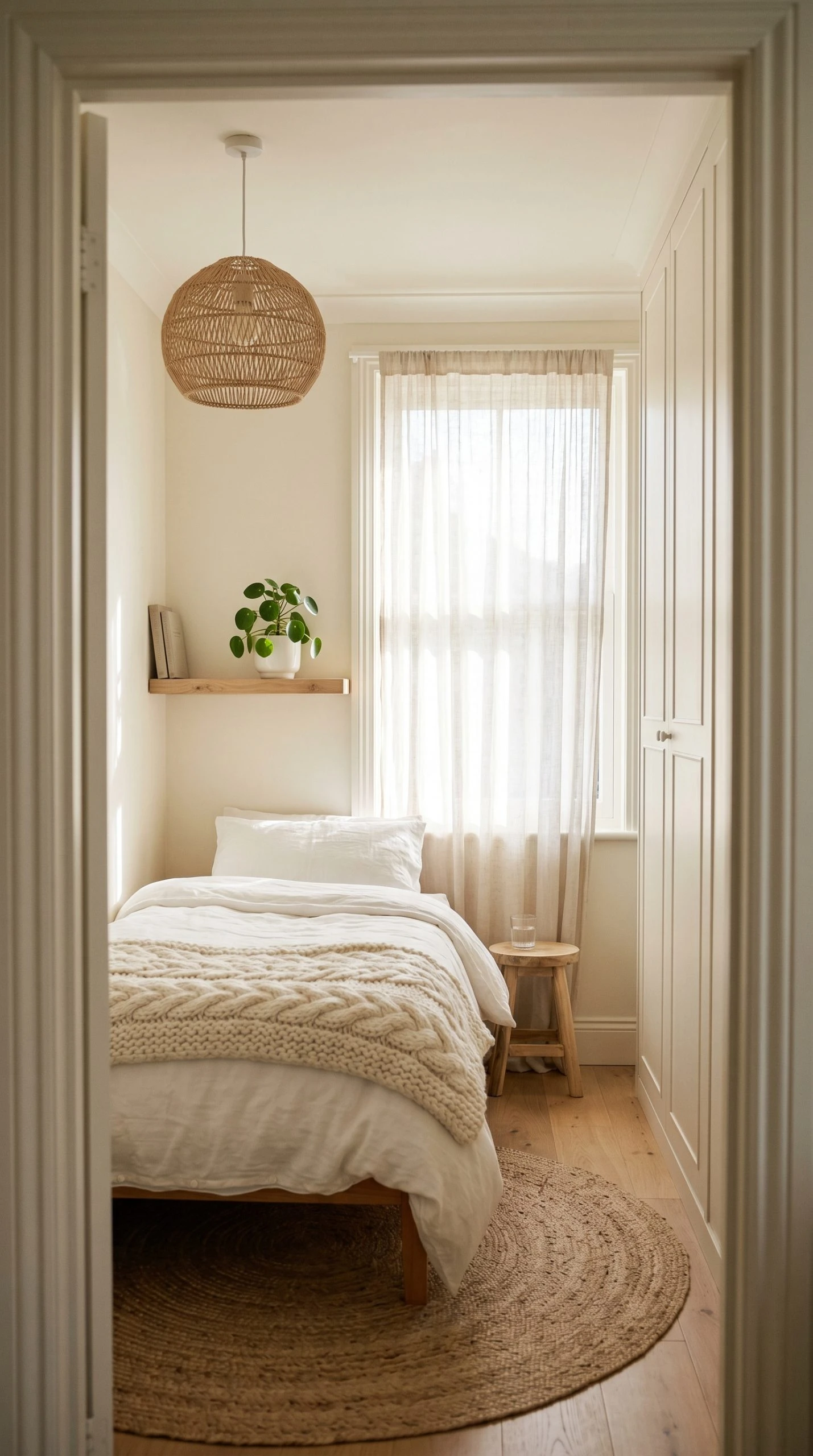
Painting the walls, ceiling, trim, and even the built-in furniture in the same warm white is one of the most effective ways to make a tiny room feel larger without physically changing anything. The reason it works is that the eye has nothing to stop on, so the boundaries of the room become less obvious. The space just seems to keep going. Warm white, which has a slightly creamy or ivory undertone rather than a stark blue-white, works better in small bedrooms because it reads as inviting rather than clinical.
The secret to making a single-tone white room look finished rather than bare is texture. Layer in as many different materials as you can: a chunky knit throw, linen pillow covers, a jute or wool rug, a rattan pendant shade, a raw wood floating shelf. All of these add visual depth and interest without introducing color that might make the room feel busier. The result is a room that feels calm, airy, and well-designed rather than simply unpainted.
Designer Tip: Go a shade or two warmer on your ceiling color than your walls. It makes the ceiling feel lower in a cozy way rather than a claustrophobic one.
6. Deep Moody Colors for a Cozy Cocoon Effect
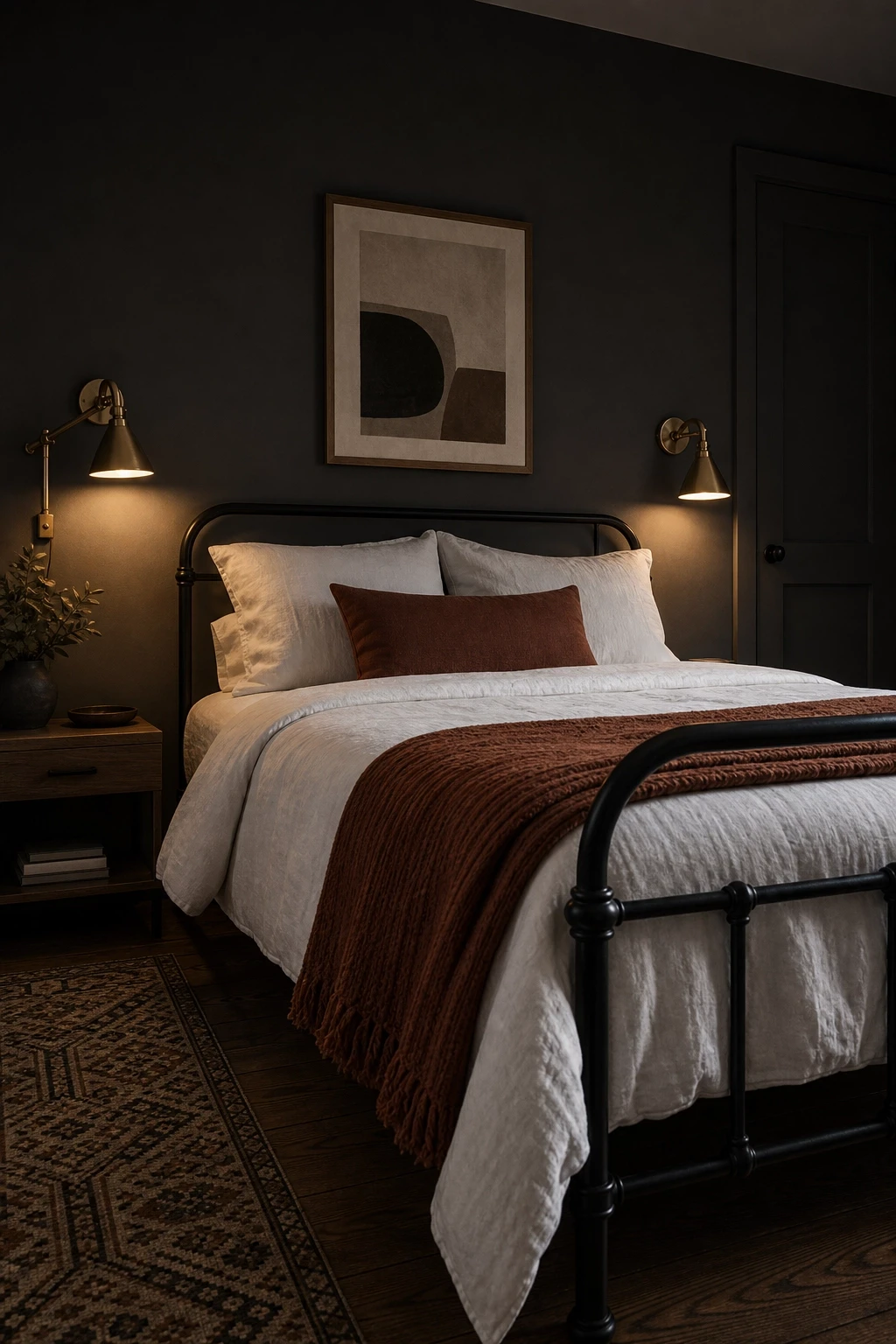
It might seem counterintuitive to paint a tiny bedroom a dark color, but deep, saturated hues can actually make a small room feel incredibly cozy and intentional rather than cramped. Colors like charcoal, deep slate, dusty plum, or forest green work particularly well because they blur the edges of the room and make the walls seem to recede, especially at night when the lighting is soft.
The key to making a dark tiny bedroom work is to keep the bedding light and the lighting layered. A white or cream duvet against a dark wall creates enough contrast to let the room breathe. Use warm-toned bulbs, never cool white, and layer the lighting between a ceiling fixture, a wall sconce on each side of the bed, and a small table lamp or two. The combination of deep walls and warm, layered light creates an atmosphere that feels genuinely luxurious, even in a very small room.
Designer Tip: Dark walls show marks and scuffs more easily, so opt for an eggshell or satin finish rather than flat paint so the walls are easier to wipe down.
7. Warm Wood Tones and Natural Finishes
One of the coziest approaches to a tiny bedroom is leaning into natural wood tones throughout the room. This does not mean everything needs to be made of wood, but it does mean letting the warmth and grain of real wood anchor the palette. A warm oak bed frame, pine plank shelving, and a wooden ladder leading to a loft all work together to create a space that feels organic and grounded rather than sterile.
Balance the wood tones with soft textiles in earthy neutrals: sandy linen, warm oatmeal cotton, or a dusty sage green. Avoid mixing too many different wood tones in a small room because the variation can feel chaotic. Instead, stick to one wood finish and repeat it in two or three places. A birch bed platform, birch floating shelves, and a birch bedside ledge will read as a cohesive design choice rather than mismatched furniture.
Designer Tip: Seal any unfinished wood with a matte oil finish rather than a glossy lacquer. It keeps the natural texture of the grain visible and makes the wood look handmade rather than store-bought.
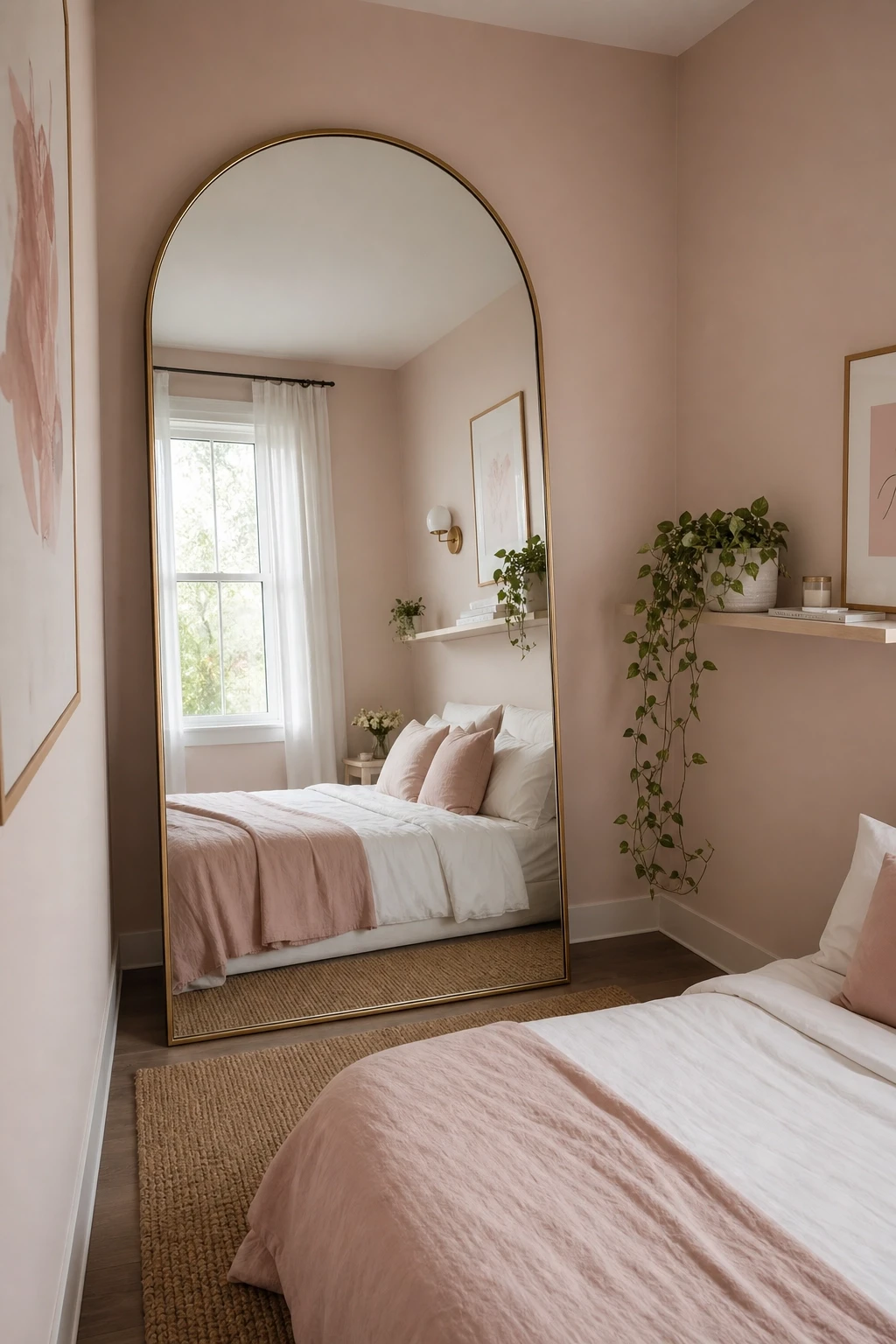
8. Strategic Mirror Placement for Light and Depth
Mirrors are genuinely useful in tiny bedrooms, not just decorative. A large mirror placed on the wall opposite the window reflects natural light back into the room and makes the space feel almost twice its actual size. The most effective placement is a full-length or oversized mirror hung at a slight angle so it reflects the room diagonally rather than straight back, which creates a more dynamic sense of depth.
In tiny home bedrooms with loft layouts, placing a mirror on the angled ceiling or on the wall beside the loft access can dramatically open up what is often the darkest and most compressed part of the room. Mirrored closet doors serve double duty as both a functional wardrobe door and a light-expanding element. Just make sure the mirror is reflecting something pleasant, like the window or a piece of art, rather than a cluttered corner.
Designer Tip: Instead of one large mirror, hang a collection of three to five smaller mirrors in varied shapes and frames. It adds personality and the collective reflective effect is similar to a single large mirror.
Storage Solutions That Stay Out of Sight
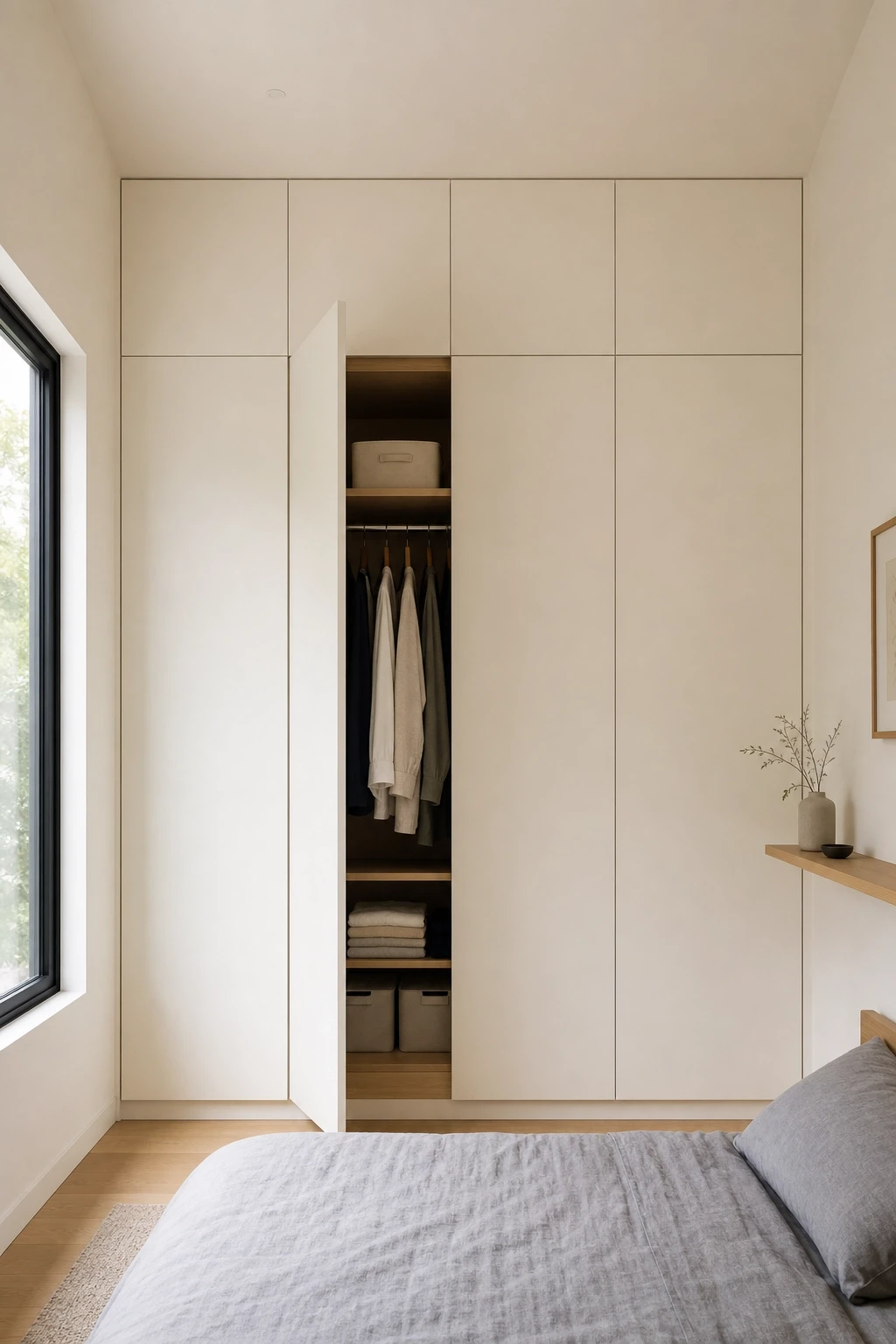
9. Floor-to-Ceiling Built-In Wardrobes
When floor space is limited, the only direction to go is up. Floor-to-ceiling built-in wardrobes use vertical space that standard freestanding furniture completely ignores. A built-in that goes all the way to the ceiling provides significantly more storage than a standard wardrobe, and because it is flush with the wall and custom-fitted, it does not visually interrupt the room the way a freestanding unit would.
Design the interior thoughtfully: a section with a hanging rod for longer items, a section with double rods for shirts and jackets, shelves for folded items, and small cubbies or bins for accessories. Inside the wardrobe itself, use the door to mount hooks, a small mirror, or a shoe organizer. On the outside, keep the doors simple and handle-free with push-latch hardware so there is nothing protruding into the room. In a soft neutral finish, a floor-to-ceiling built-in practically disappears into the wall.
Designer Tip: Use slimmer than standard 12-inch-deep shelves on the upper section of the wardrobe. Anything you access less frequently does not need full-depth shelving, and the shallow shelves feel less heavy in a small room.
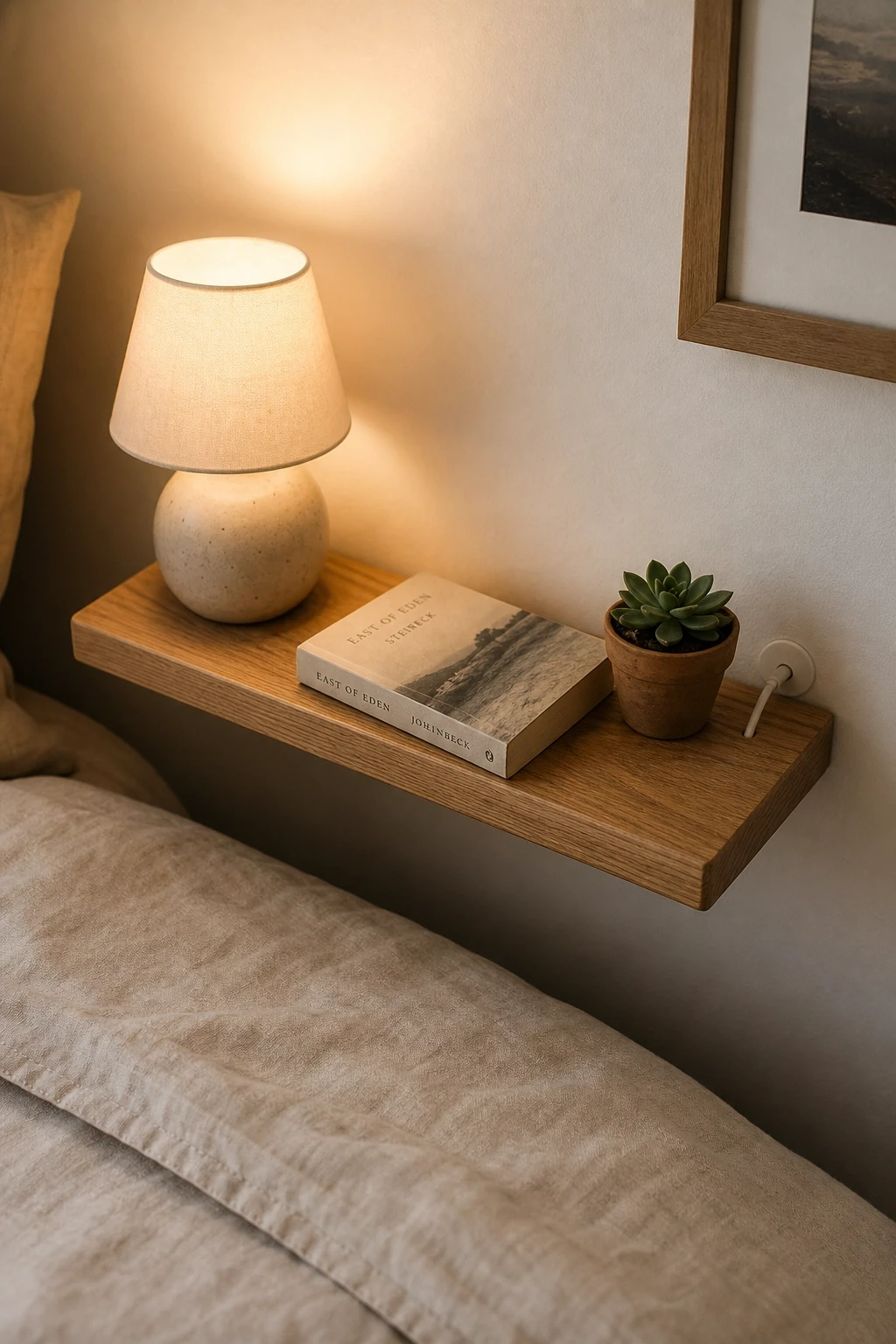
10. The Floating Bedside Ledge Instead of Nightstands
Traditional nightstands take up floor space and, in a tiny room, can make the area around the bed feel congested. Floating bedside ledges, which are essentially wall-mounted shelves positioned at mattress height, solve this completely. They provide the same function as a nightstand but with zero floor footprint, and they can be made as narrow as six inches wide without feeling too small.
Mount the ledge at a comfortable height, typically level with the top of your mattress plus a few inches, and keep it uncluttered. One small lamp, a book, and your phone charger are about all a well-designed bedside ledge needs. In natural wood, the ledge adds warmth without bulk. In a painted finish matching the wall, it practically vanishes. Either way, the cleared floor space around the bed makes the whole room feel more open.
Designer Tip: Add a single outlet and USB port inside or just below the ledge so your chargers can disappear into the wall and you never have a cable snaking down to the floor.
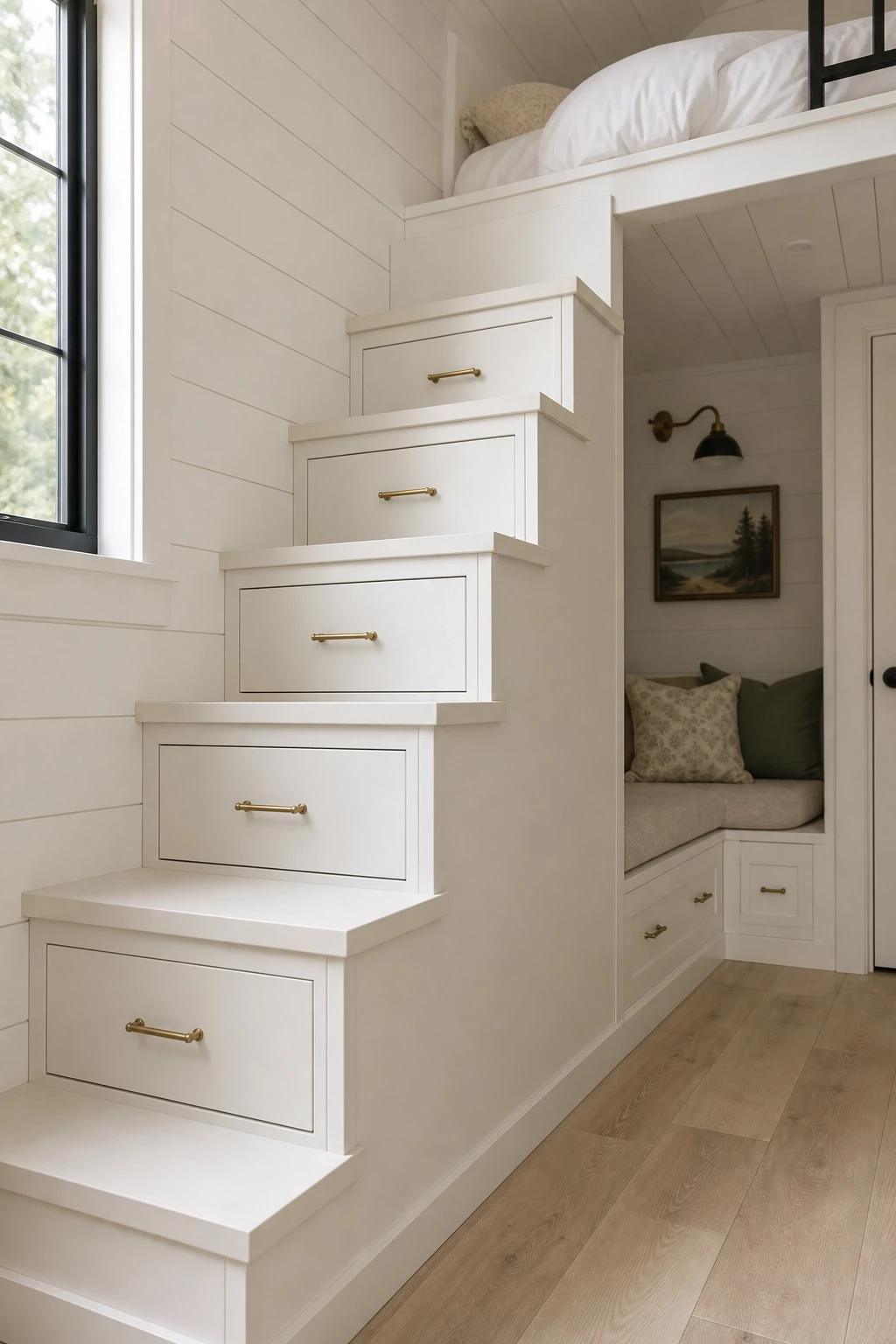
11. Storage Stairs Instead of a Ladder
If your tiny home includes a loft bed, one of the best investments you can make is building storage stairs rather than using a simple ladder. Each step in a storage staircase opens up to reveal a drawer or compartment, which gives you a surprising amount of storage in what would otherwise be structural dead space. A well-built set of storage stairs can hold dozens of sweaters, books, kitchen items, or whatever overflow storage you need.
The stairs themselves should be wide enough to feel comfortable, at least 18 to 20 inches wide, and the treads should be deep enough to plant your full foot safely. Finish the stair risers in the same material as the surrounding wall to make them look built in. The drawer pulls on each step can be a small design detail worth putting some thought into because they are at eye level as you move through the room and contribute significantly to the overall look of the space.
Designer Tip: Put the things you use daily, like pajamas and extra phone cables, in the lower stairs, and seasonal items in the higher stairs where access is slightly less convenient.
12. Under-Eave Storage in Sloped Ceiling Bedrooms
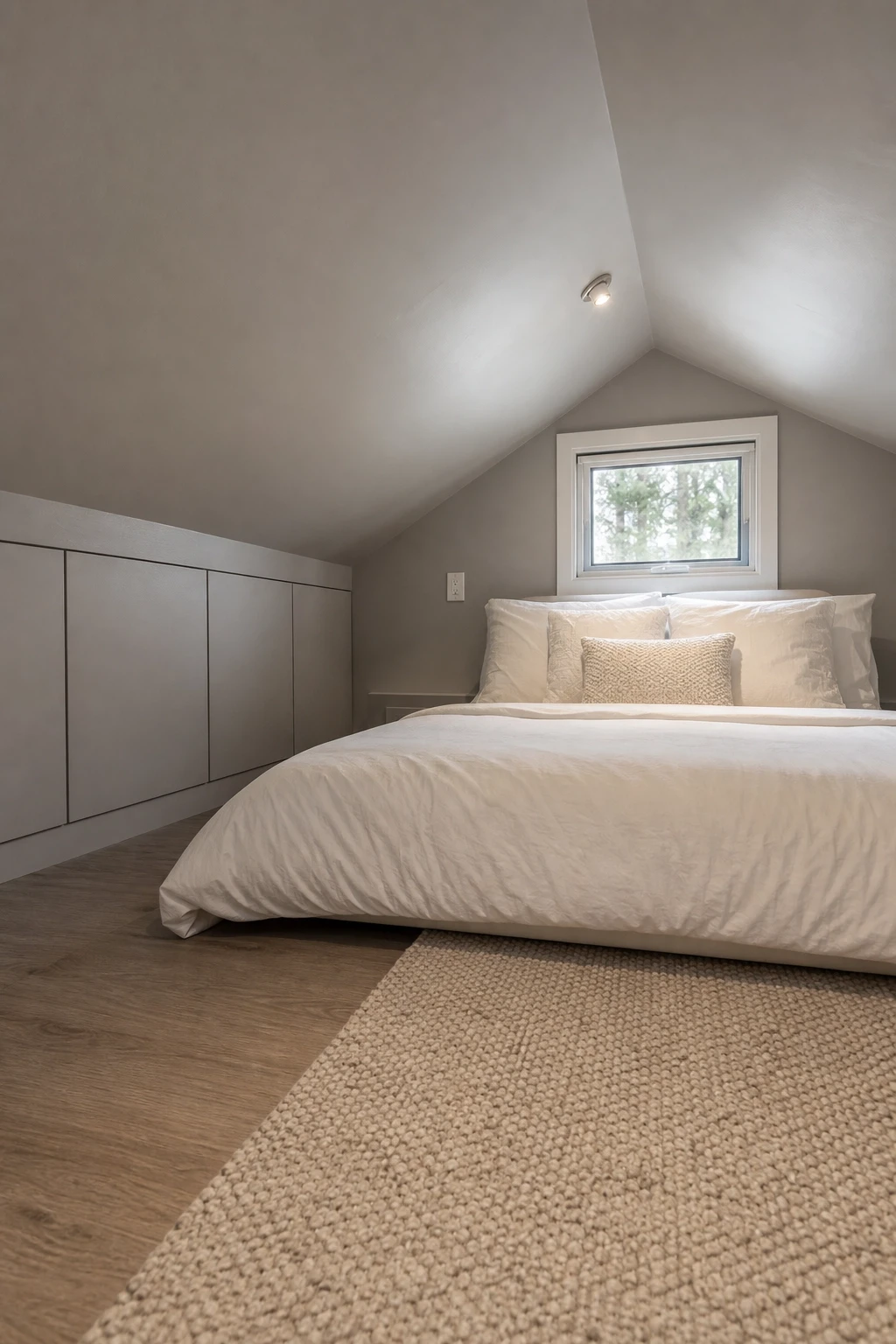
Many tiny homes, especially those with lofts or A-frame structures, have sloped or angled ceilings in the sleeping area. The wall where the ceiling meets the floor at an angle is often completely wasted space, but it does not have to be. Custom-built low cabinets that tuck into this angled space can hold a tremendous amount of storage that would otherwise require a separate piece of furniture in the room.
These under-eave cabinets work particularly well for items you do not access every day: extra blankets, out-of-season clothing, luggage, or archived documents. Keep the cabinet doors flat and handle-free so the storage disappears into the room. If you are handy, these can often be built from basic plywood and finished with a coat of paint for very little money. They are one of the highest-value storage additions you can make to a sloped-ceiling bedroom.
Designer Tip: Line the inside of under-eave cabinets with cedar planks or include a cedar block inside. It keeps stored clothing smelling fresh and discourages moths, especially useful for seasonal items that sit for months.
Lighting Ideas That Change the Whole Mood
13. Wall Sconces Instead of Table Lamps
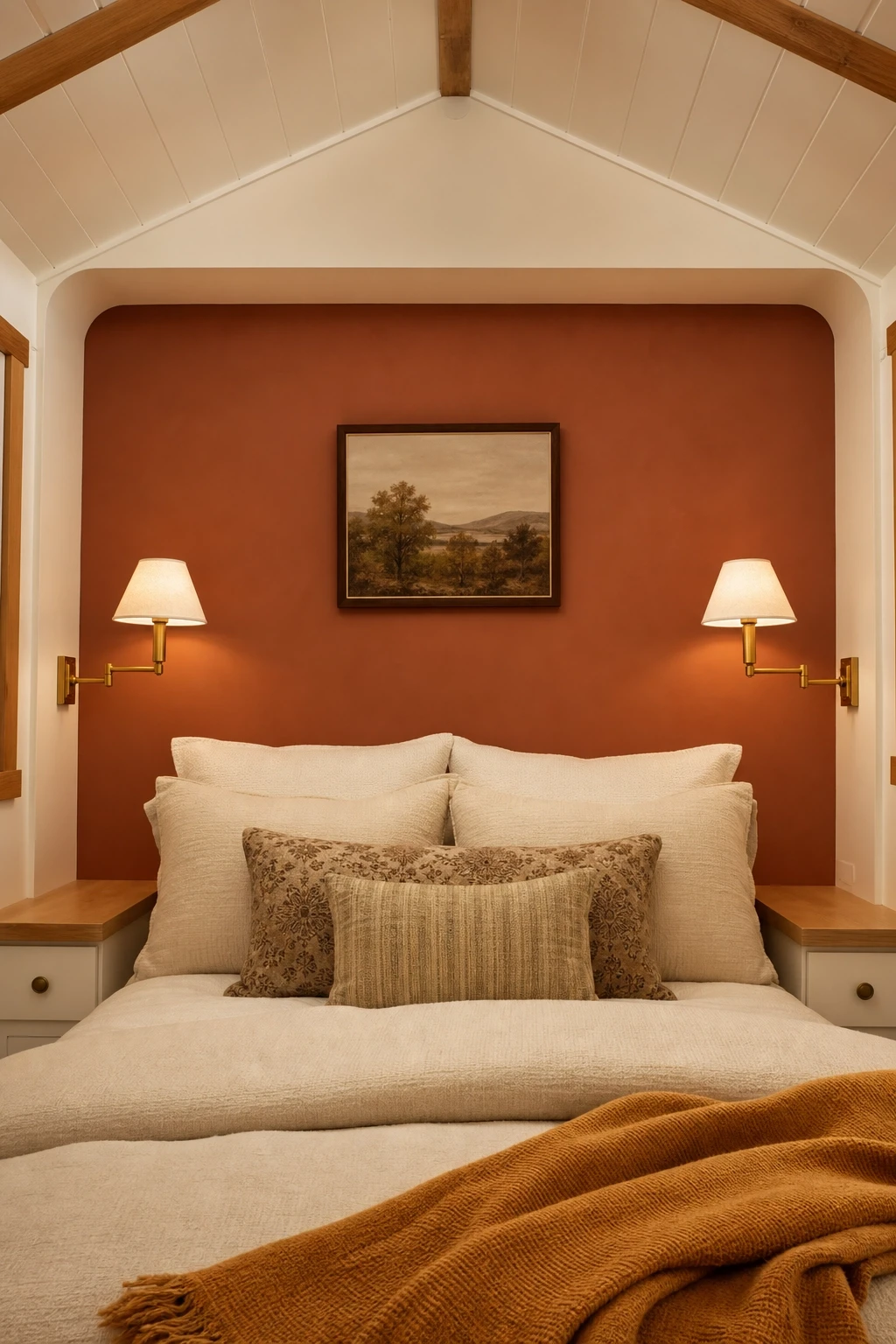
Bedside table lamps are a natural first instinct, but in a tiny bedroom, they take up valuable surface space and add visual clutter to an already busy area. Wall sconces mounted on either side of the bed at about shoulder height when sitting up solve all of this at once. They keep the bedside surface clear, throw warm light exactly where you need it for reading, and add a finished, intentional look to the room that a table lamp simply cannot.
For tiny bedrooms, choose sconces with a swing arm so you can adjust the light direction. This is especially useful if you share the bed with a partner and one of you reads longer than the other. Hard-wired sconces look the cleanest, but plug-in sconces with a cord that runs back into a wall plate are a good option if you are renting or do not want to hire an electrician. Either way, the freed-up surface space makes a noticeable difference in how open the room feels.
Designer Tip: Choose a sconce with a fabric shade rather than a bare bulb or a downward-facing metal shade. Fabric diffuses the light beautifully and makes the room feel warmer and softer at night.
14. Skylights and Roof Windows for Natural Light
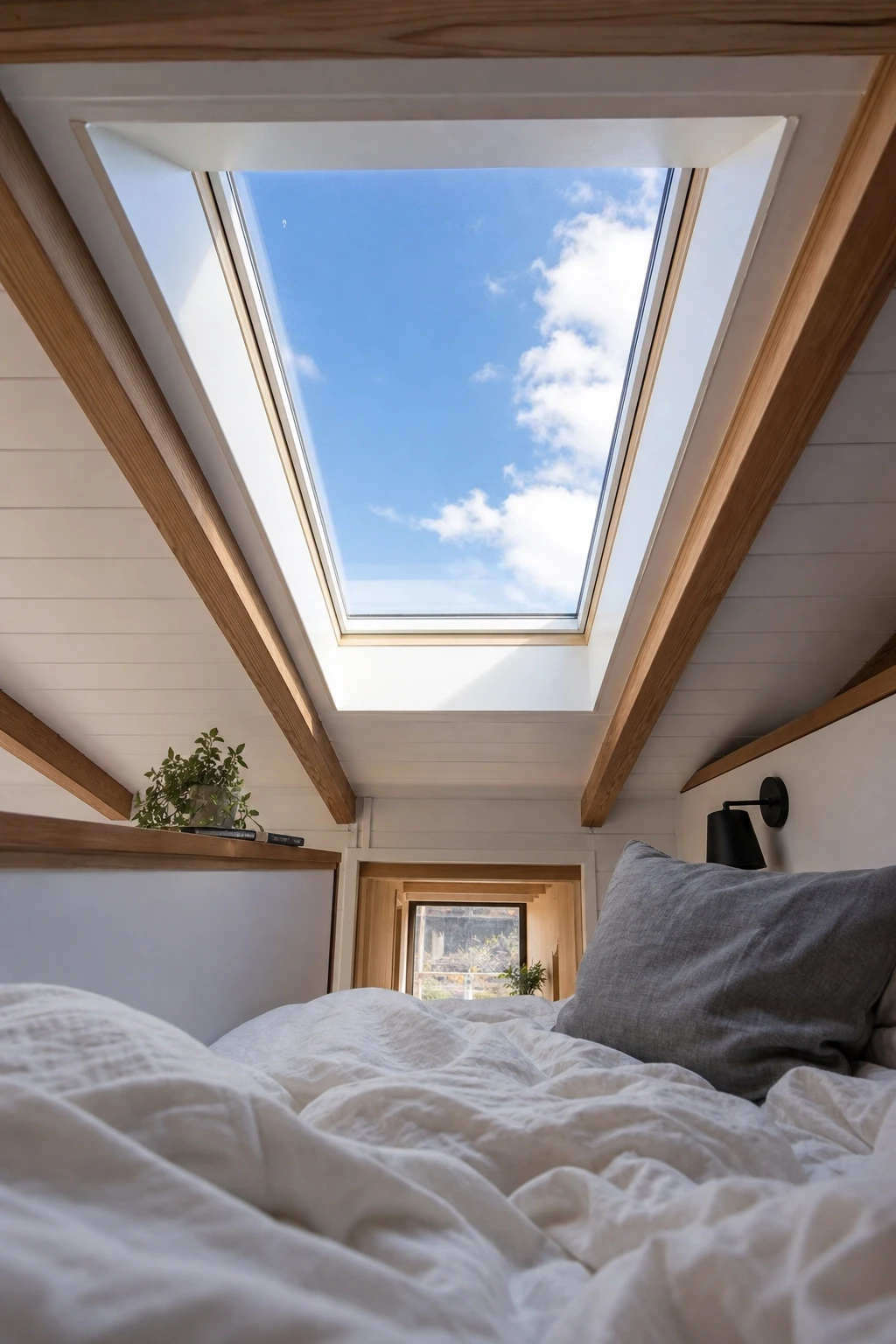
If you are in the design phase of a tiny home or planning a renovation, adding a skylight over the bedroom is one of the highest-impact things you can do for the space. Natural light from above has a completely different quality from side windows. It floods the entire room evenly, makes colors look truer, and creates a connection to the sky and weather that makes even the smallest room feel less enclosed.
A skylight over a loft bed is particularly special because lying in bed and looking up at clouds, stars, or rain on the glass is an experience that no amount of interior design can replicate. Operable skylights that open also provide excellent ventilation, which is important in a tiny home where air circulation can be a challenge. Choose a double-pane unit with low-E coating so the skylight adds light without adding heat in summer.
Designer Tip: Install a simple fabric shade or a honeycomb blind on the skylight so you can block light for sleeping in or during afternoon naps without losing the view when you want it.
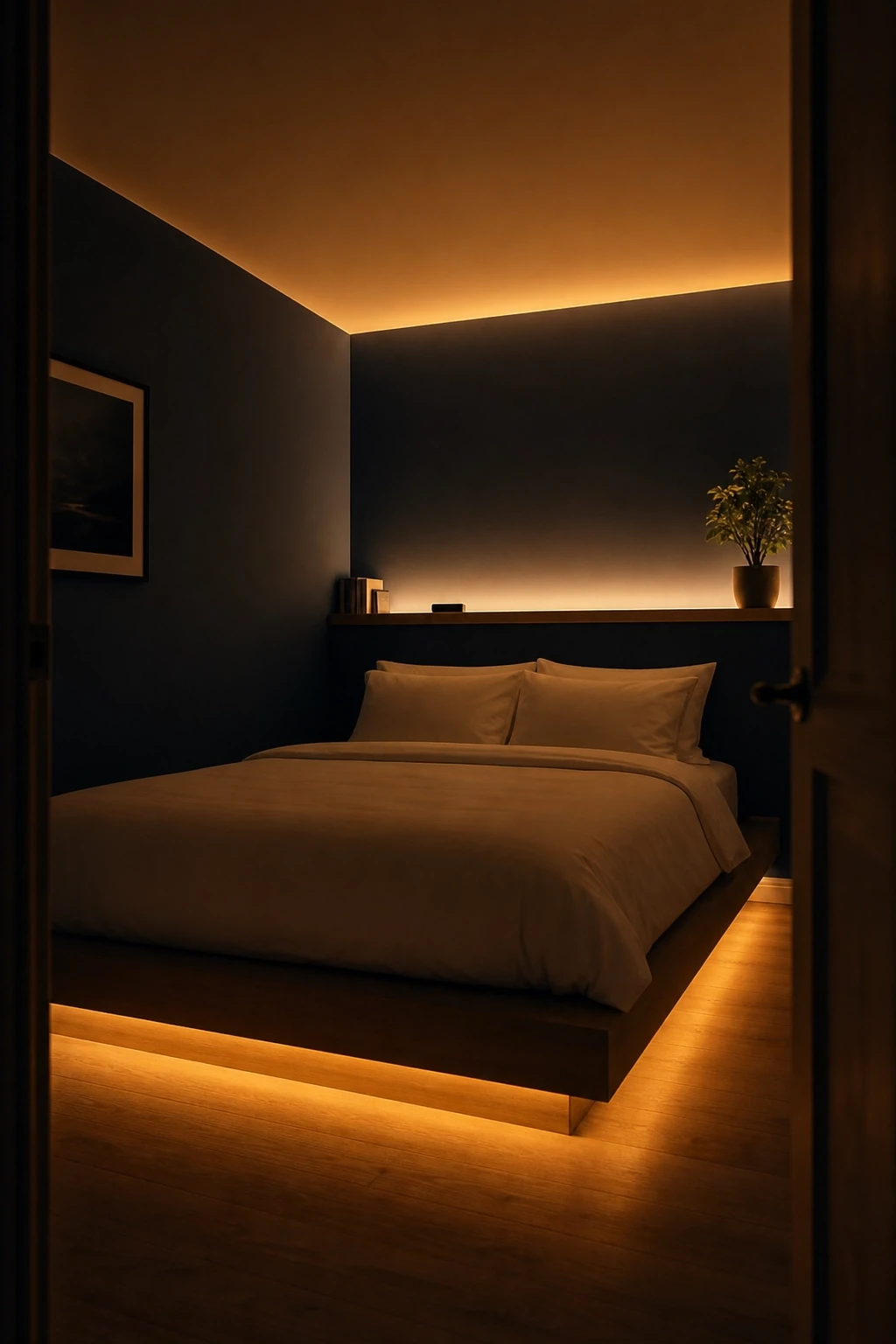
15. LED Strip Lights for Indirect Glow
Recessed lighting fixtures in a tiny home ceiling can feel aggressive and make the space look like a hospital room if they are not thoughtfully placed. A better option for tiny bedrooms is indirect LED strip lighting mounted behind a ledge, under a platform, or along the top of built-in cabinetry. The light bounces off the ceiling or wall rather than shining directly at you, which creates a warm, ambient glow that makes the whole room feel cozy without any harsh shadows.
Tunable LED strips that let you shift between warm white and neutral white are worth the small extra investment. In the evening, a warm 2700K setting makes the room feel like a proper bedroom. In the morning when you need to see clearly, shifting to a slightly cooler 3000K helps you wake up without feeling like you are in a cave. These strips run on a simple remote or a smart home app and use very little energy, so they are a practical choice as well as an atmospheric one.
Designer Tip: Run the LED strips on a dimmer or smart plug so you can go from full brightness to a very low glow without getting out of bed. The ability to adjust from 100% to 5% light is more useful than you would expect.
Texture, Textiles, and Decor That Layer the Space
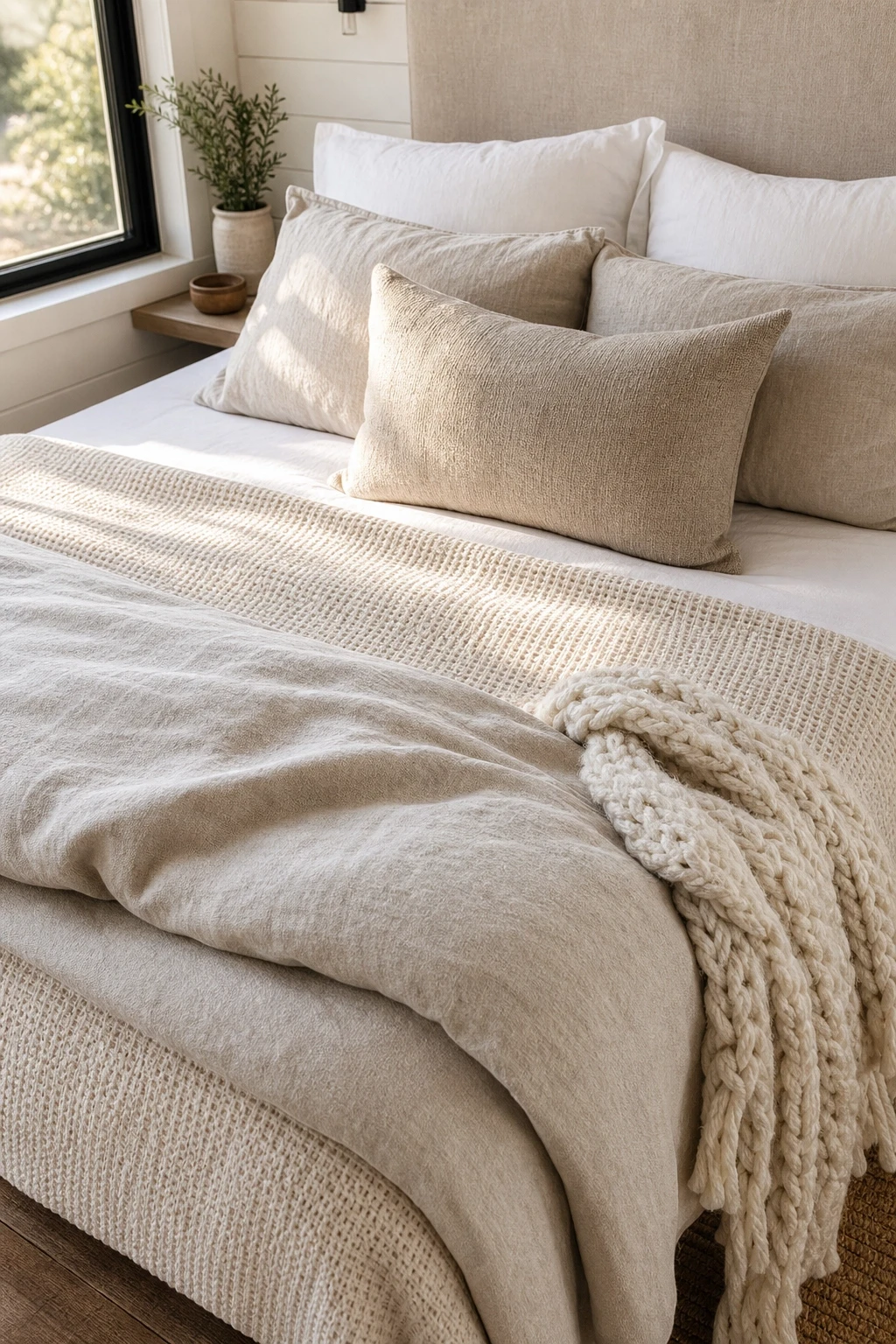
16. Layered Bedding for a High-End Look
The bed is the biggest visual element in a tiny bedroom, which means the bedding has an outsized impact on how the whole room feels. Layered bedding, meaning multiple textures built up together rather than a single duvet and two pillows, is how hotels and interior designers make beds look effortlessly pulled together. Start with a fitted sheet in a soft cotton, add a light quilt or coverlet, then fold a heavier duvet at the foot of the bed. Finish with three or four pillows in varied sizes and a throw draped casually over one corner.
In a tiny room, keep the bedding palette simple: one or two colors maximum, plus white or cream. A patterned pillow or two adds personality without overwhelming the room, but avoid a fully patterned duvet cover in a small space because it tends to make the room feel busier. Natural fabrics like linen, cotton waffle weave, and chunky knit throws add texture and warmth without introducing extra color.
Designer Tip: Linen bedding wrinkles beautifully and looks intentionally relaxed rather than slept-in. It is one of the few materials that actually improves in appearance with use, making it a great investment for a small bedroom.
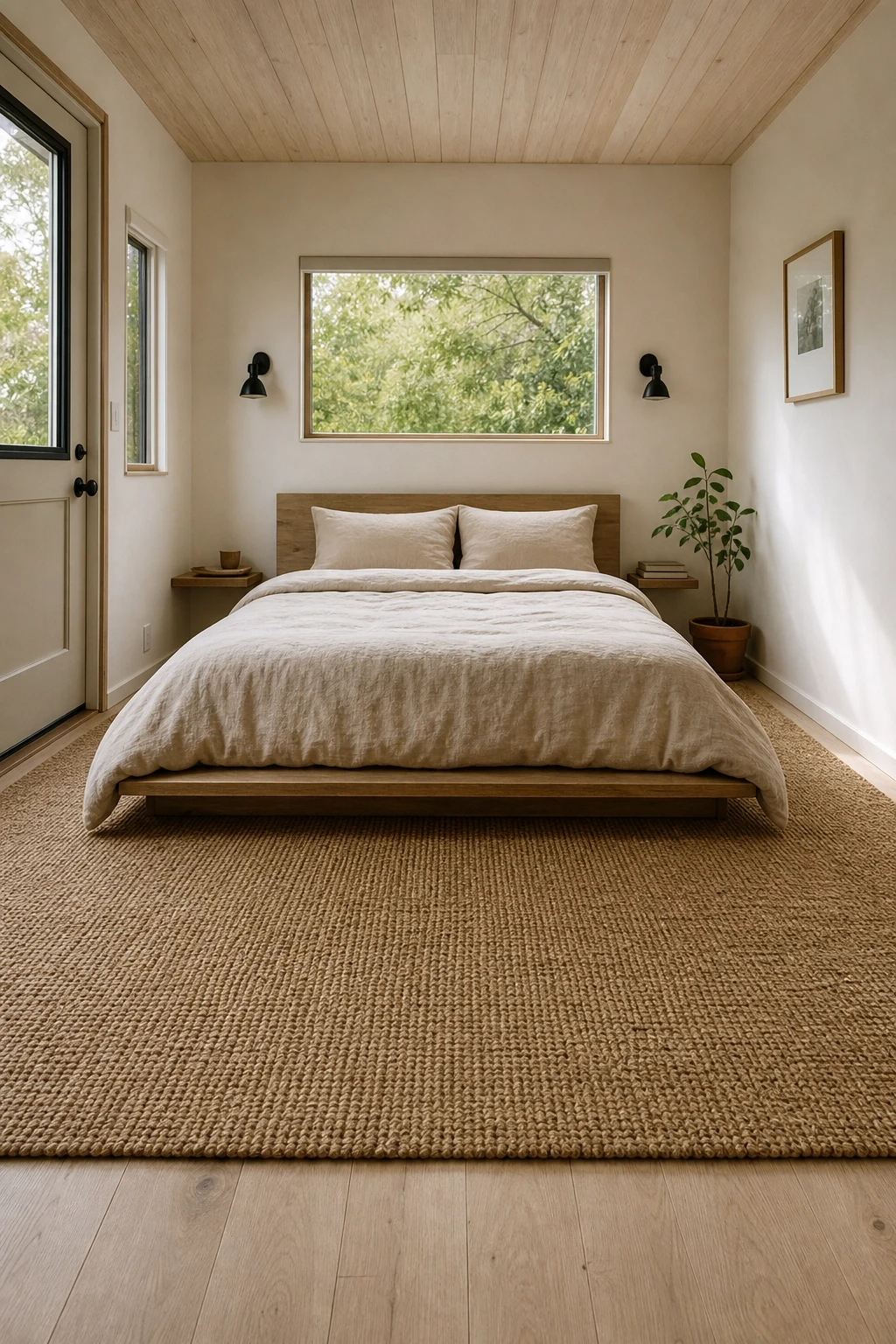
17. A Statement Rug That Anchors the Bed
Rugs are one of the most powerful tools in a tiny bedroom because they visually anchor the bed, add warmth and softness underfoot, and help define the sleeping zone from any adjacent living space. In a small room, the size of the rug matters more than most people realize. A rug that is too small, say a 2×3 or 3×5, will make the bed look like it is floating randomly in the space. Ideally, you want a rug large enough that at least 18 to 24 inches of it extends beyond the sides and foot of the bed.
For tiny bedrooms, low-pile or flat-weave rugs work better than thick pile options because they are easier to keep clean, do not create a tripping hazard, and do not visually clutter the limited floor space you have. A natural fiber rug in sisal, jute, or a cotton flatweave adds texture and warmth while keeping the floor looking open. Geometric patterns in neutral tones are a good option if you want some visual interest without the rug competing with everything else in the room.
Designer Tip: Place the rug so it extends from just below the headboard to about two feet past the foot of the bed. This gives you a soft landing on both sides when you get out of bed and makes the room feel more considered.
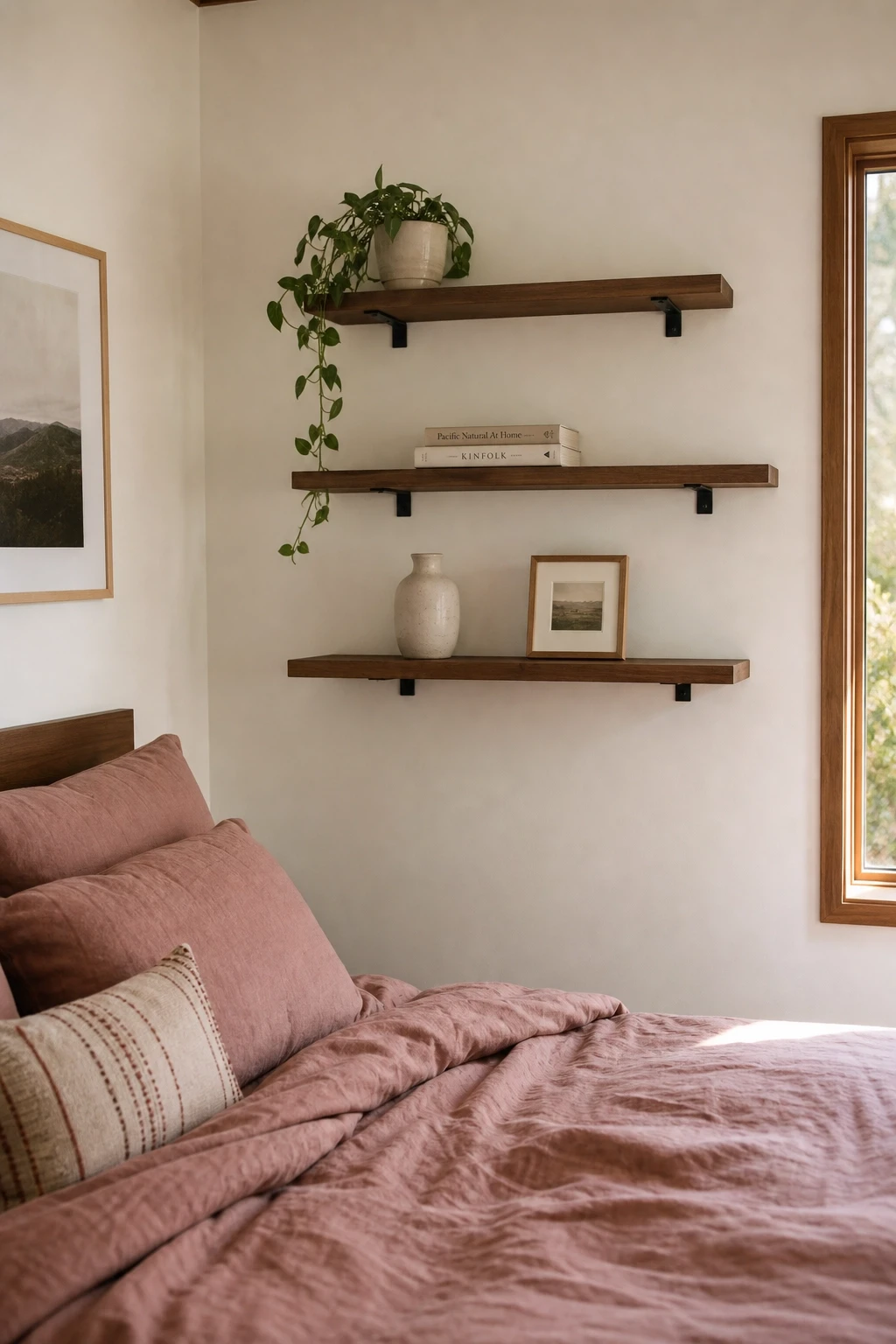
18. Floating Shelves as Both Storage and Decor
Floating shelves in a tiny bedroom serve two purposes at once: they hold things that would otherwise live on a dresser or desk, and they give you a place to add personality and warmth without taking up floor space. The trick is to use them intentionally rather than just stacking things up until the shelf is full. A well-styled floating shelf in a bedroom might have a small plant, one or two books stacked horizontally, a small candle, and a piece of ceramic or glass. That is it.
Arrange shelves in a composition rather than in a straight line. A cluster of three shelves at different heights and widths on one wall creates a more dynamic and interesting display than three identical shelves evenly spaced. In terms of material, natural wood shelves with simple black or brass brackets work in almost any style from modern farmhouse to Scandinavian to bohemian.
Designer Tip: Leave at least one-third of each shelf empty. Empty space on a shelf is not wasted space, it is what makes the things on the shelf look like deliberate choices rather than overflow storage.
19. Curtains Hung High and Wide
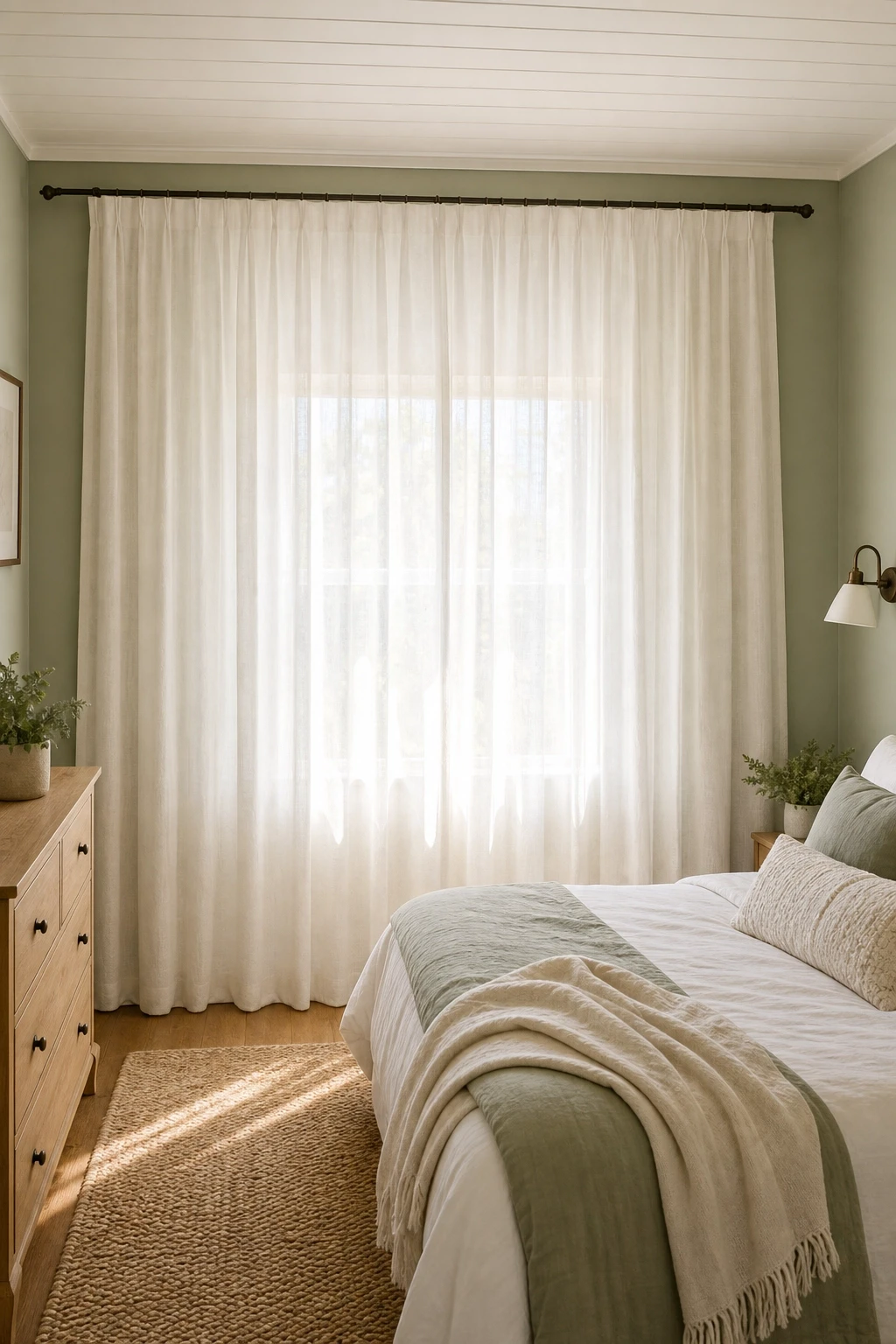
If your tiny bedroom has a window, the way you hang the curtains can make a significant difference in how large the room feels. The most common mistake is mounting curtains right at the window frame. Instead, mount the curtain rod as close to the ceiling as possible and extend it six to eight inches beyond each side of the window. When the curtains are open, they frame only the glass, letting maximum light in. When they are closed, they create the illusion of a much larger window than actually exists.
In a tiny bedroom, curtains also serve as a soft visual element that adds texture and color without taking up any floor space. For small rooms, sheer or lightly woven curtains in natural linen or cotton are more successful than heavy velvet or blackout drapes, unless light control is genuinely necessary for sleep. Light, airy curtains filter the morning sun softly and make the room feel fresh and breathable throughout the day.
Designer Tip: If you need blackout functionality but want the look of light curtains, layer a slim blackout roller blind directly at the window underneath sheer panels. You get both the aesthetic and the practicality.
20. Plants That Bring Life Into a Small Space
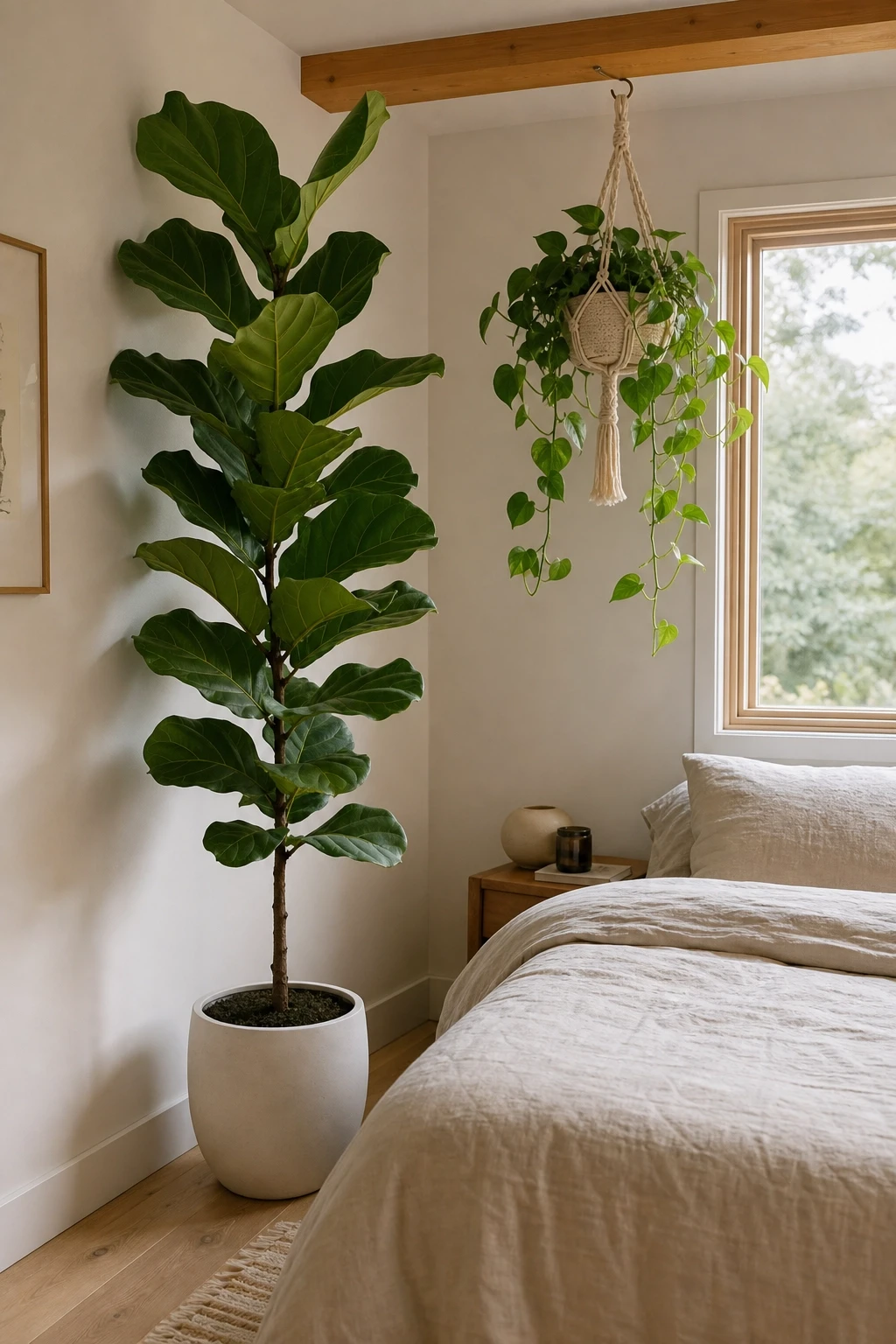
A well-placed plant in a tiny bedroom does something that no paint color or piece of furniture can quite replicate. It brings a living, organic element into the room that makes the space feel connected to the outside world and genuinely inhabited. In a small bedroom, the scale of the plant matters: one or two medium-sized plants placed thoughtfully will make more impact than a scattered collection of tiny pots across every surface.
For tiny home bedrooms specifically, trailing plants like pothos or string of hearts work beautifully on a high shelf or inside an alcove because they add greenery downward without taking up horizontal space. A single large-leafed plant in a simple white or terracotta pot placed in a corner or beside the bed adds a sculptural quality to the room. Choose plants that tolerate lower light if your bedroom window is small or north-facing.
Designer Tip: Hang a small macrame plant hanger from a ceiling hook near the window. A small pothos or spider plant in a hanger adds greenery at eye level without using any shelf or floor space at all.
21. Minimalist Art That Does Not Crowd the Walls
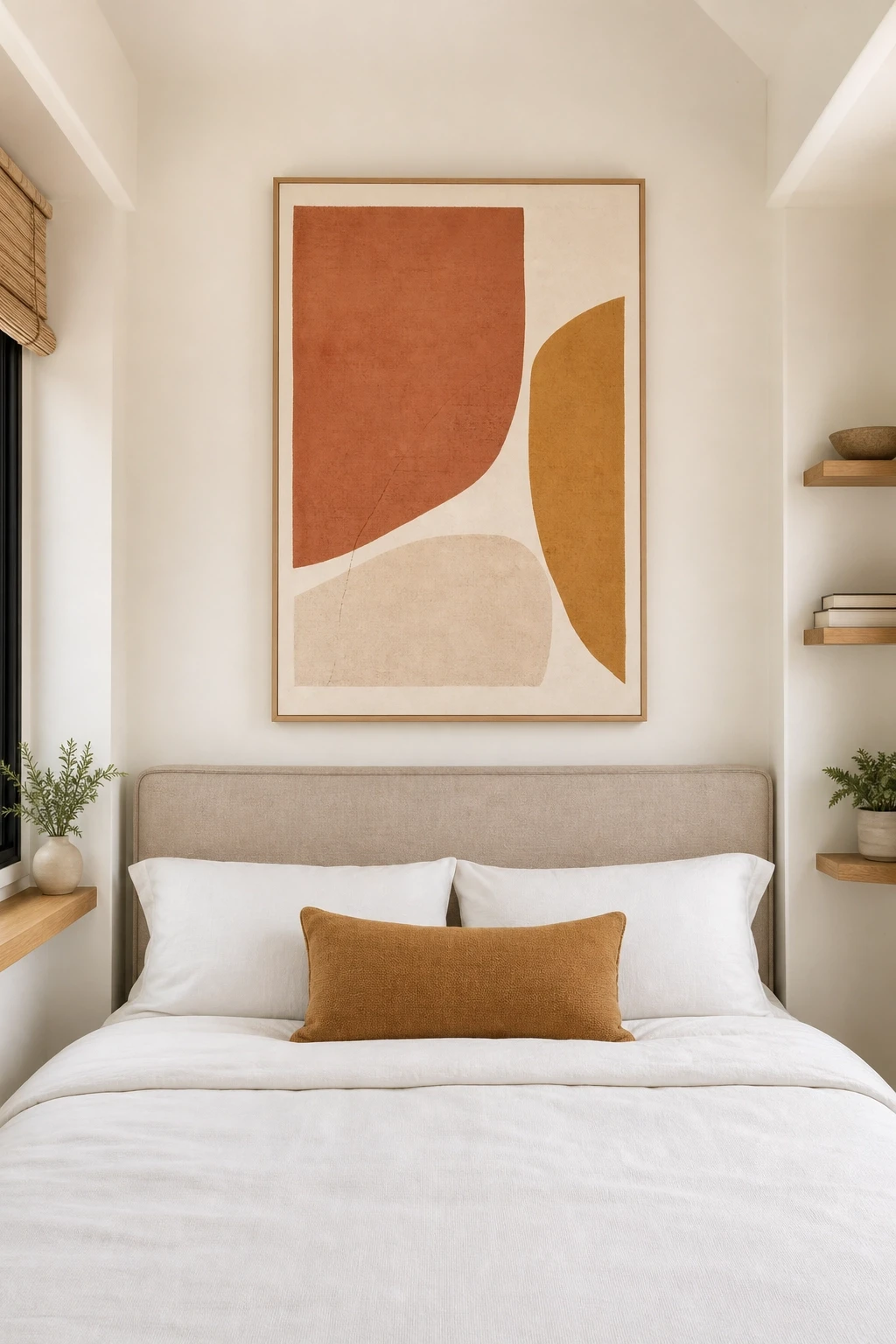
Small rooms and crowded gallery walls do not mix well. In a tiny bedroom, one or two well-chosen pieces of art will do far more for the room than six or eight smaller ones crammed together. The goal is for the art to be a focal point, not a wallpapered-over attempt to fill space. A single large-format print or painting above the bed, hung at eye level when standing, anchors the room and immediately draws the eye to the most important wall.
For the style of art, abstract or landscape pieces in a restrained palette tend to work better in small bedrooms than busy figurative work or bold graphic prints. Thin metal frames or simple natural wood frames keep the presentation clean. If you do want more than one piece, keep them on the same wall, keep them in similar frames, and space them evenly so they read as a considered pair or trio rather than random additions.
Designer Tip: Before putting a nail in the wall, cut paper templates of your frames and tape them up for a day or two. Moving paper is much easier than moving holes, and you will get a better sense of the right scale and placement before committing.
Bringing It All Together
A tiny home bedroom does not have to feel like a compromise. It just requires more thought than a standard-sized room, and frankly, that extra thought is what often makes the difference between a room that looks designed and one that just looks small. The ideas in this article are not about tricks or optical illusions, they are about making real decisions with real materials and real furniture that serve your life in a small space.
Start with the layout because everything else depends on it. Get the bed positioned and the storage figured out before you think about colors or decor. Once the bones of the room are right, the layering part, which is where the personality comes from, becomes a lot more fun and a lot less stressful. You do not need to do all 21 things at once. Pick the three or four ideas that feel most relevant to your space and your budget, and start there.
The best thing about a tiny bedroom is that small changes have a proportionally bigger impact. Swapping out one piece of furniture, painting a wall, adding a mirror, or changing how your curtains are hung can shift the entire feeling of the room in an afternoon. Give yourself permission to experiment, and do not be afraid to undo something that is not working. Tiny rooms are forgiving in that way because they are cheap and quick to try things in. That is a real advantage, and it is worth using.
Frequently Asked Questions
What is the best bed size for a tiny home bedroom?
A full or queen bed works well in most tiny home bedrooms, though it depends on your floor plan. A queen on a storage platform is a great balance between comfort and function. If floor space is very limited, a full-size bed gives you noticeably more room to move around without sacrificing too much sleeping space for one person. For couples, a queen is usually the minimum worth having.
How do I make a tiny bedroom feel less claustrophobic?
The biggest factors are light and clear sightlines. Make sure your window is unobstructed, hang curtains high and wide to maximize the feeling of the window, use at least one large mirror to bounce light around the room, and keep the floor as clear of furniture as possible. Color matters too: warm whites and soft neutrals tend to feel more open than stark bright white or dark colors, though a well-executed dark bedroom can feel cozy rather than claustrophobic.
Is a loft bed practical for adults in a tiny home?
Yes, loft beds are genuinely practical for adults in tiny homes as long as the headroom and access are designed well. You want at least 30 to 36 inches of clearance above the mattress so you can sit up without hitting the ceiling, and the stairs or ladder should be comfortable enough that you do not dread going to bed. Many adults sleep in loft-style beds in tiny homes long-term without any issues, especially when the space below is well-used.
What colors work best in a tiny bedroom?
Warm whites, soft creams, and light earthy neutrals like warm sand, pale sage, or blush all make tiny bedrooms feel more open without looking sterile. That said, deep colors like navy, forest green, or charcoal can work beautifully if the room has decent light and the bedding and lighting are kept soft and warm. The single-tone approach, where walls, trim, and built-ins are all the same color, is particularly effective in small rooms regardless of which color you choose.
How do I add storage to a tiny bedroom without making it look cluttered?
The key is hiding storage rather than adding visible storage. Built-ins that are flush with the wall and painted the same color, under-bed drawers that you cannot see from a standing position, and under-eave cabinets that use dead space all add significant storage without visual clutter. When visible storage is unavoidable, like open shelving, keep it curated with no more than three to five items per shelf and leave deliberate empty space.
Can I have a dedicated workspace in a tiny bedroom?
Yes, and a Murphy bed with an integrated fold-down desk is the most space-efficient way to do it. When the bed is up, you have a full desk. When the desk folds away and the bed comes down, the room is entirely a bedroom again. Alternatively, a floating wall-mounted desk that folds flat against the wall when not in use is a smaller-scale version of the same idea and works in most tiny bedroom layouts without requiring a full Murphy bed system.