Tiny Home Closet Looks That Actually Work
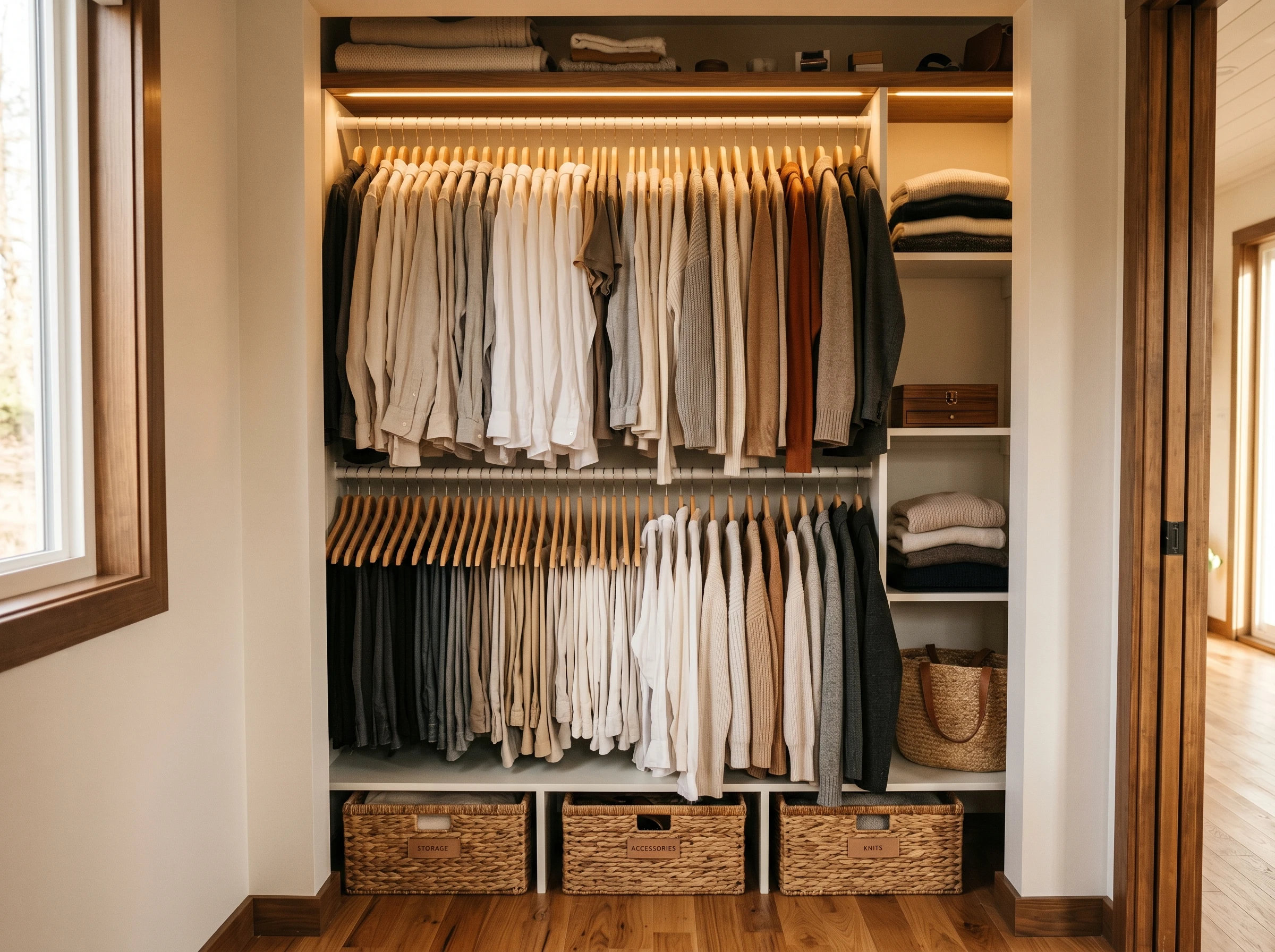
Living in a tiny home comes with a particular kind of closet challenge. You open the door, stare into what feels like a shoebox with a rod in it, and wonder how anyone is supposed to fit a real wardrobe into this space. The good news is that a small closet does not have to mean a chaotic closet. In fact, some of the most beautifully organized closets in the world are also the smallest ones, because their owners had no choice but to be intentional.
The difference between a closet that drives you crazy and one that genuinely works comes down to how you use the space you have, not how much space you have. Vertical height, door backs, corners, floor space, and even the wall right outside the closet are all fair game when you start thinking creatively. And the materials you choose, the colors on the walls, and the way light hits the inside of a closet all play a surprisingly big role in how functional and pleasant the space feels.
This article covers 25 genuinely different ideas for tiny home closets, ranging from DIY builds and clever storage systems to open wardrobe setups and capsule wardrobe strategies. Each idea is designed to be practical, specific, and something you can actually do without hiring a contractor. Whether your tiny home is a cabin, a converted van, a studio apartment, or a small house with a closet the size of a pantry, there is something here for you. Let these ideas inspire you to stop fighting your closet and start making it work with you instead.
1. The Double-Rod Setup That Doubles Your Hanging Space
You come home from a long day, open the closet, and every shirt is crumpled at the bottom because there was nowhere else to put it. This is the most common tiny closet problem, and it has a very simple fix. Installing a second hanging rod below the first one instantly doubles your hanging capacity without adding a single inch of width to your closet. Most single rods hang at around 66 to 68 inches high, which leaves a massive gap of wasted space below shorter garments like shirts, jackets, and blazers.
The key is organizing by garment length. Use the top rod for longer items like dresses, coats, and trousers hung at full length. The lower rod is perfect for shirts, folded pants, and skirts. Choose slimline velvet hangers in a single color so the visual clutter is kept to a minimum. If you want to get more mileage out of the color palette, a soft white or warm ivory on the closet walls paired with natural wood rods gives the whole setup a boutique feel that makes getting dressed feel intentional rather than frantic.
Designer Advice: Measure the length of your shortest hanging garment before installing the second rod. It should hang no more than 2 inches above the rod height to keep things neat and prevent crowding.
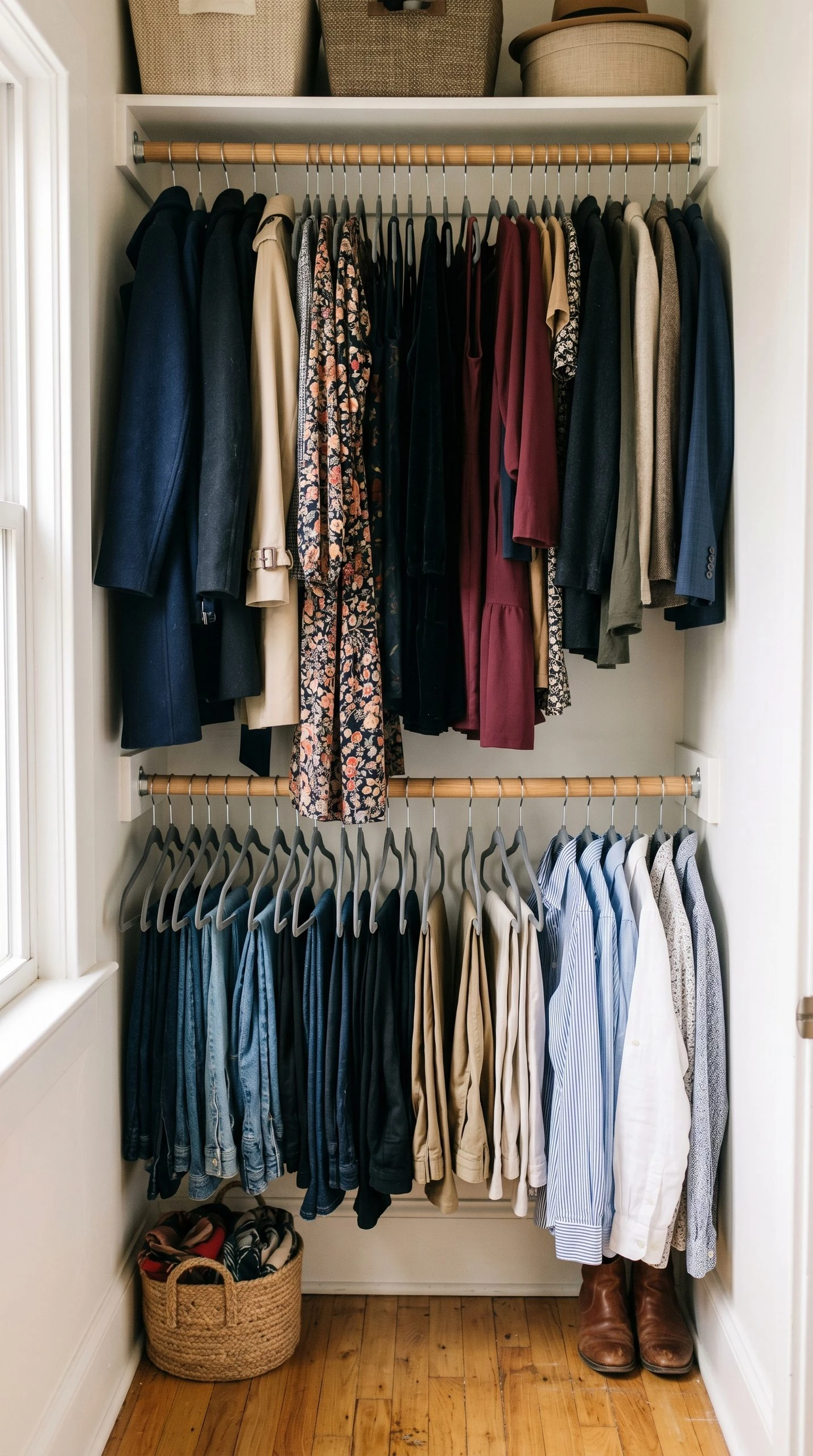
2. Open Wardrobe With a Curtain Panel
Imagine you move into a tiny home with no closet at all, just a blank wall and a pile of clothes on the floor. An open wardrobe built along that wall solves the storage problem while also becoming one of the most attractive features in the room. A freestanding clothing rack or a simple wall-mounted rod with brackets holds your hanging pieces, while a set of cube shelves beside it stores folded items, shoes, and accessories. The whole setup costs a fraction of what a custom built-in would.
The curtain panel is where it gets smart. A linen or cotton curtain in a neutral color hangs from a ceiling-mounted rod and slides across the entire wardrobe when you want things hidden. This keeps the room feeling clean and bedroom-like without building actual closet walls. Choose a curtain in soft sage green, warm oat, or dusty blush depending on your room palette. The fabric softens the look of the metal rack and adds texture that makes the space feel lived-in rather than utilitarian.
Designer Advice: Use a tension curtain rod rather than drilling if you are renting. Ceiling-to-floor curtains make the wall look taller and the room feel bigger, even when drawn closed.
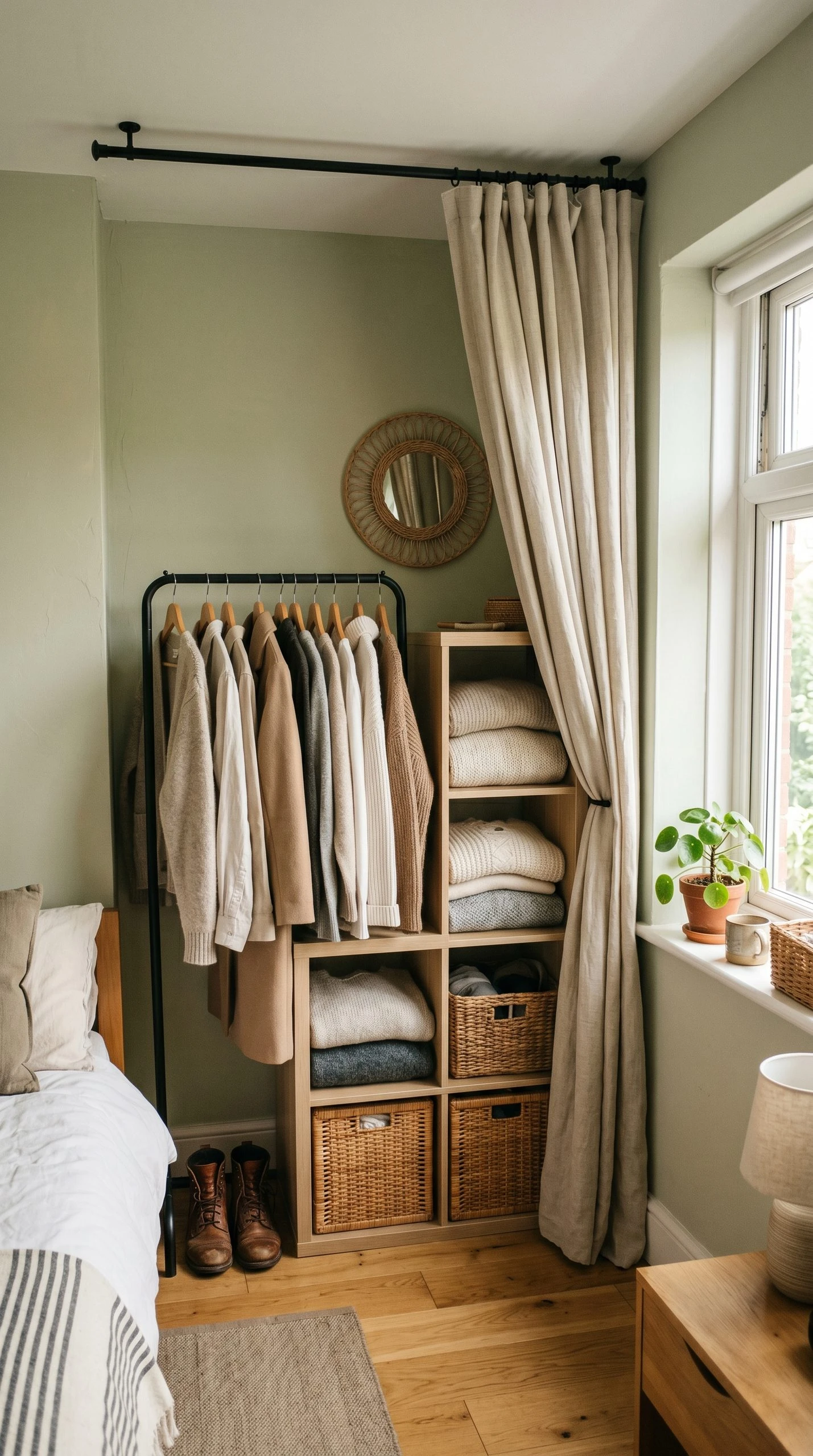
3. Floor-to-Ceiling Shelving on One Wall
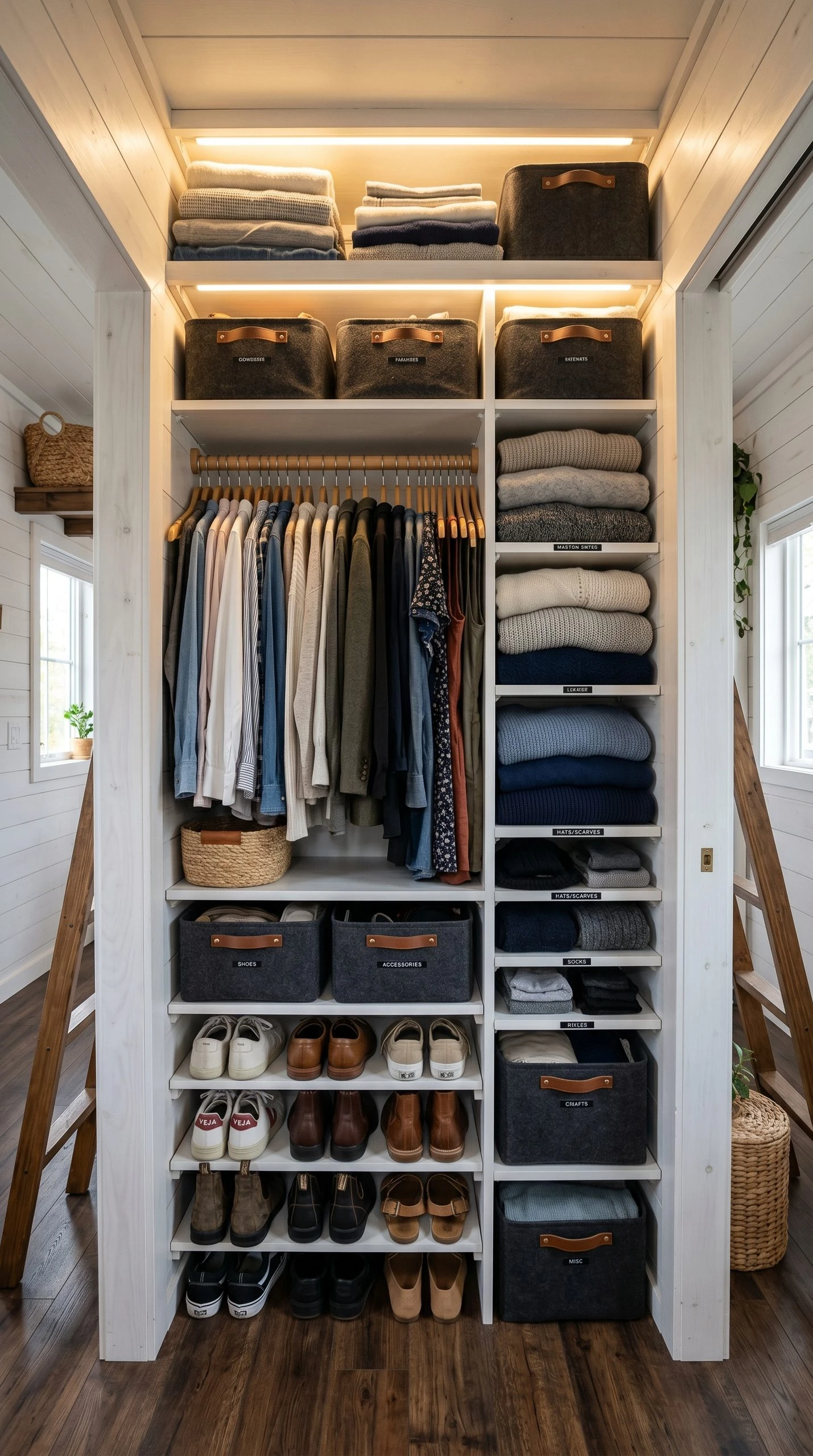
Picture a closet where every square inch of vertical space is used, from the floor all the way up to where the ceiling meets the wall. That is what floor-to-ceiling shelving does for a tiny closet. Most closets have a single shelf above the rod and nothing else, which means anything that is not hanging ends up on the floor in a pile. Adding adjustable shelves from baseboard to ceiling transforms that dead space into prime storage real estate.
The bottom shelves are perfect for shoes, stacked in pairs with the toe facing out. Middle shelves work well for folded sweaters, jeans, and workout gear stored in wicker or fabric bins. Upper shelves, which most people ignore because they are hard to reach, are ideal for seasonal items, luggage, and anything you only need a few times a year. Paint the inside of the closet in a crisp white or a pale warm sand to reflect light and make the shelving feel airy rather than cramped. Add a small, clip-on LED light strip to the underside of one of the upper shelves so you can actually see what is at the back without squinting.
Designer Advice: Use matching storage bins on every shelf for a cohesive look. Labeling each bin means you will always know exactly where to reach without pulling everything out.
4. The Pegboard Back Wall
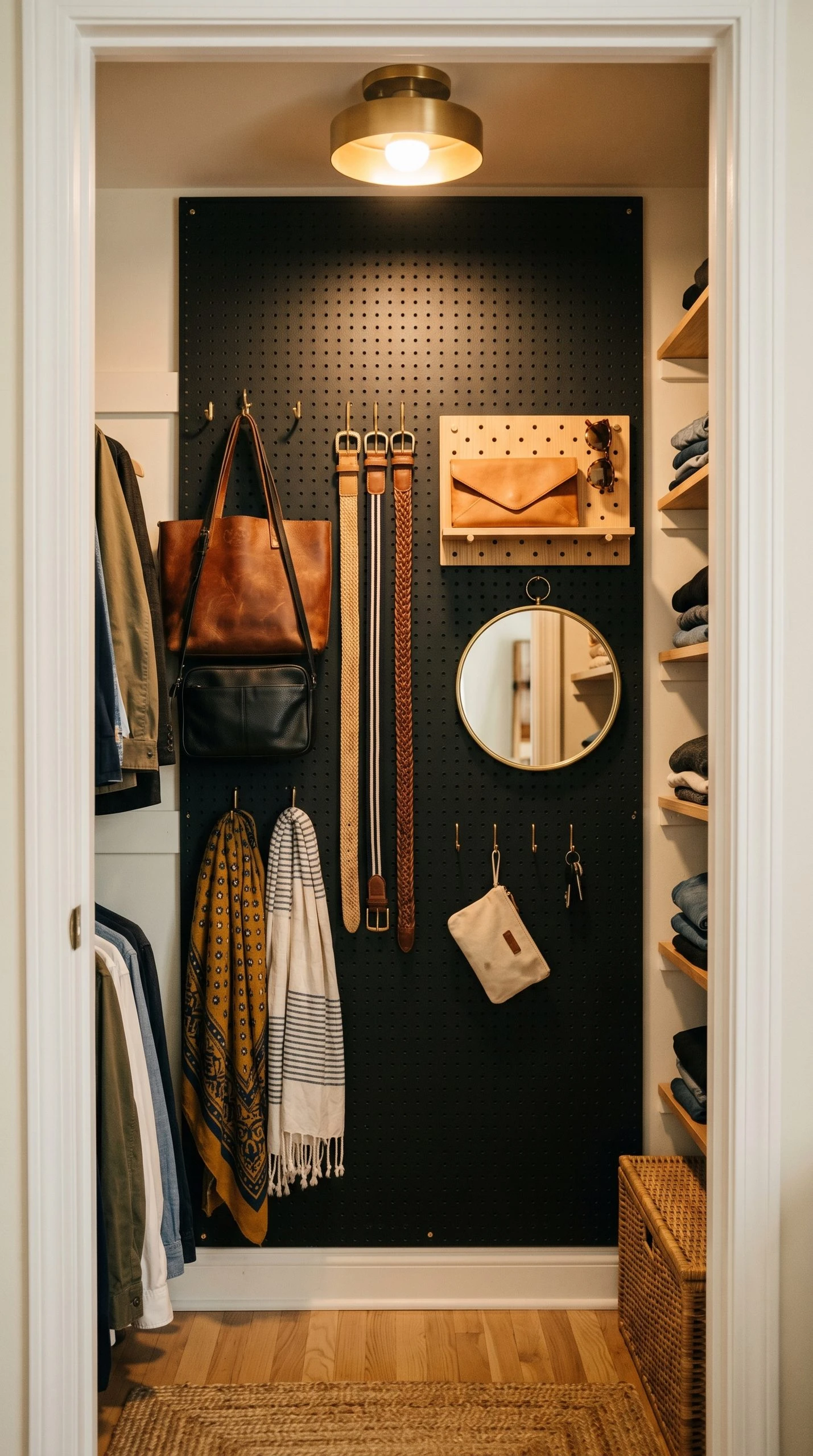
You open your closet and realize the back wall is doing absolutely nothing. No hooks, no shelves, just painted drywall staring back at you. A pegboard installed on that back wall changes everything. Pegboards let you customize storage at any height and rearrange it whenever your needs shift. Hooks hold bags, belts, and scarves. Small bins hold jewelry, sunglasses, and chargers. Shallow shelves hold folded clutches and small boxes. Nothing touches the floor, nothing is buried in a drawer, and everything is visible at a glance.
For a tiny home aesthetic, choose a painted pegboard rather than the raw beige hardware store version. A coat of matte black, warm walnut stain, or deep navy makes it look intentional and design-forward. Pair it with brass or copper hooks for warmth, or stick to matte black hardware for a more contemporary feel. The pegboard does not need to cover the entire wall. Even a 24-by-36 inch panel in the center creates a meaningful amount of extra storage while leaving room for a mirror on one side.
Designer Advice: Mount a small mirror directly on the pegboard using a hook-mounted mirror. It saves wall space and keeps everything in one place for your morning routine.
5. Under-the-Stairs Closet with Pull-Out Drawers
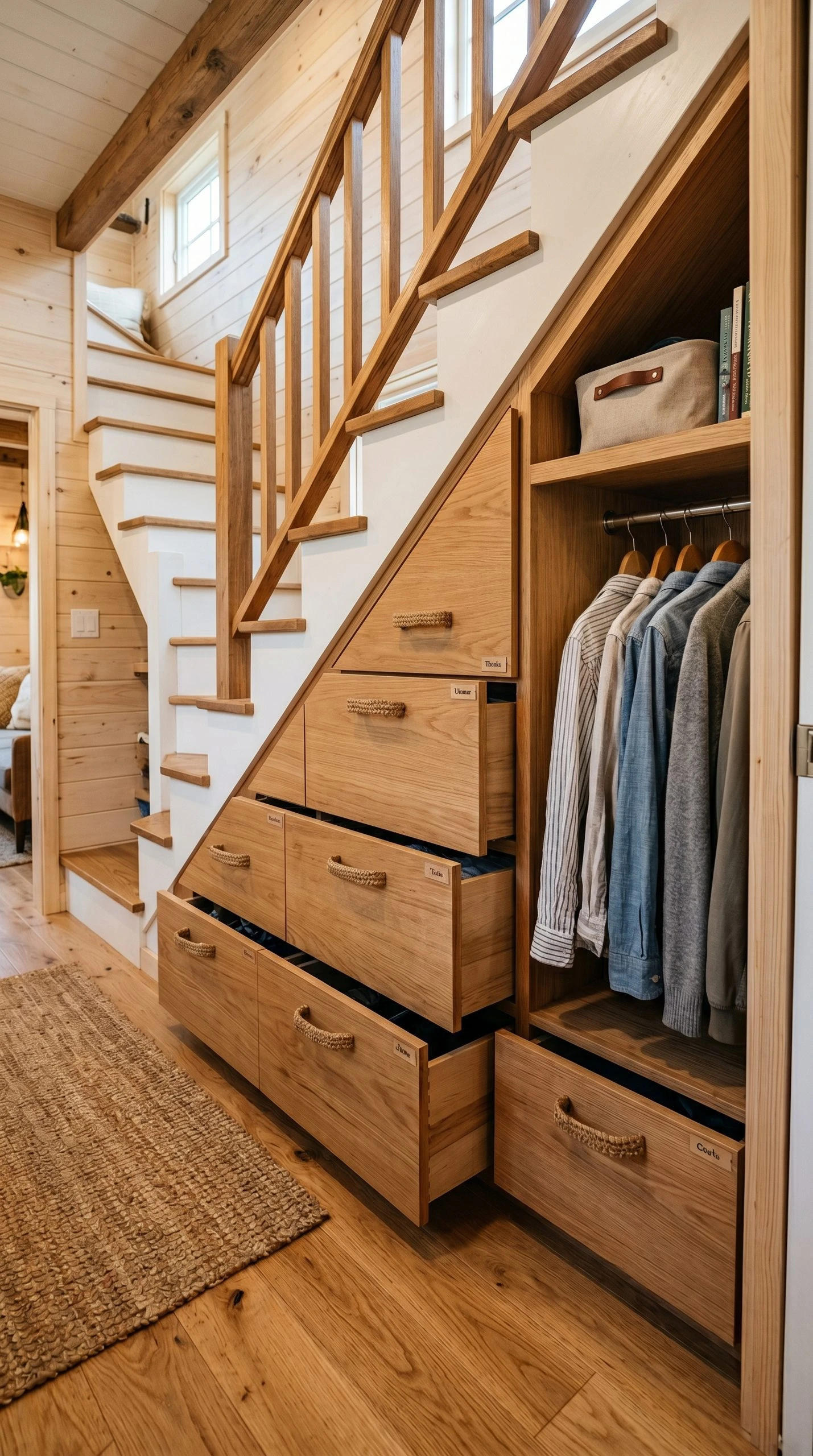
If your tiny home has a loft accessed by stairs, chances are the space underneath those stairs is either empty or used as a dumping ground for things you do not want to deal with. Converting that space into a proper closet with pull-out drawers is one of the best investments you can make in a small home. The angled ceiling of the stair space is not a limitation, it is actually a feature when you fit the storage to the shape.
Shallow pull-out drawers at the shorter end are perfect for socks, undergarments, and accessories. Deeper drawers in the taller section hold folded sweaters and pants. If you have enough height, a short hanging rod in the tallest part of the space can hold shirts and jackets. Finish the front of the drawers with flat-panel cabinet doors in a natural wood veneer or painted a crisp white so the whole unit looks like a built-in rather than an afterthought. Add simple brushed nickel pulls for a clean, finished look.
Designer Advice: Install a soft-close mechanism on every drawer so the unit feels high-quality. In a tiny home where sounds carry, a slamming drawer is more annoying than it would be in a larger space.
6. The Capsule Wardrobe Closet
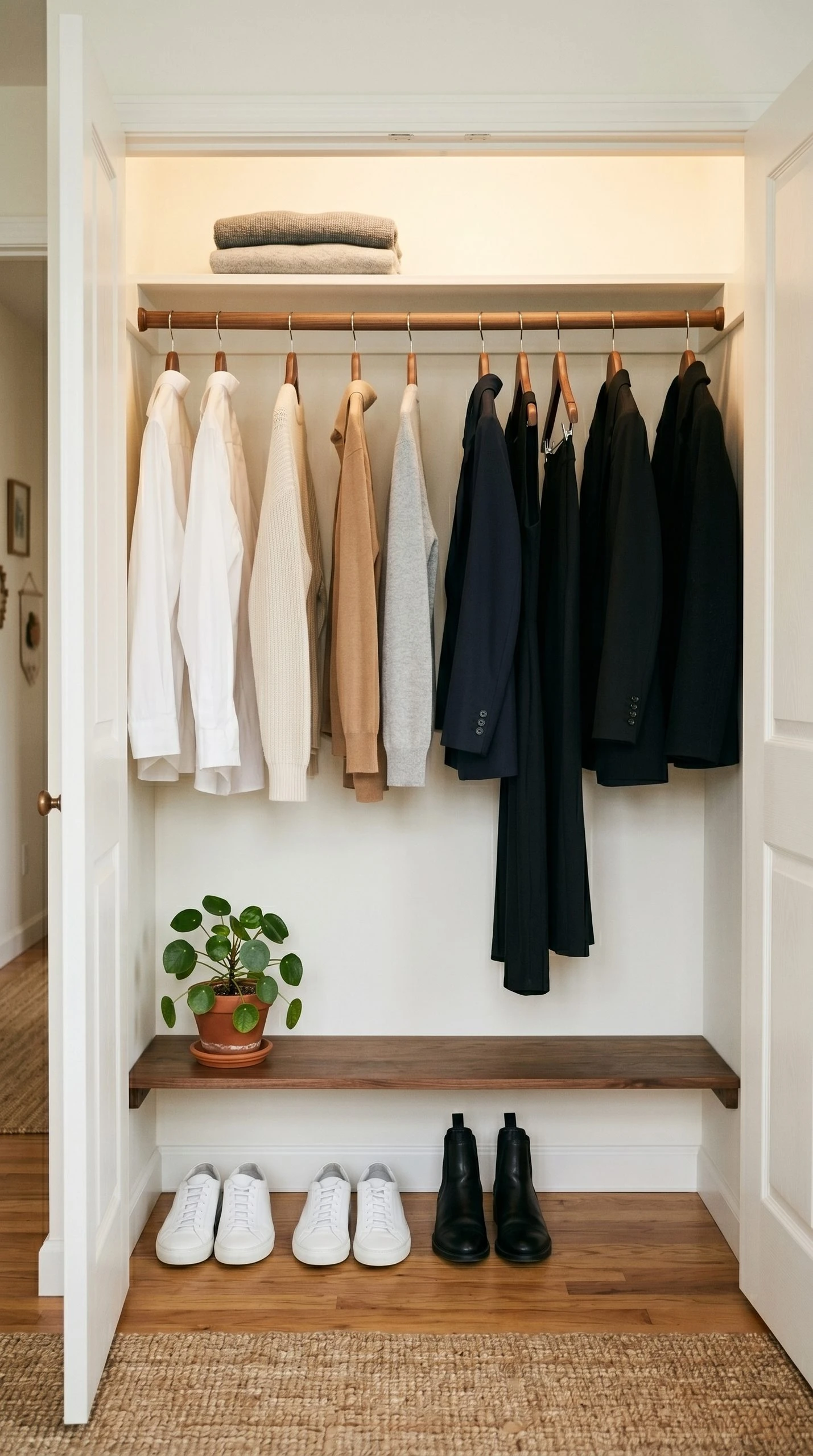
You look at your closet and realize that out of everything hanging in it, you actually wear about 20 percent of it. The rest is guilt, nostalgia, and optimism about a body or lifestyle that may not reflect your reality right now. A capsule wardrobe approach solves this without buying a single storage product. You simply keep only what you wear regularly, donate or store the rest, and suddenly your tiny closet is not tiny at all.
Once you have pared down, the closet organization becomes much easier to maintain. Group your remaining items by color and category so you can see everything at once. Shirts together, pants together, outerwear together. A neutral color palette in your wardrobe, think navy, white, gray, camel, and black, also means everything pairs well with everything else, reducing the number of pieces you need to own. The visual effect inside the closet is clean and almost spa-like. Investing in quality wooden hangers in a warm walnut finish completes the look.
Designer Advice: Keep a small donation bag on the floor of your closet at all times. When you pull something out and hesitate, put it in the bag. If you do not go looking for it in 30 days, donate it without opening the bag.
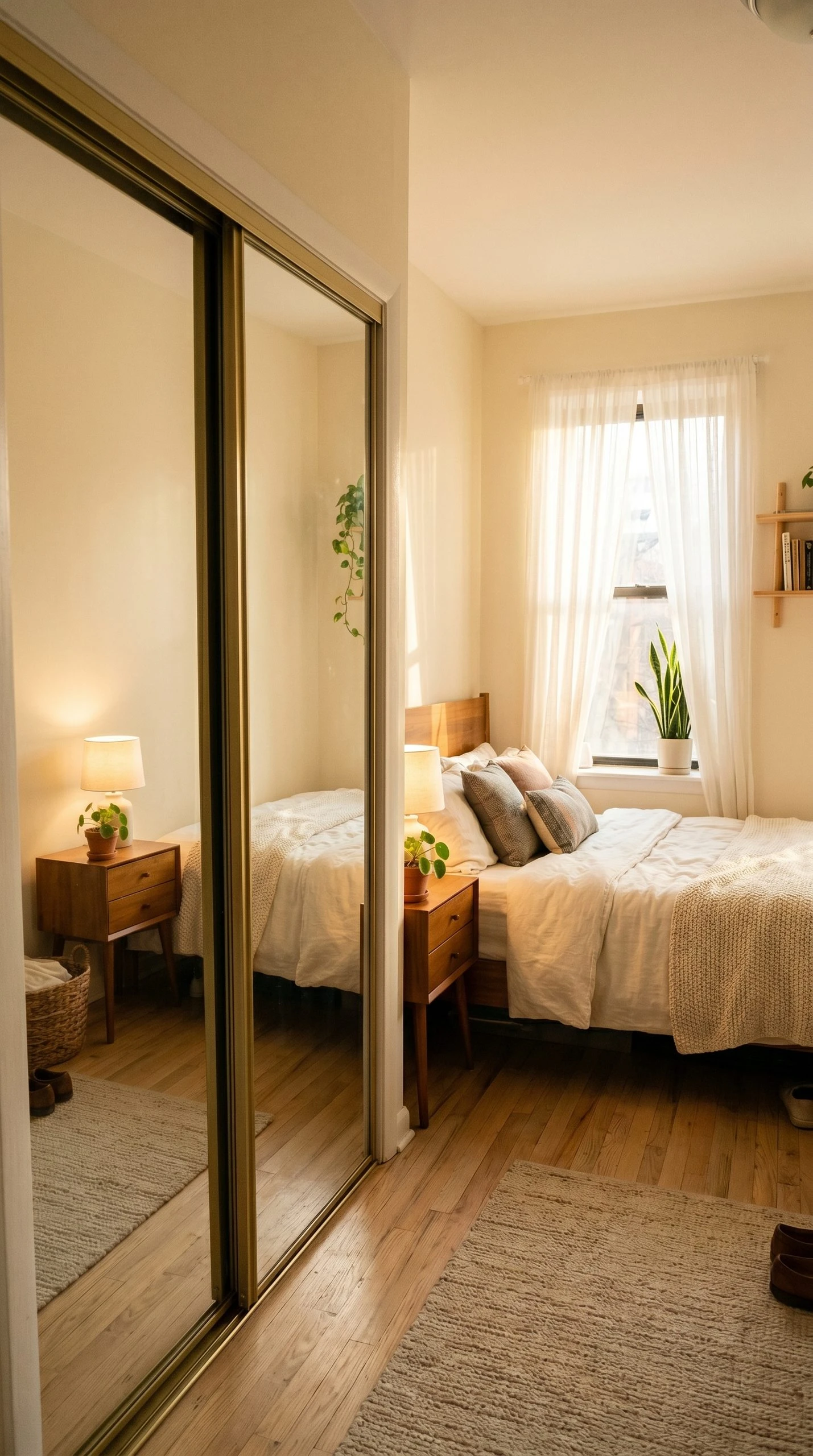
7. Mirrored Closet Doors That Expand the Room
You step back from your tiny bedroom and notice how the small closet door seems to shrink the room every time you look at it. Swapping that door for a mirrored version, or adding a full-length mirror panel to the existing door, is one of the cheapest and most effective ways to make a small bedroom feel larger. The mirror reflects light and the opposite wall, creating the illusion that the room goes on beyond where it actually ends.
A bifold mirrored door works especially well in narrow bedrooms where a swing-out door takes up too much floor space. Sliding mirrored panels are another good option and give the closet a sleek, modern look. For a warmer aesthetic, frame the mirror with a thin border of warm wood or brass-finished molding. The reflection also lets you check your outfit before you leave the room, which is surprisingly useful in a home where the full-length mirror is often the first thing people sacrifice when space is tight.
Designer Advice: Clean mirrored doors with a 50/50 mix of water and white vinegar on a microfiber cloth to avoid streaks. A foggy mirror makes even a beautiful room look dull.
8. Vertical Shoe Storage That Gets Shoes Off the Floor
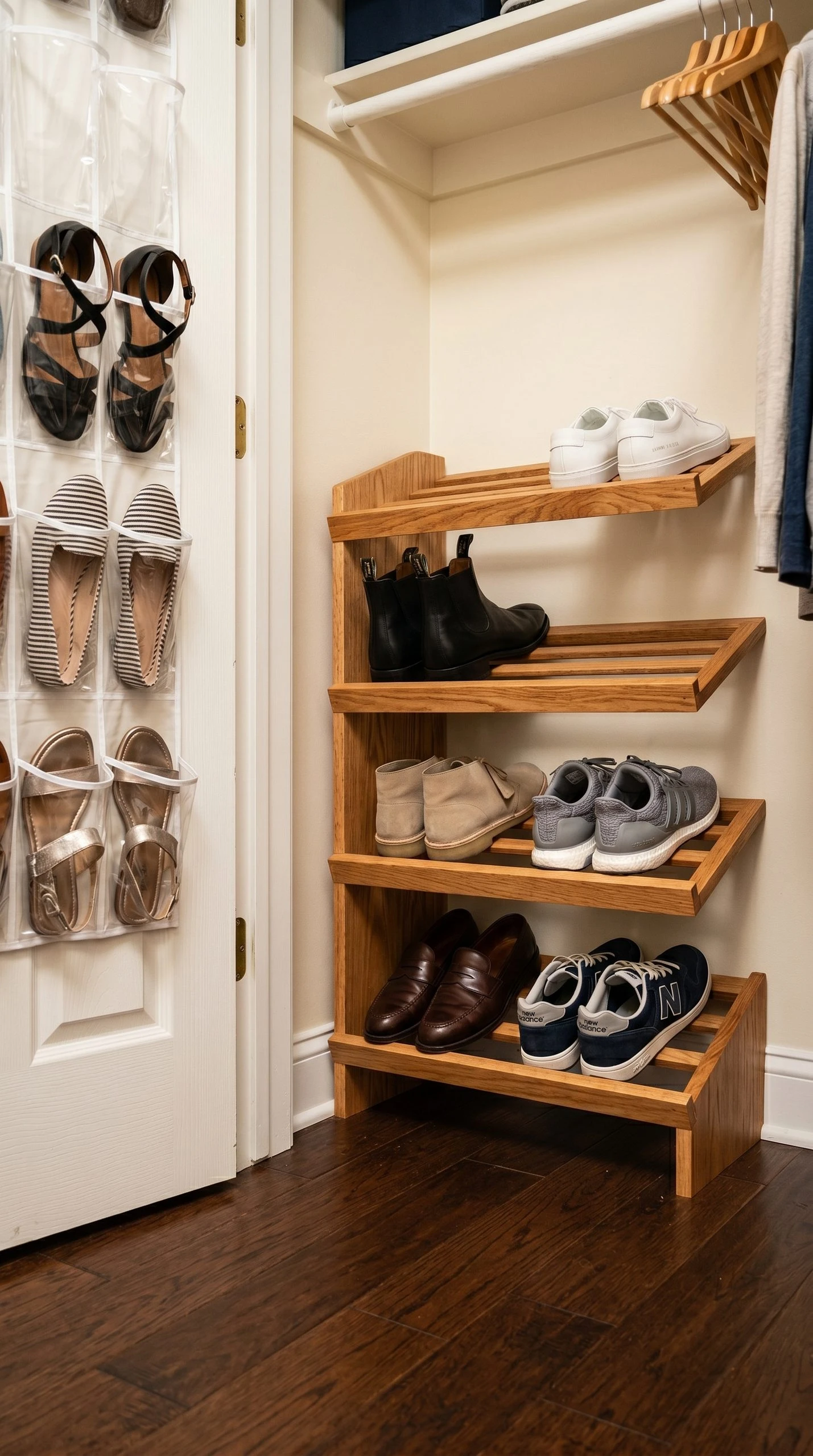
Shoes are one of the biggest space thieves in a small closet. They spread across the floor, get kicked into corners, and make the whole space feel disorganized even when everything else is tidy. A vertical shoe storage solution, whether a door-mounted organizer, a tiered shelf, or a stacked shoe rack, takes shoes off the floor entirely and puts them where you can see and access them easily.
A door-mounted clear pocket organizer holds up to 24 pairs of flats, sneakers, and sandals with no floor footprint at all. For heels and boots, a tiered shelf inside the closet with each tier slightly angled keeps shoes visible and prevents them from toppling. If the closet is very small, a rotating shoe tower placed just outside the closet door, in a corner of the bedroom, keeps shoes accessible without cluttering the closet interior. Choose a tower in a natural bamboo or warm walnut finish so it reads as furniture rather than utility equipment.
Designer Advice: Store one pair of shoes per clear bin on lower shelves for a clean, uniform look. Stack the bins and label the front with a photo of the shoes inside so you never have to dig.
9. A Wardrobe Nook Built into the Wall
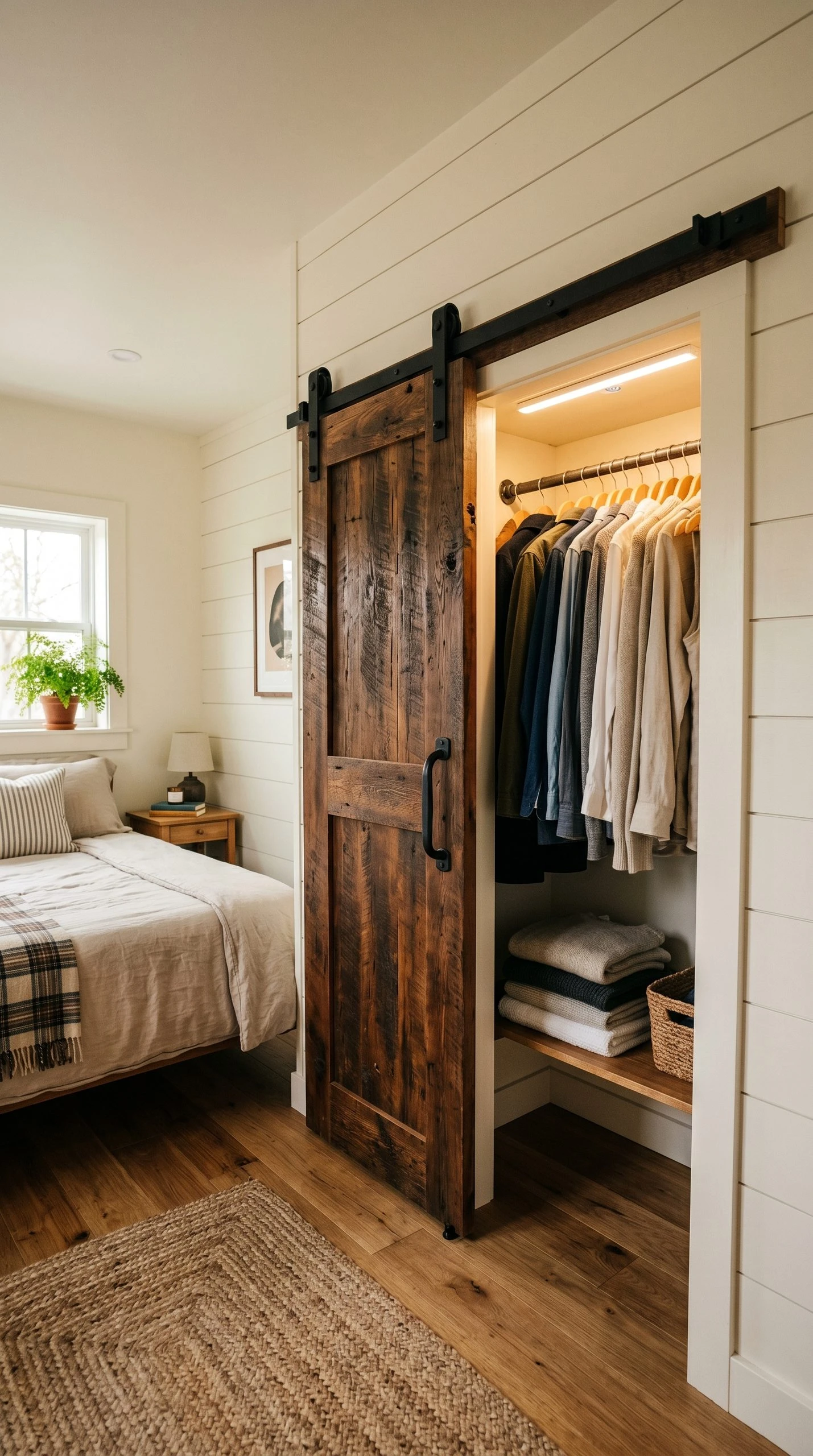
Imagine carving a shallow nook into an interior wall, just 18 to 24 inches deep, and fitting it with a rod, a few shelves, and a pair of barn doors that slide closed. That is a built-in wardrobe nook, and it is one of the most space-efficient closet solutions you can create in a tiny home. Unlike a freestanding wardrobe, a built-in nook does not eat into the room. It lives inside the wall itself, so the floor plan stays open.
The barn door is what makes this idea particularly charming. A sliding door on a black iron rail takes up no swing space and adds character. Choose a door in a reclaimed wood finish for a rustic tiny home aesthetic, or a painted panel door in white or deep charcoal for something more modern. Inside the nook, keep things simple, a rod at the top for hanging pieces, a shelf below for folded items, and small hooks on the sides for bags and belts. Add a small interior LED light on a motion sensor so the nook lights up automatically when the doors open.
Designer Advice: If you cannot carve into the wall, build a false wall with 2×4 framing and drywall about 18 inches out from the original wall. The nook is inside that cavity and gives you a built-in look without structural changes.
10. Seasonal Rotation with Vacuum Storage Bags
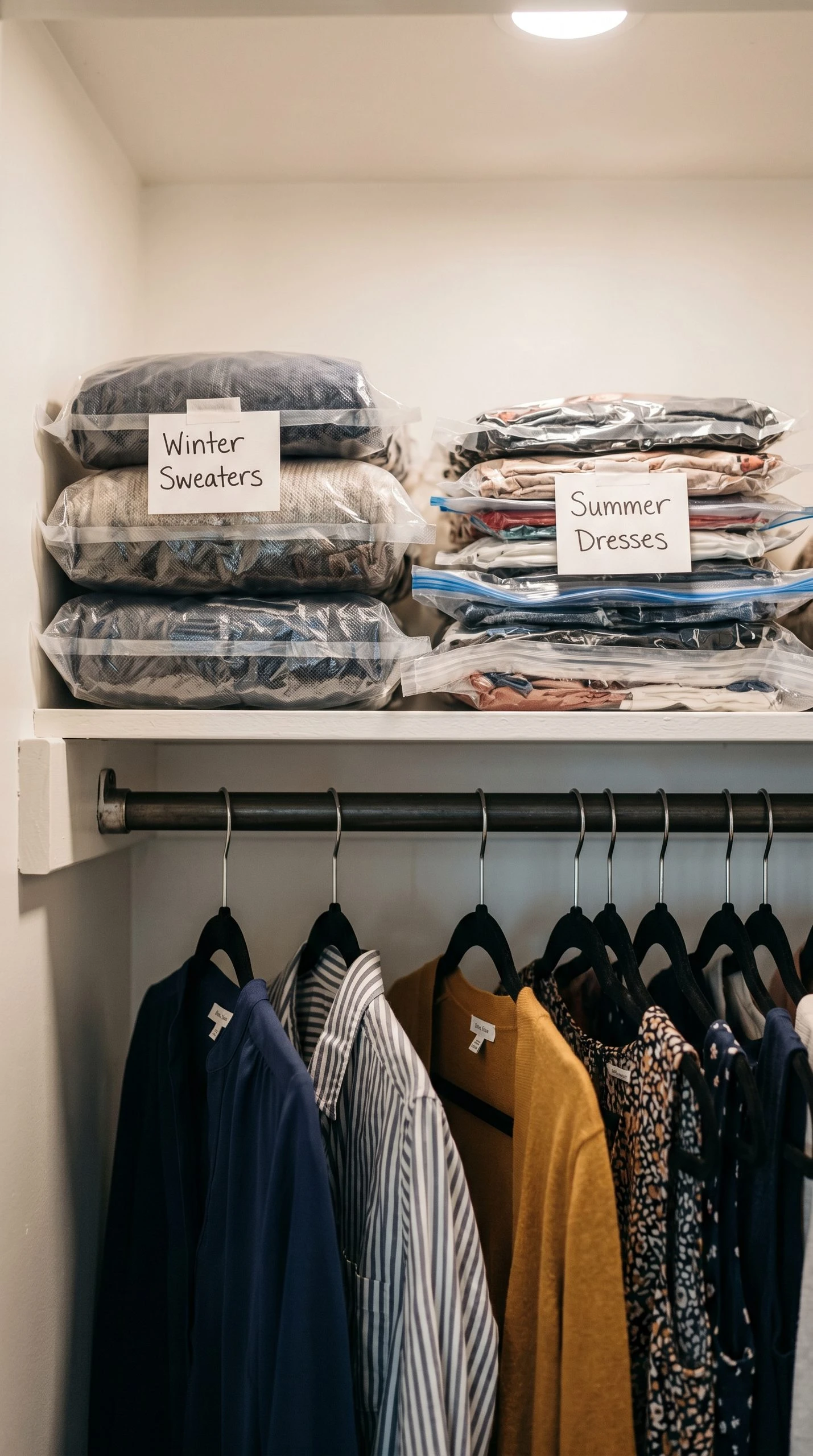
Your closet is bursting in October because it is holding summer sundresses, winter parkas, and everything in between at the same time. A seasonal rotation strategy fixes this by treating your tiny closet like a curated, rotating display rather than a permanent archive of your entire wardrobe. Off-season clothes go into vacuum storage bags, which compress bulky sweaters and jackets down to about one-third of their normal size.
Store the vacuum bags under the bed, in a storage ottoman, or on the highest closet shelf where day-to-day items would never go. When the season shifts, swap the bags out. What stays in your closet at any given time is only what you actually wear right now. This one habit alone can make a tiny closet feel roomy. Combine it with uniform hangers, and the visual difference is remarkable. The closet goes from chaotic to curated almost instantly, and you spend less time rummaging because everything in sight is actually relevant.
Designer Advice: Label each vacuum bag with the season and a rough list of contents. When you pull it out six months later, you will know immediately what is inside without having to open it.
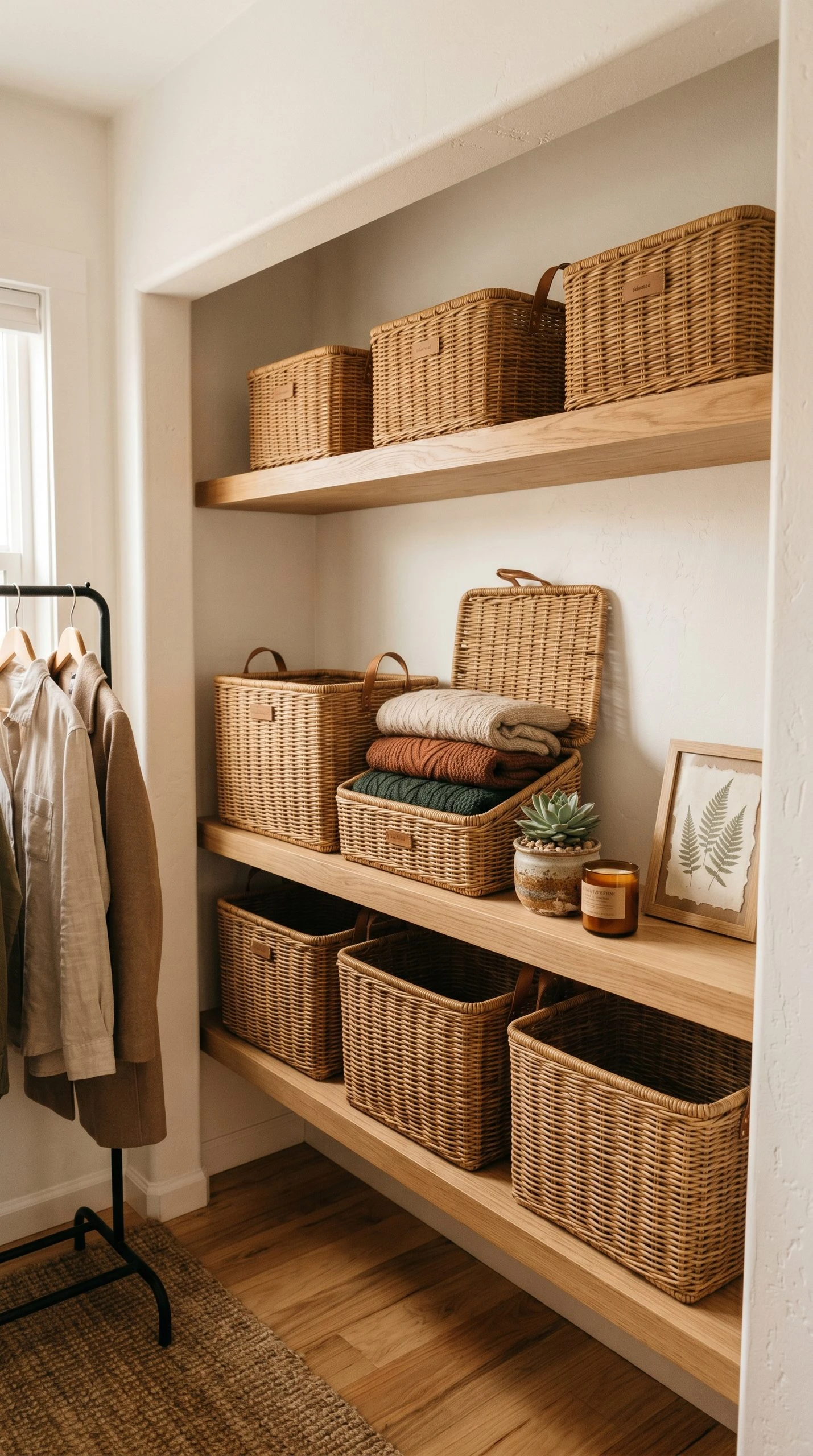
11. Open Shelving with Wicker Baskets
There is a version of tiny home closet organization that looks like it belongs in a design magazine, and it involves open shelving with wicker or rattan baskets lined up neatly across each shelf. This approach works beautifully when you want a natural, organic aesthetic in your home. Open shelves keep things accessible and visible, while the baskets contain the chaos so nothing looks messy from the outside.
Use baskets with lids for items you want hidden, like undergarments, accessories, and things that are not particularly photogenic. Use open baskets for folded sweaters, jeans, and casual shirts where the color and texture of the clothing adds to the look. On a few shelves, leave space for decorative items, a small plant, a candle, or a framed photo, so the closet feels like an extension of your room rather than a purely functional storage zone. Warm wood shelves in a light oak or pine stain complement the natural texture of the baskets beautifully.
Designer Advice: Keep baskets in the same material and color family across all shelves for a cohesive look. Mixing too many basket styles makes open storage look cluttered rather than curated.
12. The Jewelry and Accessories Wall Panel
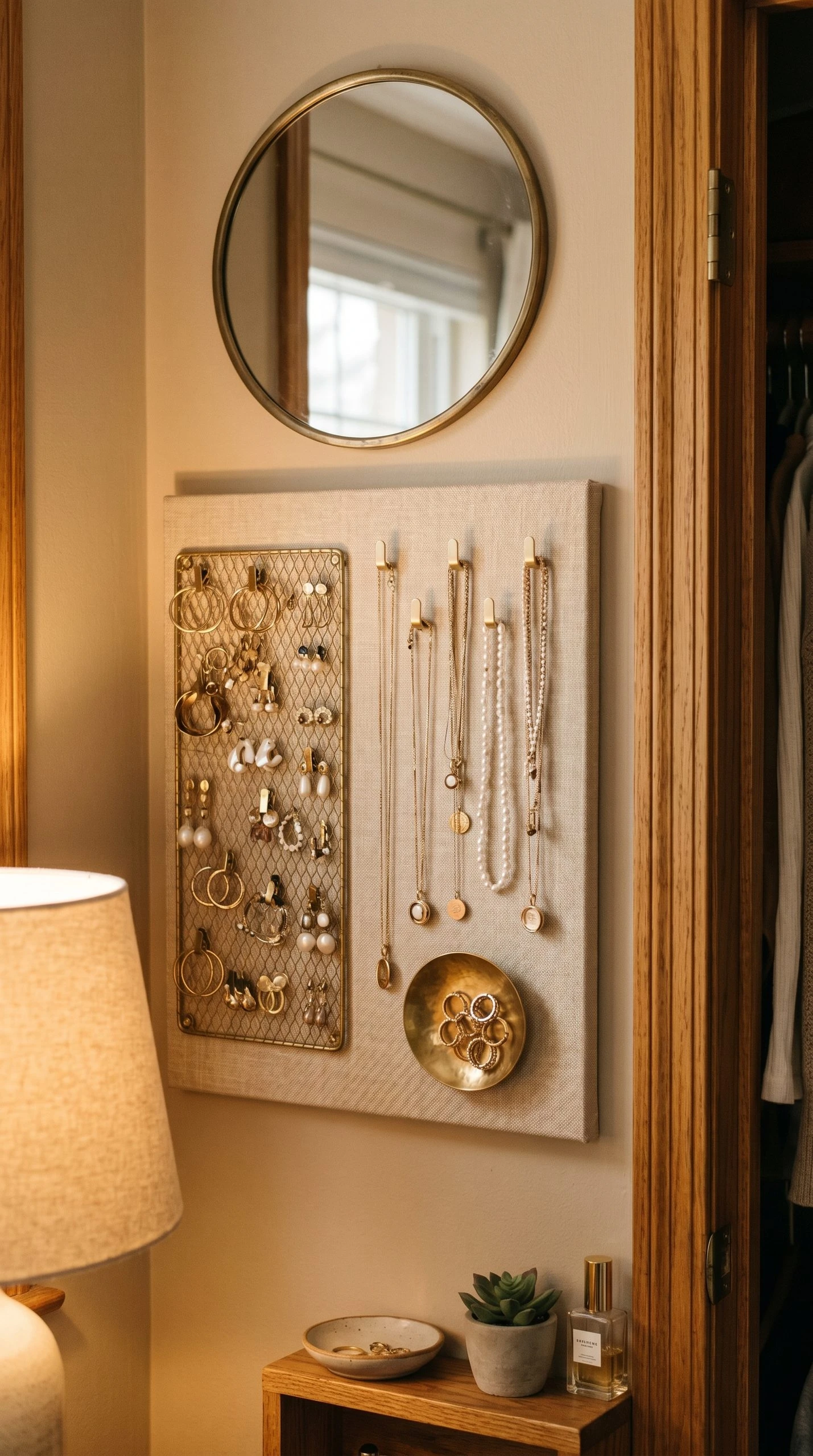
You spend five minutes every morning untangling necklaces from the small dish on your dresser. A dedicated wall panel inside or just outside your closet for jewelry and accessories solves this completely. A corkboard wrapped in linen or velvet fabric, or a simple painted frame filled with wire mesh, gives you a display surface where necklaces hang from small hooks, earrings clip to the mesh, and rings rest in small cups attached to the frame.
Mount the panel on the inside of the closet door to keep it hidden, or hang it on the wall beside the closet where it becomes a decorative feature. A panel in a warm champagne or blush linen fabric with gold hooks makes jewelry look like an art installation. Beyond being beautiful, it makes getting ready faster because you can see all your options at once without sorting through a box or a pile. Add a small mirror above the panel so you can try things on without walking across the room.
Designer Advice: Group necklaces by length on the hooks so you can grab the right one immediately. Short chains up top, longer statement pieces at the bottom.
13. A Dedicated Shoe Bench at the Closet Entry
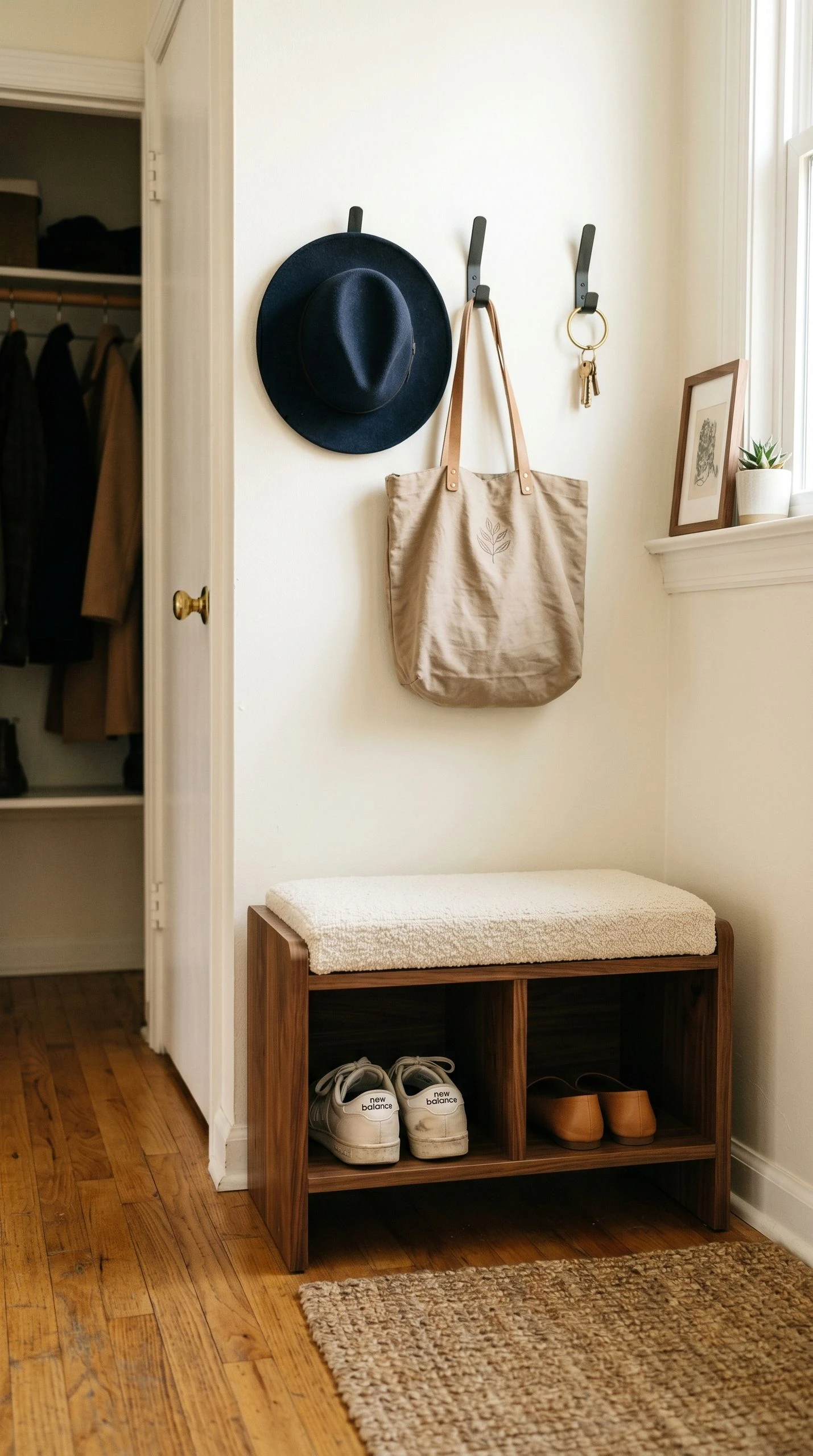
You come home and the first thing you do is kick your shoes off somewhere random. Then you spend three minutes tomorrow morning looking for them. A small shoe bench positioned right at the closet entry, either just inside or just outside the door, solves this immediately. The bench gives you a surface to sit and put shoes on or take them off, and the storage shelf or cubby underneath holds the shoes you wear most often.
A bench in a warm walnut or light oak finish with a cushioned seat in a textured fabric like boucle or canvas reads as furniture rather than storage. It adds personality to what might otherwise be an empty doorway. Choose a bench with two to three open cubbies underneath, each sized to hold one pair of shoes. If you want the area to feel more finished, add a small hook strip above the bench for bags, hats, and keys. The whole setup turns the closet entry into a mini mudroom moment, even in a tiny home.
Designer Advice: Limit the bench cubbies to the shoes you wear at least once a week. Everything else gets rotated into the main closet. This keeps the entry looking clean and prevents the bench from becoming a dumping ground.
14. Corner Shelving That Uses Dead Space
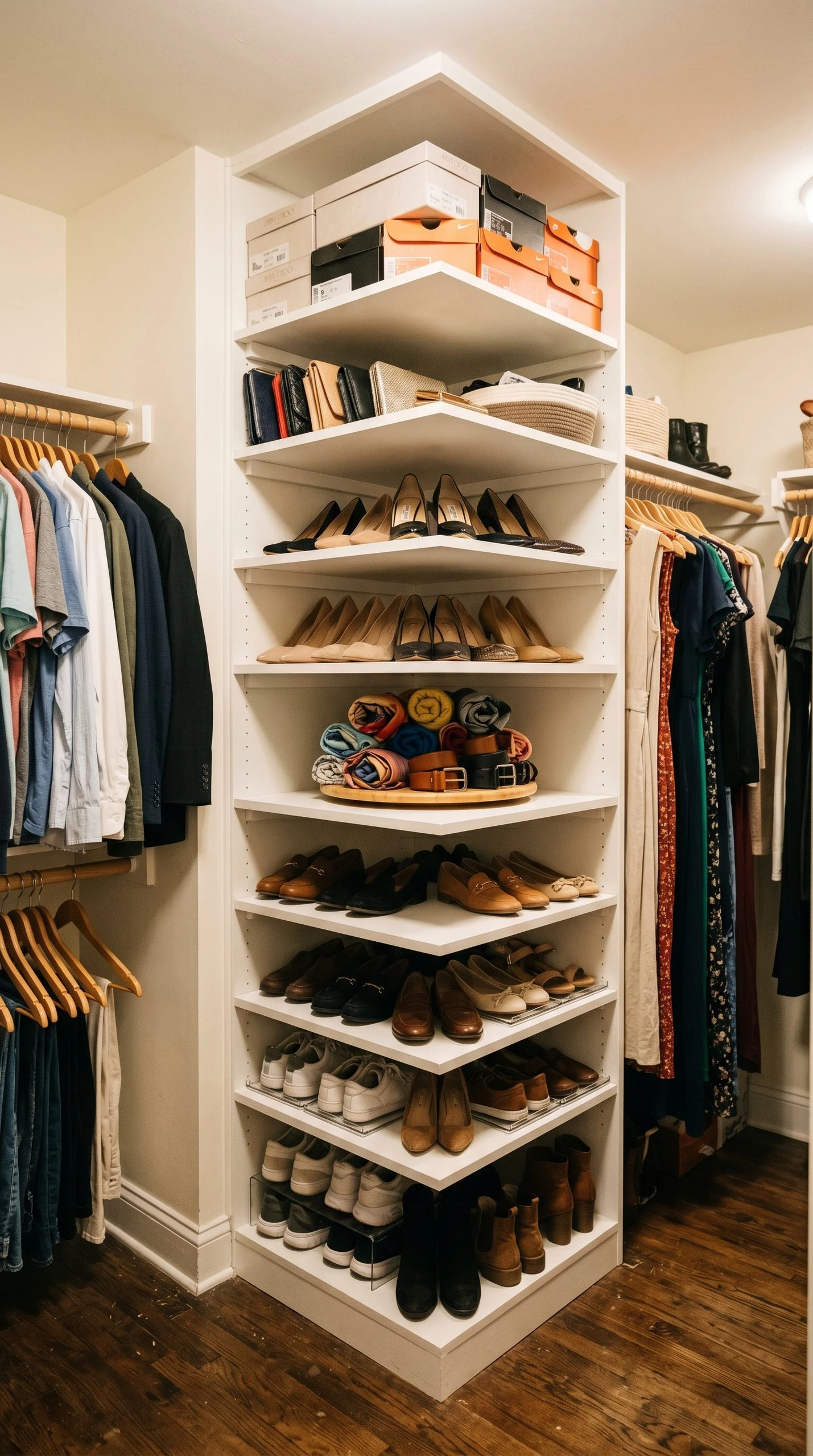
The corner of a closet is almost always wasted. The rod stops before it reaches the corner, and the shelves, if there are any, do not wrap around either. Triangular corner shelves, or a lazy Susan-style rotating corner unit, reclaims that space and turns it into one of the most useful spots in the closet. A rotating unit is particularly good for accessories, shoes, or small bins because you can spin it to access items at the back without reaching past everything in front.
Fixed triangular shelves work well for displaying shoes, stacking folded items, or holding small baskets. If the corner is tall enough, a floor-to-ceiling corner shelving unit in painted MDF or natural pine can hold a surprising amount. The key is using the full vertical height rather than stopping at shoulder level like most standard closets do. Paint the interior of the corner a slightly warmer shade than the rest of the closet to make it feel like an intentional design choice rather than leftover space.
Designer Advice: Use a lazy Susan in the corner for items you reach for daily. It prevents the problem of things falling behind each other and getting lost in a deep corner.
15. Built-In Drawers Below the Hanging Rod
The floor of most tiny closets is a wasteland of fallen hangers, mismatched shoes, and bags that have been shoved there with no real plan. Installing a low built-in drawer unit beneath the hanging rod converts that floor space into the most organized section of your closet. A set of three to four shallow drawers takes up the same footprint as the floor space you were already not using well.
Shallow drawers are perfect for items that tend to get buried in deeper ones: socks, undergarments, pajamas, gym clothes, and accessories. Because the drawers are shallow, you can see everything in one layer without rummaging. If you want to keep costs low, a flat-pack drawer unit from a furniture store, painted to match your closet, works just as well as a custom build. Add simple bar pulls in brushed nickel or matte black, and the unit looks intentional and finished.
Designer Advice: Use drawer dividers inside each shallow drawer so items stay sorted. Without dividers, socks migrate and the drawer becomes a jumbled mess within a week.

16. A Loft Bedroom Closet with Hanging Rods Under the Loft
If your tiny home has a sleeping loft with open space below it, you have a natural closet waiting to be built. The space directly below the loft edge, usually around 4 to 5 feet of clearance, is perfect for a compact clothing area. A hanging rod mounted to the underside of the loft platform holds shirts, jackets, and pants. Shelving units on either side of the rod hold shoes, folded items, and baskets for accessories.
Because this space is open rather than enclosed, the key is keeping it visually organized. Use matching hangers, face all garments in the same direction, and arrange clothing by color for a clean, intentional look. A small curtain can be hung from the edge of the loft to conceal the clothing area when you want the space to feel more like a living room and less like a store. Choose a curtain in the same fabric as other textiles in the room so it reads as a design element rather than a cover-up.
Designer Advice: Mount a strip of LED lights along the underside of the loft above the rod. It illuminates the closet area without any additional fixtures and gives the space a warm, ambient glow at night.
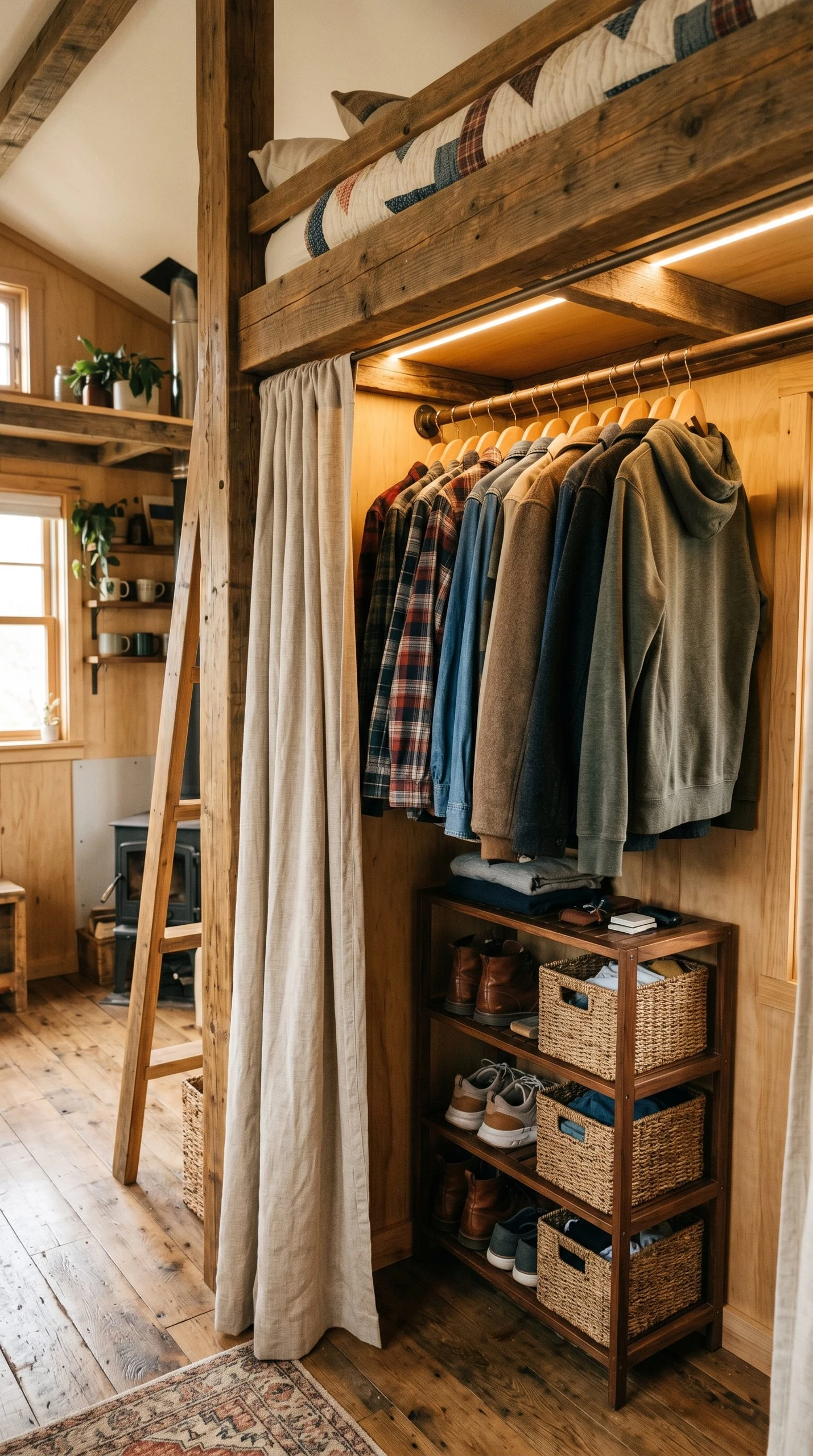
17. The Fold-Away Ironing Board Inside the Closet Door
You have a tiny home and no room for an ironing board. Every time you need to iron something, you pull out a board that takes up half the bedroom floor and then spend time putting it back when you are done. A fold-away ironing board mounted on the inside of the closet door solves this completely. It folds flat against the door, takes up zero floor space, and unfolds in about three seconds when you need it.
Wall-mounted fold-away ironing boards are available in a range of styles, from basic utility models to sleek, modern versions with storage for the iron itself. The best ones hold the iron on a small shelf beside the board so everything is in one place. Mount it at the right height for your comfort, which is usually around hip height when the board is extended. Because it lives inside the closet door, it does not intrude on the closet rod or shelving space. It is simply there when you need it and invisible when you do not.
Designer Advice: Store a small spray bottle of water and a fabric refresher on the same closet door hook for a quick touch-up without setting up the full ironing board every time.
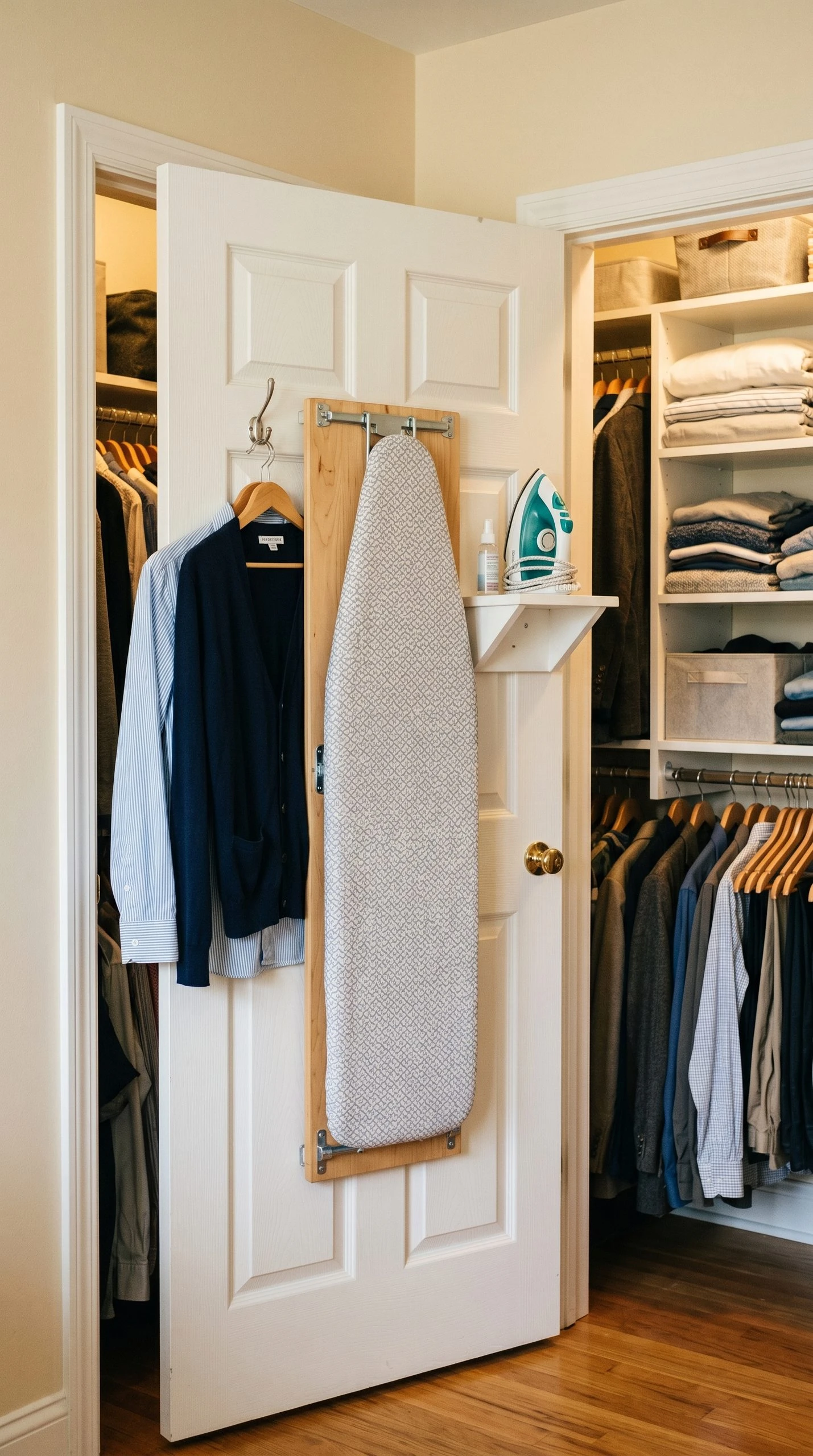
18. A Color-Coded Closet Organized by Palette
You open your closet and it looks like someone dumped a laundry basket inside. Nothing is grouped, colors clash against each other, and finding a specific piece requires pulling half the closet apart. Organizing by color instead of by category is a surprisingly effective way to bring order to a tiny closet. When clothes are arranged in a gradient from light to dark, or grouped by warm and cool tones, the closet instantly looks more intentional and feels easier to shop from.
Start with whites and creams, move through yellows and oranges if you have them, then pinks and reds, purples and blues, greens, and finally grays and blacks. Within each color group, arrange by garment type. The visual effect is something between a boutique and a paint chip display. Beyond the aesthetics, it genuinely makes getting dressed faster because you can see your entire wardrobe at a glance and pull together an outfit by color logic rather than memory.
Designer Advice: Take a photo of your color-coded closet when it is freshly organized. When it starts to drift out of order, use the photo as a reference to reset it quickly.
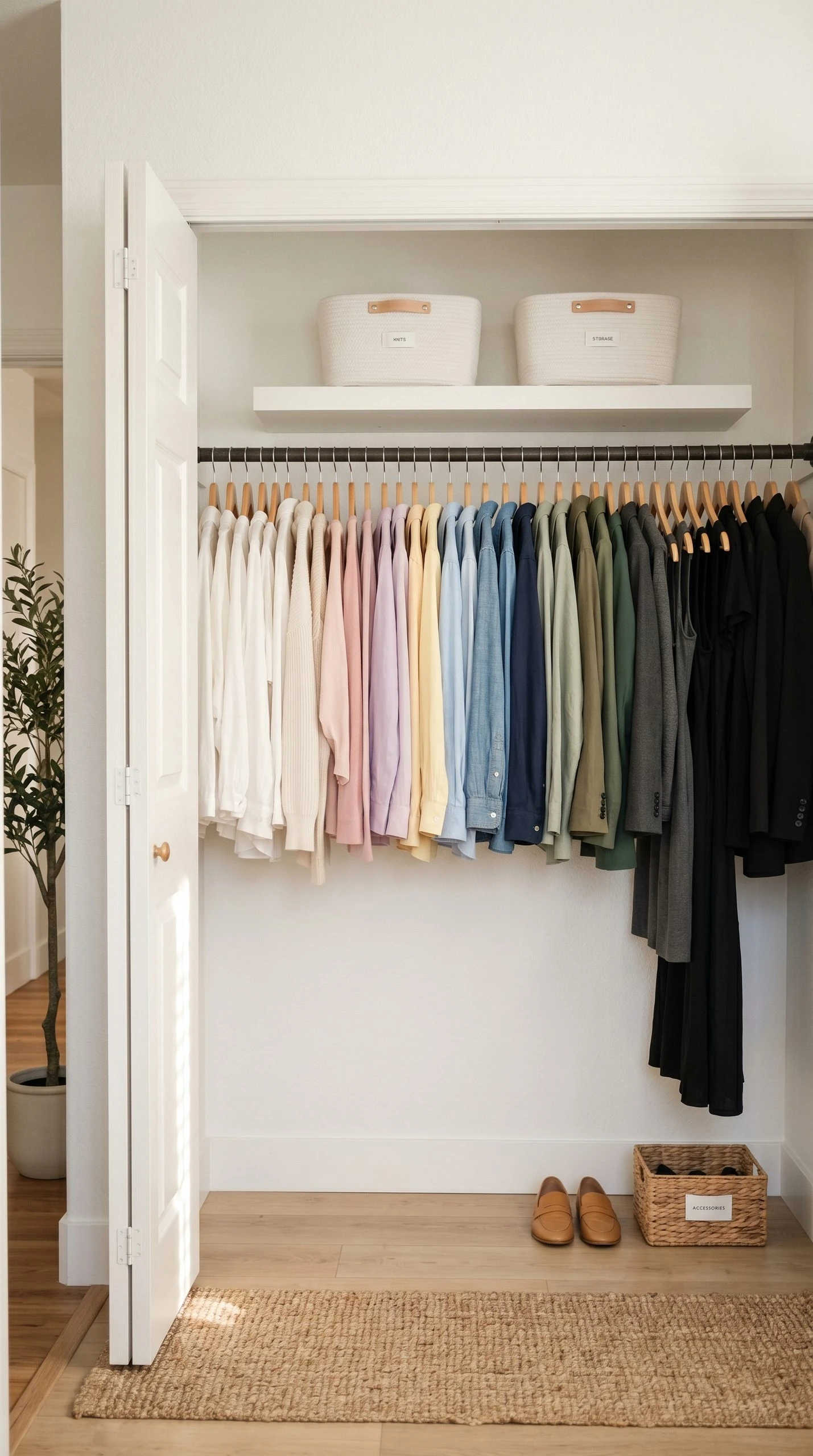
19. A Murphy Bed Wardrobe Combination Unit
Your tiny studio has a bed taking up most of the space, and what is left is barely enough for a closet. A Murphy bed wardrobe combination unit solves both problems at once. These units integrate a fold-down wall bed with flanking wardrobe panels on either side, so the sleeping surface and the closet share the same wall footprint. When the bed is folded up, the wall looks like a large, stylish cabinet with doors. When it folds down, the wardrobes are still accessible on both sides.
The wardrobe panels in a Murphy bed combo unit are usually narrow but surprisingly deep, with enough room for two hanging rods, a set of shelves, and drawer space. Choose a unit in a warm natural wood finish for a Scandinavian aesthetic, or a painted finish in white, slate, or charcoal for something more modern. Add interior lighting inside the wardrobe panels on a switch or motion sensor so the closet space is usable even in low light. The whole unit reads as a beautiful piece of furniture rather than a utilitarian solution.
Designer Advice: Measure your ceiling height before ordering a Murphy wardrobe combo unit. Most require at least 8 feet of ceiling clearance. Check the depth of the wardrobe panels too, as some are too shallow for standard hangers without modification.
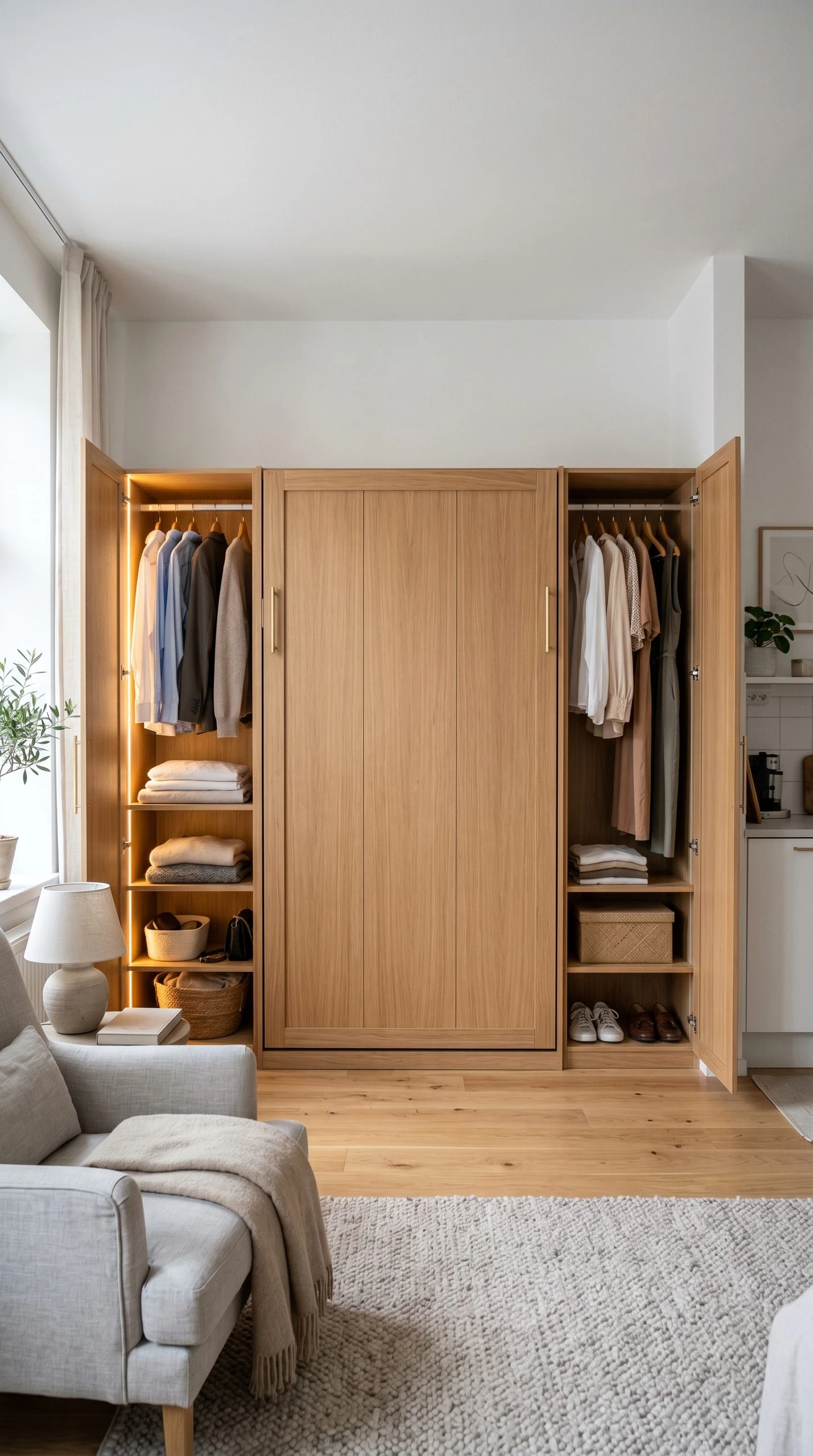
20. A Dedicated Hat and Bag Display Wall
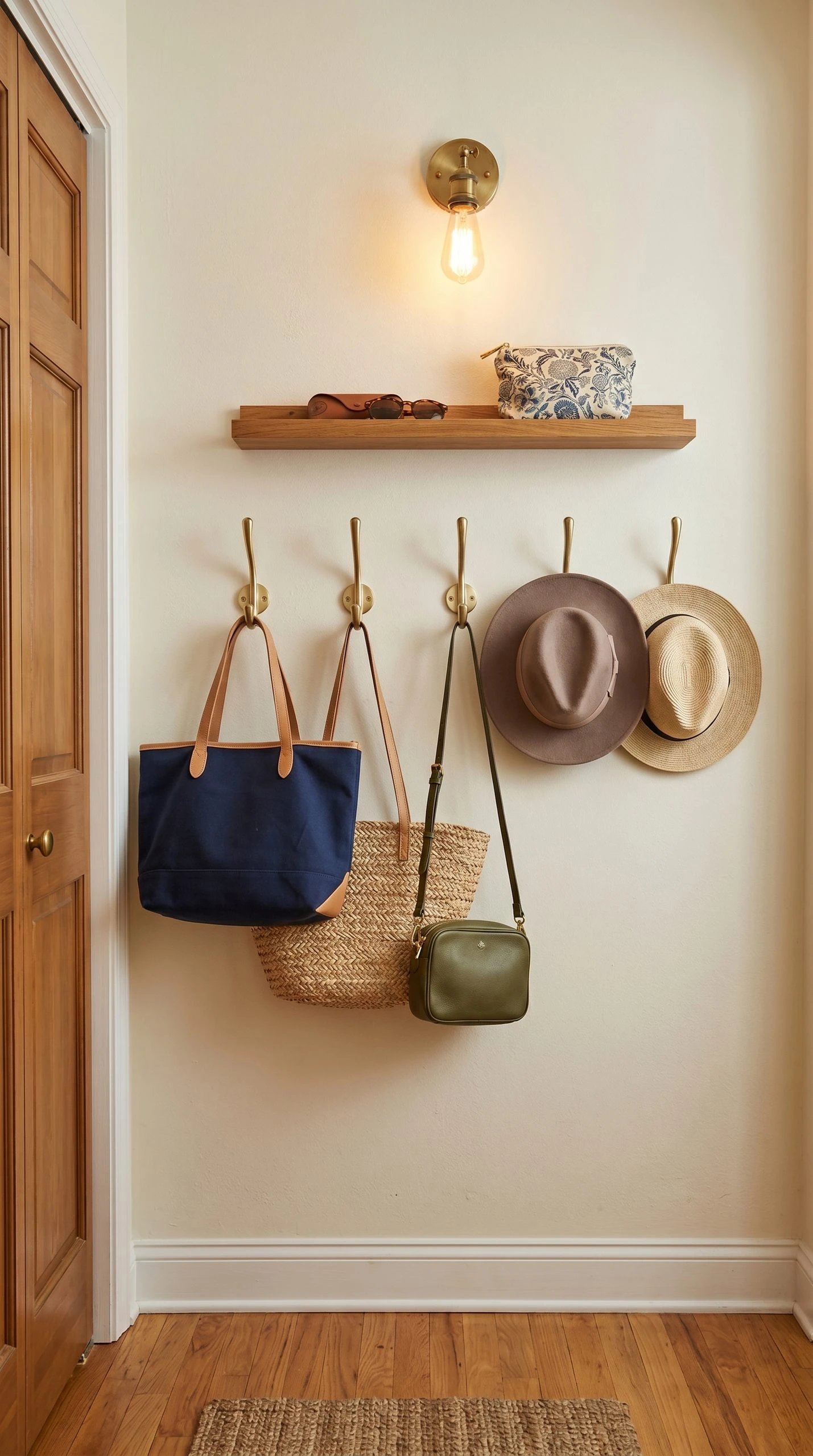
Hats and bags are the two accessories most likely to end up in a jumbled pile in a tiny home because they do not fit neatly into drawers or on standard closet rods. A dedicated wall display outside the closet, or on the inside of the closet door, turns these items into part of the room’s decor. A row of wall hooks at varying heights holds bags in a way that keeps them visible, ventilated, and easy to grab.
For hats, a few J-hooks mounted in a horizontal line on the wall above the bags display them like artwork. A baseball cap rack mounted to the door or wall keeps caps organized and stack-free. Choose hooks in a consistent finish: brushed gold, matte black, or burnished brass. The display wall, even in a tiny space, can hold six to eight bags and a dozen or more hats without looking crowded if the hooks are properly spaced. Add a narrow floating shelf above the hooks for sunglasses or small pouches.
Designer Advice: Rotate bags seasonally the same way you rotate clothes. Keep your three to four most-used bags on the wall and store the rest in fabric dustbags on the upper closet shelf.
21. A Tiny Closet with a Built-In Vanity Corner
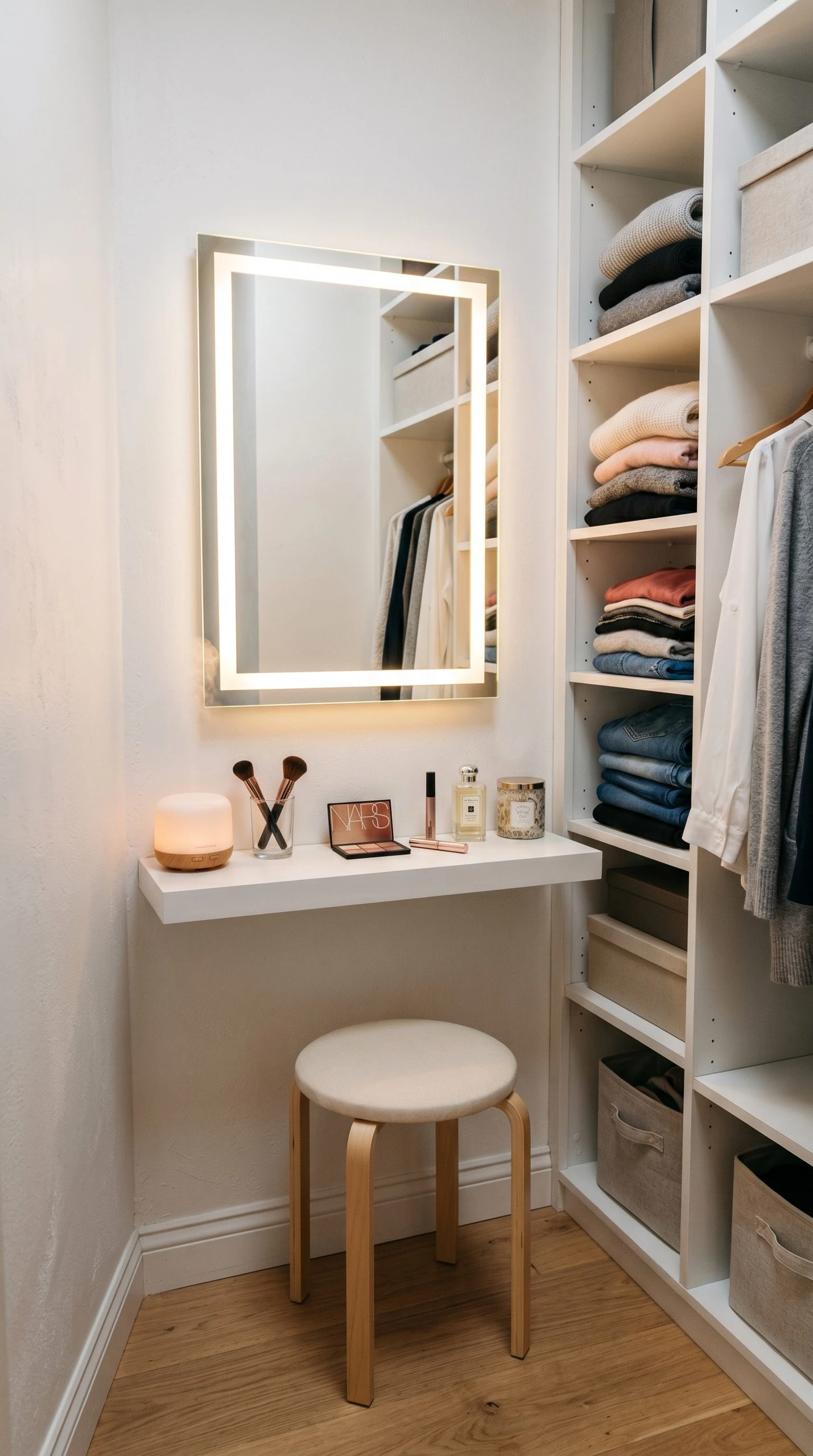
In a tiny home, the closet and the getting-ready routine often compete for the same space. Building a small vanity area into one corner of the closet solves both at once. A narrow floating shelf at counter height, paired with a small mirror mounted on the wall above it, creates a functional makeup and grooming station inside the closet footprint. A few small shelves or a shallow cabinet above the mirror hold products, and a small rolling drawer unit below the shelf stores makeup and tools.
The key to making this work in a tiny closet is keeping the vanity section compact. You are not building a Hollywood-style glam room. A 24-inch-wide shelf and a mirror are all you need. Choose a mirror with built-in LED lighting around the frame so you have good task lighting without installing an overhead fixture. A small stool that tucks under the shelf keeps the floor clear when not in use. The result is a closet that handles both clothing storage and your morning routine without needing a separate room.
Designer Advice: Run a power strip inside the closet to charge tools and run the mirror light. Have an electrician add an outlet inside the closet if there is not one already. It is a small addition that makes the vanity area genuinely functional.
22. Hanging Organizer Pockets for Folded Items
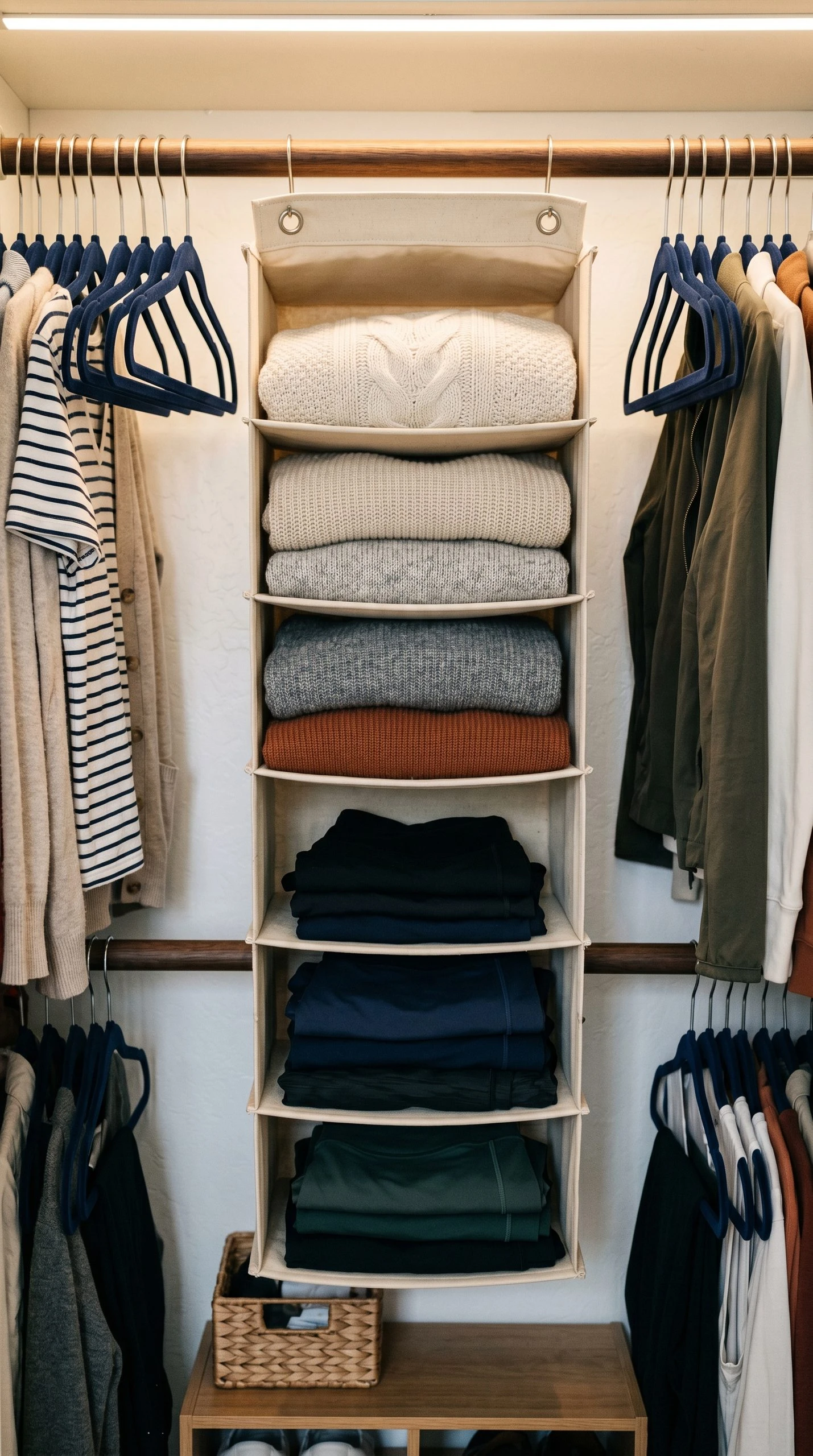
Folded items in a tiny closet almost always end up in a pile that collapses every time you pull something from the middle. A fabric hanging organizer with multiple shelves or pockets solves this without taking any floor space. These organizers hang directly from the closet rod and hold folded sweaters, shirts, or jeans in individual sections so each item stays separate and accessible.
The best versions have five to seven shelves, each wide enough for two or three folded items side by side. Choose a canvas or cotton organizer in a natural color that does not compete visually with the clothing. A gray, cream, or warm sand tone works well in most closets. Because the organizer hangs from the rod, it travels with you if you move, which makes it a particularly smart investment for renters or those in temporary tiny home setups. It also takes less than five minutes to install and requires no tools at all.
Designer Advice: Fold items so the opening faces out, like a store display, rather than stacking them front-to-back. You can see every option without lifting anything and the shelves stay tidy much longer.
23. A Scent-Layered Closet That Feels Like a Boutique
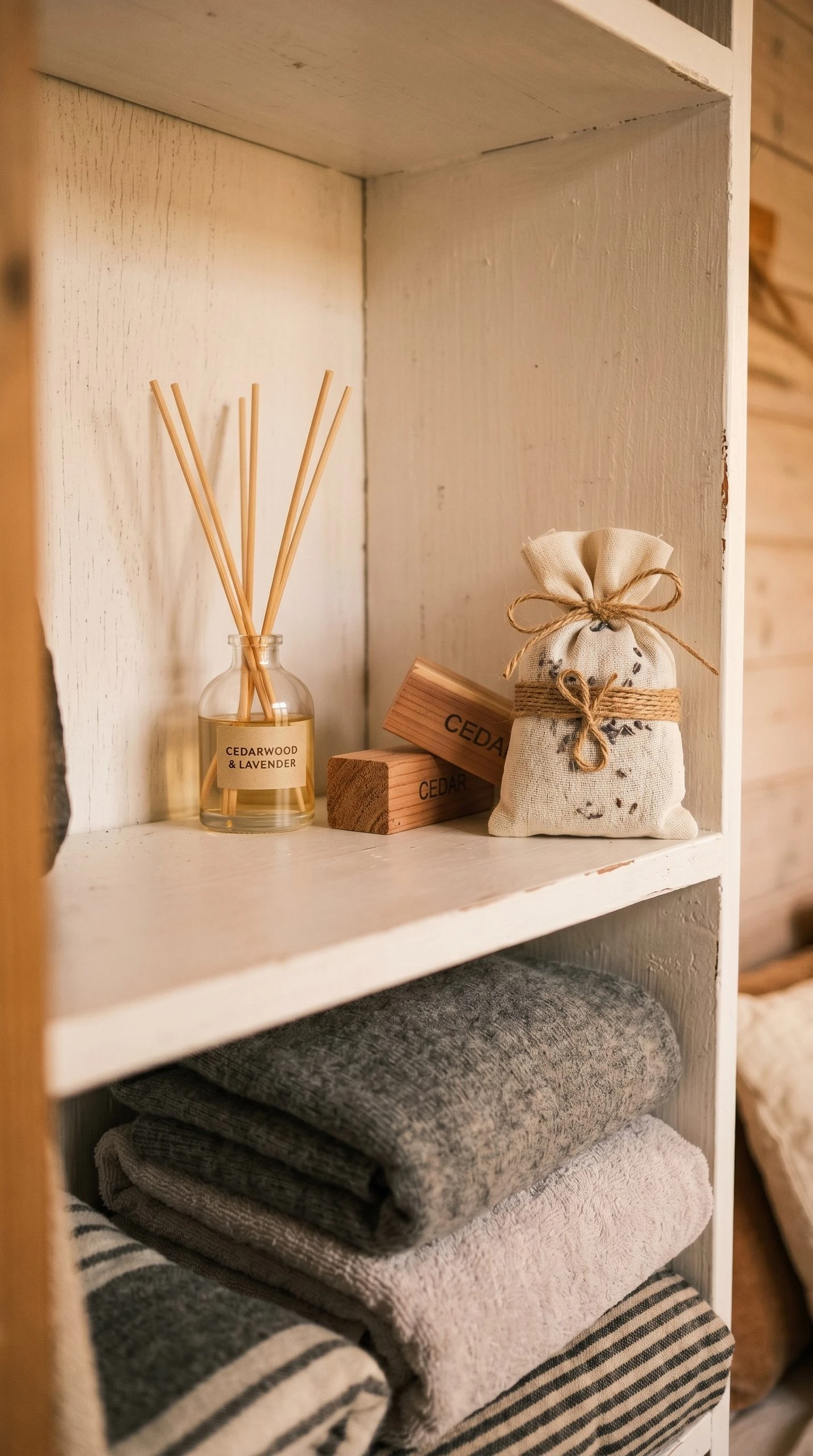
You open the closet door and instead of the usual stale, slightly musty smell, you get a gentle waft of cedar and lavender. A scented closet is a small detail that makes the whole getting-dressed experience feel more pleasant, and it also protects your clothes from moths and odor. Cedar blocks and sachets hung on the rod or tucked onto shelves naturally repel insects and absorb moisture, which is especially important in a tiny home where air circulation can be limited.
Lavender sachets add a calming, fresh scent that feels spa-like without being overpowering. Place them in corners, inside shoe bins, and on the top shelf. Refresh cedar blocks every few months by lightly sanding the surface to restore the scent. If you want a more intentional scent, a small reed diffuser placed on a closet shelf with a light, clean fragrance, like white tea or cotton, keeps the space smelling fresh. Avoid heavy floral or overly sweet scents in a small space as they can become overwhelming quickly.
Designer Advice: Sand your cedar blocks when the scent fades rather than buying new ones. A light pass with 120-grit sandpaper brings the aromatic oils back to the surface and the blocks last for years.
24. A Reclaimed Wood Closet System for Rustic Tiny Homes
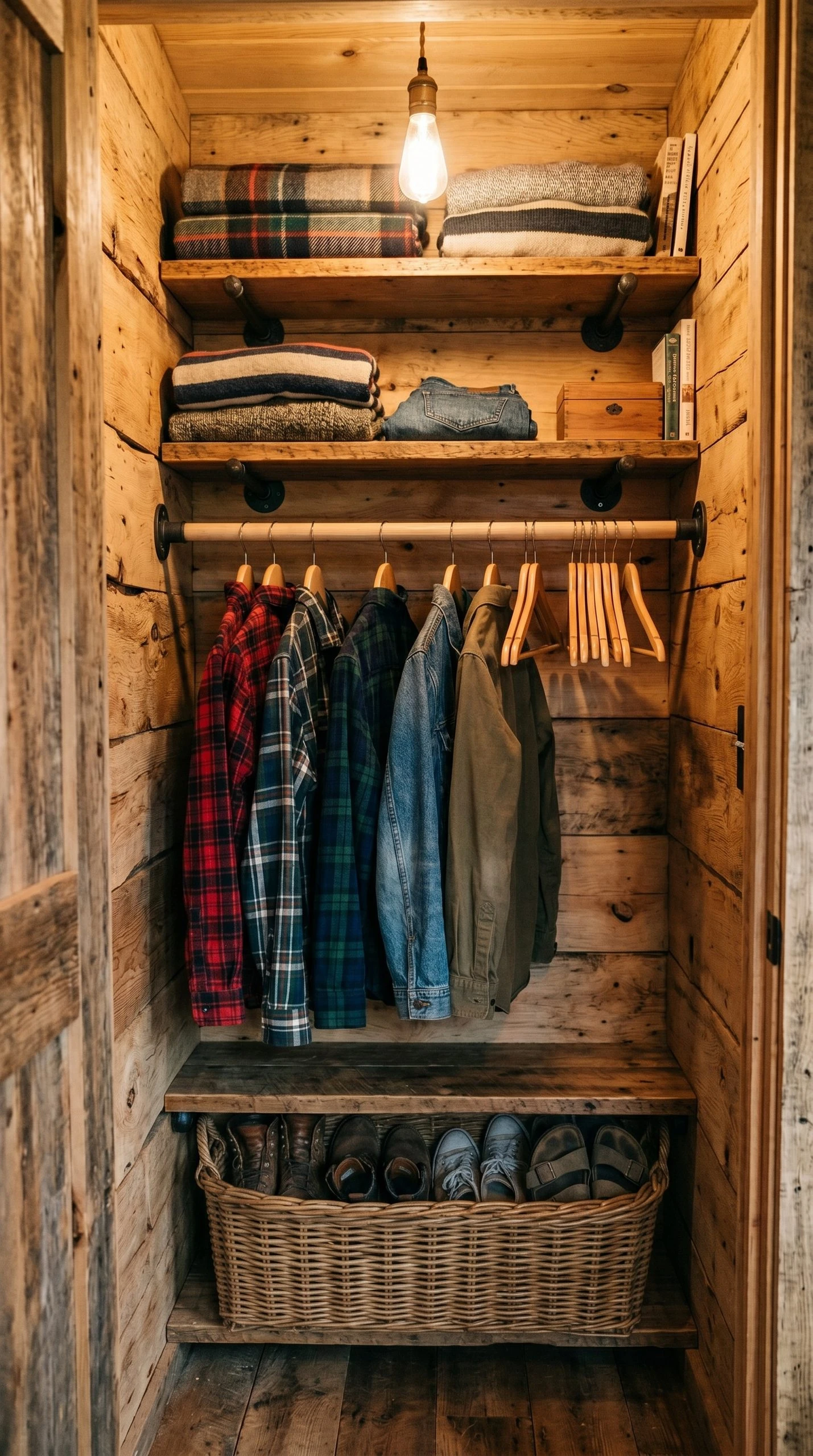
If your tiny home leans toward a cabin, farmhouse, or rustic aesthetic, a closet system built from reclaimed wood fits perfectly. Rough-hewn pine shelves, salvaged barn wood rods, and iron pipe brackets bring texture and character to a space that might otherwise feel like a plain utility zone. The natural variation in reclaimed wood means every shelf looks slightly different, which adds warmth and personality to the closet.
Iron pipe flanges and fittings make excellent rod brackets and shelf supports because they are inexpensive, strong, and look intentional in a rustic space. A set of pipe flanges on either side of the closet with a wooden dowel rod between them costs less than a store-bought rod and looks far more interesting. Pair this with rough-cut pine shelves finished with a coat of tung oil rather than polyurethane for a matte, natural look. The whole setup looks hand-built in the best possible way.
Designer Advice: Source reclaimed wood from local salvage yards, habitat for humanity restores, or online marketplace listings for free or very low cost. Sand any splinters smooth and check for nails before cutting.
25. Smart Lighting Inside the Closet
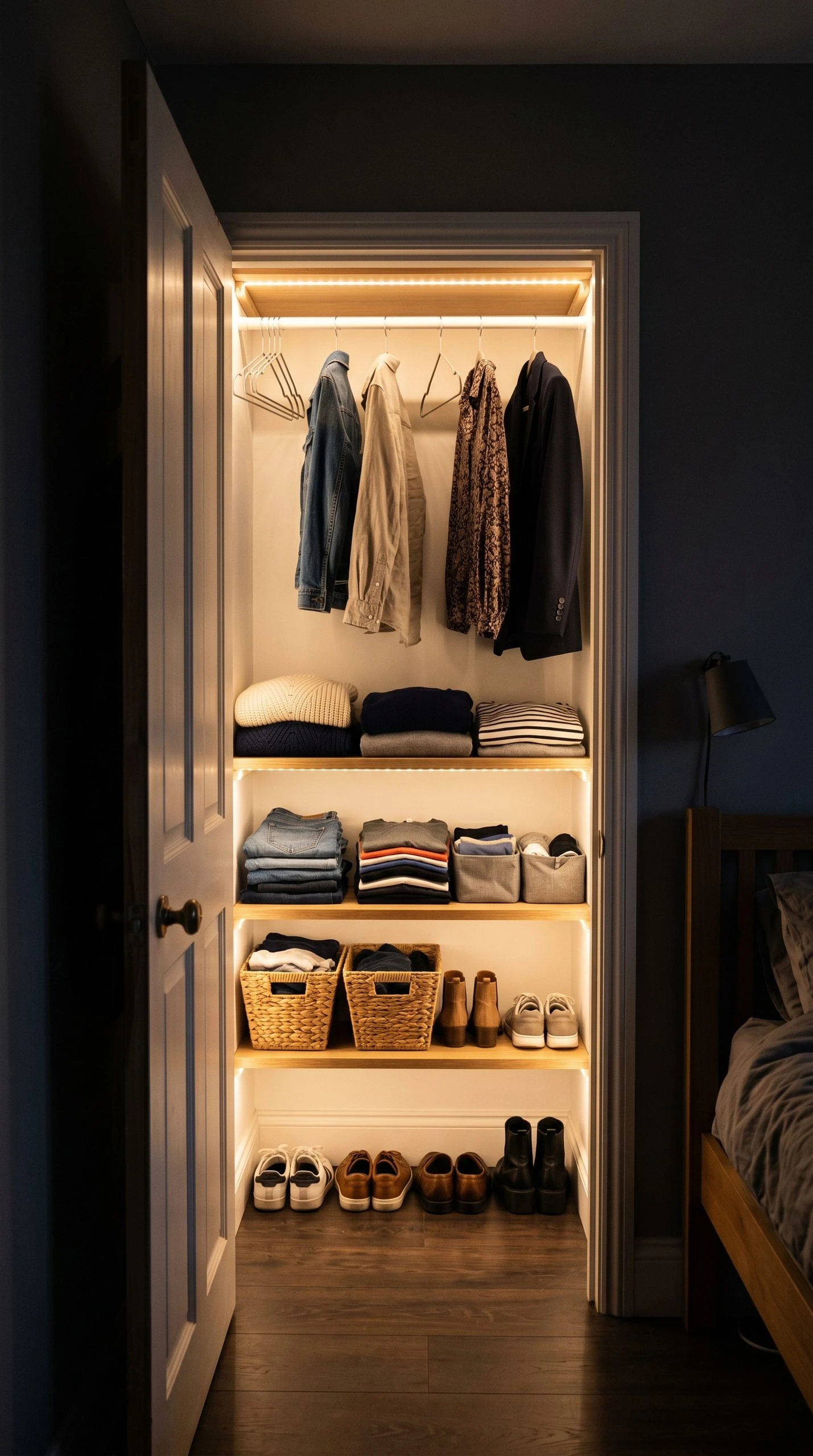
You open the closet at 6 AM in a dark room, squinting to figure out if that is navy or black. Poor lighting inside a tiny closet is one of the most overlooked problems in small home design, and it is also one of the cheapest to fix. A battery-powered LED light bar with a motion sensor mounted to the underside of the top closet shelf turns on the moment you open the door and turns off automatically when you close it. No wiring required, no electrician needed.
For a more permanent solution, a plug-in LED strip light along the front edge of each shelf illuminates folded items from above so you can see colors clearly. Choose a warm white LED rather than cool white, which can feel clinical and unflattering first thing in the morning. A warm white at around 2700 to 3000 Kelvin reads like incandescent light and makes your clothes and the whole closet feel inviting rather than harsh. Good lighting inside a tiny closet genuinely changes how organized it feels, even when nothing else has changed.
Designer Advice: Look for LED motion sensor puck lights that stick to surfaces with included adhesive. They last up to a year on batteries, install in 30 seconds, and make a remarkable difference in a dark closet.
Final Thoughts
A tiny home closet does not have to be a source of daily frustration. With the right combination of systems, habits, and design choices, even the smallest storage space can become something that genuinely supports your routine and feels good to open every morning. The ideas in this article range from quick weekend projects to more involved builds, so there is a starting point here regardless of your budget, your tools, or your comfort with DIY.
The most important shift is moving away from the idea that you just need more space, and toward the idea that you need to use your current space more thoughtfully. Vertical height, door backs, floor-level drawers, wall panels, and corner units are all waiting to be used in most tiny closets. A small amount of planning and a few well-chosen storage pieces can turn a chaotic closet into one of the most satisfying rooms in your home. Start with one idea that resonates most, get it working well, and build from there.
Small spaces reward intention. The more deliberately you design your closet, the better it will work for you, and the more your whole home will feel organized as a result.
Frequently Asked Questions
How do I organize a tiny home closet on a tight budget?
Start by decluttering rather than buying storage products. Removing items you do not use frees up space without spending a cent. After that, look for budget-friendly solutions like tension rods for a second hanging level, adhesive hooks for the door back, and wicker baskets from thrift stores for shelf organization. Many effective tiny closet improvements cost under twenty dollars total.
What is the best way to store shoes in a tiny closet?
A door-mounted shoe organizer with clear pockets holds the most shoes with the least floor impact. For larger shoes like boots and heels, a tiered angled shelf inside the closet keeps them visible and stable. If floor space is not your main concern, a small stacked shoe rack beside the closet works well for everyday pairs.
How can I make a tiny closet feel bigger without renovating?
Paint the inside of the closet white or a very pale warm neutral to reflect light and create the impression of more depth. Add good interior lighting, either LED strips or a motion-sensor puck light. Use slim velvet hangers instead of bulky plastic ones, and replace mismatched storage with uniform bins or baskets. These four changes alone make most tiny closets feel significantly larger.
Should I use open or closed storage in a tiny home closet?
A combination of both tends to work best. Keep items you are proud of or that add visual interest, like colorful shoes or neatly folded sweaters, in open storage. Use closed bins, drawers, or baskets for less attractive items like undergarments, cleaning supplies, and accessories. The goal is a closet that looks intentional and organized at a glance.
How often should I declutter a tiny home closet?
A seasonal wardrobe rotation, roughly every three months, is the most manageable approach. Each time you swap out seasonal clothing, take a few minutes to assess what is going back into the closet. If you have not worn something in the past season, consider whether it will realistically come out next season. This habit prevents the slow accumulation of unworn items that makes tiny closets feel impossible.
Can I build a proper closet in a tiny home with no existing closet?
Absolutely. A freestanding clothing rack with curtain panels, a built-in wardrobe nook framed into an interior wall, or a Murphy bed wardrobe combination unit are all excellent options for a tiny home with no built-in closet. The key is deciding whether you want the closet to be concealed or open, and then choosing the approach that fits your wall space and aesthetic.