Coastal Guest Bedroom Looks Your Visitors Will Never Want to Leave

Introduction
There is something genuinely special about walking into a guest bedroom and feeling like you have just stepped off a sun-warmed dock into a cool, breezy cottage. That feeling, the one where your shoulders drop and you exhale slowly, is exactly what a well-designed coastal guest bedroom should do. It should feel welcoming and calm the moment the door swings open, without being so heavily themed that it starts to feel like a souvenir shop rather than a real room.
Coastal style has come a long way from plastic starfish glued to the wall and blue striped everything. Today, it is a genuinely layered design language that mixes natural textures, relaxed palettes, organic shapes, and soft light to create spaces that feel like a long, lazy weekend by the water, even if the nearest ocean is hundreds of miles away. The best part is that it works beautifully in a guest bedroom because the whole point of the style is ease, comfort, and a sense that nothing in the room is trying too hard.
This article covers 17 distinct approaches to designing a coastal guest bedroom, grouped by style family so you can see how the ideas relate and build on each other. Whether you are starting completely from scratch or just want to refresh a room that feels a little too plain, there are ideas here for every budget and every level of commitment. Each idea ends with a Designer Tip to help you pull the look off confidently without second-guessing yourself. Let’s get into it.
Calm and Neutral: When Less Is More
1. Soft Linen and White Oak
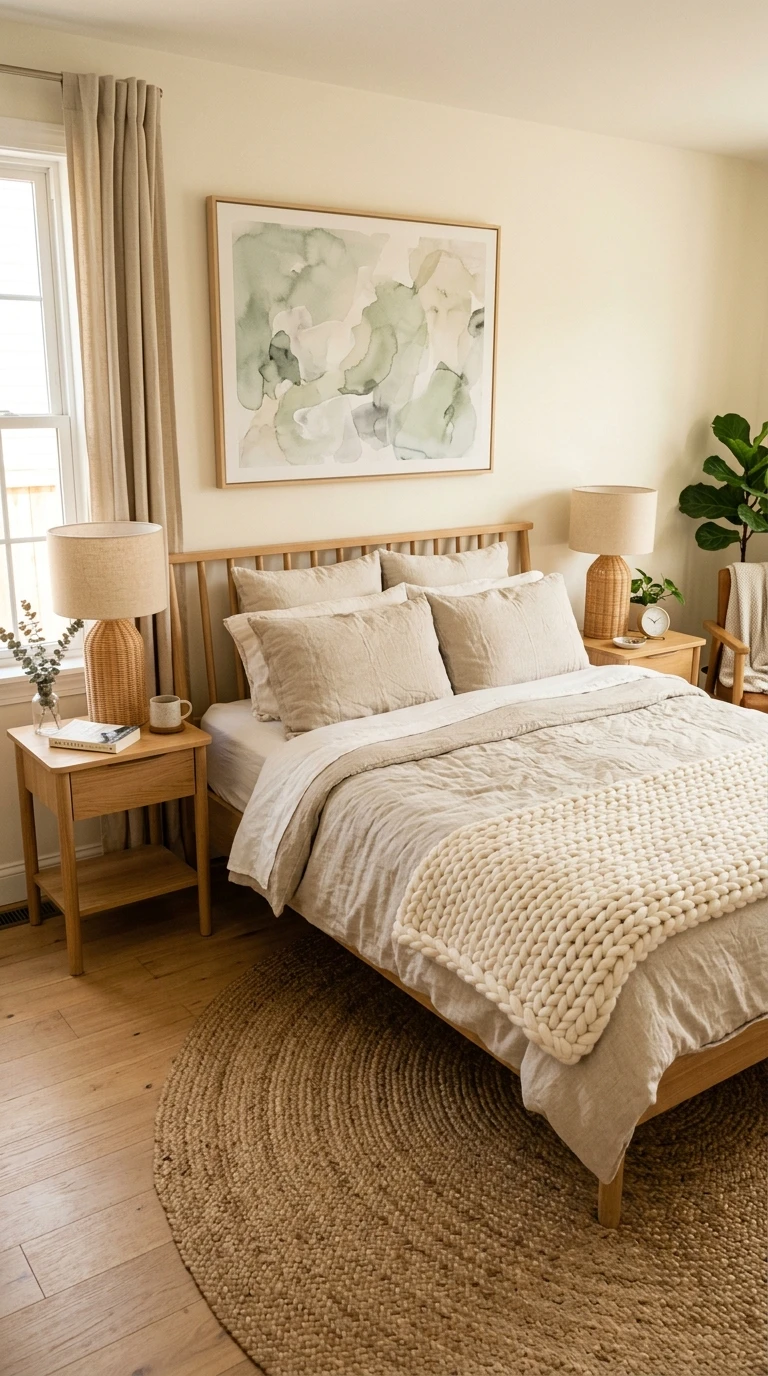
This look is built on restraint, and that is exactly what makes it so good. Start with white oak or blonde wood furniture, keeping the grain visible and the finish light. A solid linen duvet in a warm oatmeal or cloud white tone becomes the anchor for the whole room. The palette here should never drift into stark, cold white territory. Think warmer, creamier tones that feel like morning light rather than a fluorescent hospital room. A woven jute rug in a natural undyed shade grounds the space without adding visual noise.
Lighting should be warm and indirect. A pair of rattan table lamps with linen shades on either side of the bed creates an even, flattering glow that guests will appreciate in the evening. Keep the walls in a soft off-white or warm greige, and resist the urge to hang too much. One large piece of abstract coastal art, maybe a watercolor wash in pale sage or misty blue, is enough. Add a linen throw folded across the foot of the bed and a small tray on the nightstand with a candle and a glass carafe. Simple, but it feels genuinely considered.
For textures, the key is layering similar tones in different materials. A chunky knit throw in ivory next to smooth linen pillowcases next to a rough-weave basket creates depth without contrast overload. This is the kind of room that photographs beautifully and feels even better in person.
Designer Tip: Choose linen bedding with a slight rumple rather than overly crisp cotton. It reads as effortlessly relaxed, which is exactly the mood coastal neutral rooms are going for.
2. Sandy Beige with Driftwood Accents
Sand is arguably the most underused color in coastal design. Most people go straight for blue, but a room built around warm sandy beige tones with driftwood-inspired furniture has a quieter, more grounded kind of beauty. Think walls painted in a soft warm sand or pale camel tone. Pair that with a bed frame in weathered grey-brown wood, something that looks like it has been kissed by salt air and sun. The effect is subtle and deeply calming.
Bedding in warm white or soft bone cotton works beautifully here, especially with pillows in a slightly deeper sand or warm taupe. Bring in driftwood-style decor through a lamp base, a small decorative branch arrangement, or even a driftwood mirror frame above a dresser. A woven seagrass rug in a natural mid-tone adds warmth underfoot without fighting the palette. Curtains in a sheer off-white linen filter the light softly and add movement.
For accessories, look for small ceramic vessels in matte sand or terracotta tones, a few smooth river stones grouped on a tray, and perhaps a framed black and white photograph of a coastline. The room should feel like the beach at golden hour, warm, quiet, and a little hazy.
Designer Tip: Hang a large, simple driftwood-framed mirror opposite the window to double the natural light and add an organic focal point without overwhelming the calm palette.

3. Soft Grey and Sea Glass Green
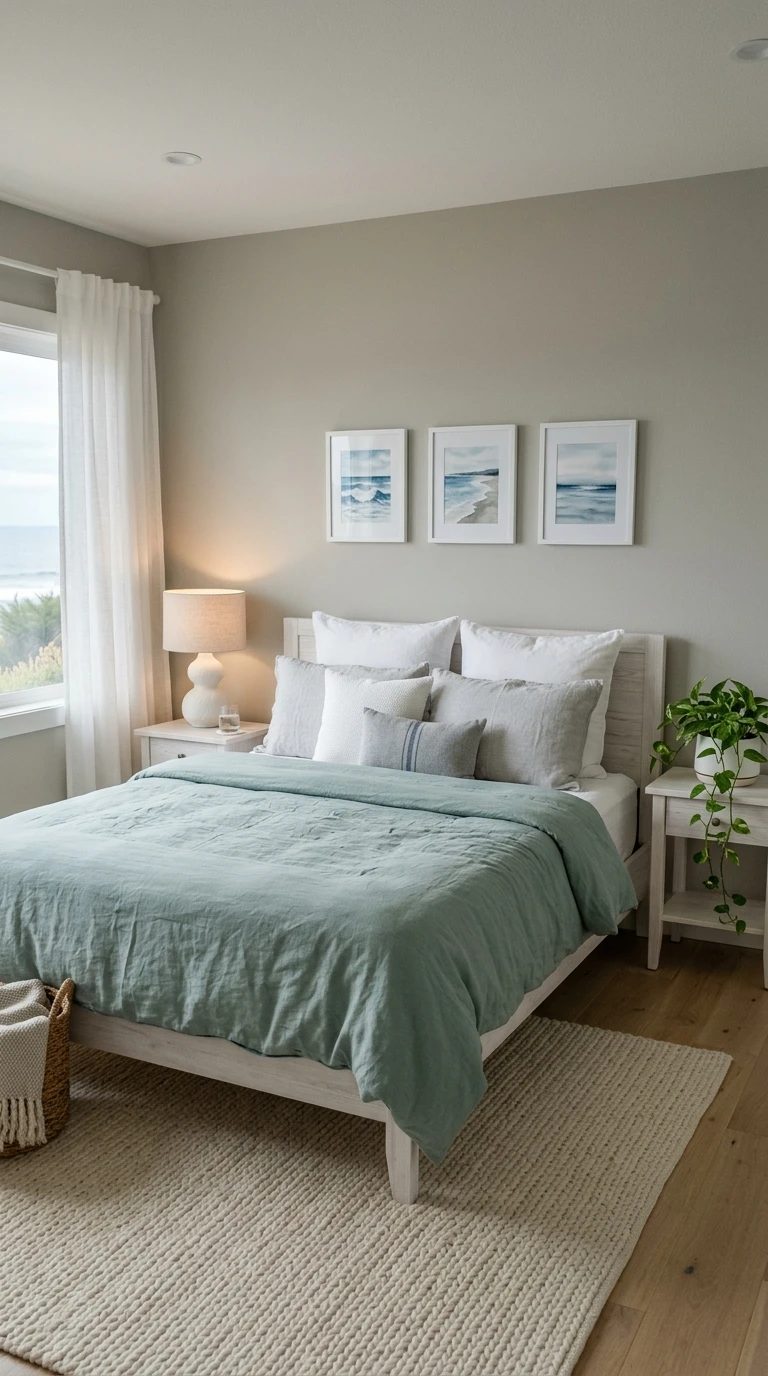
This combination is having a real moment in coastal design, and for good reason. A cool, muted grey on the walls creates a sophisticated base, and when you layer in sea glass greens through textiles and accents, the room takes on a gentle, almost underwater quality. It is refined without being cold, and coastal without being obvious. Start with a light, slightly warm grey on the walls, something in the sage-meets-grey family rather than a flat cool grey.
The bed becomes a focal point here with bedding in a muted sea glass green, think a dusty celadon or aged jade rather than a bright kelly green. Mix in white and pale grey pillows to keep things airy. Furniture works best in a light-washed white or very pale grey, keeping the palette cohesive. A natural fiber rug in cream or ivory pulls the floor together without interrupting the palette flow.
For lighting, consider a sculptural ceramic table lamp in a matte white or pale green finish. Wall art should lean abstract, perhaps a set of three small prints in watercolor-style ocean scenes or abstract wave shapes in grey, green, and white. A small potted plant on the windowsill or dresser, like a trailing pothos or a small succulent in a coastal pot, adds organic life without requiring much maintenance from your guests.
Designer Tip: Layer two or three shades of sea glass green in the room by using a slightly different tone in the throw, the pillow, and any ceramic accents. The tonal variation reads as intentional and artful, not accidental.
Classic Coastal Blue: Ocean-Inspired Rooms Done Right
4. Navy and Crisp White with Brass Details
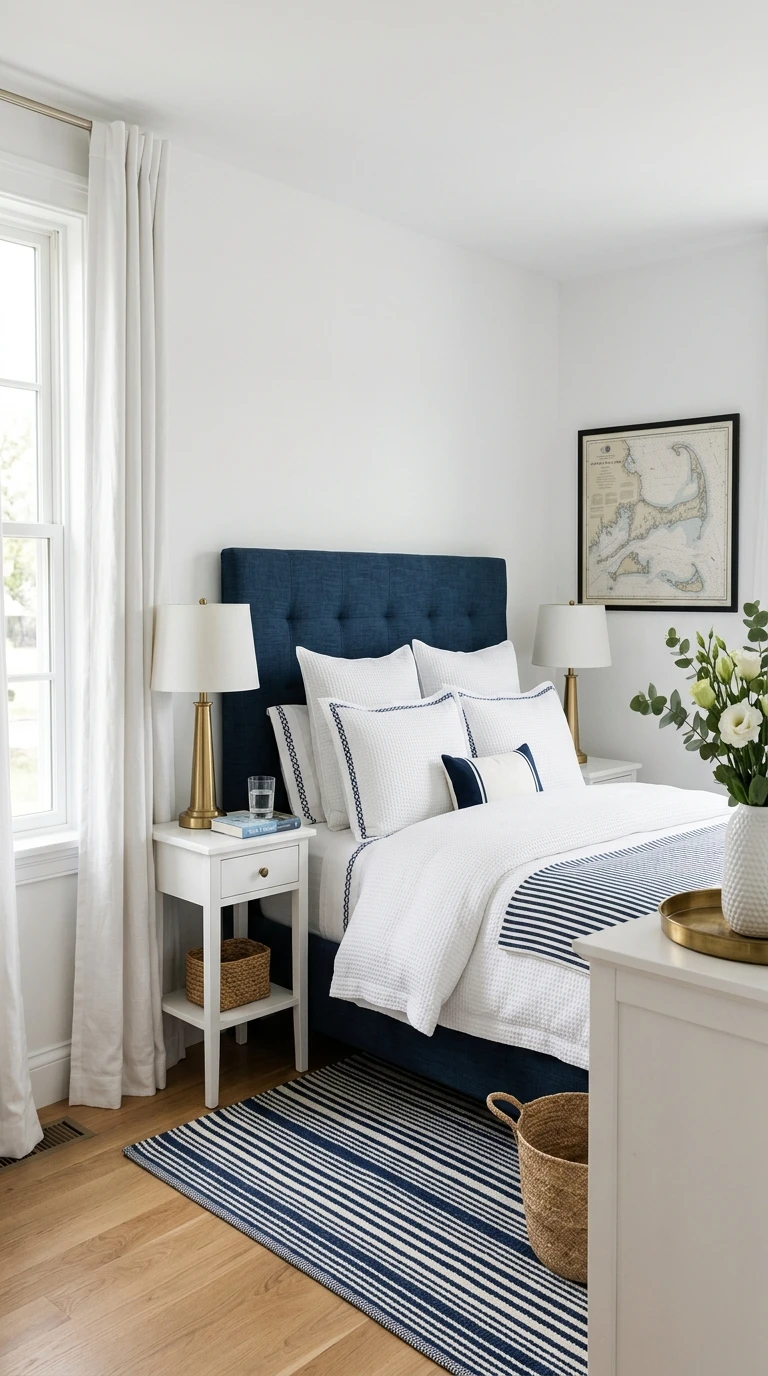
This is the grown-up version of the classic blue and white coastal room, and it works because the brass pulls it firmly into sophisticated territory. Start with crisp white walls and a navy bedframe, either an upholstered headboard in a navy linen fabric or a solid wood frame painted in a deep, rich navy. The contrast is sharp and striking. White bedding with a subtle white-on-white texture, like a waffle-weave cotton or a matelasse quilt, keeps the bed looking fresh rather than flat.
Bring in the brass through hardware, such as drawer pulls on a white dresser, a brushed gold picture light above a piece of art, or a small brass side table lamp. A navy and white striped rug anchors the room and adds the classic coastal pattern in a way that feels purposeful rather than cliche. Keep curtains in a crisp white linen or cotton that pools slightly at the floor for an effortless, slightly formal look.
Art in this room should lean toward framed vintage-style nautical prints, maps of coastlines, or moody ocean photography in black frames. A small vignette on the dresser with a brass tray, a white ceramic vase, and a single sculptural coral piece completes the look. This room is a crowd-pleaser because it is polished enough to feel elevated but still relaxed enough to sleep in comfortably.
Designer Tip: Use matte navy on the bed frame rather than gloss. Matte finishes read as quieter and more sophisticated, which balances the sharpness of the navy-white contrast without making the room feel too formal.
5. Dusty Blue Shiplap Walls
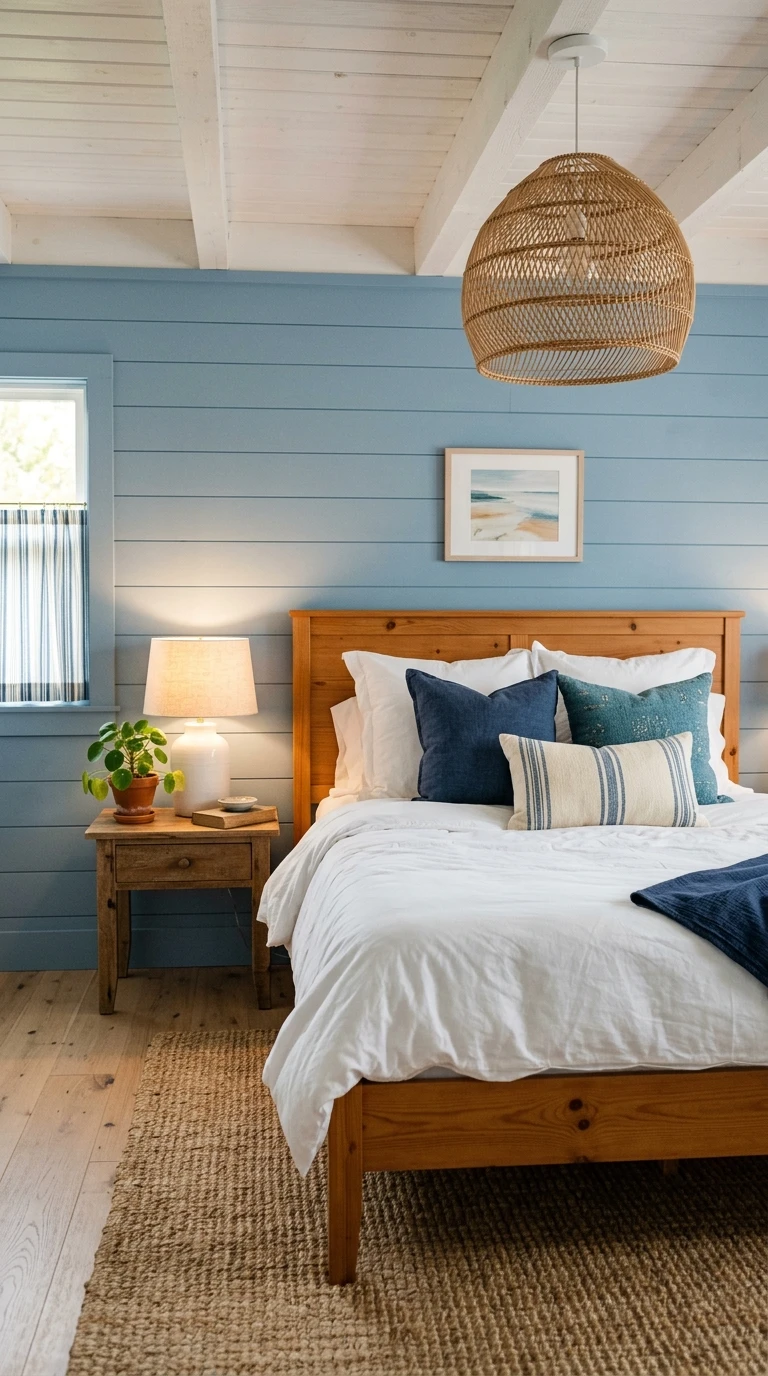
If there is one wall treatment that is synonymous with coastal cottage style, it is shiplap. But here is the thing that makes this idea different from what you have probably seen before: forget the plain white shiplap. Paint it a soft, dusty blue instead. A muted, somewhat greyed blue on shiplap walls creates a room that feels genuinely like a well-loved beach cottage rather than a Pinterest recreation of one. It has texture, character, and colour all at once.
Against those blue walls, white bedding becomes luminous. A natural wood bed frame in a medium warm tone, like pine or alder, keeps the room from feeling too cool. Layer in cream and white throw pillows with a few in a deeper teal or soft navy for contrast. A natural fiber rug in a warm sand or natural jute tone grounds the space and stops the blue from reading as cold.
Lighting is important in a shiplap room because the texture can cast interesting shadows. A statement ceiling light, like a woven pendant in natural rattan, draws the eye up and adds warmth. Beside table lamps in a ceramic white or off-white with warm bulbs round the room out nicely. Keep accessories to a minimum since the wall texture does a lot of the work. A couple of framed prints, a small wooden bowl, and a plant or two are all you need.
Designer Tip: Install the shiplap horizontally on just two walls rather than all four to keep the room from feeling like a ship’s cabin. It is more interesting visually, and it gives the room space to breathe.
6. Coastal Blue with Terracotta Warmth
This pairing sounds unexpected but it works beautifully, especially for a guest room that needs to feel inviting rather than just serene. Cool coastal blue and warm terracotta are opposites on the colour wheel, which means they create natural energy when placed together. The key is keeping the blue as the dominant tone and letting terracotta show up as an accent.
Paint the walls in a soft, slightly muted coastal blue, somewhere between cornflower and slate. Keep the furniture neutral: white or light natural wood pieces that do not compete with the wall colour. The terracotta enters through textiles, such as a terracotta throw at the foot of the bed, a couple of terracotta-toned pillows mixed in with white and blue bedding, and a terracotta ceramic lamp base on the nightstand. A small potted cactus or a plant with warm-toned soil visible through a terracotta pot adds a natural detail.
A woven jute or seagrass rug pulls both the warm and cool tones together at floor level. Art works well in this room when it leans toward abstract coastal, something with gestural brushstrokes in blue, white, and a touch of rust or orange. The result is a room that feels beachy but also somehow warm and a little adventurous, which makes it a wonderful space for guests who appreciate something slightly out of the ordinary.
Designer Tip: Limit the terracotta to no more than three items in the room: the throw, a pillow, and one ceramic accent. More than that tips the balance and the room starts to feel like two different styles competing rather than one cohesive look.
Texture-First Design: When Material Tells the Story
7. Rattan and Wicker Everywhere (But Make It Chic)
Rattan and wicker have been part of coastal design for decades, but the way they are being used now is much more thoughtful and layered than the old wicker everything look. The goal is to mix rattan and wicker pieces in different scales and finishes so they feel curated rather than collected by accident. A rattan headboard is the obvious starting point and a genuinely great one. It adds texture and warmth without the weight of a solid wood or upholstered alternative.
Layer in a wicker chair in the corner with a small cushion in a coastal stripe or a plain white fabric. On the nightstand, a woven rattan lamp base adds texture at eye level. Under the bed, a seagrass rug in a close weave creates a cohesive natural fiber story. Keep everything else clean and simple: white bedding, white or light grey walls, and minimal accessories so the woven pieces can stand out clearly.
Artwork in a rattan-forward room works best when it is framed in a natural wood or painted white frame rather than a heavy black one. A large framed botanical print or an ocean wave photograph gives the room a story to tell beyond just its textures. Good lighting is important here too since warm bulb tones bring out the honey and amber tones in natural rattan beautifully.
Designer Tip: Mix at least two different weave sizes in the room, such as a fine weave on the headboard and a chunkier weave on the rug or basket. The contrast between fine and coarse textures is what makes a rattan-heavy room feel interesting rather than repetitive.

8. Linen, Cotton, and Gauze Layering
Fabric layering is one of the most underrated techniques in coastal bedroom design, and it is especially effective in a guest room where you want the bed to look as inviting as possible. The idea is to mix several lightweight natural fabrics in similar tones but different weights and textures. Start with a cotton fitted sheet, add a linen flat sheet, top that with a loosely woven gauze blanket, and finish with a cotton waffle-weave duvet.
The palette for this look works best in white, off-white, and very pale stone. The interest comes entirely from the fabric variation rather than colour contrast. Add two or three linen pillowcases in the same off-white family, then layer in one or two textured throw pillows in a slightly deeper tone, perhaps a greige or pale sand. The whole bed should look like something you want to disappear into for a very long nap.
The rest of the room should stay relatively minimal to let the bedding take center stage. Light walls, simple furniture with clean lines, and a small nightstand with a single lamp and a good book or a fresh flower in a bud vase. This approach works in any size room because it does not rely on furniture or accessories to carry the design. The bed does all the talking.
Designer Tip: Wash all linen and cotton bedding before making the bed for guests. Fresh-washed natural fabrics have a softness and a slight crinkle that machine-pressed linens cannot replicate, and guests will notice the difference immediately.

9. Grasscloth Walls and Sisal Rugs
Grasscloth wallpaper is one of those design choices that completely changes how a room feels. The woven texture adds warmth and depth to walls in a way that paint simply cannot, and in a coastal context, it reads as a natural, organic nod to the sea and shore without being on-the-nose about it. Choose a grasscloth in a warm natural tone, something in the pale wheat or golden sand family, and use it on all four walls or just the wall behind the bed for a softer commitment.
Pair grasscloth walls with a sisal rug for a room where every surface has texture and warmth built in before you even bring in the furniture. Keep the furniture light: white or pale wood pieces with simple lines. Bedding in a crisp white cotton or a soft blue and white stripe provides the coastal color story against the warm textured walls. The contrast between the organic wall texture and the clean white bedding is particularly striking.
Lighting in a grasscloth room should be warm and layered. A sculptural table lamp in a matte ceramic finish, a small wall sconce if the room allows, and sheer white curtains that filter afternoon sun all work together to keep the warmth of the grasscloth glowing rather than getting lost in bright direct light. Keep art simple, one or two framed pieces in clean white or natural wood frames, nothing too heavy or dark.
Designer Tip: Grasscloth is best installed by a professional since it requires precise alignment and the natural seams will be visible. Embrace the seam lines as part of the handmade character of the material rather than trying to hide them.

Modern Coastal: Clean Lines Meet Seaside Calm
10. All-White with Bold Coastal Art
An all-white coastal guest room is not the boring choice it might sound like. When done well, it is a genuinely striking and serene space that makes the art the star. Start with white walls, white trim, and white bedding, but vary the textures across all of those surfaces so the room does not feel flat. A matte white wall alongside a crisp cotton bedding alongside a chunky knit throw in cream creates enough visual interest within the white palette.
The focal point of this room is a single large piece of bold coastal art. Think an oversized canvas with gestural ocean waves in deep blue, teal, and white brushstrokes, or a dramatic aerial photograph of a coastline printed large and framed simply. The art should be big enough to genuinely command attention, something at least 24 by 36 inches or larger if the wall allows. Everything else in the room exists to frame and support that piece.
Furniture in a crisp white or a very pale warm white keeps the gallery-wall feel alive. A simple natural wood nightstand introduces warmth without disrupting the white base. A low-profile upholstered bench at the foot of the bed in a pale linen or ivory fabric adds comfort and function. The floor can be left as natural wood or covered with a simple white or cream low-pile rug. The whole thing should feel like a beautifully lit art space that also happens to be an incredibly comfortable bedroom.
Designer Tip: Use one oversized piece of art rather than a gallery wall in an all-white room. A gallery wall risks feeling cluttered against the clean white backdrop, while one large, confident piece creates drama without noise.

11. Concrete, Linen, and Deep Sea Blue
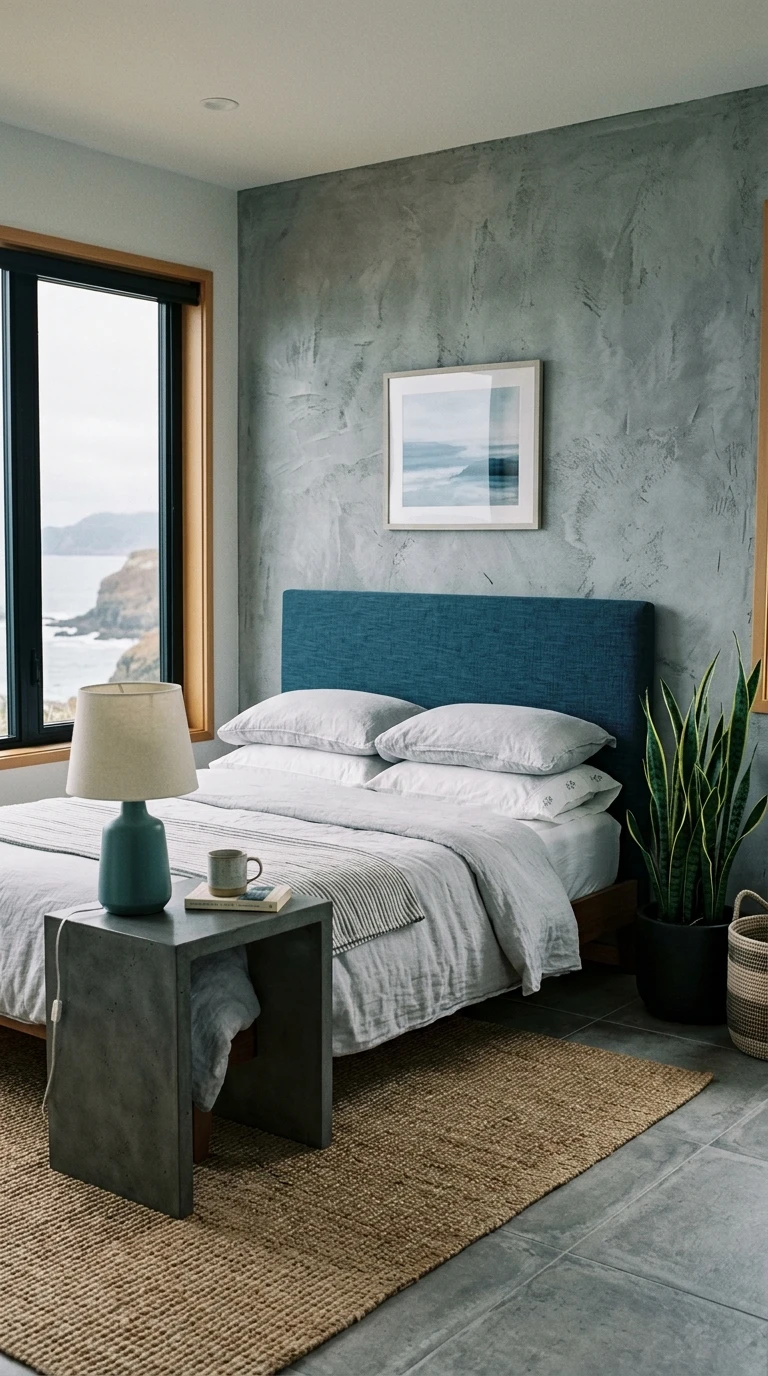
This is the most urban-leaning coastal look on the list, and it is perfect for a guest room in a city apartment or a modern home where heavily nautical decor would feel out of place. The idea is to bring coastal color and softness into a space that otherwise uses raw, modern materials. Concrete-effect walls or a poured concrete-look paint finish give the room an industrial backbone. Against that, a deep sea blue becomes something almost painterly in the way it catches the light.
Introduce the deep blue through a large linen upholstered headboard or through one statement wall behind the bed. Keep the bedding in a pale grey linen or soft white cotton so it does not fight the blue. A concrete-effect table lamp or a matte ceramic lamp in a deep teal adds a grounding accent on each nightstand. The floor works best in a polished concrete or large-format grey tile with a simple natural fiber rug to add warmth and prevent the room from feeling cold.
Art in this style should lean toward abstract, moody ocean photography or minimal watercolour prints in muted tones. Keep accessories intentional and sparse: a few smooth stones, a matte ceramic vessel, and a single architectural plant like a snake plant or fiddle-leaf fig. This is a guest room that feels grown-up, calm, and genuinely interesting without relying on traditional coastal cues to make its point.
Designer Tip: Balance the cool concrete and deep blue with warm-toned lighting. Opt for bulbs in the 2700K range, which give off a soft amber glow that completely changes the feel of a modern, cool-toned room after dark.
12. Modern Canopy Bed with Coastal Palette
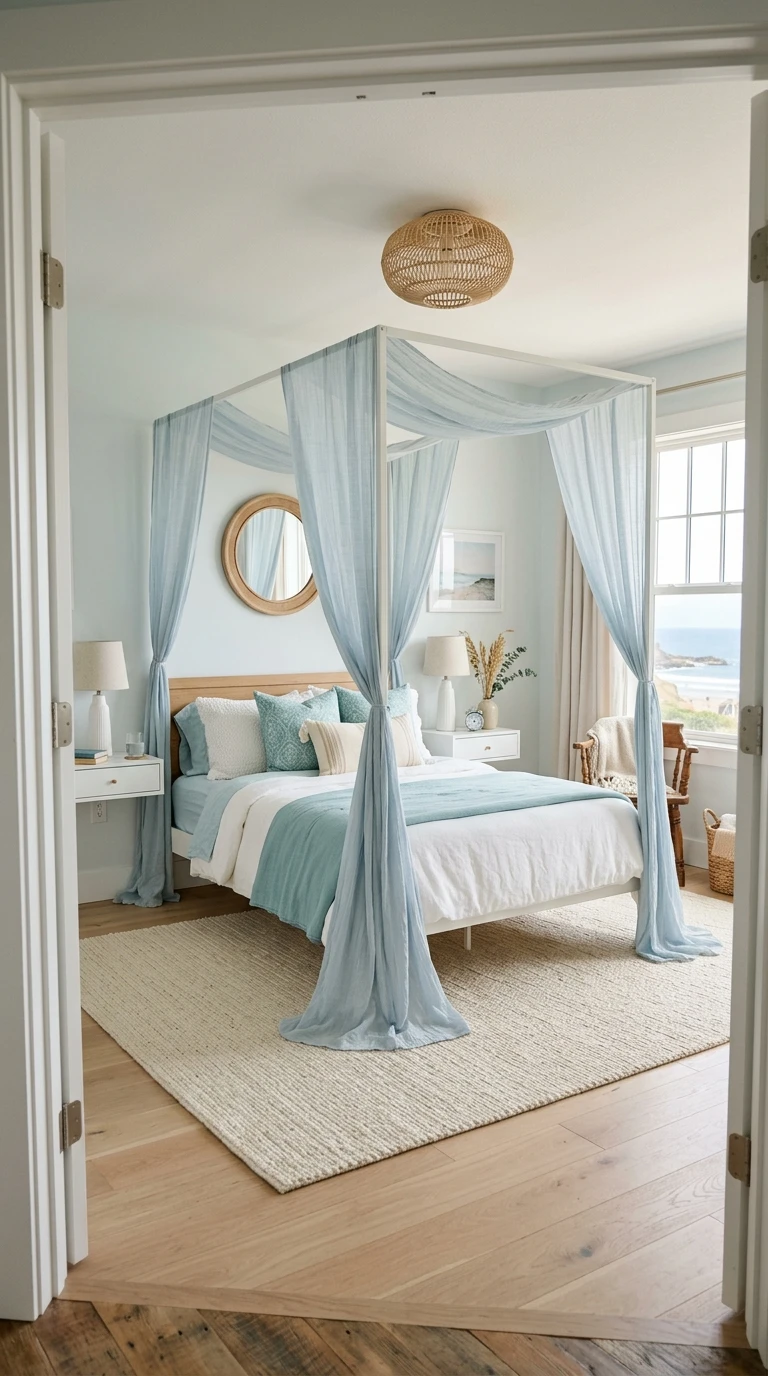
A canopy bed is a dramatic piece of furniture, and in a coastal guest room, it creates a sense of luxury that feels genuinely hotel-like. Choose a canopy frame in a slim matte black or white metal for a modern take, rather than a heavy wood version that tips into traditional territory. Drape the canopy with sheer white or pale blue gauze fabric that pools slightly at the corners. The effect is airy, romantic, and unmistakably coastal without a single shell or anchor in sight.
Bedding beneath the canopy should be layered and plush: a crisp white duvet with a textured white coverlet, a linen throw in a soft seafoam or pale aqua, and an arrangement of pillows in graduating sizes. Keep the surrounding furniture simple so the bed gets the full visual spotlight. Two small floating nightstands or minimal bedside tables with slim lamps on either side are all the room needs beside the bed.
Walls work best in a soft barely-there blue or a warm white to complement the canopy. A natural fiber rug in a cream or pale sand tone grounds the space and prevents the room from feeling too floaty. Lighting from above, a simple flush-mount ceiling light or a small chandelier in a natural material like rattan, completes the canopy room beautifully and makes guests feel like they are staying somewhere genuinely special.
Designer Tip: If a full canopy is too much of a commitment, install a simple wall-mounted canopy rod above the headboard and drape sheer fabric over it. Same effect, far less investment, and easy to remove if your style ever changes.
Coastal Cottage: Warm, Nostalgic, and Full of Character
13. Vintage Coastal with Weathered Wood and Faded Prints
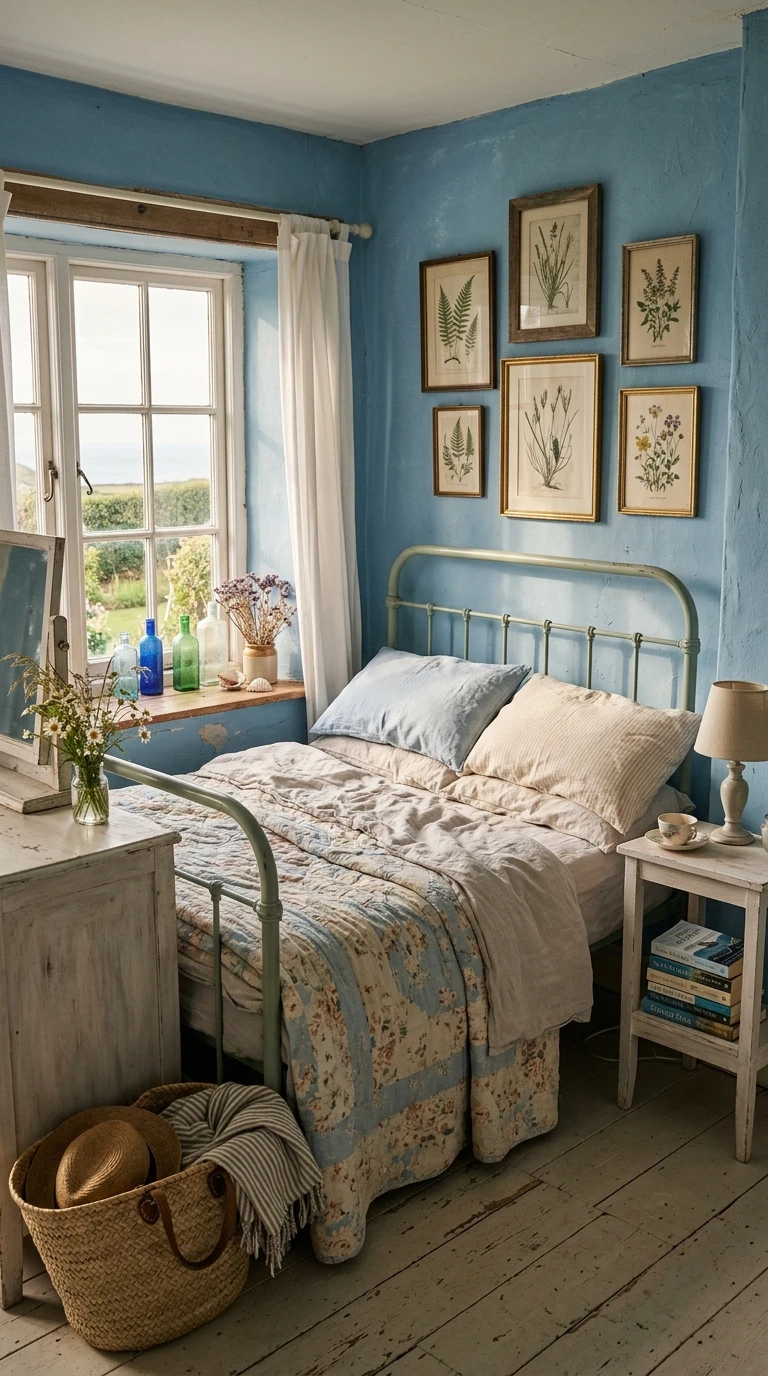
There is a specific kind of charm that belongs to rooms that look like they have been slowly assembled over years of beach trips and vintage finds, and this idea captures that feeling beautifully. The palette is soft and slightly faded: pale blues and greens that look as though they have been washed by sun and salt over many summers. Walls in a very light, almost chalky blue or a soft sage set the tone immediately.
Furniture with a worn, weathered quality is ideal here. A whitewashed dresser with slightly uneven grain showing through, a metal bed frame in an antique white or pale sage, and nightstands that look vintage even if they are not. Bedding in faded florals or soft coastal stripes, vintage-feeling quilt patterns, or mismatched linen pillowcases in coordinating pale tones all contribute to the collected, loved-in feeling.
Accessories are where this room really comes to life. A row of vintage glass bottles on the windowsill, a stack of well-read paperbacks on the nightstand, a woven basket that looks like it came from a seaside market, and framed vintage botanical or marine prints with slightly yellowed paper. The room should feel like a discovery rather than a design project, which means every choice should feel slightly imperfect and completely genuine.
Designer Tip: Source at least two or three real vintage pieces for this room, even if everything else is new. A genuine antique mirror, an old wooden crate repurposed as a nightstand, or a real vintage print makes the whole room feel authentic in a way that reproductions cannot quite match.
14. Coastal Grandma Style with Floral and Linen
The coastal grandma aesthetic has earned its place as a serious design movement, and it is particularly perfect for a guest bedroom because it prioritizes comfort and warmth above everything else. This is the style of rooms that feel like a hug. Think soft floral patterns in faded pinks and blues alongside linen and cotton in warm whites. The palette is gentle and nostalgic, like an old photograph that has softened at the edges.
A white or cream iron bed frame with a curved headboard is a natural fit here. Layer the bed with a floral quilt as the top layer, mixing in plain linen pillowcases and one or two embroidered or eyelet-trim pillow shams for detail. A crocheted throw at the foot of the bed adds the handmade, cozy texture this style is known for. Keep the floor in natural wood or add a soft, slightly faded floral or paisley area rug.
On the walls, a very pale blue, lavender, or warm white works well. Frame a collection of small botanical prints in mismatched frames above the dresser. Fill a ceramic pitcher with fresh or dried wildflowers. Add a small china dish on the nightstand for jewelry. Put a lamp with a pleated fabric shade beside the bed. Every detail should feel personal and gentle, like something a beloved relative would have chosen with care.
Designer Tip: Do not shy away from mixing patterns in a coastal grandma room. A floral quilt alongside a linen pillow alongside a small check or ticking stripe works well as long as the colours stay within the same soft, faded palette.

15. Lakeside Cottage with Plaid and Pine
Not every coastal room has to reference the ocean. Lakeside and river-inspired spaces have their own quiet, wooded charm, and this look brings that sensibility into the guest room with plaid textiles, pine furniture, and a palette that blends water blues with forest greens. It is a coastal look with a slightly rugged, outdoorsy edge that feels especially good in autumn and winter.
Start with walls in a deep sage green or a warm slate blue, darker than most coastal rooms but incredibly rich and cozy. Pine furniture, either natural, lightly stained, or in a warm honey finish, adds the woodsy warmth that differentiates this look from pure ocean-coastal. Bedding in a classic plaid, a tartan in soft blues, greens, and cream, layered over a white base sheet and underneath a thick wool-blend blanket, creates the kind of bed that guests will not want to leave on a cold morning.
Add a small cast iron or ceramic wood-look lamp, a stack of nature books on the nightstand, and a woven basket holding extra blankets. A simple wooden bench at the foot of the bed doubles as luggage stand and seating. Keep art nature-themed, framed botanical prints, lake maps, or illustrated bird prints in warm wooden frames. This is a room for guests who love the outdoors, and it should make them feel ready for a morning walk and a proper breakfast.
Designer Tip: Layer two blankets on the bed, one thinner knit and one heavier wool-blend, so guests can choose their own comfort level. It is a small hospitality touch that makes a real difference, especially in cooler months.

Elevated Coastal: Sophisticated Rooms with a Seaside Soul
16. Mediterranean Coastal with Arched Details and Clay Tones
Mediterranean coastal design brings a warmer, sunbaked sensibility to the genre, swapping the cool blues and greys of Northern Atlantic-inspired rooms for clay tones, warm whites, and dusty terracottas. This is the aesthetic of whitewashed walls and terracotta rooftiles, of a room that could belong in a beautiful Greek island home or a Moroccan riad with ocean views. It is glamorous and relaxed at the same time, which is a difficult balance to strike.
Arched architectural details are a key feature: an arched doorway, an arched mirror above the dresser, or an arched wall niche styled with candles and a ceramic vessel. If you cannot add architecture, use an arched mirror or an arched headboard to bring the shape into the room. Walls should be a warm, slightly textured white, almost plaster-like in feel. A clay or terracotta toned linen duvet on the bed, layered with white cotton pillows and a woven throw in warm cream, carries the palette beautifully.
Furniture in this room should feel low-slung and solid, dark rattan or carved wood pieces with simple shapes. Floor tiles in a terracotta or encaustic pattern would be ideal if you have the option, but a terracotta-toned jute rug works just as well. Lighting through long white linen curtains at an arched or large casement window creates the warm, golden ambience this style lives for. A single olive or fig branch in a tall ceramic vase is the perfect finishing touch.
Designer Tip: Add a small tray with a few unscented candles and a ceramic carafe of water on the nightstand. It is a simple but genuinely luxurious hospitality touch that ties into the Mediterranean sensibility of warmth and generosity.

17. Coastal Luxury with Velvet, Shell, and Gold
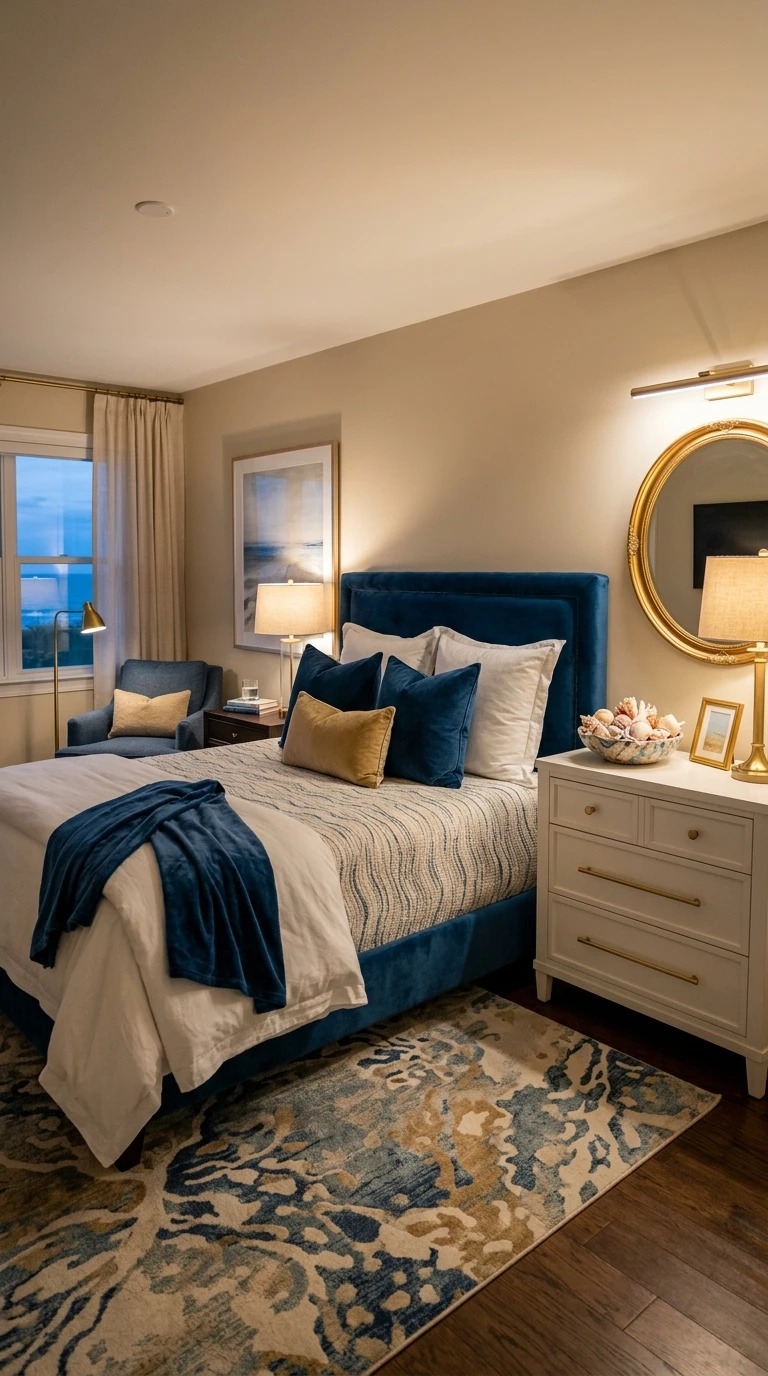
This is the coastal guest bedroom for anyone who wants the comfort of the coast without giving up an inch of sophistication. The secret to making velvet and gold work in a coastal context is keeping the colour palette anchored in ocean tones rather than letting the richness of the materials pull the room into a more formal direction. Deep teal or ocean blue velvet on an upholstered headboard is the centrepiece of this room, lush and striking but undeniably coastal in its colour story.
Bedding against that velvet headboard should be crisp white or very pale cream cotton, with a textured coverlet in a subtle wave pattern and a few velvet throw pillows in complementary deep blue and soft gold tones. Gold accents appear through hardware, such as drawer pulls, a brushed gold picture light, a gold-framed mirror, and the base of a table lamp. Natural shell accessories, a decorative bowl of shells, a shell-edged mirror, or a cluster of shell sculptures, add the coastal touch without breaking the luxurious mood.
The floor anchors everything in a large abstract-patterned rug in ocean tones: blues, aquas, and sandy neutrals in a loose, gestural print. Curtains in a heavy ivory or warm white fabric that pool generously at the floor add to the sense of abundance and comfort. This is a guest bedroom that makes people feel genuinely pampered, like staying at a coastal boutique hotel rather than a spare room.
Designer Tip: Keep the gold accents in a brushed or matte finish rather than high shine. Matte gold reads as warm and intentional, while high shine gold can tip the room from elegant into overdone, especially against the richness of velvet.
Conclusion
A coastal guest bedroom is one of the most rewarding spaces to design because the whole point of the style is making people feel good. When someone walks into a room that smells like fresh linen, feels cool and airy, and looks like a weekend escape from the moment they walk in, that is genuinely a gift you are giving them. The best coastal guest rooms do not rely on novelty store decor or heavy-handed ocean themes. They rely on honest materials, a cohesive palette, layered textures, and a real understanding of what it feels like to unwind completely.
The 17 ideas in this article cover a wide range of styles, from the simplest neutral linen rooms to the most richly layered Mediterranean and luxury velvet looks, because there is no single right way to do coastal. The common thread across all of them is intention. Every choice, from the finish on the furniture to the weight of the throw at the foot of the bed, should be made with the guest’s comfort and the room’s overall mood in mind.
Start with one idea that genuinely excites you, commit to a palette, and build from there. You do not need to do everything at once, and you do not need a big budget to make a real difference. Even a room with a simple coat of dusty blue paint, fresh white bedding, and a rattan lamp can feel like a proper coastal escape when it is done with care. Your guests will feel it the moment they arrive.
Frequently Asked Questions
What colors work best for a coastal guest bedroom?
The most versatile coastal palette is built around soft whites, warm off-whites, and sandy neutrals as the base, with ocean-inspired blues or greens introduced through bedding, accents, or a feature wall. You do not have to use blue at all, neutral coastal rooms built entirely on warm beiges, natural textures, and organic materials are just as effective and arguably more timeless. The key is keeping the palette calm and cohesive rather than using too many competing tones.
How do I make a coastal guest bedroom feel welcoming without being too themed?
The trick is focusing on mood rather than motif. A room built on natural textures, soft light, and a calm palette will feel coastal without needing a single shell or anchor in sight. If you do want to include coastal motifs, keep them limited to one or two intentional pieces, such as a single piece of artwork or a bowl of shells on the nightstand. Let the materials and colours carry the coastal story rather than relying on decorative accents to do all the work.
What is the best type of bedding for a coastal guest bedroom?
Natural fabrics like linen and cotton are the clear winners for coastal guest rooms because they breathe well, feel soft against the skin, and have the kind of relaxed, slightly rumpled quality that suits the coastal aesthetic perfectly. Avoid heavy polyester-blend duvets, which can feel hot and uncomfortable. Layer lighter pieces, a cotton sheet, a linen duvet, and a knit or gauze throw, so guests can adjust their own warmth level. White or off-white bedding photographs beautifully and always reads as fresh and inviting.
How can I bring coastal style to a small guest bedroom?
Small rooms actually benefit from coastal design principles because the style’s preference for light colours, minimal clutter, and natural light makes compact spaces feel bigger and airier. Keep the furniture simple and appropriately scaled. Use a light palette on all four walls and the ceiling to expand the sense of space. Choose one or two textural elements to add interest without crowding the room, a woven rug and a rattan lamp go a long way. Use a large mirror to reflect light and make the room feel deeper than it is.
What kind of lighting works best in a coastal guest bedroom?
Warm, layered lighting is the goal. Avoid single overhead fixtures that cast flat, harsh light, which is the opposite of the soft, golden coastal glow you are aiming for. Instead, use two bedside table lamps for reading and ambiance, a dimmer on any overhead light if possible, and sheer curtains that filter natural light beautifully during the day. Rattan or ceramic lamp bases in warm tones are a natural fit for the coastal aesthetic, and bulbs in the 2700K range give off the warmest, most flattering light.
Do I need to live near the ocean to use coastal decor in a guest bedroom?
Absolutely not. Coastal design is really about a feeling, the ease, the airiness, the calm, rather than a literal reference to where you live. Some of the most beautifully done coastal rooms are in landlocked cities. The style is just as valid and just as effective wherever you are because it draws from universal ideas about nature, light, and rest rather than geographic location. Use the materials, colours, and textures that speak to the coastal aesthetic, and the room will deliver the feeling regardless of your zip code.