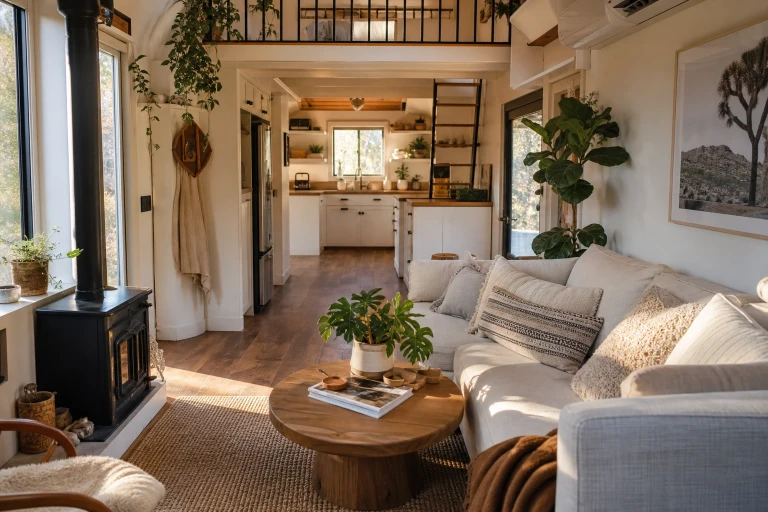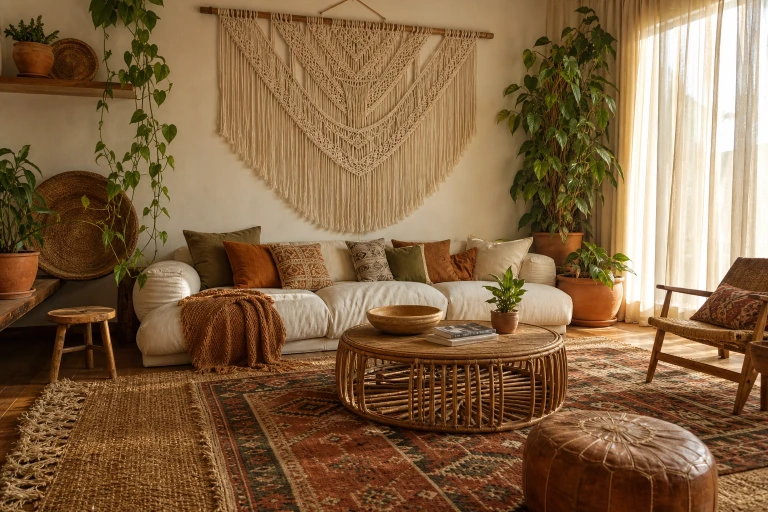
Boho Style Looks for Every Room Worth Stealing Right Now
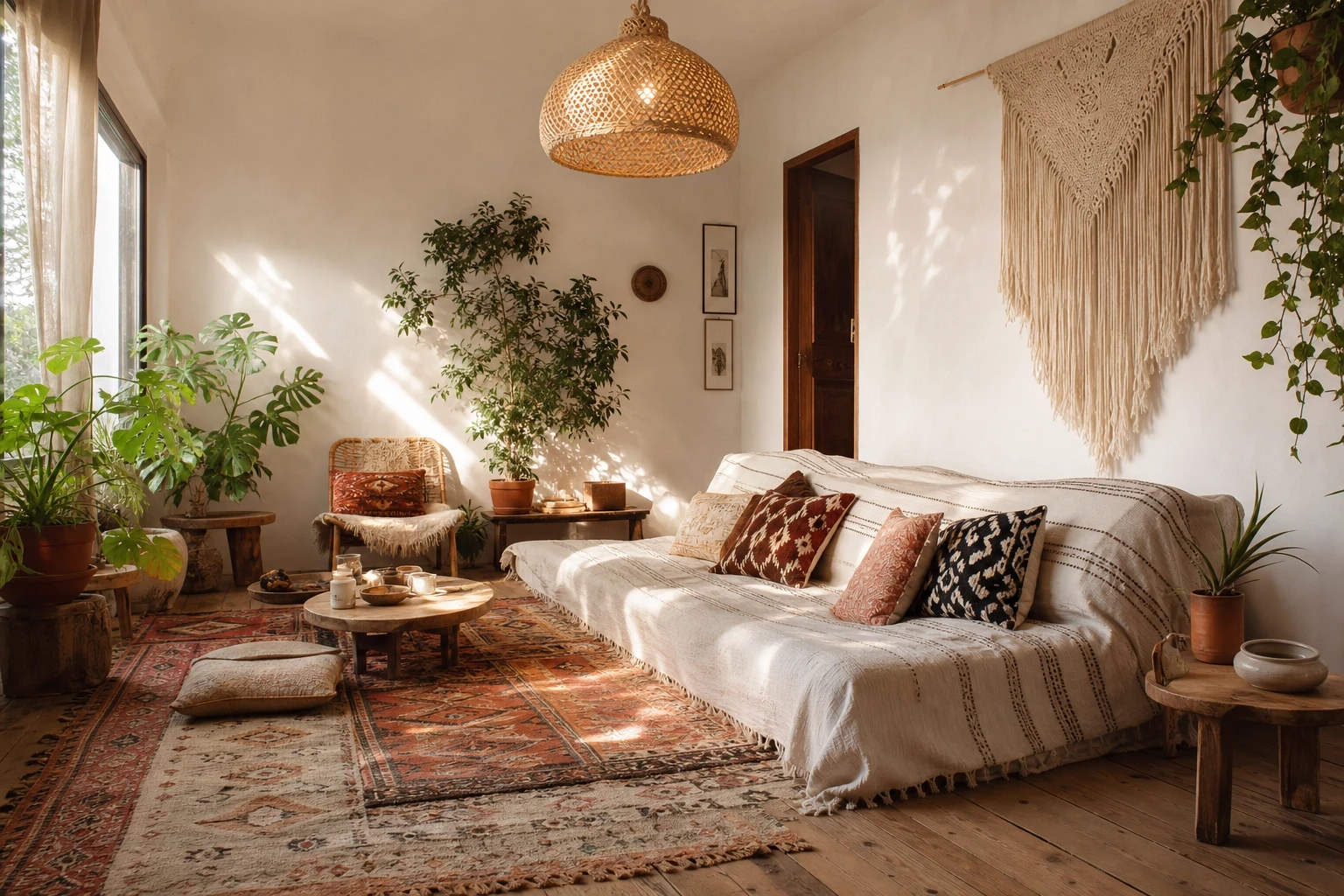
There is something about a well-done bohemian home that stops you in your tracks. It does not look like it came out of a catalog. It does not feel like someone followed a strict checklist. It just feels real, personal, and like someone actually lives there and loves it. That is the whole point of boho style, and it is exactly why so many people are drawn to it even when they struggle to define what it actually is.
Bohemian design has been around in various forms for well over a century, but the version most of us are after right now is warmer, more grounded, and more layered than the incense-and-tapestry version of decades past. Today’s boho style pulls from global craft traditions, natural materials, earthy color palettes, and a real appreciation for things that were made by hand or found by chance. It rewards patience and personality over perfection.
The good news is that you do not need to redo your entire home to get this look. A few deliberate choices in each room can shift the whole feeling of a space. Whether you are starting from scratch in a new apartment or just want to breathe some life into rooms that feel a little flat, these eighteen ideas cover the full range of boho possibilities, from quiet and earthy to bold and globally inspired. Read through, pick what speaks to you, and build from there.
Earthy and Grounded
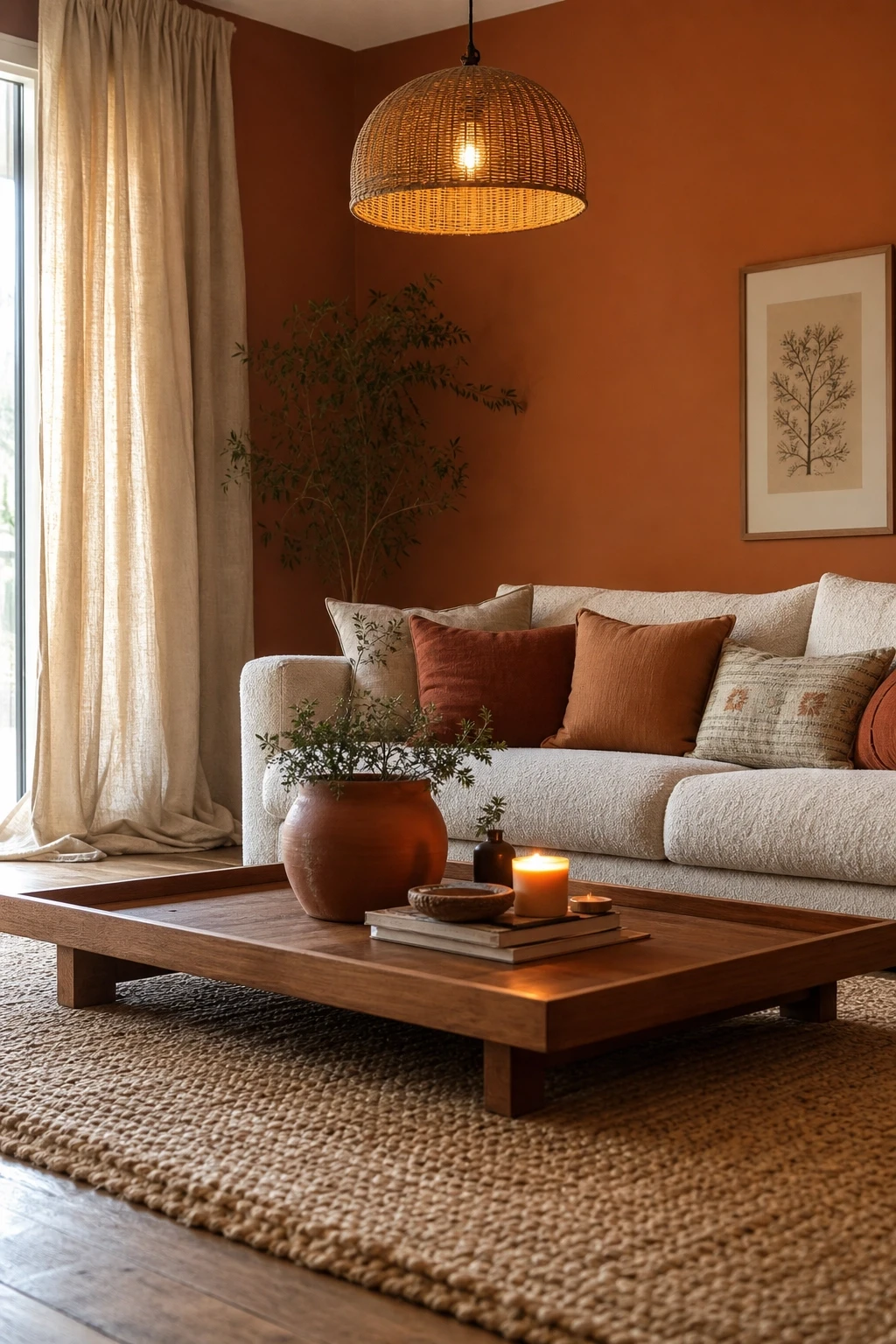
1.Terracotta Walls with Warm Linen Layers
Terracotta is one of those colors that works in almost every room because it reads differently depending on the light. In the morning it is a soft, peachy warm. In the evening it glows almost amber. If you are picking a paint color for a boho-inspired space, terracotta is one of the best starting points you can choose. Pair it with natural linen curtains in an oatmeal or off-white tone and the whole room instantly feels warmer and more intentional.
For furniture, go with pieces in raw oak, weathered teak, or light walnut. Avoid anything too glossy or too dark, since the goal is to keep the palette feeling sun-warmed rather than heavy. A wide, low sofa in a biscuit-colored linen or a cream boucle works beautifully in this kind of space. Add a chunky jute rug underneath to anchor the seating area and give the floor some texture.
Lighting should be warm and low. A rattan pendant light above a coffee table or a few ceramic table lamps with linen shades will keep the mood soft. Pull in some terracotta pots with trailing plants like pothos or string of pearls for a finishing touch that ties the whole color story together.
Designer Note: If full terracotta walls feel like too much, paint just one accent wall and keep the others in a warm white or soft sand tone. The contrast is just as effective.
2.Desert-Inspired Neutrals with Woven Accents
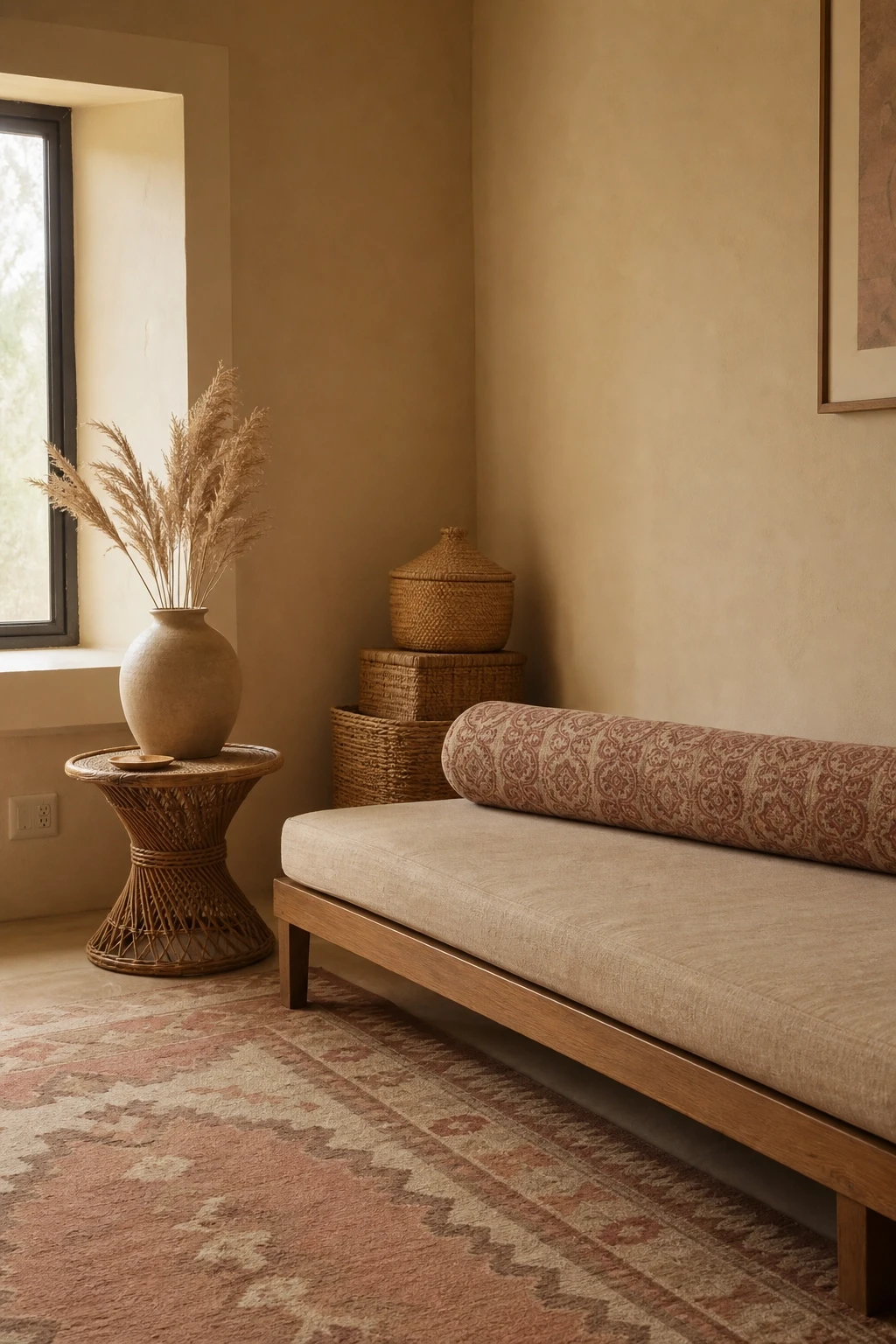
Desert palettes are having a real moment right now and for good reason. Sandy beiges, muted ochres, and soft sage greens all work together in a way that feels calm without being boring. The trick is to layer enough texture that the room does not read as flat, and that is where woven accents come in. Think hand-loomed throw blankets draped over the arm of a sofa, a kilim-style rug with subtle geometric patterns in dusty rose and cream, and a collection of woven baskets stacked in the corner.
Furniture in this kind of scheme should have visual weight without being bulky. A solid wood coffee table with visible grain works well, as does a rattan side table or a wicker accent chair. Keep upholstered pieces simple in tone so they do not compete with the woven textures around them. A low-profile daybed with a rolled bolster pillow in a hand-block-printed fabric adds a nice handcrafted element without overwhelming the space.
For accessories, lean into objects that have an artisanal quality. Pottery in matte finishes, driftwood sculptures, a cluster of pillar candles on a tray, or a stack of art books with beautiful spines all contribute to that collected, personal feeling boho spaces do so well. Natural dried botanicals, like pampas grass or dried lavender, also fit perfectly in a desert-inspired palette without needing any maintenance.
Designer Note: Keep your wall art earthy too. Abstract landscapes in watercolor, or even just a large piece of raw linen stretched over a frame, work better here than anything too graphic or colorful.
3.Raw Wood and Stone with Soft Textiles
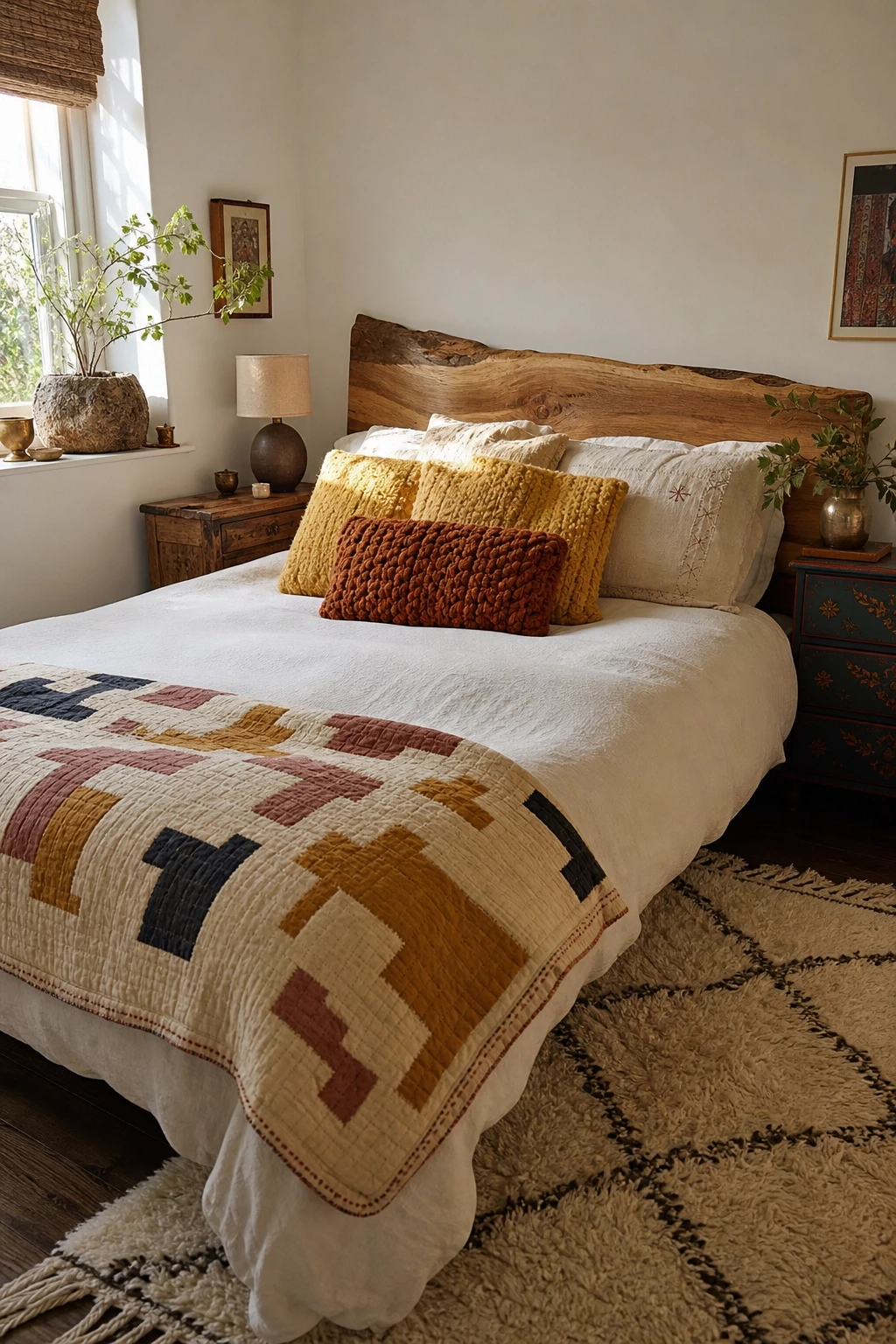
One of the hallmarks of good bohemian design is the combination of hard, raw materials with soft, tactile textiles. When you put rough-hewn wood and natural stone alongside plush cushions, layered throws, and shaggy rugs, the contrast creates a room that feels both grounded and cozy. This pairing works especially well in living rooms and bedrooms where you want the space to feel like a retreat from the world.
Start with a statement piece in raw wood. This could be a live-edge dining table, a reclaimed wood console behind a sofa, or even a wood-slab coffee table with visible knots and imperfections. The imperfections are the point. Pair it with a stone element, whether that is a concrete planter, a marble tray, a slate coaster set, or a pebbled bathroom tile if you are working in that space. These hard elements give the room a sense of rootedness.
Balance them with softness. A Moroccan-style high-pile rug in ivory and charcoal adds warmth underfoot. A linen duvet with a hand-stitched quilt folded at the foot of the bed adds layers. Chunky knit throw pillows in mustard or rust tones connect the soft furnishings back to the earthy tones of the hard materials. The result feels very collected and very real.
Designer Note: Avoid matching sets. One nightstand from a thrift shop and one from a local maker tells a much better story than two identical pieces from the same store.
Global Wanderer
4.Moroccan-Inspired Living Room with Jewel Tones
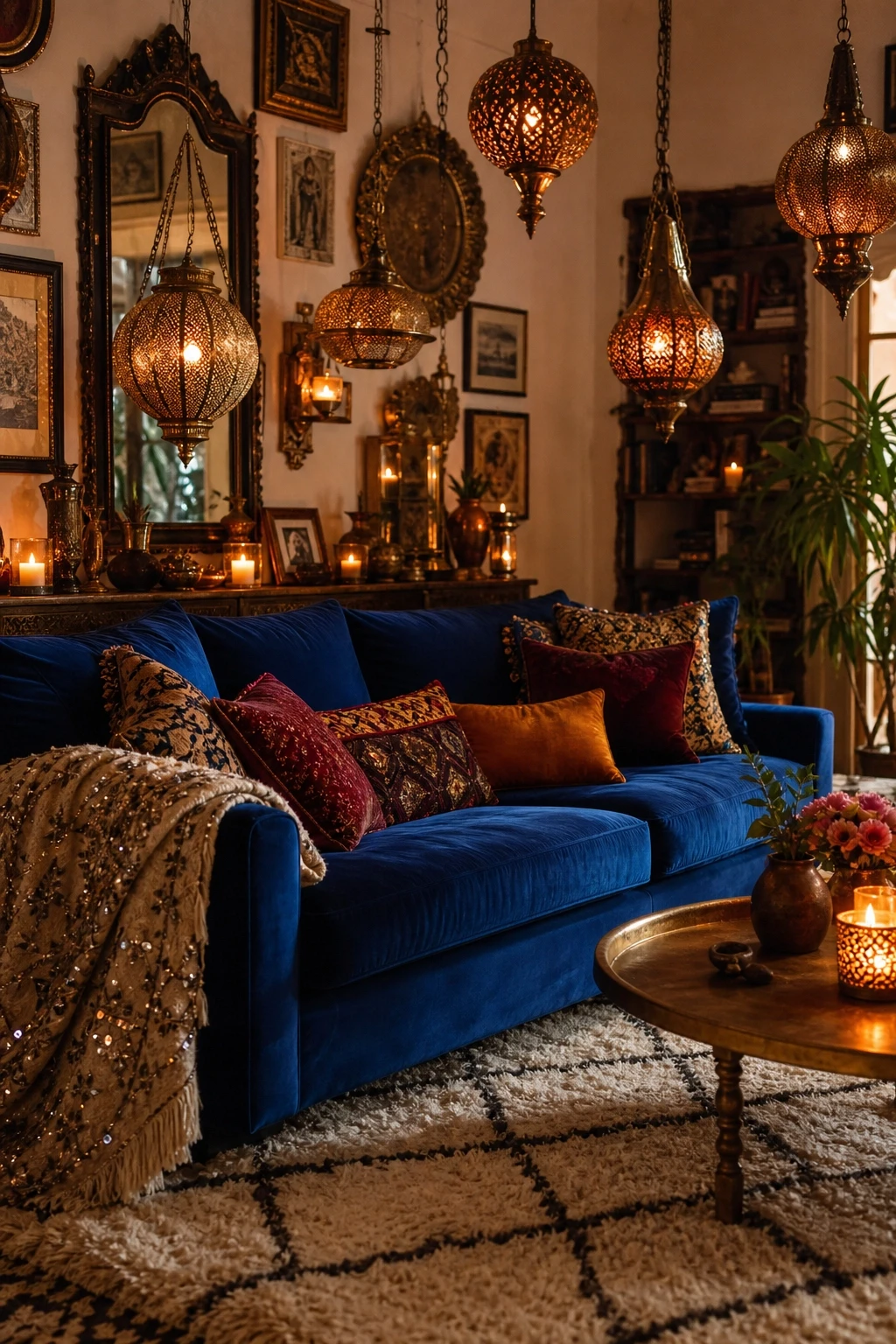
Moroccan design has always had a strong influence on bohemian aesthetics, and it is easy to see why. The combination of intricate pattern, rich color, and handcrafted detail is almost irresistible. To bring this influence into your living room without it feeling like a themed space, choose one or two key Moroccan elements and let everything else stay quieter around them.
A Moroccan wedding blanket, also called a handira, hung on the wall makes an incredible statement piece. These are traditionally made with metallic sequins woven into the wool and they catch the light in the most beautiful way. Alternatively, a set of Moroccan lanterns clustered on a side table or hung at different heights from the ceiling adds that characteristic warm, patterned light that is so atmospheric. Beni Ourain rugs, with their simple black-on-white geometric patterns, are another iconic piece that works in almost any room.
For color, pull in deep jewel tones through your textiles. Cobalt blue cushions, a rust-colored velvet sofa, a collection of brass and copper vessels on a low shelf. These warm metallics are a staple of Moroccan-influenced spaces and they add richness without looking overdone. Keep your walls neutral, in a warm white or a light clay tone, so the colors and patterns in your textiles and accessories have room to breathe.
Designer Note: One authentic hand-hammered brass tray from a market or import store does more for a Moroccan-inspired space than ten pieces of mass-produced faux brass.
5.Global Textile Gallery Wall
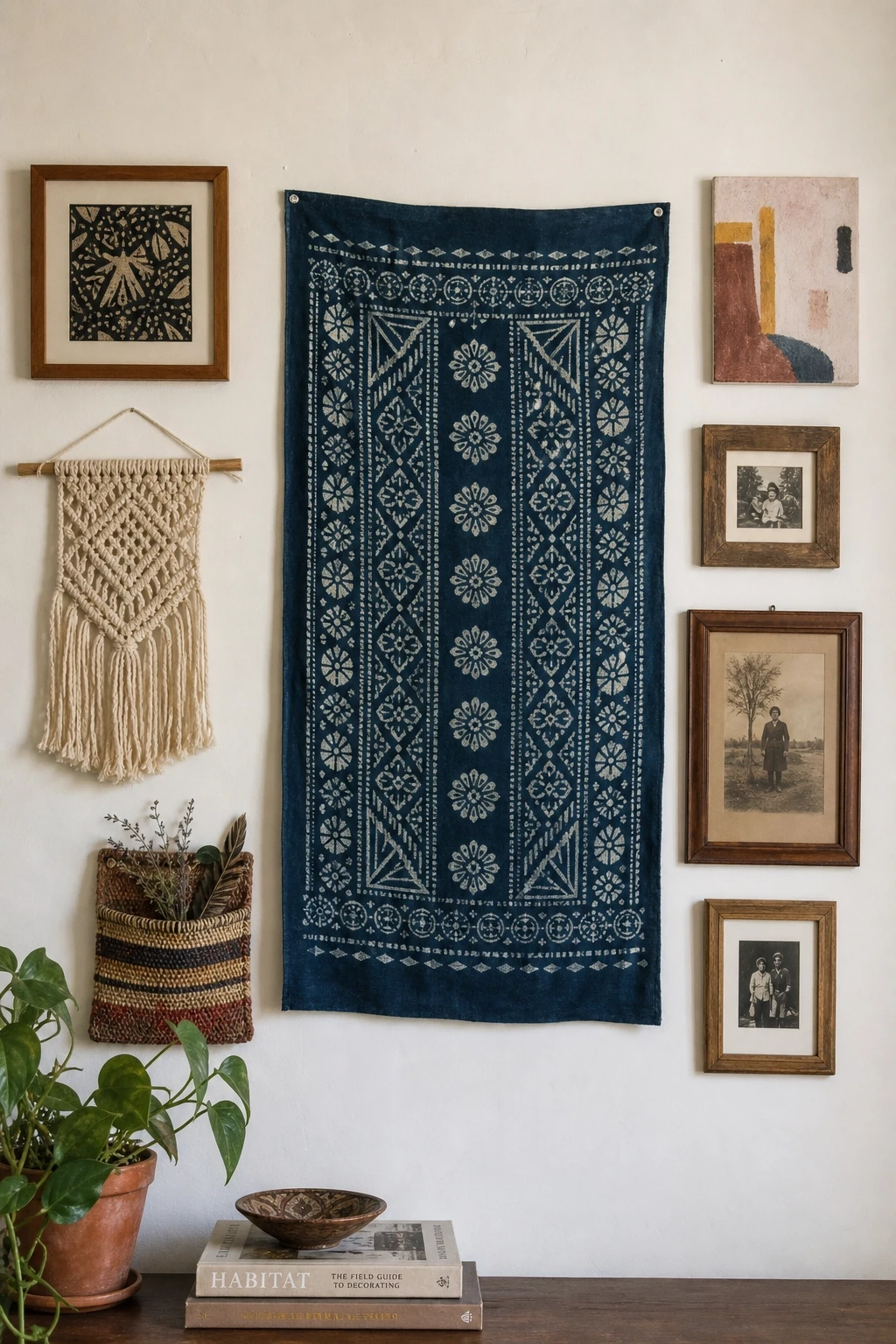
A gallery wall in a boho space is not the same as a traditional gallery wall. Forget matching frames. Forget perfectly even spacing. The boho version is about gathering textiles, prints, and objects that genuinely mean something to you and arranging them in a way that feels organic and personal. The result is one of the most visually interesting walls you can create in a home.
Start with a large anchor piece. This might be a hand-block-printed Indian fabric in indigo and white, a vintage tapestry from a flea market, or a macrame wall hanging in natural cotton. Build out from there with smaller items: a framed batik print, a woven wall pocket, a small painting you picked up at a craft fair, a few photographs in mismatched frames. The variety is what makes it work.
For cohesion without uniformity, stick to a loose color story across the pieces. If your large anchor has deep blues and warm cream, pull in other pieces that repeat those tones even if the styles are completely different. Vary the shapes and sizes of your wall pieces, since a mix of vertical and horizontal items, round mirrors, and irregularly shaped textiles keeps the eye moving without feeling chaotic.
Designer Note: Leave some breathing room between pieces. A gallery wall that is packed too tightly starts to look more like clutter than a curated display, even in a boho space.
6.Indian-Inspired Bedroom with Block Print and Brass
Indian design traditions have so much to offer the boho bedroom. The craftsmanship, the patterns, and the use of color are all deeply aligned with what boho style is about. The key is to bring in these influences in a way that feels personal rather than costume-like, and that usually means choosing a few specific pieces with real quality behind them.
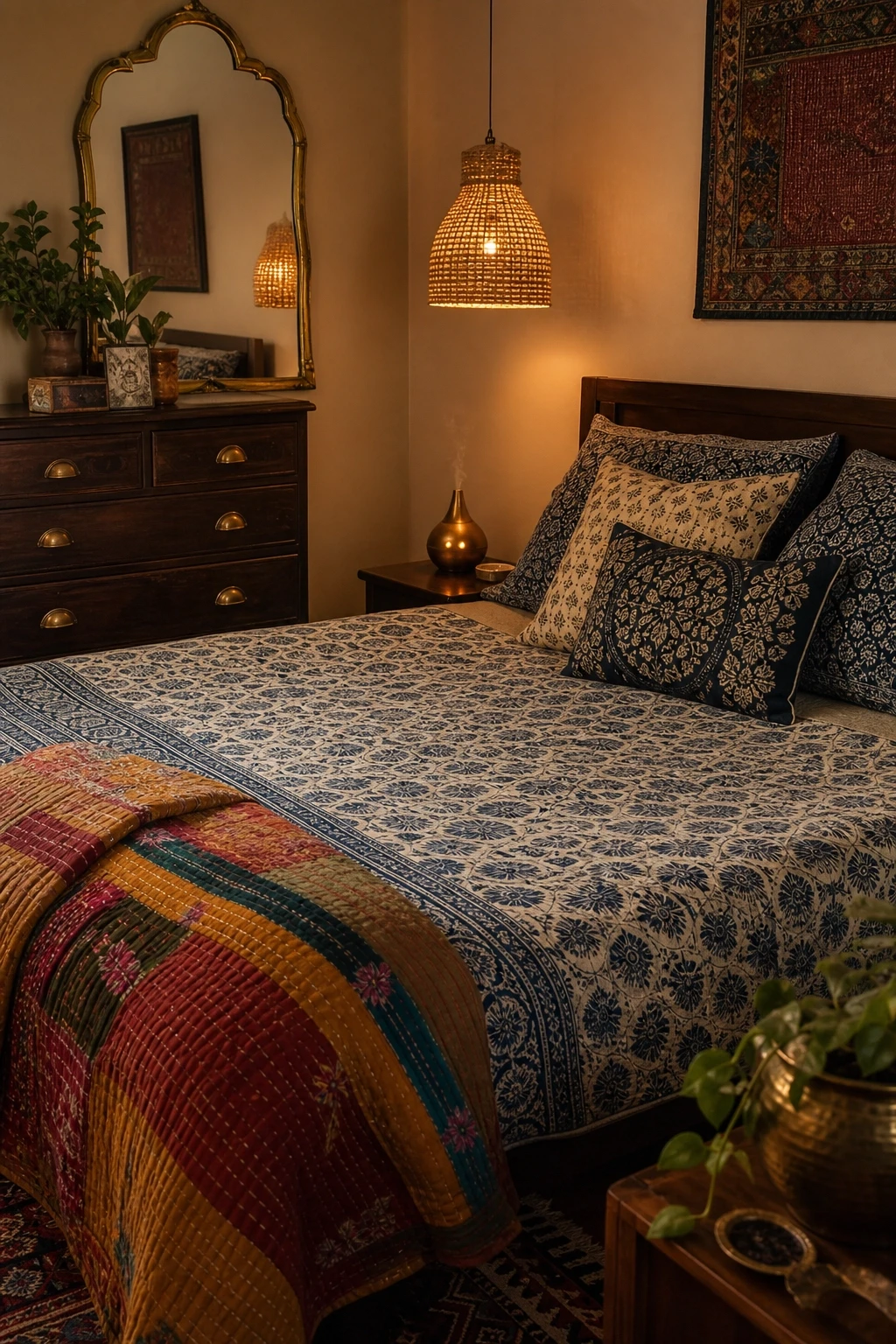
Block-printed cotton is one of the easiest ways to bring Indian textile tradition into your bedroom. A block-printed duvet cover in classic indigo and white, or in a warm burnt orange and cream, immediately gives your bed that layered, handcrafted quality that makes boho bedrooms so inviting. Layer a kantha quilt on top for an extra texture and an additional layer of warmth. Kantha quilts are made from layers of recycled sari fabric stitched together in running stitch patterns, and they are both beautiful and practical.
Pair the textiles with a few brass accents. A brass-framed mirror above a dresser, a set of brass drawer pulls on vintage furniture, or a small brass oil diffuser on a bedside table all contribute to a warm, golden quality of light in the room. Add a hanging rattan lamp with a warm-toned bulb and the whole room takes on a glow that is genuinely lovely.
Designer Note: Ethnic craft stores and import shops often carry hand-block-printed fabrics by the yard for a fraction of the price of finished bedding. A few yards draped as a canopy or pinned along a wall can look incredible.
7.Japanese Wabi-Sabi Meets Boho Calm
Wabi-sabi, the Japanese philosophy of finding beauty in imperfection and impermanence, shares more with boho style than most people realize. Both embrace natural materials, handmade objects, and the idea that a space should feel lived in rather than pristine. When you merge the two approaches, you get something genuinely special: a space that is warm and layered like boho, but with a sense of quiet and restraint that keeps it from feeling busy.
In practice, this looks like a room built around a few very intentional natural objects. A ceramic vase with an asymmetrical rim. A piece of driftwood on a shelf. A linen cushion cover with visible hand-stitching. A low wooden table with a slight warp in the grain. Each item is chosen because it has character, not because it is perfect. The palette is quiet, with plenty of soft white, warm grey, and pale natural wood tones.
Layer texture through natural materials rather than pattern. A linen throw blanket, a jute rug, a rough-hewn stone bowl holding a few smooth river pebbles. Introduce greenery through simple plants in plain ceramic pots: a small bonsai, a moss ball, a single stem of dried grasses in a narrow vase. The effect is meditative and genuinely beautiful.
Designer Note: The discipline of wabi-sabi actually helps prevent a boho room from going overboard. Ask yourself whether each piece you add truly adds something, or whether it is just filling space.

Plant-Forward and Nature-Loving
8.Jungle Boho with Layered Greenery
If you love plants and you love boho, this combination is basically made for you. The plant-forward boho approach is all about bringing so much greenery into a space that the room feels almost like an indoor garden. The trick is to vary your plants at different heights and in different vessels so the effect looks lush rather than chaotic.
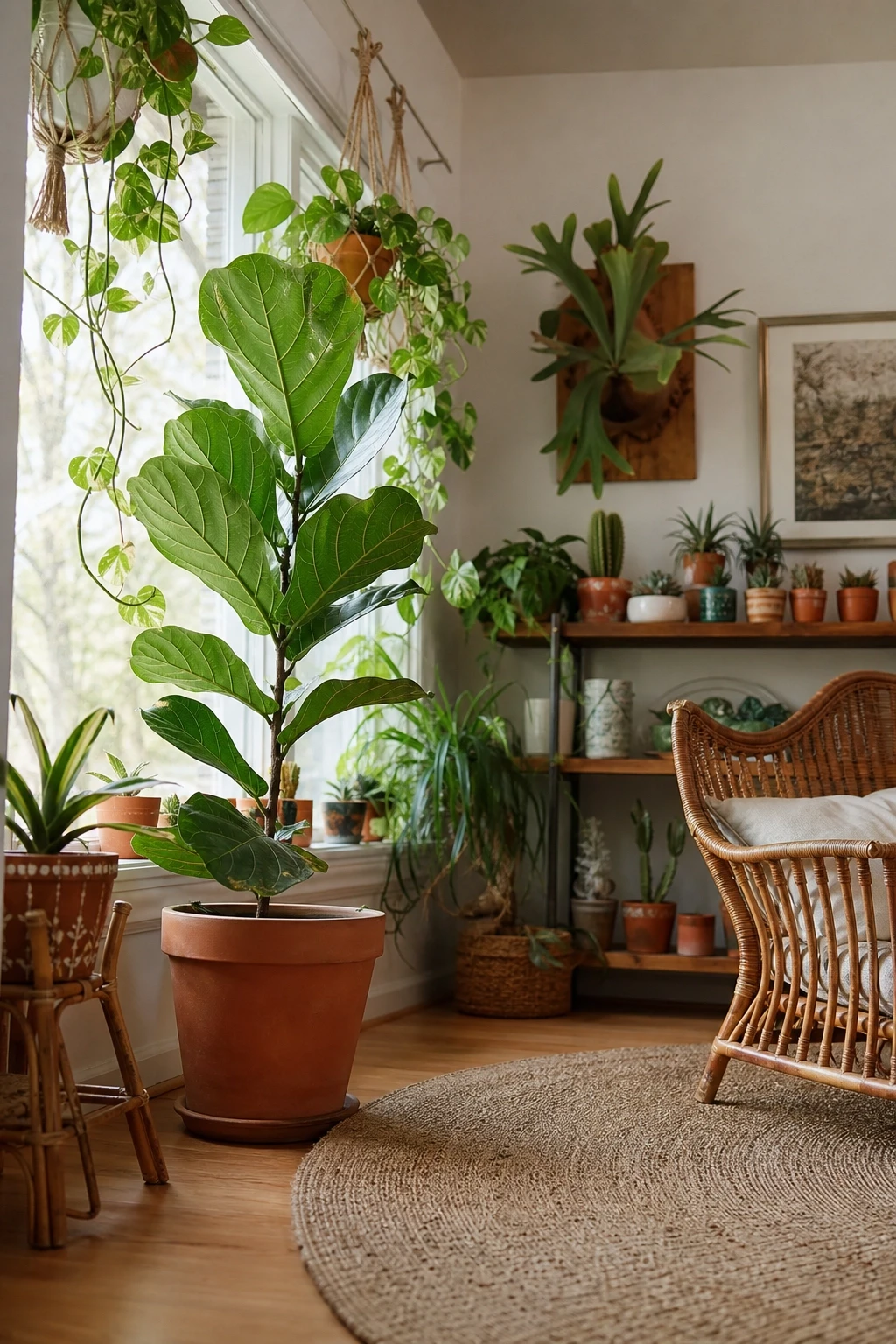
Start from the ceiling and work down. Hang a trailing pothos or a string of hearts from a macrame hanger near a window. Add a mounted staghorn fern on a piece of wood on the wall. Place a fiddle leaf fig or a bird of paradise in a large terracotta pot on the floor. Fill windowsills with smaller plants like succulents, aloe, and small cacti in mismatched ceramic pots. The variety of leaf shapes and sizes is part of what makes this look so visually rich.
The rest of your decor should be quiet and natural so the plants can be the star. Rattan and bamboo furniture, natural fiber rugs, and simple linen or cotton textiles all work beautifully here. Keep your color palette earthy and warm, with the green of your plants providing the primary color pop. Aged terracotta pots, woven baskets, and simple wooden shelving all complement this look without competing with it.
Designer Note: Group plants in odd numbers. Three or five pots together look intentional; two looks like an accident. And vary the pot heights using books or wooden risers to add visual dimension.
9.Dried Botanical Arrangements and Pampas Displays
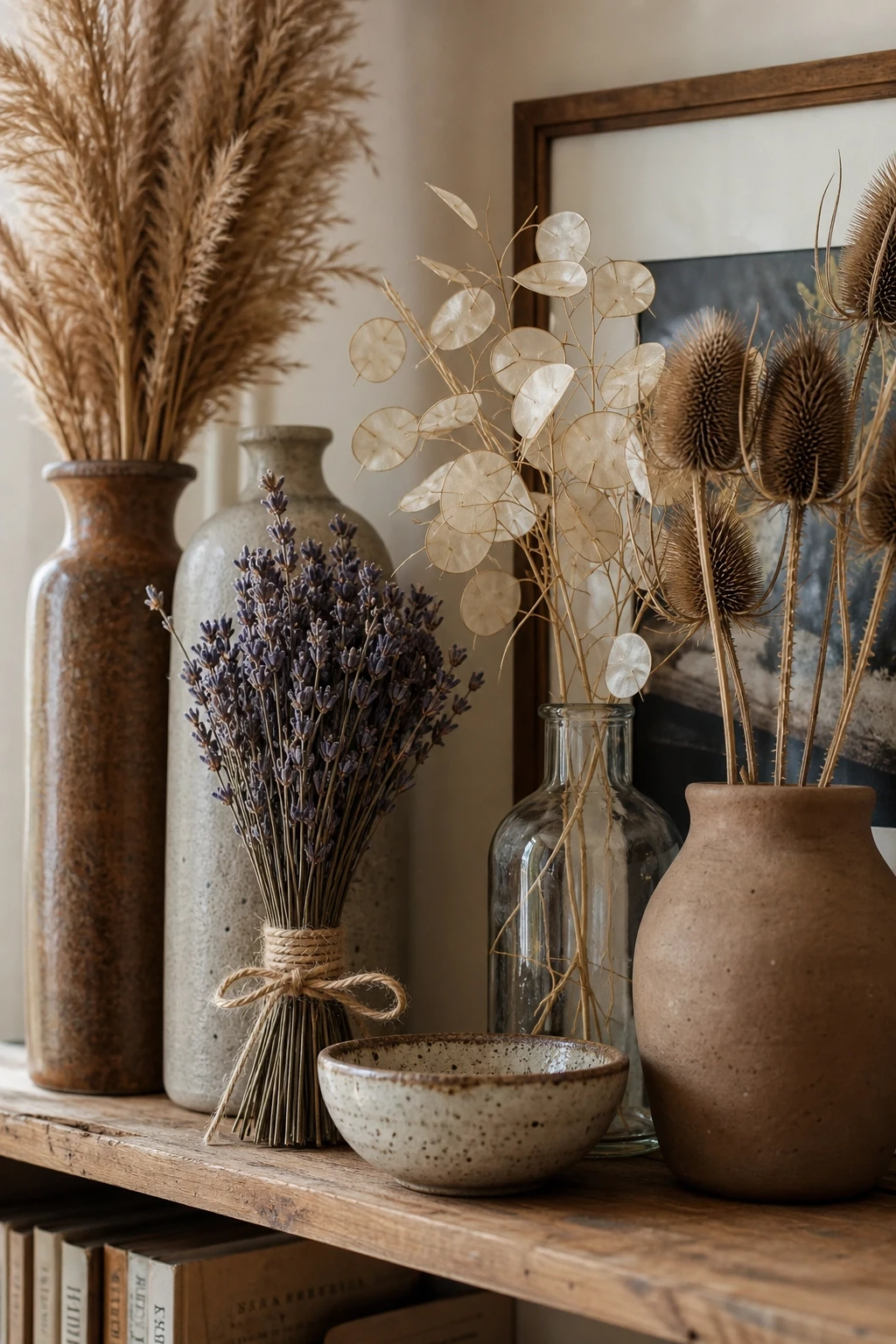
Dried botanicals have become a signature element of contemporary boho style, and for good reason. They bring organic shape and texture into a space without requiring any care, and they last for months or even years with minimal upkeep. Pampas grass is the most recognized, but there is a whole world of dried plants that can work just as beautifully in a boho home.
Think about dried lunaria with its translucent seed pods, bundles of dried lavender tied with jute twine, dried cotton stems in a ceramic vase, dried palm fronds arranged in a wide-mouthed vessel, or seed heads from things like teasel and globe thistle. Each one has a natural sculptural quality that adds something interesting to a shelf, a mantle, or a floor arrangement. Mix and match for the most interesting displays.
For vessels, vary the materials and shapes. Tall cylindrical ceramic vases work for single stems and upright arrangements. Wide clay bowls can hold sprawling dried grasses. A collection of varying height glass or ceramic bottles on a windowsill creates a nice clustered display that catches the light. Wicker or rattan baskets work beautifully for fuller, floor-level arrangements.
Designer Note: Sun bleaches dried botanicals beautifully over time, but keep them out of direct humidity. A bathroom is not the best spot, but any living room or bedroom away from steam sources will let them last a long time.
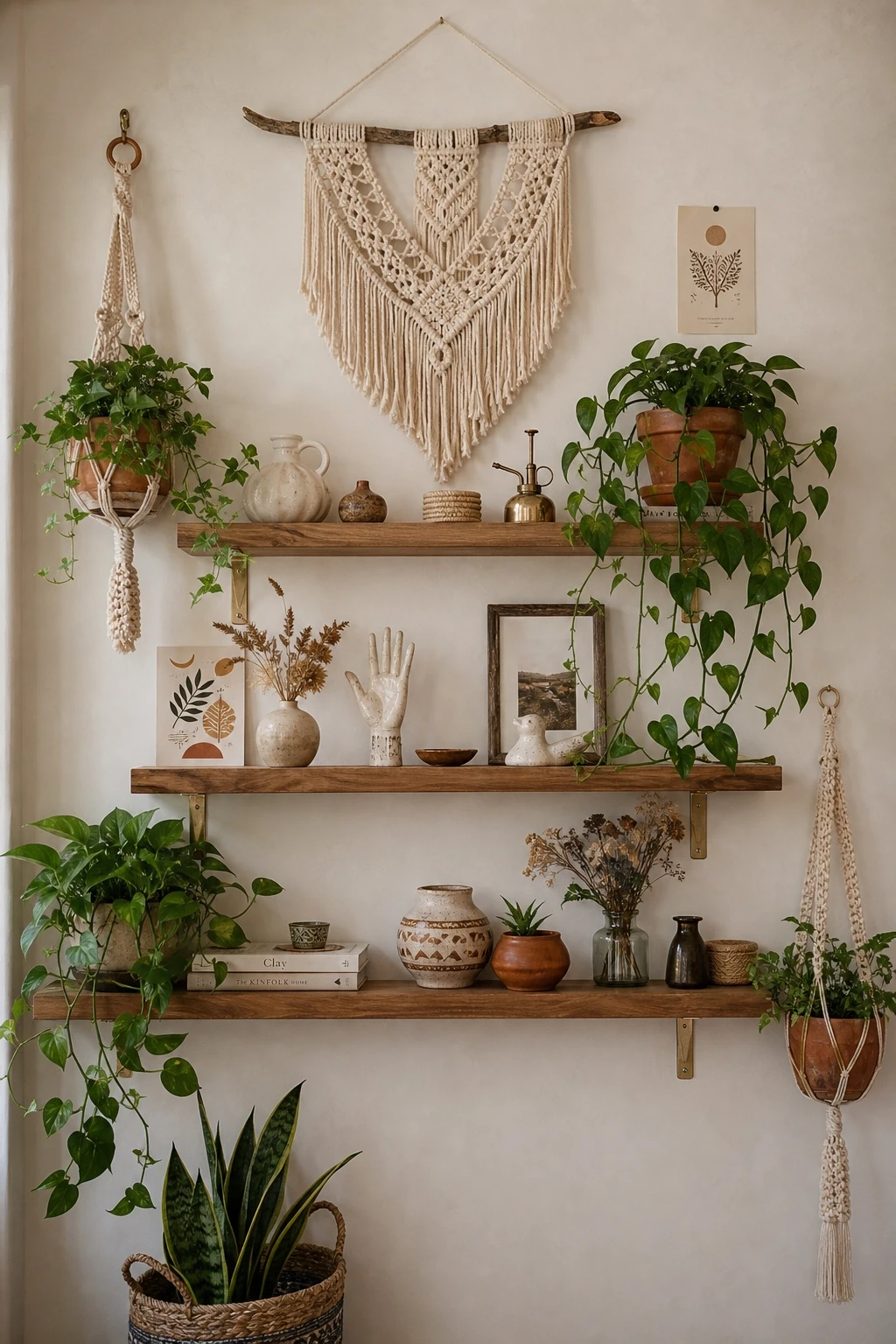
10.Hanging Plant Shelf Display with Macrame
Combining shelving with macrame and hanging plants gives you one of the most characteristically boho wall installations you can create. It is a practical solution for small spaces where floor space is limited, and it creates a focal point that is almost always beautiful when done well.
The basic approach is to use a series of floating shelves or a ladder shelf placed against a wall, then layer plants, macrame hangers, small art pieces, and meaningful objects across the shelves and in the spaces between them. Mix living plants with dried ones. Mix ceramic vessels with woven baskets. Pin a small piece of macrame or a piece of fabric directly to the wall between shelves to add softness and fill the vertical space.
Color-wise, keep the shelves themselves in a natural wood finish rather than painted white, since the warmth of the wood complements both the plants and the macrame. If your walls are a neutral color, this kind of installation becomes a living artwork that changes slightly as your plants grow and as you swap in seasonal dried botanicals throughout the year.
Designer Note: A single large macrame wall hanging centered above the shelving unit ties the whole installation together and gives it a finished, intentional quality.
Cozy and Layered
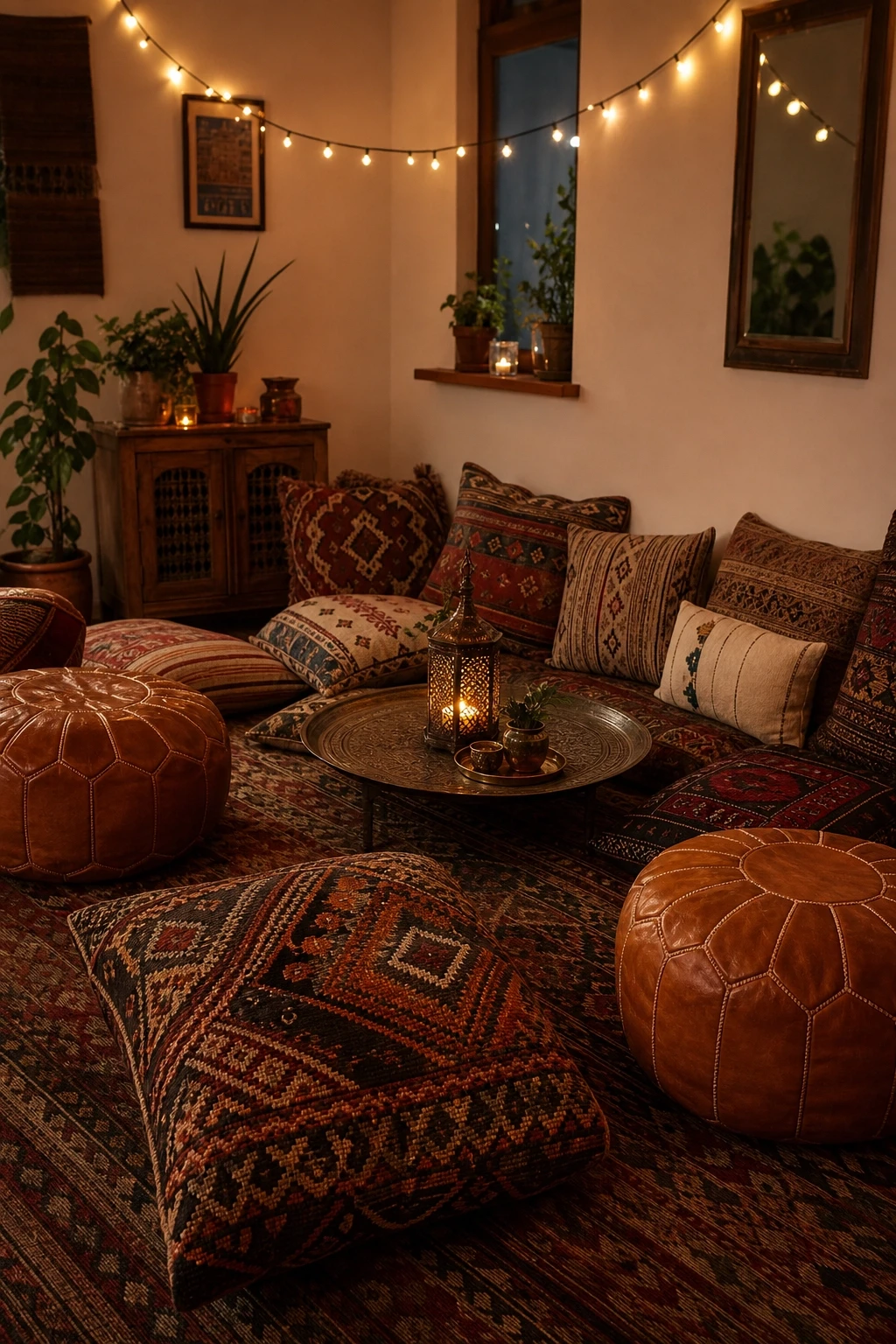
11.The Floor Cushion Lounge Area
One of the most genuinely boho things you can do in any home is create a low seating area on the floor. It sounds impractical until you try it, and then it becomes one of the most-used spots in the house. Floor cushions, poufs, and low bolsters arranged around a low coffee table or a moroccan tray table create a seating area that is casual, welcoming, and deeply comfortable.
Choose cushions in a mix of sizes, shapes, and fabrics. Large floor cushions in kilim fabric or printed cotton provide the main seating. Smaller bolster cushions work as back support or armrests. A couple of Moroccan leather poufs add a nice material contrast and a bit of height variation. Pile on a few extra throw cushions in coordinating patterns and textures, and you have a seating arrangement that looks abundant and inviting.
Keep the surrounding area simple so the floor seating can be the focal point. A low rattan tray table as the centerpiece, a candle lantern or two, maybe a small potted succulent or a stack of interesting books. The overhead lighting should be warm and indirect, whether that comes from a floor lamp nearby, a dimmer-controlled pendant, or a cluster of string lights draped above the area.
Designer Note: This works especially well in apartments where space is tight. Without a sofa taking up floor space, a floor seating area can make a small living room feel much larger and more flexible.
12.Layered Rug Strategy for Boho Warmth
Layering rugs is one of the most effective and budget-friendly techniques in the boho design toolkit. The idea is to place a larger neutral rug as the base and then layer a smaller, more patterned or textured rug on top at an angle or offset. The result is a richness underfoot that a single rug, no matter how beautiful, simply cannot achieve on its own.
For the base layer, choose something in a natural fiber like jute, sisal, or a flat-woven cotton in a neutral cream or beige. These provide texture and warmth without visual noise. For the top layer, go for something with personality: a Moroccan Beni Ourain rug with its black-on-white geometric patterns, a Turkish kilim with warm reds and golds, a vintage-style Persian rug in muted jewel tones, or even a faux cowhide for something a little more unexpected.
The angle matters. Placing the top rug at a slight angle rather than perfectly aligned with the base creates a more casual, collected feeling. You can also use this technique on a smaller scale on a dining table or dresser top, layering a smaller textile runner over a simple linen tablecloth or table runner. The principle translates well across the home.
Designer Note: If you are buying a base layer jute rug specifically for layering, you do not need to spend much. Basic jute rugs are often very affordable and the point is that most of it will be covered anyway.
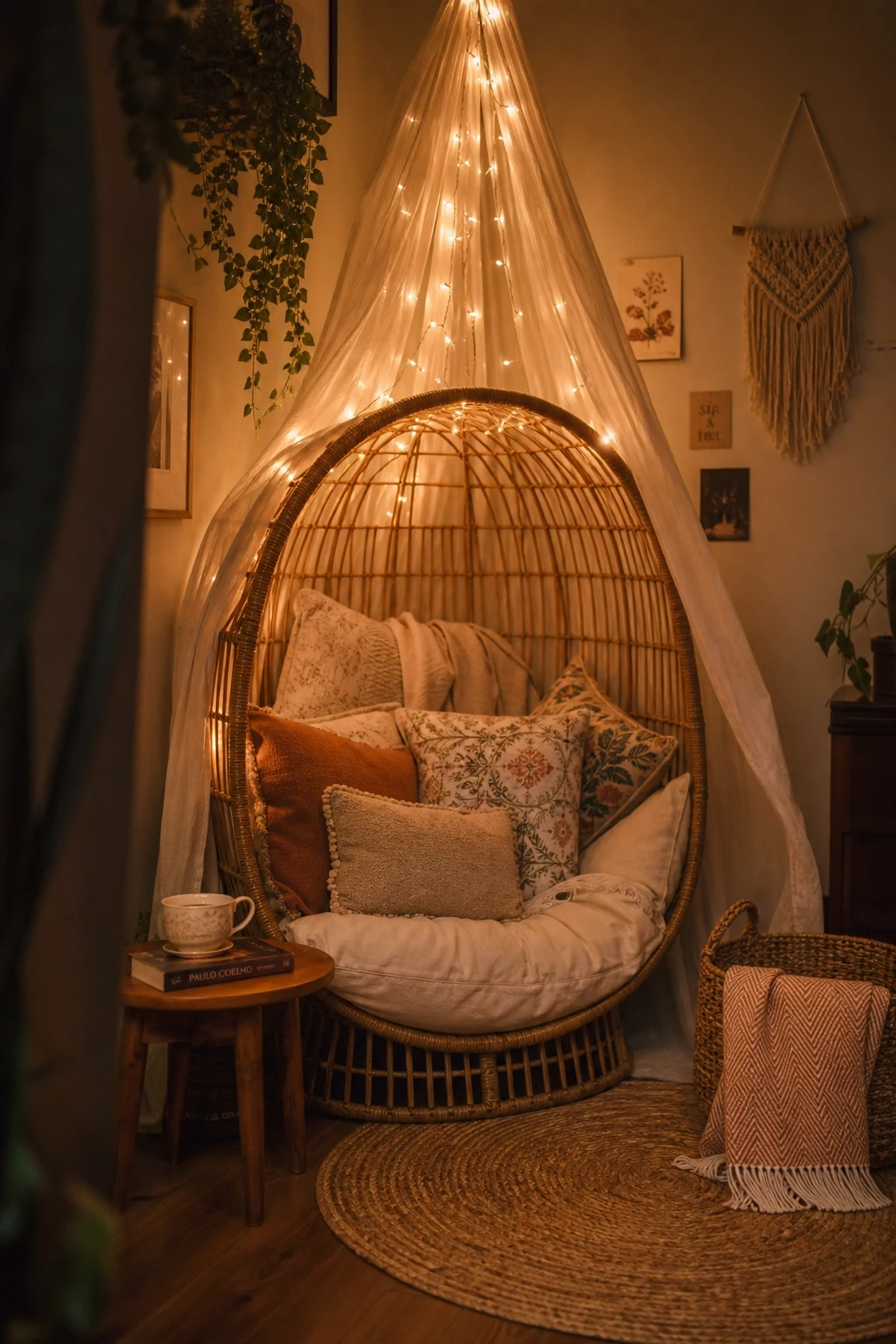
13.The Reading Nook with Canopy and Cushions
A dedicated reading nook is one of those home features that looks like it cost a lot but can actually be pulled together on a very modest budget with the right boho approach. The goal is a small corner of a room that feels cozy, enclosed, and separate from the busyness of the rest of the space. Something that genuinely invites you to sit down, stay a while, and read.
The canopy is the key element. A simple fabric canopy draped from the ceiling above a chair or a window seat transforms the area into something that feels special. You can use a sheer muslin or a lightweight linen, gathered at a single ceiling hook and draped loosely around the seating area. Add string lights woven through the canopy for evening reading. Keep the fabric soft and natural in tone, white, ivory, or a very pale blush.
For seating, a rattan egg chair or a vintage armchair reupholstered in a printed fabric is perfect. Add an abundance of cushions in varying sizes and patterns. Keep a wooden side table or a stacked set of books within reach for your tea, your bookmark, and your current read. A small woven basket on the floor beside the chair can hold extra throws and reading materials neatly.
Designer Note: This works in any room with a corner or an alcove. A bedroom corner, a spare room, even a wide hallway can become a reading nook with a chair, a canopy, and a good lamp.
Bold and Expressive
14.Maximalist Boho with Pattern Mixing
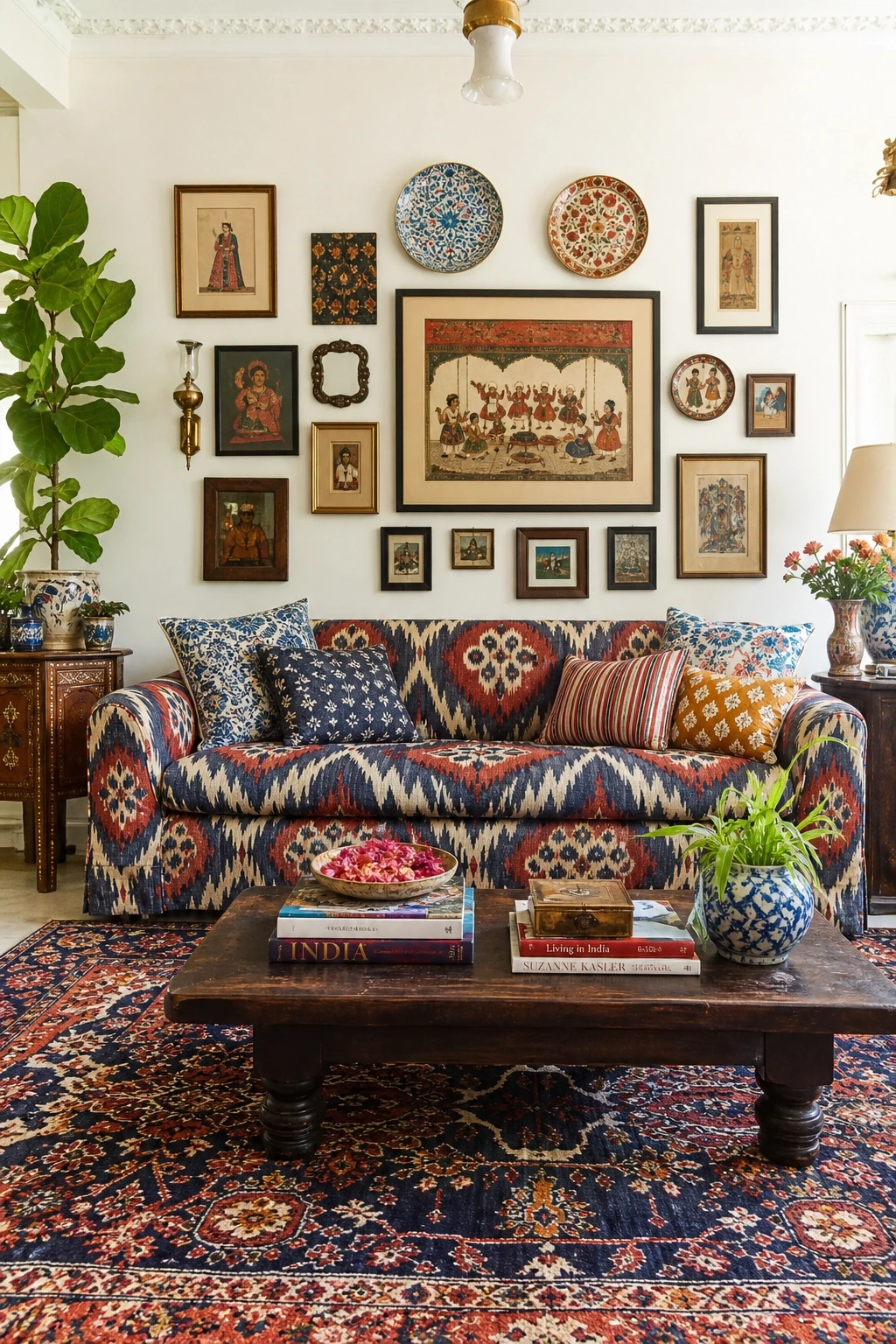
Pattern mixing is where a lot of people freeze up when decorating a boho space, but it is actually more forgiving than you think once you understand one basic rule: vary the scale. If you combine a large-scale pattern with a medium-scale pattern and a small-scale pattern, they tend to coexist beautifully even if the motifs are completely different. A big floral alongside a small geometric and a textural stripe will almost always work if the colors are kept consistent.
In a maximalist boho living room, this might look like a large Persian-style rug with an intricate overall pattern as the floor anchor, a sofa covered in a medium-scale ikat fabric, a couple of small-scale block-print cushions, and a striped throw blanket in coordinating colors. The eye moves around the room finding new things to enjoy rather than landing on one focal point and stopping.
Wall art in a maximalist boho space should be just as layered. A mix of framed prints, small paintings, decorative plates, and wall-hung textiles creates that collected, gallery-like feeling that is very much at home in this style. Keep the background, meaning your wall color, simple. A warm white or a soft terracotta gives all the pattern and texture room to do its work.
Designer Note: When in doubt, pull one color from each pattern and check that it appears in the others too. That shared thread is what ties even very different patterns together visually.
15.Painted Furniture and Colorful Boho Kitchen
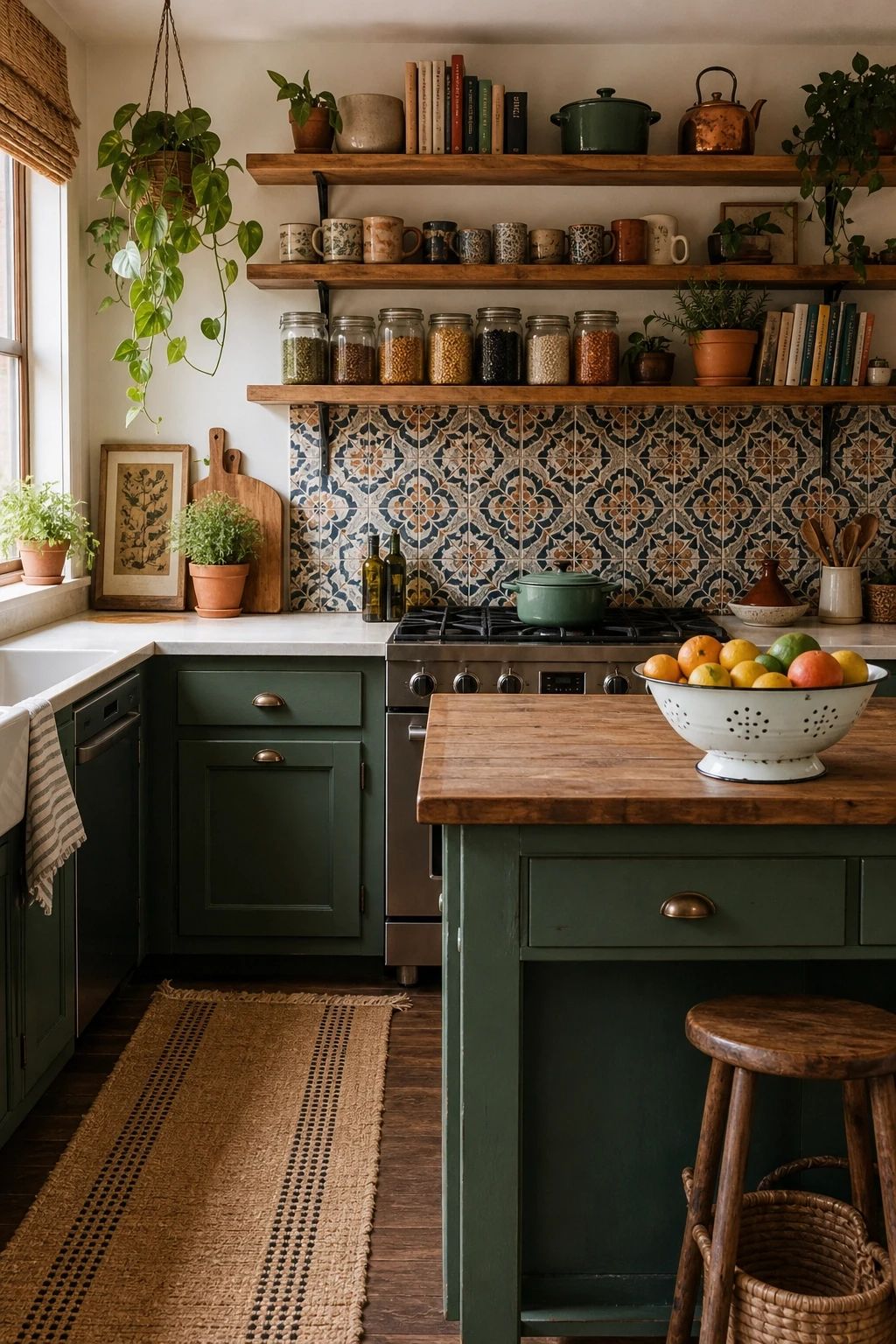
The kitchen is often an afterthought in boho decorating, which is a shame because there is so much you can do in this space without a renovation. One of the most impactful changes you can make is painting a piece of furniture. If you have a freestanding kitchen island, a dresser being used as a pantry, or even just your wooden chairs, a coat of deep sage green, dusty blue, or terracotta paint immediately gives the space a hand-crafted, artisanal quality.
Beyond painted furniture, focus on open shelving if you have it. Boho kitchens are not about hiding everything behind closed cabinet doors. They are about displaying things that are genuinely beautiful: a collection of ceramic mugs in earthy tones, vintage glass jars filled with dried herbs and pulses, a stack of wooden cutting boards, a cluster of terracotta pots growing kitchen herbs on the windowsill. These everyday objects, when arranged thoughtfully, become the decor.
Add a woven jute runner on the kitchen floor and a macrame pot holder hanging near the stove. Pull in a few vintage market finds, an old enamel colander used as a fruit bowl, a ceramic oil cruet with a handmade quality. These small details collectively create a kitchen that feels personal and warm rather than clinical and functional.
Designer Note: Peel-and-stick removable tiles are a genuinely useful tool in rental kitchens. A small backsplash in a Moroccan-style pattern behind the stove can dramatically change the whole feeling of a kitchen.
16.Boho Bathroom with Earthy Tiles and Plants
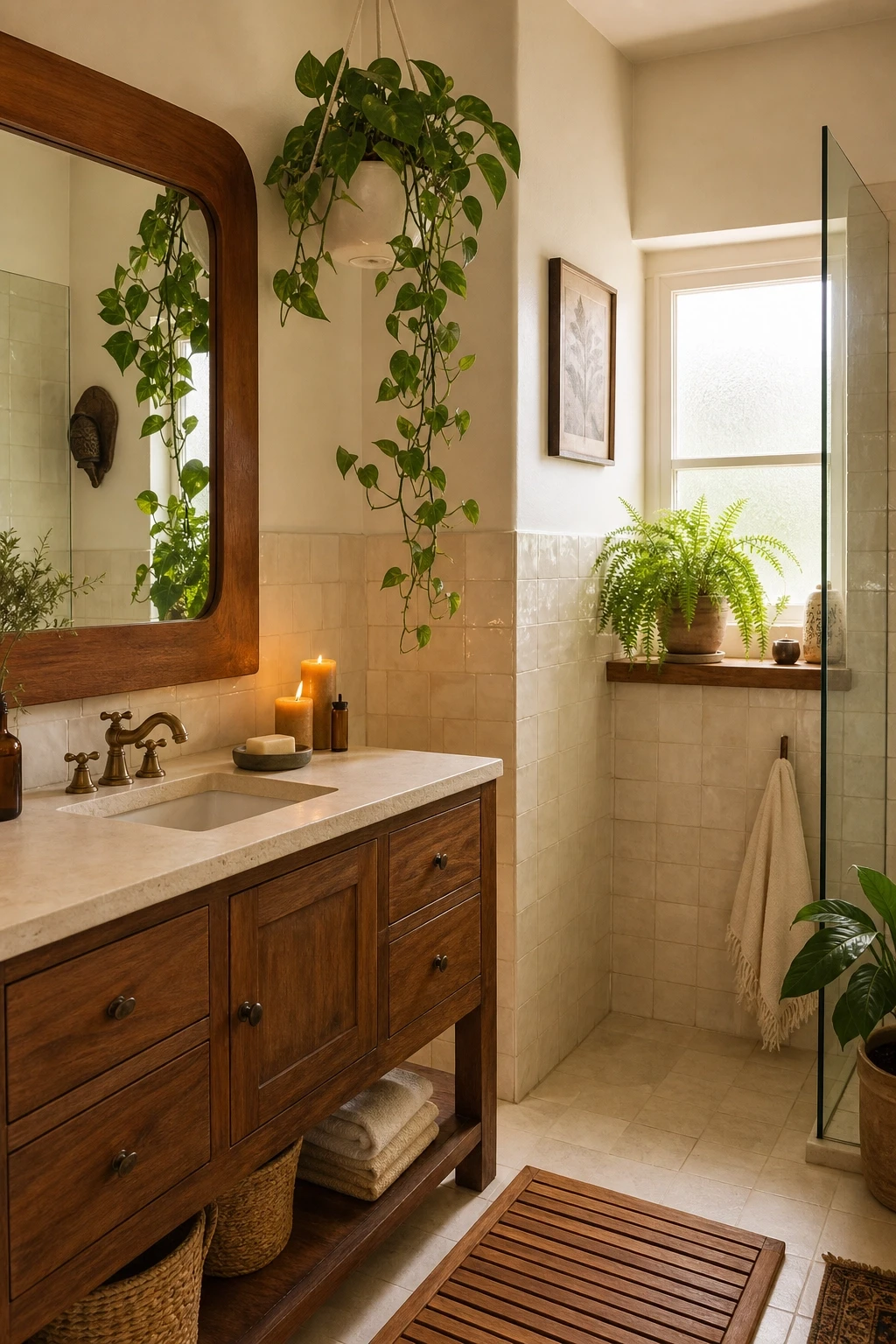
The bathroom is often overlooked as a boho decorating space, but it can become one of the most surprisingly beautiful rooms in your home with the right approach. The key elements are texture, warmth, and greenery, all of which work especially well in a bathroom because the humidity actually helps some plants thrive and gives organic materials like wood and linen a relaxed, slightly weathered quality over time.
If you have the option to choose your tiles, earthy terracotta, warm zellige in a handmade irregular format, or a simple matte white subway tile laid in an offset pattern all work beautifully in a boho bathroom. Pair the tiles with wooden accents, a teak bath mat instead of a standard rug, wooden shelving for towels and toiletries, or a wooden mirror frame. The warmth of the wood against cool ceramic tile is a classic combination.
Plants like pothos, ferns, spider plants, and air plants all do well in bathrooms because they love the humidity. Hang a trailing pothos from a hook near the ceiling, perch a small fern on a shelf near the window, and tuck an air plant into a small piece of driftwood on the vanity. Add a cluster of beeswax candles, a ceramic soap dish, and a set of glass bottles for decanted toiletries to complete the look.
Designer Note: Terrycloth towels in earthy tones, burnt orange, sage green, oatmeal, look far more boho than plain white. They are usually no more expensive and they make a real difference in the overall palette.
17.Candlelight and Atmospheric Boho Lighting
Lighting is arguably the single most powerful element in creating a boho atmosphere, and it is often the most underinvested part of a room. The standard overhead light, whether it is a flat builder’s fixture or even a nice pendant, does very little for the cozy, layered feeling that boho spaces are known for. What you need instead is multiple light sources at different heights, all of them warm and indirect.
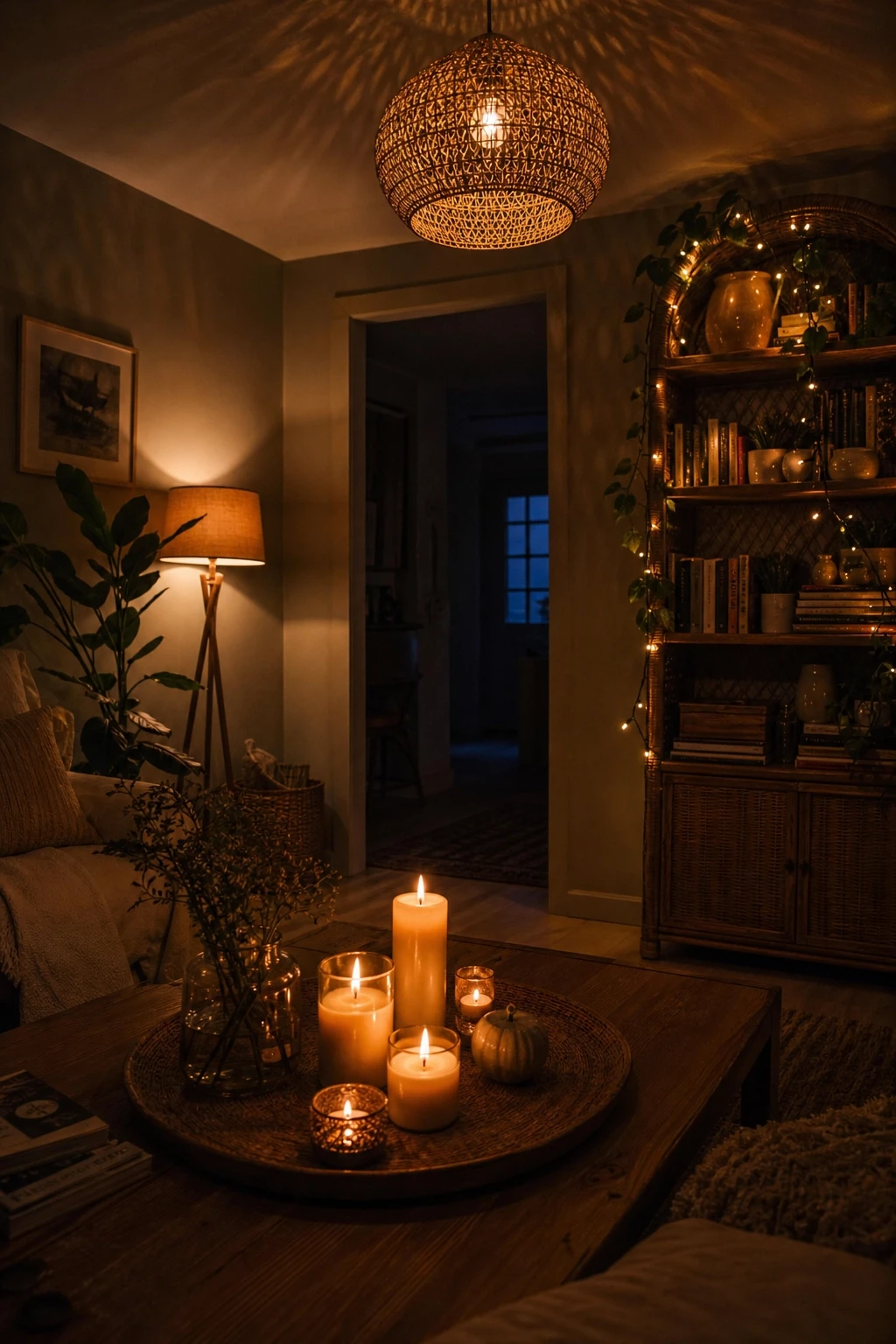
Candles are the obvious starting point. Group pillar candles of varying heights on a wooden tray or a concrete slab on the coffee table. Add taper candles in brass or clay holders on a sideboard or mantle. Use glass lanterns with tea lights on the floor in a corner. The flickering quality of candlelight does something that no electric light can fully replicate, and it costs almost nothing to add.
For electric lighting, rattan pendant lamps are a go-to because they cast a beautiful dappled pattern of light and shadow on walls and ceilings. String lights woven through a bookcase or draped above a bed add a soft ambient glow. Vintage-style Edison bulbs in simple ceramic or brass fixtures feel warm and artisanal. Floor lamps with linen shades placed in corners fill the room with a soft, even warmth that overhead lights simply cannot achieve.
Designer Note: Put every overhead light you own on a dimmer if you can. A room that felt flat at full brightness can feel magical at 40 percent, and it costs less than buying new lighting.
Bringing It All Together
Boho style, at its best, is not about following a formula. It is about making choices that reflect where you have been, what you love, and how you want to feel in your home. The ideas in this article are starting points, not rules. You might love the idea of the Moroccan jewel-tone living room but want to keep it quieter and more earthy. You might be drawn to the jungle plant approach but only have one sunny window to work with. That is fine. Take the pieces that resonate with you and leave the rest.
The most successful boho spaces are usually built slowly and deliberately. A great rug found at a market. A lamp picked up at an estate sale. A cushion cover bought from a small maker online. A piece of macrame your neighbor made. These things take time to gather, but the result is a home that genuinely tells your story rather than someone else’s. And that is really the whole point of boho style to begin with. Start with one room, one corner, one shelf, and see where it takes you.
Frequently Asked Questions
How do I start decorating in boho style without spending a lot of money?
Start with what you already have and layer in affordable finds from thrift stores, markets, and online second-hand platforms. A few key pieces, like a patterned rug, some layered cushions, and a macrame wall hanging, can shift the whole feeling of a room without a big investment. Dried botanicals, candles, and rearranging your plants strategically can also make a significant difference at very low cost.
What colors are most common in boho style?
Boho palettes tend to center on earthy, warm tones: terracotta, sand, ochre, sage green, rust, and cream are all classic. These are often layered with richer accent colors like cobalt blue, deep burgundy, or mustard yellow pulled in through textiles and accessories. The palette is usually warm rather than cool, with natural whites and off-whites rather than stark bright whites.
Can boho style work in a small apartment?
Absolutely. Boho style is actually quite well-suited to smaller spaces because it focuses on layering rather than large furniture. Floor cushions instead of a big sofa, wall-mounted shelving for plants and collections, and strategic use of mirrors and warm lighting can all make a small apartment feel full and cozy rather than cramped. The key is to edit carefully so that the layering feels intentional rather than cluttered.
How do I keep a boho room from looking messy?
The main thing is to stick to a consistent color palette even when you vary patterns and textures widely. If all your pieces share a loose color story, the room reads as layered rather than chaotic. It also helps to have some breathing room, meaning not every surface needs to be covered. A few intentional empty spaces give the eye a place to rest and make the pieces that are displayed feel more considered.
What furniture materials work best in boho style?
Natural materials are the backbone of boho furniture: rattan, cane, bamboo, solid wood, and natural stone all work well. Avoid anything too plastic, too glossy, or too industrial. Vintage and second-hand pieces are always welcome in boho spaces because they tend to have the kind of character and patina that new furniture often lacks. Mixing different materials, like a rattan chair alongside a solid wood table and a linen sofa, creates that eclectic, collected quality the style is known for.
Is boho style the same as bohemian and can I mix it with other styles?
Yes, boho and bohemian are used interchangeably. And yes, it mixes beautifully with other styles. Boho-modern pairs the layered warmth of boho with cleaner lines and a more restrained color palette. Boho-coastal brings in lighter fabrics, natural textures, and a cooler color palette. Boho-farmhouse blends rustic wood and vintage finds with cozy textile layering. The free-spirited nature of boho means it adapts to almost any stylistic direction you want to take it.